Local pest control help is one call away.

Crickets in Your Home

Want quiet nights again? (888) 495-1510

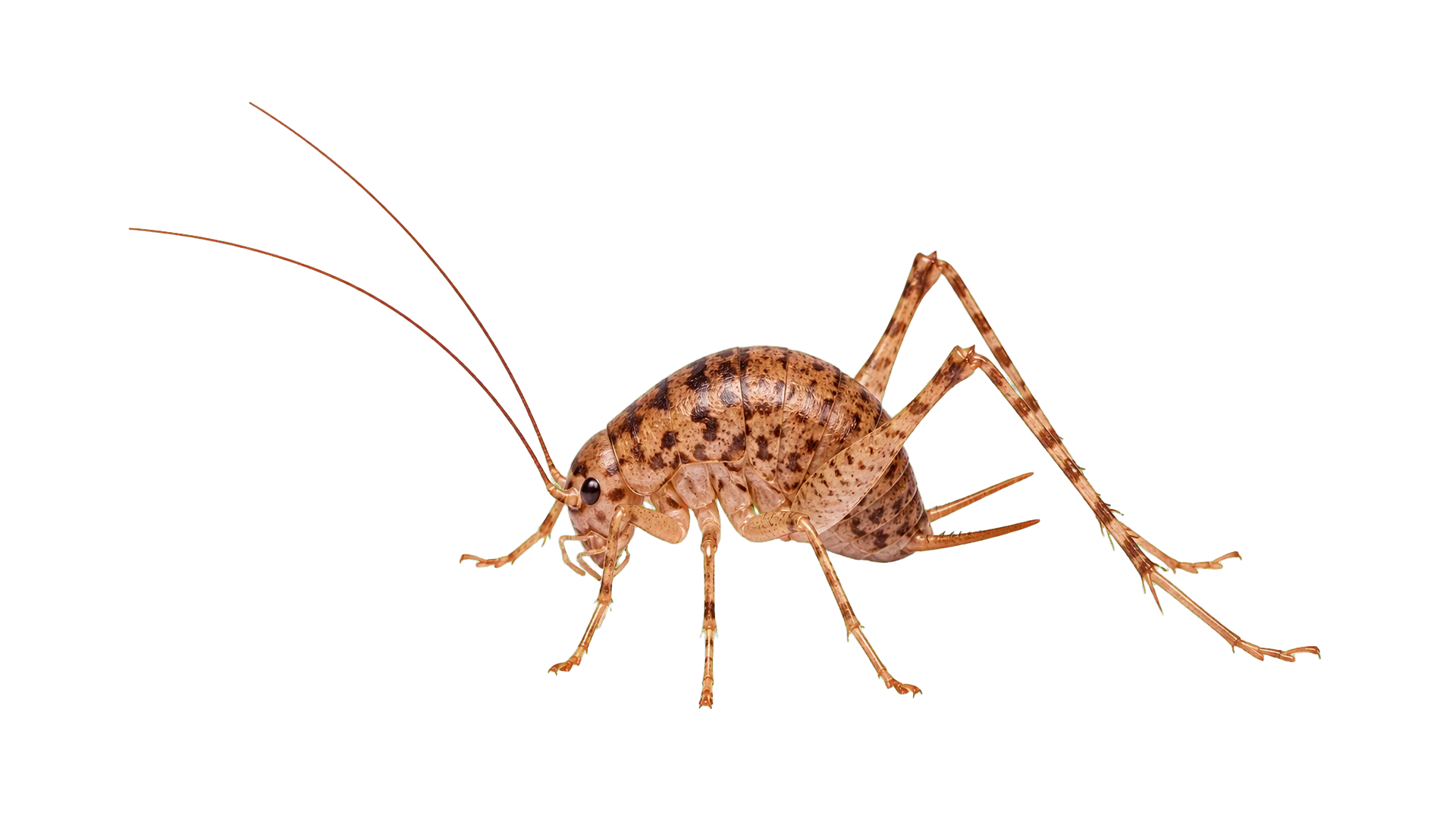
Crickets are familiar nocturnal jumpers known for their persistent chirping, large hind legs, and very long thread-like antennae. Three groups matter for homes: house crickets (tan, common in basements and warm garages), field crickets (black, the loud outdoor chirpers that drift inside in fall), and camel crickets (humpbacked, wingless, spider-like, found in damp basements and crawl spaces). Each has its own pattern and its own response.

Why Crickets Are an Issue Now

Cricket pressure peaks in late summer and fall as outdoor populations reach maturity and start migrating toward warm structures. House crickets and field crickets often enter through garage door gaps, basement window wells, and worn weather stripping. Camel crickets reach indoor populations through crawl spaces, foundation cracks, and walk-out basement doors, and tend to stay in damp areas year-round once they establish.

The signature cricket complaint is sleep disruption. A single male house cricket inside a wall void can produce 100 decibels of chirping at full volume, and the sound carries through framing into bedrooms several rooms away. The other complaint is fabric damage: crickets occasionally chew on fabrics, paper, and stored items in the spaces they hide, leaving small irregular holes.

What separates a chirping nuisance from a real issue:

  • Loud nightly chirping from basement, garage, or wall voids that disrupts sleep
  • Dozens of camel crickets visible in a basement or crawl space, especially after rain
  • Irregular holes in fabrics, paper, or upholstery in stored areas where crickets hide
  • Cricket frass (small dark droppings) along baseboards, in basement corners, or near fabric damage.

Crickets by the Numbers

A male house cricket can chirp 4 to 5 times per second for hours. Field crickets reach densities of several hundred per acre in untreated lawns during peak summer. Camel cricket populations in damp crawl spaces can grow into the thousands undetected, and homeowners often discover them only when crawl space access is needed for HVAC or plumbing work.

  • 1/2 to 1 inch Adult body length
  • 4-5 per second Chirp rate (male)
  • 8-10 weeks Indoor lifespan

Three Tells It Is a Cricket

Three checks separate crickets from grasshoppers, cockroaches, and similar look-alikes. The leg shape and antenna length are the strongest single tells.

Body shape icon

Large hind jumping legs

Defining structural feature. Hind legs are dramatically larger than front and middle legs, with thick muscular femurs adapted for explosive jumping. Cockroaches have similar-sized legs all around; grasshoppers have similar large hind legs but very different body shape.

Antennae icon

Very long antennae

Cricket antennae are roughly as long as the body, sometimes longer, held forward and to the sides. Grasshopper antennae are short. Cockroach antennae are also long but usually thinner and held differently.

Color icon

Tan, black, or humpbacked brown

House crickets are pale tan with darker bands. Field crickets are shiny black. Camel crickets are brown with a distinctive humpbacked silhouette and very long thread-like antennae. Color and silhouette together usually identify the species.

Signs You Have a Cricket Issue

Cricket signs are heavily auditory. Sound is often the first symptom homeowners notice, sometimes weeks before the bug is actually seen.

How Cricket Issues Develop

Outdoor population builds Field and house crickets thrive in lawns, mulch beds, and woodpiles through summer, reaching peak density by August.
Fall migration Cooling temperatures push adults toward warm structures, especially garages, basements, and door thresholds with worn seals.
Indoor establishment Crickets settle in basements, crawl spaces, and furnace rooms. Chirping disrupts sleep, fabric damage begins in storage.

How Crickets Actually Affect Homes

Crickets are not dangerous. They do not bite humans (the very rare exception is a defensive nip that does not break skin), do not sting, do not transmit disease, and do not cause structural damage to buildings. The cost they impose on homes runs along three dimensions: sleep disruption from persistent chirping, fabric and paper damage in stored areas where they hide, and the visual presence of unsettling numbers in damp basements and crawl spaces. Camel crickets in particular alarm homeowners because of the large body size, long antennae, and awkward jumping behavior that can reach several feet in unpredictable directions.

The three common species behave differently enough that treatment plans diverge. House crickets prefer warm dry harborage like garages, furnace rooms, and behind appliances; they tend to chirp inside walls and produce the classic noise complaint. Field crickets are mostly outdoor pests that drift inside in fall and tend to die within days indoors without breeding successfully. Camel crickets are the most established indoor pest of the three; they reproduce readily in damp basements and crawl spaces and can build sustained populations measured in the hundreds or thousands.

Effective management runs through harborage and entry control combined with species-appropriate treatment. House crickets respond to perimeter exterior treatment plus garage and basement crack-and-crevice work. Field crickets respond to fall exterior perimeter treatment and exclusion. Camel crickets require basement and crawl space humidity reduction, harborage cleanup, and pro-grade indoor product applied to specific harborage zones rather than broad spraying.

Cricket Anatomy at a Glance

Six features that define a cricket. The combination of jumping legs and very long antennae is unmistakable in the field.

1 2 3 4 5 6
  1. Elongated body

    Roughly 1/2 to 1 inch in adults. Cylindrical rather than flat. Camel crickets show the most exaggerated humpbacked shape; house and field crickets are slimmer.

  2. Very long thread-like antennae

    Antennae are roughly as long as the body, often longer, held forward and to the sides. Length separates crickets from grasshoppers (short antennae) at first glance.

  3. Large hind jumping legs

    Muscular hind legs power explosive jumping. A startled cricket launches several feet unpredictably. The thickened femur is the structural signature of jumping insects.

  4. Folded wings (most species)

    House and field crickets fold wings flat over the back. Males rub wings together to produce the chirping. Camel crickets are wingless and silent. Easy field markers.

  5. Ovipositor (females)

    A long needle-like structure at the rear of the female abdomen, used to deposit eggs in soil. Visible from the side, about half the body length. Distinguishes females at a glance.

  6. Cerci (paired sensory appendages)

    Two small rear sensors above the ovipositor, present in both sexes. Detect air movement and vibration. Triggering the cerci produces the explosive jump when humans approach.

What Are You Actually Hearing?

Match your situation to one of the four common patterns. The species and location together tell you which response fits.

What Are You Actually Hearing?

What You're Seeing

  • Loud chirping at night from inside a wall, behind an appliance, or in a basement
  • Tan cricket with darker bands sometimes seen in garage, furnace room, or near hot water heater
  • Chirping pauses when someone enters the room and resumes after silence returns

What's Likely Happening

A male house cricket has established harborage in the wall void or a warm appliance area and is chirping to attract mates. Indoor populations of house crickets occasionally reproduce successfully and can persist year-round in heated spaces, unlike field crickets that mostly die out in fall and winter.

What To Do Now

  • Identify exact harborage location by triangulating the chirping over several nights
  • Pro-grade crack-and-crevice treatment in the wall void or appliance area
  • Pair with exterior perimeter treatment and exclusion at known entry points

What You're Seeing

  • Shiny black crickets jumping when disturbed in garages, basements, or entryways
  • Most pronounced in late August through October
  • Loud outdoor chirping near foundation walls before indoor arrival

What's Likely Happening

Field crickets are primarily outdoor pests that migrate toward warm structures in fall. Indoor sightings are usually transient: most field crickets that enter die within days because indoor environments lack the food and humidity they need. They rarely establish breeding populations indoors. The volume during fall migration can still feel overwhelming.

What To Do Now

  • Pro-grade fall exterior perimeter treatment timed for late August through September
  • Exclusion at garage door seals, basement window wells, and foundation cracks
  • Vacuum indoor sightings; most indoor field crickets die without intervention within a week

What You're Seeing

  • Brown humpbacked wingless crickets, often dozens or more, in a damp basement or crawl space
  • Long thread-like antennae and exaggerated hind legs
  • Erratic jumping when approached; sometimes jump toward people rather than away

What's Likely Happening

Camel crickets are the most established indoor cricket species and reproduce readily in damp basements and crawl spaces. Populations build slowly over time and can reach hundreds or thousands in chronically wet structures. They are wingless, silent, and primarily nocturnal. They occasionally chew fabrics and paper goods in storage areas.

What To Do Now

  • Address basement and crawl space humidity with a dehumidifier and vapor barrier
  • Pro-grade targeted treatment in known harborage zones (corner crevices, behind storage)
  • Reduce harborage: clear cardboard storage, leaf litter, organic debris from affected spaces

What You're Seeing

  • Irregular holes in stored fabrics, paper goods, upholstery, or cardboard in basement, attic, or garage
  • Small dark frass droppings near the damaged items
  • Sometimes paired with cricket sightings or chirping in the same space

What's Likely Happening

Crickets occasionally chew on natural fibers, starched fabrics, paper, and certain stored organic materials in the spaces they hide. Damage is usually minor and slow to accumulate but can be significant for long-term unmoved storage. Camel crickets are the most likely species behind serious fabric damage in basements and crawl spaces.

What To Do Now

  • Move vulnerable items into sealed plastic bins on shelves rather than cardboard on floors
  • Inspect and address the underlying cricket population in the affected space
  • For valuable stored items, treat the storage area as part of the broader cricket plan

How Urgent Is This Really?

Crickets don't run on a panic clock, they run on a humidity clock. House crickets chirp inside walls and wreck sleep. Camel crickets pile into damp basements by the dozens. Field crickets stream in during fall migration. The timeline below maps how each pattern actually unfolds.

  1. 0 to 2 weeks
    Monitor

    A single cricket spotted in a basement, garage, or near a doorway. Often a hitchhiker on firewood, mulch, or a damp box. Chirping is intermittent at this stage and easily ignored.

    • Identify the species: house crickets are tan and chirp, camel crickets are humpbacked and silent, field crickets are shiny black.
    • Inspect the basement, garage, and crawl space for entry points around doors, vents, and foundation cracks.
    • Place sticky monitors along baseboards in damp rooms to confirm population size and harborage zones.
  2. 2 weeks to 1 month
    Act soon

    Recurring chirping at night disrupting sleep, multiple crickets in damp areas, or small dark frass pellets appearing in basement corners. A camel cricket or house cricket population is establishing in moist harborage zones now.

    • Run a dehumidifier in basements and crawl spaces. Crickets need humidity above 60 percent to survive long-term.
    • Reduce outdoor harborage: pull mulch back 12 inches, raise woodpiles off the ground, trim vegetation.
    • Apply pro-grade perimeter treatment focused on foundation, basement window wells, and garage thresholds before the fall migration.
  3. 1 to 3 months
    Urgent

    Heavy indoor population, chirping in multiple rooms, or visible damage to fabrics, paper, or stored items from camel crickets. Population may also attract secondary predators (spiders, scorpions in southern regions).

    • Address moisture: fix basement seepage, run a dehumidifier at 45 to 50 percent, ventilate crawl spaces properly.
    • Treat indoor harborage spots: behind appliances, in cabinet corners, along basement baseboards, near furnaces.
    • Inspect for secondary pest activity. Heavy cricket populations support spider and scorpion populations downstream.
  4. 3+ months
    Critical

    Persistent population through fall and winter, established breeding in damp voids, or significant fabric damage. Usually points to a chronic moisture issue: foundation seepage, plumbing leak, or poor crawl space ventilation.

    • Get a moisture audit alongside pest treatment. The crickets return within weeks without humidity control fixed.
    • Schedule pro treatment with crack-and-crevice product plus IGR (insect growth regulator) for breeding control.
    • Plan structural moisture remediation: vapor barriers, sump pumps, or foundation repairs as the situation requires.

Crickets are mostly a moisture and harborage problem. Drying basements and crawlspaces and tightening foundation gaps almost always reduces indoor populations more reliably than spraying the crickets you can see.

Pest Control Pros serving the city of the state of your city and nearby areas

Local pros identify the species, locate harborage, and combine targeted treatment with the moisture and exclusion work that prevents the next cricket cycle.

Available 24/7
(888) 495-1510

What Draws Crickets to a Home

Cricket pressure varies sharply with property conditions. The three indoor species share a few common drivers but split on the specifics, which determines where you audit first.

House crickets and field crickets chase warm dry harborage and bright exterior lighting. They drift toward garages, furnace rooms, and exterior fixtures left on overnight. Camel crickets break the pattern entirely: they need 60+ percent humidity to sustain a population, which is why they anchor to damp basements, crawl spaces with bare soil floors, and any unfinished cellar with a chronic moisture source. The species you have determines whether to audit lighting or humidity first.

Most fall infestations trace back to two or three overlapping conditions: bright porch lights drawing field crickets to the foundation, mulch beds within 12 inches of siding sheltering the daytime population, and worn garage door bottom seals letting the migration walk inside. Even partial wins help. Replacing the garage seal alone often cuts the fall cricket influx by 70 percent without any product applied.

Where Crickets Concentrate

Garage and entry corners

House and field crickets accumulate near garage door seals, in cluttered corners, and behind stored items. Garage door bottom seal is the single most common cricket entry point in suburban homes.

Damp basements

Camel crickets establish in basements with humidity above 60 percent. Dark corners behind storage, around floor drains, and along wall-floor junctions are the primary harborage zones.

Crawl spaces

The classic camel cricket habitat. Bare soil floors and chronic humidity support populations measured in the thousands. Most homeowners do not realize the scale until the space is opened for utility work.

Foundation mulch and beds

Field cricket and house cricket source habitat. Dense mulch within 12 inches of the foundation produces large outdoor populations that migrate inside in fall.

Furnace rooms and behind appliances

House cricket harborage. Warmth from the furnace, water heater, or refrigerator creates a microclimate suitable for indoor cricket survival year-round in heated spaces.

Stored cardboard and fabrics

Camel crickets and house crickets shelter in undisturbed cardboard boxes and fabric storage in basements, attics, and garages. Often the location of fabric and paper damage.

How Cricket Populations Develop

Why cricket pressure peaks in fall for most species and why camel crickets break that pattern.

  1. Egg

    1 to 3 weeks (most species)

    Females insert eggs into soil using the long ovipositor. Most outdoor species lay in late summer or fall; eggs overwinter and hatch the following spring. Camel crickets lay year-round indoors in damp substrate.

  2. Nymph

    8 to 12 weeks

    Nymphs hatch as miniature adults and molt 8 to 10 times as they grow. Each instar resembles the adult more closely. Wing development happens in the final molts for winged species.

  3. Adult outdoor (house and field)

    Late summer through fall

    Adults reach maturity, mate, and lay eggs through late summer and fall. Field crickets are mostly killed by first frost; house crickets that find indoor harborage can persist year-round in heated spaces.

  4. Adult indoor (camel)

    Year-round in damp space

    Camel crickets reach adulthood and reproduce continuously in suitable indoor harborage. Populations build slowly over years in chronically damp basements and crawl spaces, often unnoticed until reaching dramatic numbers.

Outdoor cricket pressure follows a sharp seasonal arc with fall as the peak. Camel cricket pressure indoors is essentially year-round and tied to moisture rather than season. Different cycles drive different treatment timing.

IMPORTANT

Why DIY Cricket Spray Usually Scatters Them Deeper

Crickets you can see are the loud minority. The reproducing population is hidden in wall voids, behind appliances, in crawl space corners, and inside cardboard storage where any open-air spray cannot reach. Generic aerosol sprayed on visible bugs disturbs the harborage, and survivors scatter deeper into the structure instead of leaving it. The other problem is treating all three indoor species the same. House crickets in a wall void near the furnace need triangulated harborage location and crack-and-crevice product. Camel crickets in a damp basement need humidity reduction below 50 percent and targeted harborage treatment. Field crickets in fall need exterior perimeter treatment and garage seal replacement timed before the August through September migration. A homeowner spraying the foundation when the real issue is a humid crawl space full of camel crickets will see no change, because the population is reproducing inside the structure where exterior treatment cannot reach. Identify the species first, locate the harborage second, and the product almost picks itself.

Which Cricket Species Do You Have?

Crickets are mostly nuisance invaders, but a few species damage fabric and stored goods. Match what you're seeing to identify which one.

Species Severity Key Sign Where You'll Find Them
Camel Crickets Nuisance Found in dark, damp basements and crawlspaces, jumping when startled basements, crawl spaces, garages
Camel Crickets
Severity Nuisance
Key Sign Found in dark, damp basements and crawlspaces, jumping when startled
Where You'll Find Them basements, crawl spaces, garages

Severity reflects typical impact, not your specific case. If unsure, treat at the higher tier.

What Actually Works on Crickets

Straight read on common approaches. Cricket control rewards correct species identification and accurate harborage targeting far more than product choice. The three indoor species need three different plans.

Can work icon

What can work

Camel crickets: humidity and harborage

  • Basement dehumidifier set to 45 to 50 percent; crawl space vapor barrier where appropriate
  • Pro-grade product applied to harborage zones (corner crevices, wall-floor junctions, behind storage)
  • Clear cardboard storage and organic debris from affected space

Field crickets: fall exterior plus exclusion

  • Pro-grade exterior perimeter treatment in late August through September before migration
  • Replace garage door bottom seal and weather stripping on basement walk-out doors
  • Reduce mulch volume and pull mulch back 12 inches from foundation

House crickets: triangulate and target

  • Triangulate the chirping location over several nights to identify exact harborage
  • Pro-grade crack-and-crevice product applied to the harborage area
  • Address warm appliance areas (furnace, water heater) where house crickets cluster
Falls short icon

What reliably falls short

Sticky traps without addressing harborage

  • Catches some crickets but does not reduce reproducing populations
  • Doesn't address why crickets are present in the first place
  • Better as a monitoring tool than a control method

Foggers in the basement

  • Cannot penetrate harborage where crickets actually shelter (corners, behind storage, in crevices)
  • Wastes residual chemistry on open surfaces with no cricket activity
  • Indoor chemical exposure with little progress on the real population

Spraying every visible cricket individually

  • Endless reactive work with new individuals appearing daily
  • Doesn't reduce harborage, address moisture, or stop reproduction
  • Frustrating use of effort with no durable result

How to Stop Cricket Issues at the Source

Six steps, sorted by effort. Match the action to the species pattern you are dealing with.

  • Storage icon
    Easy Continuous

    Replace cardboard storage with bins

    Sealed plastic bins on shelving rather than cardboard on floors. Eliminates harborage for camel crickets and reduces fabric and paper damage in storage.

  • Light icon
    Easy Nightly

    Dim or shield exterior lighting

    Bright exterior lighting attracts field crickets and other night-active insects. Use yellow bug-resistant bulbs, motion-activated lighting, or shielded fixtures pointed downward.

  • Garage seal icon
    Moderate One-time

    Replace garage door seals

    The single most common cricket entry point. Worn rubber bottom seals develop gaps that admit field crickets and house crickets. Replacement is straightforward and inexpensive.

  • Dehumidifier icon
    Moderate Continuous

    Run a basement dehumidifier

    Set to 45 to 50 percent. Eliminates the moisture conditions that allow camel cricket populations to sustain. Combined with harborage reduction, addresses most basement issues.

  • Perimeter icon
    Advanced Late summer

    Pro fall perimeter treatment

    Late August through September. Pro-grade exterior product across the foundation perimeter intercepts the field cricket migration before it reaches indoor spaces.

  • Mulch icon
    Advanced One-time

    Reduce foundation harborage

    Pull mulch back 12 inches from the foundation; reduce depth to 2 inches. Remove stacked firewood, lumber, and yard debris from within several feet of the home.

When Cricket Pressure Peaks

Different cricket species peak at different times. Match the season and species to the right intervention.

  • Spring

    Outdoor cricket eggs hatch and nymphs begin developing. Indoor camel cricket populations continue reproducing in damp basements. Field cricket nymphs visible in mulch and lawn.

  • Summer

    Outdoor populations build to peak densities. Field cricket chirping is loudest. Indoor populations of camel crickets grow if humidity supports them. House crickets begin appearing near foundations.

  • Fall

    Field cricket peak migration toward warm structures. Late August through September is the critical exterior treatment window. Indoor sightings of all three species rise sharply.

  • Winter

    Outdoor populations die off (field crickets) or go dormant. Indoor camel cricket populations persist in damp basements. House crickets in heated spaces continue chirping if harborage is present.

What a Pro Cricket Visit Looks Like

Four steps from arrival to a species-matched plan. Initial visit runs 60 to 90 minutes.

Identify, locate, target. Cricket control is mostly about correct identification of the species and accurate location of the harborage. Generic broad-spectrum spray rarely produces durable results.

Need quiet nights again? (888) 495-1510
  1. Species and pattern assessment

    Discuss when and where crickets are heard or seen. Identify species (house, field, camel). Determine whether the issue is migration-driven, indoor-reproduction-driven, or both.

  2. Harborage location

    Inspect basements, crawl spaces, garages, and known harborage zones. For chirping issues, triangulate the sound source over the inspection visit. Confirm humidity readings in damp areas.

  3. Species-matched treatment

    House and field cricket: exterior perimeter and exclusion. Camel cricket: harborage-targeted indoor treatment plus humidity recommendations. Crack-and-crevice work where chirping has identified a specific spot.

  4. Follow-up and maintenance

    Schedule follow-up to confirm the population has dropped. For camel cricket cases with chronic moisture, recommend quarterly maintenance until the underlying conditions are addressed.

What Homeowners Say After Cricket Treatment

Real stories from households who connected with pros to silence the chirping, clear the basement, and stop the next fall migration.

Janet D.
Janet D.
Peoria, AZ

"Quiet nights again after cricket treatment."

The chirping was nonstop and crickets were getting into the house through the garage. The tech treated the exterior perimeter and garage entry points. They explained how outdoor lighting attracts crickets and suggested switching to amber bulbs.

Janet D.
Janet D.
Peoria, AZ

"Quiet nights again after cricket treatment."

The chirping was nonstop and crickets were getting into the house through the garage. The tech treated the exterior perimeter and garage entry points. They explained how outdoor lighting attracts crickets and suggested switching to amber bulbs.

Jing J.
Jing J.
Truth or Consequences, NM

"Cricket numbers cut after lighting and treatment."

Crickets swarmed toward outdoor lights and found their way inside. The provider treated the perimeter and recommended switching to amber outdoor bulbs. The change in lighting combined with treatment cut cricket numbers dramatically.

Common Questions About Crickets

Direct answers to what homeowners ask most about chirping, basement camel crickets, and what actually solves recurring cricket issues.

  • Do crickets bite or carry disease? Toggle answer for: Do crickets bite or carry disease?

    Effectively no. Crickets do not actively bite humans, do not have a stinging mechanism, and do not transmit disease relevant to typical home exposure. The very rare exception is a defensive nip from a large field cricket or camel cricket if cornered or handled roughly, and even those nips do not break human skin in any meaningful way. There are no documented disease vectors of practical concern from cricket exposure in residential settings. Pets that mouth or eat crickets generally suffer no ill effects (a fact that supports the entire feeder-cricket industry that supplies reptile and amphibian keepers). The actual concerns crickets impose on a home are sleep disruption from persistent male chirping, occasional fabric and paper damage in stored areas where they shelter, and the visual impact of large camel cricket populations in damp basements and crawl spaces. These are nuisance and aesthetic costs rather than medical concerns. Parents do not need to worry about children handling crickets they encounter or about cricket-borne illness in any conventional sense.

  • How do I find the cricket chirping in my wall? Toggle answer for: How do I find the cricket chirping in my wall?

    Triangulation is the practical answer, and it usually takes two or three nights of patient listening. Cricket chirping is directional but the cricket pauses whenever someone enters a room or makes loud noise, which is what makes pinpointing the exact location frustrating. The technique that works for most homeowners is to wait 10 to 15 minutes after entering the affected area and stay still until the chirping resumes, then move slowly and quietly to estimate the direction. Repeating from a different position on a different night and noting where the sound seems strongest in each pass narrows down the harborage to within a few feet. Common high-probability locations are inside wall voids near the furnace or water heater, behind kitchen and laundry appliances, in unfinished basement corners near the rim joist, and in garage corners adjacent to interior walls. Once a probable location is identified, pro-grade crack-and-crevice product applied to the harborage area silences the chirping within hours to a couple of days. Foggers and broad-spectrum sprays usually fail because they cannot penetrate the harborage where the cricket actually shelters.

  • Why are camel crickets in my basement? Toggle answer for: Why are camel crickets in my basement?

    Camel crickets in a basement or crawl space are nearly always a moisture and harborage issue rather than a temporary outdoor migration. Three conditions support sustained camel cricket populations indoors: humidity above 60 percent, dark undisturbed harborage zones (corners, behind storage, around floor drains, along wall-floor junctions), and entry points like crawl space access doors, basement walk-out door thresholds, or foundation cracks that admit the original individuals. Once established, camel crickets reproduce continuously in suitable conditions and populations can build slowly over several years to dramatic numbers (hundreds or thousands) before homeowners notice the scale. The diagnostic value of finding camel crickets is significant: their presence is a reliable signal that the basement or crawl space has the moisture conditions that also support wood rot, mold growth, and elevated indoor humidity in the rooms above. Effective response combines moisture management (dehumidifier set to 45 to 50 percent, vapor barrier across crawl space soil, foundation drainage where appropriate), harborage reduction (clear cardboard storage and organic debris), and pro-grade harborage-targeted treatment. Each layer matters; chemical treatment alone usually fails to durably reduce the population in a chronically damp space.

  • Will crickets eat clothes or stored fabrics? Toggle answer for: Will crickets eat clothes or stored fabrics?

    Sometimes, particularly camel crickets in basement and attic storage. Crickets are omnivorous scavengers and will occasionally chew on natural fibers, starched fabrics, paper goods, cardboard, and certain stored organic materials in the dark undisturbed areas where they hide. Damage is usually slow to accumulate but can be significant for items that sit unmoved for months or years in basement, attic, or garage storage. The damage pattern is irregular small holes rather than the directional chewing that mice or pantry pests produce. Synthetic fabrics, treated leather, and items in sealed plastic bins are essentially unaffected. The most reliable protection is moving vulnerable items into sealed plastic bins on shelving (off the floor, away from cardboard, sealed against entry) rather than leaving them in cardboard boxes on floors of basements or attics. Addressing the underlying cricket population in the affected space is the longer-term answer. Combining storage upgrade with cricket reduction through humidity management and targeted treatment usually resolves both the visible bug issue and the slow accumulation of fabric damage that often goes unnoticed for years.

  • How are house, field, and camel crickets different? Toggle answer for: How are house, field, and camel crickets different?

    Three different bugs with three different behavior patterns. House crickets are pale tan with darker bands across the body, about 3/4 inch long, and the species most associated with indoor chirping in heated spaces (basements, garages, near furnaces and water heaters). They occasionally reproduce indoors and can persist year-round. Field crickets are shiny black or dark brown, about 1 inch long, and primarily outdoor pests that chirp loudly outside in late summer and drift inside during fall migration. Most field crickets that enter homes die within days because indoor environments lack the humidity and food they need; they rarely establish breeding populations indoors. Camel crickets are brown with a humpbacked silhouette, wingless and silent, with very long thread-like antennae and exaggerated hind legs. They thrive in damp basements and crawl spaces and are the only species of the three that reliably establishes large indoor breeding populations. Treatment approaches diverge: house crickets need triangulated indoor harborage targeting, field crickets need fall exterior perimeter and exclusion, camel crickets need humidity management plus indoor harborage-targeted treatment. Identifying the species correctly is the first step in effective response.

  • Do bright outdoor lights make crickets worse? Toggle answer for: Do bright outdoor lights make crickets worse?

    Yes, particularly for field crickets and similar phototactic species. Bright white or blue-spectrum exterior lighting visible from open lawn or wooded edges attracts night-active insects from a wide radius, and crickets are no exception. Heavy exterior lighting on a porch, garage, or driveway during late summer and early fall can produce dramatic increases in cricket pressure at the affected entry points compared to neighboring properties with more conservative lighting. Three changes reduce the effect significantly. First, switch to yellow bug-resistant bulbs (the spectrum is less attractive to most night-active insects). Second, use motion-activated lighting rather than dusk-to-dawn fixtures so the light is on only when actually needed. Third, shield fixtures so light points downward rather than projecting outward across the lawn. Combined, these changes can reduce cricket pressure at the home perimeter substantially during the fall migration. The same lighting changes also reduce moth, beetle, and other night-flying insect pressure at entry points, with secondary benefits for spider populations that feed on those insects and tend to set up where lights concentrate prey.

  • Can professional treatment really stop cricket issues? Toggle answer for: Can professional treatment really stop cricket issues?

    Yes, when matched correctly to the species and harborage. The honest framing is that cricket control is mostly about identification and targeting rather than product choice, and pro work delivers durable results for each of the three common species when applied to the right location. House crickets respond reliably to triangulated harborage location plus crack-and-crevice treatment in the chirping area, often silencing the noise within hours of application. Field crickets respond to late-summer exterior perimeter treatment combined with garage door seal replacement and basement window well exclusion; the next fall migration drops sharply at properties that complete this work. Camel crickets are the most challenging because the underlying moisture often needs structural attention; pro-grade harborage-targeted treatment paired with dehumidification and harborage reduction consistently delivers substantial population reduction within a few weeks, with quarterly maintenance keeping populations from rebuilding while moisture work catches up. Properties with chronic basement humidity or unaddressed crawl space moisture often benefit from a combined moisture-and-pest plan rather than chemical work alone. Homeowners who pair pro treatment with the recommended structural and storage changes routinely report long-term success across all three species.

Pest Control Pros serving the city of the state of your city and nearby areas

Identify the species, locate the harborage, treat with precision. Local pros cut through generic spraying and get the right product to the right place.

Available 24/7
(888) 495-1510

Cricket Species You Are Likely Dealing With

Click through to species pages for specific identification, behavior, and treatment for each cricket type.

Camel Crickets

Humpbacked, jumping crickets that infest damp basements and crawlspaces.

Camel crickets, also called cave crickets or spider crickets, have long antennae, a hunched body, and powerful hind legs that launch them erratically when startled. They thrive in dark, humid spaces like basements, crawlspaces, garages, and well houses. Large populations chew on fabrics, cardboard, and stored goods while their presence signals excessive moisture conditions.

Quick ID:

  • Jumping insects in basement
  • Sightings in dark damp areas
  • Chewed fabric or paper

Why it matters:

  • Erratic jumping behavior startles people in confined spaces
  • Large populations damage stored clothing, boxes, and fabrics
  • Their presence indicates moisture problems that attract other pests
Learn more about Camel Crickets