Egg
Laid in damp soil
Females push eggs into damp soil, mulch, or substrate, usually in crawl spaces, under decks, or in low basement corners with bare ground. Eggs need consistent moisture and will not develop in dry conditions.
Local pest control help is one call away.
 Pest Control Services Nationwide Pest Control Services Nationwide
 Camel crickets are the wingless, humpbacked crickets that jump toward you in a damp basement instead of away. They run about half an inch to one and a third inches long, with a clear hunched back that gives them the camel name, spindly back legs built for jumping, and antennae longer than their body. Color runs from light tan to dark brown, and the invasive Asian species shows banded markings across the legs. They are silent, they cannot fly, and they cannot chirp.
If you flipped on a basement light and a humpbacked cricket launched straight at your shin, that startle reflex is the defining camel cricket behavior. It is a panic response, not aggression. They cannot bite, cannot sting, and cannot transmit disease, but the jump-toward-threat instinct is alarming enough that most homeowners reach out the same week they see one. This guide covers identification, why humidity is the real driver, and what professional treatment involves.
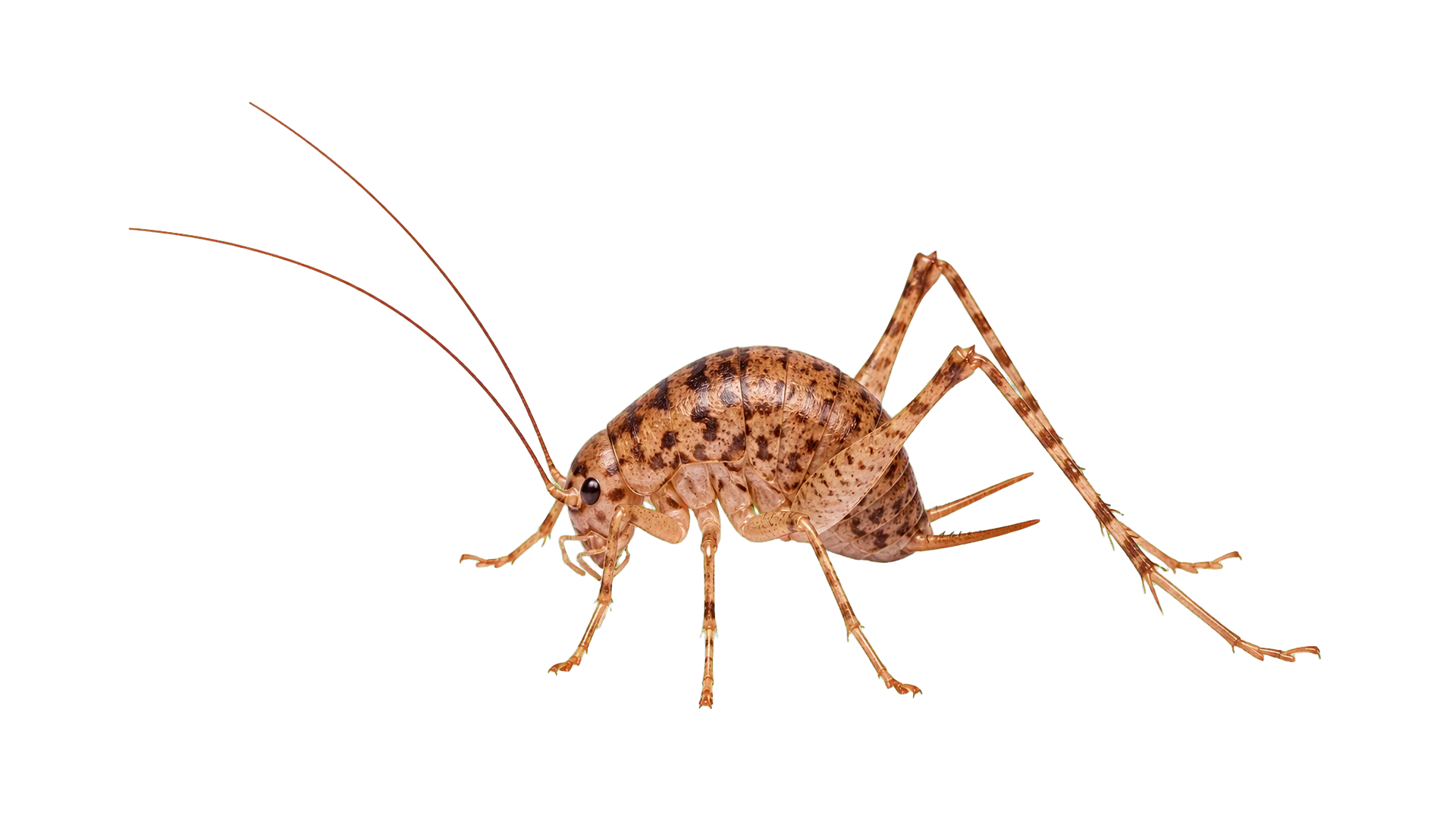
ID Card: Camel Cricket
Call to get matched with a local pest control pro.
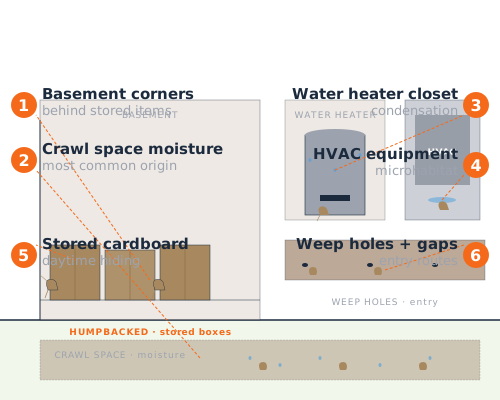
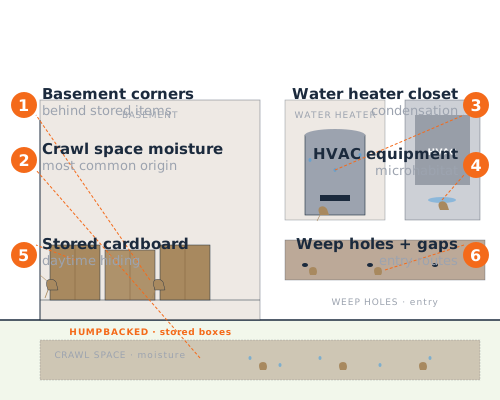
Camel crickets live in the darkest, dampest pockets of the home and the property line. They forage at night and hide during the day, so a flashlight inspection after dark is what actually finds them. Walk these zones in this order:
Camel crickets are an indicator pest. Where they are, your basement or crawl space has a humidity problem above 50 percent relative humidity, and that same dampness is also a setup for mold, wood rot, and other moisture-driven pests. Treating the cricket without lowering the humidity rebuilds the same population within months. Treat both together and the result lasts.
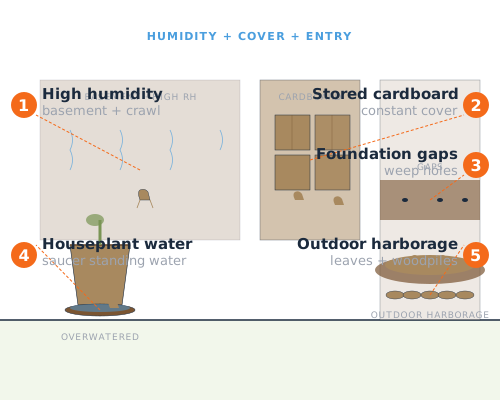
Camel crickets are not following food the way pantry pests do. They are following dampness. Outdoor populations live in leaf litter, woodpiles, and soil along the foundation, and they push indoors through any gap they can find when outside conditions dry out or cool off. Once they are in a damp basement or crawl space, they stay there year-round.
What anchors them to your property:
A new infestation starts when a few adults follow moisture in through a foundation gap during a dry summer or a cool fall. Once inside a humid basement, they breed continuously, and a single female lays eggs across damp soil in crawl spaces or low corners. Within a year, what started as two or three crickets is a colony of dozens, and by year two the jumps when you flip on the light are constant. The invasive Asian species is the one most people now find, the native ones have largely been displaced in the eastern and Midwest US.
Find your scenario below. Each row reflects how camel cricket populations actually progress in a damp basement, not a generic insect timeline.
| What You're Seeing | Severity | If Untreated | Next Step |
|---|---|---|---|
| One or two crickets in the basement, no jumping incidents yet | Early | Population usually doubles within 3 to 6 months if basement humidity stays above 50 percent. | Put a dehumidifier in the basement and run it under 50 percent RH. Seal foundation cracks. Vacuum visible adults. |
| Multiple crickets, jumping startles family members weekly | Moderate | Population is established. Indoor sightings will spread to garage, mudroom, and crawl space over the next 6 months. | Schedule a professional perimeter treatment this month. Pair it with dehumidification and outdoor cleanup within 30 feet of the foundation. |
| Heavy population, jumps every time the basement light goes on, family avoiding the space | High | Likely the invasive Asian species. The population will keep climbing and minor fabric or paper damage begins in stored items. | Call a professional this week. You need perimeter treatment, structural moisture work, and a storage cleanout in one coordinated visit. |
| Recurring heavy population year after year, chewed fabric or paper in storage | Urgent | Chronic structural moisture issue. The cricket population will not drop until the underlying humidity is fixed. | Call today and request a multi-year program with moisture remediation coordination, this is no longer a single-visit problem. |
Camel crickets indicate humidity above 50 percent. If you're between two rows, treat the higher one as your situation.
Camel crickets have a longer lifecycle than most household insects, a full one to two years from egg to adult. Multiple cohorts overlap in established populations, which is why a heavy basement infestation shows nymphs and adults at the same time and seems to never stop producing new individuals.
Laid in damp soil
Females push eggs into damp soil, mulch, or substrate, usually in crawl spaces, under decks, or in low basement corners with bare ground. Eggs need consistent moisture and will not develop in dry conditions.
Several months through multiple molts
Nymphs look like miniature adults, the humpback and long legs are present from hatch. They molt through several instars over months, staying in the same damp harborage the adults use. This is the stage you usually find under cardboard in the basement.
Roughly 1 year of adult life
Adults reach full size at around half an inch to one and a third inches long. They feed on decaying organic matter, fungi, dead insects, other crickets (cannibalism is common in heavy populations), and occasionally fabric, paper, or cardboard.
Total lifecycle runs about one to two years, and established basement populations carry overlapping cohorts at all stages year-round. That overlap is why treatment without humidity reduction looks like it failed, new nymphs emerge from eggs already in the soil within weeks of any spray-only visit.
Camel crickets stay active year-round inside heated humid basements. Outdoor populations move on a clear seasonal calendar, and indoor sightings spike during specific weather windows.
Outdoor adults emerge from winter harborage in leaf litter and woodpiles. Indoor populations in basements continue uninterrupted from winter, and breeding picks up with warmer temperatures. Egg-laying starts in damp soil through April and May.
Outdoor populations peak. Hot dry stretches push crickets indoors in search of moisture, and basement sightings can double in a single week of high heat. Crawl spaces with bare soil are the most reliable summer hotspot.
Indoor migration peaks. As outdoor temperatures drop below 60 degrees at night, outdoor populations push toward the foundation and squeeze in through cracks, weep holes, and vent gaps. This is the single biggest indoor sighting window of the year.
Outdoor populations go dormant in cold regions. Indoor basement and crawl space populations stay fully active in heated humid voids, and breeding continues year-round in homes above 50 percent RH. A jumping cricket in a January basement always means an established interior population.
Camel crickets are physically harmless. They cannot bite, sting, or transmit disease. The actual problem is two things at once, the alarming jump-toward-threat behavior that drives family members out of the basement, and the moisture issue feeding the population, which is also a setup for mold, wood rot, and other damp-loving pests.
Over-the-counter sprays kill the few adults you can see and do almost nothing about the rest. Eggs are already in damp soil, nymphs are hiding under stored cardboard, and the outdoor staging population in leaf litter and woodpiles keeps feeding new arrivals through foundation gaps. Two weeks after a heavy DIY spray, the population looks identical to the day before treatment, with the moisture source still completely untreated.
A pro starts with humidity measurement, applies a residual product to the foundation perimeter and harborage zones inside, and gives you a written habitat plan covering outdoor cleanup and storage management. Most importantly, the visit includes a dehumidification recommendation, because the population cannot reestablish below 50 percent RH. Treatment plus dehumidification cuts the problem decisively, treatment alone rebuilds the same population within a season.
Initial residential treatment typically runs $150 to $400 depending on home size and severity. The invasive Asian camel cricket has displaced native species across 30-plus US states since the 1990s, so the population you have now is almost certainly the more aggressive species, which tolerates drier conditions than the natives and is harder to fully eliminate without humidity work.
Camel cricket treatment is moisture work plus perimeter chemistry, not a one-room spray job. A specialist takes humidity, entry points, and harborage on in a single coordinated visit:

 They Measure the Actual Humidity
 A hygrometer reading in the basement and crawl space tells you whether the problem is humidity-driven and what threshold the dehumidifier needs to hit. Anything over 50 percent RH sustains the population, anything under it eliminates the habitat.
They Treat the Foundation Perimeter A residual product applied around the foundation, weep holes, and crawl space vents intercepts the outdoor migration. This is what stops new crickets from coming in while the indoor population works down.
They Address Harborage Inside Treatment of basement corners, around water heaters, under stairs, and behind stored items hits the daytime hiding spots directly. Without this, the population shifts deeper into the structure rather than dropping.
They Give You a Habitat Plan Outdoor leaf litter, woodpiles, and mulch within 30 feet of the foundation feed the indoor population. The visit ends with a written outdoor cleanup scope plus storage recommendations to keep cardboard and fabric off the basement floor.

Most camel cricket problems respond strongly to DIY when humidity is the focus. The professional work matters most when populations are heavy, recurring, or the home has chronic structural moisture issues.
DIY work is unusually effective with camel crickets because the underlying driver is humidity, not a hidden colony. Useful steps with honest limits:
Professional camel cricket work pairs perimeter chemistry with a humidity plan. Here's what changes when you call:
Camel crickets are a humidity problem dressed up as a bug problem. Connect with a local specialist who treats the perimeter, addresses harborage, and gives you the humidity plan that keeps them out for good.
Real results from people who had the same problem and solved it.

"Quiet nights again after cricket treatment."
The chirping was nonstop and crickets were getting into the house through the garage. The tech treated the exterior perimeter and garage entry points. They explained how outdoor lighting attracts crickets and suggested switching to amber bulbs.
"Quiet nights again after cricket treatment."
The chirping was nonstop and crickets were getting into the house through the garage. The tech treated the exterior perimeter and garage entry points. They explained how outdoor lighting attracts crickets and suggested switching to amber bulbs.

"Cricket numbers cut after lighting and treatment."
Crickets swarmed toward outdoor lights and found their way inside. The provider treated the perimeter and recommended switching to amber outdoor bulbs. The change in lighting combined with treatment cut cricket numbers dramatically.
Direct answers to what homeowners ask most about the jumping behavior, harmlessness, and humidity-driven treatment.
Camel crickets (also called cave crickets or spider crickets) have a distinctive humped body shape, long antennae that can be twice their body length, and powerful enlarged hind legs that allow them to jump several feet when startled. They are wingless, light to dark brown, typically 1/2 to 1.5 inches long, and completely silent, unlike field crickets, they do not chirp. Their large hind legs and hunched posture give them a spider-like appearance that many people find alarming. They are most commonly encountered in basements, crawl spaces, garages, and utility rooms, any cool, dark, damp area that mimics the cave environments they naturally inhabit.
Camel crickets seek out dark, humid environments with temperatures between 50°F and 70°F, making basements, crawl spaces, and garages ideal indoor habitat. They enter through foundation cracks, basement windows, and utility openings, especially during dry summer weather when they seek higher humidity. While they do not bite, sting, or transmit diseases, large populations can damage stored items by feeding on fabric, cardboard, paper, and other organic materials. Their primary significance is as an indicator of excess indoor humidity, addressing moisture through dehumidification, improving drainage, and sealing entry points resolves both the camel cricket problem and the underlying dampness that may be causing more serious issues like mold growth and wood decay.
Crickets are attracted to warmth, light, and moisture. Outdoor lighting draws them to your home's exterior, and they enter through gaps under doors, garage door seals, and foundation cracks. Camel crickets specifically seek dark, damp spaces like basements and crawl spaces. Switching exterior lights to yellow or sodium vapor bulbs and sealing entry points are the most effective prevention steps.
Crickets don't bite or spread disease, but they can damage fabrics, paper, and wallpaper by feeding on them. Field crickets and house crickets chew holes in clothing, curtains, and upholstery, especially items soiled with food or perspiration. In large numbers, their persistent nighttime chirping also causes significant sleep disruption.
Most providers in our network can schedule an inspection within 24-48 hours. For urgent situations, likeactive structural damage or large colonies, same-week emergency service is often available. Response times depend on your location and the provider's current schedule.
Your provider inspects the property to identify the pest, locate nesting or entry points, and assess the scope of the problem. You get a clear explanation of what they found, what they recommend, and a written scope before any work begins.
Modern pest control products are designed to break down quickly after application and pose minimal risk to people and pets when applied correctly. Most providers ask you to keep kids and pets out of treated areas for 1 to 2 hours while the product dries, after which the area is generally safe again. Always confirm specific re-entry times with your provider, and let them know about pet birds, fish, or reptiles, since some treatments require extra precautions for those species.
Local providers experienced with moisture-driven basement and crawl space pests are ready to inspect, treat, and follow up, no obligation.