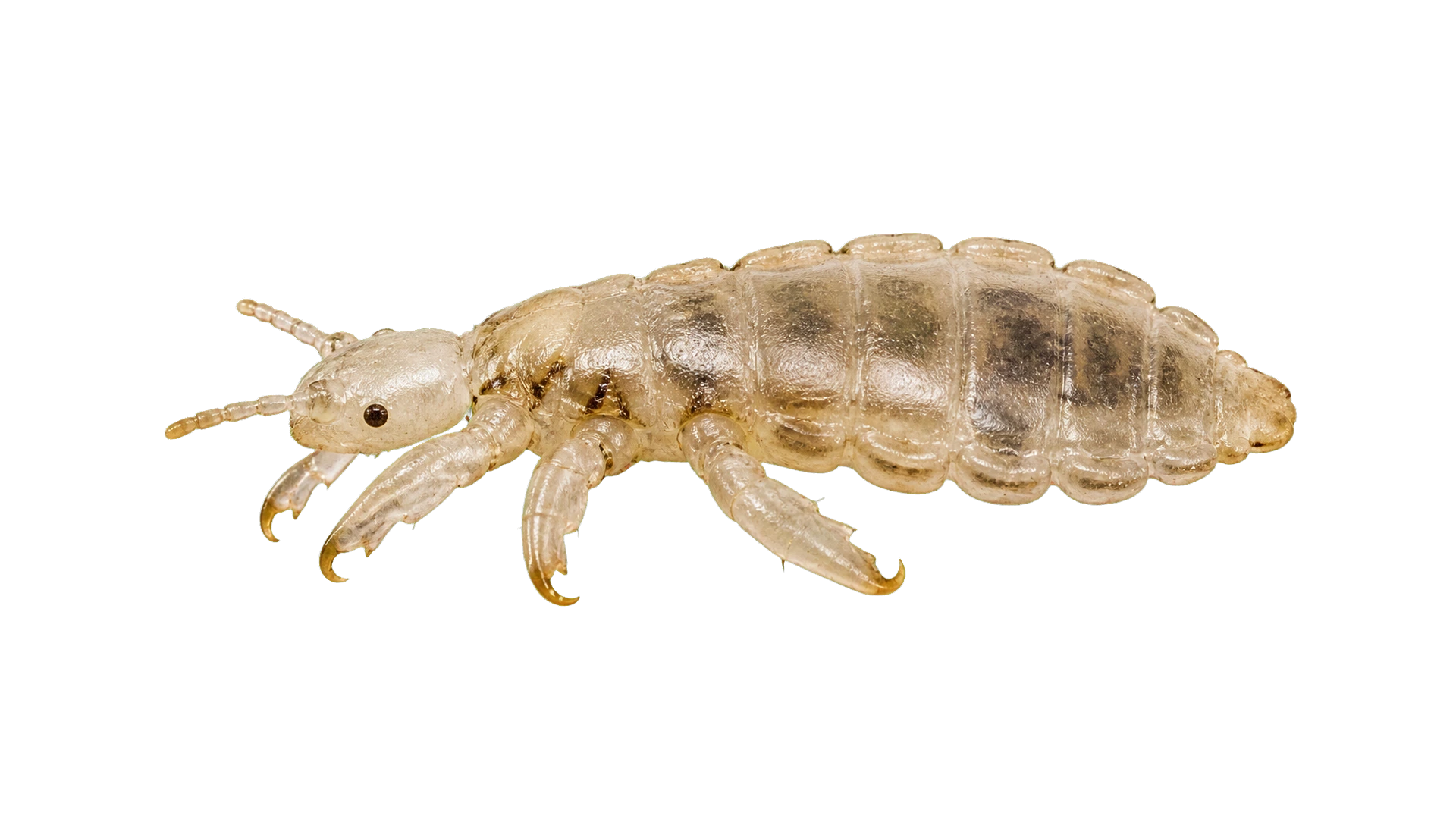
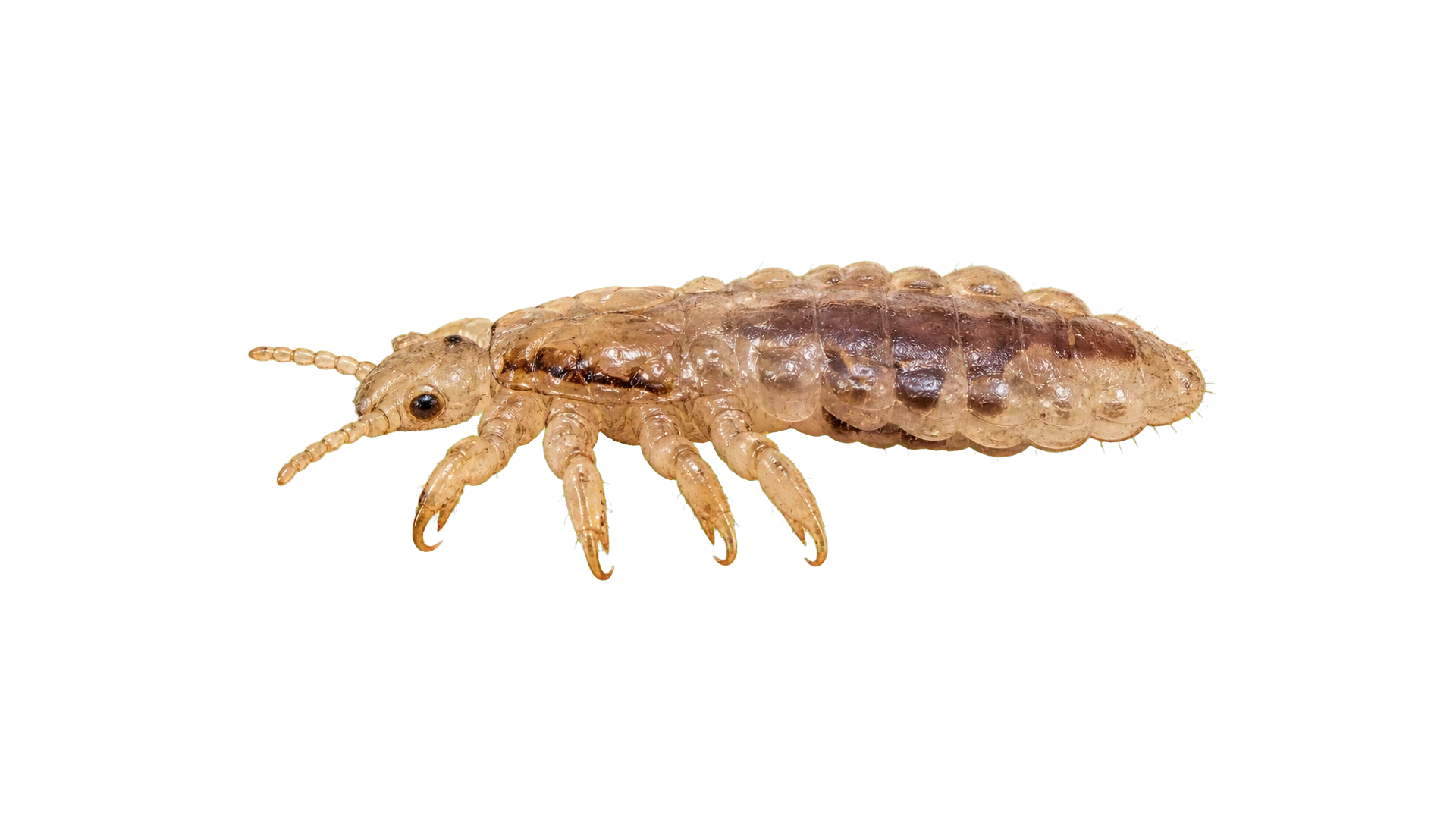
Tiny tan-to-brown insects on hair
Adults are 2 to 3 mm (sesame seed sized), tan to grayish-brown, and visible to the naked eye. Lice crawl, never fly or jump. Movement on the scalp under bright light is the fastest confirmation.
Local pest control help is one call away.
 Pest Control Services Nationwide Pest Control Services Nationwide
 Lice are wingless parasitic insects that live their entire life cycle on a host. Three species affect humans: head lice (Pediculus humanus capitis), body lice (Pediculus humanus humanus), and pubic lice (Pthirus pubis). Each has distinct medical and household responses. Pest control plays only a supporting role since lice die within 48 hours off a human host.
Lice cannot survive more than 48 hours away from a human. They do not infest homes the way bed bugs or fleas do. Residual sprays, foggers, and structural treatments are useless against lice because the infestation is on the host, in clothing seams, or in bedding directly contacting hosts. The CDC estimates 6 to 12 million US head lice cases per year, mostly in children ages 3 to 11.
Three lice species each demand a different response.
What separates the three species:
The CDC estimates 6 to 12 million head lice cases per year in the United States, mostly in children ages 3 to 11. Adult head lice live roughly 30 days on a host but die within 24 to 48 hours off the host. Females lay 5 to 10 eggs per day attached to hair shafts close to the scalp. Body lice historically transmitted epidemic typhus, trench fever, and louse-borne relapsing fever in crowded conditions; disease transmission is rare in modern developed-country settings.
Three checks confirm lice and rule out dandruff, hair product residue, and scabs.
Adults are 2 to 3 mm (sesame seed sized), tan to grayish-brown, and visible to the naked eye. Lice crawl, never fly or jump. Movement on the scalp under bright light is the fastest confirmation.

Nits are tiny white or yellow specks firmly attached to a hair shaft within a quarter-inch of the scalp. Unlike dandruff, they do not flake off when touched; they slide only with effort.

Persistent itching at the nape and behind the ears, sometimes with small red bumps, is the classic head lice symptom. Itching often does not start until 2 to 6 weeks after exposure.
Most lice cases are confirmed by visual inspection. Wet combing with a fine-toothed lice comb on conditioner-saturated hair is the diagnostic gold standard. Most parents find the first live louse within 5 minutes of starting a careful section-by-section check under bright light.
Nits are the second tell, and the easier one to overlook. Living nits glue tightly to hair shafts within a quarter-inch of the scalp because that is where temperature stays warm enough for development. Anything further down the shaft is an old hatched egg, dandruff, or hair product residue, not active infestation.
Itching is the third sign, but it lags by 2 to 6 weeks after exposure. A child who started scratching last week may have picked up lice in early February. That timing matters because it shapes the school notification window and helps identify which classroom contacts deserve a head check.
How a Lice Issue Develops
Head lice spread almost entirely through direct head-to-head contact, which is why elementary school classrooms are the dominant transmission environment. Indirect transmission through shared brushes, hats, headphones, and pillowcases is possible but accounts for a small minority of cases. Lice cannot jump or fly. They crawl from one head to another during close contact lasting more than a few seconds. Pets do not carry human lice.
Body lice live in clothing seams rather than on skin, only crawling onto the body to feed. They are concentrated in crowded living conditions, homeless populations, and refugee or disaster settings where access to bathing and clean clothing is limited. Body lice are the only louse species capable of transmitting serious diseases. Pubic lice spread through close personal contact and stay confined to coarse body hair.
Treatment for head lice is well-defined: an over-the-counter or prescription topical applied per label, plus 1 to 2 weeks of fine-tooth comb sessions on wet conditioner-saturated hair to remove nits. Bedding and clothing worn in the previous 48 hours wash in hot water and dry on high heat. Items that cannot be washed bag for 2 weeks. Foggers and pesticide treatments of furniture are not recommended because lice cannot survive long enough off the host. Body lice cases require improved access to clean clothing and bathing as the primary intervention.
Six features define a louse and confirm the find is not a similar-looking pest.
Flattened oval body lies close against skin or hides deep in clothing seams. Color ranges from tan to grayish-brown and darkens after a recent blood meal.
Lice are insects with 6 legs, which distinguishes them from mites and ticks (8 legs as adults). Legs are short and stout relative to body size.
Each leg ends in a curved claw matched to host hair diameter. Head lice claws fit fine scalp hair; body lice claws grip clothing fibers; pubic lice claws fit coarse body hair.
A retractable proboscis pierces skin and injects anticoagulant saliva. Bites are painless during feeding. Itching develops as a delayed allergic response over 2 to 6 weeks.
The head is much smaller than the abdomen and points forward to position the mouthparts close to the host. Short segmented antennae detect body heat and skin chemistry.
Wingless throughout life. Lice cannot fly or jump. They spread only by crawling during close contact. This rules out fleas (which jump) and bed bugs (which live in furniture).
Match the situation below to the right response. Most household lice cases are head lice on children; the others are different conversations.
Lice run on a much shorter clock than most household pests. Nits hatch in 7 to 10 days, and a missed second-round treatment is the single most common reason an infestation persists.
Itching on the scalp, white nits glued near the scalp, or live lice spotted during a comb-through. Start treatment immediately to prevent spread to family and back to school or daycare.
Most-missed step. Eggs that survived the first treatment hatch around days 7 to 10. Second treatment kills new nymphs before they reach reproductive age at day 9. Skipping this step is why infestations continue.
Live lice still found after 2 treatment cycles, or a new family member shows infestation. Causes: missed nits during combing, exposure to a new source, or super-lice resistant to over-the-counter pyrethrins.
Multiple family members affected after multiple treatment cycles, or live lice despite prescription. A professional lice removal service can shorten the cycle dramatically for families with multiple children.
Lice do not jump or fly. They crawl. Most infestations come from head-to-head contact with a known carrier. After closeout, talk to kids about avoiding shared hats, helmets, and combs to prevent the next round.
Local pros help rule out look-alikes (bed bugs, fleas, scabies) and provide laundering guidance for serious cases without overusing pesticides on a medical issue.
Lice do not pick households at random. They follow signals: a sleepover where 4 heads share 2 pillows, a sports team passing helmets, a classroom carpet seat where kids press temples together. Once an adult louse transfers to a new scalp, it lays 6 to 10 eggs per day, and a case is established before any visible symptom appears.
Different lice chase different rewards, which is why ID matters. Head lice transfer through direct head-to-head contact in classrooms, daycares, and sleepovers, and stay within 1/4 inch of the scalp where temperatures hold steady. Body lice live in clothing seams and bedding rather than on skin, and concentrate in crowded shelter or low-laundering settings. Pubic lice transfer through close personal contact between adults. Knowing which one you have tells you whether the fix is a fine-tooth comb or a hot laundry cycle.
Most active cases have two or three of these exposure paths running at once, and you do not have to close them all in one weekend. Start with the highest-leverage source: the shared brush, the carpooled headrest, the stuffed animal on the pillow. Then disinfect helmets, hats, and headphones in 130 degree Fahrenheit water for 10 minutes. Even partial wins help: bagging shared headgear for 2 weeks starves any off-host lice and cuts re-infestation odds within a single school week.
The single highest-yield inspection area for head lice. Most live lice and active nits appear in these warm, partially shaded zones first. Always check both sides.
Active nits are glued to hair shafts within a quarter-inch of the scalp because that is where it stays warm enough for development. Specks farther down the shaft are old nits or hair-product residue.
Adult lice occasionally crawl off the host onto pillowcases. Inspecting bedding worn in the previous 48 hours is part of the laundering response, not a primary diagnostic.
Shared hair tools transfer lice between household members. Disinfect brushes and combs by soaking in hot water (130+ degrees Fahrenheit) for 10 minutes during a confirmed lice situation.
Shared headgear transfers lice less commonly than head-to-head contact but still warrants attention. Bag for 2 weeks or apply heat treatment during active cases.
Stuffed animals that share a child's pillow can harbor lice for the brief 24 to 48 hour off-host period. Bag for 2 weeks or run through a hot dryer cycle during active cases.
Why a single transferred louse becomes a visible population in 2 to 3 weeks if untreated.
7 to 10 days
Females glue 5 to 10 eggs per day to hair shafts close to the scalp. Tiny white specks that do not flake off; they hatch in 7 to 10 days.
8 to 11 days
Newly hatched nymphs immediately seek a blood meal and feed several times daily. Three molts produce a near-adult-sized 3rd instar in 8 to 11 days.
30 days on host
Females begin laying eggs 1 to 2 days after final molt. A fertile female produces 50 to 100 eggs across her life. Full cycle: 3 weeks egg to egg.
Catching a head lice case at the first nit, before live adults emerge, dramatically reduces the laundry and combing work required. Periodic head checks during high-transmission periods and quick inspection after a school notification often clear the issue with a single treatment cycle.
Each louse species lives on a different part of the body. Match what you're seeing to identify which one.
| Species | Severity | Key Sign | Where You'll Find Them |
|---|---|---|---|
| Body Lice | Persistent | Lice and eggs found in clothing seams, especially along inseams and collars | clothing seams, bedding, shelters |
| Head Lice | Persistent | Tiny white nits cemented to hair shafts close to scalp, live lice moving through hair | human scalp hair, behind ears, nape of neck |
Severity reflects typical impact, not your specific case. If unsure, treat at the higher tier.
Honest read on common DIY methods. Lice respond to specific medical and laundry actions, not to generic pest sprays.

 Over-the-counter products (permethrin, pyrethrin) work on susceptible strains; follow label directions exactly Re-treatment 7 to 9 days after first application is essential to catch newly hatched nymphs Prescription options (ivermectin, spinosad, malathion) work for resistant strains; ask a pediatrician if first-line products fail Fine-toothed metal lice comb on hair drenched with conditioner physically removes lice and nits Comb every 2 to 3 days for 2 weeks regardless of which topical product is used Effective stand-alone option for parents preferring to avoid pediculicides on young children Wash bedding and worn clothing in hot water (130+ degrees Fahrenheit) and dry on high heat Items that cannot be washed (stuffed animals, certain helmets) go in a sealed bag for 2 weeks No need to treat carpets, upholstery, or unconnected items elsewhere in the home
  Lice die within 48 hours off the host without intervention Foggers add pesticide exposure for no actual benefit on the lice population Distracts from the medical and laundry actions that actually clear cases Limited evidence for effectiveness against modern lice populations Can suffocate some live lice but does not kill nits Often delays use of properly tested topical treatments Unnecessary for any lice species in any normal household Throwing away mattresses, sofas, or stuffed items wastes money on a problem they are not actually causing Lice cannot establish populations in furniture without a daily host
 Six prevention moves sorted by effort. Most are everyday habits that reduce both initial exposure and reinfestation.

Tying long hair back during school, sports, and play reduces head-to-head contact opportunities. The single highest-impact behavioral prevention for elementary school children in classrooms where lice cycle through 3 to 4 students per outbreak.
Brushes, combs, hair accessories, hats, helmets, and headphones are common indirect transmission routes. Each child uses their own personal hair tools. A 2-minute classroom rule that prevents 80% of indirect transmission.

When school sends a lice notification, do a 5-minute fine-tooth comb check on each child once a week for 2 to 3 weeks. Catches new cases before they multiply into a household-wide treatment cycle.
Help kids understand that selfies, group photos, hugs, and shared bedding during sleepovers are common transmission moments. Awareness reduces casual close contact during the back-to-school and summer-camp outbreak windows.

During active cases, bag stuffed animals, helmets, and other unwashable items the affected child used in the past 48 hours. Lice die within 2 weeks regardless of life stage. Bagging is more reliable than spraying.

Knowing your pediatrician's preferred approach (and which prescription options like ivermectin, spinosad, or malathion they recommend if over-the-counter fails) saves stress when an active case appears. Resistance to pyrethroids is increasingly common.
Head lice case rates follow the school calendar more than the weather calendar. Clusters concentrate in specific times of year.
Cases increase as classroom contact builds through the spring semester. Outdoor school activities, field trips, and sports practices add transmission opportunities. Spring break travel sometimes brings outbreaks home from camps and gatherings.
Camp and sleepover season. Camps, sports clinics, and group sleepovers concentrate transmission in short windows. Cases peak in July and August in many regions, often discovered when a child returns home from camp.
Back-to-school transmission spike. Cases appear within 4 to 6 weeks of school starting as new classroom mixing exposes children to outbreaks from other households. Highest case-rate window of the year for most school districts.
Modest reduction in outdoor activity reduces some transmission, but indoor classroom contact continues. Holiday gatherings sometimes spread cases between cousins. Awareness drops because the school cluster has typically been treated, but vigilance pays off.
Four ways pest control supports a lice situation even though the lice themselves are addressed medically. Most consultations run 30 to 45 minutes.
Confirm the species, rule out look-alikes, advise on laundry, support recurrence cases. Real lice work pairs medical treatment with the right laundry response, not pesticide intensity.
Confirm head, body, or pubic lice and rule out scabies, bed bugs, fleas, bird mites, or other biting pests. Misdiagnosis is the most common reason treatment fails.
Walk through the 48-hour laundry list, the 2-week bagging protocol for unwashable items, and the high-heat dryer requirements. Avoids overtreatment and undertreatment.
For repeat cases, identify whether incomplete treatment, missed household contacts, ongoing classroom exposure, or pyrethroid resistance is driving the cycle.
Resistant lice need pediatric or dermatologic prescription treatment (ivermectin, spinosad, malathion). Suspected body lice may need community health support.
Stories from households who connected with pros to confirm species, rule out look-alikes, and break recurrent lice cycles correctly.

"No pressure, just options."
I appreciated being given eco-friendly options without being pushed. The technician explained tradeoffs honestly and let me decide based on my priorities. They were transparent about what each approach involves. The no-pressure approach and honest information helped me make a confident decision.
"No pressure, just options."
I appreciated being given eco-friendly options without being pushed. The technician explained tradeoffs honestly and let me decide based on my priorities. They were transparent about what each approach involves. The no-pressure approach and honest information helped me make a confident decision.

"The inspection caught what we missed."
I didn't realize how much damage raccoons can cause once they get inside. The wildlife specialist explained what areas they inspect first and why raccoon issues are handled more carefully than regular pests. They showed me the damage and explained removal and exclusion strategies. Understanding the potential for damage made me glad I called professionals.

"The problem finally stayed gone."
Ants kept returning no matter what we did. The tech treated the trail areas and explained how to handle food storage and moisture so the ants don't keep coming back. It's been months and we haven't seen them again. I appreciated that it wasn't just a one-and-done spray.

"Clear expectations and a real plan."
I was overwhelmed and didn't know what was realistic to fix quickly. The inspector explained what results to expect and how long it typically takes depending on the ant species. They treated the right places and gave simple prevention tips. Everything felt structured and easy to follow.

"They found the entry points fast."
Ants were showing up in the kitchen and we couldn't figure out where they were coming from. The tech tracked the activity and pointed out two entry points we never would've noticed. After treating and sealing those areas, the ants disappeared. It was quick and surprisingly thorough.

"No pressure, just helpful info."
I mainly wanted to understand what was happening before committing to anything. The inspector walked me through the likely cause and the differences between treatment approaches. They answered questions without rushing me. The plan we chose worked and the ants were gone within days.

"The tech helped me stop wasting time."
I kept trying different products and nothing was sticking. The tech explained why some solutions don't work for certain ant problems and focused the treatment where it would actually matter. They also gave prevention tips that were easy to implement. The difference was obvious within the first week.

"We finally understood what to do next."
We felt stuck because nothing we tried lasted. The tech explained how to find the source of the problem, treated both indoor and outdoor areas, and helped us build a prevention routine. It wasn't complicated. Just the right steps in the right order. We've had a huge improvement since.

"They fixed what was actually causing it."
Ants kept showing up in the same spot. The pro explained that the visible ants weren't the real issue and focused the treatment on where they were coming from. They identified the entry path and treated it properly. The problem stopped and hasn't returned.
"It felt like a real inspection, not a quick spray."
The tech spent time figuring out where the ants were entering instead of just spraying around. They walked me through the likely reasons and what to watch for over time. After treatment, ant activity dropped fast and stayed low. The detailed approach gave me confidence.

"Small changes made a big difference."
We didn't realize how much our routine was attracting ants. The inspector explained simple prevention steps and treated the areas where activity was highest. Once those changes were in place, we stopped seeing ants inside. It was a practical approach that actually worked.

"The explanation alone was worth it."
I'd been doing random treatments without understanding what I was dealing with. The tech explained how ants behave and why certain approaches work better. They treated strategically instead of just spraying. It made the whole thing feel manageable.

"We stopped chasing the problem and solved it."
We kept wiping down counters and the ants would be back the next day. The pro identified the entry areas and explained the treatment plan clearly. Once they treated and targeted the colony, the ants disappeared quickly. It felt like we finally got ahead of it.

"They didn't oversell. Just solved it."
The tech explained what treatment was necessary and what wasn't. They focused on the entry points and corrected the conditions that were attracting ants. The work felt honest and effective. I liked having clear expectations and seeing results quickly.

"It wasn't just 'spray and go.'"
I appreciated the step-by-step explanation and the focus on prevention. The inspector treated the areas where ants were getting in and helped me understand what to change at home. The ants stopped showing up and it's been consistent. The approach felt thoughtful and sustainable.

"It finally made sense why they kept coming back."
I had ants showing up every few months and never understood why. The tech explained how outdoor nests and weather changes affect indoor activity. They treated the perimeter and entry points instead of just the inside. Since then, we haven't had recurring issues.

"Targeted instead of overdone."
I was worried about over-treating the house. The pro focused on specific problem areas and explained why blanket spraying wasn't necessary. The ants stopped appearing, and we didn't feel like chemicals were used unnecessarily. That balance mattered to us.

"Clear answers without jargon."
The tech explained everything in plain language and answered questions without rushing. They identified the type of ant we had and adjusted the treatment accordingly. Knowing why the approach worked gave me confidence it would last.
"They focused on prevention, not just treatment."
I liked that the tech talked through how to keep ants from returning after the treatment. They addressed moisture issues and entry points around the home. The treatment worked, and the prevention tips helped us stay ahead of future problems.

"No guessing, just a plan."
I was tired of guessing what would work. The inspector explained the cause of the issue and outlined a clear plan of action. After treatment, the ants disappeared and we haven't had to revisit the problem. It felt efficient and well thought out.

"They explained what to expect upfront."
The tech set expectations about timing and results before starting. They explained that some activity might happen initially and why. Everything played out exactly as described, and the ants were gone shortly after. That transparency made a big difference.

"Helpful without being overwhelming."
I didn't realize there were different types of ants or that it mattered. The inspector walked me through what they were seeing and explained how ant behavior affects treatment. It made it easier to ask the right questions and understand the solution.

"Saved me a lot of guessing."
I was close to trying random sprays for the ants. Talking with the tech helped me understand what was realistic to address and what usually doesn't work. The targeted treatment solved the issue quickly and saved time and frustration.

"It felt tailored to our home."
The tech didn't just apply a standard treatment. He looked at where we were seeing activity and adjusted the approach to our layout and yard. The ants stopped showing up and we understood how to keep it that way.

"Straightforward and effective."
I appreciated how straightforward everything was. The pro explained the issue, treated the problem areas, and gave us a few simple steps to prevent future issues. The ants were gone and it didn't feel complicated.

"They explained how the weather played a role."
I didn't realize seasonal changes could affect ant activity so much. The tech explained how heat and rain push ants indoors and what to do about it. They treated the problem areas and gave tips to prevent future issues. The explanation helped everything click.

"It wasn't as complicated as I expected."
I assumed pest control would be disruptive or complicated. The technician explained the steps clearly and focused on targeted treatment. The ants stopped appearing quickly and the process was smoother than expected.

"They helped me understand the bigger picture."
Instead of just treating the ants I saw, the tech explained what was happening around the house that made it attractive to pests. Once those factors were addressed, the problem resolved quickly. It felt educational as well as effective.

"Clear communication from start to finish."
I appreciated how clearly everything was explained before treatment began. The inspector walked through the process and answered all my questions. The ants were gone shortly after and we felt confident about prevention going forward.
"They addressed what we were missing."
We kept focusing on cleaning, but the tech showed us where ants were actually entering. Once those points were treated and sealed, the issue resolved. It was reassuring to finally understand the root cause.

"A methodical approach that worked."
The pro explained how they identify ant trails and colonies before treating. They took a methodical approach instead of rushing through. The ants stopped appearing and the fix has held up well.

"They understood desert pest behavior."
Living in Phoenix, pests behave differently than other places. The tech explained how heat drives ants indoors and what treatments work best here. The solution was effective and tailored to our environment.
"They took the time to do it right."
I appreciated that the tech didn't rush. He inspected the problem areas carefully and explained what they were seeing. The treatment worked quickly and the ants haven't returned.

"They understood the local pest issues."
The tech explained how the humidity here contributes to ant problems and why certain treatments work better in this climate. They focused on outdoor entry points and moisture-prone areas. The ants cleared up quickly and haven't come back.

"Finally something that lasted."
We'd dealt with recurring ants for years. The pro explained why flooding and moisture play such a big role here and adjusted the treatment accordingly. It's been months without seeing ants, which is a big win for us.

"They knew exactly what works in Arizona."
The tech explained how desert conditions affect ant behavior and which treatments are most effective here. They targeted the right areas and avoided unnecessary spraying. The ants disappeared quickly.
"Clear, calm, and professional."
I appreciated how calmly everything was explained. The inspector identified the ant problem, explained the treatment, and answered my questions without rushing. The solution worked and gave me peace of mind.

"They handled it efficiently."
The tech inspected the problem areas, explained the plan, and got to work quickly. The ants were gone within days and the process felt efficient without being rushed.
"Simple explanations, solid results."
I liked how simply everything was explained. The pro didn't overcomplicate things and focused on what mattered. The ants stopped appearing and we haven't needed follow-up treatments.
"They showed me what to watch for."
Beyond treating the ants, the tech explained what signs to watch for if activity starts again. That knowledge made me feel more in control. So far, everything has stayed clear.
Direct answers parents and households ask about lice identification, treatment, and prevention.
Two quick tests separate them. The flake test: dandruff flakes are loose and fall off the hair shaft when touched or shaken. Lice nits are firmly glued to the hair shaft and do not flake off; they slide along the hair only with deliberate effort using your fingernails. The location test: nits are almost always within a quarter-inch of the scalp because the eggs need scalp warmth to develop. Specks farther down the hair shaft are typically either old empty nit casings (from a previous case that was treated) or hair-product residue, not active lice. The third confirmation is finding a live louse: tan or brown sesame-seed-sized insects crawling on the scalp under good lighting, especially behind the ears and at the nape of the neck. Live lice plus glued nits within a quarter-inch of the scalp is a definitive head lice diagnosis.
No, and doing so wastes effort and adds unnecessary pesticide exposure. Head lice cannot survive more than 24 to 48 hours away from a human host because they need warm skin and frequent blood meals. They cannot establish populations in carpets, upholstery, or wall voids the way bed bugs and fleas do. The right scope of household response is narrow and specific: wash bedding and clothing worn in the previous 48 hours in hot water (130+ degrees Fahrenheit) and dry on high heat. Bag stuffed animals, helmets, and other unwashable items the affected child has used recently for 2 weeks (lice cannot survive that long off-host). Disinfect brushes and combs by soaking in hot water for 10 minutes. Skip carpet sprays, foggers, and treatments of unrelated areas of the house. Pets do not need treatment because they cannot carry human lice. Focused medical treatment plus the 48-hour laundry list is the complete response.
Recurrence usually indicates one of three causes. Continued exposure: if classmates or close playmates remain untreated, your child can pick up lice again within days of clearing the previous case. The fix is coordinating with the school nurse and other parents during outbreak periods. Incomplete treatment: missing the second application 7 to 9 days after the first lets newly-hatched nymphs survive and rebuild the population. Wet combing every 2 to 3 days for 2 weeks is essential regardless of which topical product is used. Pesticide resistance: many head lice populations in the United States are resistant to common over-the-counter pyrethroid-based products (permethrin, pyrethrin). If proper application and combing technique still fails, ask a pediatrician about prescription options such as ivermectin, spinosad, or malathion, which work on resistant strains. Recurrence is rarely about hygiene; it is almost always about one of these three issues.
No. Human head lice (Pediculus humanus capitis) are species-specific to humans and cannot live on dogs, cats, or other pets. Different lice species exist for different host animals (cattle lice, dog lice, cat lice), but those species cannot transfer to humans either. Pets do not need lice treatment, do not need to be removed from the home, and do not factor into the household response at all. Pets can transmit fleas and certain mites, which are sometimes confused with lice when symptoms appear similar (itching, small bites, scalp irritation), but these are entirely different parasites with different treatments. If pets are scratching during what you thought was a lice situation, have a pro or veterinarian rule out fleas, ear mites, mange, or other animal-specific issues; those would require their own response unrelated to the human lice case.
Increasingly, no. The American Academy of Pediatrics and the National Association of School Nurses have moved away from strict no-nit policies for several reasons. First, nits alone (without live lice) often represent already-treated cases or even old empty casings that pose no transmission risk. Second, nit-based exclusions delay education without reducing actual transmission, since head lice spread in classroom contact long before they are noticed. Third, the social and academic cost of repeated exclusions for nit findings is real, especially for younger students. Many districts now allow children with treated active cases to return to school after the first treatment is applied, even if some old nits remain in the hair. Local policies still vary, so check with your school nurse on the specific district stance. From a public health standpoint, the focus has shifted to early detection and prompt treatment rather than reactive exclusion based on visible nits.
Different species and very different significance. Head lice (Pediculus humanus capitis) live on the scalp, attach eggs to hair shafts, and are common in school-age children regardless of hygiene. They are a nuisance but not a disease vector in modern conditions. Body lice (Pediculus humanus humanus) live in clothing seams and bedding rather than on the body, only crawling onto the skin to feed. They are biologically very similar to head lice but ecologically different. Body lice are linked to crowded living conditions and limited access to bathing and clothing changes; they are essentially absent from middle-class housing and concentrated in homeless populations, refugee camps, and disaster settings. Body lice are also the only louse species capable of transmitting serious diseases (epidemic typhus, trench fever, louse-borne relapsing fever). The treatment response also differs: head lice respond to topical pediculicides plus combing; body lice respond primarily to laundering all clothing and bedding in hot water and improving access to clean clothes and bathing.
With proper treatment, most head lice cases clear in 2 to 3 weeks. The timeline reflects the lice life cycle: a topical treatment kills live lice but may not kill all nits, so a second application 7 to 9 days later catches newly-hatched nymphs before they can lay eggs. Wet combing every 2 to 3 days for 2 weeks removes any survivors. Itching usually resolves within a week of successful treatment. If new live lice still appear after 3 weeks of proper treatment, three things are worth checking. First, did you complete the full re-treatment schedule on the label? Second, were all close household contacts checked and treated simultaneously? Third, is the child still being exposed at school or daycare? If all three are addressed and lice persist, ask a pediatrician about prescription options because pesticide resistance is increasingly common in US lice populations and over-the-counter products may not be working on this particular strain.
Confirm the species, rule out look-alikes, support recurrent or unusual cases. Local pros help when DIY treatment is not clearing the issue.
Click through to species pages for head lice, body lice, and pubic lice.
Blood-feeding lice that live in clothing seams and bedding.
Body lice are the only louse species that lives on clothing rather than directly on the host, laying eggs in fabric seams and crawling onto skin to feed. They spread through shared clothing, bedding, and close quarters. Body lice can transmit serious diseases including epidemic typhus, trench fever, and relapsing fever, making them a genuine public health concern in crowded living conditions.
Quick ID:
Why it matters:
Scalp-dwelling parasites that spread rapidly among children.
Head lice attach their eggs (nits) to individual hair shafts near the scalp, where warmth helps them develop. They spread through direct head-to-head contact, primarily among school-age children, and cause intense itching that leads to scratching, secondary infections, and lost sleep. Over-the-counter treatments are increasingly ineffective due to widespread pesticide resistance.
Quick ID:
Why it matters: