Microscopic to barely visible
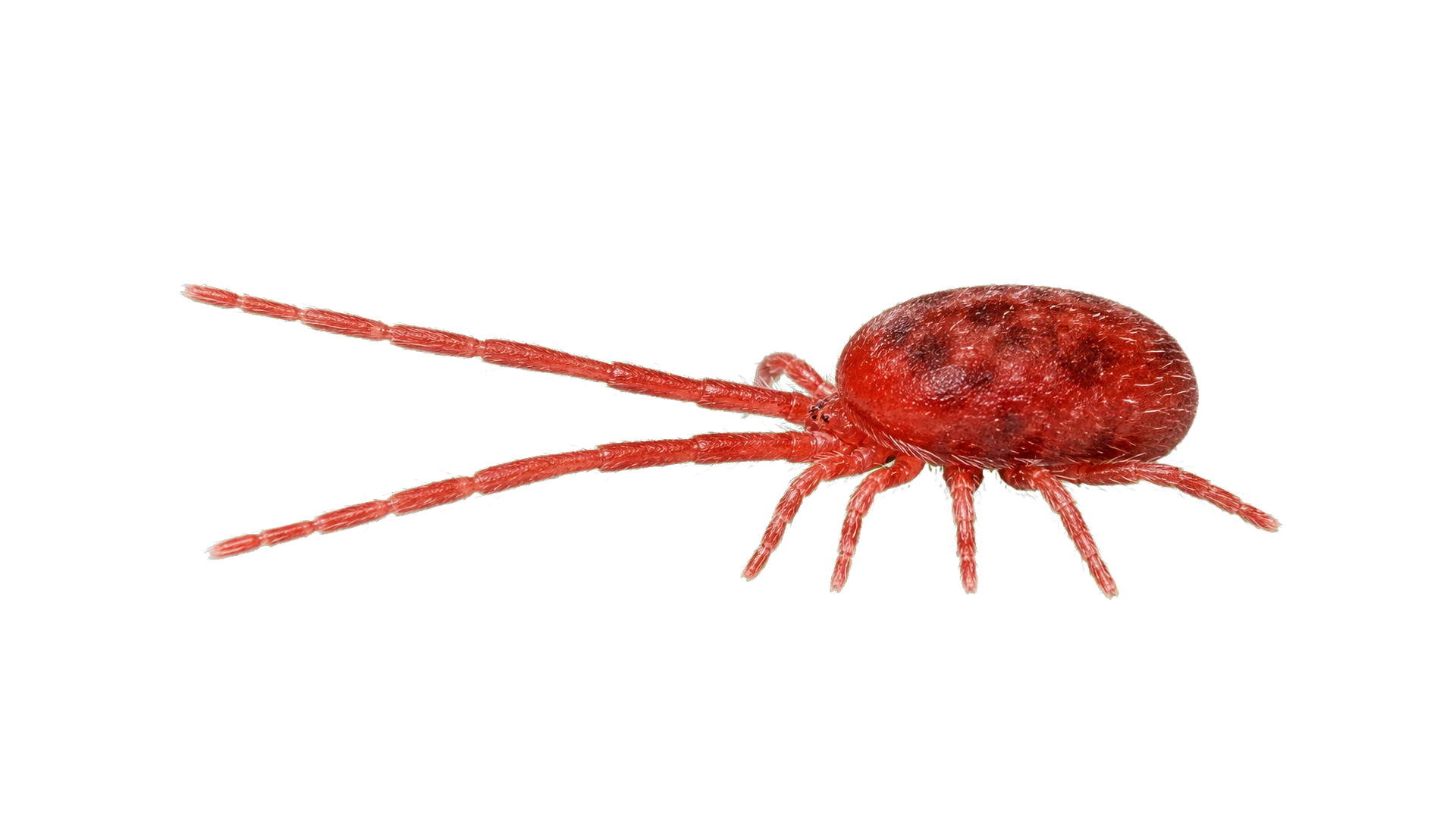
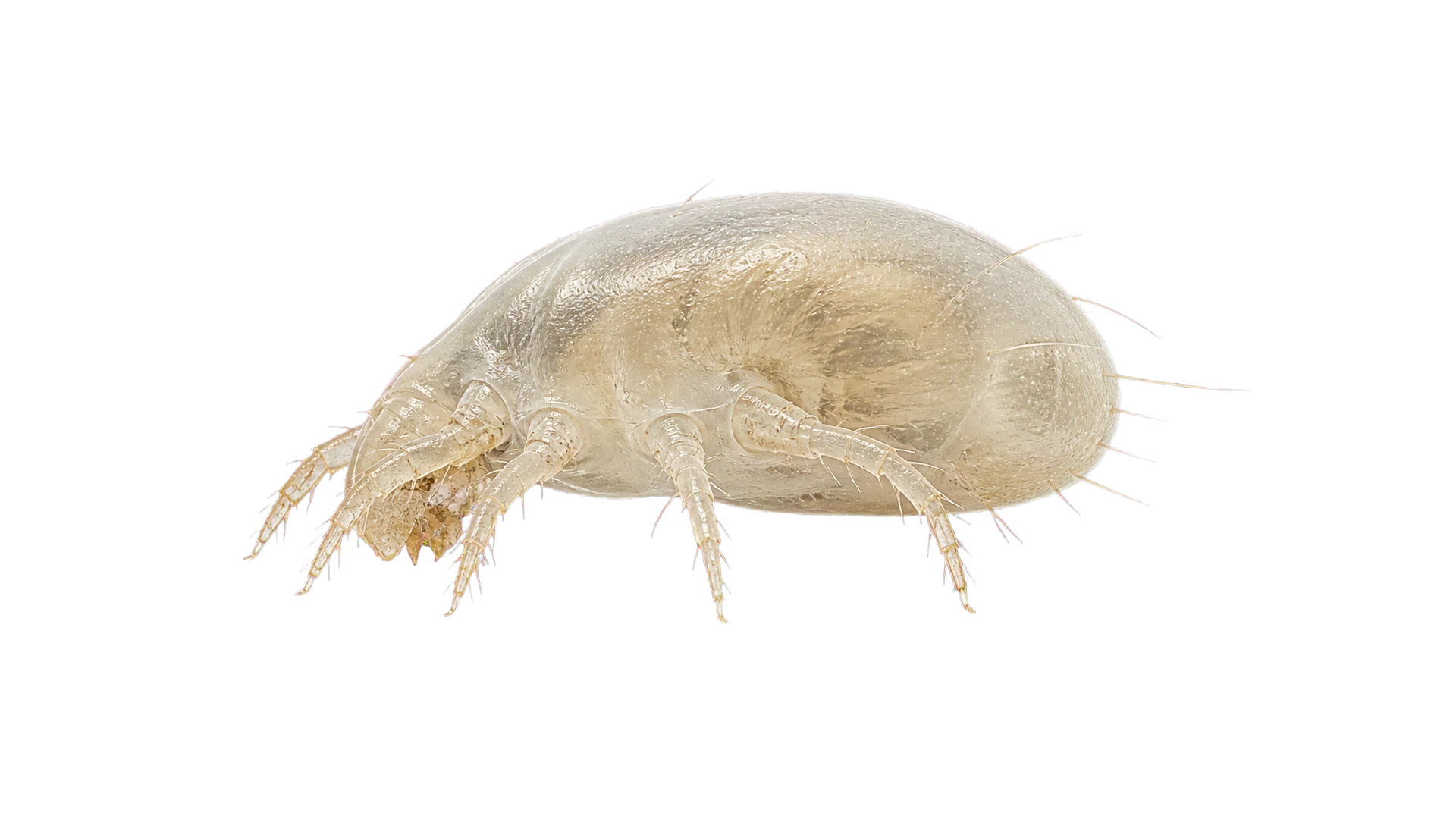
Most mites are smaller than 1 mm. Dust mites and scabies mites are functionally invisible without magnification. Clover mites and spider mites are visible as moving red or pale dots.
Local pest control help is one call away.
 Pest Control Services Nationwide Pest Control Services Nationwide
 Mites are tiny arachnids that fall into four practically distinct categories: dust mites you cannot see (allergen producers), clover mites you barely see (spring window invaders), spider mites that damage plants, and parasitic mites that affect skin or pets. Treatment depends entirely on which category you have, and the diagnosis is rarely visual. A single mattress harbors hundreds of thousands of dust mites no homeowner ever sees.
Each mite type responds to different conditions. Dust mites thrive in humid bedding and accumulate fastest above 50 percent relative humidity. Clover mites surge in April as outdoor populations explode. Spider mites cycle with houseplant stress. Bird mites and rodent mites appear after a host nest is removed.
Three patterns drive most household mite calls year after year.
What different mite categories are actually doing:
A typical mattress harbors hundreds of thousands of dust mites. About 20 million Americans show measurable allergic sensitivity to dust mite allergens. Spider mite populations on a single houseplant can hit several hundred mites per leaf in 2 weeks under dry warm conditions. Mite-related US horticulture losses run into hundreds of millions of dollars annually.
Three checks separate mites from other tiny arthropods. Most household mite problems are diagnosed by symptoms, not visual ID.
Most mites are smaller than 1 mm. Dust mites and scabies mites are functionally invisible without magnification. Clover mites and spider mites are visible as moving red or pale dots.

Like spiders and ticks, mites are arachnids with 8 legs (6 in larval stage) and a single fused body. No antennae, no obvious waist. Insect look-alikes have 6 legs.

Clover mites are bright red. Spider mites range pale yellow to red. Dust mites are translucent. Bird mites are tan to dark red after feeding. Color plus location narrows species fast.
Mite issues rarely announce themselves through visible mites. Symptoms (allergies, plant damage, pet itching, occasional bites) are how homeowners discover the population, and the symptom pattern points to which category you have. Identifying the type drives the entire response plan.
Bedroom-specific morning allergies that ease after leaving the house point to dust mites. Tiny red dots crawling on south-facing windowsills in April point to clover mites. Fine webbing and stippled leaves on houseplants confirm spider mites. Line-pattern bites after a recent bird nest or rodent removal point to bird mites or rodent mites.
Pet symptoms (excessive scratching, hair loss, scabby skin) move the diagnosis to mange, which is a veterinary issue, not a pest control issue. Human itching with bites in finger webs, wrists, or waist points to scabies, which is a medical issue. Pest control does not solve those categories alone, but it can confirm the diagnosis before referral.
How Mite Issues Develop
Mites are functionally invisible to most homeowners; the diagnostic is the impact rather than the sighting. Dust mites live in bedding, upholstery, and carpets, feeding on shed skin cells. They produce allergen-laden waste that becomes airborne when fabrics are disturbed. They are responsible for a significant portion of indoor allergy and asthma symptoms, particularly in humid climates.
Clover mites, spider mites, and similar pests are seasonal nuisances rather than persistent populations. Clover mites surge in spring when their outdoor populations on lawns and ornamentals explode; they migrate into structures and concentrate on south-facing walls before dispersing. Spider mites attack stressed plants and produce visible webbing. Bird mites, rodent mites, and scabies represent more concerning infestations that warrant medical or wildlife-removal involvement.
Effective mite control depends entirely on the species. Dust mite control is humidity management plus aggressive bedding maintenance. Clover mite control is exterior perimeter treatment plus mulch management. Spider mite control is plant health management plus targeted miticide. Parasitic mite issues require veterinary or medical involvement (mange and scabies are not solved with pest control alone). Identification before treatment is essential.
Six features define a mite. Most household mites are too small to see clearly without a microscope.
Mites are arachnids with 8 legs (6 in larval stage). This is the primary structural difference from insects. Legs are short and stout relative to body size.
Unlike spiders, which have 2 body segments separated by a waist, mites have a single fused body with no obvious segments. Structurally similar to ticks.
Most household mites are 0.1 to 1 mm long. Dust mites are functionally invisible. A single mattress can host hundreds of thousands a homeowner never sees.
Specialized mouthparts at the front of the body. Dust mite chelicerae chew shed skin cells; spider mite chelicerae pierce plant cells; scabies chelicerae burrow into human skin.
Two short leg-like sensory appendages flanking the mouth. Used for handling food and detecting environment. Less prominent than spider pedipalps but structurally similar.
Each leg ends in claws or suction-like pads that grip the mite's preferred substrate: skin scales, plant leaves, fabric fibers, animal feathers. Specialized to the habitat.
Symptoms are usually how mite issues are discovered. Match the pattern below to identify which mite type is likely.
Mites cover a wide range of problems. Scabies, dust mites, bird mites, and rodent mites all behave differently. Urgency depends on which mite you have and where it is coming from.
Itching at night, small red bumps in lines or clusters, or a single mite spotted near a known source. Identification is critical because scabies, bird mites, and dust mites need very different responses.
Multiple family members affected, or a confirmed source identified (active bird nest, rodent issue, severe dust mite allergy). Mite type drives protocol: scabies needs medical, bird mites need source removal, dust mites need bedding overhaul.
Persistent itching after treatment, mites in multiple rooms, or a chronic source still active (bird nest in attic, rodent population in walls). Mites have likely spread into HVAC and soft furnishings.
Chronic infestation across multiple rooms or family members, severe skin reactions, or untreated underlying source. Multi-visit professional treatment, source remediation, and HVAC cleaning are usually all needed.
The fastest way to fail with a mite problem is to treat without identifying the source. Scabies treatment will not help with bird mites. Bird mite treatment will not help with dust mites. Identify first, treat second.
Local pros identify which mite category you have and recommend the matching treatment, whether that's perimeter spray, plant care, or referral to medical or veterinary care.
Mites do not settle in at random. They follow signals: bedroom humidity above 50 percent, a sun-warmed south-facing wall in April, a houseplant stressed by dry winter heat. Once any one of those signals lines up, a population can build from invisible to symptomatic within 2 to 4 weeks because the entire life cycle runs in under a month.
Different mites chase different rewards, which is why category ID matters. Dust mites live in bedding, mattresses, and carpets where humidity sits above 50 percent and skin flakes accumulate. Clover mites stream across exterior walls in spring from dense lawn and foundation plantings. Spider mites colonize houseplant leaf undersides during dry heated months. Bird and rodent mites disperse from abandoned nests after a host leaves. Mange mites transfer from pet to pet through direct contact. Knowing which category you have tells you whether the fix is a dehumidifier, a perimeter treatment, or a vet visit.
Most affected homes have two or three categories running at once, and the moisture fix is the universal first move. Start with the highest-leverage humidity source: a basement at 70 percent humidity, a bedroom without a dehumidifier, a bathroom fan that does not vent outside. Drop interior humidity below 50 percent and dust mite populations collapse within 3 weeks. Even partial wins help: washing pillows and bedding weekly in 130 degree Fahrenheit water kills 100 percent of dust mites per cycle without any chemical work.
Dust mite ground zero. Single mattress harbors hundreds of thousands. Encasements and weekly hot-wash bedding manage the population.
Secondary dust mite habitat. HEPA vacuum weekly; consider hard flooring in bedrooms if allergies are significant.
Clover mite breeding habitat. Spring populations in lawns and ornamentals are the source of the indoor migrations homeowners notice on south-facing walls.
Spider mite habitat. Stressed plants in dry warm conditions are most vulnerable. Inspect undersides of leaves for stippling and webbing.
Bird mites and rodent mites originate in their host nests. After nest removal, residual mites can bite humans for several weeks before dying out.
Mange mites and other pet-affecting mites concentrate on pet bedding, kennels, and pet resting spots. Pet treatment plus environmental cleanup of these zones is the typical response.
Mild-looking mite issues can compound fast when conditions favor them.
3 to 7 days
Females lay eggs in or near the substrate (bedding, plant leaves, animal nest, soil). Some species hatch in less than 48 hours under favorable conditions.
6 to 17 days
Six-legged larvae feed and molt to 8-legged nymph stage, then through 1 to 2 more molts. Each molt is a vulnerable window for miticide treatment on plants.
2 weeks to 3 months
Adults reproduce throughout life. A single female produces hundreds of offspring. Spider mite populations double every 5 to 10 days under good conditions.
Generation time runs 1 to 4 weeks depending on species and conditions. Fast-cycling species like spider mites and dust mites grow exponentially when conditions favor them. Catching the issue early dramatically reduces the population that needs controlling.
Mites are tiny, but a few species trigger allergies and skin issues. Match what you're seeing to identify which one.
| Species | Severity | Key Sign | Where You'll Find Them |
|---|---|---|---|
| Dust Mites | Medical | Allergic reactions (sneezing, runny nose), worsened asthma symptoms, found in bedding and upholstery | mattresses, pillows, carpets |
Severity reflects typical impact, not your specific case. If unsure, treat at the higher tier.
Honest read on common DIY methods. The right treatment depends entirely on which mite category you have.

 Mattress and pillow encasements (bed bug-rated covers also work for dust mites) Wash bedding weekly at 130+ degrees Fahrenheit Indoor humidity below 50 percent; HEPA vacuum carpets and upholstery weekly Insecticidal soap or neem oil applied to leaf undersides on a 5 to 7 day cycle for 3 weeks Hose plants thoroughly to dislodge populations; raise humidity around indoor plants For severe outdoor infestations, professional miticide application is appropriate Pro-grade exterior perimeter treatment in early spring (April) suppresses outdoor populations Pull mulch back 12 to 18 inches from foundation; reduce dense ornamental plantings against the house Vacuum indoor mites with damp cloth or sticky lint roller (no crushing or staining)
  Often labeled for several mite types but effective against few Indoor chemical exposure with no progress on the actual driver Wrong tool for the most common indoor concerns (dust mite allergies, spider mites on plants) Limited evidence for dust mite reduction at typical application rates Useful for some other indoor pest categories; not specifically for dust mites Not the right approach for allergen management Foggers don't penetrate mattresses, upholstery, or plant leaves where mites live Pesticide residue exposure without solving the actual issue Almost never the right tool for any mite category
 Six prevention actions sorted by effort. Match the action to the mite category you have.

Wash sheets, pillowcases, and duvet covers at 130+ degrees F weekly. Kills dust mites and removes accumulated allergens. Single highest-impact dust mite intervention for the 20 million Americans with allergic sensitivity.

Dehumidifier in humid rooms, AC use during humid weather, fix moisture sources. Dust mites cannot survive sustained low humidity, which is why allergies improve when the heat comes on in fall.

Bed bug-rated zippered encasements double as dust mite barriers. Trap existing mites and prevent new colonization. Single investment that delivers years of allergen reduction in the bedroom.

HEPA filtration is essential. Standard vacuums spread allergens rather than capture them. Weekly during allergy season, biweekly otherwise. Pair with hard-surface flooring in bedrooms for sensitive sleepers.

For clover mite issues: pro-grade exterior perimeter treatment in April suppresses outdoor populations before they migrate to south-facing walls and windowsills. Pull mulch back 12 to 18 inches from the foundation.

Inspect houseplant leaf undersides quarterly for stippling, fine webbing, or moving dots. Catch spider mite populations before they spread to other plants. Raise humidity around plants during winter heating.
Different mite categories peak at different times. Match the season to the species you're dealing with.
Clover mite peak season. Outdoor populations explode and migrate into structures. Spring is also peak spider mite season for many outdoor ornamentals as plant growth resumes.
Spider mite populations peak indoors as low humidity stresses plants. Outdoor pressures are diverse. Dust mite populations build in humid bedrooms during AC season transitions.
Clover mites have a smaller secondary peak. Bird mites and rodent mites become noticeable as nests are abandoned and homeowners notice bites. Plant spider mites continue indoors as heating dries air.
Indoor heating drops humidity, often improving dust mite issues but worsening spider mites on houseplants. Outdoor populations crash. Indoor concerns dominate.
Four steps from arrival to a plan matched to the mite type. Initial visit runs 45 to 75 minutes.
Diagnose, match treatment, refer if needed. Real mite control is type-specific. Plans that apply generic miticide without diagnosis usually miss the actual concern.
Discuss symptoms (allergy pattern, plant damage, bite location, pet behavior). Identify the likely mite category. Confirm visually if visible species are present.
For visible types, locate the source: lawn for clover mites, plants for spider mites, recent nest for bird or rodent mites, pet bedding for mange.
Exterior perimeter for clover mites, plant treatment for spider mites, source-area treatment for bird and rodent mites, allergen-reduction recommendations for dust mites.
Suspected scabies (medical), suspected mange (veterinary), or persistent allergy issues (allergist) get referred. Pest control alone does not solve every category.
Real stories from households who connected with pros to identify and address the specific mite issue affecting their home.

"No pressure, just options."
I appreciated being given eco-friendly options without being pushed. The technician explained tradeoffs honestly and let me decide based on my priorities. They were transparent about what each approach involves. The no-pressure approach and honest information helped me make a confident decision.
"No pressure, just options."
I appreciated being given eco-friendly options without being pushed. The technician explained tradeoffs honestly and let me decide based on my priorities. They were transparent about what each approach involves. The no-pressure approach and honest information helped me make a confident decision.

"The inspection caught what we missed."
I didn't realize how much damage raccoons can cause once they get inside. The wildlife specialist explained what areas they inspect first and why raccoon issues are handled more carefully than regular pests. They showed me the damage and explained removal and exclusion strategies. Understanding the potential for damage made me glad I called professionals.

"The problem finally stayed gone."
Ants kept returning no matter what we did. The tech treated the trail areas and explained how to handle food storage and moisture so the ants don't keep coming back. It's been months and we haven't seen them again. I appreciated that it wasn't just a one-and-done spray.

"Clear expectations and a real plan."
I was overwhelmed and didn't know what was realistic to fix quickly. The inspector explained what results to expect and how long it typically takes depending on the ant species. They treated the right places and gave simple prevention tips. Everything felt structured and easy to follow.

"They found the entry points fast."
Ants were showing up in the kitchen and we couldn't figure out where they were coming from. The tech tracked the activity and pointed out two entry points we never would've noticed. After treating and sealing those areas, the ants disappeared. It was quick and surprisingly thorough.

"No pressure, just helpful info."
I mainly wanted to understand what was happening before committing to anything. The inspector walked me through the likely cause and the differences between treatment approaches. They answered questions without rushing me. The plan we chose worked and the ants were gone within days.

"The tech helped me stop wasting time."
I kept trying different products and nothing was sticking. The tech explained why some solutions don't work for certain ant problems and focused the treatment where it would actually matter. They also gave prevention tips that were easy to implement. The difference was obvious within the first week.

"We finally understood what to do next."
We felt stuck because nothing we tried lasted. The tech explained how to find the source of the problem, treated both indoor and outdoor areas, and helped us build a prevention routine. It wasn't complicated. Just the right steps in the right order. We've had a huge improvement since.

"They fixed what was actually causing it."
Ants kept showing up in the same spot. The pro explained that the visible ants weren't the real issue and focused the treatment on where they were coming from. They identified the entry path and treated it properly. The problem stopped and hasn't returned.

"It felt like a real inspection, not a quick spray."
The tech spent time figuring out where the ants were entering instead of just spraying around. They walked me through the likely reasons and what to watch for over time. After treatment, ant activity dropped fast and stayed low. The detailed approach gave me confidence.

"Small changes made a big difference."
We didn't realize how much our routine was attracting ants. The inspector explained simple prevention steps and treated the areas where activity was highest. Once those changes were in place, we stopped seeing ants inside. It was a practical approach that actually worked.

"The explanation alone was worth it."
I'd been doing random treatments without understanding what I was dealing with. The tech explained how ants behave and why certain approaches work better. They treated strategically instead of just spraying. It made the whole thing feel manageable.

"We stopped chasing the problem and solved it."
We kept wiping down counters and the ants would be back the next day. The pro identified the entry areas and explained the treatment plan clearly. Once they treated and targeted the colony, the ants disappeared quickly. It felt like we finally got ahead of it.

"They didn't oversell. Just solved it."
The tech explained what treatment was necessary and what wasn't. They focused on the entry points and corrected the conditions that were attracting ants. The work felt honest and effective. I liked having clear expectations and seeing results quickly.

"It wasn't just 'spray and go.'"
I appreciated the step-by-step explanation and the focus on prevention. The inspector treated the areas where ants were getting in and helped me understand what to change at home. The ants stopped showing up and it's been consistent. The approach felt thoughtful and sustainable.

"It finally made sense why they kept coming back."
I had ants showing up every few months and never understood why. The tech explained how outdoor nests and weather changes affect indoor activity. They treated the perimeter and entry points instead of just the inside. Since then, we haven't had recurring issues.

"Targeted instead of overdone."
I was worried about over-treating the house. The pro focused on specific problem areas and explained why blanket spraying wasn't necessary. The ants stopped appearing, and we didn't feel like chemicals were used unnecessarily. That balance mattered to us.

"Clear answers without jargon."
The tech explained everything in plain language and answered questions without rushing. They identified the type of ant we had and adjusted the treatment accordingly. Knowing why the approach worked gave me confidence it would last.

"They focused on prevention, not just treatment."
I liked that the tech talked through how to keep ants from returning after the treatment. They addressed moisture issues and entry points around the home. The treatment worked, and the prevention tips helped us stay ahead of future problems.

"No guessing, just a plan."
I was tired of guessing what would work. The inspector explained the cause of the issue and outlined a clear plan of action. After treatment, the ants disappeared and we haven't had to revisit the problem. It felt efficient and well thought out.

"They explained what to expect upfront."
The tech set expectations about timing and results before starting. They explained that some activity might happen initially and why. Everything played out exactly as described, and the ants were gone shortly after. That transparency made a big difference.

"Helpful without being overwhelming."
I didn't realize there were different types of ants or that it mattered. The inspector walked me through what they were seeing and explained how ant behavior affects treatment. It made it easier to ask the right questions and understand the solution.

"Saved me a lot of guessing."
I was close to trying random sprays for the ants. Talking with the tech helped me understand what was realistic to address and what usually doesn't work. The targeted treatment solved the issue quickly and saved time and frustration.

"It felt tailored to our home."
The tech didn't just apply a standard treatment. He looked at where we were seeing activity and adjusted the approach to our layout and yard. The ants stopped showing up and we understood how to keep it that way.

"Straightforward and effective."
I appreciated how straightforward everything was. The pro explained the issue, treated the problem areas, and gave us a few simple steps to prevent future issues. The ants were gone and it didn't feel complicated.

"They explained how the weather played a role."
I didn't realize seasonal changes could affect ant activity so much. The tech explained how heat and rain push ants indoors and what to do about it. They treated the problem areas and gave tips to prevent future issues. The explanation helped everything click.

"It wasn't as complicated as I expected."
I assumed pest control would be disruptive or complicated. The technician explained the steps clearly and focused on targeted treatment. The ants stopped appearing quickly and the process was smoother than expected.

"They helped me understand the bigger picture."
Instead of just treating the ants I saw, the tech explained what was happening around the house that made it attractive to pests. Once those factors were addressed, the problem resolved quickly. It felt educational as well as effective.

"Clear communication from start to finish."
I appreciated how clearly everything was explained before treatment began. The inspector walked through the process and answered all my questions. The ants were gone shortly after and we felt confident about prevention going forward.

"They addressed what we were missing."
We kept focusing on cleaning, but the tech showed us where ants were actually entering. Once those points were treated and sealed, the issue resolved. It was reassuring to finally understand the root cause.

"A methodical approach that worked."
The pro explained how they identify ant trails and colonies before treating. They took a methodical approach instead of rushing through. The ants stopped appearing and the fix has held up well.

"They understood desert pest behavior."
Living in Phoenix, pests behave differently than other places. The tech explained how heat drives ants indoors and what treatments work best here. The solution was effective and tailored to our environment.

"They took the time to do it right."
I appreciated that the tech didn't rush. He inspected the problem areas carefully and explained what they were seeing. The treatment worked quickly and the ants haven't returned.

"They understood the local pest issues."
The tech explained how the humidity here contributes to ant problems and why certain treatments work better in this climate. They focused on outdoor entry points and moisture-prone areas. The ants cleared up quickly and haven't come back.

"Finally something that lasted."
We'd dealt with recurring ants for years. The pro explained why flooding and moisture play such a big role here and adjusted the treatment accordingly. It's been months without seeing ants, which is a big win for us.

"They knew exactly what works in Arizona."
The tech explained how desert conditions affect ant behavior and which treatments are most effective here. They targeted the right areas and avoided unnecessary spraying. The ants disappeared quickly.

"Clear, calm, and professional."
I appreciated how calmly everything was explained. The inspector identified the ant problem, explained the treatment, and answered my questions without rushing. The solution worked and gave me peace of mind.

"They handled it efficiently."
The tech inspected the problem areas, explained the plan, and got to work quickly. The ants were gone within days and the process felt efficient without being rushed.

"Simple explanations, solid results."
I liked how simply everything was explained. The pro didn't overcomplicate things and focused on what mattered. The ants stopped appearing and we haven't needed follow-up treatments.

"They showed me what to watch for."
Beyond treating the ants, the tech explained what signs to watch for if activity starts again. That knowledge made me feel more in control. So far, everything has stayed clear.
Direct answers to what homeowners ask most about mite issues across the various categories.
Mites are arachnids, not insects. They're closely related to spiders and ticks: eight legs as adults, a single fused body region (no separate head, thorax, abdomen the way insects have), and no wings or antennae. Most mites are microscopic or barely visible at under 1mm long, which is why people often notice symptoms (itching, allergies, plant damage) long before they see the mite itself. There are thousands of mite species; the ones that affect homes and people include dust mites (allergens), clover mites (nuisance invaders), spider mites (plant pests), scabies mites (skin burrowers), bird and rodent mites (parasitic on animals but bite people when hosts are unavailable), and chiggers (outdoor larval mites). Each type lives differently and requires a different treatment approach, which is why proper identification is the first step.
Dust mites themselves are too small to see; you confirm them by symptoms and conditions. Symptoms: morning allergy flare-ups (sneezing, runny nose, congestion that improves once you're up and moving), worsening asthma, eczema flares, itchy eyes, especially in bedrooms. Conditions: indoor humidity above 50 percent, older mattresses and pillows (5+ years), unwashed bedding, wall-to-wall carpet in bedrooms, accumulated dust in upholstered furniture. If symptoms cluster around your bedroom or while sleeping and improve when you're traveling, dust mites are a strong suspect. Allergists can confirm with a skin or blood test. The good news: dust mites do not bite, do not infest your body, and do not crawl on you. They live in fabric and feed on shed skin. Reducing humidity below 50 percent, encasing mattresses and pillows in mite-proof covers, and washing bedding weekly in hot water (130F+) is the proven control protocol.
Almost certainly clover mites. They're bright red, smaller than a pinhead, and show up in massive numbers on sunny exterior walls, windowsills, and around foundations in early spring and again in fall. They're harmless: they don't bite, don't damage structures, and don't infest food. They're feeding on grass and clover outside and migrate up walls when temperatures shift. The classic clover mite mistake: trying to crush them. They leave bright red stains on light-colored walls, curtains, and counters that look like blood smears (it's actually pigment, not blood, but the stain is real). Vacuum them up instead. Long-term reduction means creating a 12-to-18-inch vegetation-free zone of gravel or mulch directly against the foundation; they need lush vegetation to breed, and a barrier strip dramatically reduces the population pressure on the house.
Some mites bite, others don't. Bird mites and rodent mites bite people when their normal host (a nesting bird or rat) leaves or dies; the abandoned mites disperse looking for blood and end up on humans. Bites are itchy red welts, often in clusters, frequently around the waist, ankles, or upper body near where the host nest was. Scabies mites don't bite in the surface sense, they burrow into the skin and lay eggs, causing intense itching especially at night and a characteristic rash. Chiggers (larval mites in tall grass and brush) attach, inject saliva, and cause prolonged itchy welts on ankles, waistlines, and skin folds. Dust mites and clover mites do not bite people at all. If you have unexplained bites and recently had a bird or rodent issue, mites from that nest are a strong suspect, and the source nest needs to be located and removed for the bites to stop.
Spider mites attack plants, not people. Signs: fine webbing on leaves and stems, stippled yellow or bronze speckling on leaf surfaces, leaves drying out and dropping. They thrive in hot, dry, dusty conditions. First step: a strong water spray, undersides of leaves especially, repeated every 3 to 4 days for 2 weeks to physically dislodge mites and break the breeding cycle. Insecticidal soap or horticultural oil sprayed on undersides of leaves works well; coverage is everything because spider mites hide on leaf undersides. Increasing humidity around plants (regular misting, grouping plants) discourages them. For severe infestations on ornamentals, predatory mites (Phytoseiulus persimilis) can be released as biological control. Heavily infested leaves should be pruned and bagged for disposal. For houseplants, isolate the affected plant from healthy ones during treatment to prevent spread.
It depends on the type. Dust mites are managed with humidity control, mattress encasements, and bedding hygiene; pros can help with severe allergic homes by recommending HVAC adjustments and deep-cleaning protocols, but most cases are DIY. Clover mites are nuisance-level and respond to exterior perimeter treatment plus a vegetation-free zone, which a pro handles in a single visit. Bird mites and rodent mites require finding and removing the source nest, which often means accessing attics, eaves, or wall voids; this is where pros are essential because missing the nest means the bites continue. Scabies is medical, see a doctor for prescription treatment, plus environmental cleaning of bedding and clothing in hot water. Spider mites on plants are horticultural, not pest control, but a pro can rule out other plant pests if you're unsure. When mite identification itself is uncertain (you have bites but don't know the source), a pro inspection is the right starting point because the right treatment depends entirely on the species.
Timelines vary widely by mite type. Clover mites: a single exterior perimeter treatment plus vegetation-free zone reduces activity within days, with full seasonal control achieved by addressing the lush vegetation source. Dust mites: humidity reduction below 50 percent plus mattress encasements plus weekly hot-water bedding wash shows symptom relief within 4 to 6 weeks; full population reduction in deeply embedded fabric takes 3 months as the existing mites die off and aren't replaced. Bird and rodent mites: bites typically stop within 1 to 2 weeks after the source nest is removed and the affected area is treated, because the mites disperse and die without a host. Scabies: prescription treatment kills the active mites in one or two applications, but itching can persist for weeks as the body clears the immune response. Spider mites on plants: visible reduction in 1 to 2 weeks with consistent treatment, full clearance in 3 to 4 weeks. The common thread: identifying the species correctly is what determines speed; misidentifying mites is the most common reason treatments seem to fail.
Diagnose the type, match the treatment, refer where needed. Local pros help you identify which mite is affecting your home.
Click through to species pages for specific identification, behavior, and treatment for each mite type.
Pinpoint-sized red mites that invade homes in huge numbers during spring and fall.
Clover mites are tiny reddish-brown arachnids that feed on grass, clover, and other plants before migrating indoors by the thousands through window frames, door seals, and foundation cracks. They don't bite or cause structural damage, but crushing them leaves reddish stains on walls, curtains, and furniture. Maintaining a vegetation-free perimeter around the foundation is the most effective prevention.
Quick ID:
Why it matters:
Invisible arachnids that trigger allergies and asthma in bedding.
Dust mites feed on shed human skin cells and thrive in mattresses, pillows, upholstered furniture, and carpeting where humidity stays above 50 percent. Their fecal pellets and body fragments are potent allergens that trigger year-round allergic rhinitis and asthma symptoms in sensitized individuals. Encasing bedding, reducing indoor humidity, and regular hot-water laundering are the primary control strategies.
Quick ID:
Why it matters: