Local pest control help is one call away.

Dust Mite: Identification, Treatment & Prevention

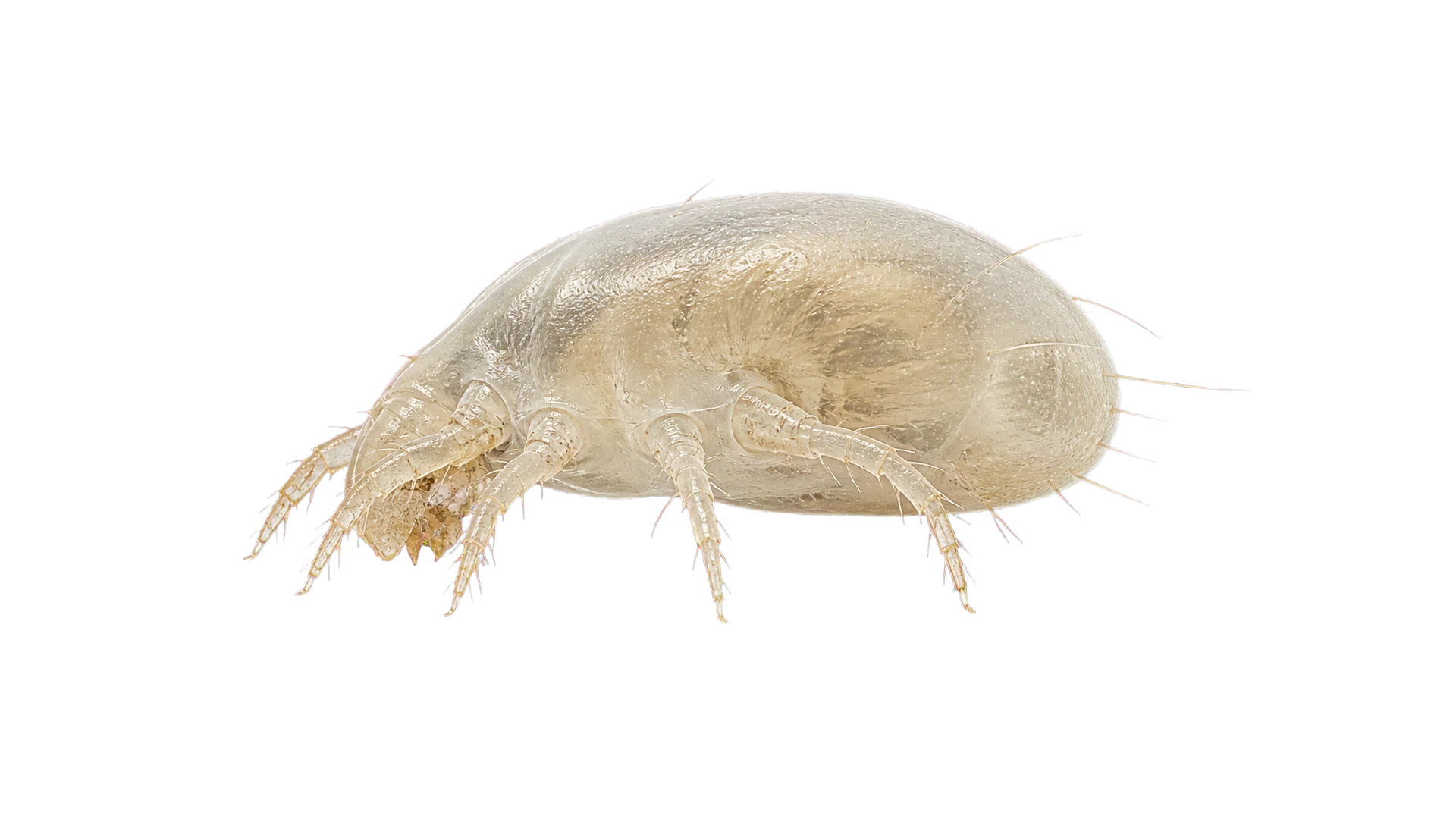
Dust mites are microscopic arachnids that live in your mattress, your pillow, your couch, and the carpet under your feet. They are 0.2 to 0.4 millimeters long, which means you cannot see them without magnification. They do not bite. They do not damage furniture or wood. They have one job that affects you, their droppings and shed body parts mix into household dust, and those tiny protein fragments are one of the most common indoor allergy and asthma triggers in the country.

More than 20 million Americans are allergic to dust mites. Symptoms show up as sneezing, runny nose, itchy eyes, eczema flare-ups, nighttime coughing, sleep problems, and asthma attacks, and they are typically worse in the bedroom because that is where the largest population lives. The average mattress holds between 100,000 and 10,000,000 mites. This guide covers what dust mites really are, why no spray on the market can reach them, and the allergen-reduction steps that actually lower symptoms in your home.

Microscopic illustration of a dust mite showing eight legs and cream-white body

ID Card: Dust Mite

Scientific name
Dermatophagoides pteronyssinus
Color
Translucent white
Size
1/100 to 1/64 inch
Body shape
Microscopic, translucent, oval body
Key evidence
Allergic reactions (sneezing, runny nose), worsened asthma symptoms, found in bedding and upholstery
Also known as
Bed mites, Mattress mites, House dust mites

Call to get matched with a local pest control pro.

Available 24/7
(888) 495-1510
  • Specialists who understand allergen reduction, not just pesticide spraying
  • Mattress, pillow, and upholstery assessment focused on the largest reservoirs
  • Humidity and ventilation guidance sized for your home and climate

Where Dust Mites Actually Live in Your Home

Cross-section illustration showing dust mite reservoirs in a mattress, pillow, carpet, and upholstered couch

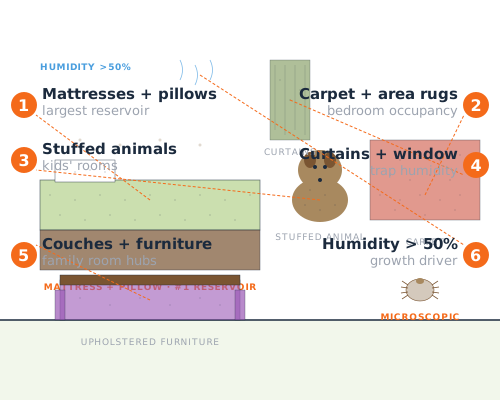
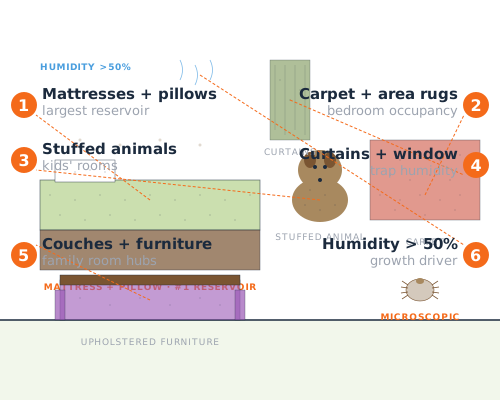
You will never spot a dust mite by walking through your house, they are smaller than the dot at the end of this sentence. But every mite lives in the same kind of place, soft surfaces that collect shed human skin. Walk these zones with that one rule in mind, anywhere people sit, sleep, or shed skin for hours at a time is a dust mite hotspot:

  • Mattresses, the single largest reservoir in any home. A typical adult sheds about 1.5 grams of skin per day, and most of it ends up in the bed. Mattresses older than five years often hold mite populations in the millions.
  • Pillows and bedding, second only to the mattress. A two-year-old pillow can be up to 10 percent dead mites and droppings by weight. Comforters, blankets, and mattress toppers all add to the load.
  • Upholstered couches and chairs, especially older furniture in family rooms where people sit for hours. The fabric weave holds skin cells, the cushions hold humidity, and the mites multiply quietly inside.
  • Wall-to-wall carpet in bedrooms, carpet fibers trap skin flakes, hair, and humidity right at floor level. Bedroom carpets hold significantly higher mite counts than living-room carpets because skin shedding happens for eight hours a night.
  • Stuffed animals on a child's bed, a heavily used plush toy left on a pillow for months can hold a higher mite density per gram than the mattress itself.
  • Curtains, fabric blinds, and humid bathrooms, anywhere humidity stays above 50 percent and fabric goes unwashed for months gives mites the warmth and moisture they need to keep reproducing.

Mites cannot survive when indoor humidity drops below 50 percent, which is why dry climates and well-ventilated homes have lower populations. In humid climates, in homes with carpet in every room, or in older bedding that has never been replaced, populations can grow into the millions per mattress. You will never see a mite. What you will see is symptoms that get worse in the bedroom, worse at night, and worse during humid weeks.

Cross-section illustration showing dust mite reservoirs in a mattress, pillow, carpet, and upholstered couch
Illustration showing dust mite habitat conditions, humidity, fabric reservoirs, and shed skin as the food source

Why Do I Have Dust Mites?

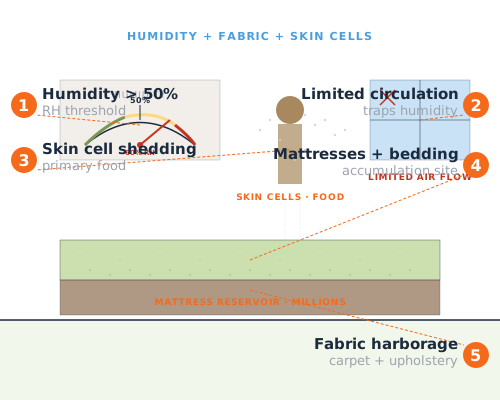
Every home has dust mites. The question is not whether they are there, the question is how many, and that comes down to four conditions in your specific house. Mites need warmth (your home already provides it), humidity above 50 percent, fabric reservoirs that hold skin cells, and time. When all four line up, populations grow into the millions. When even one is missing, populations stay low enough that nobody notices.

What keeps mite populations high in your home:

  • Indoor humidity above 50 percent, the single biggest driver. Coastal homes, humid summers, basements, and bathrooms with no exhaust fan all push mite populations up fast
  • Old mattresses and pillows, mites cannot be vacuumed out of a mattress, so a bed that is five years old without an encasement holds far more allergen than a new one
  • Wall-to-wall carpet in bedrooms, fiber depth and humidity at floor level create the ideal reservoir, much harder to clean than a hard surface
  • Heavily used upholstered furniture, older couches and chairs in family rooms accumulate skin cells faster than people realize
  • Stuffed animal collections in a child's bed, soft toys left on the pillow for months act as concentrated mite habitat right next to the child's face

Mites do not move from house to house the way roaches or ants do. They are present everywhere humans live, and they breed in place. What you can change is the conditions, dropping humidity below 50 percent shuts down reproduction, washing bedding hot kills mites and rinses out allergen, and putting allergen-impermeable covers on mattresses and pillows seals the largest reservoir away from your face for eight hours every night. Those three steps drive almost all of the symptom improvement you can get at home.

How Serious Is Your Dust Mite Problem?

Find your scenario below. Each row reflects how dust mite allergy actually shows up at home, not a generic pest timeline.

What You're Seeing Severity If Untreated Next Step
Mild seasonal allergy symptoms, no diagnosed asthma in the household Early Symptoms tend to creep upward as bedding ages and humidity rises in summer months Add allergen-impermeable mattress and pillow covers. Wash bedding weekly in hot water at 130°F or higher. HEPA vacuum bedrooms.
Diagnosed dust mite allergy with rhinitis or eczema flares, worse in the bedroom Moderate Allergen load in the mattress and bedroom carpet keeps climbing without active reduction, expect more nighttime symptoms within 6 to 12 months Run a comprehensive reduction program, encasements, hot wash routine, dehumidifier under 50% RH, weekly HEPA vacuuming, and allergist follow-up.
Child with asthma whose symptoms worsen at night or in the bedroom High Continued exposure during sleep is one of the strongest drivers of pediatric asthma symptom control. Untreated, attacks and rescue inhaler use rise. Schedule a professional allergen reduction assessment this month and coordinate with the child's allergist or pulmonologist on a written control plan.
Severe pediatric asthma with recurring attacks despite medication Urgent Environmental control is part of standard asthma care at this level, gaps in the home plan undermine the medical plan Call this week. Combine professional allergen-reduction work, medical asthma management, and an immunotherapy conversation with the allergist.
Mild seasonal allergy symptoms, no diagnosed asthma in the household
Severity Early
If Untreated Symptoms tend to creep upward as bedding ages and humidity rises in summer months
Next Step Add allergen-impermeable mattress and pillow covers. Wash bedding weekly in hot water at 130°F or higher. HEPA vacuum bedrooms.
Diagnosed dust mite allergy with rhinitis or eczema flares, worse in the bedroom
Severity Moderate
If Untreated Allergen load in the mattress and bedroom carpet keeps climbing without active reduction, expect more nighttime symptoms within 6 to 12 months
Next Step Run a comprehensive reduction program, encasements, hot wash routine, dehumidifier under 50% RH, weekly HEPA vacuuming, and allergist follow-up.
Child with asthma whose symptoms worsen at night or in the bedroom
Severity High
If Untreated Continued exposure during sleep is one of the strongest drivers of pediatric asthma symptom control. Untreated, attacks and rescue inhaler use rise.
Next Step Schedule a professional allergen reduction assessment this month and coordinate with the child's allergist or pulmonologist on a written control plan.
Severe pediatric asthma with recurring attacks despite medication
Severity Urgent
If Untreated Environmental control is part of standard asthma care at this level, gaps in the home plan undermine the medical plan
Next Step Call this week. Combine professional allergen-reduction work, medical asthma management, and an immunotherapy conversation with the allergist.

Mite populations cannot be eliminated, but allergen exposure can be dropped dramatically. If you are between two rows, treat the higher one as your situation.

How a Dust Mite Population Builds

A single mite is harmless, you would never even know it was there. The problem is the math. One female lays 60 to 100 eggs over her short life, every egg can reach reproductive age in three to four weeks, and populations double quickly in warm humid bedding. Within months, a single mattress goes from a few thousand mites to hundreds of thousands. The lifecycle below is exactly why the realistic target is allergen reduction, not elimination.

  1. Egg

    About 3 to 4 days

    Females lay eggs directly into bedding, carpet, and upholstery, wherever skin cells collect. Eggs are microscopic and survive ordinary cleaning, which is why surface vacuuming alone never empties a mattress. They hatch faster in warm humid conditions.

  2. Larva

    About 1 week

    Six-legged larvae feed on shed human skin cells and on the fungal flakes that grow on them. They are still microscopic and still inside the same fabric reservoir, mostly the mattress or pillow you sleep on.

  3. Nymph

    About 1 to 2 weeks

    Two nymph stages follow. The mite gains its eighth leg and continues to feed in place. Through this stage, droppings accumulate in the fabric, and those droppings are the actual allergen people react to, not the mite itself.

  4. Adult

    Lives 65 to 100 days

    Adults mate inside the same reservoir and the female begins laying. Each adult contributes about 20 droppings per day to the surrounding dust. Across thousands of adults sharing a mattress, the daily allergen output is what triggers nighttime symptoms.

A typical mattress can hold anywhere from 100,000 to 10 million mites depending on age, humidity, and whether it has ever been encased. Complete elimination is not realistic, the goal is to seal the biggest reservoir away from your airway, drop humidity below the threshold where they can reproduce, and wash the smaller fabric reservoirs hot enough to kill mites and rinse allergen down the drain.

When Dust Mites Are Most Active

Dust mites live indoors year-round, but populations rise and fall with humidity rather than temperature. Knowing the seasonal curve tells you when symptoms are most likely to spike and when the home plan needs to tighten up.

  • Spring

    Humidity climbs as outdoor temperatures rise and windows open. Populations start growing inside mattresses and upholstery. Pollen allergies often mask the dust mite component this time of year, an allergist test sorts out which is which.

  • Summer

    Peak population season in most of the country. Indoor humidity above 60 percent supports rapid reproduction, especially in homes without air conditioning or with leaky ductwork. Nighttime symptoms typically peak in late summer.

  • Fall

    Populations remain high through fall. As windows close and indoor air starts recirculating, allergen exposure can actually climb even as the mites themselves stop reproducing. This is when many families first connect the symptoms to the bedroom.

  • Winter

    Dry indoor heating drops humidity, and mite populations decline in most homes. Allergen does not disappear though, the existing droppings and shed body parts remain in fabric until they are washed out or vacuumed up. Symptoms can stay elevated even as the live population thins.

Why Dust Mites Aren't a Spraying Job

Dust mites are different from every other pest on this site. They are microscopic, so you cannot see what you are treating. They do not bite, do not crawl on you, and do not damage your home, the reaction is to the protein in their droppings and shed body parts mixed into household dust. They live deep inside the weave of your mattress, pillow, and carpet, places no spray can reach without ruining the material. There is no pesticide product that meaningfully reduces dust mite allergen in a home.

What actually works is allergen reduction, a different category of work from traditional pest control. The biggest single step is sealing your mattress and pillows inside allergen-impermeable encasements, those covers physically block droppings and body fragments from reaching your face for the eight hours a night you spend in bed. Washing bedding in 130°F or hotter water once a week kills mites and rinses out the allergen they have already produced. Keeping indoor humidity below 50 percent stops the population from reproducing in the first place.

A professional dust mite consultation is not a spray visit. It is an assessment, a humidity reading in each room, identification of the biggest reservoirs, encasement specifications for your specific mattresses and pillows, dehumidifier sizing for the affected rooms, and HEPA vacuum guidance for floors and upholstery. For homes with diagnosed asthma, the report is built to share with the allergist so the home plan and the medical plan stay aligned.

Expect to invest roughly $200 to $500 for the professional assessment itself, plus $300 to $1,500 in encasements, a dehumidifier, and a HEPA vacuum depending on home size and severity. That investment beats endless symptom medication for many families, especially homes with pediatric asthma where bedroom allergen exposure is one of the strongest drivers of attack frequency.

What Changes When a Pro Shows Up

Dust mites are not a spraying job, they are a reduction job. A specialist's role here is to identify the highest-impact actions for your home and your family's symptoms, and to coordinate that work with medical care if asthma is in the picture. Here is what changes:

Pest control technicians after completing a dust mite allergen reduction visit
  • Local Pest Control
  • 24/7 Availability
  • Quality Workmanship
  • Eco‑Friendly Options
  • Trusted by Homeowners
  • They Measure Humidity, Not Just Eyeball It

    A hygrometer reading in every affected room tells the truth, mites collapse below 50 percent relative humidity and explode above 60 percent. The numbers drive the rest of the plan, dehumidifier sizing, ventilation fixes, and which rooms are realistic to control.

  • They Identify the Biggest Reservoirs

    Mattresses, pillows, bedroom carpet, and the family-room couch usually hold 80 percent of the household allergen. The job is to rank them and treat the largest one first, not to spread effort across every soft surface at once.

  • They Spec the Right Encasements

    Allergen-impermeable mattress and pillow covers are the single highest-leverage step in the entire plan, but only if the pore size and fit are correct. A specialist tells you which ones to buy and how to install them so allergen actually stays trapped.

  • They Coordinate With Medical Care

    For diagnosed asthma or severe allergy, the home plan and the allergist's plan need to line up. A good provider documents what was done, what the humidity readings were, and what the follow-up schedule looks like for the medical team.

  • Local Pest Control
  • 24/7 Availability
  • Quality Workmanship
  • Eco‑Friendly Options
  • Trusted by Homeowners
NoToPests home

One call connects you with a local specialist who knows dust mites and your area.

Be Ready When You Call

Pest control technician arriving for a dust mite allergen reduction consultation
Junho L.
Daisuke P.
Kirk Q.
Marion K.

Trusted by homeowners nationwide

Call for Pest Control Help (888) 495-1510

Can You Handle This or Do You Need Help?

Dust mites are one of the few household pests where consistent DIY work delivers most of the result. A professional is most useful for severe allergy or asthma cases where the plan needs to be measured, written, and coordinated with medical care.

What DIY Can Do

DIY allergen reduction is highly effective when the basics are done consistently. Useful steps with honest limits:

  • Install zip-sealed allergen-impermeable mattress and pillow encasements, this single step usually drops bedroom symptoms more than anything else combined
  • Wash sheets, pillowcases, and blankets in 130°F or hotter water once a week to kill mites and rinse out accumulated allergen
  • Run a dehumidifier to hold indoor humidity under 50 percent, mites cannot reproduce below that threshold
  • HEPA vacuum mattresses, upholstered furniture, and carpets weekly, replace standard vacuums that lack sealed HEPA filtration
  • Replace pillows every 1 to 2 years, wash or rotate stuffed animals weekly, consider hard flooring instead of bedroom carpet during remodels
  • What DIY cannot do: produce a measured baseline humidity reading across the home or coordinate with a child's asthma care plan in writing.

What a Pro Does Differently

Professional dust mite work focuses on assessment, prioritization, and coordination, not on spraying anything. Here is what changes when you call:

  • Hygrometer readings in every affected room produce a measured baseline rather than a guess
  • Reservoir ranking identifies the one or two soft surfaces driving most of your allergen load
  • Encasement specs match pore size, zipper seal, and fit to your specific mattresses and pillows
  • Dehumidifier sizing matches the rooms that matter, not generic square-footage guesses
  • Written documentation gets shared with the allergist or pulmonologist so the home plan and the medical plan stay aligned, especially for pediatric asthma cases.

Suspect Dust Mites? Don't Wait.

Dust mite allergens trigger asthma attacks, nightly congestion, and lost sleep in millions of households. Connect with a local specialist who handles allergen reduction, encasement specs, and coordination with medical care.

Available 24/7
(888) 495-1510

What Homeowners Say After Getting Help

Real results from people who had the same problem and solved it.

Rashad E.
Rashad E.
Portland, OR

"No pressure, just options."

I appreciated being given eco-friendly options without being pushed. The technician explained tradeoffs honestly and let me decide based on my priorities. They were transparent about what each approach involves. The no-pressure approach and honest information helped me make a confident decision.

Rashad E.
Rashad E.
Portland, OR

"No pressure, just options."

I appreciated being given eco-friendly options without being pushed. The technician explained tradeoffs honestly and let me decide based on my priorities. They were transparent about what each approach involves. The no-pressure approach and honest information helped me make a confident decision.

Yu E.
Yu E.
Durham, NC

"The inspection caught what we missed."

I didn't realize how much damage raccoons can cause once they get inside. The wildlife specialist explained what areas they inspect first and why raccoon issues are handled more carefully than regular pests. They showed me the damage and explained removal and exclusion strategies. Understanding the potential for damage made me glad I called professionals.

Ren P.
Ren P.
Dayton, OH

"The problem finally stayed gone."

Ants kept returning no matter what we did. The tech treated the trail areas and explained how to handle food storage and moisture so the ants don't keep coming back. It's been months and we haven't seen them again. I appreciated that it wasn't just a one-and-done spray.

Kayla Q.
Kayla Q.
Pittsburgh, PA

"Clear expectations and a real plan."

I was overwhelmed and didn't know what was realistic to fix quickly. The inspector explained what results to expect and how long it typically takes depending on the ant species. They treated the right places and gave simple prevention tips. Everything felt structured and easy to follow.

Malachi U.
Malachi U.
Knoxville, TN

"They found the entry points fast."

Ants were showing up in the kitchen and we couldn't figure out where they were coming from. The tech tracked the activity and pointed out two entry points we never would've noticed. After treating and sealing those areas, the ants disappeared. It was quick and surprisingly thorough.

Arturo B.
Arturo B.
Yonkers, NY

"No pressure, just helpful info."

I mainly wanted to understand what was happening before committing to anything. The inspector walked me through the likely cause and the differences between treatment approaches. They answered questions without rushing me. The plan we chose worked and the ants were gone within days.

Octavio Z.
Octavio Z.
Duluth, MN

"The tech helped me stop wasting time."

I kept trying different products and nothing was sticking. The tech explained why some solutions don't work for certain ant problems and focused the treatment where it would actually matter. They also gave prevention tips that were easy to implement. The difference was obvious within the first week.

Chauncey A.
Chauncey A.
Duluth, MN

"We finally understood what to do next."

We felt stuck because nothing we tried lasted. The tech explained how to find the source of the problem, treated both indoor and outdoor areas, and helped us build a prevention routine. It wasn't complicated. Just the right steps in the right order. We've had a huge improvement since.

Vihaan V.
Vihaan V.
Madison, WI

"They fixed what was actually causing it."

Ants kept showing up in the same spot. The pro explained that the visible ants weren't the real issue and focused the treatment on where they were coming from. They identified the entry path and treated it properly. The problem stopped and hasn't returned.

Allison A.
Allison A.
Des Moines, IA

"It felt like a real inspection, not a quick spray."

The tech spent time figuring out where the ants were entering instead of just spraying around. They walked me through the likely reasons and what to watch for over time. After treatment, ant activity dropped fast and stayed low. The detailed approach gave me confidence.

Stephen N.
Stephen N.
Sacramento, CA

"Small changes made a big difference."

We didn't realize how much our routine was attracting ants. The inspector explained simple prevention steps and treated the areas where activity was highest. Once those changes were in place, we stopped seeing ants inside. It was a practical approach that actually worked.

Daquan V.
Daquan V.
Tampa, FL

"The explanation alone was worth it."

I'd been doing random treatments without understanding what I was dealing with. The tech explained how ants behave and why certain approaches work better. They treated strategically instead of just spraying. It made the whole thing feel manageable.

Deepak V.
Deepak V.
San Antonio, TX

"We stopped chasing the problem and solved it."

We kept wiping down counters and the ants would be back the next day. The pro identified the entry areas and explained the treatment plan clearly. Once they treated and targeted the colony, the ants disappeared quickly. It felt like we finally got ahead of it.

Mireya Z.
Mireya Z.
Riverside, CA

"They didn't oversell. Just solved it."

The tech explained what treatment was necessary and what wasn't. They focused on the entry points and corrected the conditions that were attracting ants. The work felt honest and effective. I liked having clear expectations and seeing results quickly.

Wei D.
Wei D.
Lexington, KY

"It wasn't just 'spray and go.'"

I appreciated the step-by-step explanation and the focus on prevention. The inspector treated the areas where ants were getting in and helped me understand what to change at home. The ants stopped showing up and it's been consistent. The approach felt thoughtful and sustainable.

Shu W.
Shu W.
Orlando, FL

"It finally made sense why they kept coming back."

I had ants showing up every few months and never understood why. The tech explained how outdoor nests and weather changes affect indoor activity. They treated the perimeter and entry points instead of just the inside. Since then, we haven't had recurring issues.

Teresa I.
Teresa I.
Mesa, AZ

"Targeted instead of overdone."

I was worried about over-treating the house. The pro focused on specific problem areas and explained why blanket spraying wasn't necessary. The ants stopped appearing, and we didn't feel like chemicals were used unnecessarily. That balance mattered to us.

Latonya X.
Latonya X.
Mesa, AZ

"Clear answers without jargon."

The tech explained everything in plain language and answered questions without rushing. They identified the type of ant we had and adjusted the treatment accordingly. Knowing why the approach worked gave me confidence it would last.

Humberto T.
Humberto T.
Eugene, OR

"They focused on prevention, not just treatment."

I liked that the tech talked through how to keep ants from returning after the treatment. They addressed moisture issues and entry points around the home. The treatment worked, and the prevention tips helped us stay ahead of future problems.

Jerrell N.
Jerrell N.
Arlington, VA

"No guessing, just a plan."

I was tired of guessing what would work. The inspector explained the cause of the issue and outlined a clear plan of action. After treatment, the ants disappeared and we haven't had to revisit the problem. It felt efficient and well thought out.

Marion K.
Marion K.
Boulder, CO

"They explained what to expect upfront."

The tech set expectations about timing and results before starting. They explained that some activity might happen initially and why. Everything played out exactly as described, and the ants were gone shortly after. That transparency made a big difference.

Bridget E.
Bridget E.
Sacramento, CA

"Helpful without being overwhelming."

I didn't realize there were different types of ants or that it mattered. The inspector walked me through what they were seeing and explained how ant behavior affects treatment. It made it easier to ask the right questions and understand the solution.

Junho L.
Junho L.
Naperville, IL

"Saved me a lot of guessing."

I was close to trying random sprays for the ants. Talking with the tech helped me understand what was realistic to address and what usually doesn't work. The targeted treatment solved the issue quickly and saved time and frustration.

Willis Y.
Willis Y.
Baton Rouge, LA

"It felt tailored to our home."

The tech didn't just apply a standard treatment. He looked at where we were seeing activity and adjusted the approach to our layout and yard. The ants stopped showing up and we understood how to keep it that way.

Thelma S.
Thelma S.
Madison, WI

"Straightforward and effective."

I appreciated how straightforward everything was. The pro explained the issue, treated the problem areas, and gave us a few simple steps to prevent future issues. The ants were gone and it didn't feel complicated.

Angelina B.
Angelina B.
Austin, TX

"They explained how the weather played a role."

I didn't realize seasonal changes could affect ant activity so much. The tech explained how heat and rain push ants indoors and what to do about it. They treated the problem areas and gave tips to prevent future issues. The explanation helped everything click.

Kirk Q.
Kirk Q.
Denver, CO

"It wasn't as complicated as I expected."

I assumed pest control would be disruptive or complicated. The technician explained the steps clearly and focused on targeted treatment. The ants stopped appearing quickly and the process was smoother than expected.

Cody L.
Cody L.
Denver, CO

"They helped me understand the bigger picture."

Instead of just treating the ants I saw, the tech explained what was happening around the house that made it attractive to pests. Once those factors were addressed, the problem resolved quickly. It felt educational as well as effective.

Marquis K.
Marquis K.
San Mateo, CA

"Clear communication from start to finish."

I appreciated how clearly everything was explained before treatment began. The inspector walked through the process and answered all my questions. The ants were gone shortly after and we felt confident about prevention going forward.

Virginia T.
Virginia T.
San Mateo, CA

"They addressed what we were missing."

We kept focusing on cleaning, but the tech showed us where ants were actually entering. Once those points were treated and sealed, the issue resolved. It was reassuring to finally understand the root cause.

June J.
June J.
Omaha, NE

"A methodical approach that worked."

The pro explained how they identify ant trails and colonies before treating. They took a methodical approach instead of rushing through. The ants stopped appearing and the fix has held up well.

Caitlin K.
Caitlin K.
Phoenix, AZ

"They understood desert pest behavior."

Living in Phoenix, pests behave differently than other places. The tech explained how heat drives ants indoors and what treatments work best here. The solution was effective and tailored to our environment.

Olive S.
Olive S.
Sacramento, CA

"They took the time to do it right."

I appreciated that the tech didn't rush. He inspected the problem areas carefully and explained what they were seeing. The treatment worked quickly and the ants haven't returned.

Arianna D.
Arianna D.
Baton Rouge, LA

"They understood the local pest issues."

The tech explained how the humidity here contributes to ant problems and why certain treatments work better in this climate. They focused on outdoor entry points and moisture-prone areas. The ants cleared up quickly and haven't come back.

Kiyana N.
Kiyana N.
New Orleans, LA

"Finally something that lasted."

We'd dealt with recurring ants for years. The pro explained why flooding and moisture play such a big role here and adjusted the treatment accordingly. It's been months without seeing ants, which is a big win for us.

Brett R.
Brett R.
Phoenix, AZ

"They knew exactly what works in Arizona."

The tech explained how desert conditions affect ant behavior and which treatments are most effective here. They targeted the right areas and avoided unnecessary spraying. The ants disappeared quickly.

Albert O.
Albert O.
Baltimore, MD

"Clear, calm, and professional."

I appreciated how calmly everything was explained. The inspector identified the ant problem, explained the treatment, and answered my questions without rushing. The solution worked and gave me peace of mind.

Rohit Y.
Rohit Y.
Orlando, FL

"They handled it efficiently."

The tech inspected the problem areas, explained the plan, and got to work quickly. The ants were gone within days and the process felt efficient without being rushed.

Carolyn H.
Carolyn H.
Omaha, NE

"Simple explanations, solid results."

I liked how simply everything was explained. The pro didn't overcomplicate things and focused on what mattered. The ants stopped appearing and we haven't needed follow-up treatments.

Edith Z.
Edith Z.
Newark, NJ

"They showed me what to watch for."

Beyond treating the ants, the tech explained what signs to watch for if activity starts again. That knowledge made me feel more in control. So far, everything has stayed clear.

Common Questions About Dust Mites

Direct answers to what homeowners ask most about symptoms, why no spray works, and what allergen reduction really involves.

  • How do I know if I have a dust mite problem? Toggle answer for: How do I know if I have a dust mite problem?

    Dust mites are microscopic (about 0.3 mm) and invisible to the naked eye, so their presence is detected through symptoms rather than sightings. If you or family members experience persistent allergic symptoms, sneezing, runny nose, itchy or watery eyes, nasal congestion, or worsening asthma, that are worse in the bedroom upon waking, dust mite allergens are a likely contributor. Dust mites thrive in bedding, pillows, mattresses, upholstered furniture, and carpeting where they feed on shed human skin cells. Indoor humidity above 50% supports their reproduction, while humidity below 50% suppresses populations. Allergen-proof mattress and pillow encasements, frequent hot-water laundering of bedding, and maintaining low indoor humidity are the most effective control measures.


  • What is the connection between dust mites and asthma? Toggle answer for: What is the connection between dust mites and asthma?

    Dust mite allergens, primarily proteins found in their droppings and decaying body fragments, areone of the most common and potent indoor asthma triggers worldwide. A single dust mite produces approximately 20 droppings per day, and these microscopic fecal pellets become airborne when bedding is disturbed, carpets are walked on, or upholstery is sat upon. Chronic exposure to dust mite allergens can both trigger asthma attacks in sensitized individuals and contribute to the initial development of asthma in predisposed children. Studies consistently show that reducing dust mite exposure through mattress encasements, regular hot-water washing of bedding (at least 130°F), removing bedroom carpeting, and controlling humidity significantly reduces asthma symptom frequency and severity in dust-mite-sensitive individuals.

  • Why do mites keep appearing in my home? Toggle answer for: Why do mites keep appearing in my home?

    Different mite species enter homes for different reasons: bird mites migrate indoors when their bird hosts abandon nests on or near the structure, rodent mites move off dead or departed rodent hosts in wall voids, clover mites invade from surrounding turf, and dust mites thrive in the humidity and shed skin cells found in bedding and upholstered furniture. Mites are nearly microscopic, so their presence often goes unnoticed until populations are well established or until bites and allergic reactions prompt investigation.

  • Can mites cause health problems for my family? Toggle answer for: Can mites cause health problems for my family?

    Dust mite allergens are one of the most common indoor triggers for asthma, allergic rhinitis, and eczema, affecting millions of people. Bird and rodent mites can bite humans when their primary hosts are unavailable, causing itchy, red welts that are frequently misdiagnosed as other skin conditions. Scabies mites burrow directly into human skin and cause intense itching requiring medical treatment. While most household mites do not transmit diseases, their cumulative impact on respiratory health and skin comfort can be significant.

  • How quickly can a provider get to my home? Toggle answer for: How quickly can a provider get to my home?

    Most providers in our network can schedule an inspection within 24-48 hours. For urgent situations, likeactive structural damage or large colonies, same-week emergency service is often available. Response times depend on your location and the provider's current schedule.

  • What happens during the first visit? Toggle answer for: What happens during the first visit?

    Your provider inspects the property to identify the pest, locate nesting or entry points, and assess the scope of the problem. You get a clear explanation of what they found, what they recommend, and a written scope before any work begins.

  • Is treatment safe for kids and pets? Toggle answer for: Is treatment safe for kids and pets?

    Modern pest control products are designed to break down quickly after application and pose minimal risk to people and pets when applied correctly. Most providers ask you to keep kids and pets out of treated areas for 1 to 2 hours while the product dries, after which the area is generally safe again. Always confirm specific re-entry times with your provider, and let them know about pet birds, fish, or reptiles, since some treatments require extra precautions for those species.

Pest Control Pros serving the city of the state of your city and nearby areas

Local providers experienced in indoor allergen reduction are ready to assess your home, no obligation.

Available 24/7
(888) 495-1510