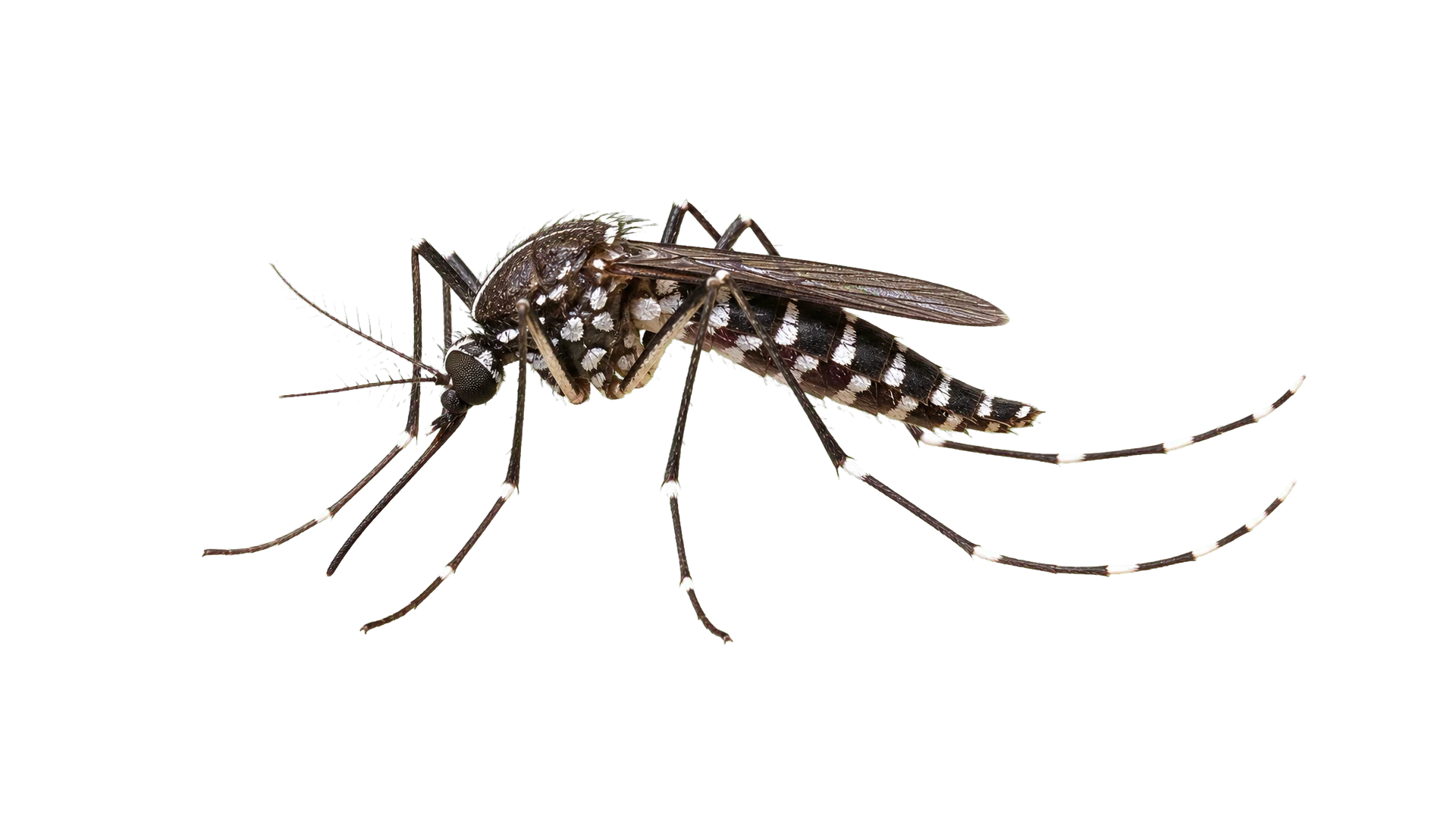
5 to 7 mm slender body
Adults run 5 to 7 mm with prominent legs and a clear proboscis. Gnats are 1 to 4 mm with no piercing mouthpart. Crane flies are 20 to 30 mm with stub mouthparts and dangling stilt legs.
Local pest control help is one call away.
 Pest Control Services Nationwide Pest Control Services Nationwide
 Mosquito control is a water problem disguised as a bug problem. Every biting female you swat traces back to standing water that sat for 7 to 14 days. Find the sources on your property and the population collapses faster than any spray can deliver.
Females need a blood meal to develop each batch of 100 to 300 eggs, then return to still water to lay them. A bottle cap of water supports 50 larvae. Aedes albopictus (Asian tiger mosquito) breeds in container water; Culex pipiens prefers organic-rich stagnant water in birdbaths and gutters.
Cut the breeding water and the spray bill disappears with it. Skip the source work and you'll fog the yard every Saturday from May to October.
Three water types every yard hides:
One Culex female lays 100 to 300 eggs per raft and produces 5 to 10 rafts in her 4 to 8 week adult life. Egg to biting adult takes just 7 to 14 days at 80 degrees Fahrenheit. Mosquitoes kill more humans annually than any other animal through malaria, dengue, West Nile, and EEE.
Three checks that separate a mosquito from a gnat, midge, or crane fly in under ten seconds.
Adults run 5 to 7 mm with prominent legs and a clear proboscis. Gnats are 1 to 4 mm with no piercing mouthpart. Crane flies are 20 to 30 mm with stub mouthparts and dangling stilt legs.

Female mosquitoes carry a needle-like proboscis extending forward from the head. Males have shorter mouthparts for nectar. The proboscis is the fastest single visual ID against every other small fly.

Mosquito wings carry prominent scales along the veins, visible as dark bands when light catches them. Gnats and midges have plain transparent wings. Aedes aegypti shows distinctive scale patterns.
A few bites on a humid Saturday can be neighborhood pressure drifting through. A swarm at every dusk visit is a property problem. The distinction matters because property-level breeding responds to source elimination, while regional pressure mostly needs barrier spray and personal repellent.
The single fastest diagnostic is a flashlight check of every still water surface on the property after dark. Wrigglers, the larval stage, hang from the water surface and dive when disturbed. One container of 50 wrigglers will produce 50 biting females within two weeks if you leave the water alone.
Dawn and dusk swarms within 50 feet of a water source point to active on-property breeding. Pros trace visible swarms back to the breeding site by walking outward in 25 foot increments and inspecting every container, gutter, downspout, and low spot until they find the wrigglers.
How a Mosquito Population Builds
Only females bite. Males drink nectar and use feathery antennae to find females by wingbeat frequency. Each female blood meal triggers a batch of 100 to 300 eggs, which need still water to hatch. Larvae feed for 4 to 14 days in that water before emerging as adults. Bite pressure tracks female density, which tracks water sources within a 1 to 3 mile flight radius.
Species matter because breeding sites differ. Aedes aegypti and Aedes albopictus (Asian tiger) bite during the day and lay eggs above the waterline in plant saucers, kid toys, and tires. Culex pipiens bites at dusk and dawn and breeds in organic-rich stagnant water like birdbaths, gutters, and ornamental ponds. Anopheles, the malaria genus, prefers cleaner water and bites at night.
Effective mosquito control runs upstream of the bite. Source reduction handles 70 percent of the work: dump every container, refresh birdbaths every 3 days, clean gutters annually. Larvicide with Bti granules treats unavoidable water like rain barrels or ornamental ponds. Barrier spray on shaded shrubs and deck undersides suppresses the resting adult population. Run all three for 30 to 60 days and yard pressure measurably drops. Skip the source step and the spray treadmill never ends.
Six features that define a mosquito, with a female pictured (the biting sex). Males look similar but lack the long piercing proboscis and have noticeably bushier antennae.
Females house six fine stylets inside the proboscis that pierce, anesthetize, and pump blood in 90 seconds. Males have shorter nectar-only mouthparts.
Five to seven millimeters with a compact thorax and segmented abdomen. The abdomen visibly engorges and turns red after a blood meal.
Two narrow wings lined with scales along the veins. Beat 200 to 600 times per second, producing the high-pitched whine you hear at night.
Three slender pairs splay wide from the thorax. The posture lets a feeding female perch nearly weightless on skin without alerting the host.
Males carry densely feathered antennae to detect female wingbeats. Female antennae are less plumed. Antenna shape distinguishes sex in the field.
Large compound eyes wrap most of the head. Mosquitoes track CO2 plumes at 30 to 50 feet and lock on visually within 3 feet.
Pick the sign that matches what you've noticed. Each one points to a different stage of the population.
Mosquito populations follow water and weather, not months. A single rainy week can turn a quiet yard into a swarm zone. The timeline below tracks the typical season from first bite to peak pressure.
First bites of the season at dusk or dawn near the patio. Local population is small and tied to nearby standing water (gutters, planter saucers, low spots). Window for source-only control is wide open.
Bites at every outdoor visit, dusk swarms within 50 feet of shrubs, or multiple adults following you indoors. Breeding sites are active on or near the property and the population climbs 3 to 5x weekly.
Yard is unusable at dusk, daily bite pressure on adults and kids, or strong reactions in sensitive family members. West Nile, EEE, and dog heartworm risk peak across this window in active regions.
Pressure returns every spring and runs through first frost. Water sources are persistent (neighbor's pool, wetland edge, drainage easement). One-off treatments never hold; this is a 6 month program every year.
Hot, wet weeks compress this timeline. After a heavy rain, expect to jump one stage forward in 7 to 10 days as new larvae emerge.
Local mosquito specialists find the breeding sites, treat the larvae, and barrier-spray the resting zones. Source reduction is the actual fix.
Most homeowners know about birdbaths and kiddie pools. The sites that drive most populations are the ones nobody inspects: a bottle cap holds enough water for 50 Aedes larvae. A clogged downspout extension holds enough for 1,000. Map the micro-sources and you've done most of the work.
The single highest-yield audit takes 20 minutes. Walk the entire perimeter with a flashlight and dump every container holding water deeper than a fingernail. Plant saucers, kid toys, watering cans, tarps, garbage can lids, recycling bins. One Sunday weekly through mosquito season cuts yard breeding by an estimated 70 percent.
The harder sites are structural. Clogged gutters running 30 feet of standing water across the back of the house produce the largest breeding source on most properties. Corrugated downspout extensions trap water at every fold. Neglected pool covers, tree hollows, and bromeliad cup leaves all sustain breeding without ever being obvious to a casual walk-by.
Clogged gutters hold 30 feet of water for weeks after rain. Corrugated downspout extensions trap water at every ridge. Annual cleaning plus smooth-bore extensions eliminates the single largest breeding source on most properties.
Plant saucers, kiddie pools, watering cans, garbage can lids, tire swings. Anything holding water past 7 days becomes a breeding site. A weekly Sunday audit through mosquito season cuts yard breeding by 70 percent.
Stagnant decorative water is Culex pipiens heaven. Refresh birdbaths every 3 days during mosquito season. Run fountain pumps continuously; non-circulating fountains become breeding pools within a week.
Adults rest under leaves in shaded vegetation during the day. Ivy on walls, thick foundation plantings, and unmowed weedy zones host prime resting harborage. Trim back to drop daytime adult populations significantly.
Sagging pool covers, tarps over boats, and ornamental ponds without fish sustain large breeding populations. Drain or treat with Bti larvicide. Add Gambusia mosquito fish to permanent ornamental water.
Adults rest on shaded siding, deck undersides, and the foundation perimeter through the day. Targeted barrier spray along these zones suppresses the resting population for 30 to 60 days per application.
Why a single ignored bucket of water becomes a hundred biting adults in two weeks.
1 to 3 days
Females lay 100 to 300 eggs per batch (Aedes singly above the waterline, Culex in rafts). Aedes eggs survive drying months and hatch when rain refills the container.
4 to 14 days
Wrigglers hang from the water surface to breathe, feeding on microorganisms. Larvae molt four times before pupating. Bti larvicide kills them at this stage.
1 to 4 days
Comma-shaped tumblers surface to breathe but do not feed. Adults emerge from the floating pupal case within days. Pupae resist most insecticides.
Lives 1 to 8 weeks
Females live 4 to 8 weeks and produce 5 to 10 egg batches. Males live 1 to 2 weeks on nectar. Adults fly 1 to 3 miles from the breeding source.
Egg-to-adult takes 7 to 14 days at summer temperatures. A single breeding site can produce 100 to 300 new adults every 7 to 14 days. Eliminating standing water for one weekend interrupts the entire local cycle. Eliminating it sustainably for the season cuts yard pressure significantly without spraying.
Mosquito species carry different disease risks and bite at different times of day. Match what you're seeing to identify which one.
| Species | Severity | Key Sign | Where You'll Find Them |
|---|---|---|---|
| Asian Tiger Mosquitoes | Medical | Aggressive daytime biting, breeds in small water containers like bottle caps | containers, tires, flowerpots |
Severity reflects typical impact, not your specific case. If unsure, treat at the higher tier.
Honest read on the most common DIY methods: which ones reduce the breeding cycle and which ones thin only the visible adults.

 Eliminate every standing water source on the property; weekly audits during mosquito season Drain plant saucers, refresh birdbaths every 3 days, clear gutters annually Reduces the next-generation population by the percentage of breeding sites eliminated Bti (Bacillus thuringiensis israelensis) granules drop into ornamental ponds, rain barrels, or low spots that can't be drained Kills larvae specifically; safe for fish, pets, birds, and other aquatic life Single application lasts 30 days; biodegradable and EPA-approved for residential use Pro-grade residual insecticide applied to dense shrubs, deck undersides, and shaded vegetation Suppresses adult resting populations for 30 to 60 days per application Most effective when paired with source reduction; one-and-done sprays without source work fade fast
  Kill the wrong insects: research shows zappers attract mostly beneficial nighttime insects, not mosquitoes Mosquitoes hunt by CO2 and body heat, not by UV light Useful for moths and other nuisance flies; not effective against mosquito populations Provide local repellent effect within a few feet of the candle No effect on the broader population or breeding cycle Useful as a personal protection layer during direct outdoor sessions; not control Kill the visible adults the spray contacts directly; effect lasts hours to a day No impact on larvae developing in standing water; new adults emerge in 7 to 14 days Required to be reapplied weekly to maintain visible reduction
 Six prevention actions, sorted by effort. Mosquito control is an integrated plan: source reduction first, then targeted treatment of what's left.

Walk the yard every Sunday during mosquito season and dump every container with water: plant saucers, kiddie pools, kid toys, watering cans, tarp folds. Single highest-impact prevention task on the list.

Aedes eggs hatch in 1 to 3 days. Dumping and refilling birdbaths every 3 days breaks the cycle entirely. Run fountain pumps continuously; non-running fountains become breeding pools within 7 days.

Clogged gutters produce the largest single breeding source on most properties. Clean every spring before mosquito season. Swap corrugated downspout extensions for smooth-bore tubing that does not trap water at folds.

Cut back dense shrubs against the house, thin ivy and ground cover, mow weedy zones to 4 inches. Cuts adult daytime resting populations significantly and shortens the effective range of any barrier spray.

Regrade low spots that hold water more than 7 days after rain. Install French drains where slope allows. Long-term drainage fixes are the single most durable mosquito-prevention investment a homeowner can make.

Bti granules in ornamental ponds, rain barrels, and unavoidable low spots kill larvae for 30 days per application. Safe for fish, pets, pollinators, and birds. EPA-approved for residential use since 1981.
Mosquito populations are intensely seasonal. Knowing the cycle lets you time prevention work for maximum impact.
Overwintering eggs hatch as temperatures rise and rainfall fills containers. Source reduction in early spring prevents the entire season's first generation. This is the highest-impact intervention window of the year.
Peak adult populations and bite pressure. Continuous breeding cycles every 7 to 14 days mean weekly water audits are essential. Barrier sprays at start of summer extend yard usability through July and August.
Populations decline with cooling temperatures but bite pressure can stay high through early October in many regions. Last application of barrier spray in September extends the usable yard season. Empty containers before winter so spring eggs don't hatch in them.
Adult populations crash; eggs of some species (Aedes) overwinter and hatch when spring water returns. Off-season is the time to fix structural drainage issues, replace gutters, and prepare for next year's source reduction routine.
Four steps from arrival to a yard with measurably lower bite pressure. Initial visit runs 60 to 90 minutes; results follow within 7 to 14 days.
Source reduction, larvicide, barrier spray, repeat. Real mosquito control is an integrated plan over a season, not a single fogger event. Plans that promise season-long elimination from one spray are overselling.
Walk the perimeter and identify every standing water source: gutters, plant saucers, birdbaths, tarps, low spots, ornamental ponds. Source reduction recommendations anchor the plan.
Bti or methoprene granules treat unavoidable water like ornamental ponds, rain barrels, and persistent low spots. Kills larvae for 30 days. Safe for fish, pets, and pollinators.
Pro-grade residual product on shaded vegetation, deck undersides, and the house perimeter where adults rest by day. Suppresses adult populations for 30 to 60 days.
Return visits every 30 to 45 days reassess water sources, refresh larvicide, reapply barrier spray. Cumulative effect builds across April through October.
Real stories from households who connected with mosquito specialists to reclaim the yard during peak season.

"Mosquito problem finally handled."
Our backyard was unusable most of the summer because of mosquitoes. The crew treated the standing water areas and perimeter and explained what conditions were attracting them. We can actually enjoy our yard now.
"Mosquito problem finally handled."
Our backyard was unusable most of the summer because of mosquitoes. The crew treated the standing water areas and perimeter and explained what conditions were attracting them. We can actually enjoy our yard now.

"Evenings outside are ours again."
The humidity here makes mosquitoes relentless. The crew identified breeding areas around our property and treated the perimeter. Our evenings outside went from miserable to enjoyable.
"Coastal mosquitoes finally manageable."
Living near the beach means constant moisture, and the mosquitoes were terrible. The crew addressed standing water areas and treated the yard perimeter. We can finally use our patio in the evenings.
"Yard usable again after mosquito treatment."
Between the heat and humidity, mosquitoes were constant. The crew treated our yard and identified drainage issues that were creating breeding spots. The improvement was dramatic and lasted through the season.

"Gulf Coast yard usable again."
Living on the Gulf Coast means constant mosquito pressure. The provider treated our yard and identified standing water we hadn't noticed. The improvement was immediate and the yard became usable again.

"Our patio is finally mosquito-controlled."
Our patio was unusable in the evenings because of mosquitoes. The tech treated the yard and found a clogged gutter that was holding standing water. Fixing the drainage and treating the perimeter made a huge difference.

"They tackled our marsh-area mosquito problem."
Living near coastal marshes means heavy mosquito pressure. The crew treated our yard and identified water collection points we hadn't considered. The perimeter treatment made our outdoor spaces much more enjoyable.
"Porch back in use after mosquito treatment."
Standing water in the neighbor's drainage ditch kept mosquitoes breeding near our property. The crew treated the perimeter and breeding areas on our side. They also showed us how to reduce standing water around planters and gutters.
"Backyard breeding sites treated and drained."
Our backyard has a drainage swale that holds water after rain, and mosquitoes were breeding in it. The provider treated the standing water areas and perimeter. They recommended better drainage which significantly reduced breeding habitat.

"Lanai usable again after mosquito treatment."
Despite screens, mosquitoes were breeding in the landscape and getting through tiny gaps. The provider treated the yard's standing water sources and the perimeter. They suggested improving the screen enclosure seals which made a huge difference.

"Mosquito breeding sites treated at the perimeter."
A neighborhood drainage ditch behind our property was breeding mosquitoes constantly. The provider treated our yard perimeter and the ditch edge on our property. They recommended larvicide treatments and removing containers that hold water.
"Yard breeding sites eliminated, mosquitoes down."
With standing water in plant saucers and the rain barrel, mosquitoes were breeding everywhere. The provider treated the yard and showed us how to eliminate breeding sites. The reduction was noticeable within the first week.

"Evenings outside enjoyable again near the creek."
Living near a creek meant constant mosquito pressure. The provider treated the yard perimeter and recommended removing brush piles that hold moisture. The treatments made evening outdoor time enjoyable again.

"Yard usable again despite retention pond."
Our neighborhood retention pond made evenings outside miserable. The provider treated our yard perimeter and recommended removing any standing water on our property. The combination of treatments made outdoor time enjoyable again.
"Riverside yard enjoyable again."
Living near the Mississippi means heavy mosquito pressure. The provider treated the yard perimeter with barrier products and addressed standing water. Evening outdoor time went from miserable to enjoyable.

"Backyard usable again after mosquito treatment."
Between the birdbath and low spots in the yard, mosquitoes were breeding constantly. The provider treated the yard and showed us how to eliminate standing water. The improvement was dramatic within the first week.

"Outdoor comfort restored near the river."
Living near the river meant constant mosquito activity from spring through fall. The provider treated the yard with barrier products and addressed areas holding water. The treatments made a significant difference in outdoor comfort.

"Post-hurricane mosquito pressure brought down."
Standing water from storm damage made mosquitoes worse than ever. The provider treated the entire property and identified drainage issues. As cleanup progressed and standing water was eliminated, the mosquito pressure decreased significantly.
"Rain barrels screened and breeding stopped."
Our eco-friendly rain barrels became mosquito breeding grounds. The provider treated the yard and showed us how to screen the barrel openings. The screens solved the breeding issue without sacrificing water collection.

"Evenings outside enjoyable near the bogs again."
Living near cranberry bogs means constant mosquito pressure. The provider treated our yard perimeter and recommended eliminating standing water on the property. The barrier treatment made evenings outside much more pleasant.

"Yard usable again near the bay."
Living near the bay means heavy mosquito pressure from spring through fall. The provider treated the yard perimeter and addressed standing water on the property. The barrier treatments made evening outdoor time possible again.
"Wetland-edge yard usable through summer."
Adjacent wetland made mosquitoes unbearable from June through September. The provider treated our yard with barrier products and addressed any standing water. The treatments reduced mosquito pressure to a manageable level.

"Pond-edge breeding stopped with larvicide."
A small pond on the property was a mosquito factory. The provider treated the yard perimeter and the pond edges with larvicide. The combination dramatically reduced the mosquito population around the house.

"Deck reclaimed after standing water cleanup."
Evening deck time was impossible with the mosquito pressure. The provider treated the yard and showed us how gutters and flower pot saucers were holding standing water. Eliminating breeding sites and treating made a dramatic difference.
"Drainage ditch breeding controlled with larvicide."
A neighborhood drainage ditch behind the house bred mosquitoes all summer. The provider treated the yard perimeter and recommended larvicide for the ditch edge. The improvement was significant.

"Marsh-edge yard usable again."
Living near coastal marshland meant heavy mosquito pressure. The provider treated the yard perimeter and addressed standing water on the property. Barrier treatments made outdoor time possible.

"Evenings outside enjoyable again by the creek."
We bought the house in winter and did not realize the creek behind us bred mosquitoes nonstop until June. The grandkids would not come over for cookouts. The tech treated the yard perimeter and the brush line. After the second visit we sat out on the deck after dinner without slapping our arms every five seconds.

"Yard usable through summer near the coast."
Coastal humidity and standing water made mosquitoes terrible. The provider treated the yard and eliminated breeding sites. Regular barrier treatments made the yard usable through summer.

"Lakefront evenings outside finally possible."
Living near the lake meant relentless mosquito pressure all summer. The provider treated the yard perimeter and addressed standing water. Barrier treatments made outdoor evenings possible.

"Evenings outside enjoyable near the basin."
The neighborhood retention basin bred mosquitoes all summer. The provider treated our yard perimeter and addressed standing water on the property. Evenings outside improved dramatically.

"Storm drain breeding controlled with larvicide."
A nearby storm drain bred mosquitoes constantly. The provider treated our yard perimeter and recommended larvicide for the drain edge. The combination made outdoor time possible.

"Outdoor comfort restored near the Umpqua."
Living near the Umpqua River meant constant mosquito pressure. The provider treated the yard perimeter and helped eliminate standing water. Barrier treatments improved outdoor comfort significantly.

"Outdoor comfort restored near the Delaware."
Half a mile from the Delaware River and the mosquitoes used to drive us inside by seven o'clock. The tech walked the property and found three old saucer planters holding water that I had completely forgotten. Treated the yard perimeter and the brush line. We grilled outside three nights last week without a single bite. The kids did not believe it was the same yard.
"Evenings outdoors enjoyable again."
A neighborhood pond bred mosquitoes all summer. The provider treated our yard with barrier products. The treatments made evening outdoor time possible again.

"Island yard usable for entertaining again."
Island humidity and marshland made mosquitoes relentless. The provider treated the yard perimeter and addressed standing water. Barrier treatments made outdoor entertaining possible.

"Outdoor evenings enjoyable near the creek."
Bottomland creek runs the length of our back property line and the mosquitoes were unreal by mid-June. Could not stay outside past sunset. The tech treated the yard perimeter and the brush line near the creek. He showed me a few birdbath saucers I had not been emptying. The deck is back in service for evening grilling now.

"Yard enjoyable again near the creek."
Creek along the back property line is gorgeous, but the mosquitoes from there made the deck unusable past sunset. The crew treated the yard perimeter and the brush line near the creek. They also pointed out a flowerpot saucer that was breeding them right next to the patio. Cleaned that up. Evenings outside are nice again.

"Riverfront yard usable through the season."
Proximity to the river meant constant mosquito pressure. The provider treated the yard perimeter and addressed standing water. Barrier treatments made outdoor time possible.
"Evenings outside enjoyable again near the pond."
Neighborhood pond is gorgeous to look at and miserable in June. We had given up on sitting on the back patio after six. The tech treated the yard perimeter and the brush line near the pond shore. He showed me two saucers under planters that were holding water and breeding them in my own yard. Cleaned those out. Patio is finally usable in the evenings again.

"Yard comfort restored beside the creek."
Bought the place because of the creek out back. Quickly learned why the previous owners barely used the deck. The mosquitoes started at dusk and did not quit. The crew treated the yard perimeter and the brush line near the creek. They mentioned my standing rain barrels needed mesh tops too, which I had not thought about. Big improvement, especially in the evenings.
Direct answers to what homeowners ask most when mosquito pressure ruins yard time.
Mosquitoes don't fly far during their adult life (typically 1 to 3 miles, but most stay much closer to their breeding source). If your yard is significantly worse than the neighbor's, you almost certainly have a breeding site they don't. Common culprits: a clogged gutter holding water for weeks, a birdbath that hasn't been refreshed in a month, an ornamental pond without circulation or fish, a tarp over a woodpile that pools water, kid toys or plant saucers holding rainwater. A weekend property audit looking for any container holding water will usually surface 3 to 8 active or potential breeding sources. Eliminating those collapses the on-property population within 7 to 14 days.
No, bug zappers are not effective against mosquitoes. The UV light in bug zappers attracts moths, beetles, and other nocturnal insects but does not attract mosquitoes meaningfully. Mosquitoes hunt by detecting CO2 from breathing animals, body heat, and certain skin chemicals; they do not use vision or UV cues. Independent research consistently finds zappers kill less than 5 percent of mosquitoes in their kill counts; the rest are non-target insects, many of which are beneficial. They are useful for moths and other UV-attracted nuisance flies, but not for mosquito control. The effective replacements are CO2-baited traps (which work) and source reduction plus barrier spray.
In the United States, most mosquito bites cause only itchy welts that resolve within a week. The disease vector concern is real but localized. West Nile virus is widespread but most infections are asymptomatic; serious cases are rare but possible, especially in older adults. Eastern equine encephalitis (EEE) is rare but extremely serious when contracted. Zika, dengue, and chikungunya have caused regional outbreaks, especially in Florida, Texas, and Puerto Rico. Local public health departments issue advisories when arboviral activity is detected; if you see those advisories, take repellent and bite prevention more seriously. Internationally, malaria carried by Anopheles mosquitoes kills hundreds of thousands per year, mostly in Africa and South Asia. The mosquito is the deadliest animal on Earth in disease-burden terms; in the US specifically, the disease risk is moderate but real and varies by year and region.
DEET (20-30 percent concentration) and picaridin (20 percent) are the two most reliable consumer repellents based on independent testing. Both provide 4 to 8 hours of protection at recommended concentrations. Oil of lemon eucalyptus (OLE) provides 3 to 5 hours and is the strongest natural-source option (note: not the same as plain lemon eucalyptus essential oil, which is dramatically weaker). Permethrin treatment of clothing (not skin) lasts through 5 to 6 wash cycles and provides excellent protection for outdoor activity. Citronella candles and tiki torches provide local repellent effect within a few feet but no broader coverage. Skin Shield products with menthol or other minor active ingredients tend to be ineffective in independent testing. Match the repellent to the activity: short outdoor time uses lighter products, sustained outdoor activity (camping, fishing, yard work in heavy pressure) deserves DEET or picaridin.
A single professional barrier spray application typically suppresses adult mosquito populations on the property for 30 to 60 days, depending on rainfall, vegetation density, and reinfestation pressure from neighboring properties. Most treatment plans run monthly applications during active mosquito season (April or May through September or October in most regions). The first treatment provides immediate visible reduction; subsequent treatments compound the effect because larvicide in unavoidable water sources keeps suppressing the next generations. Source reduction (eliminating standing water on the property) extends and amplifies the spray effect significantly. Without source reduction, sprays still work but require more frequent reapplication.
A bottle cap holding water can support 50 mosquito larvae. A plant saucer holds enough water to produce hundreds. A clogged corrugated downspout extension can produce thousands per season. The general rule: any container holding water for more than 7 days during mosquito season is a potential breeding site. The specific volume matters less than the duration and the water type (still, slightly nutrient-rich water is preferred; clean fast-moving water is generally not used). This is why weekly water audits during active season are so important: small forgotten sources produce outsized adult populations. A homeowner who walks the yard every Sunday and dumps every container holding water has done more for mosquito control than any single spray application could deliver.
Worth it for: yards with heavy bite pressure that source reduction alone hasn't fixed, properties with unavoidable standing water (ornamental ponds, drainage features), households with members who have severe reactions to bites, and households spending significant time outdoors in peak season. Less worth it for: yards with manageable bite pressure where homeowner source reduction is being done diligently, occasional outdoor users who can rely on personal repellent, and homes in regions with low mosquito pressure. Most pro plans cost $300 to $700 per season for monthly applications. The cost-benefit calculation depends on how much you actually use the yard and whether bite pressure is currently keeping you out of it. A pro can quote based on a property assessment without committing you to a contract.
Find the breeding sites, treat the larvae, barrier-spray the resting zones. Local mosquito specialists handle the integrated plan, not a single foggy weekend.
Click through to species pages for behavior, regional patterns, and treatment specific to that mosquito type.
Aggressive daytime biters with distinctive black-and-white striped legs.
Asian tiger mosquitoes are invasive, aggressive feeders that bite during daylight hours, unlike most native mosquito species. They breed in small containers like flower pot saucers, clogged gutters, old tires, and even bottle caps. Their ability to transmit dengue, Zika, and chikungunya makes them a significant public health concern in the regions where they've established populations.
Quick ID:
Why it matters: