Local pest control help is one call away.

Asian Tiger Mosquito: Identification, Treatment & Prevention

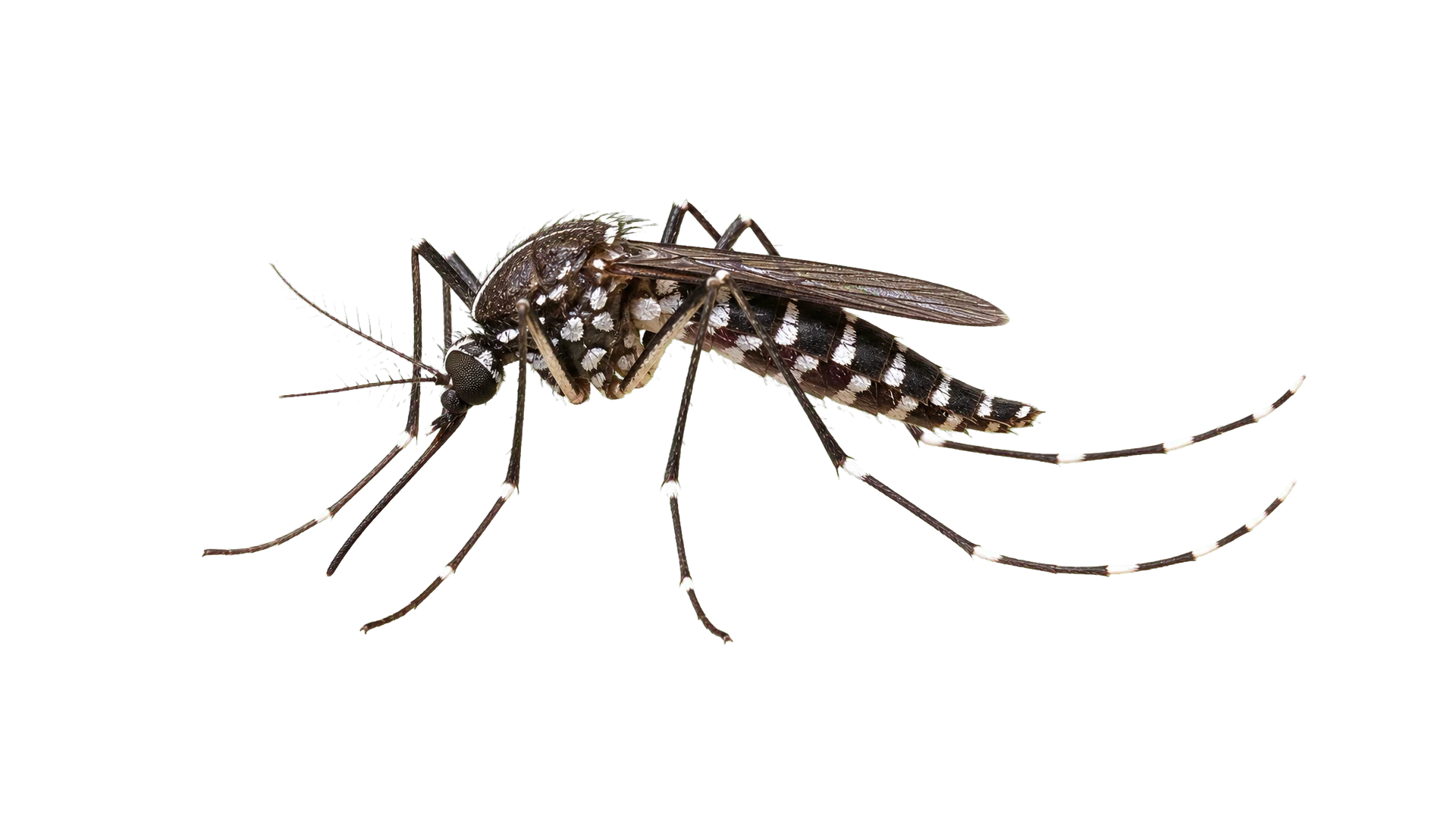
Asian tiger mosquitoes (Aedes albopictus) are small day-biting mosquitoes from East Asia that arrived in Houston in 1985 inside a shipment of used tires. Four decades later they are established in more than 40 states and still pushing north every year. They are easy to identify if you get a clear look at one. The body is jet black with bright white stripes ringing each leg, plus a single bold white stripe running down the middle of the back. No other US mosquito carries that exact pattern.

If something is biting you in the middle of the afternoon while you weed the garden, mow the lawn, or sit on the patio, and the bites keep coming even after you swat the first one away, you are almost certainly dealing with this species. This guide covers how to confirm the ID, why this mosquito breeds in containers smaller than a soda can, what diseases it carries, and what real treatment looks like.

Close-up illustration of an Asian tiger mosquito showing black body, bright white-striped legs, and the single white stripe running down the center of the thorax

ID Card: Asian Tiger Mosquito

Scientific name
Aedes albopictus
Color
Black, white
Size
1/8 to 1/4 inch
Body shape
Small, slender body with bold black and white striped pattern
Antennae
Feathery (males) or thread-like (females)
Key evidence
Aggressive daytime biting, breeds in small water containers like bottle caps
Also known as
Tiger mosquitoes, Forest mosquitoes

Call to get matched with a local pest control pro.

Available 24/7
(888) 495-1510
  • Specialists trained on container-breeding biology, not just yard fogging
  • Property-wide breeding site audit and elimination as part of every program
  • Recurring season treatment timed to the 7 to 10 day Asian tiger lifecycle

Where to Inspect for Asian Tiger Mosquito Breeding

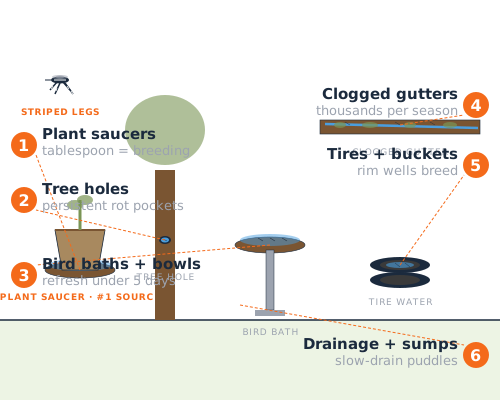
Cross-section illustration showing Asian tiger mosquito breeding sources around a typical yard, plant saucers, gutters, bird baths, tires, tree holes, and tarps holding water

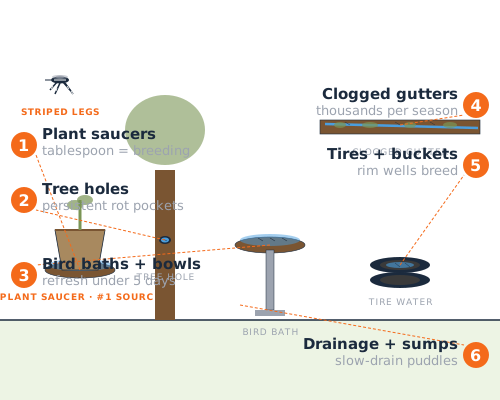
Asian tiger mosquitoes do not fly far. Most stay within 200 yards of the spot where they hatched. That means the water producing them is almost always on your property or a neighbor's. The species can finish a generation inside a single tablespoon of water, so a thorough walk hunting for breeding containers is the most important inspection you will ever do for this pest:

  • Flower pot saucers and shaded planters, The number one breeding site in American yards. Saucers under shaded plants stay wet for weeks, especially after rain. Empty every saucer at least once a week, no exceptions.
  • Bird baths, fountains without circulation, and pet water bowls, Standing water older than five days is enough to produce a full generation of biting adults. Refresh every three to five days, every day in peak summer.
  • Gutters clogged with leaves and roof debris, A single sagging or blocked gutter section holds enough water to breed thousands of mosquitoes across one season. Invisible from the ground and rarely checked.
  • Discarded tires, buckets, kiddie pools, and tarps, Tires were how this species reached the US, and they still produce more mosquitoes than almost any other container. Tarps that pocket rainwater and uncovered kid pools are just as productive.
  • Tree holes, bromeliads, and plant axils, Mature oaks with rot pockets and tropical ornamentals catch rainwater that homeowners never think to drain. These are some of the most persistent sources after every visible container has been emptied.
  • Outdoor toys, storage bins, and tarp folds, Plastic toys left in the grass, recycling bins without drainage holes, and any folded fabric outside collect just enough water to support breeding. Even bottle caps qualify.

The defining fact about Asian tiger mosquitoes is what their eggs can survive. Females glue eggs just above the waterline of any container, and those eggs can sit dry for up to eight months waiting for water. When the next rain refills the container, the entire batch hatches together. That is why a yard you cleared in April can be biting you again 24 hours after the next storm. Treatment that ignores the egg reservoir on your property buys you a week and nothing more.

Cross-section illustration showing Asian tiger mosquito breeding sources around a typical yard, plant saucers, gutters, bird baths, tires, tree holes, and tarps holding water
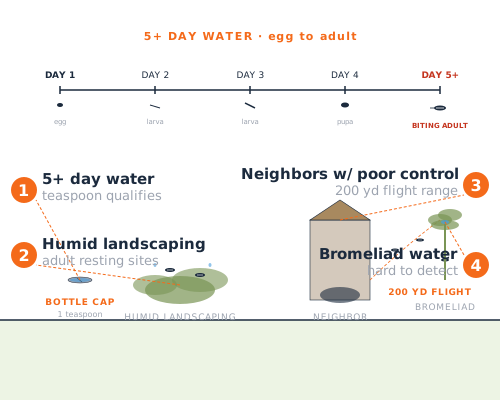
Illustration showing how Asian tiger mosquitoes breed in small water-holding containers around homes and rest in dense humid landscaping during the day

Why Do I Have Asian Tiger Mosquitoes?

Identifying them is step one. Figuring out why your yard is producing them is what stops the next wave from emerging seven days later. Asian tigers evolved to breed in the tiny pools of water that collect in tree holes, bamboo stumps, and plant cups in Asian forests. American suburbs full of plant saucers, gutters, and forgotten buckets are an even better habitat than the one they came from.

What sustains them on your property:

  • Any container that holds water for five or more days, even a single tablespoon is enough, this is the fundamental difference between Asian tigers and other US mosquitoes
  • Dense humid landscaping where adults rest during the day, hostas, ferns, ivy beds, dense shrubs, and shaded mulch keep resting females cool and ready to bite
  • Established range across the southern and eastern US from Virginia to Florida and west to Texas, plus a steadily expanding edge moving north into the Great Lakes region
  • Neighbor-side sources within a 200 yard flight range, an untreated pool, junk pile, or stacked tires next door can supply your entire yard with biting females
  • Recent international travel inside the household, returning travelers can bring Zika, dengue, or chikungunya home and Asian tigers are the species that picks the virus up and spreads it locally

Only the females bite. Each one needs a blood meal to produce a batch of eggs, and she will lay 100 to 200 eggs per cycle across four to six cycles in her short adult life. Those eggs survive drying for months and hatch en masse the moment water returns. That is the math behind why a yard cleared in May can fill back up in a week, and why treatment has to assume hidden eggs and the next rain.

How Serious Is Your Asian Tiger Mosquito Problem?

Find your scenario below. Each row reflects daytime bite pressure, visible breeding sources, and what should happen next.

What You're Seeing Severity If Untreated Next Step
A few daytime bites during outdoor activity, no other family complaints yet Early Population doubles every 7 to 10 days through summer as long as breeding water stays available Walk the yard, empty every container holding water, refresh bird baths weekly, and monitor for the next two weeks.
Persistent bites every time you go outside, multiple family members affected Moderate Yard turns unusable by midsummer, outdoor entertaining and kids' play become impossible Schedule a professional property assessment plus a container elimination program this week.
Heavy population plus a household member just back from international travel in a Zika or dengue area High Local mosquitoes can pick up viruses from infected travelers and spread them, this is exactly how local outbreaks start Call a professional today and request intensive treatment, plus a medical consult for the traveler.
Neighborhood outbreak situation, household with an infant or someone pregnant, or confirmed mosquito-borne illness nearby Urgent Zika causes birth defects, EEE has a fatality rate above 30 percent, the risk profile is genuinely medical at this point Call today and request emergency treatment, then contact your local public health department to coordinate.
A few daytime bites during outdoor activity, no other family complaints yet
Severity Early
If Untreated Population doubles every 7 to 10 days through summer as long as breeding water stays available
Next Step Walk the yard, empty every container holding water, refresh bird baths weekly, and monitor for the next two weeks.
Persistent bites every time you go outside, multiple family members affected
Severity Moderate
If Untreated Yard turns unusable by midsummer, outdoor entertaining and kids' play become impossible
Next Step Schedule a professional property assessment plus a container elimination program this week.
Heavy population plus a household member just back from international travel in a Zika or dengue area
Severity High
If Untreated Local mosquitoes can pick up viruses from infected travelers and spread them, this is exactly how local outbreaks start
Next Step Call a professional today and request intensive treatment, plus a medical consult for the traveler.
Neighborhood outbreak situation, household with an infant or someone pregnant, or confirmed mosquito-borne illness nearby
Severity Urgent
If Untreated Zika causes birth defects, EEE has a fatality rate above 30 percent, the risk profile is genuinely medical at this point
Next Step Call today and request emergency treatment, then contact your local public health department to coordinate.

Asian tiger mosquitoes complete egg to biting adult in 7 to 10 days during summer. If you're between two rows, treat the higher one as your situation.

How Asian Tiger Mosquitoes Develop

The Asian tiger lifecycle is the shortest of any common US mosquito. Egg to biting adult in 7 to 10 days during summer, and multiple overlapping generations stacking up across the season. That speed is exactly why eliminating containers once is not enough, and why ongoing treatment is the only thing that holds the population down.

  1. Egg

    Dormant up to 8 months until water returns

    Females glue eggs one at a time just above the waterline inside any container. The eggs are extremely drought-resistant, they survive dry through winter, drought, and months of no rain. When water returns from rain or watering, the eggs hatch within minutes. This is why a single tablespoon of water plus a previously visited container produces a fresh generation overnight.

  2. Larva

    About 5 to 10 days in warm water

    The wrigglers feed on microorganisms in the container water, breathing through a snorkel at the surface. This is the only stage where larvicide can reach them, which is why BTI granules in standing water are so effective. Adult spray does nothing to a larva.

  3. Pupa

    About 1 to 2 days

    Tumblers float at the water surface and do not feed. The adult mosquito forms inside the pupal case and emerges as a fully-formed biting adult within 24 to 48 hours. Once you can see tumblers in a container, you are about two days from the next round of bites.

  4. Adult

    Adults live 2 to 4 weeks; females need 4 to 6 blood meals

    Females start biting within hours of emerging from the pupa. Each female lays 100 to 200 eggs per cycle and runs four to six cycles in her short life. Adults stay within roughly 200 yards of their breeding water, so the mosquitoes biting you almost certainly hatched in your yard or the neighbor's.

The seven to ten day egg-to-adult timeline means a yard left untreated for two weeks in July can shift from manageable to unusable. Recurring treatment every three to four weeks intercepts each new generation before the females are old enough to bite, which is the only durable approach for this species.

When Asian Tiger Mosquitoes Are Most Active

Asian tiger activity follows temperature and rainfall. The same yard can be tolerable in early June and unusable by late July if the spring breeding sources were not addressed. Knowing what to expect each quarter is how you stay ahead of the population.

  • Spring

    Overwintered eggs hatch as soon as containers refill with the first warm rains and air temperatures stay above 60 degrees. First daytime bites typically arrive in May. This is the cheapest, most effective treatment window because the population is small and emptying the obvious containers now prevents the summer wave.

  • Summer

    Peak biting season. Population doubles every 7 to 10 days. Daytime biting becomes constant, this is the species signature and the reason most homeowners can no longer use their yard without repellent by July. Recurring professional treatment is the only realistic control during this stretch.

  • Fall

    Biting continues until nighttime temperatures stay below 50 degrees for several days in a row. The last generation of females lays drought-resistant eggs that will sit in dry containers all winter. A late-season container audit dramatically reduces next year's starting population.

  • Winter

    Adult mosquitoes die at the first hard frost, but eggs glued above the waterline of containers, gutter debris, and tree holes survive the whole winter and hatch the following spring. Winter is the right time for a property audit, gutter cleaning, and drainage corrections that pay off across the next entire season.

Why Asian Tiger Mosquitoes Need Professional Help

This species does not behave like the dawn-and-dusk mosquitoes most adults grew up swatting at sunset. Asian tigers bite all day long, breed in containers smaller than a bottle cap, prefer human blood over animal blood, and complete a full generation in a week. Hardware-store foggers and standard yard sprays both miss this completely. They knock down whatever adults are flying right now and have zero effect on the eggs hatching tomorrow.

The DIY trap is real. Citronella candles do almost nothing against a mosquito that hunts by tracking carbon dioxide and body heat at midday. Bug zappers kill non-target insects and leave Asian tigers untouched. Backpack-fogging the yard once a month feels productive but only treats the brief adult phase, not the larvae developing in the gutter or the eggs glued above the rim of the tire behind the shed.

A specialist who actually treats this species starts with a property-wide breeding audit, walking every container, gutter, drain, and tree hole and either emptying the water or applying BTI larvicide. Then a targeted residual spray goes on the dense vegetation where female adults rest during the day. Recurring visits every three to four weeks intercept each new generation before it bites. Property assessment plus initial treatment typically runs $200 to $500, and recurring service during mosquito season is $50 to $150 per month.

Disease risk is the other reason this species gets treated more aggressively than nuisance mosquitoes. Asian tigers are documented vectors for Zika virus, dengue fever, chikungunya, Eastern equine encephalitis, West Nile virus, yellow fever, and dog heartworm. Homes with infants, pregnant family members, elderly residents, immunocompromised people, or outdoor dogs have a real medical reason to treat the population hard rather than tolerate it.

What Changes When a Pro Shows Up

Asian tiger mosquito work is two jobs running in parallel. Knock down the adult females biting you today, and eliminate every container producing the next generation tomorrow. A specialist who actually understands this species does both. Here is what that looks like in practice:

Pest control technicians after completing an Asian tiger mosquito property treatment
  • Local Pest Control
  • 24/7 Availability
  • Quality Workmanship
  • Eco‑Friendly Options
  • Trusted by Homeowners
  • They Walk the Property for Container Breeders

    First visit is a slow inspection of every spot that could hold water for five days, plant saucers, gutters, tarps, tree holes, drainage low spots. Most yards have eight to fifteen active breeding sites that the homeowner has been walking past for years.

  • They Treat Adult Resting Sites With Targeted Spray

    Asian tiger adults spend the day resting on the undersides of leaves in shaded, humid spots. A residual barrier spray applied to the underside of dense foliage and along the fence line kills the biting females you cannot see. This is precision work, not a yard-wide fog.

  • They Drop BTI Larvicide in Water You Cannot Drain

    Tree holes, rain barrels, ornamental ponds, French drains, and bromeliad cups all get a granular BTI larvicide. BTI is a natural bacterium that kills mosquito larvae for 30 to 60 days per dose and is safe for pets, fish, and pollinators.

  • They Return Every Three to Four Weeks Through the Season

    A single treatment knocks down today's mosquitoes. Six to eight visits across the season is what keeps the yard usable, because each new generation needs to be intercepted before it reaches biting age.

  • Local Pest Control
  • 24/7 Availability
  • Quality Workmanship
  • Eco‑Friendly Options
  • Trusted by Homeowners
NoToPests home

One call connects you with a local specialist who knows asian tiger mosquitoes and your area.

Be Ready When You Call

Pest control technician arriving for Asian tiger mosquito property service
Junho L.
Daisuke P.
Kirk Q.
Marion K.

Trusted by homeowners nationwide

Call for Pest Control Help (888) 495-1510

Can You Handle This or Do You Need Help?

DIY can handle a real portion of Asian tiger work, the container elimination half. Adult control is where homeowner methods consistently fail and where recurring professional treatment becomes the only thing that delivers a usable yard.

What DIY Can Do

Container elimination is genuinely the single most effective thing anyone can do for this species. The work is unglamorous but it is the foundation of any control plan:

  • Identify the species by the white-striped legs, white center stripe on the back, and the aggressive daytime biting, this is the key ID
  • Empty every water-holding container on the property once a week, plant saucers, bird baths, buckets, kiddie pools, tarps, toys, this alone cuts the population in half
  • Clean gutters and install screens on rain barrels, plus cover swimming pools when not in use
  • Use 30 percent or higher DEET or picaridin repellent during outdoor activity, the only reliable personal protection
  • What DIY cannot effectively do: treat adult resting sites in dense landscaping, larviciade tree holes and bromeliads on a schedule, or hold the population down across an entire active season.

What a Pro Does Differently

A pro does not just spray the yard. They run a two-track program that targets the larvae you cannot reach and the adults that are biting you right now:

  • Property-wide breeding audit on the first visit identifies the eight to fifteen container sources homeowners typically miss
  • BTI granular larvicide in unavoidable water features keeps killing larvae for 30 to 60 days per application
  • Residual barrier spray on the underside of dense foliage and resting sites kills adult females without yard-wide fogging
  • Recurring visits every three to four weeks break consecutive lifecycles across the entire active season
  • Public health coordination and disease-cluster response when bites trace to a community outbreak situation.

Suspect Asian Tiger Mosquitoes? Don't Wait.

Asian tiger populations double in 7 to 10 days and carry Zika, dengue, chikungunya, and EEE. Connect with a local specialist who runs container elimination plus recurring lifecycle-timed treatment, the only approach that actually keeps a yard usable through summer.

Available 24/7
(888) 495-1510

What Homeowners Say After Getting Help

Real results from people who had the same problem and solved it.

Holly E.
Holly E.
Huntsville, AL

"Mosquito problem finally handled."

Our backyard was unusable most of the summer because of mosquitoes. The crew treated the standing water areas and perimeter and explained what conditions were attracting them. We can actually enjoy our yard now.

Holly E.
Holly E.
Huntsville, AL

"Mosquito problem finally handled."

Our backyard was unusable most of the summer because of mosquitoes. The crew treated the standing water areas and perimeter and explained what conditions were attracting them. We can actually enjoy our yard now.

Yuki J.
Yuki J.
Fort Smith, AR

"Evenings outside are ours again."

The humidity here makes mosquitoes relentless. The crew identified breeding areas around our property and treated the perimeter. Our evenings outside went from miserable to enjoyable.

Jayden Z.
Jayden Z.
Rehoboth Beach, DE

"Coastal mosquitoes finally manageable."

Living near the beach means constant moisture, and the mosquitoes were terrible. The crew addressed standing water areas and treated the yard perimeter. We can finally use our patio in the evenings.

Jordan B.
Jordan B.
Savannah, GA

"Yard usable again after mosquito treatment."

Between the heat and humidity, mosquitoes were constant. The crew treated our yard and identified drainage issues that were creating breeding spots. The improvement was dramatic and lasted through the season.

Chris D.
Chris D.
Gulfport, MS

"Gulf Coast yard usable again."

Living on the Gulf Coast means constant mosquito pressure. The provider treated our yard and identified standing water we hadn't noticed. The improvement was immediate and the yard became usable again.

Yong N.
Yong N.
Columbia, SC

"Our patio is finally mosquito-controlled."

Our patio was unusable in the evenings because of mosquitoes. The tech treated the yard and found a clogged gutter that was holding standing water. Fixing the drainage and treating the perimeter made a huge difference.

Frederick V.
Frederick V.
Virginia Beach, VA

"They tackled our marsh-area mosquito problem."

Living near coastal marshes means heavy mosquito pressure. The crew treated our yard and identified water collection points we hadn't considered. The perimeter treatment made our outdoor spaces much more enjoyable.

Susan P.
Susan P.
Texarkana, AR

"Porch back in use after mosquito treatment."

Standing water in the neighbor's drainage ditch kept mosquitoes breeding near our property. The crew treated the perimeter and breeding areas on our side. They also showed us how to reduce standing water around planters and gutters.

Hakeem B.
Hakeem B.
Clayton, DE

"Backyard breeding sites treated and drained."

Our backyard has a drainage swale that holds water after rain, and mosquitoes were breeding in it. The provider treated the standing water areas and perimeter. They recommended better drainage which significantly reduced breeding habitat.

Liliana Y.
Liliana Y.
Naples, FL

"Lanai usable again after mosquito treatment."

Despite screens, mosquitoes were breeding in the landscape and getting through tiny gaps. The provider treated the yard's standing water sources and the perimeter. They suggested improving the screen enclosure seals which made a huge difference.

Yoshi G.
Yoshi G.
Johns Creek, GA

"Mosquito breeding sites treated at the perimeter."

A neighborhood drainage ditch behind our property was breeding mosquitoes constantly. The provider treated our yard perimeter and the ditch edge on our property. They recommended larvicide treatments and removing containers that hold water.

Yvonne X.
Yvonne X.
Kapolei, HI

"Yard breeding sites eliminated, mosquitoes down."

With standing water in plant saucers and the rain barrel, mosquitoes were breeding everywhere. The provider treated the yard and showed us how to eliminate breeding sites. The reduction was noticeable within the first week.

Ayesha P.
Ayesha P.
Quincy, IL

"Evenings outside enjoyable again near the creek."

Living near a creek meant constant mosquito pressure. The provider treated the yard perimeter and recommended removing brush piles that hold moisture. The treatments made evening outdoor time enjoyable again.

Lorna K.
Lorna K.
Mishawaka, IN

"Yard usable again despite retention pond."

Our neighborhood retention pond made evenings outside miserable. The provider treated our yard perimeter and recommended removing any standing water on our property. The combination of treatments made outdoor time enjoyable again.

Heather Y.
Heather Y.
Clinton, IA

"Riverside yard enjoyable again."

Living near the Mississippi means heavy mosquito pressure. The provider treated the yard perimeter with barrier products and addressed standing water. Evening outdoor time went from miserable to enjoyable.

Laura B.
Laura B.
Pittsburg, KS

"Backyard usable again after mosquito treatment."

Between the birdbath and low spots in the yard, mosquitoes were breeding constantly. The provider treated the yard and showed us how to eliminate standing water. The improvement was dramatic within the first week.

Charles P.
Charles P.
Paducah, KY

"Outdoor comfort restored near the river."

Living near the river meant constant mosquito activity from spring through fall. The provider treated the yard with barrier products and addressed areas holding water. The treatments made a significant difference in outdoor comfort.

Daiyu F.
Daiyu F.
Lake Charles, LA

"Post-hurricane mosquito pressure brought down."

Standing water from storm damage made mosquitoes worse than ever. The provider treated the entire property and identified drainage issues. As cleanup progressed and standing water was eliminated, the mosquito pressure decreased significantly.

Marcus C.
Marcus C.
Gaithersburg, MD

"Rain barrels screened and breeding stopped."

Our eco-friendly rain barrels became mosquito breeding grounds. The provider treated the yard and showed us how to screen the barrel openings. The screens solved the breeding issue without sacrificing water collection.

Cheryl J.
Cheryl J.
Plymouth, MA

"Evenings outside enjoyable near the bogs again."

Living near cranberry bogs means constant mosquito pressure. The provider treated our yard perimeter and recommended eliminating standing water on the property. The barrier treatment made evenings outside much more pleasant.

Salvador J.
Salvador J.
Bay City, MI

"Yard usable again near the bay."

Living near the bay means heavy mosquito pressure from spring through fall. The provider treated the yard perimeter and addressed standing water on the property. The barrier treatments made evening outdoor time possible again.

Alice M.
Alice M.
Faribault, MN

"Wetland-edge yard usable through summer."

Adjacent wetland made mosquitoes unbearable from June through September. The provider treated our yard with barrier products and addressed any standing water. The treatments reduced mosquito pressure to a manageable level.

Felix W.
Felix W.
Pearl, MS

"Pond-edge breeding stopped with larvicide."

A small pond on the property was a mosquito factory. The provider treated the yard perimeter and the pond edges with larvicide. The combination dramatically reduced the mosquito population around the house.

Saniyah H.
Saniyah H.
Chesterfield, MO

"Deck reclaimed after standing water cleanup."

Evening deck time was impossible with the mosquito pressure. The provider treated the yard and showed us how gutters and flower pot saucers were holding standing water. Eliminating breeding sites and treating made a dramatic difference.

Susannah O.
Susannah O.
Papillion, NE

"Drainage ditch breeding controlled with larvicide."

A neighborhood drainage ditch behind the house bred mosquitoes all summer. The provider treated the yard perimeter and recommended larvicide for the ditch edge. The improvement was significant.

Courtney V.
Courtney V.
Atlantic City, NJ

"Marsh-edge yard usable again."

Living near coastal marshland meant heavy mosquito pressure. The provider treated the yard perimeter and addressed standing water on the property. Barrier treatments made outdoor time possible.

Sita T.
Sita T.
Utica, NY

"Evenings outside enjoyable again by the creek."

We bought the house in winter and did not realize the creek behind us bred mosquitoes nonstop until June. The grandkids would not come over for cookouts. The tech treated the yard perimeter and the brush line. After the second visit we sat out on the deck after dinner without slapping our arms every five seconds.

Santos W.
Santos W.
Jacksonville, NC

"Yard usable through summer near the coast."

Coastal humidity and standing water made mosquitoes terrible. The provider treated the yard and eliminated breeding sites. Regular barrier treatments made the yard usable through summer.

Latrell U.
Latrell U.
Devils Lake, ND

"Lakefront evenings outside finally possible."

Living near the lake meant relentless mosquito pressure all summer. The provider treated the yard perimeter and addressed standing water. Barrier treatments made outdoor evenings possible.

Liam M.
Liam M.
Kettering, OH

"Evenings outside enjoyable near the basin."

The neighborhood retention basin bred mosquitoes all summer. The provider treated our yard perimeter and addressed standing water on the property. Evenings outside improved dramatically.

Kamal T.
Kamal T.
Ponca City, OK

"Storm drain breeding controlled with larvicide."

A nearby storm drain bred mosquitoes constantly. The provider treated our yard perimeter and recommended larvicide for the drain edge. The combination made outdoor time possible.

Yi F.
Yi F.
Roseburg, OR

"Outdoor comfort restored near the Umpqua."

Living near the Umpqua River meant constant mosquito pressure. The provider treated the yard perimeter and helped eliminate standing water. Barrier treatments improved outdoor comfort significantly.

Alma V.
Alma V.
Easton, PA

"Outdoor comfort restored near the Delaware."

Half a mile from the Delaware River and the mosquitoes used to drive us inside by seven o'clock. The tech walked the property and found three old saucer planters holding water that I had completely forgotten. Treated the yard perimeter and the brush line. We grilled outside three nights last week without a single bite. The kids did not believe it was the same yard.

Faith A.
Faith A.
Cumberland, RI

"Evenings outdoors enjoyable again."

A neighborhood pond bred mosquitoes all summer. The provider treated our yard with barrier products. The treatments made evening outdoor time possible again.

Elias M.
Elias M.
Hilton Head, SC

"Island yard usable for entertaining again."

Island humidity and marshland made mosquitoes relentless. The provider treated the yard perimeter and addressed standing water. Barrier treatments made outdoor entertaining possible.

Terrell J.
Terrell J.
Sturgis, SD

"Outdoor evenings enjoyable near the creek."

Bottomland creek runs the length of our back property line and the mosquitoes were unreal by mid-June. Could not stay outside past sunset. The tech treated the yard perimeter and the brush line near the creek. He showed me a few birdbath saucers I had not been emptying. The deck is back in service for evening grilling now.

Concepcion S.
Concepcion S.
Cleveland, TN

"Yard enjoyable again near the creek."

Creek along the back property line is gorgeous, but the mosquitoes from there made the deck unusable past sunset. The crew treated the yard perimeter and the brush line near the creek. They also pointed out a flowerpot saucer that was breeding them right next to the patio. Cleaned that up. Evenings outside are nice again.

Trinidad G.
Trinidad G.
Laredo, TX

"Riverfront yard usable through the season."

Proximity to the river meant constant mosquito pressure. The provider treated the yard perimeter and addressed standing water. Barrier treatments made outdoor time possible.

Wayne O.
Wayne O.
Leesburg, VA

"Evenings outside enjoyable again near the pond."

Neighborhood pond is gorgeous to look at and miserable in June. We had given up on sitting on the back patio after six. The tech treated the yard perimeter and the brush line near the pond shore. He showed me two saucers under planters that were holding water and breeding them in my own yard. Cleaned those out. Patio is finally usable in the evenings again.

Tahj H.
Tahj H.
Puyallup, WA

"Yard comfort restored beside the creek."

Bought the place because of the creek out back. Quickly learned why the previous owners barely used the deck. The mosquitoes started at dusk and did not quit. The crew treated the yard perimeter and the brush line near the creek. They mentioned my standing rain barrels needed mesh tops too, which I had not thought about. Big improvement, especially in the evenings.

Common Questions About Asian Tiger Mosquitoes

Direct answers to what homeowners ask most about identification, daytime biting, disease risk, and container-based treatment.

  • How do I identify Asian tiger mosquitoes versus common mosquitoes? Toggle answer for: How do I identify Asian tiger mosquitoes versus common mosquitoes?

    Asian tiger mosquitoes (Aedes albopictus) are small, black mosquitoes with distinctive bright white stripes on their legs and a single white stripe running down the center of their thorax (back). Unlike most mosquito species that are dull brown or gray, the bold black-and-white pattern makes Asian tiger mosquitoes easy to identify. Their behavior is also distinctive: they are aggressive daytime biters, most active during morning and late afternoon hours, while the majority of native mosquito species bite primarily at dusk and dawn. They also fly low to the ground and tend to bite ankles and legs rather than the upper body and face.

  • What makes Asian tiger mosquitoes harder to control than native species? Toggle answer for: What makes Asian tiger mosquitoes harder to control than native species?

    Asian tiger mosquitoes breed in tiny quantities of standing water, as little as a bottle cap full, in man-made containers that traditional mosquito control programs often overlook: flower pot saucers, clogged gutters, tire swings, tarps, discarded cups, corrugated drain pipes, and tree holes. Their flight range is short (typically 200 to 300 yards), meaning the mosquitoes biting you are almost certainly breeding on your property or your immediate neighbor's property. Unlike marsh-breeding species that can be targeted with large-area larvicide programs, Asian tiger mosquito control requires systematic elimination of every small container holding stagnant water across individual residential properties, alabor-intensive process that depends on neighborhood-wide cooperation.


  • Why are there so many mosquitoes around my property? Toggle answer for: Why are there so many mosquitoes around my property?

    Mosquitoes breed in standing water, andthey don't need much. A bottle cap's worth of water can support dozens of larvae. Clogged gutters, birdbaths, plant saucers, tarps, tire swings, and low spots in the yard that hold water after rain are all active breeding sites. Eliminating standing water within 200 feet of your home is the single most effective step you can take.

  • Are mosquitoes dangerous? Toggle answer for: Are mosquitoes dangerous?

    Mosquitoes are the deadliest animals on earth in terms of disease transmission. In the U.S., they carry West Nile virus, Eastern equine encephalitis, and Zika virus. Even without disease, their bites cause itching, swelling, and allergic reactions in some individuals. Reducing breeding sites and applying barrier treatments around your yard significantly cuts bite exposure.

  • How quickly can a provider get to my home? Toggle answer for: How quickly can a provider get to my home?

    Most providers in our network can schedule an inspection within 24-48 hours. For urgent situations, likeactive structural damage or large colonies, same-week emergency service is often available. Response times depend on your location and the provider's current schedule.

  • What happens during the first visit? Toggle answer for: What happens during the first visit?

    Your provider inspects the property to identify the pest, locate nesting or entry points, and assess the scope of the problem. You get a clear explanation of what they found, what they recommend, and a written scope before any work begins.

  • Is treatment safe for kids and pets? Toggle answer for: Is treatment safe for kids and pets?

    Modern pest control products are designed to break down quickly after application and pose minimal risk to people and pets when applied correctly. Most providers ask you to keep kids and pets out of treated areas for 1 to 2 hours while the product dries, after which the area is generally safe again. Always confirm specific re-entry times with your provider, and let them know about pet birds, fish, or reptiles, since some treatments require extra precautions for those species.

Pest Control Pros serving the city of the state of your city and nearby areas

Local providers who run container elimination plus recurring lifecycle-timed treatment for Asian tiger mosquitoes are ready to inspect, treat, and follow up, no obligation.

Available 24/7
(888) 495-1510