Local pest control help is one call away.

Bats in Attics and Living Spaces

Bats in your attic? (888) 495-1510

Bats roosting in attics, wall voids, and other building cavities are one of the more challenging wildlife situations homeowners encounter. All bat species in the United States are protected by various state and federal laws, lethal control is illegal in most situations, and the available management approach (one-way exclusion installed during specific time windows) requires patience and careful execution. The rabies and histoplasmosis concerns add health-safety considerations that justify professional handling for almost every case.

Why Bat Exclusion Has Specific Rules

Bats are protected by state wildlife laws across the United States and by federal law (Endangered Species Act) for several specific species including the Indiana bat, gray bat, and northern long-eared bat. Wildlife services regulations also restrict how and when bat exclusion can be performed, with maternity season prohibitions in many states preventing exclusion work between roughly mid-May and mid-August when flightless young are present. Excluding adults during maternity season abandons the young in the attic, which is both illegal and ethically unacceptable.

The right approach is one-way exclusion devices installed at confirmed entry points after maternity season ends (typically late August through early October), allowing bats to leave the structure but not return. Once the colony has fully evacuated, the entry points are sealed permanently. Cleanup of accumulated guano follows with appropriate health-safety procedures.

Three bat-related situations homeowners encounter:

  • Single bat flying inside the home: a wandering individual rather than a colony, but rabies exposure assessment is needed if anyone was sleeping or vulnerable
  • Small colony in attic detected at dusk emergence: a few bats visible exiting the structure each evening, often during summer maternity season
  • Established maternity colony with heavy guano accumulation: substantial roost over multiple seasons producing significant cleanup and remediation needs

Bats by the Numbers

The United States hosts roughly 47 bat species across its territory. A single little brown bat consumes 600 to 1,000 mosquito-sized insects per hour during evening foraging, providing substantial agricultural and public health benefit. Bats are the only flying mammals; their wings are modified hands rather than feathered structures. Roughly 0.5 percent of bats may carry rabies in any population sampling.

  • 2-7 in Adult body length
  • 8-16 in Wingspan
  • 10-30 years Lifespan

Three Common Attic-Roosting Bats

Three species cover most building bat issues in the United States. Species identification matters less for exclusion approach than for understanding regional biology and conservation status.

Big brown bat icon

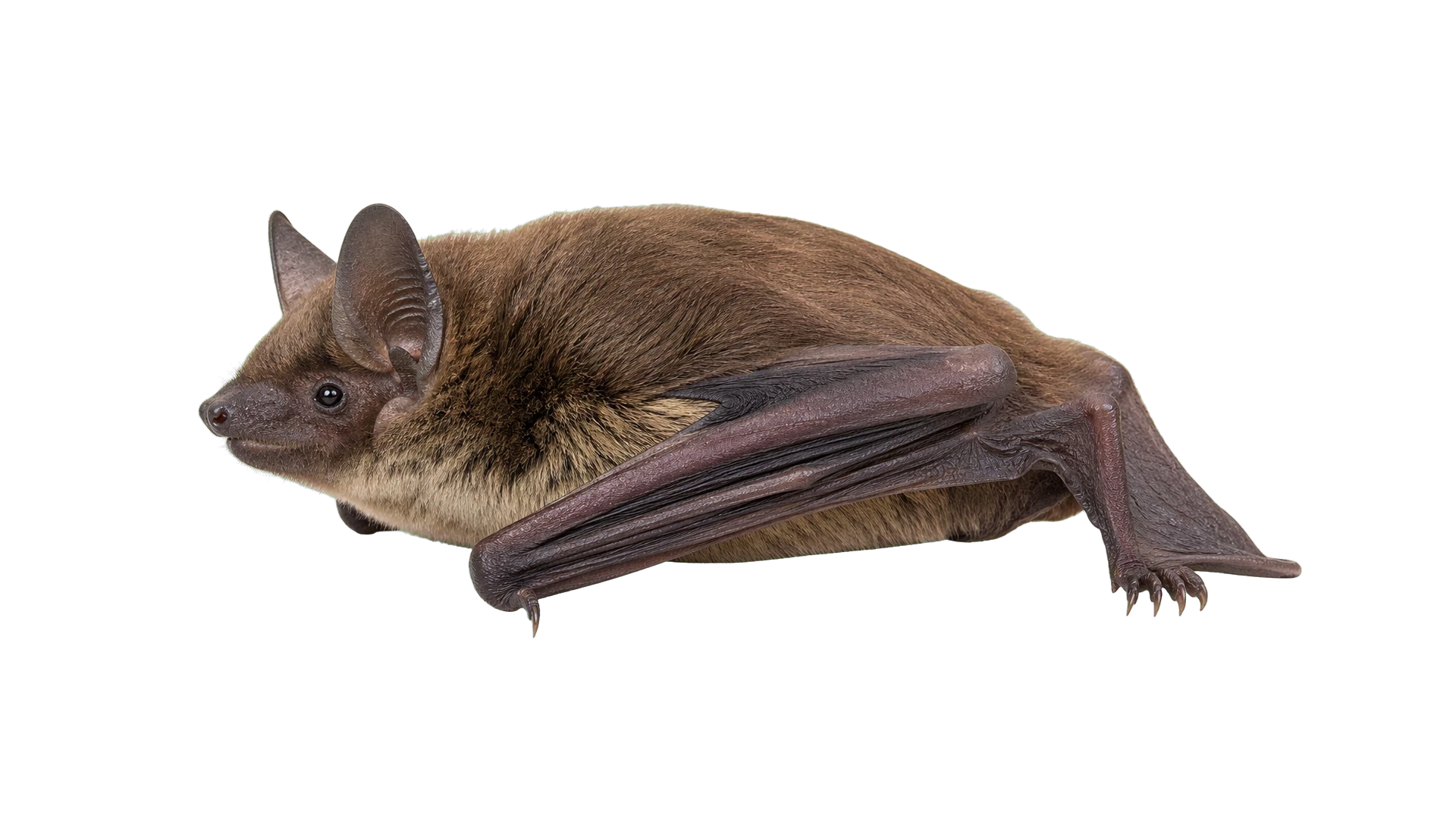
Big brown bats

Largest of the common attic-roosting species, 4 to 5 inches long with a 12 to 13 inch wingspan. Dark brown fur and broad wings. Most cold-tolerant of the common species; sometimes roost year-round in heated structures. Primary attic species across much of the United States.

Little brown bat icon

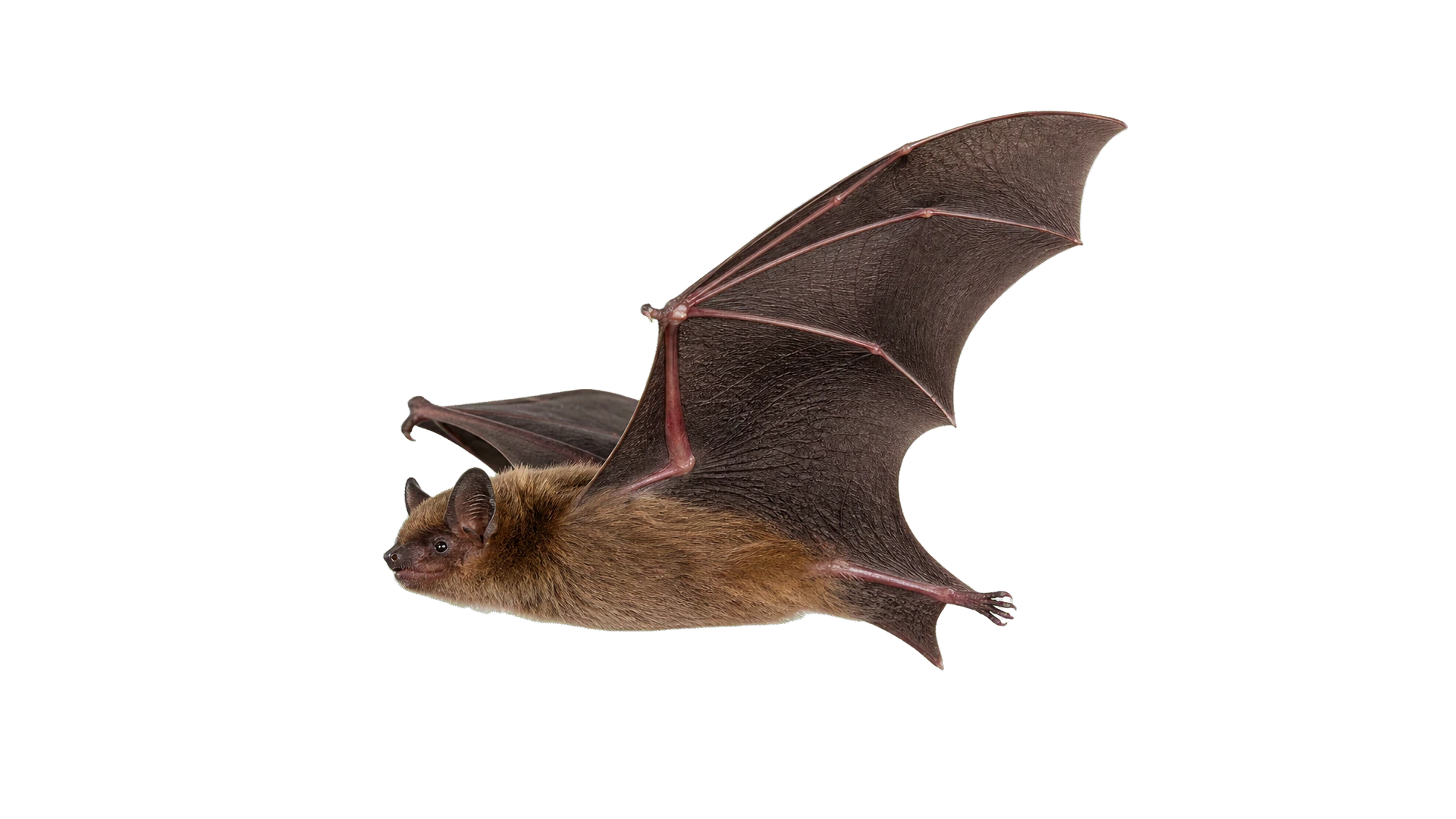
Little brown bats

Smaller species, 3 to 3.5 inches long with a 9 to 10 inch wingspan. Glossy brown fur. Form larger maternity colonies than big brown bats. Population significantly reduced by white-nose syndrome in recent decades.

Tadarida bat icon

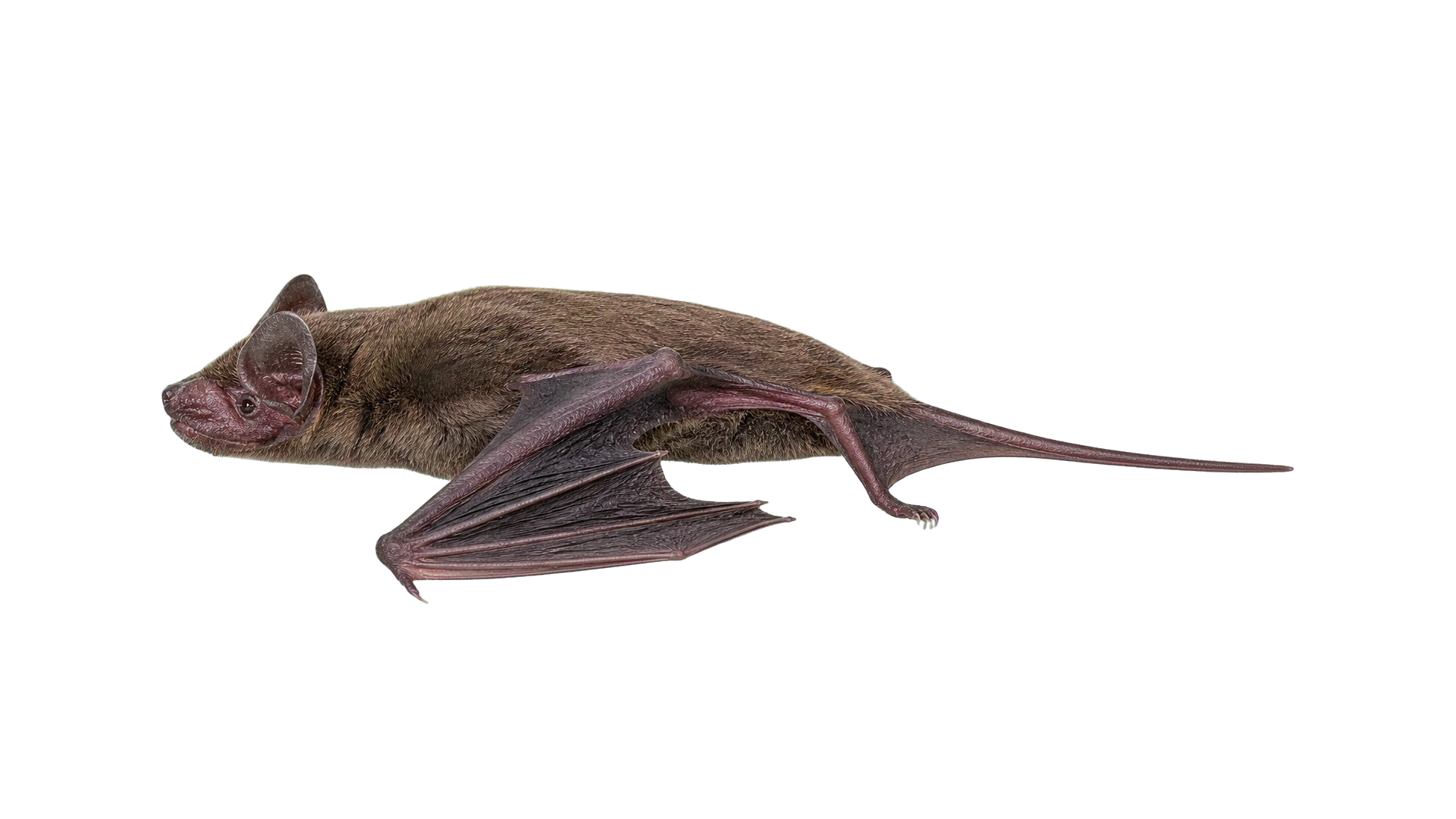
Tadarida (long-tailed) bats

Medium-sized species with distinctive long tail extending beyond the tail membrane. Dominant species across the southern and southwestern United States. Form very large colonies in some regions; produce strong characteristic odor at large roost sites.

Signs You Have a Bat Issue

Bat presence in attics is often quiet and easy to miss for months or years. The signs that prompt detection are usually accumulating guano, dusk emergence sightings, or occasional bats finding their way into living spaces.

How Bat Issues Develop

Initial entry One or two bats find a half-inch entry point through a gable vent, soffit gap, or unflashed roof seam.
Maternity colony establishes Females return to the same roost each spring. Numbers grow from a handful to dozens across two or three summers.
Significant accumulation Guano stains insulation, ammonia odor reaches living spaces, and indoor encounters with single bats happen more often.

How Bats Affect Buildings and Health

Bats roost in attics, wall voids, eaves, and similar sheltered spaces because the temperature stability and protection from predators mimic the natural cliff and tree-cavity environments they evolved to use. Maternity colonies (typically female bats raising young) form in late spring and persist through summer, with females returning to successful roost sites year after year. Male bats often roost separately in smaller numbers or as solitary individuals.

The two main concerns from bat presence in buildings are health-related and structural. Health concerns include rabies (very low population prevalence but serious when present), histoplasmosis (fungal lung infection from disturbed dried guano), and rare other zoonotic concerns. Structural impacts include guano accumulation that stains and damages insulation, urine accumulation that produces strong odors, and possible structural concerns from heavy multi-year accumulation. Disease transmission to humans through casual building contact is rare but possible enough to justify careful handling.

Effective bat management is one-way exclusion installed at confirmed entry points outside maternity season, followed by permanent sealing of the openings and proper guano cleanup. The work requires identifying all entry points (often more than one), installing exclusion devices that allow bats to exit but not re-enter, monitoring for confirmation that the colony has evacuated, and completing remediation with appropriate health-safety procedures. Most homeowners benefit from professional handling given the regulatory complexity, health concerns, and access challenges.

Bat Anatomy at a Glance

Six features that define a bat. Their unique mammalian flight and echolocation are what allow them to use building cavities as effectively as natural roosts.

1 2 3 4 5 6
  1. Leathery wing membranes

    Bats are the only mammals with true flight. The wing (patagium) is a leathery membrane stretched between elongated arm and finger bones.

  2. Elongated finger bones

    The wing is actually a modified hand. Four long fingers support the membrane; the thumb projects above as a small clawed digit for crawling on roosts.

  3. Large ears

    Most insectivorous bats have large ears for echolocation. They emit ultrasonic calls and read the echoes returning from prey and obstacles in total darkness.

  4. Small furry body

    Mammalian and surprisingly small relative to wingspan. Big brown bats have bodies roughly mouse-sized, which lets them roost in tight building cavities.

  5. Snout and small teeth

    Small sharp teeth crush insect exoskeletons. Bats rarely bite unless threatened, but any direct contact warrants medical evaluation due to rabies risk.

  6. Hind feet with claws

    Bats roost hanging upside down, gripped by strong hind-foot claws. The grip is automatic and holds through deep sleep or hibernation without muscle effort.

Which Bat Situation Matches Yours?

Match the situation below to identify the appropriate response and timing. All bat work follows specific rules around maternity season and health safety.

Which Bat Situation Matches Yours?

What You're Seeing

  • A single bat flying around inside the home, often at dusk or evening
  • Bat may eventually land on a curtain, wall, or in a corner where it can be approached
  • Possible secondary signs of larger colony if multiple bat encounters happen over time

What's Likely Happening

Single indoor bats are typically wandering individuals rather than colony residents, but they sometimes signal a larger colony elsewhere in the structure. Rabies exposure assessment is needed if anyone was sleeping in the room or if children, elderly, or impaired individuals were present without potential awareness of bat contact.

What To Do Now

  • If anyone was sleeping in the room or could not have known about bat contact, the bat should be captured for rabies testing through local health department procedures.
  • If clear no contact occurred, open an exterior door or window in the room and turn off interior lights; the bat will typically find its way out.
  • Schedule a building inspection to identify any larger colony and confirmed entry points; single indoor bats sometimes signal larger problems.
  • Do not handle the bat with bare hands; use heavy gloves and a container if capture is needed.

What You're Seeing

  • Bats visibly emerging from gable vents, soffit gaps, attic openings, or roof gaps at dusk
  • Initial 1 to 5 bats becoming more numerous over weeks as colony grows
  • Possible squeaking or chirping sounds from attic during day or near dawn

What's Likely Happening

Active maternity colony or roosting population in the attic. Females typically establish maternity colonies in late spring and remain through summer. Watching dusk emergence is the standard way to confirm colony presence and identify entry points. Population increases through summer as young become flighted.

What To Do Now

  • Conduct dusk emergence count over multiple evenings to estimate colony size and confirm all entry points.
  • Schedule one-way exclusion installation outside maternity season (typically late August through early October).
  • Avoid disturbing the colony or attempting to seal entry points during maternity season; flightless young would be trapped inside.
  • Plan for guano cleanup and remediation after exclusion completes.

What You're Seeing

  • Small dark pellet droppings (similar to mouse droppings but crumbly when pressed) on attic floor, insulation, or near entry points
  • Stained insulation or beams from urine accumulation
  • Possible strong ammonia odor in or below attic

What's Likely Happening

Established colony has been producing guano over weeks, months, or years. Heavy accumulation creates histoplasmosis risk during disturbance and may damage insulation, structural materials, and air quality below the attic. Cleanup requires specific health-safety procedures.

What To Do Now

  • Schedule one-way exclusion outside maternity season to remove the colony source.
  • After confirmed colony evacuation, clean accumulated guano with N95 or better respiratory protection, wetting material before removal, and HEPA filtration during cleanup.
  • Consider professional cleanup for heavy accumulations to ensure proper procedures and reduce homeowner exposure.
  • Replace heavily-contaminated insulation as part of remediation.

What You're Seeing

  • Bat found in bedroom where someone was sleeping
  • Bat encountered by a child, elderly person, or impaired individual who could not reliably report contact
  • Direct bite or scratch from a bat, even if minor

What's Likely Happening

The Centers for Disease Control recommend rabies post-exposure prophylaxis (PEP) treatment for any situation where bat contact cannot be ruled out, given the difficulty of detecting bat bites or scratches and the universal fatality of untreated rabies. The recommendation applies to sleeping individuals and others unable to confirm absence of contact.

What To Do Now

  • Capture the bat alive if safely possible; place in a container with no air holes for transport to local health department for rabies testing.
  • Contact a medical provider or local health department immediately for guidance on post-exposure prophylaxis evaluation.
  • Begin PEP treatment if recommended by the health department or medical provider; PEP is highly effective when started promptly.
  • Schedule full building inspection to identify and exclude any colony source after immediate medical concerns are addressed.

How Urgent Is This Really?

Bat urgency runs on two clocks at once: the legal calendar (most states block exclusion during maternity season, roughly mid-May through mid-August) and the health-risk calendar driven by accumulating guano. The timeline below tracks both, and shows when waiting for fall is the only legal option.

  1. 0-1 month
    Monitor

    A single bat seen flying at dusk near the eaves, or one found inside the home through an open window or chimney. The roost may not be established yet, or it could be fewer than 10 individuals.

    • Watch the exterior at dusk for 2 to 3 evenings to count bats and locate entry points.
    • Do not seal entries yet. Bats inside need a one-way exit to leave permanently.
    • If a bat was in a bedroom with anyone sleeping, contact animal control for rabies guidance.
  2. 1-3 months
    Act soon

    Multiple bats at dusk emergence, scratching or chirping at night, or small dark pellets below the entry point. The colony is established but maternity season (mid-May to mid-August) likely blocks legal exclusion work right now.

    • Schedule pro exclusion for late August through early October, after young can fly.
    • Document entry points and emergence counts with photos for the wildlife pro.
    • Stay out of the attic. Disturbed guano dust carries histoplasmosis spores.
  3. 3-12 months
    Urgent

    Large colony of 20 to 100-plus bats, heavy guano on insulation, ammonia odor reaching living spaces, or staining on attic beams. Histoplasmosis risk becomes real for anyone entering the attic without proper PPE.

    • Do not attempt DIY guano cleanup. N95 respirator, Tyvek suit, and proper disposal required.
    • Get a written scope covering one-way exclusion, guano removal, and any insulation replacement.
    • Confirm the wildlife pro is permitted under your state's exclusion regulations.
  4. 12+ months
    Critical

    Multi-year colony with deep guano, contaminated insulation, structural staining, or odor leaking into bedrooms. Cleanup plus exclusion plus insulation replacement commonly runs $3,000 to $15,000. Insulation usually needs full removal.

    • Get two quotes covering exclusion, full cleanup, decontamination, and insulation replacement.
    • Plan a one-year follow-up inspection. Gaps that open during repair are common re-entry points.
    • Verify state wildlife law compliance. Illegal exclusion brings fines plus a returned colony.

Bat exclusion has a legal calendar: most states protect maternity colonies from May through August. If you discover bats in spring, plan the exclusion for fall, but start the documentation, scoping, and quotes now.

Pest Control Pros serving the city of the state of your city and nearby areas

Local wildlife exclusion pros handle bat colonies with proper timing around maternity season, complete one-way exclusion, and safe guano cleanup procedures.

Available 24/7
(888) 495-1510

What Makes Buildings Attractive to Bats

Bats select roost sites for three things: temperature stability, protection from predators, and access to feeding habitat. Several building characteristics make some properties consistently attract bats while identical-looking neighbors stay empty.

Different species look for slightly different things. Big brown bats want warm attics in the 90 to 100 degree range and tolerate cold attics where little brown bats won't roost. Little brown bats form larger maternity colonies and favor older buildings with multiple gap options. Mexican free-tailed bats need very large openings and form the biggest colonies in the southern US. Knowing which species is using your building helps narrow which entry points to seal first.

Most affected buildings have three or four of these conditions at once. Start with entry-point hardening (the cheapest, most durable fix), then move to vent screening and chimney caps. Properties next to feeding habitat (street lights, water features, agricultural fields) need stronger exclusion work because bat pressure stays constant year over year.

Where Bats Roost in Buildings

Attic spaces

Most common bat roost in residential buildings. Female maternity colonies favor warm attics with stable temperatures. Inspect rafters, gable end areas, and ridge zones for evidence of roosting.

Soffits and eaves

Soffit gaps and eave openings provide bat-accessible spaces between exterior trim and structural framing. Often the entry point for attic colonies. Inspect from below at dusk for emergence.

Gable vents and roof vents

Unscreened gable vents and ridge vents are typical bat entry points. Replace standard vent screening with bat-resistant 1/4 inch hardware cloth or specifically-designed bat-exclusion vents.

Wall voids

Some species roost in wall voids accessed through cladding gaps or interior wall penetrations. Often associated with masonry or stone exterior construction. May require additional inspection beyond attic-focused work.

Chimneys and flue stacks

Some species roost in chimneys, particularly older masonry chimneys without proper caps. Block fireplace use during occupied period; remediation requires waiting for natural departure or off-season exclusion.

Detached barns and outbuildings

Larger structures often host substantial colonies given their size and lower human activity. May serve as the primary roost source for adjacent residential buildings; comprehensive property assessment is sometimes warranted.

How Bat Populations Develop on Properties

Bat populations follow predictable annual cycles that are central to timing exclusion work legally and effectively.

  1. Spring arrival

    April to May

    Females return from winter hibernation or migration sites and re-establish maternity colonies at successful roost sites from previous years. Young of the year have not yet been born; this is a brief window when exclusion is sometimes legally permitted depending on state regulations.

  2. Maternity season

    Late May to mid-August

    Females give birth and raise flightless young. Exclusion is legally prohibited in most states during this window because excluding adults abandons the young. Even where legally permitted, exclusion during maternity season is ethically problematic and produces poor outcomes.

  3. Post-maternity

    Late August to mid-October

    Young become flighted and the colony as a whole begins to disperse. This is the standard window for one-way exclusion installation. Bats can leave the structure but not return; gradually the colony evacuates and entry points can be sealed permanently.

  4. Winter departure

    October to November

    Bats migrate to hibernation sites or distant winter roosts. Most colonies are absent from buildings through winter, although some species (big brown bat) may overwinter in heated structures. Exclusion completed before winter prevents return the following spring.

The right time for exclusion work is typically late August through early October in most regions, after young become flighted but before winter departure. Spring exclusion windows exist in some states but are narrower and require careful timing. Winter exclusion may be appropriate for big brown bats in heated structures.

IMPORTANT

Why Most DIY Bat Exclusion Goes Wrong

DIY bat removal usually violates state regulations before the colony is ever excluded. Every US bat species is protected under state law, and several (Indiana bat, gray bat, northern long-eared bat) are federally protected. Sealing entry points without one-way exclusion traps bats inside, and doing it during maternity season (mid-May to mid-August) traps flightless young that die in the attic and produce months of odor and insect remediation. Even legal exclusion has timing rules that vary by state. The other DIY problems are health-safety: disturbing accumulated guano without N95 respiratory protection causes histoplasmosis exposure, and handling a bat barehanded triggers a rabies post-exposure protocol whether or not contact was clear. Pro exclusion follows specific procedures for timing, entry-point identification, one-way device installation, and PPE-driven cleanup that the regulatory and health calculus all argue for.

Which Bats Are You Seeing?

Each bat species roosts and behaves differently. Identification helps determine the right exclusion approach.

Species Severity Key Sign Where You'll Find Them
Big Brown Bats Medical Large guano pellets, single bats found in living spaces in winter, oily staining at entry points attics, barns, behind shutters
Little Brown Bats Medical Guano piles near entry points, large colonies in attic, oily staining around small gaps attics, barns, caves (winter)
Mexican Free-Tailed Bats Medical Massive guano deposits, extremely large colonies, strong ammonia odor from attic caves, bridges, attics
Big Brown Bats
Severity Medical
Key Sign Large guano pellets, single bats found in living spaces in winter, oily staining at entry points
Where You'll Find Them attics, barns, behind shutters
Little Brown Bats
Severity Medical
Key Sign Guano piles near entry points, large colonies in attic, oily staining around small gaps
Where You'll Find Them attics, barns, caves (winter)
Mexican Free-Tailed Bats
Severity Medical
Key Sign Massive guano deposits, extremely large colonies, strong ammonia odor from attic
Where You'll Find Them caves, bridges, attics

Severity reflects typical impact, not your specific case. If unsure, treat at the higher tier.

What Actually Works for Bat Issues

Honest read on the response options. Properly timed one-way exclusion is the only approach that actually works long-term; the rest either fail outright or violate state law.

Can work icon

What can work

Properly-timed one-way exclusion

  • One-way devices installed at confirmed entry points outside maternity season
  • Allow bats to exit but not return; colony evacuates over several days to weeks
  • Permanent sealing after confirmed colony departure produces durable results

Comprehensive entry-point sealing

  • Identify and seal all potential bat-accessible openings 1/2 inch and larger
  • Replace damaged screening on gable vents, ridge vents, and other ventilation openings
  • Single-time prevention work that addresses multiple wildlife species simultaneously

Professional guano cleanup with PPE

  • Wet down material before removal to suppress histoplasmosis spore release
  • N95 or better respiratory protection plus gloves and protective clothing during cleanup
  • HEPA-filtered vacuum equipment captures spores rather than spreading them
Falls short icon

What reliably falls short

Sealing entry points without exclusion

  • Traps live bats inside the structure with no way to exit
  • During maternity season, traps flightless young that subsequently die in the attic
  • Produces severe odor, pest insects, and remediation issues; often illegal under state wildlife laws

Ultrasonic repellent devices

  • Limited evidence of effectiveness for established colonies
  • Bats acclimate to artificial sounds quickly
  • Does not address entry points or solve the underlying issue

Naphthalene mothballs or other chemical repellents

  • Volatile chemicals create indoor air quality issues
  • Limited effectiveness against established roost populations
  • Most products are not labeled for bat use; application is improper at minimum

How to Prevent Bat Issues

Six prevention actions, sorted by effort. Building exterior maintenance is the foundation of bat-resistant homes.

  • Inspection icon
    Easy Annual

    Annual exterior inspection

    Inspect roof, soffits, eaves, gable vents, and all exterior penetrations annually. Look for bat-accessible openings 1/2 inch and larger, dusk emergence patterns, and signs of activity such as staining or guano.

  • Vent screen icon
    Easy One-time

    Bat-resistant vent screening

    Replace standard gable vent and ridge vent screening with 1/4 inch hardware cloth or specifically-designed bat-exclusion vents. Maintain proper ventilation while excluding bats and other wildlife.

  • Caulk icon
    Moderate One-time

    Seal exterior gaps and cracks

    Caulk or seal soffit gaps, fascia separations, masonry cracks, and any openings 1/2 inch and larger. Pay particular attention to junction points between roof and walls where weather and time create gaps.

  • Chimney cap icon
    Moderate One-time

    Chimney cap with bat-resistant mesh

    Install chimney cap with bird and bat-resistant mesh on chimneys without existing caps or with damaged existing caps. Maintains proper draft for fireplace use while excluding wildlife.

  • Attic remediation icon
    Advanced Variable

    Comprehensive attic exclusion

    Full audit and remediation of all attic-accessible openings combined with interior inspection for evidence of past or current activity. Most appropriate for buildings with chronic bat issues or evidence of multi-year roosting.

  • Bat house icon
    Advanced Optional

    Install bat house away from building

    Provide alternative roost site (commercial bat house) installed at appropriate height and location away from the main structure. Supports bat conservation while encouraging the colony to use a different site than the building.

When to Address Bat Issues

Bat management is highly seasonal. The right time depends on the colony lifecycle stage and any maternity season prohibitions in your state.

  • Spring

    Females return to roost sites in late April through May. Brief window before maternity season may allow exclusion in some states. Ideal time for inspection and identifying entry points before colony establishes for the year.

  • Summer

    Maternity season is in full effect. Exclusion legally prohibited in most states because flightless young are present. Best time for dusk emergence counts to estimate colony size and confirm entry points for fall exclusion work.

  • Fall

    Peak window for one-way exclusion installation typically late August through early October. Young are flighted, colony has not yet departed for winter, and exclusion legally permitted in most states. Preferred season for exclusion work.

  • Winter

    Most colonies absent from buildings during winter migration or hibernation. Big brown bats may overwinter in heated structures. Good window for permanent sealing of entry points after fall exclusion confirms departure. Cleanup work can also proceed during this season.

What a Pro Bat Visit Looks Like

Four steps from arrival to a complete exclusion plan. The initial visit runs 90 to 180 minutes; the full exclusion timeline depends on season, maternity status, and colony size. Pros work the legal calendar around your structure, not the other way around.

Confirm, exclude, seal, clean. Bat work follows strict procedures around state timing rules, every entry point, and health-safety PPE. Plans that skip steps reopen the colony within one season.

Want a real assessment? (888) 495-1510
  1. Building inspection and emergence count

    Comprehensive inspection of exterior and interior including attic spaces. Dusk emergence count over multiple evenings to confirm colony size and identify all entry points. Document everything for the exclusion plan.

  2. Timing and species assessment

    Confirm species identification (matters for some specific situations) and assess current life cycle stage. Schedule exclusion installation for the appropriate window outside maternity season.

  3. One-way exclusion installation

    Install one-way exclusion devices at all confirmed entry points. Monitor for confirmation that the colony has fully evacuated typically over 1 to 3 weeks. Verify no remaining bats inside before sealing.

  4. Permanent sealing and remediation

    Seal all entry points with appropriate materials after confirmed evacuation. Remove one-way devices. Clean accumulated guano with appropriate PPE and procedures. Repair any structural or insulation damage from prolonged colony presence.

What Property Owners Say After Bat Exclusion

Real stories from buildings that completed proper one-way exclusion, sealed entry points, and addressed accumulated guano with safe procedures.

Rashad E.
Rashad E.
Portland, OR

"No pressure, just options."

I appreciated being given eco-friendly options without being pushed. The technician explained tradeoffs honestly and let me decide based on my priorities. They were transparent about what each approach involves. The no-pressure approach and honest information helped me make a confident decision.

Rashad E.
Rashad E.
Portland, OR

"No pressure, just options."

I appreciated being given eco-friendly options without being pushed. The technician explained tradeoffs honestly and let me decide based on my priorities. They were transparent about what each approach involves. The no-pressure approach and honest information helped me make a confident decision.

Yu E.
Yu E.
Durham, NC

"The inspection caught what we missed."

I didn't realize how much damage raccoons can cause once they get inside. The wildlife specialist explained what areas they inspect first and why raccoon issues are handled more carefully than regular pests. They showed me the damage and explained removal and exclusion strategies. Understanding the potential for damage made me glad I called professionals.

Ren P.
Ren P.
Dayton, OH

"The problem finally stayed gone."

Ants kept returning no matter what we did. The tech treated the trail areas and explained how to handle food storage and moisture so the ants don't keep coming back. It's been months and we haven't seen them again. I appreciated that it wasn't just a one-and-done spray.

Kayla Q.
Kayla Q.
Pittsburgh, PA

"Clear expectations and a real plan."

I was overwhelmed and didn't know what was realistic to fix quickly. The inspector explained what results to expect and how long it typically takes depending on the ant species. They treated the right places and gave simple prevention tips. Everything felt structured and easy to follow.

Malachi U.
Malachi U.
Knoxville, TN

"They found the entry points fast."

Ants were showing up in the kitchen and we couldn't figure out where they were coming from. The tech tracked the activity and pointed out two entry points we never would've noticed. After treating and sealing those areas, the ants disappeared. It was quick and surprisingly thorough.

Arturo B.
Arturo B.
Yonkers, NY

"No pressure, just helpful info."

I mainly wanted to understand what was happening before committing to anything. The inspector walked me through the likely cause and the differences between treatment approaches. They answered questions without rushing me. The plan we chose worked and the ants were gone within days.

Octavio Z.
Octavio Z.
Duluth, MN

"The tech helped me stop wasting time."

I kept trying different products and nothing was sticking. The tech explained why some solutions don't work for certain ant problems and focused the treatment where it would actually matter. They also gave prevention tips that were easy to implement. The difference was obvious within the first week.

Chauncey A.
Chauncey A.
Duluth, MN

"We finally understood what to do next."

We felt stuck because nothing we tried lasted. The tech explained how to find the source of the problem, treated both indoor and outdoor areas, and helped us build a prevention routine. It wasn't complicated. Just the right steps in the right order. We've had a huge improvement since.

Vihaan V.
Vihaan V.
Madison, WI

"They fixed what was actually causing it."

Ants kept showing up in the same spot. The pro explained that the visible ants weren't the real issue and focused the treatment on where they were coming from. They identified the entry path and treated it properly. The problem stopped and hasn't returned.

Allison A.
Allison A.
Des Moines, IA

"It felt like a real inspection, not a quick spray."

The tech spent time figuring out where the ants were entering instead of just spraying around. They walked me through the likely reasons and what to watch for over time. After treatment, ant activity dropped fast and stayed low. The detailed approach gave me confidence.

Stephen N.
Stephen N.
Sacramento, CA

"Small changes made a big difference."

We didn't realize how much our routine was attracting ants. The inspector explained simple prevention steps and treated the areas where activity was highest. Once those changes were in place, we stopped seeing ants inside. It was a practical approach that actually worked.

Daquan V.
Daquan V.
Tampa, FL

"The explanation alone was worth it."

I'd been doing random treatments without understanding what I was dealing with. The tech explained how ants behave and why certain approaches work better. They treated strategically instead of just spraying. It made the whole thing feel manageable.

Deepak V.
Deepak V.
San Antonio, TX

"We stopped chasing the problem and solved it."

We kept wiping down counters and the ants would be back the next day. The pro identified the entry areas and explained the treatment plan clearly. Once they treated and targeted the colony, the ants disappeared quickly. It felt like we finally got ahead of it.

Mireya Z.
Mireya Z.
Riverside, CA

"They didn't oversell. Just solved it."

The tech explained what treatment was necessary and what wasn't. They focused on the entry points and corrected the conditions that were attracting ants. The work felt honest and effective. I liked having clear expectations and seeing results quickly.

Wei D.
Wei D.
Lexington, KY

"It wasn't just 'spray and go.'"

I appreciated the step-by-step explanation and the focus on prevention. The inspector treated the areas where ants were getting in and helped me understand what to change at home. The ants stopped showing up and it's been consistent. The approach felt thoughtful and sustainable.

Shu W.
Shu W.
Orlando, FL

"It finally made sense why they kept coming back."

I had ants showing up every few months and never understood why. The tech explained how outdoor nests and weather changes affect indoor activity. They treated the perimeter and entry points instead of just the inside. Since then, we haven't had recurring issues.

Teresa I.
Teresa I.
Mesa, AZ

"Targeted instead of overdone."

I was worried about over-treating the house. The pro focused on specific problem areas and explained why blanket spraying wasn't necessary. The ants stopped appearing, and we didn't feel like chemicals were used unnecessarily. That balance mattered to us.

Latonya X.
Latonya X.
Mesa, AZ

"Clear answers without jargon."

The tech explained everything in plain language and answered questions without rushing. They identified the type of ant we had and adjusted the treatment accordingly. Knowing why the approach worked gave me confidence it would last.

Humberto T.
Humberto T.
Eugene, OR

"They focused on prevention, not just treatment."

I liked that the tech talked through how to keep ants from returning after the treatment. They addressed moisture issues and entry points around the home. The treatment worked, and the prevention tips helped us stay ahead of future problems.

Jerrell N.
Jerrell N.
Arlington, VA

"No guessing, just a plan."

I was tired of guessing what would work. The inspector explained the cause of the issue and outlined a clear plan of action. After treatment, the ants disappeared and we haven't had to revisit the problem. It felt efficient and well thought out.

Marion K.
Marion K.
Boulder, CO

"They explained what to expect upfront."

The tech set expectations about timing and results before starting. They explained that some activity might happen initially and why. Everything played out exactly as described, and the ants were gone shortly after. That transparency made a big difference.

Bridget E.
Bridget E.
Sacramento, CA

"Helpful without being overwhelming."

I didn't realize there were different types of ants or that it mattered. The inspector walked me through what they were seeing and explained how ant behavior affects treatment. It made it easier to ask the right questions and understand the solution.

Junho L.
Junho L.
Naperville, IL

"Saved me a lot of guessing."

I was close to trying random sprays for the ants. Talking with the tech helped me understand what was realistic to address and what usually doesn't work. The targeted treatment solved the issue quickly and saved time and frustration.

Willis Y.
Willis Y.
Baton Rouge, LA

"It felt tailored to our home."

The tech didn't just apply a standard treatment. He looked at where we were seeing activity and adjusted the approach to our layout and yard. The ants stopped showing up and we understood how to keep it that way.

Thelma S.
Thelma S.
Madison, WI

"Straightforward and effective."

I appreciated how straightforward everything was. The pro explained the issue, treated the problem areas, and gave us a few simple steps to prevent future issues. The ants were gone and it didn't feel complicated.

Angelina B.
Angelina B.
Austin, TX

"They explained how the weather played a role."

I didn't realize seasonal changes could affect ant activity so much. The tech explained how heat and rain push ants indoors and what to do about it. They treated the problem areas and gave tips to prevent future issues. The explanation helped everything click.

Kirk Q.
Kirk Q.
Denver, CO

"It wasn't as complicated as I expected."

I assumed pest control would be disruptive or complicated. The technician explained the steps clearly and focused on targeted treatment. The ants stopped appearing quickly and the process was smoother than expected.

Cody L.
Cody L.
Denver, CO

"They helped me understand the bigger picture."

Instead of just treating the ants I saw, the tech explained what was happening around the house that made it attractive to pests. Once those factors were addressed, the problem resolved quickly. It felt educational as well as effective.

Marquis K.
Marquis K.
San Mateo, CA

"Clear communication from start to finish."

I appreciated how clearly everything was explained before treatment began. The inspector walked through the process and answered all my questions. The ants were gone shortly after and we felt confident about prevention going forward.

Virginia T.
Virginia T.
San Mateo, CA

"They addressed what we were missing."

We kept focusing on cleaning, but the tech showed us where ants were actually entering. Once those points were treated and sealed, the issue resolved. It was reassuring to finally understand the root cause.

June J.
June J.
Omaha, NE

"A methodical approach that worked."

The pro explained how they identify ant trails and colonies before treating. They took a methodical approach instead of rushing through. The ants stopped appearing and the fix has held up well.

Caitlin K.
Caitlin K.
Phoenix, AZ

"They understood desert pest behavior."

Living in Phoenix, pests behave differently than other places. The tech explained how heat drives ants indoors and what treatments work best here. The solution was effective and tailored to our environment.

Olive S.
Olive S.
Sacramento, CA

"They took the time to do it right."

I appreciated that the tech didn't rush. He inspected the problem areas carefully and explained what they were seeing. The treatment worked quickly and the ants haven't returned.

Arianna D.
Arianna D.
Baton Rouge, LA

"They understood the local pest issues."

The tech explained how the humidity here contributes to ant problems and why certain treatments work better in this climate. They focused on outdoor entry points and moisture-prone areas. The ants cleared up quickly and haven't come back.

Kiyana N.
Kiyana N.
New Orleans, LA

"Finally something that lasted."

We'd dealt with recurring ants for years. The pro explained why flooding and moisture play such a big role here and adjusted the treatment accordingly. It's been months without seeing ants, which is a big win for us.

Brett R.
Brett R.
Phoenix, AZ

"They knew exactly what works in Arizona."

The tech explained how desert conditions affect ant behavior and which treatments are most effective here. They targeted the right areas and avoided unnecessary spraying. The ants disappeared quickly.

Albert O.
Albert O.
Baltimore, MD

"Clear, calm, and professional."

I appreciated how calmly everything was explained. The inspector identified the ant problem, explained the treatment, and answered my questions without rushing. The solution worked and gave me peace of mind.

Rohit Y.
Rohit Y.
Orlando, FL

"They handled it efficiently."

The tech inspected the problem areas, explained the plan, and got to work quickly. The ants were gone within days and the process felt efficient without being rushed.

Carolyn H.
Carolyn H.
Omaha, NE

"Simple explanations, solid results."

I liked how simply everything was explained. The pro didn't overcomplicate things and focused on what mattered. The ants stopped appearing and we haven't needed follow-up treatments.

Edith Z.
Edith Z.
Newark, NJ

"They showed me what to watch for."

Beyond treating the ants, the tech explained what signs to watch for if activity starts again. That knowledge made me feel more in control. So far, everything has stayed clear.

Common Questions About Bats

Direct answers to what property owners ask most about bat colonies, exclusion timing, and rabies and histoplasmosis concerns.

  • How dangerous are bats in my attic? Toggle answer for: How dangerous are bats in my attic?

    Real but specific. Rabies risk is low at the population level: roughly 0.5 percent of sampled bats test positive, and most of those were already sick. The CDC recommends post-exposure prophylaxis (PEP) when bat contact cannot be ruled out (sleeping in a bedroom where a bat was found, encounters with children or impaired individuals) because bat bites can be too small to detect and untreated rabies is universally fatal. Histoplasmosis is the more common concern. Histoplasma capsulatum grows in accumulated guano. Spores become airborne during cleanup of heavy multi-year buildups, producing lung infections. Risk is concentrated in cleanup or building work that disturbs accumulations, not in casual presence. White-nose syndrome does not transmit to humans. Manage with proper exclusion timing, N95 protection during cleanup, and medical evaluation after any direct contact.

  • Why can't I just seal up the entry holes? Toggle answer for: Why can't I just seal up the entry holes?

    Because trapped bats die inside the walls. Sealing during occupied months leaves no way out. Bats die over days or weeks in inaccessible wall voids or attic corners, producing odor, attracting secondary pests, and creating expensive remediation. During maternity season (mid-May through mid-August), sealing traps flightless young when adult females cannot return to feed them. The young die within days. Sealing during maternity season is illegal in most states under wildlife welfare regulations. The correct approach is one-way exclusion. Devices installed at confirmed entry points let bats exit but not return. The colony evacuates over several days to weeks. After verified zero activity, entry points are permanently sealed. Identify all openings first, since bats use primary and secondary entries and partial sealing redirects rather than excludes. Time the work for late August through early October.

  • What do I do if a bat is in my house? Toggle answer for: What do I do if a bat is in my house?

    Close interior doors to confine the bat to a single room. Do not chase it; panicked flight increases contact risk. Assess potential exposure. The CDC recommends post-exposure prophylaxis (PEP) when contact cannot be ruled out: a bat found in a bedroom where someone was sleeping, encounters with children or impaired individuals, or any direct contact, bite, or scratch. If exposure could have occurred, capture the bat with heavy gloves and a lidded container, then contact the local health department for rabies testing. If no contact occurred, open exterior doors or windows, turn off interior lights and ceiling fans, and stay out of the room. Most bats exit within 15 to 30 minutes. Schedule a building inspection. Single indoor bats sometimes signal a colony elsewhere in the structure.

  • How long does bat exclusion take? Toggle answer for: How long does bat exclusion take?

    Typically 2 to 8 weeks. The process has several phases. Initial inspection plus dusk emergence counts over 3 to 5 evenings (1 to 2 weeks) identify all entry points and confirm colony size. One-way exclusion installation takes 1 to 3 days during the proper season (typically late August through early October). Colony evacuation runs 5 to 14 days, longer for larger colonies. Verification monitoring requires at least one full week of zero bat activity before considering the colony evacuated. Permanent sealing of entry points takes 1 to 2 days. Cleanup ranges from 1 to 2 days for light accumulations to several days for heavy multi-year buildups that require insulation replacement. Maternity season (mid-May through mid-August) prohibits exclusion in most states, which can push the timeline back by months.

  • What is white-nose syndrome and does it affect my home? Toggle answer for: What is white-nose syndrome and does it affect my home?

    White-nose syndrome (WNS) is a fungal disease caused by Pseudogymnoascus destructans, a cold-loving fungus that grows on hibernating bats and disturbs hibernation, causing high mortality. First documented in 2006 near Albany, New York, it has since spread across most of the eastern US and into the West. Little brown bats, northern long-eared bats, tri-colored bats, and Indiana bats have experienced 70 to 99 percent declines in affected regions. The northern long-eared bat is now federally listed as endangered partly because of WNS. The fungus does not transmit to humans, pets, or buildings. The conservation impact has changed bat management priorities. Federally listed species (Indiana bat, gray bat, northern long-eared bat) trigger Endangered Species Act requirements that may affect exclusion timing and procedures.

  • How do I clean up bat guano safely? Toggle answer for: How do I clean up bat guano safely?

    Verify colony has been excluded first. Cleanup before evacuation contaminates cleaned areas. Wear N95 or better respiratory protection throughout. P100 respirators or PAPR are appropriate for heavy accumulations. Add disposable nitrile gloves, eye protection, coveralls, and shoe covers. Wet down material before disturbance. Spraying with water or low-concentration bleach suppresses spore release substantially. Use HEPA-filtered vacuum equipment (true HEPA, not HEPA-style). Standard vacuums spread spores rather than capture them. Light accumulations can be cleaned by homeowners with proper PPE in a few hours. Heavy multi-year buildups need professional handling, often including contaminated insulation removal and replacement. Disinfect surfaces with registered antimicrobials after bulk removal. Bagged material disposes as solid waste through normal trash collection in most jurisdictions.

  • Should I install a bat house when I exclude them? Toggle answer for: Should I install a bat house when I exclude them?

    Worth considering, with realistic expectations. Studies show 40 to 70 percent of well-placed bat houses are eventually used, with higher rates in regions with significant bat populations. Some are accepted within months, others take years, some never. Location matters: install at least 12 to 15 feet above ground, in morning and afternoon sun, away from artificial lighting, and within 1/4 mile of a water source. Mount on poles or building exteriors rather than trees (less predator pressure). Use untreated rough-textured wood with 3/4 inch chamber widths. Install at least 6 to 12 months before exclusion so the colony can discover the alternative. Multiple chambers improve acceptance for maternity colonies. Big brown bats prefer slightly wider chambers. Little brown bats prefer warmer interiors and dark exteriors in cooler climates. Cost runs roughly $50 to $300 plus installation.

Pest Control Pros serving the city of the state of your city and nearby areas

Properly-timed one-way exclusion plus health-safe cleanup. Local wildlife pros handle the regulatory complexity and procedure details so the colony issue resolves correctly.

Available 24/7
(888) 495-1510

Bat Species You Are Likely Dealing With

Click through to species pages for specific identification, biology, and management considerations for each bat type.

Big Brown Bats

Common attic-roosting bats that form large maternity colonies.

Big brown bats are one of the most frequent bat species found in residential attics and wall voids across North America. Maternity colonies of 20 to 300 females gather in late spring to raise pups, producing significant guano accumulation and strong odors. They are robust enough to remain active in cooler temperatures, meaning year-round attic activity is possible in moderate climates.

Quick ID:

  • Guano accumulation in attic
  • Bat found indoors during winter
  • Oily staining around roofline gaps

Why it matters:

  • Guano buildup in attics harbors histoplasmosis spores
  • Maternity colonies are legally protected during pup-rearing season
  • Year-round activity means damage accumulates faster than seasonal species
Learn more about Big Brown Bats

Little Brown Bats

Small, widespread bats that squeeze into tight attic crevices.

Little brown bats weigh under half an ounce and can slip through cracks as narrow as three-eighths of an inch. They roost in attics, shutters, and behind siding, forming maternity colonies of several hundred individuals. Their guano and urine stain ceilings, degrade insulation, and create a persistent musty odor that permeates living spaces below.

Quick ID:

  • Large guano accumulation in attic
  • Squeaking/chirping sounds at dusk
  • Many bats flying from roofline at twilight

Why it matters:

  • Tiny entry points make exclusion more difficult than other bat species
  • Colonies of hundreds produce pounds of guano in a single season
  • Federally protected in many states, improper removal carries penalties
Learn more about Little Brown Bats

Mexican Free-Tailed Bats

Fast-flying bats that form massive roosts in buildings and bridges.

Mexican free-tailed bats are among the fastest flying mammals, reaching speeds over 40 mph. They form enormous colonies, sometimes numbering in the thousands, in attics, commercial buildings, and under bridges. The volume of guano from a large colony can collapse ceiling drywall and create severe respiratory hazards from accumulated ammonia and fungal spores.

Quick ID:

  • Massive guano deposits
  • Overwhelming ammonia odor
  • Hundreds of bats emerging at dusk

Why it matters:

  • Colony sizes can overwhelm structures with guano weight
  • Ammonia from large roosts makes spaces immediately hazardous
  • Their speed and numbers make exclusion timing critical
Learn more about Mexican Free-Tailed Bats