Local pest control help is one call away.

Big Brown Bat: Identification, Treatment & Prevention

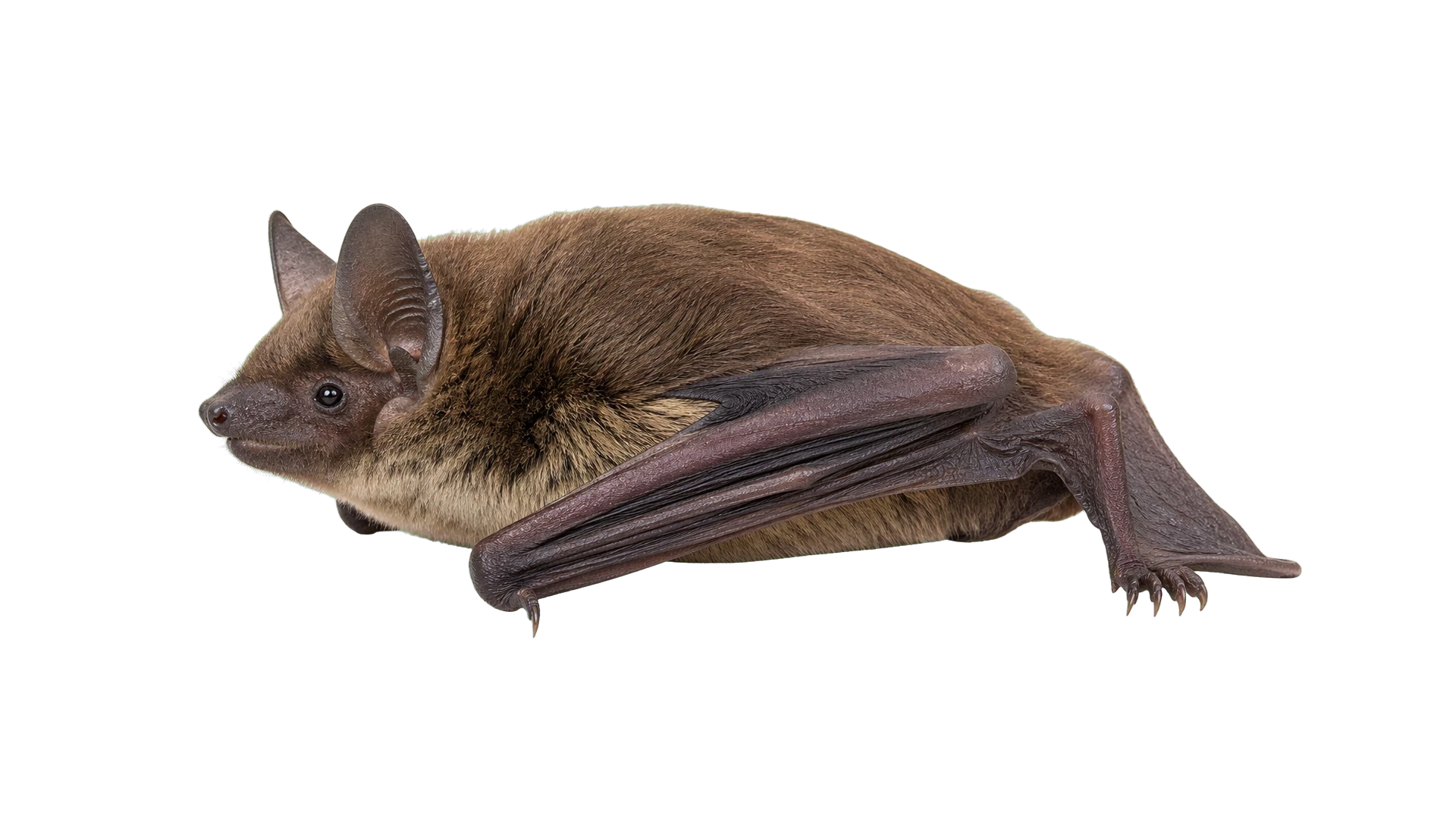
Big brown bats (Eptesicus fuscus) are the most widespread bat in North America. Adults run 9 to 13 centimeters body length with a 32 to 40 centimeter wingspan and weigh 14 to 30 grams. Look for dark brown to chestnut fur, broad black wings, and short rounded ears. A single bat eats more than 1,000 mosquitoes per night, which is why state and federal law protects them across the continental US. Killing one is illegal in most states. The only legal removal method is exclusion using one-way devices that let bats leave but not return.

If you hear scratching at dusk in the attic, see dark pellet droppings piled below an eave, or watch bats emerge from your roofline five to fifteen minutes after sunset, a colony has moved in. This guide covers how to confirm the colony, why exclusion timing is legally restricted from May through August, and what licensed wildlife work actually involves.

Close-up illustration of a big brown bat showing dark chestnut fur, rounded ears, and broad wing membranes, the most widespread attic-roosting bat in North America

ID Card: Big Brown Bat

Scientific name
Eptesicus fuscus
Color
Dark brown, lighter brown belly
Size
4 to 5 inches
Body shape
Robust body with broad wings, larger than most house bats
Key evidence
Large guano pellets, single bats found in living spaces in winter, oily staining at entry points

Call to get matched with a local pest control pro.

Available 24/7
(888) 495-1510
  • Wildlife specialists licensed for state-legal bat exclusion using one-way devices
  • Exclusion scheduled in legal windows (September-October or March-April), never during maternity season
  • Histoplasmosis-safe guano cleanup with PPE plus rabies-exposure coordination when needed

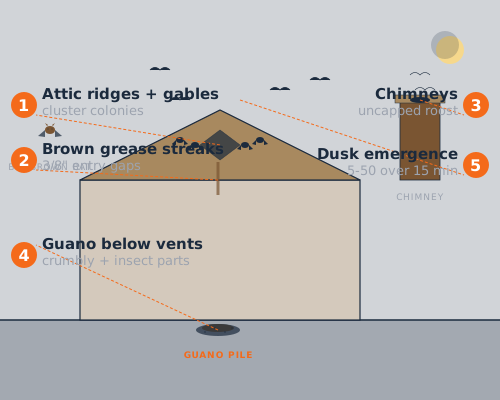
Where to Inspect for Big Brown Bat Activity

Cross-section illustration showing big brown bat roost sites in attic rafters, behind shutters, in chimney chases, and emerging from gable vents at dusk

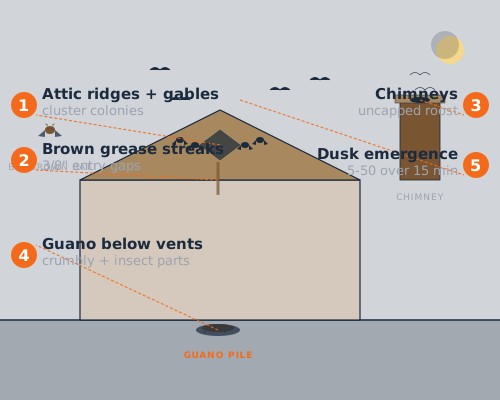
Big brown bats roost in dark, warm cavities and slip through gaps as small as 6 millimeters (about a quarter inch). Most homeowners discover the colony through droppings or dusk emergence rather than seeing the bats themselves. Walk these zones with a flashlight in the attic and stand 30 feet off the house at sunset for the exterior count:

  • The attic floor and rafters, Look for dark staining on rafter wood from body oils, piles of guano on insulation, and yellow urine streaks running down rafters. A typical residential colony holds 5 to 100 bats, maternity colonies can reach 100 to 300 or more.
  • Chimney bricks and the chimney chase, Bats wedge into mortar gaps along chimney faces and inside uncapped chases. Scratching or fluttering noises from inside the flue almost always means an active roost.
  • Soffit vents and ridge vents, Damaged or unscreened vents are the textbook entry point. A dark grease streak on the siding directly above a soffit gap marks a long-used access point.
  • Behind shutters and loose siding, Check exterior shutters that pull away from the wall and any siding seam that has separated. Single bats and small groups often roost here before moving deeper into the attic.
  • The roofline at dusk, Stand back from the house 5 to 15 minutes after sunset and watch the eaves and gable peaks. Bats emerging in sequence over 10 to 20 minutes confirms a colony plus the exact entry point you need to seal later.
  • Exterior lights and water sources at dusk, Insect-attracting porch lights and any pond, pool, or birdbath within a few hundred feet of the house pull bats in to feed and drink. Strong activity here means the foraging conditions favor a long-term colony.

Big brown bats are protected in nearly every state, and exclusion is legally banned from May through August. Removing adults during these months strands flightless pups, which die inside the structure, decompose, and create months of odor plus secondary pest problems. The only legal windows in most states are September through October (after pups can fly) and March through April (before females return to give birth). Residential exclusion typically runs $400 to $2,000 or more; if guano has saturated insulation, decontamination adds another $1,000 to $5,000.

Cross-section illustration showing big brown bat roost sites in attic rafters, behind shutters, in chimney chases, and emerging from gable vents at dusk
Illustration showing big brown bat entry points around homes, gable vents, soffit gaps, fascia separations, chimney mortar cracks, and behind shutters

Why Do I Have Big Brown Bats?

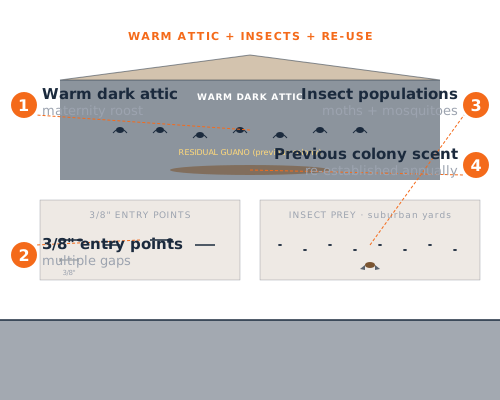
Spotting them is step one. Understanding why your house was selected explains why sealing one gap rarely ends the problem and why one-way exclusion has to address every entry point at the same time. Big brown bats pick roosts based on warmth, darkness, and access through openings most homeowners would not notice without a ladder.

What anchors them to your home:

  • Attic temperatures in the 80 to 100 degree range during summer days, the textbook maternity-roost environment, especially in homes with poor ventilation and dark roofing
  • Entry gaps of 6 millimeters or larger, fascia separations, ridge vent failures, chimney mortar gaps, and soffit voids are all big enough for a bat to slip through
  • Insect populations nearby, mature trees, water features, agricultural fields, and bright outdoor lighting all support the moths, beetles, and mosquitoes a colony needs
  • A recent exclusion at a neighboring house, displaced bats need somewhere to go and often relocate to the next house with similar gaps, sometimes within days

Big brown bats reproduce slowly. Each female has just one pup per year (occasionally two), and pups stay flightless for about four weeks. This slow rate is exactly why federal and state law protects the species so strictly. Females live 18 to 20 years or longer and return to the same roost site every year, which means an attic that hosted a colony last summer will almost certainly host one again next year unless every entry point is sealed during a legal window. Hibernation matters too: unlike little brown bats that overwinter in caves, big brown bats often hibernate right in the attic where they spent the summer.

How Serious Is Your Big Brown Bat Situation?

Find your scenario below. Bat severity tracks three things: where the colony is, whether anyone has had direct contact (rabies decision), and where you are in the legal exclusion calendar.

What You're Seeing Severity If Untreated Next Step
Single bat seen leaving the roofline at dusk, no interior contact Early A single bat often signals a small roost that grows into a maternity colony of 100+ bats within 2 to 3 years Schedule a wildlife specialist inspection. Plan exclusion for the next legal window (Sep-Oct or Mar-Apr). Do NOT seal any gap yet.
Several bats emerging at dusk plus guano accumulation below an eave or vent Moderate Colony will grow year over year, guano keeps building, and urine acidity will damage rafters and saturate insulation Schedule professional one-way exclusion in the next legal window. Get a guano cleanup quote at the same time.
Bat found inside the living space (not a bedroom) or guano visible in finished rooms High Colony has expanded past the attic; histoplasmosis exposure risk grows with every disturbance of the guano Call a wildlife specialist this week. Capture the loose bat safely, do not release outdoors yet, save it for possible testing.
Bat in a bedroom while someone was sleeping, in a child's room, or any direct contact (bite, scratch, skin contact) Urgent Bats are the leading cause of human rabies deaths in the US; their bite marks are often invisible and post-exposure shots are time-sensitive Call public health and a physician today for post-exposure prophylaxis decision. Capture the bat safely if possible for testing.
Single bat seen leaving the roofline at dusk, no interior contact
Severity Early
If Untreated A single bat often signals a small roost that grows into a maternity colony of 100+ bats within 2 to 3 years
Next Step Schedule a wildlife specialist inspection. Plan exclusion for the next legal window (Sep-Oct or Mar-Apr). Do NOT seal any gap yet.
Several bats emerging at dusk plus guano accumulation below an eave or vent
Severity Moderate
If Untreated Colony will grow year over year, guano keeps building, and urine acidity will damage rafters and saturate insulation
Next Step Schedule professional one-way exclusion in the next legal window. Get a guano cleanup quote at the same time.
Bat found inside the living space (not a bedroom) or guano visible in finished rooms
Severity High
If Untreated Colony has expanded past the attic; histoplasmosis exposure risk grows with every disturbance of the guano
Next Step Call a wildlife specialist this week. Capture the loose bat safely, do not release outdoors yet, save it for possible testing.
Bat in a bedroom while someone was sleeping, in a child's room, or any direct contact (bite, scratch, skin contact)
Severity Urgent
If Untreated Bats are the leading cause of human rabies deaths in the US; their bite marks are often invisible and post-exposure shots are time-sensitive
Next Step Call public health and a physician today for post-exposure prophylaxis decision. Capture the bat safely if possible for testing.

Big brown bats are the leading source of human rabies cases in the US. Any potential bedroom exposure is a medical question, not a pest question. If you're between two rows, treat the higher one as your situation.

How a Big Brown Bat Colony Develops

Big brown bats reproduce slowly and live a long time. Each female has just one pup per year, pups are flightless for the first month, and adults can live 18 to 20 years or longer. The slow reproduction rate is the entire reason federal and state law protects them so strictly, and the lifecycle below explains why exclusion timing is legally regulated.

  1. Pup born

    June (occasionally late May or early July)

    Each female gives birth to one pup, pink and hairless and totally dependent on her. Pups cling to the mother or to a warm attic surface. They cannot fly. Exclusion now is illegal in nearly every state because adults excluded from the roost cannot return to feed the pups.

  2. First flight

    About 4 weeks after birth

    Pups begin short test flights around the roost. They are still nursing and depending on the colony. Exclusion is still legally prohibited because juveniles cannot yet survive on their own.

  3. Weaned and foraging

    About 6 weeks after birth, typically mid-August

    Juveniles are fully weaned and flying independently with the colony at dusk. Maternity protections begin to lift in late August or early September depending on the state. This is when professional exclusion can resume legally.

  4. Mature adult

    Sexually mature at 1 to 2 years; lifespan 18 to 20+ years

    Adults return to the same roost year after year with strong site fidelity. Females rejoin the same maternity colony every spring. That long lifespan plus one pup per year is exactly why excluding without sealing every gap just relocates the same returning colony to the next opening on your home.

Because each female produces only one pup per year and adults live nearly two decades, a maternity colony in your attic represents many years of accumulated bats. They are not pests in the ecological sense, they eat thousands of mosquitoes nightly per individual, but they cannot legally remain in your living structure. Legal exclusion preserves the colony by giving them somewhere else to go, while ending the guano, urine, and rabies-exposure problems for your home.

When Big Brown Bats Are Most Active

Big brown bat activity follows a strict annual calendar tied to reproduction, and that calendar drives the legal exclusion windows. Each season has a different right answer, and trying to act in the wrong season can break the law or strand pups.

  • Spring

    Females return to maternity roosts through March and April. This is the pre-maternity exclusion window in most states, the last legal opportunity before pups arrive. Specialists prioritize spring exclusion when possible because it prevents a new pup cohort from being born in the structure. Schedule before mid-April.

  • Summer

    Maternity season runs May through August. Exclusion is legally prohibited in nearly every US state. Pregnant females arrive in May, give birth in June, and nurse flightless pups through July and into August. Use this window only for documentation, count bats at dusk, photograph entry points, and book the fall exclusion. Do not attempt any removal.

  • Fall

    Pups fledge in August and the legal exclusion window opens in September (sometimes August, depending on the state). September through October is the prime exclusion season because every bat in the colony can now fly out and survive on its own. Most professional bat work in the US happens in this 6 to 8 week window.

  • Winter

    Big brown bats hibernate in attics, soffit voids, and other protected structures. Unlike little brown bats that head to caves, this species often stays right in the same attic year-round. Exclusion is technically legal in winter in many states, but hibernating bats may not exit reliably, so specialists usually prefer fall or early spring windows.

Why Big Brown Bats Need Professional Help

Big brown bats are protected by state wildlife law in nearly every US state. Killing one is illegal. The only lawful removal method is exclusion, using one-way devices that allow bats to leave at dusk but prevent return. Exclusion is restricted to specific legal windows (typically September-October post-maternity and March-April pre-maternity), and conducting it during maternity months from May through August is a violation in most states because pups born in the roost cannot yet fly.

There are two public health issues that put bats in a different category from most pest work. The first is rabies. Bats are the leading cause of human rabies deaths in the United States. Bat bite marks are often microscopic and easily missed, so public health rules treat any bat-in-bedroom situation, especially involving children, sleeping adults, or anyone unable to confirm contact, as a possible exposure requiring post-exposure shots. The second is histoplasmosis, a fungal lung disease caused by inhaling spores that grow in accumulated guano. Dry guano releases spores when disturbed, which is why DIY attic cleanup without respirators is a real medical risk.

Self-installed exclusion fails for predictable reasons. Homeowners seal what they think is the entry point and trap bats inside, which is both illegal and creates an attic full of dying bats. Or they seal in the wrong season and strand pups. Or they miss secondary entry points and the colony just shifts to another gap. A trained wildlife specialist starts with dusk emergence counts to confirm every active opening, verifies the legal window for your state, installs one-way devices, waits 4 to 10 days for the colony to fully evacuate, confirms zero activity for two evenings, then seals every gap permanently.

Direct bat contact is a separate emergency that cannot wait for an exclusion appointment. A bat in a child's bedroom, in a sleeping person's room, or with any direct contact (touched, picked up, found by a pet) is a rabies post-exposure decision that needs immediate medical and public health input. If the bat can be safely captured in a container without touching it directly, save it for testing. Treatment proceeds based on exposure rules whether or not the bat is available.

What Changes When a Pro Shows Up

Bat work is licensed work because killing a big brown bat is illegal and improper exclusion has serious consequences. A wildlife specialist maps every entry point at dusk, installs one-way devices in the right legal window, seals every gap after the colony leaves, then cleans the guano under PPE. Here's what changes:

Licensed wildlife specialists after completing a humane big brown bat exclusion and attic decontamination
  • Local Pest Control
  • 24/7 Availability
  • Quality Workmanship
  • Eco‑Friendly Options
  • Trusted by Homeowners
  • Maps Every Entry Point Through Dusk Emergence Counts

    A specialist watches the home for 2 to 4 consecutive evenings at sunset to confirm every active hole. Missing one means the colony shifts to that gap once the one-way devices go up, defeating the entire exclusion. Big brown bats slip through openings as small as 6 millimeters.

  • Schedules Exclusion in a State-Legal Window

    Maternity season (May through August) is off-limits in nearly every state because exclusion now strands flightless pups. The specialist confirms your state's exact rules and schedules for September-October post-maternity or March-April pre-maternity. Wrong timing breaks the law and creates a worse mess.

  • Installs One-Way Exclusion Devices

    Netting and cone devices over active entry points let bats fly out at dusk to feed but block their return. After 4 to 10 days every bat has left. The specialist confirms zero activity for two consecutive evenings before removing the devices and sealing the gaps permanently.

  • Decontaminates Guano with Proper PPE

    Dried bat guano can release Histoplasma capsulatum spores when disturbed. Cleanup requires N95 or HEPA respirators, full Tyvek PPE, and a wet-down step to suppress dust. Heavily contaminated insulation usually needs full replacement. This is the part homeowners cannot safely do themselves.

  • Local Pest Control
  • 24/7 Availability
  • Quality Workmanship
  • Eco‑Friendly Options
  • Trusted by Homeowners
NoToPests home

One call connects you with a licensed wildlife specialist who knows big brown bats and the legal exclusion windows in your state.

Be Ready When You Call

Licensed wildlife specialist arriving for a big brown bat exclusion assessment
Junho L.
Daisuke P.
Kirk Q.
Marion K.

Trusted by homeowners nationwide

Call for Pest Control Help (888) 495-1510

Can You Handle This or Do You Need Help?

Bats are one of the few household pest situations where DIY is not just risky but actually illegal. Killing them is illegal in most states, exclusion has to happen in specific legal windows, and guano cleanup carries a real disease risk. Observation and prevention are useful at home; everything else is licensed work.

What DIY Can Do

Documentation and prevention are valuable; active exclusion is licensed work for legal and safety reasons:

  • Identify the species, big brown bats are dark brown with rounded ears and a roughly 12 inch wingspan, distinct from the smaller little brown bat
  • Watch the roofline at dusk for several evenings and document every emergence point with photos and timestamps
  • Pre-emptively screen attic gable vents, cap chimneys, and seal soffit gaps BEFORE bats establish a roost
  • Stay out of the attic until exclusion is complete, both for your safety (histoplasmosis) and to avoid disturbing the colony
  • What DIY cannot legally do: kill big brown bats (illegal in most states), install exclusion devices during maternity season, seal active entry points with bats inside, or clean guano without proper respiratory PPE.

What a Pro Does Differently

A licensed wildlife specialist handles every step that homeowners cannot legally or safely do:

  • Dusk emergence counts identify every active entry point on the home before any device goes up
  • Exclusion scheduling in state-legal windows (Sep-Oct or Mar-Apr) prevents both legal violation and stranded-pup disasters
  • One-way exclusion devices over active entry points let every bat leave on its own power, then come down for permanent sealing
  • Complete entry-point seal across every gap of 6 millimeters or larger so the colony cannot return next maternity season
  • Histoplasmosis-safe guano cleanup with N95 respirators, full PPE, and a wet-down step that suppresses spores during removal.

Suspect Big Brown Bats? Don't Wait.

Big brown bats are federally and state protected, exclusion is legally restricted to specific seasonal windows, and DIY mistakes (sealing the wrong gap, acting during maternity, handling guano without PPE) create worse problems than the original colony. Connect with a licensed wildlife specialist who can plan exclusion around your state's legal calendar.

Available 24/7
(888) 495-1510

What Homeowners Say After Getting Help

Real results from people who had the same problem and solved it.

Rashad E.
Rashad E.
Portland, OR

"No pressure, just options."

I appreciated being given eco-friendly options without being pushed. The technician explained tradeoffs honestly and let me decide based on my priorities. They were transparent about what each approach involves. The no-pressure approach and honest information helped me make a confident decision.

Rashad E.
Rashad E.
Portland, OR

"No pressure, just options."

I appreciated being given eco-friendly options without being pushed. The technician explained tradeoffs honestly and let me decide based on my priorities. They were transparent about what each approach involves. The no-pressure approach and honest information helped me make a confident decision.

Yu E.
Yu E.
Durham, NC

"The inspection caught what we missed."

I didn't realize how much damage raccoons can cause once they get inside. The wildlife specialist explained what areas they inspect first and why raccoon issues are handled more carefully than regular pests. They showed me the damage and explained removal and exclusion strategies. Understanding the potential for damage made me glad I called professionals.

Ren P.
Ren P.
Dayton, OH

"The problem finally stayed gone."

Ants kept returning no matter what we did. The tech treated the trail areas and explained how to handle food storage and moisture so the ants don't keep coming back. It's been months and we haven't seen them again. I appreciated that it wasn't just a one-and-done spray.

Kayla Q.
Kayla Q.
Pittsburgh, PA

"Clear expectations and a real plan."

I was overwhelmed and didn't know what was realistic to fix quickly. The inspector explained what results to expect and how long it typically takes depending on the ant species. They treated the right places and gave simple prevention tips. Everything felt structured and easy to follow.

Malachi U.
Malachi U.
Knoxville, TN

"They found the entry points fast."

Ants were showing up in the kitchen and we couldn't figure out where they were coming from. The tech tracked the activity and pointed out two entry points we never would've noticed. After treating and sealing those areas, the ants disappeared. It was quick and surprisingly thorough.

Arturo B.
Arturo B.
Yonkers, NY

"No pressure, just helpful info."

I mainly wanted to understand what was happening before committing to anything. The inspector walked me through the likely cause and the differences between treatment approaches. They answered questions without rushing me. The plan we chose worked and the ants were gone within days.

Octavio Z.
Octavio Z.
Duluth, MN

"The tech helped me stop wasting time."

I kept trying different products and nothing was sticking. The tech explained why some solutions don't work for certain ant problems and focused the treatment where it would actually matter. They also gave prevention tips that were easy to implement. The difference was obvious within the first week.

Chauncey A.
Chauncey A.
Duluth, MN

"We finally understood what to do next."

We felt stuck because nothing we tried lasted. The tech explained how to find the source of the problem, treated both indoor and outdoor areas, and helped us build a prevention routine. It wasn't complicated. Just the right steps in the right order. We've had a huge improvement since.

Vihaan V.
Vihaan V.
Madison, WI

"They fixed what was actually causing it."

Ants kept showing up in the same spot. The pro explained that the visible ants weren't the real issue and focused the treatment on where they were coming from. They identified the entry path and treated it properly. The problem stopped and hasn't returned.

Allison A.
Allison A.
Des Moines, IA

"It felt like a real inspection, not a quick spray."

The tech spent time figuring out where the ants were entering instead of just spraying around. They walked me through the likely reasons and what to watch for over time. After treatment, ant activity dropped fast and stayed low. The detailed approach gave me confidence.

Stephen N.
Stephen N.
Sacramento, CA

"Small changes made a big difference."

We didn't realize how much our routine was attracting ants. The inspector explained simple prevention steps and treated the areas where activity was highest. Once those changes were in place, we stopped seeing ants inside. It was a practical approach that actually worked.

Daquan V.
Daquan V.
Tampa, FL

"The explanation alone was worth it."

I'd been doing random treatments without understanding what I was dealing with. The tech explained how ants behave and why certain approaches work better. They treated strategically instead of just spraying. It made the whole thing feel manageable.

Deepak V.
Deepak V.
San Antonio, TX

"We stopped chasing the problem and solved it."

We kept wiping down counters and the ants would be back the next day. The pro identified the entry areas and explained the treatment plan clearly. Once they treated and targeted the colony, the ants disappeared quickly. It felt like we finally got ahead of it.

Mireya Z.
Mireya Z.
Riverside, CA

"They didn't oversell. Just solved it."

The tech explained what treatment was necessary and what wasn't. They focused on the entry points and corrected the conditions that were attracting ants. The work felt honest and effective. I liked having clear expectations and seeing results quickly.

Wei D.
Wei D.
Lexington, KY

"It wasn't just 'spray and go.'"

I appreciated the step-by-step explanation and the focus on prevention. The inspector treated the areas where ants were getting in and helped me understand what to change at home. The ants stopped showing up and it's been consistent. The approach felt thoughtful and sustainable.

Shu W.
Shu W.
Orlando, FL

"It finally made sense why they kept coming back."

I had ants showing up every few months and never understood why. The tech explained how outdoor nests and weather changes affect indoor activity. They treated the perimeter and entry points instead of just the inside. Since then, we haven't had recurring issues.

Teresa I.
Teresa I.
Mesa, AZ

"Targeted instead of overdone."

I was worried about over-treating the house. The pro focused on specific problem areas and explained why blanket spraying wasn't necessary. The ants stopped appearing, and we didn't feel like chemicals were used unnecessarily. That balance mattered to us.

Latonya X.
Latonya X.
Mesa, AZ

"Clear answers without jargon."

The tech explained everything in plain language and answered questions without rushing. They identified the type of ant we had and adjusted the treatment accordingly. Knowing why the approach worked gave me confidence it would last.

Humberto T.
Humberto T.
Eugene, OR

"They focused on prevention, not just treatment."

I liked that the tech talked through how to keep ants from returning after the treatment. They addressed moisture issues and entry points around the home. The treatment worked, and the prevention tips helped us stay ahead of future problems.

Jerrell N.
Jerrell N.
Arlington, VA

"No guessing, just a plan."

I was tired of guessing what would work. The inspector explained the cause of the issue and outlined a clear plan of action. After treatment, the ants disappeared and we haven't had to revisit the problem. It felt efficient and well thought out.

Marion K.
Marion K.
Boulder, CO

"They explained what to expect upfront."

The tech set expectations about timing and results before starting. They explained that some activity might happen initially and why. Everything played out exactly as described, and the ants were gone shortly after. That transparency made a big difference.

Bridget E.
Bridget E.
Sacramento, CA

"Helpful without being overwhelming."

I didn't realize there were different types of ants or that it mattered. The inspector walked me through what they were seeing and explained how ant behavior affects treatment. It made it easier to ask the right questions and understand the solution.

Junho L.
Junho L.
Naperville, IL

"Saved me a lot of guessing."

I was close to trying random sprays for the ants. Talking with the tech helped me understand what was realistic to address and what usually doesn't work. The targeted treatment solved the issue quickly and saved time and frustration.

Willis Y.
Willis Y.
Baton Rouge, LA

"It felt tailored to our home."

The tech didn't just apply a standard treatment. He looked at where we were seeing activity and adjusted the approach to our layout and yard. The ants stopped showing up and we understood how to keep it that way.

Thelma S.
Thelma S.
Madison, WI

"Straightforward and effective."

I appreciated how straightforward everything was. The pro explained the issue, treated the problem areas, and gave us a few simple steps to prevent future issues. The ants were gone and it didn't feel complicated.

Angelina B.
Angelina B.
Austin, TX

"They explained how the weather played a role."

I didn't realize seasonal changes could affect ant activity so much. The tech explained how heat and rain push ants indoors and what to do about it. They treated the problem areas and gave tips to prevent future issues. The explanation helped everything click.

Kirk Q.
Kirk Q.
Denver, CO

"It wasn't as complicated as I expected."

I assumed pest control would be disruptive or complicated. The technician explained the steps clearly and focused on targeted treatment. The ants stopped appearing quickly and the process was smoother than expected.

Cody L.
Cody L.
Denver, CO

"They helped me understand the bigger picture."

Instead of just treating the ants I saw, the tech explained what was happening around the house that made it attractive to pests. Once those factors were addressed, the problem resolved quickly. It felt educational as well as effective.

Marquis K.
Marquis K.
San Mateo, CA

"Clear communication from start to finish."

I appreciated how clearly everything was explained before treatment began. The inspector walked through the process and answered all my questions. The ants were gone shortly after and we felt confident about prevention going forward.

Virginia T.
Virginia T.
San Mateo, CA

"They addressed what we were missing."

We kept focusing on cleaning, but the tech showed us where ants were actually entering. Once those points were treated and sealed, the issue resolved. It was reassuring to finally understand the root cause.

June J.
June J.
Omaha, NE

"A methodical approach that worked."

The pro explained how they identify ant trails and colonies before treating. They took a methodical approach instead of rushing through. The ants stopped appearing and the fix has held up well.

Caitlin K.
Caitlin K.
Phoenix, AZ

"They understood desert pest behavior."

Living in Phoenix, pests behave differently than other places. The tech explained how heat drives ants indoors and what treatments work best here. The solution was effective and tailored to our environment.

Olive S.
Olive S.
Sacramento, CA

"They took the time to do it right."

I appreciated that the tech didn't rush. He inspected the problem areas carefully and explained what they were seeing. The treatment worked quickly and the ants haven't returned.

Arianna D.
Arianna D.
Baton Rouge, LA

"They understood the local pest issues."

The tech explained how the humidity here contributes to ant problems and why certain treatments work better in this climate. They focused on outdoor entry points and moisture-prone areas. The ants cleared up quickly and haven't come back.

Kiyana N.
Kiyana N.
New Orleans, LA

"Finally something that lasted."

We'd dealt with recurring ants for years. The pro explained why flooding and moisture play such a big role here and adjusted the treatment accordingly. It's been months without seeing ants, which is a big win for us.

Brett R.
Brett R.
Phoenix, AZ

"They knew exactly what works in Arizona."

The tech explained how desert conditions affect ant behavior and which treatments are most effective here. They targeted the right areas and avoided unnecessary spraying. The ants disappeared quickly.

Albert O.
Albert O.
Baltimore, MD

"Clear, calm, and professional."

I appreciated how calmly everything was explained. The inspector identified the ant problem, explained the treatment, and answered my questions without rushing. The solution worked and gave me peace of mind.

Rohit Y.
Rohit Y.
Orlando, FL

"They handled it efficiently."

The tech inspected the problem areas, explained the plan, and got to work quickly. The ants were gone within days and the process felt efficient without being rushed.

Carolyn H.
Carolyn H.
Omaha, NE

"Simple explanations, solid results."

I liked how simply everything was explained. The pro didn't overcomplicate things and focused on what mattered. The ants stopped appearing and we haven't needed follow-up treatments.

Edith Z.
Edith Z.
Newark, NJ

"They showed me what to watch for."

Beyond treating the ants, the tech explained what signs to watch for if activity starts again. That knowledge made me feel more in control. So far, everything has stayed clear.

Common Questions About Big Brown Bats

Direct answers to what homeowners ask most about identification, legal exclusion windows, rabies and histoplasmosis risk, and what licensed bat work actually involves.

  • How are big brown bats different from little brown bats? Toggle answer for: How are big brown bats different from little brown bats?

    Big brown bats (Eptesicus fuscus) are larger, about 4-5 inches with a 12-inch wingspan vs 3-4 inches for little browns. They are the most common bat found overwintering inside buildings because they tolerate cooler temperatures. You may see them flying inside heated garages or basements during winter warm spells when little brown bats would remain dormant.

  • Can big brown bats cause damage? Toggle answer for: Can big brown bats cause damage?

    Big brown bats themselves don't chew or damage structures, but their guano and urine accumulate rapidly in roosting areas, staining ceilings, creating odor, and potentially harboring histoplasmosis fungus. Colonies of 20-50 bats produce significant waste over a single season. Professional exclusion followed by cleanup is the standard approach.

  • Why do bats keep roosting in my attic or eaves? Toggle answer for: Why do bats keep roosting in my attic or eaves?

    Bats seek out dark, sheltered spaces that maintain stable temperatures for roosting and raising pups, and attics, soffits, and wall voids are ideal substitutes for their natural cave habitats. A gap as small as 3/8 of an inch is enough for most bat species to squeeze through, and once a colony establishes a roost, they produce scent markers that attract additional bats year after year. Removing a colony without sealing every entry point will result in bats returning to the same structure within days.


  • Are bats in my home dangerous to my family's health? Toggle answer for: Are bats in my home dangerous to my family's health?

    The primary health concern with indoor bat colonies is histoplasmosis, a respiratory illness caused by inhaling spores from the fungus Histoplasma capsulatum that grows in accumulated bat guano. Bat droppings also produce strong ammonia odors and can stain ceilings and walls. While the overall rabies rate in bats is low, any direct contact with a bat, especially one found on the ground or active during daylight, warrants immediate medical consultation since bat bites can be difficult to detect.

  • How quickly can a provider get to my home? Toggle answer for: How quickly can a provider get to my home?

    Most providers in our network can schedule an inspection within 24-48 hours. For urgent situations, likeactive structural damage or large colonies, same-week emergency service is often available. Response times depend on your location and the provider's current schedule.

  • What happens during the first visit? Toggle answer for: What happens during the first visit?

    Your provider inspects the property to identify the pest, locate nesting or entry points, and assess the scope of the problem. You get a clear explanation of what they found, what they recommend, and a written scope before any work begins.

  • Is treatment safe for kids and pets? Toggle answer for: Is treatment safe for kids and pets?

    Modern pest control products are designed to break down quickly after application and pose minimal risk to people and pets when applied correctly. Most providers ask you to keep kids and pets out of treated areas for 1 to 2 hours while the product dries, after which the area is generally safe again. Always confirm specific re-entry times with your provider, and let them know about pet birds, fish, or reptiles, since some treatments require extra precautions for those species.

Pest Control Pros serving the city of the state of your city and nearby areas

Local wildlife specialists licensed for legal big brown bat exclusion, one-way device installation, complete entry-point sealing, and histoplasmosis-safe guano cleanup are ready to inspect, plan, and follow up, no obligation.

Available 24/7
(888) 495-1510