9 to 12 inches plus a tail
Adult tree squirrels run 9 to 12 inches body length with a tail of similar length. Anything substantially smaller is a chipmunk; anything substantially larger and slower is more likely a raccoon or opossum.
Local pest control help is one call away.
 Pest Control Services Nationwide Pest Control Services Nationwide
 Tree squirrels are the most visible rodent group in most yards and the most common attic invaders in single-family homes. Gray, fox, and red squirrels each have their own range, but the attic playbook is similar: a pregnant female finds a roofline gap, chews it open, raises a litter inside, and the family expands as juveniles disperse. Timing is the biggest decision because birthing seasons change the right removal.
An attic is a tree cavity scaled up. Dry, dark, warm, safe from predators, and structurally sound, it provides better natal habitat than any natural den site within a 5-acre territory. Once a female has used a particular attic successfully, the same attic gets reused by her offspring for generations of squirrels.
Most attic entries trace to predictable building details: soffit return cuts, gable vents without hardware cloth, deteriorated roof flashing at chimneys, and roof-fascia gaps where shingles meet soffit. Inspect these zones in fall and seal them before females start prospecting in late January.
What every tree squirrel commits to:
A gray squirrel can leap roughly 10 feet horizontally and survive falls from 100-plus feet. Tree squirrels typically have two breeding peaks per year: late winter (February to March) and mid-summer (June to August). Litters average 2 to 4 young; juveniles stay with the mother for about 10 to 12 weeks before dispersing. Squirrel-caused fires from chewed wiring number in the thousands annually in the United States.
Three checks separating tree squirrels from other attic and roofline visitors. Activity timing, body size, and entry hole size all point the same direction once you know what to look for.
Adult tree squirrels run 9 to 12 inches body length with a tail of similar length. Anything substantially smaller is a chipmunk; anything substantially larger and slower is more likely a raccoon or opossum.

The defining squirrel silhouette is the bushy upright tail. Gray squirrels and fox squirrels carry it back; red squirrels carry it more arched. The tail provides balance during running and signals communication between animals.

Tree squirrels are diurnal; attic noise during daylight hours strongly suggests squirrel rather than rat or flying squirrel. Heavy running, rolling sounds (acorn caching), and chewing during morning and afternoon are the classic pattern.
Squirrel signs are louder and more visible than most rodent issues because the animal is large enough that its damage and movement are obvious once you know what you are looking at. Catching the issue at the entry-hole stage is dramatically cheaper than catching it after a litter is born.
How Squirrel Attic Issues Develop
Tree squirrel attic invasions follow a predictable seasonal calendar. Pregnant females scout in late January and February for natal sites and chew open the entry hole within days of selecting a location. Young are born in February or March, raised in the attic for 8 to 10 weeks, and disperse in late spring. A second smaller breeding peak in summer produces another wave of juveniles that disperse in fall and may scout for their own attic spots.
Removal timing matters more than the trap or device used. A one-way exclusion door installed during birthing season can leave nursing young trapped inside, leading to mortality, odor, and structural damage. Pros experienced with squirrels coordinate exclusion timing with the breeding cycle and use approaches that account for whether young are likely present (attic noise plus seasonal context usually answers this within a single inspection).
Lasting squirrel control on a property is roofline exclusion paired with branch trimming. Closing every soffit and vent gap with hardware cloth and metal flashing prevents reentry. Trimming branches back 8 feet from the roofline removes the access path. Done together, these two interventions hold for years and address every tree squirrel species that occurs locally.
Six features that explain why tree squirrels are the most successful attic invader in residential neighborhoods.
Roughly equal to body length, carried upright or arched. Balances running on branches and rooflines, signals other squirrels, and regulates temperature in extreme weather.
Long curved claws grip bark, shingles, brick, and most siding. Squirrels descend trees head-first and run vertically up brick chimneys. Visible scratches show on flashing and downspouts.
Hind legs are substantially longer than front legs, producing horizontal leaps of about 10 feet. Hind legs also rotate for head-first descent. Trim branches 8 feet minimum from any roofline.
Four chisel incisors grow throughout life. Tooth grooves on damaged wood run 3 to 4 mm wide, distinctly larger than mouse or chipmunk grooves. Damage concentrates at entry points and wires.
Eyes positioned for wide-angle vision while keeping the head still. Red squirrels show prominent winter ear tufts; gray and fox squirrels show less. Color vision supports daytime activity.
Shorter and stockier than mice or rats, built for climbing and leaping rather than tunneling. Adults weigh 12 to 28 ounces, much heavier than other attic invaders, producing louder activity.
Pick the situation that matches what you are noticing. Each one points to a different stage of the attic issue.
Squirrels go from rooftop to attic faster than any other backyard mammal, and they breed twice a year (late winter and midsummer). The damage is mostly chewed wires and ruined insulation, but a chewed wire is a real fire risk. The timeline below tracks the escalation.
Squirrels running on the roof, scratching sounds in the soffit, or chewing visible at attic vents and roof edges. No confirmed entry yet, but the squirrel is testing access points along the roofline before committing to a chew-through.
Confirmed entry hole, daytime scratching or running in the attic, or small dark oblong droppings in attic insulation. Squirrels are using the attic as shelter and may be storing acorns or hickory nuts there for the season.
Nest established with possible litter (kits). Multiple squirrels heard, more frequent activity, or chittering noises at dawn. Exclusion now requires waiting until kits are mobile (about 6 to 8 weeks after birth) or hand retrieval by a permitted operator.
Long-term occupation with multiple generations, severe insulation damage, chewed electrical wiring (a fire risk), or stored food in the attic. Cleanup runs $1,500 to $8,000 for insulation replacement and wiring repair on top of removal and exclusion costs.
Squirrels nest twice a year, and a sealed home in March often gets a second attempt in August. After exclusion, plan for a fall walkaround to catch any new chew damage before the second breeding season.
Local wildlife specialists time the exclusion around birthing season, install one-way doors when appropriate, and seal the roofline so reentry is closed.
Squirrels do not pick houses at random. They follow signals: a bird feeder within 30 feet that supplies daily calories, oak or hickory branches reaching within 8 feet of the roofline, a worn fascia gap or open gable vent that opens straight into attic insulation. Once a female finds a quiet attic in February or August, she settles and a litter of 2 to 5 kits is in place within 30 to 45 days because eviction at that stage requires waiting for the young to be mobile.
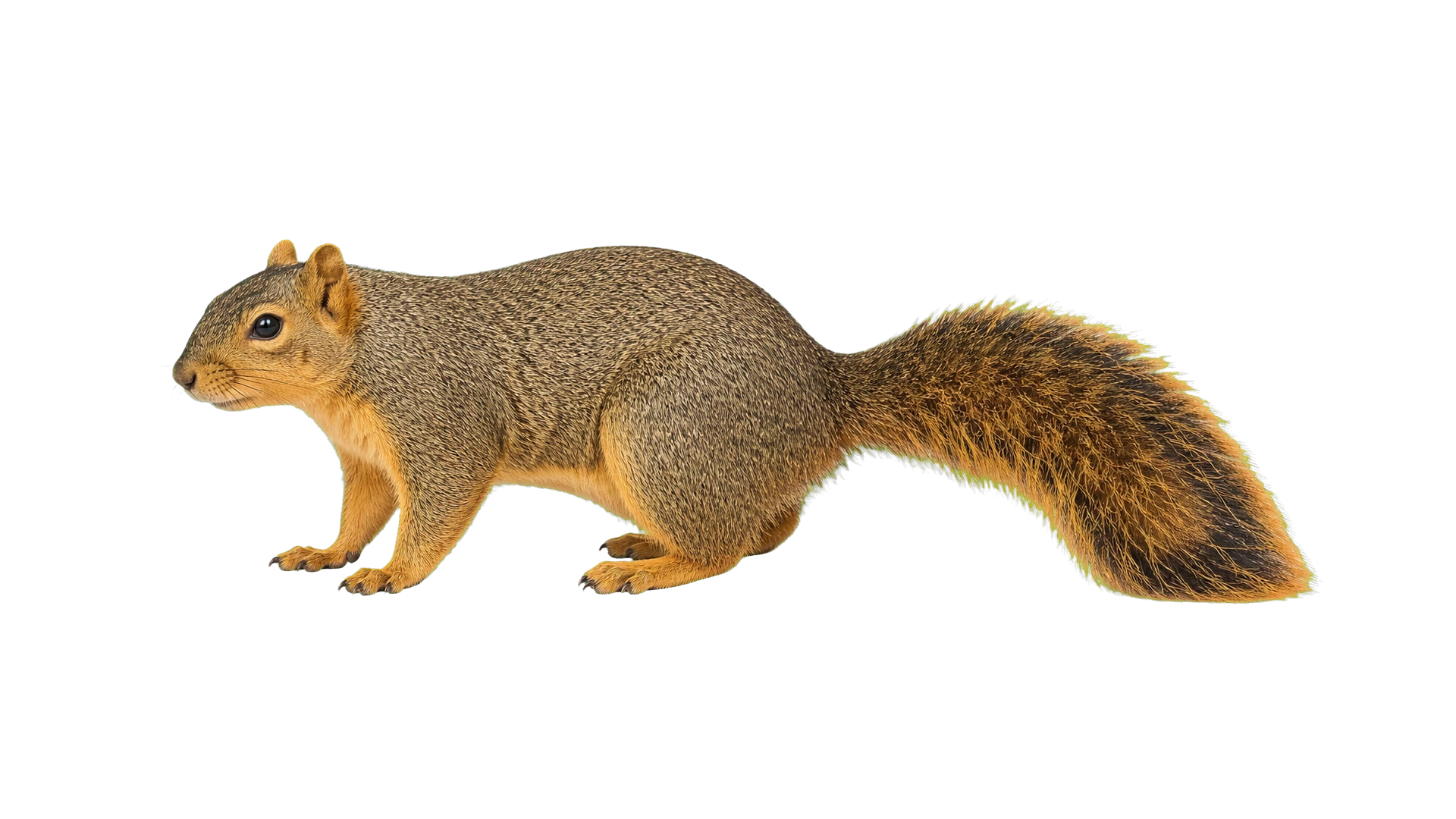
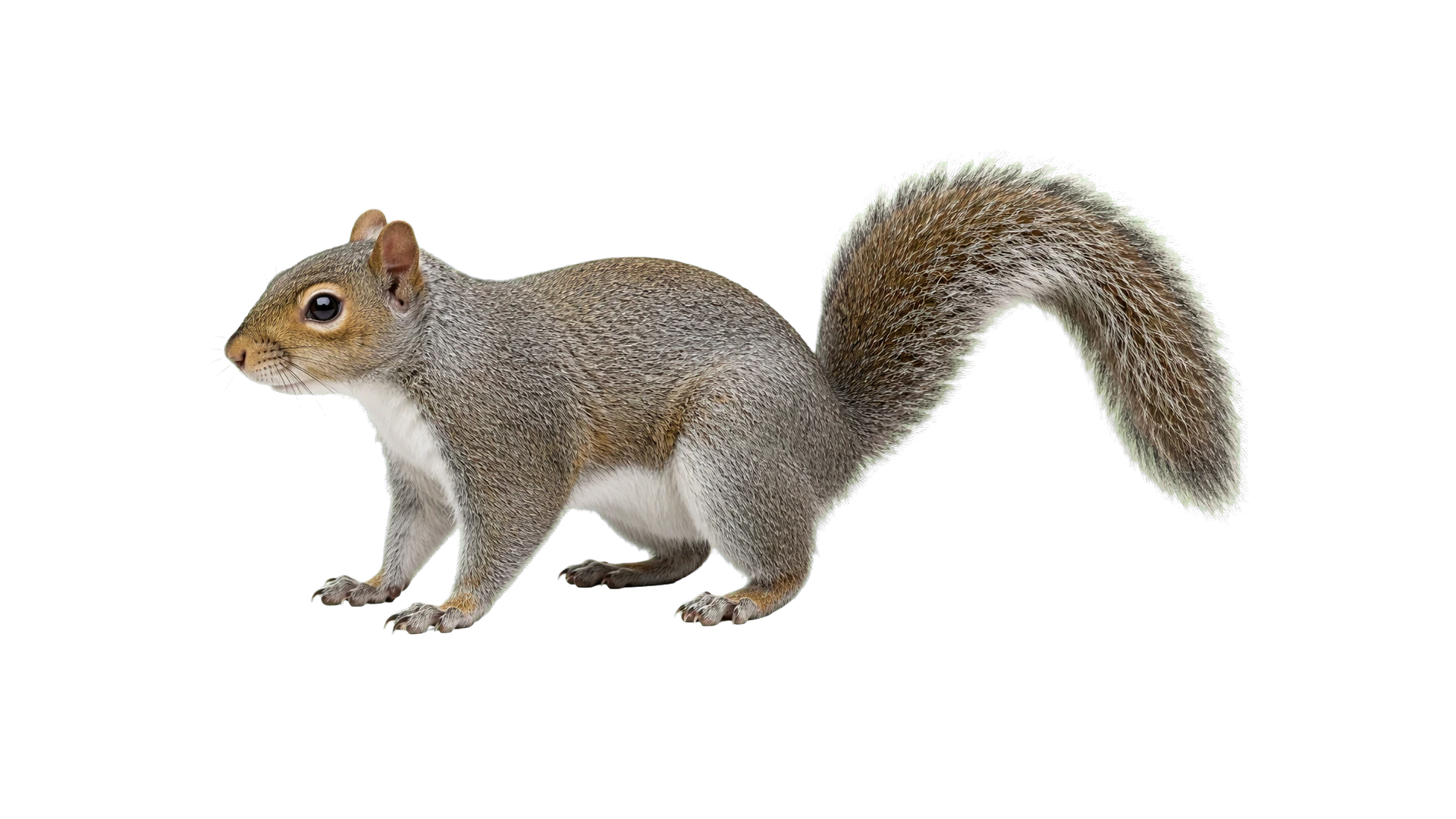
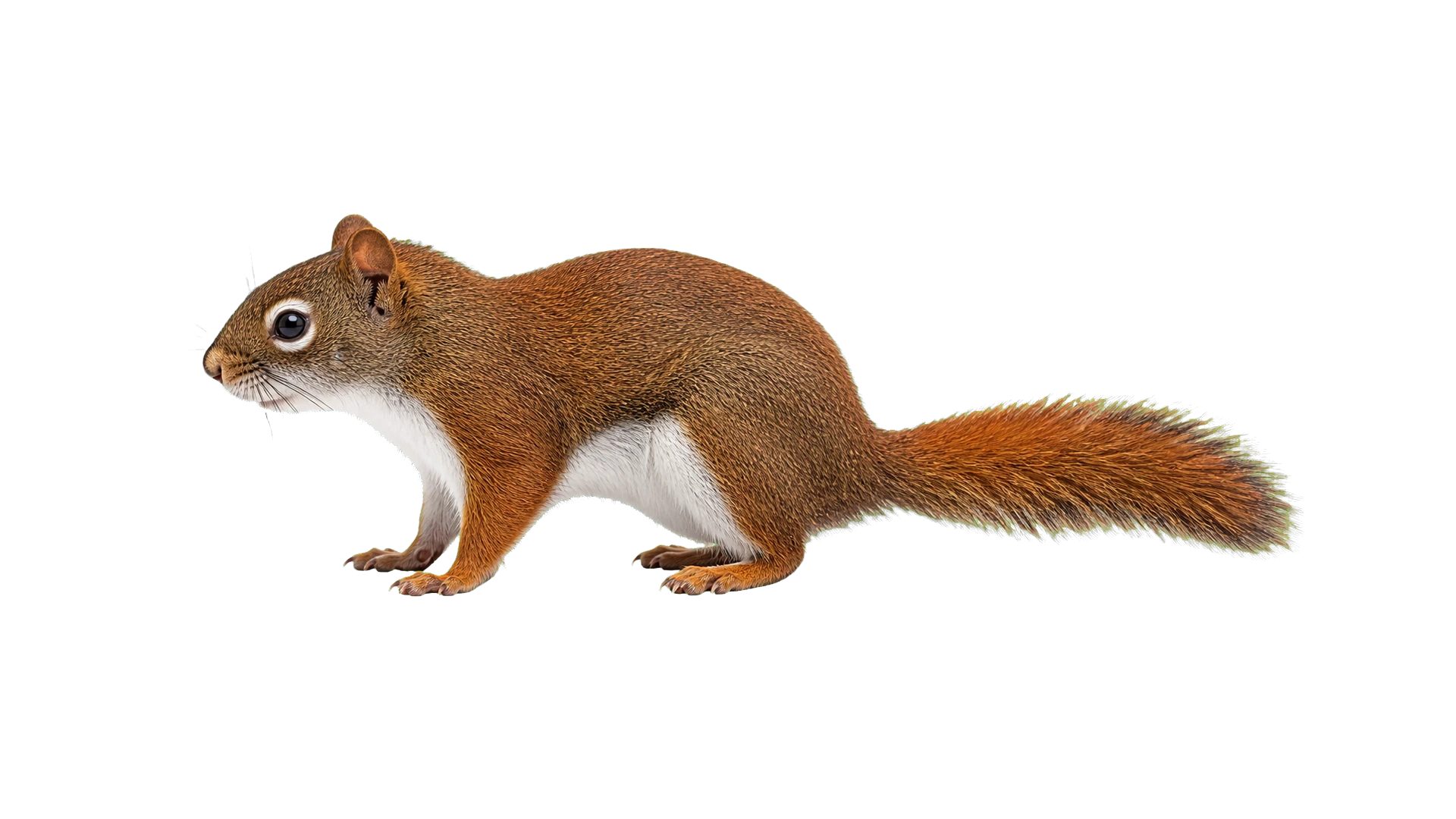
Different squirrel species chase different rewards, which is why ID matters. Eastern gray squirrels (Sciurus carolinensis) dominate suburban yards across the East and Midwest and produce most attic intrusions. Fox squirrels (Sciurus niger) are larger, prefer open woodlots and Plains states, and concentrate at ground level. Red squirrels (Tamiasciurus hudsonianus) are smaller, more aggressive, and dominate northern conifer forests with year-round attic pressure. Flying squirrels are silent and nocturnal, so attic activity often goes undetected for months until droppings accumulate. Knowing the species tells you whether the attic occupant is one female or a colony.
Sealing entries beats trapping every time. A squirrel can pass through a 2 inch gap and gnaw 1/4 inch wood within hours, so any roofline opening that size or larger is an open door. Start with the highest-leverage source: prune branches at least 8 feet back from every roofline edge, then seal soffit gaps, gable vents, and chimney flashing with 1/4 inch hardware cloth (galvanized, not vinyl-coated). Check state wildlife rules before lethal control; tree squirrels are protected non-game species in many jurisdictions. Even partial wins help: trimming back one overhanging branch and capping one open soffit gap often ends repeat attic activity within a single season.
Open soffit returns at corners and along roof edges are the single most common squirrel entry point. The animal exploits the existing gap rather than chewing fresh wood, which is why these need hardware cloth backing.
Standard louver gable vents without hardware cloth backing are easy entry. Hardware cloth (1/4 inch mesh galvanized) installed behind the louvers blocks squirrels while preserving airflow.
Where shingles meet fascia at roof edges, settling and weathering can produce gaps. Squirrels chew these wider quickly. Inspect from below with binoculars and from a ladder annually.
Deteriorated flashing where the chimney meets the roof creates entry holes for squirrels and other wildlife. Annual flashing inspection is part of comprehensive roofline maintenance.
Branches within 8 feet of any roofline are squirrel highways. Regular pruning back to that distance is one of the highest-leverage prevention actions for tree squirrels.
Garages, sheds, and barns with similar roofline gaps host squirrel activity that often jumps to the main house. Comprehensive exclusion includes outbuildings rather than just the primary structure.
Why timing matters more than tools when removing squirrels from an attic.
0 to 4 weeks
Born blind, hairless, and dependent on the mother. Litter is 2 to 4 young in a nest of leaves and shredded insulation. Mother nurses on rotation.
4 to 6 weeks
Eyes open at week 4. Young become vocal and explore the nest area. Chittering through ceilings is sometimes the first sign homeowners notice.
6 to 10 weeks
Young begin solid food at week 6 and stop nursing by week 10. Juveniles explore outside the natal cavity but return to the nest each evening.
10 to 16 weeks
Juveniles leave the natal area to establish own territories. Some stay nearby. Females from late winter litter may breed in the summer peak.
Tree squirrels typically have two breeding peaks per year: late winter (births in February-March) and mid-summer (births in July-August). Removal timing should account for the seasonal context. One-way exclusion installed during weeks 0 to 8 of either window leaves dependent young trapped inside, which is the single most common squirrel removal mistake.
Squirrel species nest and forage differently, with varying property-damage risk. Match what you're seeing to identify which one.
| Species | Severity | Key Sign | Where You'll Find Them |
|---|---|---|---|
| Fox Squirrels | Persistent | Large gnawed openings, heavy scratching sounds in attic, larger droppings than gray squirrels | hardwood forests, suburban yards, attics |
| Gray Squirrels | Persistent | Gnawed soffits and fascia, acorn caches in attic insulation, daytime scratching sounds | urban/suburban trees, attics, soffits |
| Red Squirrels | Persistent | Loud chattering and scolding calls, pine cone middens (piles of stripped cones), small gnawed openings | coniferous forests, attics, sheds |
Severity reflects typical impact, not your specific case. If unsure, treat at the higher tier.
Honest read on common DIY methods. Squirrel work is among the most timing-sensitive in pest control; the right tool used at the wrong moment produces a worse outcome.

 One-way door installed after juveniles are mobile or outside breeding seasons Mother and young exit normally, cannot return Permanent seal applied immediately after exit confirmed Hardware cloth on every soffit gap, gable vent, and fascia gap Metal flashing on chimney transitions and roof penetrations Inspection of detached outbuildings during the same project All branches trimmed back 8 feet minimum from any roofline edge Bird feeders relocated 30+ feet from the structure or removed Pet food and stored feed sealed in hard containers
  Trapped squirrel chews drywall, wire, and new exit holes Frantic animal can damage the structure faster than weeks of normal activity Either rescue access or major secondary damage results Mother exits, dependent young trapped inside Young die in attic producing odor and secondary pest issues Animal welfare concerns plus larger structural cleanup Animals habituate to noise and smell within days to weeks Outdoor application washes off with weather No durable effect on attic occupation
 Six prevention actions sorted by effort. Roofline exclusion paired with branch trimming is the durable answer; the rest are supporting moves.

Single biggest property-level squirrel draw. Move feeders to the far edge of the yard or pause during peak squirrel pressure. Squirrel-resistant feeders help only at the feeder, not at the structure.

Walk the perimeter with binoculars. Look at every soffit corner, gable vent, fascia edge, and chimney for gaps wider than a quarter. Photograph any concern for follow-up.

Every branch within 8 feet of any roofline edge gets pruned back. Annual or biannual maintenance after major growth seasons. The single most leveraged squirrel prevention action.

1/4 inch galvanized hardware cloth backing every gable vent, soffit return, and foundation vent. One-time installation that holds for years if galvanized properly.

Chimney flashing, roof return cuts, and pipe penetrations get metal flashing rather than caulk-only seals. Squirrels chew through anything softer than metal.

Garages, sheds, and barns get the same exclusion treatment as the house. Squirrels using outbuildings often spread to the main structure within a season or two.
Squirrel pressure follows the breeding calendar more than the weather calendar. Match the season to the right intervention.
Late winter litters (February-March) are still in attics through April-May. Removal timing in this window must account for dependent young. Females may already be scouting summer natal sites by May.
Summer litters born in July-August are dependent through September. June is the lowest-pressure window of the year for safe exclusion before the second peak begins. Branch trimming during summer is also least disruptive.
Juvenile dispersal from summer litters peaks in September-October. New attic invasions are common as young squirrels prospect for winter shelter. Roofline exclusion before this window pays off significantly.
Established attic populations remain through winter. Pregnant females begin scouting in late January for late winter litters. November-January is a workable window for completing exclusion before the spring breeding peak.
Four steps from arrival to a squirrel-resistant roofline. Initial visit runs 60 to 90 minutes for a typical attic situation.
Identify, time the exclusion, seal everything. Squirrel work is timing-dependent and verification-dependent. Pros who skip either step produce callbacks.
Exterior inspection with binoculars and ladder. Locate every roofline gap and identify the active entry hole. Interior attic inspection to confirm species and assess for nesting young.
Determine whether dependent young are likely present based on season and activity pattern. Schedule one-way exclusion outside birthing windows or coordinate hand-removal of family unit if necessary.
One-way exclusion door over the active entry hole. All other roofline gaps sealed with hardware cloth and metal flashing during the same visit so reentry through alternate paths is closed.
Return visit at 5 to 7 days to confirm exit and remove the one-way device. Permanent seal applied. Branch trimming recommendations delivered for the property owner or coordinated tree service.
Real stories from households who connected with wildlife pros to time the exclusion correctly and seal the roofline.

"Attic squirrels evicted and entry repaired."
Squirrels gnawed through a rotted fascia board and nested in the attic. The wildlife specialist removed the animals, repaired the entry point, and installed a one-way exclusion device. The attic has stayed squirrel-free since.
"Attic squirrels evicted and entry repaired."
Squirrels gnawed through a rotted fascia board and nested in the attic. The wildlife specialist removed the animals, repaired the entry point, and installed a one-way exclusion device. The attic has stayed squirrel-free since.

"Soffit repaired and attic cleared of squirrels."
Squirrels gnawed a hole in the soffit and were nesting in the attic. The provider removed the animals with a one-way door and repaired the entry point with metal flashing. The attic has been clear since.

"Fascia repaired and squirrels kept out."
Squirrels gnawed a hole in the fascia board and nested in the attic. The provider removed them using a one-way exclusion device and repaired the hole with metal flashing. The repair has held and no squirrels have returned.

"Attic and feeders secured from squirrels."
Squirrels raided the bird feeders and eventually found a gap into the attic. The provider sealed the attic entry and recommended squirrel-proof feeders. Moving the feeders away from the house reduced the temptation for roofline access.

"Fascia patched and squirrels kept out."
Squirrels gnawed through the fascia and nested in the attic insulation. The provider removed them with a one-way door and patched the hole with metal. The repair has held perfectly.

"Soffit repaired and attic cleared of squirrels."
Squirrels gnawed through the soffit and nested in the attic. The provider removed them and repaired the entry with metal flashing. The repair has held and no squirrels have returned.

"Fascia repaired and squirrels kept out."
Scratching above the bedroom ceiling at five in the morning, every morning. Walked outside and saw a chewed hole in the corner fascia about the size of a baseball. The wildlife specialist used a one-way door, gave the squirrels time to leave, then repaired the gap with metal flashing screwed into solid framing. They have not been able to chew back through. Worth it for the sleep alone.
Direct answers to what homeowners ask most about tree squirrel attic activity.
A pregnant female is looking for a natal nesting site. Tree squirrels have two breeding peaks per year (February-March births and July-August births). Attics function identically to tree cavities: dry, dark, warm, defensible. Most invasions trace to specific roofline gaps: open soffit returns at corners, gable vents without hardware cloth backing, deteriorated chimney flashing, fascia-shingle gaps from settling, and roof return cuts. Branch access connects trees to roof. Branches within 8 feet of the roof are the most common access path. Bird feeders are the single biggest property-level attractant. Mature oak, hickory, walnut, or pecan trees with mast crops increase regional pressure. Successful natal use creates strong site fidelity. Daughters from previous litters may inherit the territory, which is why exclusion must address all roofline gaps rather than the most recent entry hole.
Outside birthing seasons. Tree squirrels have two breeding peaks: late winter (February-March) and mid-summer (July-August). Young are dependent for 8 to 10 weeks. Removing the mother during dependency windows leaves young trapped inside, leading to mortality and odor. Dependency windows are roughly February-April and July-September. June is the safest single window for routine one-way exclusion, falling between the spring and summer dependency periods. October through January is also typically safe. Always verify all animals have exited before final sealing. Several days of one-way device use plus inspection is necessary; immediate sealing after device installation is rarely safe. Pre-breeding-season exclusion in November through January is the most cost-effective approach because it prevents next spring's natal site selection from including the property.
Through predictable roofline gaps. Open soffit returns at corners (where soffit does not fully reach the fascia) are the single most common entry point and exist in original construction. Gable vents without hardware cloth backing allow entry through standard louvers. Add 1/4 inch galvanized hardware cloth behind louvers to block animals without restricting airflow. Fascia-shingle gaps from settling get enlarged by chewing. Deteriorated chimney flashing produces gaps along the chimney perimeter. Roof return cuts at hip and valley angles create small gaps that animals climb into. Plumbing vent stack boots deteriorate over 10 to 15 years. Squirrels reach the roofline by leaping from branches within 8 feet, walking utility wires, climbing fences adjacent to the roof, or scaling rough siding. Trimming branches back 8 feet from rooflines is the single most leveraged prevention because it removes the access path regardless of remaining gaps.
Yes, mostly through damage. Squirrels gnaw on electrical wire insulation for tooth maintenance, exposing copper and creating short-circuit potential. Squirrel-related electrical fires contribute to thousands of structural fires annually, often classified as fires of unknown origin. Beyond wiring, they gnaw rafter corners, HVAC ducts, and stored items. Urine and feces in insulation reduce R-value and may affect indoor air quality through HVAC return circulation. Disease transmission risk is low. Rabies is rare in tree squirrels. Leptospirosis transmission is possible but uncommon. Bites can transmit minor wound infections during attempted handling. Fleas, mites, and other ectoparasites can transfer to pets that contact squirrels or contaminated insulation. Squirrel mortality inside walls produces odor and attracts blow flies and dermestid beetles. Repair costs scale with how long activity continues, which is why early intervention is cheaper.
Rarely. Squirrels that have raised young return to the same site year after year, and daughters from previous litters may inherit the territory. The attic functions as a multi-generational use site rather than temporary shelter. Even when individual animals leave, replacement animals (dispersing juveniles or new pregnant females) typically reoccupy the cavity. Each week of occupation produces additional gnawing damage to wood, wires, ducts, and insulation. Waiting weeks or months for self-resolution typically produces several thousand dollars of additional damage. The exceptions are a single juvenile that found its way through an open vent during summer, or a single non-breeding male using the space for short-term shelter. Most situations require coordinated removal plus exclusion. Sealing based on assumed departure can trap animals inside; verification requires inspection.
Size, color, and range. Eastern gray squirrels (Sciurus carolinensis) are 9 to 12 inches body length, gray with white belly. They dominate eastern forests and most suburban habitats. Fox squirrels (Sciurus niger) are larger at 10 to 14 inches with regional color variation from gray-and-rust to nearly black to bright orange-rust. They occupy open woodlands and edge habitats across the Midwest and South. American red squirrels (Tamiasciurus hudsonicus) are smaller at 6 to 8 inches, rusty red on top with white belly, prominent winter ear tufts. They occupy coniferous and mixed forests in northern and mountain regions and are notably vocal and aggressive in defending territory. Red squirrels can use smaller entry holes than gray or fox squirrels. All three follow the same exclusion principles (roofline sealing, branch trimming, one-way devices) with slight adjustments for behavior and timing.
Focus on reducing access and resources rather than total exclusion, which is rarely achievable. Bird feeders are the single biggest property-level attractant. Removing feeders or using weight-activated squirrel-resistant designs eliminates the most reliable food source. Move remaining feeders 30 plus feet from the structure to reduce structural risk. Protect specific garden plants with hardware cloth cages, individual fruit cages, and tree trunk wraps rather than trying to exclude squirrels from the whole yard. Seal pet food, bird seed, and stored feed in hard plastic or metal containers. Trim branches back 8 feet from all rooflines to remove tree-to-roof access. Repellents (capsaicin sprays, predator urine, ultrasonic devices) habituate quickly. Predator presence (outdoor cats, hawks) reduces comfort but does not exclude. Accept background squirrel presence as normal yard ecology.
Time the exclusion, seal the roofline, trim the trees. Local wildlife specialists handle all three on the same project.
Click through to species pages for behavior, regional patterns, and treatment specific to that squirrel.
The largest tree squirrel, often nesting in attics and chewing through soffits.
Fox squirrels are the largest North American tree squirrel species, weighing up to two pounds. Their size gives them the jaw strength to gnaw through fascia boards, aluminum soffits, and even hardwood trim to access attics. Once inside, they build large nests using insulation and shredded materials, and their chewing on electrical wiring creates a serious fire risk.
Quick ID:
Why it matters:
The most common urban squirrel and frequent attic invader.
Eastern gray squirrels are the most abundant tree squirrel in urban and suburban areas, and the species most frequently found nesting in residential attics. They chew entry holes through roof returns, gable vents, and soffit joints, then build nests that damage insulation and create fire hazards from gnawed wiring. Females produce two litters per year, establishing persistent attic populations.
Quick ID:
Why it matters:
Small, territorial squirrels that aggressively defend attic nesting sites.
Red squirrels are smaller than gray squirrels but far more aggressive and territorial. They chew entry holes into attics, soffits, and wall voids, then fiercely defend their nesting territory, making exclusion difficult because they attack repair materials. They hoard large caches of pine cones and nuts inside structures, and their gnawing damages wiring, insulation, and stored items.
Quick ID:
Why it matters: