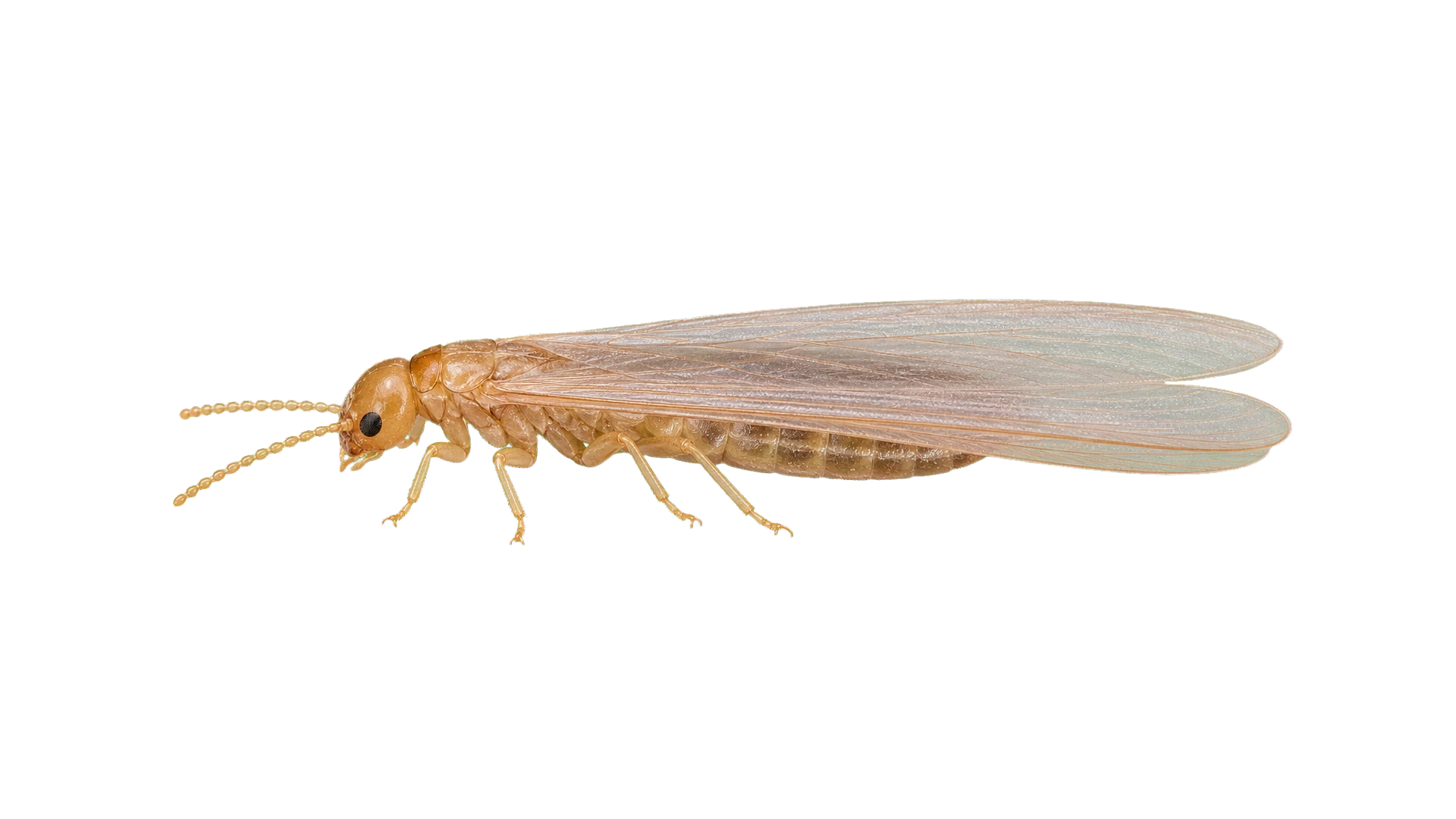
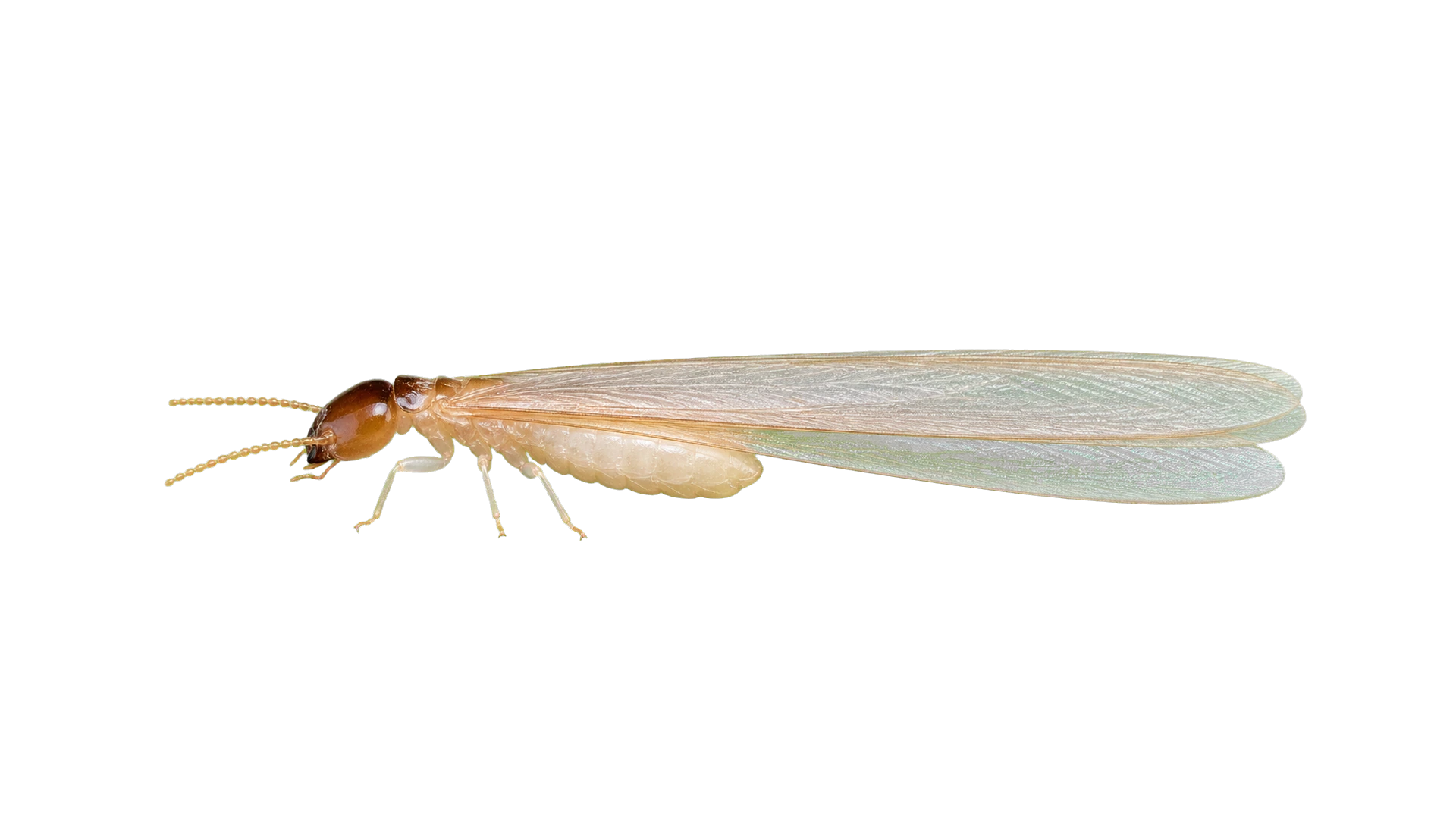
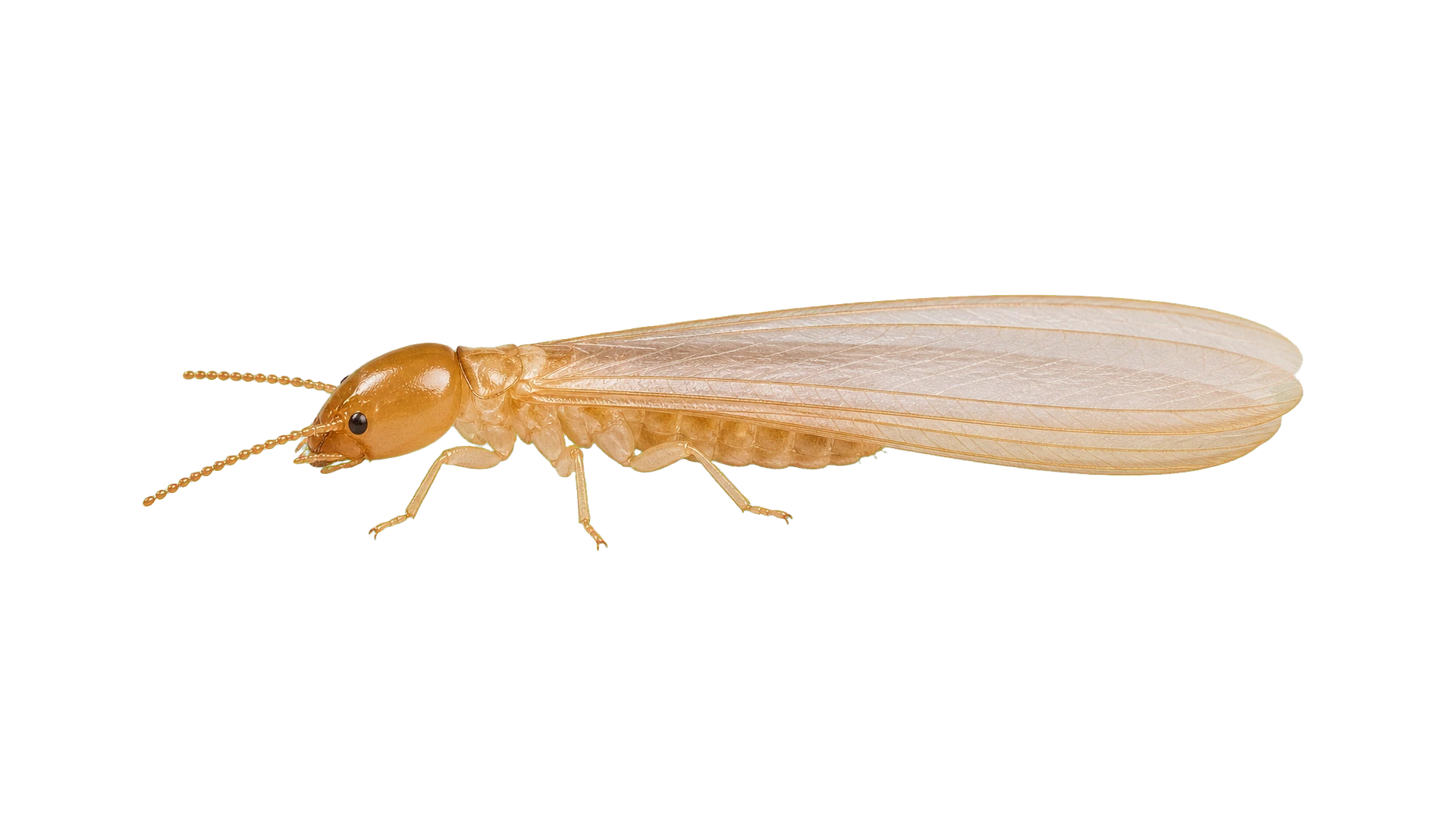
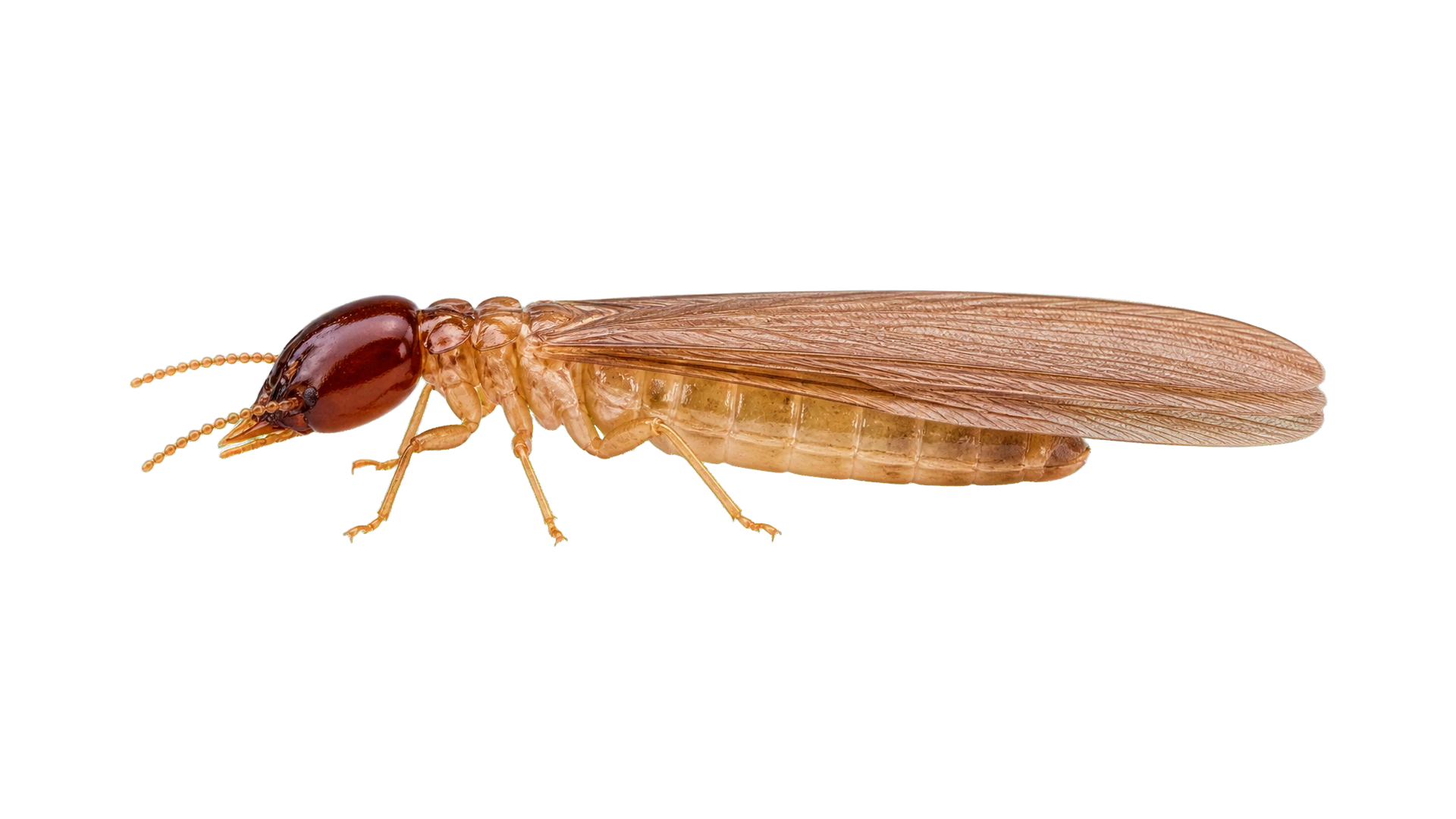
Straight body, no waist
Termites are uniformly thick from head to abdomen with no pinched waist. Carpenter ants always show a narrow petiole between thorax and abdomen. The waist test is the fastest single ID.
Local pest control help is one call away.
 Pest Control Services Nationwide Pest Control Services Nationwide
 Termites work silently for 2 to 5 years before homeowners notice. By the time you see swarmers, mud tubes, or sagging floors, the colony is mature and the structural bill is already compounding. Identify the species, read the early signs, and act before the damage outpaces the budget.
Termites do not show up at random. They follow moisture, scent trails, and undisturbed wood pathways into a structure that meets their needs. Once a colony commits to your house, it scales fast and quietly behind drywall.
Cut the moisture or wood-to-soil contact and you slow the colony. Ignore both and the lumber bill compounds 1 foot every 3 weeks under a Formosan colony.
The three things termites need to commit to a house:
Termites cause more structural damage in the United States than fires, floods, and storms combined. US homeowners spend roughly $5 billion every year on termite treatment and repair. Most of that cost is preventable: the colonies that destroy houses were detectable 2 to 5 years earlier through annual inspections costing $75 to $200.
Three checks separate termites from carpenter ants and other look-alikes in under 30 seconds.
Termites are uniformly thick from head to abdomen with no pinched waist. Carpenter ants always show a narrow petiole between thorax and abdomen. The waist test is the fastest single ID.

Termite antennae look like tiny strings of pearls and project straight out. Ant antennae bend at a sharp elbow joint. If the antennae are visible, you can ID the insect.
Termite swarmers carry four identical wings that are milky-translucent. Ant swarmers show unequal wings (forewings larger than hindwings). Discarded equal-length wings on windowsills mean termites.
Termites send signals long before they finish your subfloor. Homeowners miss them because the signs read as cosmetic: discarded wings on a windowsill, a small pile that looks like sawdust, paint that starts to bubble in February. Catching one of these in year three is the difference between a $1,500 perimeter treatment and a $20,000 fumigation plus structural repair.
The species behind the sign tells you what to expect. Subterranean termites build mud tubes from soil up to wood. Drywood termites skip the ground and live inside the lumber they eat, dropping coffee-ground pellets. Formosan termites build wet carton nests inside walls without needing soil contact and can consume a foot of structural lumber every 3 weeks. Each species changes the treatment scope and the timeline.
Insurance does not cover any of this. Standard homeowners policies exclude termite damage explicitly, which is why the repair bills compound on the homeowner alone. A $75 to $200 annual inspection catches subterranean activity 2 to 5 years before galleries reach the surface, when treatment costs sit in the four-figure range instead of the five-figure structural-repair range.
How a Termite Problem Compounds
A mature subterranean termite colony has 60,000 to over a million workers, soldiers, reproductives, and a primary queen who can live 15 to 25 years. Workers are the only caste that eats wood. Everything else (soldiers, swarmers, the queen) is fed by them. Knock out the workers and the rest of the colony starves within weeks.
Subterranean termites tunnel from underground nests to wood through mud tubes that protect them from air. Drywood termites skip the ground entirely and live inside the wood they eat. Formosans build wet carton nests inside walls so they don't need to return to soil at all. Each species needs a different treatment approach because their access patterns are fundamentally different.
What makes termites different from most pests is the silence. The damage compounds invisibly for two to five years before any visible sign reaches the surface. By the time you spot the first warning, the colony is already mature and the structural cost has already started. The right move is annual inspections, not reactive treatment after damage shows.
Six features that define a termite, and the fastest way to tell one from a carpenter ant.
Look like tiny strings of pearls. No elbow joint. Single fastest field mark separating termites from carpenter ants at any distance.
Body is uniformly thick from head to abdomen with no pinched petiole. Ants always show the narrow waist; termites never do.
Swarmers carry four translucent wings, all identical in length. Ant swarmers show unequal wings, with forewings larger than hindwings.
Three pairs attached to the thorax. Standard insect anatomy, but combined with no waist and straight antennae, the ID is conclusive.
Workers are creamy-white and soft, almost translucent. Swarmers darken to brown or black before flight events in spring.
Workers carry small grinding mandibles for nonstop wood feeding. Soldiers carry oversized mandibles for defense against ants and other intruders.
Pick the sign that matches what you've noticed. Each one points to a different termite type or a different stage of the infestation.
Termites are the only common pest that destroys structural wood from the moment a colony reaches your home. The damage is silent and compounds for 2 to 5 years before it surfaces, which is exactly what makes the timeline below so unforgiving.
Mud tubes on the foundation, a spring swarmer flight, or a single soft windowsill. The colony reached your home but indoor feeding may not have started. The only stage where prevention is still possible.
Active feeding confirmed in at least one location. Subterranean termites work from soil up, drywood termites eat from the inside out. Damage accumulates on a fixed schedule and surface sprays cannot stop it.
Hollow-sounding joists, soft baseboards, sticking doors, or visible galleries inside framing. Repair costs climb fast and the colony has likely produced satellite groups. Homeowners insurance does not cover any termite damage.
Load-bearing damage, sagging floors, or termites visible in finished living spaces. Repair costs at this stage routinely exceed $10,000 and can run past $30,000 for whole-home structural work plus full treatment.
Spring swarms (March through May in most regions) are the loudest signal termites give. If you see winged termites indoors, treat the timeline as one stage further along than the calendar suggests.
Local termite specialists do annual inspections, identify the species, and design treatment plans matched to your house's construction. One call gets you matched.
Termites do not pick houses at random. They follow signals: wood mulch banked within 12 inches of the foundation, a deck post set directly into soil, an AC condensate line dripping under a slab. Once foraging workers find a wood-to-soil contact point, the colony commits and a mature subterranean nest of 60,000 to 1 million workers can produce structural damage that takes 5 to 8 years to show on the visible surface.
Different termite species chase different rewards, which is why ID matters. Subterranean termites (Reticulitermes species) drive 80 plus percent of US damage, build mud tubes from soil to wood, and need moisture contact. Formosan termites (Coptotermes formosanus) are the most aggressive subterranean species, build carton nests inside walls, and dominate the Gulf Coast and Hawaii. Drywood termites (Incisitermes species) infest dry wood with no soil contact, eject pellet frass, and concentrate in coastal Florida, California, and the Southwest. Dampwood termites (Zootermopsis species) attack saturated wood in the Pacific Northwest. Knowing the species changes whether the response is soil treatment, fumigation, or local injection.
What you see is roughly 5 percent of an active colony. The other 95 percent (queen, brood, in-nest workers) sits inside walls, under slabs, or 10 to 20 feet down in soil, which is why surface spray almost never reaches the issue. Start with the highest-leverage source: pull wood mulch back at least 12 inches from the foundation, eliminate wood-to-soil contact on deck posts and siding, and fix every plumbing leak and AC drip. Then schedule a professional inspection because permitted soil treatment, baiting stations, or whole-structure fumigation are species-specific. Even partial wins help: regrading one downspout outlet and pulling mulch off the foundation often cuts foraging pressure within one season, and one annual pro inspection catches mud tubes before structural damage compounds.
Where soil meets wood is termite ground zero. Mud tubes appear here first. Inspect annually with a flashlight along the entire base of the house.
Damp, dark, full of structural wood, and rarely inspected. Most subterranean colonies set up here first. Look for mud tubes on piers, sill plates, and joists.
Drywood termites love attics. Look for frass piles on the floor of the attic below rafters and trusses. Pay special attention near roof leaks or condensation issues.
Where plumbing meets wood framing. Soft spots in floors near toilets, tubs, and dishwashers often signal long-term moisture damage and termite activity.
Wooden door frames in concrete garages, plus stored cardboard, attract drywood termites. Tap door frames; hollow sounds mean galleries inside.
Outdoor wood in soil contact is a stepping stone. A colony in a stump 20 feet away is on a clear path to your foundation. Treat it as part of the same problem.
Why a small problem in year one becomes a five-figure problem in year four.
2 to 4 weeks
Primary queen lays eggs continuously. New colonies start from a single pair of reproductives; mature queens lay thousands of eggs daily.
1 to 6 months
Eggs hatch into nymphs that molt several times. Each molt commits them to a caste: worker, soldier, or reproductive.
Lives 1 to 2 years
Only caste that eats wood. Workers feed every colony member by mouth-to-mouth sharing and tunnel 24/7 through framing.
Lives 1 to 2 years
Defends colony with oversized mandibles. Cannot feed itself, depends on workers entirely. Soldiers make up 2 to 3 percent of population.
Hours to days outside
Reproductive males and females leave colony in seasonal flights. Most die. Pairs that find moist wood become next generation's king and queen.
Native subterranean colonies grow to 60,000 to 300,000 workers in 4 to 5 years. Formosan colonies hit 1 million workers in the same timeframe and consume up to 1 foot of structural lumber every 3 weeks. Time, in termite control, is always working against the homeowner.
Each termite species behaves differently underground or in wood. Match what you're seeing to identify which one.
| Species | Severity | Key Sign | Where You'll Find Them |
|---|---|---|---|
| Dampwood Termites | Structural | Fecal pellets in damp wood, no mud tubes (nests entirely in wet wood) | damp or decaying wood, logs, stumps |
| Drywood Termites | Structural | Hard six-sided fecal pellets (frass) pushed from kick-out holes in wood | attics, furniture, door frames |
| Formosan Termites | Structural | Massive carton nests in walls, severe structural damage in short timeframe | soil, wall voids, trees |
| Subterranean Termites | Structural | Mud shelter tubes on foundation walls, damaged wood sounds hollow when tapped | soil, foundations, wall voids |
Severity reflects typical impact, not your specific case. If unsure, treat at the higher tier.
An honest read on what homeowners can do alone, and what reliably needs a professional treatment plan.

 Walking the foundation perimeter with a flashlight twice a year catches most subterranean activity early Tap-testing baseboards and door frames identifies hollow wood before damage shows externally Costs nothing if you do it yourself, paid inspections run $75 to $200 Pulling mulch back from the foundation, fixing leaking pipes, regrading drainage all reduce attack risk Removing wood-to-soil contact (deck posts, fence rails) cuts off the most common entry route These fixes don't cure an active colony, but they shift the conditions enough that some treatments stick Consumer bait stations placed every 10 feet around the foundation can detect activity months before visible signs Effective only when checked monthly, most homeowners stop checking Pro-grade baits with active ingredient (rather than monitor-only) require a certified applicator
  Kill the workers visible on the surface only, the rest of the colony is untouched Cannot penetrate sealed galleries inside drywall or framing Mask the activity for a few weeks while damage continues underneath Cannot create a continuous chemical barrier around an entire foundation perimeter Wrong concentration, wrong application depth, or unsealed gaps make the entire treatment ineffective Liquid termiticide requires a soil rod and rated equipment to apply correctly Vinegar and orange oil work as spot treatments on visible drywood activity, but never reach galleries deeper than 1 to 2 inches Cardboard traps catch some workers but cannot exhaust a colony of 60,000+ Useful as monitoring tools, not as eradication
 Six prevention actions, sorted by effort. Termite control is mostly about removing the conditions that bring the colony in, not chasing it after it arrives.

Once in early spring, once in fall. Look for pencil-thick mud tubes, frass piles, and wood-to-soil contact. Fifteen minutes saves five-figure repair bills 3 years later.

Maintain a 12-inch gap of bare soil or gravel between mulch and siding. Mulch piled within that gap is a direct invitation for subterranean termites to enter the structure.

Repair leaky pipes, redirect AC condensate lines, regrade soil so water flows 6 feet away from foundation. Subterraneans require constant moisture and abandon dry sites quickly.

Move firewood at least 20 feet from the house and 5 inches off the ground. Remove tree stumps within 30 feet. Clear dead branches and lumber scraps.

Replace wooden deck posts in soil with concrete piers. Lift fence rails onto post-supports. Anywhere wood touches dirt is a termite highway you can permanently close.
Trained inspector with moisture meter and acoustic tools catches activity 2 to 5 years before it surfaces. $75 to $200 per visit. Single best termite-prevention investment a homeowner makes.
Termites work year-round inside walls, but visible activity peaks in specific windows. Time your inspections to the seasons that matter.
Subterranean swarmer season. Warm afternoons after rain trigger massive flights from mature colonies. Discarded wings on windowsills are the most reliable indoor sign. Spring is the highest-detection window of the year.
Peak feeding. Workers tunnel constantly in warm, moist conditions. Outdoor activity is highest now. Drywood swarming starts in late summer in the South.
Drywood swarmer season in southern and coastal climates. Subterranean activity slows but doesn't stop. Last call for foundation perimeter treatments before ground temperatures drop.
Activity continues inside heated walls and below the frost line. Northern colonies move deeper underground; southern colonies are barely affected. Winter is when treatment-effectiveness audits are easiest because activity slows enough to read clearly.
Four steps from front door to written treatment proposal. A standard inspection runs 60 to 120 minutes depending on house size and crawl-space access.
Inspection-driven, species-specific treatment. Termite plans are built around what species you have, what conditions caused them, and how far the damage already extends. There is no one-size protocol.
Inspector walks foundation perimeter, attics, crawl spaces, and exterior wood structures, looking for mud tubes, frass, swarmer evidence, and acoustic-detectable galleries.
Confirms subterranean, drywood, dampwood, or Formosan and maps the moisture and access conditions that brought the colony onto your property.
Moisture meters and acoustic tools map infestation extent including hidden gallery damage inside walls. Determines treatment scope and structural repair needs upfront.
Documented scope, timeline, and price before any work starts. Plan combines liquid soil treatment, bait stations, or fumigation by species, plus annual monitoring.
Real stories from households who connected with termite control pros after spotting the early signs.

"Thorough inspection uncovered what we couldn't see."
We called about ants but the inspector discovered termite activity in our crawl space. They explained the difference and outlined a treatment plan that addressed both issues. Catching it early saved us from serious structural problems.
"Thorough inspection uncovered what we couldn't see."
We called about ants but the inspector discovered termite activity in our crawl space. They explained the difference and outlined a treatment plan that addressed both issues. Catching it early saved us from serious structural problems.

"Hidden termite activity caught and treated."
We had no idea termites were active until we noticed soft spots near a window frame. The pro inspected the whole house and found multiple areas of activity. The treatment was thorough and they explained how to monitor going forward.

"Long-running termite colony shut down."
We discovered termite damage during a renovation. The pro explained how long the colony had likely been active and treated the entire perimeter. The inspection was thorough and the treatment gave us confidence to move forward with the project.

"Caught silent termite damage early."
We had no visible signs until a door frame felt soft. The inspector discovered termite activity behind the walls and treated the entire structure. They explained how Florida's humidity accelerates termite damage and what to monitor.

"Front porch termites treated thoroughly."
We noticed mud tubes on the porch foundation during spring cleaning. The pro confirmed termite activity and treated the perimeter. They explained how Georgia's warm, humid climate makes regular monitoring important.

"Termites under control in tropical climate."
In Hawaii, termites are everywhere. The inspector explained the difference between drywood and subterranean termites and treated our home for both. The inspection was detailed and the treatment plan made sense for our climate.

"Found hidden termite damage before it spread."
We discovered soft spots in the wall during a remodel. The inspector confirmed termite activity and treated the affected areas. They explained how Midwest humidity contributes to termite problems even in cooler states.

"Basement beam termites caught early."
During a routine check, the provider found termite activity in our basement support beams. They treated the area and explained the monitoring schedule. Catching it early meant the structural damage was minimal.

"Foundation termites stopped at the perimeter."
We noticed mud tubes along the basement wall. The provider confirmed subterranean termites and treated the full perimeter. They explained how Kentucky's clay soil and moisture create ideal conditions for colonies.

"Hidden siding termites treated and monitored."
We didn't know termites were active until paint started bubbling on an exterior wall. The provider removed some siding and found extensive activity. The treatment was comprehensive and they set up monitoring stations around the house.

"Deck-area termite colony shut down."
The wood-to-ground contact around our deck had attracted termites. The provider treated the colony and explained how to prevent recurrence by adjusting the deck supports. The inspection was thorough and informative.

"They caught termite damage early enough to fix."
What looked like minor wood damage turned out to be an active termite colony. The provider treated the entire foundation and explained how Mississippi's warm climate keeps termites active year-round. We're glad we called when we did.

"Garage framing termites treated effectively."
We found soft wood in the garage wall and the provider confirmed termite activity. They treated the structure and explained how the high humidity in St. Louis makes termite monitoring essential. The treatment was effective.

"Crawl space termites stopped at the foundation."
Our crawl space inspection revealed termite tubes along the foundation walls. The provider treated the entire perimeter and installed monitoring stations. They explained the signs to watch for between visits.
"Renovation-found termites treated on the spot."
We opened up a wall during a kitchen remodel and found termite damage. The provider inspected the rest of the house and treated the affected areas. Catching it during the renovation actually saved us money on repairs.

"Garage slab termites stopped at the soil."
Termites had come up through a crack in the garage slab. The provider treated the soil around and under the slab and explained how Oklahoma's clay soil holds moisture that termites need. The treatment was effective.

"Basement support beams treated for termites."
We discovered termite damage in the basement support beams during a moisture inspection. The inspector treated the colony and surrounding soil. They explained how Rhode Island's coastal humidity creates conditions termites thrive in.

"Termites monitored and controlled in the Lowcountry."
In Charleston, termites come with the territory. The crew set up monitoring stations and treated the active areas around our foundation. They explained why annual inspections are critical in the Lowcountry climate.

"Bathroom wall termites caught and treated."
A soft spot near the tub turned out to be termite damage. The inspector checked the rest of the house and treated the affected areas. They explained how Tennessee's humidity makes regular termite monitoring important.

"Termites stopped beneath the front steps."
Mud tubes along the foundation under our front steps revealed termite activity. The inspector treated the perimeter and explained how wood-to-soil contact around steps and porches creates an invitation for termites.

"Basement joist termites treated thoroughly."
We noticed soft spots in the basement ceiling joists. The inspector confirmed termite activity and treated the entire foundation area. They explained how the river valley humidity in Charleston contributes to termite pressure.

"Termite swarm traced to its source and treated."
After a big rainstorm, we found winged termites near the windowsills. The inspector checked the entire foundation and discovered an active colony near the garage. They treated the perimeter and installed monitoring stations to catch future activity early.

"They saved our porch from further termite damage."
We noticed the porch railing felt loose and discovered termite galleries inside the wood. The inspector treated the entire perimeter and replaced the worst sections. They explained how subterranean termites are especially active in southern Arizona.

"Thorough inspection revealed hidden termite activity."
There were no visible signs until paint started bubbling on the wall. The inspector opened a small section and found extensive termite tunnels. They treated the entire structure and set up monitoring to catch activity before it causes visible damage again.
"Basement termite colony caught and treated."
We found discarded wings near the basement window and the provider confirmed termite swarmers. They inspected the foundation and discovered an active colony. Treatment was quick and they set up monitoring stations around the perimeter.

"Pre-sale termites cleared in time for closing."
A pre-sale home inspection revealed termite activity near the foundation. The crew treated the affected area and cleared us for closing. They set up monitoring stations so the new owners would have ongoing protection.

"Subterranean termite colony stopped beneath the house."
Mud tubes on the foundation walls revealed an active termite colony. The provider treated the entire perimeter and crawl space. They explained how Florida's sandy soil and moisture create ideal termite conditions and set up annual monitoring.

"Caught drywood termites before structural loss."
During a routine check we found frass piles below the attic trusses. The provider identified drywood termites and recommended fumigation for the attic space. They explained the difference between drywood and subterranean termites and why each requires a different approach.

"Garage wall termites stopped at the foundation."
We noticed mud tubes climbing the interior garage wall and called immediately. The provider confirmed an active colony and treated the entire foundation. They installed monitoring stations and explained the annual inspection schedule.

"Wall cavity termite colony located and treated."
Hundreds of winged termites emerged from the bathroom vent fan one evening. The provider identified a colony in the wall cavity and treated the entire perimeter. They explained how Hawaii's tropical climate keeps termite pressure constant year-round.

"Drywood termites caught at the window frames."
We noticed small pellets falling from the window frame and the provider identified drywood termite frass. They treated the affected frames and inspected the rest of the house. Early detection saved us from more extensive damage.

"Remodel-found termites treated mid-project."
The drywall guy yelled for me to come look. Galleries running through two studs behind where the bathroom vanity used to sit. Honestly I almost panicked. The inspector got there same afternoon, treated the wood and the slab edge, and walked the rest of the house to be sure nothing else was active. Glad it surfaced while everything was open.

"Fence line treated and house protected from termites."
The wooden fence posts were crumbling from termite damage. The provider treated the soil along the entire fence line and recommended replacing damaged posts with termite-resistant material. The treatment prevented spread to the house.

"Sale-inspection termites cleared before closing."
The buyer's inspection found termite activity near the garage. The provider treated the perimeter and cleared the issue before closing. They set up monitoring stations that transferred to the new owners.

"Water heater leak and termites both addressed."
A leak near the water heater created the moisture termites love. The provider treated the area and recommended fixing the leak immediately. Once the moisture was gone and the treatment was in place, the termites didn't return.

"Porch termite colony caught and treated early."
We found piles of discarded wings on the front porch and the provider confirmed termite activity. They treated the foundation and set up monitoring stations. Early treatment prevented any visible structural damage.

"Formosan termites stopped before more damage."
We discovered Formosan termite damage in the attic framing. The provider explained how aggressive this species is in Louisiana and treated the entire structure. Monitoring stations around the perimeter catch any new activity early.

"Sill plate termites treated mid-renovation."
During a renovation, the contractor found termite damage in the sill plate. The provider treated the foundation perimeter and the damaged wood was replaced. Catching it during construction allowed thorough treatment before the walls were closed up.

"Window trim termites stopped at the source."
The window trim on the ground floor was bubbling and we found termite galleries inside. The provider treated the foundation and replaced the damaged trim. Monitoring stations now give early warning of any new activity.

"Renovation-stage termites caught and treated."
Opening up the kitchen wall revealed termite damage in the studs. The provider treated the exposed framing and the perimeter before the contractor closed it back up. Early treatment during renovation prevented further spread.
Direct answers to the questions homeowners ask most when termite signs first appear.
Three quick checks. Termites have straight, bead-like antennae and a uniformly thick body with no waist. Carpenter ants have sharply bent antennae and a clearly pinched waist between thorax and abdomen. Termite swarmers have four equal-length translucent wings; ant swarmers have unequal wings (forewings larger than hindwings). Discarded wings on a windowsill that are all the same length are termites. If you can save a specimen in a small container, a pest control pro can confirm in seconds during the inspection.
Mud tubes are pencil-thick tunnels of dried soil that subterranean termites build to travel between their underground colony and your wood. They protect the workers from sunlight and air, both of which kill them quickly. If you find one, do not destroy it before a pro inspects, the tube is the diagnostic. A licensed inspector will break a section open and check for active workers, then check for repair within 48 hours to confirm activity. Treatment is liquid termiticide injected around the foundation perimeter plus targeted treatment along the active path. Most homes also benefit from a bait system installed for ongoing monitoring.
In almost every standard policy, no. Insurers classify termite damage as a maintenance issue rather than a sudden accidental loss, so it is excluded from coverage. The only common exception is if the termite damage causes a separate covered event (for example, a beam fails and a roof partially collapses, the collapse may be covered even though the termite damage that caused it is not). This is why annual inspections matter. The cost of a $100 to $200 inspection is genuinely cheaper than the deductible-style risk you carry without one, since you carry the full repair bill yourself.
Costs vary widely based on house size, foundation type, species, and treatment approach. Liquid soil treatments (most common for subterranean termites) typically run $1,200 to $3,500 for an average single-family home and last 5 to 10 years before re-treatment is recommended. Bait station systems run $1,500 to $3,000 installed plus an annual monitoring fee around $300 to $500. Whole-house fumigation for drywood termites runs $1,500 to $4,000 depending on cubic footage. Heat treatment for localized drywood is usually $800 to $2,500. Get itemized written quotes from at least two reputable companies and compare what is actually included, especially the warranty terms.
It depends on the treatment. Liquid soil treatments and bait station installation can usually be done with the family home; the termiticide is applied to the soil around the foundation, not inside living spaces. Whole-house fumigation requires the family, pets, and plants to vacate for 2 to 3 full days while the structure is tarped and gassed. Heat treatments require everyone out for 8 to 12 hours and certain heat-sensitive items (medications, candles, vinyl records, plastic figurines) need to be removed beforehand. Your provider should give you a written prep checklist and re-entry schedule before treatment day.
Once a year is the baseline standard, regardless of whether you have ever had termite activity. Houses in the southeastern United States, Gulf Coast, and parts of California have higher termite pressure and benefit from inspections every 6 months. Inspections after major events (a plumbing leak, foundation work, a large drainage change, a storm that left wood debris in the yard) are also worth scheduling. A typical annual inspection runs $75 to $200 and most reputable companies offer it as a stand-alone service without requiring a treatment contract.
Probably yes, at least to some degree. Swarmers are reproductives leaving an established colony, which means a parent colony has been feeding inside or directly against the structure for at least 4 years to mature enough to produce reproductives. The damage is usually still concentrated around the parent nest area at this stage and is treatable, but every additional season the colony continues compounds the structural cost. Schedule a professional inspection within the next 30 days, save a sample of the swarmers in a sealed container, and note where you saw them emerging from. That information narrows the inspector's search and lowers the diagnosis time significantly.
Catch the colony before the damage. Local termite specialists handle inspection, treatment, and annual monitoring on the same call.
Click through to the species page for region, signs, and treatment specific to that termite type.
Termites that live entirely inside wood without needing soil contact.
Drywood termites colonize dry, sound wood in attics, furniture, door frames, and trim without requiring the soil contact that subterranean species depend on. They expel small, hexagonal fecal pellets that accumulate in piles below infested wood, often the first visible sign of their presence. Fumigation or localized heat treatment is typically required because the colonies are contained within the wood itself.
Quick ID:
Why it matters:
The most destructive termite species, building mud tubes from soil to wood.
Subterranean termites cause more structural damage in the United States than any other insect. Colonies containing hundreds of thousands of workers travel from underground nests to wooden structures through distinctive mud shelter tubes. They require constant moisture and are most commonly found attacking wood near foundations, plumbing leaks, and areas with poor drainage.
Quick ID:
Why it matters:
Extremely aggressive subterranean termites that destroy structures in months.
Formosan termites are the most destructive termite species in the United States, with colonies reaching several million workers, ten times the size of native subterranean species. They build carton nests inside walls using chewed wood, soil, and saliva, allowing them to retain moisture without returning to the ground. A mature colony can consume a foot of structural lumber in under three weeks.
Quick ID:
Why it matters:
Large termites that infest wet, decaying wood in contact with soil.
Dampwood termites are among the largest termite species and require high-moisture wood to survive, typically logs, stumps, and structural wood with water damage or ground contact. They do not build mud tubes like subterranean species. Their presence in a structure is a reliable indicator of a serious moisture problem such as a plumbing leak, poor drainage, or wood-to-soil contact that must be corrected.
Quick ID:
Why it matters: