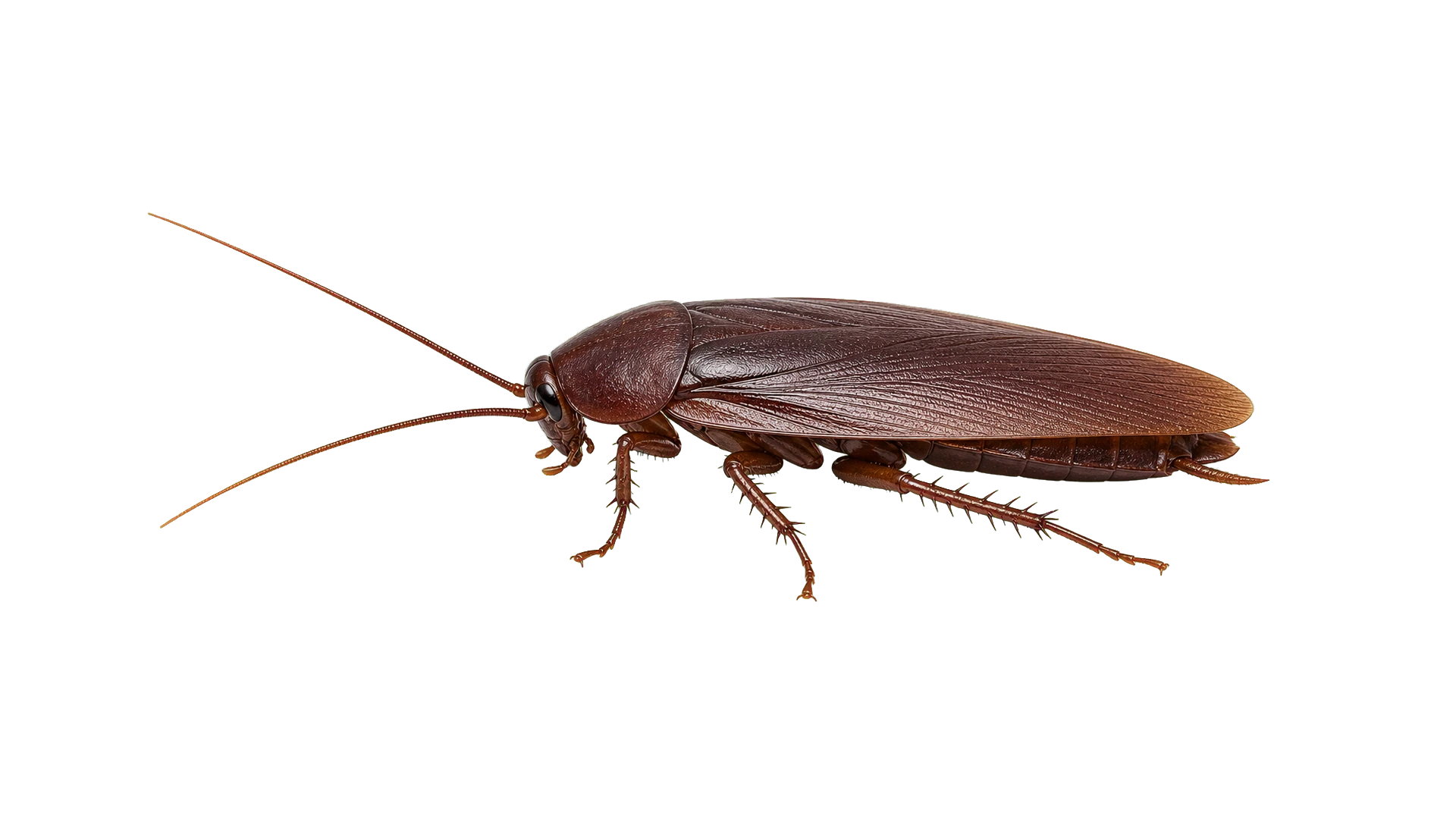
Flat oval body
All cockroaches share a flat, oval body that lets them squeeze through cracks as thin as 1/16 inch. The thinness is structural; their exoskeleton flexes downward to fit horizontal gaps.
Local pest control help is one call away.
 Pest Control Services Nationwide Pest Control Services Nationwide
 Seeing one cockroach during the day usually means dozens are hidden behind appliances, in wall voids, and inside cabinets. Different species need different treatment, and one of the most common species (German cockroach) reproduces fast enough to turn a single hitchhiker into a multi-thousand population in six months.
Cockroaches commit to a structure when it offers warm, humid harborage near a calorie source. They prefer tight cracks where they can touch surfaces with both their back and their belly. A 1/16 inch crack behind a baseboard is enough.
Remove the harborage and they move on. Address the moisture and the colony shrinks. Skip either step and gel bait has to do all the work alone.
Three conditions every roach population requires:
A single German cockroach female and her offspring can produce more than 30,000 descendants in one year if conditions are stable. Daytime sightings indicate harborage is overcrowded, which usually means the population is already in the hundreds. Roach allergens are also a major asthma trigger in children, especially in apartment buildings.
Three checks that distinguish a cockroach from a beetle, water bug, or palmetto bug confusion.
All cockroaches share a flat, oval body that lets them squeeze through cracks as thin as 1/16 inch. The thinness is structural; their exoskeleton flexes downward to fit horizontal gaps.

Cockroach antennae are thread-thin and often as long or longer than the body itself. Beetles have shorter, segmented antennae. The long antennae are the fastest single ID at running distance.

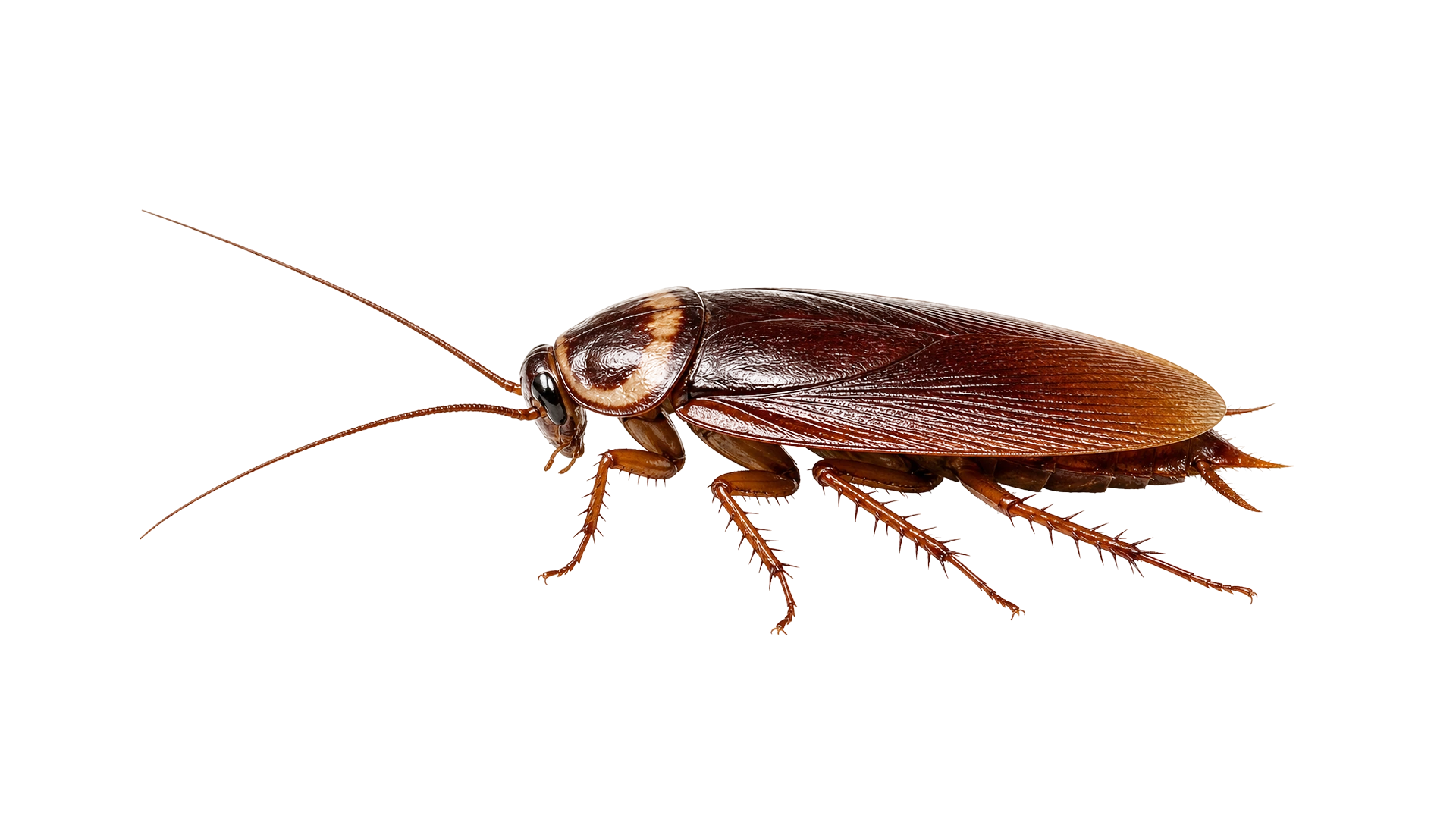
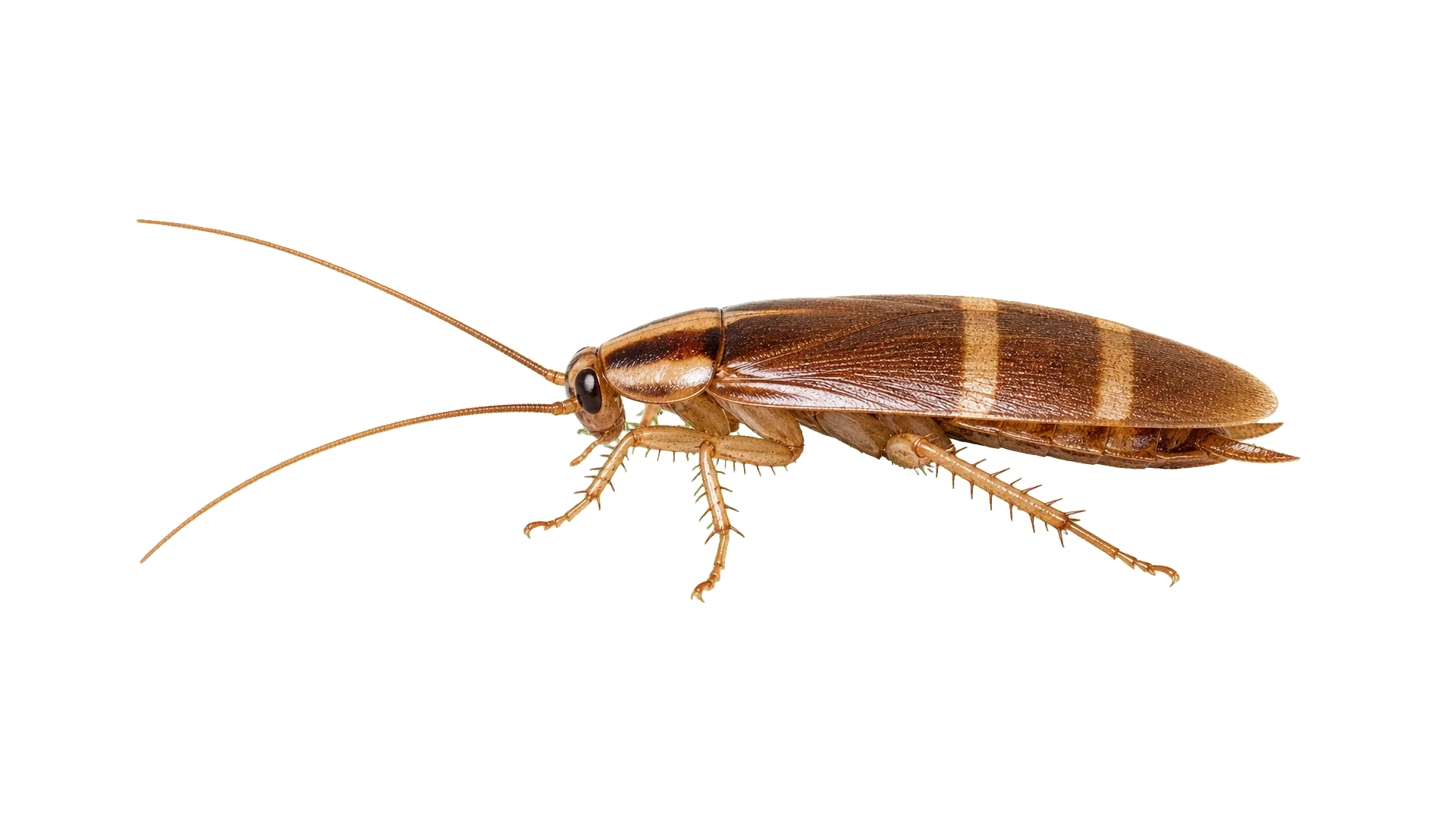
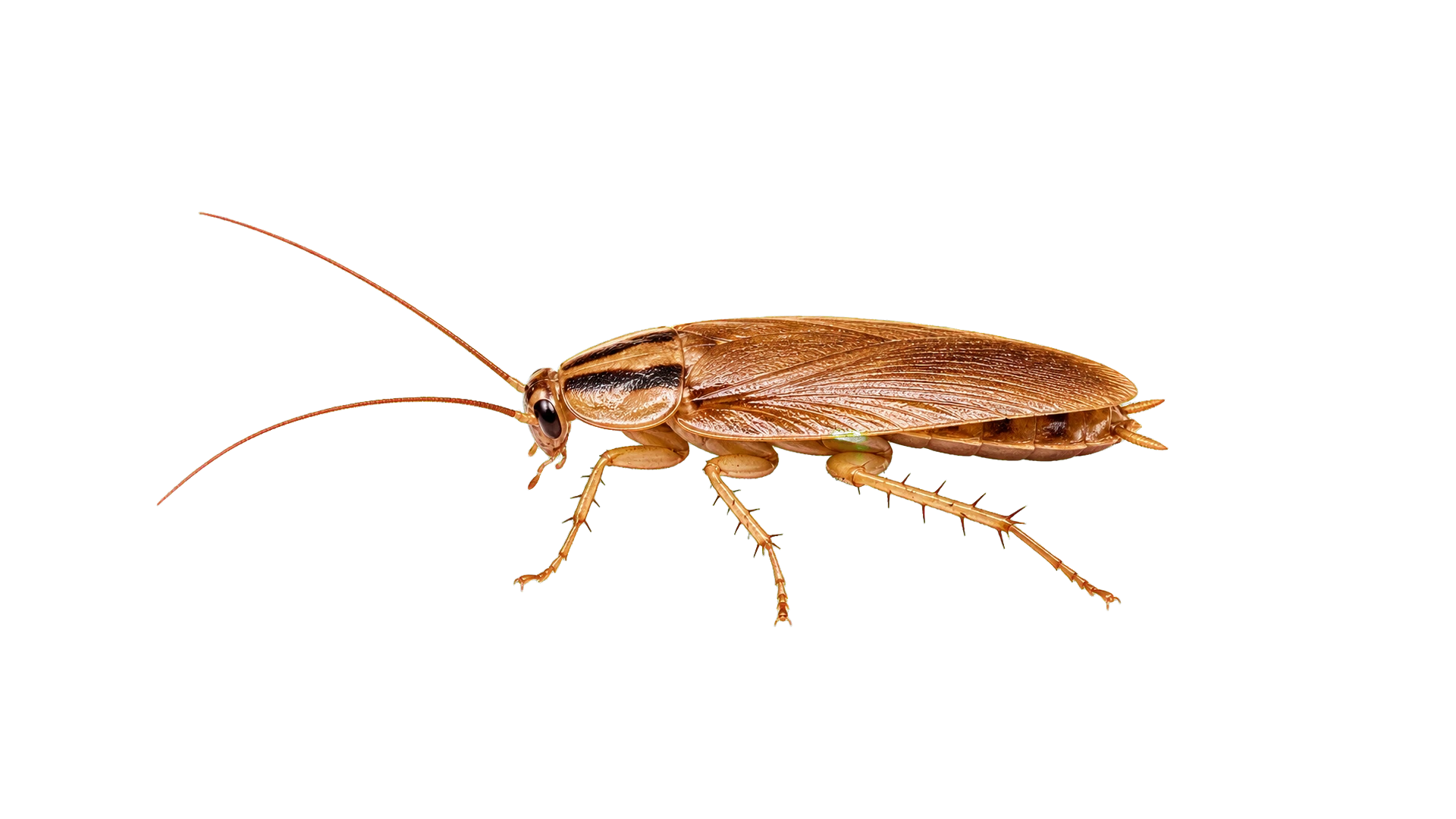
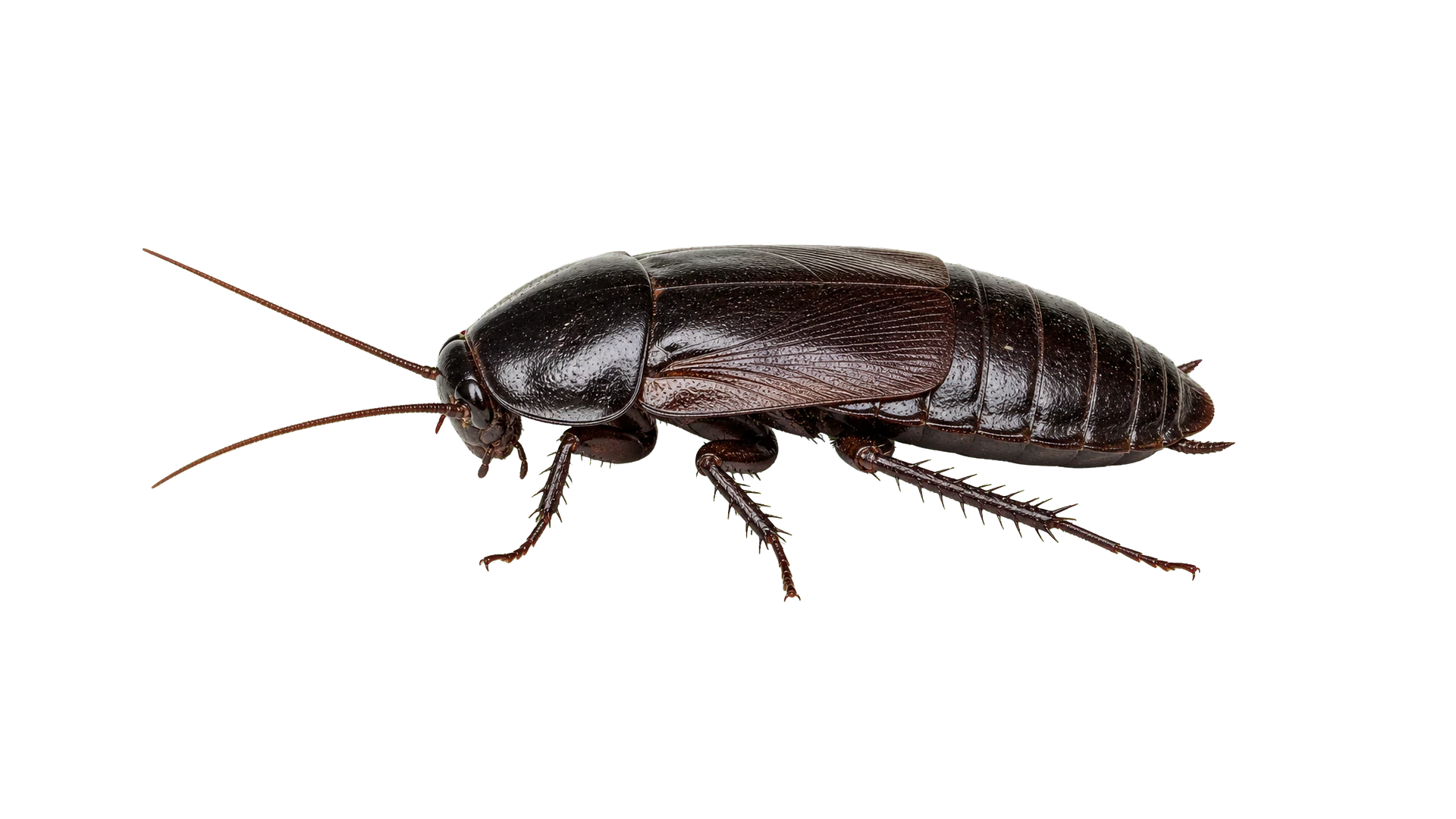
German cockroaches are light tan with two dark stripes. American are reddish-brown and largest. Oriental are nearly black and shiny. Brown-banded have horizontal bands across the wings. Color narrows the species fast.
Cockroaches are nocturnal and cryptic. The first daytime sighting usually means the harborage is too crowded for everyone to hide, which means the population is already large. Long before that point, roaches leave subtler evidence in spots most homeowners never look. Catching the early signs cuts your treatment timeline in half.
How a Roach Population Compounds
Cockroaches do not form social colonies the way ants do. They are gregarious, meaning they aggregate in shared harborage and follow each other's pheromone trails to food and water, but every individual is functionally independent. There is no queen, no caste system, and no centralized nest to target. This is why control plans target the entire population rather than a single nest.
German cockroaches breed indoors year-round and are the species most associated with kitchens, restaurants, and apartment buildings. American, Oriental, and smoky brown cockroaches usually breed outdoors and enter structures opportunistically through drains, plumbing, gaps, and ventilation. Identification matters because indoor breeders need indoor harborage elimination; outdoor breeders need exterior exclusion.
What makes cockroaches harder than most pests is the combination of speed, hidden harborage, and asymmetric egg-case protection. Females carry their oothecae for varying durations and may stash them in inaccessible spots before hatching. Surface-level treatments miss the eggs. Effective control combines slow-acting gel baits (so workers carry them back to harborage), insect growth regulators (which interrupt the next generation), and structural cleanup that eliminates the cracks they hide in.
Six features that define a cockroach, with the German cockroach pictured (most common indoor pest species).
Thin, flexible, often longer than the body. Antennae sweep continuously, mapping nearby surfaces. Motion under a kitchen counter is usually antennae moving.
Two parallel dark stripes on the shield behind the head are diagnostic for German cockroach (the indoor breeder). American roaches have a yellow border; Oriental have no markings.
Dorsoventrally flattened (top-to-bottom thin), letting cockroaches squeeze through cracks under 1/16 inch. The structural reason they are hard to exclude with conventional sealing.
Each of six legs has rows of stiff spines that grip rough surfaces and let cockroaches sprint up to 50 body lengths per second. Spines also anchor them inside cracks.
Most adults have wings covering most of the abdomen. German and brown-banded fly poorly. American and smoky brown can glide short distances. Wings also protect during harborage.
Two short tail-like sensors at the rear detect air currents from approaching threats. This is why cockroaches react to your shadow before you reach for them.
Pick the sign that matches what you've noticed. Each one points to a different cockroach species and a different stage of the population.
Roach problems don't escalate gradually, they double. A single German female produces 200+ offspring in 12 weeks, which is why a few sightings becomes a kitchen-wide problem fast. Here's the realistic timeline from one hitchhiker to a population that triggers asthma symptoms.
A single roach spotted at night, or droppings appearing in one drawer or cabinet. Often a hitchhiker on grocery bags, cardboard, or moving boxes. The breeding population may still be small or external.
Multiple sightings per week, smear marks on cabinets, or droppings in 2+ areas. A German cockroach harborage has established near appliances or under sinks, and the population is producing oothecae locally now.
Daytime sightings, multiple rooms affected, or roaches visible in food prep areas. Allergen levels rise sharply at this stage and can trigger asthma symptoms in children and adults inside the home.
Roaches in living spaces during daytime, musty oily pheromone smell from cabinets, or evidence in bedrooms. Allergen and asthma trigger levels are clinically significant. Repair costs and lost-time costs can pass $2,000.
Warmth and moisture compress this timeline fast. A leaking dishwasher or chronic kitchen humidity can move a population from stage one to stage three in a single summer.
Local cockroach specialists identify the species, deploy gel bait and IGRs, and coordinate sanitation so the next generation never matures.
Cockroach populations only stabilize when they have steady access to warmth, moisture, food residue, and tight cracks. Eliminate any one and the population shrinks. Eliminate two and gel bait does the rest of the work. Most kitchens have all four without realizing it.
Different species chase different conditions, which matters for where you audit first. German cockroaches anchor to kitchens and bathrooms because they need indoor humidity 24/7 and almost never breed outdoors. American and Oriental cockroaches breed outside and enter through drains and gaps, so attractant work for those species focuses on plumbing penetrations and basement moisture. Brown-banded cockroaches break the pattern entirely: they prefer warm dry harborage in upper cabinets, electronics, and behind picture frames.
You don't have to fix every condition in one weekend. Start where the species evidence points. For German cockroach activity, hit grease residue and cardboard storage first. For outdoor invaders, focus on drain covers, weep holes, and door sweeps. Even partial wins move the needle: removing one calorie source or sealing one plumbing penetration can drop the carrying capacity enough that gel bait finishes the job in 4 weeks instead of 12.
Refrigerators, ranges, dishwashers, and microwaves are warm, dark, vibration-rich, and within feet of grease residue. The single highest-density harborage in most homes.
Plumbing leaks, hidden moisture, and grocery bags create the moisture cockroaches need. Inspect the back wall of the cabinet, the bottom corners, and the gap around the drain pipe.
Hollow walls connect rooms and let cockroaches travel unseen. Outlets and switch boxes are common access points. Activity in one room often spreads through wall voids to others.
American and Oriental cockroaches enter through floor drains and emerge in basements, laundry rooms, and bathrooms. Look at drain covers, around tub bases, and behind toilets.
Cardboard is preferred cockroach harborage and a calorie source for them. Pantries, basements, and garages with stored cardboard frequently develop populations even without obvious food access.
American and smoky brown cockroaches breed outdoors and use garages as a staging zone before moving inside. Inspect garage corners, garbage bin areas, and any stored organic matter.
Why a single ootheca behind your fridge becomes hundreds of roaches in three months.
20 to 60 days
The egg case. Females either carry it externally (Germans) or deposit it in a hidden crack (Americans, Orientals). One ootheca contains 12 to 40 eggs depending on species. Insecticides do not penetrate the ootheca.
Weeks 1 to 4
Hatchlings emerge as wingless miniatures of the adult. They feed on shared food sources within harborage and follow pheromone trails laid by older roaches.
Weeks 5 to 12
Cockroaches molt 5 to 13 times during nymph stage (German: 6 molts; American: 13). Each molt is a vulnerable window for IGR action. Late nymphs look almost adult but with reduced wing development.
Lives 3 to 24 months
German adults live 3 to 6 months. American adults live 12 to 24 months. Females reproduce throughout most of their adult life, producing 4 to 8 oothecae before they die.
German cockroaches complete a full generation in 6 to 12 weeks under indoor conditions. A single female and her descendants can produce more than 30,000 roaches in a year if conditions stay stable. This is why partial treatment fails: leave 2 percent of the population alive and the population fully recovers within 4 to 6 months.
Each roach species hides differently. Match what you're seeing to figure out which one has settled in.
| Species | Severity | Key Sign | Where You'll Find Them |
|---|---|---|---|
| American Cockroaches | Persistent | Large droppings with blunt ends and ridges, musty odor in basements and sewers | sewers, basements, steam tunnels |
| Brown-Banded Cockroaches | Persistent | Egg cases glued to furniture and ceilings, found in upper cabinets and warm rooms | upper cabinets, picture frames, electronics |
| German Cockroaches | Medical | Pepper-like droppings in kitchen drawers, egg cases near hinges, musty odor | kitchens, bathrooms, appliances |
| Oriental Cockroaches | Persistent | Strong musty odor, found near drains and damp basements, slow-moving | basements, drains, damp crawl spaces |
| Smoky Brown Cockroaches | Persistent | Found around gutters and tree holes, attracted to lights at night | tree holes, attics, gutters |
Severity reflects typical impact, not your specific case. If unsure, treat at the higher tier.
Straight talk on the most common DIY methods: which ones reach the hidden harborage and which ones just thin the 5 to 10 percent of the population you can see.

 Pea-sized dots of slow-acting gel bait placed along travel routes (cabinet corners, behind appliances, near plumbing) Roaches eat, return to harborage, die, and become a secondary food source for other roaches (transfer effect) Refresh every 2 to 4 weeks until activity stops IGRs disrupt cockroach molting so nymphs cannot mature into reproducing adults Effective alongside gel bait because they suppress the next generation while the current one is poisoned Available in pro-grade aerosol or station formats; consumer versions exist but are weaker Deep clean behind ranges, under fridges, and inside cabinet bottoms quarterly to remove grease residue Caulk visible cracks in cabinets, baseboards, and around plumbing to remove harborage Store food in glass or hard plastic, eliminate cardboard, fix leaks promptly
  Kill 5 to 10 percent of the population (the visible adults), leaving the rest behind Cannot penetrate egg cases, which makes the next generation untouched Foggers (bug bombs) drive roaches deeper into wall voids, often making harborage harder to treat later Boric acid works as a stomach poison if roaches walk through it and groom themselves Effective only when applied as a thin dust along travel routes; visible piles are avoided Slow-acting (7 to 14 days) and doesn't replace gel bait or IGR for population control Strong scents may briefly displace roaches from a specific shelf No effect on the broader population, no effect on egg cases Can give false sense of progress while population continues to grow elsewhere
 Six prevention actions, sorted by effort. Cockroach control is mostly about removing the conditions that sustain the population; chasing them with sprays is a downstream tactic.

Cereal, rice, pasta, sugar, and pet food into airtight containers. Cardboard packaging is both food and harborage; remove it from the kitchen entirely.

Pull out the range, fridge, and microwave once a week and clean the grease residue underneath and behind. This single action breaks the calorie source for most kitchen populations.

Repair drips under sinks, dry out cabinet bottoms, and address condensation lines. Cockroaches survive without food longer than they survive without water.

Replace cardboard storage boxes with hard plastic totes. Discard old grocery bags, holiday boxes, and shipping cartons accumulating in pantries, garages, or under sinks.

Caulk gaps along baseboards, around plumbing penetrations under sinks, between cabinet boxes, and inside cabinet hinges. Each sealed crack removes a harborage spot.

Inspect grocery bags, used appliances, and second-hand furniture before bringing them inside. The most common introduction of German cockroaches into clean homes is hitchhiking on these items.
Indoor breeders run year-round; outdoor invaders cycle with weather. Both have peak windows worth knowing.
Outdoor cockroaches (American, smoky brown) become active outside as soil temperatures rise. Some begin probing structures through drains and gaps. Indoor German populations are unaffected by season.
Outdoor cockroach populations peak. Heat and humidity drive American and Oriental cockroaches indoors through drains, plumbing, and under-door gaps. Most outdoor invasion happens July to September.
Cooling temperatures push outdoor breeders to seek warm indoor harborage. Garages, basements, and sheds often see fall surges. German populations indoors continue at steady levels.
Outdoor populations crash; indoor populations consolidate around heat sources. German cockroaches breed continuously through winter. Treatment season for indoor breeders since outdoor reinfestation pressure is at its lowest.
Four steps from front door to a kitchen no longer hosting roaches. Initial visits run 60 to 120 minutes plus follow-ups across 4 to 8 weeks.
Bait, regulate, sanitize, follow up. Roach control is a multi-week project, not a single-visit fix. Plans that promise one-and-done are usually masking the population, not eliminating it.
Walk the kitchen, bathroom, basement, and laundry. Identify the species (German vs American vs Oriental) from droppings, body color, and harborage location. Different species need different treatment maps.
Pea-sized gel bait dots along travel routes (cabinet corners, behind appliances, near plumbing). Insect growth regulators in aerosol or stations to interrupt nymph development.
Coordinate with the homeowner on grease cleanup, leak repair, cardboard removal, and crack sealing. Without sanitation, bait and IGR have to do too much work alone.
Refresh bait, replenish IGR, reinspect for new oothecae or activity. The population is gone when 2 consecutive visits show no live roaches and no fresh droppings.
Real stories from households who connected with cockroach control pros to clear out the population and prevent the next generation.

"No pressure, just options."
I appreciated being given eco-friendly options without being pushed. The technician explained tradeoffs honestly and let me decide based on my priorities. They were transparent about what each approach involves. The no-pressure approach and honest information helped me make a confident decision.
"No pressure, just options."
I appreciated being given eco-friendly options without being pushed. The technician explained tradeoffs honestly and let me decide based on my priorities. They were transparent about what each approach involves. The no-pressure approach and honest information helped me make a confident decision.

"The inspection caught what we missed."
I didn't realize how much damage raccoons can cause once they get inside. The wildlife specialist explained what areas they inspect first and why raccoon issues are handled more carefully than regular pests. They showed me the damage and explained removal and exclusion strategies. Understanding the potential for damage made me glad I called professionals.

"The problem finally stayed gone."
Ants kept returning no matter what we did. The tech treated the trail areas and explained how to handle food storage and moisture so the ants don't keep coming back. It's been months and we haven't seen them again. I appreciated that it wasn't just a one-and-done spray.

"Clear expectations and a real plan."
I was overwhelmed and didn't know what was realistic to fix quickly. The inspector explained what results to expect and how long it typically takes depending on the ant species. They treated the right places and gave simple prevention tips. Everything felt structured and easy to follow.

"They found the entry points fast."
Ants were showing up in the kitchen and we couldn't figure out where they were coming from. The tech tracked the activity and pointed out two entry points we never would've noticed. After treating and sealing those areas, the ants disappeared. It was quick and surprisingly thorough.

"No pressure, just helpful info."
I mainly wanted to understand what was happening before committing to anything. The inspector walked me through the likely cause and the differences between treatment approaches. They answered questions without rushing me. The plan we chose worked and the ants were gone within days.

"The tech helped me stop wasting time."
I kept trying different products and nothing was sticking. The tech explained why some solutions don't work for certain ant problems and focused the treatment where it would actually matter. They also gave prevention tips that were easy to implement. The difference was obvious within the first week.

"We finally understood what to do next."
We felt stuck because nothing we tried lasted. The tech explained how to find the source of the problem, treated both indoor and outdoor areas, and helped us build a prevention routine. It wasn't complicated. Just the right steps in the right order. We've had a huge improvement since.

"They fixed what was actually causing it."
Ants kept showing up in the same spot. The pro explained that the visible ants weren't the real issue and focused the treatment on where they were coming from. They identified the entry path and treated it properly. The problem stopped and hasn't returned.

"It felt like a real inspection, not a quick spray."
The tech spent time figuring out where the ants were entering instead of just spraying around. They walked me through the likely reasons and what to watch for over time. After treatment, ant activity dropped fast and stayed low. The detailed approach gave me confidence.

"Small changes made a big difference."
We didn't realize how much our routine was attracting ants. The inspector explained simple prevention steps and treated the areas where activity was highest. Once those changes were in place, we stopped seeing ants inside. It was a practical approach that actually worked.

"The explanation alone was worth it."
I'd been doing random treatments without understanding what I was dealing with. The tech explained how ants behave and why certain approaches work better. They treated strategically instead of just spraying. It made the whole thing feel manageable.

"We stopped chasing the problem and solved it."
We kept wiping down counters and the ants would be back the next day. The pro identified the entry areas and explained the treatment plan clearly. Once they treated and targeted the colony, the ants disappeared quickly. It felt like we finally got ahead of it.

"They didn't oversell. Just solved it."
The tech explained what treatment was necessary and what wasn't. They focused on the entry points and corrected the conditions that were attracting ants. The work felt honest and effective. I liked having clear expectations and seeing results quickly.

"It wasn't just 'spray and go.'"
I appreciated the step-by-step explanation and the focus on prevention. The inspector treated the areas where ants were getting in and helped me understand what to change at home. The ants stopped showing up and it's been consistent. The approach felt thoughtful and sustainable.

"It finally made sense why they kept coming back."
I had ants showing up every few months and never understood why. The tech explained how outdoor nests and weather changes affect indoor activity. They treated the perimeter and entry points instead of just the inside. Since then, we haven't had recurring issues.

"Targeted instead of overdone."
I was worried about over-treating the house. The pro focused on specific problem areas and explained why blanket spraying wasn't necessary. The ants stopped appearing, and we didn't feel like chemicals were used unnecessarily. That balance mattered to us.

"Clear answers without jargon."
The tech explained everything in plain language and answered questions without rushing. They identified the type of ant we had and adjusted the treatment accordingly. Knowing why the approach worked gave me confidence it would last.

"They focused on prevention, not just treatment."
I liked that the tech talked through how to keep ants from returning after the treatment. They addressed moisture issues and entry points around the home. The treatment worked, and the prevention tips helped us stay ahead of future problems.

"No guessing, just a plan."
I was tired of guessing what would work. The inspector explained the cause of the issue and outlined a clear plan of action. After treatment, the ants disappeared and we haven't had to revisit the problem. It felt efficient and well thought out.

"They explained what to expect upfront."
The tech set expectations about timing and results before starting. They explained that some activity might happen initially and why. Everything played out exactly as described, and the ants were gone shortly after. That transparency made a big difference.

"Helpful without being overwhelming."
I didn't realize there were different types of ants or that it mattered. The inspector walked me through what they were seeing and explained how ant behavior affects treatment. It made it easier to ask the right questions and understand the solution.

"Saved me a lot of guessing."
I was close to trying random sprays for the ants. Talking with the tech helped me understand what was realistic to address and what usually doesn't work. The targeted treatment solved the issue quickly and saved time and frustration.

"It felt tailored to our home."
The tech didn't just apply a standard treatment. He looked at where we were seeing activity and adjusted the approach to our layout and yard. The ants stopped showing up and we understood how to keep it that way.

"Straightforward and effective."
I appreciated how straightforward everything was. The pro explained the issue, treated the problem areas, and gave us a few simple steps to prevent future issues. The ants were gone and it didn't feel complicated.

"They explained how the weather played a role."
I didn't realize seasonal changes could affect ant activity so much. The tech explained how heat and rain push ants indoors and what to do about it. They treated the problem areas and gave tips to prevent future issues. The explanation helped everything click.

"It wasn't as complicated as I expected."
I assumed pest control would be disruptive or complicated. The technician explained the steps clearly and focused on targeted treatment. The ants stopped appearing quickly and the process was smoother than expected.

"They helped me understand the bigger picture."
Instead of just treating the ants I saw, the tech explained what was happening around the house that made it attractive to pests. Once those factors were addressed, the problem resolved quickly. It felt educational as well as effective.

"Clear communication from start to finish."
I appreciated how clearly everything was explained before treatment began. The inspector walked through the process and answered all my questions. The ants were gone shortly after and we felt confident about prevention going forward.

"They addressed what we were missing."
We kept focusing on cleaning, but the tech showed us where ants were actually entering. Once those points were treated and sealed, the issue resolved. It was reassuring to finally understand the root cause.

"A methodical approach that worked."
The pro explained how they identify ant trails and colonies before treating. They took a methodical approach instead of rushing through. The ants stopped appearing and the fix has held up well.

"They understood desert pest behavior."
Living in Phoenix, pests behave differently than other places. The tech explained how heat drives ants indoors and what treatments work best here. The solution was effective and tailored to our environment.

"They took the time to do it right."
I appreciated that the tech didn't rush. He inspected the problem areas carefully and explained what they were seeing. The treatment worked quickly and the ants haven't returned.

"They understood the local pest issues."
The tech explained how the humidity here contributes to ant problems and why certain treatments work better in this climate. They focused on outdoor entry points and moisture-prone areas. The ants cleared up quickly and haven't come back.

"Finally something that lasted."
We'd dealt with recurring ants for years. The pro explained why flooding and moisture play such a big role here and adjusted the treatment accordingly. It's been months without seeing ants, which is a big win for us.

"They knew exactly what works in Arizona."
The tech explained how desert conditions affect ant behavior and which treatments are most effective here. They targeted the right areas and avoided unnecessary spraying. The ants disappeared quickly.
"Clear, calm, and professional."
I appreciated how calmly everything was explained. The inspector identified the ant problem, explained the treatment, and answered my questions without rushing. The solution worked and gave me peace of mind.

"They handled it efficiently."
The tech inspected the problem areas, explained the plan, and got to work quickly. The ants were gone within days and the process felt efficient without being rushed.

"Simple explanations, solid results."
I liked how simply everything was explained. The pro didn't overcomplicate things and focused on what mattered. The ants stopped appearing and we haven't needed follow-up treatments.

"They showed me what to watch for."
Beyond treating the ants, the tech explained what signs to watch for if activity starts again. That knowledge made me feel more in control. So far, everything has stayed clear.
Direct answers to what homeowners ask most when cockroach signs first appear.
It depends on the species. A single sighting of a large American or smoky brown cockroach near a drain or door is often a wandering individual that came in from outside; this can be addressed with exterior exclusion. A sighting of a small light-tan German cockroach in a kitchen almost always means an established indoor population, because Germans don't survive long outdoors and breed only in heated structures. The species identification is the difference between a one-time door sweep and a multi-week treatment plan. If you can photograph the roach near a coin for scale, a pest pro can confirm the species in seconds.
Hardware-store sprays kill 5 to 10 percent of the population (the visible adults) and leave the rest unaffected. The egg cases (oothecae) are entirely impenetrable by spray; the next generation hatches on schedule whether you sprayed or not. Sprays also disrupt the pheromone trails roaches use to find gel bait, sometimes making bait less effective afterward. Effective control combines slow-acting gel bait that workers carry back to harborage, insect growth regulators that prevent nymphs from maturing, and sanitation that removes the food and moisture sustaining the population. Spray has its place but is rarely the leading tool.
Yes, in two distinct ways. Cockroach feces, saliva, and shed skins contain proteins that are major asthma triggers, especially in children and especially in apartment buildings with sustained populations. The CDC links cockroach allergens to a measurable percentage of childhood asthma cases in dense urban areas. Cockroaches also mechanically transport bacteria (salmonella, E. coli, staphylococcus) by walking through unsanitary areas and then crossing food prep surfaces. They are not known to bite humans in any meaningful way, but the food contamination and allergen exposure are real concerns. Aggressive treatment is appropriate in households with asthma sufferers.
The three most common introduction routes are: hitchhiking on grocery bags, cardboard boxes, or used appliances brought in from infested locations; through plumbing penetrations or floor drains from neighboring units (in multifamily housing); and through gaps under exterior doors or around dryer vents (mostly outdoor breeders). German cockroaches in particular are notorious hitchhikers because they thrive in warehouses, used appliance stores, and shared dumpsters. A single pregnant German female brought in on a cardboard box can produce a multi-thousand population in 6 to 9 months. Inspecting incoming items at the door is the cheapest prevention there is.
Cockroach egg cases (called oothecae) are brown, capsule-shaped, and about 5 to 10 millimeters long depending on species. German oothecae are smaller (5 to 8 mm) and the female carries them externally until just before hatching. American oothecae are larger (8 to 10 mm) and look like tiny dark brown purses with visible ridges; the female deposits them in cracks within a day or two of producing them. Finding egg cases in your home means active reproduction is happening on site. Each German ootheca contains 30 to 40 eggs; each American contains 12 to 16. Insecticides do not penetrate the case, so insect growth regulators (IGRs) are essential to interrupt the next generation.
Better sanitation slows population growth significantly but rarely eliminates an established colony. Cockroaches survive on tiny food residues that even vigilant kitchens leave behind: grease film on the back of a range, a few crumbs in toaster trays, soap residue on dirty dishes, food particles in pet bowls. They also drink from condensation on cold-water lines or under-sink drips. Sanitation is one essential pillar of control, but on its own (without gel bait, IGR, and harborage elimination) it usually shrinks the population without eliminating it. Cleanliness changes how fast they multiply, not whether they survive.
A coordinated gel-bait-and-IGR plan for a moderate German cockroach population typically clears the active population in 4 to 8 weeks. American or smoky brown invasions from outdoors clear faster (2 to 4 weeks) once exterior exclusion is in place. Severe infestations in apartments or restaurants can run 8 to 16 weeks, especially when neighboring units have populations that keep reintroducing roaches. The slowest step is suppressing the next generation: females may carry oothecae for weeks before hatching, so the timeline includes one full hatch cycle to confirm IGR is working. Most plans include 3 to 5 visits across the treatment period.
Identify the species, deploy bait and IGRs, fix the conditions. Local cockroach specialists handle the full plan, not a one-shot spray.
Click through to the species page for behavior, regional patterns, and treatment specific to that cockroach type.
The largest common cockroach, often found in basements and sewer systems.
American cockroaches can grow over two inches long and prefer warm, moist environments like basements, boiler rooms, and sewer lines. They enter homes through floor drains, pipe chases, and foundation gaps, often flying short distances when disturbed. Their presence usually indicates a moisture problem or a breach in the building's plumbing system.
Quick ID:
Why it matters:
Small cockroaches that hide in upper cabinets, behind picture frames, and inside electronics.
Brown-banded cockroaches prefer warm, dry locations and are often found higher up in rooms, behind wall hangings, inside clocks, and around electronics, rather than near water sources like other species. They spread egg cases throughout multiple rooms, which makes localized treatment ineffective. A whole-home baiting approach is typically required.
Quick ID:
Why it matters:
Small, fast-multiplying cockroaches that infest kitchens and bathrooms.
German cockroaches are the most common indoor cockroach species worldwide and among the most difficult to control. A single female can produce hundreds of offspring in her lifetime, and populations can explode within weeks. They thrive in warm, humid spaces near food and water, especially behind appliances, under sinks, and inside cabinets.
Quick ID:
Why it matters:
Dark, sluggish cockroaches that thrive in drains, crawlspaces, and damp basements.
Oriental cockroaches are often called water bugs because of their strong association with moisture. They inhabit floor drains, crawlspaces, and damp basements where they feed on decaying organic matter. Their presence often indicates excessive moisture or plumbing leaks, and control requires addressing the moisture source alongside targeted chemical treatment.
Quick ID:
Why it matters:
Large, flying cockroaches attracted to light that nest in mulch and tree holes.
Smoky brown cockroaches are strong fliers drawn to exterior lighting, frequently entering homes through open doors, windows, and attic vents. They nest outdoors in mulch beds, tree cavities, and woodpiles, venturing inside when conditions become hot and dry. Reducing exterior lighting, sealing entry points, and treating outdoor harborage areas are the most effective controls.
Quick ID:
Why it matters: