Local pest control help is one call away.

Oriental Cockroach: Identification, Treatment & Prevention

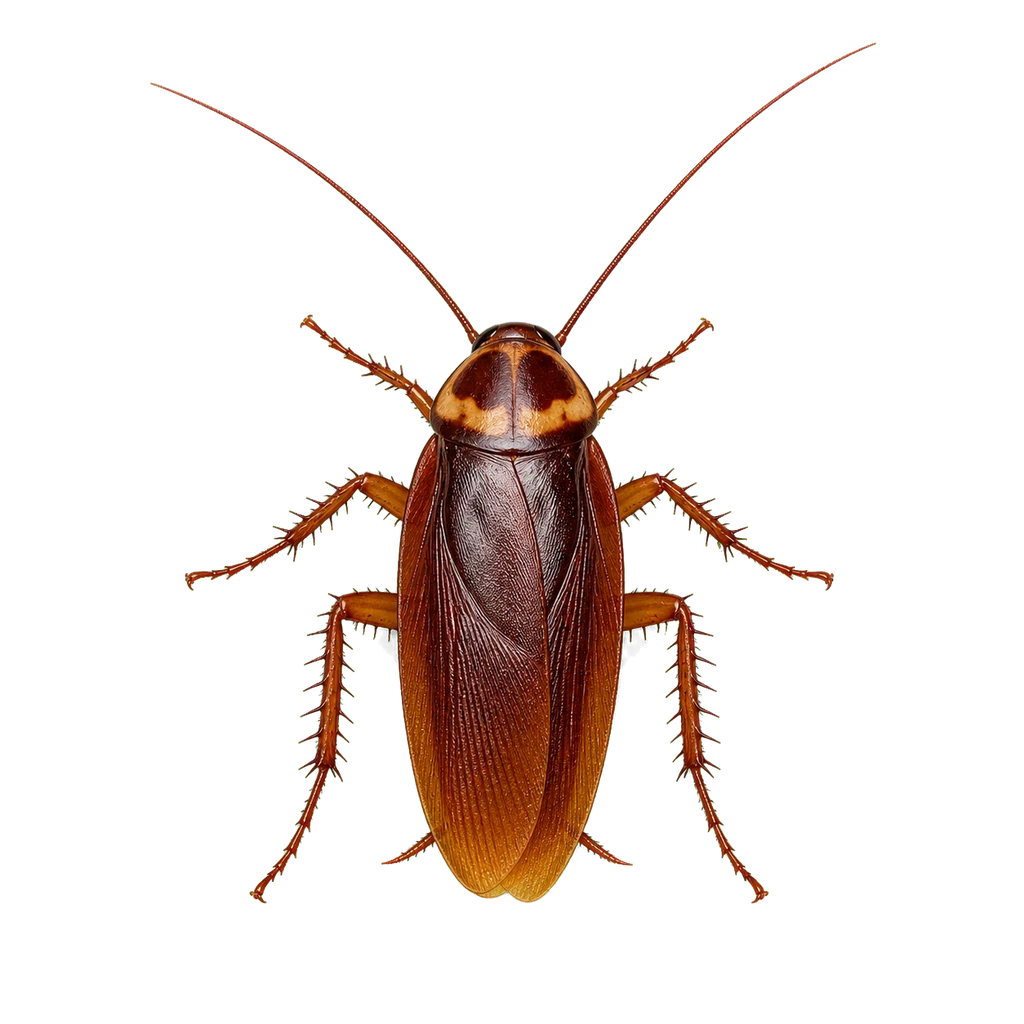
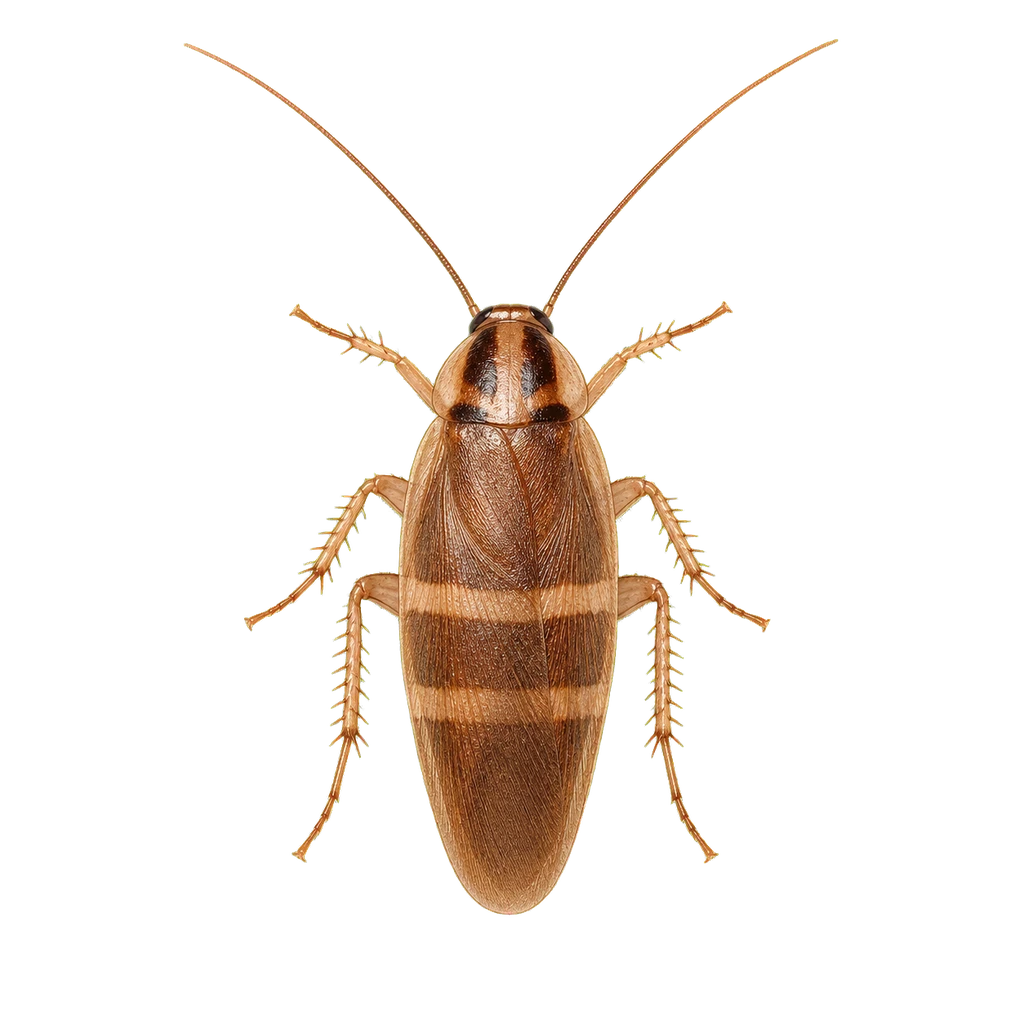
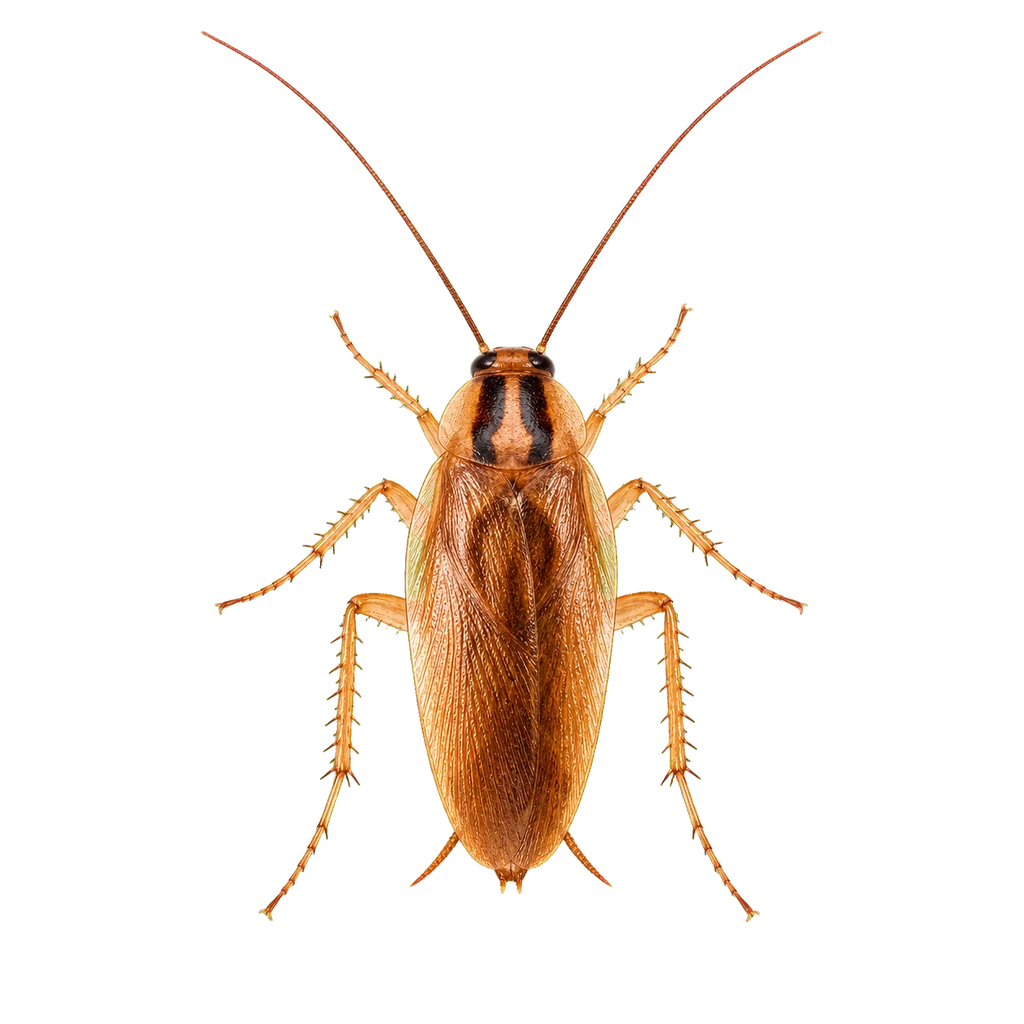
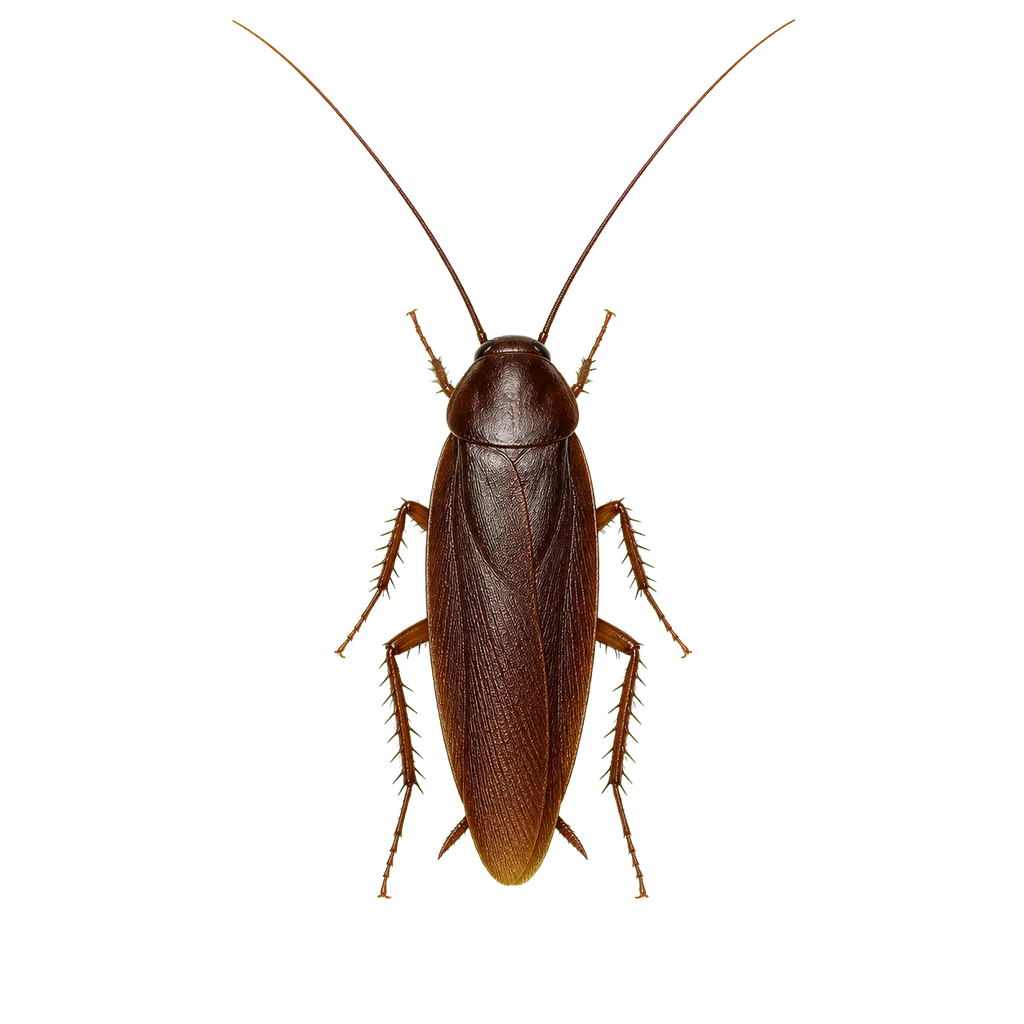
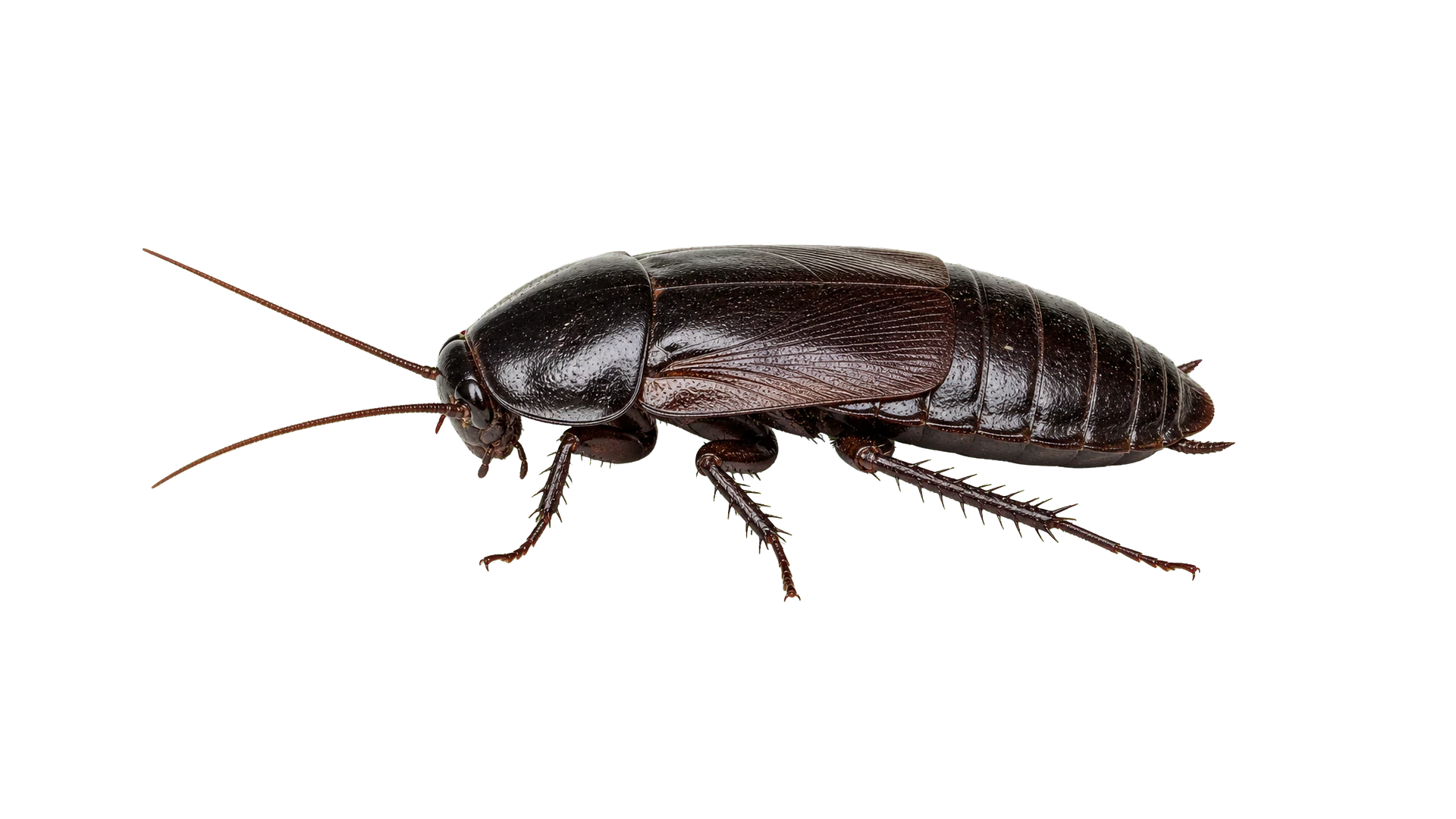
Oriental cockroaches are the shiny dark brown to nearly black roach most people in the northern US know as the waterbug or black beetle. Adults run 22 to 30 millimeters long, with a heavy, almost beetle-like body that walks slowly instead of skittering, and neither sex can fly. Males have short wings that cover only the first half of the abdomen, females have nothing but wing pads, and the uniform dark color with no contrasting markings is the easiest field ID once you've seen one.

If you're finding slow-moving glossy dark roaches near a basement floor drain, in a damp crawl space, or under porch steps, and a heavy musty, greasy smell hits you when you walk into the basement, you almost certainly have Oriental cockroaches. This guide covers how to confirm the species, why the cold-damp habitat preference makes them operationally different from other indoor roaches, why DIY contact spray misses the actual entry vector, and what real treatment looks like.

Close-up illustration of an Oriental cockroach showing glossy dark body and short wings

ID Card: Oriental Cockroach

Scientific name
Blatta orientalis
Color
Dark brown, black
Size
1 to 1.25 inches
Body shape
Broad, dark, shiny oval body
Antennae
Long, thread-like, shorter than body
Key evidence
Strong musty odor, found near drains and damp basements, slow-moving
Also known as
Water bugs, Black beetles, Shad roaches

Call to get matched with a local pest control pro.

Available 24/7
(888) 495-1510
  • Specialists who handle basement, crawl space, and sewer-driven roach work
  • Drain, void, and perimeter treatment combined with moisture remediation guidance
  • Exclusion at floor drains, window wells, and dryer vents to close sewer-side access

Where to Inspect for Oriental Cockroach Activity

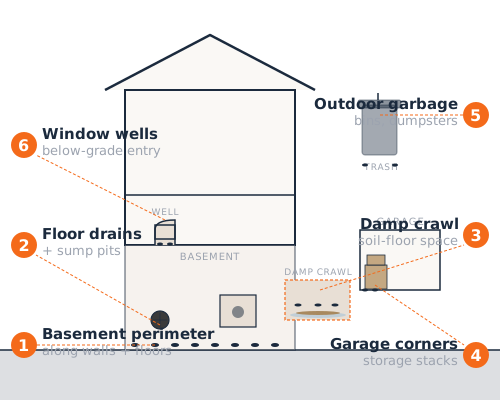
Cross-section illustration showing Oriental cockroach entry routes through basement floor drains, stone foundation gaps, window wells, and outdoor harborage near the structure

Oriental cockroaches concentrate in the coolest, dampest spots they can find, and they don't roam far from those zones. Inspection is mostly a basement and exterior walk. Bring a flashlight, look low along the floor-wall seam, and pay attention to the air, because the greasy musty smell of an established population usually arrives before the first sighting:

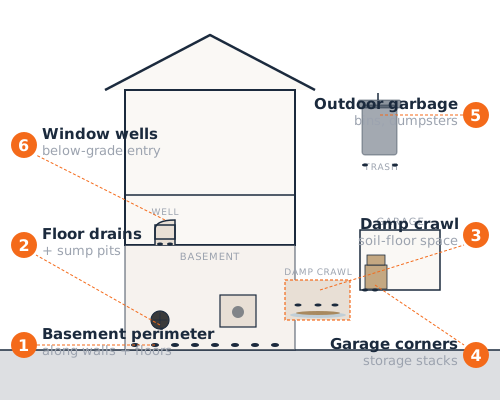
  • Basement floor drains and the area around sump pumps, This is the primary indoor harborage and the dominant entry point. Look for dark reddish-brown egg cases, fecal specks, and slow-moving adults along the drain rim and the surrounding concrete.
  • Crawl space soil and the interior face of stone foundations, The outdoor-to-indoor migration corridor. Damp dirt floors, gaps between fieldstone, and rim-joist cavities are where outdoor populations settle once they cross under the wall.
  • Around water heaters, behind washers and dryers, and near utility-room floor drains, Heat plus standing humidity plus undisturbed shelter equals a textbook harborage pocket. Pull the dryer two feet from the wall to inspect the framing behind it.
  • Outdoor: under landscape stones, in mulch beds within 10 feet of the foundation, under porches, around outdoor garbage cans, Outdoor populations are large and resident, not transient. Lift a flat rock or pull back mulch and you'll often find multiple adults underneath.
  • Outdoor window wells and basement vents, The entry corridor for adult migrators. Damp leaf litter in a window well is exactly the staging ground they want, and the basement window above it is the next stop.
  • Behind kitchen baseboards and under sinks where moisture accumulates, Once the population pushes out of the basement, the wet undersink cavity is the next zone they colonize. Pellet-like droppings along the baseboard confirm it.

If you find activity in two or more of these zones, especially basement plus crawl space plus outdoor perimeter, the property has an established resident population rather than a few migrators. One detail to know: daytime sightings of Oriental cockroaches in a basement are not normal and indicate a heavy infestation. The species is strongly nocturnal, so when adults are out in daylight, the harborage is full and competition is pushing them into the open. That sighting alone justifies same-week professional service.

Cross-section illustration showing Oriental cockroach entry routes through basement floor drains, stone foundation gaps, window wells, and outdoor harborage near the structure
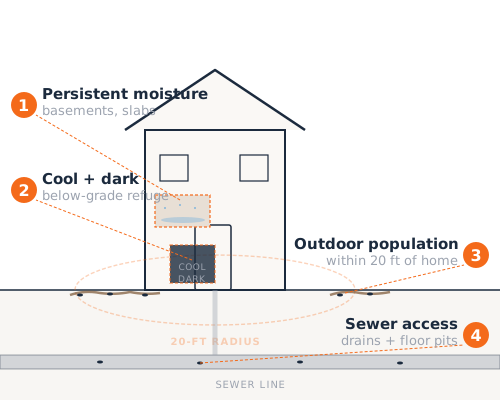
Illustration showing Oriental cockroach entry routes via floor drains, dry P-traps, stone foundation gaps, window wells, and outdoor harborage near the structure

Why Do I Have Oriental Cockroaches?

Confirming the species is step one. Understanding why your property is sustaining the population is what keeps the next generation from rebuilding once the visible adults are gone. Oriental cockroaches are unusual among indoor roaches: they prefer cooler temperatures, between 60 and 80 degrees, and they fail quickly without persistent moisture. Most homes that have them share a small list of conditions, and treatment without addressing those conditions doesn't last.

What anchors them to your property:

  • Older urban housing with a stone foundation and a damp basement, the most common Oriental cockroach habitat in the country and the reason established northern cities see them generation after generation
  • A cool, damp regional climate, northern US, Pacific Northwest, Great Lakes, basements stay cold and humid through summer, which is exactly the temperature band the species prefers
  • Outdoor leaf litter, mulch beds, debris piles, and firewood stacked against the foundation, the resident outdoor population lives in this material and feeds the indoor migration in fall
  • Floor drains with dry P-traps, an unused basement drain loses its water seal in weeks and opens a direct sewer corridor that adults walk straight through into the home
  • Multi-family housing with shared damp basement areas, common walls and shared utility chases mean a neighbor's untreated harborage becomes your harborage

Oriental cockroach populations build slowly. The egg-to-adult cycle runs 6 to 12 months in the cool conditions they prefer, and a female produces 8 to 18 oothecae across her life, far below the output of a German cockroach. The slow cycle is both the challenge and the opportunity: the population took months to reach the level you're seeing, and properly targeted treatment with moisture work behind it can drive it down to genuine elimination. Sprayed-only programs that ignore the drain and the basement humidity collapse within one ootheca cycle.

How Serious Is Your Oriental Cockroach Problem?

Find your scenario below. Severity here is about how far the basement population has pushed into the living areas, not just the headcount.

What You're Seeing Severity If Untreated Next Step
One Oriental cockroach spotted in the basement, no other signs yet Early A single adult usually means an outdoor migrator, the resident population can take 6 to 12 months to establish if conditions cooperate. Confirm the species (dark uniform color, large bulky body, no flight). Pour a half-gallon of water down any unused basement floor drain to restore the P-trap seal. Monitor for 14 days.
Multiple sightings in the basement each month and a musty greasy smell present Moderate Established harborage in the basement or crawl space. Population continues cycling through every 6 to 12 months without intervention. Schedule professional service this month. Treatment includes drain treatment, bait and dust in harborage zones, and a moisture assessment.
Daytime sightings, dark egg cases found, adults appearing on the first floor High Mature population is overcrowded in the basement and pushing into living areas. Allergen and sanitation exposure climbs from this point. Call a professional this week. Treatment needs source work in the basement plus exclusion at floor drains, window wells, and foundation gaps.
Heavy basement population, family member with asthma or sensitivity, structural moisture unresolved Urgent Self-sustaining indoor population with health exposure for sensitive household members. Moisture conditions make elimination impossible without remediation. Call today and request same-week service. Add a plumber for drain and sewer assessment and a moisture remediation contractor to the plan.
One Oriental cockroach spotted in the basement, no other signs yet
Severity Early
If Untreated A single adult usually means an outdoor migrator, the resident population can take 6 to 12 months to establish if conditions cooperate.
Next Step Confirm the species (dark uniform color, large bulky body, no flight). Pour a half-gallon of water down any unused basement floor drain to restore the P-trap seal. Monitor for 14 days.
Multiple sightings in the basement each month and a musty greasy smell present
Severity Moderate
If Untreated Established harborage in the basement or crawl space. Population continues cycling through every 6 to 12 months without intervention.
Next Step Schedule professional service this month. Treatment includes drain treatment, bait and dust in harborage zones, and a moisture assessment.
Daytime sightings, dark egg cases found, adults appearing on the first floor
Severity High
If Untreated Mature population is overcrowded in the basement and pushing into living areas. Allergen and sanitation exposure climbs from this point.
Next Step Call a professional this week. Treatment needs source work in the basement plus exclusion at floor drains, window wells, and foundation gaps.
Heavy basement population, family member with asthma or sensitivity, structural moisture unresolved
Severity Urgent
If Untreated Self-sustaining indoor population with health exposure for sensitive household members. Moisture conditions make elimination impossible without remediation.
Next Step Call today and request same-week service. Add a plumber for drain and sewer assessment and a moisture remediation contractor to the plan.

Daytime activity and ootheca finds are the two signals that the basement is full. If you're between two rows, treat the higher one as your situation.

How an Oriental Cockroach Population Grows

Oriental cockroaches develop more slowly than any other common indoor roach. The full egg-to-adult cycle stretches 6 to 12 months, and a single female produces a fraction of the offspring a German cockroach does over her life. The slow tempo is what makes treatment achievable, the same slow tempo is why population reduction shows up over weeks instead of days, and patience through the follow-up cycle is part of the program.

  1. Egg case (ootheca)

    Carried for 1 to 5 days by the female, then deposited; hatches in roughly 6 to 8 weeks

    The dark reddish-brown ootheca is 8 to 10 millimeters long and contains 16 to 18 eggs. Unlike German cockroaches, the female does not carry the case attached to her body, she drops it in a sheltered spot near food and moisture, often in basement corners, behind appliances, or along the rim joist. The deposited cases are durable and visible during inspection.

  2. Nymph

    Roughly 6 to 12 months through 7 to 10 molts

    Nymphs hatch wingless and reddish-brown, darkening with each molt. Cool basement conditions stretch development time toward the longer end of that range. Each molt leaves a shed skin in the harborage, and the accumulated skins along with the egg cases are how a technician maps where the population is concentrated even when no adults are visible at the moment of inspection.

  3. Adult

    Adults live 1 to 6 months

    Adults are the shiny dark brown to nearly black bug homeowners recognize. Males have short wings covering the front half of the abdomen, females have only wing pads, neither sex flies. Adults forage at night within a tight radius of the harborage and die quickly when separated from moisture, which is why dead adults often turn up in dry parts of the home where they wandered and could not get back.

  4. Female reproductive output

    8 to 18 oothecae across a lifetime

    A single female produces between 128 and 324 offspring over her life. That is a modest output by cockroach standards, an order of magnitude below a German cockroach, and is exactly why a basement population takes months to reach the levels homeowners notice. It also explains why one round of treatment with proper substructure coverage can collapse a population that has been resident for years.

An established Oriental cockroach population in a damp basement can hold ground for years if no one disturbs the harborage or the moisture conditions. Once the drain, the perimeter, the void treatment, and the moisture work are all in place, the slow cycle works in the homeowner's favor: the population can't rebuild faster than the program runs, and successive follow-up visits ride the population down to elimination. The work is patient, not fast.

When Oriental Cockroaches Are Most Active

Oriental cockroach pressure runs on a clear seasonal rhythm shaped by outdoor moisture and temperature. Knowing the calendar tells you when indoor sightings are most likely and which treatment windows give the most lasting result.

  • Spring

    Outdoor populations expand as soil warms and stays damp. Indoor populations often migrate back outside as basements warm and the outdoor habitat becomes hospitable. Spring is a strong window for outdoor perimeter treatment because the resident outdoor population is concentrated and accessible in mulch beds, leaf litter, and under landscape stones.

  • Summer

    Peak outdoor activity in moist landscape areas around the foundation. In drier basement years, indoor populations decrease, but in homes with chronic basement humidity, indoor harborage stays fully active. Heavy summer storms displace outdoor populations and push migrators toward window wells and basement vents.

  • Fall

    The most important season. Indoor sightings spike September through November as outdoor temperatures drop and the resident outdoor population migrates inside through floor drains, window wells, dryer vents, and foundation gaps. Fall is the highest-value treatment window for closing entry vectors before winter.

  • Winter

    Outdoor activity is dormant in cold climates, the resident indoor population is concentrated in damp basements and crawl spaces. A basement with chronic moisture stays active year-round, and a sighting in January confirms a resident indoor population rather than a migrator. This is the window to address moisture conditions before the spring outdoor surge.

Why Oriental Cockroaches Aren't a DIY Job

Oriental cockroaches are the species most strongly associated with filth among common indoor roaches. They feed on decaying organic matter, garbage, sewage, and pet feces, and they are documented vectors for Salmonella, E. coli, Streptococcus, Staphylococcus, dysentery, and typhoid bacteria. A heavy basement population is a sanitation issue, not just a pest sighting, and the homeowner-reported musty greasy odor is the accumulated waste of that population concentrated in the harborage.

Hardware-store contact spray kills the adults walking on the basement floor and does nothing about the floor drain they came out of, the dry P-trap that gave them sewer access, the dust-covered void where the egg cases are deposited, or the resident outdoor population in the mulch bed 6 feet from the foundation. New adults migrate back in within days. Worse, contact spray inside floor drains kills the helpful biological film and can actually make the drain more attractive over time.

A professional combines four tools that DIY can't replicate together: gel bait placed along active runways, dust products (boric acid or diatomaceous earth) injected into voids and along the rim joist, bio-enzymatic drain treatment that closes the sewer corridor, and an outdoor perimeter granular that hits the resident outdoor population. Moisture remediation guidance comes with the program because pesticide alone doesn't outlast the conditions that built the population in the first place.

Costs are predictable for this species. Initial service typically runs $200 to $500 depending on basement size, crawl space access, and exclusion scope. Recurring service runs $50 to $120 per month for chronic damp basements where outdoor pressure stays high. Multi-visit cadence over the slow ootheca cycle is how the population gets driven all the way down, single-visit work doesn't get there.

What Changes When a Pro Shows Up

Oriental cockroach work is a substructure job, not a kitchen job. A specialist's first hour is in the basement, the crawl space, and around the floor drain, because that's where the population lives and where treatment has to land. Here's what changes:

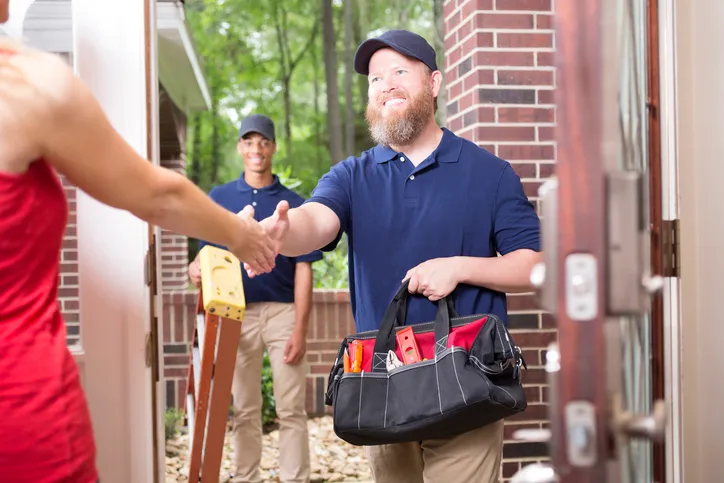
Pest control technicians after completing an Oriental cockroach treatment service
  • Local Pest Control
  • 24/7 Availability
  • Quality Workmanship
  • Eco‑Friendly Options
  • Trusted by Homeowners
  • They Inspect the Drains First

    Floor drains, sump pits, and any unused basement plumbing get checked for activity, dry P-traps, and sewer-side access. This is the dominant entry vector, and contact spray on the basement floor doesn't reach it. Drain assessment is step one.

  • Gel Bait Plus Dust in the Voids

    Gel bait gets placed along active runways and harborage edges. Boric acid or diatomaceous earth dust goes into wall voids, behind baseboards, and along the rim joist. Dust products persist for months and reach the spaces adults retreat to during the day.

  • Bio-Enzymatic Drain Treatment

    Bio-enzymatic products clean the organic film inside floor drains and sewer lines that feeds the population. Combined with P-trap maintenance and standpipe covers where appropriate, this closes the drain as a food source and an entry.

  • Outdoor Perimeter and Exclusion

    Granular product around the foundation hits the resident outdoor population that resupplies the indoor one. Window wells get cleared and screened, dryer vents get baffled, foundation gaps get sealed. Without the perimeter work, indoor treatment is rebuilding from outside within weeks.

  • Local Pest Control
  • 24/7 Availability
  • Quality Workmanship
  • Eco‑Friendly Options
  • Trusted by Homeowners
NoToPests home

One call connects you with a local specialist who knows oriental cockroaches and your area.

Be Ready When You Call

Pest control technician arriving for Oriental cockroach service
Junho L.
Daisuke P.
Kirk Q.
Marion K.

Trusted by homeowners nationwide

Call for Pest Control Help (888) 495-1510

Can You Handle This or Do You Need Help?

Oriental cockroaches are a moisture and substructure problem first and a pest problem second. DIY can move the conditions in the right direction, but it rarely closes out an established basement population on its own.

What DIY Can Do

DIY work is best aimed at conditions and entry vectors. Useful steps with honest limits:

  • Pouring water down every unused floor drain monthly maintains the P-trap seal and closes the dominant sewer entry vector
  • Fixing basement moisture issues (leaks, sweating pipes, poor grading, sump pump performance) weakens the harborage over time and is essential before any treatment
  • Clearing leaf litter, mulch, and stored debris back at least 10 feet from the foundation reduces the outdoor population that resupplies the indoor one
  • Running a dehumidifier in chronic damp basements brings relative humidity below the band the species needs to thrive
  • What DIY cannot do: reach the rim-joist voids where oothecae deposit, treat sewer-side entry, run the multi-visit cadence the slow ootheca cycle requires, or close out the outdoor resident population.

What a Pro Does Differently

Professional Oriental cockroach work is built around substructure, drains, and the outdoor perimeter together. Here's what changes when you call:

  • Comprehensive moisture assessment of basements, crawl spaces, and drainage that informs both treatment and remediation guidance
  • Void dusting with boric acid or diatomaceous earth that persists for months in harborage voids DIY can't reach
  • Bio-enzymatic drain treatment plus standpipe covers that close the sewer-side entry vector long-term
  • Outdoor perimeter granular treatment that drives down the resident outdoor population before it resupplies the indoor harborage
  • Multi-visit cadence aligned to the 6 to 8 week ootheca hatch, so each visit catches the next generation before it reaches reproductive age.

Suspect Oriental Cockroaches? Don't Wait.

Oriental cockroach populations hold ground in damp basements and crawl spaces for years and carry documented sanitation risk. Connect with a local specialist who handles drain treatment, void dusting, outdoor perimeter, and moisture remediation guidance.

Available 24/7
(888) 495-1510

What Homeowners Say After Getting Help

Real results from people who had the same problem and solved it.

Rashad E.
Rashad E.
Portland, OR

"No pressure, just options."

I appreciated being given eco-friendly options without being pushed. The technician explained tradeoffs honestly and let me decide based on my priorities. They were transparent about what each approach involves. The no-pressure approach and honest information helped me make a confident decision.

Rashad E.
Rashad E.
Portland, OR

"No pressure, just options."

I appreciated being given eco-friendly options without being pushed. The technician explained tradeoffs honestly and let me decide based on my priorities. They were transparent about what each approach involves. The no-pressure approach and honest information helped me make a confident decision.

Yu E.
Yu E.
Durham, NC

"The inspection caught what we missed."

I didn't realize how much damage raccoons can cause once they get inside. The wildlife specialist explained what areas they inspect first and why raccoon issues are handled more carefully than regular pests. They showed me the damage and explained removal and exclusion strategies. Understanding the potential for damage made me glad I called professionals.

Ren P.
Ren P.
Dayton, OH

"The problem finally stayed gone."

Ants kept returning no matter what we did. The tech treated the trail areas and explained how to handle food storage and moisture so the ants don't keep coming back. It's been months and we haven't seen them again. I appreciated that it wasn't just a one-and-done spray.

Kayla Q.
Kayla Q.
Pittsburgh, PA

"Clear expectations and a real plan."

I was overwhelmed and didn't know what was realistic to fix quickly. The inspector explained what results to expect and how long it typically takes depending on the ant species. They treated the right places and gave simple prevention tips. Everything felt structured and easy to follow.

Malachi U.
Malachi U.
Knoxville, TN

"They found the entry points fast."

Ants were showing up in the kitchen and we couldn't figure out where they were coming from. The tech tracked the activity and pointed out two entry points we never would've noticed. After treating and sealing those areas, the ants disappeared. It was quick and surprisingly thorough.

Arturo B.
Arturo B.
Yonkers, NY

"No pressure, just helpful info."

I mainly wanted to understand what was happening before committing to anything. The inspector walked me through the likely cause and the differences between treatment approaches. They answered questions without rushing me. The plan we chose worked and the ants were gone within days.

Octavio Z.
Octavio Z.
Duluth, MN

"The tech helped me stop wasting time."

I kept trying different products and nothing was sticking. The tech explained why some solutions don't work for certain ant problems and focused the treatment where it would actually matter. They also gave prevention tips that were easy to implement. The difference was obvious within the first week.

Chauncey A.
Chauncey A.
Duluth, MN

"We finally understood what to do next."

We felt stuck because nothing we tried lasted. The tech explained how to find the source of the problem, treated both indoor and outdoor areas, and helped us build a prevention routine. It wasn't complicated. Just the right steps in the right order. We've had a huge improvement since.

Vihaan V.
Vihaan V.
Madison, WI

"They fixed what was actually causing it."

Ants kept showing up in the same spot. The pro explained that the visible ants weren't the real issue and focused the treatment on where they were coming from. They identified the entry path and treated it properly. The problem stopped and hasn't returned.

Allison A.
Allison A.
Des Moines, IA

"It felt like a real inspection, not a quick spray."

The tech spent time figuring out where the ants were entering instead of just spraying around. They walked me through the likely reasons and what to watch for over time. After treatment, ant activity dropped fast and stayed low. The detailed approach gave me confidence.

Stephen N.
Stephen N.
Sacramento, CA

"Small changes made a big difference."

We didn't realize how much our routine was attracting ants. The inspector explained simple prevention steps and treated the areas where activity was highest. Once those changes were in place, we stopped seeing ants inside. It was a practical approach that actually worked.

Daquan V.
Daquan V.
Tampa, FL

"The explanation alone was worth it."

I'd been doing random treatments without understanding what I was dealing with. The tech explained how ants behave and why certain approaches work better. They treated strategically instead of just spraying. It made the whole thing feel manageable.

Deepak V.
Deepak V.
San Antonio, TX

"We stopped chasing the problem and solved it."

We kept wiping down counters and the ants would be back the next day. The pro identified the entry areas and explained the treatment plan clearly. Once they treated and targeted the colony, the ants disappeared quickly. It felt like we finally got ahead of it.

Mireya Z.
Mireya Z.
Riverside, CA

"They didn't oversell. Just solved it."

The tech explained what treatment was necessary and what wasn't. They focused on the entry points and corrected the conditions that were attracting ants. The work felt honest and effective. I liked having clear expectations and seeing results quickly.

Wei D.
Wei D.
Lexington, KY

"It wasn't just 'spray and go.'"

I appreciated the step-by-step explanation and the focus on prevention. The inspector treated the areas where ants were getting in and helped me understand what to change at home. The ants stopped showing up and it's been consistent. The approach felt thoughtful and sustainable.

Shu W.
Shu W.
Orlando, FL

"It finally made sense why they kept coming back."

I had ants showing up every few months and never understood why. The tech explained how outdoor nests and weather changes affect indoor activity. They treated the perimeter and entry points instead of just the inside. Since then, we haven't had recurring issues.

Teresa I.
Teresa I.
Mesa, AZ

"Targeted instead of overdone."

I was worried about over-treating the house. The pro focused on specific problem areas and explained why blanket spraying wasn't necessary. The ants stopped appearing, and we didn't feel like chemicals were used unnecessarily. That balance mattered to us.

Latonya X.
Latonya X.
Mesa, AZ

"Clear answers without jargon."

The tech explained everything in plain language and answered questions without rushing. They identified the type of ant we had and adjusted the treatment accordingly. Knowing why the approach worked gave me confidence it would last.

Humberto T.
Humberto T.
Eugene, OR

"They focused on prevention, not just treatment."

I liked that the tech talked through how to keep ants from returning after the treatment. They addressed moisture issues and entry points around the home. The treatment worked, and the prevention tips helped us stay ahead of future problems.

Jerrell N.
Jerrell N.
Arlington, VA

"No guessing, just a plan."

I was tired of guessing what would work. The inspector explained the cause of the issue and outlined a clear plan of action. After treatment, the ants disappeared and we haven't had to revisit the problem. It felt efficient and well thought out.

Marion K.
Marion K.
Boulder, CO

"They explained what to expect upfront."

The tech set expectations about timing and results before starting. They explained that some activity might happen initially and why. Everything played out exactly as described, and the ants were gone shortly after. That transparency made a big difference.

Bridget E.
Bridget E.
Sacramento, CA

"Helpful without being overwhelming."

I didn't realize there were different types of ants or that it mattered. The inspector walked me through what they were seeing and explained how ant behavior affects treatment. It made it easier to ask the right questions and understand the solution.

Junho L.
Junho L.
Naperville, IL

"Saved me a lot of guessing."

I was close to trying random sprays for the ants. Talking with the tech helped me understand what was realistic to address and what usually doesn't work. The targeted treatment solved the issue quickly and saved time and frustration.

Willis Y.
Willis Y.
Baton Rouge, LA

"It felt tailored to our home."

The tech didn't just apply a standard treatment. He looked at where we were seeing activity and adjusted the approach to our layout and yard. The ants stopped showing up and we understood how to keep it that way.

Thelma S.
Thelma S.
Madison, WI

"Straightforward and effective."

I appreciated how straightforward everything was. The pro explained the issue, treated the problem areas, and gave us a few simple steps to prevent future issues. The ants were gone and it didn't feel complicated.

Angelina B.
Angelina B.
Austin, TX

"They explained how the weather played a role."

I didn't realize seasonal changes could affect ant activity so much. The tech explained how heat and rain push ants indoors and what to do about it. They treated the problem areas and gave tips to prevent future issues. The explanation helped everything click.

Kirk Q.
Kirk Q.
Denver, CO

"It wasn't as complicated as I expected."

I assumed pest control would be disruptive or complicated. The technician explained the steps clearly and focused on targeted treatment. The ants stopped appearing quickly and the process was smoother than expected.

Cody L.
Cody L.
Denver, CO

"They helped me understand the bigger picture."

Instead of just treating the ants I saw, the tech explained what was happening around the house that made it attractive to pests. Once those factors were addressed, the problem resolved quickly. It felt educational as well as effective.

Marquis K.
Marquis K.
San Mateo, CA

"Clear communication from start to finish."

I appreciated how clearly everything was explained before treatment began. The inspector walked through the process and answered all my questions. The ants were gone shortly after and we felt confident about prevention going forward.

Virginia T.
Virginia T.
San Mateo, CA

"They addressed what we were missing."

We kept focusing on cleaning, but the tech showed us where ants were actually entering. Once those points were treated and sealed, the issue resolved. It was reassuring to finally understand the root cause.

June J.
June J.
Omaha, NE

"A methodical approach that worked."

The pro explained how they identify ant trails and colonies before treating. They took a methodical approach instead of rushing through. The ants stopped appearing and the fix has held up well.

Caitlin K.
Caitlin K.
Phoenix, AZ

"They understood desert pest behavior."

Living in Phoenix, pests behave differently than other places. The tech explained how heat drives ants indoors and what treatments work best here. The solution was effective and tailored to our environment.

Olive S.
Olive S.
Sacramento, CA

"They took the time to do it right."

I appreciated that the tech didn't rush. He inspected the problem areas carefully and explained what they were seeing. The treatment worked quickly and the ants haven't returned.

Arianna D.
Arianna D.
Baton Rouge, LA

"They understood the local pest issues."

The tech explained how the humidity here contributes to ant problems and why certain treatments work better in this climate. They focused on outdoor entry points and moisture-prone areas. The ants cleared up quickly and haven't come back.

Kiyana N.
Kiyana N.
New Orleans, LA

"Finally something that lasted."

We'd dealt with recurring ants for years. The pro explained why flooding and moisture play such a big role here and adjusted the treatment accordingly. It's been months without seeing ants, which is a big win for us.

Brett R.
Brett R.
Phoenix, AZ

"They knew exactly what works in Arizona."

The tech explained how desert conditions affect ant behavior and which treatments are most effective here. They targeted the right areas and avoided unnecessary spraying. The ants disappeared quickly.

Albert O.
Albert O.
Baltimore, MD

"Clear, calm, and professional."

I appreciated how calmly everything was explained. The inspector identified the ant problem, explained the treatment, and answered my questions without rushing. The solution worked and gave me peace of mind.

Rohit Y.
Rohit Y.
Orlando, FL

"They handled it efficiently."

The tech inspected the problem areas, explained the plan, and got to work quickly. The ants were gone within days and the process felt efficient without being rushed.

Carolyn H.
Carolyn H.
Omaha, NE

"Simple explanations, solid results."

I liked how simply everything was explained. The pro didn't overcomplicate things and focused on what mattered. The ants stopped appearing and we haven't needed follow-up treatments.

Edith Z.
Edith Z.
Newark, NJ

"They showed me what to watch for."

Beyond treating the ants, the tech explained what signs to watch for if activity starts again. That knowledge made me feel more in control. So far, everything has stayed clear.

Common Questions About Oriental Cockroaches

Direct answers to what homeowners ask most about identification, the waterbug name, basement moisture, and what real treatment looks like.

  • How do I identify Oriental cockroaches? Toggle answer for: How do I identify Oriental cockroaches?

    Oriental cockroaches are medium-sized (about 1 inch long), very dark brown to black, and noticeably shiny compared to other cockroach species. Males have shortened wings covering about three-quarters of their abdomen, while females have only vestigial wing pads, neither sex can fly. They move more slowly than other cockroach species and emit a particularly strong, musty odor. Their preference for cool, damp environments like basements, crawl spaces, floor drains, and sewer systems distinguishes them from German cockroaches (warm kitchens) and American cockroaches (larger, reddish-brown, capable of flight). Oriental cockroaches are sometimes called waterbugs due to their association with drains and damp areas.

  • Why do Oriental cockroaches have a stronger odor than other species? Toggle answer for: Why do Oriental cockroaches have a stronger odor than other species?

    Oriental cockroaches produce a distinctly pungent, musty secretion from glands on their body that is noticeably stronger than the scent of other cockroach species. This odor becomes especially pronounced in damp, poorly ventilated areas like basements and crawl spaces where they tend to aggregate. The smell comes from both their defensive secretions and the pheromones they use for communication and aggregation. In homes with significant Oriental cockroach populations, this characteristic odor can permeate surrounding areas and is often the first sign of infestation that homeowners notice, evenbefore seeing the insects themselves.

  • Why do roaches keep coming back? Toggle answer for: Why do roaches keep coming back?

    Cockroaches are resilient survivors, asingle female German cockroach can produce over 300 offspring in her lifetime. They hide in cracks, wall voids, and appliance motors during the day and forage at night. If sanitation isn't addressed alongside treatment (grease buildup, crumbs behind appliances, leaky pipes), the population rebounds quickly because the food and moisture sources remain.

  • Why do cockroaches keep coming back even after I clean? Toggle answer for: Why do cockroaches keep coming back even after I clean?

    Cockroaches are resilient survivors that can live on almost any organic material, includinggrease residue, glue, soap, and even book bindings, sothorough visible cleaning alone rarely eliminates their food sources. They are also nocturnal and spend 75% of their time hidden in cracks, wall voids, and pipe chases where cleaning products do not reach. Cockroaches reproduce rapidly, with some species producing up to 400 offspring per female in a lifetime, meaning even a few survivors can rebuild a population within weeks.

  • How quickly can a provider get to my home? Toggle answer for: How quickly can a provider get to my home?

    Most providers in our network can schedule an inspection within 24-48 hours. For urgent situations, likeactive structural damage or large colonies, same-week emergency service is often available. Response times depend on your location and the provider's current schedule.

  • What happens during the first visit? Toggle answer for: What happens during the first visit?

    Your provider inspects the property to identify the pest, locate nesting or entry points, and assess the scope of the problem. You get a clear explanation of what they found, what they recommend, and a written scope before any work begins.

  • Is treatment safe for kids and pets? Toggle answer for: Is treatment safe for kids and pets?

    Modern pest control products are designed to break down quickly after application and pose minimal risk to people and pets when applied correctly. Most providers ask you to keep kids and pets out of treated areas for 1 to 2 hours while the product dries, after which the area is generally safe again. Always confirm specific re-entry times with your provider, and let them know about pet birds, fish, or reptiles, since some treatments require extra precautions for those species.

Pest Control Pros serving the city of the state of your city and nearby areas

Local providers who handle damp-basement and crawl space cockroach work are ready to inspect drains, voids, and the outdoor perimeter together, no obligation.

Available 24/7
(888) 495-1510