Local pest control help is one call away.

American Cockroach: Identification, Treatment & Prevention

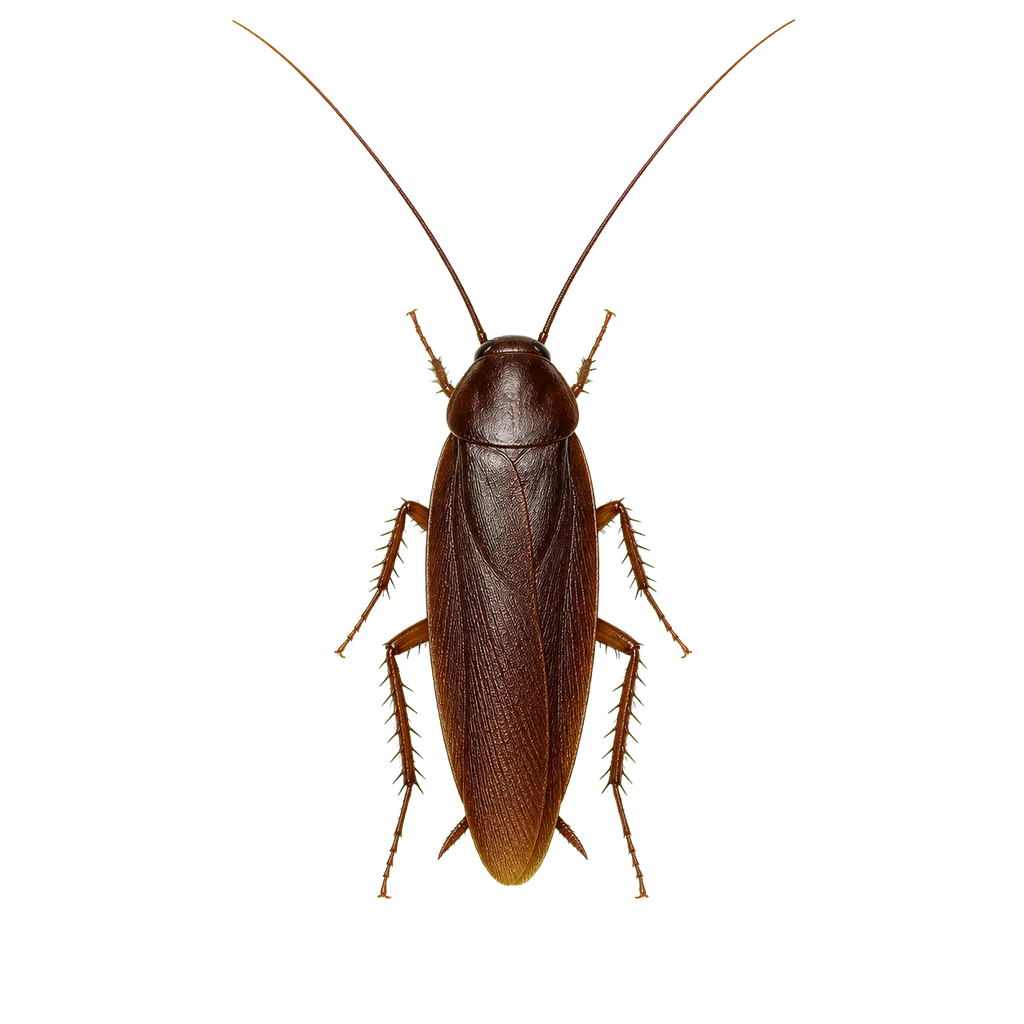
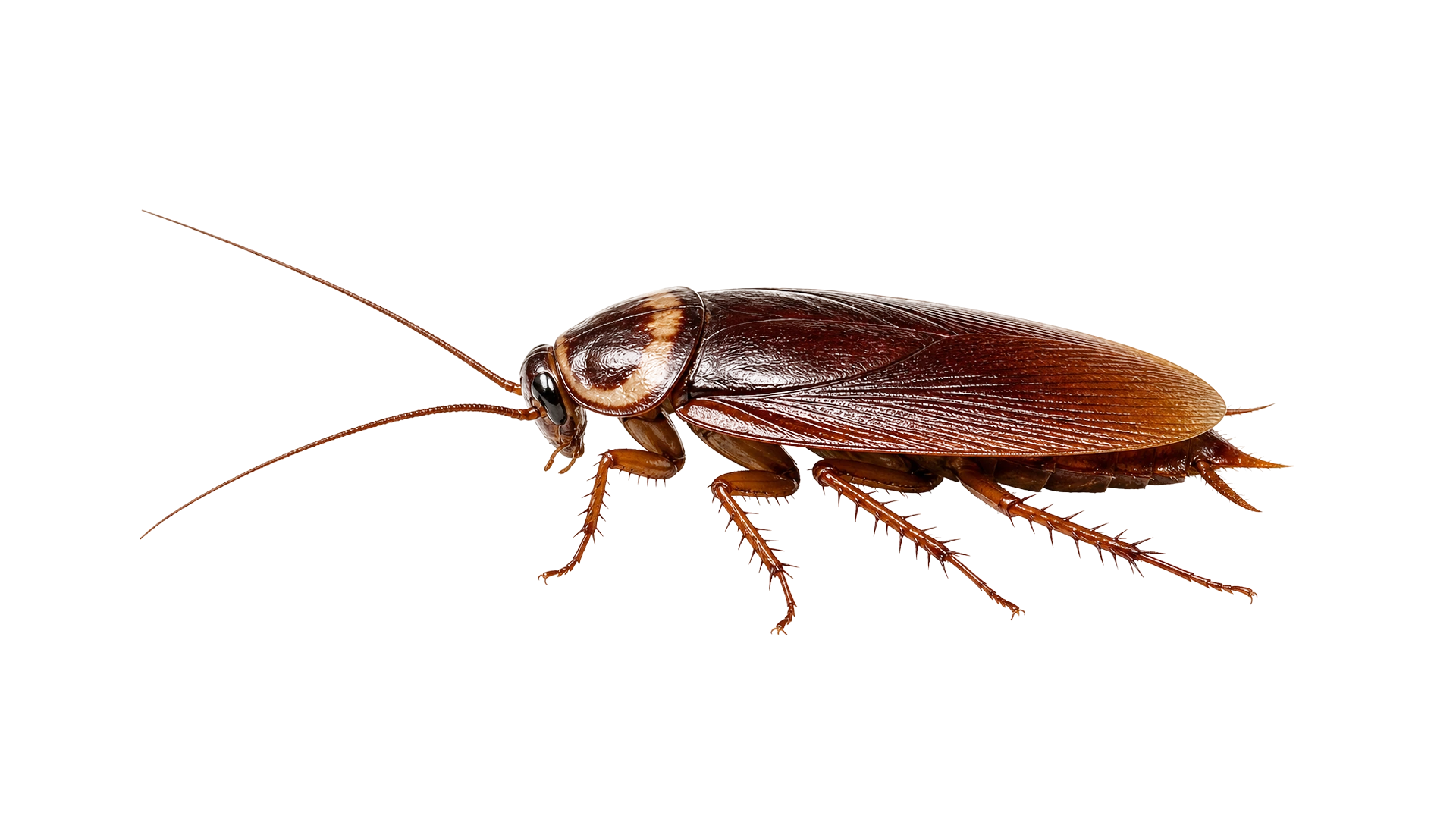
American cockroaches are the largest common indoor cockroach in the United States. Adults run 35 to 50 millimeters long (roughly 1.5 to 2 inches), glossy reddish-brown to dark brown, with a pale yellow figure-eight marking on the pronotum just behind the head. That marking is the single most reliable field ID, no other common indoor cockroach shows it. Both sexes have fully developed wings and can fly short distances in warm humid weather, which is what people remember after a startled encounter on a porch or in a basement at night.

If you're seeing large reddish-brown cockroaches around floor drains, in basements, in crawl spaces, or flying toward porch lights on warm nights, you're almost certainly looking at American cockroaches. In southern states they're often called palmetto bugs, same species. This guide covers how to confirm the ID, why sewer-line and floor-drain entry drives the problem, the documented health risks for households with asthma, and what professional treatment actually looks like.

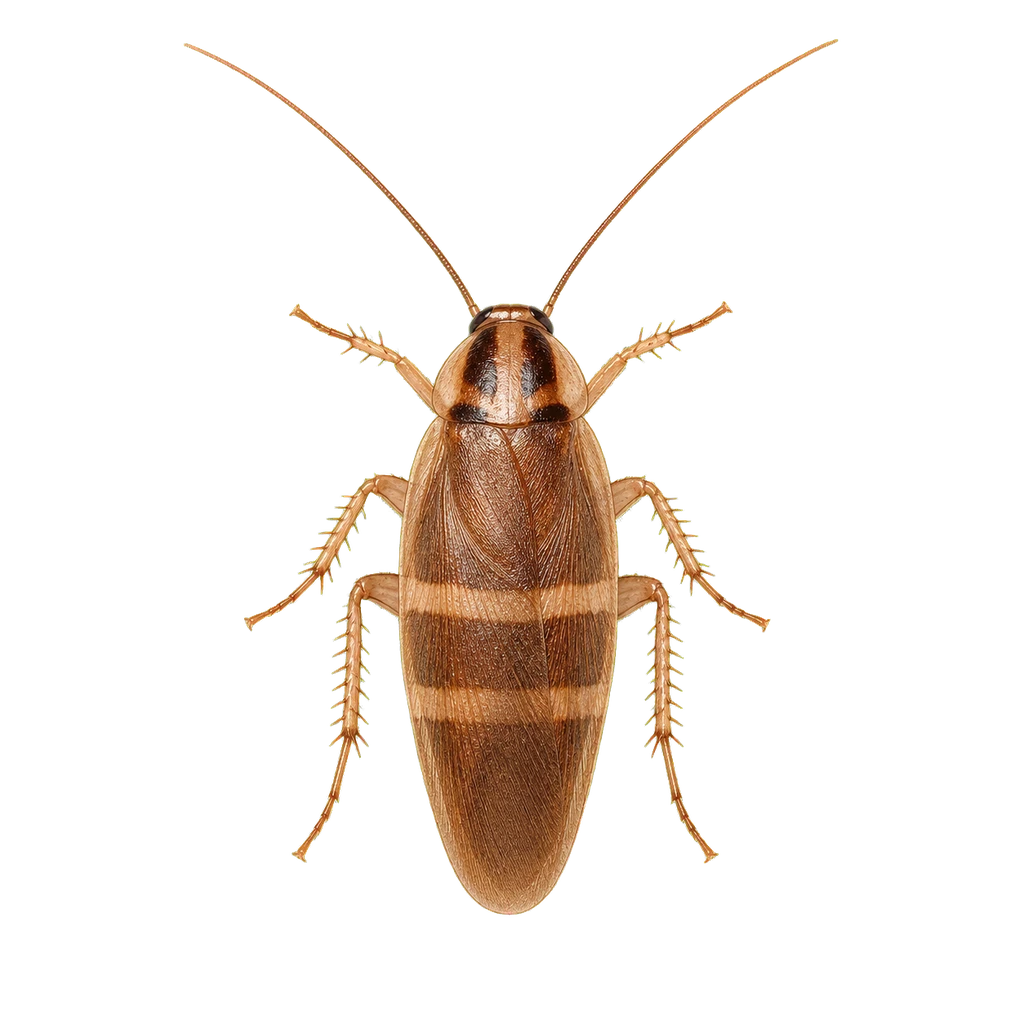
Close-up illustration of an American cockroach showing reddish-brown body, fully developed wings, and the defining yellow figure-eight marking behind the head

ID Card: American Cockroach

Scientific name
Periplaneta americana
Color
Reddish-brown, yellow
Size
1.5 to 2 inches
Body shape
Large, flat, oval body with reddish-brown coloring
Antennae
Long, thread-like, longer than body
Key evidence
Large droppings with blunt ends and ridges, musty odor in basements and sewers
Also known as
Palmetto bugs, Water bugs, Sewer roaches

Call to get matched with a local pest control pro.

Available 24/7
(888) 495-1510
  • Specialists who understand sewer-line and floor-drain entry biology
  • Treatment plans that target the source population, not just the visible adults
  • Entry-point sealing that closes plumbing, drain, and foundation pathways

Where to Inspect for American Cockroaches

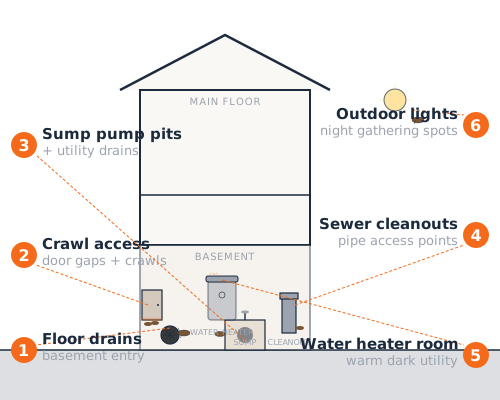
Cross-section illustration showing American cockroach entry routes through floor drains, sewer cleanouts, plumbing penetrations, and foundation gaps, with detail of the dark brown ootheca case

American cockroaches are nocturnal and avoid light, so daytime sightings underestimate the population badly. The reliable evidence sits in damp warm zones connected to sewer or outdoor harborage. Walk these areas with a flashlight after dark and inspect for live roaches, shed exoskeletons, dark fecal specks, and the dark brown rectangular ootheca cases:

  • Floor drains in basements, laundry rooms, utility rooms, and bathrooms, This is the #1 sewer entry point in homes and commercial buildings. Check that every P-trap is full of water, a dry trap is an open door from the sewer line. Look for fecal specks and shed skins on the drain rim.
  • Sump pumps and around sewer cleanouts, Sump pits and cleanout caps sit directly on sewer infrastructure where American cockroaches breed. A loose cap or cracked pit is a direct migration path into the basement.
  • Mulch beds and landscape debris within 10 feet of the foundation, In Florida, Texas, Georgia, Louisiana, Alabama, Mississippi, and southern California, outdoor populations live year-round in mulch, leaf litter, and woodpiles. Pull back mulch near the foundation and look for adults and oothecae.
  • Bathroom and kitchen plumbing under sinks, Moisture corridors and pipe penetrations through walls are how roaches move between floors. Tap the cabinet floor with a flashlight and check the back wall around supply and drain lines.
  • Boiler rooms, water heater closets, and utility areas, Warm, humid, and rarely disturbed, exactly the conditions American cockroaches prefer for daytime harborage. Inspect behind equipment and along the floor-wall junction.
  • Roof drains, attic vents, and rooftop HVAC equipment, In commercial settings and southern climates, flying adults reach upper floors and rooftops on warm nights. Roof-level harborage is more common than most homeowners realize.

If you find evidence in two or more of these zones, the population is established and the source is almost always the sewer line or an outdoor harborage feeding indoors through floor drains and foundation gaps. American cockroaches are documented carriers of Salmonella, Shigella, E. coli, and Staphylococcus, and their feces and shed exoskeletons contain allergens that trigger asthma. Pediatric asthma exacerbation is documented at cockroach-allergen-positive homes. Catching the problem before the population spreads above the basement is what protects the household.

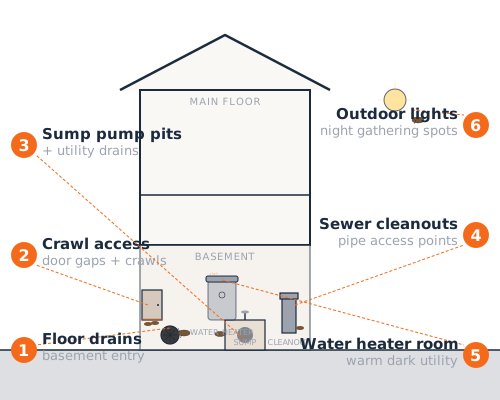
Cross-section illustration showing American cockroach entry routes through floor drains, sewer cleanouts, plumbing penetrations, and foundation gaps, with detail of the dark brown ootheca case
Illustration showing how American cockroaches enter homes through floor drains, sewer cleanouts, plumbing penetrations, and outdoor harborage near the foundation

Why Do I Have American Cockroaches?

Spotting a large reddish-brown cockroach is step one. Understanding what's drawing the population to your property is what stops them from rebuilding after every treatment. American cockroaches are different from German cockroaches in one specific way: they don't move in and stay indoors permanently. They live primarily in sewers, drains, and outdoor harborage, and they migrate indoors when conditions change. Heavy rain, sewer-line work nearby, drought, or a string of warm humid nights can all push large numbers inside at once.

What anchors them to your property:

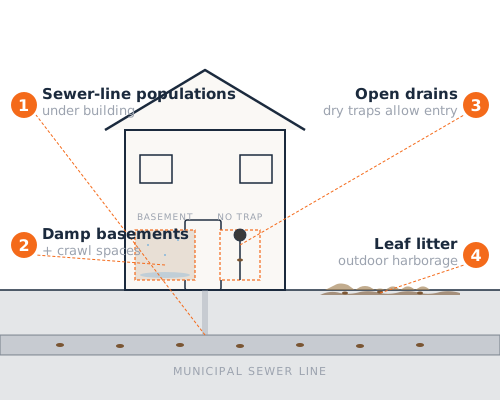
  • Older sewer infrastructure or broken sewer lines on the property, cracked clay sewer pipes and damaged cleanouts give roaches a sheltered breeding habitat with a direct route into the building
  • Floor drains without proper traps or with dry traps, when a drain isn't used regularly the water in the P-trap evaporates and the sewer line opens straight into the room
  • Southern US climate with year-round outdoor populations, in Florida, Texas, Georgia, Louisiana, Alabama, Mississippi, and southern California, mature outdoor colonies sit in mulch, sewers, and storm drains and send adults indoors continuously
  • Mulch within 12 inches of the foundation, accumulated debris within 10 feet, outdoor harborage right against the structure stages adults next to every potential entry point
  • Older homes or commercial buildings with abundant void spaces and plumbing penetrations, every unsealed gap around a pipe is a migration corridor from crawl space or basement up into living areas
  • Adjacent restaurants, dumpsters, or commercial food handling, outdoor populations build in commercial dumpster zones and migrate to nearby residential properties at night

American cockroaches release an aggregation pheromone in their feces that draws more roaches to the same harborage. Crushed roaches and accumulated droppings keep pulling new individuals to the spot, which is why basements and crawl spaces with an existing population tend to get worse, not better, until the source is addressed. The slow reproductive cycle (one ootheca per month per female, six to twelve months from egg to adult) means treatment can actually achieve elimination, but only when it targets the sewer line, the drains, and the outdoor harborage feeding the indoor sightings.

How Serious Is Your American Cockroach Problem?

Find your scenario below. Each row reflects the actual progression of a sewer-fed American cockroach population, not a generic cockroach timeline.

What You're Seeing Severity If Untreated Next Step
One American cockroach spotted in basement or bathroom, no recurring sightings Early A single intruder may not indicate an indoor population, but a dry floor-drain trap is the most common cause of repeat appearances within weeks. Confirm species (reddish-brown, yellow figure-eight marking, 35 to 50 millimeters long). Pour a cup of water down the nearest floor drain to restore the trap. Monitor for 14 days.
Multiple sightings monthly, ootheca cases found in basement or storage areas Moderate Established sewer or substructure population. The colony will continue producing 14 to 16 nymphs per ootheca and indoor sightings will spread to adjacent rooms over the next several months. Schedule professional service this month. Floor drain treatment plus gel bait placement near harborage is the standard opening move.
Frequent sightings, multiple ootheca cases, family member with asthma High Established population producing allergen-rich feces and shed skins. Cockroach allergens are a documented pediatric asthma trigger and indoor air quality declines as the population grows. Same-week professional service. Comprehensive entry-point sealing, gel bait program, and outdoor perimeter treatment in southern climates.
Heavy infestation, sewer entry confirmed, asthma attacks or allergic reactions in family Urgent Active sewer-line breach combined with household allergen exposure. Health risk is immediate and the population will continue migrating until the structural breach is closed. Same-week pro service plus a plumber for sewer line inspection. Consult with a clinician on asthma management while remediation is underway.
One American cockroach spotted in basement or bathroom, no recurring sightings
Severity Early
If Untreated A single intruder may not indicate an indoor population, but a dry floor-drain trap is the most common cause of repeat appearances within weeks.
Next Step Confirm species (reddish-brown, yellow figure-eight marking, 35 to 50 millimeters long). Pour a cup of water down the nearest floor drain to restore the trap. Monitor for 14 days.
Multiple sightings monthly, ootheca cases found in basement or storage areas
Severity Moderate
If Untreated Established sewer or substructure population. The colony will continue producing 14 to 16 nymphs per ootheca and indoor sightings will spread to adjacent rooms over the next several months.
Next Step Schedule professional service this month. Floor drain treatment plus gel bait placement near harborage is the standard opening move.
Frequent sightings, multiple ootheca cases, family member with asthma
Severity High
If Untreated Established population producing allergen-rich feces and shed skins. Cockroach allergens are a documented pediatric asthma trigger and indoor air quality declines as the population grows.
Next Step Same-week professional service. Comprehensive entry-point sealing, gel bait program, and outdoor perimeter treatment in southern climates.
Heavy infestation, sewer entry confirmed, asthma attacks or allergic reactions in family
Severity Urgent
If Untreated Active sewer-line breach combined with household allergen exposure. Health risk is immediate and the population will continue migrating until the structural breach is closed.
Next Step Same-week pro service plus a plumber for sewer line inspection. Consult with a clinician on asthma management while remediation is underway.

American cockroach severity is driven by the source (sewer line, drains, outdoor harborage), not the sightings themselves. If you're between two rows, treat the higher one as your situation.

How an American Cockroach Population Grows

American cockroaches reproduce much slower than German cockroaches but live far longer, and that combination shapes everything about how the population behaves and how treatment is structured. The slow cycle is genuinely good news for elimination, well-targeted programs can drive the population to zero, but it requires a multi-visit approach that follows the lifecycle rather than fighting it.

  1. Egg case (ootheca)

    About 6 to 8 weeks before hatching

    Females form a dark brown rectangular ootheca about 8 to 10 millimeters long containing 14 to 16 eggs. Unlike German cockroaches that carry the case until hatching, American females glue the ootheca to a protected surface in dark harborage, often in cracks, behind appliances, or in storage debris. Visible oothecae confirm an established local population, not just a passing intruder.

  2. Nymph

    About 6 to 12 months across 13 instars

    Nymphs hatch wingless and pale and gradually darken and develop wing pads with each molt. They share harborage with adults and feed on the same omnivorous diet: decaying food, fecal matter, paper, glue, hair, even soap and leather. Each shed skin contains the allergens that drive asthma exacerbation in sensitized household members.

  3. Adult

    Adults live 6 to 12 months, one of the longest cockroach lifespans

    Adults reach 35 to 50 millimeters long, display the defining yellow figure-eight marking on the pronotum, and develop fully functional wings capable of short flights in warm humid conditions. Long lifespan combined with continuous reproduction means a single undisturbed population persists for years.

  4. Female reproductive output

    6 to 90 oothecae produced over a lifetime

    Each female produces roughly one ootheca per month for most of her adult life. At 14 to 16 eggs per case, lifetime output ranges from about 84 to more than 1,400 potential offspring per female. That math is why ignoring the source for even a few months turns a small problem into a large one.

Compared to German cockroaches, American cockroach development is slow, which is both the challenge and the opportunity. The slow cycle means visible results take weeks rather than days, and homeowners often think treatment isn't working in the first two weeks. By weeks four to six, gel bait plus IGR has pulled down both adult numbers and nymph progression, and an established population can be eliminated rather than merely suppressed. That outcome is rare with most household pests, but achievable here when treatment follows the biology.

When American Cockroaches Are Most Active

American cockroach activity follows temperature, rainfall, and sewer-system pressure rather than a strict calendar. The seasonal pattern below tells you when indoor migration spikes, when outdoor populations expand, and when treatment windows hit hardest.

  • Spring

    Outdoor populations expand fast in southern states as soil warms and mulch beds dry out from winter saturation. Indoor sightings begin as outdoor temperatures rise and sewer activity picks up. In northern climates, indoor sightings during spring almost always confirm a year-round population inside heated basements or crawl spaces.

  • Summer

    Peak outdoor activity in the southern range with adults flying on warm humid nights, often clustering at porch lights. Drought or heavy rain both push outdoor populations indoors, drought dries up sewer water and forces migration, while flooding displaces sewer colonies upward through drains. Summer is when single-night infestations of 20 or more adults can appear in basements after a major storm.

  • Fall

    Indoor migration accelerates as outdoor temperatures drop. Sightings spike from September through November, particularly in mid-Atlantic and northern states where outdoor populations cannot overwinter. Fall is the second major treatment window after spring.

  • Winter

    Outdoor populations go dormant in northern states but year-round indoor activity continues in heated basements, crawl spaces, boiler rooms, and commercial buildings. In Florida, Texas, southern California, and the Gulf states, outdoor populations remain active and continue feeding adults into nearby structures through the entire winter.

Why American Cockroaches Aren't a DIY Job

American cockroaches are documented carriers of Salmonella, Shigella, E. coli, Staphylococcus, and several viruses that can survive transit through the cockroach gut. The bigger household concern in most homes is the allergen load: feces, shed exoskeletons, and ootheca debris contain proteins that trigger asthma and allergic reactions. Pediatric asthma exacerbation is documented in homes with cockroach-allergen-positive dust samples, and children with existing asthma get measurably worse the longer the population persists.

Over-the-counter contact sprays kill visible adults but do nothing to the population breeding in sewer lines, floor drains, crawl spaces, and outdoor mulch beds. New adults replace the killed ones within days, often migrating up the same drain you treated. Worse, sprays pushed down a drain mostly wash through without contact, and bleach poured into drains degrades the bio-enzymatic balance that long-term drain treatment relies on.

Floor drain trap dry-out is the single most common cause of recurring sightings in homes that don't actually have a substructure population. When a floor drain isn't used regularly, the water in the P-trap evaporates in a few weeks and the sewer line opens straight into the room. Pouring a cup of water down unused drains once a week is the cheapest, most effective DIY step available for this species, and many one-off sightings stop the day this becomes a habit.

A pro starts with source identification, then layers gel bait (indoxacarb or fipronil) on active runways, insect growth regulators on the slow nymph cycle, drain and sewer-line treatment for the breeding source, foundation and entry-point sealing for migration corridors, and an outdoor granular perimeter for southern climates. Typical cost is $200 to $500 for the initial residential visit and $50 to $120 per month for recurring service. Commercial settings (restaurants, multi-family buildings, food handling facilities) run higher because the sewer-line and dumpster pressure is constant.

What Changes When a Pro Shows Up

American cockroach treatment is half source work, half exclusion. The adults you find in living space are migrating from somewhere (sewer line, crawl space, outdoor mulch bed), and the program is built to close those pathways while collapsing the source population. Here's what changes:

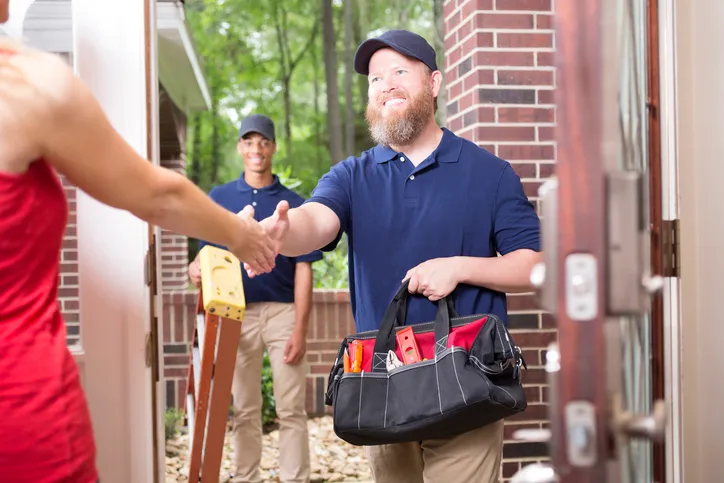
Pest control technicians after completing an American cockroach treatment service
  • Local Pest Control
  • 24/7 Availability
  • Quality Workmanship
  • Eco‑Friendly Options
  • Trusted by Homeowners
  • They Locate the Source, Not Just the Roach

    Inspection covers every floor drain, sump pit, sewer cleanout, crawl space access, and exterior harborage zone within 10 feet of the foundation. The roach on the laundry room floor is the symptom, the breeding population sits in the sewer line or the substructure, and that's what the program targets.

  • Gel Baits Placed on Active Trails

    Indoxacarb and fipronil gel baits placed on active runways and near harborage let foraging adults carry the active ingredient back to shared hiding spots. The aggregation behavior that draws roaches together also spreads the bait through the population.

  • Insect Growth Regulators on the Slow Cycle

    Hydroprene and similar IGRs prevent nymphs from developing into reproductive adults. With a 6 to 12 month nymph stage, IGRs collapse the next generation while gel bait pulls down the current one. This combination is what makes durable elimination possible.

  • Entry Sealing and Outdoor Perimeter

    Foundation gaps, plumbing penetrations, and unused drain covers get sealed. In southern climates, an outdoor granular perimeter intercepts adults migrating from mulch and storm drains before they reach the foundation. Without entry sealing, every storm refills the indoor population.

  • Local Pest Control
  • 24/7 Availability
  • Quality Workmanship
  • Eco‑Friendly Options
  • Trusted by Homeowners
NoToPests home

One call connects you with a local specialist who knows american cockroaches and your area.

Be Ready When You Call

Pest control technician arriving for American cockroach service
Junho L.
Daisuke P.
Kirk Q.
Marion K.

Trusted by homeowners nationwide

Call for Pest Control Help (888) 495-1510

Can You Handle This or Do You Need Help?

American cockroach work splits between DIY-friendly conditions management and pro-only source treatment. The biology rewards a clear division of labor, and homeowners who tackle the right parts of the job get faster, more durable results.

What DIY Can Do

DIY work is most effective at maintaining drain traps, removing outdoor harborage, and cutting indoor food and water access. Useful steps with honest limits:

  • Pour a cup of water down every unused floor drain weekly to keep P-traps full, this closes the single most common sewer entry route
  • Seal visible cracks around plumbing penetrations, foundation gaps, and door thresholds with appropriate caulk or expanding foam
  • Move mulch, leaf litter, and firewood at least 10 feet from the foundation, especially in southern climates where outdoor populations live year-round
  • Reduce kitchen food residue, fix slow leaks, and remove standing water in bathrooms and laundry rooms to cut indoor food and water access
  • What DIY cannot do: treat sewer-line populations, place professional gel baits and IGRs effectively, or close out an established substructure infestation.

What a Pro Does Differently

Professional American cockroach work is structured around source treatment and the slow lifecycle. Here's what changes when you call:

  • Gel bait (indoxacarb, fipronil) placed on active runways so foraging adults carry the active ingredient back through the population via aggregation behavior
  • Insect growth regulators (hydroprene) that prevent nymphs from maturing, collapsing the next generation while gel bait takes down the current one
  • Drain and sewer-line treatment plus coordination with a plumber when structural sewer breaches are suspected
  • Entry-point sealing at plumbing penetrations, foundation gaps, and drain covers to close migration pathways
  • Outdoor granular perimeter in southern climates to intercept adults migrating from mulch, storm drains, and dumpster zones
  • Honest expectations, elimination is genuinely achievable with this species, but it takes two to three visits across the slow lifecycle.

Suspect American Cockroaches? Don't Wait.

American cockroaches carry documented pathogens and produce allergens that worsen asthma in sensitized household members. Connect with a local specialist who treats the source, seals entry points, and follows up across the slow lifecycle.

Available 24/7
(888) 495-1510

What Homeowners Say After Getting Help

Real results from people who had the same problem and solved it.

Rashad E.
Rashad E.
Portland, OR

"No pressure, just options."

I appreciated being given eco-friendly options without being pushed. The technician explained tradeoffs honestly and let me decide based on my priorities. They were transparent about what each approach involves. The no-pressure approach and honest information helped me make a confident decision.

Rashad E.
Rashad E.
Portland, OR

"No pressure, just options."

I appreciated being given eco-friendly options without being pushed. The technician explained tradeoffs honestly and let me decide based on my priorities. They were transparent about what each approach involves. The no-pressure approach and honest information helped me make a confident decision.

Yu E.
Yu E.
Durham, NC

"The inspection caught what we missed."

I didn't realize how much damage raccoons can cause once they get inside. The wildlife specialist explained what areas they inspect first and why raccoon issues are handled more carefully than regular pests. They showed me the damage and explained removal and exclusion strategies. Understanding the potential for damage made me glad I called professionals.

Ren P.
Ren P.
Dayton, OH

"The problem finally stayed gone."

Ants kept returning no matter what we did. The tech treated the trail areas and explained how to handle food storage and moisture so the ants don't keep coming back. It's been months and we haven't seen them again. I appreciated that it wasn't just a one-and-done spray.

Kayla Q.
Kayla Q.
Pittsburgh, PA

"Clear expectations and a real plan."

I was overwhelmed and didn't know what was realistic to fix quickly. The inspector explained what results to expect and how long it typically takes depending on the ant species. They treated the right places and gave simple prevention tips. Everything felt structured and easy to follow.

Malachi U.
Malachi U.
Knoxville, TN

"They found the entry points fast."

Ants were showing up in the kitchen and we couldn't figure out where they were coming from. The tech tracked the activity and pointed out two entry points we never would've noticed. After treating and sealing those areas, the ants disappeared. It was quick and surprisingly thorough.

Arturo B.
Arturo B.
Yonkers, NY

"No pressure, just helpful info."

I mainly wanted to understand what was happening before committing to anything. The inspector walked me through the likely cause and the differences between treatment approaches. They answered questions without rushing me. The plan we chose worked and the ants were gone within days.

Octavio Z.
Octavio Z.
Duluth, MN

"The tech helped me stop wasting time."

I kept trying different products and nothing was sticking. The tech explained why some solutions don't work for certain ant problems and focused the treatment where it would actually matter. They also gave prevention tips that were easy to implement. The difference was obvious within the first week.

Chauncey A.
Chauncey A.
Duluth, MN

"We finally understood what to do next."

We felt stuck because nothing we tried lasted. The tech explained how to find the source of the problem, treated both indoor and outdoor areas, and helped us build a prevention routine. It wasn't complicated. Just the right steps in the right order. We've had a huge improvement since.

Vihaan V.
Vihaan V.
Madison, WI

"They fixed what was actually causing it."

Ants kept showing up in the same spot. The pro explained that the visible ants weren't the real issue and focused the treatment on where they were coming from. They identified the entry path and treated it properly. The problem stopped and hasn't returned.

Allison A.
Allison A.
Des Moines, IA

"It felt like a real inspection, not a quick spray."

The tech spent time figuring out where the ants were entering instead of just spraying around. They walked me through the likely reasons and what to watch for over time. After treatment, ant activity dropped fast and stayed low. The detailed approach gave me confidence.

Stephen N.
Stephen N.
Sacramento, CA

"Small changes made a big difference."

We didn't realize how much our routine was attracting ants. The inspector explained simple prevention steps and treated the areas where activity was highest. Once those changes were in place, we stopped seeing ants inside. It was a practical approach that actually worked.

Daquan V.
Daquan V.
Tampa, FL

"The explanation alone was worth it."

I'd been doing random treatments without understanding what I was dealing with. The tech explained how ants behave and why certain approaches work better. They treated strategically instead of just spraying. It made the whole thing feel manageable.

Deepak V.
Deepak V.
San Antonio, TX

"We stopped chasing the problem and solved it."

We kept wiping down counters and the ants would be back the next day. The pro identified the entry areas and explained the treatment plan clearly. Once they treated and targeted the colony, the ants disappeared quickly. It felt like we finally got ahead of it.

Mireya Z.
Mireya Z.
Riverside, CA

"They didn't oversell. Just solved it."

The tech explained what treatment was necessary and what wasn't. They focused on the entry points and corrected the conditions that were attracting ants. The work felt honest and effective. I liked having clear expectations and seeing results quickly.

Wei D.
Wei D.
Lexington, KY

"It wasn't just 'spray and go.'"

I appreciated the step-by-step explanation and the focus on prevention. The inspector treated the areas where ants were getting in and helped me understand what to change at home. The ants stopped showing up and it's been consistent. The approach felt thoughtful and sustainable.

Shu W.
Shu W.
Orlando, FL

"It finally made sense why they kept coming back."

I had ants showing up every few months and never understood why. The tech explained how outdoor nests and weather changes affect indoor activity. They treated the perimeter and entry points instead of just the inside. Since then, we haven't had recurring issues.

Teresa I.
Teresa I.
Mesa, AZ

"Targeted instead of overdone."

I was worried about over-treating the house. The pro focused on specific problem areas and explained why blanket spraying wasn't necessary. The ants stopped appearing, and we didn't feel like chemicals were used unnecessarily. That balance mattered to us.

Latonya X.
Latonya X.
Mesa, AZ

"Clear answers without jargon."

The tech explained everything in plain language and answered questions without rushing. They identified the type of ant we had and adjusted the treatment accordingly. Knowing why the approach worked gave me confidence it would last.

Humberto T.
Humberto T.
Eugene, OR

"They focused on prevention, not just treatment."

I liked that the tech talked through how to keep ants from returning after the treatment. They addressed moisture issues and entry points around the home. The treatment worked, and the prevention tips helped us stay ahead of future problems.

Jerrell N.
Jerrell N.
Arlington, VA

"No guessing, just a plan."

I was tired of guessing what would work. The inspector explained the cause of the issue and outlined a clear plan of action. After treatment, the ants disappeared and we haven't had to revisit the problem. It felt efficient and well thought out.

Marion K.
Marion K.
Boulder, CO

"They explained what to expect upfront."

The tech set expectations about timing and results before starting. They explained that some activity might happen initially and why. Everything played out exactly as described, and the ants were gone shortly after. That transparency made a big difference.

Bridget E.
Bridget E.
Sacramento, CA

"Helpful without being overwhelming."

I didn't realize there were different types of ants or that it mattered. The inspector walked me through what they were seeing and explained how ant behavior affects treatment. It made it easier to ask the right questions and understand the solution.

Junho L.
Junho L.
Naperville, IL

"Saved me a lot of guessing."

I was close to trying random sprays for the ants. Talking with the tech helped me understand what was realistic to address and what usually doesn't work. The targeted treatment solved the issue quickly and saved time and frustration.

Willis Y.
Willis Y.
Baton Rouge, LA

"It felt tailored to our home."

The tech didn't just apply a standard treatment. He looked at where we were seeing activity and adjusted the approach to our layout and yard. The ants stopped showing up and we understood how to keep it that way.

Thelma S.
Thelma S.
Madison, WI

"Straightforward and effective."

I appreciated how straightforward everything was. The pro explained the issue, treated the problem areas, and gave us a few simple steps to prevent future issues. The ants were gone and it didn't feel complicated.

Angelina B.
Angelina B.
Austin, TX

"They explained how the weather played a role."

I didn't realize seasonal changes could affect ant activity so much. The tech explained how heat and rain push ants indoors and what to do about it. They treated the problem areas and gave tips to prevent future issues. The explanation helped everything click.

Kirk Q.
Kirk Q.
Denver, CO

"It wasn't as complicated as I expected."

I assumed pest control would be disruptive or complicated. The technician explained the steps clearly and focused on targeted treatment. The ants stopped appearing quickly and the process was smoother than expected.

Cody L.
Cody L.
Denver, CO

"They helped me understand the bigger picture."

Instead of just treating the ants I saw, the tech explained what was happening around the house that made it attractive to pests. Once those factors were addressed, the problem resolved quickly. It felt educational as well as effective.

Marquis K.
Marquis K.
San Mateo, CA

"Clear communication from start to finish."

I appreciated how clearly everything was explained before treatment began. The inspector walked through the process and answered all my questions. The ants were gone shortly after and we felt confident about prevention going forward.

Virginia T.
Virginia T.
San Mateo, CA

"They addressed what we were missing."

We kept focusing on cleaning, but the tech showed us where ants were actually entering. Once those points were treated and sealed, the issue resolved. It was reassuring to finally understand the root cause.

June J.
June J.
Omaha, NE

"A methodical approach that worked."

The pro explained how they identify ant trails and colonies before treating. They took a methodical approach instead of rushing through. The ants stopped appearing and the fix has held up well.

Caitlin K.
Caitlin K.
Phoenix, AZ

"They understood desert pest behavior."

Living in Phoenix, pests behave differently than other places. The tech explained how heat drives ants indoors and what treatments work best here. The solution was effective and tailored to our environment.

Olive S.
Olive S.
Sacramento, CA

"They took the time to do it right."

I appreciated that the tech didn't rush. He inspected the problem areas carefully and explained what they were seeing. The treatment worked quickly and the ants haven't returned.

Arianna D.
Arianna D.
Baton Rouge, LA

"They understood the local pest issues."

The tech explained how the humidity here contributes to ant problems and why certain treatments work better in this climate. They focused on outdoor entry points and moisture-prone areas. The ants cleared up quickly and haven't come back.

Kiyana N.
Kiyana N.
New Orleans, LA

"Finally something that lasted."

We'd dealt with recurring ants for years. The pro explained why flooding and moisture play such a big role here and adjusted the treatment accordingly. It's been months without seeing ants, which is a big win for us.

Brett R.
Brett R.
Phoenix, AZ

"They knew exactly what works in Arizona."

The tech explained how desert conditions affect ant behavior and which treatments are most effective here. They targeted the right areas and avoided unnecessary spraying. The ants disappeared quickly.

Albert O.
Albert O.
Baltimore, MD

"Clear, calm, and professional."

I appreciated how calmly everything was explained. The inspector identified the ant problem, explained the treatment, and answered my questions without rushing. The solution worked and gave me peace of mind.

Rohit Y.
Rohit Y.
Orlando, FL

"They handled it efficiently."

The tech inspected the problem areas, explained the plan, and got to work quickly. The ants were gone within days and the process felt efficient without being rushed.

Carolyn H.
Carolyn H.
Omaha, NE

"Simple explanations, solid results."

I liked how simply everything was explained. The pro didn't overcomplicate things and focused on what mattered. The ants stopped appearing and we haven't needed follow-up treatments.

Edith Z.
Edith Z.
Newark, NJ

"They showed me what to watch for."

Beyond treating the ants, the tech explained what signs to watch for if activity starts again. That knowledge made me feel more in control. So far, everything has stayed clear.

Common Questions About American Cockroaches

Direct answers to what homeowners ask most about identification, palmetto bug terminology, sewer entry, and treatment.
  • How do I identify American cockroaches versus other large cockroach species? Toggle answer for: How do I identify American cockroaches versus other large cockroach species?

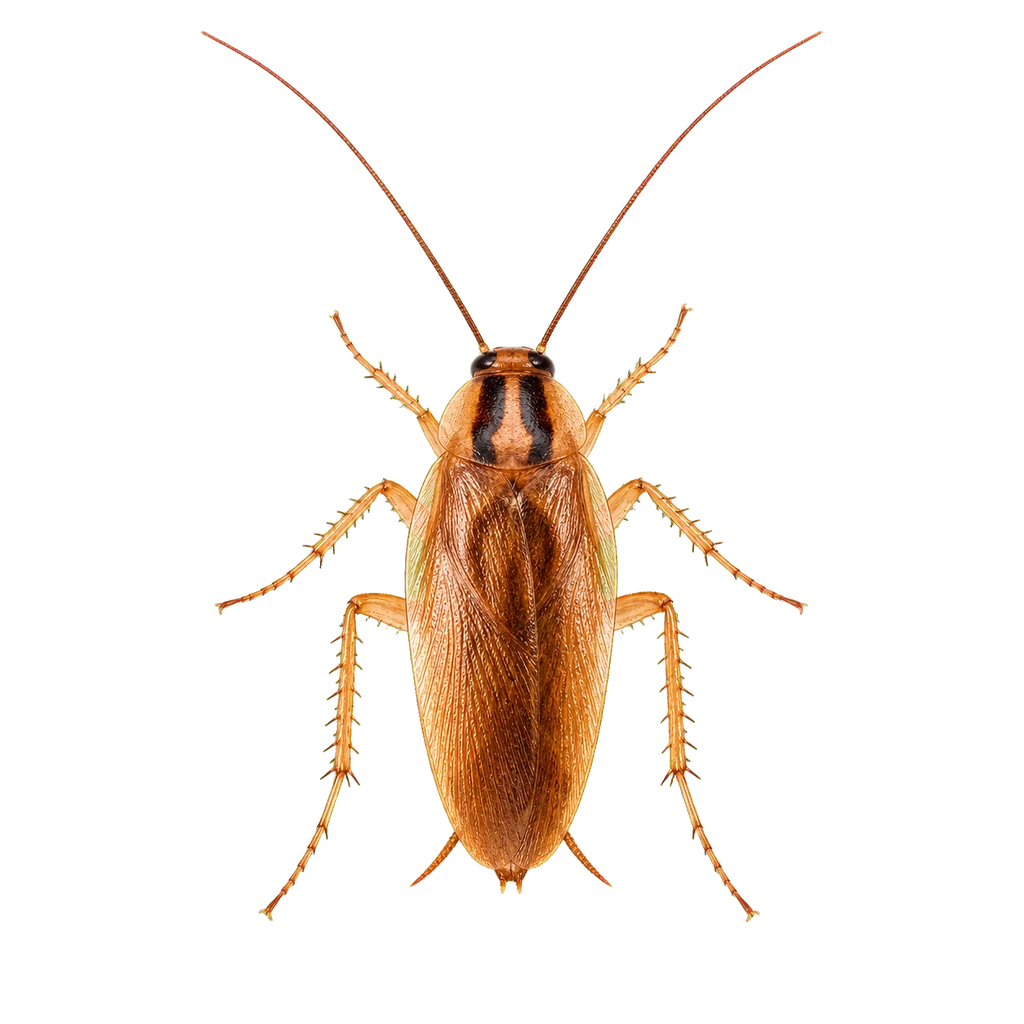
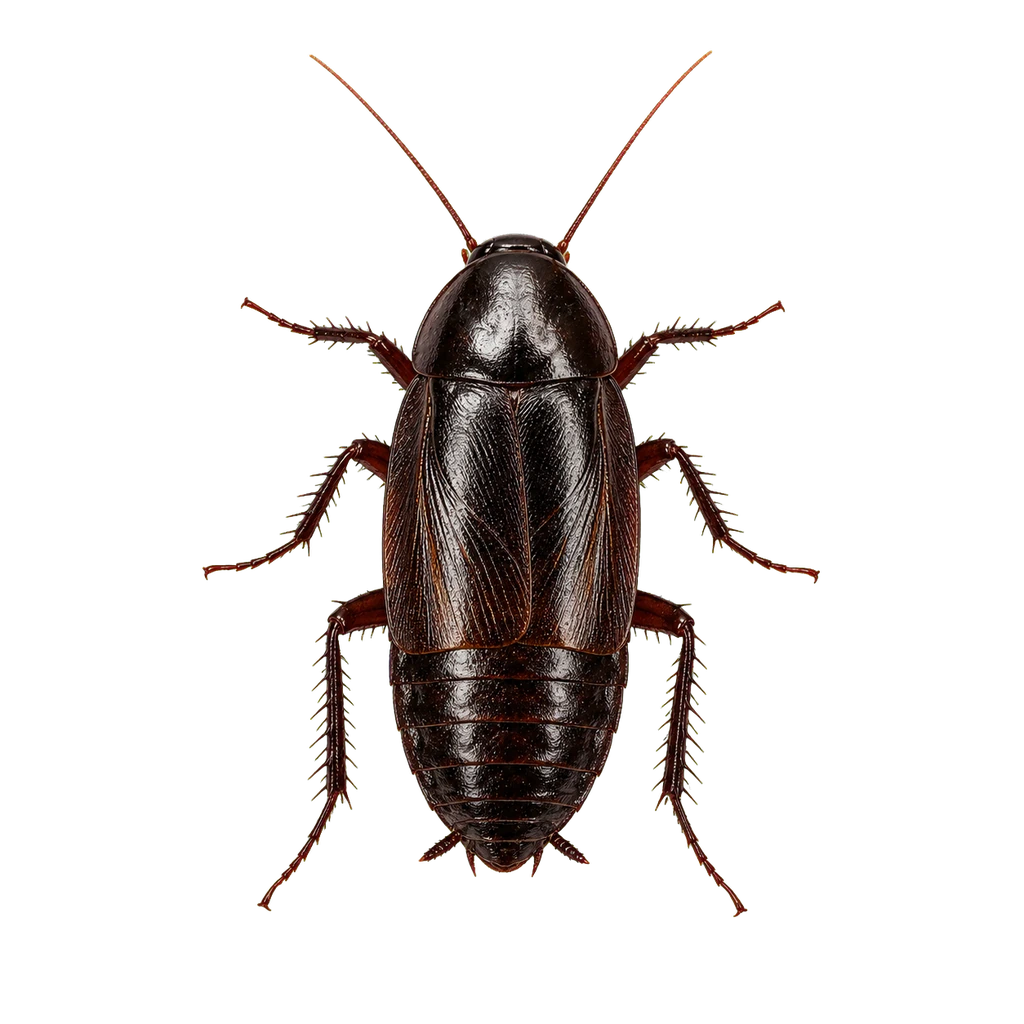
    American cockroaches are the largest cockroach species commonly found in U.S. Homes, reaching 1.5 to 2 inches in length with a reddish-brown body and a distinctive yellowish figure-eight pattern on the back of the head (pronotum). They have fully developed wings and can fly short distances, particularly in warm weather, abehavior that often startles homeowners. Compared to smoky brown cockroaches (which are uniformly dark brown without the yellow head marking) and Oriental cockroaches (which are smaller, darker, and unable to fly), the American cockroach's large size and yellow head pattern make positive identification straightforward.

  • Where do American cockroaches come from when they appear indoors? Toggle answer for: Where do American cockroaches come from when they appear indoors?

    American cockroaches are primarily outdoor and peridomestic insects that live in sewer systems, storm drains, steam tunnels, mulch beds, tree holes, and other warm, moist environments. They typically enter homes through floor drains connected to sewer lines, gaps around plumbing penetrations, broken or missing drain traps, and at ground level through door sweeps and foundation cracks. Heavy rain that floods sewer systems and storm drains commonly forces large numbers indoors simultaneously. Their appearance inside usually indicates an entry pathway from an outdoor population rather than an established indoor breeding colony, though they can breed in damp basements and commercial kitchens.

  • Why do roaches keep coming back? Toggle answer for: Why do roaches keep coming back?

    Cockroaches are resilient survivors, asingle female German cockroach can produce over 300 offspring in her lifetime. They hide in cracks, wall voids, and appliance motors during the day and forage at night. If sanitation isn't addressed alongside treatment (grease buildup, crumbs behind appliances, leaky pipes), the population rebounds quickly because the food and moisture sources remain.

  • Why do cockroaches keep coming back even after I clean? Toggle answer for: Why do cockroaches keep coming back even after I clean?

    Cockroaches are resilient survivors that can live on almost any organic material, includinggrease residue, glue, soap, and even book bindings, sothorough visible cleaning alone rarely eliminates their food sources. They are also nocturnal and spend 75% of their time hidden in cracks, wall voids, and pipe chases where cleaning products do not reach. Cockroaches reproduce rapidly, with some species producing up to 400 offspring per female in a lifetime, meaning even a few survivors can rebuild a population within weeks.

  • How quickly can a provider get to my home? Toggle answer for: How quickly can a provider get to my home?

    Most providers in our network can schedule an inspection within 24-48 hours. For urgent situations, likeactive structural damage or large colonies, same-week emergency service is often available. Response times depend on your location and the provider's current schedule.

  • What happens during the first visit? Toggle answer for: What happens during the first visit?

    Your provider inspects the property to identify the pest, locate nesting or entry points, and assess the scope of the problem. You get a clear explanation of what they found, what they recommend, and a written scope before any work begins.

  • Is treatment safe for kids and pets? Toggle answer for: Is treatment safe for kids and pets?

    Modern pest control products are designed to break down quickly after application and pose minimal risk to people and pets when applied correctly. Most providers ask you to keep kids and pets out of treated areas for 1 to 2 hours while the product dries, after which the area is generally safe again. Always confirm specific re-entry times with your provider, and let them know about pet birds, fish, or reptiles, since some treatments require extra precautions for those species.

Pest Control Pros serving the city of the state of your city and nearby areas

Local providers experienced with sewer-line entry, drain treatment, and southern-climate outdoor pressure are ready to inspect, treat, and follow up, no obligation.

Available 24/7
(888) 495-1510