Local pest control help is one call away.

Brown-Banded Cockroach: Identification, Treatment & Prevention

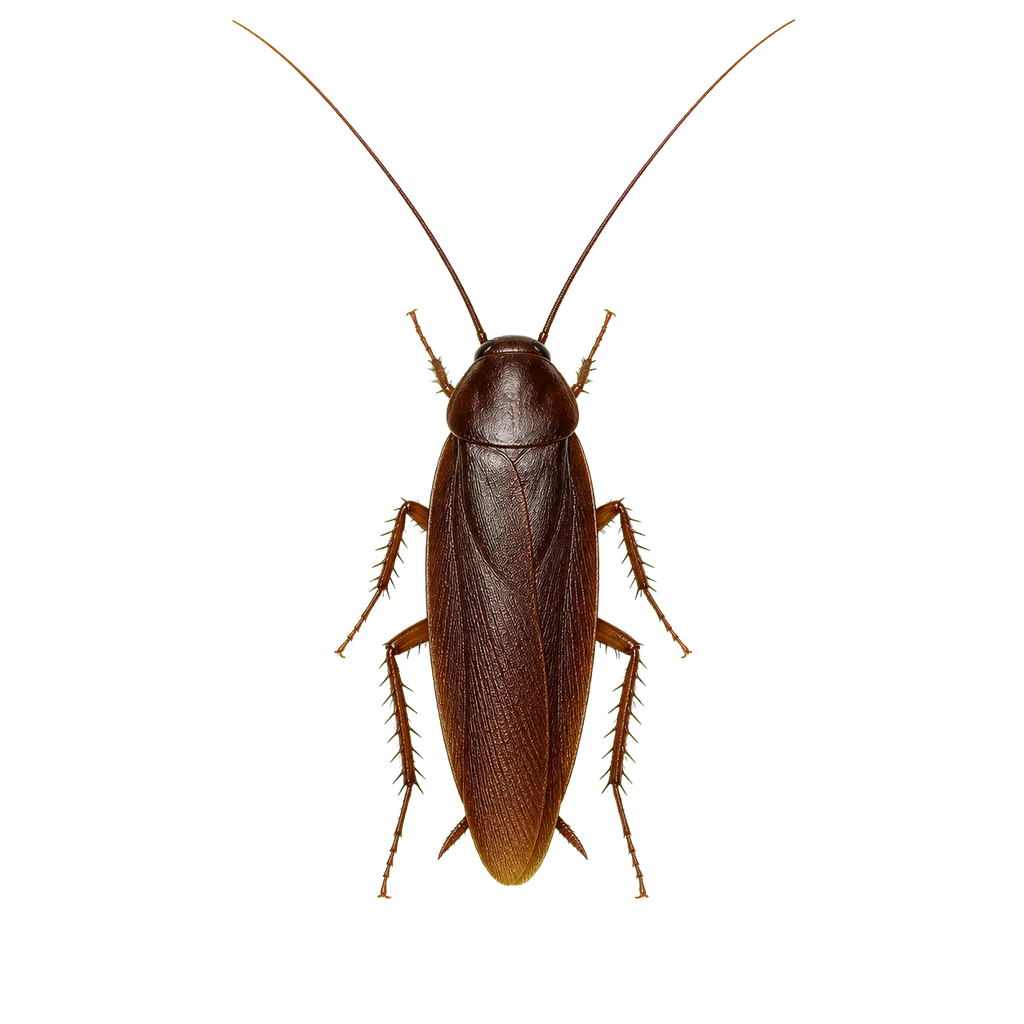
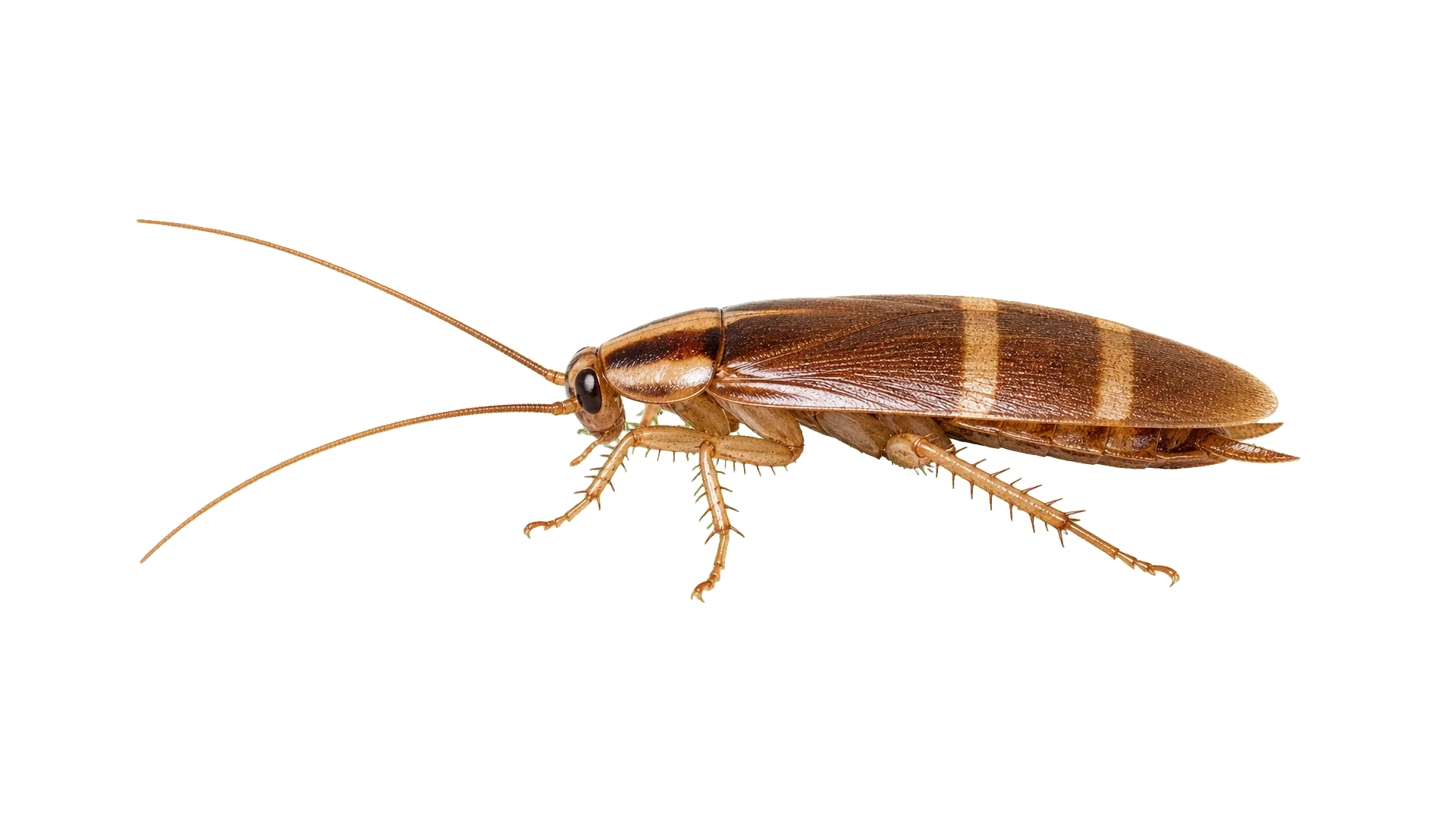
Brown-banded cockroaches are the cockroach that breaks the rules other indoor cockroaches follow. They run 10 to 14 millimeters long, brown overall, with two light yellow-tan horizontal bands across the abdomen that visibly show on the wings of adults and across the body of nymphs. Unlike German cockroaches that crowd into kitchens and bathrooms chasing moisture, brown-banded cockroaches actively prefer warm, dry, elevated spots and spread themselves across bedrooms, living rooms, offices, and any quiet upper void in the house. By the time a homeowner finds one on a nightstand, the population is usually already distributed through three or four rooms.

If you're seeing small brown roaches with two pale bands across the back, in non-kitchen rooms, behind picture frames, inside electronics, or in upper cabinets, you're looking at brown-banded cockroaches, not German. This guide covers how to confirm the species, why their distributed harborage pattern breaks standard cockroach inspections, why used electronics and used furniture are the entry vector almost every time, and what real whole-home treatment looks like.

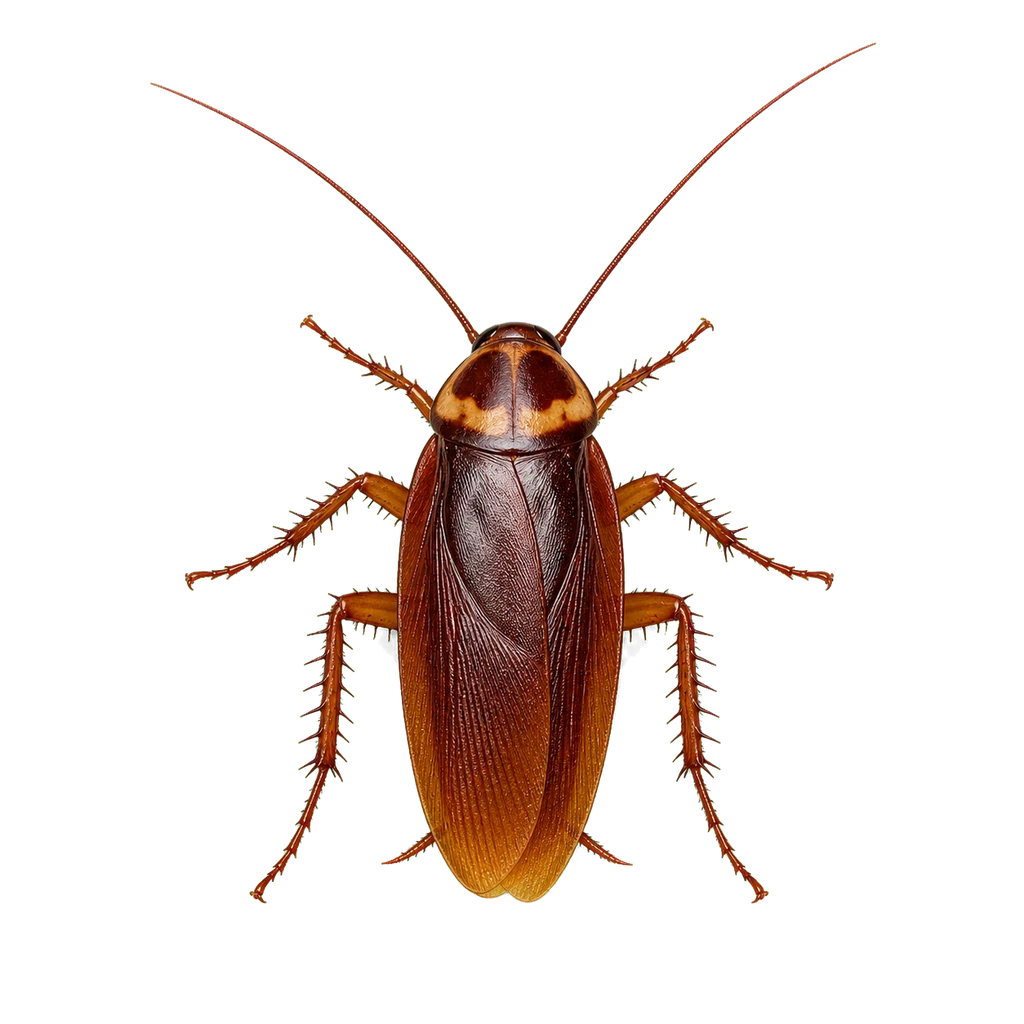
Close-up illustration of a brown-banded cockroach showing brown body and two distinct light yellow-tan horizontal bands across the abdomen

ID Card: Brown-Banded Cockroach

Scientific name
Supella longipalpa
Color
Light brown, tan
Size
1/2 to 5/8 inch
Body shape
Small, flat oval body with two light bands across wings
Antennae
Long, thread-like, equal to body length
Key evidence
Egg cases glued to furniture and ceilings, found in upper cabinets and warm rooms
Also known as
Banded cockroaches, Furniture roaches

Call to get matched with a local pest control pro.

Available 24/7
(888) 495-1510
  • Specialists trained to inspect every room, not just kitchen and bath
  • Whole-home gel bait and IGR placement across distributed harborage
  • Vacuum-removal of egg cases attached to furniture undersides and electronics

Where to Inspect for Brown-Banded Cockroach Harborage

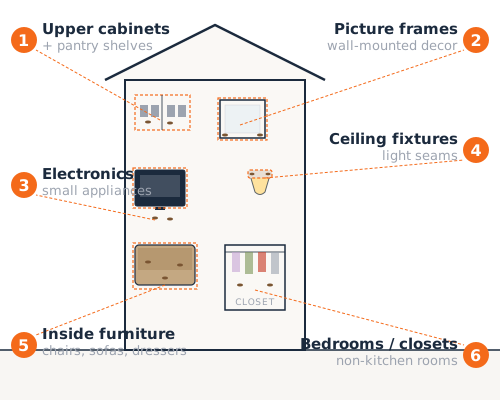
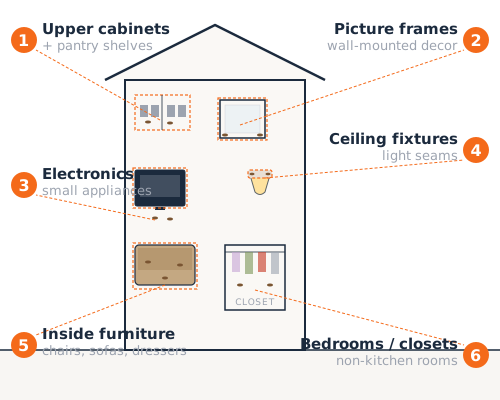
Cross-section illustration showing brown-banded cockroach harborage points throughout a home, including picture frame backings, electronics interiors, upper cabinets, and furniture undersides

Brown-banded cockroaches hide in places most homeowners never check during a roach inspection. Their preferred conditions are warm, dry, and elevated, which puts harborage above eye level, behind hanging objects, and inside electronics rather than under kitchen sinks. Walk these hot zones with a flashlight and look up rather than down, working through every room of the home, not just kitchen and bath:

  • Behind picture frames, wall-hung clocks, and mirrors, Carefully lift each frame at least an inch off the wall and inspect the back side with a flashlight. Egg cases glued to the cardboard backing are the clearest confirmation, no other common roach attaches oothecae this high.
  • Inside televisions, computers, stereos, and gaming consoles, The warm dry interior of electronics is the textbook brown-banded harborage. Look for dark fecal speckling near vents, shed skins inside cases, or live roaches darting out when a device wakes from sleep.
  • Upper kitchen cabinets and pantry shelves, Pull cereal boxes, crackers, and pasta containers off the top shelf and inspect the cabinet seams and ceiling. Brown-banded prefer starches, so pantry tops and cereal storage are heavier harborage zones than the lower cabinets a typical inspection focuses on.
  • Bedroom furniture, under nightstands and behind headboards, Pull the bed and nightstand away from the wall and check dresser drawer interiors, especially the upper drawers. Bedrooms are second-most-common harborage rooms in confirmed brown-banded infestations.
  • Living room sofas, recliners, and upholstered chairs, Tip furniture forward and inspect the underside fabric and frame. Oothecae are commonly glued to the underside of seat platforms where they're protected and warm.
  • Inside curtain rods, behind crown molding, under wallpaper edges, Use a flashlight along the top edge of curtain rods, where wall meets ceiling at crown molding, and along any loose wallpaper seams. These elevated voids are typical late-stage harborage points.

If you find activity, oothecae, or shed skins in two or more rooms or in any electronics, the population is already distributed and the visible count drastically understates the real numbers. Brown-banded cockroaches don't concentrate the way German cockroaches do, so the same number of sightings represents a larger underlying population. Whole-home inspection covering every room is the standard with this species, kitchen-only treatment misses an estimated 70 percent of harborage zones and lets the population rebuild from rooms that were never touched.

Cross-section illustration showing brown-banded cockroach harborage points throughout a home, including picture frame backings, electronics interiors, upper cabinets, and furniture undersides
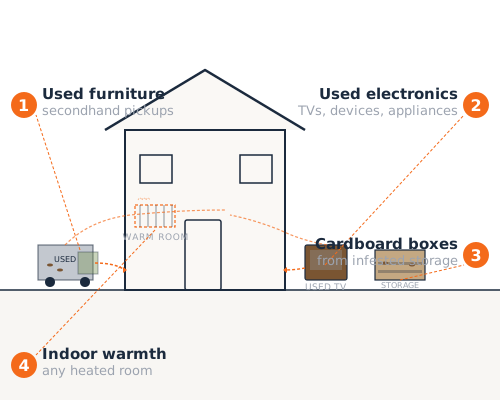
Illustration showing how brown-banded cockroaches enter homes, via used electronics, secondhand furniture, postal packages, and shared cardboard between units

Why Do I Have Brown-Banded Cockroaches?

Finding one is step one. Understanding how brown-banded cockroaches arrived and what's keeping them comfortable is what stops the next wave from settling in. Brown-banded cockroaches don't migrate from outdoors and they don't survive Continental US winters outside a heated structure. They get into homes by hitching a ride, almost always glued onto something the homeowner carried in: a used television, a thrifted dresser, a stack of secondhand books, a postal package that sat in an infested warehouse. Once inside, they find the warm dry corners of the house and start producing the next generation.

What anchors them to your property:

  • Used electronics, used furniture, or used books recently brought into the home, the single most common entry vector, oothecae glued to undersides or inner cases survive transport intact and hatch indoors
  • Indoor temperature consistently held between 75 and 85 degrees Fahrenheit, the exact range that maximizes brown-banded ootheca development and adult survival
  • Low indoor humidity, the kind produced by central heat in winter or air conditioning in summer, the dry conditions other roaches avoid are exactly what brown-banded prefer
  • Older homes or apartment buildings with multi-tenant turnover history, layered introductions over many years build a baseline population that's hard to fully clear
  • Multi-family housing where neighboring units have a history of cockroach issues, oothecae move between units inside shared cardboard, electronics, or laundry

A new brown-banded population starts with one fertilized ootheca arriving on something carried into the house. The egg case stays glued to the underside of a dresser or inside a television housing, 14 to 18 nymphs hatch six to eight weeks later, and the nymphs disperse to find their own warm dry corners. The lifecycle runs about six to twelve weeks from egg to adult. Within four to six months, three or four rooms have hidden harborage and a few daytime sightings finally tip the homeowner off, by which point treating only the room where the first roach was seen leaves the rest of the population untouched.

How Serious Is Your Brown-Banded Cockroach Problem?

Find your scenario below. Brown-banded severity is mostly about distribution across rooms, not the visible count in one spot.

What You're Seeing Severity If Untreated Next Step
One brown-banded cockroach spotted in a bedroom or living room, no other sightings Early A non-kitchen sighting almost always means a hidden ootheca already in the room. Expect harborage to mature and spread to adjacent rooms within 6 to 10 weeks. Confirm the species by the two horizontal abdomen bands. Inspect electronics, picture frames, and furniture in the room. Place glue traps in multiple rooms, not just the sighting room.
Multiple sightings across two or more rooms, oothecae visible under furniture or behind frames Moderate Distributed harborage is confirmed and the population will continue spreading to additional rooms within 1 to 2 months. Ootheca production keeps adding new pockets each generation. Schedule a professional service this week. Whole-home distributed treatment, not kitchen-only, is the only approach that works on this species.
Roaches in three or more rooms, daytime sightings, family member with asthma in the house High Population is well established and daytime activity means harborage is overcrowded. Allergen load is already elevated and triggers respiratory symptoms in sensitive household members. Call a professional this week, request a comprehensive whole-home gel bait and IGR program plus allergen cleanup guidance.
Heavy activity throughout the home, ineffective DIY history, oothecae found in multiple rooms Urgent Mature distributed population with potential pesticide resistance from prior DIY. Each remaining ootheca will release another 14 to 18 nymphs and rebuild the rooms that were just treated. Call today and request a same-week intensive program. Identify the entry source, often a recent used electronics or used furniture purchase, so the next wave doesn't follow.
One brown-banded cockroach spotted in a bedroom or living room, no other sightings
Severity Early
If Untreated A non-kitchen sighting almost always means a hidden ootheca already in the room. Expect harborage to mature and spread to adjacent rooms within 6 to 10 weeks.
Next Step Confirm the species by the two horizontal abdomen bands. Inspect electronics, picture frames, and furniture in the room. Place glue traps in multiple rooms, not just the sighting room.
Multiple sightings across two or more rooms, oothecae visible under furniture or behind frames
Severity Moderate
If Untreated Distributed harborage is confirmed and the population will continue spreading to additional rooms within 1 to 2 months. Ootheca production keeps adding new pockets each generation.
Next Step Schedule a professional service this week. Whole-home distributed treatment, not kitchen-only, is the only approach that works on this species.
Roaches in three or more rooms, daytime sightings, family member with asthma in the house
Severity High
If Untreated Population is well established and daytime activity means harborage is overcrowded. Allergen load is already elevated and triggers respiratory symptoms in sensitive household members.
Next Step Call a professional this week, request a comprehensive whole-home gel bait and IGR program plus allergen cleanup guidance.
Heavy activity throughout the home, ineffective DIY history, oothecae found in multiple rooms
Severity Urgent
If Untreated Mature distributed population with potential pesticide resistance from prior DIY. Each remaining ootheca will release another 14 to 18 nymphs and rebuild the rooms that were just treated.
Next Step Call today and request a same-week intensive program. Identify the entry source, often a recent used electronics or used furniture purchase, so the next wave doesn't follow.

Brown-banded severity escalates by room count rather than visible count. If you're between two rows, treat the higher one as your situation.

How a Brown-Banded Cockroach Population Grows

Brown-banded cockroaches reproduce on roughly the same calendar as German cockroaches, but their oothecae are glued to surfaces (not carried by the female) and the harborage is spread across the home rather than clustered in one zone. That distribution is the entire reason brown-banded populations stay hidden longer and require whole-home treatment to fully collapse.

  1. Egg case (ootheca)

    6 to 8 weeks until hatch

    The female produces a dark reddish-brown ootheca about 5 millimeters long carrying 14 to 18 eggs, then glues it to an elevated surface, the underside of a drawer, the back of a picture frame, the interior wall of a television housing. Once attached, the case is durable enough to ride along when the furniture or electronic is moved between homes, which is exactly how new infestations get introduced.

  2. Nymph

    6 to 12 weeks across 6 to 8 molts

    Newly hatched nymphs lack the wings adults carry, so the two light bands sit directly across the abdomen and become the easiest field ID. Nymphs shed their exoskeleton at each molt, and those shed skins contribute to the indoor allergen load that triggers asthma in sensitive household members. Nymphs disperse from the hatching site to find their own warm dry harborage rather than staying clustered.

  3. Adult

    Adults live 5 to 7 months

    Adults carry the species' signature look, brown body with two light yellow-tan bands across the wings, and adult males have full wings that allow short flights between rooms, which is unusual for indoor cockroaches. Females have shorter wings and don't fly, but their tendency to glue oothecae high (rather than low like German cockroaches) is what builds the distributed harborage pattern.

  4. Female reproductive output

    10 to 15 oothecae over a lifetime

    A single female produces between 140 and 270 offspring across her adult life, releasing one ootheca every three to four weeks once mature. Because each case is glued to a different surface in a different part of the home, one female builds a multi-room harborage map within a single generation.

The lifecycle duration is similar to the German cockroach, but the distributed harborage pattern makes brown-banded populations significantly harder to detect early. By the time daytime sightings appear, the population is usually distributed across three to five rooms with oothecae in places no homeowner inspection would normally check. That's why effective treatment has to cover the whole home, not just the room where the first roach showed up.

When Brown-Banded Cockroaches Are Most Active

Brown-banded cockroaches live entirely indoors in the continental United States and stay active year-round inside heated, dry homes. The seasons don't change population dynamics much, but they do shift when new infestations get introduced and when hidden harborage finally becomes visible.

  • Spring

    Indoor populations stay stable, but spring cleaning is when most homeowners first discover brown-banded cockroaches. Moving furniture, pulling electronics off shelves, and rotating stored items exposes harborage that's been growing quietly through winter. Spring is also high season for thrift purchases and yard sale finds, both of which can introduce new oothecae glued to undersides.

  • Summer

    Air-conditioned homes hold indoor temperatures in the 75 to 85 degree window brown-banded cockroaches prefer, while dropping humidity to levels other indoor roaches avoid. The result is peak comfort conditions and accelerated nymph development, summer is when an underdetected population grows fastest. Used appliance sales also peak in summer, adding introduction pressure.

  • Fall

    Indoor activity continues at full pace. Back-to-school season is a major introduction window: dorm move-ins, apartment turnovers, secondhand textbooks, and packed cardboard boxes all carry oothecae between locations. Fall is when many college-town homes see their first brown-banded sightings of the year.

  • Winter

    Heated dry homes are ideal habitat year-round, and indoor populations stay fully active through every winter month. Unlike Oriental cockroaches which depend on outdoor moisture, brown-banded thrive in the dry low-humidity environment central heating produces. Holiday gifts of electronics and appliances arriving in cardboard packaging is a common winter introduction vector.

Why Brown-Banded Cockroaches Aren't a DIY Job

Brown-banded cockroaches are the cockroach species most likely to be misidentified, mistreated, and underestimated. The two horizontal abdomen bands look superficially similar to the pronotum stripes on a German cockroach if you don't compare side by side, and most homeowners apply German cockroach treatment to a brown-banded problem without realizing the harborage map is completely different. German cockroaches concentrate in kitchen and bath. Brown-banded distribute throughout the home, with an estimated 70 percent of harborage in rooms other than the kitchen.

Contact sprays applied along kitchen baseboards reach the visible roaches in that one room and do almost nothing to the oothecae glued underneath the dresser in the bedroom, behind the framed photograph in the hallway, or inside the television housing in the living room. Those egg cases hatch on schedule six to eight weeks later, dump another 14 to 18 nymphs into each of those rooms, and the homeowner watches the problem return after thinking the kitchen treatment worked.

A pro recognizes the species first, then maps harborage across every room before placing any product. Gel bait goes into actual harborage seams, on the elevated surfaces brown-banded forage across, not down at floor level where the population isn't moving. IGR integrates with the bait so any oothecae that hatch post-treatment produce sterile adults. A HEPA-vacuum pass removes attached oothecae directly. Follow-up visits over 8 to 12 weeks confirm collapse across every room, including the ones that looked clean during initial inspection.

The medical concern matters too. Brown-banded cockroaches carry the same allergen and disease vector profile as German cockroaches, fecal particulates and shed exoskeletons are documented asthma triggers, and the bodies carry Salmonella and E. coli into food storage. Households with children, asthmatics, or anyone immunocompromised should treat brown-banded as a health intervention, not just a nuisance. Initial professional treatment runs $250 to $600, with $60 to $150 monthly recurring once collapse is confirmed.

What Changes When a Pro Shows Up

Brown-banded cockroach treatment is whole-home work, not kitchen work. A specialist who recognizes the species treats the entire structure as harborage and confirms every room is clear before closing out the job. Here's what changes:

Pest control technicians after completing a brown-banded cockroach treatment service
  • Local Pest Control
  • 24/7 Availability
  • Quality Workmanship
  • Eco‑Friendly Options
  • Trusted by Homeowners
  • They Inspect Every Room, Not Just the Kitchen

    Inspection covers bedrooms, living rooms, offices, closets, and behind every electronic device. The technician checks picture frames, curtain rods, and furniture undersides for glued oothecae. The kitchen is one stop on a much longer route, not the whole job.

  • They Place Gel Bait in Real Harborage

    Gel bait gets placed inside upper cabinet seams, behind picture frame backings, along electronics edges, and under furniture lips. Bait at floor level along baseboards (where many DIY products end up) doesn't intercept brown-banded foraging traffic because the population is moving across elevated surfaces, not floor edges.

  • They Vacuum-Remove the Egg Cases

    Brown-banded oothecae are glued to surfaces and survive most surface treatments. A HEPA-vacuum pass through identified harborage removes attached egg cases physically, dropping the next generation count by hundreds of nymphs per home in a single visit.

  • They Integrate an IGR With the Bait

    Insect growth regulator interrupts the egg-to-adult cycle for any oothecae that hatch after treatment. Surviving nymphs reach maturity without functional reproductive systems, so the population stops rebuilding even from harborage the inspection missed.

  • Local Pest Control
  • 24/7 Availability
  • Quality Workmanship
  • Eco‑Friendly Options
  • Trusted by Homeowners
NoToPests home

One call connects you with a local specialist who knows brown-banded cockroaches and your area.

Be Ready When You Call

Pest control technician arriving for brown-banded cockroach service
Junho L.
Daisuke P.
Kirk Q.
Marion K.

Trusted by homeowners nationwide

Call for Pest Control Help (888) 495-1510

Can You Handle This or Do You Need Help?

Brown-banded cockroaches break the kitchen-focused inspection pattern that works on other roaches. That single fact is why DIY almost always misses the majority of the population, no matter how much product gets applied to the kitchen.

What DIY Can Do

DIY work is best aimed at confirmation and prevention, not whole-home elimination. Useful steps with honest limits:

  • Confirm the species by the two horizontal abdomen bands, this changes the inspection plan from kitchen-focused to whole-home
  • Inspect every room of the home, not just kitchen and bath, checking electronics, picture frames, and furniture undersides specifically
  • Vacuum-remove any visible oothecae from furniture undersides or picture frame backings, dispose of the vacuum bag outdoors immediately
  • Quarantine and inspect any used electronics, furniture, or books before bringing them into the home, the entry vector for almost every brown-banded infestation
  • What DIY cannot do: cover the elevated, hidden harborage across multiple rooms with the right product, integrate IGR, or close out a distributed population reliably.

What a Pro Does Differently

Professional brown-banded work is built around distributed elevated harborage and the entry-source question. Here's what changes when you call:

  • Whole-home inspection covering every room, with focus on electronics, picture frames, furniture undersides, and upper cabinets
  • Gel bait placed inside actual harborage seams across rooms rather than along baseboards in the kitchen alone
  • IGR integration so oothecae that hatch after the visit produce sterile adults, breaking the rebuild cycle
  • HEPA-vacuum removal of attached oothecae from identified harborage points, immediate population reduction in one pass
  • Entry-source identification, often a recent used item purchase, so the introduction route is closed before the next wave arrives.

Suspect Brown-Banded Cockroaches? Don't Wait.

Brown-banded cockroaches distribute across the whole home in warm dry harborage that kitchen-focused treatment misses. Connect with a local specialist who inspects every room, places bait where the population actually lives, and removes oothecae directly.

Available 24/7
(888) 495-1510

What Homeowners Say After Getting Help

Real results from people who had the same problem and solved it.

Rashad E.
Rashad E.
Portland, OR

"No pressure, just options."

I appreciated being given eco-friendly options without being pushed. The technician explained tradeoffs honestly and let me decide based on my priorities. They were transparent about what each approach involves. The no-pressure approach and honest information helped me make a confident decision.

Rashad E.
Rashad E.
Portland, OR

"No pressure, just options."

I appreciated being given eco-friendly options without being pushed. The technician explained tradeoffs honestly and let me decide based on my priorities. They were transparent about what each approach involves. The no-pressure approach and honest information helped me make a confident decision.

Yu E.
Yu E.
Durham, NC

"The inspection caught what we missed."

I didn't realize how much damage raccoons can cause once they get inside. The wildlife specialist explained what areas they inspect first and why raccoon issues are handled more carefully than regular pests. They showed me the damage and explained removal and exclusion strategies. Understanding the potential for damage made me glad I called professionals.

Ren P.
Ren P.
Dayton, OH

"The problem finally stayed gone."

Ants kept returning no matter what we did. The tech treated the trail areas and explained how to handle food storage and moisture so the ants don't keep coming back. It's been months and we haven't seen them again. I appreciated that it wasn't just a one-and-done spray.

Kayla Q.
Kayla Q.
Pittsburgh, PA

"Clear expectations and a real plan."

I was overwhelmed and didn't know what was realistic to fix quickly. The inspector explained what results to expect and how long it typically takes depending on the ant species. They treated the right places and gave simple prevention tips. Everything felt structured and easy to follow.

Malachi U.
Malachi U.
Knoxville, TN

"They found the entry points fast."

Ants were showing up in the kitchen and we couldn't figure out where they were coming from. The tech tracked the activity and pointed out two entry points we never would've noticed. After treating and sealing those areas, the ants disappeared. It was quick and surprisingly thorough.

Arturo B.
Arturo B.
Yonkers, NY

"No pressure, just helpful info."

I mainly wanted to understand what was happening before committing to anything. The inspector walked me through the likely cause and the differences between treatment approaches. They answered questions without rushing me. The plan we chose worked and the ants were gone within days.

Octavio Z.
Octavio Z.
Duluth, MN

"The tech helped me stop wasting time."

I kept trying different products and nothing was sticking. The tech explained why some solutions don't work for certain ant problems and focused the treatment where it would actually matter. They also gave prevention tips that were easy to implement. The difference was obvious within the first week.

Chauncey A.
Chauncey A.
Duluth, MN

"We finally understood what to do next."

We felt stuck because nothing we tried lasted. The tech explained how to find the source of the problem, treated both indoor and outdoor areas, and helped us build a prevention routine. It wasn't complicated. Just the right steps in the right order. We've had a huge improvement since.

Vihaan V.
Vihaan V.
Madison, WI

"They fixed what was actually causing it."

Ants kept showing up in the same spot. The pro explained that the visible ants weren't the real issue and focused the treatment on where they were coming from. They identified the entry path and treated it properly. The problem stopped and hasn't returned.

Allison A.
Allison A.
Des Moines, IA

"It felt like a real inspection, not a quick spray."

The tech spent time figuring out where the ants were entering instead of just spraying around. They walked me through the likely reasons and what to watch for over time. After treatment, ant activity dropped fast and stayed low. The detailed approach gave me confidence.

Stephen N.
Stephen N.
Sacramento, CA

"Small changes made a big difference."

We didn't realize how much our routine was attracting ants. The inspector explained simple prevention steps and treated the areas where activity was highest. Once those changes were in place, we stopped seeing ants inside. It was a practical approach that actually worked.

Daquan V.
Daquan V.
Tampa, FL

"The explanation alone was worth it."

I'd been doing random treatments without understanding what I was dealing with. The tech explained how ants behave and why certain approaches work better. They treated strategically instead of just spraying. It made the whole thing feel manageable.

Deepak V.
Deepak V.
San Antonio, TX

"We stopped chasing the problem and solved it."

We kept wiping down counters and the ants would be back the next day. The pro identified the entry areas and explained the treatment plan clearly. Once they treated and targeted the colony, the ants disappeared quickly. It felt like we finally got ahead of it.

Mireya Z.
Mireya Z.
Riverside, CA

"They didn't oversell. Just solved it."

The tech explained what treatment was necessary and what wasn't. They focused on the entry points and corrected the conditions that were attracting ants. The work felt honest and effective. I liked having clear expectations and seeing results quickly.

Wei D.
Wei D.
Lexington, KY

"It wasn't just 'spray and go.'"

I appreciated the step-by-step explanation and the focus on prevention. The inspector treated the areas where ants were getting in and helped me understand what to change at home. The ants stopped showing up and it's been consistent. The approach felt thoughtful and sustainable.

Shu W.
Shu W.
Orlando, FL

"It finally made sense why they kept coming back."

I had ants showing up every few months and never understood why. The tech explained how outdoor nests and weather changes affect indoor activity. They treated the perimeter and entry points instead of just the inside. Since then, we haven't had recurring issues.

Teresa I.
Teresa I.
Mesa, AZ

"Targeted instead of overdone."

I was worried about over-treating the house. The pro focused on specific problem areas and explained why blanket spraying wasn't necessary. The ants stopped appearing, and we didn't feel like chemicals were used unnecessarily. That balance mattered to us.

Latonya X.
Latonya X.
Mesa, AZ

"Clear answers without jargon."

The tech explained everything in plain language and answered questions without rushing. They identified the type of ant we had and adjusted the treatment accordingly. Knowing why the approach worked gave me confidence it would last.

Humberto T.
Humberto T.
Eugene, OR

"They focused on prevention, not just treatment."

I liked that the tech talked through how to keep ants from returning after the treatment. They addressed moisture issues and entry points around the home. The treatment worked, and the prevention tips helped us stay ahead of future problems.

Jerrell N.
Jerrell N.
Arlington, VA

"No guessing, just a plan."

I was tired of guessing what would work. The inspector explained the cause of the issue and outlined a clear plan of action. After treatment, the ants disappeared and we haven't had to revisit the problem. It felt efficient and well thought out.

Marion K.
Marion K.
Boulder, CO

"They explained what to expect upfront."

The tech set expectations about timing and results before starting. They explained that some activity might happen initially and why. Everything played out exactly as described, and the ants were gone shortly after. That transparency made a big difference.

Bridget E.
Bridget E.
Sacramento, CA

"Helpful without being overwhelming."

I didn't realize there were different types of ants or that it mattered. The inspector walked me through what they were seeing and explained how ant behavior affects treatment. It made it easier to ask the right questions and understand the solution.

Junho L.
Junho L.
Naperville, IL

"Saved me a lot of guessing."

I was close to trying random sprays for the ants. Talking with the tech helped me understand what was realistic to address and what usually doesn't work. The targeted treatment solved the issue quickly and saved time and frustration.

Willis Y.
Willis Y.
Baton Rouge, LA

"It felt tailored to our home."

The tech didn't just apply a standard treatment. He looked at where we were seeing activity and adjusted the approach to our layout and yard. The ants stopped showing up and we understood how to keep it that way.

Thelma S.
Thelma S.
Madison, WI

"Straightforward and effective."

I appreciated how straightforward everything was. The pro explained the issue, treated the problem areas, and gave us a few simple steps to prevent future issues. The ants were gone and it didn't feel complicated.

Angelina B.
Angelina B.
Austin, TX

"They explained how the weather played a role."

I didn't realize seasonal changes could affect ant activity so much. The tech explained how heat and rain push ants indoors and what to do about it. They treated the problem areas and gave tips to prevent future issues. The explanation helped everything click.

Kirk Q.
Kirk Q.
Denver, CO

"It wasn't as complicated as I expected."

I assumed pest control would be disruptive or complicated. The technician explained the steps clearly and focused on targeted treatment. The ants stopped appearing quickly and the process was smoother than expected.

Cody L.
Cody L.
Denver, CO

"They helped me understand the bigger picture."

Instead of just treating the ants I saw, the tech explained what was happening around the house that made it attractive to pests. Once those factors were addressed, the problem resolved quickly. It felt educational as well as effective.

Marquis K.
Marquis K.
San Mateo, CA

"Clear communication from start to finish."

I appreciated how clearly everything was explained before treatment began. The inspector walked through the process and answered all my questions. The ants were gone shortly after and we felt confident about prevention going forward.

Virginia T.
Virginia T.
San Mateo, CA

"They addressed what we were missing."

We kept focusing on cleaning, but the tech showed us where ants were actually entering. Once those points were treated and sealed, the issue resolved. It was reassuring to finally understand the root cause.

June J.
June J.
Omaha, NE

"A methodical approach that worked."

The pro explained how they identify ant trails and colonies before treating. They took a methodical approach instead of rushing through. The ants stopped appearing and the fix has held up well.

Caitlin K.
Caitlin K.
Phoenix, AZ

"They understood desert pest behavior."

Living in Phoenix, pests behave differently than other places. The tech explained how heat drives ants indoors and what treatments work best here. The solution was effective and tailored to our environment.

Olive S.
Olive S.
Sacramento, CA

"They took the time to do it right."

I appreciated that the tech didn't rush. He inspected the problem areas carefully and explained what they were seeing. The treatment worked quickly and the ants haven't returned.

Arianna D.
Arianna D.
Baton Rouge, LA

"They understood the local pest issues."

The tech explained how the humidity here contributes to ant problems and why certain treatments work better in this climate. They focused on outdoor entry points and moisture-prone areas. The ants cleared up quickly and haven't come back.

Kiyana N.
Kiyana N.
New Orleans, LA

"Finally something that lasted."

We'd dealt with recurring ants for years. The pro explained why flooding and moisture play such a big role here and adjusted the treatment accordingly. It's been months without seeing ants, which is a big win for us.

Brett R.
Brett R.
Phoenix, AZ

"They knew exactly what works in Arizona."

The tech explained how desert conditions affect ant behavior and which treatments are most effective here. They targeted the right areas and avoided unnecessary spraying. The ants disappeared quickly.

Albert O.
Albert O.
Baltimore, MD

"Clear, calm, and professional."

I appreciated how calmly everything was explained. The inspector identified the ant problem, explained the treatment, and answered my questions without rushing. The solution worked and gave me peace of mind.

Rohit Y.
Rohit Y.
Orlando, FL

"They handled it efficiently."

The tech inspected the problem areas, explained the plan, and got to work quickly. The ants were gone within days and the process felt efficient without being rushed.

Carolyn H.
Carolyn H.
Omaha, NE

"Simple explanations, solid results."

I liked how simply everything was explained. The pro didn't overcomplicate things and focused on what mattered. The ants stopped appearing and we haven't needed follow-up treatments.

Edith Z.
Edith Z.
Newark, NJ

"They showed me what to watch for."

Beyond treating the ants, the tech explained what signs to watch for if activity starts again. That knowledge made me feel more in control. So far, everything has stayed clear.

Common Questions About Brown-Banded Cockroaches

Direct answers to what homeowners ask most about identification, distributed harborage, and treatment.

  • How do brown-banded cockroaches differ from German cockroaches? Toggle answer for: How do brown-banded cockroaches differ from German cockroaches?

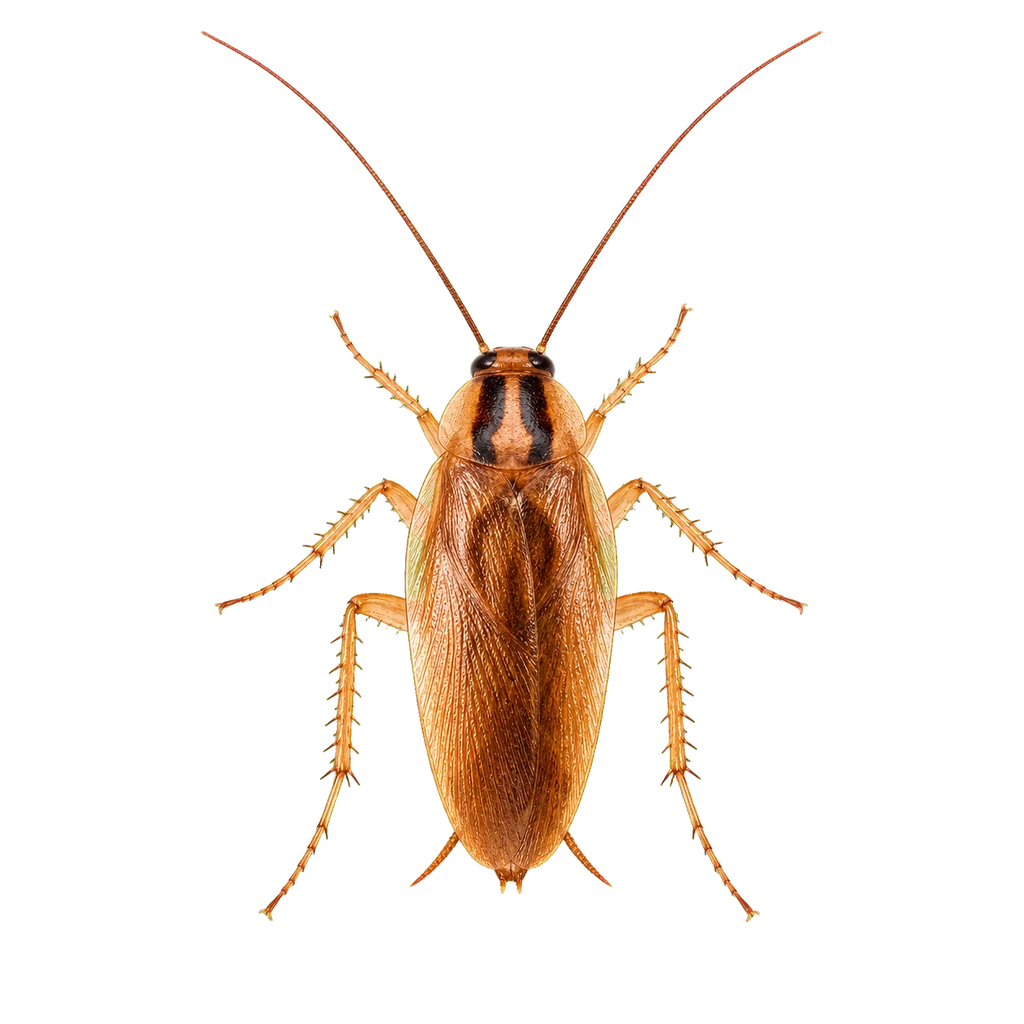
    Brown-banded cockroaches are similar in size to German cockroaches (about 1/2 inch) but are distinguished by two lighter, tan-colored bands running across their wings and abdomen, visible in both nymphs and adults, while German cockroaches have two dark parallel stripes on the pronotum (the shield behind the head). The most important behavioral difference is habitat preference: German cockroaches cluster near kitchens and bathrooms where moisture and food concentrate, while brown-banded cockroaches prefer warm, dry locations throughout the home, behind picture frames, inside electronics, in closet shelves, and on upper walls and ceilings, makingthem harder to target with kitchen-focused treatments.

  • Why are brown-banded cockroaches found in bedrooms and living rooms? Toggle answer for: Why are brown-banded cockroaches found in bedrooms and living rooms?

    Unlike most cockroach species that stay near kitchens and bathrooms, brown-banded cockroaches have lower moisture requirements and actively seek out warm, elevated, dry locations throughout a building. They commonly infest bedroom furniture, closets, behind wall-mounted TVs and picture frames, inside electronic equipment, on upper kitchen cabinet shelves, and even on ceilings. Their egg cases (oothecae) are frequently glued to furniture undersides, dresser drawers, and behind wall hangings. This dispersed distribution throughout a home means treatment must extend well beyond the kitchen and bathroom areas that are typically the focus of cockroach management.

  • Why do roaches keep coming back? Toggle answer for: Why do roaches keep coming back?

    Cockroaches are resilient survivors, asingle female German cockroach can produce over 300 offspring in her lifetime. They hide in cracks, wall voids, and appliance motors during the day and forage at night. If sanitation isn't addressed alongside treatment (grease buildup, crumbs behind appliances, leaky pipes), the population rebounds quickly because the food and moisture sources remain.

  • Why do cockroaches keep coming back even after I clean? Toggle answer for: Why do cockroaches keep coming back even after I clean?

    Cockroaches are resilient survivors that can live on almost any organic material, includinggrease residue, glue, soap, and even book bindings, sothorough visible cleaning alone rarely eliminates their food sources. They are also nocturnal and spend 75% of their time hidden in cracks, wall voids, and pipe chases where cleaning products do not reach. Cockroaches reproduce rapidly, with some species producing up to 400 offspring per female in a lifetime, meaning even a few survivors can rebuild a population within weeks.

  • How quickly can a provider get to my home? Toggle answer for: How quickly can a provider get to my home?

    Most providers in our network can schedule an inspection within 24-48 hours. For urgent situations, likeactive structural damage or large colonies, same-week emergency service is often available. Response times depend on your location and the provider's current schedule.

  • What happens during the first visit? Toggle answer for: What happens during the first visit?

    Your provider inspects the property to identify the pest, locate nesting or entry points, and assess the scope of the problem. You get a clear explanation of what they found, what they recommend, and a written scope before any work begins.

  • Is treatment safe for kids and pets? Toggle answer for: Is treatment safe for kids and pets?

    Modern pest control products are designed to break down quickly after application and pose minimal risk to people and pets when applied correctly. Most providers ask you to keep kids and pets out of treated areas for 1 to 2 hours while the product dries, after which the area is generally safe again. Always confirm specific re-entry times with your provider, and let them know about pet birds, fish, or reptiles, since some treatments require extra precautions for those species.

Pest Control Pros serving the city of the state of your city and nearby areas

Local providers experienced with whole-home brown-banded inspection are ready to walk every room, treat hidden harborage, and follow up, no obligation.

Available 24/7
(888) 495-1510