Local pest control help is one call away.

Snakes Around the Home

Need help with a snake situation? (888) 495-1510

Roughly 46 of the 50 US native snake groups are non-venomous, beneficial, and rarely a real threat. Only 4 groups produce medically significant bites: rattlesnakes, copperheads, cottonmouths (water moccasins), and coral snakes. Effective management is identification first, habitat modification second, exclusion third. Lethal control is almost always the wrong answer and illegal in many states.

Why Most Snake Encounters Resolve Without Action

The vast majority of snakes in residential settings (garter, rat, king, racer, ring-necked snakes) are non-venomous, eat rodents and insects, and are protected under state wildlife laws. A single snake in the yard usually passes through within hours. Persistent presence indicates rodent or insect prey availability that, once addressed, ends the attraction.

Venomous species (copperhead, cottonmouth, rattlesnake, coral) live in some regions and require respect. Even venomous snakes rarely attack unprovoked. Most bites happen when snakes are stepped on, picked up, or cornered. The right response is distance, professional removal if needed, and addressing the habitat that supports the local population.

Three snake encounters and the right response:

  • Single non-venomous sighting: maintain distance, let it leave.
  • Persistent yard presence: cut habitat plus address rodent prey.
  • Suspected venomous or indoor snake: call wildlife professional.

Snakes by the Numbers

The United States hosts roughly 50 native snake species, with only 4 groups producing medically significant venomous bites: rattlesnakes, copperheads, cottonmouths, and coral snakes. Roughly 7,000 to 8,000 snakebites are reported annually in the United States, with about 5 fatalities per year (typically associated with delayed treatment or untreated allergic reactions). Snakes consume large numbers of rodents, providing substantial pest control benefit in agricultural and residential settings.

  • 12-72 in Adult body length
  • 4 groups in US Venomous species
  • ~5 in US Annual fatalities

Three Quick Tells for Venomous vs Non-Venomous

Three checks separate most venomous from non-venomous snakes in the United States. Coral snakes are the exception to several of these rules and require regional awareness in southern states.

Head shape icon

Head shape

Pit vipers (copperheads, cottonmouths, rattlesnakes) typically have triangular or arrow-shaped heads distinctly wider than their necks. Non-venomous species (rat snakes, king snakes, garter snakes) typically have narrow rounded heads similar in width to their necks. Coral snakes are the exception with rounded heads despite being venomous.

Pupil shape icon

Pupil shape

Pit vipers have vertical slit-shaped pupils similar to cats. Non-venomous species typically have round pupils. Coral snakes have round pupils despite being venomous. Pupil shape requires close inspection at safe distance and is one of multiple ID features rather than a single deciding factor.

Color pattern icon

Color pattern (regionally specific)

Many venomous species have distinctive color patterns: copperhead's bowtie crossbands, cottonmouth's dark olive or black coloration, rattlesnake's diamond patterns, coral snake's red-yellow-black banding. Regional field guides for your specific area provide reliable visual ID for the venomous species you might encounter locally.

Signs You Have a Snake Issue

Snake presence is usually obvious from direct sightings, but several other signs indicate snake activity even without direct encounters.

How Snake Issues Develop

Habitat suitability Yard features (rock walls, woodpiles, dense ground cover) provide shelter; rodent activity attracts snakes as prey
Initial encounters Single snake sightings as resident species use the property habitat
Persistent presence Multiple snake encounters indicate established residency or breeding habitat on the property

How Snakes Use Residential Properties

Snakes occupy residential yards because the habitat features (cover, prey, water) match their basic requirements. Rock walls, woodpiles, dense landscaping, and tall grass provide shelter from predators and temperature regulation. Rodent populations (mice, rats, voles) provide prey for many species. Bird feeders that spill seed attract rodents and indirectly attract snake species that hunt them. Garden ponds and similar water features support some snake species that feed on amphibians and small fish.

Most yard snake encounters are non-venomous species providing pest control benefit by hunting rodents and insects. Garter snakes are particularly common across most of the United States and are functionally beneficial. Rat snakes and king snakes hunt rodents directly and even consume venomous species in some regions. The presence of these beneficial species often indicates that the yard ecosystem is functioning. Removing them may not improve rodent control and can disrupt local wildlife balance.

Effective snake management focuses on habitat modification rather than killing or removing snakes. Trim tall grass, store firewood off the ground and away from the foundation, seal gaps in foundations and outbuildings, address rodent populations that attract predatory snakes, and remove water sources where they are not needed. Most properties see reduced snake encounters within months of habitat changes. For situations involving suspected venomous species, snakes inside structures, or persistent issues despite habitat changes, professional wildlife services provide safe removal and assessment.

Snake Anatomy at a Glance

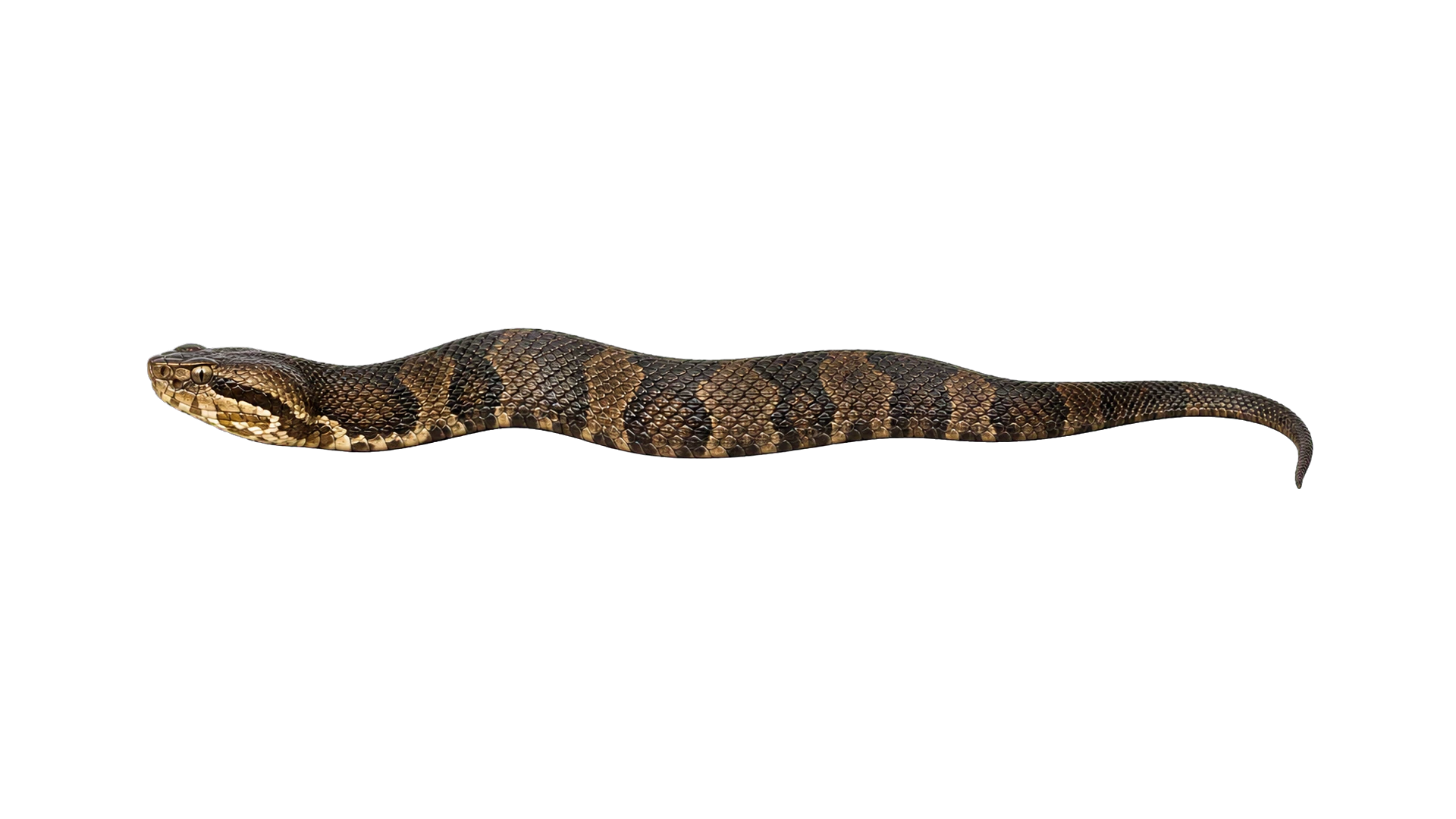
Six features that drive snake identification and behavior, with a generic representative pictured. Some features (head shape, eye shape, pit organs) help distinguish venomous from non-venomous species at safe distances.

1 2 3 4 5 6
  1. Head shape

    The fastest visible feature for venomous ID. Pit vipers (copperhead, cottonmouth, rattlesnake) have triangular heads wider than the neck. Non-venomous species show narrow rounded heads.

  2. Eyes and pit organs

    Pit vipers have vertical slit pupils and heat-sensing pits between eye and nostril (the group's name). Non-venomous species have round pupils and no pits. Coral snakes also have round pupils.

  3. Forked tongue

    All snakes have forked tongues for chemical sensing. The tongue carries air molecules to the Jacobson's organ on the mouth roof to track prey and detect predators. Flicking is investigation, not aggression.

  4. Scaled body

    Overlapping scales protect against abrasion and water loss. Keeled scales (raised central ridges) suggest some non-venomous species; smooth scales suggest others. Belly scales are distinctly larger than dorsal scales.

  5. Body curves and movement

    Lateral undulation (S-curves) handles most surfaces. Other modes include rectilinear crawling (heavy snakes), sidewinding (arid terrain), and concertina (tight spaces). Movement shape is an ID feature.

  6. Tapered tail

    Most tails taper smoothly to a point. Rattlesnakes have a segmented rattle at the tip producing the warning sound. Rat snakes mimic rattling by vibrating tails in dry leaves but lack the rattle.

Which Snake Encounter Are You Having?

Match the situation below to the appropriate response. Most yard snake encounters resolve without intervention; specific situations warrant professional help.

Which Snake Encounter Are You Having?

What You're Seeing

  • A single snake visible in the yard, garden, or near landscape features
  • Snake appears non-venomous (rounded head, similar to neck width, no rattle, no triangular pattern)
  • Snake is moving through the area or resting in shelter

What's Likely Happening

Most yard snakes are non-venomous species (garter snakes, rat snakes, ring-necked snakes, racer snakes) that consume rodents and insects. They typically pass through yards or use them temporarily for prey hunting. Single sightings rarely indicate persistent residency.

What To Do Now

  • Maintain a safe distance (5 to 10 feet); the snake will typically leave on its own within hours.
  • Avoid attempts to handle, capture, or kill the snake; most are harmless and many are protected by state wildlife laws.
  • If the snake remains in an unwanted location, gentle disturbance (sweeping motion with a long broom or hose spray from a distance) will encourage it to move on.
  • Schedule habitat assessment if multiple sightings indicate persistent presence; reduce shelter and prey availability.

What You're Seeing

  • A snake found in basement, garage, crawlspace, or other indoor space
  • Snake may be active or resting in a sheltered location
  • Possible signs of how the snake entered (foundation gaps, garage door bottom seal damage)

What's Likely Happening

Snakes occasionally enter structures through foundation gaps, garage door seal damage, basement window wells, or similar openings, often when pursuing rodent prey. Removal is needed because snakes do not typically thrive indoors and the situation creates risk for both the snake and homeowners.

What To Do Now

  • Confine the snake to a single room or area by closing interior doors; keep pets and children out of the area.
  • Contact wildlife services for safe removal; many local animal control offices or pest control companies handle snake removal.
  • After removal, inspect for entry points (foundation cracks, gaps around utility penetrations, garage door seal damage) and seal them.
  • Address underlying rodent populations that may be attracting predatory snakes to the building.

What You're Seeing

  • Snake with triangular or arrow-shaped head distinctly wider than neck
  • Visible rattle on tail or audible rattling sound
  • Color patterns matching local venomous species (copperhead, cottonmouth, rattlesnake, coral snake)

What's Likely Happening

Venomous species are present in some regions of the United States and warrant careful response. Even venomous snakes rarely attack unprovoked, but defensive bites can occur when snakes are stepped on, cornered, or threatened. Identification at safe distance is essential before deciding on removal approach.

What To Do Now

  • Maintain at least 6 feet of distance; do not attempt to handle, capture, or kill the snake.
  • Take a photo from a safe distance for species ID assistance from wildlife services or extension agencies.
  • Contact wildlife services or a pest control company experienced in venomous snake removal; emergency animal control in your area handles these situations.
  • After removal, address habitat features (woodpiles, rock walls, dense cover) that may be supporting venomous species presence.

What You're Seeing

  • Translucent shed snake skin in storage area, shed, garden, or yard
  • Slither marks in dust, soil, or sand
  • Possible droppings (dark with white urate caps) in covered areas

What's Likely Happening

Evidence indicates snake activity in the area without immediate sighting. Shed skin shows the size and species of the snake but does not confirm current presence; snakes often shed and leave the area. Multiple shed skins or recurring evidence indicates established residency or recurring use of the location.

What To Do Now

  • Document the evidence (photos with size reference) for species ID help if needed.
  • Inspect the area for active snake presence; look for the snake itself or signs of recent activity.
  • Reduce shelter features in the area: clear stored materials off the ground, trim vegetation, store woodpiles away from buildings.
  • Address any rodent activity that may be attracting predatory snake species.

How Urgent Is This Really?

Snake urgency hinges on species and location. A garter snake in the garden is different from a copperhead near the back porch, and a snake inside the house is different from one outside. The timeline below covers both clocks: identification and risk.

  1. Single sighting in the yard
    Identify

    A snake in the yard, garden, or under landscape rocks. Most US species are non-venomous and beneficial: they eat rodents, slugs, and insects. Identification matters more than removal because snakes are protected by state law in many jurisdictions.

    • Photograph from at least 10 feet away and identify species using a regional field guide
    • Most yard snakes leave on their own within 24 to 48 hours. Observe before any action
    • Clear yard debris that creates harborage: woodpiles, brush piles, tall grass near the foundation
  2. Recurring sightings
    Act soon

    Multiple sightings on the property over weeks, or evidence of denning (shed skins, multiple species, tunnels under structures). A prey source is supporting the population, typically rodents, frogs, or insects living somewhere near the home.

    • Identify the prey source: rodent activity, garden pests, or amphibians near water features
    • Eliminate harborage: seal foundation gaps, remove brush piles, elevate woodpiles off the ground
    • Treat the prey base. Snakes leave on their own when food disappears within a few weeks
  3. Venomous species near home
    Urgent

    A copperhead, rattlesnake, cottonmouth, or coral snake spotted near the porch, deck, or play area. Even a single sighting changes the risk calculation with kids and pets on the property. Professional removal is almost always the right call rather than DIY.

    • Keep kids, pets, and household members at least 20 feet from the snake at all times
    • Contact local wildlife removal or animal control. Do not attempt DIY for any venomous species
    • Note the exact location for the removal pro. Snakes return to known shelter sites repeatedly
  4. Indoor sighting or venomous bite
    Critical

    A snake found inside the home (basement, garage, crawlspace, living space), or a confirmed venomous bite to any household member or pet. Indoor sightings indicate a structural entry point. Bites are emergencies regardless of species; identification matters for treatment.

    • For any venomous bite: call 911 or Poison Control (1-800-222-1222) immediately, do not capture
    • For indoor sightings: isolate the room, close doors, and call professional wildlife removal
    • After removal, get a structural inspection to identify and seal the entry points found

Most snakes are following prey, not pursuing people. The fastest way to lose a snake problem is to lose the rodent or insect problem feeding it. Treat the prey base first, the snakes follow.

Pest Control Pros serving the city of the state of your city and nearby areas

Local wildlife pros handle snake identification, safe removal of snakes inside structures or in vulnerable areas, and habitat assessment to reduce future encounters.

Available 24/7
(888) 495-1510

What Attracts Snakes to Properties

Snakes do not pick yards at random. They follow signals: a sun-warmed rock wall for thermoregulation, a woodpile that hides a rodent population, tall grass within 10 feet of the foundation that bridges cover from yard to house. Snakes are ambush hunters, so any property that concentrates prey and shelter side by side becomes a persistent host while neighbors see nothing.

Different snake species chase different rewards, which is why ID matters. Garter snakes hunt earthworms, slugs, and amphibians in garden beds and near garden ponds. King snakes prey on other snakes, including venomous species, and patrol mulched flower beds. Copperheads ambush small mammals near rock walls and woodpiles in the eastern US. Rattlesnakes use brush piles and rodent burrows across the southern and western states. Water moccasins (cottonmouths) sit at pond and creek edges in the Southeast. Knowing the species tells you whether the response is welcome the king snake or call a permitted removal pro.

Most affected yards have two or three of these conditions running at once, and habitat trimming beats trying to remove snakes. Start with the highest-leverage barrier: mow tall grass to under 4 inches within 10 feet of the foundation, pull mulch back 12 inches from the wall, and move woodpiles at least 30 feet from the house. Then address the rodent food base. Check state wildlife rules before any lethal action; nearly all non-venomous snakes are protected and many venomous species are too. Even partial wins help: a single brush pile relocated 30 feet from the deck often ends snake sightings on the porch within 2 weeks.

Where Snakes Concentrate on Properties

Rock walls and stone features

Thermal regulation hot spots. Snakes use rock walls for warming during cool weather and cooling during hot weather. Common shelter zone for both venomous and non-venomous species in regions with stone landscaping.

Woodpiles and brush piles

Ideal cover for snakes plus their rodent prey. Storage of firewood and brush at ground level near the home creates concentrated snake habitat. Move woodpiles away from foundations and elevate them off the ground.

Tall grass and overgrown areas

Travel corridors and hunting cover. Untrimmed grass at property edges, around landscape features, or along fence lines provides routes that snakes use for movement and prey ambush.

Foundation gaps and basement entry

Common entry path for snakes pursuing rodent prey indoors. Inspect foundations, basement window wells, and exterior basement entries for gaps that allow snake passage.

Garage and outbuilding interiors

Stored materials, dark corners, and gaps under doors create attractive shelter zones. Garage door bottom seal damage is a common entry pathway. Inspect periodically and clear stored materials off the floor.

Ponds and water features

Specifically attractive to water-feeding species (water snakes, garter snakes). Garden ponds, drainage areas, and persistent damp zones can support amphibian populations that, in turn, attract these snake species.

How Snake Activity Cycles Annually

Snake activity follows seasonal patterns driven by temperature regulation needs. The cycle explains why encounters concentrate at specific times of year.

  1. Spring emergence

    March to May

    Snakes emerge from winter brumation and become active as temperatures warm. Sightings climb as snakes seek warm surfaces. Mating occurs for many species.

  2. Active foraging

    May to August

    Peak activity for hunting, mating, and territorial behavior. Most encounters happen here. Egg-laying species lay in late spring; live-bearers birth mid to late summer.

  3. Late summer hunting

    August to October

    Continued hunting as snakes build fat reserves for winter dormancy. Young snakes born earlier disperse and hunt alone. Juvenile encounters peak this window.

  4. Brumation

    November to February

    Most snakes enter brumation in rock crevices, deep burrows, basement areas, or below foundations. Activity stops. Southern regions stay active on warm days.

Habitat changes are most effective when implemented during late winter or early spring before peak activity. Exclusion work on buildings is best completed in fall or winter when snake activity is low. Spring through fall is the encounter season; winter is the planning and prevention season.

IMPORTANT

Most US Snakes Are Non-Venomous and Legally Protected

Roughly 46 of the 50 US snake groups are non-venomous, and most of them are protected under state wildlife law. Killing a garter, rat, king, or racer snake on your property is a misdemeanor in many states with fines that can reach four figures. Killing a venomous snake on your property is often legal, but identifying species at close range to make that call is exactly how most snakebite injuries happen. The safer and usually cheaper move is professional removal of any specific snake you cannot tolerate, paired with habitat work that reduces the next animal's incentive to arrive. State protections vary considerably: Texas protects only specific species while California protects all native snakes outside immediate-threat situations. Florida regulates pythons separately because of invasive issues. Check your state wildlife agency before any lethal action. Beyond the legal angle, the practical math also favors non-lethal work. Killing one snake does not stop others. If the habitat (rock walls, woodpiles, dense ground cover, rodent prey) stays, replacement snakes appear within weeks. The leverage is habitat modification plus foundation sealing, which produce results that hold for years without the legal exposure of killing a protected species you cannot reliably identify at the distance you saw it.

Which Snakes Are You Seeing?

Most snakes are non-venomous, but a few warrant medical attention. Match what you're seeing to identify the species.

Species Severity Key Sign Where You'll Find Them
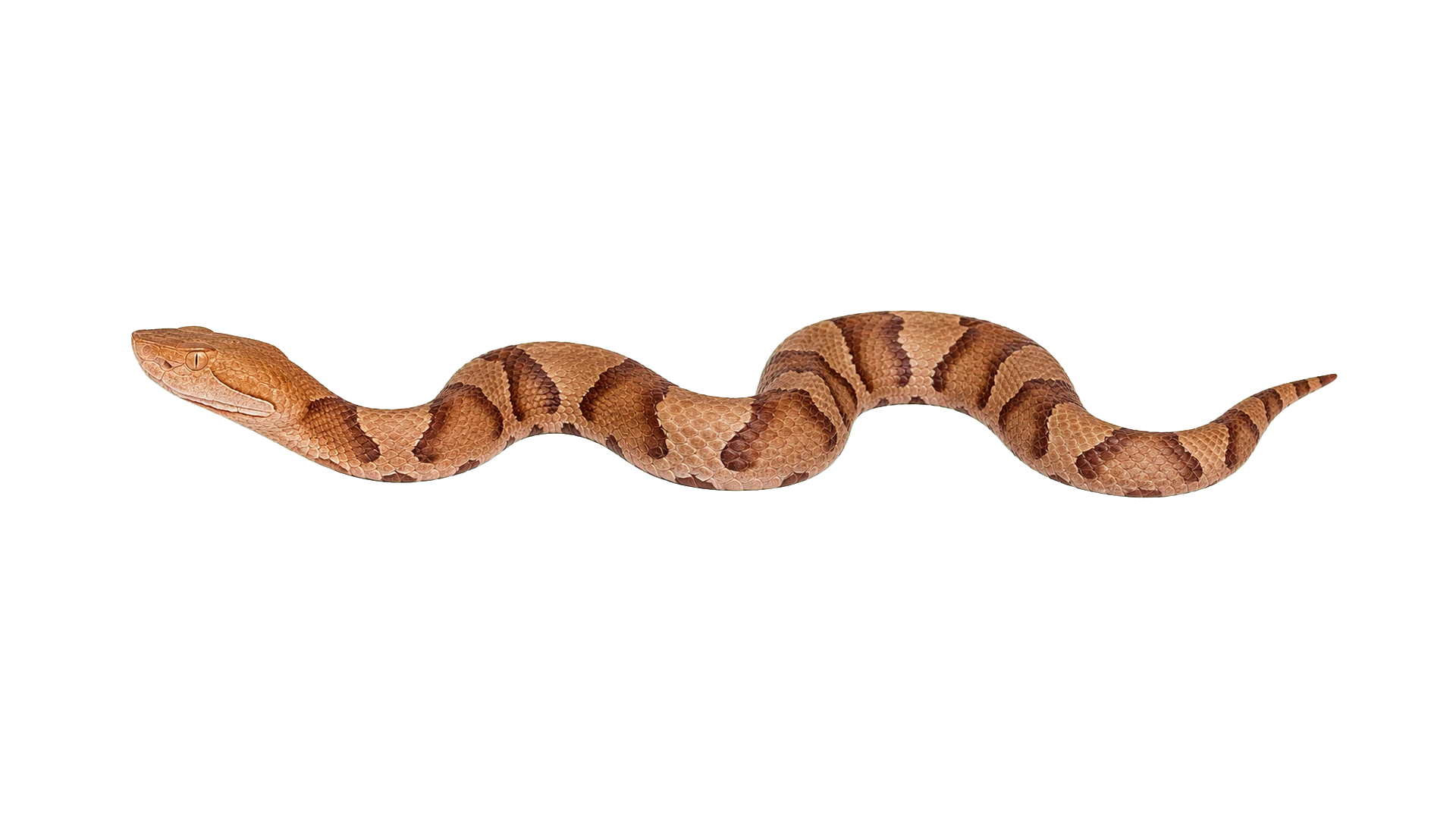
Copperheads Medical Hourglass-patterned snake in wooded or rocky areas, musky smell when threatened wooded hillsides, rock outcroppings, leaf litter
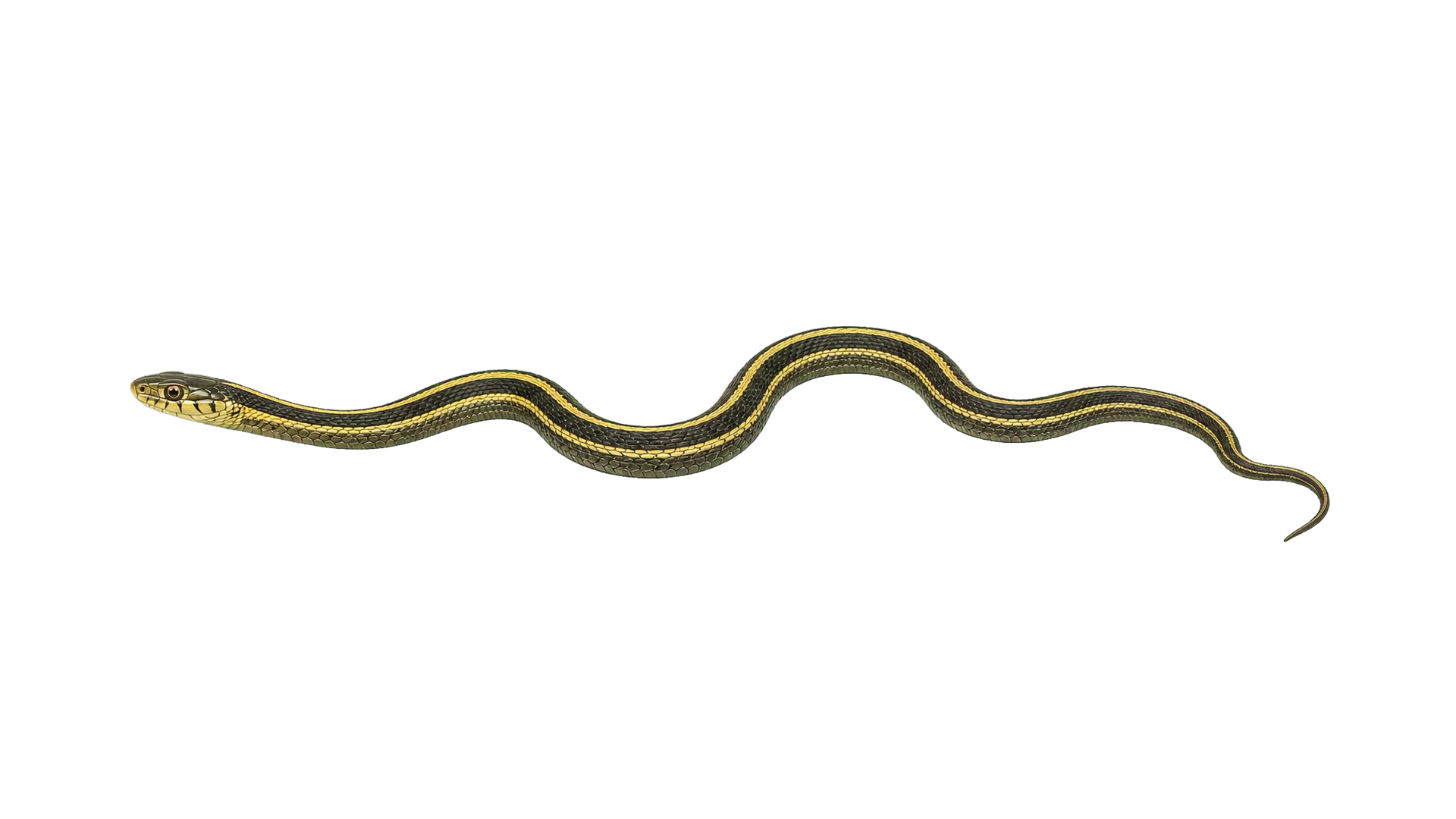
Garter Snakes Nuisance Small striped snake in garden or near water sources, musk odor when handled gardens, near ponds, meadows
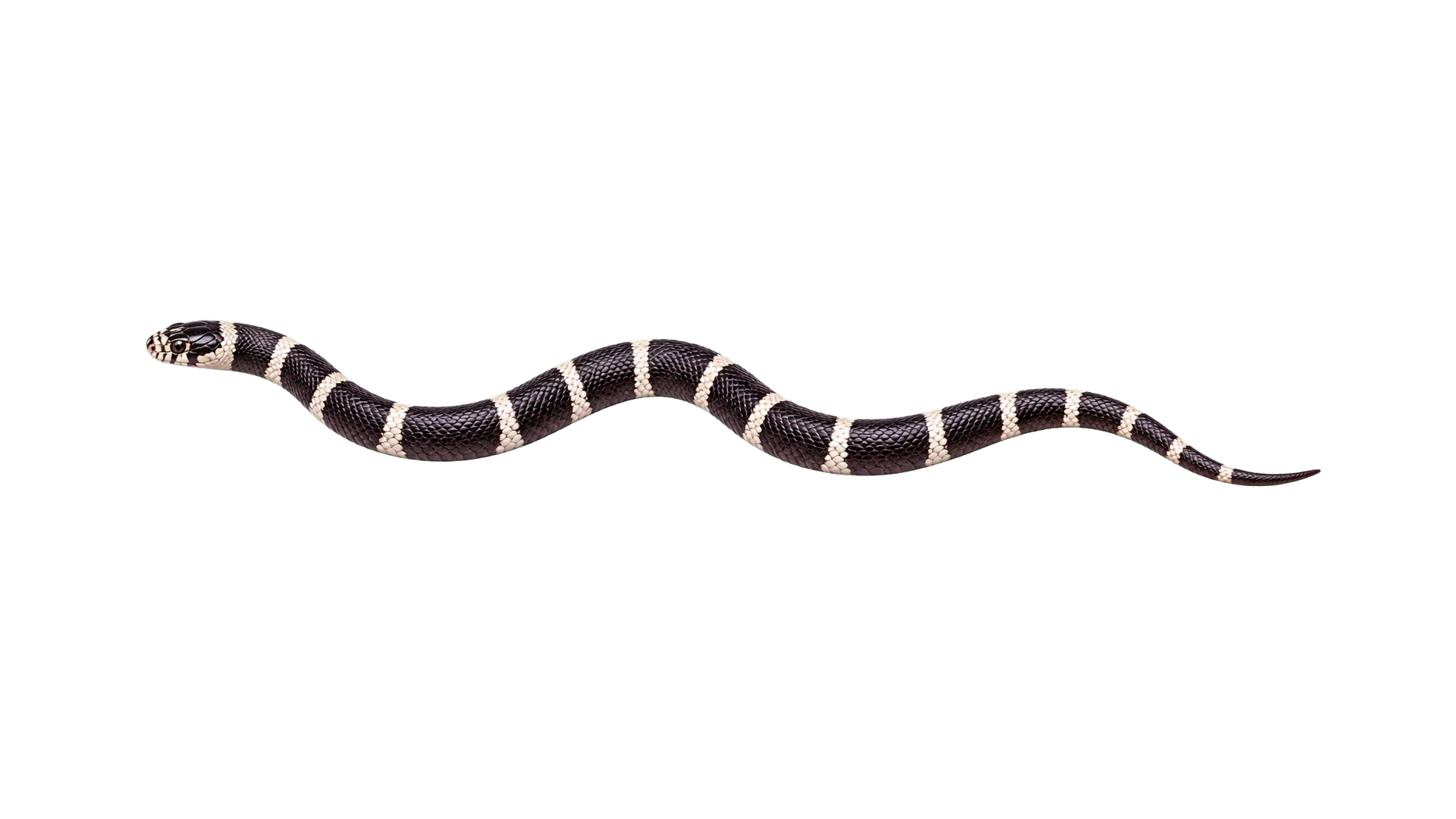
King Snakes Nuisance Black and white banded snake, often near outbuildings or rock walls wooded areas, grasslands, rocky hillsides
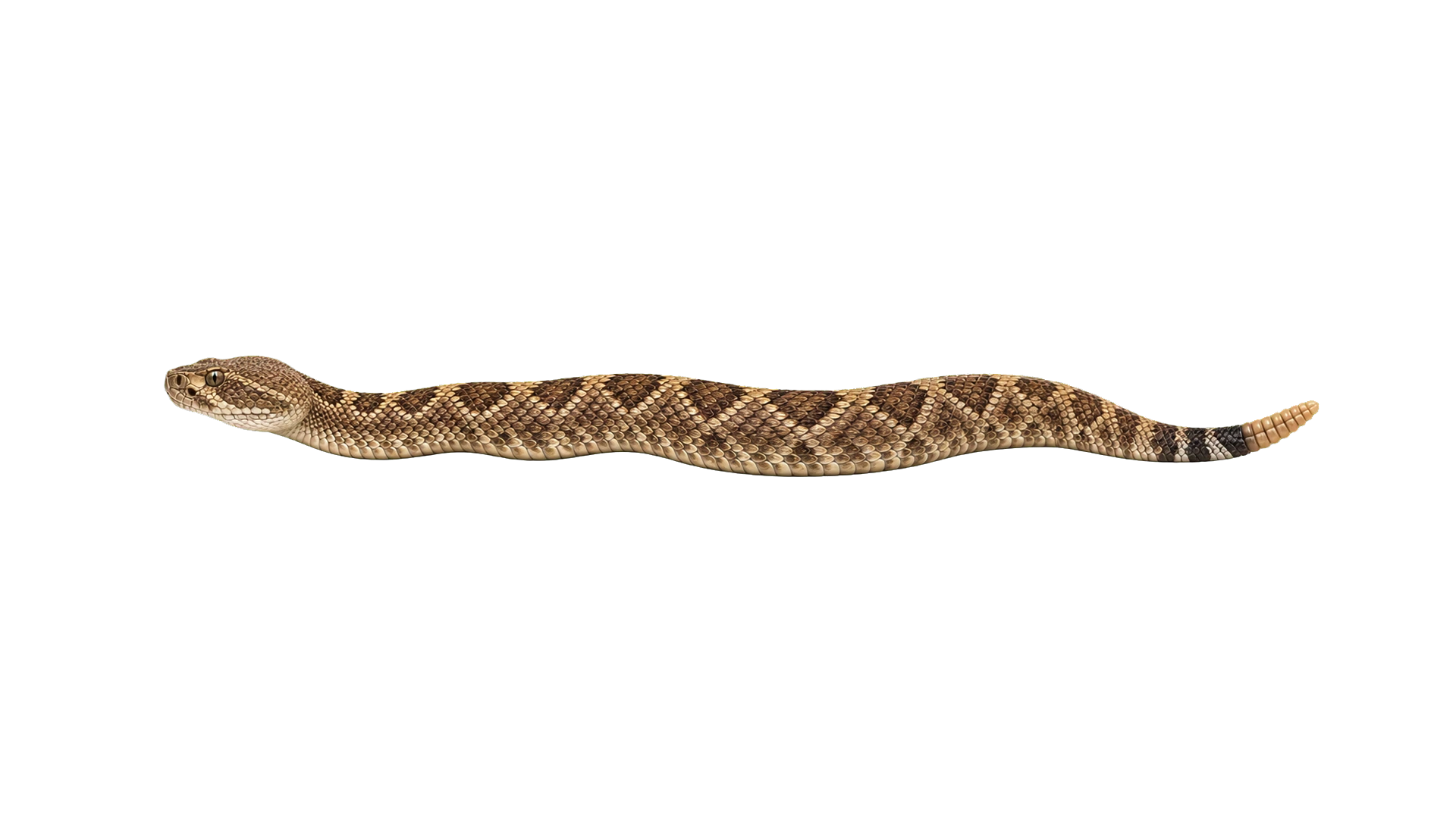
Rattlesnakes Medical Buzzing rattle sound, triangular-headed snake near rocky or brushy areas rocky outcroppings, desert scrub, grasslands
Water Moccasins Medical Heavy dark snake near water that opens mouth to display white interior when threatened swamps, marshes, creeks
Copperheads
Severity Medical
Key Sign Hourglass-patterned snake in wooded or rocky areas, musky smell when threatened
Where You'll Find Them wooded hillsides, rock outcroppings, leaf litter
Garter Snakes
Severity Nuisance
Key Sign Small striped snake in garden or near water sources, musk odor when handled
Where You'll Find Them gardens, near ponds, meadows
King Snakes
Severity Nuisance
Key Sign Black and white banded snake, often near outbuildings or rock walls
Where You'll Find Them wooded areas, grasslands, rocky hillsides
Rattlesnakes
Severity Medical
Key Sign Buzzing rattle sound, triangular-headed snake near rocky or brushy areas
Where You'll Find Them rocky outcroppings, desert scrub, grasslands
Water Moccasins
Severity Medical
Key Sign Heavy dark snake near water that opens mouth to display white interior when threatened
Where You'll Find Them swamps, marshes, creeks

Severity reflects typical impact, not your specific case. If unsure, treat at the higher tier.

What Actually Helps With Snake Issues

Honest read on common DIY methods. Habitat modification produces the best long-term results for most properties.

Can work icon

What can work

Habitat modification

  • Trim tall grass and overgrown vegetation; reduce ground cover near the home
  • Move woodpiles, brush piles, and stored materials away from buildings; elevate off the ground
  • Address rodent populations that attract predatory snake species

Foundation and structure exclusion

  • Seal foundation cracks and gaps 1/4 inch and larger
  • Repair damaged garage door seals, basement window wells, and exterior penetrations
  • Install hardware cloth screening on basement vents and crawlspace openings

Professional removal for specific situations

  • Contact wildlife services for snakes inside structures
  • Professional identification and removal for suspected venomous species
  • Comprehensive habitat assessment for properties with persistent encounter issues
Falls short icon

What reliably falls short

Snake repellent products (mothballs, sulfur, commercial granules)

  • Limited evidence of effectiveness against snakes in field conditions
  • Mothball use against snakes is illegal under EPA labeling restrictions
  • Commercial repellent granules produce inconsistent results and require frequent reapplication

Lethal control of yard snakes

  • Most yard snakes are non-venomous beneficial species protected by state law
  • Killing one snake does not prevent replacement snakes from arriving
  • Attempting close-range identification and killing produces most snakebite injuries

Ultrasonic devices and vibration stakes

  • No reliable scientific evidence of effectiveness against snakes
  • Marketing claims about ultrasonic snake repellents are not supported by field research
  • Money is better spent on habitat modification and exclusion

How to Reduce Snake Encounters

Six prevention actions, sorted by effort. Habitat modification and exclusion produce the best long-term results.

  • Mowing icon
    Easy Ongoing

    Maintain short grass near home

    Keep grass within 30 feet of the home cut to 3 inches or shorter. Reduces cover for snakes and their rodent prey. Single highest-impact yard practice for reducing snake encounters.

  • Woodpile icon
    Easy One-time

    Move woodpiles away from buildings

    Store firewood at least 20 feet from the home and elevated off the ground on racks or pallets. Removes a primary shelter zone and reduces rodent activity that attracts predatory snakes.

  • Foundation icon
    Moderate One-time

    Seal foundation gaps

    Inspect foundation, basement entries, and exterior penetrations for gaps 1/4 inch and larger. Seal with appropriate materials (caulk, hardware cloth, expanding foam with metal mesh backing for larger gaps).

  • Garage seal icon
    Moderate Annual

    Inspect garage door seals

    Check garage door bottom seals annually for damage, gaps, or wear. Replace damaged seals to prevent snake entry along with rodent and other wildlife access. Common but overlooked entry point.

  • Snake fence icon
    Advanced One-time

    Install snake exclusion fencing

    1/4 inch hardware cloth fencing buried 4 to 6 inches deep around specific high-value areas (children's play zones, pool areas, vegetable gardens). Most appropriate for properties with persistent venomous species concerns.

  • Wildlife assessment icon
    Advanced Variable

    Comprehensive wildlife habitat assessment

    Professional habitat assessment identifies all features supporting snake (and prey) populations and recommends specific changes. Most useful for chronic issues, properties in high-snake regions, or properties with venomous species concerns.

When Snake Encounters Peak

Snake activity follows clear seasonal patterns. Timing prevention work for the off-season produces best preparation for active months.

  • Spring

    Emergence from winter brumation in March through May. Snakes seek warm surfaces for thermal regulation; rocks, walkways, and driveways are common warming sites. Mating activity peaks. Encounter frequency increases through the season as activity rises.

  • Summer

    Peak activity for hunting and travel. Most snake encounters occur during summer months. Egg-laying species lay eggs in late spring or early summer; live-bearing species give birth in mid to late summer. Encounters with adults and recently-emerged young.

  • Fall

    Continued hunting activity as snakes build fat reserves for winter dormancy. Young from earlier season disperse and become more visible. Mating activity for some species. Encounter frequency tapers as temperatures cool toward late fall.

  • Winter

    Brumation in shelter sites. Activity essentially stops in northern regions; reduced activity in southern regions during cool periods. Best window for habitat modification, foundation sealing, and other prevention work without active snake disturbance.

What a Pro Snake Visit Looks Like

Four steps from arrival to a comprehensive plan. Initial visit runs 60 to 90 minutes for assessment; specific situations may require additional follow-up.

Identify, remove if needed, and modify habitat. Real snake management is mostly habitat work and exclusion. Lethal control is rarely the right approach for residential settings.

Want a real assessment? (888) 495-1510
  1. Species and situation assessment

    Identify the species (or likely species based on regional context and any specimens or photos). Confirm whether the situation is single sighting, persistent presence, or specific concern (venomous, indoor, vulnerable area).

  2. Property habitat audit

    Walk-through of the property identifying features that support snake presence: tall grass, woodpiles, rock walls, overgrown vegetation, water features, and rodent activity indicators. Document features for the management plan.

  3. Removal if appropriate

    Safe removal of snakes inside structures or in immediate-risk areas. Use of appropriate equipment (snake hooks, tongs, capture containers) by trained personnel. Native species are released to suitable habitat away from the property when possible.

  4. Habitat and exclusion plan

    Specific recommendations for habitat modification (vegetation, storage, water management) plus exclusion work (foundation sealing, garage seal repair, screening) matched to the property situation. Implementation may be completed by homeowner or by professionals.

What Property Owners Say After Snake Management

Real stories from properties that addressed habitat features, completed appropriate exclusion work, and reduced snake encounters through non-lethal management.

Rashad E.
Rashad E.
Portland, OR

"No pressure, just options."

I appreciated being given eco-friendly options without being pushed. The technician explained tradeoffs honestly and let me decide based on my priorities. They were transparent about what each approach involves. The no-pressure approach and honest information helped me make a confident decision.

Rashad E.
Rashad E.
Portland, OR

"No pressure, just options."

I appreciated being given eco-friendly options without being pushed. The technician explained tradeoffs honestly and let me decide based on my priorities. They were transparent about what each approach involves. The no-pressure approach and honest information helped me make a confident decision.

Yu E.
Yu E.
Durham, NC

"The inspection caught what we missed."

I didn't realize how much damage raccoons can cause once they get inside. The wildlife specialist explained what areas they inspect first and why raccoon issues are handled more carefully than regular pests. They showed me the damage and explained removal and exclusion strategies. Understanding the potential for damage made me glad I called professionals.

Ren P.
Ren P.
Dayton, OH

"The problem finally stayed gone."

Ants kept returning no matter what we did. The tech treated the trail areas and explained how to handle food storage and moisture so the ants don't keep coming back. It's been months and we haven't seen them again. I appreciated that it wasn't just a one-and-done spray.

Kayla Q.
Kayla Q.
Pittsburgh, PA

"Clear expectations and a real plan."

I was overwhelmed and didn't know what was realistic to fix quickly. The inspector explained what results to expect and how long it typically takes depending on the ant species. They treated the right places and gave simple prevention tips. Everything felt structured and easy to follow.

Malachi U.
Malachi U.
Knoxville, TN

"They found the entry points fast."

Ants were showing up in the kitchen and we couldn't figure out where they were coming from. The tech tracked the activity and pointed out two entry points we never would've noticed. After treating and sealing those areas, the ants disappeared. It was quick and surprisingly thorough.

Arturo B.
Arturo B.
Yonkers, NY

"No pressure, just helpful info."

I mainly wanted to understand what was happening before committing to anything. The inspector walked me through the likely cause and the differences between treatment approaches. They answered questions without rushing me. The plan we chose worked and the ants were gone within days.

Octavio Z.
Octavio Z.
Duluth, MN

"The tech helped me stop wasting time."

I kept trying different products and nothing was sticking. The tech explained why some solutions don't work for certain ant problems and focused the treatment where it would actually matter. They also gave prevention tips that were easy to implement. The difference was obvious within the first week.

Chauncey A.
Chauncey A.
Duluth, MN

"We finally understood what to do next."

We felt stuck because nothing we tried lasted. The tech explained how to find the source of the problem, treated both indoor and outdoor areas, and helped us build a prevention routine. It wasn't complicated. Just the right steps in the right order. We've had a huge improvement since.

Vihaan V.
Vihaan V.
Madison, WI

"They fixed what was actually causing it."

Ants kept showing up in the same spot. The pro explained that the visible ants weren't the real issue and focused the treatment on where they were coming from. They identified the entry path and treated it properly. The problem stopped and hasn't returned.

Allison A.
Allison A.
Des Moines, IA

"It felt like a real inspection, not a quick spray."

The tech spent time figuring out where the ants were entering instead of just spraying around. They walked me through the likely reasons and what to watch for over time. After treatment, ant activity dropped fast and stayed low. The detailed approach gave me confidence.

Stephen N.
Stephen N.
Sacramento, CA

"Small changes made a big difference."

We didn't realize how much our routine was attracting ants. The inspector explained simple prevention steps and treated the areas where activity was highest. Once those changes were in place, we stopped seeing ants inside. It was a practical approach that actually worked.

Daquan V.
Daquan V.
Tampa, FL

"The explanation alone was worth it."

I'd been doing random treatments without understanding what I was dealing with. The tech explained how ants behave and why certain approaches work better. They treated strategically instead of just spraying. It made the whole thing feel manageable.

Deepak V.
Deepak V.
San Antonio, TX

"We stopped chasing the problem and solved it."

We kept wiping down counters and the ants would be back the next day. The pro identified the entry areas and explained the treatment plan clearly. Once they treated and targeted the colony, the ants disappeared quickly. It felt like we finally got ahead of it.

Mireya Z.
Mireya Z.
Riverside, CA

"They didn't oversell. Just solved it."

The tech explained what treatment was necessary and what wasn't. They focused on the entry points and corrected the conditions that were attracting ants. The work felt honest and effective. I liked having clear expectations and seeing results quickly.

Wei D.
Wei D.
Lexington, KY

"It wasn't just 'spray and go.'"

I appreciated the step-by-step explanation and the focus on prevention. The inspector treated the areas where ants were getting in and helped me understand what to change at home. The ants stopped showing up and it's been consistent. The approach felt thoughtful and sustainable.

Shu W.
Shu W.
Orlando, FL

"It finally made sense why they kept coming back."

I had ants showing up every few months and never understood why. The tech explained how outdoor nests and weather changes affect indoor activity. They treated the perimeter and entry points instead of just the inside. Since then, we haven't had recurring issues.

Teresa I.
Teresa I.
Mesa, AZ

"Targeted instead of overdone."

I was worried about over-treating the house. The pro focused on specific problem areas and explained why blanket spraying wasn't necessary. The ants stopped appearing, and we didn't feel like chemicals were used unnecessarily. That balance mattered to us.

Latonya X.
Latonya X.
Mesa, AZ

"Clear answers without jargon."

The tech explained everything in plain language and answered questions without rushing. They identified the type of ant we had and adjusted the treatment accordingly. Knowing why the approach worked gave me confidence it would last.

Humberto T.
Humberto T.
Eugene, OR

"They focused on prevention, not just treatment."

I liked that the tech talked through how to keep ants from returning after the treatment. They addressed moisture issues and entry points around the home. The treatment worked, and the prevention tips helped us stay ahead of future problems.

Jerrell N.
Jerrell N.
Arlington, VA

"No guessing, just a plan."

I was tired of guessing what would work. The inspector explained the cause of the issue and outlined a clear plan of action. After treatment, the ants disappeared and we haven't had to revisit the problem. It felt efficient and well thought out.

Marion K.
Marion K.
Boulder, CO

"They explained what to expect upfront."

The tech set expectations about timing and results before starting. They explained that some activity might happen initially and why. Everything played out exactly as described, and the ants were gone shortly after. That transparency made a big difference.

Bridget E.
Bridget E.
Sacramento, CA

"Helpful without being overwhelming."

I didn't realize there were different types of ants or that it mattered. The inspector walked me through what they were seeing and explained how ant behavior affects treatment. It made it easier to ask the right questions and understand the solution.

Junho L.
Junho L.
Naperville, IL

"Saved me a lot of guessing."

I was close to trying random sprays for the ants. Talking with the tech helped me understand what was realistic to address and what usually doesn't work. The targeted treatment solved the issue quickly and saved time and frustration.

Willis Y.
Willis Y.
Baton Rouge, LA

"It felt tailored to our home."

The tech didn't just apply a standard treatment. He looked at where we were seeing activity and adjusted the approach to our layout and yard. The ants stopped showing up and we understood how to keep it that way.

Thelma S.
Thelma S.
Madison, WI

"Straightforward and effective."

I appreciated how straightforward everything was. The pro explained the issue, treated the problem areas, and gave us a few simple steps to prevent future issues. The ants were gone and it didn't feel complicated.

Angelina B.
Angelina B.
Austin, TX

"They explained how the weather played a role."

I didn't realize seasonal changes could affect ant activity so much. The tech explained how heat and rain push ants indoors and what to do about it. They treated the problem areas and gave tips to prevent future issues. The explanation helped everything click.

Kirk Q.
Kirk Q.
Denver, CO

"It wasn't as complicated as I expected."

I assumed pest control would be disruptive or complicated. The technician explained the steps clearly and focused on targeted treatment. The ants stopped appearing quickly and the process was smoother than expected.

Cody L.
Cody L.
Denver, CO

"They helped me understand the bigger picture."

Instead of just treating the ants I saw, the tech explained what was happening around the house that made it attractive to pests. Once those factors were addressed, the problem resolved quickly. It felt educational as well as effective.

Marquis K.
Marquis K.
San Mateo, CA

"Clear communication from start to finish."

I appreciated how clearly everything was explained before treatment began. The inspector walked through the process and answered all my questions. The ants were gone shortly after and we felt confident about prevention going forward.

Virginia T.
Virginia T.
San Mateo, CA

"They addressed what we were missing."

We kept focusing on cleaning, but the tech showed us where ants were actually entering. Once those points were treated and sealed, the issue resolved. It was reassuring to finally understand the root cause.

June J.
June J.
Omaha, NE

"A methodical approach that worked."

The pro explained how they identify ant trails and colonies before treating. They took a methodical approach instead of rushing through. The ants stopped appearing and the fix has held up well.

Caitlin K.
Caitlin K.
Phoenix, AZ

"They understood desert pest behavior."

Living in Phoenix, pests behave differently than other places. The tech explained how heat drives ants indoors and what treatments work best here. The solution was effective and tailored to our environment.

Olive S.
Olive S.
Sacramento, CA

"They took the time to do it right."

I appreciated that the tech didn't rush. He inspected the problem areas carefully and explained what they were seeing. The treatment worked quickly and the ants haven't returned.

Arianna D.
Arianna D.
Baton Rouge, LA

"They understood the local pest issues."

The tech explained how the humidity here contributes to ant problems and why certain treatments work better in this climate. They focused on outdoor entry points and moisture-prone areas. The ants cleared up quickly and haven't come back.

Kiyana N.
Kiyana N.
New Orleans, LA

"Finally something that lasted."

We'd dealt with recurring ants for years. The pro explained why flooding and moisture play such a big role here and adjusted the treatment accordingly. It's been months without seeing ants, which is a big win for us.

Brett R.
Brett R.
Phoenix, AZ

"They knew exactly what works in Arizona."

The tech explained how desert conditions affect ant behavior and which treatments are most effective here. They targeted the right areas and avoided unnecessary spraying. The ants disappeared quickly.

Albert O.
Albert O.
Baltimore, MD

"Clear, calm, and professional."

I appreciated how calmly everything was explained. The inspector identified the ant problem, explained the treatment, and answered my questions without rushing. The solution worked and gave me peace of mind.

Rohit Y.
Rohit Y.
Orlando, FL

"They handled it efficiently."

The tech inspected the problem areas, explained the plan, and got to work quickly. The ants were gone within days and the process felt efficient without being rushed.

Carolyn H.
Carolyn H.
Omaha, NE

"Simple explanations, solid results."

I liked how simply everything was explained. The pro didn't overcomplicate things and focused on what mattered. The ants stopped appearing and we haven't needed follow-up treatments.

Edith Z.
Edith Z.
Newark, NJ

"They showed me what to watch for."

Beyond treating the ants, the tech explained what signs to watch for if activity starts again. That knowledge made me feel more in control. So far, everything has stayed clear.

Common Questions About Snakes

Direct answers to what property owners ask most about snake encounters, identification, and management.

  • How do I tell if a snake is venomous? Toggle answer for: How do I tell if a snake is venomous?

    Combine several features rather than rely on one rule. The four medically significant venomous groups in the US are three pit viper groups (rattlesnakes, copperheads, cottonmouths) plus coral snakes. Pit vipers have triangular heads wider than the neck, vertical slit pupils, and heat-sensing pits between the eye and nostril. Coral snakes lack all three, despite being venomous, but show distinctive red, yellow, and black banding. The rhyme red on yellow kill a fellow, red on black friend of Jack works in some regions for distinguishing coral from harmless mimics (scarlet kingsnake, milk snake), but is not universally reliable. Triangular head alone is unreliable: water snakes and hog-nosed snakes flatten heads when threatened. Photograph from 6 feet away. Treat unidentified snakes as potentially venomous until expert ID is confirmed.

  • Do snake repellent products actually work? Toggle answer for: Do snake repellent products actually work?

    Mostly not. Granular products containing naphthalene, sulfur, cedar oil, or proprietary blends produce inconsistent results in field conditions. University extension evaluations typically show modest or unmeasurable effects. Mothballs are illegal for snake control under EPA labeling restrictions and create indoor air-quality concerns when chemicals migrate through walls. Avoid them regardless of perceived effectiveness. Electronic ultrasonic devices have no research support. Snakes lack ear structures comparable to mammals and hear only ground vibrations. Habitat modification produces durable results: trim tall grass, move woodpiles away from buildings, seal foundation gaps, reduce rodent populations. 1/4 inch hardware cloth fencing buried 4 to 6 inches deep reliably excludes snakes from specific zones (play areas, pool decks).

  • What should I do if I see a snake in my yard? Toggle answer for: What should I do if I see a snake in my yard?

    Step back to at least 6 feet. Most snakebites occur during attempted handling or killing, not during chance encounters at distance. Non-venomous species (garter snakes, rat snakes, ring-necked snakes, racers) typically pass through within minutes to hours. Watch from a distance and keep children and pets away. If movement is needed, gently nudge with a long-handled tool or spray low-pressure water from a hose. Avoid aggressive disturbance. Photograph from 6 feet away for expert ID via extension agents or online resources. Contact professionals for suspected venomous species, snakes inside structures, or persistent issues. Do not attempt to kill the snake. Most yard snakes are non-venomous beneficial species protected by state law, and attempted killing increases bite risk. Address habitat features (tall grass, woodpiles, rodents) for ongoing concerns.

  • How do I keep snakes out of my basement? Toggle answer for: How do I keep snakes out of my basement?

    Snakes follow rodent prey into structures through gaps. Inspect the entire foundation perimeter for cracks, settling gaps, and openings around utility penetrations (pipes, conduit, drainage). Snakes pass through openings as small as 1/4 inch. Seal small cracks with foundation-rated caulk; use expanding foam with hardware cloth backing for larger gaps. Replace damaged basement window well covers and consider window well grates. Replace worn garage door bottom seals so they contact the floor across the full width. Crawlspace vents need intact screening. Address the underlying rodent issue: buildings without rodent problems rarely have indoor snake encounters. Reduce clutter and stored materials in basements to remove cover. Reduce outdoor habitat near the building (foundation-adjacent woodpiles, dense ground cover, debris) to lower pressure on entry points.

  • Are baby snakes more dangerous than adult snakes? Toggle answer for: Are baby snakes more dangerous than adult snakes?

    Mostly a myth. The folk claim says juveniles cannot control venom dosage and inject everything in defensive bites. Research does not support this. Both age classes can deliver dry bites (no venom) or venom-loaded bites depending on circumstances. Total venom volume favors adults significantly. Even when a juvenile injects all available venom, an adult bite typically delivers more total volume and produces more medically significant outcomes. Juveniles may behave more defensively because their smaller size makes them more vulnerable to predators, but defensive strikes are usually warnings rather than fully-committed bites. Juveniles can also be harder to identify because head shape and patterns are less developed. Photograph at distance for expert ID. Modern antivenom treatment is highly effective for both juvenile and adult bites when administered promptly.

  • How can I tell if I have a snake problem versus just one snake? Toggle answer for: How can I tell if I have a snake problem versus just one snake?

    Track patterns over time. A single sighting typically reflects a snake using the property for travel and resolves within hours. Two or more sightings within several weeks suggest snakes are using the property regularly. Sightings concentrated at specific features (rock walls, woodpiles, garden ponds) point to those features providing meaningful habitat. Finding shed skins indicates extended residency because snakes shed in protected locations where they spend time. Visible mating pairs or juveniles confirm the property supports breeding populations. High rodent activity (visible mice, droppings) provides prey that draws predatory species. The right response matches encounter level. Single sightings: maintain distance, allow natural departure. Recurring encounters: comprehensive habitat modification and exclusion. Persistent encounters despite habitat changes: professional wildlife assessment.

  • Are snakes good for the environment? Toggle answer for: Are snakes good for the environment?

    Yes, substantially. Many species are major rodent predators. A single rat snake consumes dozens of rodents per year. Removing snakes often coincides with rodent population increases. Garter snakes, ring-necked snakes, and other small species consume insects, slugs, and snails that damage garden plants. King snakes are resistant to pit viper venom and will attack and consume copperheads, cottonmouths, and rattlesnakes. Removing king snakes can incidentally increase venomous species presence. Snakes serve as prey for hawks, owls, and other predators. Most non-venomous species are state-protected. Roughly 7,000 to 8,000 snakebites are reported annually in the US with about 5 fatalities, typically associated with delayed treatment. Most bites occur during attempted handling or killing, not chance encounters. Habitat changes that reduce snakes also reduce rodents and ticks.

Pest Control Pros serving the city of the state of your city and nearby areas

Identification, safe removal, and habitat modification produce real results. Local wildlife pros sort out the right approach for your specific situation.

Available 24/7
(888) 495-1510

Snake Species You May Encounter

Click through to species pages for specific identification and management considerations for each snake type.

Copperheads

Venomous pit vipers responsible for the most snakebites in the eastern U.S.

Copperheads are well-camouflaged ambush predators found in wooded areas, rock outcrops, and suburban yards across the eastern and central United States. They account for more venomous snakebites than any other North American species, largely because their cryptic coloring makes them nearly invisible in leaf litter. Bites are rarely fatal but cause significant pain, swelling, and tissue damage.


Quick ID:

  • Snake sightings near woodpiles or leaf litter
  • Shed skins with hourglass pattern
  • Musky odor when disturbed

Why it matters:

  • Excellent camouflage makes them nearly invisible in yards and gardens
  • They account for the majority of venomous snakebites in the eastern U.S.
  • Bites cause severe pain and tissue damage requiring medical treatment
Learn more about Copperheads

Garter Snakes

Common non-venomous snakes that congregate near foundations and basements.

Garter snakes are among the most frequently encountered snakes in residential areas across North America. They gather in large numbers for communal hibernation, sometimes choosing basement window wells, crawlspaces, and foundation cracks as overwintering sites. While harmless, finding dozens of snakes emerging from a foundation in spring is alarming and indicates entry points that also admit other wildlife.

Quick ID:

  • Snake sightings in garden
  • Shed skins near foundation
  • Groups emerging in spring (communal denning)

Why it matters:

  • Communal hibernation can put dozens of snakes inside a structure
  • Foundation entry points they use also admit rodents and insects
  • Their presence often indicates a healthy prey population nearby
Learn more about Garter Snakes

King Snakes

Non-venomous constrictors often found near homes in warm climates.

King snakes are powerful constrictors that feed on rodents, lizards, and other snakes, including venomous species. They commonly enter garages, crawlspaces, and storage sheds while hunting prey. While beneficial for rodent and venomous snake control, their presence inside structures indicates gaps and prey populations that need to be addressed through exclusion and habitat management.

Quick ID:

  • Snake sightings near outbuildings
  • Shed skins with banded pattern
  • Presence may indicate other snake species nearby

Why it matters:

  • Their presence inside structures confirms rodent entry pathways exist
  • Large adults can reach four to six feet, alarming to encounter indoors
  • They indicate a broader wildlife access problem in the building envelope
Learn more about King Snakes

Rattlesnakes

Dangerously venomous pit vipers found in yards across the western U.S.

Rattlesnakes deliver hemotoxic venom through long, hinged fangs, causing severe tissue destruction and potential organ damage without prompt medical treatment. They shelter under porches, in rock walls, wood piles, and dense landscaping, sometimes entering garages and crawlspaces during temperature extremes. Their distinctive rattle serves as a warning, but not all rattlesnakes rattle before striking.

Quick ID:

  • Rattling sound when approached
  • Snake sightings near rocky areas
  • Shed skins with diamond or banded pattern

Why it matters:

  • Venom causes severe tissue destruction requiring emergency treatment
  • Not all rattlesnakes rattle before striking, silent bites occur
  • Yards with rock features and wood piles create ideal rattlesnake habitat
Learn more about Rattlesnakes

Water Moccasins

Aggressive semi-aquatic pit vipers found near water in the Southeast.

Water moccasins, also called cottonmouths, are heavy-bodied venomous snakes that inhabit swamps, lakes, streams, and drainage ditches across the southeastern United States. Unlike most snakes, they may stand their ground and display a white-mouthed threat posture rather than retreating. Their venom causes serious tissue destruction, and bites near water are a significant risk for properties bordering wetlands.

Quick ID:

  • Thick dark snake near water features
  • White mouth display when threatened
  • Snake swimming with head above water

Why it matters:

  • They do not retreat like most snakes, increasing bite risk
  • Properties near water, ditches, or retention ponds are high-risk
  • Venom causes severe tissue damage and potential limb-threatening injury
Learn more about Water Moccasins