Local pest control help is one call away.

Garter Snake: Identification, Treatment & Prevention

Garter snakes are the most common snake across North America, and they're almost always good news for a yard. They're slender, 18 to 36 inches long as adults, with three light stripes running head to tail along a darker body, one stripe down the spine and one along each side. The head is small and round, the pupils are round, and they're non-venomous. The mild salivary toxin in their bite works on the slugs, worms, and frogs they eat. On humans it causes minor local irritation at worst.

If you're seeing a striped snake gliding through your garden, sunning near the patio, or surprising you next to the compost pile, you're almost certainly looking at a garter. This guide covers how to confirm the three-stripe pattern, why your property is on their map (hint: earthworms, slugs, and moisture), what the spring "mating ball" you might stumble across actually is, and when relocation makes sense versus leaving them alone.

Close-up illustration of a garter snake showing the three light longitudinal stripes, round head, and round pupils that confirm a non-venomous garter

ID Card: Garter Snake

Scientific name
Thamnophis sirtalis
Color
Dark green, yellow
Size
18 to 26 inches
Body shape
Slender, elongated body with three distinct stripes running lengthwise
Key evidence
Small striped snake in garden or near water sources, musk odor when handled
Also known as
Garden snake, Gardener snake, Ribbon snake

Related Species

Call to get matched with a local pest control pro.

Available 24/7
(888) 495-1510
  • Specialists who confirm garter ID versus venomous mimics
  • Safe relocation when a snake gets indoors
  • Foundation and entry-point sealing for repeat incidents

Where to Look for Garter Snakes on Your Property

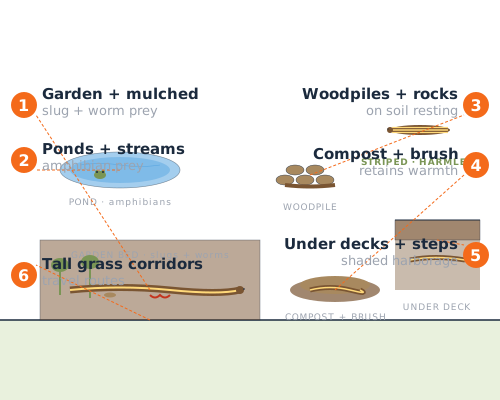
Cross-section illustration showing garter snake habitat in garden beds, near water features, under decks, and around foundation gaps where occasional indoor wandering occurs

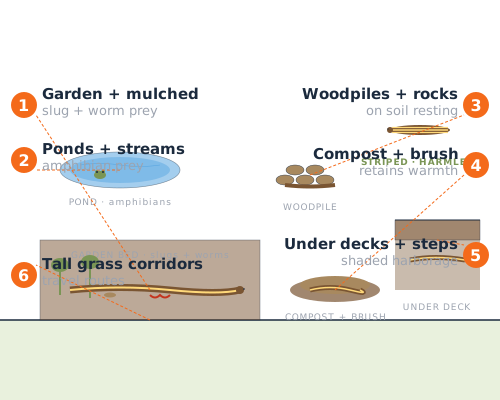
Garter snakes follow moisture, cover, and prey. They stay close to all three and rarely move far from a good spot. Walk these zones on a warm afternoon with a flashlight ready and you'll usually find evidence within a few minutes:

  • Garden beds and vegetable plots, This is the main habitat. Earthworms and slugs are the top food source for most garter species, and a well-watered bed with mulch is exactly the buffet they're hunting.
  • Around water features and irrigation, Ponds, fountains, bird baths, and drippy spigots draw frogs, tadpoles, and slugs, which draw the snakes. Check the splash zone below downspouts and around drip-line emitters.
  • Compost piles, leaf piles, and stacked stone, Warm, humid cover with insect prey crawling through it. Pull a board off a rock pile gently and you'll often find one curled below.
  • Under decks, porches, and shed floors, Cool shade in summer, frost protection in winter. Garters use the same spots year after year if conditions stay right.
  • Lawn-to-garden edges and the base of hedges, Travel corridors. Garters thermoregulate by moving in and out of cover, and the edge between lawn and dense planting is their main highway.
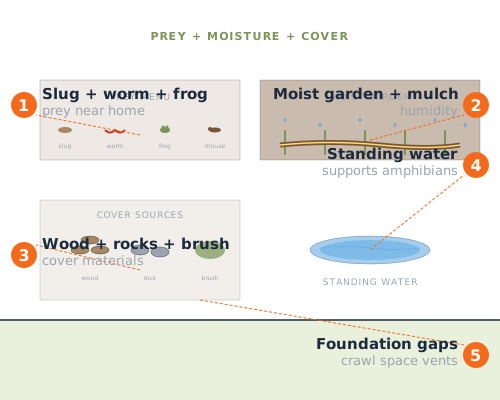
  • Garage corners and basement door thresholds, Occasional indoor wandering happens when a garter follows prey or seeks shelter through a gap. A snake in the garage is almost never the start of an infestation, it's one snake that took a wrong turn.

Garter snakes are technically the most widely distributed snake in North America, with the common garter (Thamnophis sirtalis) found in every state except Alaska and Hawaii. Their presence on a property usually says more about your gardening (mulched beds, healthy soil, moisture) than about a pest problem. Reducing harborage at the foundation perimeter is the right move if indoor wandering keeps happening, but tearing apart a garden to evict them is rarely warranted.

Cross-section illustration showing garter snake habitat in garden beds, near water features, under decks, and around foundation gaps where occasional indoor wandering occurs
Illustration showing how garter snakes use garden moisture and cover, then occasionally wander indoors through foundation gaps, garage thresholds, and crawl space vents

Why Do I Have Garter Snakes?

Seeing one is step one. Understanding what makes your yard a garter snake destination is what tells you whether to leave them alone, manage the habitat, or call for help. Garter snakes are habitat generalists, they tolerate human presence better than almost any other snake in North America, and the conditions they like (moisture, healthy soil, prey populations) are the same conditions most homeowners want for a productive garden.

What anchors them to your property:

  • Earthworm and slug populations, the #1 food source. A garden with rich, mulched soil supports hundreds of worms per square yard and a steady worker garter population.
  • Moisture, irrigation drips, pond edges, leaky spigots, and damp mulch keep amphibian prey populations high and give the snakes a place to drink and cool off
  • Cover from rock walls, woodpiles, brush, and dense groundcover, garters need somewhere to hide between hunts and somewhere to bask safely with a quick exit route
  • Communal den sites, garter snakes overwinter together in protected underground spots (sometimes 100-plus snakes in one den) and return year after year, which is why some properties see them every spring like clockwork

A garter snake doesn't found a colony or build a nest the way most pests do. A pregnant female gives birth to 10 to 40 live young in late summer, and most of those will disperse to find their own home ranges. The ones that stay are choosing your property because the food, water, and cover work for them. Take any one of those three away and the population drops on its own. Try to take them all away and you've just made the garden worse for everything you actually wanted to grow.

How Serious Is Your Garter Snake Situation?

Find your scenario below. Garter snake severity is mostly about household comfort and entry points, not danger, these are non-venomous animals.

What You're Seeing Severity If Untreated Next Step
Garter snake spotted in the garden or yard, no indoor activity Early Beneficial. The snake is hunting slugs, worms, and small garden pests you'd otherwise treat for separately. Leave it alone. Confirm the ID using the three stripes and round head if anyone in the family is nervous. Photograph from a safe distance.
Snake wandered into the garage, basement, or shed, single occurrence Moderate The snake will look for an exit once it cools down. If trapped without water, it may die in place within a few days, which becomes a separate problem. Capture and release outdoors using the broom-and-bucket method, sweep gently into a bucket, cover, walk it to a brushy edge well away from the house. No pro needed for a single incident.
Multiple snakes near the house, family is uncomfortable, spring mating ball observed Moderate Likely a den site near the foundation. Snakes will return spring after spring, with peak activity March through May. Schedule a professional consultation for relocation and a foundation walk to identify and seal entry points the snakes are using as den access.
Snake in living space, repeated indoor incidents, household member with snake phobia Urgent Urgency here is about household stress, not health risk. Repeat entries mean a gap big enough for a snake is unsealed at the foundation or threshold. Call today for relocation and a comprehensive entry seal. Garter snakes can fit through any gap wider than a finger, the inspection finds them all.
Garter snake spotted in the garden or yard, no indoor activity
Severity Early
If Untreated Beneficial. The snake is hunting slugs, worms, and small garden pests you'd otherwise treat for separately.
Next Step Leave it alone. Confirm the ID using the three stripes and round head if anyone in the family is nervous. Photograph from a safe distance.
Snake wandered into the garage, basement, or shed, single occurrence
Severity Moderate
If Untreated The snake will look for an exit once it cools down. If trapped without water, it may die in place within a few days, which becomes a separate problem.
Next Step Capture and release outdoors using the broom-and-bucket method, sweep gently into a bucket, cover, walk it to a brushy edge well away from the house. No pro needed for a single incident.
Multiple snakes near the house, family is uncomfortable, spring mating ball observed
Severity Moderate
If Untreated Likely a den site near the foundation. Snakes will return spring after spring, with peak activity March through May.
Next Step Schedule a professional consultation for relocation and a foundation walk to identify and seal entry points the snakes are using as den access.
Snake in living space, repeated indoor incidents, household member with snake phobia
Severity Urgent
If Untreated Urgency here is about household stress, not health risk. Repeat entries mean a gap big enough for a snake is unsealed at the foundation or threshold.
Next Step Call today for relocation and a comprehensive entry seal. Garter snakes can fit through any gap wider than a finger, the inspection finds them all.

Garter snake severity is mostly comfort-based, none of these scenarios pose a true safety risk to humans or pets. If between two rows, treat the higher one as your situation.

How Garter Snakes Develop and Reproduce

Garter snakes are unusual among North American snakes in one major way: they don't lay eggs. Females carry developing young internally and give birth to live, fully-formed neonates in late summer. That biology, plus large litter sizes, is why garter populations can stay stable in a habitat year after year even with significant juvenile mortality.

  1. Embryo

    80 to 100 days internal gestation

    After spring mating, females carry developing embryos inside the body for roughly three months. The mother basks to maintain warmth, which is why pregnant females are often seen sunning openly in late summer right before giving birth.

  2. Neonate

    Born August through September

    A single female bears 10 to 40 live young, each 5 to 8 inches long, fully independent at birth. Mild salivary toxin is already effective on amphibian prey from day one, but causes only minor irritation in humans. No parental care, neonates disperse immediately.

  3. Juvenile and sub-adult

    1 to 2 years to reach adult size

    Young snakes eat insects, slugs, worms, and small frogs while growing. Heavy predation from birds, raccoons, skunks, and larger snakes means most neonates don't reach maturity, which is why females produce such large litters.

  4. Adult

    Sexually mature at 2 to 3 years; wild lifespan 6 to 10 years

    Adults reach 18 to 36 inches depending on species. Females are slightly larger than males. Adults breed annually and return to the same communal hibernation den each fall, which is why some properties see consistent populations across decades.

Live birth plus large litters means garter snake populations are stable and self-regulating in suitable habitat. Predation handles the math, most neonates won't survive their first year. Intervention beyond removing a snake from indoors rarely affects the population, the den site and the food supply are what determine the numbers.

When Garter Snakes Are Most Active

Garter snake activity is sharply seasonal and tied to temperature. They're diurnal, active during the day, and their visible behavior changes dramatically across the year in ways that explain when most homeowner calls happen.

  • Spring

    Emergence from communal dens runs March through May depending on latitude. This is when you may see a "mating ball," multiple males twined around a single female on warm ground. It looks dramatic but is a normal seasonal display, not an infestation. After mating, snakes disperse from the den toward summer habitat, which is when foundation-area sightings spike.

  • Summer

    Peak activity. Garters are widespread in gardens, around water features, and along lawn edges all day. Foraging is constant and visible. Pregnant females bask openly to maintain body temperature for developing young. This is the highest-sighting window of the year, and the bulk of normal beneficial activity.

  • Fall

    Live births occur August through September. Neonates disperse immediately. As temperatures drop in October and November, adults begin moving back toward communal hibernation dens, often the same site used for years. Concentrated travel near foundations and retaining walls is common in this window.

  • Winter

    Brumation (the reptile version of hibernation) runs from late fall through early spring. Garters gather in communal dens, sometimes 100-plus snakes in a single site, under foundations, inside rocky outcrops, in old burrows, or in retaining wall voids. Activity is essentially zero, but the den site itself is the reason snakes will reappear in the same yard next March.

Why Most Garter Snake Sightings Aren't a Pest Problem

Garter snakes are harmless and beneficial. They eat slugs, grubs, earthworms, small frogs, and the occasional small rodent, all things gardeners are usually trying to manage anyway. The mild salivary toxin in their bite works on amphibian prey and does nothing to humans beyond minor local irritation. The most common snake in North America is also among the most useful animals in a backyard garden.

Identification is what trips up most homeowners. The three light longitudinal stripes (one along the spine, one on each side, against a darker background) plus the round head and round pupils are the field marks. Triangular heads and vertical pupils belong to venomous pit vipers, none of which look anything like a garter once you've seen one clearly. A safe, calm photograph from six feet away gives you a permanent record and lets you confirm the ID with a reference.

Where garter snakes do become a household issue is repeat indoor entries (a gap in the foundation or threshold is the actual problem, the snake is just using it), spring mating balls inside a sensitive space like a child's play area, or a household member with a serious snake phobia who can't coexist with one in the garden. In those cases, a professional walks the perimeter, identifies and seals the entry point, and relocates any snake currently inside the structure.

What's almost never a good idea is killing garter snakes as a control strategy. The garden gets worse for slugs and grubs without them, the den site doesn't go away, and the legal protection for some specific subspecies (check your state) can make it a regulatory problem in addition to an ecological one.

What Changes When a Pro Shows Up

Most garter snake calls don't need a pro at all, the animal is harmless and beneficial. When a visit is actually warranted (repeat indoor entries, a den site at the foundation, a household member who can't coexist), here's what a specialist actually does:

Wildlife specialist after completing garter snake relocation and foundation exclusion
  • Local Pest Control
  • 24/7 Availability
  • Quality Workmanship
  • Eco‑Friendly Options
  • Trusted by Homeowners
  • They Confirm the ID First

    Three longitudinal stripes, round head, round pupils, slender body. A pro rules out venomous lookalikes (water snakes, juvenile copperheads in southern states) in seconds, which is the most valuable thing they do for an anxious homeowner.

  • They Relocate, They Don't Kill

    Snake hooks and capture tubes move the animal safely to suitable habitat well away from the house. Killing garter snakes is legal in most states but ecologically unhelpful, gardens with garters have fewer slugs and grubs.

  • They Walk the Foundation

    Indoor entries mean a gap exists. A pro checks crawl space vents, threshold gaps, utility penetrations, and dryer vents, garters can pass through openings narrower than a pencil. Sealing is the part that actually stops repeat incidents.

  • They Identify Den Sites

    Communal hibernation dens under foundations, in retaining walls, or in rocky outcrops bring the same snakes back every spring. Identifying the den is what turns a recurring problem into a one-time fix.

  • Local Pest Control
  • 24/7 Availability
  • Quality Workmanship
  • Eco‑Friendly Options
  • Trusted by Homeowners
NoToPests home

One call connects you with a local specialist who knows garter snakes and your area.

Be Ready When You Call

Wildlife specialist arriving for garter snake relocation and foundation inspection
Junho L.
Daisuke P.
Kirk Q.
Marion K.

Trusted by homeowners nationwide

Call for Pest Control Help (888) 495-1510

Can You Handle This or Do You Need Help?

Most garter snake situations are squarely in DIY territory, these are harmless animals and the response is usually "leave it alone" or "capture and release." Professional help is reserved for repeat indoor entries, den sites, or households where coexistence isn't an option.

What DIY Can Do

DIY handles the great majority of garter snake situations effectively. The non-venomous, non-aggressive nature of garters makes this one of the easiest "pests" a homeowner ever deals with:

  • Identify the snake confidently using three longitudinal stripes plus a round head plus slender body plus small-to-medium size
  • Leave outdoor garden snakes alone, they're eating slugs, grubs, and small garden pests at no cost
  • Capture and release a single indoor snake using the broom-and-bucket method, sweep gently into a bucket, cover, walk it to a brushy edge well away from the house
  • Reduce harborage at the foundation perimeter, pull mulch back twelve inches, remove woodpiles touching siding, trim groundcover
  • Seal obvious gaps at thresholds, crawl space vents, and utility penetrations if indoor entries are repeating
  • What DIY cannot reliably do: confirm ID in regions with venomous mimics if you're unsure, locate a hidden communal den site, or seal an entire foundation perimeter.

What a Pro Does Differently

Professional garter snake work is mostly about confirmation, relocation, and exclusion, not extermination. Here's what changes when a specialist is on site:

  • Definitive species confirmation, especially valuable in southern states where juvenile copperheads can be mistaken for garters by a nervous homeowner
  • Safe relocation of indoor snakes using snake hooks and capture tubes, which keeps the snake intact for release and the homeowner away from defensive musking
  • Den site identification, communal hibernation sites under foundations or in retaining walls are why the same snakes appear every spring, and finding the den is the only real long-term fix
  • Comprehensive foundation perimeter exclusion, garters use gaps wider than a pencil, so a thorough inspection finds entry points DIY usually misses
  • Family education and a written scope, especially valuable when a household member has a serious snake phobia and needs documented assurance that the property has been sealed properly.

Suspect Garter Snakes? Don't Wait.

If a garter snake keeps finding its way indoors or a spring den site is right against the foundation, connect with a local specialist for safe relocation and proper entry-point sealing.

Available 24/7
(888) 495-1510

What Homeowners Say After Getting Help

Real results from people who had the same problem and solved it.

Rashad E.
Rashad E.
Portland, OR

"No pressure, just options."

I appreciated being given eco-friendly options without being pushed. The technician explained tradeoffs honestly and let me decide based on my priorities. They were transparent about what each approach involves. The no-pressure approach and honest information helped me make a confident decision.

Rashad E.
Rashad E.
Portland, OR

"No pressure, just options."

I appreciated being given eco-friendly options without being pushed. The technician explained tradeoffs honestly and let me decide based on my priorities. They were transparent about what each approach involves. The no-pressure approach and honest information helped me make a confident decision.

Yu E.
Yu E.
Durham, NC

"The inspection caught what we missed."

I didn't realize how much damage raccoons can cause once they get inside. The wildlife specialist explained what areas they inspect first and why raccoon issues are handled more carefully than regular pests. They showed me the damage and explained removal and exclusion strategies. Understanding the potential for damage made me glad I called professionals.

Ren P.
Ren P.
Dayton, OH

"The problem finally stayed gone."

Ants kept returning no matter what we did. The tech treated the trail areas and explained how to handle food storage and moisture so the ants don't keep coming back. It's been months and we haven't seen them again. I appreciated that it wasn't just a one-and-done spray.

Kayla Q.
Kayla Q.
Pittsburgh, PA

"Clear expectations and a real plan."

I was overwhelmed and didn't know what was realistic to fix quickly. The inspector explained what results to expect and how long it typically takes depending on the ant species. They treated the right places and gave simple prevention tips. Everything felt structured and easy to follow.

Malachi U.
Malachi U.
Knoxville, TN

"They found the entry points fast."

Ants were showing up in the kitchen and we couldn't figure out where they were coming from. The tech tracked the activity and pointed out two entry points we never would've noticed. After treating and sealing those areas, the ants disappeared. It was quick and surprisingly thorough.

Arturo B.
Arturo B.
Yonkers, NY

"No pressure, just helpful info."

I mainly wanted to understand what was happening before committing to anything. The inspector walked me through the likely cause and the differences between treatment approaches. They answered questions without rushing me. The plan we chose worked and the ants were gone within days.

Octavio Z.
Octavio Z.
Duluth, MN

"The tech helped me stop wasting time."

I kept trying different products and nothing was sticking. The tech explained why some solutions don't work for certain ant problems and focused the treatment where it would actually matter. They also gave prevention tips that were easy to implement. The difference was obvious within the first week.

Chauncey A.
Chauncey A.
Duluth, MN

"We finally understood what to do next."

We felt stuck because nothing we tried lasted. The tech explained how to find the source of the problem, treated both indoor and outdoor areas, and helped us build a prevention routine. It wasn't complicated. Just the right steps in the right order. We've had a huge improvement since.

Vihaan V.
Vihaan V.
Madison, WI

"They fixed what was actually causing it."

Ants kept showing up in the same spot. The pro explained that the visible ants weren't the real issue and focused the treatment on where they were coming from. They identified the entry path and treated it properly. The problem stopped and hasn't returned.

Allison A.
Allison A.
Des Moines, IA

"It felt like a real inspection, not a quick spray."

The tech spent time figuring out where the ants were entering instead of just spraying around. They walked me through the likely reasons and what to watch for over time. After treatment, ant activity dropped fast and stayed low. The detailed approach gave me confidence.

Stephen N.
Stephen N.
Sacramento, CA

"Small changes made a big difference."

We didn't realize how much our routine was attracting ants. The inspector explained simple prevention steps and treated the areas where activity was highest. Once those changes were in place, we stopped seeing ants inside. It was a practical approach that actually worked.

Daquan V.
Daquan V.
Tampa, FL

"The explanation alone was worth it."

I'd been doing random treatments without understanding what I was dealing with. The tech explained how ants behave and why certain approaches work better. They treated strategically instead of just spraying. It made the whole thing feel manageable.

Deepak V.
Deepak V.
San Antonio, TX

"We stopped chasing the problem and solved it."

We kept wiping down counters and the ants would be back the next day. The pro identified the entry areas and explained the treatment plan clearly. Once they treated and targeted the colony, the ants disappeared quickly. It felt like we finally got ahead of it.

Mireya Z.
Mireya Z.
Riverside, CA

"They didn't oversell. Just solved it."

The tech explained what treatment was necessary and what wasn't. They focused on the entry points and corrected the conditions that were attracting ants. The work felt honest and effective. I liked having clear expectations and seeing results quickly.

Wei D.
Wei D.
Lexington, KY

"It wasn't just 'spray and go.'"

I appreciated the step-by-step explanation and the focus on prevention. The inspector treated the areas where ants were getting in and helped me understand what to change at home. The ants stopped showing up and it's been consistent. The approach felt thoughtful and sustainable.

Shu W.
Shu W.
Orlando, FL

"It finally made sense why they kept coming back."

I had ants showing up every few months and never understood why. The tech explained how outdoor nests and weather changes affect indoor activity. They treated the perimeter and entry points instead of just the inside. Since then, we haven't had recurring issues.

Teresa I.
Teresa I.
Mesa, AZ

"Targeted instead of overdone."

I was worried about over-treating the house. The pro focused on specific problem areas and explained why blanket spraying wasn't necessary. The ants stopped appearing, and we didn't feel like chemicals were used unnecessarily. That balance mattered to us.

Latonya X.
Latonya X.
Mesa, AZ

"Clear answers without jargon."

The tech explained everything in plain language and answered questions without rushing. They identified the type of ant we had and adjusted the treatment accordingly. Knowing why the approach worked gave me confidence it would last.

Humberto T.
Humberto T.
Eugene, OR

"They focused on prevention, not just treatment."

I liked that the tech talked through how to keep ants from returning after the treatment. They addressed moisture issues and entry points around the home. The treatment worked, and the prevention tips helped us stay ahead of future problems.

Jerrell N.
Jerrell N.
Arlington, VA

"No guessing, just a plan."

I was tired of guessing what would work. The inspector explained the cause of the issue and outlined a clear plan of action. After treatment, the ants disappeared and we haven't had to revisit the problem. It felt efficient and well thought out.

Marion K.
Marion K.
Boulder, CO

"They explained what to expect upfront."

The tech set expectations about timing and results before starting. They explained that some activity might happen initially and why. Everything played out exactly as described, and the ants were gone shortly after. That transparency made a big difference.

Bridget E.
Bridget E.
Sacramento, CA

"Helpful without being overwhelming."

I didn't realize there were different types of ants or that it mattered. The inspector walked me through what they were seeing and explained how ant behavior affects treatment. It made it easier to ask the right questions and understand the solution.

Junho L.
Junho L.
Naperville, IL

"Saved me a lot of guessing."

I was close to trying random sprays for the ants. Talking with the tech helped me understand what was realistic to address and what usually doesn't work. The targeted treatment solved the issue quickly and saved time and frustration.

Willis Y.
Willis Y.
Baton Rouge, LA

"It felt tailored to our home."

The tech didn't just apply a standard treatment. He looked at where we were seeing activity and adjusted the approach to our layout and yard. The ants stopped showing up and we understood how to keep it that way.

Thelma S.
Thelma S.
Madison, WI

"Straightforward and effective."

I appreciated how straightforward everything was. The pro explained the issue, treated the problem areas, and gave us a few simple steps to prevent future issues. The ants were gone and it didn't feel complicated.

Angelina B.
Angelina B.
Austin, TX

"They explained how the weather played a role."

I didn't realize seasonal changes could affect ant activity so much. The tech explained how heat and rain push ants indoors and what to do about it. They treated the problem areas and gave tips to prevent future issues. The explanation helped everything click.

Kirk Q.
Kirk Q.
Denver, CO

"It wasn't as complicated as I expected."

I assumed pest control would be disruptive or complicated. The technician explained the steps clearly and focused on targeted treatment. The ants stopped appearing quickly and the process was smoother than expected.

Cody L.
Cody L.
Denver, CO

"They helped me understand the bigger picture."

Instead of just treating the ants I saw, the tech explained what was happening around the house that made it attractive to pests. Once those factors were addressed, the problem resolved quickly. It felt educational as well as effective.

Marquis K.
Marquis K.
San Mateo, CA

"Clear communication from start to finish."

I appreciated how clearly everything was explained before treatment began. The inspector walked through the process and answered all my questions. The ants were gone shortly after and we felt confident about prevention going forward.

Virginia T.
Virginia T.
San Mateo, CA

"They addressed what we were missing."

We kept focusing on cleaning, but the tech showed us where ants were actually entering. Once those points were treated and sealed, the issue resolved. It was reassuring to finally understand the root cause.

June J.
June J.
Omaha, NE

"A methodical approach that worked."

The pro explained how they identify ant trails and colonies before treating. They took a methodical approach instead of rushing through. The ants stopped appearing and the fix has held up well.

Caitlin K.
Caitlin K.
Phoenix, AZ

"They understood desert pest behavior."

Living in Phoenix, pests behave differently than other places. The tech explained how heat drives ants indoors and what treatments work best here. The solution was effective and tailored to our environment.

Olive S.
Olive S.
Sacramento, CA

"They took the time to do it right."

I appreciated that the tech didn't rush. He inspected the problem areas carefully and explained what they were seeing. The treatment worked quickly and the ants haven't returned.

Arianna D.
Arianna D.
Baton Rouge, LA

"They understood the local pest issues."

The tech explained how the humidity here contributes to ant problems and why certain treatments work better in this climate. They focused on outdoor entry points and moisture-prone areas. The ants cleared up quickly and haven't come back.

Kiyana N.
Kiyana N.
New Orleans, LA

"Finally something that lasted."

We'd dealt with recurring ants for years. The pro explained why flooding and moisture play such a big role here and adjusted the treatment accordingly. It's been months without seeing ants, which is a big win for us.

Brett R.
Brett R.
Phoenix, AZ

"They knew exactly what works in Arizona."

The tech explained how desert conditions affect ant behavior and which treatments are most effective here. They targeted the right areas and avoided unnecessary spraying. The ants disappeared quickly.

Albert O.
Albert O.
Baltimore, MD

"Clear, calm, and professional."

I appreciated how calmly everything was explained. The inspector identified the ant problem, explained the treatment, and answered my questions without rushing. The solution worked and gave me peace of mind.

Rohit Y.
Rohit Y.
Orlando, FL

"They handled it efficiently."

The tech inspected the problem areas, explained the plan, and got to work quickly. The ants were gone within days and the process felt efficient without being rushed.

Carolyn H.
Carolyn H.
Omaha, NE

"Simple explanations, solid results."

I liked how simply everything was explained. The pro didn't overcomplicate things and focused on what mattered. The ants stopped appearing and we haven't needed follow-up treatments.

Edith Z.
Edith Z.
Newark, NJ

"They showed me what to watch for."

Beyond treating the ants, the tech explained what signs to watch for if activity starts again. That knowledge made me feel more in control. So far, everything has stayed clear.


Common Questions About Garter Snakes

Direct answers to what homeowners ask most about identification, the mating-ball display, and when relocation makes sense.

  • Are garter snakes dangerous? Toggle answer for: Are garter snakes dangerous?

    Garter snakes are non-venomous and generally harmless to humans. They may bite if handled but the bite is mild and rarely breaks skin. They are actually beneficial, and theyeat slugs, insects, and small rodents. However, finding them inside your home indicates entry gaps that other, less welcome wildlife could also use.

  • Why are garter snakes in my yard? Toggle answer for: Why are garter snakes in my yard?

    Garter snakes are attracted to yards with abundant prey (insects, worms, frogs), ground cover, and moisture. Rock walls, wood piles, and dense garden beds provide ideal shelter. They are most active in spring and fall. Reducing ground-level hiding spots and prey populations makes your yard less attractive to them.


  • Why do snakes keep showing up on my property? Toggle answer for: Why do snakes keep showing up on my property?

    Snakes go where their prey is, and properties with active rodent populations, abundant insects, or nearby water sources that support frogs and toads will consistently attract snakes. Dense ground cover, rock walls, wood piles, tall grass, and debris provide the shelter snakes need for thermoregulation and predator avoidance. Eliminating these harborage areas and managing rodent populations are the two most effective ways to reduce snake activity, because without food and cover, snakes will move on to more suitable habitat.

  • How do I know if a snake on my property is dangerous? Toggle answer for: How do I know if a snake on my property is dangerous?

    In the United States, four groups of venomous snakes are present: rattlesnakes, copperheads, cottonmouths (water moccasins), and coral snakes. Pit vipers (the first three) generally have triangular heads, vertical pupils, heat-sensing pits between the eyes and nostrils, and heavy bodies relative to their length. However, several harmless species flatten their heads when threatened to mimic this appearance. The safest approach is to maintain distance from any unidentified snake and contact a wildlife professional for identification and removal rather than attempting to handle it yourself.

  • How quickly can a provider get to my home? Toggle answer for: How quickly can a provider get to my home?

    Most providers in our network can schedule an inspection within 24-48 hours. For urgent situations, likeactive structural damage or large colonies, same-week emergency service is often available. Response times depend on your location and the provider's current schedule.

  • What happens during the first visit? Toggle answer for: What happens during the first visit?

    Your provider inspects the property to identify the pest, locate nesting or entry points, and assess the scope of the problem. You get a clear explanation of what they found, what they recommend, and a written scope before any work begins.

  • Is treatment safe for kids and pets? Toggle answer for: Is treatment safe for kids and pets?

    Modern pest control products are designed to break down quickly after application and pose minimal risk to people and pets when applied correctly. Most providers ask you to keep kids and pets out of treated areas for 1 to 2 hours while the product dries, after which the area is generally safe again. Always confirm specific re-entry times with your provider, and let them know about pet birds, fish, or reptiles, since some treatments require extra precautions for those species.

Pest Control Pros serving the city of the state of your city and nearby areas

Local wildlife specialists who handle safe garter snake relocation and foundation exclusion are ready to help, no obligation.

Available 24/7
(888) 495-1510