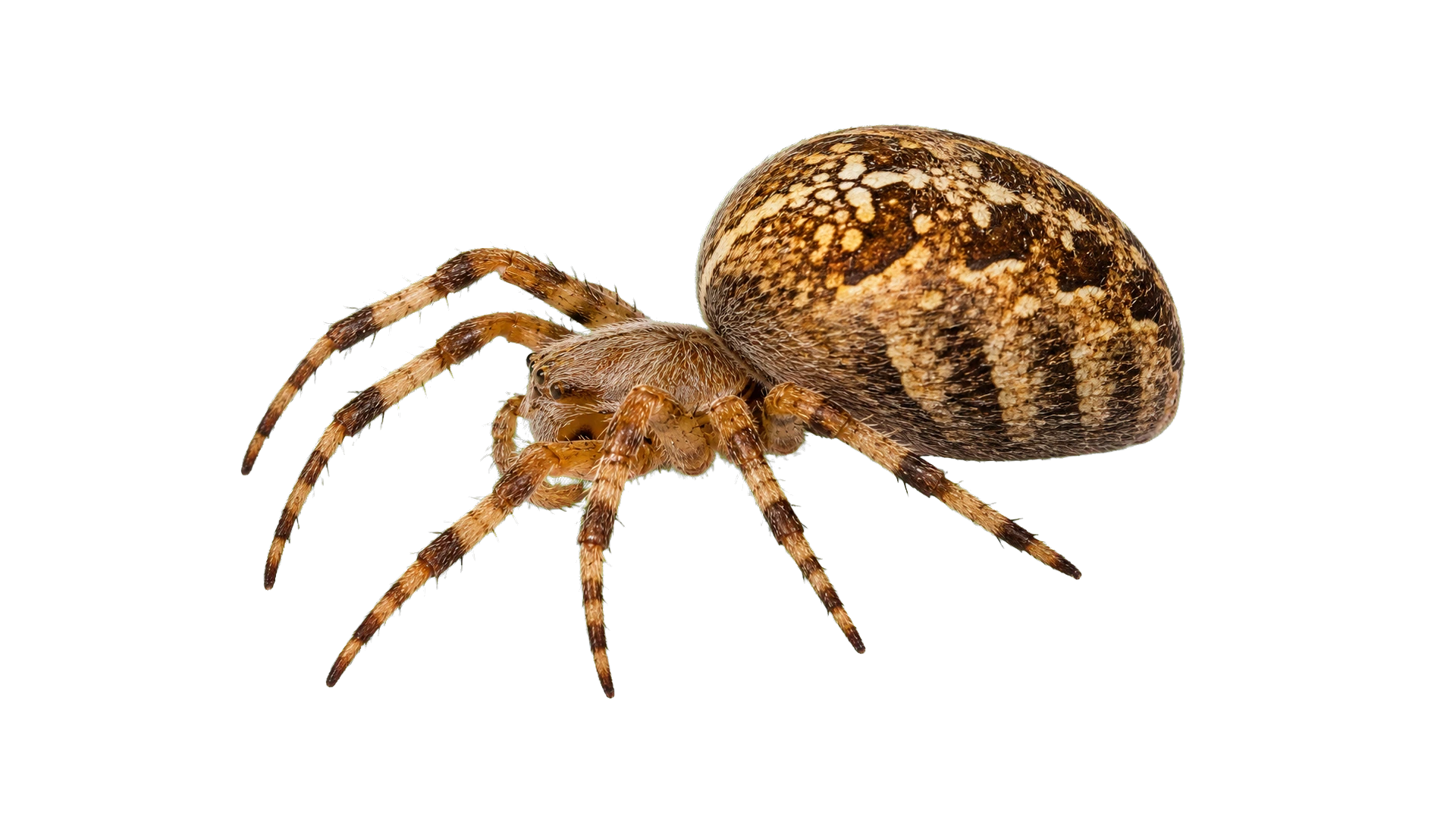
Two body segments
Spiders have a clear waist (pedicel) between cephalothorax and abdomen. Insects have three body segments; mites and ticks appear to have one fused body. The two-segment shape is the fastest visual ID.
Local pest control help is one call away.
 Pest Control Services Nationwide Pest Control Services Nationwide
 Most spiders in homes are beneficial. They eat the flies, gnats, ants, and silverfish that brought them in. The exceptions are the two medically significant species (black widow, brown recluse), plus the aggressive bite-risk species (yellow sac, hobo, wolf spider in living areas). Identification matters because the right response differs dramatically across these groups.
Spiders are predators, not opportunistic invaders. They appear where prey is abundant. A house with a steady spider population almost always has an underlying insect population (flies, gnats, silverfish, ants) the homeowner has not addressed yet at the source.
Cut the prey base and the spiders leave on their own. Skip that step and any individual spider you remove is replaced by another within weeks because the prey signal stays in place attracting fresh arrivals from outdoors.
What spiders track when they pick your house:
About 3,500 spider species live in North America. Of those, fewer than a dozen produce venom medically significant to humans, and bite incidents from those few species are dramatically rarer than most people assume. The vast majority of spiders are non-aggressive predators that quietly suppress the insect populations that would otherwise dominate the indoor environment.
Three checks that distinguish a spider from a tick, harvestman, or other arachnid look-alike.
Spiders have a clear waist (pedicel) between cephalothorax and abdomen. Insects have three body segments; mites and ticks appear to have one fused body. The two-segment shape is the fastest visual ID.

Spiders have eight legs, all attached to the cephalothorax. Insects have six legs; harvestmen (daddy long-legs) have eight but a single fused body. Counting legs is fast and reliable.

Most spiders have eight eyes arranged in two rows of four. The eye pattern is the most reliable species-level diagnostic in close inspection. Brown recluses, for example, have only six eyes in three pairs.
Most homes have a few spiders almost all of the time. The line between background presence and a population worth treating is when spider activity is widespread, persistent across seasons, or concentrated in living areas where occupants are getting startled or risk bites. Recognizing the early signs of an established population separates a low-grade nuisance from a treatment-worthy infestation.
How Spiders Establish in a Home
Spiders fall into two main hunting categories. Web-builders (orb weavers, cellar spiders, cobweb weavers) build webs and wait for prey to land. They rarely move once a productive web is established. Active hunters (wolf spiders, jumping spiders, brown recluses) roam to find prey and don't build webs for catching food. Identifying which type you have changes both the inspection plan and the treatment plan.
Indoor spiders almost always indicate an underlying insect prey base. A house full of fly traps with no flies left is also a house with no spiders, eventually. The most effective spider control is prey suppression: address the gnats, flies, ants, and silverfish that brought the spiders in, and the spider population shrinks naturally.
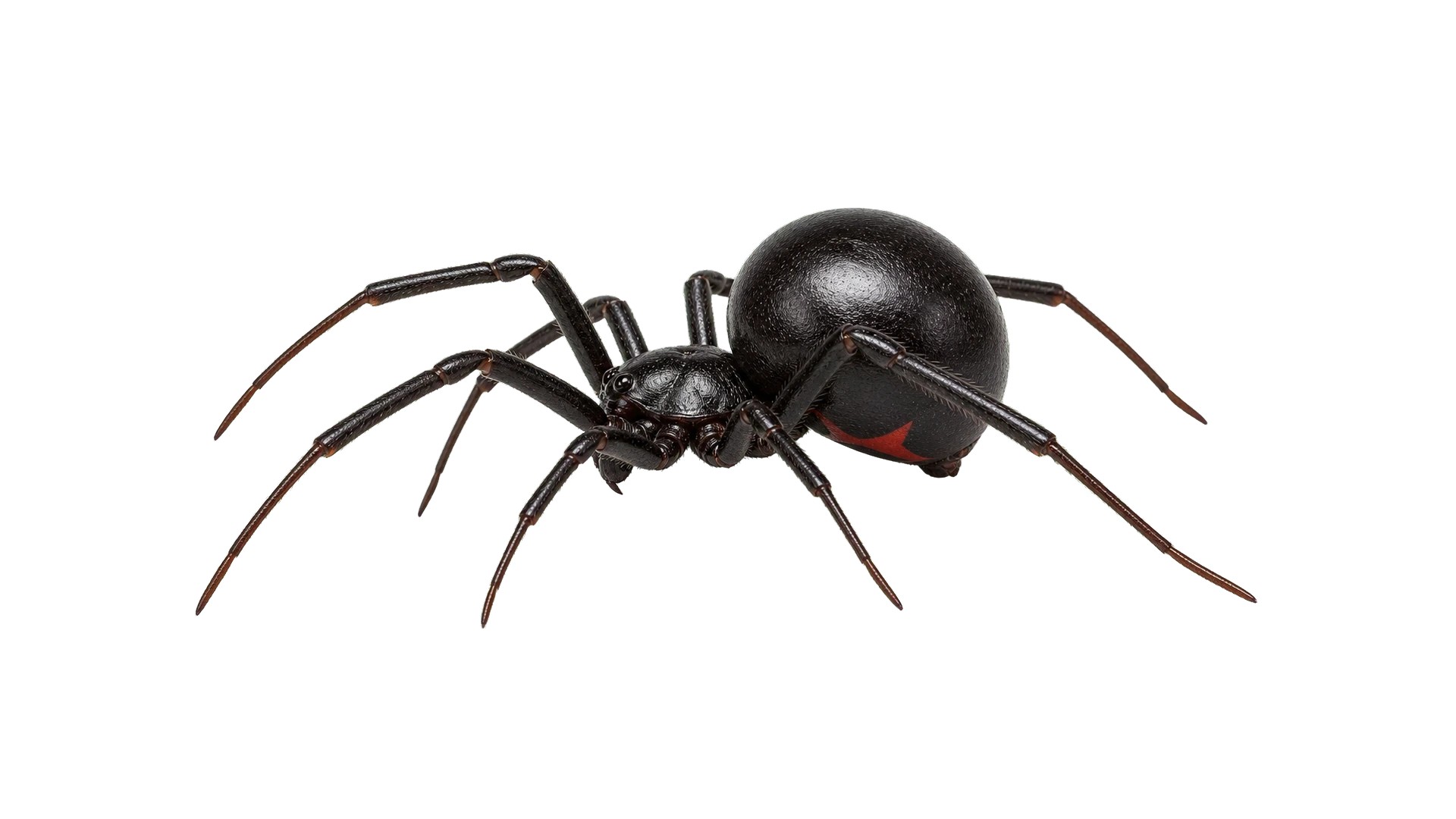
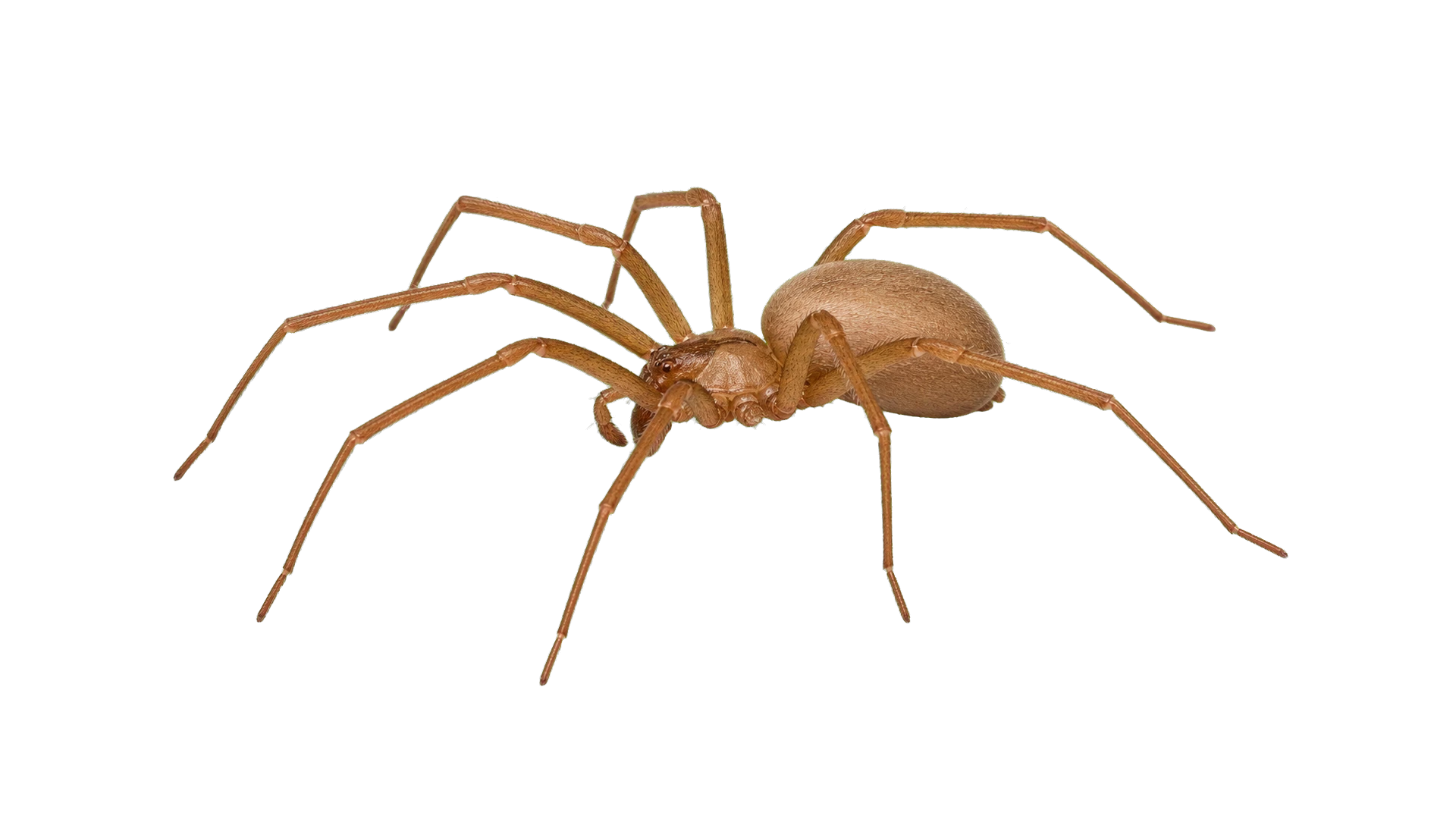
Two species deserve genuine concern: the black widow (red hourglass marking, web-builder, found in dark dry sheltered spots) and the brown recluse (violin marking on cephalothorax, active hunter, found in undisturbed storage in the south-central United States). Bites from either are uncommon and rarely fatal with modern medical care, but both can cause significant tissue damage and warrant active control if confirmed indoors. Most other spiders are non-aggressive and the right response is leaving them alone or doing harborage cleanup.
Six features that define a spider, with a generic house spider pictured. Other species follow the same structure with proportional differences.
Spiders have eight legs (4 pairs), all attached to the cephalothorax. The primary diagnostic vs insects, which have six legs attached to a separate thorax.
Cephalothorax (eyes, fangs, legs) and abdomen (spinnerets) joined by a narrow pedicel. The two-segment shape separates spiders from ticks and mites (single-bodied).
Most spiders have eight simple eyes in two rows of four. Eye pattern is the most reliable species-level diagnostic. Brown recluses have only six eyes in three pairs (overrides the violin marking).
Paired fangs at the front inject venom. Fang size tracks prey size, not venom potency. Brown recluses have tiny fangs with significant venom; wolf spiders have large fangs but are relatively harmless.
Three pairs of finger-like silk organs at the rear of the abdomen. All spiders produce silk, but not all use it for prey. Hunters use silk for egg sacs, draglines, and shelter.
Two short leg-like appendages near the mouth, used for sensing and food handling. Male pedipalp tips enlarge into reproductive organs (a fast sex diagnostic once captured).
Pick the sign that matches what you've noticed. Each one points to a different type of spider and a different stage of the situation.
Most house spiders are harmless and slow to multiply. The urgency depends almost entirely on the species: a few cellar spiders are nuisance, a brown recluse or black widow is medical. The timeline below covers both situations.
Common house spiders (cellar, jumping, wolf spider) in corners, basements, or garages. Most are harmless and reduce other pest populations as a bonus. Identification matters more than population size at this stage of the situation.
Recurring webs in the same corners, multiple spiders per room, or egg sacs visible in storage. Population is breeding indoors. Still mostly nuisance unless species ID points to brown recluse, black widow, or hobo spider.
A brown recluse, black widow, or hobo spider confirmed indoors. These species avoid people but bite when trapped in shoes, gloves, or bedding. Even one confirmed sighting changes the treatment from optional to important for households with children or pets.
A confirmed bite from a brown recluse or black widow, or a heavy infestation of medically significant species. Recluse bites can develop necrotic ulcers over days. Widow bites cause severe muscle pain and rare fatal complications. Both need medical attention and immediate pest control.
Most spider problems aren't really spider problems, they're insect-prey problems. If you have a lot of spiders, you usually have a lot of small flies, ants, or moths feeding them.
Local pros identify the species, address the underlying prey base, and treat aggressively only where the species warrants it.
Spiders do not pick houses at random. They follow signals: a porch light burning all night that pulls moths and midges to the wall, a silverfish or ant population in a basement, cluttered garage corners that double as prey harborage. Spiders are predators downstream of an insect population, so any property that concentrates prey at a window or under an eave becomes a fixed hunting ground.
Different spider species chase different rewards, which is why ID matters. Black widows and brown recluses are the only two medically significant US species and prefer cluttered garages, woodpiles, and undisturbed crawl spaces. Wolf spiders hunt at ground level chasing ants and crickets. Jumping spiders sit on sunny windowsills hunting flies. Orb weavers build seasonal webs near porch lights. House spiders, cellar spiders, hobo spiders, and yellow-sac spiders fill specific harborage niches. Knowing the species tells you whether the response is wipe-and-release or a 3 foot clearance audit.
Most affected homes have two or three of these conditions running at once, and addressing prey beats spraying spiders every time. Start with the highest-leverage source: switch outdoor bulbs to yellow LED to cut moth and midge attraction by 60 to 80 percent. Then clear clutter from a 3 foot strip along basement and garage walls, vacuum corner webs weekly, and seal foundation gaps larger than 1/16 inch. Even partial wins help: a 2-week shift to yellow porch bulbs and a single weekly vacuum pass through the garage often cuts visible spider counts by half, especially during fall when adult males disperse looking for mates.
Common house spiders and cellar spiders spin small tangled webs in undisturbed corners. Ceilings, behind picture frames, and door frame tops are typical spots.
Black widows favor garages, sheds, and undisturbed dry storage. Wolf spiders and hobo spiders often hunt in garages at night. Stored cardboard provides ideal harborage.
Cool, damp, undisturbed spaces with insect prey are a spider's preferred environment. Cellar spiders, brown recluses (in range), and various others all favor these areas.
Long-term-stored cardboard boxes and undisturbed clutter create perfect harborage. Brown recluses in the south-central US use these zones heavily; relevant species ID matters.
Brown recluses are infamous for hiding in long-term stored clothing, shoes left in closets, and rarely-used boxes. Shake out shoes before wearing if you live in their range.
Outdoor lights attract insects, which attract orb weavers building large webs nearby. Dense ivy on walls and shrubs against siding harbor outdoor populations that move inside seasonally.
Why a few visible spiders mean dozens of spiderlings emerging from each egg sac.
2 to 8 weeks
Females deposit silk sacs with dozens to several hundred eggs. Black widows guard aggressively; others abandon. Sacs resist most insecticides.
Weeks to months
Hatchlings emerge as miniature adults. Many species balloon away on silk threads to catch wind. Local dispersal is fast across the yard.
3 months to 2 years
Spiders molt 5 to 12 times before adulthood. Wolf spiders and brown recluses can take a full year to mature, smaller species under a season.
Lives 1 to 2 years (most species)
Females outlive males in most species. House spiders live a year. Brown recluses reach 2 to 3 years. Black widows reach 3 years total.
Most spider populations indoors stabilize at whatever the prey base supports. Outdoor populations cycle with weather and prey availability; indoor populations are limited mostly by insect food access and harborage. Address the food and the population shrinks; address the harborage and the population disperses; do both and the spiders leave on their own.
Most spiders are harmless, but a few warrant medical attention. Match what you're seeing to identify the species.
| Species | Severity | Key Sign | Where You'll Find Them |
|---|---|---|---|
| Black Widow Spiders | Medical | Messy, irregular webs low to the ground in garages and woodpiles | woodpiles, outdoor toilets, sheds |
| Brown Recluse Spiders | Medical | Found in undisturbed storage areas, cardboard boxes, and closets | closets, attics, basements |
| Cellar Spiders | Nuisance | Messy cobwebs in ceiling corners and basements, vibrates web when disturbed | basements, cellars, corners |
| Hobo Spiders | Medical | Funnel-shaped webs at ground level near foundations | ground level, basements, window wells |
| House Spiders | Nuisance | Tangled cobwebs in corners of rooms, window frames, and basements | corners, windows, basements |
| Jumping Spiders | Nuisance | Active hunting on walls and windows during day, no webs, jerky movements | windows, walls, outdoor vegetation |
| Orb Weaver Spiders | Nuisance | Large circular webs in garden and around exterior lights | gardens, porches, between structures |
| Wolf Spiders | Nuisance | Fast runners on floors at night, may carry egg sac or spiderlings on back | ground level, under debris, burrows |
| Yellow Sac Spiders | Medical | Silken sac retreats in upper wall-ceiling junctions, nocturnal hunting | wall corners, ceilings, behind pictures |
Severity reflects typical impact, not your specific case. If unsure, treat at the higher tier.
Honest read on the most common DIY methods: which ones treat the actual driver and which ones just thin the visible spiders.

 Address the underlying insect populations: clean drains for gnats, fix moisture for silverfish, add window screens for flies Reduce outdoor lighting at night or switch to yellow bulbs that attract fewer insects Spider populations shrink within weeks once their food source disappears Declutter garages, basements, attics, and storage closets Remove cardboard boxes, stored clothing, woodpiles touching siding, and dense vegetation against walls Frequent vacuuming of corners and edges removes egg sacs before they hatch Seal foundation cracks, install door sweeps, and screen vents (the same exclusion work that helps with rodents and other pests) Pro-grade residual perimeter treatment around the foundation suppresses outdoor populations from moving in When black widow or brown recluse is confirmed, targeted treatment in harborage areas is appropriate
  Kills the contacted spider but does nothing about the prey base or harborage New spiders move into the same area within 1 to 3 weeks Useful for confirmed black widow or brown recluse encounters; overkill for common house spiders Strong scents may briefly deter spiders from a specific spot No effect on egg sacs or spiderlings Useful as low-stakes deterrent at known entry points; not control Glue boards catch some active hunters but rarely impact web-builders Useful for monitoring (confirming species, tracking population) but not for reduction On their own, traps thin the population without removing why spiders are there
 Six prevention actions, sorted by effort. Spider control is mostly about the prey and the harborage; the spiders themselves are downstream.

Outdoor lights at night attract huge numbers of insects, which attract orb weavers and other web-builders within feet. Yellow LED bulbs attract dramatically fewer insects.

Weekly vacuuming of ceiling corners, baseboards, and storage areas removes spiders, webs, and egg sacs before populations establish.

Clean drains to eliminate gnats, fix moisture sources to reduce silverfish, install or repair window screens to keep flies out. Spiders leave when food sources shrink.

Caulk foundation cracks, install door sweeps, screen vents, and tighten weatherstripping. The same exclusion work that helps with rodents and roaches helps with spiders.

Replace cardboard storage with hard plastic totes. Move stored items off floors and against walls. Reduce undisturbed clutter in garages, basements, attics. Brown recluse harborage especially shrinks fast.

Pro-grade residual perimeter spray around the foundation in spring suppresses outdoor populations before they migrate in. Worth it for households with dangerous-species exposure or yard-heavy spider activity.
Spider populations cycle visibly with seasons. The most reported indoor activity coincides with both fall mating dispersal and outdoor population peaks.
Outdoor populations recover from winter and spiderlings disperse from overwintered egg sacs. Indoor activity is moderate as insects begin emerging. Spring is the best window for perimeter exclusion work because populations have not yet peaked.
Outdoor populations grow rapidly with abundant insect prey. Web density on porches and around outdoor lights peaks. Indoor activity stays moderate; most spiders are outdoors.
Peak indoor sighting season. Outdoor populations are at maximum; mating season pushes males indoors looking for females; cooling temperatures drive overwintering spiders into structures. Most homeowner spider concerns surface in September and October.
Outdoor populations crash; indoor populations consolidate around heat sources and surviving prey. Reproduction slows. This is the lowest-pressure season for treatment work because outdoor reinfestation is minimal.
Four steps from arrival to a property with reduced spider activity. Visits run 60 to 90 minutes; results follow over 3 to 6 weeks.
Identify, address upstream, treat where warranted. Real spider control starts with the prey base and the harborage. Spraying the spiders without that step is a one-week reduction at best.
Walk the interior and exterior. Identify the dominant species, locate webs and harborage, and check for egg sacs. Confirm whether any medically significant species are present.
Identify the underlying insect populations the spiders are feeding on. Recommend cleanup, exclusion, or insect-targeted treatment as the upstream fix.
Residual insecticide along foundation perimeter, garage corners, basement edges, and any confirmed black widow or brown recluse harborage. Spot-treat egg sacs found during inspection.
Return visit to assess web rebuilding, residual residue effectiveness, and any new sightings. Adjust treatment plan if needed; close the project when activity is at baseline.
Real stories from households who connected with pest pros to identify, address, and reduce spider activity in their homes.

"Basement spiders finally under control."
Every fall, spiders would move inside as temperatures dropped. The pro treated the basement and entry areas and explained how to reduce the conditions that attract them. It made a noticeable difference right away.
"Basement spiders finally under control."
Every fall, spiders would move inside as temperatures dropped. The pro treated the basement and entry areas and explained how to reduce the conditions that attract them. It made a noticeable difference right away.

"Brown recluse spiders, finally handled."
We found brown recluse spiders in the garage and a closet. The tech explained their habits and treated the areas where they hide. Knowing what to watch for gave us peace of mind.

"Fall spider invasion handled."
Every autumn, spiders would take over the garage and porch. The tech treated those areas and explained what draws them indoors when temperatures drop. The difference was immediate.

"Garage cleared of spiders."
Black widow spiders were nesting in the garage corners. The tech cleared the webs, treated the area, and explained how to keep the space less inviting. It's been months without any new webs appearing.

"Basement spider population knocked down fast."
Our basement had become a spider haven. The tech treated the entire lower level and explained how reducing clutter and moisture would help long-term. The spider population dropped significantly within a couple of weeks.

"Spiders cleared from window frames."
Every fall, spiders would cluster around our window frames. The tech treated the exterior and explained how light attracts insects, which in turn attract spiders. Reducing the conditions made a noticeable difference.

"Brown recluse spiders cleared from closets."
Finding brown recluse spiders in multiple closets was frightening. The tech treated the interior thoroughly and explained how to make storage areas less attractive to them. We've been checking regularly and haven't found any since.

"Crawl space spiders identified and cleared."
Our crawl space had a significant spider population including some we couldn't identify. The provider treated the area and explained which species are common in Kentucky. Knowing what we were dealing with helped a lot.

"Damp basement cleared of spiders."
The damp basement was full of spiders and webs. The provider treated the area and recommended a dehumidifier to reduce the moisture that attracts them. The spider population dropped noticeably within weeks.

"Crawl space spider habitat cleared."
Our crawl space was full of spider webs and egg sacs. The provider cleared and treated the area and explained how the moisture down there creates an ideal habitat. Adding ventilation and treatment together made a lasting difference.

"Storage room cleared of brown recluse spiders."
We found brown recluse spiders while organizing a storage area. The provider treated the room and surrounding spaces and explained how to make storage areas less inviting. The careful approach put us at ease.

"Log cabin spider problem managed."
Our cabin-style home attracted a lot of spiders. The provider treated the interior and exterior and explained how the wood siding creates perfect hiding spots. Regular treatments have kept the problem manageable.

"Porch webs and spiders cleared up."
Our porch light attracted insects and spiders followed. The provider treated the porch area and suggested switching to yellow bulbs that attract fewer bugs. The spider webs have been much less of a problem since.

"Garage black widows cleared and prevented."
We found black widow webs in multiple corners of the garage. The provider treated the garage thoroughly and explained how to keep it less attractive to spiders. Regular inspections and treatment have kept it clear.

"Stone foundation spiders finally manageable."
Our stone foundation basement was perfect spider habitat. The provider treated the perimeter and interior and explained how sealing cracks in the old stonework helps. The basement is much more comfortable now.

"Patio cleared of black widow nests."
We found black widow webs under outdoor furniture and along the foundation. The provider treated the yard and exterior thoroughly and explained how the warm, dry climate makes them common here. The treatment worked well.

"Basement and upstairs cleared of spiders."
Our basement was full of spider webs and we kept finding them upstairs too. The provider treated both levels and explained how basements in North Dakota homes provide ideal shelter. The improvement was obvious within weeks.

"Brown recluse spiders, finally handled."
We started finding brown recluse spiders in closets and the garage. The provider did a thorough treatment and explained their behavior patterns. They also recommended reducing clutter in storage areas, which helped significantly.

"Detached garage cleared of spiders."
Our detached garage had become a spider haven. The tech treated the interior and sealed the gaps around the door and windows. They explained that garages are prime spider habitat because of the insects attracted to the light.

"Crawl space spider population brought down."
The crawl space under our house had a large spider population. The pro treated the area and installed better ventilation. They explained how reducing moisture in crawl spaces naturally reduces spider activity over time.

"Basement webs and spiders cleared."
Our basement was full of spiders and webs every season. The tech treated the space and explained how reducing humidity and clutter makes it less hospitable. The spider population has been much lower since.

"Attic spiders identified, treated, and cleared."
We found spider webs throughout the attic and worried about brown recluses. The tech identified the species and treated the attic, garage, and crawl space. They explained how insulation provides hiding spots and recommended sealing gaps near the roofline.

"Basement spider population cut down."
Our basement had cobwebs in every corner and we kept finding large spiders near the laundry area. The tech treated inside and out and explained how reducing other insects would cut the spider population since they follow their food source.

"Garage cleared of black widow nests."
We found black widow webs behind boxes in the garage and near the water heater. The tech cleared the webs, treated the area, and recommended reducing clutter. They explained widow habits so we could spot early signs of return.

"Closets cleared of brown recluse spiders."
We found brown recluses in the bedroom closets and were afraid to reach for clothes. The tech did a thorough treatment of closets, attic, and crawl space. They placed glue traps for monitoring and the activity dropped quickly.

"Window wells cleaned out and spider-free."
Basement window wells were full of spider webs and insects. The tech treated the wells, cleaned them out, and sealed gaps around the window frames. They suggested adding well covers to reduce debris and insect activity.

"Basement storage reclaimed from spiders."
The unfinished basement was full of spider webs and egg sacs. The tech treated the entire basement, removed webs, and explained that reducing moisture and clutter makes the space less attractive to spiders and their prey.

"Brown recluse spiders identified and treated."
We found what looked like a brown recluse in the garage and panicked. The provider identified the species, treated the garage and crawl space, and placed monitoring traps. They educated us on how to recognize recluse spiders versus harmless look-alikes.

"Pool cage spiders cleared and webs gone."
Large orb weaver spiders built webs all over the pool enclosure every night. The provider treated the cage frame and surrounding landscaping. Reducing the insect population that attracted the spiders was the key to long-term control.

"Screened porch cleared of spider webs."
Every corner of the screened porch had webs and large spiders. The provider treated inside the screen enclosure and the exterior perimeter. Reducing landscape lighting near the porch cut down the insect prey that attracted spiders.

"Closets cleared of cane spiders."
Large cane spiders kept appearing in closets and behind furniture. The provider treated the interior and exterior and cleared out harborage areas. They explained that cane spiders are mostly beneficial but understood our comfort concerns.

"Window wells cleared of black widows."
We found black widows in multiple basement window wells. The provider treated the wells, cleared debris, and sealed gaps around the windows. They recommended well covers to keep insects and spiders from using them as shelter.

"Unfinished basement spider count down sharply."
The basement had spiders in every corner and behind storage shelves. The provider treated the entire space and explained that reducing clutter and moisture cuts the insect population that spiders feed on. The improvement was dramatic.

"Brown recluse spiders cleared throughout the house."
We found brown recluse spiders in closets, the garage, and the basement. The provider did a thorough treatment and placed sticky traps for monitoring. They explained that reducing clutter eliminates hiding spots these spiders prefer.

"Back porch cleared and webs gone."
Every morning, new webs stretched across the porch doorway. The provider treated the porch and surrounding area. Reducing outdoor lighting near the porch cut down the flying insects that attracted the spiders.

"Whole-house recluse treatment fully resolved."
My son was reaching for a winter coat in the basement closet when he saw one drop down the sleeve. That was enough for me. The inspector found shed skins behind the dryer and treated the closets, garage, and the gap behind the water heater. Monitoring traps catch the occasional straggler. Knock on wood, no bites in the house, and the kids know not to grab clothes without shaking them out.

"High-risk areas cleared of brown recluse spiders."
We kept finding brown recluses in the basement and laundry room. The provider treated all the high-risk areas and set up monitoring traps. They explained how to reduce clutter and seal boxes to minimize hiding spots.

"Playroom cleared safely for the kids."
Finding spiders in the playroom worried us about the children's safety. The provider identified the species, treated the room and surrounding areas, and explained how to reduce conditions that attract spiders indoors.

"Basement corners cleared and dehumidified."
The damp basement was full of spider webs and egg sacs. The provider treated the basement and recommended a dehumidifier. Reducing moisture cut down the insect prey that attracted spiders in the first place.

"Basement spiders down sharply with moisture control."
The basement had webs in every corner and large spiders near the sump pump. The provider treated the entire basement and sealed cracks in the foundation walls. Reducing moisture with a dehumidifier helped long-term.
Direct answers to what homeowners ask most when spider activity becomes a concern.
No. The vast majority of spiders found in homes are non-aggressive and beneficial; they eat the insects (flies, gnats, silverfish, ants) that would otherwise dominate the indoor environment. Common house spiders, cellar spiders, jumping spiders, and most garden spiders that wander indoors are harmless and provide free pest control. The species worth genuine concern are limited: black widows (red hourglass on underside, found in dark dry spots), brown recluses (violin marking on cephalothorax, found in undisturbed storage in the south-central US), and a few species with defensive bites (yellow sac, white-tailed in some regions). If you cannot confidently identify the spider, photograph it for a pest pro. Most identifications come back as harmless.
Brown recluses have a defined geographic range covering the south-central United States: roughly Texas through Tennessee, north into southern Iowa and Indiana. Outside that range, brown recluse confirmations are rare and often misidentifications of other brown spiders (most commonly wolf spiders or hobo spiders, neither of which is medically equivalent). Within their range, brown recluses prefer undisturbed indoor storage: long-term-stored cardboard, stacked clothing, shoes left in closets, attic boxes that haven't been opened in months. If you live in their range and find a confirmed brown recluse indoors, declutter aggressively, install glue boards in suspect harborage zones, and consider a targeted residual treatment. Outside the range, the vast majority of suspected brown recluses are something else.
Indoor spiders almost always indicate an underlying insect population. Spiders are predators; they don't randomly settle in houses without a food source. The most common drivers are: gnats from drains or houseplants, flies from outdoor lights and improperly screened windows, silverfish in basements and crawl spaces, ants on the patio or counters. Address the prey base and the spiders leave on their own within weeks. The other common driver is harborage: cluttered storage areas, woodpiles against the foundation, dense ivy on walls, and undisturbed corners. Cleaning up the harborage shrinks the population further. Spider removal alone (vacuuming or spraying the spiders themselves) almost never works long-term because new spiders move into the same spots if the food and shelter are still there.
Less often than people assume. The CDC and major medical journals consistently note that most reported spider bites in the United States are misdiagnoses; many turn out to be MRSA infections, allergic reactions, or other dermatological issues that look bite-like. Genuine spider bites usually require pressing the spider against skin (rolling over on one in bed, putting on a shoe with one inside, reaching into a cardboard box). Spiders do not seek out humans to bite. Black widow bites in the United States are uncommon and rarely fatal with prompt medical care. Brown recluse bites are even less common but can cause significant tissue necrosis at the bite site, so prompt medical attention matters. If you have a confirmed bite from either species, seek medical care; if you have an unexplained welt without a confirmed spider, expect that the bite diagnosis may be wrong.
It depends on the species and your tolerance. Common house spiders, cellar spiders, jumping spiders, and most outdoor spiders that wander inside are beneficial; the most ecological response is to relocate them outside (cup and paper, then release). Web-builders in low-traffic corners can simply be left alone; they're suppressing the household insect population for free. Active hunters in living areas (wolf spiders running across the floor) are reasonable to remove, but the same prey-base logic applies: more will come if the food source remains. Black widow and brown recluse encounters indoors warrant removal and follow-up control measures. If you're uncomfortable with any spiders at all, the most effective long-term plan is suppressing the prey base and reducing harborage; relocation handles the existing individuals without addressing why they're there.
Pro-grade residual perimeter treatments (the kind applied around the foundation by a pest pro) suppress outdoor spider populations from migrating in and reduce indoor sightings significantly when paired with prey-base management and harborage cleanup. These treatments typically last 30 to 90 days per application, with 2 to 4 applications per year depending on regional pressure. They are worth it for households with confirmed dangerous-species exposure (black widow, brown recluse), high yard spider activity, or family members with strong spider concern. They are not necessary for most homes with low-grade common-house-spider activity; the prey-base and harborage approach handles that level on its own. A pest pro will recommend the right scope based on what they find during inspection.
Three sustained habits keep spider populations near baseline. First, address the prey base: clean drains for gnats, fix moisture sources for silverfish, screen windows and doors to keep flies out, switch outdoor lights to yellow LED bulbs that attract fewer insects. Second, reduce harborage: declutter garages, basements, and attics; replace cardboard storage with hard plastic totes; trim vegetation back from siding; eliminate woodpiles touching the house. Third, exclusion: caulk foundation cracks, install door sweeps, screen vents, and tighten weatherstripping. The same exclusion that helps with rodents and other pests helps with spiders. With these three habits sustained, indoor spider activity stays at the background level that most homeowners barely notice.
Identify the species, address the prey base, treat where warranted. Local pros handle the full plan, not just a one-time spray.
Click through to species pages for behavior, regional patterns, and treatment specific to that spider type.
Venomous spiders with a red hourglass marking found in dark, sheltered areas.
Black widow spiders build irregular, tangled webs in undisturbed spaces like garages, woodpiles, crawlspaces, and under outdoor furniture. Their venom is medically significant, causing severe muscle pain, cramping, and in rare cases life-threatening reactions. Wearing gloves when working in dark storage areas and keeping clutter to a minimum are important precautions.
Quick ID:
Why it matters:
Venomous spiders with a violin-shaped marking that hide in closets and storage boxes.
Brown recluse spiders are shy, nocturnal hunters that nest in undisturbed areas like cardboard boxes, clothing piles, and closet corners. Their bite can cause necrotic tissue damage that requires medical attention, though bites are uncommon and usually occur when the spider is accidentally pressed against skin. Professional treatment is recommended because their populations are often larger than visible signs suggest.
Quick ID:
Why it matters:
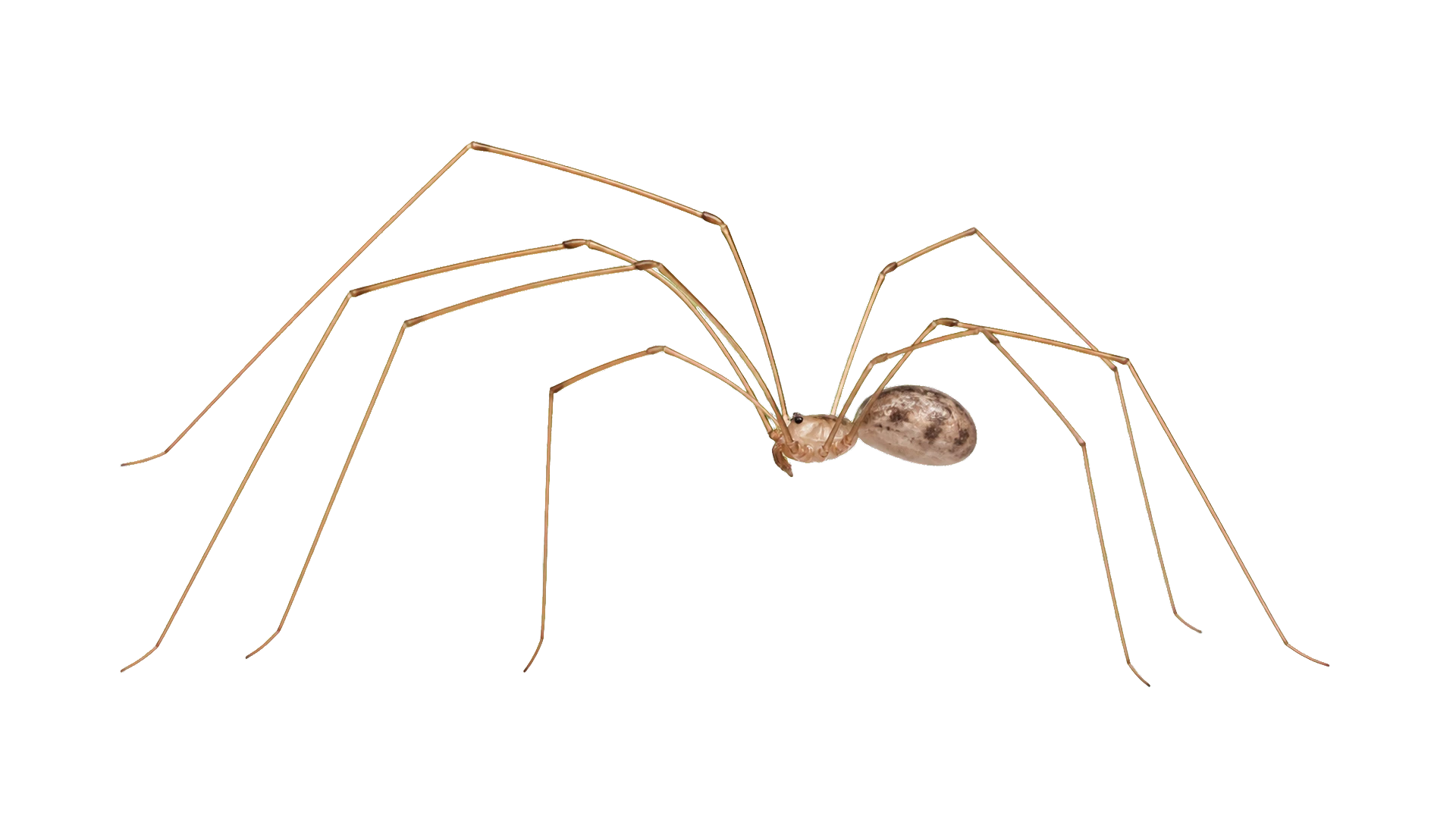
Long-legged spiders that fill basements and garages with messy cobwebs.
Cellar spiders, commonly called daddy longlegs, are harmless to humans but create extensive, wispy cobwebs that accumulate in corners, ceilings, and around windows. They are actually effective predators of other spiders and insects. Regular web removal and reducing humidity in basements and crawlspaces will discourage their presence.
Quick ID:
Why it matters:
Fast-running funnel-web spiders found in basements and ground-level areas.
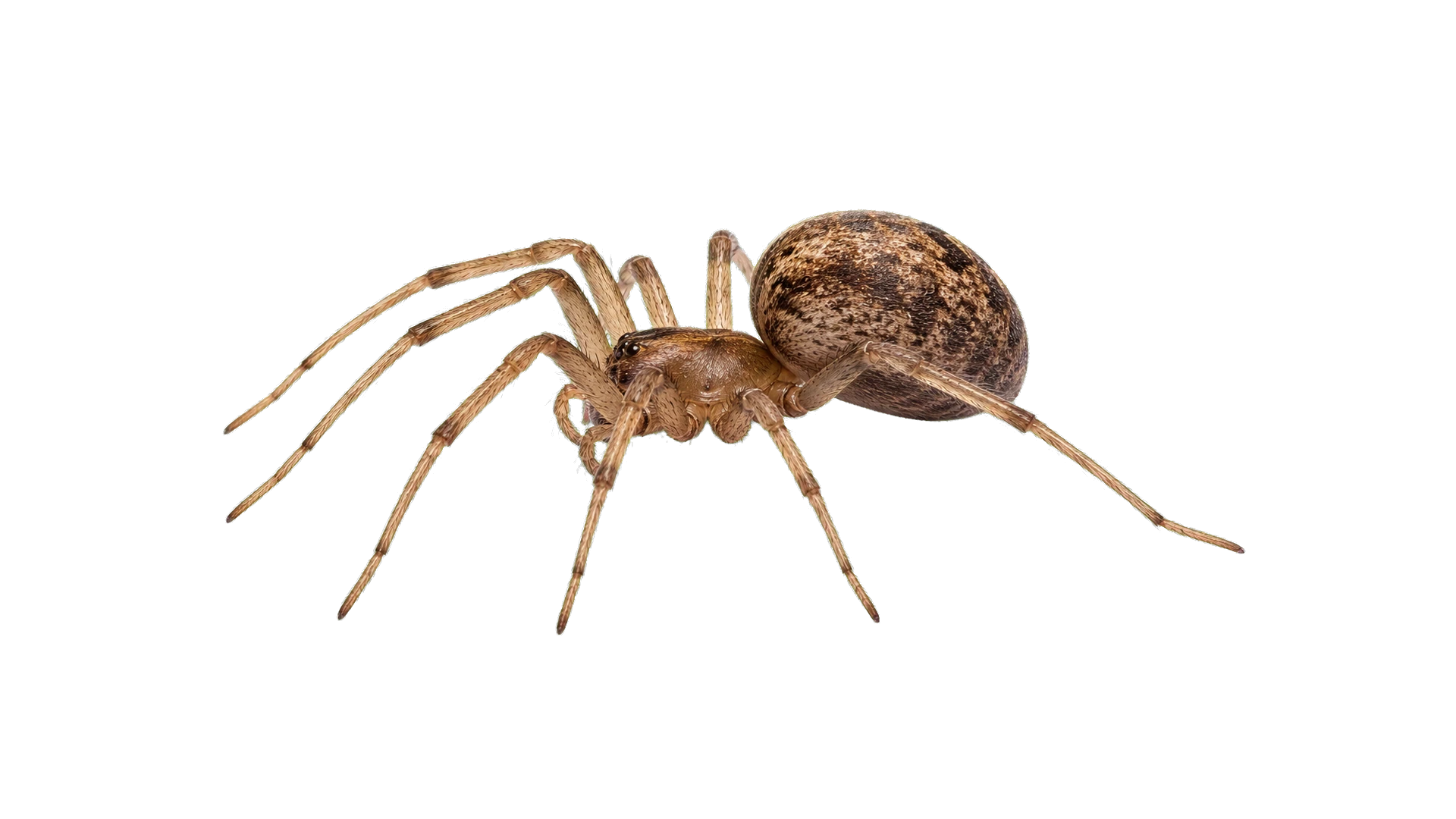
Hobo spiders build funnel-shaped webs in cracks, window wells, and at ground level inside basements and garages. They are poor climbers, so infestations are typically limited to lower floors. While once thought to cause necrotic bites, current research suggests their venom is not medically significant. Sticky traps and exterior perimeter treatments are effective management tools.
Quick ID:
Why it matters:
Common indoor spiders that build webs in corners, windows, and light fixtures.
House spiders are the most frequently encountered spiders indoors, spinning tangled webs in upper corners of rooms, window frames, and around light fixtures. They are harmless to humans and beneficial as insect predators, but their webs accumulate quickly and create a perception of uncleanliness. Regular removal of webs combined with sealing exterior cracks will reduce their numbers over time.
Quick ID:
Why it matters:
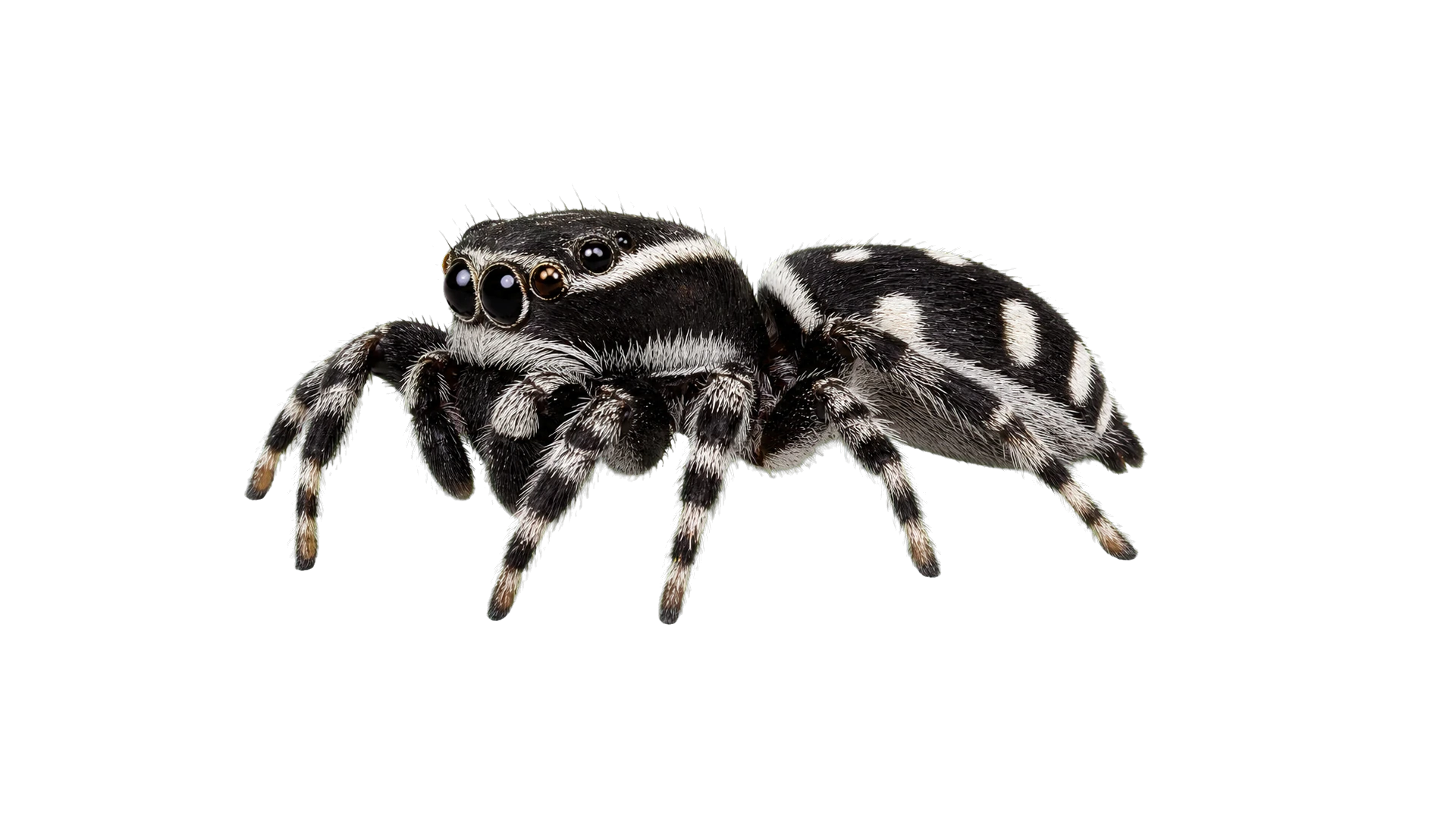
Small, curious spiders that hunt actively rather than building webs.
Jumping spiders are compact, fuzzy-looking spiders with excellent vision and the ability to leap several times their body length to catch prey. They are commonly found on windowsills, walls, and around exterior doors. They are harmless to humans and rarely bite, but their quick, unpredictable movements startle many homeowners. Sealing windows and doors is usually sufficient to keep them out.
Quick ID:
Why it matters:
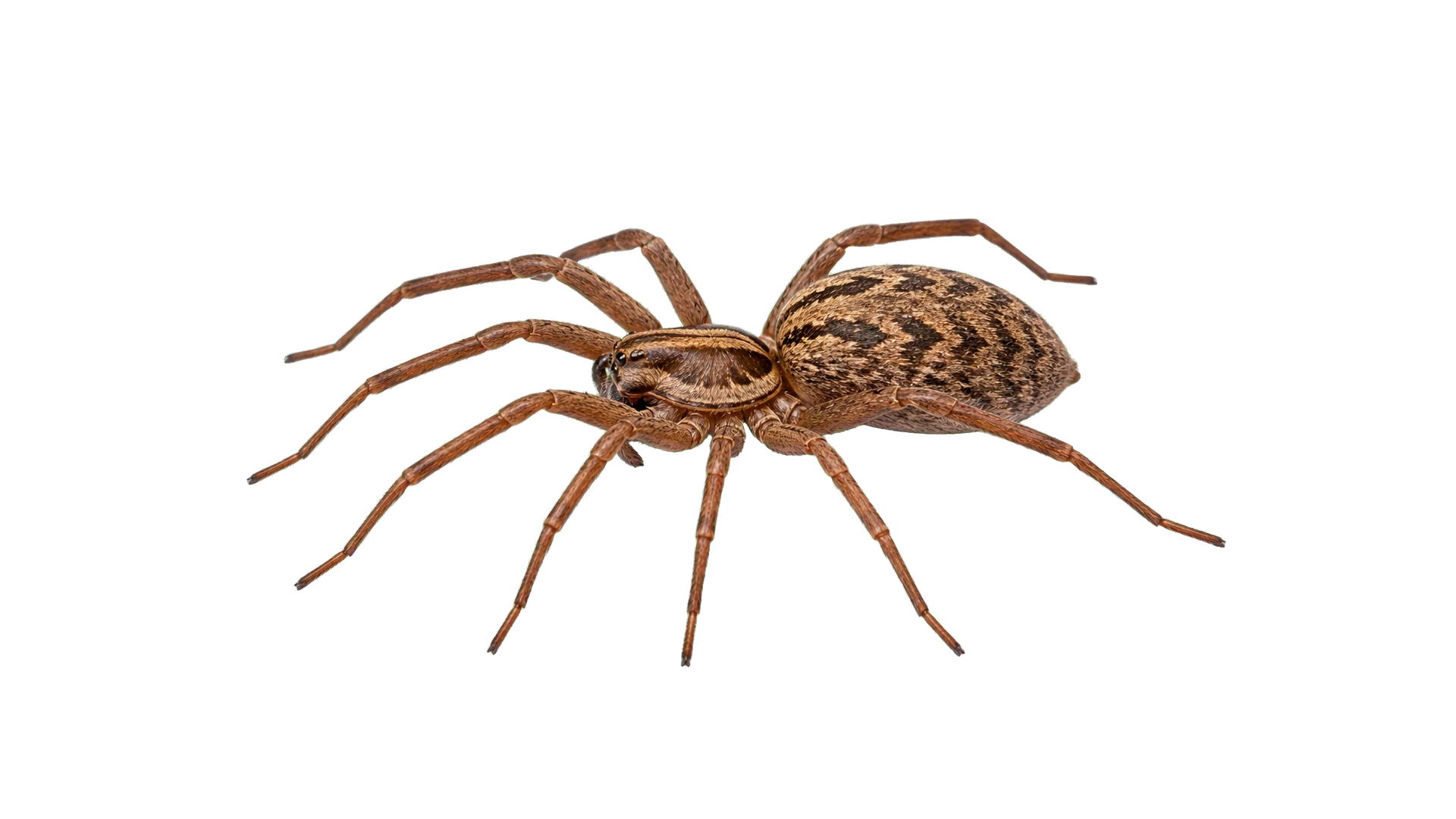
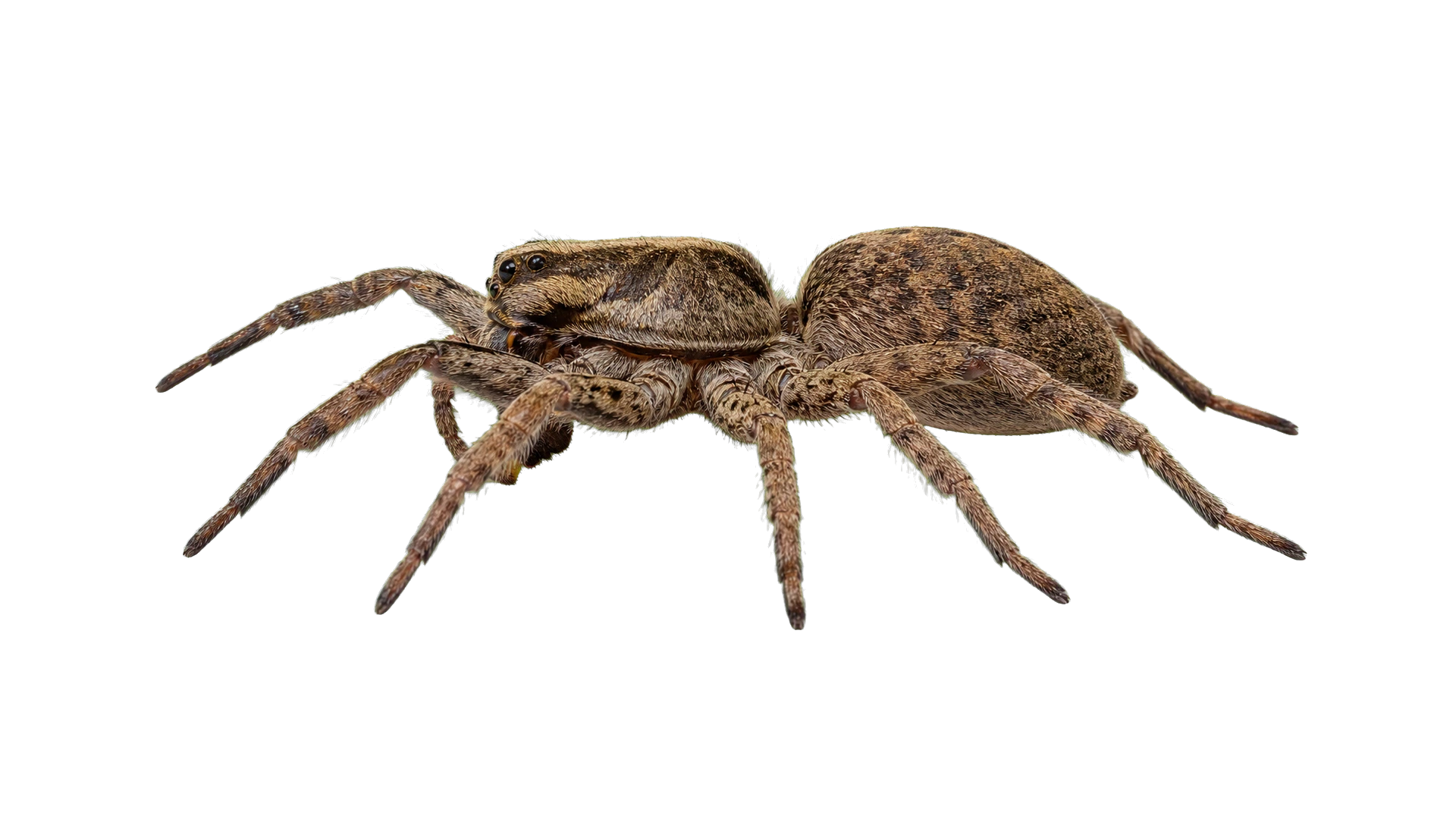
Large, ground-dwelling hunters that carry egg sacs and startle homeowners.
Wolf spiders are fast, robust hunters that chase prey on the ground rather than building webs. They are commonly found in garages, basements, and around foundation perimeters. Females carry their egg sacs attached to their spinnerets, and newly hatched spiderlings ride on the mother's back. Their large size (up to two inches) alarms people, but their bite is comparable to a bee sting.
Quick ID:
Why it matters:
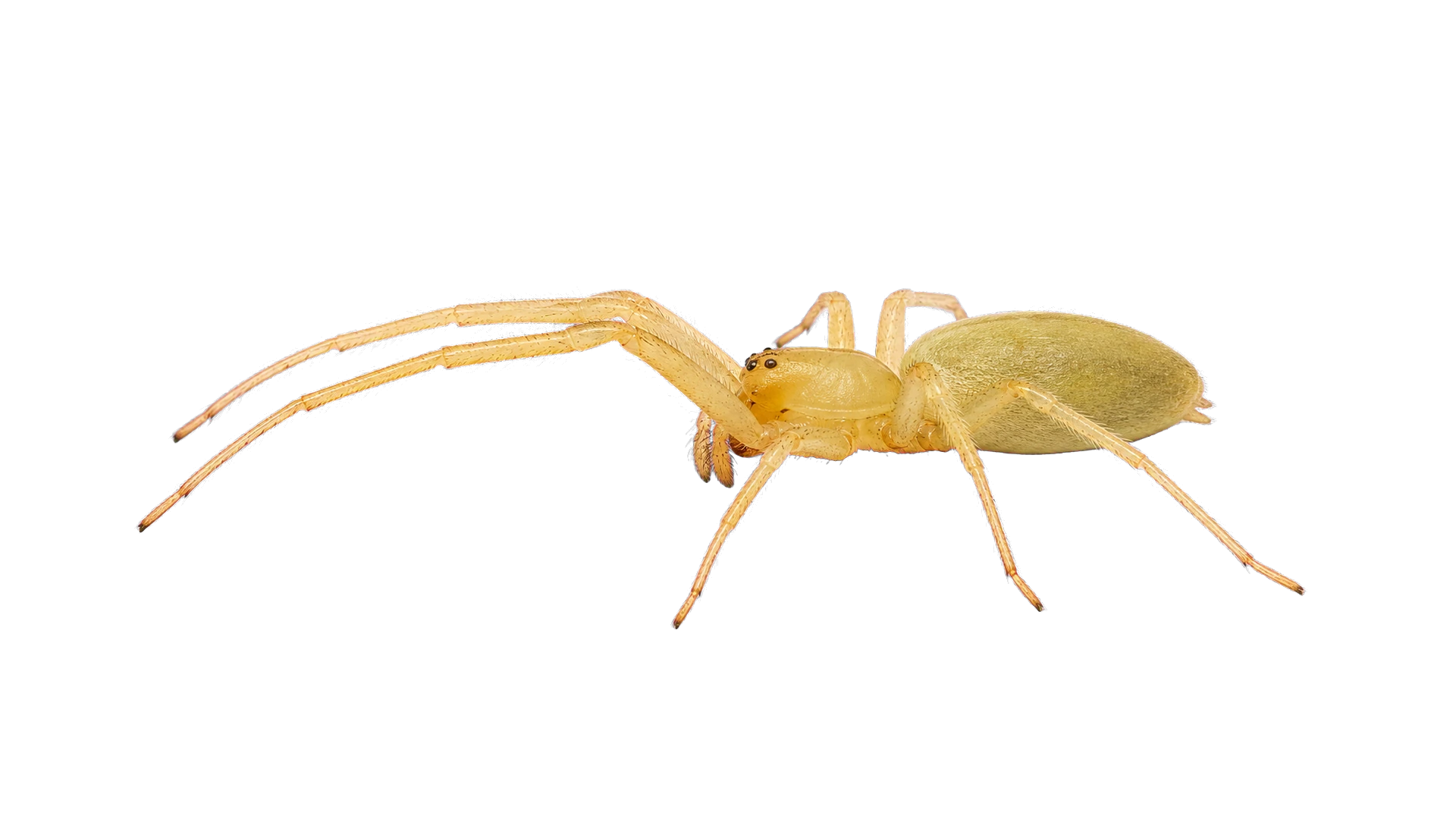
Nocturnal hunting spiders responsible for most indoor spider bites.
Yellow sac spiders are pale, yellowish spiders that build small silk retreats in ceiling corners, behind pictures, and along baseboards rather than catching prey in webs. They actively hunt at night and account for more confirmed spider bites than any other species in North America. Bites cause localized pain, redness, and swelling that can be mistaken for brown recluse bites.
Quick ID:
Why it matters:
Large web-spinning spiders that build elaborate webs across walkways.
Orb weavers construct large, circular webs between trees, porch columns, eaves, and across doorways and walkways, often at face height. Many species are large and brightly colored, which alarms homeowners despite being harmless. They rebuild webs nightly and are most visible in late summer and fall when mature females reach full size.
Quick ID:
Why it matters: