Local pest control help is one call away.

Common House Spider: Identification, Treatment & Prevention

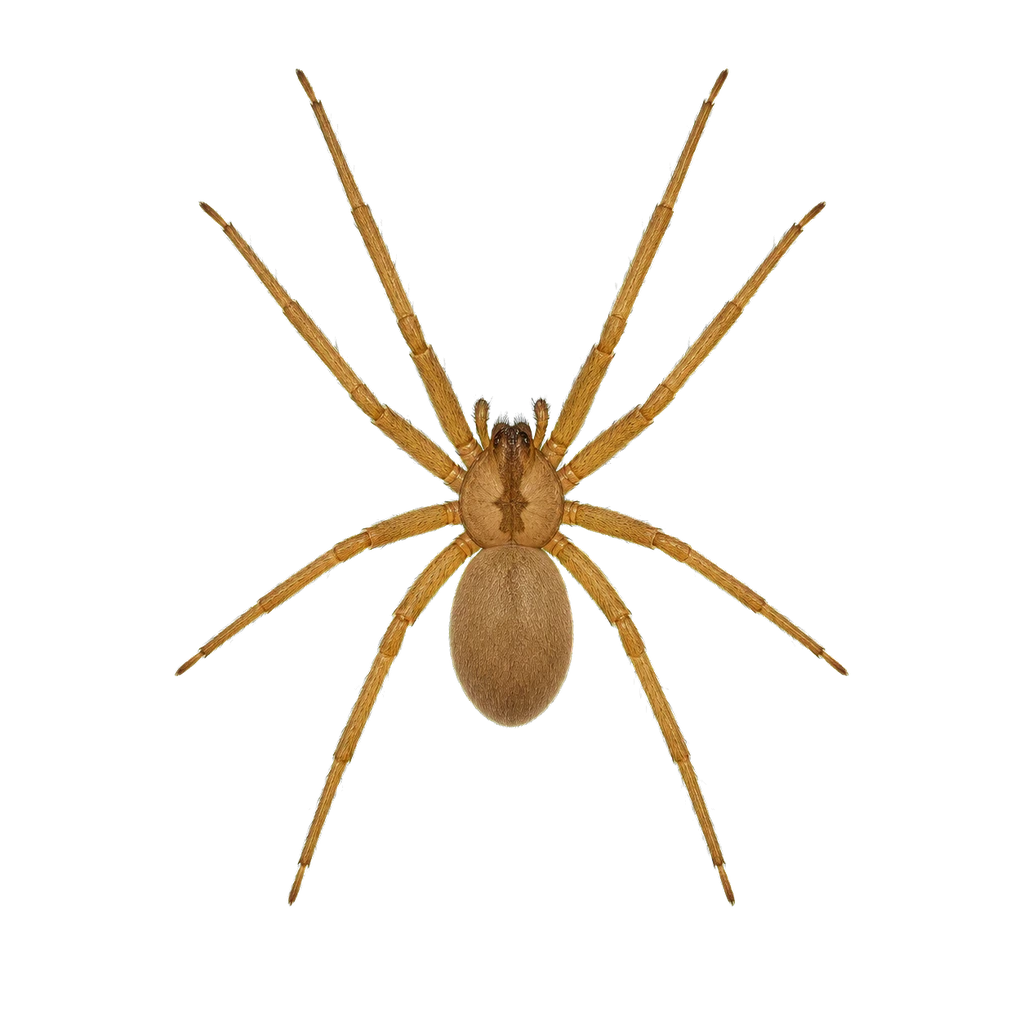
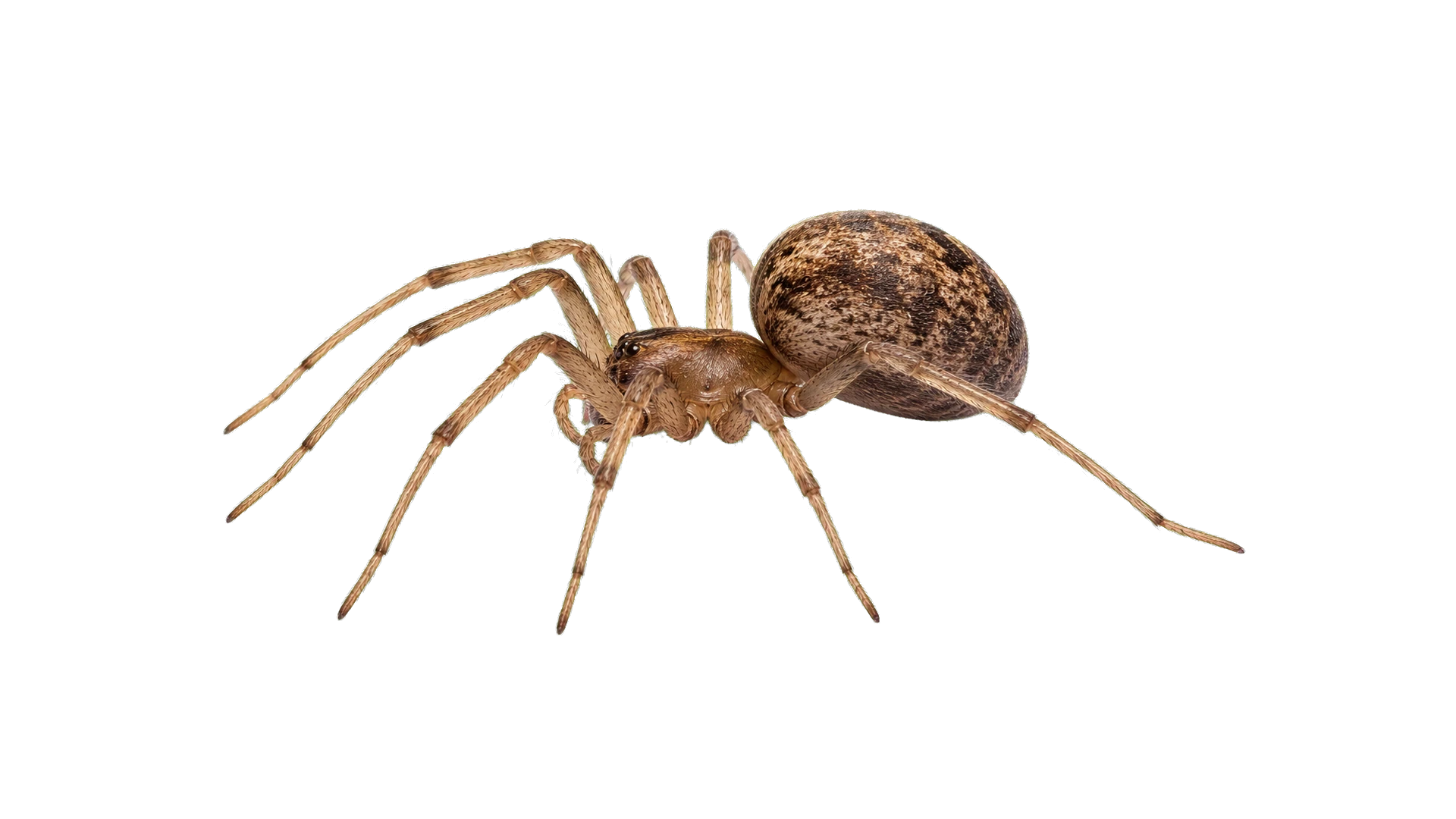
Common house spiders are one of the most familiar indoor spiders in North America. Adult females run 5 to 8 millimeters in body length, with mottled brown or gray coloring, a round bulbous abdomen, and a smaller cephalothorax that gives them the classic spider silhouette. They build messy tangled cobwebs in protected corners and hang upside down at the center of the web waiting for prey. Their bite is rare, mild, and not medically significant.

If you're seeing irregular cobwebs in garage corners, basement edges, window frames, or attic eaves, with a mottled brown or gray spider resting upside down in the middle of the tangle, you're almost certainly looking at a common house spider. This guide covers how to confirm the ID, how to tell them apart from black widows (same family, very different risk), and when web removal at home is enough versus when professional service makes sense.

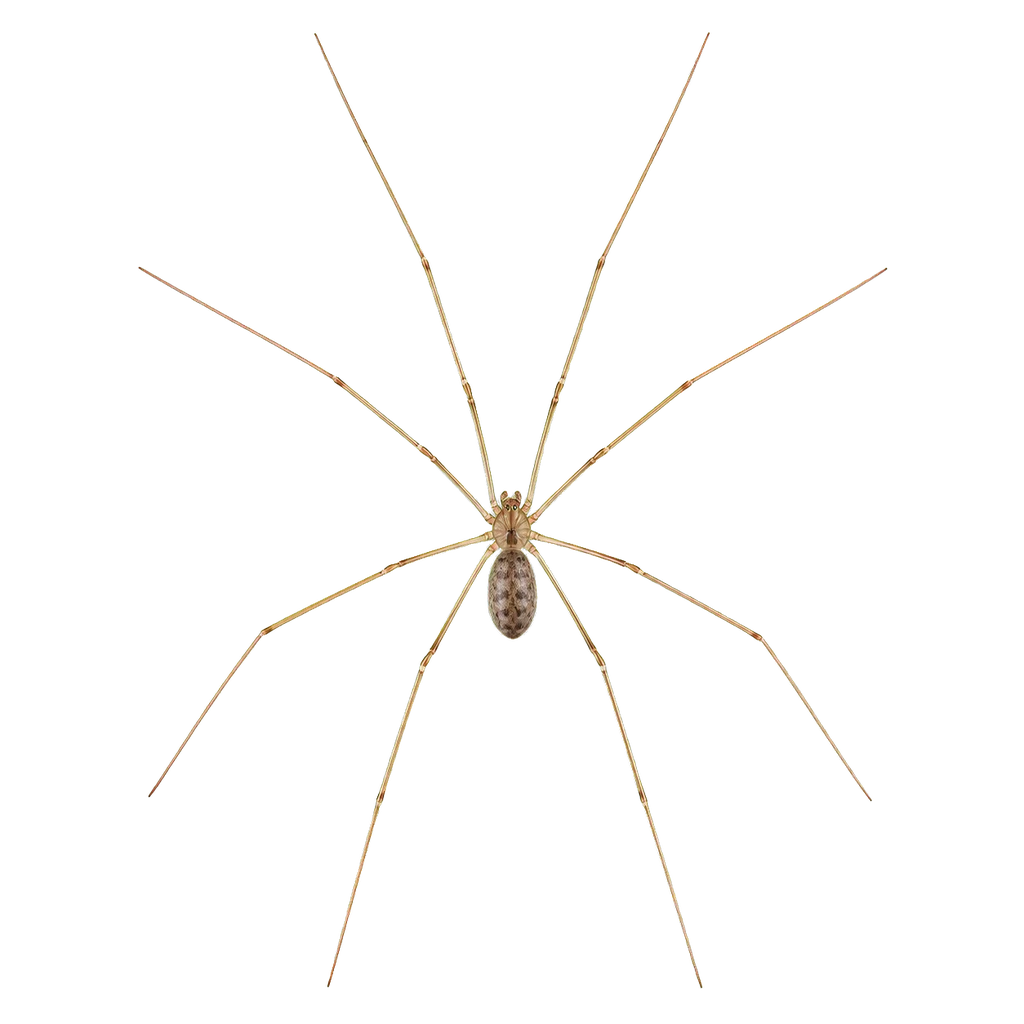
Close-up illustration of a common house spider showing mottled brown body, round abdomen, and long thin legs

ID Card: Common House Spider

Scientific name
Parasteatoda tepidariorum
Color
Brown, tan
Size
1/8 to 5/16 inch
Body shape
Small, rounded abdomen with long legs
Key evidence
Tangled cobwebs in corners of rooms, window frames, and basements
Also known as
Common house spiders, Cobweb spiders

Related Species

Call to get matched with a local pest control pro.

Available 24/7
(888) 495-1510
  • Specialists who confirm species ID before any treatment decision
  • Web removal in corners, eaves, and garage rafters across the whole structure
  • Residual corner treatment plus outdoor perimeter to reduce indoor entries

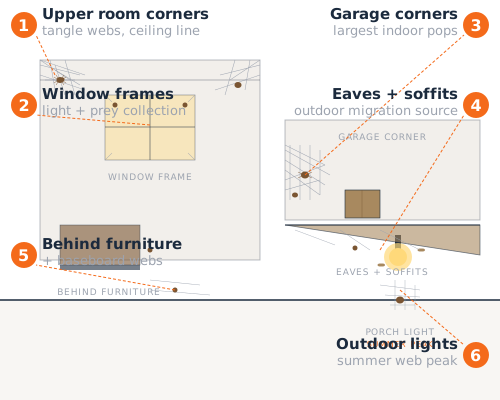
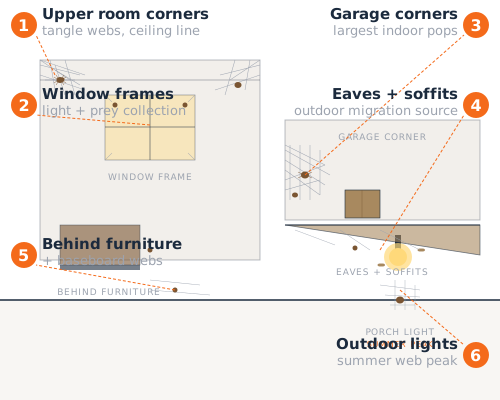
Where to Inspect for House Spider Webs

Cross-section illustration showing house spider webs in garage corners, window frames, basement edges, and attic rafters

Common house spiders pick low-traffic, protected corners where a tangled web can sit for weeks without anyone wiping it down. Walking these zones with a flashlight tells you where the population lives and gives you a count to work from. Look up at corners rather than down at floors:

  • Garage corners, ceiling beams, and behind tool benches, This is the single most common indoor habitat. Webs accumulate dust and small insect debris, and the spider sits darker than the surrounding silk.
  • Window frames, especially seldom-opened windows, Webs build along the frame edges where dead gnats and flies pile up against the screen. South and west-facing windows usually carry the heaviest activity.
  • Basement corners, around the water heater, and behind storage, Cool, dim, undisturbed corners are textbook house spider sites. Pull a box away from the wall and check the corner behind it.
  • Attic corners and around vent openings, Bring a flashlight and shine it across the rafters. Pale teardrop-shaped egg sacs hanging in the silk confirm an established female on that web.
  • Behind furniture in low-traffic rooms, Guest bedrooms, formal living rooms, and home offices that don't see daily cleaning collect webs in the corners behind couches and bookshelves.
  • Outdoor sheds, gazebos, and covered porches, Outdoor populations build heavy webs in protected exterior locations. These are the spiders that migrate inside through gaps once weather cools.

If you're finding more than four to six webs per room, or webs are reappearing within a week of being wiped down, the population is well established and probably feeding on a steady supply of indoor flying insects. House spiders are harmless, so this is about web tolerance and aesthetics rather than safety, but heavy web counts almost always point to an underlying gnat, fruit fly, or small fly problem that's feeding the spiders. Single-visit pro service runs $100 to $250 in most markets; recurring service runs $30 to $60 a month and only makes sense if web buildup is chronic.

Cross-section illustration showing house spider webs in garage corners, window frames, basement edges, and attic rafters
Illustration showing how house spiders enter homes via foundation gaps, garage door seals, and vegetation contact with outdoor sheds

Why Do I Have Common House Spiders?

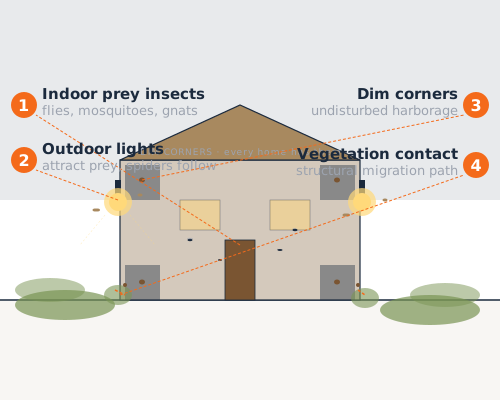
Spotting webs is step one. Understanding why house spiders settled in the first place is what keeps the count from climbing back. House spiders aren't really invaders; they live indoors as a baseline. Almost every garage, basement, and attic in North America has a small resident population year-round. The question is what's letting yours grow past the point you can ignore it.

What anchors house spiders to your home:

  • Low-traffic indoor corners, garages, basements, attics, and back rooms that nobody dusts give the webs time to mature and the spiders time to lay multiple egg sacs without disturbance
  • Indoor flying insects, gnats, fruit flies, small moths, and mosquitoes are the food source, and where prey is abundant the spider count climbs to match within a few months
  • Window frames with accumulated debris and dead insects, these are the single best prey zones inside a house, dead bugs in the track act as a constant low-grade buffet
  • Year-round heated indoor space, unlike outdoor spiders, house spiders breed and feed through winter in any heated structure, so populations don't reset seasonally
  • Older or rural homes with more void spaces, garages with exposed framing, basements with unfinished corners, and houses with attached sheds all carry higher chronic populations than tighter newer construction

A growing house spider count usually starts when an outdoor population migrates inside in fall, finds an undisturbed corner with steady prey, and starts producing egg sacs. Females lay 100 to 400 eggs per sac and produce multiple sacs per year. Most spiderlings die before adulthood, but enough survive that a quiet corner can hold dozens of webs within twelve months. The population stabilizes around how many insects the home produces. Cut the prey supply and the spider count drops on its own over several weeks.

How Serious Is Your House Spider Problem?

Find your scenario below. House spiders are harmless, so severity reflects web tolerance, underlying insect pressure, and household comfort rather than medical risk.

What You're Seeing Severity If Untreated Next Step
One house spider in a garage corner, single web, no other signs Early Web will persist and the spider will lay eggs over the next few months; population stays small if prey supply is low Confirm the ID, mottled body, messy tangled cobweb, no shiny black coloring or red hourglass. Wipe the web down if it bothers you. No further action needed.
Multiple webs across the garage or basement, monthly sightings of spiders Moderate Web count will keep climbing as females produce more egg sacs through summer and fall Web removal with an extended duster across all corners. Address the indoor flying insects, gnats, fruit flies, and small moths feeding the spiders.
Heavy web population spreading into living spaces, weekly sightings, family complaining High Indoor migration from outdoor populations will accelerate in fall; webs will compound across more rooms Schedule professional residual treatment in corners and on the outdoor perimeter to reduce indoor entries, plus a full whole-house web sweep.
Confirmed spider bite with allergic reaction, OR severe arachnophobia disrupting daily life Urgent Bites from house spiders are extremely rare but a strong reaction warrants medical evaluation. Phobia-level distress affects quality of life regardless of actual risk. Get a medical evaluation for any concerning bite. Call today for professional whole-house treatment to bring the population down quickly.
One house spider in a garage corner, single web, no other signs
Severity Early
If Untreated Web will persist and the spider will lay eggs over the next few months; population stays small if prey supply is low
Next Step Confirm the ID, mottled body, messy tangled cobweb, no shiny black coloring or red hourglass. Wipe the web down if it bothers you. No further action needed.
Multiple webs across the garage or basement, monthly sightings of spiders
Severity Moderate
If Untreated Web count will keep climbing as females produce more egg sacs through summer and fall
Next Step Web removal with an extended duster across all corners. Address the indoor flying insects, gnats, fruit flies, and small moths feeding the spiders.
Heavy web population spreading into living spaces, weekly sightings, family complaining
Severity High
If Untreated Indoor migration from outdoor populations will accelerate in fall; webs will compound across more rooms
Next Step Schedule professional residual treatment in corners and on the outdoor perimeter to reduce indoor entries, plus a full whole-house web sweep.
Confirmed spider bite with allergic reaction, OR severe arachnophobia disrupting daily life
Severity Urgent
If Untreated Bites from house spiders are extremely rare but a strong reaction warrants medical evaluation. Phobia-level distress affects quality of life regardless of actual risk.
Next Step Get a medical evaluation for any concerning bite. Call today for professional whole-house treatment to bring the population down quickly.

Common house spiders are not medically significant. If you suspect a black widow or brown recluse instead, take a photo and request specific species ID before any treatment, the right answer changes completely.

How a House Spider Population Grows

Common house spiders are quiet, slow breeders compared with most household ants or roaches. A single female lives one to two years and produces a handful of egg sacs, with most spiderlings failing to reach adulthood. The math still adds up to a steady indoor population because the heated structure runs year-round, so the colony never has to start over in spring.

  1. Egg sac

    Hatch in roughly 7 to 14 days

    Pale tan teardrop-shaped silk sacs hang suspended in the web. Each sac holds 100 to 400 eggs, and a single female produces multiple sacs across her life. The sacs are an easy field clue, if you see one in a tangled web, an adult female is somewhere on that web.

  2. Spiderling

    Stay near the sac for several days

    Newly hatched spiderlings cluster near the sac briefly, then disperse short distances on silk threads. Most are eaten or fail before establishing their own webs. The few that survive set up small webs nearby and start trapping their own prey.

  3. Sub-adult

    About 4 to 6 months through 5 to 7 molts

    Juveniles establish individual webs in undisturbed corners and grow through a series of molts. Adult coloring (mottled brown or gray with abdomen chevrons) develops progressively. Sub-adult webs are smaller and tidier than adult webs but built in the same protected corner spots.

  4. Adult

    Adults live 1 to 2 years; females longer than males

    Adult females settle on a web and stay there, repairing and expanding it as prey supply allows. They produce multiple egg sacs across their adult life. Males are smaller, leave their webs to find mates, and live shorter lives than females.

A house spider population in a typical home holds dozens of individuals across all life stages spread across the building, and that count is regulated almost entirely by available prey. In a heated structure, populations stay active year-round and don't reset seasonally the way outdoor species do. This is why web removal alone keeps coming back, the spider count rebuilds from whatever insects the home is producing, and the only durable reduction comes from cutting the prey supply at the same time.

When House Spiders Are Most Active

House spider visibility follows two patterns at once, indoor populations stay active year-round in heated homes, and outdoor populations push inside in fall. Knowing the seasonal pattern tells you when web counts will spike and when treatment will hold its result.

  • Spring

    Egg sac production peaks as females respond to longer daylight and rising indoor insect activity. Spiderlings disperse short distances and set up new webs. Most are eaten or fail, but enough survive to feed a slow population climb through summer.

  • Summer

    Indoor populations reach their annual peak as prey insects multiply across garages, kitchens, and bathrooms. Outdoor populations on covered porches, sheds, and eaves expand in parallel. Window frame web buildup accelerates as dead insects pile against the screens.

  • Fall

    Outdoor populations migrate inside as nighttime temperatures drop. This is when most homeowners first notice the indoor count climbing. Garage door seals, foundation gaps, and shed-to-house junctions are the dominant entry routes during this window.

  • Winter

    Indoor populations remain fully active inside heated structures. Outdoor populations enter dormancy or die back in cold climates. Webs continue building in garages, basements, and attics through the cold months, which is why a January call is often the first time a homeowner asks for help.

When House Spiders Need Professional Help

Common house spiders are harmless. Their bite is rare and produces a mild local reaction at worst. They sit in the same family as black widows, Theridiidae, but the comparison ends with the family ID. House spiders are passive, retreat from human contact, and act as quiet predators of the gnats, fruit flies, and small moths most homeowners would rather not see. For most homes, a duster on a pole and a flashlight handles the situation completely.

Professional service makes sense in three specific situations. First, when web buildup is chronic and the homeowner is tired of removing the same webs every two weeks. Second, when an underlying indoor insect problem (gnats, fruit flies, fungus gnats, moisture flies) is feeding a heavy spider population and needs separate investigation. Third, when a household member has arachnophobia severe enough that web sightings affect daily life, this is a quality-of-life issue, not a safety issue, but it's still a real reason to bring the count down quickly.

Single-visit pro service typically runs $100 to $250 in most markets and covers a whole-house web sweep plus residual in corners and outdoor perimeter. Recurring service runs $30 to $60 a month and only makes sense when web buildup is genuinely chronic, most homes don't need it. The fundamental treatment for house spiders is web removal; chemistry is supporting work, not the main event.

If you suspect what you're seeing might actually be a black widow (shiny black body, distinctive red hourglass on the underside of the abdomen) or a brown recluse (violin-shaped marking on the cephalothorax, six eyes instead of eight), that's a different conversation. Photograph the spider and request specific species ID before any broad treatment. The species answer changes everything about how the situation is approached.

What Changes When a Pro Shows Up

House spider treatment is aesthetic work, not danger-based work, so a good specialist runs it as web removal plus prey reduction together. Here's what changes when a pro takes the job:

Pest control technicians after completing a house spider treatment service
  • Local Pest Control
  • 24/7 Availability
  • Quality Workmanship
  • Eco‑Friendly Options
  • Trusted by Homeowners
  • They Confirm the Species Before Anything Else

    Mottled brown body, messy tangled cobweb, no shiny black abdomen and no red hourglass. House spiders are in the same family as black widows but they are not medically significant. A pro confirms which one you actually have before deciding scope.

  • They Run a Whole-House Web Sweep

    Extended dusters and corner brushes reach garage rafters, basement ceiling corners, attic eaves, and behind furniture in low-traffic rooms. Web removal is the primary treatment for house spiders, residual chemistry is the supporting step, not the main one.

  • They Apply Residual in the Right Corners

    A light non-repellent residual goes into the garage and basement corners that hold the highest web counts, plus the outdoor perimeter near doors, garage seals, and shed walls. This slows reestablishment without flooding the structure with product.

  • They Look at the Prey Insects Too

    If web density was high, indoor gnats, fruit flies, or small moths were almost certainly feeding the population. A specialist documents the prey source, suggests a drain or pantry inspection, and notes which outdoor lights are pulling extra insects toward the structure.

  • Local Pest Control
  • 24/7 Availability
  • Quality Workmanship
  • Eco‑Friendly Options
  • Trusted by Homeowners
NoToPests home

One call connects you with a local specialist who knows house spiders and your area.

Be Ready When You Call

Pest control technician arriving for house spider service
Junho L.
Daisuke P.
Kirk Q.
Marion K.

Trusted by homeowners nationwide

Call for Pest Control Help (888) 495-1510

Can You Handle This or Do You Need Help?

Common house spiders are one of the few household pests where DIY is genuinely the right answer for most homes. The decision to call a pro comes down to web volume, underlying insect issues, and household comfort, not safety.

What DIY Can Do

DIY handles common house spiders well in most homes. Honest scope of what works at home:

  • Confirm the species first, mottled brown body, messy cobweb, no shiny black, no red hourglass, that's a common house spider and not a black widow
  • Web removal with an extended duster or vacuum attachment across garage, basement, attic, and interior corners
  • Reduce indoor flying insects (gnats, fruit flies, fungus gnats) to starve the population over a few weeks
  • Switch outdoor lights near doors to yellow bulbs and seal obvious gaps under garage doors and at utility penetrations
  • What DIY cannot do as easily: full structural web sweep in inaccessible rafters, treat residual in garage and basement corners, or work through a heavy underlying insect problem.

What a Pro Does Differently

Professional service makes sense for chronic web buildup, heavy underlying insect pressure, or severe household phobia. Here's what changes when you call:

  • Species ID confirmed first, common house spider versus widow versus recluse, before any treatment scope is set
  • Whole-house web sweep including garage rafters, attic eaves, and basement ceiling corners most homeowners can't safely reach
  • Light non-repellent residual in the corners that carry the heaviest web counts, plus outdoor perimeter near doors and garage seals
  • Prey-insect identification and a documented recommendation on what indoor insect issue (gnats, fruit flies, moisture flies) is sustaining the population
  • Honest recommendation on whether single-visit work is enough or whether recurring monthly service actually fits the situation.

Suspect House Spiders? Don't Wait.

Heavy house spider populations almost always signal an underlying indoor insect issue worth addressing. Connect with a local specialist who confirms species ID, sweeps webs, and treats the prey source together.

Available 24/7
(888) 495-1510

What Homeowners Say After Getting Help

Real results from people who had the same problem and solved it.

Felisha M.
Felisha M.
Fairbanks, AK

"Basement spiders finally under control."

Every fall, spiders would move inside as temperatures dropped. The pro treated the basement and entry areas and explained how to reduce the conditions that attract them. It made a noticeable difference right away.

Felisha M.
Felisha M.
Fairbanks, AK

"Basement spiders finally under control."

Every fall, spiders would move inside as temperatures dropped. The pro treated the basement and entry areas and explained how to reduce the conditions that attract them. It made a noticeable difference right away.

Alexis F.
Alexis F.
Fayetteville, AR

"Brown recluse spiders, finally handled."

We found brown recluse spiders in the garage and a closet. The tech explained their habits and treated the areas where they hide. Knowing what to watch for gave us peace of mind.

Ming I.
Ming I.
Dover, DE

"Fall spider invasion handled."

Every autumn, spiders would take over the garage and porch. The tech treated those areas and explained what draws them indoors when temperatures drop. The difference was immediate.

Yumi N.
Yumi N.
Boise, ID

"Garage cleared of spiders."

Black widow spiders were nesting in the garage corners. The tech cleared the webs, treated the area, and explained how to keep the space less inviting. It's been months without any new webs appearing.

Tatsuo U.
Tatsuo U.
South Bend, IN

"Basement spider population knocked down fast."

Our basement had become a spider haven. The tech treated the entire lower level and explained how reducing clutter and moisture would help long-term. The spider population dropped significantly within a couple of weeks.

Claire K.
Claire K.
Davenport, IA

"Spiders cleared from window frames."

Every fall, spiders would cluster around our window frames. The tech treated the exterior and explained how light attracts insects, which in turn attract spiders. Reducing the conditions made a noticeable difference.

Li Z.
Li Z.
Wichita, KS

"Brown recluse spiders cleared from closets."

Finding brown recluse spiders in multiple closets was frightening. The tech treated the interior thoroughly and explained how to make storage areas less attractive to them. We've been checking regularly and haven't found any since.

Zora M.
Zora M.
Bowling Green, KY

"Crawl space spiders identified and cleared."

Our crawl space had a significant spider population including some we couldn't identify. The provider treated the area and explained which species are common in Kentucky. Knowing what we were dealing with helped a lot.

Seo W.
Seo W.
Augusta, ME

"Damp basement cleared of spiders."

The damp basement was full of spiders and webs. The provider treated the area and recommended a dehumidifier to reduce the moisture that attracts them. The spider population dropped noticeably within weeks.

Bryce X.
Bryce X.
Lansing, MI

"Crawl space spider habitat cleared."

Our crawl space was full of spider webs and egg sacs. The provider cleared and treated the area and explained how the moisture down there creates an ideal habitat. Adding ventilation and treatment together made a lasting difference.

Kathleen Z.
Kathleen Z.
Kansas City, MO

"Storage room cleared of brown recluse spiders."

We found brown recluse spiders while organizing a storage area. The provider treated the room and surrounding spaces and explained how to make storage areas less inviting. The careful approach put us at ease.

Hailey X.
Hailey X.
Helena, MT

"Log cabin spider problem managed."

Our cabin-style home attracted a lot of spiders. The provider treated the interior and exterior and explained how the wood siding creates perfect hiding spots. Regular treatments have kept the problem manageable.

Matthew A.
Matthew A.
Bellevue, NE

"Porch webs and spiders cleared up."

Our porch light attracted insects and spiders followed. The provider treated the porch area and suggested switching to yellow bulbs that attract fewer bugs. The spider webs have been much less of a problem since.

Raj T.
Raj T.
Sparks, NV

"Garage black widows cleared and prevented."

We found black widow webs in multiple corners of the garage. The provider treated the garage thoroughly and explained how to keep it less attractive to spiders. Regular inspections and treatment have kept it clear.

Felicia J.
Felicia J.
Portsmouth, NH

"Stone foundation spiders finally manageable."

Our stone foundation basement was perfect spider habitat. The provider treated the perimeter and interior and explained how sealing cracks in the old stonework helps. The basement is much more comfortable now.

Drew U.
Drew U.
Las Cruces, NM

"Patio cleared of black widow nests."

We found black widow webs under outdoor furniture and along the foundation. The provider treated the yard and exterior thoroughly and explained how the warm, dry climate makes them common here. The treatment worked well.

Hana I.
Hana I.
Bismarck, ND

"Basement and upstairs cleared of spiders."

Our basement was full of spider webs and we kept finding them upstairs too. The provider treated both levels and explained how basements in North Dakota homes provide ideal shelter. The improvement was obvious within weeks.

Jesus D.
Jesus D.
Tulsa, OK

"Brown recluse spiders, finally handled."

We started finding brown recluse spiders in closets and the garage. The provider did a thorough treatment and explained their behavior patterns. They also recommended reducing clutter in storage areas, which helped significantly.

Bryan O.
Bryan O.
Rapid City, SD

"Detached garage cleared of spiders."

Our detached garage had become a spider haven. The tech treated the interior and sealed the gaps around the door and windows. They explained that garages are prime spider habitat because of the insects attracted to the light.

Andre C.
Andre C.
Chattanooga, TN

"Crawl space spider population brought down."

The crawl space under our house had a large spider population. The pro treated the area and installed better ventilation. They explained how reducing moisture in crawl spaces naturally reduces spider activity over time.

Wendell K.
Wendell K.
Casper, WY

"Basement webs and spiders cleared."

Our basement was full of spiders and webs every season. The tech treated the space and explained how reducing humidity and clutter makes it less hospitable. The spider population has been much lower since.

Cris A.
Cris A.
Tuscaloosa, AL

"Attic spiders identified, treated, and cleared."

We found spider webs throughout the attic and worried about brown recluses. The tech identified the species and treated the attic, garage, and crawl space. They explained how insulation provides hiding spots and recommended sealing gaps near the roofline.

Warren Y.
Warren Y.
Soldotna, AK

"Basement spider population cut down."

Our basement had cobwebs in every corner and we kept finding large spiders near the laundry area. The tech treated inside and out and explained how reducing other insects would cut the spider population since they follow their food source.

Kwame U.
Kwame U.
Chandler, AZ

"Garage cleared of black widow nests."

We found black widow webs behind boxes in the garage and near the water heater. The tech cleared the webs, treated the area, and recommended reducing clutter. They explained widow habits so we could spot early signs of return.

Mahogany A.
Mahogany A.
Conway, AR

"Closets cleared of brown recluse spiders."

We found brown recluses in the bedroom closets and were afraid to reach for clothes. The tech did a thorough treatment of closets, attic, and crawl space. They placed glue traps for monitoring and the activity dropped quickly.

Fang T.
Fang T.
Loveland, CO

"Window wells cleaned out and spider-free."

Basement window wells were full of spider webs and insects. The tech treated the wells, cleaned them out, and sealed gaps around the window frames. They suggested adding well covers to reduce debris and insect activity.

Rosalba R.
Rosalba R.
Middletown, CT

"Basement storage reclaimed from spiders."

The unfinished basement was full of spider webs and egg sacs. The tech treated the entire basement, removed webs, and explained that reducing moisture and clutter makes the space less attractive to spiders and their prey.

Gilberto D.
Gilberto D.
Laurel, DE

"Brown recluse spiders identified and treated."

We found what looked like a brown recluse in the garage and panicked. The provider identified the species, treated the garage and crawl space, and placed monitoring traps. They educated us on how to recognize recluse spiders versus harmless look-alikes.

Dontae Z.
Dontae Z.
Fort Myers, FL

"Pool cage spiders cleared and webs gone."

Large orb weaver spiders built webs all over the pool enclosure every night. The provider treated the cage frame and surrounding landscaping. Reducing the insect population that attracted the spiders was the key to long-term control.

Mai G.
Mai G.
Athens, GA

"Screened porch cleared of spider webs."

Every corner of the screened porch had webs and large spiders. The provider treated inside the screen enclosure and the exterior perimeter. Reducing landscape lighting near the porch cut down the insect prey that attracted spiders.

Fernanda H.
Fernanda H.
Wahiawa, HI

"Closets cleared of cane spiders."

Large cane spiders kept appearing in closets and behind furniture. The provider treated the interior and exterior and cleared out harborage areas. They explained that cane spiders are mostly beneficial but understood our comfort concerns.

Juan Z.
Juan Z.
Twin Falls, ID

"Window wells cleared of black widows."

We found black widows in multiple basement window wells. The provider treated the wells, cleared debris, and sealed gaps around the windows. They recommended well covers to keep insects and spiders from using them as shelter.

Tavarez Q.
Tavarez Q.
Aurora, IL

"Unfinished basement spider count down sharply."

The basement had spiders in every corner and behind storage shelves. The provider treated the entire space and explained that reducing clutter and moisture cuts the insect population that spiders feed on. The improvement was dramatic.

Tim S.
Tim S.
Terre Haute, IN

"Brown recluse spiders cleared throughout the house."

We found brown recluse spiders in closets, the garage, and the basement. The provider did a thorough treatment and placed sticky traps for monitoring. They explained that reducing clutter eliminates hiding spots these spiders prefer.

Rafiki H.
Rafiki H.
Council Bluffs, IA

"Back porch cleared and webs gone."

Every morning, new webs stretched across the porch doorway. The provider treated the porch and surrounding area. Reducing outdoor lighting near the porch cut down the flying insects that attracted the spiders.

Ian R.
Ian R.
Manhattan, KS

"Whole-house recluse treatment fully resolved."

My son was reaching for a winter coat in the basement closet when he saw one drop down the sleeve. That was enough for me. The inspector found shed skins behind the dryer and treated the closets, garage, and the gap behind the water heater. Monitoring traps catch the occasional straggler. Knock on wood, no bites in the house, and the kids know not to grab clothes without shaking them out.

Derek K.
Derek K.
Elizabethtown, KY

"High-risk areas cleared of brown recluse spiders."

We kept finding brown recluses in the basement and laundry room. The provider treated all the high-risk areas and set up monitoring traps. They explained how to reduce clutter and seal boxes to minimize hiding spots.

Darnell M.
Darnell M.
Monroe, LA

"Playroom cleared safely for the kids."

Finding spiders in the playroom worried us about the children's safety. The provider identified the species, treated the room and surrounding areas, and explained how to reduce conditions that attract spiders indoors.

Jose N.
Jose N.
South Portland, ME

"Basement corners cleared and dehumidified."

The damp basement was full of spider webs and egg sacs. The provider treated the basement and recommended a dehumidifier. Reducing moisture cut down the insect prey that attracted spiders in the first place.

Emilia P.
Emilia P.
Hagerstown, MD

"Basement spiders down sharply with moisture control."

The basement had webs in every corner and large spiders near the sump pump. The provider treated the entire basement and sealed cracks in the foundation walls. Reducing moisture with a dehumidifier helped long-term.

Common Questions About House Spiders

Direct answers to what homeowners ask most about identification, telling them apart from black widows, and when treatment is worth it.

  • How do I know if I have common house spiders versus a more concerning species? Toggle answer for: How do I know if I have common house spiders versus a more concerning species?

    Common house spiders (Parasteatoda tepidariorum) are small (body about 1/4 inch), yellowish-brown to gray-brown with mottled, often indistinct markings on a rounded abdomen. They build tangled, messy cobwebs in upper corners, window frames, and ceiling angles, if you have cobwebs accumulating in ceiling corners, common house spiders are almost certainly the culprit. They are completely harmless and very timid, retreating or playing dead when disturbed. Compared to brown recluses (which have a violin marking and hunt without webs) and black widows (shiny black with red hourglass, ground-level messy webs), common house spiders are easily distinguished by their small size, overhead web placement, and non-glossy brown coloring.

  • Why do I have so many cobwebs despite cleaning regularly? Toggle answer for: Why do I have so many cobwebs despite cleaning regularly?

    Common house spiders are prolific web builders that can construct a new web in a single day when the old one becomes damaged or unproductive. A female house spider can live for over a year and produce multiple egg sacs containing 100 to 400 eggs each, so even a few resident spiders generate a constant supply of webs and spiderlings. Webs accumulate fastest in undisturbed areas with good airflow that funnels flying insects, ceiling corners, window frames, and basement joists. Persistent cobweb problems usually indicate a healthy indoor insect population (the spider's food source). Reducing indoor insects through better screening, exterior lighting management, and sealing entry points reduces the food supply that supports spider populations.

  • Why do spiders keep appearing in my home? Toggle answer for: Why do spiders keep appearing in my home?

    Spiders follow their food source, other insects. If you have a recurring spider problem, it almost always means you also have an underlying insect population (gnats, flies, ants, or moths) that's attracting them. Reducing exterior lighting that draws insects, sealing cracks around windows and doors, and addressing the prey insects will significantly reduce spider activity indoors.


  • Are spiders dangerous? Toggle answer for: Are spiders dangerous?

    Most house spiders are harmless and actually beneficial, and theyeat other pests. However, two species in the U.S. Pose genuine medical risks: the brown recluse and the black widow. Brown recluse bites can cause tissue necrosis, and black widow bites cause severe muscle pain and cramping. If you're in an area where either species is common, identification matters.

  • How quickly can a provider get to my home? Toggle answer for: How quickly can a provider get to my home?

    Most providers in our network can schedule an inspection within 24-48 hours. For urgent situations, likeactive structural damage or large colonies, same-week emergency service is often available. Response times depend on your location and the provider's current schedule.

  • What happens during the first visit? Toggle answer for: What happens during the first visit?

    Your provider inspects the property to identify the pest, locate nesting or entry points, and assess the scope of the problem. You get a clear explanation of what they found, what they recommend, and a written scope before any work begins.

  • Is treatment safe for kids and pets? Toggle answer for: Is treatment safe for kids and pets?

    Modern pest control products are designed to break down quickly after application and pose minimal risk to people and pets when applied correctly. Most providers ask you to keep kids and pets out of treated areas for 1 to 2 hours while the product dries, after which the area is generally safe again. Always confirm specific re-entry times with your provider, and let them know about pet birds, fish, or reptiles, since some treatments require extra precautions for those species.

Pest Control Pros serving the city of the state of your city and nearby areas

Local providers experienced with whole-house web removal, species ID, and underlying prey-insect work are ready to inspect, treat, and follow up, no obligation.

Available 24/7
(888) 495-1510