Local pest control help is one call away.

Wolf Spider: Identification, Treatment & Prevention

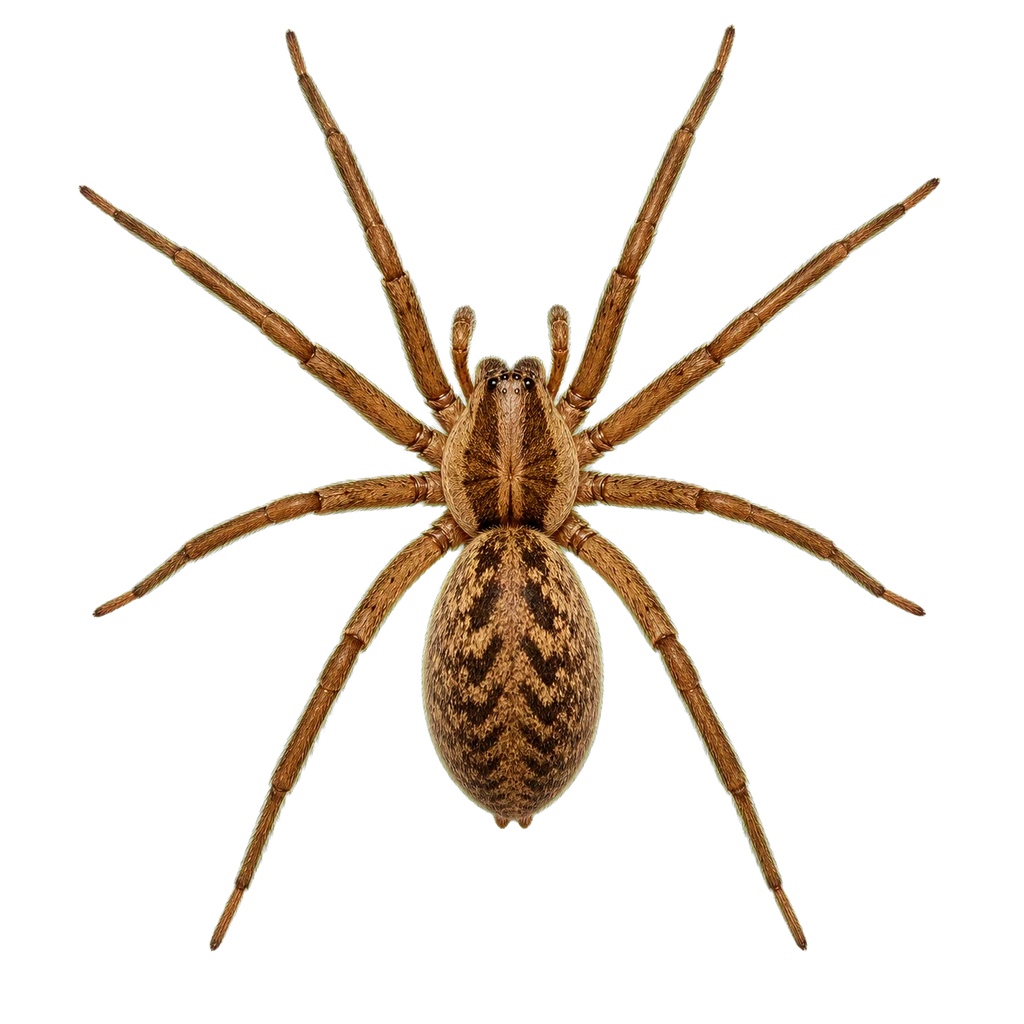
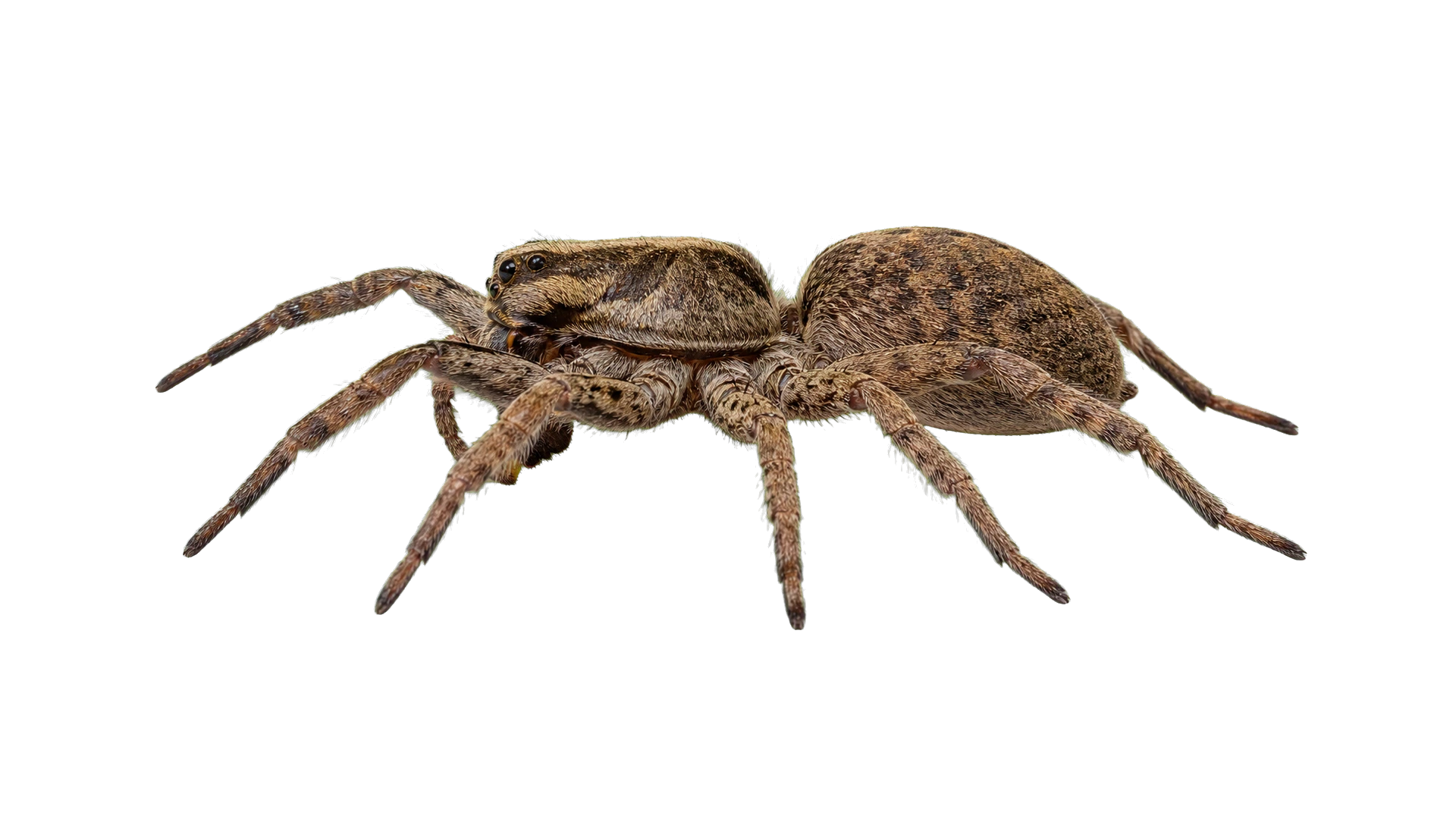
Wolf spiders are the large, hairy, fast-moving spiders most homeowners spot on a basement floor or in a garage corner and assume the worst about. Adults range from 10 to 35 millimeters in body length depending on species, with the Carolina wolf spider topping out near 35 millimeters body and a leg span that can reach 70 millimeters. They look frightening. They are not. Wolf spider venom is mild, bites are rare, and the species does not form indoor colonies the way ants or roaches do. One wolf spider in your basement is almost always one wolf spider, not a population.

If you're seeing a stocky brown or gray spider running across a basement floor or hiding under a garage box, especially in fall, you most likely have a wolf spider. This guide covers how to confirm the ID using the eight-eye pattern and rule out a brown recluse, why each sighting is an individual hunter rather than a colony, what the egg-sac-on-spinnerets and spiderlings-on-back behavior actually means, and what a professional visit looks like when one is warranted.

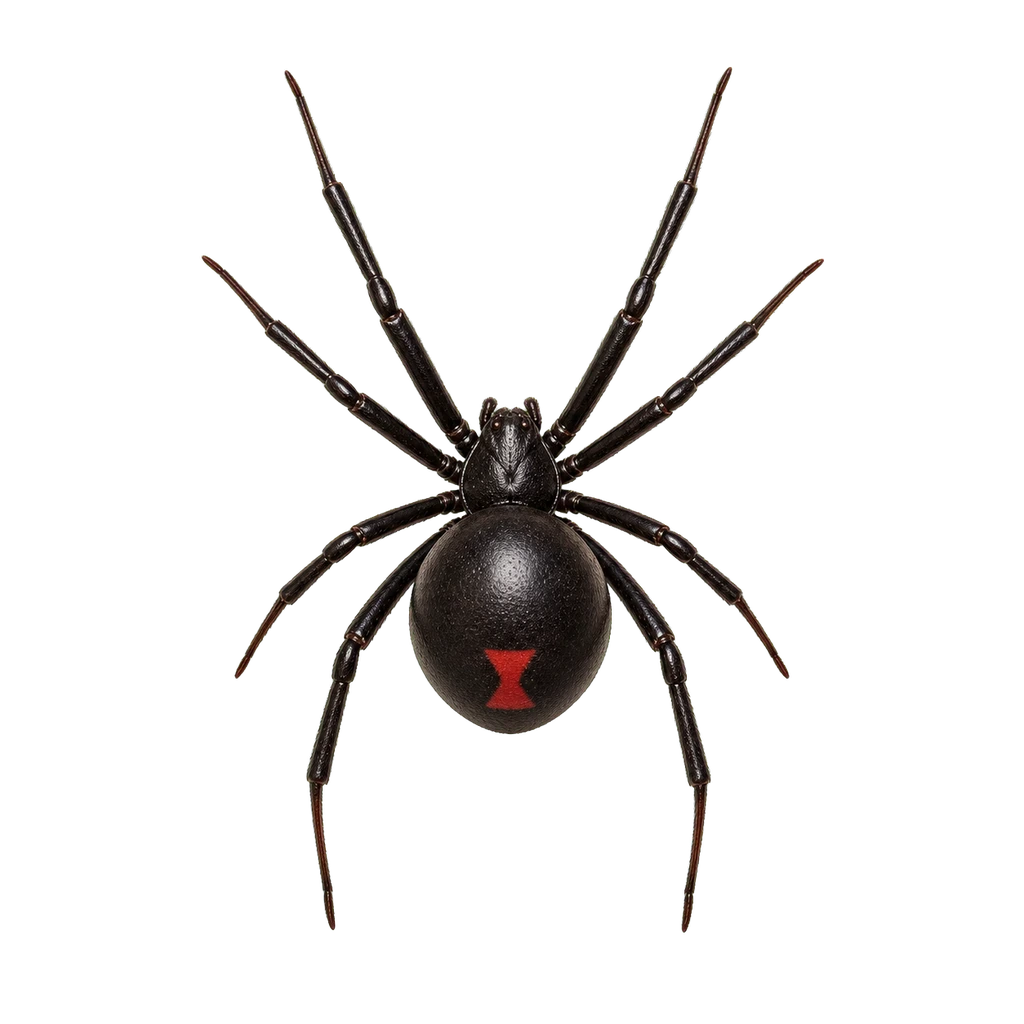
Close-up illustration of a wolf spider showing the eight eyes in three rows, hairy body, and robust hunting legs

ID Card: Wolf Spider

Scientific name
Lycosidae
Color
Brown, gray
Size
1/2 to 2 inches
Body shape
Large, robust body with stout legs, hairy
Key evidence
Fast runners on floors at night, may carry egg sac or spiderlings on back
Also known as
Ground spiders, Hunting spiders

Related Species

Call to get matched with a local pest control pro.

Available 24/7
(888) 495-1510
  • Specialists who confirm wolf spider ID and rule out medically significant look-alikes
  • Exclusion-first programs that seal ground-level entry points rather than overtreat
  • Honest assessment when no spider-specific treatment is actually needed

Where to Find Wolf Spiders on Your Property

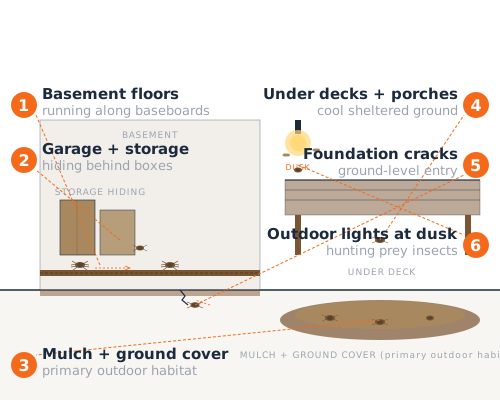
Cross-section illustration showing wolf spider activity zones, mulch beds and leaf litter near the foundation, ground-level entry at doorways and weep holes, and basement and garage floors as indoor encounter zones

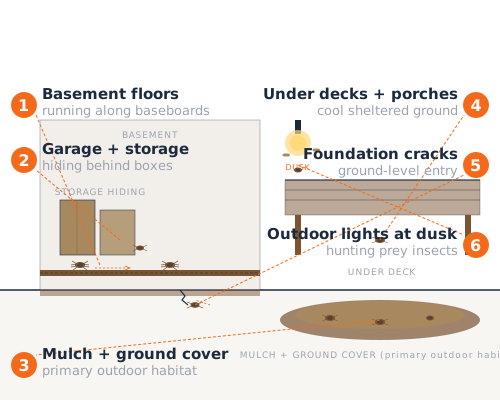
Wolf spiders are ground hunters. They do not build webs, do not sit and wait for prey, and do not nest in voids the way most household spiders do. They walk the ground looking for crickets, roaches, earwigs, and beetles, which means inspection is a flashlight walk at ground level. After dark works best: a flashlight beam catches the green-blue eyeshine reflecting off their large middle eyes from several feet away. Walk these zones rather than scanning ceilings or corners:

  • Basement floors, especially along the slab edge, This is the number-one indoor encounter zone. Walk slowly with a flashlight aimed at the floor edge. A single wolf spider against the wall is normal in fall; multiple sightings over 30 days means an outdoor population is pushing in.
  • Garage corners, behind stored boxes, and under workbenches, Wolf spiders favor undisturbed cover at ground level. Pull boxes away from walls and look behind them. They will run when exposed, this is normal hunting behavior, not aggression.
  • Mulch beds and leaf litter within 5 feet of the foundation, This is the primary outdoor habitat. Pull back mulch and look for individual spiders, females with egg sacs attached to the spinnerets, or shed exoskeletons. Heavy populations here directly drive indoor encounters.
  • Under landscape stones, wood debris, and stacked firewood, Daytime harborage for outdoor populations. Lift a stone or move a board carefully, you will often find one to three wolf spiders sheltering in the cool ground beneath.
  • Ground-floor doorways and weep holes after a rain, Heavy rain floods outdoor harborage and pushes wolf spiders toward dry shelter. Check door thresholds and foundation weep holes for entry within 24 hours of a storm.
  • Around exterior lighting at dusk and into the night, Wolf spiders follow their prey. Porch lights pull in moths, crickets, and beetles, and the spiders show up below the light to hunt them. Eyeshine at the base of a column lamp is the fastest field confirmation you can run.

If you see one wolf spider every few weeks in a basement or garage, that is normal background activity for most US homes and not a sign of an indoor population. If you are seeing one or more per week, or you spotted a female with an egg sac on her spinnerets or spiderlings on her back, the outdoor population near your foundation is heavy enough to push consistent indoor migration. Wolf spiders never form indoor colonies the way ants do, each spider is a solitary hunter, which is why treatment focuses on the ground-level entry path and outdoor harborage rather than chasing individual spiders inside walls.

Cross-section illustration showing wolf spider activity zones, mulch beds and leaf litter near the foundation, ground-level entry at doorways and weep holes, and basement and garage floors as indoor encounter zones
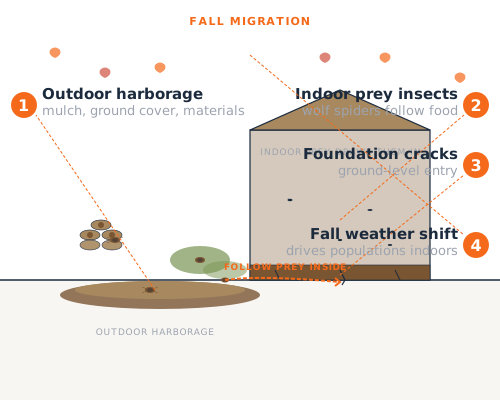
Illustration showing wolf spider entry routes from outdoor mulch and leaf litter through foundation gaps, weep holes, and door thresholds into basements and garages

Why Do I Have Wolf Spiders?

Confirming the ID is step one. Understanding why a wolf spider walked into your house is what stops the next one from doing the same thing. Wolf spiders do not pick homes; they follow prey and shelter. Every wolf spider indoors is a single individual that crossed a threshold while hunting or while escaping weather. The outdoor conditions around your foundation, plus the size of the gaps where the slab meets the wall, decide how often that happens.

What anchors them to your property:

  • Lawn and garden habitat directly adjacent to the home, dense ground cover, deep mulch beds, leaf piles, and rock features within 5 feet of the foundation are exactly the kind of hunting territory wolf spiders prefer
  • An abundant ground-insect population, crickets, roaches, earwigs, ground beetles, and pill bugs are wolf spider food. Where these are present in quantity, wolf spiders show up to hunt them. Wolf spider activity is often a signal that another pest is present
  • Foundation gaps wider than about 5 millimeters at ground level, wolf spiders are large; they need a measurable gap to enter. Open weep holes, lifted door sweeps, gaps under garage doors, and unsealed utility penetrations are the typical entry routes
  • Recent weather extremes, a heavy rainstorm floods outdoor harborage and drives spiders to dry shelter, a drought makes indoor moisture attractive, and the first cold snap of fall triggers a sharp migration toward warmth

A wolf spider does not show up because your house is unclean or poorly maintained. It shows up because the conditions outside, prey availability, harborage, and weather, lined up with a way in. The female who laid the eggs that became the spider you just spotted carried her egg sac attached to her spinnerets for two to four weeks, then carried the hatched spiderlings on her back for one to two weeks more before they dispersed and started hunting on their own. The spider on your basement floor is one of those independent dispersers, traveling alone, looking for prey and shelter. That biology is exactly why one wolf spider is almost always one wolf spider.

How Serious Is Your Wolf Spider Problem?

Find your scenario below. Each row reflects what a single wolf spider sighting actually means and what changes when the pattern repeats, this is not a generic spider timeline.

What You're Seeing Severity If Untreated Next Step
One wolf spider on a basement floor, no other sightings Early Likely a one-off encounter. Wolf spiders are solitary hunters, so a single sighting is almost never the start of an indoor population. Confirm the ID, eight eyes in three rows, hairy build, no violin mark. Capture with a cup and release outside. Monitor for 2 to 4 weeks before any further action.
Multiple wolf spider sightings indoors over the last 30 days Moderate Outdoor population near the foundation is high enough to push regular migration. The pattern will continue until entry points close or the season ends. Walk the foundation at dusk to locate entry points. Seal gaps wider than 5 millimeters at ground level. Pull mulch and ground cover back from the foundation by at least 12 inches.
Frequent indoor sightings, plus a female carrying an egg sac or spiderlings on her back High An egg sac contains 100 to 300 eggs. A female that hatched indoors will disperse spiderlings outside within 1 to 2 weeks, but the outdoor population driving entry is clearly heavy. Schedule a professional inspection this week. The visit will check for indoor moisture and prey insect populations, wolf spiders follow their food, so addressing the prey source matters as much as sealing the gaps.
Multiple large spiders weekly plus a household member with documented allergy to spider bites Urgent Bite risk is still low because wolf spiders are not aggressive, but the consequences of one bite are higher in an allergic household. Visibility-driven anxiety is also a quality-of-life problem worth treating. Call today for a same-week visit. Request comprehensive exclusion work plus an exterior perimeter residual, and have the technician assess the underlying ground-insect population indoors.
One wolf spider on a basement floor, no other sightings
Severity Early
If Untreated Likely a one-off encounter. Wolf spiders are solitary hunters, so a single sighting is almost never the start of an indoor population.
Next Step Confirm the ID, eight eyes in three rows, hairy build, no violin mark. Capture with a cup and release outside. Monitor for 2 to 4 weeks before any further action.
Multiple wolf spider sightings indoors over the last 30 days
Severity Moderate
If Untreated Outdoor population near the foundation is high enough to push regular migration. The pattern will continue until entry points close or the season ends.
Next Step Walk the foundation at dusk to locate entry points. Seal gaps wider than 5 millimeters at ground level. Pull mulch and ground cover back from the foundation by at least 12 inches.
Frequent indoor sightings, plus a female carrying an egg sac or spiderlings on her back
Severity High
If Untreated An egg sac contains 100 to 300 eggs. A female that hatched indoors will disperse spiderlings outside within 1 to 2 weeks, but the outdoor population driving entry is clearly heavy.
Next Step Schedule a professional inspection this week. The visit will check for indoor moisture and prey insect populations, wolf spiders follow their food, so addressing the prey source matters as much as sealing the gaps.
Multiple large spiders weekly plus a household member with documented allergy to spider bites
Severity Urgent
If Untreated Bite risk is still low because wolf spiders are not aggressive, but the consequences of one bite are higher in an allergic household. Visibility-driven anxiety is also a quality-of-life problem worth treating.
Next Step Call today for a same-week visit. Request comprehensive exclusion work plus an exterior perimeter residual, and have the technician assess the underlying ground-insect population indoors.

Wolf spiders are large but not medically significant. If you're between two rows, treat the higher one as your situation.

How a Wolf Spider Develops

Wolf spiders differ from almost every other household arthropod in one specific way: there is no colony. Each spider is an independent hunter that grew up under direct maternal care, dispersed alone, and now lives on its own. The lifecycle below describes a single spider, not a population. That distinction is the entire reason wolf spider treatment is about exclusion and exterior pressure rather than nest elimination.

  1. Egg sac

    About 2 to 4 weeks, attached to the female's spinnerets

    A mated female produces a roughly spherical silk egg sac containing 100 to 300 eggs, then attaches it to her spinnerets and carries it everywhere she goes. Unlike most spiders, she does not stash the sac and walk away, she guards it actively. If you see what looks like a large bead trailing behind a hairy spider, you are looking at a wolf spider egg sac in transit.

  2. Spiderling

    About 1 to 2 weeks riding on the female's back

    When the eggs hatch, the spiderlings climb onto the mother's back and ride there for one to two weeks while their exoskeletons harden. A female with a fully loaded back can carry well over a hundred tiny spiders at once. This is the source of the homeowner shock-photo of a spider that appears to be covered in moving bumps. The spiderlings disperse after their first molt and never see each other or the mother again.

  3. Juvenile

    About 1 to 2 years through 5 to 15 molts depending on species

    After dispersal, juvenile wolf spiders hunt independently from day one. They grow through a series of molts, shedding the exoskeleton and emerging slightly larger each time. Venom yield, hunting range, and prey selection all scale with size. By the second year, juveniles are nearly adult and starting to look for mates.

  4. Adult

    Females live 2 to 4 years; males about 1 year and die shortly after mating

    Adult females are larger, longer-lived, and produce 1 to 2 egg sacs per year. Adult males are smaller, shorter-lived, and travel constantly during breeding season looking for females, this is why the long-legged spider running across the basement floor in late summer is usually a roaming male. Neither sex ever returns to a colony because there is no colony to return to.

Wolf spiders do not form colonies, do not share nests, and do not cooperate. Each spider is a solitary hunter for its entire life after dispersal. That is exactly why one wolf spider on your basement floor is almost always one wolf spider, and why effective treatment targets outdoor habitat and indoor entry rather than chasing an imaginary nest. Programs that promise to eliminate a wolf spider infestation are misreading the biology, what they're actually doing is reducing the outdoor population that supplies indoor migrants.

When Wolf Spiders Are Most Active

Wolf spider activity follows a sharp seasonal calendar, and the indoor sightings most homeowners worry about are concentrated in a narrow window. Knowing where the spiders are each quarter tells you what to expect indoors and when treatment will land with the most effect.

  • Spring

    Females emerging from overwintering shelters begin producing egg sacs from March through May. Outdoor populations build steadily through this window as the previous fall's juveniles reach reproductive size. Indoor sightings are still rare, the spiders are focused on outdoor breeding and hunting prey populations that are themselves just waking up.

  • Summer

    Peak outdoor population. Spiderlings disperse from the females that carried them through spring, and the property's ground-level spider count is at its highest. Indoor activity stays low because outdoor prey is plentiful, the spiders have no reason to come inside. Roaming males are the most visible at dusk.

  • Fall

    Indoor visibility peaks in this window. From late August through October, cooling temperatures and shortening days push outdoor populations toward shelter, and that shelter is often the warm dry slab of a basement or garage. Most wolf spider service calls happen here. A heavy rain or early cold snap can compress an entire season's worth of migration into a single week.

  • Winter

    Outdoor activity stops in cold climates as adult spiders shelter in burrows, under logs, or beneath deep leaf litter. Indoor populations that migrated in during fall remain visible in heated basements and garages through the winter, but they do not breed indoors, the eggs require outdoor conditions to develop properly.

When Wolf Spiders Warrant Professional Help

Wolf spiders are one of the few household arthropods where the honest answer is often no treatment is needed at all. The species is not medically significant for healthy adults, bites are rare because wolf spiders flee rather than confront, and the population structure means one spider is one spider, not a colony. A single sighting in a basement is normal background activity, especially in fall. The right call in that case is to identify the spider, release it outside, and move on.

Professional help becomes appropriate when the pattern changes. Multiple sightings per week, a household member with a documented allergy to spider bites, a female with an egg sac or spiderlings on her back indoors, or sustained visibility that is hurting your sleep or your kids' confidence in their own house, those are real reasons to call. So is uncertainty about identification, especially in states where brown recluses overlap with wolf spider habitat.

When treatment is warranted, the work is mostly outdoor and exclusion-focused. A non-repellent residual along the foundation reduces the outdoor population pressing on the structure. Comprehensive sealing of ground-level gaps closes the migration path. An assessment of underlying prey, crickets, roaches, earwigs, addresses the reason the wolf spiders are showing up in the first place. Indoor product is generally minimal because there is no nest to treat and the spiders are transient.

Costs for a one-time wolf spider service run $100 to $250 in most US markets, including inspection, perimeter residual, and basic exclusion recommendations. Recurring service in the $30 to $50 per month range only makes sense when indoor entry is chronic, usually a sign that the outdoor habitat is so close to the foundation that periodic perimeter treatment is the only way to keep pressure off the structure.

What Changes When a Pro Shows Up

Wolf spider treatment is unlike most pest jobs. There is no colony to collapse and usually no medical emergency to resolve. A specialist's job is to confirm the ID, separate signal from noise, and build a program that addresses outdoor pressure and indoor entry without overtreating. Here's what changes:

Pest control technicians after completing a wolf spider exclusion and perimeter service
  • Local Pest Control
  • 24/7 Availability
  • Quality Workmanship
  • Eco‑Friendly Options
  • Trusted by Homeowners
  • They Confirm the ID, Including Ruling Out Brown Recluse

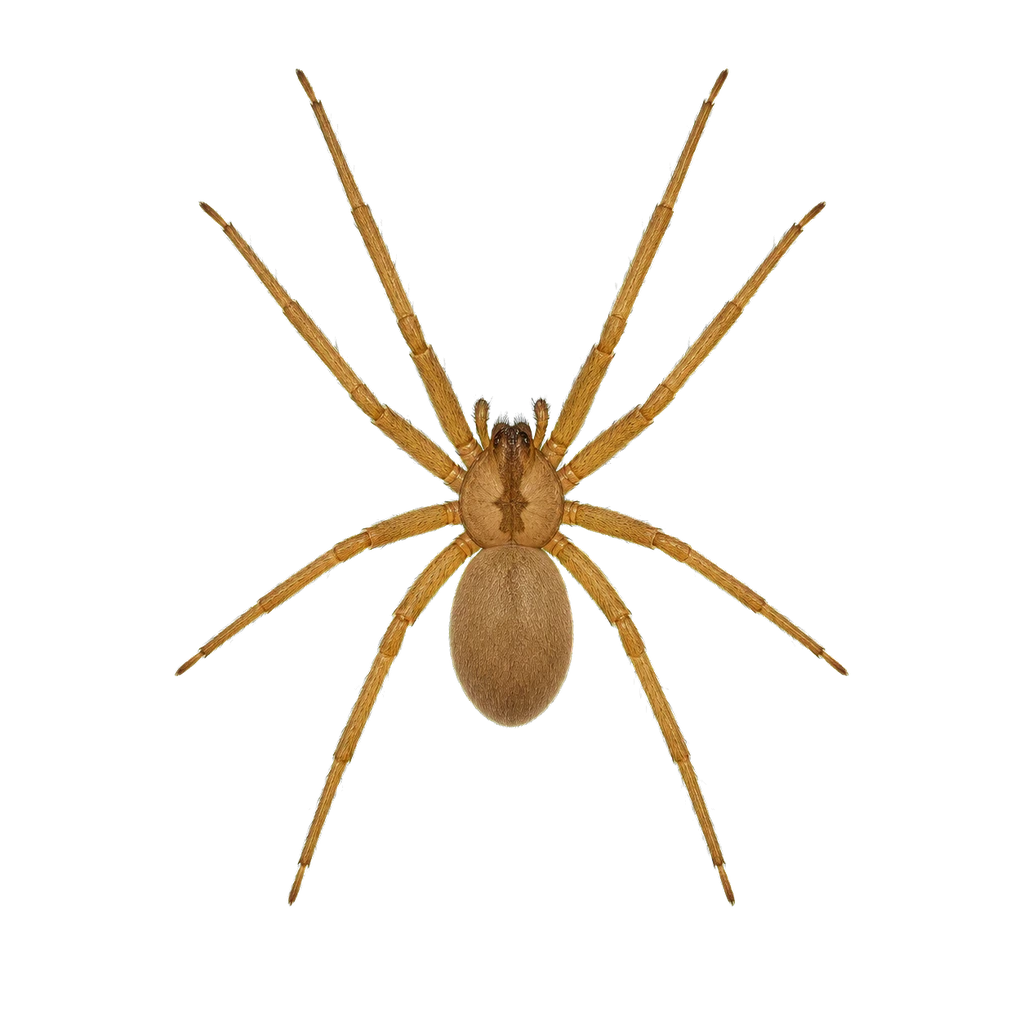
    Wolf spiders get confused with brown recluses constantly. A specialist confirms the eight-eye, three-row arrangement, the hairy build, the absence of a violin mark, and the size difference, wolf spiders are usually two to four times larger than recluses. Confirmed ID prevents both unnecessary alarm and unnecessary treatment.

  • They Map Outdoor Pressure, Not Just Indoor Sightings

    Inspection walks the property at dusk with a flashlight to count eyeshine in mulch beds, under landscape stones, and around exterior lighting. A spider count outside tells you how much pressure is driving indoor migration, the indoor sightings alone are not enough to plan a program.

  • They Treat the Entry Path, Not the Spiders Themselves

    A non-repellent residual along the foundation seam reduces outdoor pressure. Sealing gaps wider than 5 millimeters at ground level closes the migration route. This combination produces durable results without dousing the property in product the wolf spiders would mostly walk through anyway.

  • They Address the Underlying Prey Population

    Wolf spiders show up because their food is present. A specialist assesses cricket, roach, and earwig activity around the foundation and inside the structure, then folds the prey reduction into the program. Without that step, new wolf spiders keep arriving even after the originals are gone.

  • Local Pest Control
  • 24/7 Availability
  • Quality Workmanship
  • Eco‑Friendly Options
  • Trusted by Homeowners
NoToPests home

One call connects you with a local specialist who knows wolf spiders and your area.

Be Ready When You Call

Pest control technician arriving for wolf spider exclusion service
Junho L.
Daisuke P.
Kirk Q.
Marion K.

Trusted by homeowners nationwide

Call for Pest Control Help (888) 495-1510

Can You Handle This or Do You Need Help?

Wolf spiders are one of the few common pests where DIY is genuinely effective for most homeowners, because the species is solitary, transient, and not medically significant. The exception is sustained outdoor pressure or specific household risk factors, and that's where a pro changes the equation.

What DIY Can Do

DIY work is aimed at identification, individual capture, and removing the conditions that make your foundation attractive. Useful steps with honest limits:

  • Confirming the eight-eye three-row pattern and ruling out a brown recluse stops the panic and tells you whether further action is even warranted
  • Cup-and-paper capture and outdoor release handles isolated sightings cleanly, wolf spiders will not bite during handling unless directly pinned against skin
  • Sealing visible gaps under doors, around utility penetrations, and at slab-to-wall joints closes the indoor migration path for spiders larger than 5 millimeters
  • Pulling back mulch and reducing leaf litter within 5 feet of the foundation removes the daytime harborage that supports heavy outdoor populations
  • Switching outdoor lighting to yellow or warm-white bulbs reduces prey insect traffic at the wall, which reduces the spiders that follow
  • What DIY cannot do: knock back a heavy outdoor population fast with appropriate residual product, or address an underlying indoor prey population the spiders are following inside.

What a Pro Does Differently

Professional wolf spider work is exterior-focused and exclusion-heavy. Here's what changes when you call:

  • Species confirmation with a hand lens, ruling out medically significant look-alikes, this alone is often the most valuable part of the visit
  • Non-repellent residual along the foundation seam reduces the outdoor population pressing on the structure without scattering it the way contact sprays do
  • Comprehensive exclusion sealing of ground-level gaps, the only durable way to stop indoor migration once outdoor populations are heavy
  • Underlying prey assessment, wolf spiders follow crickets, roaches, and earwigs, so an indoor ground-insect population gets folded into the plan
  • Honest scope, when the answer is no treatment needed, a real specialist will say so rather than sell an ongoing program for a non-problem.

Suspect Wolf Spiders? Don't Wait.

Wolf spider visibility peaks in fall and the right call confirms the ID before anything else. Connect with a local specialist for species confirmation, foundation exclusion, and an honest scope on whether further treatment is warranted.

Available 24/7
(888) 495-1510

What Homeowners Say After Getting Help

Real results from people who had the same problem and solved it.

Felisha M.
Felisha M.
Fairbanks, AK

"Basement spiders finally under control."

Every fall, spiders would move inside as temperatures dropped. The pro treated the basement and entry areas and explained how to reduce the conditions that attract them. It made a noticeable difference right away.

Felisha M.
Felisha M.
Fairbanks, AK

"Basement spiders finally under control."

Every fall, spiders would move inside as temperatures dropped. The pro treated the basement and entry areas and explained how to reduce the conditions that attract them. It made a noticeable difference right away.

Alexis F.
Alexis F.
Fayetteville, AR

"Brown recluse spiders, finally handled."

We found brown recluse spiders in the garage and a closet. The tech explained their habits and treated the areas where they hide. Knowing what to watch for gave us peace of mind.

Ming I.
Ming I.
Dover, DE

"Fall spider invasion handled."

Every autumn, spiders would take over the garage and porch. The tech treated those areas and explained what draws them indoors when temperatures drop. The difference was immediate.

Yumi N.
Yumi N.
Boise, ID

"Garage cleared of spiders."

Black widow spiders were nesting in the garage corners. The tech cleared the webs, treated the area, and explained how to keep the space less inviting. It's been months without any new webs appearing.

Tatsuo U.
Tatsuo U.
South Bend, IN

"Basement spider population knocked down fast."

Our basement had become a spider haven. The tech treated the entire lower level and explained how reducing clutter and moisture would help long-term. The spider population dropped significantly within a couple of weeks.

Claire K.
Claire K.
Davenport, IA

"Spiders cleared from window frames."

Every fall, spiders would cluster around our window frames. The tech treated the exterior and explained how light attracts insects, which in turn attract spiders. Reducing the conditions made a noticeable difference.

Li Z.
Li Z.
Wichita, KS

"Brown recluse spiders cleared from closets."

Finding brown recluse spiders in multiple closets was frightening. The tech treated the interior thoroughly and explained how to make storage areas less attractive to them. We've been checking regularly and haven't found any since.

Zora M.
Zora M.
Bowling Green, KY

"Crawl space spiders identified and cleared."

Our crawl space had a significant spider population including some we couldn't identify. The provider treated the area and explained which species are common in Kentucky. Knowing what we were dealing with helped a lot.

Seo W.
Seo W.
Augusta, ME

"Damp basement cleared of spiders."

The damp basement was full of spiders and webs. The provider treated the area and recommended a dehumidifier to reduce the moisture that attracts them. The spider population dropped noticeably within weeks.

Bryce X.
Bryce X.
Lansing, MI

"Crawl space spider habitat cleared."

Our crawl space was full of spider webs and egg sacs. The provider cleared and treated the area and explained how the moisture down there creates an ideal habitat. Adding ventilation and treatment together made a lasting difference.

Kathleen Z.
Kathleen Z.
Kansas City, MO

"Storage room cleared of brown recluse spiders."

We found brown recluse spiders while organizing a storage area. The provider treated the room and surrounding spaces and explained how to make storage areas less inviting. The careful approach put us at ease.

Hailey X.
Hailey X.
Helena, MT

"Log cabin spider problem managed."

Our cabin-style home attracted a lot of spiders. The provider treated the interior and exterior and explained how the wood siding creates perfect hiding spots. Regular treatments have kept the problem manageable.

Matthew A.
Matthew A.
Bellevue, NE

"Porch webs and spiders cleared up."

Our porch light attracted insects and spiders followed. The provider treated the porch area and suggested switching to yellow bulbs that attract fewer bugs. The spider webs have been much less of a problem since.

Raj T.
Raj T.
Sparks, NV

"Garage black widows cleared and prevented."

We found black widow webs in multiple corners of the garage. The provider treated the garage thoroughly and explained how to keep it less attractive to spiders. Regular inspections and treatment have kept it clear.

Felicia J.
Felicia J.
Portsmouth, NH

"Stone foundation spiders finally manageable."

Our stone foundation basement was perfect spider habitat. The provider treated the perimeter and interior and explained how sealing cracks in the old stonework helps. The basement is much more comfortable now.

Drew U.
Drew U.
Las Cruces, NM

"Patio cleared of black widow nests."

We found black widow webs under outdoor furniture and along the foundation. The provider treated the yard and exterior thoroughly and explained how the warm, dry climate makes them common here. The treatment worked well.

Hana I.
Hana I.
Bismarck, ND

"Basement and upstairs cleared of spiders."

Our basement was full of spider webs and we kept finding them upstairs too. The provider treated both levels and explained how basements in North Dakota homes provide ideal shelter. The improvement was obvious within weeks.

Jesus D.
Jesus D.
Tulsa, OK

"Brown recluse spiders, finally handled."

We started finding brown recluse spiders in closets and the garage. The provider did a thorough treatment and explained their behavior patterns. They also recommended reducing clutter in storage areas, which helped significantly.

Bryan O.
Bryan O.
Rapid City, SD

"Detached garage cleared of spiders."

Our detached garage had become a spider haven. The tech treated the interior and sealed the gaps around the door and windows. They explained that garages are prime spider habitat because of the insects attracted to the light.

Andre C.
Andre C.
Chattanooga, TN

"Crawl space spider population brought down."

The crawl space under our house had a large spider population. The pro treated the area and installed better ventilation. They explained how reducing moisture in crawl spaces naturally reduces spider activity over time.

Wendell K.
Wendell K.
Casper, WY

"Basement webs and spiders cleared."

Our basement was full of spiders and webs every season. The tech treated the space and explained how reducing humidity and clutter makes it less hospitable. The spider population has been much lower since.

Cris A.
Cris A.
Tuscaloosa, AL

"Attic spiders identified, treated, and cleared."

We found spider webs throughout the attic and worried about brown recluses. The tech identified the species and treated the attic, garage, and crawl space. They explained how insulation provides hiding spots and recommended sealing gaps near the roofline.

Warren Y.
Warren Y.
Soldotna, AK

"Basement spider population cut down."

Our basement had cobwebs in every corner and we kept finding large spiders near the laundry area. The tech treated inside and out and explained how reducing other insects would cut the spider population since they follow their food source.

Kwame U.
Kwame U.
Chandler, AZ

"Garage cleared of black widow nests."

We found black widow webs behind boxes in the garage and near the water heater. The tech cleared the webs, treated the area, and recommended reducing clutter. They explained widow habits so we could spot early signs of return.

Mahogany A.
Mahogany A.
Conway, AR

"Closets cleared of brown recluse spiders."

We found brown recluses in the bedroom closets and were afraid to reach for clothes. The tech did a thorough treatment of closets, attic, and crawl space. They placed glue traps for monitoring and the activity dropped quickly.

Fang T.
Fang T.
Loveland, CO

"Window wells cleaned out and spider-free."

Basement window wells were full of spider webs and insects. The tech treated the wells, cleaned them out, and sealed gaps around the window frames. They suggested adding well covers to reduce debris and insect activity.

Rosalba R.
Rosalba R.
Middletown, CT

"Basement storage reclaimed from spiders."

The unfinished basement was full of spider webs and egg sacs. The tech treated the entire basement, removed webs, and explained that reducing moisture and clutter makes the space less attractive to spiders and their prey.

Gilberto D.
Gilberto D.
Laurel, DE

"Brown recluse spiders identified and treated."

We found what looked like a brown recluse in the garage and panicked. The provider identified the species, treated the garage and crawl space, and placed monitoring traps. They educated us on how to recognize recluse spiders versus harmless look-alikes.

Dontae Z.
Dontae Z.
Fort Myers, FL

"Pool cage spiders cleared and webs gone."

Large orb weaver spiders built webs all over the pool enclosure every night. The provider treated the cage frame and surrounding landscaping. Reducing the insect population that attracted the spiders was the key to long-term control.

Mai G.
Mai G.
Athens, GA

"Screened porch cleared of spider webs."

Every corner of the screened porch had webs and large spiders. The provider treated inside the screen enclosure and the exterior perimeter. Reducing landscape lighting near the porch cut down the insect prey that attracted spiders.

Fernanda H.
Fernanda H.
Wahiawa, HI

"Closets cleared of cane spiders."

Large cane spiders kept appearing in closets and behind furniture. The provider treated the interior and exterior and cleared out harborage areas. They explained that cane spiders are mostly beneficial but understood our comfort concerns.

Juan Z.
Juan Z.
Twin Falls, ID

"Window wells cleared of black widows."

We found black widows in multiple basement window wells. The provider treated the wells, cleared debris, and sealed gaps around the windows. They recommended well covers to keep insects and spiders from using them as shelter.

Tavarez Q.
Tavarez Q.
Aurora, IL

"Unfinished basement spider count down sharply."

The basement had spiders in every corner and behind storage shelves. The provider treated the entire space and explained that reducing clutter and moisture cuts the insect population that spiders feed on. The improvement was dramatic.

Tim S.
Tim S.
Terre Haute, IN

"Brown recluse spiders cleared throughout the house."

We found brown recluse spiders in closets, the garage, and the basement. The provider did a thorough treatment and placed sticky traps for monitoring. They explained that reducing clutter eliminates hiding spots these spiders prefer.

Rafiki H.
Rafiki H.
Council Bluffs, IA

"Back porch cleared and webs gone."

Every morning, new webs stretched across the porch doorway. The provider treated the porch and surrounding area. Reducing outdoor lighting near the porch cut down the flying insects that attracted the spiders.

Ian R.
Ian R.
Manhattan, KS

"Whole-house recluse treatment fully resolved."

My son was reaching for a winter coat in the basement closet when he saw one drop down the sleeve. That was enough for me. The inspector found shed skins behind the dryer and treated the closets, garage, and the gap behind the water heater. Monitoring traps catch the occasional straggler. Knock on wood, no bites in the house, and the kids know not to grab clothes without shaking them out.

Derek K.
Derek K.
Elizabethtown, KY

"High-risk areas cleared of brown recluse spiders."

We kept finding brown recluses in the basement and laundry room. The provider treated all the high-risk areas and set up monitoring traps. They explained how to reduce clutter and seal boxes to minimize hiding spots.

Darnell M.
Darnell M.
Monroe, LA

"Playroom cleared safely for the kids."

Finding spiders in the playroom worried us about the children's safety. The provider identified the species, treated the room and surrounding areas, and explained how to reduce conditions that attract spiders indoors.

Jose N.
Jose N.
South Portland, ME

"Basement corners cleared and dehumidified."

The damp basement was full of spider webs and egg sacs. The provider treated the basement and recommended a dehumidifier. Reducing moisture cut down the insect prey that attracted spiders in the first place.

Emilia P.
Emilia P.
Hagerstown, MD

"Basement spiders down sharply with moisture control."

The basement had webs in every corner and large spiders near the sump pump. The provider treated the entire basement and sealed cracks in the foundation walls. Reducing moisture with a dehumidifier helped long-term.

Common Questions About Wolf Spiders

Direct answers to what homeowners ask most about identification, the eight-eye field check, and why one wolf spider is almost always one wolf spider.

  • How do I identify a wolf spider versus a brown recluse? Toggle answer for: How do I identify a wolf spider versus a brown recluse?

    Wolf spiders are large (up to 1.5 inches body length), hairy, brown to gray spiders with two prominent, forward-facing large eyes above a row of four smaller eyes, this eye arrangement is the most reliable identifier. Brown recluses have only six eyes in three pairs, a smooth (not hairy) body, and the distinctive violin marking. Wolf spiders are robust and hairy with banded or striped legs, while brown recluses are slender with uniformly colored legs. Behaviorally, wolf spiders are ground-running hunters often seen sprinting across floors at night, while brown recluses are more secretive and tend to stay hidden in undisturbed areas. If a large, hairy spider is running across your floor, it is almost certainly a wolf spider.

  • Why do wolf spiders come inside my house? Toggle answer for: Why do wolf spiders come inside my house?

    Wolf spiders are ground-dwelling hunters that wander into homes accidentally while pursuing prey or seeking shelter from extreme weather, and theydo not build webs or establish indoor colonies. They enter at ground level through gaps under doors, garage door seals, foundation cracks, and ground-level utility openings, often during fall when cooling temperatures drive both the spiders and their insect prey toward buildings. Their large size and fast, startling movement across floors make them one of the most alarming indoor spiders despite being relatively harmless (bites are uncommon and comparable to a bee sting). Sealing ground-level entry points and reducing exterior lighting that attracts prey insects near the home are the most effective ways to reduce wolf spider encounters.

  • Why do spiders keep appearing in my home? Toggle answer for: Why do spiders keep appearing in my home?

    Spiders follow their food source, other insects. If you have a recurring spider problem, it almost always means you also have an underlying insect population (gnats, flies, ants, or moths) that's attracting them. Reducing exterior lighting that draws insects, sealing cracks around windows and doors, and addressing the prey insects will significantly reduce spider activity indoors.


  • Are spiders dangerous? Toggle answer for: Are spiders dangerous?

    Most house spiders are harmless and actually beneficial, and theyeat other pests. However, two species in the U.S. Pose genuine medical risks: the brown recluse and the black widow. Brown recluse bites can cause tissue necrosis, and black widow bites cause severe muscle pain and cramping. If you're in an area where either species is common, identification matters.

  • How quickly can a provider get to my home? Toggle answer for: How quickly can a provider get to my home?

    Most providers in our network can schedule an inspection within 24-48 hours. For urgent situations, likeactive structural damage or large colonies, same-week emergency service is often available. Response times depend on your location and the provider's current schedule.

  • What happens during the first visit? Toggle answer for: What happens during the first visit?

    Your provider inspects the property to identify the pest, locate nesting or entry points, and assess the scope of the problem. You get a clear explanation of what they found, what they recommend, and a written scope before any work begins.

  • Is treatment safe for kids and pets? Toggle answer for: Is treatment safe for kids and pets?

    Modern pest control products are designed to break down quickly after application and pose minimal risk to people and pets when applied correctly. Most providers ask you to keep kids and pets out of treated areas for 1 to 2 hours while the product dries, after which the area is generally safe again. Always confirm specific re-entry times with your provider, and let them know about pet birds, fish, or reptiles, since some treatments require extra precautions for those species.

Pest Control Pros serving the city of the state of your city and nearby areas

Local providers who handle spider identification and exclusion work are ready to confirm the ID, walk the foundation, and recommend only what the situation actually warrants, no obligation.

Available 24/7
(888) 495-1510