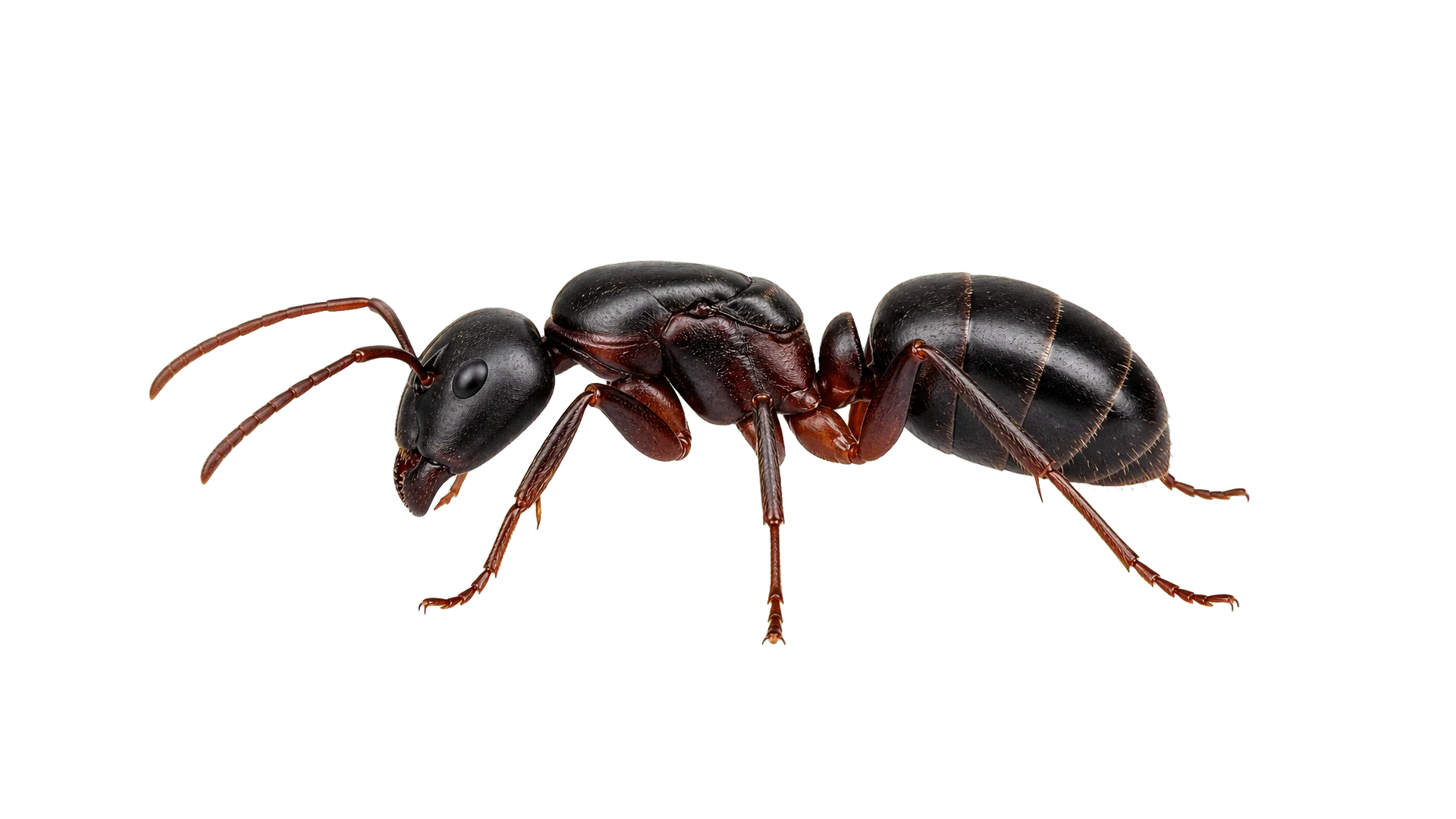
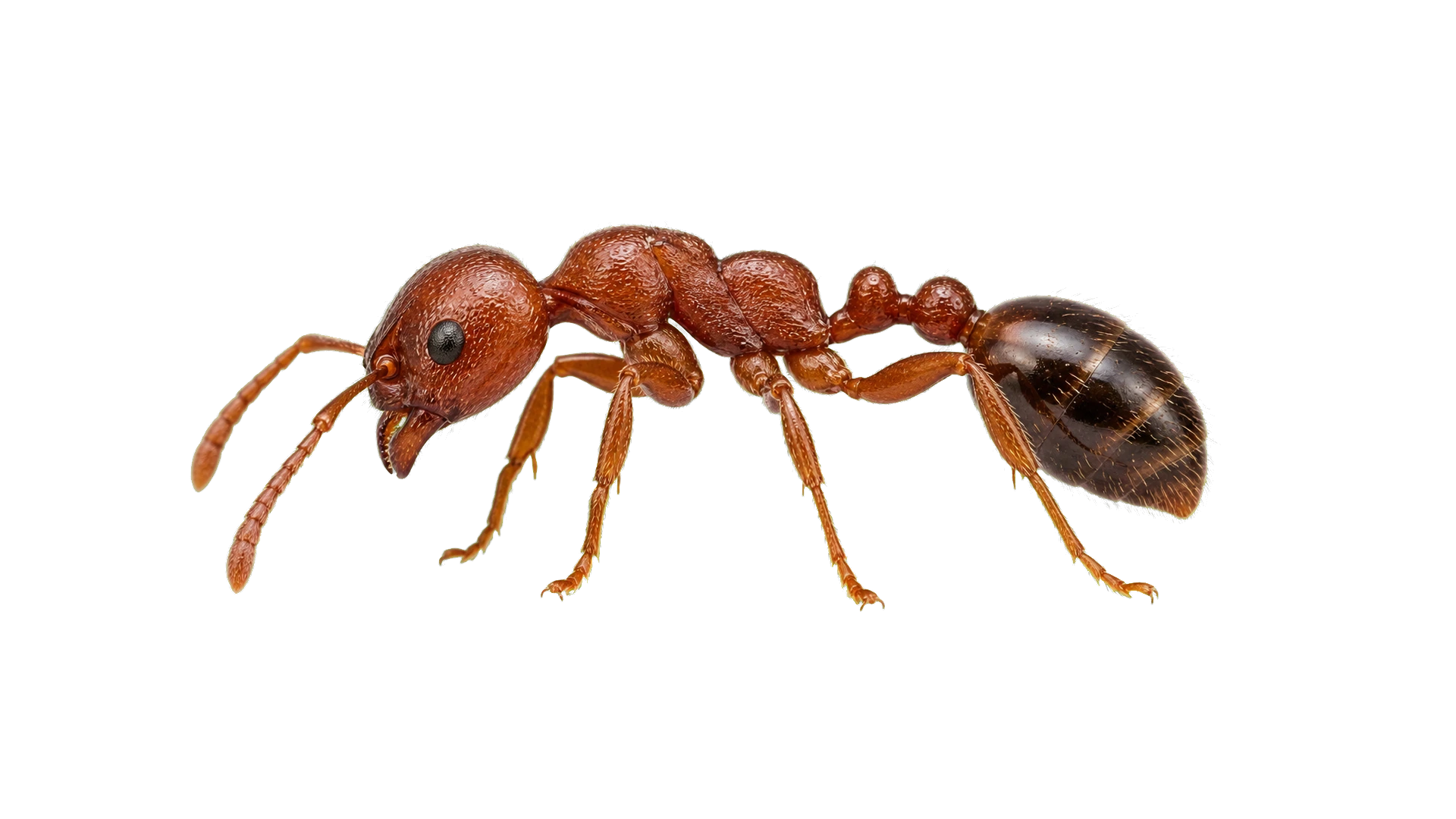
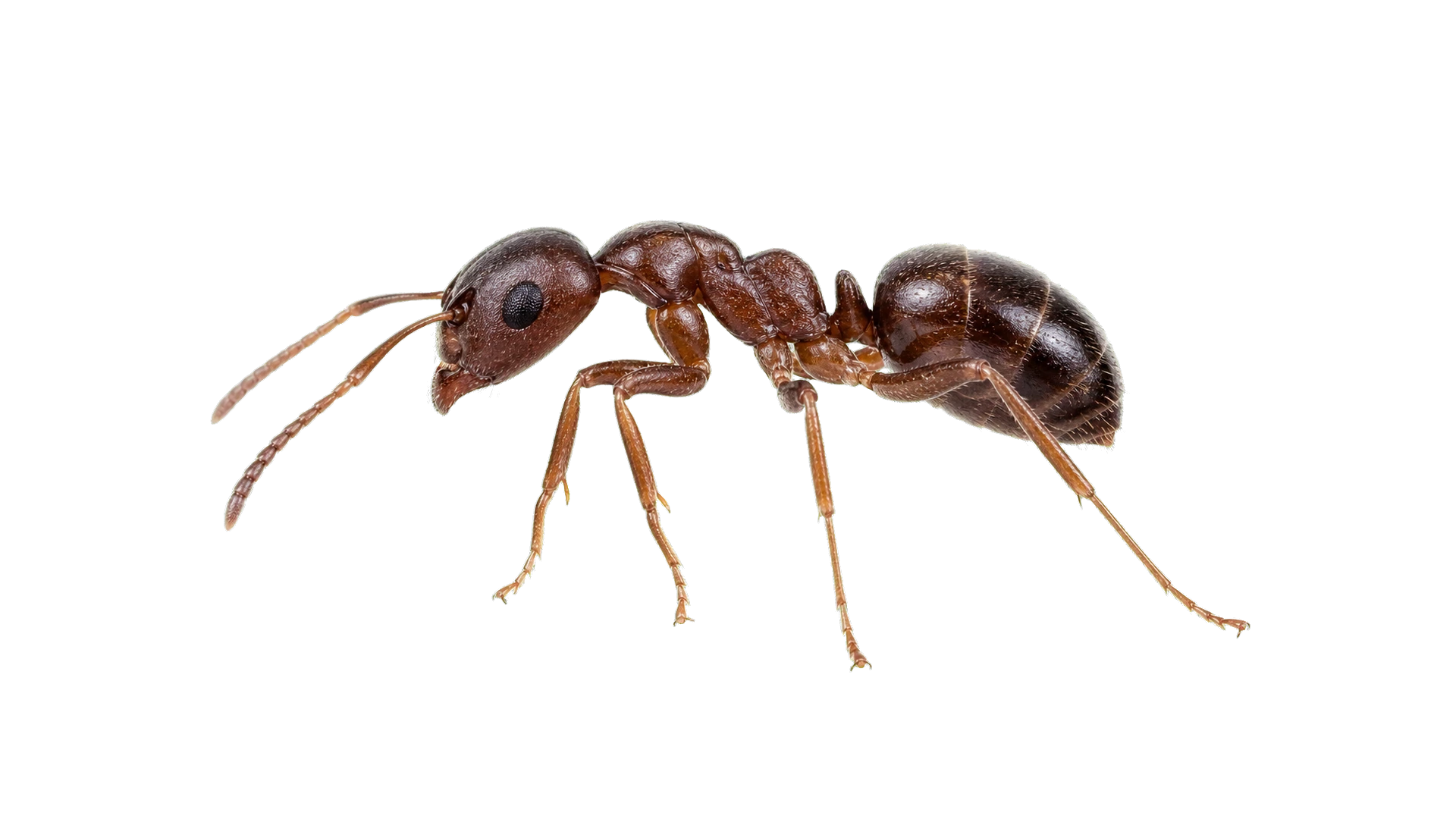
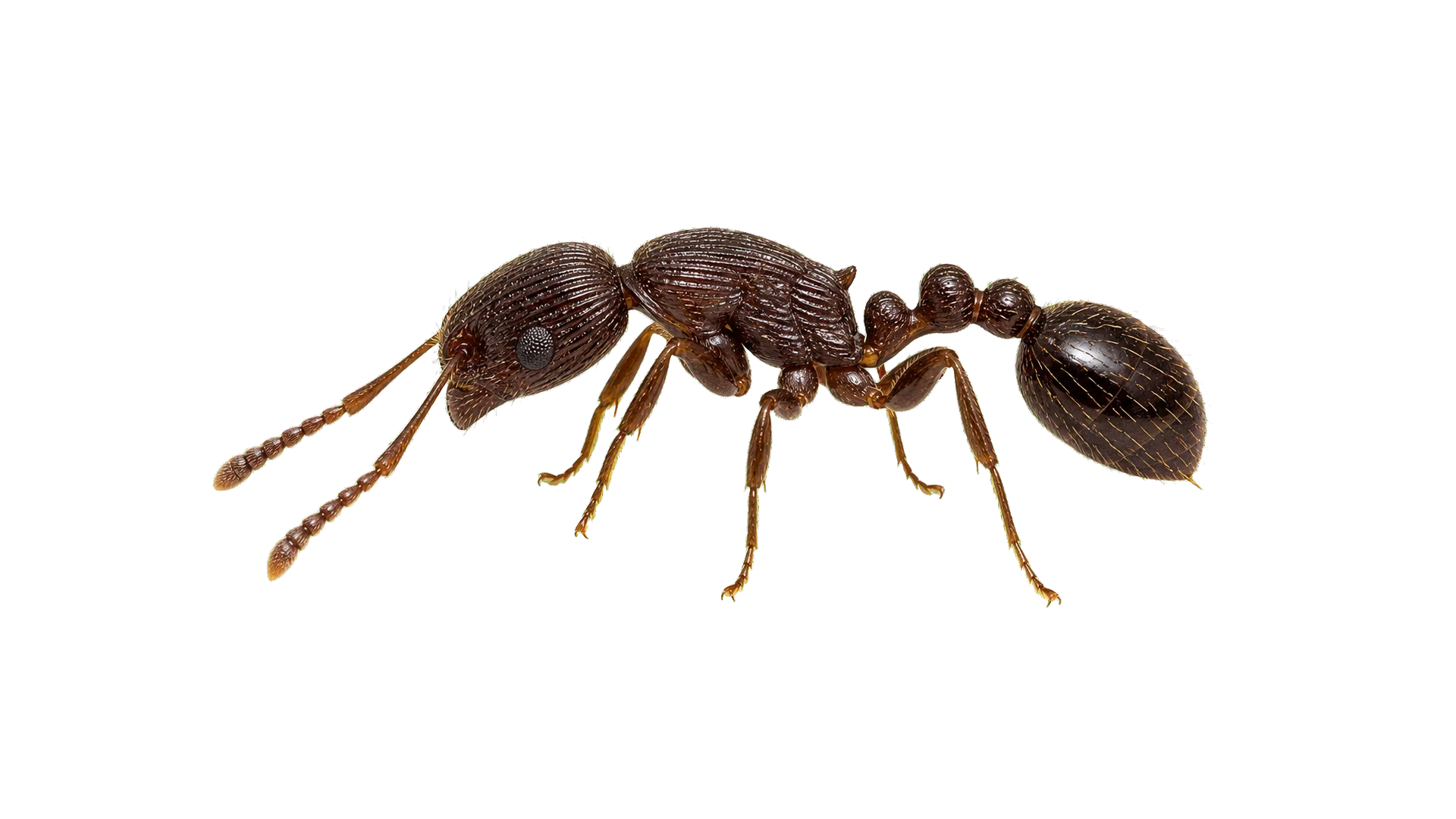
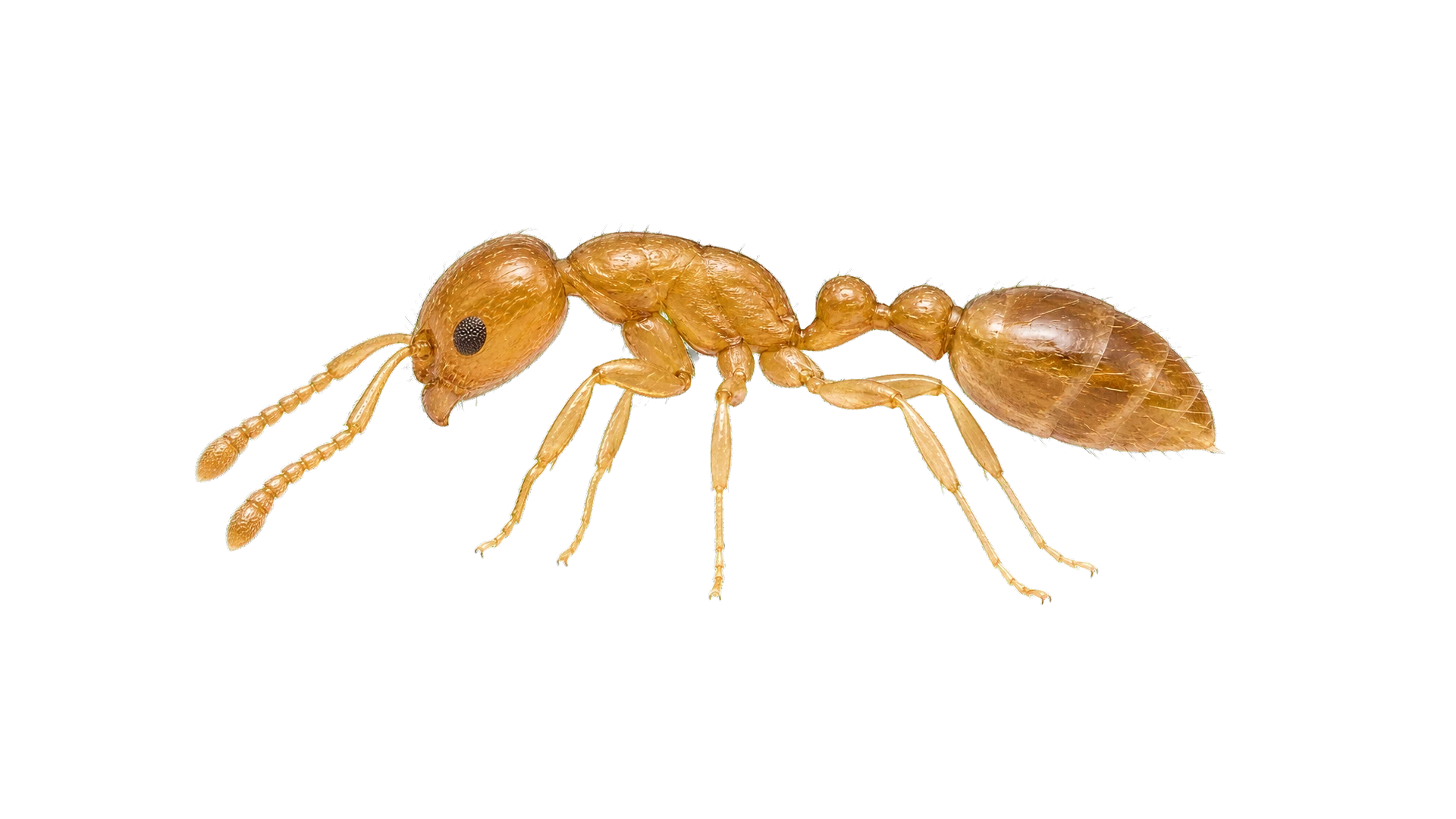
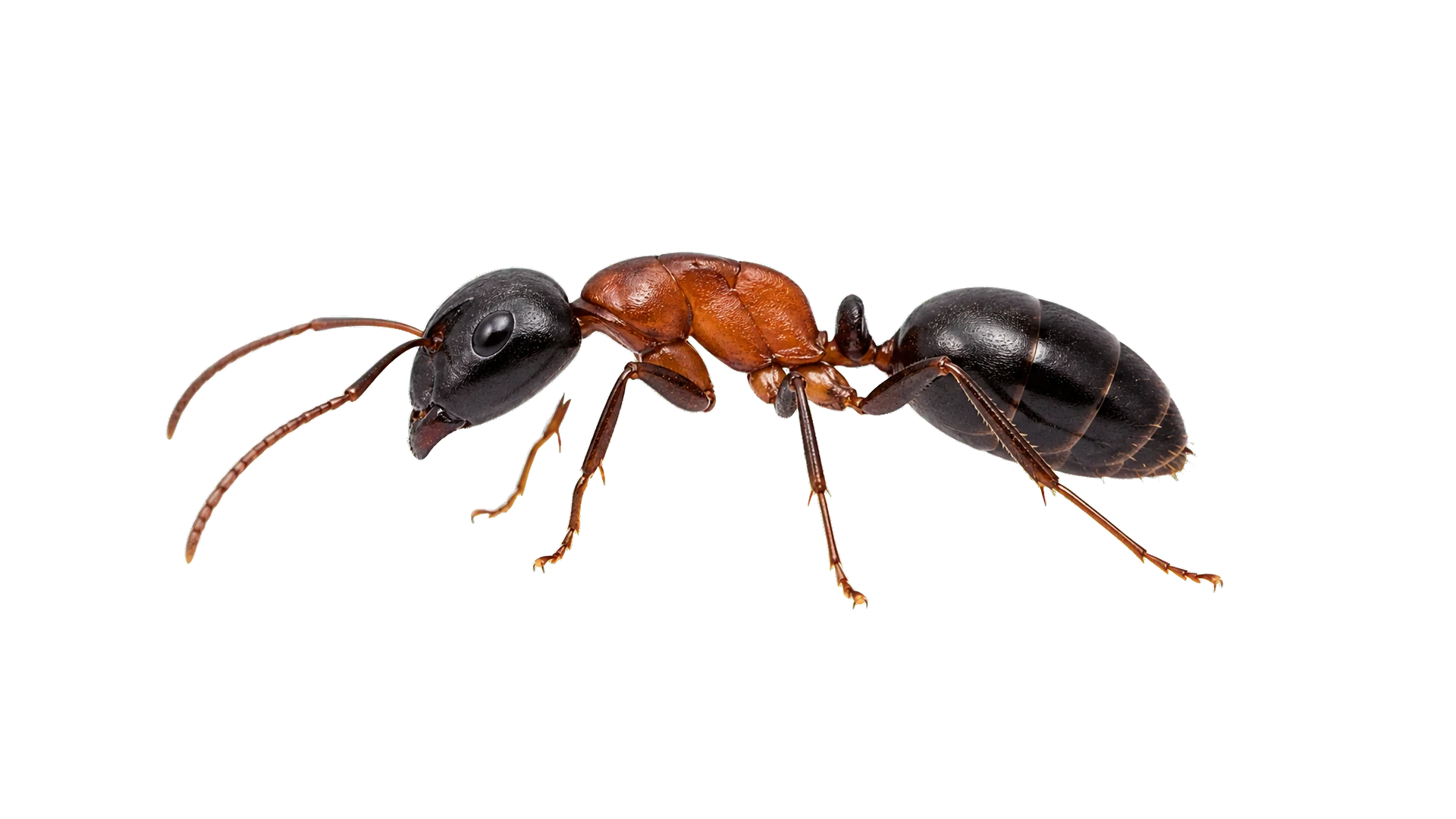
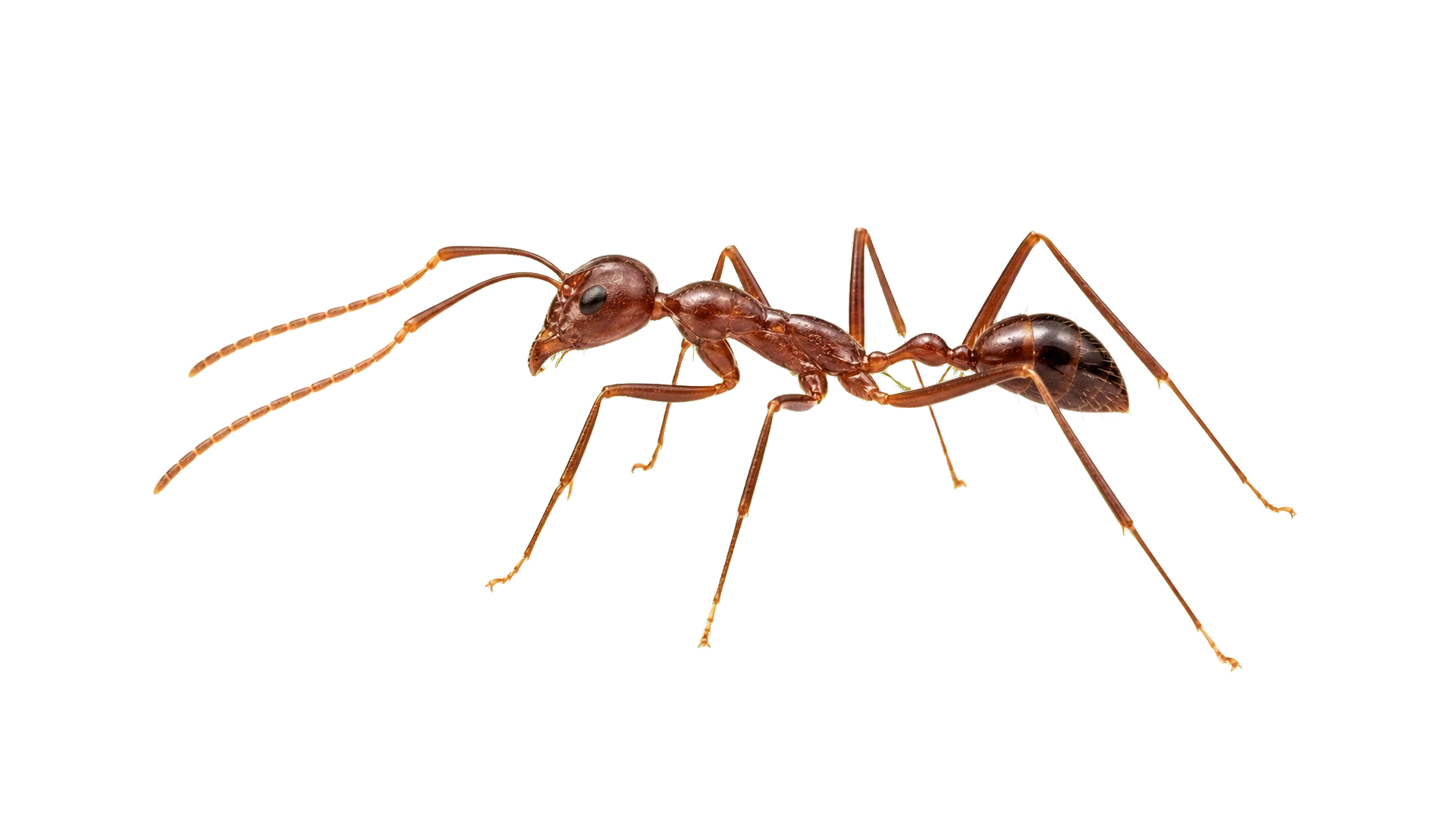
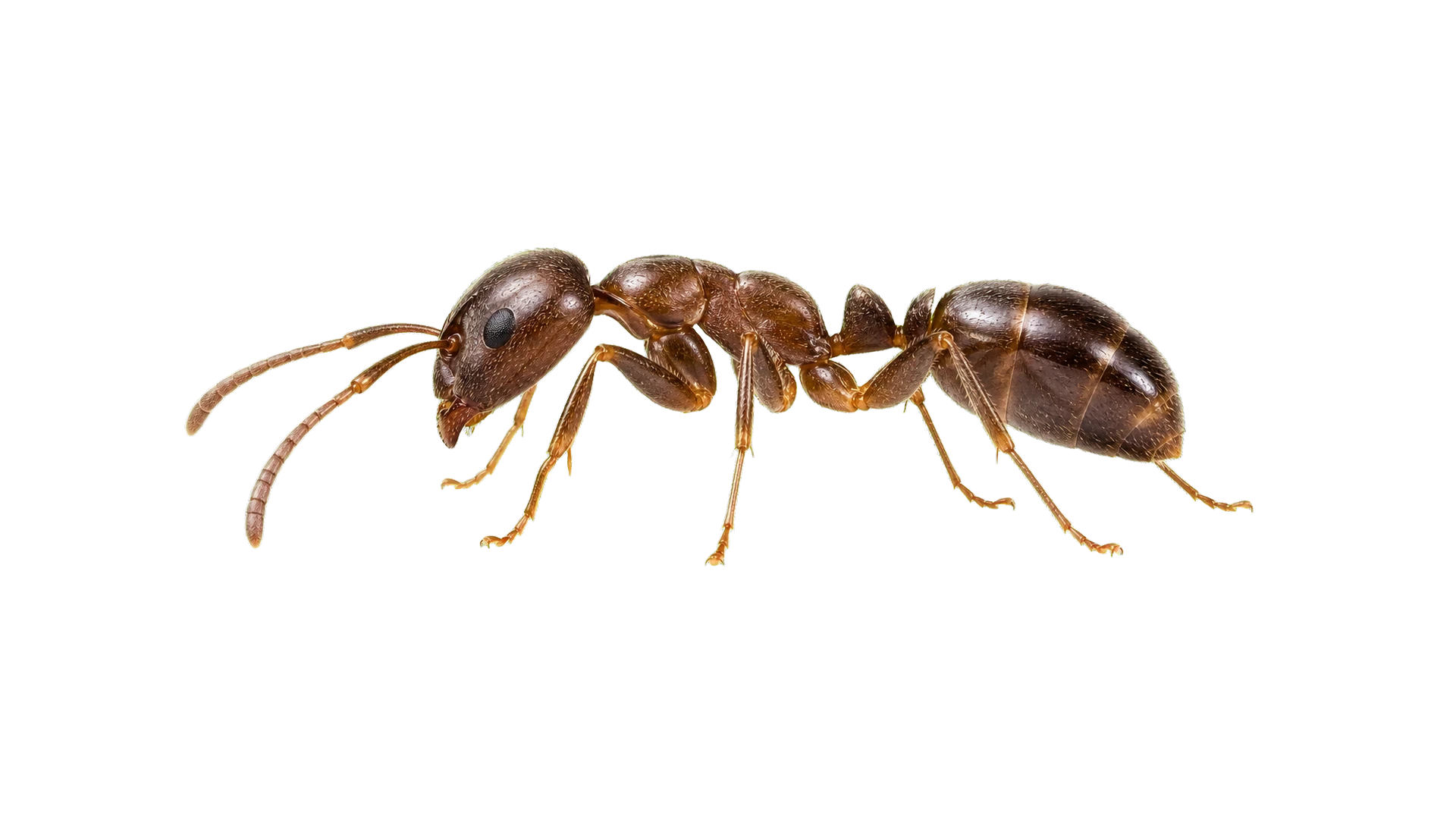
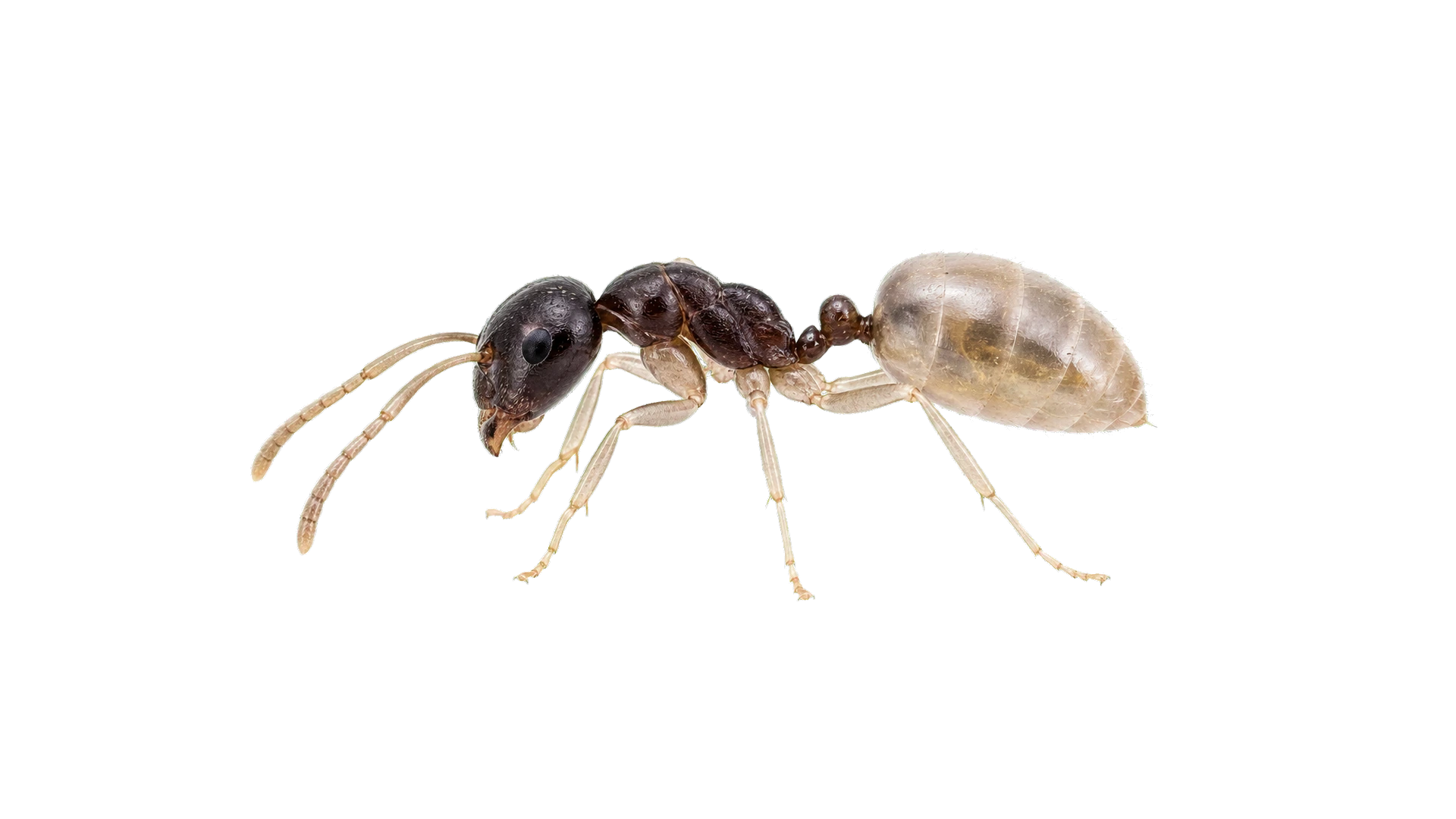
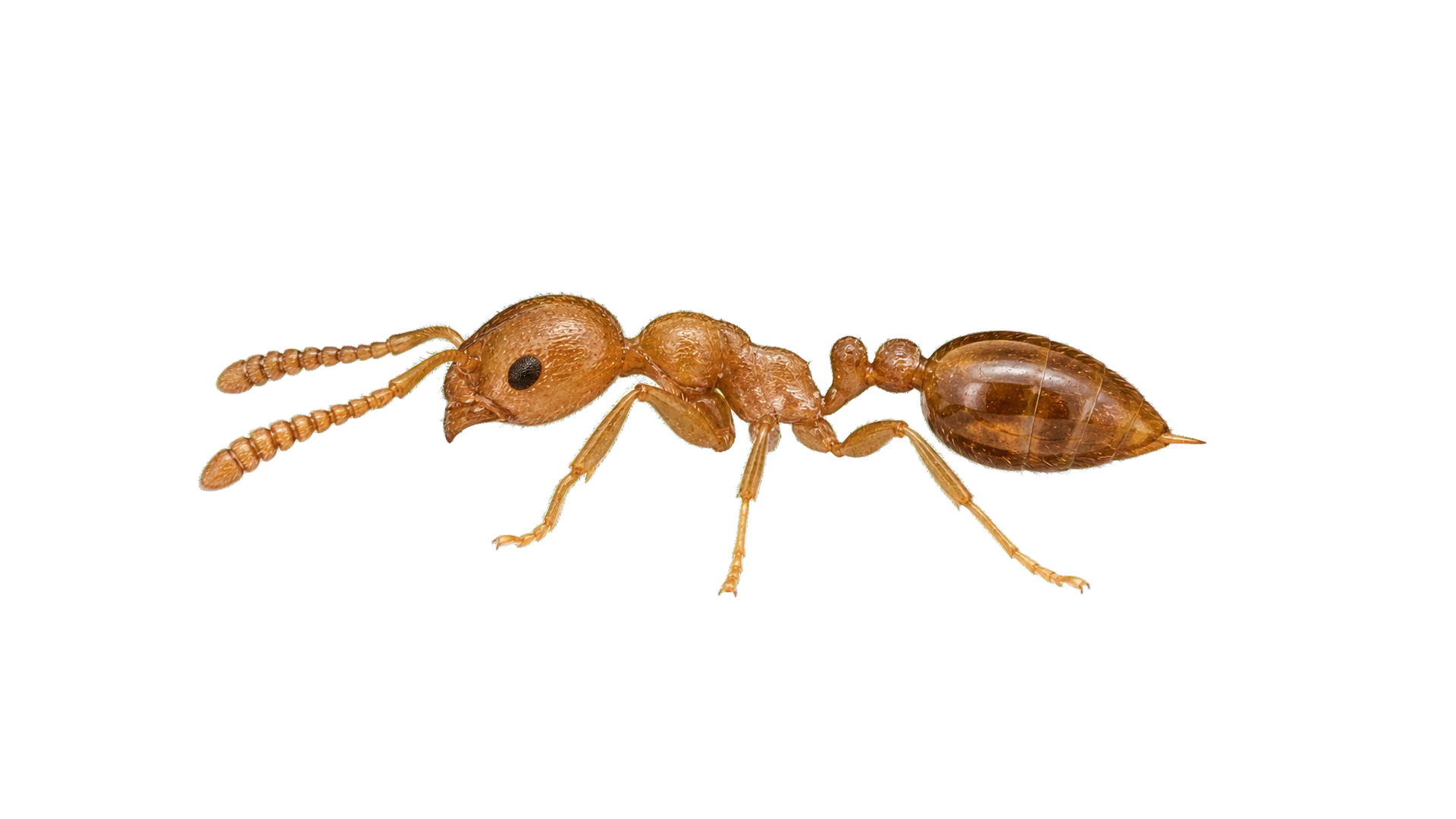
Body shape
Three distinct body segments (head, thorax, abdomen) with a narrow pinched waist, plus bent (elbowed) antennae. Straight antennae means it's a termite, not an ant.
Local pest control help is one call away.
 Pest Control Services Nationwide Pest Control Services Nationwide
 You're seeing ants. What you do next depends on which kind: some contaminate food, some destroy wood, and a few can send you to the hospital. Find your risk level and the right response below.
Every ant you see is a scout following orders. It found food, water, or shelter on your property and laid a pheromone trail back to the colony so other workers could follow. The trail is the entire game. Disrupt it and ants lose the map. Fix what drew them in and the trail stops re-forming.
Three things bring ants indoors more than anything else, and most homes have at least two of them running at once.
What ants are actually after:
There are over 700 ant species in the United States, and about 50 of them regularly turn up in homes. A sugar ant problem is a pantry issue. A carpenter ant problem is a structural issue. A fire ant problem is a medical issue. Identifying the species before you treat is the difference between a one-time fix and a recurring problem.
Three things to check in five seconds before you go further.
Three distinct body segments (head, thorax, abdomen) with a narrow pinched waist, plus bent (elbowed) antennae. Straight antennae means it's a termite, not an ant.

1/16 to 5/8 inch (1.5 to 16 mm). Pharaoh and sugar ants sit at the small end. Carpenter ant workers and queens are the largest you'll see indoors.

Black, brown, red, yellow, or two-toned. Color alone won't confirm species, but it narrows the list down fast: red-and-black usually means carpenter, solid red means fire ant.
A few ants on the counter might be scouts. A trail that reforms after you wipe it down means a colony has already mapped your kitchen. Most ant activity happens at night, inside walls, and under floors. By the time you notice the workers, the colony has usually been operating for weeks.
How an Ant Problem Grows
The ants you're seeing are scouts and foragers, the colony's smallest and most expendable workers. A typical household colony runs between a few thousand and several hundred thousand ants, with a queen, soldiers, workers, and seasonal reproductives each handling a specific job. The colony itself, not the foragers you see, is the problem you have to solve.
Foragers move along scent trails laid by other workers, which is why ant problems show up as orderly lines instead of scattered individuals. The queen and the bulk of the colony stay hidden, usually inside wall voids, under slabs, in tree stumps near the foundation, or in damp wood touching the structure.
Killing the foragers does almost nothing. The queen replaces lost workers faster than over-the-counter sprays can knock them down. Lasting control means reaching the colony or running the trail-and-bait cycle long enough that the queen starves. The right approach depends on the species, which is what the rest of this page helps you figure out.
Six features that define an ant, and how to tell ants from termites and other look-alikes.
Antennae have a sharp 'elbow' joint. This is the easiest way to tell ants from termites, whose antennae are straight and beaded.
Head, thorax, abdomen, in that order. Termites and beetles have two segments. Ants always have three.
The pinched section between thorax and abdomen, with one or two visible nodes depending on species. Termites have no waist at all.
Three pairs, all attached to the thorax. Long for fast travel along scent trails.
Reproductive ants have two pairs of unequal wings: forewings larger than hindwings. Termite swarmers have two pairs of equal-length wings. The wing test is the second-most-reliable ID.
Hardened jaws used for digging, carrying, fighting, and (in carpenter ants) excavating wood. Larger mandibles indicate larger workers or soldiers.
Pick the sign that matches what you're noticing. Each one points to a different ant species or a different stage of the problem.
Most ant problems aren't a five-alarm fire on day one. But they don't stay small either. Here's the realistic timeline from a few scouts on the counter to a full structural problem, and what to actually do at each stage.
A handful of scouts on the kitchen counter or a single trail along the patio. The colony is testing your home for food, water, and entry points. No nest, no damage, just reconnaissance.
Trails return daily even after wipe-downs. Multiple entry points, or activity in a second room. The colony has committed to your home as a food source and the route is now permanent.
Activity in three or more rooms, large workers visible (likely carpenter ants), small piles of fine wood shavings, or winged swarmers indoors. A satellite nest is now inside the structure.
Hollow-sounding wood, soft window frames, rustling sounds inside walls, or visible galleries when trim is pulled. Repair costs at this stage run $1,000, $5,000 and most homeowners insurance excludes ant damage.
Two factors push ants up this timeline faster: hidden moisture and warm seasons. If you're seeing activity in spring or summer near a known leak, assume the next stage is closer than the calendar suggests.
Local pros handle ant problems every week, identify the species correctly, and treat the colony rather than the trail. One call, no pressure.
Ants don't pick houses at random. They follow signals: a sugar spill the dishwasher missed, a slow drip under the sink, a hairline gap in the threshold. Once a scout finds any one of those, it tells the colony, and the colony commits. The audit below is how you reverse that decision.
Different ants chase different rewards, which is why species ID matters here too. Sugar ants and odorous house ants come for sweets and trail through the kitchen. Carpenter ants and pavement ants want grease and protein, and they'll camp under the dog bowl. Pharaoh and ghost ants follow moisture into bathrooms and laundry rooms. Knowing which one you have tells you which attractant to fix first.
Most homes have two or three of these conditions going at once, and you don't have to fix them all in one weekend. Start inside with food and water (the kitchen audit), then move outside to entry points and host conditions. Even partial wins help: closing one gap or drying out one cabinet is faster than treating the colony and it keeps a new species from finding the same path in.
Eight places ants nest most often. Walk these top-to-bottom, indoor-to-outdoor, when you're hunting the source.
Refrigerators, dishwashers, ovens. Ants nest in the warm, undisturbed cavities behind major appliances and run along plumbing or wiring into wall voids.
Carpenter ants and odorous house ants prefer damp wood. Check sink cabinets, around dishwasher gaskets, and behind washer/dryer hookups.
Moisture-loving species nest near toilet wax seals, behind tubs, and inside bath plumbing voids. Pharaoh ants and ghost ants are particularly drawn to bath spaces because of the heat-and-humidity combination.
Pharaoh ants and ghost ants colonize wall voids and follow conduit runs. Active behind outlets and switches on walls that share plumbing.
Carpenter ants and acrobat ants follow tree branches that touch the roof, then nest in attic insulation or damp wood near the eaves.
Deck posts, firewood stacks, landscape timbers, and any wood touching dirt. Carpenter ants almost always start in outdoor damp wood and move indoors via a connecting branch, beam, or utility line that bridges the gap.
Pavement ants under stones, edging, and concrete cracks. Fire ants in dome-shaped mounds in sunny lawn areas. Both can spread indoors through foundation gaps.
Overwintering colonies hide in undisturbed clutter. Firewood stacks, stored boxes, and crawlspaces are common bridges from outdoor nests into the house.
Why a small problem becomes a big one fast.
1 to 2 weeks
Queens lay eggs continuously in nest chambers. A single queen can lay 30 to 1,500+ eggs per day depending on species. Most household ants average a few hundred per day.
1 to 2 weeks
Eggs hatch into legless larvae fed by workers. This is when colony size scales fastest. Every larva is a future worker.
1 to 2 weeks
Larvae spin a cocoon (or pupate openly, depending on species). Inside, the larva transforms into a worker, soldier, or reproductive.
Lives 1 to 3 years
Workers forage, defend, and raise brood. A mature colony has thousands of workers active at all times. Indoor colonies in heated structures stay active year-round.
Lives ~1 hour to a few days outside the nest
Reproductives fly out in spring or early summer. Mated queens land, drop their wings, and start new colonies. A single mature colony can produce hundreds of swarmers per year. Carpenter ant queens can live 25+ years.
Most household ant colonies have a single queen. But some species (Argentine ants, ghost ants, pharaoh ants) have multiple queens and form supercolonies that span yards or buildings. Multi-queen species are why ant problems sometimes don't respond to standard treatments. Knocking out one queen leaves a dozen more producing brood.
Each ant species behaves differently. Match what you're seeing to identify which one has settled in.
| Species | Severity | Key Sign | Where You'll Find Them |
|---|---|---|---|
| Carpenter Ants | Structural | Frass (fine wood shavings) near walls, smooth galleries in wood | moist wood, wall voids, insulation |
| Fire Ants | Medical | Dome-shaped dirt mounds in yard, painful stings leaving white pustules | lawns, pastures, playgrounds |
| Pharaoh Ants | Persistent | Trailing near moisture sources, colonies in wall voids and behind outlets | hospitals, hotels, apartments |
| Argentine Ants | Persistent | Wide trailing columns, musty smell when crushed | moist soil, under debris, wall voids |
| Crazy Ants | Persistent | Erratic, zigzag movement patterns, congregating around electronics | electrical equipment, wall voids, under debris |
| Pavement Ants | Persistent | Small sand mounds in sidewalk cracks, trailing near pet food | under pavement, driveways, patios |
| Odorous House Ants | Nuisance | Rotten coconut smell when crushed, trailing lines along kitchen counters | kitchens, bathrooms, wall voids |
| Sugar Ants | Nuisance | Trails to sweet spills and open food containers, often near sinks | kitchens, pantries, near food sources |
| Ghost Ants | Nuisance | Nearly invisible trails near sinks and counters, translucent legs and abdomen | kitchens, bathrooms, greenhouses |
| Thief Ants | Nuisance | Tiny ants found in grease or protein-based foods, nesting near other ant colonies | wall voids, near other ant colonies, kitchens |
Severity reflects typical impact, not your specific case. If unsure, treat at the higher tier.
Honest breakdown of the most common DIY approaches: what they're good at, and where they reliably fall short.

 Gel and granular baits with slow-acting active ingredients (borax, hydramethylnon, indoxacarb) Workers carry the bait back to the colony, which kills the queen and brood. The kill takes 1 to 2 weeks, by design Best for sugar ants, odorous house ants, and pavement ants in single-queen scenarios Closing gaps around doors, windows, and utility line entries Repairing weatherstripping and door sweeps Caulking foundation cracks larger than 1/16 inch Storing all food (including pet food) in airtight containers Cleaning sticky or greasy residue immediately, including the outside of food packaging Taking out trash daily during active infestations
  Aerosol sprays kill the workers you see, then trigger a colony-wide alarm response Surviving workers split into satellite colonies and re-enter through new gaps Worst of all: spraying near slow-acting bait stations contaminates the bait and ants stop taking it back to the colony. Ultrasonic plug-in devices have no peer-reviewed evidence of effectiveness against ants Vinegar, peppermint oil, and cinnamon disrupt scent trails for hours but don't kill colonies Useful as supplements, never as primary control Argentine ants, ghost ants, and pharaoh ants form supercolonies with hundreds of queens Killing one queen does nothing because the others continue producing brood These species require professional baiting protocols across multiple connected nest sites
 Six prevention actions, sorted by effort and time. Start with the quick wins. Work down the list if ants keep returning.

Including pet food, cereal, sugar, flour, and anything sweet. Glass or hard plastic with tight lids. Removes the most common attractant in five minutes.

Diluted white vinegar (1:1 with water) erases pheromone trails and prevents new ones from forming. Focus on counters, windowsills, and door thresholds where you've seen activity.

Walk the foundation perimeter and caulk gaps larger than 1/16 inch around doors, windows, dryer vents, and utility line entries. Use a high-quality silicone or polyurethane caulk.

Repair leaky faucets, dry out under-sink cabinets, fix AC drip lines, and empty plant saucers. Carpenter ants and odorous house ants need moisture to thrive. Remove it and they leave.

Cut tree branches at least 5 feet from the house. Move firewood stacks at least 20 feet away. Remove dead stumps within 30 feet of the foundation. These are the launch pads for carpenter ants and acrobat ants.

An exterior perimeter treatment with a long-residual product, applied in late March or early April, blocks most species before they form trails inside. Best done annually.
Prevention timing matters. Here's what ants are doing each season, and when to act before they're inside.
Swarmer flights peak. Mated queens land, drop their wings, and start new colonies. Wings on windowsills or near light fixtures are usually the first warning sign. Most new household ant problems start here.
Foraging peak across the colony. Workers cover the most ground outdoors. Hot, dry stretches push ants inside hunting for water, which is when kitchen and bathroom sightings spike. Exterior prevention windows close mid-summer.
Carpenter ants and odorous house ants start moving indoors as temperatures drop. Colonies stockpile aggressively before winter, so foraging activity peaks again. This is your last reliable window for exterior treatment this year.
Most outdoor colonies slow down or go fully dormant. Indoor colonies in heated walls, attics, and voids stay active year-round. Winter ant sightings almost always mean a colony is already inside the house.
Here's exactly what happens when a pro shows up. Four steps, no guesswork, no blanket-spraying.
Inspection-led, species-specific treatment. Pros don't blanket-spray. They identify the exact ant species and use the product the colony will take back to the queen.
Walk-through of interior and exterior to find trails, frass, mounds, and entry points before any product is applied.
Confirms the exact species based on size, anatomy, and trail behavior. Wrong species, wrong product, recurring problem. Most failed treatments fail here.
Species-specific application: gel bait, granular perimeter, foam in galleries, or property-wide baiting for multi-queen colonies.
Tech shows what was treated and schedules 1 to 2 follow-up visits to verify the colony is gone, not just the visible workers.
Real stories from households who connected with pest control pros for ant problems.

"The problem finally stayed gone."
Ants kept returning no matter what we did. The tech treated the trail areas and explained how to handle food storage and moisture so the ants don't keep coming back. It's been months and we haven't seen them again. I appreciated that it wasn't just a one-and-done spray.
"The problem finally stayed gone."
Ants kept returning no matter what we did. The tech treated the trail areas and explained how to handle food storage and moisture so the ants don't keep coming back. It's been months and we haven't seen them again. I appreciated that it wasn't just a one-and-done spray.

"Clear expectations and a real plan."
I was overwhelmed and didn't know what was realistic to fix quickly. The inspector explained what results to expect and how long it typically takes depending on the ant species. They treated the right places and gave simple prevention tips. Everything felt structured and easy to follow.

"They found the entry points fast."
Ants were showing up in the kitchen and we couldn't figure out where they were coming from. The tech tracked the activity and pointed out two entry points we never would've noticed. After treating and sealing those areas, the ants disappeared. It was quick and surprisingly thorough.

"No pressure, just helpful info."
I mainly wanted to understand what was happening before committing to anything. The inspector walked me through the likely cause and the differences between treatment approaches. They answered questions without rushing me. The plan we chose worked and the ants were gone within days.

"The tech helped me stop wasting time."
I kept trying different products and nothing was sticking. The tech explained why some solutions don't work for certain ant problems and focused the treatment where it would actually matter. They also gave prevention tips that were easy to implement. The difference was obvious within the first week.

"They fixed what was actually causing it."
Ants kept showing up in the same spot. The pro explained that the visible ants weren't the real issue and focused the treatment on where they were coming from. They identified the entry path and treated it properly. The problem stopped and hasn't returned.

"It felt like a real inspection, not a quick spray."
The tech spent time figuring out where the ants were entering instead of just spraying around. They walked me through the likely reasons and what to watch for over time. After treatment, ant activity dropped fast and stayed low. The detailed approach gave me confidence.

"Small changes made a big difference."
We didn't realize how much our routine was attracting ants. The inspector explained simple prevention steps and treated the areas where activity was highest. Once those changes were in place, we stopped seeing ants inside. It was a practical approach that actually worked.

"The explanation alone was worth it."
I'd been doing random treatments without understanding what I was dealing with. The tech explained how ants behave and why certain approaches work better. They treated strategically instead of just spraying. It made the whole thing feel manageable.

"We stopped chasing the problem and solved it."
We kept wiping down counters and the ants would be back the next day. The pro identified the entry areas and explained the treatment plan clearly. Once they treated and targeted the colony, the ants disappeared quickly. It felt like we finally got ahead of it.

"They didn't oversell. Just solved it."
The tech explained what treatment was necessary and what wasn't. They focused on the entry points and corrected the conditions that were attracting ants. The work felt honest and effective. I liked having clear expectations and seeing results quickly.

"It wasn't just 'spray and go.'"
I appreciated the step-by-step explanation and the focus on prevention. The inspector treated the areas where ants were getting in and helped me understand what to change at home. The ants stopped showing up and it's been consistent. The approach felt thoughtful and sustainable.

"It finally made sense why they kept coming back."
I had ants showing up every few months and never understood why. The tech explained how outdoor nests and weather changes affect indoor activity. They treated the perimeter and entry points instead of just the inside. Since then, we haven't had recurring issues.

"Targeted instead of overdone."
I was worried about over-treating the house. The pro focused on specific problem areas and explained why blanket spraying wasn't necessary. The ants stopped appearing, and we didn't feel like chemicals were used unnecessarily. That balance mattered to us.

"Clear answers without jargon."
The tech explained everything in plain language and answered questions without rushing. They identified the type of ant we had and adjusted the treatment accordingly. Knowing why the approach worked gave me confidence it would last.

"They focused on prevention, not just treatment."
I liked that the tech talked through how to keep ants from returning after the treatment. They addressed moisture issues and entry points around the home. The treatment worked, and the prevention tips helped us stay ahead of future problems.

"No guessing, just a plan."
I was tired of guessing what would work. The inspector explained the cause of the issue and outlined a clear plan of action. After treatment, the ants disappeared and we haven't had to revisit the problem. It felt efficient and well thought out.

"They explained what to expect upfront."
The tech set expectations about timing and results before starting. They explained that some activity might happen initially and why. Everything played out exactly as described, and the ants were gone shortly after. That transparency made a big difference.

"Helpful without being overwhelming."
I didn't realize there were different types of ants or that it mattered. The inspector walked me through what they were seeing and explained how ant behavior affects treatment. It made it easier to ask the right questions and understand the solution.

"Saved me a lot of guessing."
I was close to trying random sprays for the ants. Talking with the tech helped me understand what was realistic to address and what usually doesn't work. The targeted treatment solved the issue quickly and saved time and frustration.

"It felt tailored to our home."
The tech didn't just apply a standard treatment. He looked at where we were seeing activity and adjusted the approach to our layout and yard. The ants stopped showing up and we understood how to keep it that way.

"Straightforward and effective."
I appreciated how straightforward everything was. The pro explained the issue, treated the problem areas, and gave us a few simple steps to prevent future issues. The ants were gone and it didn't feel complicated.

"They explained how the weather played a role."
I didn't realize seasonal changes could affect ant activity so much. The tech explained how heat and rain push ants indoors and what to do about it. They treated the problem areas and gave tips to prevent future issues. The explanation helped everything click.

"It wasn't as complicated as I expected."
I assumed pest control would be disruptive or complicated. The technician explained the steps clearly and focused on targeted treatment. The ants stopped appearing quickly and the process was smoother than expected.

"They helped me understand the bigger picture."
Instead of just treating the ants I saw, the tech explained what was happening around the house that made it attractive to pests. Once those factors were addressed, the problem resolved quickly. It felt educational as well as effective.

"Clear communication from start to finish."
I appreciated how clearly everything was explained before treatment began. The inspector walked through the process and answered all my questions. The ants were gone shortly after and we felt confident about prevention going forward.

"They addressed what we were missing."
We kept focusing on cleaning, but the tech showed us where ants were actually entering. Once those points were treated and sealed, the issue resolved. It was reassuring to finally understand the root cause.

"A methodical approach that worked."
The pro explained how they identify ant trails and colonies before treating. They took a methodical approach instead of rushing through. The ants stopped appearing and the fix has held up well.

"They understood desert pest behavior."
Living in Phoenix, pests behave differently than other places. The tech explained how heat drives ants indoors and what treatments work best here. The solution was effective and tailored to our environment.

"They took the time to do it right."
I appreciated that the tech didn't rush. He inspected the problem areas carefully and explained what they were seeing. The treatment worked quickly and the ants haven't returned.

"They understood the local pest issues."
The tech explained how the humidity here contributes to ant problems and why certain treatments work better in this climate. They focused on outdoor entry points and moisture-prone areas. The ants cleared up quickly and haven't come back.

"Finally something that lasted."
We'd dealt with recurring ants for years. The pro explained why flooding and moisture play such a big role here and adjusted the treatment accordingly. It's been months without seeing ants, which is a big win for us.

"They knew exactly what works in Arizona."
The tech explained how desert conditions affect ant behavior and which treatments are most effective here. They targeted the right areas and avoided unnecessary spraying. The ants disappeared quickly.

"Clear, calm, and professional."
I appreciated how calmly everything was explained. The inspector identified the ant problem, explained the treatment, and answered my questions without rushing. The solution worked and gave me peace of mind.

"They handled it efficiently."
The tech inspected the problem areas, explained the plan, and got to work quickly. The ants were gone within days and the process felt efficient without being rushed.
"Simple explanations, solid results."
I liked how simply everything was explained. The pro didn't overcomplicate things and focused on what mattered. The ants stopped appearing and we haven't needed follow-up treatments.

"They showed me what to watch for."
Beyond treating the ants, the tech explained what signs to watch for if activity starts again. That knowledge made me feel more in control. So far, everything has stayed clear.

"They explained why DIY hadn't worked."
I had tried several store-bought solutions with no luck. The inspector explained why those methods don't always reach the source of the problem. Once they treated the entry points and nesting areas, the ants stopped showing up.

"Seasonal problems finally under control."
Every spring we dealt with ants in the kitchen. The tech explained why seasonal changes trigger activity and helped us get ahead of it this time. The treatment worked quickly and we haven't had issues since.

"They made it easy to understand."
I appreciated how clearly everything was explained. The pro identified the problem areas and explained what changes would help prevent future issues. The ants cleared up and it felt manageable.
Answers to the questions homeowners ask most about ant identification and control.
Size, color, body shape, and behavior together. Sugar ants are tiny (1/16 inch) and brown. Carpenter ants are large (1/4 to 5/8 inch) and black. Fire ants are reddish-brown and aggressive. Pharaoh ants are pale yellow and tiny. The species sections lower on this page (and the species pages they link to) give you photo-level ID for each.
Faster than most people expect. A new colony from a single mated queen reaches a few thousand workers in 6 to 12 months. Established colonies of multi-queen species can double their territory in a single season. The trail you are seeing today is rarely the only one. By the time you spot a second trail, the colony has usually been there for months.
Most species are fine. Fire ants are not: their stings can cause severe reactions in dogs and cats, especially around the face, paws, and ears. Pets that paw at fire ant mounds in the yard can get dozens of stings in seconds. Carpenter ants and most other species do not sting and pose no real threat.
The colony is inside the house. Outdoor ant colonies go dormant in cold weather, but indoor colonies in heated structures stay fully active year-round. Winter ant sightings almost always mean the nest is somewhere in your walls, attic, or under the slab.
A typical service call is 45 to 90 minutes for inspection, identification, and treatment. The colony itself usually dies within 1 to 2 weeks of treatment as workers feed bait to the queen. Activity often increases for the first few days as workers carry bait back, which is the bait working as designed. Full elimination, including follow-up verification, takes 2 to 4 weeks.
Not the same colony, if treatment was correctly identified and applied. But new colonies from outside can re-establish over time, especially if the conditions that attracted the original problem (moisture, food access, exterior gaps) have not been fixed. Annual exterior perimeter treatment plus the prevention basics is what keeps return visits to a minimum.
Three giveaways. (1) Antennae: ants have bent (elbowed) antennae; termites have straight, beaded antennae. (2) Waist: ants have a narrow pinched waist; termites are straight-bodied with no waist. (3) Wings: winged ants have unequal wing pairs; termites have two pairs of equal-length wings. If you cannot tell, save a sample and let a pro identify it. The treatment for each is completely different.
Local pros treat every ant species. Get matched in one call, no pressure and no commitments.
Click through to the species page for photos, signs, and treatment specific to that ant.
Wood-destroying ants that tunnel through structural lumber.
Carpenter ants excavate galleries inside moist wood to nest, not to eat. They push out fine sawdust-like frass as they dig. Left alone, a colony weakens beams, joists, and framing from the inside out.
Quick ID:
Why it matters:
Aggressive stinging ants that build large mounds in yards.
Fire ants deliver painful, venom-filled stings that can trigger severe allergic reactions. Their hard-packed mounds appear in lawns and along foundations, often after rain. Colonies have multiple queens, making them extremely hard to eliminate without professional treatment.
Quick ID:
Why it matters:
Small kitchen ants that smell like rotten coconut when crushed.
The most common indoor ant. They form long trails along countertops and nest in wall voids near moisture. Colonies split when disturbed, spraying them makes the problem worse, not better.
Quick ID:
Why it matters:
Small brown ants that nest in cracks in driveways and foundations.
You'll see tiny soil mounds pushed through cracks in concrete and along foundation walls. They forage indoors for greasy and sweet foods. Not structurally damaging, but persistent through warmer months.
Quick ID:
Why it matters:
Tiny ants that spread bacteria and thrive in heated buildings.
A serious concern in multi-unit housing and commercial kitchens. Pharaoh ant colonies bud rapidly, splitting into new nests when disturbed. Sprays make them scatter. Professional baiting is typically the only approach that works.
Quick ID:
Why it matters:
Sweet-seeking ants that invade kitchens overnight.
A catch-all name for several small species drawn to sugary foods and fruit. They trail along countertops and plumbing lines, often appearing in large numbers overnight. Seal food, fix moisture, and they lose their reason to stay.
Quick ID:
Why it matters:
Erratic, fast-moving ants that swarm electronics and electrical equipment.
Named for their zigzag movement pattern. Crazy ants form enormous colonies and are notorious for shorting out A/C units, switch boxes, and electronics. Most common in southern states, they overwhelm properties quickly.
Quick ID:
Why it matters:
Invasive ants that form massive supercolonies with multiple queens.
Argentine ants overwhelm native species and trail into homes in huge numbers seeking moisture and food. Their supercolonies make them one of the hardest ant species to control, killing visible ants barely dents the population.
Quick ID:
Why it matters:
Nearly invisible ants with translucent legs that infest kitchens.
Ghost ants are tiny, under 1.5mm, with pale legs and abdomens that make them almost invisible on light surfaces. They nest in wall voids and potted plants, and their multiple-queen colonies make them a persistent indoor nuisance in warm climates.
Quick ID:
Why it matters:
Tiny ants that nest near other colonies and steal their food.
Among the smallest household ants. Thief ants nest near larger ant colonies and raid their food stores. Indoors, they're attracted to grease and protein, often found near kitchen counters, pet food, and pantries.
Quick ID:
Why it matters: