Local pest control help is one call away.

Pharaoh Ant: Identification, Treatment & Prevention

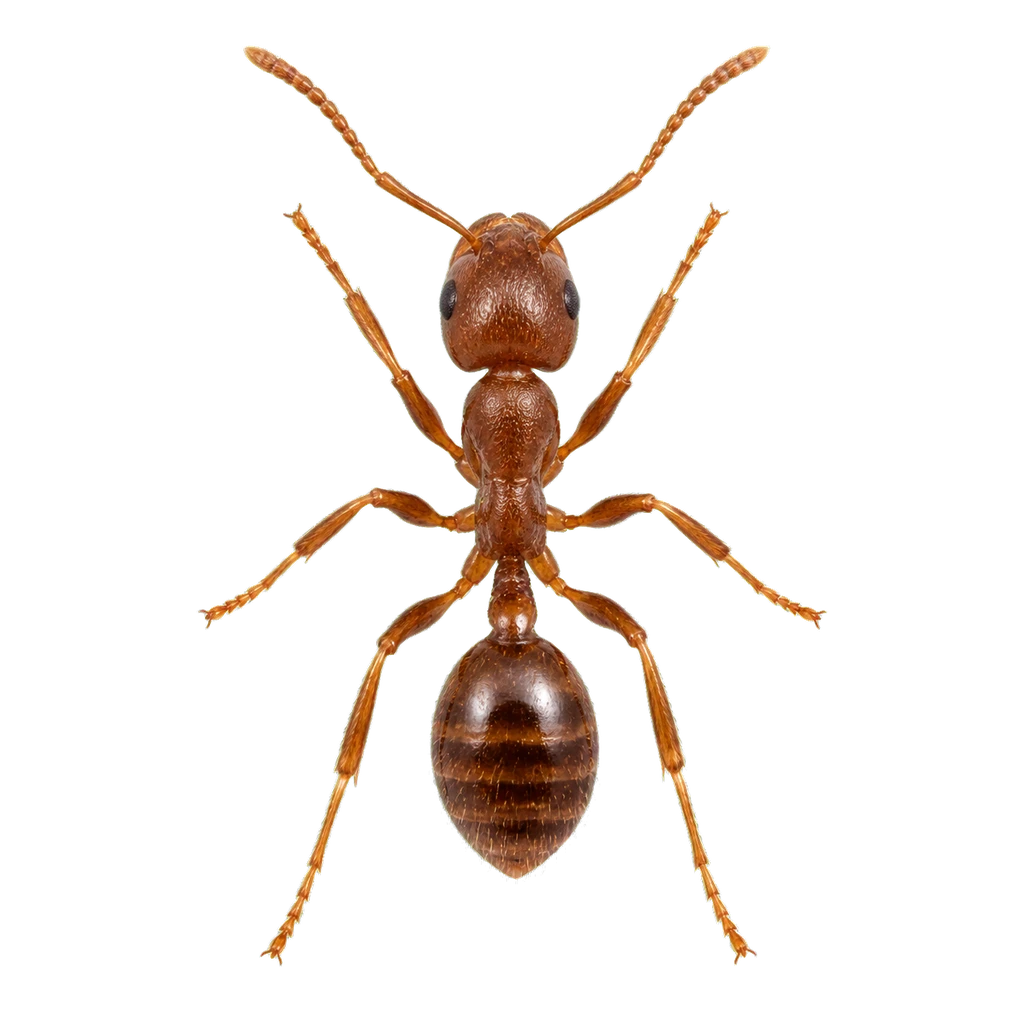
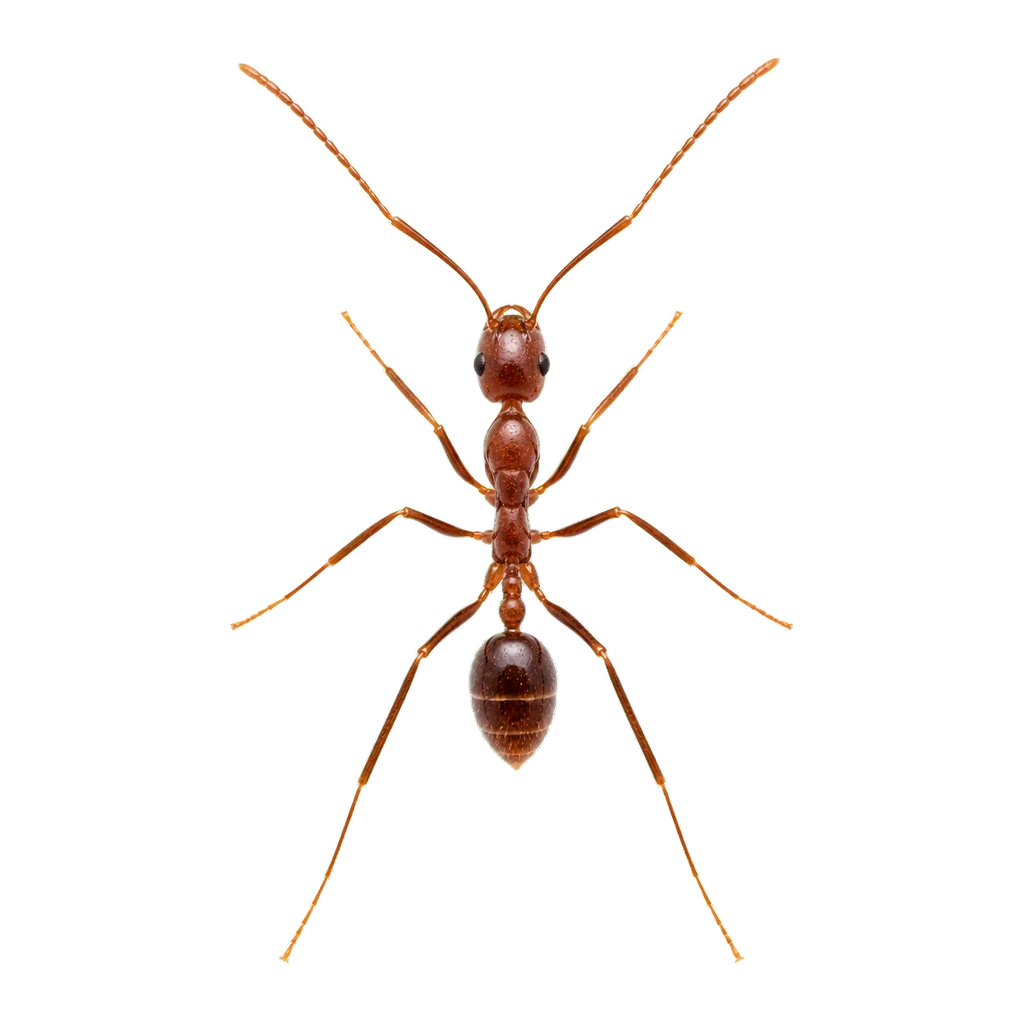
Pharaoh ants are tiny, uniformly pale golden-yellow workers, 1.5 to 2 millimeters long, and they're the most operationally distinct ant on this site. Unlike every other household ant, they live entirely indoors in the continental United States, they cannot survive a single winter outside, and a single colony can hold anywhere from 200 to 2,500 queens at once. The one rule that defines treatment for this species is simple: contact sprays make the problem dramatically worse. Spraying triggers budding, and one nest becomes three to ten sub-nests scattered through the structure within two to three weeks.

If you're seeing tiny pale-yellow ants trailing along door frames, electrical conduits, and bathroom grout lines, with workers that look uniformly yellow from head to abdomen (not a dark head with a pale body), you're looking at pharaoh ants. This guide covers how to confirm them, why hospitals and food-service facilities take them more seriously than any other ant, and what bait-only professional treatment actually looks like.

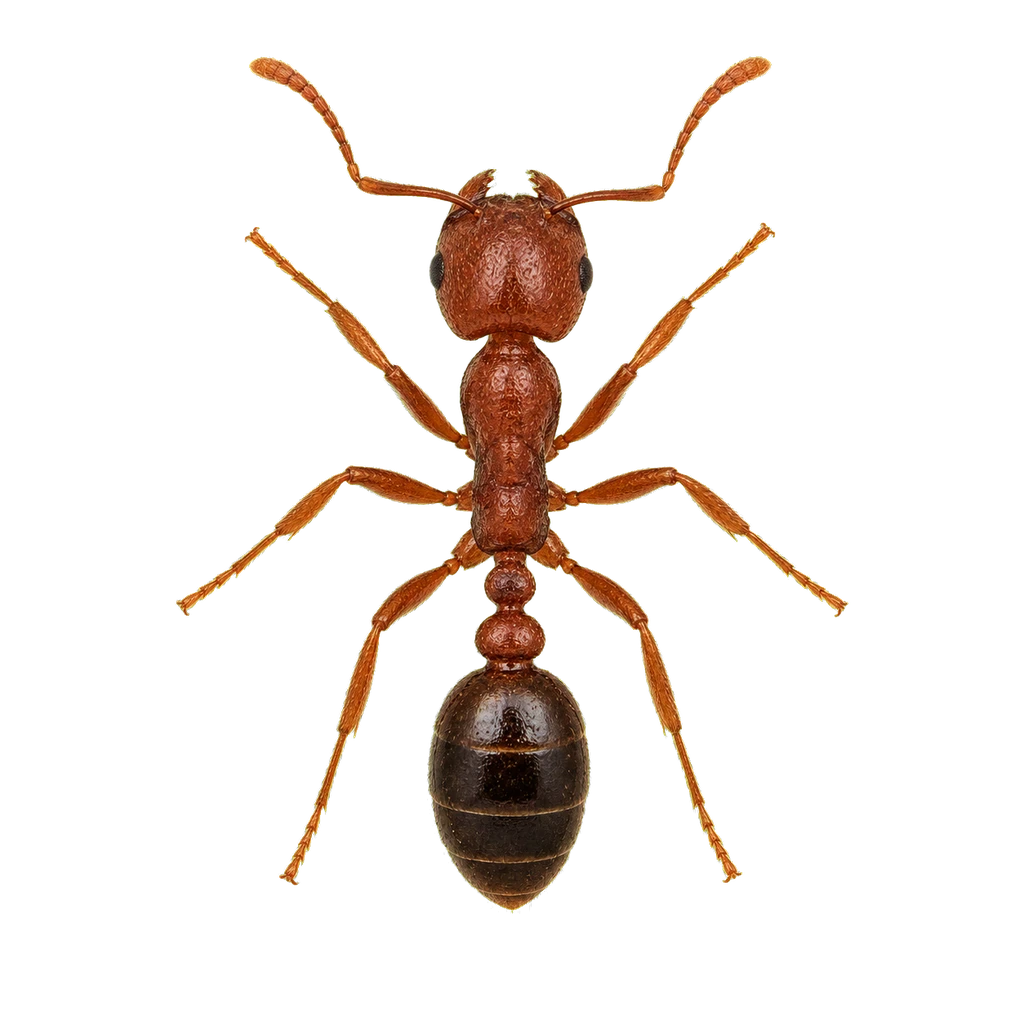
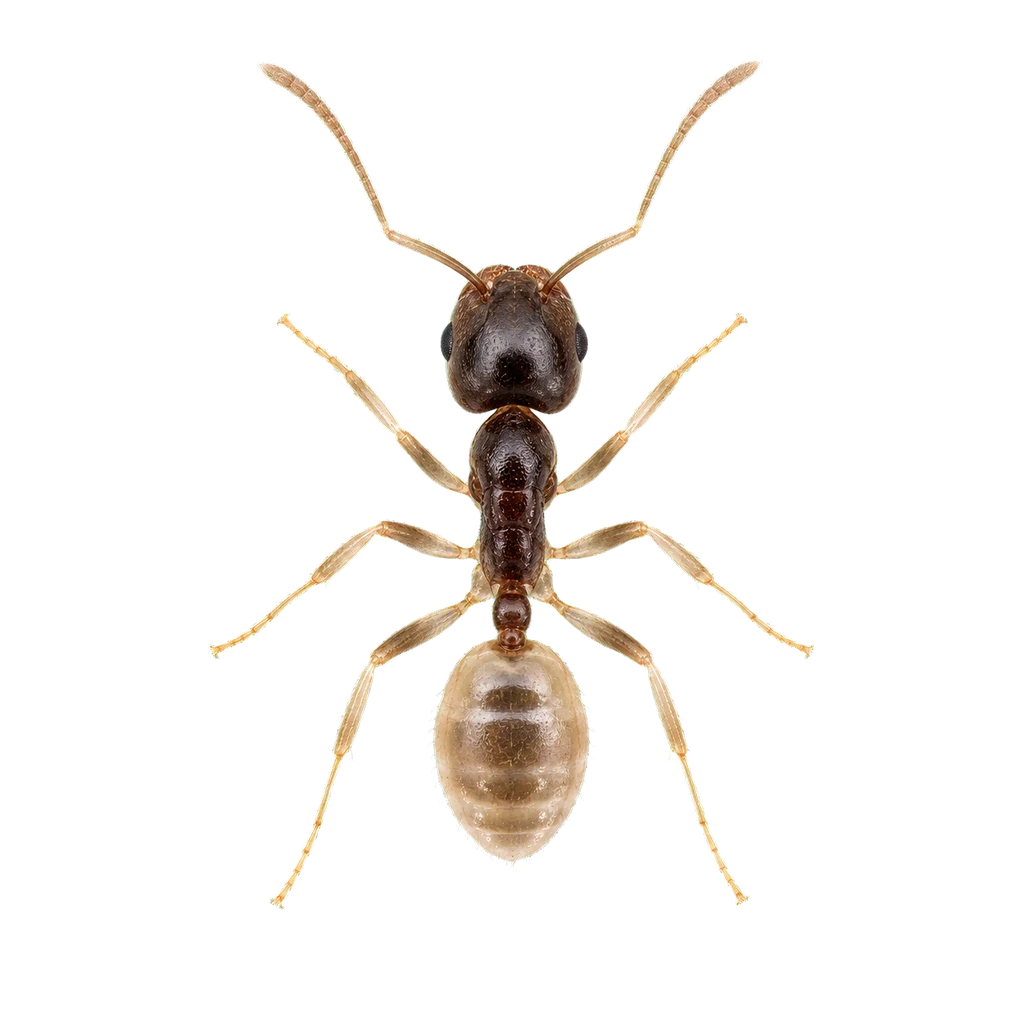
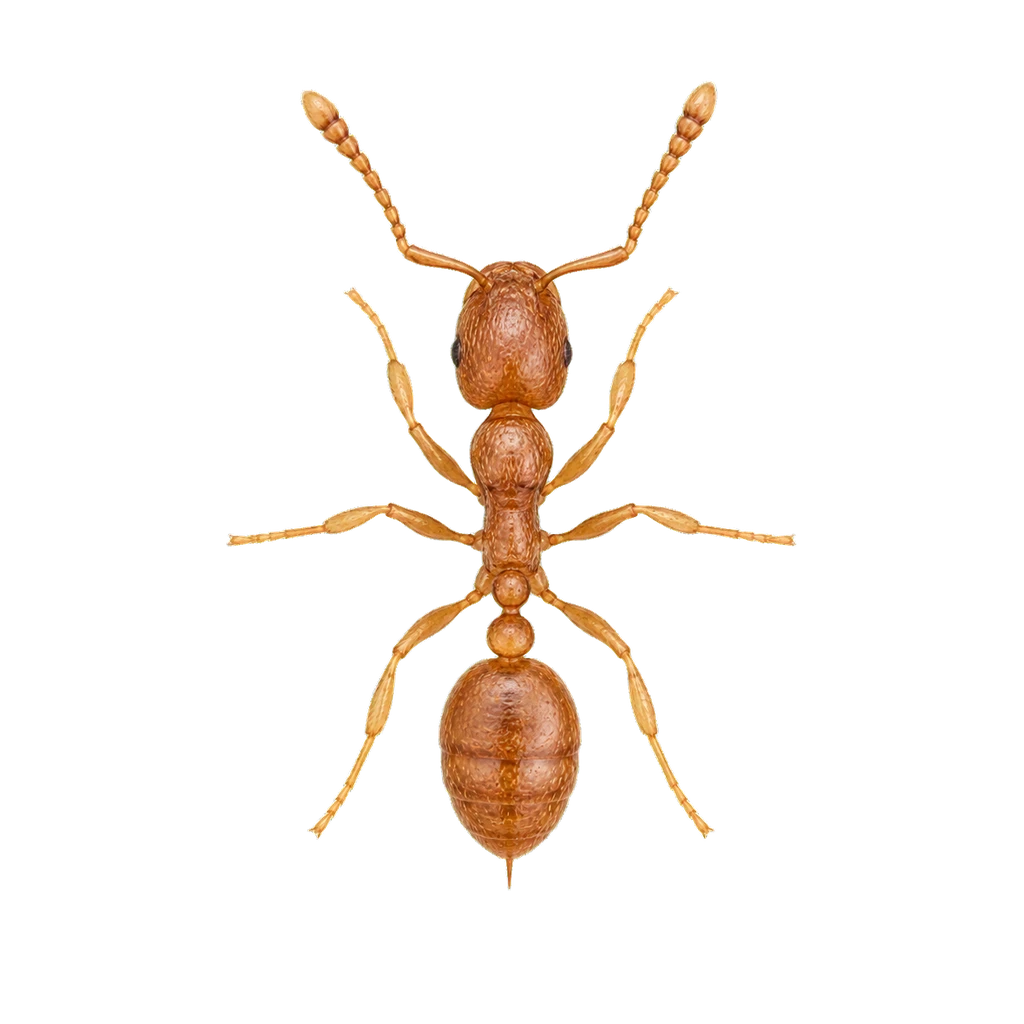
Close-up illustration of a Pharaoh ant showing tiny pale-yellow body and segmented antennae

ID Card: Pharaoh Ant

Scientific name
Monomorium pharaonis
Color
Yellow, light brown
Size
1/16 inch
Body shape
Two-node waist, very small body
Antennae
Elbowed, 12 segments with 3-segment club
Key evidence
Trailing near moisture sources, colonies in wall voids and behind outlets
Also known as
Sugar ants, Piss ants, Indoor ants

Related Species

Call to get matched with a local pest control pro.

Available 24/7
(888) 495-1510
  • Specialists trained in bait-only, no-spray pharaoh ant protocols
  • Multi-week feeding programs that target queens through trophallaxis
  • Whole-building coordination for multi-family and healthcare settings

Where to Inspect for Pharaoh Ant Activity

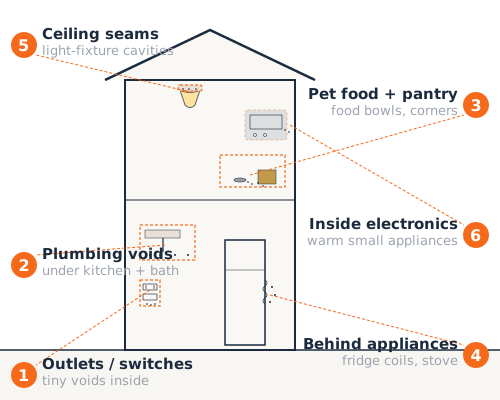
Cross-section illustration showing Pharaoh ant trail patterns through wall voids, electrical conduits, and plumbing chases

Pharaoh ants are small, pale, and quiet on a surface, they're easy to miss until trails are established in multiple rooms. The nest itself is almost always buried deep in a wall void or utility chase, so the inspection job is reading the trail evidence rather than finding the colony. Walk these zones after dark with a flashlight, look along edges and grout lines rather than at open floor:

  • Bathroom and kitchen counters at night, Pharaoh ants forage in low light along grout lines, caulk seams, and counter edges. A faint trail along a backsplash is often the first clear sign, especially within the first hour after the lights go out.
  • Behind electrical outlets and switch plates, Wall voids are universal pharaoh ant harborage. Workers move between rooms through electrical conduits, so trails emerging from outlets and switch plates confirm an in-wall colony.
  • Above suspended ceiling tiles and around recessed light fixtures, In commercial buildings and multi-family housing, the dropped-ceiling cavity is the most common harborage. Lift a tile, look for trail dust and live workers around the cooling fins of fixtures.
  • Under sinks and around water heaters, Pharaoh ant colonies need daily water access. Inspect supply-line penetrations, condensation pans on HVAC equipment, and the framing behind toilets and water heaters.
  • Shared walls in multi-family housing, If the colony has been moving through utility chases, the neighboring unit on the other side of the wall is almost certainly affected. Coordinate inspection with property management when possible.
  • Healthcare and food-prep areas, In hospitals, IV stands, patient room corners, sterile-supply rooms, and food-prep stations are required inspection points. In food service, the same applies to prep tables, dish areas, and dry-goods shelving.

If trails show up in two or more rooms, or appear in any unit of a multi-family building, the colony is established in the wall void system and has almost certainly already budded into multiple sub-nests. Pharaoh ants do not stay in one place. The hospital playbook, bait-only, multi-week feeding, no contact sprays, applies to any setting where they show up, including a single-family home.

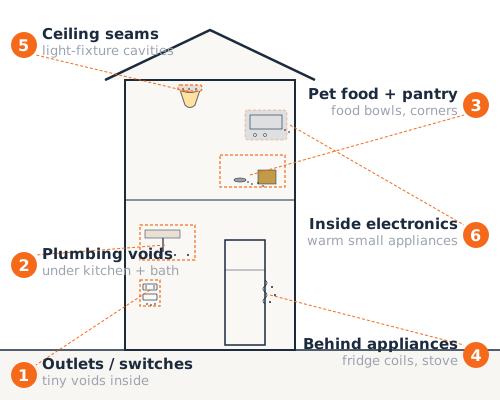
Cross-section illustration showing Pharaoh ant trail patterns through wall voids, electrical conduits, and plumbing chases
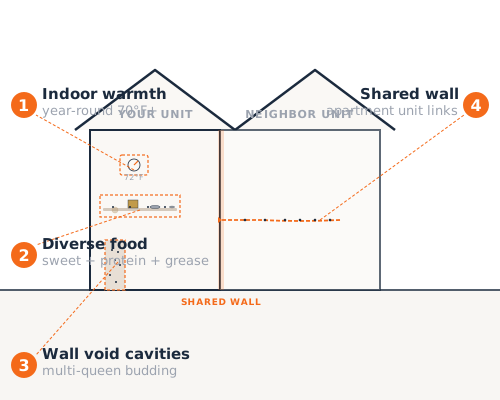
Illustration showing how Pharaoh ants spread between units in multi-family buildings via electrical conduits, plumbing chases, and shared wall voids

Why Do I Have Pharaoh Ants?

Trail spotting is step one. The harder question is why the building has them at all. Pharaoh ants are a tropical species, and outside of southern Florida and Hawaii, they cannot survive a single winter outdoors anywhere in the United States. Every infestation in the continental US traces back to an established indoor colony living in the structure itself, almost always somewhere it can stay between 80 and 86 degrees year-round.

What anchors them to your building:

  • Heated indoor temperature year-round, wall voids and utility chases that stay 80 degrees or warmer give them the tropical conditions they need to reproduce continuously
  • Wall voids, dropped ceilings, and utility chases, the universal harborage, these protected cavities are too tight for larger ants but ideal for pharaoh colonies with thousands of small workers
  • Daily moisture access, plumbing penetrations, condensation around HVAC equipment, and small leaks under sinks supply the water the colony needs every day
  • A history of contact-spray treatment, prior DIY or unqualified pro spraying causes budding that scatters the colony deeper into the structure, sprays are the single fastest way to make this problem worse
  • Shared infrastructure in multi-family housing, electrical conduits, plumbing chases, and utility runs connecting units let the colony spread between apartments within 30 to 60 days

Pharaoh ants do not form new colonies by mating flights. Unlike almost every other ant, queens never fly out to start fresh nests. Every pharaoh ant problem traces back to an existing indoor colony, the queens were either present in the building already or arrived inside packaged goods, used furniture, or appliances. Once inside, new sub-colonies form only by budding: a group of queens, brood, and workers simply walks to a new spot in the structure and sets up there. This is why hospital outbreaks and multi-family-building infestations behave the way they do.

How Serious Is Your Pharaoh Ant Problem?

Find your scenario below. Each row reflects how indoor multi-queen budding colonies actually progress, not a generic ant timeline.

What You're Seeing Severity If Untreated Next Step
A few pale yellow workers spotted in a bathroom or kitchen, no continuous trail yet Early Trails will form within 1 to 2 weeks as scouts confirm water and food access; colony budding pressure builds quickly indoors. Confirm ID first, uniformly pale yellow head to abdomen, 3-segment antennal club, indoor location. Document trail locations over 7 to 10 days. Do not spray.
Continuous trails in 2 or more rooms, workers in multiple bathrooms or kitchens Moderate Wall void colony is established and likely has already begun budding into adjacent sub-nests. Schedule professional bait-only treatment this week. No DIY sprays under any circumstances, sprays cause immediate budding.
Workers throughout the structure, sightings in bedrooms or closets, recent contact-spray history High Spray-induced budding has dispersed the colony deeper, the population is now distributed across many sub-nests. Call a professional this week. Bait formulation may need to be rotated because the dispersed colony has multiple feeding sites operating in parallel.
Multi-unit building infestation, healthcare or food-service facility involvement, or infection-control concerns Urgent The risk profile now includes pathogen-vector exposure, code-compliance reporting, and cross-unit spread through shared infrastructure. Call today and request a building-wide program coordinated with property management or infection-control staff. Single-unit treatment cannot succeed here.
A few pale yellow workers spotted in a bathroom or kitchen, no continuous trail yet
Severity Early
If Untreated Trails will form within 1 to 2 weeks as scouts confirm water and food access; colony budding pressure builds quickly indoors.
Next Step Confirm ID first, uniformly pale yellow head to abdomen, 3-segment antennal club, indoor location. Document trail locations over 7 to 10 days. Do not spray.
Continuous trails in 2 or more rooms, workers in multiple bathrooms or kitchens
Severity Moderate
If Untreated Wall void colony is established and likely has already begun budding into adjacent sub-nests.
Next Step Schedule professional bait-only treatment this week. No DIY sprays under any circumstances, sprays cause immediate budding.
Workers throughout the structure, sightings in bedrooms or closets, recent contact-spray history
Severity High
If Untreated Spray-induced budding has dispersed the colony deeper, the population is now distributed across many sub-nests.
Next Step Call a professional this week. Bait formulation may need to be rotated because the dispersed colony has multiple feeding sites operating in parallel.
Multi-unit building infestation, healthcare or food-service facility involvement, or infection-control concerns
Severity Urgent
If Untreated The risk profile now includes pathogen-vector exposure, code-compliance reporting, and cross-unit spread through shared infrastructure.
Next Step Call today and request a building-wide program coordinated with property management or infection-control staff. Single-unit treatment cannot succeed here.

Pharaoh ant colonies bud aggressively and are documented pathogen vectors. If you're between two rows, treat the higher one as your situation.

How a Pharaoh Ant Colony Grows

Pharaoh ants reproduce on a faster cycle than almost any other household ant, and they do it entirely indoors. Mating happens inside the nest, never on a mating flight. New colonies form only by budding, a group of queens, brood, and workers walks to a new spot in the structure and starts a sub-colony there. That biology is exactly why contact sprays are so destructive, and exactly why bait-only programs need to run for weeks.

  1. Egg

    About 5 to 7 days

    Egg development is one of the fastest in the ant world. With 200 to 2,500 queens producing eggs continuously inside a single colony, brood output is enormous, and the nest can rebuild population in a single feeding cycle if any queens survive treatment.

  2. Larva

    About 18 to 19 days

    Larvae are fed by adult workers through trophallaxis, the mouth-to-mouth food transfer that defines social ant biology. This same pathway carries bait active ingredients and growth regulators from foraging workers all the way to larvae and queens, which is the entire reason bait-only treatment works on this species.

  3. Pupa

    About 9 to 12 days

    Pupae develop in protected nest chambers deep in wall voids. Most become workers; a fraction become reproductive queens or males. Newly mated queens stay inside the colony or walk out as part of a budding event rather than flying.

  4. Adult worker

    Workers live about 10 weeks; queens live 4 to 12 months

    Workers forage along faint trails up to 100 feet from the nest, often through wall voids the homeowner never sees. New queens are produced continuously across the colony's lifetime, so the population is constantly being topped up, no annual cycle, no waiting period.

Pharaoh ants do not reproduce by mating flights. Every new nest in the structure is a budding event, a chunk of the existing colony walking to a new spot. This means treatment failure does not look like a fresh swarm landing on the property, it looks like the same colony scattered into more sub-nests, often after a single misplaced spray. The total population can rebuild in a single feeding cycle if any queens survive, which is why bait programs need to run for the full six to eight weeks even after surface trails appear to be gone.

When Pharaoh Ants Are Most Active

Pharaoh ants live entirely indoors across the continental US and stay active year-round inside heated structures. The natural seasonal slowdown other ants exhibit does not apply, but their diet does shift through the year, which directly affects which bait formulations work in any given month.

  • Spring

    Colony diet shifts toward protein as brood production peaks. Workers start ignoring sugar bait that worked through the winter. Budding pressure rises as older queens lay heavily and the colony pushes into adjacent voids. Best window to switch a maintenance program over to protein-heavy bait formulations.

  • Summer

    Protein diet phase is at peak. In tropical Florida and Hawaii, brief outdoor activity becomes possible. Everywhere else in the continental US, colonies remain entirely indoor regardless of outdoor temperature, the indoor heated wall voids are still the only place they can survive long-term.

  • Fall

    Diet shifts back toward sweets and fats as protein demand drops. Pre-winter activity stabilizes in heated buildings. A bait program started in early fall typically completes its full cycle before holiday-season disruption to inspection access.

  • Winter

    Indoor activity continues uninterrupted in heated structures regardless of outdoor temperature. Mid-winter trail sightings confirm an established indoor population, this is the norm rather than the exception with this species. Treatment seasons run year-round; there is no offseason.

Why Pharaoh Ants Aren't a DIY Job

Pharaoh ants are the textbook case for why contact insecticides backfire. Spray any pyrethroid or other contact product on a pharaoh ant trail and the colony reads it as an existential threat. Within 24 to 48 hours, queens, brood, and worker groups split off and bud into new nest pockets scattered through the structure. A single sprayed colony commonly becomes three to ten sub-colonies within two to three weeks. This is the single most-cited DIY failure of any ant species in the US, and it's why pharaoh ants need professional handling more reliably than almost any other household pest.

Bait choice failures are the next biggest issue. Pharaoh ant diet rotates through protein (peak in spring and summer) and sweets and fats (peak in fall and winter). A hardware-store bait formulated for sugar-loving ants will be completely ignored during the spring protein phase, and homeowners trying to bait during that window often conclude bait doesn't work and switch to spray, which is exactly the worst possible move. Professional protocols rotate baits and run multi-formulation monitoring stations so the colony always has access to whatever it currently prefers.

Beyond the spray-versus-bait issue, pharaoh ants are a documented disease vector. They carry Streptococcus, Pseudomonas, Salmonella, Staphylococcus, and Clostridium difficile on their bodies. In hospital outbreaks, they've been found in surgical wounds, IV drip lines, and neonatal incubators, several documented cases have closed hospital wings until infection-control protocols caught up. In commercial kitchens, the same contamination pattern triggers reportable health-code violations. In homes with infants, elderly residents, or anyone with a compromised immune system, the medical-vector aspect alone changes how urgent treatment becomes.

A professional program runs bait gels, bait stations, and IGRs (insect growth regulators that sterilize queens) over a minimum of six to eight weeks of continuous feeding for a typical residential infestation. Multi-family buildings need whole-building coordination, treating one unit while neighbors are untreated guarantees re-infestation through shared utility chases within 30 to 60 days. Healthcare facility programs add infection-control protocols layered on top of pest control work. Residential service typically runs $300 to $700 for the initial program, with $60 to $120 per month recurring. Multi-family programs range from $5,000 to $50,000 or more depending on building size.

What Changes When a Pro Shows Up

Pharaoh ant treatment is bait-only, no exceptions. The colony is too distributed for spot treatment, too sensitive to repellents, and reproduces too fast for surface chemistry to matter. A specialist who's worked the species runs a residential job the same way a hospital pest control program runs. Here's what changes:

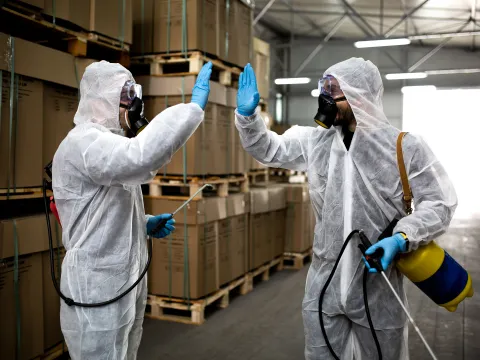
Pest control technicians after completing a Pharaoh ant treatment service
  • Local Pest Control
  • 24/7 Availability
  • Quality Workmanship
  • Eco‑Friendly Options
  • Trusted by Homeowners
  • They Map Every Trail Across the Structure

    Inspection covers all rooms, wall voids accessible through outlets, plumbing penetrations, and ceiling cavities. Visible trails are only the path to food, the actual nest pockets are buried in the wall void system and shift in response to disturbance.

  • Bait Matched to the Current Diet Phase

    Pharaoh ant diet rotates between protein (typically spring through summer) and sweets and fats (fall through winter). A pro tests current preference with multiple bait types at monitoring stations before committing to a primary formulation, otherwise the bait gets ignored.

  • Growth Regulators That Sterilize Queens

    Insect growth regulators like methoprene and pyriproxyfen are mixed into the bait program. Workers carry the IGR back through trophallaxis to queens and brood. Queens stop producing viable eggs, and the colony collapses from the inside over weeks.

  • No Contact Sprays, Period

    Any spray product applied to pharaoh ants causes immediate budding. A real program uses bait gels, bait stations, and IGRs only. If a provider mentions spraying any pyrethroid or other contact product for pharaoh ants, find a different provider.

  • Local Pest Control
  • 24/7 Availability
  • Quality Workmanship
  • Eco‑Friendly Options
  • Trusted by Homeowners
NoToPests home

One call connects you with a local specialist who knows pharaoh ants and your area.

Be Ready When You Call

Pest control technician arriving for Pharaoh ant service
Junho L.
Daisuke P.
Kirk Q.
Marion K.

Trusted by homeowners nationwide

Call for Pest Control Help (888) 495-1510

Can You Handle This or Do You Need Help?

Pharaoh ants are the one household ant where DIY almost always makes the situation dramatically worse. The biology punishes spraying more reliably than any other species on this site.

What DIY Can Do

DIY work with pharaoh ants is best aimed at sanitation, identification, and ruling out other species, not population reduction. Useful steps with honest limits:

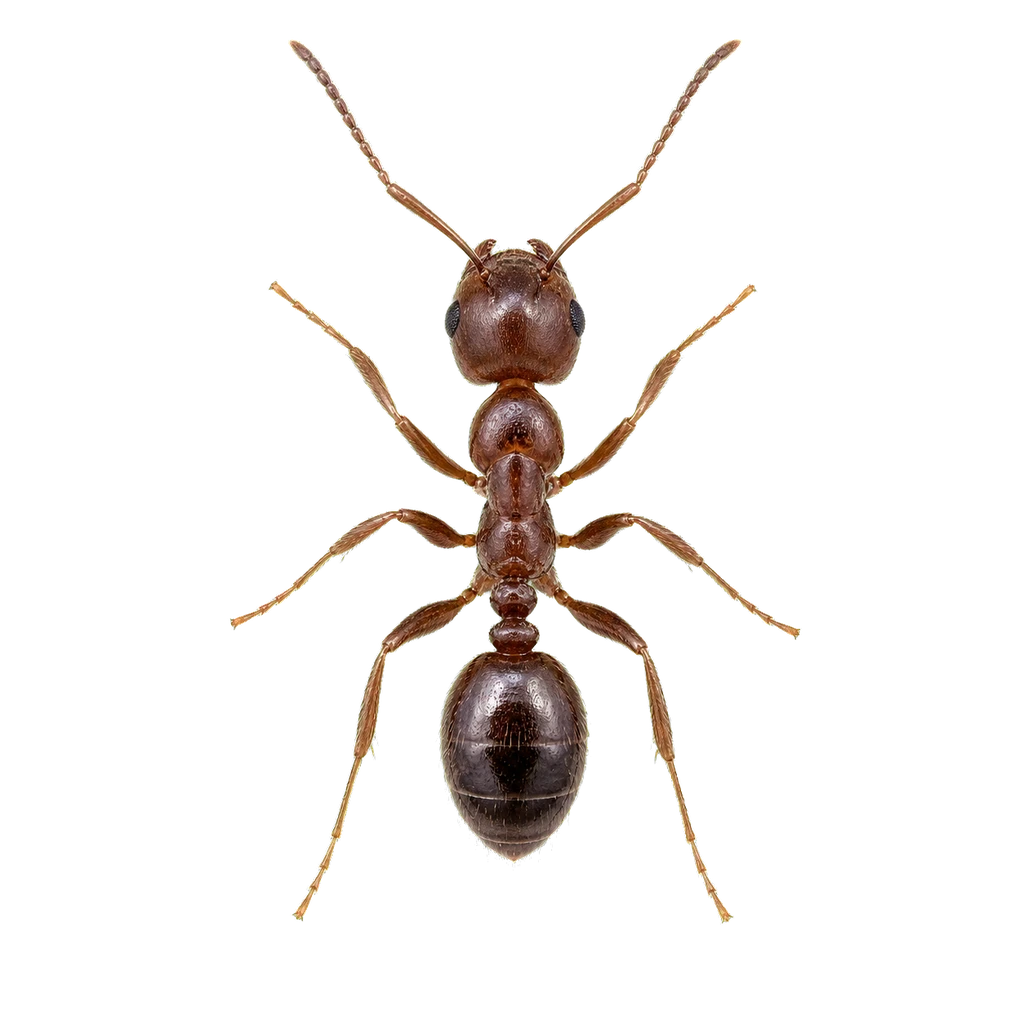
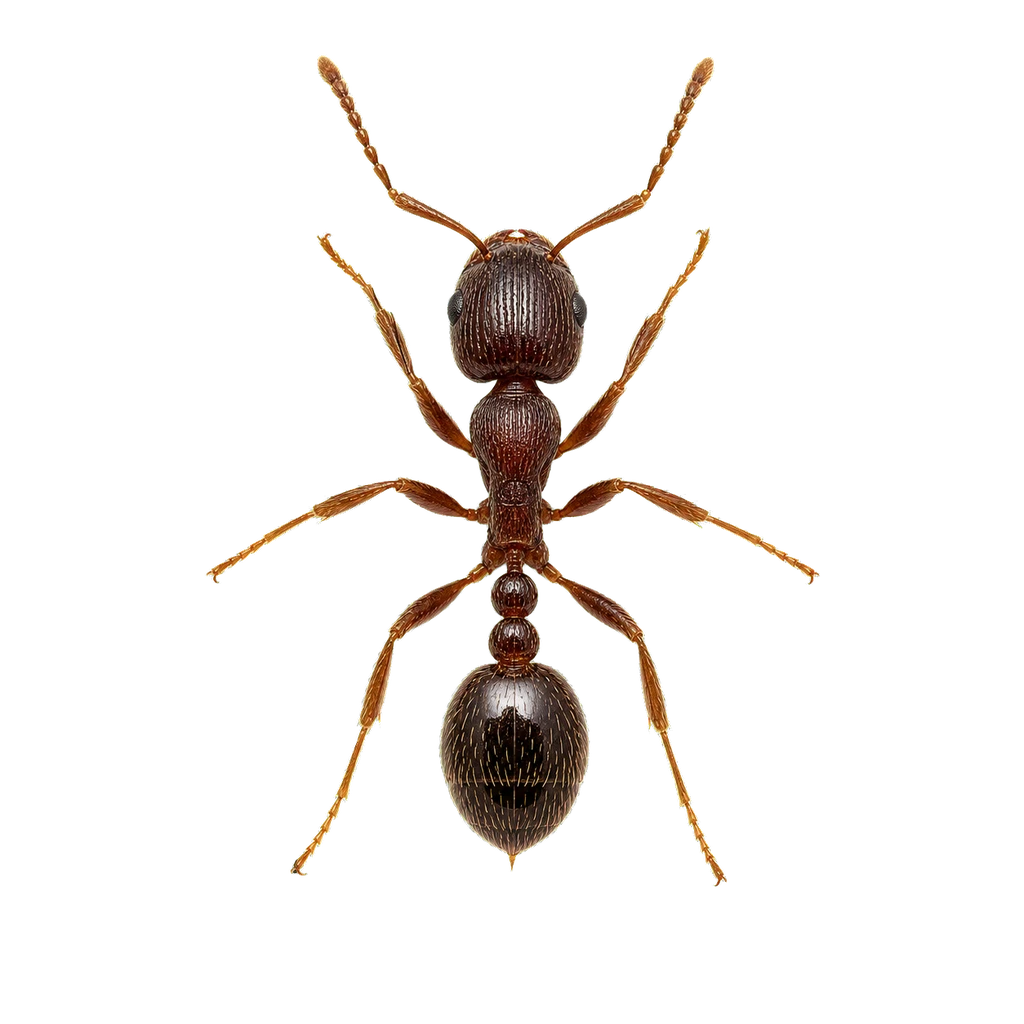
  • Confirm the ID, uniformly pale golden-yellow body, 12-segmented antennae with a 3-segmented club, indoor-only sightings (thief ants have a 2-segmented club; ghost ants have a dark head with pale abdomen)
  • Stop spraying any contact pesticide immediately, this is the most important DIY action and the one that lets professional bait work actually succeed
  • Move pet food and dry goods into sealed containers to remove competing food sources that distract workers from bait
  • Clean grease, sweet residue, and crumbs along counter edges and grout lines daily during the treatment period
  • What DIY cannot do safely: apply any spray product, choose the right bait formulation for the colony's current diet phase, deliver IGRs, or coordinate treatment across shared walls in multi-family housing.

What a Pro Does Differently

Professional pharaoh ant work runs the hospital-pest-control playbook even in single-family residential settings. Here's what changes when you call:

  • Bait selection matched to current diet phase, with multi-formulation monitoring stations to confirm preference
  • IGR (insect growth regulator) integration like methoprene or pyriproxyfen, sterilizes queens so the colony cannot rebuild
  • Six- to eight-week minimum feeding program with bait refresh on a weekly or biweekly cadence
  • Whole-building coordination in multi-family settings, treating one unit alone guarantees re-infestation through shared utility chases
  • Pesticide resistance management, professional protocols rotate active ingredients because pharaoh ants have developed resistance to some older insecticides over time.

Suspect Pharaoh Ants? Don't Wait.

Pharaoh ants are documented pathogen vectors that bud aggressively from any contact spray. Connect with a local specialist who runs bait-only, multi-week feeding programs and coordinates across shared walls in multi-family settings.

Available 24/7
(888) 495-1510

What Homeowners Say After Getting Help

Real results from people who had the same problem and solved it.

Ren P.
Ren P.
Dayton, OH

"The problem finally stayed gone."

Ants kept returning no matter what we did. The tech treated the trail areas and explained how to handle food storage and moisture so the ants don't keep coming back. It's been months and we haven't seen them again. I appreciated that it wasn't just a one-and-done spray.

Ren P.
Ren P.
Dayton, OH

"The problem finally stayed gone."

Ants kept returning no matter what we did. The tech treated the trail areas and explained how to handle food storage and moisture so the ants don't keep coming back. It's been months and we haven't seen them again. I appreciated that it wasn't just a one-and-done spray.

Kayla Q.
Kayla Q.
Pittsburgh, PA

"Clear expectations and a real plan."

I was overwhelmed and didn't know what was realistic to fix quickly. The inspector explained what results to expect and how long it typically takes depending on the ant species. They treated the right places and gave simple prevention tips. Everything felt structured and easy to follow.

Malachi U.
Malachi U.
Knoxville, TN

"They found the entry points fast."

Ants were showing up in the kitchen and we couldn't figure out where they were coming from. The tech tracked the activity and pointed out two entry points we never would've noticed. After treating and sealing those areas, the ants disappeared. It was quick and surprisingly thorough.

Arturo B.
Arturo B.
Yonkers, NY

"No pressure, just helpful info."

I mainly wanted to understand what was happening before committing to anything. The inspector walked me through the likely cause and the differences between treatment approaches. They answered questions without rushing me. The plan we chose worked and the ants were gone within days.

Octavio Z.
Octavio Z.
Duluth, MN

"The tech helped me stop wasting time."

I kept trying different products and nothing was sticking. The tech explained why some solutions don't work for certain ant problems and focused the treatment where it would actually matter. They also gave prevention tips that were easy to implement. The difference was obvious within the first week.

Vihaan V.
Vihaan V.
Madison, WI

"They fixed what was actually causing it."

Ants kept showing up in the same spot. The pro explained that the visible ants weren't the real issue and focused the treatment on where they were coming from. They identified the entry path and treated it properly. The problem stopped and hasn't returned.

Allison A.
Allison A.
Des Moines, IA

"It felt like a real inspection, not a quick spray."

The tech spent time figuring out where the ants were entering instead of just spraying around. They walked me through the likely reasons and what to watch for over time. After treatment, ant activity dropped fast and stayed low. The detailed approach gave me confidence.

Stephen N.
Stephen N.
Sacramento, CA

"Small changes made a big difference."

We didn't realize how much our routine was attracting ants. The inspector explained simple prevention steps and treated the areas where activity was highest. Once those changes were in place, we stopped seeing ants inside. It was a practical approach that actually worked.

Daquan V.
Daquan V.
Tampa, FL

"The explanation alone was worth it."

I'd been doing random treatments without understanding what I was dealing with. The tech explained how ants behave and why certain approaches work better. They treated strategically instead of just spraying. It made the whole thing feel manageable.

Deepak V.
Deepak V.
San Antonio, TX

"We stopped chasing the problem and solved it."

We kept wiping down counters and the ants would be back the next day. The pro identified the entry areas and explained the treatment plan clearly. Once they treated and targeted the colony, the ants disappeared quickly. It felt like we finally got ahead of it.

Mireya Z.
Mireya Z.
Riverside, CA

"They didn't oversell. Just solved it."

The tech explained what treatment was necessary and what wasn't. They focused on the entry points and corrected the conditions that were attracting ants. The work felt honest and effective. I liked having clear expectations and seeing results quickly.

Wei D.
Wei D.
Lexington, KY

"It wasn't just 'spray and go.'"

I appreciated the step-by-step explanation and the focus on prevention. The inspector treated the areas where ants were getting in and helped me understand what to change at home. The ants stopped showing up and it's been consistent. The approach felt thoughtful and sustainable.

Shu W.
Shu W.
Orlando, FL

"It finally made sense why they kept coming back."

I had ants showing up every few months and never understood why. The tech explained how outdoor nests and weather changes affect indoor activity. They treated the perimeter and entry points instead of just the inside. Since then, we haven't had recurring issues.

Teresa I.
Teresa I.
Mesa, AZ

"Targeted instead of overdone."

I was worried about over-treating the house. The pro focused on specific problem areas and explained why blanket spraying wasn't necessary. The ants stopped appearing, and we didn't feel like chemicals were used unnecessarily. That balance mattered to us.

Latonya X.
Latonya X.
Mesa, AZ

"Clear answers without jargon."

The tech explained everything in plain language and answered questions without rushing. They identified the type of ant we had and adjusted the treatment accordingly. Knowing why the approach worked gave me confidence it would last.

Humberto T.
Humberto T.
Eugene, OR

"They focused on prevention, not just treatment."

I liked that the tech talked through how to keep ants from returning after the treatment. They addressed moisture issues and entry points around the home. The treatment worked, and the prevention tips helped us stay ahead of future problems.

Jerrell N.
Jerrell N.
Arlington, VA

"No guessing, just a plan."

I was tired of guessing what would work. The inspector explained the cause of the issue and outlined a clear plan of action. After treatment, the ants disappeared and we haven't had to revisit the problem. It felt efficient and well thought out.

Marion K.
Marion K.
Boulder, CO

"They explained what to expect upfront."

The tech set expectations about timing and results before starting. They explained that some activity might happen initially and why. Everything played out exactly as described, and the ants were gone shortly after. That transparency made a big difference.

Bridget E.
Bridget E.
Sacramento, CA

"Helpful without being overwhelming."

I didn't realize there were different types of ants or that it mattered. The inspector walked me through what they were seeing and explained how ant behavior affects treatment. It made it easier to ask the right questions and understand the solution.

Junho L.
Junho L.
Naperville, IL

"Saved me a lot of guessing."

I was close to trying random sprays for the ants. Talking with the tech helped me understand what was realistic to address and what usually doesn't work. The targeted treatment solved the issue quickly and saved time and frustration.

Willis Y.
Willis Y.
Baton Rouge, LA

"It felt tailored to our home."

The tech didn't just apply a standard treatment. He looked at where we were seeing activity and adjusted the approach to our layout and yard. The ants stopped showing up and we understood how to keep it that way.

Thelma S.
Thelma S.
Madison, WI

"Straightforward and effective."

I appreciated how straightforward everything was. The pro explained the issue, treated the problem areas, and gave us a few simple steps to prevent future issues. The ants were gone and it didn't feel complicated.

Angelina B.
Angelina B.
Austin, TX

"They explained how the weather played a role."

I didn't realize seasonal changes could affect ant activity so much. The tech explained how heat and rain push ants indoors and what to do about it. They treated the problem areas and gave tips to prevent future issues. The explanation helped everything click.

Kirk Q.
Kirk Q.
Denver, CO

"It wasn't as complicated as I expected."

I assumed pest control would be disruptive or complicated. The technician explained the steps clearly and focused on targeted treatment. The ants stopped appearing quickly and the process was smoother than expected.

Cody L.
Cody L.
Denver, CO

"They helped me understand the bigger picture."

Instead of just treating the ants I saw, the tech explained what was happening around the house that made it attractive to pests. Once those factors were addressed, the problem resolved quickly. It felt educational as well as effective.

Marquis K.
Marquis K.
San Mateo, CA

"Clear communication from start to finish."

I appreciated how clearly everything was explained before treatment began. The inspector walked through the process and answered all my questions. The ants were gone shortly after and we felt confident about prevention going forward.

Virginia T.
Virginia T.
San Mateo, CA

"They addressed what we were missing."

We kept focusing on cleaning, but the tech showed us where ants were actually entering. Once those points were treated and sealed, the issue resolved. It was reassuring to finally understand the root cause.

June J.
June J.
Omaha, NE

"A methodical approach that worked."

The pro explained how they identify ant trails and colonies before treating. They took a methodical approach instead of rushing through. The ants stopped appearing and the fix has held up well.

Caitlin K.
Caitlin K.
Phoenix, AZ

"They understood desert pest behavior."

Living in Phoenix, pests behave differently than other places. The tech explained how heat drives ants indoors and what treatments work best here. The solution was effective and tailored to our environment.

Olive S.
Olive S.
Sacramento, CA

"They took the time to do it right."

I appreciated that the tech didn't rush. He inspected the problem areas carefully and explained what they were seeing. The treatment worked quickly and the ants haven't returned.

Arianna D.
Arianna D.
Baton Rouge, LA

"They understood the local pest issues."

The tech explained how the humidity here contributes to ant problems and why certain treatments work better in this climate. They focused on outdoor entry points and moisture-prone areas. The ants cleared up quickly and haven't come back.

Kiyana N.
Kiyana N.
New Orleans, LA

"Finally something that lasted."

We'd dealt with recurring ants for years. The pro explained why flooding and moisture play such a big role here and adjusted the treatment accordingly. It's been months without seeing ants, which is a big win for us.

Brett R.
Brett R.
Phoenix, AZ

"They knew exactly what works in Arizona."

The tech explained how desert conditions affect ant behavior and which treatments are most effective here. They targeted the right areas and avoided unnecessary spraying. The ants disappeared quickly.

Albert O.
Albert O.
Baltimore, MD

"Clear, calm, and professional."

I appreciated how calmly everything was explained. The inspector identified the ant problem, explained the treatment, and answered my questions without rushing. The solution worked and gave me peace of mind.

Rohit Y.
Rohit Y.
Orlando, FL

"They handled it efficiently."

The tech inspected the problem areas, explained the plan, and got to work quickly. The ants were gone within days and the process felt efficient without being rushed.

Carolyn H.
Carolyn H.
Omaha, NE

"Simple explanations, solid results."

I liked how simply everything was explained. The pro didn't overcomplicate things and focused on what mattered. The ants stopped appearing and we haven't needed follow-up treatments.

Edith Z.
Edith Z.
Newark, NJ

"They showed me what to watch for."

Beyond treating the ants, the tech explained what signs to watch for if activity starts again. That knowledge made me feel more in control. So far, everything has stayed clear.

Marshall M.
Marshall M.
Pasadena, CA

"They explained why DIY hadn't worked."

I had tried several store-bought solutions with no luck. The inspector explained why those methods don't always reach the source of the problem. Once they treated the entry points and nesting areas, the ants stopped showing up.

Mitchell P.
Mitchell P.
Austin, TX

"Seasonal problems finally under control."

Every spring we dealt with ants in the kitchen. The tech explained why seasonal changes trigger activity and helped us get ahead of it this time. The treatment worked quickly and we haven't had issues since.

Evelyn M.
Evelyn M.
Bloomington, IN

"They made it easy to understand."

I appreciated how clearly everything was explained. The pro identified the problem areas and explained what changes would help prevent future issues. The ants cleared up and it felt manageable.

Common Questions About Pharaoh Ants

Direct answers to what homeowners ask most about identification, health risk, budding, and bait-only treatment.

  • What makes pharaoh ants different from other household ants? Toggle answer for: What makes pharaoh ants different from other household ants?

    Pharaoh ants are extremely small (1/16 inch), pale yellow to light brown, and nearly translucent. What makes them uniquely problematic is their budding behavior, when stressed by repellent treatments, a colony fragments into dozens of new colonies, each with its own queen. They're one of the few ant species that nest exclusively indoors in heated buildings, making them a year-round problem in homes, hospitals, and restaurants.

  • Are pharaoh ants a health concern? Toggle answer for: Are pharaoh ants a health concern?

    Pharaoh ants are considered a public health pest because they're attracted to wound dressings, IV lines, and medical equipment in healthcare settings. They've been documented transmitting Staphylococcus, Pseudomonas, Salmonella, and Streptococcus bacteria. In homes, they contaminate food and sterile areas. Repellent sprays cause colony budding, so only bait-based treatment strategies should be used against pharaoh ants.

  • Why do ants keep coming back after treatment? Toggle answer for: Why do ants keep coming back after treatment?

    Ants leave invisible pheromone trails that guide other workers to food and water sources. If the colony itself isn't eliminated, orif the conditions that attracted them persist (moisture, food access, entry points), new workers will follow the old trails back. Effective treatment targets the colony, not just the visible ants.

  • Are ants dangerous to my home? Toggle answer for: Are ants dangerous to my home?

    Most ant species are nuisance pests, and theycontaminate food but don't cause structural damage. The major exception is carpenter ants, which excavate wood to build nests and can compromise beams, framing, and wall studs over time. If you're finding wood shavings (frass) near walls, you may have a structural ant problem.

  • How quickly can a provider get to my home? Toggle answer for: How quickly can a provider get to my home?

    Most providers in our network can schedule an inspection within 24-48 hours. For urgent situations, likeactive structural damage or large colonies, same-week emergency service is often available. Response times depend on your location and the provider's current schedule.


  • What happens during the first visit? Toggle answer for: What happens during the first visit?

    Your provider inspects the property to identify the pest, locate nesting or entry points, and assess the scope of the problem. You get a clear explanation of what they found, what they recommend, and a written scope before any work begins.

  • Is treatment safe for kids and pets? Toggle answer for: Is treatment safe for kids and pets?

    Modern pest control products are designed to break down quickly after application and pose minimal risk to people and pets when applied correctly. Most providers ask you to keep kids and pets out of treated areas for 1 to 2 hours while the product dries, after which the area is generally safe again. Always confirm specific re-entry times with your provider, and let them know about pet birds, fish, or reptiles, since some treatments require extra precautions for those species.

Pest Control Pros serving the city of the state of your city and nearby areas

Local providers experienced in bait-only pharaoh ant protocols and multi-family building coordination are ready to inspect, treat, and follow up, no obligation.

Available 24/7
(888) 495-1510