Local pest control help is one call away.

Carpenter Ant: Identification, Treatment & Prevention

Carpenter ants are the largest ant in most North American homes, workers run from 1/4 to 1/2 inch long, and they're the only common household ant that actively damages structural wood. They don't eat the wood the way termites do; they hollow it out to build nest galleries. By the time the first frass pile appears below a wall, the colony has usually been excavating inside the structure for a year or longer.

If you're seeing large black or reddish-black ants indoors at night, fine wood-shaving piles below windowsills or wall corners, or hearing a faint papery rustling inside a quiet wall, an active satellite nest is the most likely explanation. This guide covers how to confirm it, what frass tells you about the colony's age, why DIY sprays usually scatter the nest instead of killing it, and what real treatment looks like.

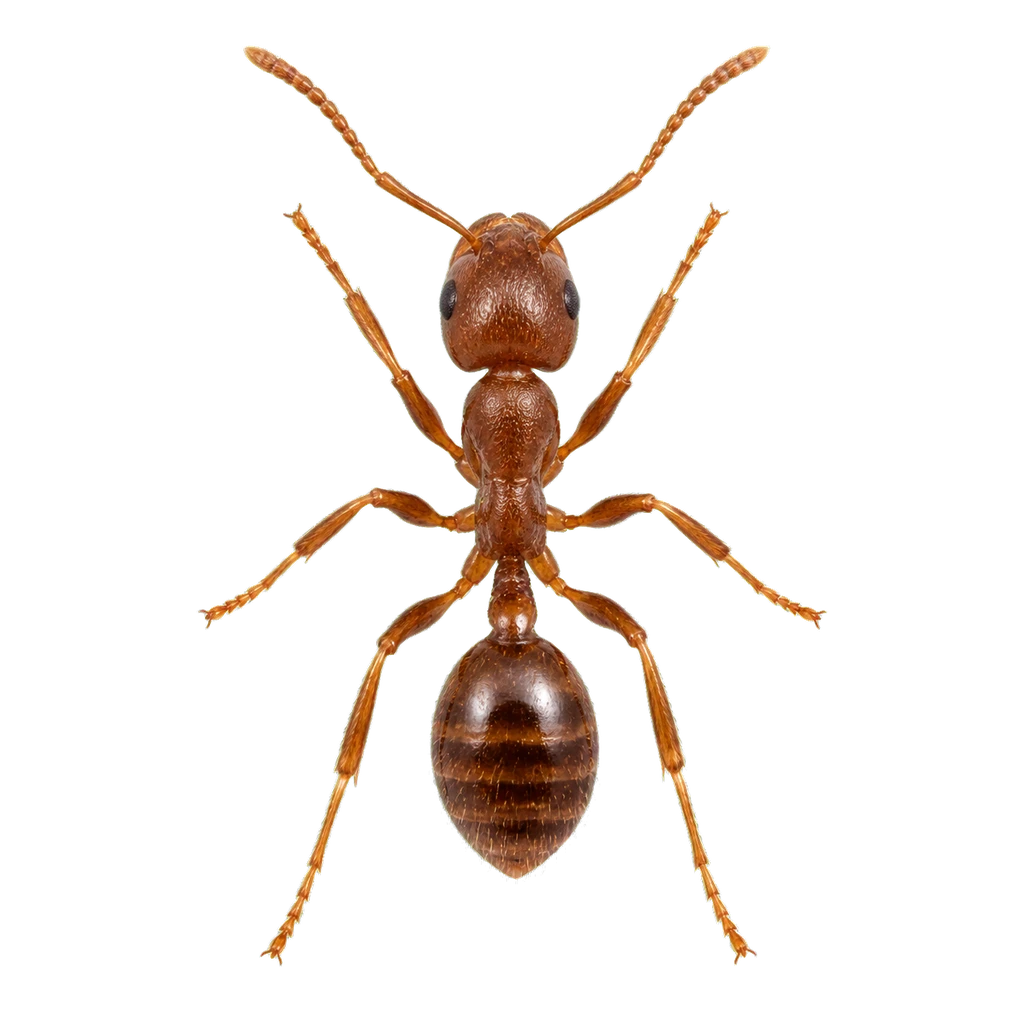
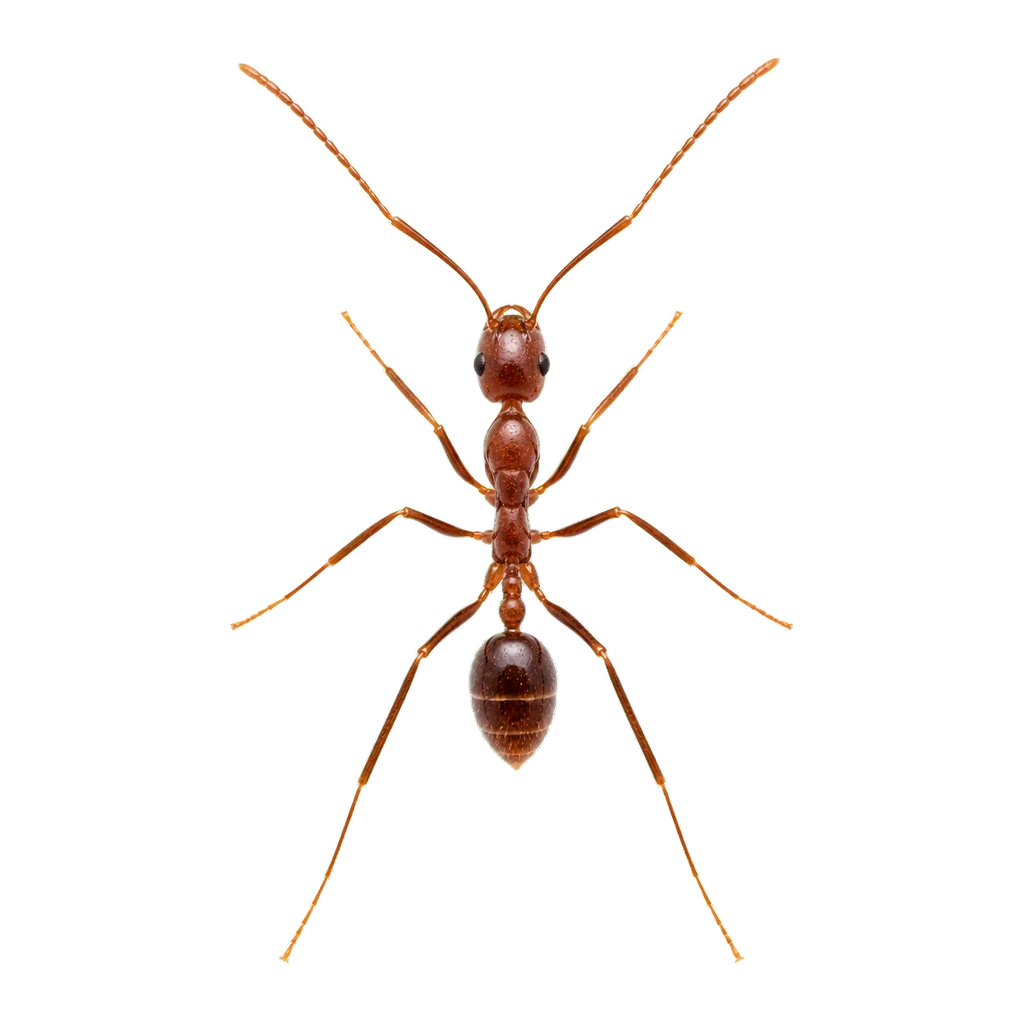
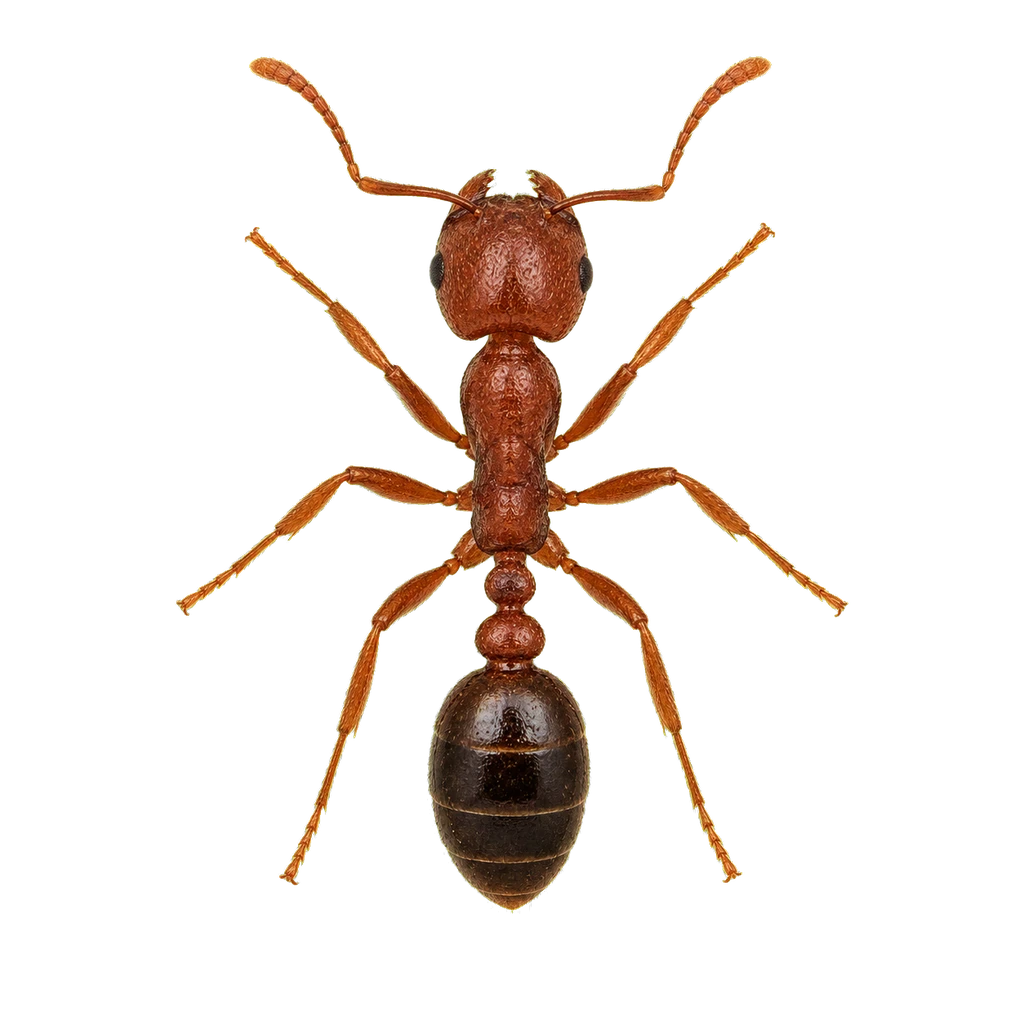
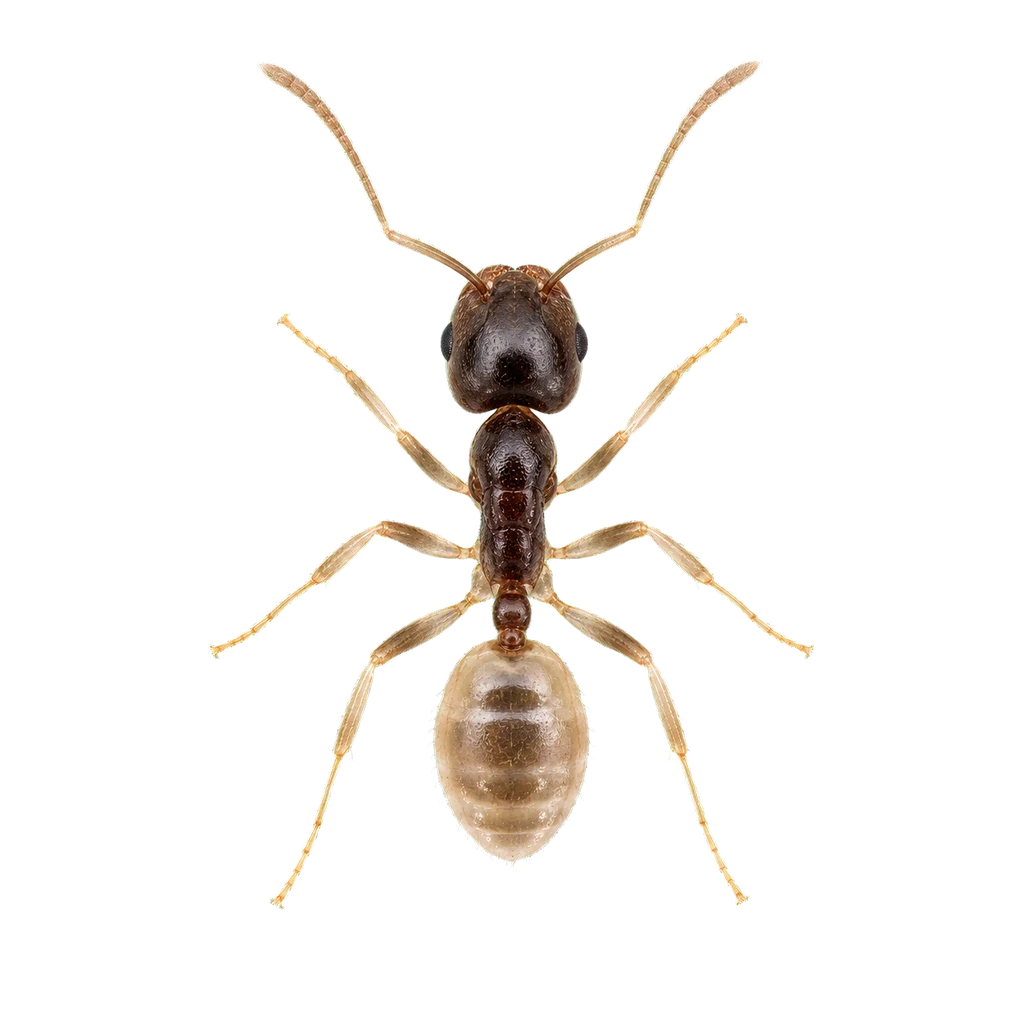
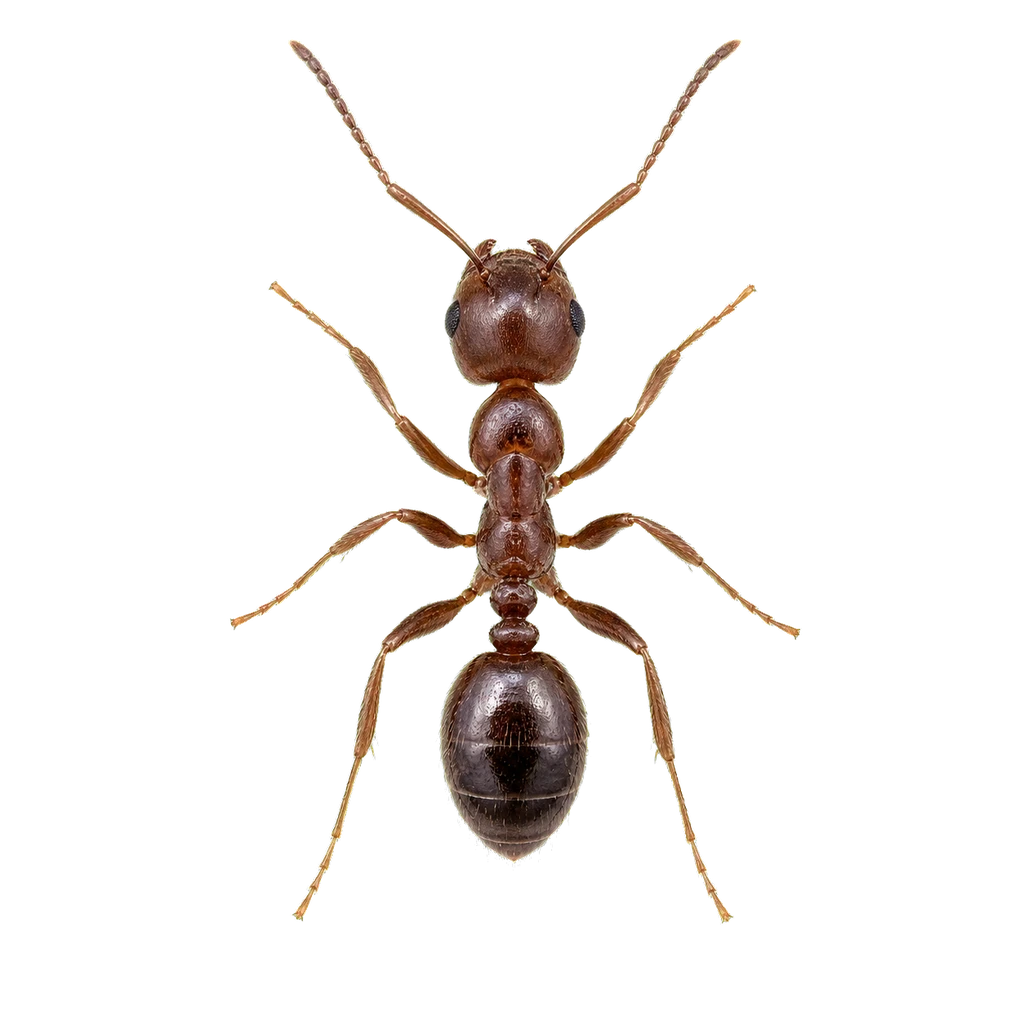
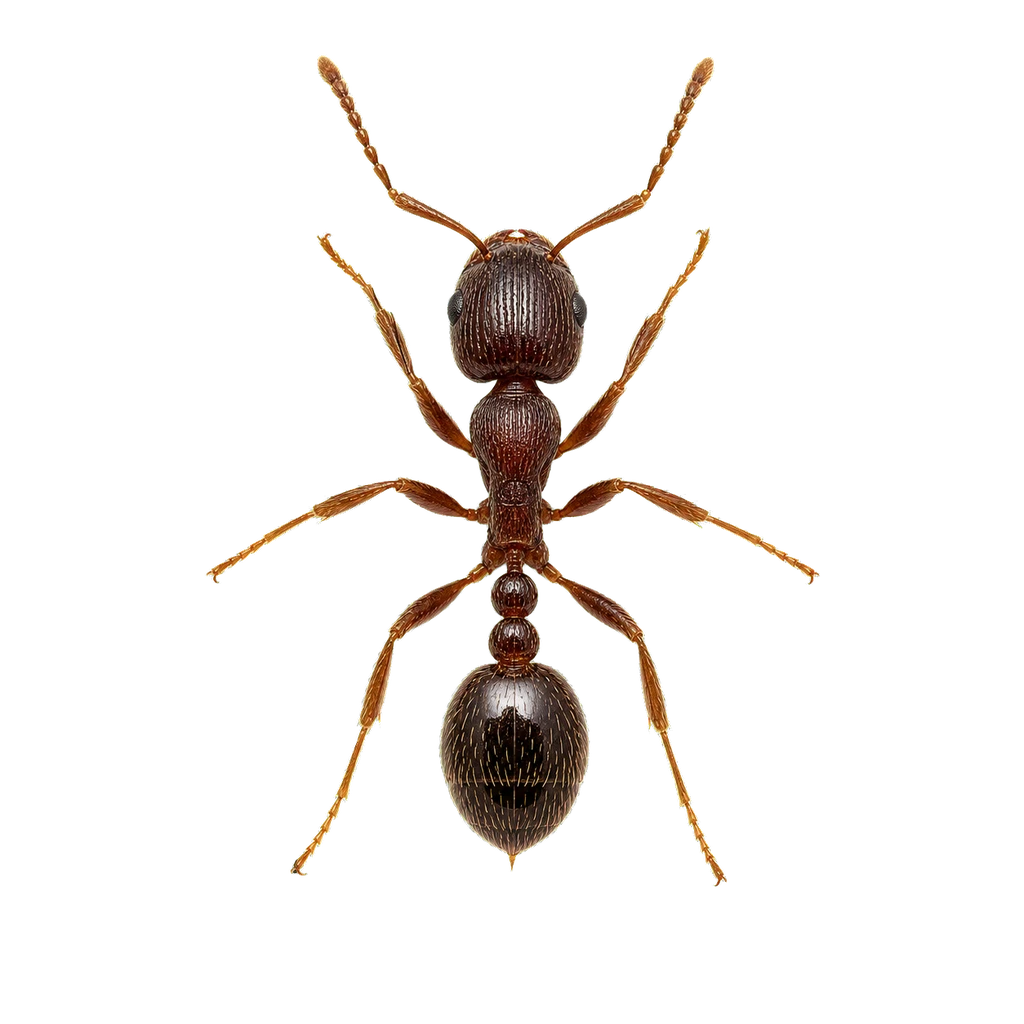
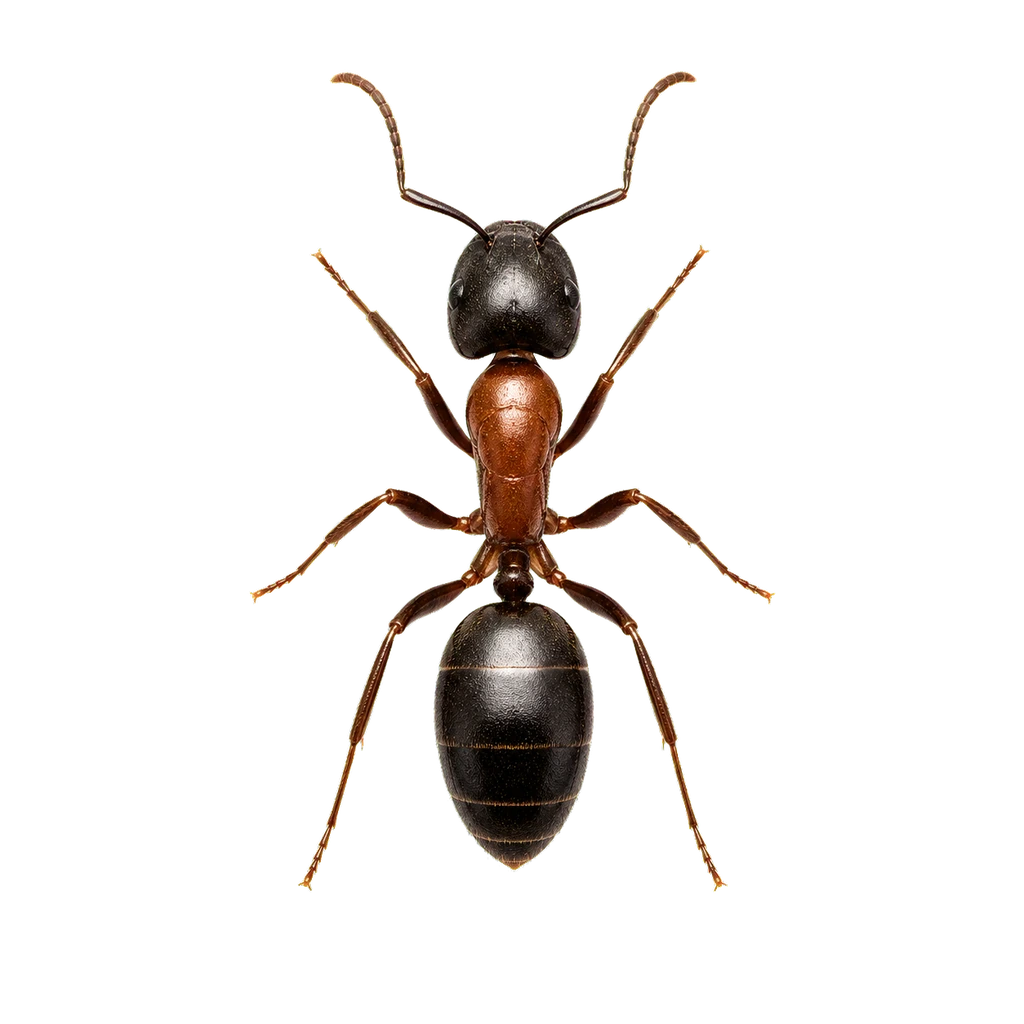
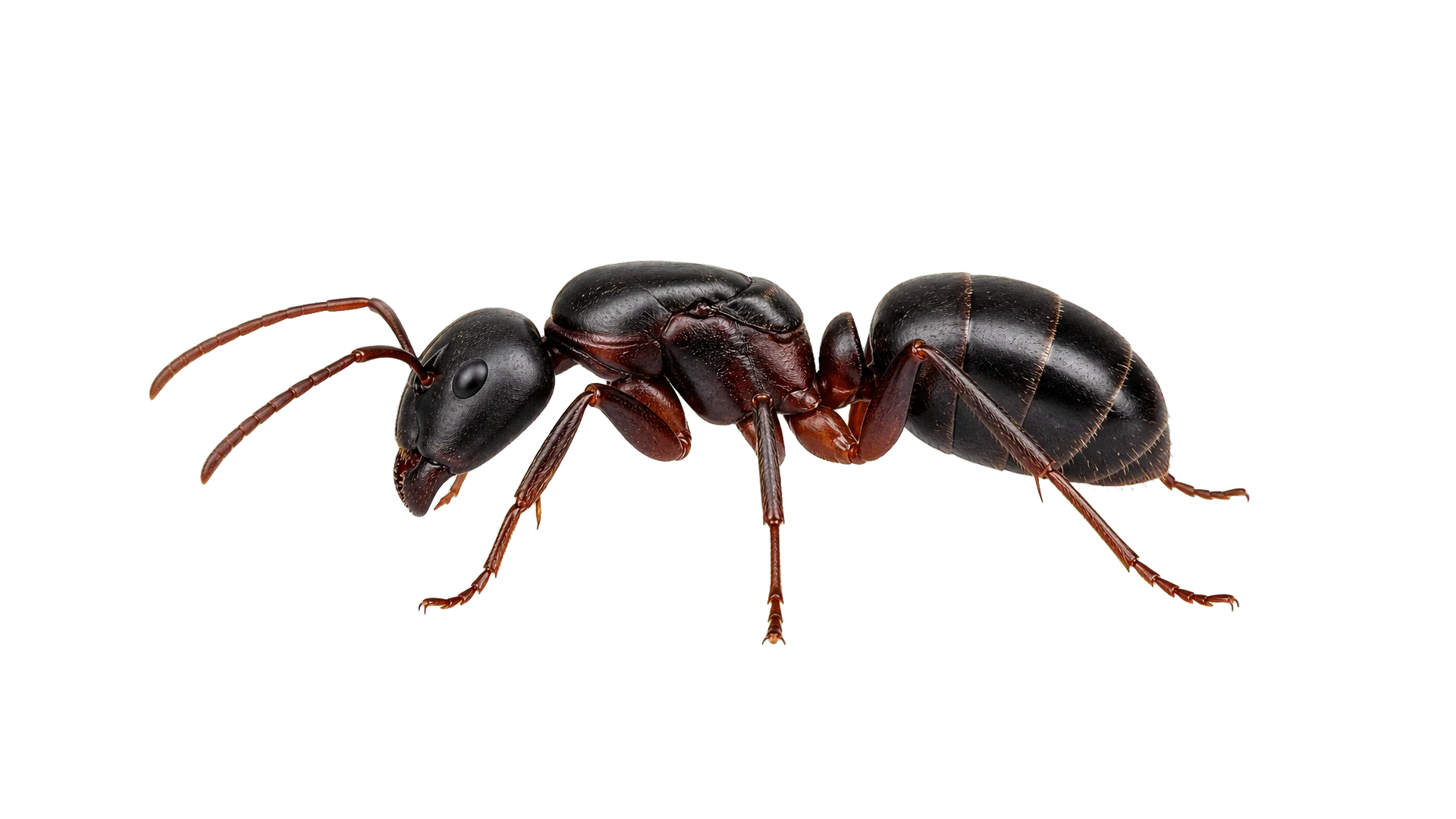
Close-up photograph of a carpenter ant showing large mandibles and segmented body

ID Card: Carpenter Ant

Scientific name
Camponotus spp.
Color
Black, red
Size
1/4 to 1/2 inch
Body shape
Single node waist, smooth rounded thorax
Antennae
Elbowed, 12 segments
Key evidence
Frass (fine wood shavings) near walls, smooth galleries in wood
Also known as
Wood ants, Big black ants, Black carpenter ants

Related Species

Call to get matched with a local pest control pro.

Available 24/7
(888) 495-1510
  • Specialists trained in wood-destroying pest identification
  • Moisture meter and borescope inspection of suspected nest sites
  • Structural damage assessment before drywall is opened or closed

Where to Inspect for Carpenter Ant Damage

Cross-section illustration showing carpenter ant damage, smooth galleries inside wall studs, frass piles at the base, and comparison of carpenter ant tunnels vs termite tunnels

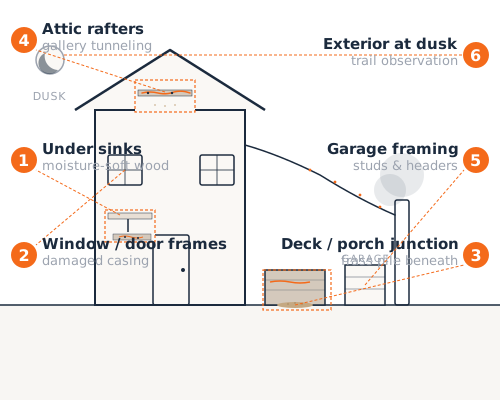
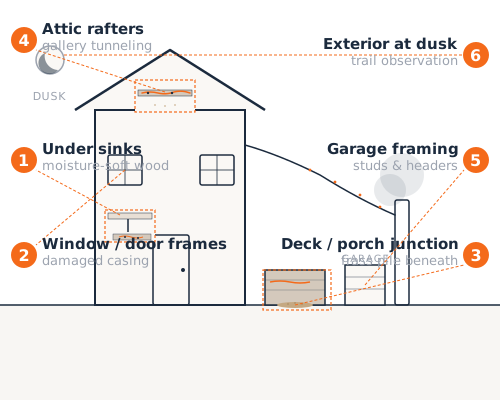
Carpenter ants are nocturnal and nest inside structural wood you can't see, so countertop sightings underestimate the problem badly. The first reliable evidence is almost always frass, wood shavings mixed with insect parts that fall from gallery exit holes. Walk these hot zones with a flashlight, looking up at corners and joints rather than down at floor level:

  • Under kitchen and bath sinks, Slow leaks and condensation soften the framing here within months. Tap the cabinet floor and pipe-adjacent studs with a screwdriver, hollow or spongy wood means active galleries inside.
  • Window and door frames, especially sills, Pressure-test the corners with your thumb. Soft, depressed wood is the #1 spot homeowners first discover the damage. South- and west-facing windows with weathered caulk are highest-risk.
  • Deck-to-house and porch-to-house junctions, Wood-to-wood contact traps moisture and softens the framing where carpenter ants prefer to start. Pull back trim and look for frass collected in the joint or along the ledger board.
  • Attic rafters near plumbing vents and ridge boards, Bring a flashlight and look up. Fine shavings on the insulation below a rafter means frass is falling from gallery exit holes above you.
  • Garage framing and the door header, The most common entry point in attached garages. Check the header beam above the door and the framing around the side jambs, both are high-moisture zones.
  • The exterior perimeter after dark, Walk it 30 minutes after sunset. Carpenter ants are nocturnal, workers will be entering and exiting gap points along siding seams, soffit vents, and utility penetrations.

If you find frass, hollow-sounding wood, or rustling in two or more of these zones, you've got a satellite nest already inside the structure plus a parent colony within foraging range. Repair costs run $1,000 to $3,000 for moderate damage and exceed $5,000 once floor joists are involved. Homeowners insurance treats carpenter ant damage as preventable maintenance, so it almost never covers the work. Catching the problem before frass shows up in multiple rooms is what saves the most money.

Cross-section illustration showing carpenter ant damage, smooth galleries inside wall studs, frass piles at the base, and comparison of carpenter ant tunnels vs termite tunnels
Illustration showing how carpenter ants enter homes, from outdoor parent colony via tree branches, foundation gaps, and pipe penetrations to satellite nests inside walls

Why Do I Have Carpenter Ants?

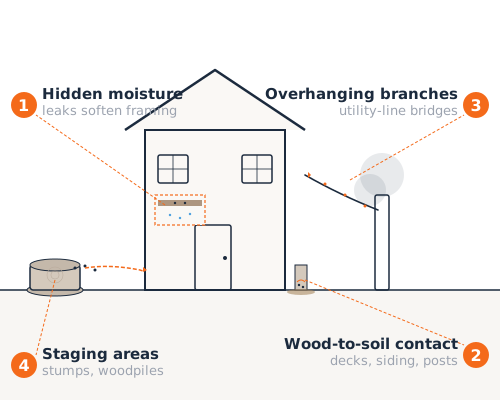
Finding frass is step one. Understanding why the colony picked your home is what keeps the next one from moving in. Carpenter ants are picky: they don't excavate dry sound wood, they need moisture-softened framing. A mated queen finds the damp spot, builds the parent nest inside the wettest piece of wood within foraging range, then pushes satellite nests toward anywhere else on the property that matches those conditions.

What anchors them to your property:

  • Hidden moisture, the #1 attractant, slow under-sink leaks, sweating cold-water pipes, condensation behind insulation, and damp crawl spaces soften framing into exactly the substrate they need
  • Wood touching soil, deck posts on concrete piers without flashing, porch sills resting near grade, and landscape timbers within 12 inches of siding all act as direct ramps from the parent colony into the structure
  • Tree limbs and utility lines bridging the roof, carpenter ant workers travel up to 100 yards along these paths and use them to reach attic rafters from outdoor nests
  • Outdoor staging sites within foraging range, dead tree stumps, rotting fence posts, and stored firewood stacks all harbor parent colonies that send satellites toward your house once the colony matures

A new infestation starts when a single fertilized queen finds wood damp enough to excavate, a pinhole leak under a sink, a rotting window sill, a damp porch post. She seals herself inside and grows the parent colony for years. Three to six years later, once the colony hits 2,000 workers, it pushes satellite nests into heated wall voids and floor joists. That's the colony you're now seeing indoors. The parent colony is almost always still outside, which is why treating the workers on your counter doesn't end the problem.

How Serious Is Your Carpenter Ant Problem?

Find your scenario below. Each row reflects the actual progression of a carpenter ant colony, parent nest outdoors, satellites indoors, not a generic ant timeline.

What You're Seeing Severity If Untreated Next Step
A few large black ants indoors, no frass, no sawdust piles, no rustling Early Scouts confirming food and water; a satellite nest typically establishes within 2 to 3 months once they map a damp spot. Walk the perimeter at dusk to find where they're entering. Fix any active moisture, leaky spigot, sweating pipe. Seal foundation and utility-line gaps. Do not spray.
Small frass piles below 1 or 2 walls, occasional ant sightings after dark Moderate Satellite nest is established. The colony will expand into additional rooms within 3 to 6 months as workers find new moisture pockets. Active interior nest confirmed. Schedule a professional inspection this week, they'll use moisture meters and borescopes to locate the galleries inside the wall.
Frass in multiple rooms, hollow-sounding wood when tapped, faint rustling inside walls High Multiple satellites are operating. Structural damage compounds weekly, and repair costs climb into the thousands. Call a professional this week. Treatment needs void injection at multiple nest sites plus a structural damage scope before any drywall closes back up.
Winged swarmers indoors in spring, visible galleries when wood is opened, crumbling sills or joists Urgent Mature colony cycling reproductives. Existing damage is significant and ongoing, repair scope is no longer cosmetic. Call today and request a structural assessment alongside treatment. Damage at this stage often warrants a contractor walkthrough before drywall is opened.
A few large black ants indoors, no frass, no sawdust piles, no rustling
Severity Early
If Untreated Scouts confirming food and water; a satellite nest typically establishes within 2 to 3 months once they map a damp spot.
Next Step Walk the perimeter at dusk to find where they're entering. Fix any active moisture, leaky spigot, sweating pipe. Seal foundation and utility-line gaps. Do not spray.
Small frass piles below 1 or 2 walls, occasional ant sightings after dark
Severity Moderate
If Untreated Satellite nest is established. The colony will expand into additional rooms within 3 to 6 months as workers find new moisture pockets.
Next Step Active interior nest confirmed. Schedule a professional inspection this week, they'll use moisture meters and borescopes to locate the galleries inside the wall.
Frass in multiple rooms, hollow-sounding wood when tapped, faint rustling inside walls
Severity High
If Untreated Multiple satellites are operating. Structural damage compounds weekly, and repair costs climb into the thousands.
Next Step Call a professional this week. Treatment needs void injection at multiple nest sites plus a structural damage scope before any drywall closes back up.
Winged swarmers indoors in spring, visible galleries when wood is opened, crumbling sills or joists
Severity Urgent
If Untreated Mature colony cycling reproductives. Existing damage is significant and ongoing, repair scope is no longer cosmetic.
Next Step Call today and request a structural assessment alongside treatment. Damage at this stage often warrants a contractor walkthrough before drywall is opened.

Carpenter ant severity can shift fast once a satellite nest is established. If you're between two rows, treat the higher one as your situation.

How a Carpenter Ant Colony Grows

Carpenter ants differ from most household ants in three specific ways: their colonies have two physical locations (an outdoor parent nest plus satellite nests indoors), their workers come in two visible sizes (a minor and a major caste in the same trail), and their colonies take years to mature before they can spawn off the satellites that end up inside your walls. The lifecycle below is exactly why a single round of DIY treatment almost never finishes the job.

  1. Egg

    About 24 days

    The queen lays continuously inside the parent nest, deep in moisture-softened wood. Workers carry the eggs to whichever chamber has the right temperature and humidity that week, which is why the colony shifts brood whenever conditions change in the wood.

  2. Larva

    About 21 days

    Workers feed legless larvae a slurry of regurgitated insect protein and honeydew. Bait carried back from your kitchen ends up here, which is why slow-acting bait is the only product that gets past the foragers and reaches the developing colony.

  3. Pupa

    About 21 days

    Larvae spin a parchment-like cocoon and transform into a minor worker, a larger major worker, or a winged reproductive. The two worker sizes are the easiest field ID, a trail with visible size variation is carpenter ants, not pavement ants or odorous-house ants.

  4. Adult worker

    Workers live 1 to 3 years; queens 15 years or more

    Workers forage at night, traveling up to 100 yards from the nest. Once the parent colony reaches 2,000 to 3,000 workers (typically year 3 through 6), it pushes off satellite nests into heated wall voids, attics, and floor joists. Those satellites are the workers you're seeing indoors.

Mature parent colonies release winged swarmers from April through June. Each colony spawns three to six satellite nests over its lifetime, and those satellites can survive even after the visible workers in one location are eliminated. That's why effective carpenter ant treatment has to target the parent and the satellites together, not the trail you can see on the kitchen counter.

When Carpenter Ants Are Most Active

Carpenter ant activity follows a sharp seasonal calendar. Knowing what the colony is doing each quarter tells you what to look for and when treatment will land with the most impact.

  • Spring

    Swarmer flights peak from April through June. Winged reproductives emerge from mature parent colonies, mate, and search for damp wood to found new nests. Wings on a windowsill, near a porch light, or piled at the base of the foundation are the loudest alarm carpenter ants give, most homeowners discover an interior infestation in this window.

  • Summer

    Foraging peaks at night when temperatures drop. Workers travel up to 100 yards, and the parent colony pushes satellites into heated wall voids, attics, and floor joists. Indoor sightings spike now, usually concentrated around kitchens, bathrooms, and any room above a damp basement or crawl space.

  • Fall

    Workers stockpile aggressively and parent colonies retreat into deeper chambers. In warm regions, late-season swarmer activity stretches into early October. A second wave of indoor sightings is common as outdoor activity slows and workers concentrate around interior food and water.

  • Winter

    Outdoor parent colonies enter dormancy in cold climates. Satellite nests inside heated walls, attics, and crawl spaces stay active year-round. Large black ants seen indoors during winter almost always confirm an established satellite nest in the structure, the parent isn't traveling that time of year, so the source is internal.

Why Carpenter Ants Aren't a DIY Job

Carpenter ant colonies are split between an outdoor parent nest and one or more indoor satellite nests, with workers traveling up to 100 yards between them. The handful of ants you see on your counter is the foraging crew, five to ten percent of the colony. The other 90 percent (queen, brood, satellite-nest workers) is hidden behind drywall, in framing voids, or in an outdoor stump or fence post 50 feet from the house.

Over-the-counter sprays kill the foragers you can see and do almost nothing else. Worse, contact pesticides trigger budding: surviving workers split off and start new satellite nests deeper in your walls. After two weeks of DIY, many homeowners are dealing with more nests in more rooms than when they started, and the moisture source that brought the first colony in is still untreated.

A pro with moisture meters and borescopes maps where the nests actually sit, including the outdoor parent. Void injection puts non-repellent product directly into the gallery system. Slow-acting bait gets carried back to the queen by foragers that didn't notice it. Follow-up visits confirm the satellites haven't relocated. And the inspection flags the underlying moisture issue, otherwise the next queen moves in within a year of the first colony clearing.

Repairs at this stage average $1,000 to $5,000, and homeowners insurance treats carpenter ant damage as preventable maintenance, so it almost never gets covered. The wait-and-see option is the most expensive one available.

What Changes When a Pro Shows Up

Carpenter ant treatment is structural work, not surface work. A specialist's job is to locate every nest, treat into the galleries directly, and confirm the satellites are gone before the visit is closed out. Here's what changes:

Pest control technicians after completing a carpenter ant treatment service
  • Local Pest Control
  • 24/7 Availability
  • Quality Workmanship
  • Eco‑Friendly Options
  • Trusted by Homeowners
  • They Find the Nests You Can't See

    Moisture meters and borescopes locate galleries inside wall studs, floor joists, and rafter cavities. The colony is almost never where the workers are walking, and finding the actual nest is what makes treatment work.

  • They Inject the Galleries Directly

    Void injection delivers slow-acting non-repellent product into the gallery system. Workers carry it through the connected chambers back to the queen and brood. Surface bait alone rarely reaches the parent colony outdoors.

  • They Treat the Moisture Source Too

    Carpenter ants don't return to dry wood. Identifying the underlying leak, ventilation gap, or grading issue is part of the inspection. Otherwise the next mated queen moves in within a year of the first colony clearing.

  • They Schedule the Follow-Up

    Satellite nests can survive the first visit even when the parent colony is hit. Most programs include a 30-day follow-up to confirm the colony hasn't relocated, plus a one-year guarantee on the structural treatment.

  • Local Pest Control
  • 24/7 Availability
  • Quality Workmanship
  • Eco‑Friendly Options
  • Trusted by Homeowners
NoToPests home

One call connects you with a local specialist who knows carpenter ants and your area.

Be Ready When You Call

Pest control technician arriving for carpenter ant service
Junho L.
Daisuke P.
Kirk Q.
Marion K.

Trusted by homeowners nationwide

Call for Pest Control Help (888) 495-1510

Can You Handle This or Do You Need Help?

Carpenter ants don't live on surfaces, they live inside structural wood. That single fact changes everything about how you treat them, and is why DIY usually makes the problem larger, not smaller.

What DIY Can Do

DIY work is best aimed at prevention and slowing foraging, not eliminating an established colony. Useful steps with honest limits:

  • Bait stations can slow foraging if placed on an active trail, but bait alone almost never reaches a parent colony 50 feet outdoors
  • Caulking visible cracks blocks new entry without killing the colony already excavating inside the wall
  • Removing wood debris, firewood, and leaf litter near siding cuts off outdoor staging sites, useful, but doesn't end an established satellite
  • Fixing leaks weakens the nest's habitat over time, necessary for long-term prevention, slower than treatment
  • What DIY cannot do: locate satellite nests, reach galleries inside walls, or stop the parent colony from spawning new satellites.

What a Pro Does Differently

Professional carpenter ant work is built around nest location and gallery treatment. Here's what changes when you call:

  • Moisture meters and borescopes locate the satellite nests inside wall voids you'll never see from the outside
  • Void injection delivers non-repellent product directly into the gallery system, so workers carry it back to queen and brood
  • Colony-targeted slow-acting bait reaches the parent colony outdoors, not just the foragers walking on your counter
  • Structural damage assessment tells you what's compromised before drywall repair starts, so you're not paying twice
  • Scheduled 30-day follow-up confirms satellites haven't relocated to a new wall in response to treatment.

Suspect Carpenter Ants? Don't Wait.

Carpenter ant damage compounds week by week and homeowners insurance rarely covers it. Connect with a local specialist who locates the nest, treats the galleries, and confirms the satellites are gone before closing the job.

Available 24/7
(888) 495-1510

What Homeowners Say After Getting Help

Real results from people who had the same problem and solved it.

Ren P.
Ren P.
Dayton, OH

"The problem finally stayed gone."

Ants kept returning no matter what we did. The tech treated the trail areas and explained how to handle food storage and moisture so the ants don't keep coming back. It's been months and we haven't seen them again. I appreciated that it wasn't just a one-and-done spray.

Ren P.
Ren P.
Dayton, OH

"The problem finally stayed gone."

Ants kept returning no matter what we did. The tech treated the trail areas and explained how to handle food storage and moisture so the ants don't keep coming back. It's been months and we haven't seen them again. I appreciated that it wasn't just a one-and-done spray.

Kayla Q.
Kayla Q.
Pittsburgh, PA

"Clear expectations and a real plan."

I was overwhelmed and didn't know what was realistic to fix quickly. The inspector explained what results to expect and how long it typically takes depending on the ant species. They treated the right places and gave simple prevention tips. Everything felt structured and easy to follow.

Malachi U.
Malachi U.
Knoxville, TN

"They found the entry points fast."

Ants were showing up in the kitchen and we couldn't figure out where they were coming from. The tech tracked the activity and pointed out two entry points we never would've noticed. After treating and sealing those areas, the ants disappeared. It was quick and surprisingly thorough.

Arturo B.
Arturo B.
Yonkers, NY

"No pressure, just helpful info."

I mainly wanted to understand what was happening before committing to anything. The inspector walked me through the likely cause and the differences between treatment approaches. They answered questions without rushing me. The plan we chose worked and the ants were gone within days.

Octavio Z.
Octavio Z.
Duluth, MN

"The tech helped me stop wasting time."

I kept trying different products and nothing was sticking. The tech explained why some solutions don't work for certain ant problems and focused the treatment where it would actually matter. They also gave prevention tips that were easy to implement. The difference was obvious within the first week.

Vihaan V.
Vihaan V.
Madison, WI

"They fixed what was actually causing it."

Ants kept showing up in the same spot. The pro explained that the visible ants weren't the real issue and focused the treatment on where they were coming from. They identified the entry path and treated it properly. The problem stopped and hasn't returned.

Allison A.
Allison A.
Des Moines, IA

"It felt like a real inspection, not a quick spray."

The tech spent time figuring out where the ants were entering instead of just spraying around. They walked me through the likely reasons and what to watch for over time. After treatment, ant activity dropped fast and stayed low. The detailed approach gave me confidence.

Stephen N.
Stephen N.
Sacramento, CA

"Small changes made a big difference."

We didn't realize how much our routine was attracting ants. The inspector explained simple prevention steps and treated the areas where activity was highest. Once those changes were in place, we stopped seeing ants inside. It was a practical approach that actually worked.

Daquan V.
Daquan V.
Tampa, FL

"The explanation alone was worth it."

I'd been doing random treatments without understanding what I was dealing with. The tech explained how ants behave and why certain approaches work better. They treated strategically instead of just spraying. It made the whole thing feel manageable.

Deepak V.
Deepak V.
San Antonio, TX

"We stopped chasing the problem and solved it."

We kept wiping down counters and the ants would be back the next day. The pro identified the entry areas and explained the treatment plan clearly. Once they treated and targeted the colony, the ants disappeared quickly. It felt like we finally got ahead of it.

Mireya Z.
Mireya Z.
Riverside, CA

"They didn't oversell. Just solved it."

The tech explained what treatment was necessary and what wasn't. They focused on the entry points and corrected the conditions that were attracting ants. The work felt honest and effective. I liked having clear expectations and seeing results quickly.

Wei D.
Wei D.
Lexington, KY

"It wasn't just 'spray and go.'"

I appreciated the step-by-step explanation and the focus on prevention. The inspector treated the areas where ants were getting in and helped me understand what to change at home. The ants stopped showing up and it's been consistent. The approach felt thoughtful and sustainable.

Shu W.
Shu W.
Orlando, FL

"It finally made sense why they kept coming back."

I had ants showing up every few months and never understood why. The tech explained how outdoor nests and weather changes affect indoor activity. They treated the perimeter and entry points instead of just the inside. Since then, we haven't had recurring issues.

Teresa I.
Teresa I.
Mesa, AZ

"Targeted instead of overdone."

I was worried about over-treating the house. The pro focused on specific problem areas and explained why blanket spraying wasn't necessary. The ants stopped appearing, and we didn't feel like chemicals were used unnecessarily. That balance mattered to us.

Latonya X.
Latonya X.
Mesa, AZ

"Clear answers without jargon."

The tech explained everything in plain language and answered questions without rushing. They identified the type of ant we had and adjusted the treatment accordingly. Knowing why the approach worked gave me confidence it would last.

Humberto T.
Humberto T.
Eugene, OR

"They focused on prevention, not just treatment."

I liked that the tech talked through how to keep ants from returning after the treatment. They addressed moisture issues and entry points around the home. The treatment worked, and the prevention tips helped us stay ahead of future problems.

Jerrell N.
Jerrell N.
Arlington, VA

"No guessing, just a plan."

I was tired of guessing what would work. The inspector explained the cause of the issue and outlined a clear plan of action. After treatment, the ants disappeared and we haven't had to revisit the problem. It felt efficient and well thought out.

Marion K.
Marion K.
Boulder, CO

"They explained what to expect upfront."

The tech set expectations about timing and results before starting. They explained that some activity might happen initially and why. Everything played out exactly as described, and the ants were gone shortly after. That transparency made a big difference.

Bridget E.
Bridget E.
Sacramento, CA

"Helpful without being overwhelming."

I didn't realize there were different types of ants or that it mattered. The inspector walked me through what they were seeing and explained how ant behavior affects treatment. It made it easier to ask the right questions and understand the solution.

Junho L.
Junho L.
Naperville, IL

"Saved me a lot of guessing."

I was close to trying random sprays for the ants. Talking with the tech helped me understand what was realistic to address and what usually doesn't work. The targeted treatment solved the issue quickly and saved time and frustration.

Willis Y.
Willis Y.
Baton Rouge, LA

"It felt tailored to our home."

The tech didn't just apply a standard treatment. He looked at where we were seeing activity and adjusted the approach to our layout and yard. The ants stopped showing up and we understood how to keep it that way.

Thelma S.
Thelma S.
Madison, WI

"Straightforward and effective."

I appreciated how straightforward everything was. The pro explained the issue, treated the problem areas, and gave us a few simple steps to prevent future issues. The ants were gone and it didn't feel complicated.

Angelina B.
Angelina B.
Austin, TX

"They explained how the weather played a role."

I didn't realize seasonal changes could affect ant activity so much. The tech explained how heat and rain push ants indoors and what to do about it. They treated the problem areas and gave tips to prevent future issues. The explanation helped everything click.

Kirk Q.
Kirk Q.
Denver, CO

"It wasn't as complicated as I expected."

I assumed pest control would be disruptive or complicated. The technician explained the steps clearly and focused on targeted treatment. The ants stopped appearing quickly and the process was smoother than expected.

Cody L.
Cody L.
Denver, CO

"They helped me understand the bigger picture."

Instead of just treating the ants I saw, the tech explained what was happening around the house that made it attractive to pests. Once those factors were addressed, the problem resolved quickly. It felt educational as well as effective.

Marquis K.
Marquis K.
San Mateo, CA

"Clear communication from start to finish."

I appreciated how clearly everything was explained before treatment began. The inspector walked through the process and answered all my questions. The ants were gone shortly after and we felt confident about prevention going forward.

Virginia T.
Virginia T.
San Mateo, CA

"They addressed what we were missing."

We kept focusing on cleaning, but the tech showed us where ants were actually entering. Once those points were treated and sealed, the issue resolved. It was reassuring to finally understand the root cause.

June J.
June J.
Omaha, NE

"A methodical approach that worked."

The pro explained how they identify ant trails and colonies before treating. They took a methodical approach instead of rushing through. The ants stopped appearing and the fix has held up well.

Caitlin K.
Caitlin K.
Phoenix, AZ

"They understood desert pest behavior."

Living in Phoenix, pests behave differently than other places. The tech explained how heat drives ants indoors and what treatments work best here. The solution was effective and tailored to our environment.

Olive S.
Olive S.
Sacramento, CA

"They took the time to do it right."

I appreciated that the tech didn't rush. He inspected the problem areas carefully and explained what they were seeing. The treatment worked quickly and the ants haven't returned.

Arianna D.
Arianna D.
Baton Rouge, LA

"They understood the local pest issues."

The tech explained how the humidity here contributes to ant problems and why certain treatments work better in this climate. They focused on outdoor entry points and moisture-prone areas. The ants cleared up quickly and haven't come back.

Kiyana N.
Kiyana N.
New Orleans, LA

"Finally something that lasted."

We'd dealt with recurring ants for years. The pro explained why flooding and moisture play such a big role here and adjusted the treatment accordingly. It's been months without seeing ants, which is a big win for us.

Brett R.
Brett R.
Phoenix, AZ

"They knew exactly what works in Arizona."

The tech explained how desert conditions affect ant behavior and which treatments are most effective here. They targeted the right areas and avoided unnecessary spraying. The ants disappeared quickly.

Albert O.
Albert O.
Baltimore, MD

"Clear, calm, and professional."

I appreciated how calmly everything was explained. The inspector identified the ant problem, explained the treatment, and answered my questions without rushing. The solution worked and gave me peace of mind.

Rohit Y.
Rohit Y.
Orlando, FL

"They handled it efficiently."

The tech inspected the problem areas, explained the plan, and got to work quickly. The ants were gone within days and the process felt efficient without being rushed.

Carolyn H.
Carolyn H.
Omaha, NE

"Simple explanations, solid results."

I liked how simply everything was explained. The pro didn't overcomplicate things and focused on what mattered. The ants stopped appearing and we haven't needed follow-up treatments.

Edith Z.
Edith Z.
Newark, NJ

"They showed me what to watch for."

Beyond treating the ants, the tech explained what signs to watch for if activity starts again. That knowledge made me feel more in control. So far, everything has stayed clear.

Marshall M.
Marshall M.
Pasadena, CA

"They explained why DIY hadn't worked."

I had tried several store-bought solutions with no luck. The inspector explained why those methods don't always reach the source of the problem. Once they treated the entry points and nesting areas, the ants stopped showing up.

Mitchell P.
Mitchell P.
Austin, TX

"Seasonal problems finally under control."

Every spring we dealt with ants in the kitchen. The tech explained why seasonal changes trigger activity and helped us get ahead of it this time. The treatment worked quickly and we haven't had issues since.

Evelyn M.
Evelyn M.
Bloomington, IN

"They made it easy to understand."

I appreciated how clearly everything was explained. The pro identified the problem areas and explained what changes would help prevent future issues. The ants cleared up and it felt manageable.

Common Questions About Carpenter Ants

Direct answers to what homeowners ask most about identification, gallery damage, and what real treatment looks like.

  • How do I know if I have carpenter ants and not termites? Toggle answer for: How do I know if I have carpenter ants and not termites?

    The fastest field check is the frass and the body. Carpenter ants kick out coarse, sawdust-like frass that often contains insect parts and is dumped in piles below exit holes. Termites produce pellet-shaped frass and travel through enclosed mud tubes, never in open trails. The ants themselves have a single pinched waist, bent (elbowed) antennae, and forewings longer than hindwings. Termites have a straight body, straight antennae, and four wings of equal length. If you can see large black ants walking openly across surfaces at night, you are almost certainly looking at carpenter ants.

  • Why didn't my store-bought spray kill the carpenter ants? Toggle answer for: Why didn't my store-bought spray kill the carpenter ants?

    Surface sprays only kill the workers you can see, which is a tiny fraction of an established colony. The queen and most of the workforce live deep inside galleries behind drywall, in floor joists, or in moisture-damaged framing. Worse, contact sprays often trigger a defensive response called colony budding, where the colony splits into multiple satellite nests inside your walls to escape the threat. After spraying, many homeowners actually see ant activity in more rooms a few weeks later. Effective treatment uses void injection, dust, and slow-acting bait that workers carry back to the queen.

  • Why do ants keep coming back after treatment? Toggle answer for: Why do ants keep coming back after treatment?

    Ants leave invisible pheromone trails that guide other workers to food and water sources. If the colony itself isn't eliminated, orif the conditions that attracted them persist (moisture, food access, entry points), new workers will follow the old trails back. Effective treatment targets the colony, not just the visible ants.

  • Are ants dangerous to my home? Toggle answer for: Are ants dangerous to my home?

    Most ant species are nuisance pests, and theycontaminate food but don't cause structural damage. The major exception is carpenter ants, which excavate wood to build nests and can compromise beams, framing, and wall studs over time. If you're finding wood shavings (frass) near walls, you may have a structural ant problem.

  • How quickly can a provider get to my home? Toggle answer for: How quickly can a provider get to my home?

    Most providers in our network can schedule an inspection within 24-48 hours. For urgent situations, likeactive structural damage or large colonies, same-week emergency service is often available. Response times depend on your location and the provider's current schedule.


  • What happens during the first visit? Toggle answer for: What happens during the first visit?

    Your provider inspects the property to identify the pest, locate nesting or entry points, and assess the scope of the problem. You get a clear explanation of what they found, what they recommend, and a written scope before any work begins.

  • Is treatment safe for kids and pets? Toggle answer for: Is treatment safe for kids and pets?

    Modern pest control products are designed to break down quickly after application and pose minimal risk to people and pets when applied correctly. Most providers ask you to keep kids and pets out of treated areas for 1 to 2 hours while the product dries, after which the area is generally safe again. Always confirm specific re-entry times with your provider, and let them know about pet birds, fish, or reptiles, since some treatments require extra precautions for those species.

Pest Control Pros serving the city of the state of your city and nearby areas

Local providers who specialize in wood-destroying pests are ready to inspect with moisture meters and borescopes, no obligation.

Available 24/7
(888) 495-1510