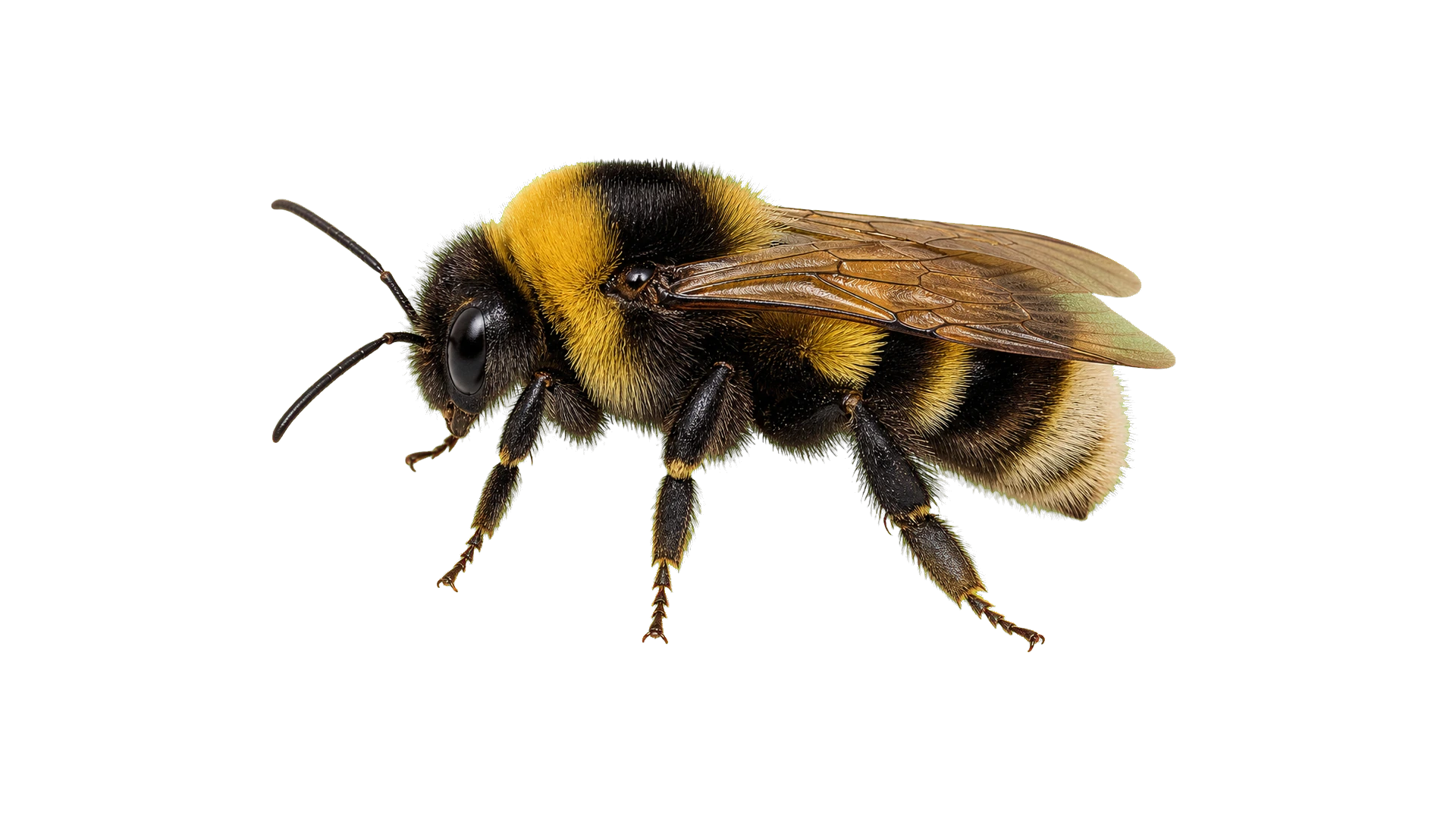
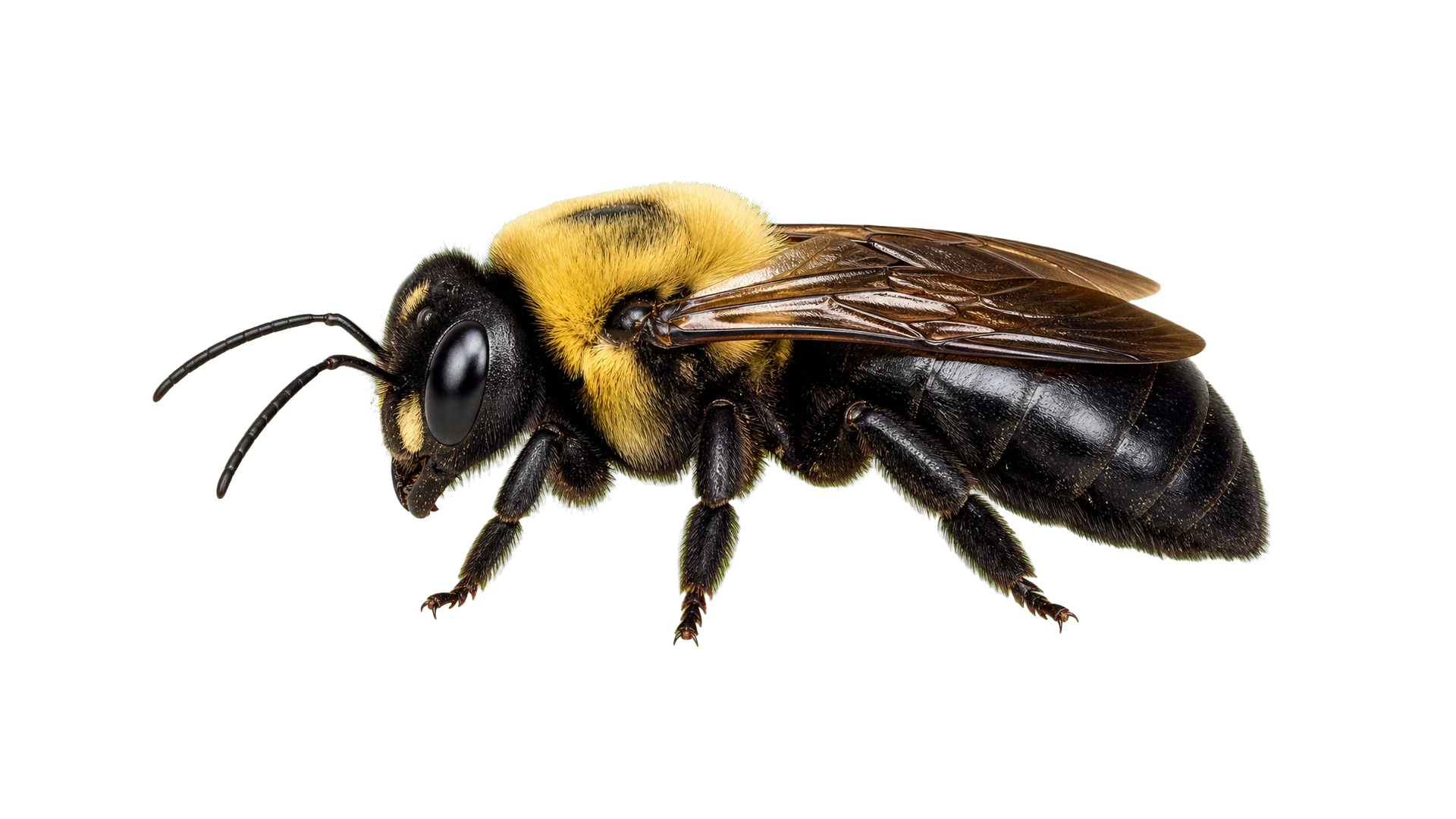
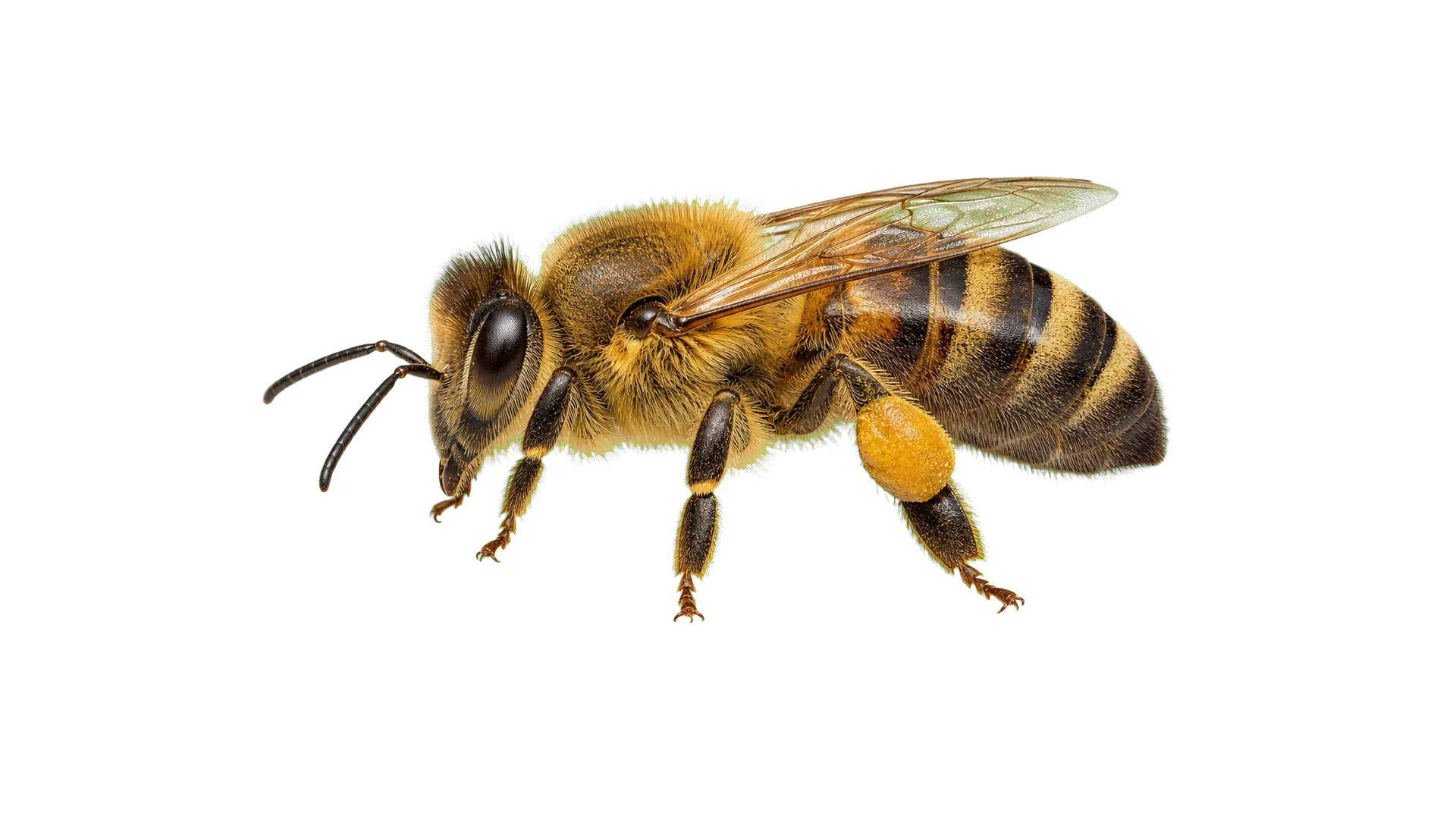
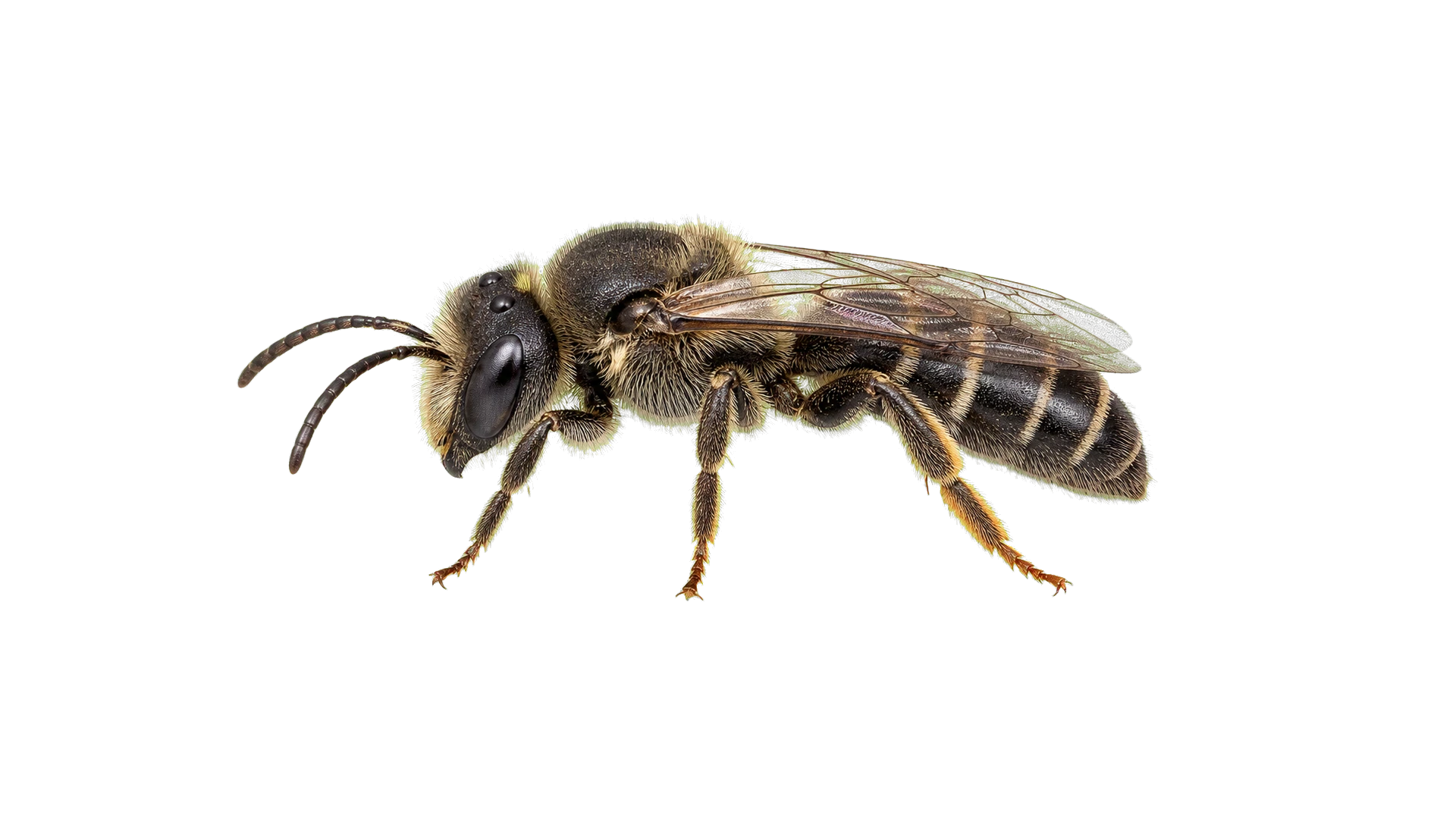
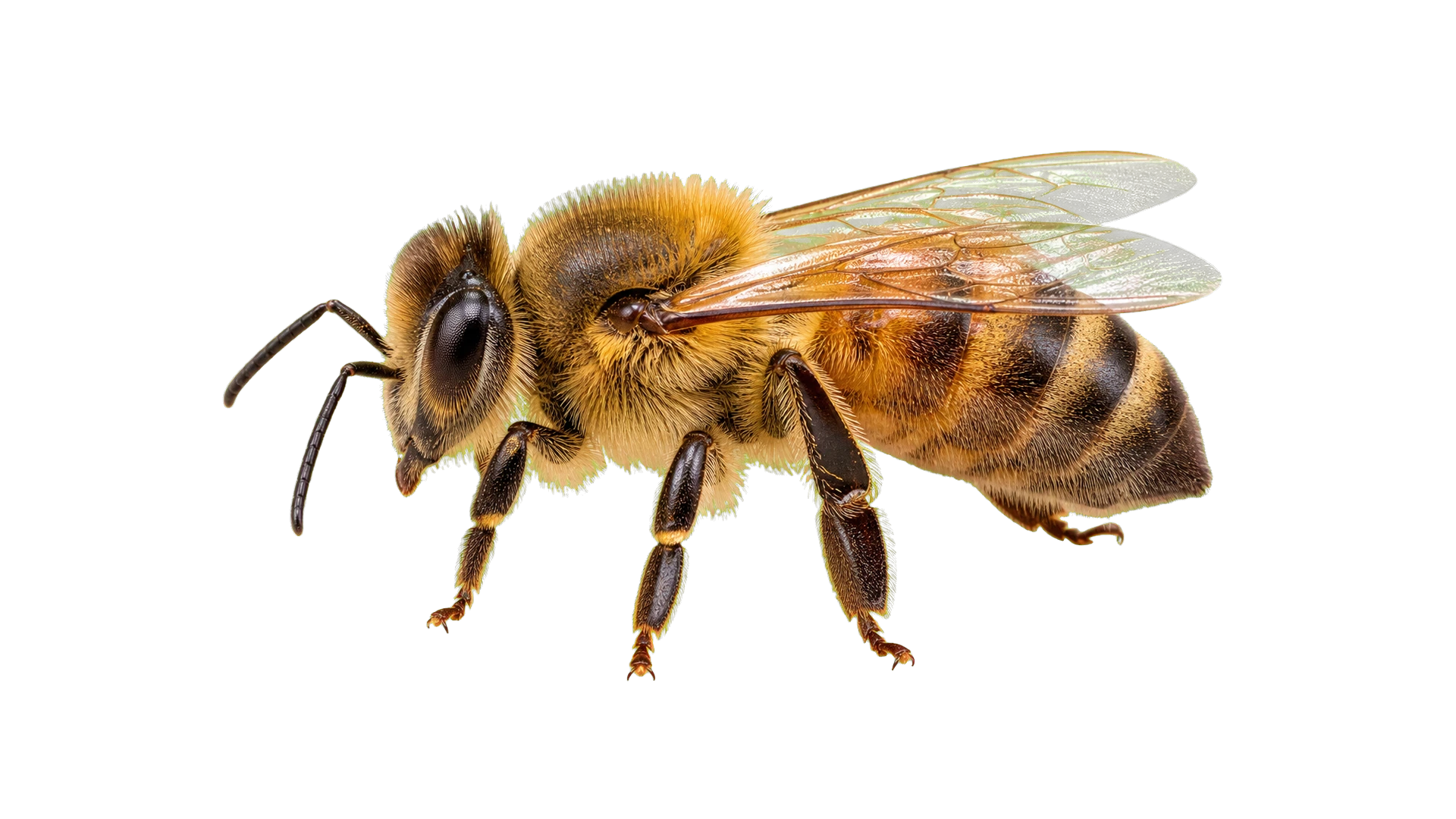
Fuzzy or hairy body
All bees have visible body hairs (even short ones), and most look distinctly fuzzy. Wasps and hornets are smooth and shiny. Fuzz alone is the single most reliable bee indicator at a glance.
Local pest control help is one call away.
 Pest Control Services Nationwide Pest Control Services Nationwide
 Bees are pollinators first, pest situations second. Honey bees are domesticated and protected in many regions, bumble bees are vital ecological pollinators, and carpenter bees are mostly nuisance wood damage rather than a stinging threat. Most bee situations are best handled by relocation rather than killing, which is the opposite of how wasp and hornet work usually goes. The species ID changes the entire approach.
Bees are fuzzy, mostly docile, and tightly tied to their colony or gallery. Honey bees in a wall void are a structural and beekeeping problem, not a stinging one in most cases. Bumble bees defend their ground nest aggressively but rarely sting unless the entrance is touched. Carpenter bee males hover and bluff but cannot sting; only the females sting and they almost never do.
The right move with bees is usually a callout to a local beekeeper for honey bee swarms and structure colonies, a wait-it-out for ground bumble bee colonies that finish their cycle in fall, and targeted carpenter bee gallery treatment for the wood-damage species. Pesticide-first approaches are appropriate for almost no bee situation.
Three bee categories most homeowners encounter:
A mature honey bee colony holds 30,000 to 60,000 bees and can produce 30 to 60 pounds of honey per year inside a single wall void. Bumble bee colonies are much smaller, typically 50 to 400 workers, and persist a single season. Carpenter bee galleries can extend 6 to 12 inches into wood the first year and several feet over multiple seasons of reuse. Bees are responsible for pollinating roughly a third of the food humans eat.
Three checks that separate a bee from a wasp or hornet. Body coverage and behavior patterns tell you almost everything you need.
All bees have visible body hairs (even short ones), and most look distinctly fuzzy. Wasps and hornets are smooth and shiny. Fuzz alone is the single most reliable bee indicator at a glance.

Honey bees are golden brown with subtle banding. Bumble bees are dramatically banded yellow-and-black with a fuzzy almost teddy-bear look. Carpenter bees look very similar to bumble bees but have a shiny black hairless abdomen. Wasps run more sharply patterned.

Bees forage on flowers and return repeatedly to the same hive, ground hole, or wood gallery. Wasps mostly hunt insects rather than visit flowers, and yellowjackets scavenge picnic food. Behavior pattern often confirms species before close inspection.
Bee situations vary widely from harmless yard pollinators to active structure colonies. The signs below tell you which scenario you have.
How a Bee Issue Develops
Honey bees are colonial and social, with one queen and tens of thousands of workers. They produce honey, drawn comb, and propolis, and the colony persists year-round. When honey bees move into a wall void, attic, soffit, or chimney, they are not a transient nuisance; they are a long-term structural concern. Honey leaks through drywall, comb attracts secondary pests once the colony fails, and the cavity itself is rarely fully cleaned without opening the wall.
Bumble bees are colonial but annual, with small colonies of 50 to 400 workers that die out in fall. They nest in cavities (abandoned rodent burrows, dense mulch, wall insulation, even old bird boxes). They are docile foragers but defensive at the nest entrance, which is the only meaningful sting risk. Carpenter bees are solitary wood-borers; the male hovers at the gallery entrance and bluffs but cannot sting, the female can sting but almost never does, and the real concern is the cumulative wood damage from multi-year gallery reuse.
Pest control approach is bee-specific. Honey bee colonies in a structure should always be referred to a beekeeper for live removal where possible; spraying a colony in a wall produces decaying brood, leaking honey, and a mess that costs more to remediate than relocation. Bumble bee ground nests are best left alone if foot traffic can be redirected; the colony dies out in fall on its own. Carpenter bees are the one bee type where targeted insecticidal treatment of the gallery makes sense, paired with sealing and painting the wood to prevent reuse the following year.
Six features that separate a bee from a wasp or hornet, illustrated on a side-profile representative.
Bees are covered in dense body hairs that pick up pollen flower to flower. Fuzz is the most reliable visual cue separating bees from wasps.
Honey and bumble bees have a polished area (corbicula) on the hind tibia where they pack pollen into a visible yellow or orange ball.
Bee hairs are branched at a microscopic level, making them effective pollen catchers. Wasp hairs are simple and unbranched, which is why wasps do not pollinate.
Four wings that hook together in flight (forewing plus hindwing on each side). At rest, bees keep wings angled rather than fully alongside the body.
Proportionally large compound eyes built for color vision and pattern recognition. Honey and bumble bees see ultraviolet patterns on petals that humans cannot.
Honey bee stingers are barbed and detach after stinging; the bee dies. Bumble and carpenter bees can sting repeatedly but almost never do.
Match the pattern below to identify the bee species and figure out the right next step.
Bee urgency depends almost entirely on species. Honey bees are protected pollinators that get relocated. Carpenter bees damage wood and need targeted gallery treatment. Bumble bees usually cycle out on their own. The timeline below maps each scenario and when to call.
Bees scouting eaves, single holes in unpainted wood, or low-flying activity over a lawn. A few foragers is normal in spring. Identification matters: honey bees need relocation, carpenter bees need treatment.
Carpenter bees boring multiple holes in soffits, fascia, or deck framing. Honey bees clustering on a tree, wall, or chimney. Or bumble bees concentrating in a high-traffic lawn area. The colony is establishing now.
Active colony with sustained traffic at one entry, visible wood damage, or sting incidents on the property. Anyone with bee allergy faces real risk. DIY treatment of established colonies is dangerous, especially in wall voids.
Honey bee colony in a wall void with established comb (often 1-plus years), or carpenter bee damage compromising structural wood. A mature wall colony holds 30,000 to 60,000 bees and 30 to 60 pounds of honey that must come out entirely.
Honey bees are protected by law in many states and are one of the few pests where killing the colony can result in a fine. Always confirm species before treatment, the right call is often relocation, not removal.
Local pros separate honey bees that need beekeeper relocation from carpenter bees that need gallery treatment, and address each species correctly.
Bee pressure depends on three things: flowering plants for forage, cavity availability for nesting, and exposed wood for carpenter bees. Most factors that attract bees are also things homeowners want in their yards, which is part of why bee management plays differently from wasp management.
Each bee type targets a different attractant. Honey bees scout for cavity volumes around 40 to 60 liters (the size of a chimney chase or wall void) in protected locations. Bumble bees want pre-existing ground cavities, especially abandoned rodent burrows under mulch piles. Carpenter bees want untreated, unpainted, weathered softwood (cedar, redwood, pine) at least 1 inch thick on south-facing surfaces. Knowing which species is on the property tells you which condition to fix first.
Most affected properties have two or three of these conditions running at once. Start with structural fixes that pay off across species (vent screens repaired, exposed softwood painted, chimney crowns sealed), then move to garden adjustments. A diverse pollinator garden distributed across the property actually reduces concentrated foraging pressure at doorways, which is the most common nuisance complaint.
Most common honey bee colony location. Steady traffic at a small entry, propolis staining, and eventually honey leaks through interior drywall. Always a beekeeper or pro situation.
Carpenter bee territory. Round half-inch holes in unpainted softwood, sawdust piles below, and distinctive yellow staining drips down the wall. Annual maintenance cycle.
Bumble bee ground nests in abandoned rodent burrows or under mulch. Usually best left alone unless directly in foot traffic; colonies cycle out by fall.
Honey bee swarms enter through torn vent screens and establish colonies in the protected attic space. Removal requires opening the soffit or attic floor; preventive screening is essential.
Honey bee swarms also colonize hollow walls in outbuildings, hollow fence posts, and unused beekeeping equipment. Inspect outbuildings each spring for new colony activity.
Honey bee swarm clusters appear as basketball-sized pendants on tree branches or fence posts; these are temporary and most leave on their own within 1 to 3 days.
Bee lifecycles vary by species. Honey bees are perennial; bumble bees are annual; carpenter bees are solitary. The cycle determines the response.
3 days
The queen lays eggs into individual cells (honey bee, bumble bee) or sealed gallery chambers (carpenter bee). All bee eggs hatch in roughly 3 days.
5 to 14 days
Larvae are fed on nectar and pollen (worker brood) or royal jelly (queen brood). Honey bee larval feeding is intensive and rapid; carpenter bee larvae develop alone in their gallery cell.
8 to 14 days
Cells are capped with wax (honey, bumble) or pollen-and-resin partitions (carpenter) while larvae pupate. Adult emergence is timed to colony or seasonal need.
Workers 4-6 weeks; queens 1-3 years (honey)
Workers handle foraging, brood care, and defense. Honey bee queens live 2 to 3 years and the colony persists indefinitely. Bumble bee colonies die out in fall, with only mated queens overwintering. Carpenter bee adults emerge from late summer galleries the following spring to start a new generation.
The colony cycle dictates the response. Honey bee structure colonies need active removal because they persist year over year. Bumble bee ground nests can be ignored because they end on their own. Carpenter bee galleries need treatment in the brief window before new females reuse last year's holes. Same insect family, very different response calculus.
Bees range from harmless pollinators to serious sting risks and wood destroyers. Match what you're seeing to identify which one.
| Species | Severity | Key Sign | Where You'll Find Them |
|---|---|---|---|
| Africanized Bees | Medical | Highly aggressive colony defense, nesting in unusual cavities like tires and boxes | tree hollows, wall voids, sheds |
| Bumble Bees | Medical | Ground-level nesting in abandoned rodent burrows, loud buzzing near flowers | underground burrows, compost piles, dense grass |
| Carpenter Bees | Structural | Perfectly round 1/2-inch holes in wood trim, sawdust below entry holes, hovering near eaves | unpainted wood, decks, eaves |
| Ground Bees | Medical | Small mound-ringed holes in bare soil, gentle hovering activity in spring | bare patches of lawn, garden beds, sandy soil |
| Honey Bees | Medical | Large active colonies with visible honeycomb, swarms on branches or structures | hives, hollow trees, wall voids |
| Sweat Bees | Nuisance | Attracted to perspiration, nesting holes in bare soil, minimal aggression | gardens, lawns, near flowers |
Severity reflects typical impact, not your specific case. If unsure, treat at the higher tier.
Honest read on common DIY moves. Bee responses are highly species-specific, and what works for carpenter bees would be exactly wrong for a honey bee colony in a wall void.

 Most beekeepers collect swarms and accessible structure colonies at no charge Live removal preserves the pollinator value the colony represents Many beekeeping clubs maintain regional swarm-call lists; one phone call typically does it Insecticidal dust applied directly into each gallery hole reaches developing brood Wooden dowel plus exterior caulk seals the gallery and prevents reuse Painting or staining vulnerable wood reduces female site selection in subsequent years Walk eaves and deck rails in March and April for new carpenter bee activity Inspect attic vents, soffit gaps, and chimney crowns for honey bee scouts Sealing scout-attractive cavities in spring prevents the entire colony cycle
  Comb stays in the wall and rots, attracting secondary pests for years Honey leaks through interior drywall over months Costs more in remediation than relocation would have cost Active females are inside the gallery, not at the visible entry Surface spray rarely reaches developing brood Holes are reused next season because the wood is still attractive Stresses a docile, non-aggressive cluster into defensive mode Most swarms leave on their own within 24 to 72 hours Wastes the beekeeper-call window when no-cost relocation is easy
 Six prevention moves that reduce nuisance bee situations without harming the pollinators you actually want in your yard.

Inspect every unpainted wood surface for new carpenter bee activity before females begin excavating new galleries. The cheapest minute of bee attention you can spend.

Repair or replace gable, ridge, and soffit vent screens before March. These openings are how honey bee scouts find attic and soffit cavities for spring colony establishment.

Carpenter bees strongly prefer unpainted, weathered cedar, redwood, and pine. Painting or staining vulnerable surfaces reduces female site selection the following spring.

Caulk cracks at fascia trim, around chimney crowns, and at dryer vents. Quarter-inch gaps are sufficient honey bee scout entry points for wall-void colonies.

Diverse flowering plants distributed across the property reduce concentrated foraging pressure near doorways and entries. A pollinator garden is a feature, not a problem.
A pro inspection in early spring catches scout activity at attic vents, soffits, and chimneys before colonies establish. Combined with sealing recommendations, this is the highest-impact preventive service for chronic bee properties.
Bee activity varies dramatically by season and species. Different times of year favor different bee situations.
Peak season for honey bee swarming and carpenter bee gallery construction. Bumble bee queens emerge and start new ground colonies. The single most active bee window of the year.
Honey bee colonies expand and mature. Bumble bee colonies grow to full size. Carpenter bee females are actively provisioning galleries. Visible foraging is highest.
Bumble bee colonies produce new queens and males, then die out by October. Honey bee colonies prepare for winter and become more defensive. Carpenter bee adults emerge from galleries to overwinter.
Honey bee colonies cluster in walls or hives but remain alive year-round. Bumble bee mated queens overwinter alone in protected spots. Carpenter bees overwinter as adults inside galleries, ready to emerge in spring.
Four steps from arrival to a species-matched plan. Most bee visits run 30 to 60 minutes for ID and immediate carpenter bee treatment. Honey bee structure colonies take longer because they often involve beekeeper coordination and full comb extraction.
Identify, refer where needed, treat only what should be treated. Real bee work prioritizes pollinator value over blanket spraying. The species ID determines the entire response.
Confirm honey bee vs bumble bee vs carpenter bee. Identify the entry point or gallery, assess colony age and size, and determine whether relocation, leave-alone, or treatment is the right call.
For honey bee swarms and accessible structure colonies, contact local beekeepers for live removal. Most relocate at no charge in spring and summer.
Carpenter bee galleries get insecticidal dust pushed into each hole, then sealed with dowel and caulk after 48 hours. Bumble bee ground nests are usually left to cycle out unless they directly threaten a vulnerable household member.
Sealing scout-attractive cavities, repainting vulnerable softwood, and addressing structural openings reduces next year's bee pressure substantially. The post-treatment plan is often more valuable than the treatment itself.
Stories from households who connected with pros and beekeepers for honey bee swarms, wall colonies, and carpenter bee damage.

"Pergola treated and saved from carpenter bees."
Our wooden pergola had perfectly round holes from carpenter bees. The pro treated each bore hole and applied a preventive coating to the wood. They explained that untreated softwood in Arizona is a magnet for these bees.
"Pergola treated and saved from carpenter bees."
Our wooden pergola had perfectly round holes from carpenter bees. The pro treated each bore hole and applied a preventive coating to the wood. They explained that untreated softwood in Arizona is a magnet for these bees.
Direct answers to the questions homeowners ask before deciding how to handle bees on the property.
Almost always call a beekeeper first. Honey bees in a wall void are a structural problem disguised as a bee problem: a mature colony holds 30,000 to 60,000 bees and 30 to 60 pounds of honey and wax, all of which stays inside the wall if you spray. Honey leaks through interior drywall over months or years and attracts ants, roaches, mice, and dermestid beetles to a chronic secondary problem. Most local beekeepers and beekeeping clubs maintain swarm-call lists and will collect accessible colonies at no charge in spring and early summer when removal is easiest. State extension offices and regional beekeeping associations are the fastest way to find someone who does live removal in your area. If beekeeper relocation is genuinely not feasible (the colony is in an inaccessible cavity, or it is late fall and the colony is too large to relocate safely), the right pro approach pairs treatment with full comb removal, not just spraying. Spraying alone is the worst option in almost every case.
Look at the abdomen. Bumble bees have fuzzy, hairy abdomens covered in yellow and black bands. Carpenter bees have shiny black hairless abdomens that look almost polished, with fuzz only on the thorax. Both are similarly large and look superficially alike at a glance, but the abdomen test is reliable in 1 to 2 seconds of close inspection. Behavior also helps: bumble bees disappear into a single ground hole, mulch pile, or wall insulation cavity (one nest, many bees coming and going); carpenter bees hover at multiple round half-inch holes drilled into wood (many holes, often one to a few bees per hole). The species matters because the response is different. Bumble bees are usually best left alone to finish their season; carpenter bee galleries should be treated with insecticidal dust and the wood sealed and painted to prevent reuse next year.
Yes, but the damage is cumulative across years rather than dramatic in one season. A first-year carpenter bee gallery is typically 6 to 12 inches long; the female drills the round half-inch entry, then turns and tunnels along the grain, partitioning the gallery into 6 to 8 chambers each holding one egg and a pollen ball. The structural impact of a single gallery is minor. The real concern is reuse: the same gallery is reoccupied each spring by new females, and they extend the tunnels by another 6 to 12 inches every year. Over 5 to 10 years a multi-gallery system can hollow out a deck rail, fascia board, or fence post enough to compromise structural integrity. Woodpeckers also enlarge active galleries to feed on the larvae, which can turn small carpenter bee holes into fist-sized woodpecker excavations. Annual treatment plus painting or staining the affected wood is the response, not waiting for visible damage.
A clustered honey bee swarm is at its most docile state. The bees have left their parent hive with the old queen and are clustering temporarily while scout bees find a new permanent home. They have no honey, no brood, and no nest to defend, which removes most of the reasons bees become aggressive. A clustered swarm typically persists 24 to 72 hours and then leaves on its own as scouts agree on a new cavity. As long as no one disturbs the cluster, stings are very rare. The right response is to call a local beekeeper (most collect swarms at no cost; this is one of the standard services beekeeping clubs publicize) and keep children and pets away from the cluster in the meantime. Do not spray. A spray attempt provokes the only situation in which a swarm becomes aggressive, costs the colony you could have saved, and produces a worse outcome than just waiting the cluster out.
It varies by state and locality, but in many regions yes, with practical implications. Some states require notification of agriculture authorities before exterminating honey bee colonies, prefer or require live removal where feasible, and regulate pesticide application near honey bee operations. The legal framework reflects honey bees' agricultural value as managed pollinators. Beyond the legal question, regional pest control standards generally favor relocation over extermination because the outcomes are better for everyone (the pollinator survives, the structure is not damaged by rotting comb, the homeowner pays less). The practical answer is usually the same regardless of legal status: call a beekeeper, document the situation, and exterminate only if relocation is genuinely impossible. Pros experienced with bee work understand the regulatory and ecological context; DIY work often does not.
Honestly, you probably do not want to. Bumble bees are vital native pollinators that provide ecosystem services dramatically exceeding their nuisance value. Their colonies are small (50 to 400 workers vs honey bees' tens of thousands), entirely annual (every colony dies out by October), and almost never aggressive unless someone steps directly on the nest entrance. The right approach for most properties is coexistence: identify the nest location, redirect foot traffic if needed, and let the colony cycle out on its own. Bumble bees do not nest in the same hole year over year because the colony does not survive the winter; only mated queens overwinter, and they almost always start new colonies elsewhere the following spring. If a vulnerable household member is severely allergic and a bumble bee nest is in an unavoidable spot, contact a local conservation group or pollinator-aware pest pro for relocation; a few specialists do live bumble bee colony moves. Spraying bumble bees is generally not recommended given their conservation status and the short colony cycle.
Three quick checks. Body coverage: bees are visibly fuzzy with branched body hairs that catch pollen; wasps are smooth and shiny. Body shape: bees have a thicker, less defined waist and look chunkier overall; wasps have a dramatically pinched waist (petiole) and look slender. Behavior: bees forage on flowers and return repeatedly to the same nest or gallery; wasps mostly hunt insects or scavenge picnic food. Color: bees are typically golden brown or banded yellow-and-black with fuzz; wasps run sharp yellow-and-black, deep black-and-white, or rust-and-yellow with no fuzz. The fuzz test alone is reliable in 90 percent of cases. If the insect at the picnic table looks polished and shiny, it is a yellowjacket or paper wasp; if it looks fuzzy and lands on flowers more than food, it is a bee. The distinction matters because the treatment response is essentially opposite for the two.
Identify the bee species, coordinate with beekeepers for honey bees, treat carpenter bee galleries, leave pollinators alone where possible.
Click through to species pages for honey bees, bumble bees, carpenter bees, and other bee species.
Large, fuzzy bees that nest in the ground and occasionally under structures.
Bumble bees are generally docile pollinators, but they can sting multiple times if their nest is disturbed. They often nest in abandoned rodent burrows, under sheds, and inside insulation. Because of their ecological importance, relocation is preferred over extermination whenever the nest location allows it.
Quick ID:
Why it matters:
Wood-boring bees that drill perfectly round holes into decks, fascia, and siding.
Carpenter bees bore half-inch-diameter entry holes into untreated or weathered wood to create brood tunnels, causing cosmetic and structural damage that worsens year after year as new generations reuse the same galleries. Males may hover aggressively near people but cannot sting. Treating existing holes and applying protective finishes are the most effective long-term controls.
Quick ID:
Why it matters:
Colonizing bees that build large wax hives inside walls and cavities.
Honey bee colonies inside wall voids or attics can grow to contain 60,000 or more bees and produce significant amounts of honeycomb. If the colony dies or is removed improperly, melting wax and fermenting honey attract ants, beetles, and rodents. Live removal and relocation by a beekeeper is the recommended approach wherever possible.
Quick ID:
Why it matters:
Solitary bees that dig nesting burrows in bare soil and lawns.
Ground bees are solitary nesters that excavate small holes in sandy or bare patches of soil, often creating clusters of dozens of burrows in a single yard. While generally non-aggressive, they alarm homeowners who mistake the activity for a dangerous colony. Most species are important pollinators, and management focuses on modifying soil conditions rather than chemical treatment.
Quick ID:
Why it matters:
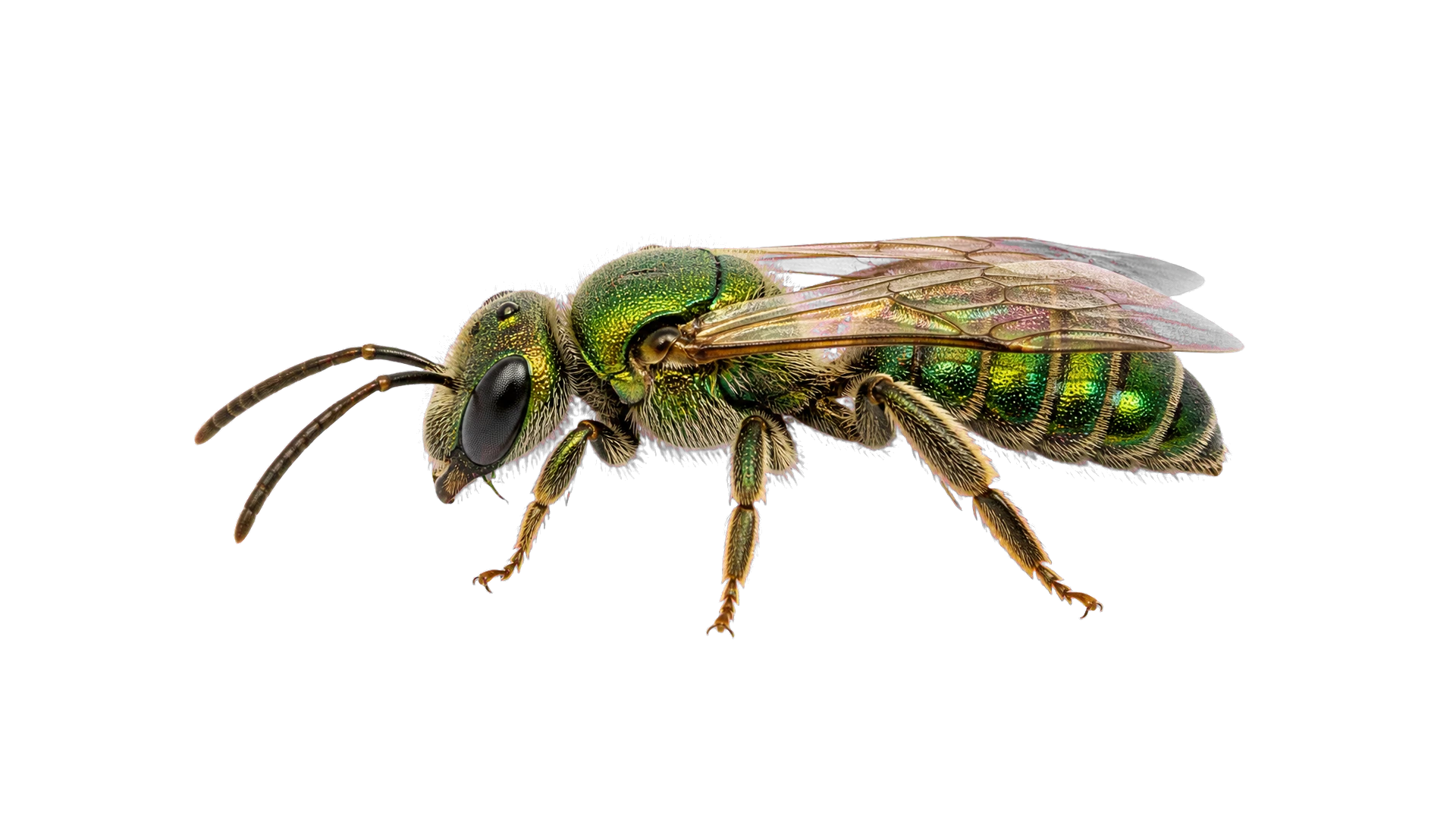
Small, metallic bees attracted to human perspiration.
Sweat bees are drawn to the salt in human sweat, landing on exposed skin during outdoor activities. Most are metallic green or bronze and nest in underground burrows or rotting wood. Their sting is mild compared to honey bees, but repeated encounters during yard work and outdoor events make them a persistent warm-weather nuisance.
Quick ID:
Why it matters:
Highly defensive hybrid bees that attack in large swarms.
Africanized honey bees look nearly identical to European honey bees but respond to perceived threats with overwhelming aggression, hundreds of workers will pursue a target for a quarter mile or more. They nest in wall voids, meter boxes, overturned pots, and other small cavities. Professional removal is essential because disturbing a colony can trigger a mass stinging event.
Quick ID:
Why it matters: