Eggs
Laid in nest chambers
The female digs a ground burrow or finds a soft-wood cavity. She provisions each chamber with a pollen ball, lays a single egg on it, and seals the chamber off.
Local pest control help is one call away.
 Pest Control Services Nationwide Pest Control Services Nationwide
 Sweat bees are small native pollinators that land on people during hot weather to drink the salt and protein in human sweat. Workers are tiny, 4 to 10 millimeters long, which is noticeably smaller than ground bees or honey bees. Many species are brilliant metallic green, blue, or copper, while others are dark with pale bands. The metallic shine is the giveaway, no other bee in the United States looks like a small flying jewel.
If a sweat bee lands on your arm while you're gardening or sitting on the patio, it isn't trying to sting. It's after the salt on your skin. The Schmidt sting pain index rates a sweat bee sting at 1.0, the lowest score given to any insect that registers at all. Stings only happen when one is swatted or pressed against skin. This guide covers how to confirm them, why they show up around outdoor activity, and why almost no one needs treatment.
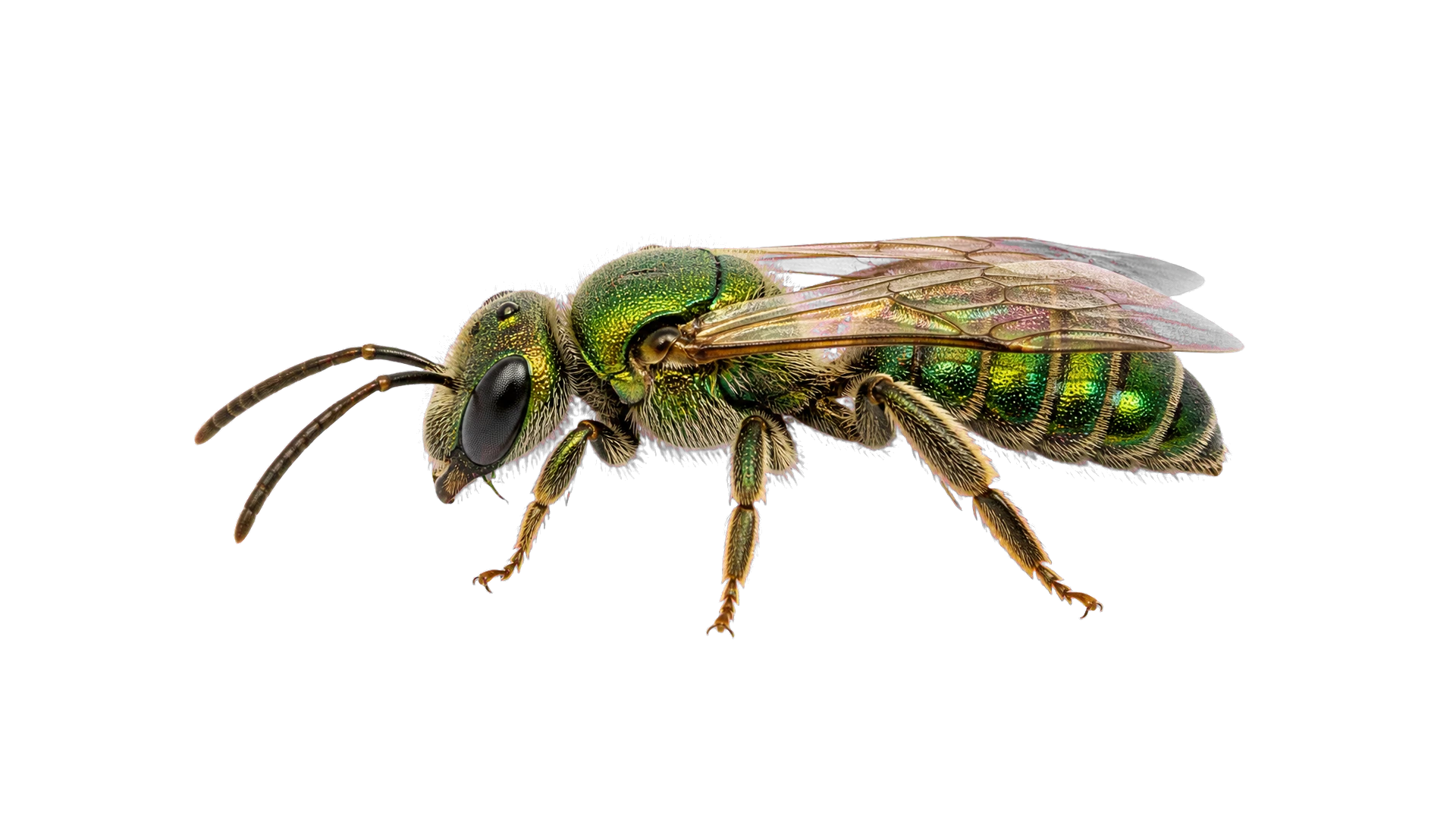
ID Card: Sweat Bee
Related Species
Call to get matched with a local pest control pro.
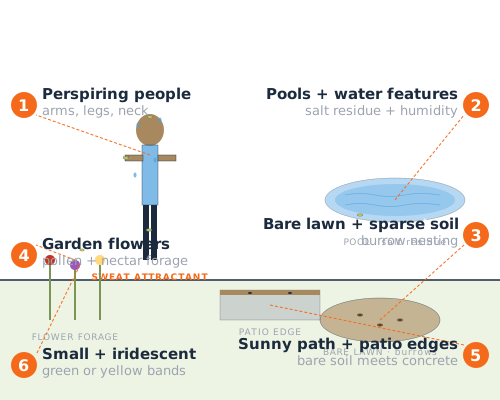
Sweat bees split their day between flowers and people. They forage for pollen in the morning, then drift toward human activity when the temperature climbs. Walk the property on a sunny summer afternoon and look for these signs:
Sweat bees are persistent on skin during hot, humid afternoons, but the persistence is what makes them feel worse than they are. A gentle brush-off works fine. Swatting is what causes the rare sting, since trapping the bee against skin is the only thing that prompts it to defend itself.
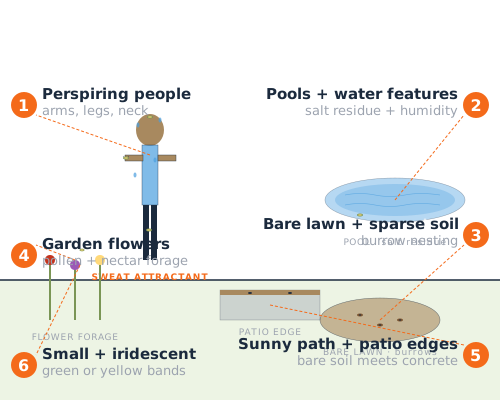
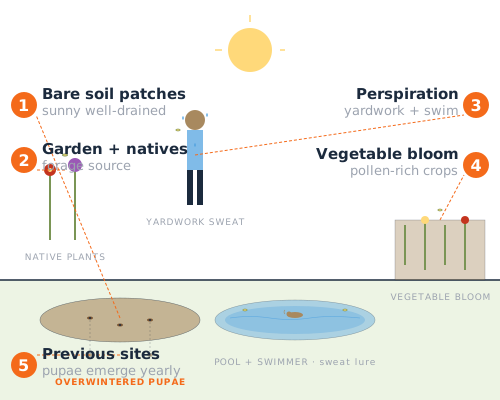
Sweat bees are native to almost every part of the country, so they were already nearby before you noticed them. The reason you're seeing them now usually comes down to two things: you're outside during the hottest part of the day, and your property has the bare soil, dead wood, or flowering plants they prefer. They're not invading, they're foraging.
What draws sweat bees to your activity:
Reducing landings is mostly about reducing attraction. Insect-repellent skin coverage, lightweight long sleeves, and scheduling yard work for cooler morning hours all cut contact without removing the bees from the property. Since they're beneficial pollinators, the goal is coexistence rather than elimination.
Find your scenario below.
| What You're Seeing | Severity | If Untreated | Next Step |
|---|---|---|---|
| Occasional landings on skin during outdoor activity | Low | Beneficial pollinators; brush off gently, never swat | Tolerate; switch to morning yard work. |
| Multiple sweat bees in active outdoor zones | Moderate | Local nesting nearby; comfort issue, not safety | Schedule activities for cooler hours; reduce attractants. |
| Family member with confirmed bee-sting allergy plus repeated encounters | High | Allergy reactions still rare, but planning matters | Schedule a pro safety consult and allergy plan. |
| Yellow stripes, larger bodies, or aggressive flight, suspect species mismatch | Urgent | These traits suggest yellow jackets, not sweat bees | Schedule professional species verification today. |
Most rows above don't require treatment. If between rows, treat the higher one as your situation.
Most sweat bees are solitary, with one generation per year. A few species are primitively social, sharing a single nest entrance among related females. Either way, the colony structure isn't anything like a honey bee hive, there's no defended cluster, no guard bees, no swarming behavior.
Laid in nest chambers
The female digs a ground burrow or finds a soft-wood cavity. She provisions each chamber with a pollen ball, lays a single egg on it, and seals the chamber off.
Develops through summer
Feeds on the stored pollen ball inside the sealed chamber. No parental care, no shared brood, the larva develops alone until it pupates.
Overwinters in the chamber
Pupation happens inside the burrow or wood cavity. The pupa survives winter in the sealed chamber, protected from cold and predators.
Emerges spring or summer
Adults chew their way out, mate, and start the cycle again. Females do all the nest building and provisioning; males die shortly after mating.
Even social species form small communal nests rather than large defended colonies. That's a big reason sweat bees stay docile around people, there's nothing to guard the way a honey bee guards a hive.
Sweat bee activity tracks the warm half of the year, with peak human contact during the hottest, most humid weeks of summer:
Adults emerge from overwintered chambers in April. Early bloom on native wildflowers and flowering trees draws the first foraging trips. Landings on people are uncommon this early, the heat hasn't kicked in yet.
Peak activity runs June through August. Humid afternoons produce the strongest perspiration pull, with landings concentrated from late morning through mid-afternoon. This is also when females are most actively building and provisioning nests.
Activity tapers through September. Final provisioning completes the chambers, females die after sealing the last egg, and surface activity ends with cooler weather.
Pupae overwinter underground or inside wood cavities, completely invisible. No surface activity, no landings, no sweat-attracted behavior. The next generation waits for spring warmth.
Sweat bees are small native pollinators with a Schmidt sting pain index of 1.0, the lowest score the index gives to any insect that registers a sting at all. The vast majority of landings are annoying rather than dangerous, and the few stings that do happen come from trapping the bee against skin (usually by swatting). Brushing the bee off gently with a finger or a piece of paper ends the encounter without a sting.
Because these bees are beneficial pollinators and pose almost no real risk, treatment is rarely justified. Most calls resolve with species verification, attraction-reduction guidance, and a quick walkthrough of brush-don't-swat technique for kids and pets. The professional value is identification and reassurance, not pesticide application.
The one situation where a pro consult genuinely matters is a household with a confirmed bee-sting allergy and repeated outdoor encounters. Even then, the conversation is about EpiPen access, activity timing, and protective clothing rather than killing native pollinators. Sweat bees are part of the pollination network that keeps gardens and wildflowers alive, the goal is to coexist with them on your terms.
Sweat bee work is rarely about treatment, it's about confirming the species, ruling out look-alikes, and planning around any household allergy concerns:

 Species Verification First
 Metallic green, blue, or copper coloration confirms a sweat bee. A pro rules out yellow jackets, hover flies, and other look-alikes that warrant a very different response.
Stinging Risk Assessment The Schmidt sting pain index puts sweat bees at 1.0, the lowest meaningful score. A pro can walk through what that means for sensitive household members and what isn't worth worrying about.
Attraction Reduction Guidance Practical guidance on insect repellent, sweat-wicking clothing, scheduling outdoor activity for cooler hours, and minimizing the sweat residue that draws landings.
Allergy-Aware Planning For households with a confirmed bee-sting allergy, the consult covers EpiPen access, brush-don't-swat coaching, and when to call a doctor if a sting does happen.

Sweat bees are one of the few household-adjacent insects where the right answer is almost always tolerance plus a few small habit changes.
DIY handles nearly every sweat bee situation, since these are docile native pollinators rather than a pest in the usual sense:
Professional involvement is rare and almost always about identification or allergy safety rather than treatment:
Sweat bees are docile native pollinators, but species verification matters when stings are a household concern. Connect with a local specialist for accurate identification.
Real results from people who had the same problem and solved it.

"Pergola treated and saved from carpenter bees."
Our wooden pergola had perfectly round holes from carpenter bees. The pro treated each bore hole and applied a preventive coating to the wood. They explained that untreated softwood in Arizona is a magnet for these bees.
"Pergola treated and saved from carpenter bees."
Our wooden pergola had perfectly round holes from carpenter bees. The pro treated each bore hole and applied a preventive coating to the wood. They explained that untreated softwood in Arizona is a magnet for these bees.
Direct answers to what homeowners ask most.
Sweat bees are small (about 1/4 to 1/2 inch), often metallic-colored bees that come in a striking range of appearances depending on the species, many are brilliant metallic green, blue-green, or coppery-bronze, while others are dark brown or black with pale bands on the abdomen. They earned their common name because they are attracted to human perspiration and will land on sweaty skin to lap up the salt. They are commonly encountered during outdoor activities in warm weather, hovering around exposed skin. Sweat bees nest in bare soil or rotting wood and are solitary or semi-social, living in small groups rather than the large colonies of honey bees.
Female sweat bees can sting, but their sting is among the mildest of any stinging insect, typically described as a brief, minor prick that rates very low on the Schmidt Sting Pain Index. Stings almost always occur when a sweat bee lands on skin to feed on perspiration and is swatted or pinched against the body. If you remain calm and gently brush the bee away rather than swatting at it, stings are easily avoided. Sweat bees are valuable native pollinators responsible for pollinating wildflowers, garden vegetables, and orchard crops. Their attraction to perspiration peaks on hot, humid summer days when salt concentrations in sweat are highest, and wearing light-colored clothing and using a towel to wipe perspiration can reduce encounters.
Bees look for protected cavities near floral food sources. Wall voids, soffits, chimneys, irrigation valve boxes, and hollow trees in the yard are all attractive nesting sites. Properties with abundant flowering plants, clover lawns, or nearby agricultural areas provide the foraging resources that sustain colonies. Once a colony establishes, the scent of beeswax attracts future swarms to the same location.
For most people, a bee sting causes temporary pain and swelling. However, approximately 2 million Americans are allergic to insect venom, and bee stings cause more deaths annually in the U.S. Than any other venomous animal. Africanized honey bees (present in southern states) are particularly dangerous because they attack in large numbers when disturbed. If a nest is in a high-traffic area, professional removal is the safest approach.
Most providers in our network can schedule an inspection within 24-48 hours. For urgent situations, likeactive structural damage or large colonies, same-week emergency service is often available. Response times depend on your location and the provider's current schedule.
Your provider inspects the property to identify the pest, locate nesting or entry points, and assess the scope of the problem. You get a clear explanation of what they found, what they recommend, and a written scope before any work begins.
Modern pest control products are designed to break down quickly after application and pose minimal risk to people and pets when applied correctly. Most providers ask you to keep kids and pets out of treated areas for 1 to 2 hours while the product dries, after which the area is generally safe again. Always confirm specific re-entry times with your provider, and let them know about pet birds, fish, or reptiles, since some treatments require extra precautions for those species.
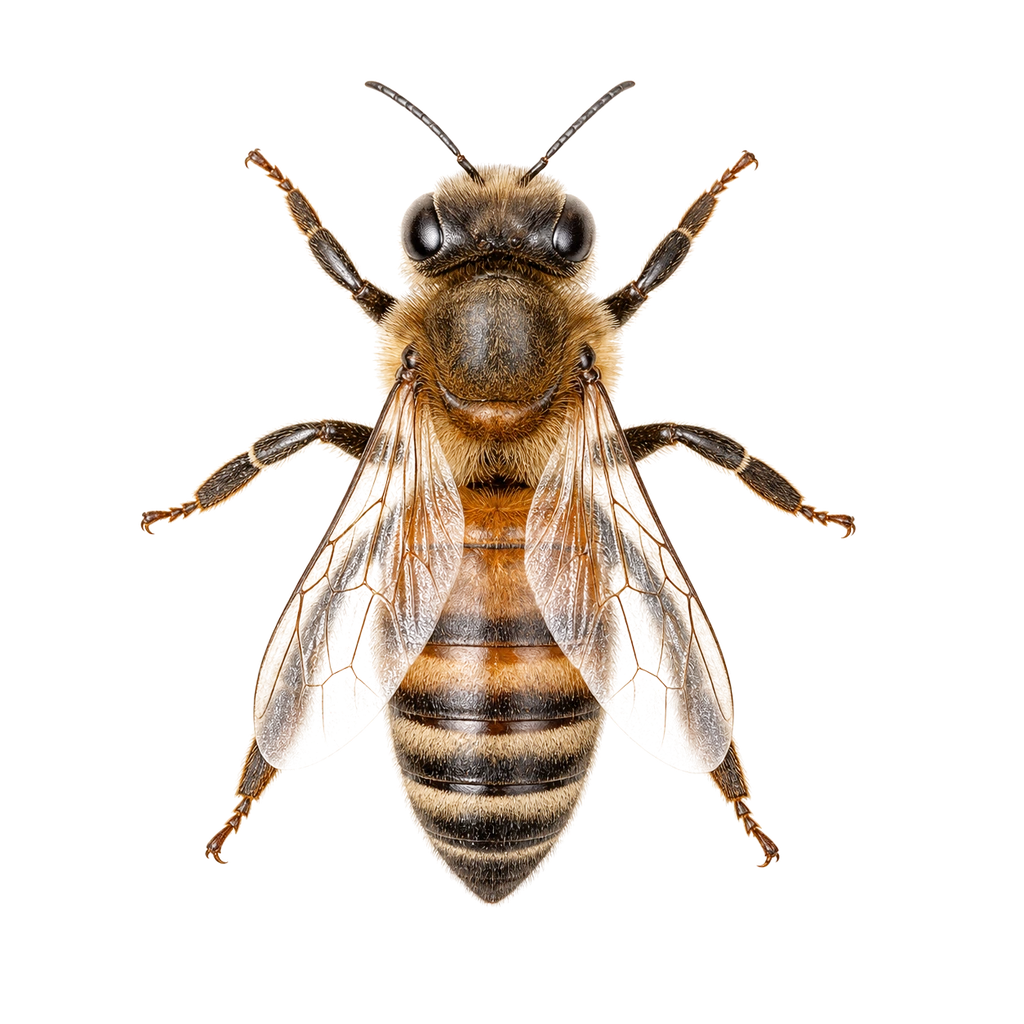
Africanized bees are aggressive hybrid bees that respond to disturbances in much larger numbers than European honey bees. Professional removal is essential as they can pursue perceived threats over long distances.
Learn More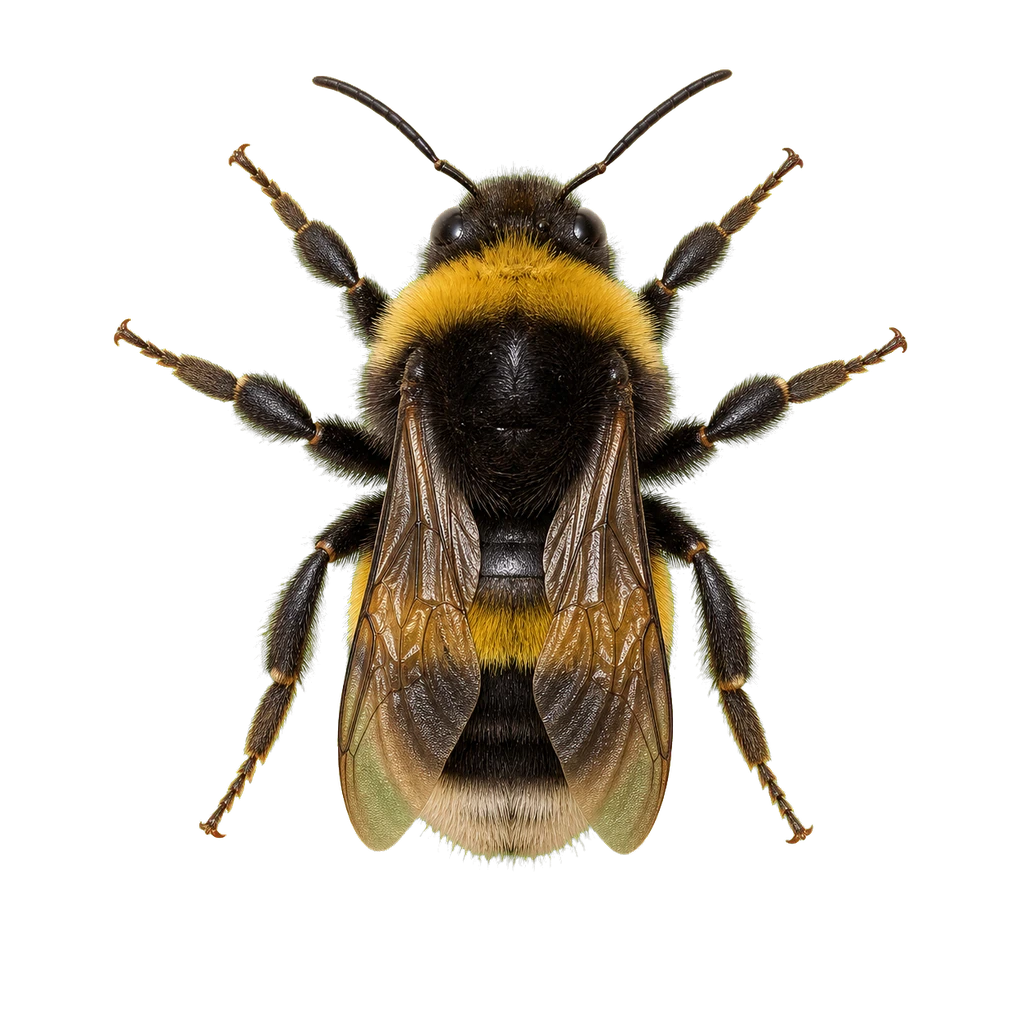
Bumble bees nest in the ground, under decks, or in compost piles and become defensive when their colony is disturbed. Unlike honey bees, they can sting multiple times, making ground-level nests near walkways a concern for families.
Learn More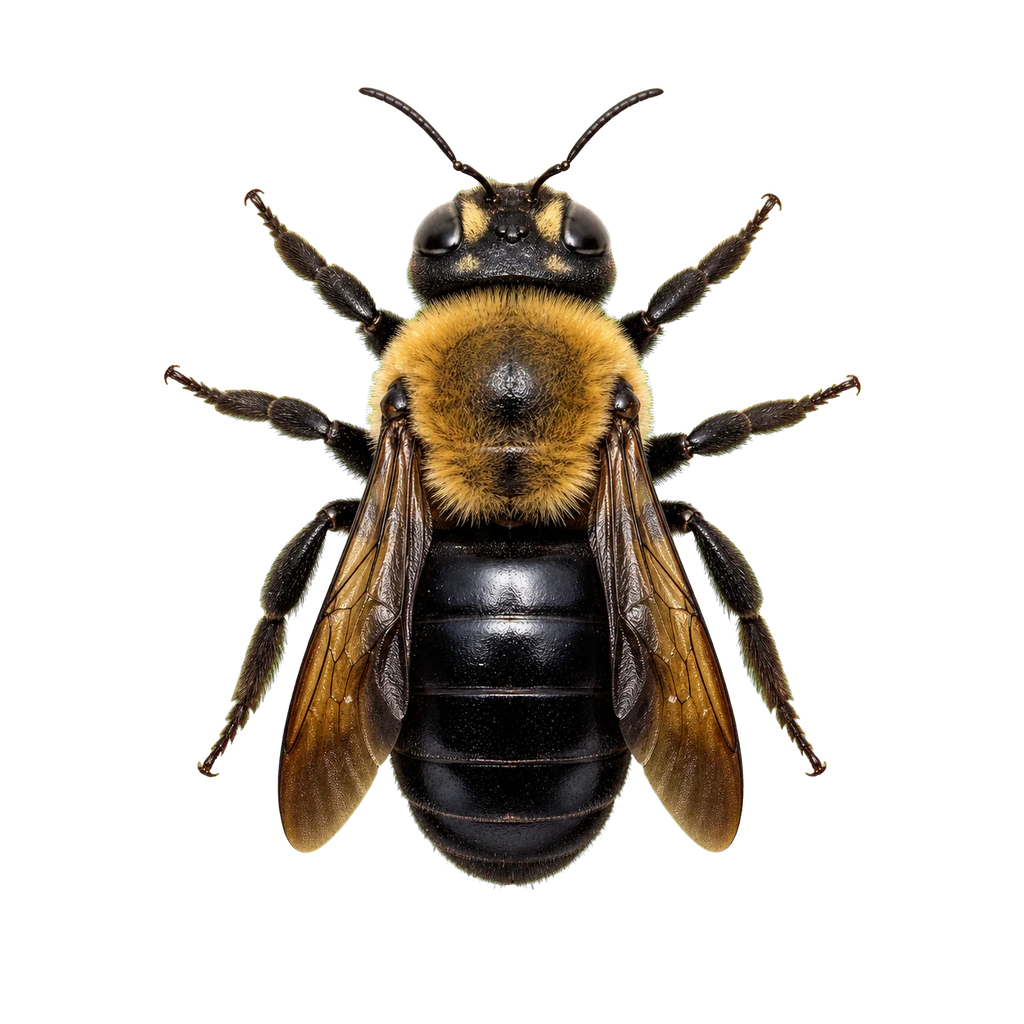
Carpenter bees bore perfectly round holes into untreated wood to lay eggs, damaging decks, fascia, and eaves over time. The tunneling weakens wood structures and attracts woodpeckers that cause additional damage hunting the larvae inside.
Learn More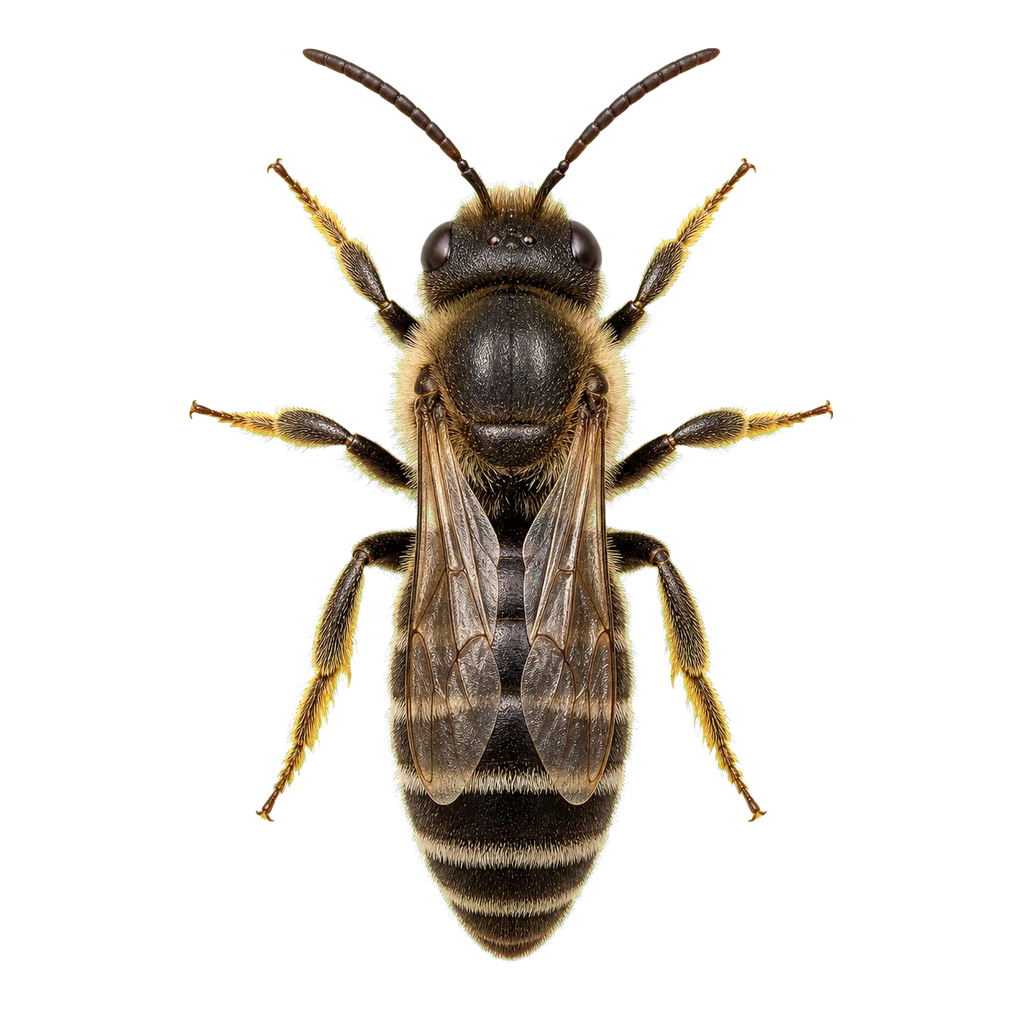
Ground bees are solitary, ground-nesting bees that create small soil mounds in lawns during spring. They are important pollinators and rarely sting, but clusters of nests in yards can concern homeowners.
Learn More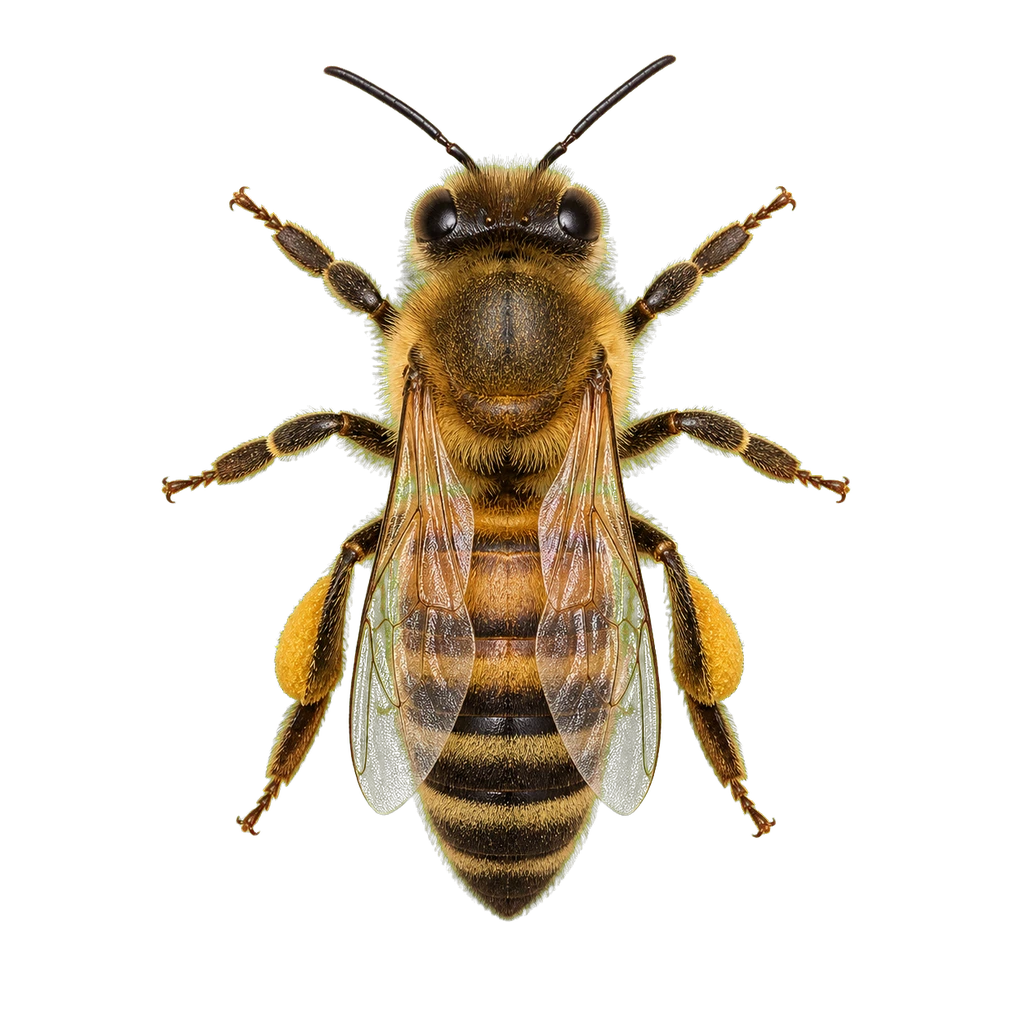
Honey bees form large colonies in wall voids and attics, and their stored honey can melt through ceilings and attract secondary pest infestations. They are important pollinators, so professional relocation, not extermination, is the preferred approach.
Learn MoreLocal providers experienced with native bee identification are ready to help, no obligation.