Narrow waist, smooth body
Wasps show a pinched waist (petiole) between thorax and abdomen and a shiny hairless body. Bees have a thicker waist and visibly fuzzy bodies. Flies have no waist at all.
Local pest control help is one call away.
 Pest Control Services Nationwide Pest Control Services Nationwide
 Wasps cover several very different insects. Paper wasps hang umbrella-shaped nests from eaves. Yellowjackets nest in the ground or wall voids and turn aggressive in late summer. Mud daubers build solitary clay tubes and rarely sting. Cicada killers look frightening but ignore people. Treatment depends on which species and where the nest sits, not on the insect alone.
Wasp colonies grow exponentially through summer. A spring nest the size of a quarter can hold 200 to 400 workers by August, and yellowjacket populations sometimes exceed 5,000. Late-season colonies turn food-stressed, which is why picnic invasions and aggressive encounters spike from August into October.
Most stings happen because someone walked past a hidden nest entrance, not because a wasp went hunting. Locating the nest, identifying the species, and deciding whether removal is needed is the practical work. Wasp stings send roughly 500,000 Americans to the ER every year.
Four wasp categories most homes deal with:
A mature yellowjacket colony holds 4,000 to 5,000 workers by late summer. Wasp stings send roughly 500,000 Americans to emergency rooms each year and cause more insect-sting fatalities through anaphylaxis than any other group. A single paper wasp queen can produce a softball-sized nest in 12 weeks given good weather. Workers are about 5 percent of a yellowjacket colony at any moment; the rest sit hidden inside the nest.
Three checks separate wasps from bees and look-alike flies. The species ID points straight to how risky the nest will be by August.
Wasps show a pinched waist (petiole) between thorax and abdomen and a shiny hairless body. Bees have a thicker waist and visibly fuzzy bodies. Flies have no waist at all.

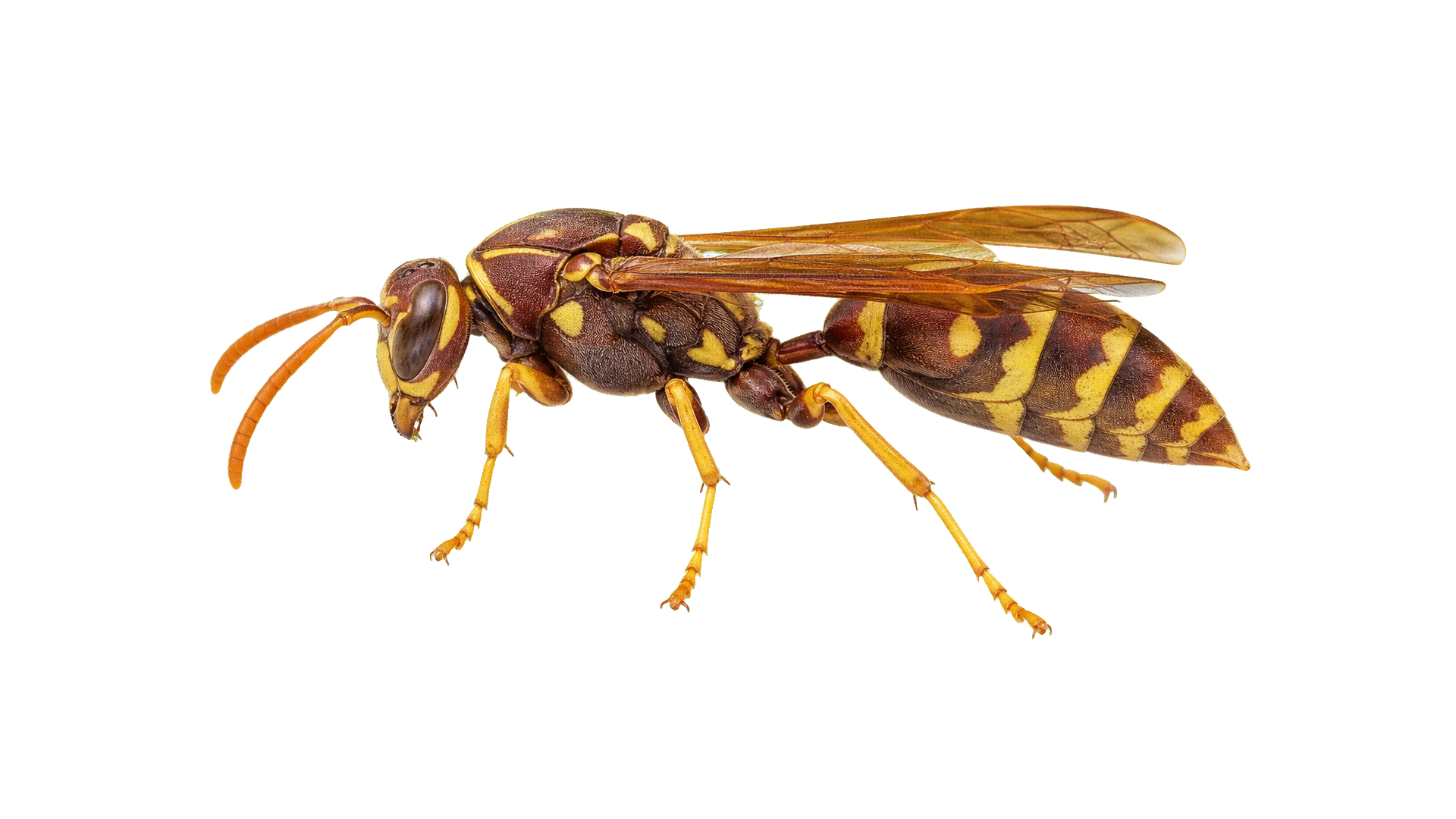
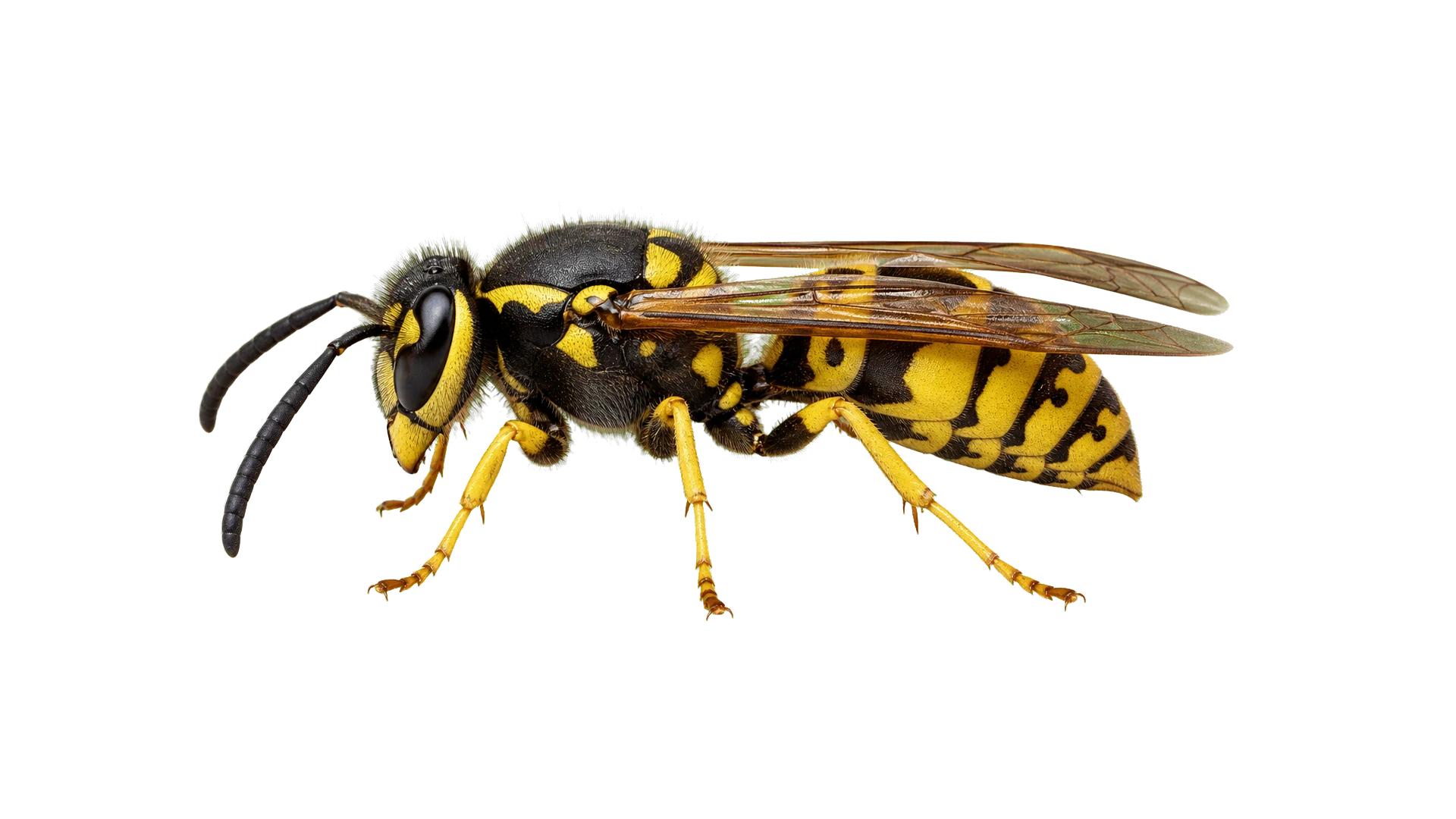
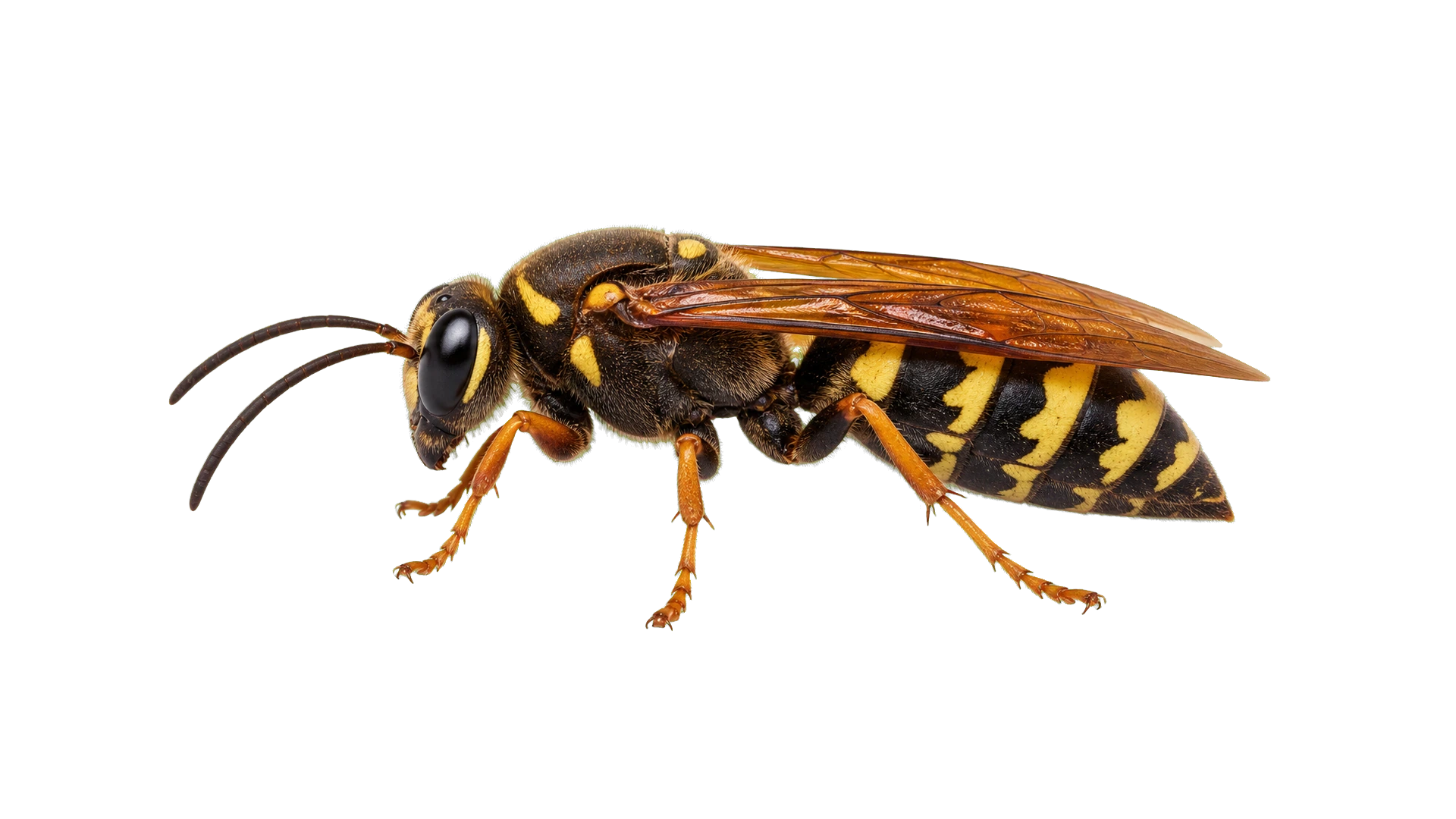
Yellowjackets show sharp yellow and black bands. Paper wasps range yellow-and-black to reddish-brown. Mud daubers are metallic blue-black or black with yellow legs. Pattern plus shape narrows the species fast.
Wasps fold wings lengthwise alongside the body at rest, a signal flies (one pair only) cannot match. Legs hang visibly during flight, separating wasps from bees that tuck legs in.
Most wasp issues are confirmed by watching for repeating flight patterns from a single point. The nest itself is often hidden; the entrance traffic is the giveaway.
How a Wasp Nest Develops Each Season
Paper wasps and yellowjackets are the two species most homeowners interact with, and they behave very differently. Paper wasps build small open nests in protected spots and only sting when the nest is touched or threatened. They are mildly defensive but rarely chase. A paper wasp nest above a back door is a daily nuisance more than a serious threat, and a single targeted treatment usually ends it.
Yellowjackets are the species behind most serious sting incidents. They nest underground, in wall voids, in attics, or inside dense shrubbery, and the entrance is often a small hole the homeowner walks past every day without noticing. Late-season colonies aggressively defend the entrance, will sting repeatedly, and pursue intruders for considerable distances. Mud daubers and cicada killers, despite their size, almost never sting humans and are often left alone.
Wasp control sequences from species ID to nest location to treatment timing. Daytime treatment of a yellowjacket ground nest invites multiple stings; pros work near dusk when foragers have returned and the colony is calm. DIY removal of an exposed paper wasp nest is reasonable; DIY treatment of a void or ground yellowjacket colony usually is not. Knowing the difference avoids the most painful mistakes.
Six features that separate a wasp from a bee or look-alike fly, illustrated on a side-profile representative.
Dramatic constriction between thorax and abdomen, the single most useful wasp feature. Lets the stinger angle forward toward a threat at any direction.
Wasps lack the dense branched hairs that cover bees, so the body looks polished. Smooth equals wasp; fuzzy equals bee at any angle.
Four wings hooked together during flight (forewing plus hindwing each side). Flies have one pair only. Wings folded lengthwise at rest confirm a wasp.
Females carry a smooth stinger that punctures and withdraws repeatedly, so one wasp can deliver many stings. Bees have barbed stingers that detach after one use.
Long elbowed antennae with a sharp angle partway down. Sensory organs for tracking pheromones, food, and nestmates from substantial distance.
Wasps fly with legs hanging visibly below the body. Bee legs tuck close and often carry pollen baskets that wasps never have.
Match the pattern below to identify the wasp species and figure out how concerned to be.
Wasp colonies follow a sharp seasonal curve: a single queen in spring becomes thousands of workers by midsummer. The timeline below tracks colony growth, defensive aggression, and sting risk across the year.
A single queen scouting under eaves, around the porch, or at an attic vent. Nest is small (golf ball or smaller) and holds fewer than 10 wasps. The only stage where a homeowner can reliably address it without help.
Nest is visible and growing (tennis ball or larger) with 20 to 50 workers. Defensive zone runs about 10 feet around the nest. Stings happen when people walk too close, especially with lawn equipment running.
Large nest with 100+ wasps, or wasp activity at multiple locations on the property. Defensive aggression peaks in August. Anyone with sting allergy faces significant risk. DIY treatment of hidden nests is dangerous.
Hidden nest in a wall void, soffit, or ground hole with 200 to 1,000+ wasps, or new queens emerging in late summer to overwinter. Aggression hits maximum as the colony defends maturing queens. Stings can cluster fast.
First frost ends most colonies, but new queens overwinter and start the cycle again the next spring. Treating a problem nest in late summer does not prevent next year's nest unless harborage is also addressed.
Local pros identify the wasp species, reach nests in voids and ground holes that DIY cannot safely treat, and time the visit for low-aggression dusk treatment.
Wasps do not pick yards at random. They follow signals: a sheltered eave that blocks rain, an abandoned rodent burrow that opens into loose soil, an open trash can in August feeding late-season foragers. A founding queen scouts a few hundred yards in spring, and once she anchors a nest, the colony scales from 1 to several hundred workers by midsummer.
Different wasps chase different rewards, which is why species ID matters. Paper wasps build small open combs under eaves and rail tops, scrape weathered wood for fiber, and stay relatively docile until the nest is bumped. Yellowjackets nest underground in old rodent burrows or in wall voids, and turn aggressive in August once colonies hit peak size. Mud daubers build single-cell mud tubes on walls and rarely sting. Cicada killers and red wasps target sunny lawns and southern porches respectively. Knowing the species tells you whether the nest is 20 wasps or 2,000.
What you see is roughly 5 percent of an active colony. The other 95 percent (queen, brood, in-nest workers) stays hidden inside the comb or burrow, which is why knocking down visible wasps with a can of spray almost never solves the issue. Start with the highest-leverage source: locate the actual nest by tracing returning workers at dusk. Then schedule treatment after dark when foragers are inside. Even partial wins help: cleaning up fallen fruit and sealing one trash lid drops late-summer forager pressure within a week, and a single confirmed nest treatment can end the season on the property.
The single most common paper wasp nesting zone. Look for small umbrella combs tucked just under the soffit lip, especially on sun-warmed sides of the house.
Yellowjackets enter through gable vents, ridge vents, and torn screen vents. Nests inside attics can hold thousands of wasps by August and require pro removal.
Yellowjacket ground nests appear in abandoned rodent burrows, sparse turf, and mulched ornamental beds. The entrance is often a single dark hole with steady traffic.
Open-comb paper wasp nests under shed eaves and slide platforms are common. Inspect before mowing or letting kids climb on play sets in summer.
Yellowjackets enter through gaps behind shutters, fascia trim, dryer vents, and chimney crowns, then build inside the void. Indoor buzzing in walls is a classic sign.
Yellowjackets and paper wasps tuck nests inside thick shrubs, ivy beds, and ornamental grasses. Trim cautiously and listen for buzzing before reaching in.
Why a small spring nest becomes a major late-summer threat without intervention.
10 to 14 days
Overwintered queen lays first eggs into individual cells in spring. She forages, builds, and tends the brood alone until first workers emerge.
12 to 18 days
Larvae are fed chewed insects and scavenged meat by the queen, then by workers. Larval growth is rapid in warm weather and fuels colony expansion.
10 to 14 days
Each cell is capped while the larva pupates. First generation of workers emerges 4 to 6 weeks after the queen began the nest.
Workers 3 to 4 weeks; queens 1 year
Workers handle foraging, expansion, and defense. New queens and males produced late summer; only mated queens overwinter to start next year's colonies.
A single quarter-sized April nest becomes a softball-sized July nest and can hit basketball size by September for some species. Small nests caught in June take minutes to control; the same nest in September is a multi-thousand-wasp project. Early-season inspection is the most cost-effective intervention available.
Wasps range from solitary mud builders to aggressive colony defenders. Match what you're seeing to identify which one.
| Species | Severity | Key Sign | Where You'll Find Them |
|---|---|---|---|
| Cicada Killers | Medical | Large burrows in sandy soil with mound of excavated dirt, carrying paralyzed cicadas | lawns, gardens, sandy soil |
| Mud Daubers | Nuisance | Tube-shaped mud nests on walls, eaves, and ceilings; solitary and non-aggressive | under eaves, in garages, sheds |
| Paper Wasps | Medical | Open-faced umbrella-shaped paper nests under eaves and porch ceilings | under eaves, in door frames, porch ceilings |
| Red Wasps | Medical | Open paper nests under eaves and porch overhangs, defensive but not aggressive | eaves, porch ceilings, attics |
| Tarantula Hawks | Medical | Seen hunting tarantulas in desert regions, among the most painful stings known | desert areas, open scrubland, near tarantula habitats |
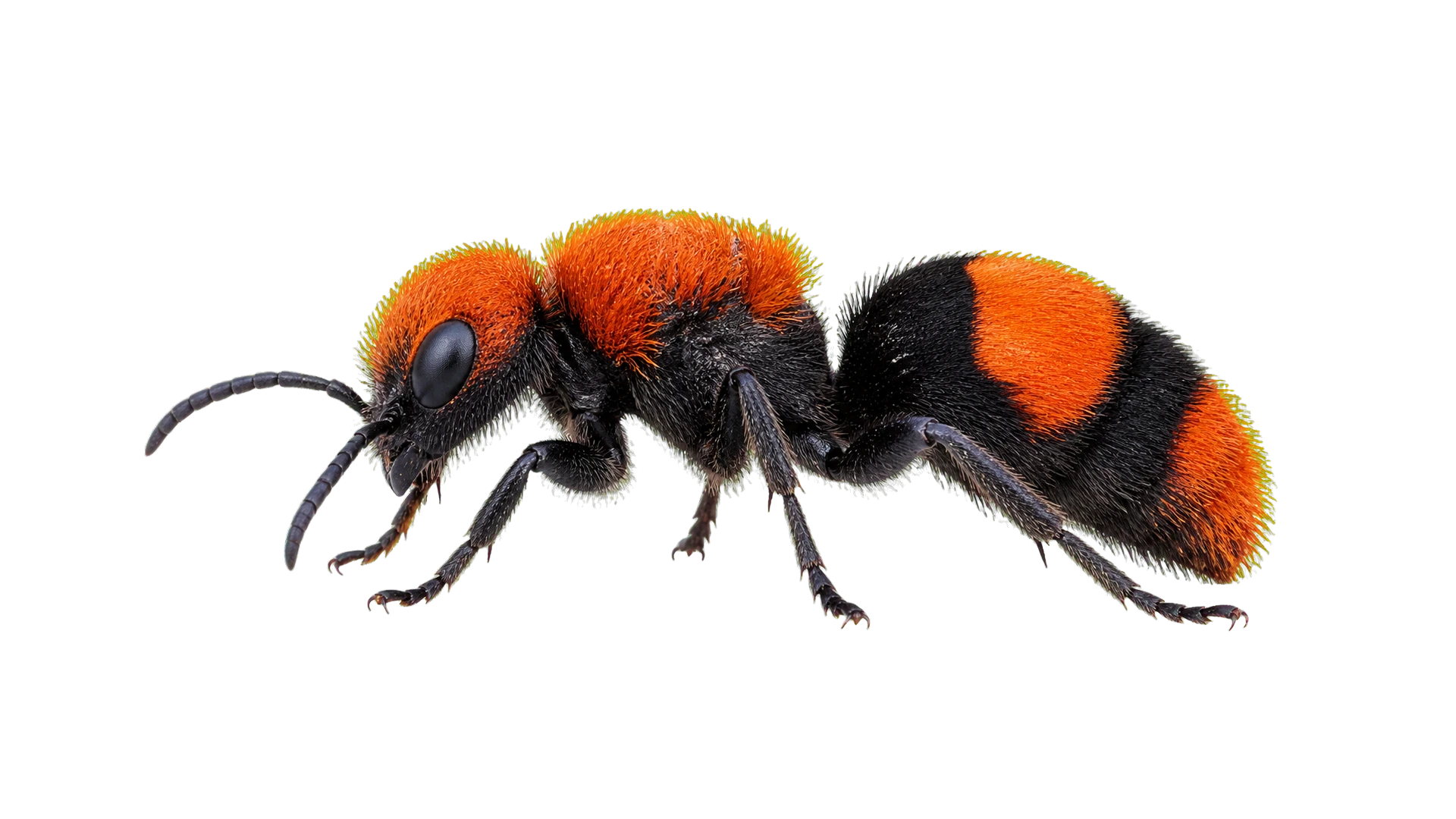
| Velvet Ants | Medical | Brightly colored fuzzy insect running on ground, extremely painful sting | sandy soil, lawns, pastures |
| Wood Wasps | Structural | Round exit holes in dead or dying trees, loud buzzing during oviposition | lumber, log homes, firewood |
| Yellow Jackets | Medical | Ground-level nests with heavy traffic, aggressive near food at outdoor events | underground, wall voids, attics |
Severity reflects typical impact, not your specific case. If unsure, treat at the higher tier.
Honest read on common DIY methods and where each one helps or hurts.

 Treat 30 to 60 minutes after sunset when foragers have returned Use a jet aerosol from 8 to 10 feet, soak the nest, and step back Knock the empty nest down 24 hours later so a queen does not reuse it Insecticidal dust applied at the entrance is carried back into the colony Workers track dust onto comb and brood, killing the entire population over 2 to 3 days The single best tool for the most aggressive nest situations Watch eaves and shed corners in April and early May for solo founding queens A founding queen building alone is the easiest possible removal One April minute of attention prevents a September emergency
  Foragers are out and the nest is at peak defensive readiness Provokes mass attack rather than knocking down the colony Most stings happen during this exact mistake Fire hazard with no real control benefit Trapped colony chews into living space through drywall Often pushes hundreds of wasps directly into the home Traps catch foragers but do not affect the queen or brood Population rebuilds within days as new workers emerge Useful as monitoring; not a removal solution
 Six prevention moves sorted by effort and timing. Stack two or three for meaningful reduction season over season.

Inspect every soffit, shed corner, and play set for solo founding queens before the colony scales. A 10-minute walk in April can prevent every nest issue you face by August.

Tight-fitting lids on garbage and recycling bins, plus rinsed cans that go in the recycling. Removes a major late-summer food source for yellowjacket foragers from August onward.

Yellowjackets crawl into open soda cans, beer cans, and juice glasses in late summer. Use lids or cups with straws during August and September to avoid mouth and throat stings.
Replace torn vent screens before March. Yellowjacket and paper wasp queens use these openings to access attic and soffit voids for spring nest sites every year.

Caulk cracks behind shutters, around fascia trim, and at dryer vents. These 1/4-inch gaps are typical entry points for yellowjacket wall-void colonies.

Pro residual on eaves, soffits, and shed corners in April or May discourages founding queens from establishing nests on the structure. Single highest-ROI step for chronic-pressure properties.
Wasp threat is not constant. Pressure scales with colony age, and most stinging incidents cluster in just a few weeks.
Founding queens scout sites and start small nests. This is the easiest control window of the year. April through May is the cheapest minute of pest attention you will spend.
Workers expand colonies and nests become visible to homeowners. Defensive behavior is moderate. Most accessible paper wasp nests are best treated now while colonies are still small to mid-size.
Late-summer through early fall is peak threat. Colonies are largest, food-stressed, and aggressive. Most ER sting visits and almost all severe incidents happen during this window.
Workers and males die off; only mated queens overwinter in protected spots like loose bark or attic insulation. Nest material becomes brittle and can be removed safely once empty.
Four steps from arrival to a treated nest. Most single-nest visits run 30 to 60 minutes; multi-nest properties run longer.
ID, locate, treat at dusk, follow up. Real wasp work is timed for low aggression and matched to species. Daytime spray-and-pray is the wrong tool for any serious nest.
Confirm paper wasp vs yellowjacket vs mud dauber vs cicada killer. Each species changes the gear, the timing, and whether removal is even necessary.
For void and ground colonies, the entrance is rarely where homeowners think. Watching foragers come and go for 5 minutes pinpoints the exact treatment target.
Jet aerosol for accessible paper wasp combs. Insecticidal dust at the entrance for ground and void yellowjackets. Protective gear and a deliberate retreat path are standard.
Activity stops within 24 to 72 hours. After confirmed zero traffic, the nest is removed where accessible and the entry sealed so next year's queen cannot reuse it.
Stories from households who connected with pros for paper wasp combs, yellowjacket ground nests, and wall-void colonies.

"Wasp nests removed from every eave."
Every summer, wasps would build nests around our roof and porch. The tech removed the nests safely and treated the areas to discourage rebuilding. They explained the seasonal pattern so we know when to watch for activity.
"Wasp nests removed from every eave."
Every summer, wasps would build nests around our roof and porch. The tech removed the nests safely and treated the areas to discourage rebuilding. They explained the seasonal pattern so we know when to watch for activity.

"Wasps removed from the wall cavity."
We noticed wasps entering a gap near the soffit. The provider carefully removed the nest from inside the wall cavity and sealed the opening. They were calm and methodical throughout the whole process.

"Large wasp nest safely removed."
We didn't notice the wasp nest until it was large enough to be dangerous. The provider removed it safely and treated the area to prevent rebuilding. They explained that catching nests early makes removal much easier.

"Porch wasps moved on for good."
Every summer, wasps would rebuild nests under our porch roof. The provider removed the nest, treated the area, and explained what conditions attract them. Adjusting the area made them choose elsewhere.

"Eave wasp nests cleared and deterred."
Every summer, wasps built nests under our roof eaves. The tech removed the nests and treated the area with a deterrent. They explained the nesting cycle so we could catch new activity earlier.

"Cabin eave wasp nests cleared and deterred."
Every summer, wasps would build large nests under our cabin eaves. The crew removed them and treated the area to deter rebuilding. They explained the nesting cycle so we could catch new activity earlier in the season.

"Spring wasp nests removed before they spread."
Every spring, paper wasps would appear under the eaves and near the porch lights. The pro removed the nests and treated the areas to discourage rebuilding. They explained the nesting patterns so we know when to watch for early activity.

"Shed wall wasps removed and sealed out."
We discovered a wasp nest inside the wall of our storage shed. The pro removed the colony and sealed the gap they used for access. They recommended checking outbuildings each spring before nests get established.

"Patio wasp nests cleared and prevented."
Every summer, wasps nested under the patio cover and made outdoor dining impossible. The crew removed the nests and treated the wood with a deterrent. They explained the timing for early-season prevention before colonies establish.

"Soffit wasp colony removed and sealed."
A wasp colony established itself inside the soffit above our front door. The crew removed the nest and sealed the opening. They explained that Colorado's warm days and cool nights make soffits attractive nesting spots for wasps.

"Pool-deck wasps removed and area treated."
Yellow jackets built a ground nest near our pool and were stinging guests. The pro located and removed the nest and treated the surrounding area. They explained how sweet drinks and food attract yellow jackets to outdoor entertaining areas.

"Mailbox post cleared of wasps."
Paper wasps built a nest inside the hollow mailbox post and stung the mail carrier. The pro removed the nest and treated the post. They recommended checking hollow posts and fixtures each spring before colonies establish.

"Light fixtures cleared of wasp nests."
Every spring, wasps would nest inside the porch light covers. The provider removed the nests and treated the fixtures with a deterrent. Switching to yellow-tinted bulbs also reduced the insect activity that attracts wasps.

"Deck made safe again, wasps cleared."
Wasps built nests between the deck boards and joists, making it dangerous to walk barefoot. The provider removed the nests and treated the undersides of the boards. Annual spring treatments have kept the deck wasp-free since.

"Storage closet cleared of wasp colony."
A paper wasp colony had established inside our lanai storage closet. The provider removed the nest and treated the area. They recommended checking enclosed outdoor spaces monthly since Hawaii's warm climate allows year-round nesting.

"Patio furniture wasps cleared safely."
Paper wasps nested under our outdoor dining set and we didn't notice until someone was stung. The provider removed the nests and treated the patio area. They recommended checking under furniture and planters in spring.

"Swing set wasps removed and sealed out."
A wasp colony built inside the hollow posts of our kids' swing set. The provider removed the nest and sealed the open tube ends. They recommended inspecting play equipment each spring before kids start using it.

"Front walkway wasp ground nest removed."
Yellow jackets built a nest in the ground near our front walkway and were stinging visitors. The provider located the nest entrance and removed the colony. They treated the area to deter rebuilding.

"Shed yellow jacket colony safely removed."
A yellow jacket colony grew under the garden shed and we couldn't mow near it. The provider removed the nest and treated the ground. They recommended checking under sheds and decks in early spring to catch colonies before they grow.

"Trash area cleared of swarming wasps."
Wasps were constantly around the trash cans making it dangerous to take out the garbage. The provider removed nearby nests and treated the area. They recommended tightly sealed lids and rinsing cans regularly.

"Grill cover nest removed and area treated."
We lifted the grill cover and found a wasp nest inside. The provider removed it and treated the patio area. They suggested storing the grill cover inside or checking before each use during warm months.

"Attic vents screened and wasps cleared."
Wasps built nests inside the attic gable vents. The provider removed the colonies and installed mesh screens over the vents. They recommended checking vents each spring to prevent new colonies from establishing.

"Garage ceiling wasp nest cleared safely."
A large paper wasp nest formed on the garage ceiling near the opener. The provider removed it and treated the area. They recommended checking the garage each spring before nests get large enough to be dangerous.

"Swing set cleared and sealed safely."
A wasp colony built inside the hollow beam of the swing set. The provider removed the nest and sealed the openings. They suggested checking play equipment each spring before the kids start using it.

"Patio ground nest located and removed."
Yellow jackets built a ground nest under the patio pavers. The provider located and removed the nest. They treated the surrounding area and explained why ground nests are harder to spot than aerial ones.

"Boat dock wasps cleared each summer."
Paper wasps built nests under the dock every summer. The provider removed the nests and treated the structure. They recommended spring inspections before the dock gets heavy use.

"Garage door tracks cleared of wasp nests."
Paper wasps built nests in the garage door track channels. The provider removed the nests and treated the track areas. They recommended checking the tracks each spring before the first use of the season.

"Carport kept wasp-free with annual treatment."
Multiple wasp nests appeared in the carport ceiling every summer. The provider removed them and treated the ceiling. Annual spring treatment before nesting season begins has kept the carport wasp-free.

"Mailbox nest cleared and area treated."
A small wasp colony built inside our mailbox and the mail carrier was stung. The provider removed the nest and treated the area. Checking the mailbox in spring before nesting season prevents a repeat.

"Cabin eaves cleared of wasp nests."
Paper wasps built nests under every eave of our cabin. The provider removed the nests and treated the wood. Spring inspections before cabin season prevent surprises.

"Shed walls cleared and sealed against wasps."
Opened the shed door to grab the weed whacker and a steady stream of paper wasps came pouring out of a knothole. I shut that door fast. The tech treated the wall cavity, removed the nest, and caulked every gap he could find. Annual spring checks are now on my calendar so I do not get surprised again.

"Irrigation valve box cleared of wasps."
Yellow jackets built a nest inside the irrigation valve box and were stinging when we adjusted sprinklers. The provider removed the colony and treated the box. Checking valve boxes before irrigation season prevents surprises.

"Attic vent cleared and screened against wasps."
Wasps streaming in and out of the gable vent all afternoon, you could see them from the driveway. The tech suited up, removed a softball-sized nest from inside the attic, and installed fine mesh screening across both gable vents. He suggested I check them every spring before things warm up. Two seasons later, no wasps.

"Front step ground nest located and removed."
Yellow jackets built a ground nest near the front steps and were stinging visitors. The provider located the nest entrance and eliminated the colony. They treated the surrounding area to deter rebuilding.

"Stucco weep holes screened against wasps."
Wasps entered through stucco weep screeds and built nests inside the wall cavity. The provider treated the cavity and installed mesh screens over the weep openings. Annual checks prevent recurrence.

"Deck stair ground nest located and removed."
Yellow jackets built a ground nest near the deck stairs. The provider removed the colony and treated the surrounding area. They explained ground-nest behavior and how to spot early signs.

"Shutter wasp nests cleared and treated."
Paper wasps built nests behind the decorative shutters on the front of the house. The provider removed the nests and treated the shutter mounting areas. Checking behind shutters each spring prevents new colonies.

"Garage ceiling wasp nest removed safely."
Pulled the garage door opener cord one Saturday and heard the buzz before I saw the football-sized nest in the corner of the ceiling. I quietly backed out. The tech suited up, removed the whole thing, and treated the framing. He told me to do a spring walkthrough every year before the garage gets regular use. Adding it to my March checklist.

"Soffit cleared and opening sealed."
Standing at the front door dropping off Halloween candy with the kids, a wasp landed on my hand. Then another. Looked up and saw a steady stream going in and out of a gap in the soffit. The tech came the next morning, suited up, removed the nest from inside, and caulked the gap. Two seasons in and the soffit is still tight.

"Pool deck ground nest located and removed."
My nephew got stung four times in two minutes during a Memorial Day pool party. We thought it was one wasp until we noticed the steady stream coming up from a hole near the umbrella stand. The tech came out the next morning, knocked out the ground nest, and treated the surrounding area. He talked us through keeping drinks covered and away from the entry. No stings since.
Direct answers to the questions homeowners ask most before deciding to treat a nest themselves or call for help.
Look at where the nest is and what it looks like. Paper wasps build small open umbrella-shaped combs that hang from a single stalk under eaves, soffits, deck rails, or shed corners; you can see the cells from below. Yellowjackets build enclosed nests inside wall voids, attics, ground holes, or dense shrubs, so the only thing visible from outside is steady wasp traffic at a small entry point. Behavior also separates them: paper wasps are slow-flying and only sting when the nest is bumped or sprayed; yellowjackets are fast, aggressive, and will pursue intruders for considerable distances, especially in late summer. The species matters because the safe treatment approach is different for each.
Two windows work well. The first is early spring (April or early May) when an overwintered queen is starting the nest alone. At that stage the nest is the size of a quarter and holds one wasp, so removal is trivial and you head off the entire summer's colony. The second window is dusk, 30 to 60 minutes after sunset, once foragers have returned for the night and the colony is calm and clustered on the comb. Daytime treatment is the worst choice: foragers are still arriving from outside, the colony is at peak defensive readiness, and most stings happen during exactly this mistake. Cold mornings below 50 degrees Fahrenheit are also reasonable for accessible paper wasp combs because wasps are slow until the sun warms them.
Yes, but the risk profile is different. A single sting from a non-allergic person causes localized pain, redness, and swelling that resolves in a day or two. The serious concern in non-allergic people is multiple stings from a defended yellowjacket nest: dozens of stings can cause systemic toxic reactions even without true allergy, and stings near the airway (mouth, throat, eyes) can trigger swelling that compromises breathing. Children, elderly adults, and people on blood thinners face elevated risk from multi-sting events. About 10 to 15 percent of people will develop a true allergy after enough exposure, so a household that has never had a reaction should still take active nests seriously. The cost-benefit math almost always favors removing nests near doorways, decks, and play areas regardless of current allergy status.
The same nest is not reused, but the same location often is. Wasp colonies die out every fall (only mated queens overwinter, and they start fresh nests in spring), so the physical comb from this year does not get reoccupied. However, queens scout and select sites that worked in previous years, which means a soffit, eave, or vent that hosted a nest this year is statistically more likely to host one next spring. Knocking down empty nests in late fall or winter does help break the visual cue, but the bigger factor is sealing the structural opening (vent screen, shutter gap, soffit crack) and applying a residual treatment to the spot in early spring. Properties with chronic wasp issues usually have one or two specific architectural details that make them attractive year after year.
They catch wasps but they do not solve a nest. Pheromone or sweet-bait traps capture foraging workers, and over weeks they can reduce the visible foraging pressure in the immediate yard. They do not affect the queen or developing brood inside the nest, so the colony continues producing new workers at full speed. For prevention purposes, traps placed in early spring can intercept a small number of founding queens before they nest, which is a modest help. For an active colony already established, traps are essentially a monitoring tool, not a control tool. The colony has to be treated at the nest to actually solve the problem; traps are at best a complement to nest removal, not a substitute for it.
Walk away calmly in a straight line, do not swat or run erratically, and get inside or into a vehicle as quickly as you can. Wasps emit alarm pheromones when threatened that recruit more wasps, so the longer you stay near the nest the more wasps arrive. Cover your face and head with your shirt or your arms; wasps target faces and necks. Do not jump in water; some species (especially yellowjackets) will wait at the surface for you to come up. Once safe, ice the stings to reduce swelling, take an antihistamine, and watch for signs of allergic reaction (difficulty breathing, swelling away from the sting site, dizziness). Multiple stings or any systemic symptoms warrant emergency medical attention. Mark the nest location and have it treated; it will not stop being a hazard on its own.
Generally yes, both are net-positive yard insects with very low sting risk. Mud daubers are solitary wasps that build clay tube nests on walls, ceilings, and behind shutters, then stock each tube with paralyzed spiders for their developing larvae. They do not defend the nest, do not form colonies, and almost never sting humans. Cicada killers are very large solitary ground wasps that hunt cicadas. Females sting cicadas to provision burrows but ignore people; males have no stinger at all and just hover aggressively at each other. Both species are pollinators or pest controllers that are removed mostly for cosmetic reasons. If a mud dauber tube is in an awkward spot, scrape it off after the wasp has finished sealing it. If cicada killers are tearing up the lawn, focus on improving turf density rather than treating; they cycle through in a few weeks and rarely need intervention.
Identify the species, treat the nest at the right time of day, seal the entry. Local pros handle ground and void colonies the safe way.
Click through to species pages for paper wasps, yellowjackets, mud daubers, cicada killers, and more.
Slender wasps that build open-celled, umbrella-shaped nests under overhangs.
Paper wasps build small, open-faced nests that hang from eaves, porch ceilings, playground equipment, and fence rails. They are less aggressive than yellow jackets but will sting if they feel their nest is threatened. Nests are often discovered when they've already grown to contain dozens of wasps, making early-season monitoring and removal the safest management approach.
Quick ID:
Why it matters:
Aggressive ground-nesting wasps responsible for most wasp stings in the United States.
Yellow jackets build large underground colonies in old rodent burrows, as well as in wall voids and attic spaces. They are the most aggressive common wasp species, especially in late summer when colonies peak and food becomes scarce. They frequently disrupt outdoor dining, picnics, and garbage areas. Underground nests are particularly hazardous because they may be accidentally disturbed by mowing or foot traffic.
Quick ID:
Why it matters:
Giant solitary wasps that dig burrows in lawns and sandy soil.
Cicada killer wasps are among the largest wasps in North America, females reach nearly two inches long. They dig large burrows in lawns, flower beds, and along sidewalks, provisioning each tunnel with paralyzed cicadas for their larvae. While generally non-aggressive toward people, their intimidating size and buzzing flights near the ground cause significant alarm, and their burrowing can undermine pavement and landscape features.
Quick ID:
Why it matters:
Fuzzy, wingless wasps with an extremely painful sting.
Velvet ants are actually solitary wasps, the wingless females resemble large, densely furred ants in bright orange, red, or white. They wander across lawns and sandy areas searching for ground-nesting bee and wasp burrows to parasitize. Their sting ranks among the most painful of any North American insect, and their tough exoskeleton makes them nearly impossible to crush.
Quick ID:
Why it matters:
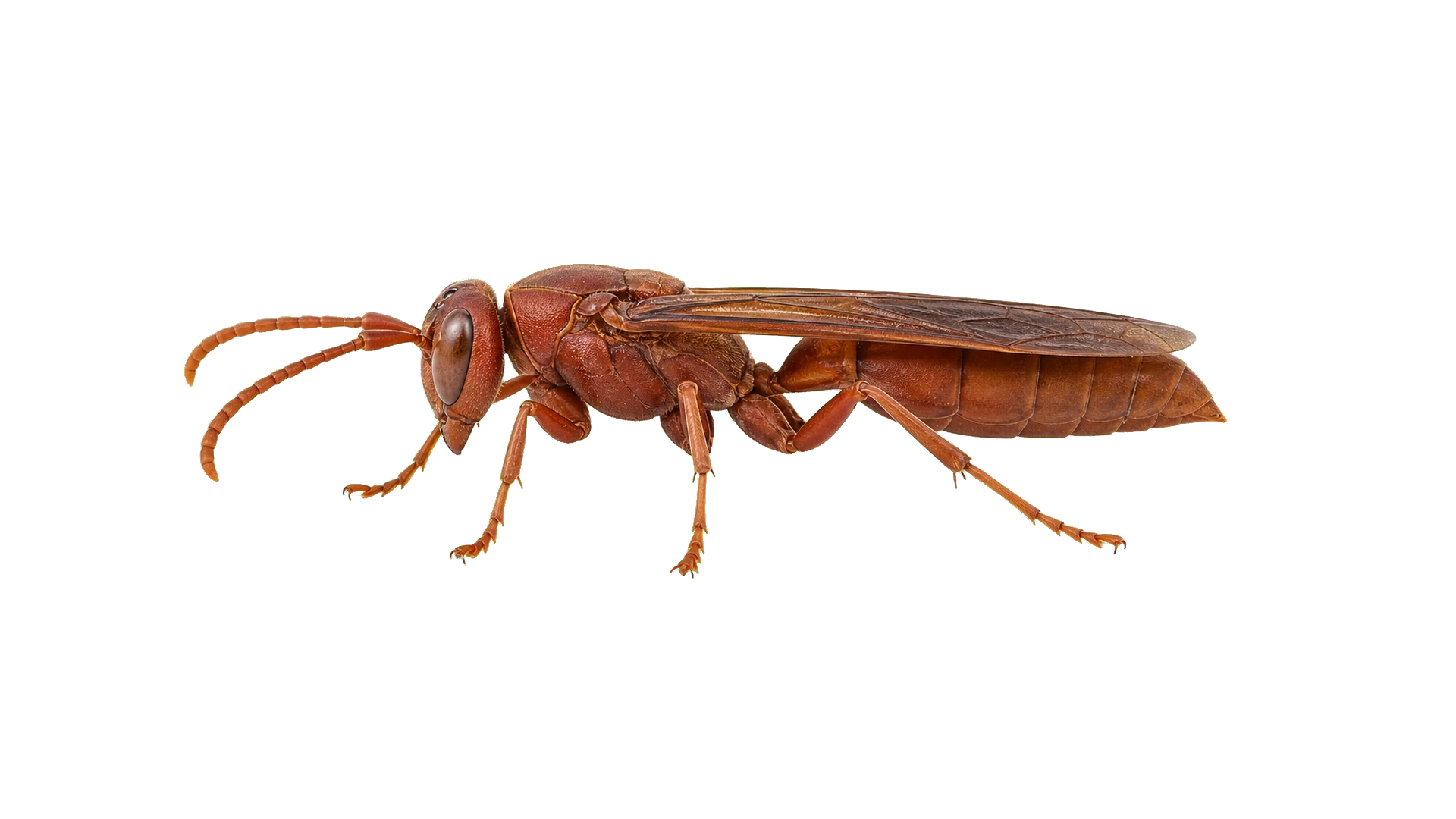
Bright red paper wasps with a painful sting common across the South.
Red wasps are a species of paper wasp distinguished by their reddish-brown body color. They build open-comb nests under eaves, in carports, behind shutters, and inside outdoor equipment. Their sting is notably more painful than other paper wasp species, and they are more aggressive when their nest is approached. Nests are common on homes throughout the southern and central United States.
Quick ID:
Why it matters:
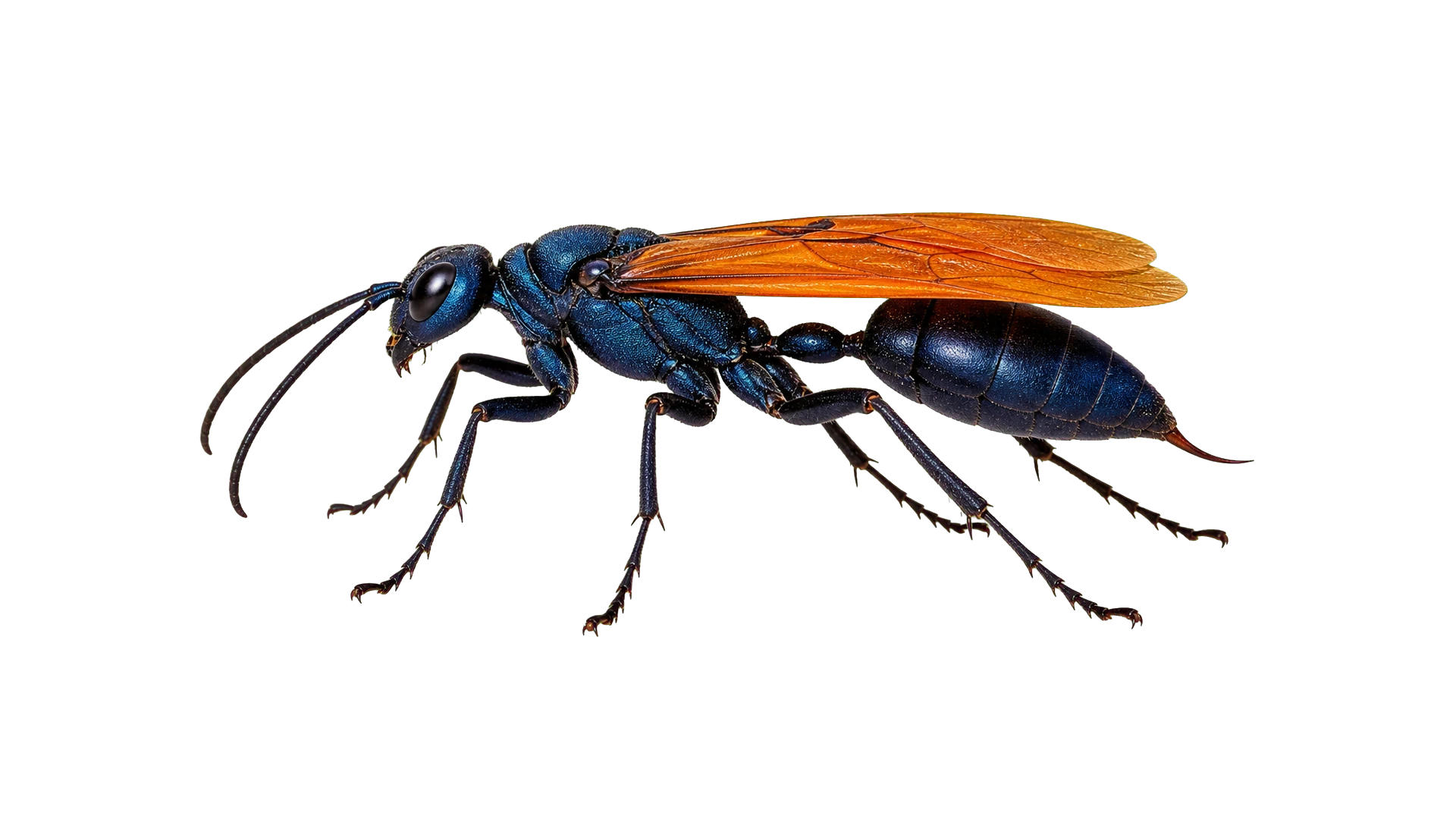
Giant wasps with one of the most painful stings of any insect.
Tarantula hawks are large, iridescent blue-black wasps that hunt tarantulas to provision their nests. They deliver one of the most painful insect stings recorded, though the intense pain is brief and the sting is not medically dangerous to most people. They are solitary and generally non-aggressive, but their enormous size and low, buzzing flights across yards and patios cause understandable alarm.
Quick ID:
Why it matters:
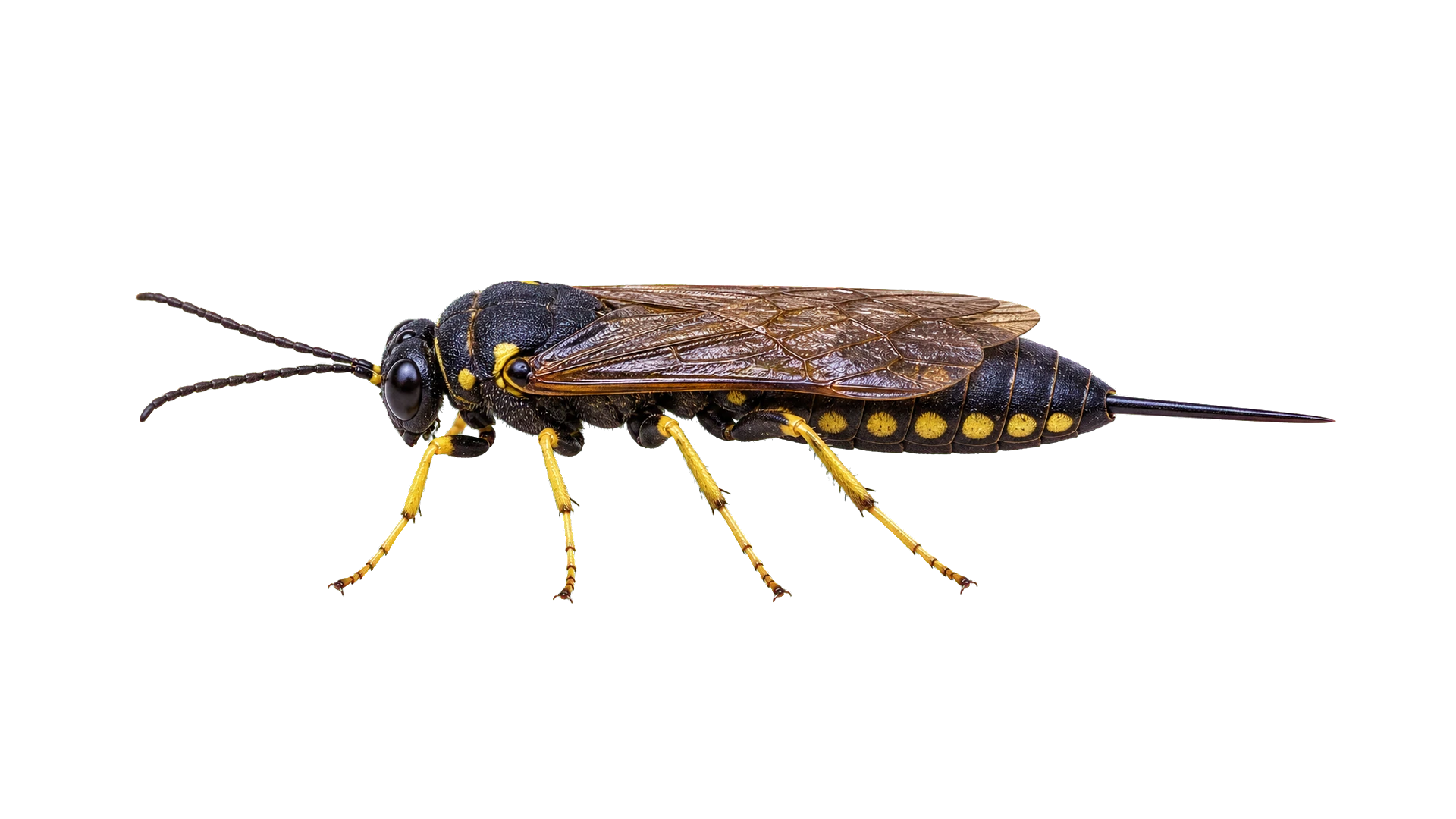
Large wasps that bore into wood to lay eggs inside trees and lumber.
Wood wasps, also called horntails, use a long, needle-like ovipositor to drill into dead or dying trees, untreated lumber, and sometimes structural wood to deposit eggs. Larvae tunnel through the wood for one to two years before emerging as adults, occasionally exiting through finished walls, floors, and furniture. They do not sting, but their emergence holes indicate wood was infested before it was milled or installed.
Quick ID:
Why it matters: