Local pest control help is one call away.

Paper Wasp: Identification, Treatment & Prevention

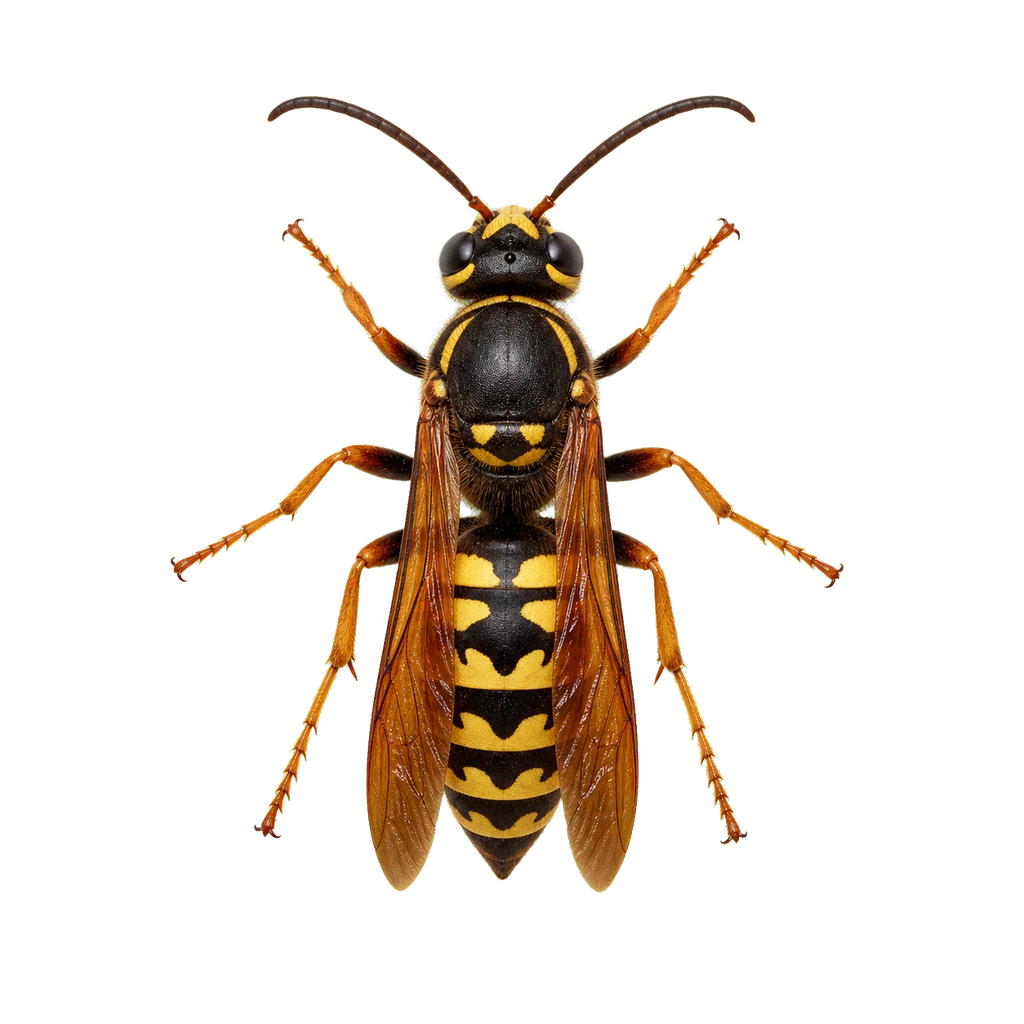
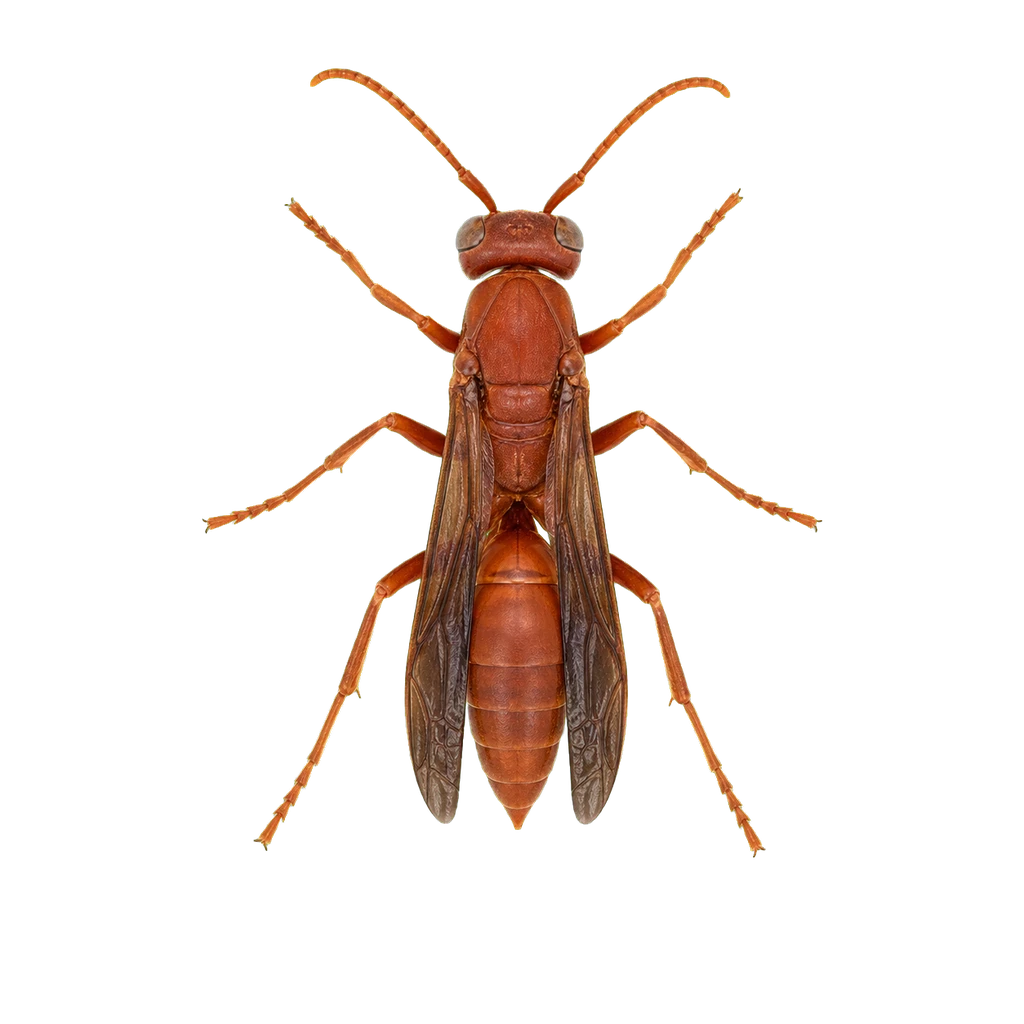
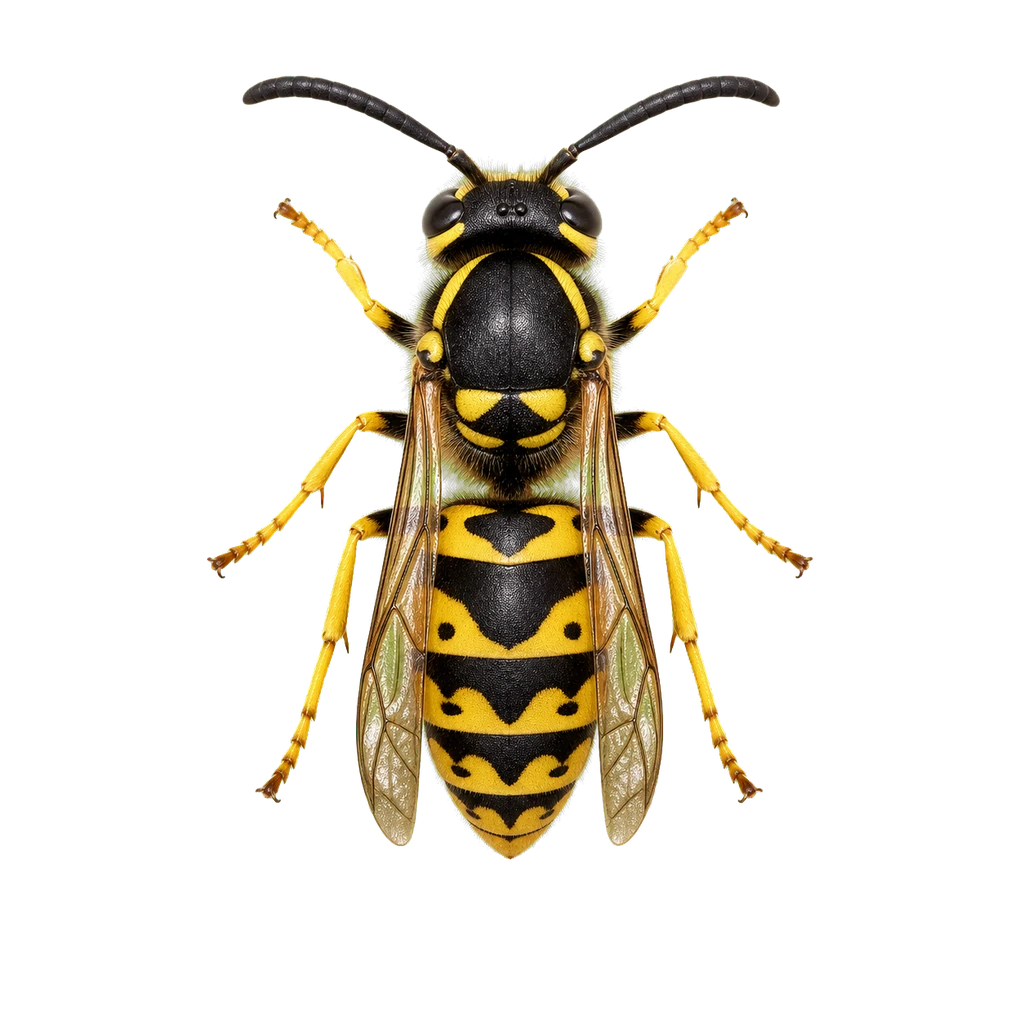
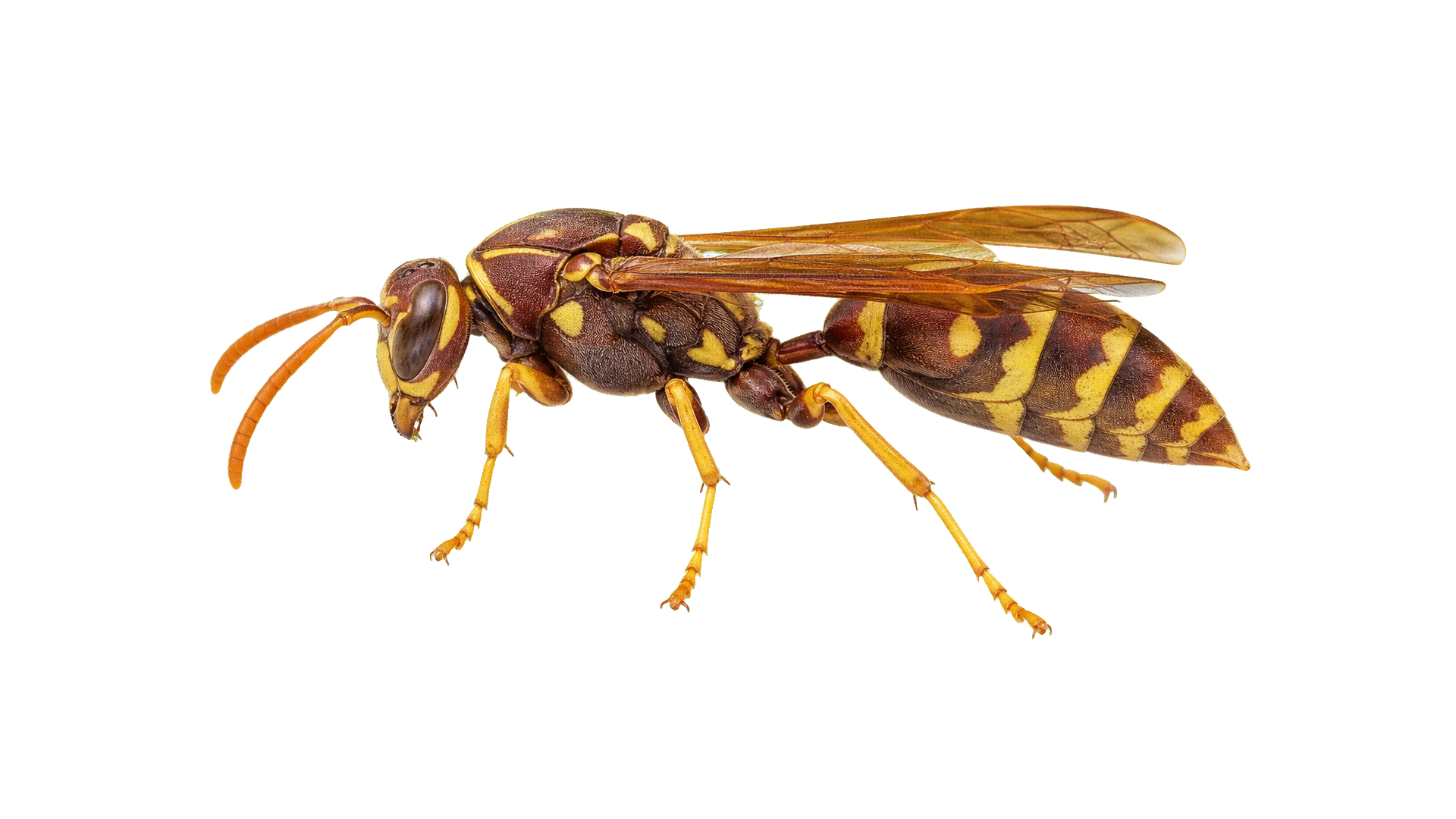
Paper wasps are slim wasps about 5/8 to 1 inch long (16 to 25 mm) with banded brown, red, and yellow patterns. The easiest way to tell them apart from yellow jackets is the legs, paper wasps fly with their long back legs dangling down below the body, while yellow jackets tuck their legs up tight. The other dead giveaway is the nest, paper wasps build an open umbrella-shaped paper comb that hangs from a single stalk, with the hexagonal cells facing down for anyone to see.

If you're seeing a small gray paper comb under your eave, soffit, deck rail, or mailbox, with a handful of slim long-legged wasps perched on the open cells, you have paper wasps. This guide covers how to tell them apart from yellow jackets, why they sting only when the nest is bumped within 3 to 6 feet, why they're actually helpful in the garden, and when a small nest can be sprayed at dusk versus when you need a pro.

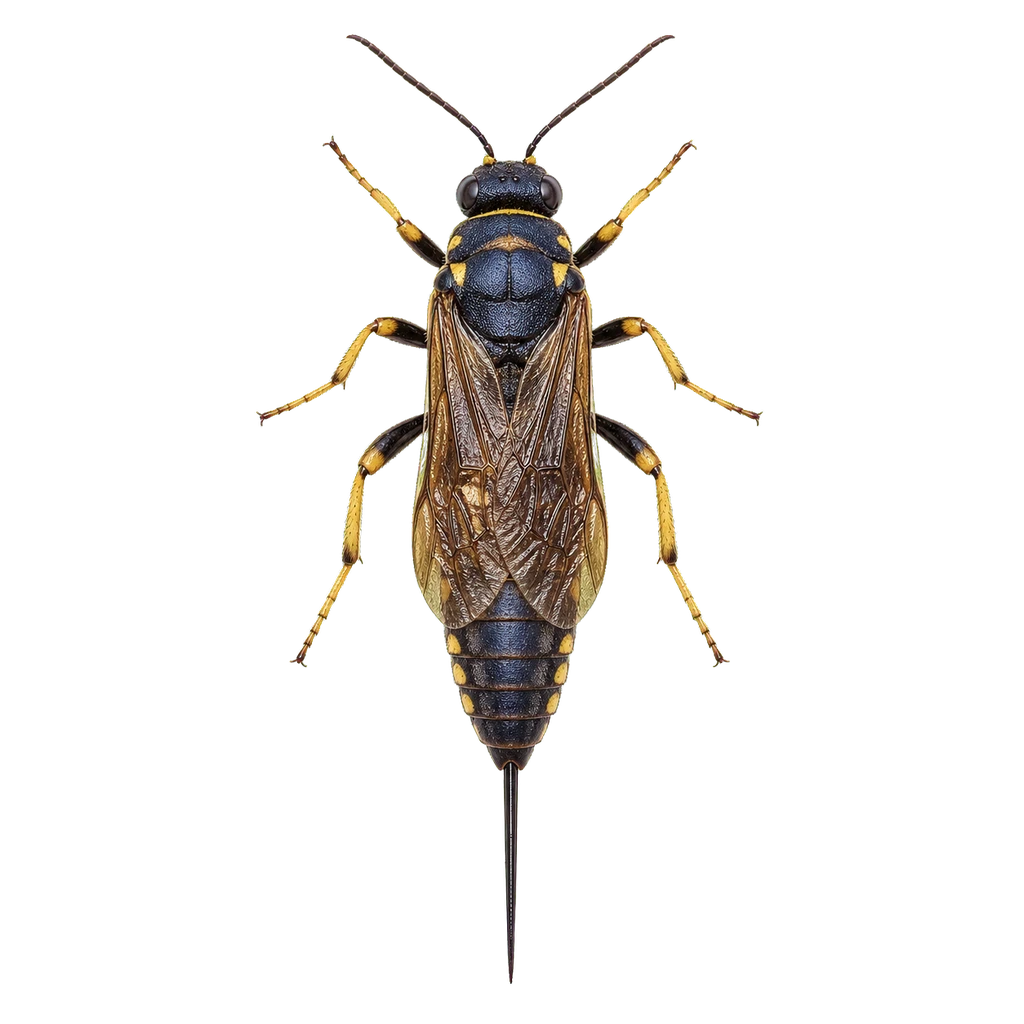
Close-up illustration of a paper wasp showing slim banded body, narrow waist, and the long back legs that dangle in flight

ID Card: Paper Wasp

Scientific name
Polistes spp.
Color
Brown, yellow
Size
5/8 to 1 inch
Body shape
Slender body with narrow waist and long legs that dangle in flight
Antennae
Long, slightly curved, 12-13 segments
Key evidence
Open-faced umbrella-shaped paper nests under eaves and porch ceilings
Also known as
Umbrella wasps

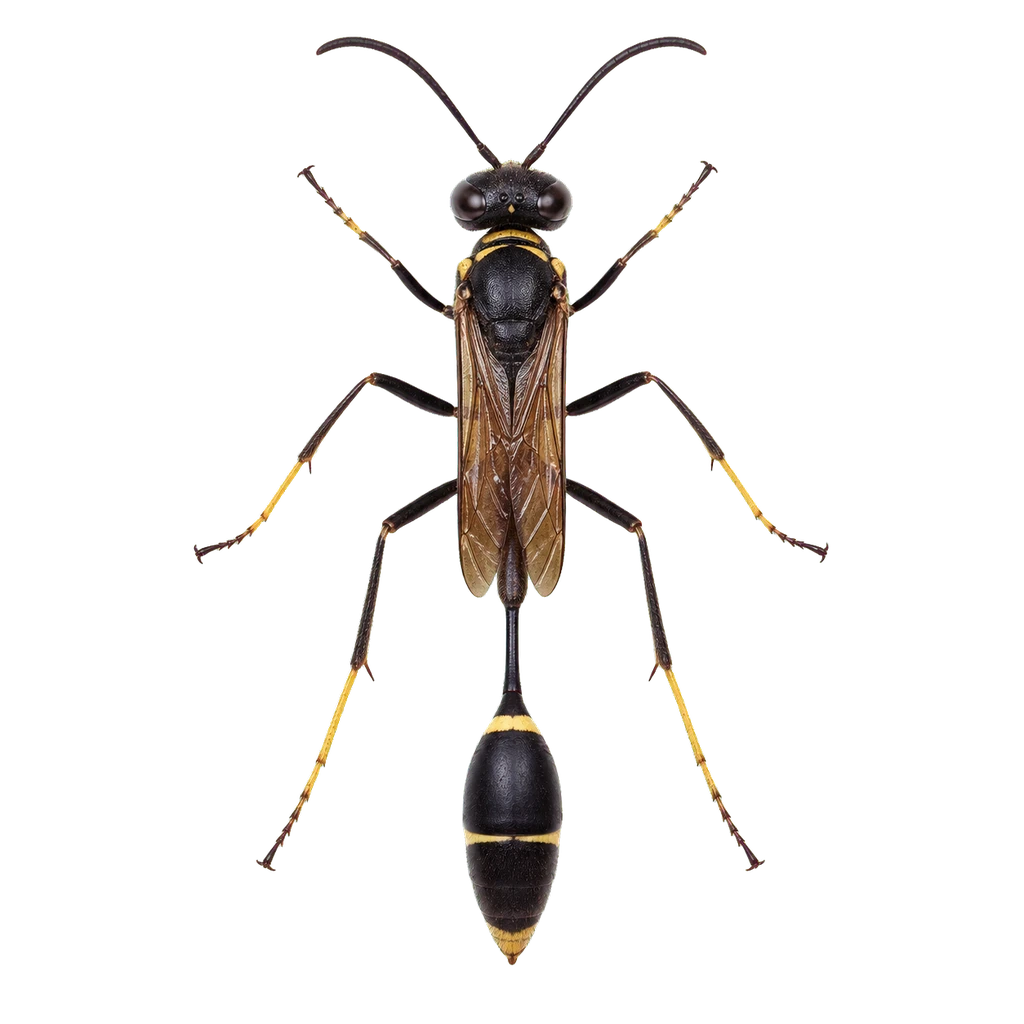
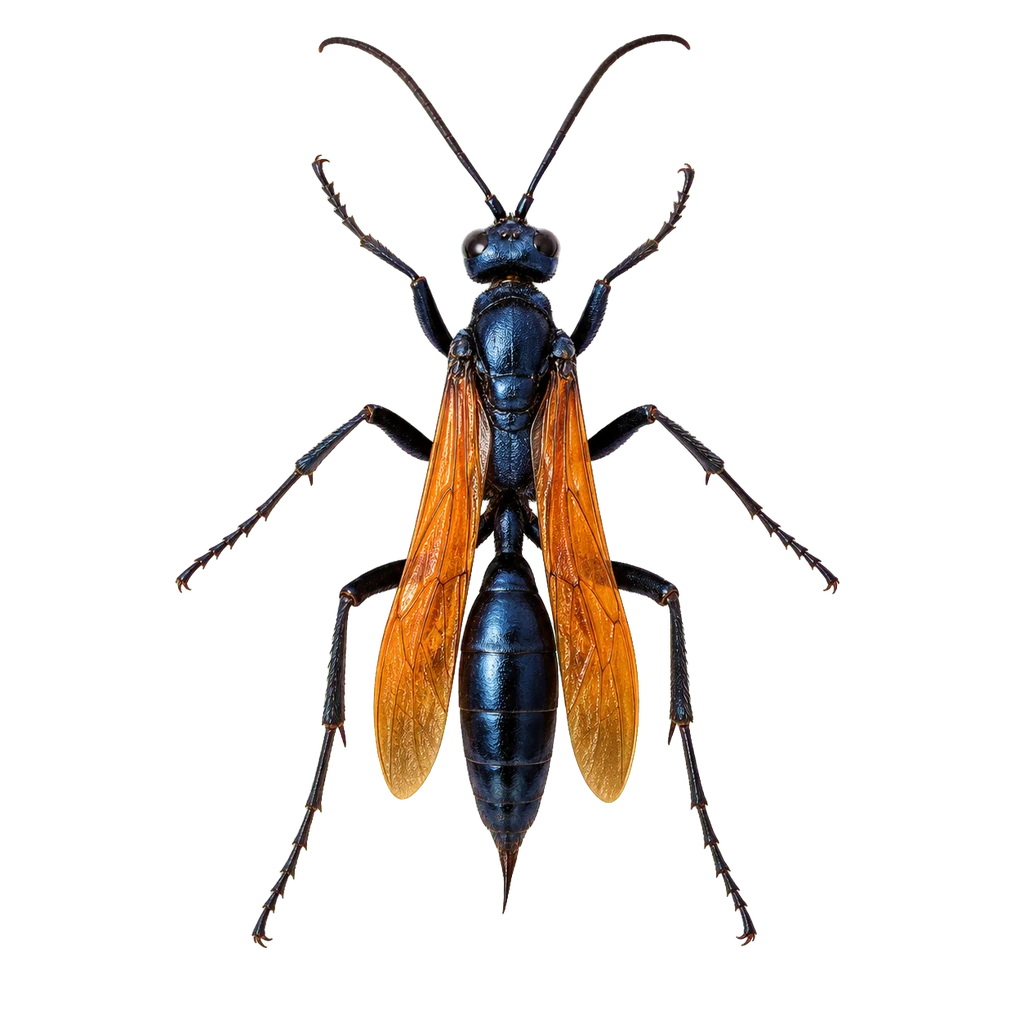
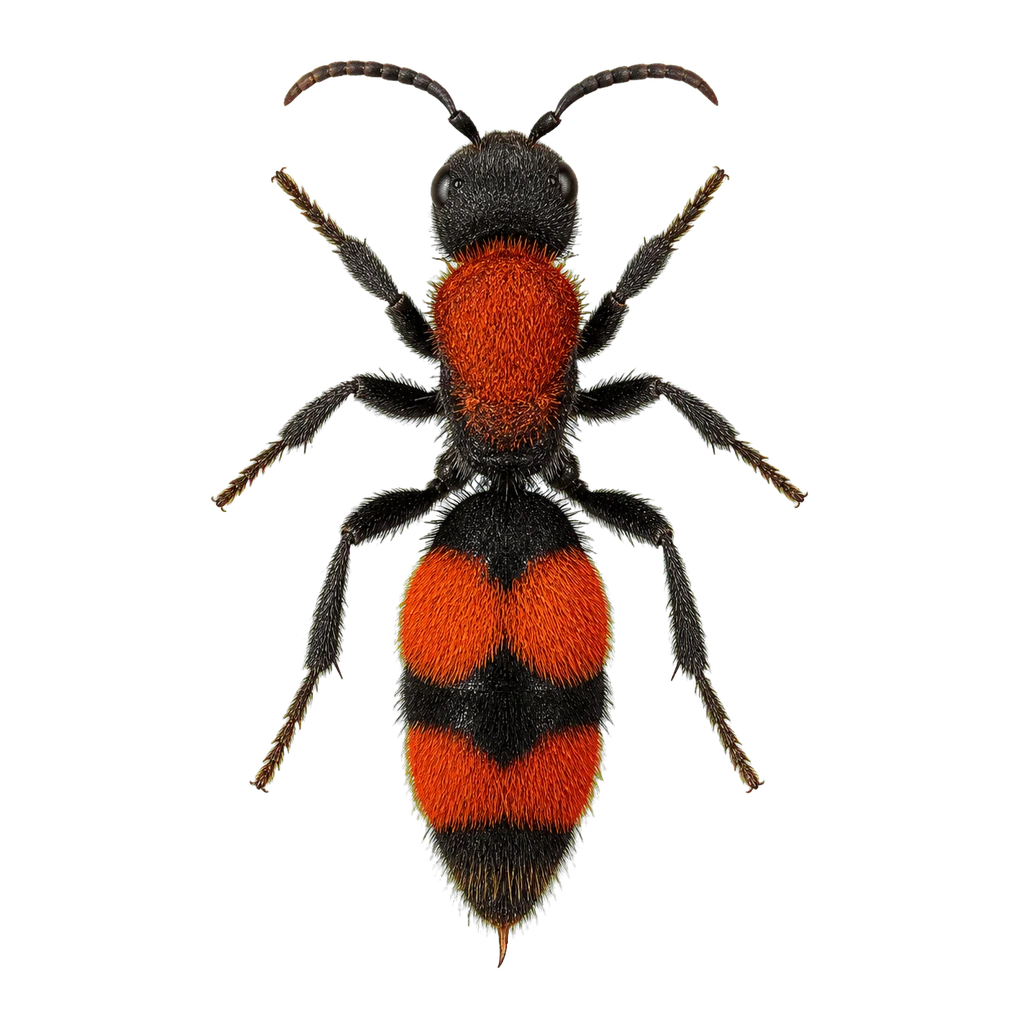
Related Species

Call to get matched with a local pest control pro.

Available 24/7
(888) 495-1510
  • Specialists who treat at dusk in protective gear, not mid-day from a ladder
  • Nest removal or relocation, not just a knock-down that triggers stings
  • Eave and soffit inspection to seal the spots that draw next spring's queens

Where to Inspect for Paper Wasp Nests

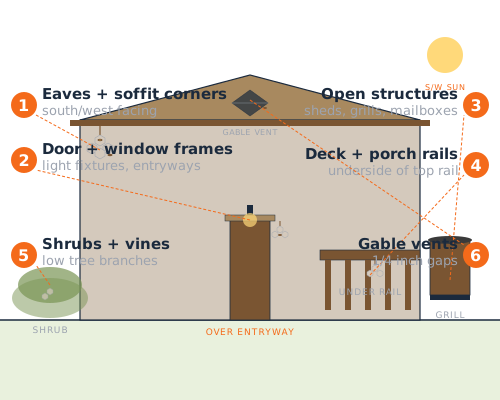
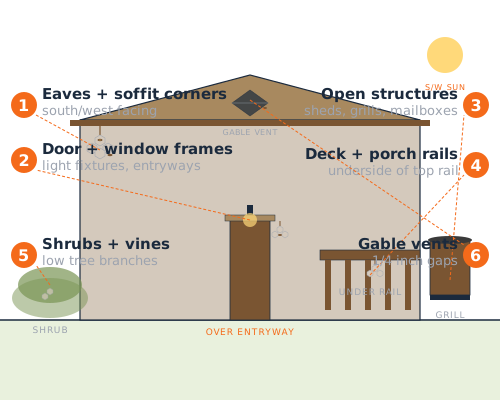
Cross-section illustration showing common paper wasp nest sites, under eaves, in soffit corners, on porch ceilings, under deck rails, and inside mailbox and grill interiors

Paper wasps build in protected outdoor spots that share three things: cover from rain, a flat surface to hang the comb from, and a clear flight path in and out. The umbrella nest hangs from a single stalk, so a walk around the home in late spring catches founding queens while the comb is still golf-ball-sized:

  • Eaves and soffit corners, The most common spot by far. Look up at the corners of the house, especially the south- and west-facing sides where afternoon sun warms the wood and speeds up the queen's work.
  • Attic peaks and exposed rafters, Inside garages, sheds, and unfinished attics. Wasps slip through 1/4-inch vent gaps and build on the underside of the highest beam. You'll see steady traffic at one screen opening on warm days.
  • Deck railings and the underside of the top rail, Easy to miss until you brush the rail and several wasps fly out together. The single-stalk comb is usually tucked right under the cap.
  • Mailboxes, grills, and playground equipment, Stored grills, open mailbox interiors, and the underside of swing sets and forts. The first warm-day grill cook is a classic discovery moment.
  • Outdoor light fixtures and ceiling fan housings, Above entry doors, on porch ceilings, and inside fan housings. This is where most stings happen because people walk under the nest unaware.
  • Door and window frames, shutters, Behind shutters and above door frames where the overhang keeps the comb dry. A nest above a high-traffic door is the highest sting risk on the property.

Nest size tells you the timeline. A walnut-sized comb with one queen in May is a different problem than a fist-sized comb with 30 to 100 workers in August. A small early-season nest in an open spot can sometimes be sprayed at dusk with the right gear, but a mid- to late-summer nest near a doorway, deck, or play area is a stinging incident waiting to happen and warrants a pro.

Cross-section illustration showing common paper wasp nest sites, under eaves, in soffit corners, on porch ceilings, under deck rails, and inside mailbox and grill interiors
Illustration showing how a single overwintered paper wasp queen scouts sheltered eaves and soffits in spring, then builds a single-stalk umbrella comb that grows through summer

Why Do I Have Paper Wasps?

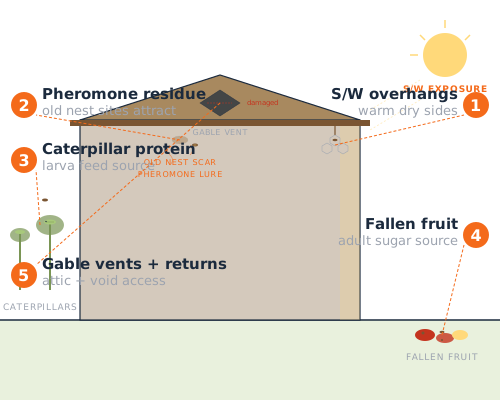
Spotting the nest is step one. Understanding why your eave was picked is what stops the same spot from getting a fresh nest next May. Paper wasps don't pick at random. They look for cover from rain, a flat surface to attach the single nest stalk to, and easy in-and-out access, and queens have great memory for sites that worked in past years.

What draws paper wasps to your home specifically:

  • Sheltered overhangs facing south or west, the warmest, driest sides of the house and exactly what a founding queen is looking for in April and May
  • Plenty of caterpillar prey nearby, paper wasps are major caterpillar hunters and a yard full of tomato hornworms, cabbage worms, and fall webworms is a paper wasp magnet
  • Pheromone trace from past nests, even after you knock a comb down, residual scent on the eave wood signals 'this site worked' to next spring's queens
  • Open gaps into attics and wall voids, gable vents with torn screens or roof returns with 1/4-inch gaps offer a protected interior nesting spot most homeowners never inspect

A new colony starts each spring with one overwintered queen. She comes out of hiding in April or May, picks a spot, and builds the first few cells of the comb by herself. Once the first batch of workers grows up (usually by late June), the queen stops hunting and focuses on laying eggs while the workers expand the comb, catch caterpillars, and defend the nest. By August a healthy colony holds 20 to 200 wasps; by first hard frost the workers and old queen are dead, and only the new mated queens survive winter to start over.

How Serious Is Your Paper Wasp Problem?

Find your scenario below. Each row reflects nest size, location, and how fast the situation can turn into a stinging incident.

What You're Seeing Severity If Untreated Next Step
Small starting nest (3 to 5 wasps, walnut-sized) under an eave away from doors and play areas Early Will reach 20 to 200 workers by August if left, with the sting zone growing as the colony does If the nest is small, isolated, and you're not allergic, spray with hornet/wasp aerosol from 15+ feet at dusk and retreat. Otherwise schedule a pro.
Mature 20+ wasp nest near a walkway, doorway, deck, or grill Moderate Sting zone is now 3 to 6 feet around the nest, mowing, grilling, or door-slamming triggers full-colony defense Schedule a pro within 7 days for an evening visit, do not attempt knock-down on an established colony this close to traffic.
Multiple nests around the property plus a nest inside an attic vent or wall void High Void nests can't be reached with surface spray, and multiple nests mean the property has structural attractants pulling queens in every spring Same-week pro visit with void treatment plus a full eave and soffit seal-up to close the gaps queens are using.
Sting plus allergic family member, OR a nest inside a playground or daily-use area Urgent A single sting can be a medical emergency for allergic people; a nest in play equipment is a stinging incident waiting to happen Get medical attention today for the sting, then call for same-day emergency removal. Keep the area cleared until a pro arrives.
Small starting nest (3 to 5 wasps, walnut-sized) under an eave away from doors and play areas
Severity Early
If Untreated Will reach 20 to 200 workers by August if left, with the sting zone growing as the colony does
Next Step If the nest is small, isolated, and you're not allergic, spray with hornet/wasp aerosol from 15+ feet at dusk and retreat. Otherwise schedule a pro.
Mature 20+ wasp nest near a walkway, doorway, deck, or grill
Severity Moderate
If Untreated Sting zone is now 3 to 6 feet around the nest, mowing, grilling, or door-slamming triggers full-colony defense
Next Step Schedule a pro within 7 days for an evening visit, do not attempt knock-down on an established colony this close to traffic.
Multiple nests around the property plus a nest inside an attic vent or wall void
Severity High
If Untreated Void nests can't be reached with surface spray, and multiple nests mean the property has structural attractants pulling queens in every spring
Next Step Same-week pro visit with void treatment plus a full eave and soffit seal-up to close the gaps queens are using.
Sting plus allergic family member, OR a nest inside a playground or daily-use area
Severity Urgent
If Untreated A single sting can be a medical emergency for allergic people; a nest in play equipment is a stinging incident waiting to happen
Next Step Get medical attention today for the sting, then call for same-day emergency removal. Keep the area cleared until a pro arrives.

Paper wasp nests grow week by week once workers emerge in late June. If you're between two rows, treat the higher one as your situation.

How a Paper Wasp Colony Builds

Paper wasp colonies are annual, the entire population dies at first hard frost except for the new mated queens that hide alone through winter. Knowing where you are in that calendar tells you how big the nest is going to get, how aggressive the colony is going to be, and when removal is easiest.

  1. Egg

    About 12 to 15 days

    The founding queen lays a single egg into each open hexagonal cell. Through April and May she does everything herself, builds the paper, hunts caterpillars, defends, and lays eggs. This is the quietest and easiest moment to remove a nest, and the moment most homeowners haven't even noticed it yet.

  2. Larva

    About 15 to 20 days

    The queen feeds each legless larva chewed-up caterpillar protein. The cells stay open during this stage, so on a small early-season nest you can actually see the white grubs inside if you look up at the comb. This first batch of larvae becomes the colony's first workers.

  3. Pupa

    About 10 to 14 days in capped cells

    The larva spins a silk cap over its cell and pupates. Once you see smooth tan caps on a comb instead of open cells, the first wave of workers is days away from emerging and the colony is about to grow fast.

  4. Adult worker

    Workers live 4 to 6 weeks; the queen lives the full season

    From late June onward, the queen stops foraging and focuses on laying. Workers expand the comb, hunt caterpillars, and defend the nest within a 3- to 6-foot radius. A healthy nest reaches 20 to 200 wasps by August (way smaller than yellow jacket colonies, which run in the thousands). New queens and males are produced in late summer; the workers and old queen die at first frost, and only the new mated queens overwinter under siding, in attic insulation, or in wall voids.

The colony resets every year, so removing a nest in April stops 99 wasps from existing. Removing the same nest in August stops only the workers about to die anyway and does nothing to prevent next year's queens, who are already hiding inside your wall voids by October. Sealing scout-attractive gaps in fall is the part that actually breaks the cycle.

When Paper Wasps Are Most Active

Paper wasp activity follows a tight annual rhythm. The same eave is a different risk in May than in August, and knowing the difference tells you when to walk the perimeter, when to call a pro, and when to leave it alone.

  • Spring

    Overwintered queens come out in April and early May and start the founding nest, a single golf-ball-sized comb with one queen on it. You'll see solitary wasps checking eaves and soffits on warm afternoons. This is the best window for cheap prevention, knock down founding combs at dusk before workers emerge.

  • Summer

    Worker emergence in late June changes everything. The nest grows weekly, the 3- to 6-foot defense zone fills up with wasps, and the foraging radius expands. By late July most homeowners discover the nest the hard way, mowing under an eave, slamming a screen door, or grilling under a porch light. Treatment difficulty climbs with worker count.

  • Fall

    Colonies peak in August and early September, then produce new queens and males. Cooler nights make wasps slower and easier to treat, but they're also at maximum population for the year. Late-season nests near entryways are the highest sting risk of the season. New queens leave the nest to find winter hiding spots.

  • Winter

    Workers and the old queen die at first hard frost. Only new mated queens survive, tucked into attic insulation, wall voids, behind shutters, and under loose bark. They don't sting in winter, but they're already on your property planning next spring's nest. Empty exterior combs should be removed and the entry gaps sealed.

When Paper Wasps Are and Aren't a DIY Job

Worth knowing up front: paper wasps are actually one of the most useful garden insects on the property. They hunt tomato hornworms, cabbage worms, fall webworms, and other soft caterpillars to feed their larvae. A nest in the back corner of the yard, far from doors and play areas, often does more good than harm. And unlike yellow jackets, paper wasps are defensive, not aggressive, they sting only when the nest is bumped within 3 to 6 feet and do not chase passersby. When you can leave them alone or have a pro relocate the nest instead of killing it, that's the better outcome.

A penny-sized comb in May with one queen on it is a five-minute DIY at dusk if you have full sleeves, eye protection, and a long-range hornet/wasp aerosol. That same nest will not get safer in July. The decision flips at worker emergence in late June, when the colony goes from one wasp to 20 to 100 in a matter of weeks and the defense zone grows with every adult that joins.

Spraying a fist-sized August nest from a ladder with a household can is exactly how stinging incidents happen. Foragers return mid-treatment, alarm pheromone triggers full-colony defense, and a wasp can sting multiple times unlike a honeybee. Allergic reactions are a hospital visit, and even non-allergic homeowners commonly take 5 to 15 stings during a botched DIY. Nests inside an attic vent, wall void, or above a second-story window are pro work, not ladder work.

A pro treats at dusk in proper protective equipment, when the entire colony is home and slow. Treatment ends defense in seconds. They then physically remove the comb, scout the rest of the property for additional nests, and inspect attic vents and soffit gaps for the founder colonies homeowners can't easily see. Single-nest removal usually runs $150 to $400, less than yellow jackets because paper wasps drop fast and don't dive at the technician the way yellow jackets do.

What Changes When a Pro Shows Up

Paper wasp work is timed work. A pro shows up at dusk in a bee suit, finds every nest on the property (not just the one you saw), treats them in the right order, and seals the spots that drew this year's queens. Single-nest removal usually runs $150 to $400, less than yellow jackets because paper wasps are less aggressive once the colony is down.

Pest control technicians after completing a paper wasp removal service
  • Local Pest Control
  • 24/7 Availability
  • Quality Workmanship
  • Eco‑Friendly Options
  • Trusted by Homeowners
  • Finds Every Nest, Not Just the One You Spotted

    A flashlight walk catches the second and third nests homeowners almost always miss, under the back deck rail, inside the gable vent, on the swing set crossbar. One missed nest means a stinging surprise next week.

  • Treats at Dusk When the Colony Is Home

    Spraying mid-day misses the foragers and lets them return to a half-treated nest with alarm pheromone already in the air. Dusk treatment hits every wasp at once and ends the defense response in seconds. The difference between one visit and three follow-ups.

  • Removes the Comb Instead of Just Knocking It

    Empty combs left in place leak pheromone that tells next year's queens 'good site here.' Physical removal of the paper structure after the kill is the part DIY almost always skips.

  • Seals the Gaps Queens Use

    Identifies the soffit gap, vent screen tear, or eave corner that drew this year's queen and recommends sealing it before next April. Prevention beats yearly removal.

  • Local Pest Control
  • 24/7 Availability
  • Quality Workmanship
  • Eco‑Friendly Options
  • Trusted by Homeowners
NoToPests home

One call connects you with a local specialist who knows paper wasps and your area.

Be Ready When You Call

Pest control technician arriving for paper wasp removal service
Junho L.
Daisuke P.
Kirk Q.
Marion K.

Trusted by homeowners nationwide

Call for Pest Control Help (888) 495-1510

Can You Handle This or Do You Need Help?

Paper wasps split into two clear DIY-versus-pro categories. The deciding factors are nest size, time of year, location, and how close the nest sits to doors, decks, and play areas.

What DIY Can Do

Paper wasps are one of the few stinging insects where small early-season DIY is reasonable, as long as you do it correctly. Useful steps with honest limits:

  • Confirm ID first, slim body, long dangling legs in flight, open umbrella comb on a single stalk with visible hexagonal cells (yellow jackets tuck their legs and build enclosed nests)
  • Spray a penny- to walnut-sized April or May nest at dusk from 15+ feet using a hornet/wasp aerosol with a long-range stream, then retreat immediately
  • Remove the empty comb after kill and wipe down the substrate with soap and water to clear residual pheromone
  • Seal small soffit, eave, and vent gaps in fall (October through March) when no wasps are active to prevent next-year reuse
  • Don't swat individual foragers, paper wasps away from the nest are not aggressive and are actively hunting caterpillars in your garden
  • What DIY cannot safely do: treat mid- or late-summer nests from a ladder, treat any nest near a doorway or play area, or reach nests inside attic vents or wall voids.

What a Pro Does Differently

A pro treats at dusk in proper gear, finds the nests you missed, and seals the site so next year's queens look elsewhere. Here's what that changes:

  • Bee suit and dusk timing eliminate the entire colony in one visit, not three follow-ups
  • Full perimeter scout finds the additional nests homeowners miss (back rails, vent interiors, swing sets, mailboxes)
  • Void treatment reaches nests inside attic vents, wall voids, and ceiling fan housings that surface spray can't
  • Physical comb removal after treatment prevents pheromone-driven reuse next spring
  • Attic and soffit assessment identifies the structural gap that drew the queen, not just the nest she built
  • Relocation instead of elimination is an option for back-corner nests that pose no risk, paper wasps are valuable caterpillar predators worth keeping when they're not near people.

Suspect Paper Wasps? Don't Wait.

Paper wasp nests grow weekly once workers emerge, and the 3- to 6-foot sting zone follows the population. Connect with a local specialist who can scout the full property, treat at dusk safely, and seal the gaps that pull next year's queens back in.

Available 24/7
(888) 495-1510

What Homeowners Say After Getting Help

Real results from people who had the same problem and solved it.

Donna X.
Donna X.
Idaho Falls, ID

"Wasp nests removed from every eave."

Every summer, wasps would build nests around our roof and porch. The tech removed the nests safely and treated the areas to discourage rebuilding. They explained the seasonal pattern so we know when to watch for activity.

Donna X.
Donna X.
Idaho Falls, ID

"Wasp nests removed from every eave."

Every summer, wasps would build nests around our roof and porch. The tech removed the nests safely and treated the areas to discourage rebuilding. They explained the seasonal pattern so we know when to watch for activity.

Helen D.
Helen D.
Rochester, MN

"Wasps removed from the wall cavity."

We noticed wasps entering a gap near the soffit. The provider carefully removed the nest from inside the wall cavity and sealed the opening. They were calm and methodical throughout the whole process.

Moses T.
Moses T.
Great Falls, MT

"Large wasp nest safely removed."

We didn't notice the wasp nest until it was large enough to be dangerous. The provider removed it safely and treated the area to prevent rebuilding. They explained that catching nests early makes removal much easier.

Quincy F.
Quincy F.
Minot, ND

"Porch wasps moved on for good."

Every summer, wasps would rebuild nests under our porch roof. The provider removed the nest, treated the area, and explained what conditions attract them. Adjusting the area made them choose elsewhere.

Orlando Z.
Orlando Z.
Brookings, SD

"Eave wasp nests cleared and deterred."

Every summer, wasps built nests under our roof eaves. The tech removed the nests and treated the area with a deterrent. They explained the nesting cycle so we could catch new activity earlier.

Shinji A.
Shinji A.
Jackson, WY

"Cabin eave wasp nests cleared and deterred."

Every summer, wasps would build large nests under our cabin eaves. The crew removed them and treated the area to deter rebuilding. They explained the nesting cycle so we could catch new activity earlier in the season.

Deon J.
Deon J.
Gadsden, AL

"Spring wasp nests removed before they spread."

Every spring, paper wasps would appear under the eaves and near the porch lights. The pro removed the nests and treated the areas to discourage rebuilding. They explained the nesting patterns so we know when to watch for early activity.

Davon A.
Davon A.
Kenai, AK

"Shed wall wasps removed and sealed out."

We discovered a wasp nest inside the wall of our storage shed. The pro removed the colony and sealed the gap they used for access. They recommended checking outbuildings each spring before nests get established.

Arthur B.
Arthur B.
Russellville, AR

"Patio wasp nests cleared and prevented."

Every summer, wasps nested under the patio cover and made outdoor dining impossible. The crew removed the nests and treated the wood with a deterrent. They explained the timing for early-season prevention before colonies establish.

Harry S.
Harry S.
Pueblo, CO

"Soffit wasp colony removed and sealed."

A wasp colony established itself inside the soffit above our front door. The crew removed the nest and sealed the opening. They explained that Colorado's warm days and cool nights make soffits attractive nesting spots for wasps.

Juana L.
Juana L.
Norwalk, CT

"Pool-deck wasps removed and area treated."

Yellow jackets built a ground nest near our pool and were stinging guests. The pro located and removed the nest and treated the surrounding area. They explained how sweet drinks and food attract yellow jackets to outdoor entertaining areas.

Huan R.
Huan R.
Milford, DE

"Mailbox post cleared of wasps."

Paper wasps built a nest inside the hollow mailbox post and stung the mail carrier. The pro removed the nest and treated the post. They recommended checking hollow posts and fixtures each spring before colonies establish.

Malcolm J.
Malcolm J.
Lakeland, FL

"Light fixtures cleared of wasp nests."

Every spring, wasps would nest inside the porch light covers. The provider removed the nests and treated the fixtures with a deterrent. Switching to yellow-tinted bulbs also reduced the insect activity that attracts wasps.

Chen Q.
Chen Q.
Alpharetta, GA

"Deck made safe again, wasps cleared."

Wasps built nests between the deck boards and joists, making it dangerous to walk barefoot. The provider removed the nests and treated the undersides of the boards. Annual spring treatments have kept the deck wasp-free since.

Esmeralda S.
Esmeralda S.
Mililani, HI

"Storage closet cleared of wasp colony."

A paper wasp colony had established inside our lanai storage closet. The provider removed the nest and treated the area. They recommended checking enclosed outdoor spaces monthly since Hawaii's warm climate allows year-round nesting.

Christopher X.
Christopher X.
Caldwell, ID

"Patio furniture wasps cleared safely."

Paper wasps nested under our outdoor dining set and we didn't notice until someone was stung. The provider removed the nests and treated the patio area. They recommended checking under furniture and planters in spring.

Anabel V.
Anabel V.
Joliet, IL

"Swing set wasps removed and sealed out."

A wasp colony built inside the hollow posts of our kids' swing set. The provider removed the nest and sealed the open tube ends. They recommended inspecting play equipment each spring before kids start using it.

Renisha S.
Renisha S.
Anderson, IN

"Front walkway wasp ground nest removed."

Yellow jackets built a nest in the ground near our front walkway and were stinging visitors. The provider located the nest entrance and removed the colony. They treated the area to deter rebuilding.

Yadira K.
Yadira K.
Dubuque, IA

"Shed yellow jacket colony safely removed."

A yellow jacket colony grew under the garden shed and we couldn't mow near it. The provider removed the nest and treated the ground. They recommended checking under sheds and decks in early spring to catch colonies before they grow.

Encarnacion R.
Encarnacion R.
Garden City, KS

"Trash area cleared of swarming wasps."

Wasps were constantly around the trash cans making it dangerous to take out the garbage. The provider removed nearby nests and treated the area. They recommended tightly sealed lids and rinsing cans regularly.

Francis Q.
Francis Q.
Hopkinsville, KY

"Grill cover nest removed and area treated."

We lifted the grill cover and found a wasp nest inside. The provider removed it and treated the patio area. They suggested storing the grill cover inside or checking before each use during warm months.

Kate S.
Kate S.
Ruston, LA

"Attic vents screened and wasps cleared."

Wasps built nests inside the attic gable vents. The provider removed the colonies and installed mesh screens over the vents. They recommended checking vents each spring to prevent new colonies from establishing.

Jayson P.
Jayson P.
Saco, ME

"Garage ceiling wasp nest cleared safely."

A large paper wasp nest formed on the garage ceiling near the opener. The provider removed it and treated the area. They recommended checking the garage each spring before nests get large enough to be dangerous.

Lillian W.
Lillian W.
Bowie, MD

"Swing set cleared and sealed safely."

A wasp colony built inside the hollow beam of the swing set. The provider removed the nest and sealed the openings. They suggested checking play equipment each spring before the kids start using it.

Silvia P.
Silvia P.
Quincy, MA

"Patio ground nest located and removed."

Yellow jackets built a ground nest under the patio pavers. The provider located and removed the nest. They treated the surrounding area and explained why ground nests are harder to spot than aerial ones.

Reed G.
Reed G.
Traverse City, MI

"Boat dock wasps cleared each summer."

Paper wasps built nests under the dock every summer. The provider removed the nests and treated the structure. They recommended spring inspections before the dock gets heavy use.

Tuan U.
Tuan U.
Owatonna, MN

"Garage door tracks cleared of wasp nests."

Paper wasps built nests in the garage door track channels. The provider removed the nests and treated the track areas. They recommended checking the tracks each spring before the first use of the season.

Randy B.
Randy B.
Starkville, MS

"Carport kept wasp-free with annual treatment."

Multiple wasp nests appeared in the carport ceiling every summer. The provider removed them and treated the ceiling. Annual spring treatment before nesting season begins has kept the carport wasp-free.

Jaime O.
Jaime O.
Cape Girardeau, MO

"Mailbox nest cleared and area treated."

A small wasp colony built inside our mailbox and the mail carrier was stung. The provider removed the nest and treated the area. Checking the mailbox in spring before nesting season prevents a repeat.

Nayeli R.
Nayeli R.
Kalispell, MT

"Cabin eaves cleared of wasp nests."

Paper wasps built nests under every eave of our cabin. The provider removed the nests and treated the wood. Spring inspections before cabin season prevent surprises.

Haru S.
Haru S.
Hastings, NE

"Shed walls cleared and sealed against wasps."

Opened the shed door to grab the weed whacker and a steady stream of paper wasps came pouring out of a knothole. I shut that door fast. The tech treated the wall cavity, removed the nest, and caulked every gap he could find. Annual spring checks are now on my calendar so I do not get surprised again.

Tina O.
Tina O.
Fallon, NV

"Irrigation valve box cleared of wasps."

Yellow jackets built a nest inside the irrigation valve box and were stinging when we adjusted sprinklers. The provider removed the colony and treated the box. Checking valve boxes before irrigation season prevents surprises.

Ravi Q.
Ravi Q.
Dover, NH

"Attic vent cleared and screened against wasps."

Wasps streaming in and out of the gable vent all afternoon, you could see them from the driveway. The tech suited up, removed a softball-sized nest from inside the attic, and installed fine mesh screening across both gable vents. He suggested I check them every spring before things warm up. Two seasons later, no wasps.

Raven C.
Raven C.
Paterson, NJ

"Front step ground nest located and removed."

Yellow jackets built a ground nest near the front steps and were stinging visitors. The provider located the nest entrance and eliminated the colony. They treated the surrounding area to deter rebuilding.

Taylor U.
Taylor U.
Los Lunas, NM

"Stucco weep holes screened against wasps."

Wasps entered through stucco weep screeds and built nests inside the wall cavity. The provider treated the cavity and installed mesh screens over the weep openings. Annual checks prevent recurrence.

Anya M.
Anya M.
New Rochelle, NY

"Deck stair ground nest located and removed."

Yellow jackets built a ground nest near the deck stairs. The provider removed the colony and treated the surrounding area. They explained ground-nest behavior and how to spot early signs.

Mike S.
Mike S.
High Point, NC

"Shutter wasp nests cleared and treated."

Paper wasps built nests behind the decorative shutters on the front of the house. The provider removed the nests and treated the shutter mounting areas. Checking behind shutters each spring prevents new colonies.

Bianca V.
Bianca V.
Wahpeton, ND

"Garage ceiling wasp nest removed safely."

Pulled the garage door opener cord one Saturday and heard the buzz before I saw the football-sized nest in the corner of the ceiling. I quietly backed out. The tech suited up, removed the whole thing, and treated the framing. He told me to do a spring walkthrough every year before the garage gets regular use. Adding it to my March checklist.

Eva M.
Eva M.
Youngstown, OH

"Soffit cleared and opening sealed."

Standing at the front door dropping off Halloween candy with the kids, a wasp landed on my hand. Then another. Looked up and saw a steady stream going in and out of a gap in the soffit. The tech came the next morning, suited up, removed the nest from inside, and caulked the gap. Two seasons in and the soffit is still tight.

Larry I.
Larry I.
Bartlesville, OK

"Pool deck ground nest located and removed."

My nephew got stung four times in two minutes during a Memorial Day pool party. We thought it was one wasp until we noticed the steady stream coming up from a hole near the umbrella stand. The tech came out the next morning, knocked out the ground nest, and treated the surrounding area. He talked us through keeping drinks covered and away from the entry. No stings since.

Common Questions About Paper Wasps

Direct answers to what homeowners ask most about identification, nest timing, and safe dusk removal.

  • How do I identify a paper wasp nest? Toggle answer for: How do I identify a paper wasp nest?

    Paper wasp nests are open, umbrella-shaped structures made of papery material (chewed wood fiber mixed with saliva) attached to a surface by a single thin stalk (pedicel). The individual hexagonal cells are visible from below, often containing developing larvae or capped pupae. Nests are typically found under eaves, porch ceilings, deck railings, window frames, inside grills, behind shutters, and in door frame corners. Mature nests usually contain 20 to 75 cells and house a colony of a few dozen workers. Paper wasps themselves are slender, about 3/4 to 1 inch long, with long dangling legs visible in flight, and come in various color combinations of brown, yellow, and reddish markings depending on species.


  • How aggressive are paper wasps compared to yellow jackets? Toggle answer for: How aggressive are paper wasps compared to yellow jackets?

    Paper wasps are moderately aggressive, significantly less so than yellow jackets and hornets, but more defensive than mud daubers. They will sting if their nest is directly disturbed or if they feel physically threatened, but they generally do not pursue threats far from the nest and are less likely to sting unprovoked during outdoor activities. Their stings are painful but typically produce only localized swelling in non-allergic individuals. The main risk is accidental nest disturbance, paper wasps build in locations where people reach without looking, such as behind shutters, inside mailboxes, under deck railings, and inside unused grills, resulting in surprise encounters that provoke defensive stinging.

  • Why do wasps keep building nests near my home? Toggle answer for: Why do wasps keep building nests near my home?

    Wasps are attracted to sheltered spots near food sources. Eaves, porch ceilings, shutters, and deck railings offer protected nesting sites. Outdoor trash, sugary drinks, pet food, and protein-rich grilling areas provide the food wasps need. Removing old nests (wasps don't reuse them, but the scent attracts new queens), sealing eave gaps, and managing food attractants reduces nesting pressure.

  • Are wasp stings dangerous? Toggle answer for: Are wasp stings dangerous?

    For most people, a wasp sting causes localized pain and swelling that resolves in a few hours. However, wasps can sting multiple times (unlike honeybees), and for individuals with venom allergies, a single sting can trigger anaphylaxis, alife-threatening reaction. If a nest is near a high-traffic area like a doorway, patio, or playground, removal is strongly recommended.

  • How quickly can a provider get to my home? Toggle answer for: How quickly can a provider get to my home?

    Most providers in our network can schedule an inspection within 24-48 hours. For urgent situations, likeactive structural damage or large colonies, same-week emergency service is often available. Response times depend on your location and the provider's current schedule.

  • What happens during the first visit? Toggle answer for: What happens during the first visit?

    Your provider inspects the property to identify the pest, locate nesting or entry points, and assess the scope of the problem. You get a clear explanation of what they found, what they recommend, and a written scope before any work begins.

  • Is treatment safe for kids and pets? Toggle answer for: Is treatment safe for kids and pets?

    Modern pest control products are designed to break down quickly after application and pose minimal risk to people and pets when applied correctly. Most providers ask you to keep kids and pets out of treated areas for 1 to 2 hours while the product dries, after which the area is generally safe again. Always confirm specific re-entry times with your provider, and let them know about pet birds, fish, or reptiles, since some treatments require extra precautions for those species.

Pest Control Pros serving the city of the state of your city and nearby areas

Local providers who handle paper wasp removal in proper gear at dusk are ready to inspect, treat, and follow up, no obligation.

Available 24/7
(888) 495-1510