Local pest control help is one call away.

Wood Wasp: Identification, Treatment & Prevention

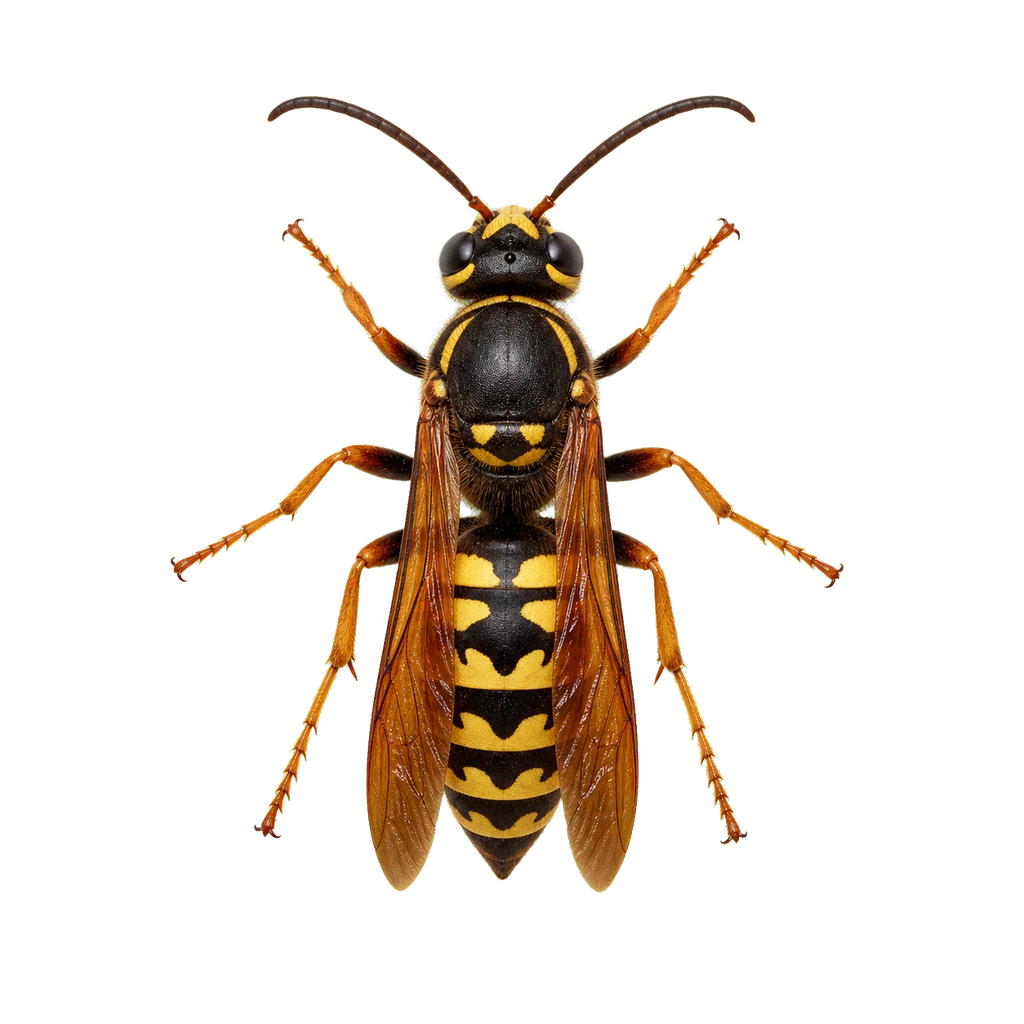
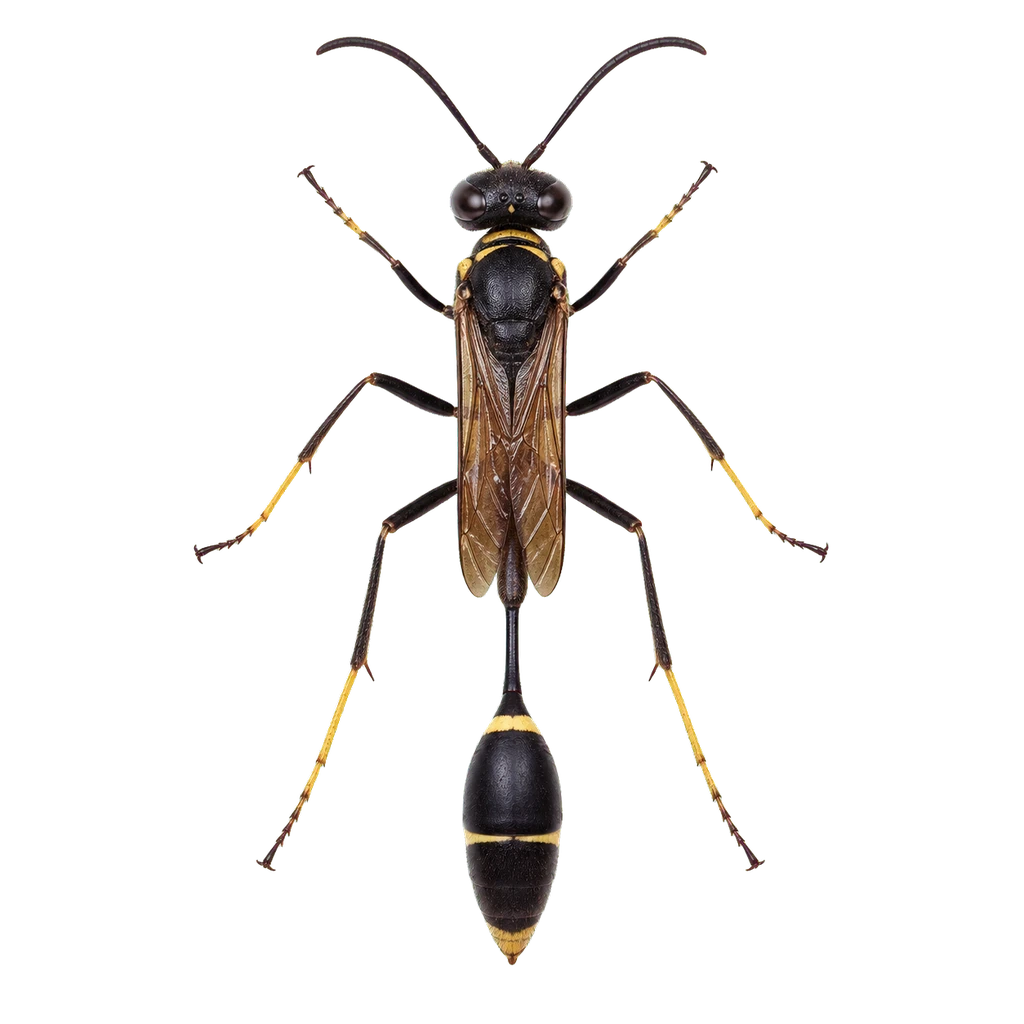
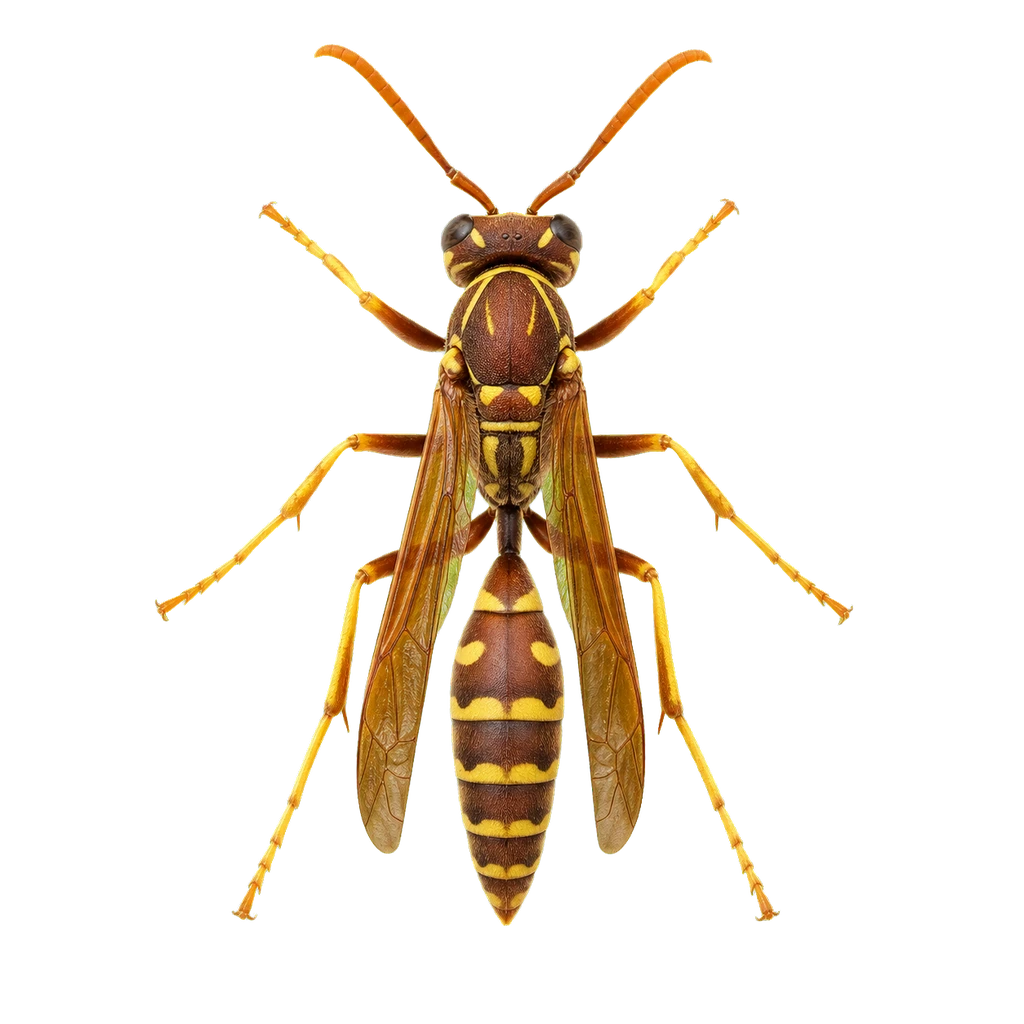
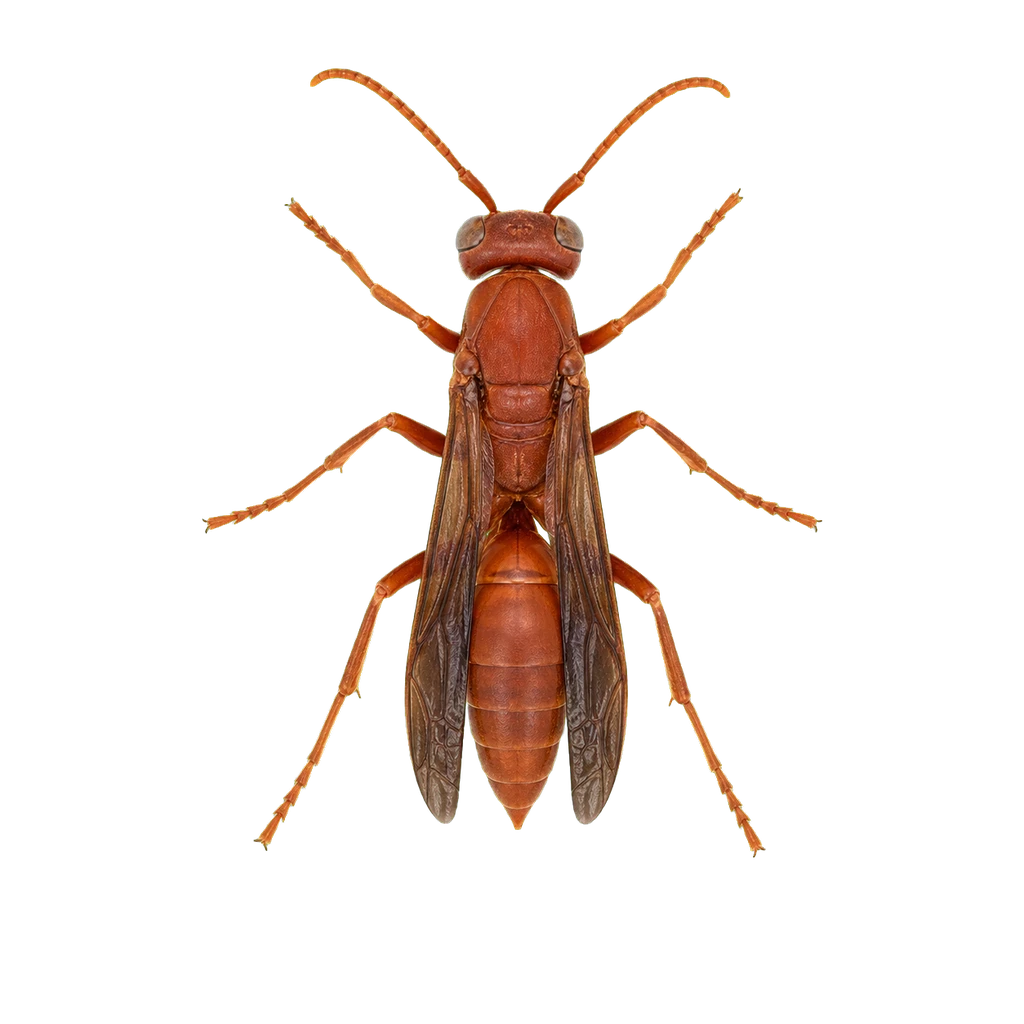
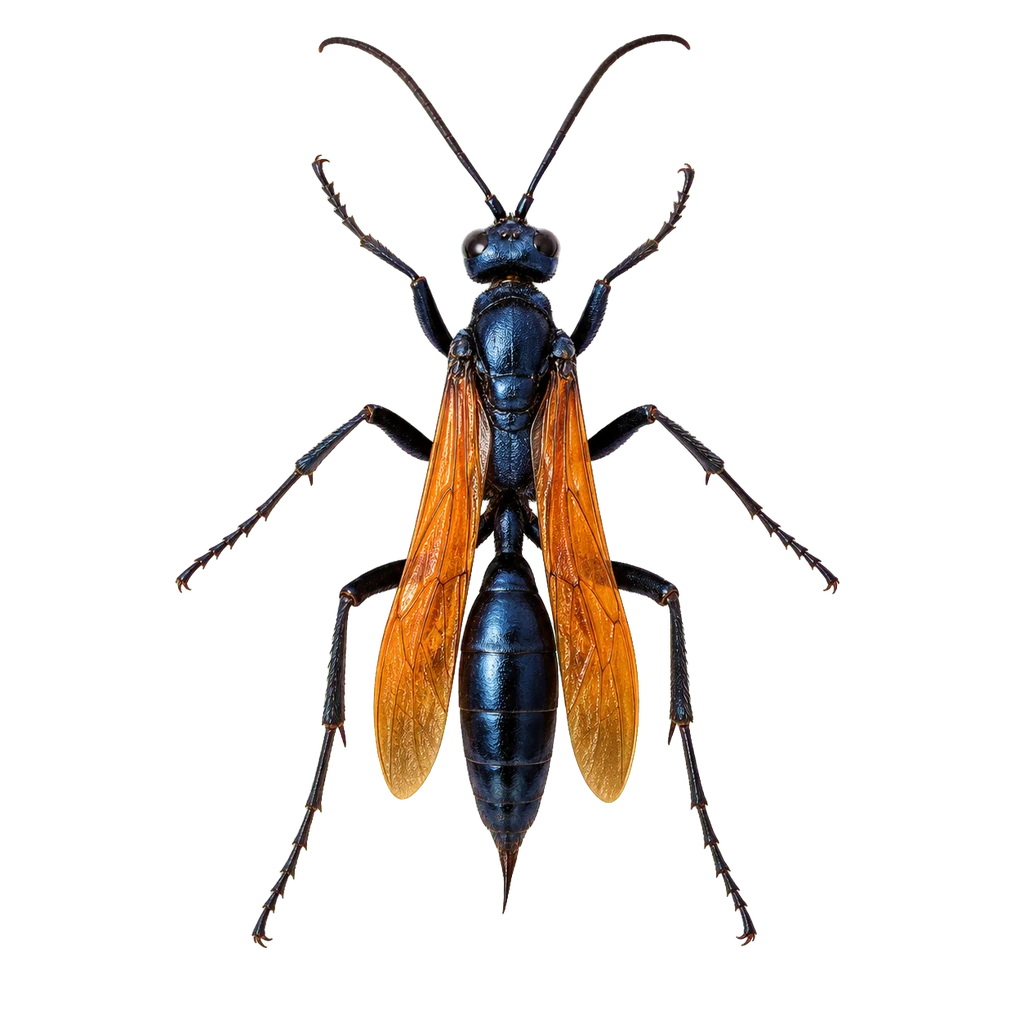
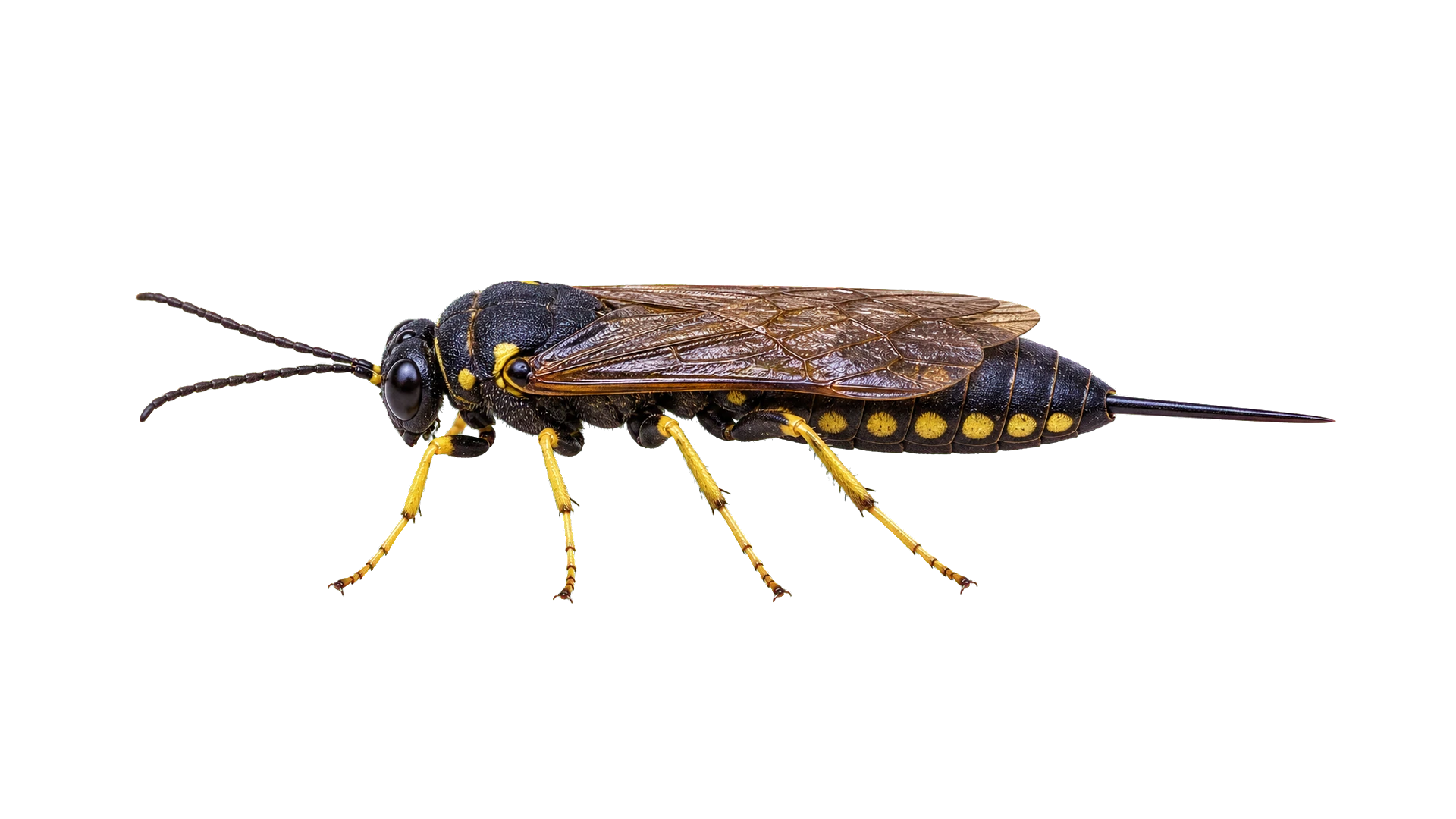
Wood wasps (also called horntails) are large, cylindrical insects in the family Siricidae. The three species you are most likely to see in a home are the pigeon horntail (Tremex columba), the white-horned horntail (Urocerus albicornis), and the invasive Sirex woodwasp (Sirex noctilio). Adults run from 25 to 40 millimeters long with a thick, tube-shaped body and bright yellow or white markings on a reddish-brown or black background. They look nothing like the slim, thread-waist hornets and yellowjackets most people picture when they hear the word wasp.

The single most important fact about wood wasps is that they cannot sting people. The female has a long, spear-like ovipositor at the rear of her body, and homeowners almost always mistake it for an oversized stinger. It is not a stinger. It is a drilling tool the female uses to bore into trees so she can lay eggs. Wood wasps do not have venom they can deliver in self-defense. They cannot cause an allergic reaction. They are loud, large, and dramatic in appearance, but they are physically incapable of stinging a person or a pet.

Close-up illustration of a wood wasp showing thick cylindrical body and long drilling ovipositor

ID Card: Wood Wasp

Scientific name
Siricidae
Color
Dark blue-black, yellow markings
Size
1 to 2 inches
Body shape
Cylindrical body with a horn-like projection at rear (ovipositor)
Antennae
Thread-like, many segments
Key evidence
Round exit holes in dead or dying trees, loud buzzing during oviposition
Also known as
Horntails, Pigeon tremex

Related Species

Call to get matched with a local pest control pro.

Available 24/7
(888) 495-1510
  • Specialists trained to tell wood wasps apart from true stinging wasps
  • Identification visits that confirm cylindrical body and drilling ovipositor
  • Family education when emergence in a finished home causes alarm

Where Wood Wasps Show Up Indoors

Cross-section illustration showing a wood wasp adult emerging from structural framing lumber through drywall

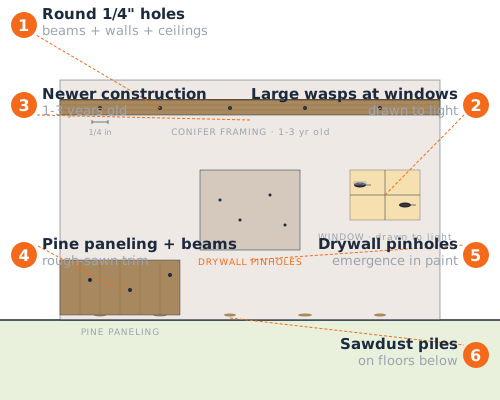
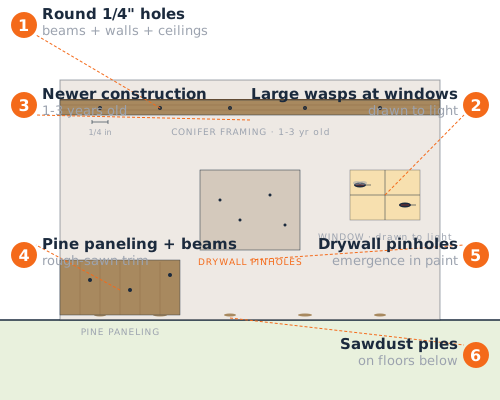
Wood wasps emerge from structural lumber that was infested while the tree was still standing. If a conifer was cut into framing material before all the larvae inside had emerged, those adults will chew their way out years later, sometimes straight through drywall, paint, or finished flooring. Walk these inspection zones if you are seeing wasps inside a finished home:

  • Structural framing in newer construction, Homes built in the last one to three years with conifer framing lumber are the most common site of emergence. The lumber was likely milled from a tree that was already hosting larvae.
  • Ceiling joists and wall studs in unfinished spaces, Walk an unfinished basement or attic with a flashlight and look for round exit holes about the size of a pencil eraser in pine or fir framing.
  • Flooring above conifer subfloor, Adults have been documented chewing up through plywood, hardwood, and even tile-backed underlayment to reach light and air.
  • Conifer trees on the property, Stressed, dying, or recently cut pine, spruce, fir, and hemlock are where females lay eggs in the wild. Outdoor activity around weakened trees is normal and not a sign of an indoor problem.
  • Pine plantations within a few miles, Homes near commercial conifer stands sit inside the natural range of every native horntail in North America.
  • Eastern US homes built since 2004, The invasive Sirex woodwasp was first confirmed in New York in 2004 and has spread through the Northeast. Homes built with lumber sourced from this region carry a higher chance of emergence.

Finding an exit hole or a single emerging adult inside a finished home looks alarming, but it confirms a one-time event tied to a specific piece of lumber. Wood wasps cannot start a new generation inside your house. The wood is too dry and too old to support egg-laying, and the structure is not a host tree.

Cross-section illustration showing a wood wasp adult emerging from structural framing lumber through drywall
Illustration showing wood wasp larva tunneling through structural framing lumber over multiple years before adult emergence

Why Do I Have Wood Wasps?

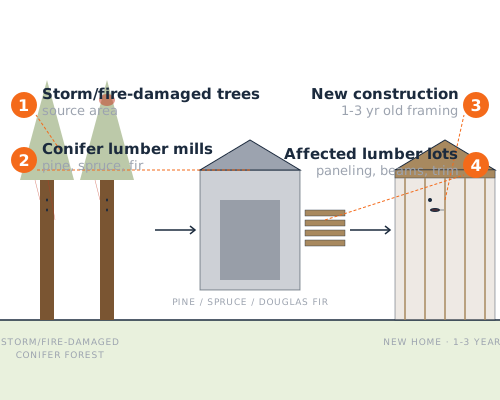
Wood wasps living in your wall are the result of a long, slow chain of events that started long before you moved in. A female horntail laid eggs in a stressed conifer tree out in the woods. That tree was cut down, milled into framing lumber, and built into your home. The larvae inside the wood kept slowly tunneling and developing through the entire construction process. When they finally pupated and emerged as adults, your wall happened to be in the way.

What sets up an indoor emergence:

  • New home construction using conifer framing lumber that came from recently cut trees, the larvae inside are simply finishing their normal 1 to 3 year cycle
  • Older or salvaged lumber from an infested stock, a stack of framing material that sat outside at a yard for years can also carry larvae that emerge later
  • Wooded property near pine plantations, the surrounding forest supplies the egg-laying females and explains heavy outdoor sightings
  • Recently built homes in the eastern US, where the invasive Sirex woodwasp has expanded steadily since 2004 and is now widespread in pine framing material

Here is the part that matters most. Adult wood wasps in your wall cannot reproduce in your wall. They need living or dying conifer trees, with the right moisture and the right symbiotic fungus, to lay eggs successfully. Dry, planed, sealed framing lumber is not a host tree, and your hardwood floor is not a host tree either. Once the affected piece of lumber finishes pushing out its remaining adults, the cycle in your home is over. There is no second generation indoors.

How Serious Is Your Wood Wasp Sighting?

Find your scenario below. Each row reflects what is actually happening with wood wasps, a one-time emergence from infested lumber, not an active reproducing population.

What You're Seeing Severity If Untreated Next Step
Single wood wasp emerges from a wall or ceiling, no signs of more Low Nothing further happens; the wasp cannot sting and cannot start a new generation in your wood Capture in a jar and release outside, or let it leave on its own. Patch the exit hole cosmetically. No treatment needed.
Multiple emergences over a few weeks or months from one room Moderate The remaining adults will finish emerging from the same piece of lumber and then stop completely Catch and release any you see. Mark exit holes for cosmetic patching later. This is one piece of lumber finishing its cycle.
Emergences continue and family members are deeply alarmed or fearful High The emergence will still end on its own, but daily life is being disrupted by understandable but unnecessary fear Schedule a professional consultation this week for in-person identification and education for the household.
Emergence in a brand-new home and you are worried about structural risk Urgent Reassurance is the main need, structural risk from a horntail emergence is typically zero Coordinate a home inspector and your builder for a walk-through plus a pest pro to confirm species and rule out other wood-destroying insects.
Single wood wasp emerges from a wall or ceiling, no signs of more
Severity Low
If Untreated Nothing further happens; the wasp cannot sting and cannot start a new generation in your wood
Next Step Capture in a jar and release outside, or let it leave on its own. Patch the exit hole cosmetically. No treatment needed.
Multiple emergences over a few weeks or months from one room
Severity Moderate
If Untreated The remaining adults will finish emerging from the same piece of lumber and then stop completely
Next Step Catch and release any you see. Mark exit holes for cosmetic patching later. This is one piece of lumber finishing its cycle.
Emergences continue and family members are deeply alarmed or fearful
Severity High
If Untreated The emergence will still end on its own, but daily life is being disrupted by understandable but unnecessary fear
Next Step Schedule a professional consultation this week for in-person identification and education for the household.
Emergence in a brand-new home and you are worried about structural risk
Severity Urgent
If Untreated Reassurance is the main need, structural risk from a horntail emergence is typically zero
Next Step Coordinate a home inspector and your builder for a walk-through plus a pest pro to confirm species and rule out other wood-destroying insects.

If you are between two rows, treat the higher one as your situation. The severity rises with how alarmed your household is, not with structural risk.

How a Wood Wasp Lives Its Life

Wood wasps have one of the longest larval stages of any common North American insect. Eggs go into a living conifer tree, the larva tunnels for years, and the adult only appears at the very end of the cycle. That long stretch inside the wood is exactly why wood wasps end up emerging from lumber in finished homes years after construction.

  1. Egg

    Laid in living, stressed conifer trees

    The female lands on a weakened pine, spruce, fir, or hemlock and drills into the bark and sapwood with her long ovipositor. She lays an egg deep inside and injects a symbiotic fungus and a small amount of toxic mucus that help break the wood down for her offspring.

  2. Larva

    1 to 3 years, sometimes longer

    The larva tunnels slowly through the heartwood, feeding on wood softened by the fungus the mother injected. If the tree is cut down and milled into lumber while the larva is still inside, the larva keeps developing in the dried, planed, framed wood without missing a beat.

  3. Pupa

    Several weeks near the wood surface

    Once development is complete, the larva pupates close to the surface of the wood. In a host tree this would be just under the bark. In a finished home this is just under the drywall, paint, or flooring that now covers the framing lumber.

  4. Adult

    Lives roughly 2 to 4 weeks

    The adult chews a clean, round exit hole and emerges. Outdoors, the female immediately looks for another stressed conifer to lay eggs in. Indoors, the adult flies toward windows, cannot find a host tree, cannot reproduce, and dies within a few weeks. The exit hole is a one-time event tied to that one larva.

The big takeaway is that the adult you see in your home is the last visible step of a cycle that started in a forest years ago. Once each larva inside a piece of lumber finishes its turn, the cycle for that wood is finished too. There is no nest in your wall, no queen in your attic, and no next generation building up behind your drywall.

When Wood Wasps Are Most Active

Outdoor wood wasp emergence in North America follows a tight summer window. Indoor emergence from structural lumber is less predictable because the lumber is sheltered from outdoor temperature swings.

  • Spring

    Larvae and pupae inside lumber finish their development as interior temperatures rise. A few early adults can appear on windowsills in late spring, especially in sun-warmed rooms. Outdoor activity is still light at this point.

  • Summer

    Peak outdoor emergence runs from June through September. Females are actively drilling into stressed conifers in the woods, and outdoor sightings near pine plantations are at their highest. Indoor emergences also cluster in this window because warm interior air triggers the final stage.

  • Fall

    Outdoor adult activity tapers off as temperatures drop. Any indoor emergence still happening late in the year is usually from lumber in a heated room where conditions still feel like summer to the developing pupa.

  • Winter

    Outdoor activity stops. Indoor emergence is unpredictable. Lumber inside a heated home can produce an adult any month of the year, which is why some homeowners report a single horntail in January and never see another one.

Why a Wood Wasp Sighting Usually Needs No Treatment

Wood wasps are one of the few pest sightings where the right answer is almost always do nothing. The adult cannot sting you, cannot reproduce inside your home, and cannot weaken your structure. The hole in the drywall is a one-time exit point from a single larva that finished its life cycle. There is no nest, no colony, and no spreading population to chase.

Spraying insecticide along a baseboard or into an exit hole does nothing useful. The larva that made the hole is already gone. Any other larvae still inside the framing are deep in the wood where surface chemicals cannot reach them, and they will continue developing regardless. The only thing a spray accomplishes is exposing your family to a chemical for no real benefit.

When a professional is called in, the work is almost always about identification and reassurance. A specialist confirms the species, rules out look-alikes like powderpost beetles or carpenter ants, and explains the biology to your household in person. For families with strong insect fear or for new construction where the homeowner wants documentation, this short visit is often the entire fix.

Cosmetic patching of exit holes is something you can do yourself. A small dab of wood filler, lightweight spackle, or paintable caulk closes the hole. There is no need to drill, inject, or open the wall. The next emergence, if there even is one, will come from a different piece of lumber and a different spot.

What Changes When a Pro Shows Up

Wood wasps almost never need chemical treatment. Most professional visits are about correct identification, family education, and ruling out other species. Here is what changes when a specialist walks through:

Pest control technicians after completing a wood wasp identification visit
  • Local Pest Control
  • 24/7 Availability
  • Quality Workmanship
  • Eco‑Friendly Options
  • Trusted by Homeowners
  • They Confirm Wood Wasp, Not Hornet

    A pro can tell you on the spot whether you are looking at a true horntail or a true stinging wasp. The cylindrical body, the long ovipositor, and the size all separate horntails from yellowjackets and hornets, and an in-person ID stops the worry in one visit.

  • They Rule Out Other Wood-Destroying Pests

    Exit holes in framing can also come from powderpost beetles, old-house borers, carpenter ants, or termite swarmer emergence. Each one has a very different response. A specialist looks at the hole, the wasp, and the wood and tells you which one you actually have.

  • They Educate the Household

    Many families need to hear, from a person standing in their living room, that the long spike is not a stinger and that the insect cannot reproduce in the house. That conversation is often the entire job, and it is more useful than any spray.

  • They Coordinate With Your Builder if Needed

    In brand-new construction, a pro can document emergence locations, confirm species, and pass the information to your builder or home inspector. Wood wasp emergence is a known and harmless lumber issue, and a written report often closes out the concern.

  • Local Pest Control
  • 24/7 Availability
  • Quality Workmanship
  • Eco‑Friendly Options
  • Trusted by Homeowners
NoToPests home

One call connects you with a local specialist who knows wood wasps and your area.

Be Ready When You Call

Pest control technician arriving for a wood wasp identification visit
Junho L.
Daisuke P.
Kirk Q.
Marion K.

Trusted by homeowners nationwide

Call for Pest Control Help (888) 495-1510

Can You Handle This or Do You Need Help?

Wood wasps are one of the few pest sightings where DIY is usually the right call. The biology rules out reinfestation, so the work is mostly observation and cosmetic repair rather than treatment.

What DIY Can Do

DIY is the main approach for wood wasps because there is nothing to treat. Useful steps with honest limits:

  • Identify the wasp using the cylindrical body and long ovipositor, the drilling tool is not a stinger and the species cannot deliver venom
  • Capture any wasp you see in a jar and release it outside, it cannot reproduce in your home and poses no risk to family or pets
  • Vacuum up any wasps you see near windows where they are trying to reach light, this is fast and harmless
  • Patch exit holes cosmetically with wood filler or paintable caulk whenever you are ready, no rush is required
  • What DIY cannot do reliably: confirm species when the wasp is missing or smashed, or rule out a powderpost beetle or termite issue from the hole alone.

What a Pro Does Differently

A pro is rarely required for wood wasps, but a short visit is worth it in a few specific situations:

  • Species verification when the wasp has been smashed, lost, or only seen briefly and you want certainty
  • Look-alike rule-out for powderpost beetles, old-house borers, carpenter ants, and termite swarmers
  • Coordination with your home inspector or builder if the emergence is in brand-new construction and documentation is needed
  • In-person education for family members with severe insect phobia, hearing it from a specialist in your living room often ends the fear in one visit
  • Written confirmation that the wasp is harmless and that the wood is structurally sound, useful for resale or for anxious households.

Suspect Wood Wasps? Don't Wait.

Wood wasps look alarming but cannot sting and cannot reproduce indoors. Connect with a local specialist who can confirm the species in one short visit and rule out other wood-destroying insects.

Available 24/7
(888) 495-1510

What Homeowners Say After Getting Help

Real results from people who had the same problem and solved it.

Donna X.
Donna X.
Idaho Falls, ID

"Wasp nests removed from every eave."

Every summer, wasps would build nests around our roof and porch. The tech removed the nests safely and treated the areas to discourage rebuilding. They explained the seasonal pattern so we know when to watch for activity.

Donna X.
Donna X.
Idaho Falls, ID

"Wasp nests removed from every eave."

Every summer, wasps would build nests around our roof and porch. The tech removed the nests safely and treated the areas to discourage rebuilding. They explained the seasonal pattern so we know when to watch for activity.

Helen D.
Helen D.
Rochester, MN

"Wasps removed from the wall cavity."

We noticed wasps entering a gap near the soffit. The provider carefully removed the nest from inside the wall cavity and sealed the opening. They were calm and methodical throughout the whole process.

Moses T.
Moses T.
Great Falls, MT

"Large wasp nest safely removed."

We didn't notice the wasp nest until it was large enough to be dangerous. The provider removed it safely and treated the area to prevent rebuilding. They explained that catching nests early makes removal much easier.

Quincy F.
Quincy F.
Minot, ND

"Porch wasps moved on for good."

Every summer, wasps would rebuild nests under our porch roof. The provider removed the nest, treated the area, and explained what conditions attract them. Adjusting the area made them choose elsewhere.

Orlando Z.
Orlando Z.
Brookings, SD

"Eave wasp nests cleared and deterred."

Every summer, wasps built nests under our roof eaves. The tech removed the nests and treated the area with a deterrent. They explained the nesting cycle so we could catch new activity earlier.

Shinji A.
Shinji A.
Jackson, WY

"Cabin eave wasp nests cleared and deterred."

Every summer, wasps would build large nests under our cabin eaves. The crew removed them and treated the area to deter rebuilding. They explained the nesting cycle so we could catch new activity earlier in the season.

Deon J.
Deon J.
Gadsden, AL

"Spring wasp nests removed before they spread."

Every spring, paper wasps would appear under the eaves and near the porch lights. The pro removed the nests and treated the areas to discourage rebuilding. They explained the nesting patterns so we know when to watch for early activity.

Davon A.
Davon A.
Kenai, AK

"Shed wall wasps removed and sealed out."

We discovered a wasp nest inside the wall of our storage shed. The pro removed the colony and sealed the gap they used for access. They recommended checking outbuildings each spring before nests get established.

Arthur B.
Arthur B.
Russellville, AR

"Patio wasp nests cleared and prevented."

Every summer, wasps nested under the patio cover and made outdoor dining impossible. The crew removed the nests and treated the wood with a deterrent. They explained the timing for early-season prevention before colonies establish.

Harry S.
Harry S.
Pueblo, CO

"Soffit wasp colony removed and sealed."

A wasp colony established itself inside the soffit above our front door. The crew removed the nest and sealed the opening. They explained that Colorado's warm days and cool nights make soffits attractive nesting spots for wasps.

Juana L.
Juana L.
Norwalk, CT

"Pool-deck wasps removed and area treated."

Yellow jackets built a ground nest near our pool and were stinging guests. The pro located and removed the nest and treated the surrounding area. They explained how sweet drinks and food attract yellow jackets to outdoor entertaining areas.

Huan R.
Huan R.
Milford, DE

"Mailbox post cleared of wasps."

Paper wasps built a nest inside the hollow mailbox post and stung the mail carrier. The pro removed the nest and treated the post. They recommended checking hollow posts and fixtures each spring before colonies establish.

Malcolm J.
Malcolm J.
Lakeland, FL

"Light fixtures cleared of wasp nests."

Every spring, wasps would nest inside the porch light covers. The provider removed the nests and treated the fixtures with a deterrent. Switching to yellow-tinted bulbs also reduced the insect activity that attracts wasps.

Chen Q.
Chen Q.
Alpharetta, GA

"Deck made safe again, wasps cleared."

Wasps built nests between the deck boards and joists, making it dangerous to walk barefoot. The provider removed the nests and treated the undersides of the boards. Annual spring treatments have kept the deck wasp-free since.

Esmeralda S.
Esmeralda S.
Mililani, HI

"Storage closet cleared of wasp colony."

A paper wasp colony had established inside our lanai storage closet. The provider removed the nest and treated the area. They recommended checking enclosed outdoor spaces monthly since Hawaii's warm climate allows year-round nesting.

Christopher X.
Christopher X.
Caldwell, ID

"Patio furniture wasps cleared safely."

Paper wasps nested under our outdoor dining set and we didn't notice until someone was stung. The provider removed the nests and treated the patio area. They recommended checking under furniture and planters in spring.

Anabel V.
Anabel V.
Joliet, IL

"Swing set wasps removed and sealed out."

A wasp colony built inside the hollow posts of our kids' swing set. The provider removed the nest and sealed the open tube ends. They recommended inspecting play equipment each spring before kids start using it.

Renisha S.
Renisha S.
Anderson, IN

"Front walkway wasp ground nest removed."

Yellow jackets built a nest in the ground near our front walkway and were stinging visitors. The provider located the nest entrance and removed the colony. They treated the area to deter rebuilding.

Yadira K.
Yadira K.
Dubuque, IA

"Shed yellow jacket colony safely removed."

A yellow jacket colony grew under the garden shed and we couldn't mow near it. The provider removed the nest and treated the ground. They recommended checking under sheds and decks in early spring to catch colonies before they grow.

Encarnacion R.
Encarnacion R.
Garden City, KS

"Trash area cleared of swarming wasps."

Wasps were constantly around the trash cans making it dangerous to take out the garbage. The provider removed nearby nests and treated the area. They recommended tightly sealed lids and rinsing cans regularly.

Francis Q.
Francis Q.
Hopkinsville, KY

"Grill cover nest removed and area treated."

We lifted the grill cover and found a wasp nest inside. The provider removed it and treated the patio area. They suggested storing the grill cover inside or checking before each use during warm months.

Kate S.
Kate S.
Ruston, LA

"Attic vents screened and wasps cleared."

Wasps built nests inside the attic gable vents. The provider removed the colonies and installed mesh screens over the vents. They recommended checking vents each spring to prevent new colonies from establishing.

Jayson P.
Jayson P.
Saco, ME

"Garage ceiling wasp nest cleared safely."

A large paper wasp nest formed on the garage ceiling near the opener. The provider removed it and treated the area. They recommended checking the garage each spring before nests get large enough to be dangerous.

Lillian W.
Lillian W.
Bowie, MD

"Swing set cleared and sealed safely."

A wasp colony built inside the hollow beam of the swing set. The provider removed the nest and sealed the openings. They suggested checking play equipment each spring before the kids start using it.

Silvia P.
Silvia P.
Quincy, MA

"Patio ground nest located and removed."

Yellow jackets built a ground nest under the patio pavers. The provider located and removed the nest. They treated the surrounding area and explained why ground nests are harder to spot than aerial ones.

Reed G.
Reed G.
Traverse City, MI

"Boat dock wasps cleared each summer."

Paper wasps built nests under the dock every summer. The provider removed the nests and treated the structure. They recommended spring inspections before the dock gets heavy use.

Tuan U.
Tuan U.
Owatonna, MN

"Garage door tracks cleared of wasp nests."

Paper wasps built nests in the garage door track channels. The provider removed the nests and treated the track areas. They recommended checking the tracks each spring before the first use of the season.

Randy B.
Randy B.
Starkville, MS

"Carport kept wasp-free with annual treatment."

Multiple wasp nests appeared in the carport ceiling every summer. The provider removed them and treated the ceiling. Annual spring treatment before nesting season begins has kept the carport wasp-free.

Jaime O.
Jaime O.
Cape Girardeau, MO

"Mailbox nest cleared and area treated."

A small wasp colony built inside our mailbox and the mail carrier was stung. The provider removed the nest and treated the area. Checking the mailbox in spring before nesting season prevents a repeat.

Nayeli R.
Nayeli R.
Kalispell, MT

"Cabin eaves cleared of wasp nests."

Paper wasps built nests under every eave of our cabin. The provider removed the nests and treated the wood. Spring inspections before cabin season prevent surprises.

Haru S.
Haru S.
Hastings, NE

"Shed walls cleared and sealed against wasps."

Opened the shed door to grab the weed whacker and a steady stream of paper wasps came pouring out of a knothole. I shut that door fast. The tech treated the wall cavity, removed the nest, and caulked every gap he could find. Annual spring checks are now on my calendar so I do not get surprised again.

Tina O.
Tina O.
Fallon, NV

"Irrigation valve box cleared of wasps."

Yellow jackets built a nest inside the irrigation valve box and were stinging when we adjusted sprinklers. The provider removed the colony and treated the box. Checking valve boxes before irrigation season prevents surprises.

Ravi Q.
Ravi Q.
Dover, NH

"Attic vent cleared and screened against wasps."

Wasps streaming in and out of the gable vent all afternoon, you could see them from the driveway. The tech suited up, removed a softball-sized nest from inside the attic, and installed fine mesh screening across both gable vents. He suggested I check them every spring before things warm up. Two seasons later, no wasps.

Raven C.
Raven C.
Paterson, NJ

"Front step ground nest located and removed."

Yellow jackets built a ground nest near the front steps and were stinging visitors. The provider located the nest entrance and eliminated the colony. They treated the surrounding area to deter rebuilding.

Taylor U.
Taylor U.
Los Lunas, NM

"Stucco weep holes screened against wasps."

Wasps entered through stucco weep screeds and built nests inside the wall cavity. The provider treated the cavity and installed mesh screens over the weep openings. Annual checks prevent recurrence.

Anya M.
Anya M.
New Rochelle, NY

"Deck stair ground nest located and removed."

Yellow jackets built a ground nest near the deck stairs. The provider removed the colony and treated the surrounding area. They explained ground-nest behavior and how to spot early signs.

Mike S.
Mike S.
High Point, NC

"Shutter wasp nests cleared and treated."

Paper wasps built nests behind the decorative shutters on the front of the house. The provider removed the nests and treated the shutter mounting areas. Checking behind shutters each spring prevents new colonies.

Bianca V.
Bianca V.
Wahpeton, ND

"Garage ceiling wasp nest removed safely."

Pulled the garage door opener cord one Saturday and heard the buzz before I saw the football-sized nest in the corner of the ceiling. I quietly backed out. The tech suited up, removed the whole thing, and treated the framing. He told me to do a spring walkthrough every year before the garage gets regular use. Adding it to my March checklist.

Eva M.
Eva M.
Youngstown, OH

"Soffit cleared and opening sealed."

Standing at the front door dropping off Halloween candy with the kids, a wasp landed on my hand. Then another. Looked up and saw a steady stream going in and out of a gap in the soffit. The tech came the next morning, suited up, removed the nest from inside, and caulked the gap. Two seasons in and the soffit is still tight.

Larry I.
Larry I.
Bartlesville, OK

"Pool deck ground nest located and removed."

My nephew got stung four times in two minutes during a Memorial Day pool party. We thought it was one wasp until we noticed the steady stream coming up from a hole near the umbrella stand. The tech came out the next morning, knocked out the ground nest, and treated the surrounding area. He talked us through keeping drinks covered and away from the entry. No stings since.

Common Questions About Wood Wasps

Direct answers to what homeowners ask most about stinging risk, structural concern, and whether treatment is needed.

  • How do I identify wood wasps and their damage? Toggle answer for: How do I identify wood wasps and their damage?

    Wood wasps (horntails, family Siricidae) are large (1 to 1.5 inches), cylindrical wasps with a stout, non-constricted waist, unlike the narrow-waisted paper wasps and hornets. Females have a prominent, spike-like ovipositor projecting from the abdomen that is often mistaken for a stinger but is used exclusively for drilling into wood to deposit eggs. Adult wood wasps typically emerge from structural lumber that was infested as living or recently felled trees before being milled, and theybore perfectly round exit holes (about 1/4 inch diameter) through finished surfaces including drywall, hardwood flooring, and paneling. Their emergence from building materials is usually a one-time event that does not indicate reinfection risk in seasoned lumber.

  • Should I be worried about wood wasps emerging from my home's lumber? Toggle answer for: Should I be worried about wood wasps emerging from my home's lumber?

    Wood wasp emergence from structural lumber is alarming but rarely indicates an ongoing problem. The eggs were laid in living trees before the timber was harvested and milled, and the larvae completed their development inside the seasoned lumber, sometimes taking two to five years to mature. Once adults emerge, they do not reinfest finished lumber because females require bark-covered, living or freshly cut wood to lay eggs. The exit holes are cosmetic damage only and can be filled with wood putty. If you are seeing large wasps emerging from interior walls, floors, or trim, they are completing a one-generation cycle and will not reproduce indoors. No treatment of the structure is necessary, simply patch the exit holes after emergence is complete.


  • Why do wasps keep building nests near my home? Toggle answer for: Why do wasps keep building nests near my home?

    Wasps are attracted to sheltered spots near food sources. Eaves, porch ceilings, shutters, and deck railings offer protected nesting sites. Outdoor trash, sugary drinks, pet food, and protein-rich grilling areas provide the food wasps need. Removing old nests (wasps don't reuse them, but the scent attracts new queens), sealing eave gaps, and managing food attractants reduces nesting pressure.

  • Are wasp stings dangerous? Toggle answer for: Are wasp stings dangerous?

    For most people, a wasp sting causes localized pain and swelling that resolves in a few hours. However, wasps can sting multiple times (unlike honeybees), and for individuals with venom allergies, a single sting can trigger anaphylaxis, alife-threatening reaction. If a nest is near a high-traffic area like a doorway, patio, or playground, removal is strongly recommended.

  • How quickly can a provider get to my home? Toggle answer for: How quickly can a provider get to my home?

    Most providers in our network can schedule an inspection within 24-48 hours. For urgent situations, likeactive structural damage or large colonies, same-week emergency service is often available. Response times depend on your location and the provider's current schedule.

  • What happens during the first visit? Toggle answer for: What happens during the first visit?

    Your provider inspects the property to identify the pest, locate nesting or entry points, and assess the scope of the problem. You get a clear explanation of what they found, what they recommend, and a written scope before any work begins.

  • Is treatment safe for kids and pets? Toggle answer for: Is treatment safe for kids and pets?

    Modern pest control products are designed to break down quickly after application and pose minimal risk to people and pets when applied correctly. Most providers ask you to keep kids and pets out of treated areas for 1 to 2 hours while the product dries, after which the area is generally safe again. Always confirm specific re-entry times with your provider, and let them know about pet birds, fish, or reptiles, since some treatments require extra precautions for those species.

Pest Control Pros serving the city of the state of your city and nearby areas

Local providers experienced with wood-destroying pest identification are ready to confirm wood wasp sightings and rule out look-alikes, no obligation.

Available 24/7
(888) 495-1510