Local pest control help is one call away.

Rodents in and Around Your Home

Need a real diagnosis? (888) 495-1510

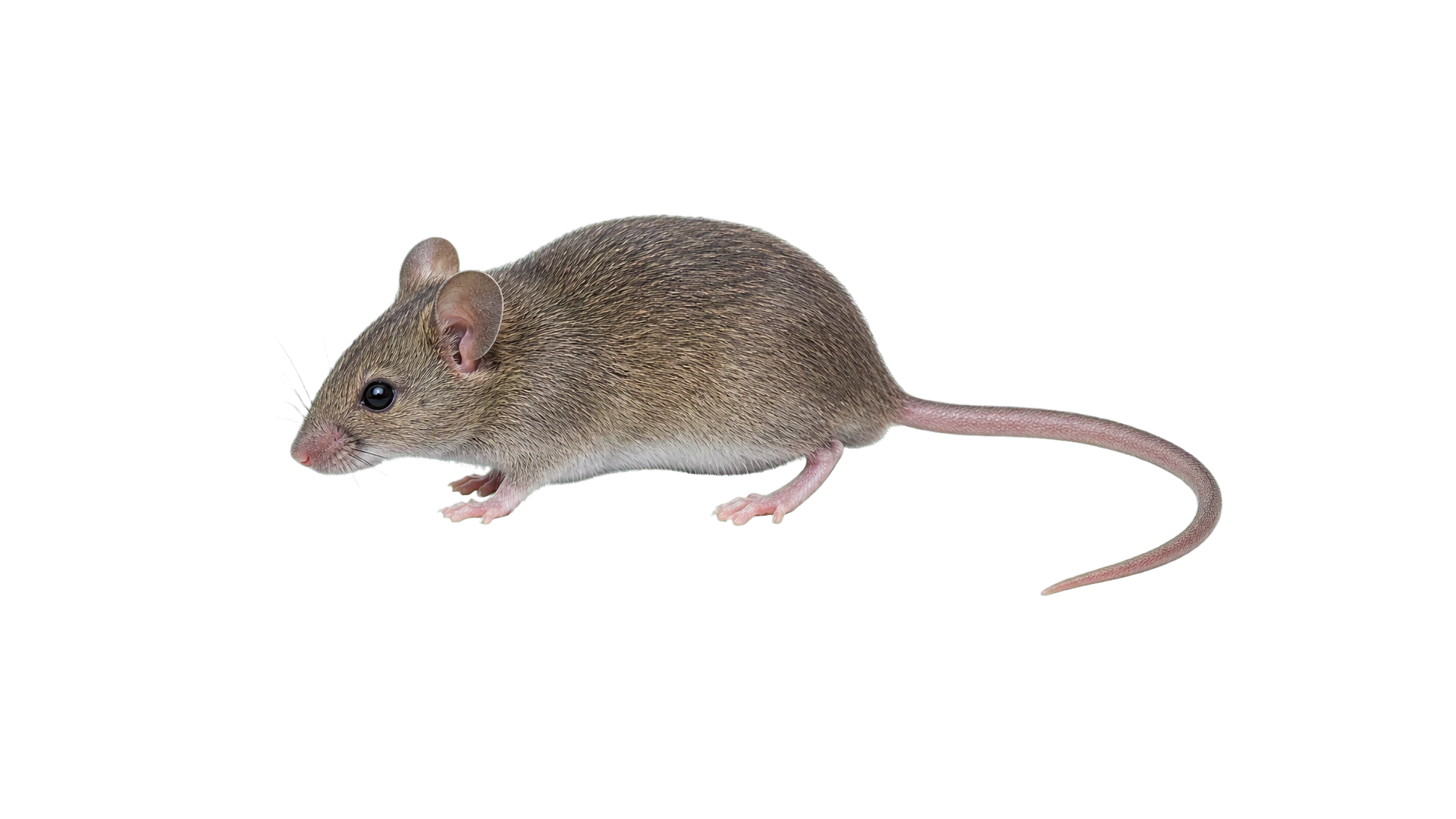
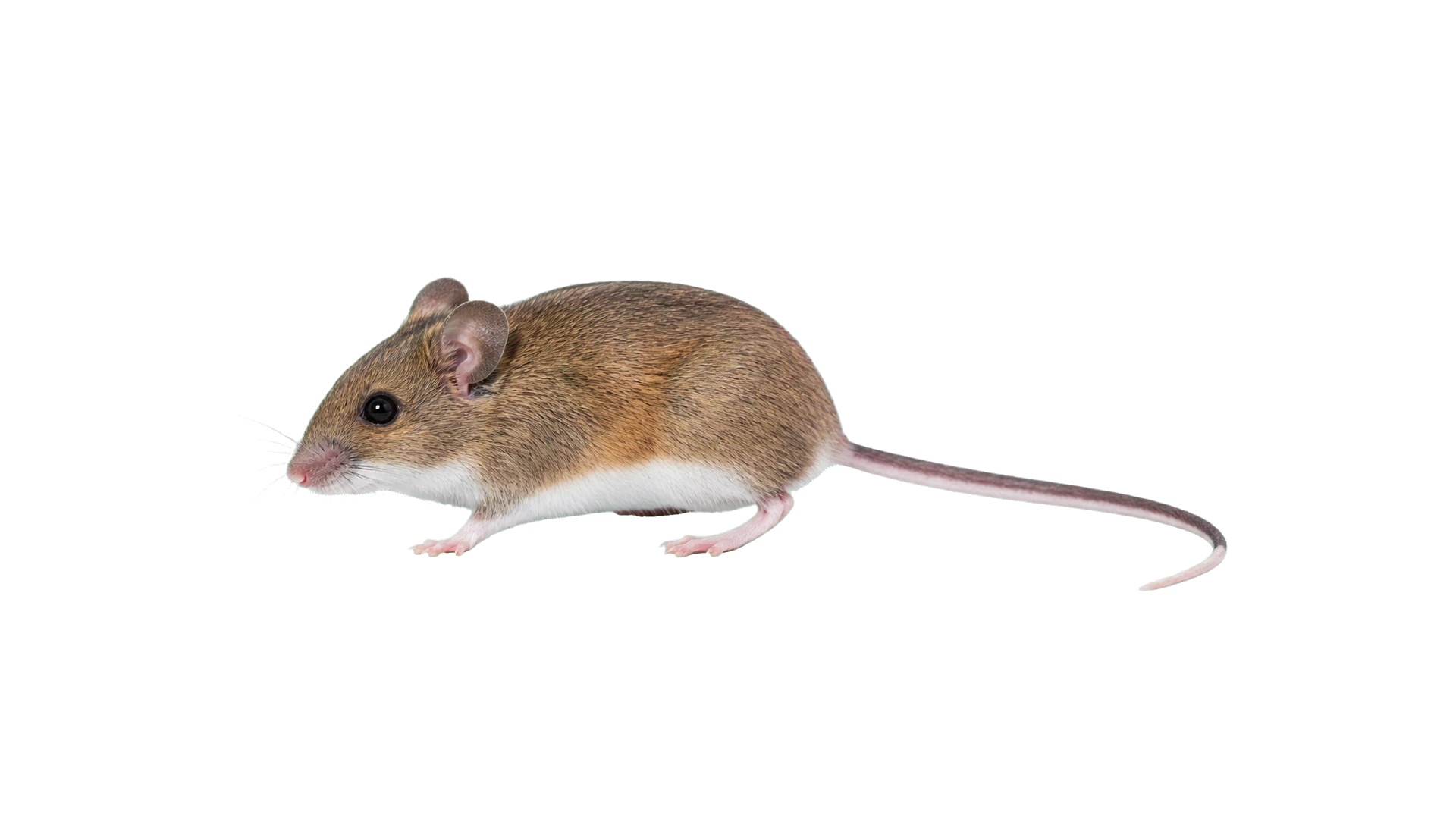
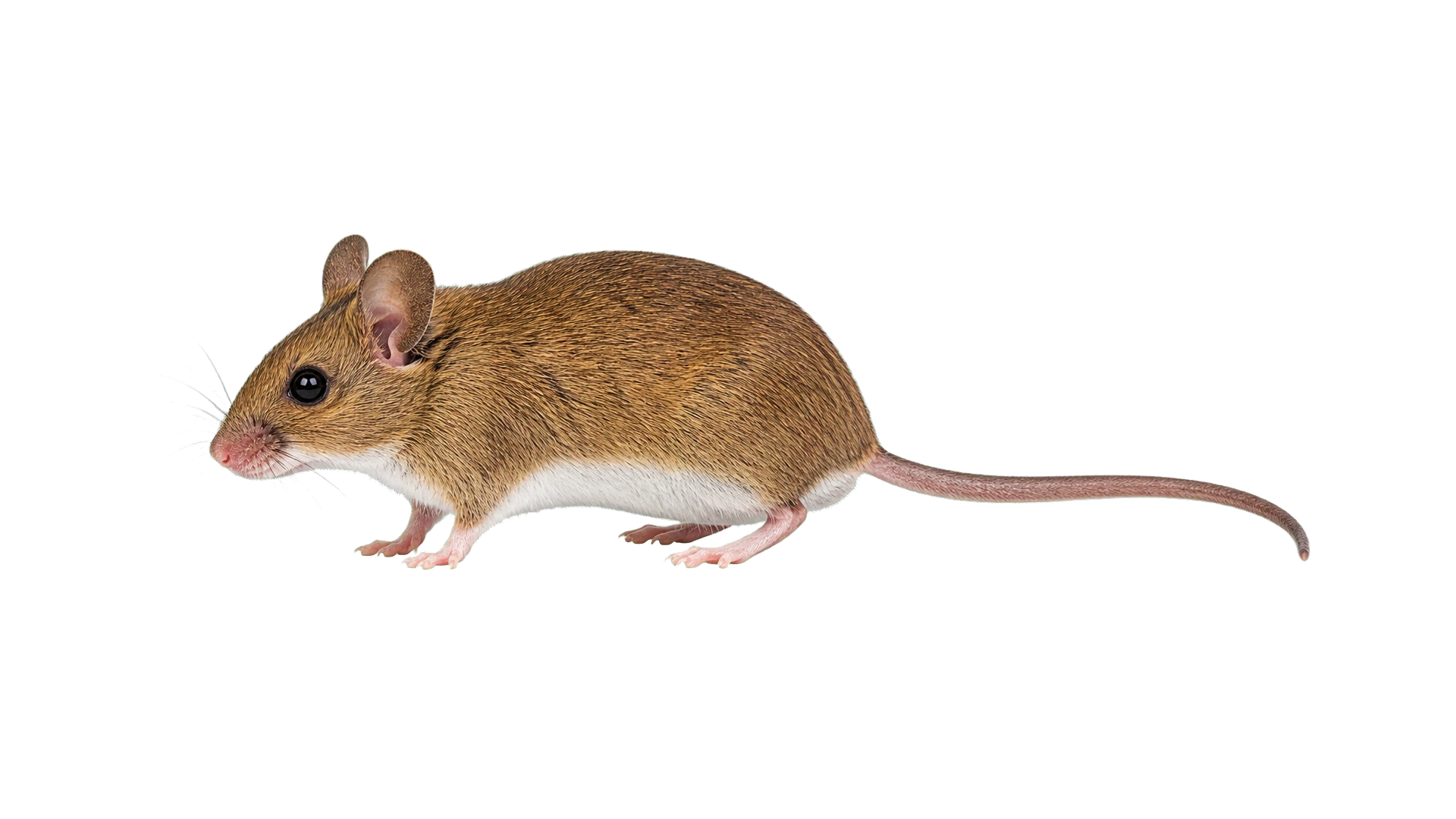
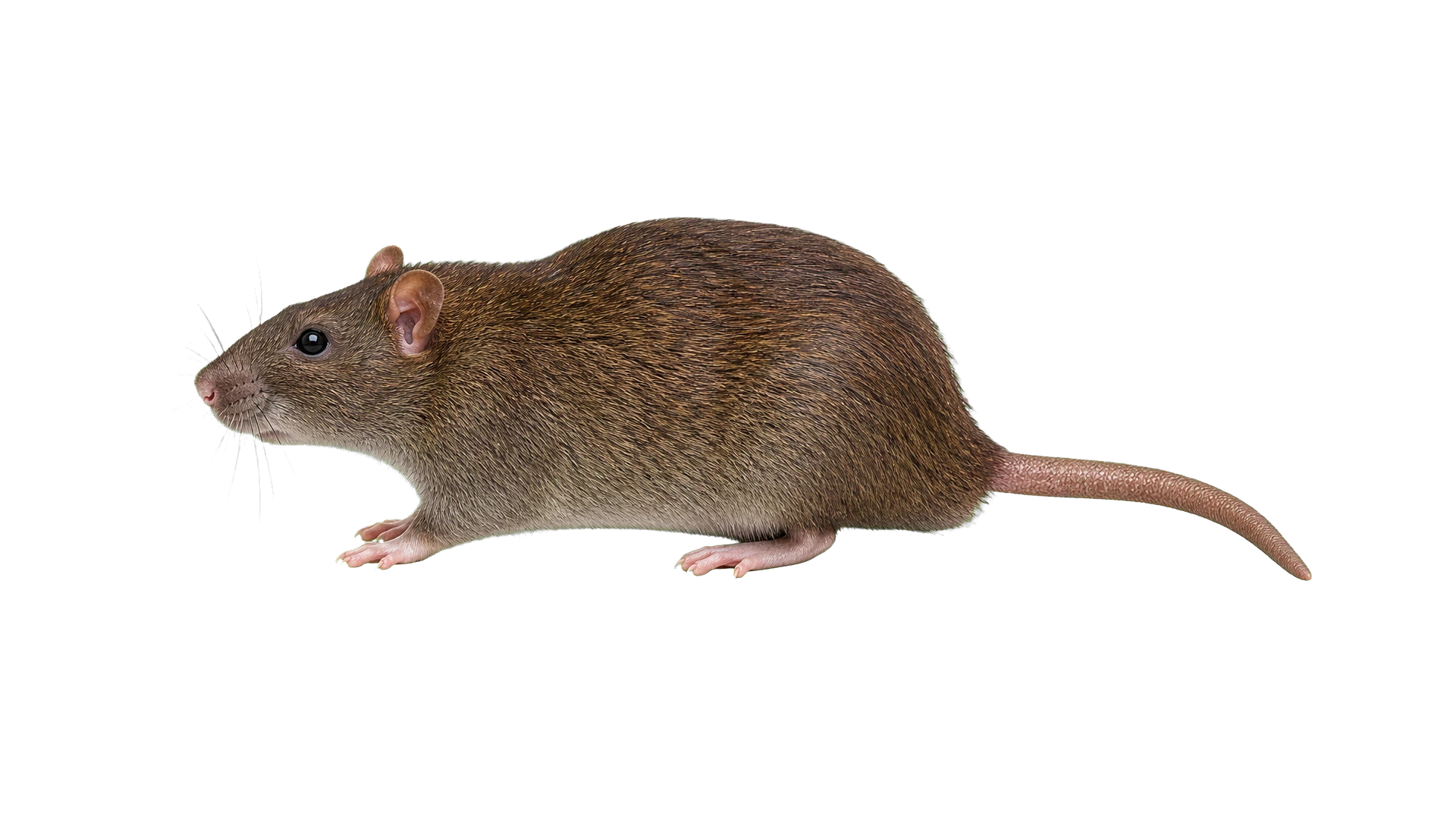
Rodentia is the largest mammal order on the planet, and homeowners encounter at least six members of it: house mice, rats (Norway and roof), gray and fox squirrels, flying squirrels, chipmunks, and voles. Moles often get lumped in but are insectivores, not rodents. Each species has its own entry pattern, damage signature, and treatment plan. Identify the species first; everything else follows.

Why Rodents Win So Often

Every rodent shares a single anatomical feature that drives most of the damage: a pair of upper and lower incisors that grow continuously through life. The animal must gnaw constantly to file teeth down. That is why drywall, wire insulation, vent flashing, and food packaging are at risk wherever a rodent has access.

The other shared trait is reproductive output. Most rodents produce multiple litters per year and reach breeding age in weeks, not months. Population math is why an issue that looks small in October becomes a colony by January if the entry path stays open.

Six rodent groups most homeowners encounter:

  • House mice and deer mice: indoor nesters in walls, attics, behind appliances.
  • Norway and roof rats: basements, crawl spaces, attics by species.
  • Tree squirrels (gray, fox, red): daytime climbers through soffits and rooflines.
  • Flying squirrels: nocturnal gliders nesting communally in attic insulation.
  • Chipmunks: striped ground burrowers along foundations and retaining walls.
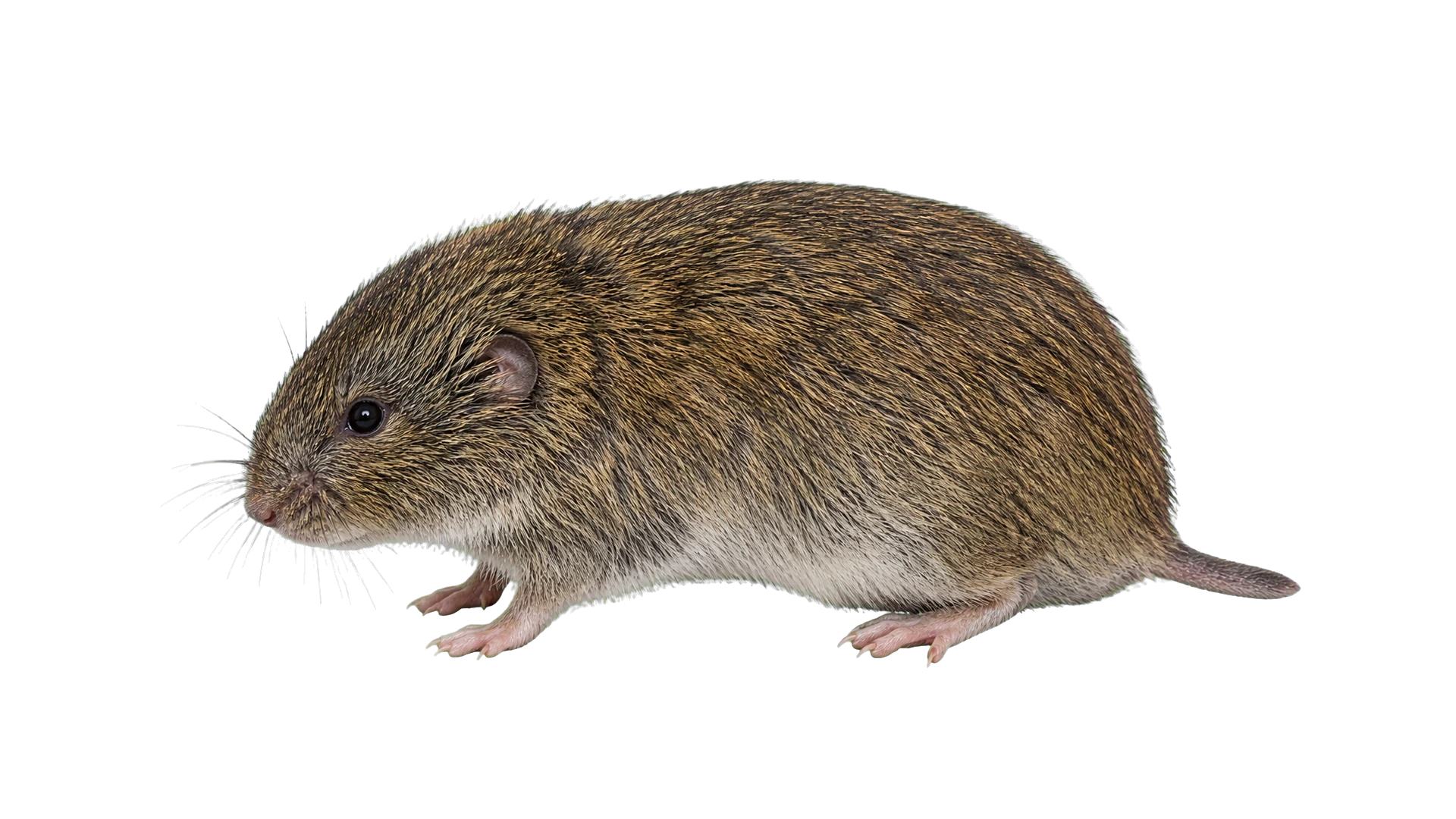
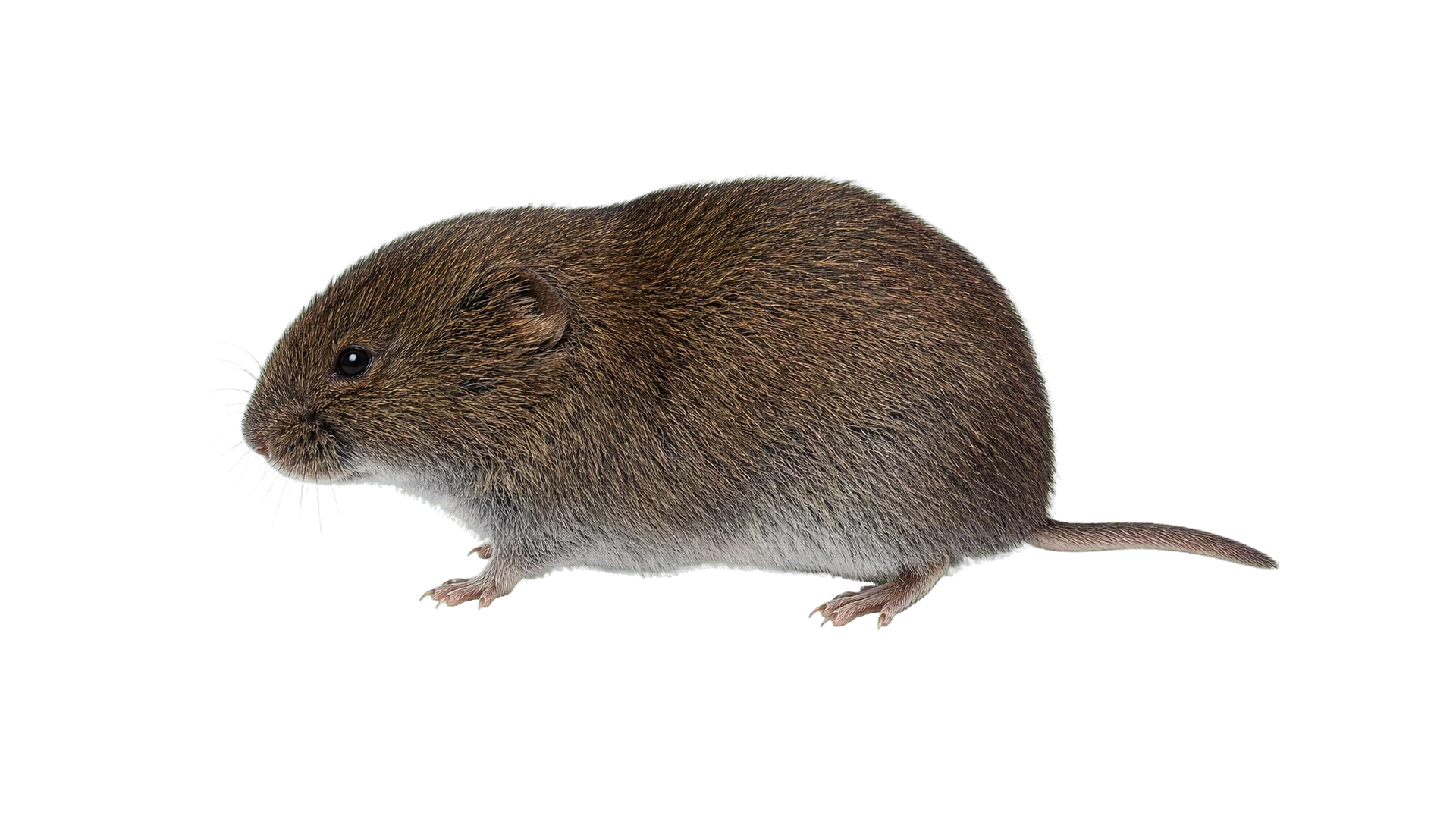
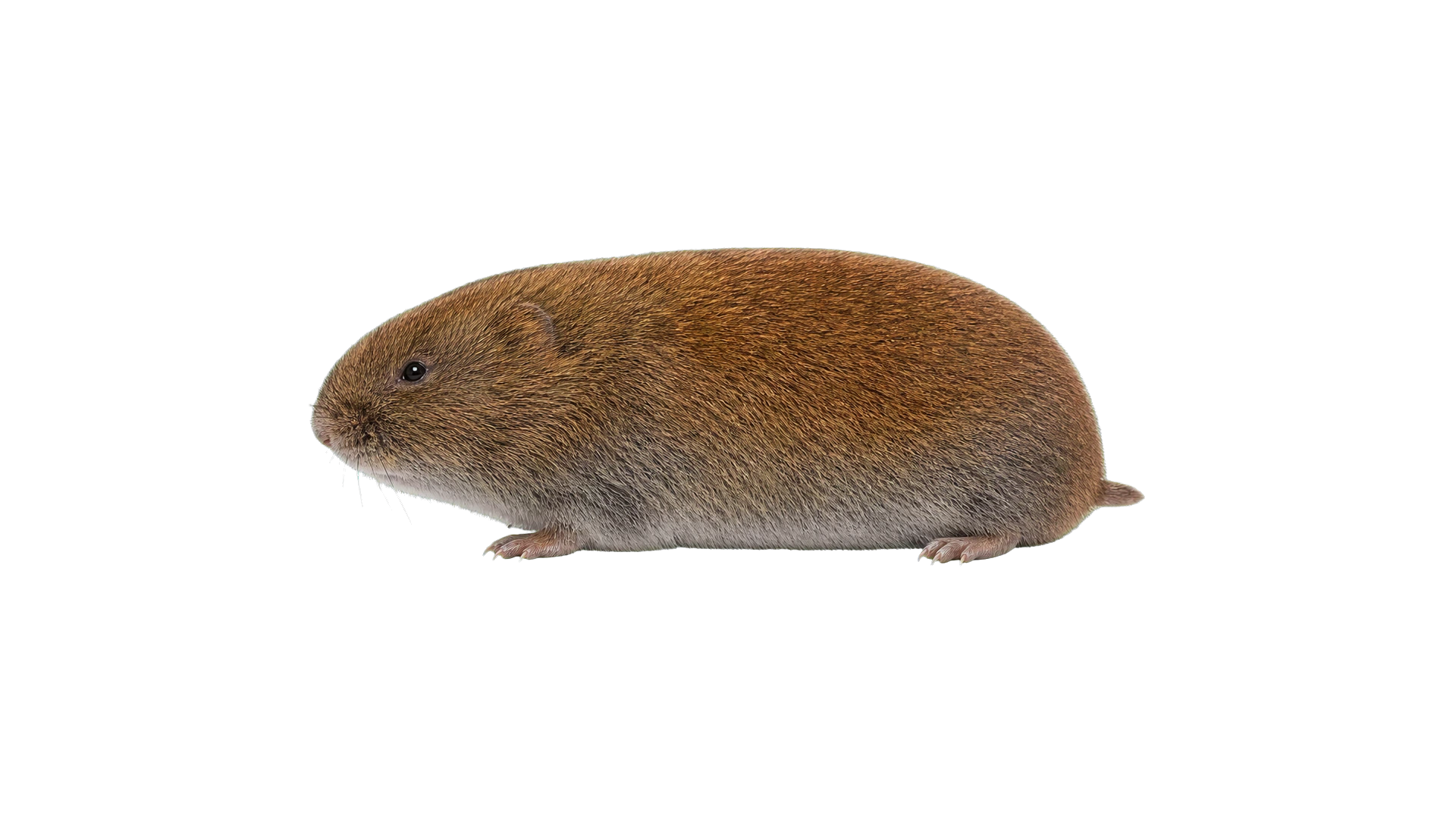
  • Voles: short-tailed surface tunnelers damaging lawns and ornamentals.

Rodents by the Numbers

Rodents account for roughly 40 percent of all mammal species worldwide. In the United States, rodent activity contributes to an estimated 20 to 25 percent of structural fires of unknown origin, traced to chewed wiring. Annual property damage from commensal rodents alone runs into the billions of dollars. A single house mouse can produce more than 50 offspring across her lifetime, and some rat species exceed that figure.

  • 40%+ rodents Mammal species worldwide
  • 5 in/year Incisor growth
  • 6+ groups Common house species

Three Ways to Tell It's a Rodent

Three quick checks separate a rodent from a similarly-sized non-rodent (shrew, mole, opossum, juvenile rabbit) before you commit to a treatment plan.

Teeth icon

Pair of large front incisors

Every rodent has two upper and two lower chisel-shaped incisors with no gap and no canine teeth. Damage shows parallel tooth grooves 1 to 4 mm wide depending on species. Shrews and moles have many small pointed teeth and leave different damage.

Size icon

Body length 2 to 24 inches

Rodents in homes range from a 2-inch deer mouse to a 12-inch Norway rat or a 20-plus-inch fox squirrel including tail. Anything substantially larger is not a rodent at all. Body and tail proportions narrow the species fast.

Color icon

Furred body, visible tail

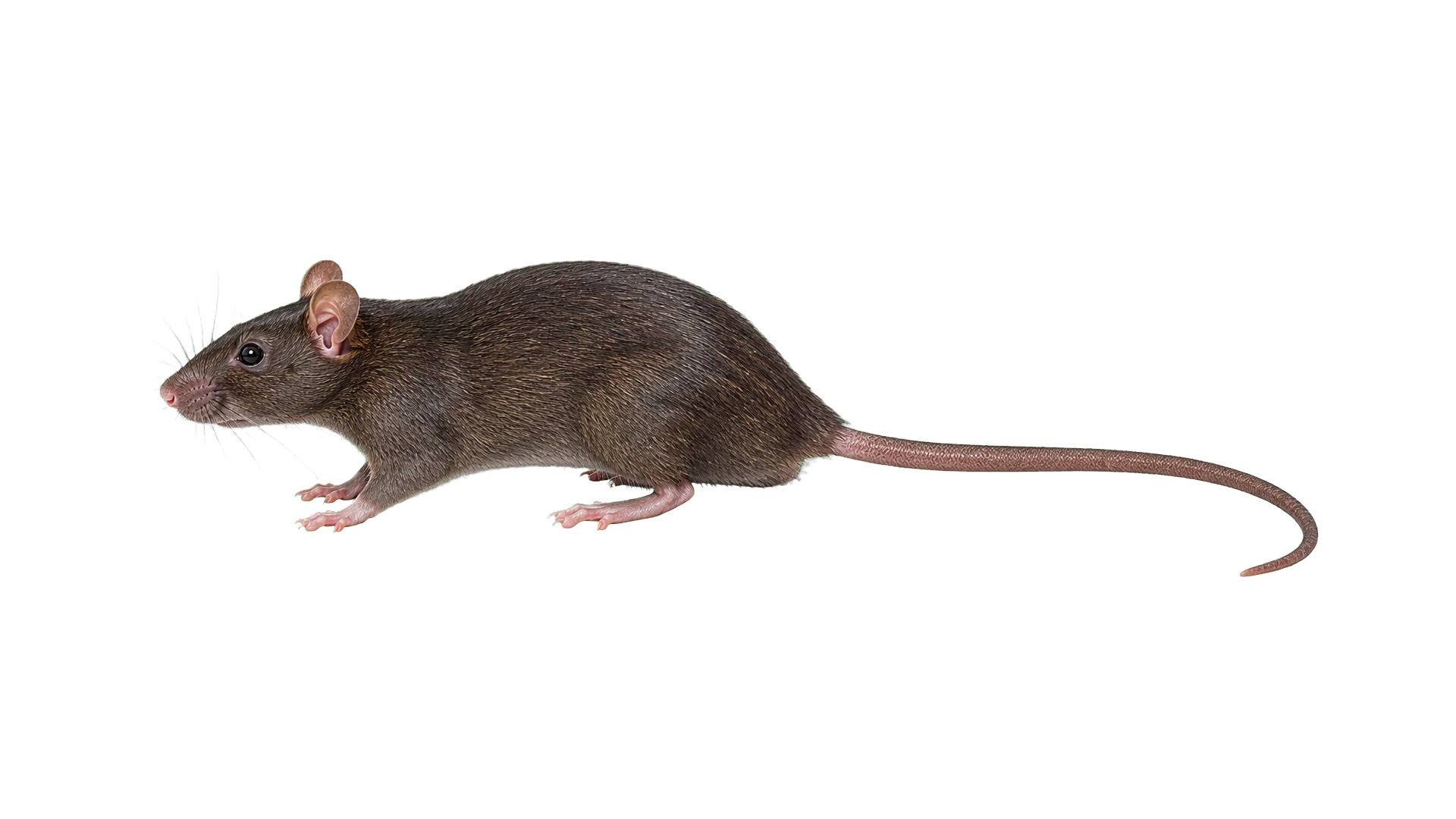
All rodents are furred mammals with an external tail. Tail style separates groups: thin scaled on mice and rats, bushy on squirrels and chipmunks, short stubby on voles, near-absent on moles (which are not rodents).

Signs by Rodent Type

Different rodents leave different evidence. The sign you find usually points to which species before you ever see the animal. Match the pattern below to narrow your diagnosis and your control plan.

How Rodent Issues Escalate

First sign Single droppings near food, gnawed wire, fresh dirt mound, or surface runway in lawn
Active pressure Multiple sign types in multiple rooms or yard zones; sounds at night or visible animal
Established population Reproducing colony in walls, family group in attic, or breeding burrow system in yard

How Different Rodents Actually Live

Indoor commensal rodents (mice and rats) commit to a structure when food, water, and travel routes line up. They establish a fixed nest area, range nightly along the same paths, and reproduce continuously through the year if the home keeps providing what they need. Lasting control on this group is always two-step: aggressive trapping plus systematic exclusion sealing.

Wildlife rodents (squirrels, flying squirrels, chipmunks, voles) come and go more seasonally. Tree squirrels invade attics in late winter for natal nesting and again in fall as juveniles disperse. Flying squirrels colonize attics quietly and stay year-round once established. Chipmunks burrow in spring and stockpile in fall. Voles peak in late summer and fall under heavy ground cover. Each one needs a control approach matched to its biology, not a generic rodenticide.

The biggest mistake homeowners make with rodents is treating the order as a single pest. A rat job is not a vole job, and chipmunk burrows do not respond to mouse exclusion. Identify the species, match the season, and pick the tools (traps, exclusion, habitat work, or referral) that fit the actual animal you have.

Rodent Anatomy at a Glance

Six features that define the order Rodentia and explain why rodents damage homes and yards the way they do.

1 2 3 4 5 6
  1. Continuously growing incisors

    Two upper and two lower self-sharpening incisors grow throughout life. Rodents must wear them down by constant gnawing. This single trait defines the order and drives structural damage.

  2. Single fused mammalian body

    Rodents are placental mammals with a single trunk, four limbs, and fur. No exoskeleton, no segmentation, no antennae. Separates them visually from any insect or arachnid pest.

  3. Four clawed legs

    Quadrupeds. Front paws have four toes plus a reduced thumb; rear paws have five. Climbing varies: gray squirrels are expert climbers, voles barely climb at all.

  4. Tail

    One of the fastest field IDs. Long thin scaled tails: mice and rats. Bushy tails: squirrels and chipmunks. Short stubby tails: voles. Tail-to-body ratio separates similar species.

  5. Whiskers and large ears

    Whiskers extend wider than the body, letting rodents navigate dark wall voids by touch. Ears provide acute high-frequency hearing that detects threats long before a homeowner notices.

  6. Gnaw damage signature

    Parallel tooth grooves vary by species: about 1 mm for mice, 2 mm for chipmunks and voles, 3 to 4 mm for rats and squirrels. Groove width IDs the rodent even without a sighting.

Which Rodent Issue Are You Having?

Pick the situation that fits what you've noticed. Each one points to a different rodent group and a different control approach.

Which Rodent Issue Are You Having?

What You're Seeing

  • Small dark pellets along baseboards, in drawers, on pantry shelves, or in cabinets
  • Pellets are 3 to 6 mm with pointed ends (mice) or 12 to 18 mm with blunt ends (rats)
  • Concentrated in corners or scattered along wall edges

What's Likely Happening

Indoor droppings mean a commensal rodent (house mouse, deer mouse, Norway rat, or roof rat) is feeding and traveling in the structure. Pellet size and shape identify which one. The location maps the active routes, which is the first piece of information any pro will use.

What To Do Now

  • Pros identify the species from droppings, then bait and trap perpendicular to walls along the active routes.
  • Sealing entry points with steel wool, hardware cloth, and silicone caulk so replacement animals cannot follow the same scent trail.
  • Sanitation: cleaning droppings carefully (mask, no sweeping) and storing food in hard containers.

What You're Seeing

  • Scampering, scratching, or thumping overhead
  • Daytime activity (squirrels) or after-dark activity (flying squirrels, mice, rats)
  • Sometimes accompanied by chewing or rolling sounds (squirrels storing nuts)

What's Likely Happening

Attic noise narrows to one of four groups by timing and tone. Daytime running and scratching is almost always a tree squirrel. After-dark scampering with multiple animals is flying squirrel. Lighter scratching at the perimeter is mice. Heavier sustained activity is rats. Each requires a different removal plan.

What To Do Now

  • Inspection identifies entry points (often soffit gaps, gable vents, or roof return cuts).
  • One-way exclusion devices remove squirrels and flying squirrels without trapping; trapping for rats and mice.
  • All openings sealed with hardware cloth or metal flashing; insulation contamination assessed and remediated as needed.

What You're Seeing

  • Quarter-sized holes near foundation, retaining walls, or under patios (chipmunks)
  • Larger holes 2 to 4 inches with mounded dirt (Norway rat outdoor burrows)
  • Conical mole hills or raised soil ridges (moles, an insectivore not a true rodent)

What's Likely Happening

Yard burrows belong to chipmunks, outdoor rats, or moles depending on diameter, location, and surrounding sign. Chipmunk holes are clean, small, and often near hard edges. Rat holes are larger with greasy rub marks. Mole tunnels are continuous ridges with no clean entry hole and no surface runways.

What To Do Now

  • Pros identify the burrower from the hole and surrounding sign.
  • Chipmunk control combines trapping with habitat reduction near foundations.
  • Rat outdoor burrow control uses tamper-resistant bait stations along the burrow system.
  • Mole control is trapping along active surface tunnels, separate from rodent control entirely.

What You're Seeing

  • Surface runways 1 to 2 inches wide cut through grass, often radiating from cover (voles)
  • Raised tunnel ridges across the lawn that collapse underfoot (moles)
  • Conical soil mounds with no surface trails connecting them (moles)

What's Likely Happening

Lawn surface damage is voles or moles, and the two are routinely confused. Voles are rodents that eat plants and travel above ground in clipped grass runways. Moles are insectivores (not rodents) that tunnel below ground for earthworms and grubs and rarely surface. Treatment is completely different.

What To Do Now

  • Vole control: snap traps placed in runways under cover boards, plus removal of dense ground cover.
  • Mole control: harpoon or scissor-jaw traps set on active surface tunnels (the ones that re-form within 24 hours of being flattened).
  • Rodenticide is rarely the right tool for either; bait acceptance is poor and non-target risk is high.

How Urgent Is This Really?

Rodents include mice, rats, voles, and a long list of squirrel and chipmunk species. Their urgency curves differ in detail but share the same shape: a single intruder becomes a colony fast, and the damage compounds the longer they're inside. The timeline below covers the common pattern.

  1. 0 to 2 weeks
    Monitor

    First evidence: droppings in one location, a single sighting, or rustling sounds at night. Most rodent species establish inside 7 to 14 days of consistent food and shelter access. This is the cleanest stage to close out before population math takes over.

    • Identify species: 3-6 mm mouse pellets, 12-18 mm rat droppings, oval and dark for voles
    • Walk the exterior and seal gaps over 1/4 inch (mice) or 1/2 inch (rats) with hardware cloth
    • Pre-bait traps for 2 to 3 days before setting; rodents avoid new objects in their territory
  2. 2 weeks to 1 month
    Act soon

    Sightings or droppings in 2 or more rooms, gnaw marks on packaging, or grease smudge marks along baseboards. The colony is breeding inside the structure and using the home as both food source and harborage at the same time.

    • Set 6 or more traps in active corridors and around droppings; mouse traps for mice, rat snaps for rats
    • Strip clutter from garage, basement, and storage closets, the primary harborage zones for all rodents
    • Seal food in glass or hard plastic. Paper and thin plastic packaging are not rodent-proof at all
  3. 1 to 3 months
    Urgent

    Daytime sightings, nightly noise in walls or attic, chewed wires, or visible nest material in storage areas. Population is likely 10 or more animals and reproducing weekly. DIY rarely closes this out without professional exclusion work.

    • Stop using poisons in living spaces. Dead rodents in walls cause severe odor for 2 to 3 weeks
    • Document chewed wires and entry points with dated photos before a professional inspection
    • Schedule a full inspection covering attic, crawlspace, and exterior exclusion in one site visit
  4. 3 months and beyond
    Critical

    Established colony with nests, urine smell in walls, or sightings during the day. Risk includes electrical fires from chewed wiring, pantry contamination, and disease exposure (hantavirus, leptospirosis, salmonella). Multi-visit professional treatment plus full exclusion is required.

    • Wear gloves and N95 cleaning droppings. Several rodent diseases aerosolize from disturbed nests
    • Replace contaminated insulation if nests are found in attic or crawlspace cavities
    • Plan for 90 days of follow-up monitoring. Escaped rodents re-establish quickly without exclusion

Cold weather compresses this timeline for every rodent species. Every fall, populations push indoors for warmth and stored food, the next stage arrives faster than the prior one suggests.

Pest Control Pros serving the city of the state of your city and nearby areas

Local rodent specialists identify the species, match the control method, and seal the structure so the next animal cannot follow the same path in.

Available 24/7
(888) 495-1510

What Pulls Rodents Toward a House

Rodents do not pick houses at random. They follow signals: pet food bowls left out overnight, branches overhanging the roof within 8 feet, mulch piled 3 inches deep against shrub bases. Once a scout finds a reliable food source paired with a sheltered entry, the colony commits and a breeding pair can produce 5 to 10 litters per year, so what looks like 2 to 3 animals becomes 40 plus inside a single season.

Different rodent species chase different rewards, which is why ID matters. House mice and Norway rats follow ground-level food (kitchen crumbs, pet food, trash) and enter through utility penetrations and garage door gaps. Roof rats climb into palm fronds, attics, and citrus trees through soffit gaps. Tree squirrels and flying squirrels enter attics through gable vents and worn flashing. Chipmunks burrow under retaining walls and feed under bird feeders. Voles work surface runways through lawn thatch and mulched beds. Knowing the species tells you whether to seal at ground level, roof level, or in the lawn.

Sealing entries beats trapping every time. A young mouse passes through a 1/4 inch gap and a young rat through 3/4 inch (a quarter), so any gap that size or larger is an open door. Start with the highest-leverage source: walk the foundation, garage door, utility penetrations, soffits, and rooflines at dusk and seal every gap with 1/4 inch hardware cloth, steel wool, and exterior caulk. Then remove ground food sources for 30 days. Even partial wins help: sealing a 1/2 inch gap around a dryer vent and pulling pet bowls in at dusk often cuts indoor sightings to zero within 7 to 14 days because rodents shift to easier targets fast.

Where Rodents Concentrate

Behind kitchen appliances

Mice and rats: warm, dark, near food, and rarely cleaned. Pull stove, fridge, and dishwasher annually for inspection. Single most common indoor commensal nesting site.

Attic insulation and rafters

Tree squirrels, flying squirrels, roof rats, and deer mice all use attics. Look for trampled insulation, droppings on the vapor barrier, gnawed rafter corners, and chewed wire.

Wall voids and crawl spaces

Hidden travel routes for mice, rats, and chipmunks. Check around plumbing penetrations, electrical outlets, and where two walls meet at the floor for greasy rub marks.

Garages and outbuildings

Mice, rats, chipmunks, and squirrels stage here before moving deeper. Stored cardboard, dog food bags, and bird seed convert garages into rodent highways.

Foundation perimeter and walls

Chipmunk burrow zones and rat outdoor burrow zones. Retaining walls, rock piles, and dense ground cover within 6 feet of the foundation are the highest-risk strip.

Lawn and garden surface

Vole runways and mole tunnel ridges. Inspect quarterly during spring and fall when both peak. Surface trails through grass are voles; raised ridges with no entry are moles.

How Rodent Populations Compound

Why rodent issues run on a months-not-years timescale across nearly every species in the order.

  1. Born helpless

    0 to 3 weeks

    Most rodents are born blind, hairless, and entirely dependent on the mother. Nests are hidden in walls, attic insulation, hollow trees, or underground burrows. A litter is 4 to 12 young depending on species; the female may already be pregnant with the next.

  2. Weaning

    3 to 8 weeks

    Young transition to solid food and start exploring the natal area. Tree squirrel and flying squirrel young remain in the nest longer than mouse and rat young; chipmunk and vole young disperse fastest.

  3. Sexually mature

    6 weeks to 6 months

    House mice and voles can breed at 6 weeks, rats at 8 to 12 weeks, chipmunks and squirrels at 6 to 11 months. The fast-cycling species are the ones whose populations explode within a single season; the slower species build year over year.

  4. Adult life

    9 months to several years

    Mice live under a year indoors; rats often die before age two. Squirrels and chipmunks live 3 to 5 years in the wild and longer when sheltered in attics. Indoor rodents have no predators and breed continuously through winter when conditions allow.

Across the order, generation time is short and offspring counts are high. That is why early action matters and why pest control built around population biology beats reactive trapping. The rodents on your property today are reproducing on a calendar most homeowners never bother to track.

IMPORTANT

Sealing Entries Beats Trapping for Every Rodent

Trapping is satisfying. Sealing is what actually ends the issue. Across every rodent species, removal without exclusion just rotates the population: kill the current colony and the next one finds the same gap within 4 to 8 weeks. House mice squeeze through a hole the size of a dime (about 6 mm). Norway rats need just half an inch (13 mm). Roof rats slip through quarter-inch gaps at the roofline. Chipmunks dig under hardware cloth that is not buried at least 8 inches. Flying squirrels use any gable vent without 1/4-inch mesh. The sealing toolkit is short: quarter-inch hardware cloth backed with silicone or copper mesh for gaps and vents, sheet metal flashing for roofline transitions, foundation crack repair with mortar or expanding polyurethane. Steel wool and caulk alone fail because rats and mice chew through both. Match the species to the gap size, seal every opening that fits the rodent's body diameter, and the structure stops re-hosting. Trapping cleans up the current population. Exclusion stops the next one.

What Actually Works Across Rodents

Honest read on common DIY methods. The right tool depends entirely on which rodent you have.

Can work icon

What can work

Species ID first, tools second

  • Identify the rodent from droppings, runways, burrow size, sound timing, or visual sighting
  • Match the control method to the species: snap traps, body-grip traps, one-way exclusion, bait stations, habitat work
  • Pair removal with exclusion or habitat reduction so replacements cannot use the same path

Exclusion sealing where it applies

  • Steel wool plus silicone caulk for mouse and rat gaps
  • Hardware cloth (1/4 inch) over dryer vents, soffit gaps, and gable vents for squirrels and flying squirrels
  • Sturdy screen and weep-hole covers for foundation and crawl space access

Habitat reduction for outdoor groups

  • Trim branches 8+ feet back from rooflines for tree squirrels
  • Remove rock piles, mulch beds, and dense ground cover within 6 feet of the foundation for chipmunks
  • Reduce lawn thatch and ornamental cover for voles; reduce irrigation and address grub populations for moles
Falls short icon

What reliably falls short

Single-method approach for any rodent

  • Snap traps without exclusion: catches the visible animals while replacement keeps coming
  • Bait stations alone: kills some, ignores entry points, dead animals in walls
  • Repellents and ultrasonic devices: little to no peer-reviewed evidence of sustained effect

Wrong tool for the species

  • Rodenticide for voles or moles: bait acceptance is poor and risk to non-target wildlife is high
  • Snap traps for chipmunks or squirrels: these animals are too large or too cautious for mouse traps
  • Glue boards for any rodent: rarely solves the problem and creates animal welfare and disposal issues

Skipping species identification

  • Treating attic noise as mice when it is squirrels: animals never enter the bait stations
  • Treating yard tunnels as rodent when they are mole: trapping the wrong animal
  • Generic rodent control is a series of partial jobs without species ID

How to Make a Property Rodent-Resistant

Six prevention actions that pay off across multiple rodent species, sorted by effort. Most rodent pressure responds to a few high-leverage changes.

  • Pet bowl icon
    Easy Nightly

    Pick up pet food overnight

    Closes the most reliable nighttime draw for mice, rats, chipmunks visiting the garage, and outdoor rats. Single highest-leverage indoor sanitation change.

  • Container icon
    Easy Quarterly

    Hard-container all dry goods

    Cereal, rice, flour, pet food, bird seed in glass or hard plastic with tight lids. Cuts mouse and rat reward in pantry, garage, and shed all at once.

  • Entry points icon
    Moderate 1 hour

    Walk the perimeter at dusk

    Look for gaps wider than a pencil around utility lines, dryer vents, foundation cracks, and garage door corners. Mark them; come back with steel wool, hardware cloth, and silicone.

  • Clutter icon
    Moderate Half day

    Pull cover off the foundation

    Remove rock piles, deep mulch, and dense ground cover within 6 feet of the house. Cuts chipmunk burrow appeal and vole pressure on adjacent beds.

  • Perimeter icon
    Advanced Project

    Roofline exclusion sweep

    Hardware cloth on every soffit, gable, and foundation vent. Trim branches back 8 feet from the roof. Closes squirrel, flying squirrel, and roof rat entry points in one campaign.

  • Lawn icon
    Advanced Annual

    Lawn and irrigation tuning

    Reduce thatch, lift overgrown ground cover, and audit irrigation against grub population. Cuts vole pressure and reduces the soil biology that feeds mole tunneling.

When Each Rodent Group Peaks

Rodent pressure cycles through the year, but each species has its own calendar. Match the season to the species you are watching for.

  • Spring

    Tree squirrels enter attics for natal nesting (February to April). Chipmunks emerge from torpor and start burrowing. Outdoor rat populations resume breeding. Voles produce early litters under residual ground cover. Mole tunneling becomes visible as soil softens.

  • Summer

    Outdoor populations build steadily across most species. Indoor commensal pressure is at its lowest. Squirrels disperse juveniles. Chipmunks stockpile through dry weather. Vole and mole activity continues underground without much surface evidence in many regions.

  • Fall

    Peak indoor invasion season. Mice, deer mice, and roof rats move toward warm structures as nights drop below 50 degrees. Squirrels enter attics for winter nesting. Voles peak under fall ground cover and food caches. Chipmunks make final stockpile runs before winter.

  • Winter

    Indoor commensal colonies breed continuously through winter. Squirrels and flying squirrels nest in attics. Chipmunks enter true torpor in cold regions. Voles survive under snow cover and damage tree bark and roots. Moles continue tunneling under frost line in many soil types.

What a Pro Rodent Visit Looks Like

Four steps from arrival to a control plan matched to the species. Initial visit runs 60 to 90 minutes for most rodent jobs.

Identify, match, exclude, verify. Real rodent work is species-specific and exclusion-paired. Pros who skip identification or skip exclusion produce repeat visits.

Want a real diagnosis? (888) 495-1510
  1. Sign and species assessment

    Walk the interior and exterior. Catalog droppings, runways, gnaw marks, burrows, and audible activity. Identify the species before placing anything: mouse vs rat vs squirrel vs chipmunk vs vole vs mole.

  2. Method selection by species

    Snap traps and bait stations for commensal mice and rats. One-way exclusion devices for tree squirrels and flying squirrels. Trap-and-relocate or lethal trapping for chipmunks. Runway snap traps for voles. Subsurface trapping for moles.

  3. Structural and habitat work

    Exclusion sealing for indoor rodents (gaps under quarter inch). Roofline exclusion for attic groups. Ground cover and irrigation reduction for outdoor groups. Each species gets the matching habitat work, not a generic perimeter spray.

  4. Follow-up and verification

    Return at 7 to 14 days for indoor jobs, longer for wildlife exclusions while one-way devices run. The colony or family is gone when sign stops appearing across two consecutive checks.

What Homeowners Say After Rodent Removal

Real stories from households who connected with pros to identify the rodent species, remove the population, and seal the structure or yard.

Sen N.
Sen N.
Ogden, UT

"They sealed every entry point we missed."

Mice kept getting into the kitchen through gaps we didn't even know existed. The tech did a full inspection, sealed everything, and set traps for the ones already inside. Problem solved within a week.

Sen N.
Sen N.
Ogden, UT

"They sealed every entry point we missed."

Mice kept getting into the kitchen through gaps we didn't even know existed. The tech did a full inspection, sealed everything, and set traps for the ones already inside. Problem solved within a week.

Sanjay J.
Sanjay J.
Anchorage, AK

"Garage sealed against winter rodents."

During winter, mice kept finding their way into our garage and eventually the kitchen. The inspector identified the entry points along the foundation and sealed them. We went the rest of the season without seeing a single mouse.

Amrit W.
Amrit W.
Stamford, CT

"Attic finally sealed against mice."

Every winter we heard scratching in the attic. The tech found multiple entry points along the roofline and sealed them after treating the area. This is the first winter we haven't had the problem.

Philip M.
Philip M.
Newark, DE

"Pantry entry points sealed against mice."

We kept finding droppings in the pantry and couldn't figure out the entry point. The tech traced the path from outside and sealed several small gaps we had missed. The mice stopped getting in immediately.

Lei H.
Lei H.
Meridian, ID

"Winter mouse cycle finally broken."

We sealed what we could ourselves, but mice still got in every cold season. The inspector found gaps we missed around pipes and vents and sealed them properly. This winter has been completely quiet.

Harriet O.
Harriet O.
Chicago, IL

"Wall mice gone, quiet nights again."

We heard scratching at night and found droppings in the pantry. The tech located the entry points near the foundation and sealed them. The trapping and treatment plan worked quickly and the noise stopped completely.

Deshawn N.
Deshawn N.
Fort Wayne, IN

"Old house sealed against persistent mice."

Our older home had more entry points than we realized. The pro did a full inspection and sealed the gaps while setting traps in the active areas. The mice stopped getting in and we felt much better about the situation.

Ling W.
Ling W.
Cedar Rapids, IA

"Attic insulation cleared of mice."

We found mouse droppings in the attic and nesting material in the insulation. The inspector sealed the roof-level entry points and treated the area. They explained how Iowa winters push rodents indoors aggressively.

Andrew Y.
Andrew Y.
Topeka, KS

"Garage gaps sealed against mice."

The gap under our garage door was just enough for mice to squeeze through. The inspector identified this and other small gaps around the foundation. After sealing and treating, the mice stopped showing up inside.

Carrie Y.
Carrie Y.
Covington, KY

"Basement foundation sealed against mice."

The old foundation had cracks that mice were using to get inside. The provider sealed the gaps and treated the interior. They were thorough about finding every potential entry point, which made the fix last.

Nisha L.
Nisha L.
Portland, ME

"First winter without mice in the walls."

Maine winters drove mice into our walls like clockwork. The provider found entry points along the sill plate and around utility lines. After sealing and treating, we made it through the entire winter without hearing them.

Felipa Q.
Felipa Q.
Rockville, MD

"Siding gaps sealed against mice."

We found droppings in the kitchen and the provider traced the entry to a gap behind the siding near ground level. Sealing that area and a few others stopped the mice from entering. The approach was systematic.

Isaiah F.
Isaiah F.
Detroit, MI

"Walls and attic cleared of mice."

The scratching sounds at night had us worried. The provider found entry points along the roofline and foundation and sealed them all. They explained how Michigan winters force rodents to find warm shelter fast.

Jean C.
Jean C.
Minneapolis, MN

"Old house sealed before winter rodent season."

Our older home had gaps around pipes and vents that mice were exploiting. The provider did a thorough inspection and sealed everything. They explained that in Minnesota, rodent-proofing before winter is essential.

Donald L.
Donald L.
Springfield, MO

"Mice cleared from under the deck."

We noticed mouse activity under the deck and eventually inside the house. The provider sealed the entry points from the deck area and treated the perimeter. The activity stopped within days.

Clayton Q.
Clayton Q.
Billings, MT

"First mouse-free winter beside the fields."

Living near open fields means constant mouse pressure in the fall. The provider sealed every gap along the foundation and set up a perimeter treatment. We went the whole winter without mice inside for the first time.

Soledad D.
Soledad D.
Lincoln, NE

"Utility line gaps sealed against mice."

The provider found that mice were entering where utility lines passed through the exterior wall. They sealed those penetrations and treated the interior. It was a simple fix that made a huge difference.

Jenna Q.
Jenna Q.
Reno, NV

"Cold-weather mouse entries sealed off."

Reno winters get cold enough to push mice indoors. The provider identified gaps around the garage door and dryer vent and sealed them. The trapping program they set up handled the remaining mice quickly.

Cynthia Y.
Cynthia Y.
Nashua, NH

"Annual attic mouse cycle broken."

Every fall, mice would settle into our attic. The provider sealed the roofline gaps and treated the space. They explained that proactive sealing before autumn is the key to breaking the yearly cycle.

Kameron V.
Kameron V.
Santa Fe, NM

"Adobe walls sealed against mice."

Our adobe home had small cracks that mice were using as entry points. The provider sealed the gaps with appropriate materials and treated the interior. They understood the unique challenges of adobe construction.

Chantal W.
Chantal W.
Buffalo, NY

"First winter without a single mouse."

Buffalo winters are harsh and mice would always find a way in. The provider sealed the entire foundation perimeter and around every utility penetration. For the first time, we had a winter without mice.

Yolanda G.
Yolanda G.
Fargo, ND

"Sealed up before the mice could move in."

Every September, mice would start appearing inside. The provider sealed the foundation and roofline gaps before fall and set up monitoring. For the first time, we made it through winter without a single mouse inside.

Jaquan X.
Jaquan X.
Cleveland, OH

"Garage walls cleared and sealed off."

We found nesting material behind the garage drywall. The provider removed the nests, sealed the entry points, and treated the area. They explained how attached garages are a common entry route for rodents in Ohio winters.

Joshua K.
Joshua K.
Bend, OR

"Cabin sealed against forest mice."

Our home near the forest had multiple entry points for mice. The provider systematically sealed the foundation, roofline, and utility penetrations. They explained that rural properties in Oregon need extra attention to exclusion.

William F.
William F.
Scranton, PA

"Century-old home finally mouse-free."

Our century-old home had gaps everywhere that mice exploited. The crew did a complete exclusion job, sealing around the foundation, windows, and utility lines. The scratching sounds stopped and we've been mouse-free since.

Jorge L.
Jorge L.
Warwick, RI

"Porch crawl access sealed against mice."

We found nesting material and droppings under our enclosed porch. The pro sealed the access points and treated the area. They explained how enclosed but unheated spaces become rodent havens in winter.

Shreya G.
Shreya G.
Sioux Falls, SD

"First mouse-free winter in years."

South Dakota winters mean mice look for any warm shelter. The inspector sealed our foundation gaps and utility penetrations before fall. Combined with perimeter treatment, we had our first mouse-free winter in years.

Daniel A.
Daniel A.
Montpelier, VT

"Attic sealed and cleared of nesting mice."

Vermont winters are brutal and mice were making our attic their home. The crew sealed every roofline gap and treated the space. They explained that insulation provides perfect nesting material for rodents.

Aaliyah S.
Aaliyah S.
Tacoma, WA

"Crawl space vents sealed against rats."

Rats had found an opening in our crawl space vent and were getting into the walls. The pro secured the vents, sealed the gaps, and set up a removal plan. The problem was resolved within a couple of weeks.

Mekhi P.
Mekhi P.
Morgantown, WV

"Mountain cabin sealed against fall mice."

Our mountain cabin would fill with mice every autumn. The crew sealed the foundation and treated the perimeter. They explained that mountain properties near wooded areas need proactive sealing before the cold sets in.

Aliyah G.
Aliyah G.
Milwaukee, WI

"Basement storage cleared and sealed."

We found mouse droppings and nesting material among our basement storage boxes. The tech sealed the foundation gaps and treated the area. They explained how keeping storage off the floor makes monitoring easier.

Claudia V.
Claudia V.
Cheyenne, WY

"Prairie-edge home sealed against field mice."

Living near open prairie means field mice constantly try to get inside when temperatures drop. The inspector sealed our foundation and around all utility penetrations. The exclusion work has held up through two winters now.

Damon Q.
Damon Q.
Decatur, AL

"Garage rodents cleared before more wire damage."

We heard scratching in the walls and found rodent droppings near the electrical panel. The tech sealed entry points along the foundation and set up targeted removal. They warned us about the fire hazard from chewed wires, which we got repaired immediately.

Kierra F.
Kierra F.
Palmer, AK

"Pantry pipe gaps sealed against mice."

Every fall, mice found their way into our pantry through gaps near the plumbing. The tech sealed the openings and set up traps in key areas. They explained how Alaska's cold drives rodents indoors earlier than most people expect.

Aaron X.
Aaron X.
Sitka, AK

"Crawl space vents sealed against rats."

Rats were nesting in the crawl space and we could hear them at night. The crew installed vent covers and sealed around pipe penetrations. The activity stopped within days of closing off the access points.

Jay R.
Jay R.
Nome, AK

"Attic insulation restored after mice cleared."

We noticed our heating bill spiked and found mouse damage throughout the attic insulation. The tech removed the nesting material, sealed entry points, and set up monitoring. The energy savings from fixing the insulation alone made it worthwhile.

Norma E.
Norma E.
Gilbert, AZ

"Engine bay pack rat nest removed."

A pack rat built a nest in my truck engine and chewed through wiring. The wildlife specialist removed the nest and treated the parking area with deterrents. They recommended checking under the hood regularly, which has kept the rats from returning.

Dion X.
Dion X.
Flagstaff, AZ

"Cold-weather mouse entries sealed off."

At Flagstaff's elevation, cold weather brings mice inside fast. The inspector found gaps around the dryer vent and water lines and sealed everything. They set up monitoring stations to catch any new entry attempts before they become a problem.

Belen F.
Belen F.
Rogers, AR

"Wall nests removed and roofline sealed."

We could hear something moving in the walls at night. The inspector found rodent nests inside the wall cavities and sealed the roof-line gaps they were using. The noise stopped completely after the exclusion work was finished.

Norma I.
Norma I.
Long Beach, CA

"Palm-tree rat route to the attic cut off."

Roof rats were using the palm trees to access our attic. The tech trimmed the branches away from the roofline and sealed every opening along the eaves. They explained that palm trees are highways for rats in Southern California.

Common Questions About Rodents

Direct answers to what homeowners ask most about rodent issues across the order.

  • How do I tell which rodent I'm dealing with? Toggle answer for: How do I tell which rodent I'm dealing with?

    Identifying the rodent is the most important step before placing any traps or hiring anyone to help. Different rodents respond to different tools, and the wrong method on the wrong species produces a callback in three weeks rather than a solved issue. Several diagnostic checks separate the common groups. Indoor droppings are the fastest tell. Rod-shaped pellets 3 to 6 millimeters long with pointed ends along baseboards belong to mice. Larger blunt-ended pellets 12 to 18 millimeters belong to rats. Pellets in the attic mixed with insulation belong to roof rats, deer mice, or flying squirrels depending on size and pattern. The dropping itself often identifies the animal before you ever see one. Daytime versus nighttime activity narrows attic noise. Squirrels are diurnal and active during daylight; rats, mice, and flying squirrels are mostly nocturnal. Heavy daytime running and rolling sounds in the attic are tree squirrels. After-dark scampering with multiple animals is flying squirrels. Lighter scratching at the perimeter is mice. Heavier sustained activity near the rafters is roof rats. Burrow holes in the yard are sized by species. Quarter-sized clean holes near foundations or retaining walls are chipmunks. Holes 2 to 4 inches with mounded dirt and greasy entry edges are Norway rats. Conical soil mounds with no clear entry hole and raised tunnel ridges are moles, which are insectivores rather than true rodents. Surface lawn damage separates voles from moles. Voles cut clear runways 1 to 2 inches wide through grass and clip the blades flat as they travel; the runways radiate from cover and look like grass paths. Mole damage is raised tunnel ridges that collapse underfoot, plus conical hills, with no surface trails connecting them. The two are routinely confused and require different treatments. Tail style helps with visual sightings. Long thin scaled tails belong to mice and rats. Bushy tails belong to gray squirrels, fox squirrels, red squirrels, and chipmunks (chipmunks are smaller with stripes). Flat tails belong to flying squirrels. Short stubby tails belong to voles. Body size narrows further. Mice top out at 4 inches body length. Rats run 7 to 10 inches body length. Chipmunks are 5 to 6 inches with stripes. Gray squirrels are 9 to 12 inches body length plus an equally long tail. Voles are 4 to 6 inches with a short tail. Photographs from a doorbell camera or attic inspection often clinch the ID. Damage signature also identifies the rodent. Tooth grooves run in parallel pairs and vary by species: about 1 millimeter for mice, 2 millimeters for chipmunks and voles, 3 to 4 millimeters for rats and squirrels. The width of the groove identifies the animal even when no animal is seen. Most homeowners struggle most with attic noise (squirrel versus rat versus flying squirrel) and yard damage (vole versus mole). Those two distinctions matter the most because the wrong identification produces ineffective treatment. The honest framing is that species ID is mandatory for effective rodent work, and the sign the animal leaves usually identifies it before any trap is set.

  • Are mice and rats the only rodents I should worry about indoors? Toggle answer for: Are mice and rats the only rodents I should worry about indoors?

    No. Tree squirrels (gray, fox, red) invade attics for natal nesting in late winter and again as juveniles disperse in fall. Squirrel activity is daytime with characteristic rolling sounds when they cache nuts in insulation. Entry holes run 2 to 3 inches. Flying squirrels are nocturnal communal nesters (4 to 20 animals) that often go unnoticed for months. They enter through gable vents and soffit gaps in the eastern US and along the West Coast. Chipmunks occasionally enter through ground-level gaps, usually as single animals. Voles rarely enter homes but damage stored produce and foundation insulation. Moles are insectivores, not rodents, and stay underground. Misidentification is common with attic activity. Treatment differs by species: mice respond to snap traps, attic squirrels need one-way exclusion plus roofline sealing, flying squirrels need careful exclusion timing because of communal nesting.

  • Why do rodents chew on wires and wood? Toggle answer for: Why do rodents chew on wires and wood?

    Continuously growing incisors. Every rodent has two upper and two lower chisel-shaped front teeth that grow 4 to 6 inches per year of potential. The teeth are open-rooted and would grow out of control without constant wear. The animal must gnaw to keep teeth functional. The front face is hard enamel, the back is softer dentin. Gnawing wears the back faster than the front, producing a self-sharpening chisel edge. The geometry only works against materials hard enough to cause meaningful wear, which is why wood, drywall corners, and electrical insulation are preferred substrates over soft food. Chewed wires create fire risk. The behavior is dental, not nutritional, so removing food sources does not stop damage. Tooth groove width identifies the species: mice about 1 mm, voles and chipmunks 2 mm, rats and squirrels 3 to 4 mm. Only structural exclusion stops the damage.

  • Are voles and moles the same thing? Toggle answer for: Are voles and moles the same thing?

    No. Voles are rodents (order Rodentia) with continuously growing front incisors. They eat plants: grass, roots, bulbs, bark. Moles are insectivores (order Eulipotyphla) with many small pointed teeth. They eat earthworms and grubs and tunnel underground. Body shape differs: voles look like fat short-tailed mice (4 to 6 inches) with small ears and blunt snouts. Moles have cylindrical bodies built for tunneling, paddle-shaped front feet, tiny eyes, no external ears, and velvety fur. Damage patterns are distinct. Vole damage is surface runways 1 to 2 inches wide cut through grass plus stripped bark on young trees. Mole damage is raised soil ridges where shallow tunnels run plus conical hills. Walk the damage to identify: flat clipped grass paths are vole runways; raised ridges that collapse underfoot are mole tunnels. Treatments do not cross over.

  • How fast do rodent populations grow? Toggle answer for: How fast do rodent populations grow?

    Exponentially. House mice reach sexual maturity at 6 weeks with 19 to 21 day gestation. A single female produces 5 to 10 litters per year of 5 to 12 pups each, with adjacent litters overlapping (already pregnant while nursing). Lifetime offspring commonly exceeds 50 in stable indoor populations. Norway rats produce 4 to 7 litters per year of 6 to 12 pups. Voles reach maturity at 5 to 6 weeks and produce 5 to 10 litters per year. Indoor populations have no winter breeding pause because temperatures stay stable. A single pregnant female entering in October can produce 30 to 60 descendants by mid-winter as second-generation females start their own litters. Trapping visible animals is necessary but not sufficient. Hidden females in walls continue producing replacements. Exclusion sealing prevents replacement individuals from following scent trails.

  • Will sealing my house keep rodents out? Toggle answer for: Will sealing my house keep rodents out?

    Yes, when done comprehensively. House mice pass through gaps as small as 1/4 inch (pencil diameter). Adult rats need 1/2 inch. Tree squirrels and flying squirrels need 1 to 2 inch openings. Target 1/4 inch to address all species at once. Most homes have 8 to 15 specific entry points: gaps around dryer vent flashing, utility line penetrations, foundation cracks, garage door corners and bottom seals, soffit and fascia gaps, gable vents without hardware cloth, chimney flashing, and roof return cuts. Stuff small gaps with steel wool sealed under silicone caulk because rodents cannot chew through steel wool. Use 1/4 inch hardware cloth for larger openings. Expanding foam or caulk alone fail. Remove existing animals first; sealing with rodents inside traps them in walls. Pair with habitat reduction (clutter removal, vegetation pruning) for 5 to 10 years of durable exclusion.

  • Do rodenticides work on every rodent? Toggle answer for: Do rodenticides work on every rodent?

    No, results vary by species. House mice, deer mice, Norway rats, and roof rats accept anticoagulant baits readily and die within 7 to 14 days of placement in active routes. Tree squirrels and flying squirrels accept baits inconsistently and dying animals in wall voids produce severe odor. Most operators use one-way exclusion instead. Chipmunk bait acceptance varies with natural food availability. Snap traps in tunnel openings work better. Voles refuse most grain baits because they prefer fresh vegetation. Use snap trapping in surface runways instead. Moles eat only insects and ignore grain baits entirely. Use subsurface tunnel traps. Secondary toxicity is a real concern. Rodents that consume bait poison hawks, owls, foxes, and family pets that eat them. EPA regulations require tamper-resistant bait stations for outdoor use. Modern integrated pest management uses rodenticide selectively, with trapping and exclusion preferred.

Pest Control Pros serving the city of the state of your city and nearby areas

Identify, match the method, seal the structure. Local pros handle the species you actually have, not a generic rodent treatment.

Available 24/7
(888) 495-1510

The Rodent Species You're Likely Dealing With

Click through to the species pages for behavior, regional patterns, and treatment specific to that rodent.

House Mice

The most common household rodent, nesting in walls, cabinets, and storage areas.

House mice can squeeze through gaps as small as a quarter inch, making almost any home vulnerable to entry. They nest in insulation, drawer spaces, and behind appliances, reproducing year-round with litters of five to seven pups every three weeks. Their droppings contaminate food surfaces and their constant gnawing can damage wiring, insulation, and plumbing.

Quick ID:

  • Small dark droppings
  • Gnaw marks on food packaging
  • Scratching in walls at night

Why it matters:

  • They fit through gaps as small as a quarter inch, nearly any home is vulnerable
  • New litters every three weeks mean populations grow exponentially
  • Constant gnawing damages wiring, insulation, and plumbing inside walls
Learn more about House Mice

Deer Mice

Rodents commonly found in garages, sheds, and rural homes.

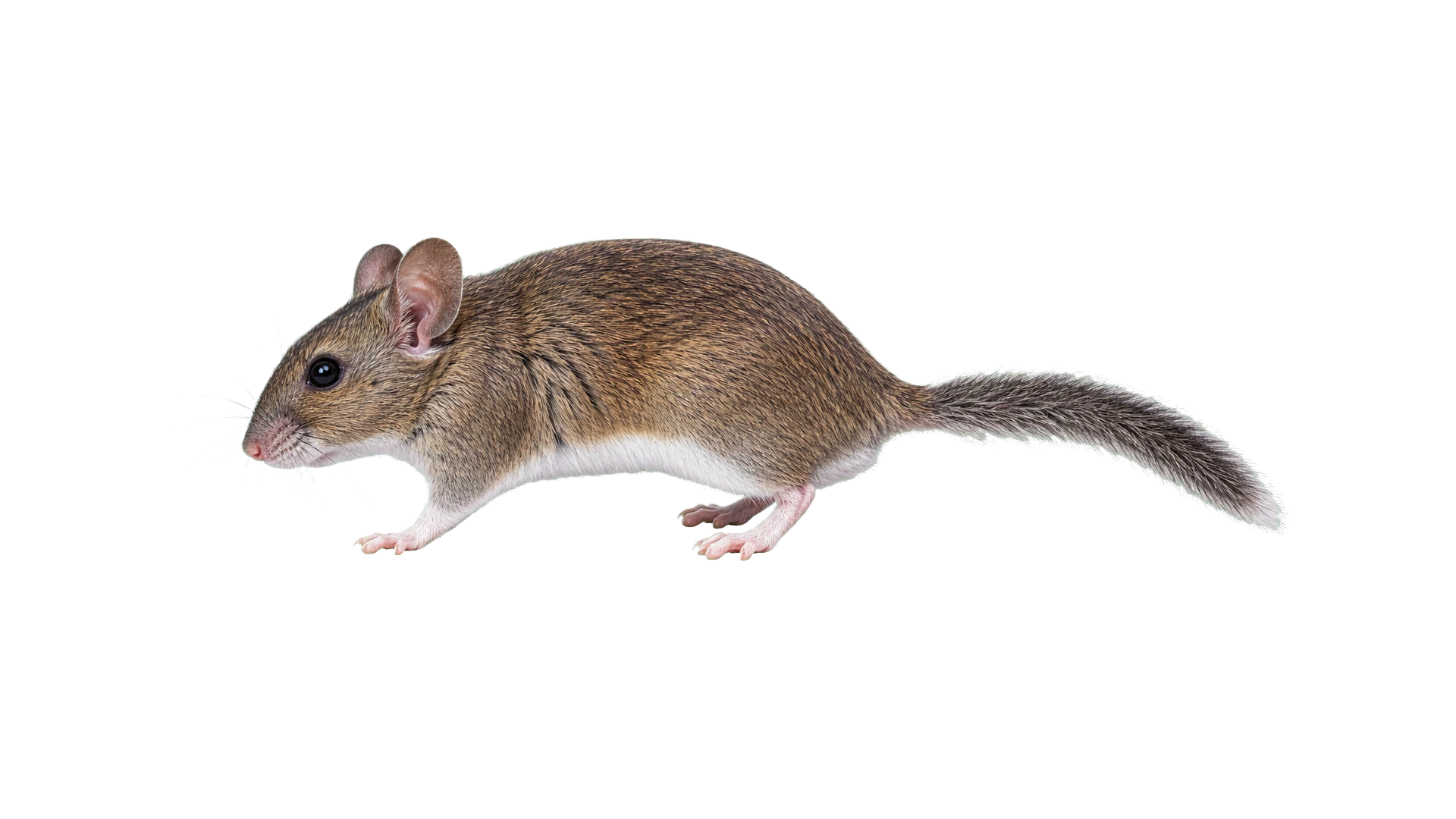
Deer mice resemble house mice but are more common in rural areas and are associated with disease risks when infestations go unnoticed. They carry hantavirus, which can be transmitted through contact with contaminated droppings, urine, or nesting material. Careful cleanup using protective equipment is essential, and professional remediation is recommended for heavy infestations.

Quick ID:

  • Droppings in cabins/sheds
  • Nests of shredded material
  • Stored seeds/nuts

Why it matters:

  • Primary carrier of hantavirus, a potentially fatal respiratory illness
  • Disturbing droppings without protection aerosolizes the virus
  • They nest in sheds, cabins, and garages that sit unused for weeks
Learn more about Deer Mice

Field Mice

Outdoor rodents that invade homes and garages when temperatures drop.

Field mice live in grasslands, meadows, and agricultural areas during warm months but migrate into homes, garages, and outbuildings seeking warmth and food as fall arrives. They contaminate stored goods with droppings and urine, gnaw on wiring and insulation, and reproduce quickly once established indoors. Sealing entry points before fall is the most effective prevention.

Quick ID:

  • Small droppings along walls and in cabinets
  • Gnaw marks on food packaging
  • Nesting material in hidden areas

Why it matters:

  • Fall migration brings sudden large-scale invasions into structures
  • Gnawing on electrical wiring creates hidden fire hazards
  • They contaminate far more food than they consume with droppings and urine
Learn more about Field Mice

Norway Rats

Ground-dwelling rats that burrow near foundations and basements.

Norway rats are strong diggers that often nest in basements, crawl spaces, or underground burrows near building foundations. They are excellent swimmers and frequently enter structures through damaged sewer lines and floor drains. Their gnawing can compromise plumbing, electrical wiring, and even concrete, making prompt professional control essential.

Quick ID:

  • Burrows along foundation
  • Large blunt droppings
  • Gnaw marks on wood/plastic

Why it matters:

  • They swim through sewer lines and emerge from floor drains and toilets
  • Burrows near foundations cause soil erosion and structural settling
  • Powerful jaws gnaw through plumbing, wiring, and even concrete
Learn more about Norway Rats

Roof Rats

Agile climbing rats commonly found in attics and trees.

Roof rats prefer elevated nesting areas and often enter homes via roofs, power lines, overhanging tree branches, and poorly sealed attic vents. They are more slender than Norway rats with longer tails that aid in climbing. Roof rat activity in an attic can contaminate insulation, damage stored items, and create fire hazards from chewed wiring.

Quick ID:

  • Sounds in attic at night
  • Spindle-shaped droppings
  • Gnaw marks on wires

Why it matters:

  • Agile climbers that enter through rooflines most homeowners never inspect
  • Chewed attic wiring is a hidden fire hazard that grows over time
  • They contaminate insulation with droppings, requiring costly replacement
Learn more about Roof Rats

Cotton Rats

Stocky field rats that invade rural properties and carry hantavirus.

Cotton rats are heavy-bodied rodents found in dense vegetation, overgrown fields, and agricultural areas across the southern United States. They construct runway systems through tall grass and readily enter sheds, barns, and garages. Cotton rats are known carriers of hantavirus and several other pathogens, making droppings cleanup and exclusion critical for properties near their habitat.

Quick ID:

  • Runways through tall grass
  • Clipped vegetation along trails
  • Burrow entrances in overgrown areas

Why it matters:

  • Carriers of hantavirus, droppings require careful protective cleanup
  • Overgrown yards and fields provide harborage close to structures
  • They gnaw on stored equipment, wiring, and irrigation systems
Learn more about Cotton Rats

Pack Rats

Nest-building rats that hoard debris and damage vehicles and structures.

Pack rats, also called woodrats, collect sticks, cactus pads, shiny objects, and debris to build large middens (nests) in attics, sheds, engine compartments, and rock crevices. They chew through wiring harnesses in vehicles, HVAC ductwork, and insulation. Their nests also harbor kissing bugs that transmit Chagas disease, adding a serious health dimension to the property damage.

Quick ID:

  • Large debris nests (middens) in attics or under hoods
  • Chewed wires in vehicles
  • Collections of sticks, cactus pads, and shiny objects

Why it matters:

  • Chewed vehicle wiring causes expensive mechanical failures
  • Nests harbor kissing bugs, vectors of Chagas disease
  • Middens attract secondary pests and create fire hazards in structures
Learn more about Pack Rats

Meadow Voles

Surface-tunneling rodents that destroy lawns and girdle young trees.

Meadow voles create extensive runway systems through grass just above the soil surface, killing turf in wide swaths that become visible when snow melts in spring. They gnaw bark from the base of young trees and shrubs during winter, often girdling and killing them. Populations cycle dramatically, during peak years, densities can reach hundreds per acre, causing severe landscape damage.

Quick ID:

  • Surface runways 1-2 inches wide through grass
  • Small burrow holes at runway intersections
  • Dead grass in runway patterns

Why it matters:

  • Winter bark gnawing kills young trees and ornamental plantings
  • Population booms cause sudden widespread lawn and garden destruction
  • Runway systems channel water toward foundations and under walkways
Learn more about Meadow Voles

Pine Voles

Underground voles that destroy plant roots and bulbs from below.

Pine voles live almost entirely underground, tunneling through the root zone to feed on roots, tubers, and bulbs. Their subsurface lifestyle makes them harder to detect than meadow voles, the first sign of damage is often wilting or dying plants with no visible surface activity. They are a serious pest in orchards, nurseries, and residential landscapes with established plantings.

Quick ID:

  • Plants wilting despite adequate water
  • Bulbs hollowed out underground
  • Soft/spongy ground from tunnel networks

Why it matters:

  • Underground feeding kills plants from below with no visible surface signs
  • Root damage to mature trees and shrubs is often irreversible
  • Standard surface trapping methods are less effective on this species
Learn more about Pine Voles