Pup
Birth to 2 to 3 weeks
Born blind and hairless in surface nests of woven grass or in shallow burrow chambers. Litters average 3 to 6 pups, and the mother often has the next litter on the way before the current one is fully weaned.
Local pest control help is one call away.
 Pest Control Services Nationwide Pest Control Services Nationwide
 Meadow voles are the most common vole species across the northern United States, and they're the small rodent most likely to chew up your lawn from the outside in. Unlike pine voles, which live underground, meadow voles travel on the surface. They build 1-to-2-inch wide trails through grass that connect their nests, food, and water. Most homeowners discover them only after the snow melts in spring and the trails show up like someone drew on the yard with a crayon.
If you're seeing serpentine grass paths chewed down to the soil, bark stripped from young trees within a foot of the ground, or stocky little brown rodents with short tails darting through tall grass, you have meadow voles. This guide covers how to confirm the species, why some yards get hit while neighbors don't, what damage they cause under winter snow cover, and what professional treatment looks like in boom-year populations.
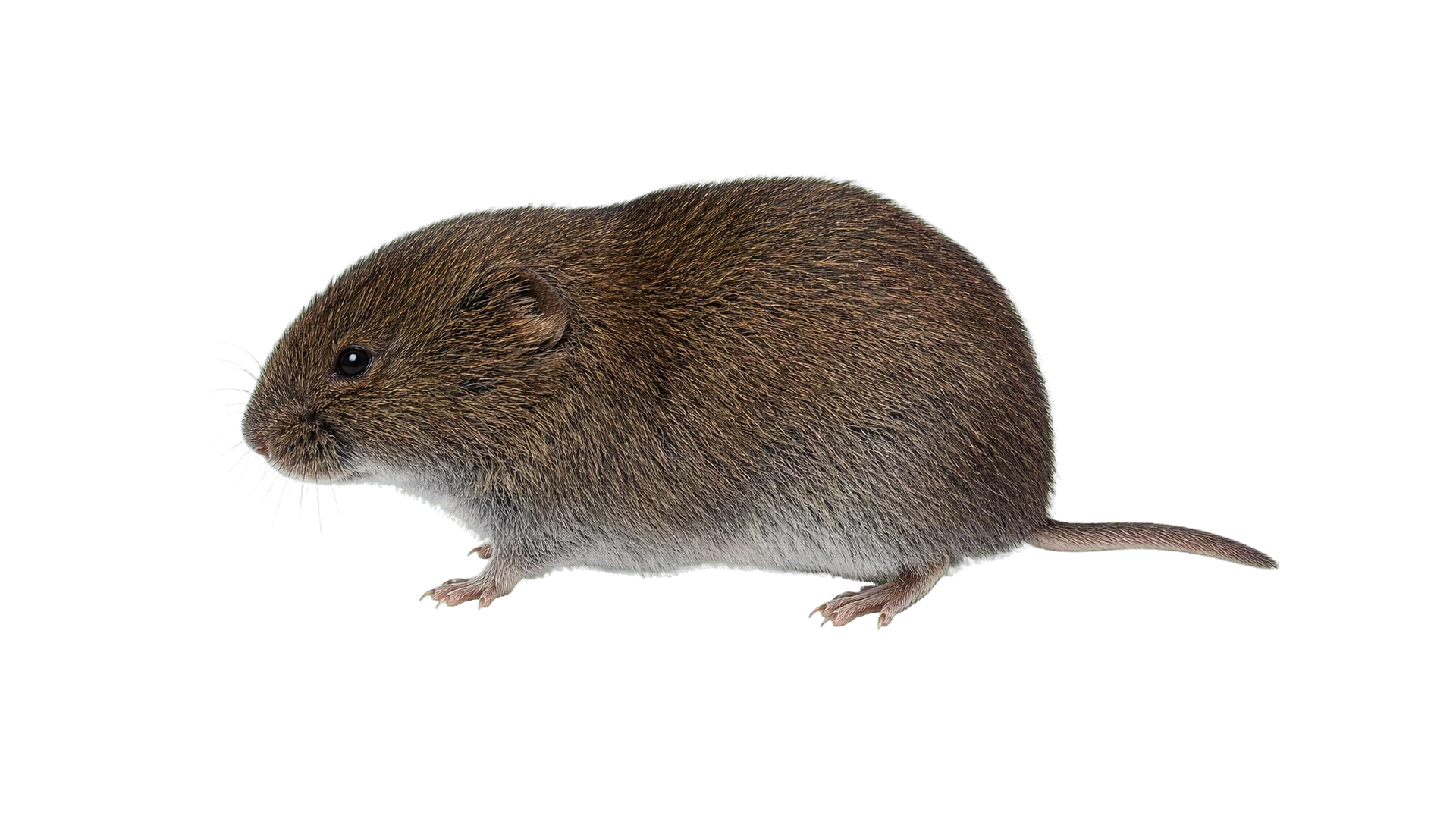
ID Card: Meadow Vole
Related Species
Call to get matched with a local pest control pro.
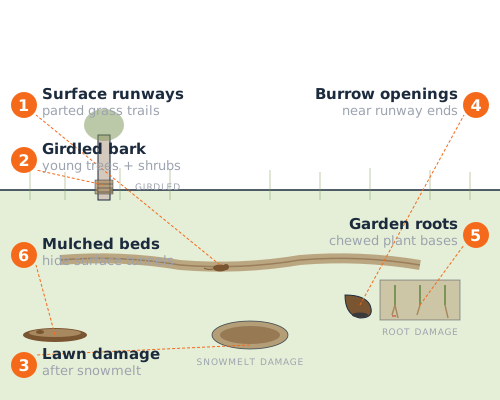
Meadow voles leave the most obvious tracks of any household rodent. You can map the whole population with a flashlight and a slow walk around the yard. Surface runways are the giveaway. The trails are clipped to bare soil, about as wide as two fingers, and they twist between cover and food in a pattern that's hard to miss once you know what you're looking at. Walk these zones at the right time of year and the evidence is everywhere:
If you find runways connecting two or more of these zones, you're looking at an established population that's already cycling through several generations on the property. Damage that appears in April was almost always being built under snow cover from December through March. Catching the runway network before young trees are girdled is what saves the most money, replacement costs for a single ornamental tree run $300 to $1,200 and are not covered by homeowners insurance, since vole damage is treated as preventable maintenance.
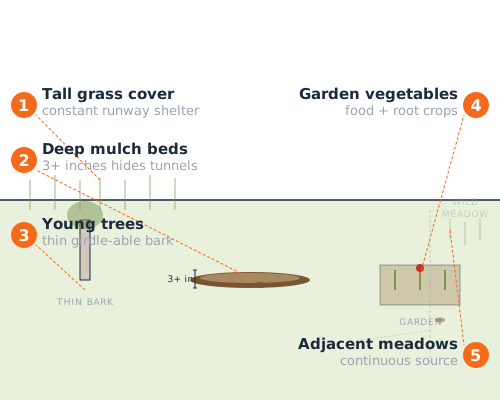
Spotting runways is step one. Understanding what's anchoring the population to your property is what keeps next winter from being worse than this one. Meadow voles are picky about one thing above all else: cover. They need dense grass or ground cover overhead at all times, because hawks and owls hunt them around the clock. A lawn that stays mowed under four inches with no thick mulch or tall grass at the edges is genuinely unattractive to them. A lawn with deep mulch rings, dense ground cover, and tall grass at the fence line is exactly what they're looking for.
What anchors them to your property:
Meadow vole populations move on a 2-to-5-year boom-bust cycle. In a normal year, a property might host a handful of breeding pairs and show minor lawn damage. In a peak year, density can hit 1,000 voles per acre, and a single hayfield can dump a wave of migrating animals into your yard each fall. Boom years are exactly when DIY habitat changes alone fall behind, because the population pressure overwhelms the habitat reduction. Recognizing an outbreak year early is the most important call in vole management.
Find your scenario below. Each row reflects how a meadow vole population actually progresses across a single boom cycle, not a generic rodent timeline.
| What You're Seeing | Severity | If Untreated | Next Step |
|---|---|---|---|
| Surface runways visible after snowmelt, no tree damage yet | Early | Population grows through summer; tree damage likely by the following spring if cover remains. | Confirm the species (surface runways + short tail). Mow grass back, monitor for 30 days, and prep tree wraps before next winter. |
| Multiple runways, lawn damage in patches, mulch tunneling visible | Moderate | Established population. Tree girdling, garden damage, and a doubling of runways are typical within a single summer. | Schedule a professional service this month. Trap deployment, mulch reduction, and habitat work together drop population pressure before fall. |
| Young trees girdled, vegetable garden damaged, expanding runway systems | High | Tree losses likely; population is feeding new generations weekly and runway systems push toward additional plantings. | Call a professional this week. Tree guards, bait stations, and comprehensive landscape changes are needed together, single steps won't catch up. |
| Boom-year spike, multiple tree losses, indoor sightings in winter | Urgent | Outbreak year in progress. Property-wide damage continues invisibly under snow and replacement costs climb into the thousands. | Call today. Property-wide treatment, structural exclusion at basements and garages, and tree protection across the lot are required this season. |
Meadow vole damage compounds invisibly under snow. If you're between two rows, treat the higher one as your situation, the spring reveal almost always shows more damage than expected.
Meadow voles are among the fastest-reproducing rodents in the United States. A single female can produce 60 or more offspring in one year, and pups reach breeding age in about a month. That biology is the entire reason a few runways in April become lawn-wide damage by October, and why boom-cycle years drive widespread structural and landscape problems across whole neighborhoods at once.
Birth to 2 to 3 weeks
Born blind and hairless in surface nests of woven grass or in shallow burrow chambers. Litters average 3 to 6 pups, and the mother often has the next litter on the way before the current one is fully weaned.
2 to 4 weeks old
Fur develops, eyes open, and pups begin venturing onto established runways with the mother. They feed on tender grass, seeds, and roots within a few feet of the natal nest before dispersing along the runway network.
4 to 6 weeks old, the fastest of any common US rodent
Females begin breeding at 4 to 6 weeks and can produce 5 to 10 litters per year under good conditions, with 3 to 6 pups in each. A single female can contribute 60 or more offspring to the population in a single year, and her daughters are breeding before she has stopped.
Typically 2 to 16 months in the wild
Predation by hawks, owls, foxes, and snakes keeps lifespans short, but the overlapping generations and continuous breeding cycle mean that population density doubles every few weeks in spring and summer when cover and food are abundant.
Rapid reproduction combined with the 2-to-5-year boom-bust cycle means meadow vole problems can transform from minor to severe within a single season. Treatment plans have to account for ongoing population pressure, not just current damage. Catching a boom year early changes the entire program, the same property might need quarterly visits during a peak cycle and only annual checks during a low year.
Meadow voles stay active year-round, unlike most rodents that taper off in winter. Snow cover doesn't slow them down, it speeds them up. Knowing what the population is doing each quarter tells you what to inspect and when treatment hits the hardest.
Damage discovered. Snowmelt in late March and early April uncovers the runway network and girdled trees that built up under snow cover from December onward. Mating season starts almost as soon as the snow is gone, and the first pups of the year arrive within three to four weeks. This is when most homeowners first realize they have a problem.
Peak surface activity. Runway systems expand rapidly as juveniles disperse along established trails and new burrow openings appear at the lawn edges. This is the best treatment window of the year because trap and bait work is most effective when the population is visible and runways are active across the property.
Pre-winter food caching. Populations build to their annual peak as the final litters of the season mature. Bark damage on young trees begins in late October once herbaceous food sources die back, and the migrating wave from adjacent fields and meadows arrives looking for winter cover.
Under-snow activity at full pace. Snow forms an insulating blanket that protects voles from cold and predators while they continue feeding, breeding, and building runways. Tree girdling damage accumulates invisibly through January and February. Population control work is much harder during this period, which is why fall preparation matters.
Meadow vole work is one of the trickier rodent management situations because most of the damage happens out of sight under winter snow cover. By the time bark girdling and lawn ruin are revealed in April, the population has been compounding for four to six months and the next breeding wave is already coming.
Over-the-counter bait products struggle here for two reasons. First, bait scattered in the open is exposed to weather, pets, wildlife, and kids, and degrades fast. Second, bait alone doesn't address habitat, which is the real reason the population picked the property in the first place. Pull the cover and the food, and the population has nowhere to anchor.
A pro builds a coordinated program around runway mapping, tamper-resistant station placement, hardware cloth tree guards, and habitat reduction in one visit. Trap deployment in active runways gets you confirmed kills and population data. Bait stations placed correctly carry the active ingredient deep into the network without exposure risk. Tree guards stop bark girdling before the snow flies. Mulch reduction and lawn mowing remove the cover that sustains the population.
During boom-cycle years, recurring service is genuinely necessary. The pressure from adjacent meadows, fields, and untreated neighboring lots is too high to manage with a single visit. Initial costs run $250 to $600 with recurring monthly service of $40 to $100 during peak years. The math almost always works out cheaper than replacing the trees and lawn that get hit if the program is skipped.
Meadow vole work combines population control, habitat reduction, and tree protection into one coordinated plan. A specialist who handles surface-runway species knows that bait alone won't catch a boom-year population and that habitat-only work won't catch a peak cycle. Here's what changes:

 They Map the Active Runway Network
 Inspection walks the full property to identify which runways are active versus abandoned. Fresh chew marks, clean trails, and confirmed burrow entrances tell the pro where to place bait stations and traps for actual hits, not guesses.
They Deploy Bait Stations the Right Way Tamper-resistant stations placed directly over active runways deliver bait safely past pets and kids. Bait scattered in the open won't reach the population and creates exposure risk, this is the single biggest reason DIY bait products underperform.
They Install Real Tree Protection Hardware cloth tree guards extending 18 inches above expected snow line stop bark girdling on young trees and shrubs. Plastic spiral wraps and mesh tubes alone are often inadequate. A pro sizes and stakes the guards to actually hold through winter.
They Plan for the Boom Cycle A real program treats the boom year as an ongoing pressure event, not a one-visit fix. Spring and fall checks confirm the population stays suppressed, and recurring service costs run $40 to $100 per month during peak cycle years.

Meadow vole control sits on a sliding scale: low-cycle years respond well to habitat work alone, peak-cycle years almost always need a combined program. Knowing which year you're in changes the whole plan.
DIY for meadow voles is most useful for prevention and habitat reduction. Useful steps with honest limits:
Professional meadow vole work is built around boom-cycle pressure and active runway mapping. Here's what changes when you call:
Meadow vole populations work under snow cover all winter and reveal their damage in spring. Connect with a local specialist who handles runway mapping, tree protection, and boom-cycle bait programs.
Real results from people who had the same problem and solved it.

"Garden beds saved from vole damage."
Voles had tunneled through our yard and garden. The inspector explained how to address the tunneling and treated the perimeter. The damage stopped and we were able to replant without losing everything again.
"Garden beds saved from vole damage."
Voles had tunneled through our yard and garden. The inspector explained how to address the tunneling and treated the perimeter. The damage stopped and we were able to replant without losing everything again.

"Lawn recovered after voles cleared out."
Our lawn was riddled with vole tunnels and they were damaging garden roots. The tech set up a targeted removal plan and explained how to make the yard less hospitable. The lawn recovered within a few weeks once the voles were gone.

"Garden protected from vole tunneling."
When the snow melted, we found vole tunnels crisscrossing the entire lawn and garden. The tech set up a removal plan and recommended gravel barriers around garden beds. The following winter showed almost no new tunnel activity.

"Lawn recovered after vole removal."
Vole tunnels crisscrossed the lawn. The provider set up a removal plan and recommended gravel barriers around garden beds. The lawn recovered once the voles were gone.

"Lawn recovered after vole removal."
Snow melted last April and the lawn looked like someone had carved a maze into it. Vole runways crisscrossed everywhere, especially along the garden beds. The tech set up a removal plan and recommended a gravel barrier around the vegetable garden to discourage them from returning. The lawn grew back in by midsummer and the garden has stayed clear.
Direct answers to what homeowners ask most about runway identification, lawn and tree damage, and boom-cycle treatment.
Look for surface runways, narrow paths 1-2 inches wide through grass, often visible after snow melts. Meadow voles clip grass stems cleanly at ground level and leave small droppings along their trails. They girdle tree bark at the base during winter, which can kill young trees and ornamental shrubs.
Keep grass mowed short, especially within 3 feet of tree trunks and garden beds. Remove ground cover and mulch from direct contact with tree bases. Install hardware cloth tree guards around young trees extending 18 inches high. Reducing dense ground cover eliminates the runway habitat voles depend on for protection from predators.
Voles are small rodents that create extensive surface runway systems through turf and ground cover, feeding on grass, roots, bulbs, and bark as they travel. They prefer properties with dense ground cover, thick mulch, tall grass, and heavy leaf litter that conceals their runways from predators. Vole populations can grow explosively, females breed year-round and can produce five to ten litters annually with three to six young each, soa few voles in spring can become dozens by fall, causing increasingly visible damage to lawns, gardens, and ornamental plantings.
Voles cause significant damage to trees and shrubs by gnawing bark from trunks and roots at or below the soil line, a behavior called girdling that can kill established plants. This damage is most severe in winter when snow cover hides vole activity and concentrates their feeding on woody plant bark. Young fruit trees, ornamental trees, and shrubs are especially vulnerable. Voles also consume flower bulbs, root vegetables, and the root systems of perennials from below ground, often killing plants with no above-ground evidence until the plant suddenly collapses.
Most providers in our network can schedule an inspection within 24-48 hours. For urgent situations, likeactive structural damage or large colonies, same-week emergency service is often available. Response times depend on your location and the provider's current schedule.
Your provider inspects the property to identify the pest, locate nesting or entry points, and assess the scope of the problem. You get a clear explanation of what they found, what they recommend, and a written scope before any work begins.
Modern pest control products are designed to break down quickly after application and pose minimal risk to people and pets when applied correctly. Most providers ask you to keep kids and pets out of treated areas for 1 to 2 hours while the product dries, after which the area is generally safe again. Always confirm specific re-entry times with your provider, and let them know about pet birds, fish, or reptiles, since some treatments require extra precautions for those species.
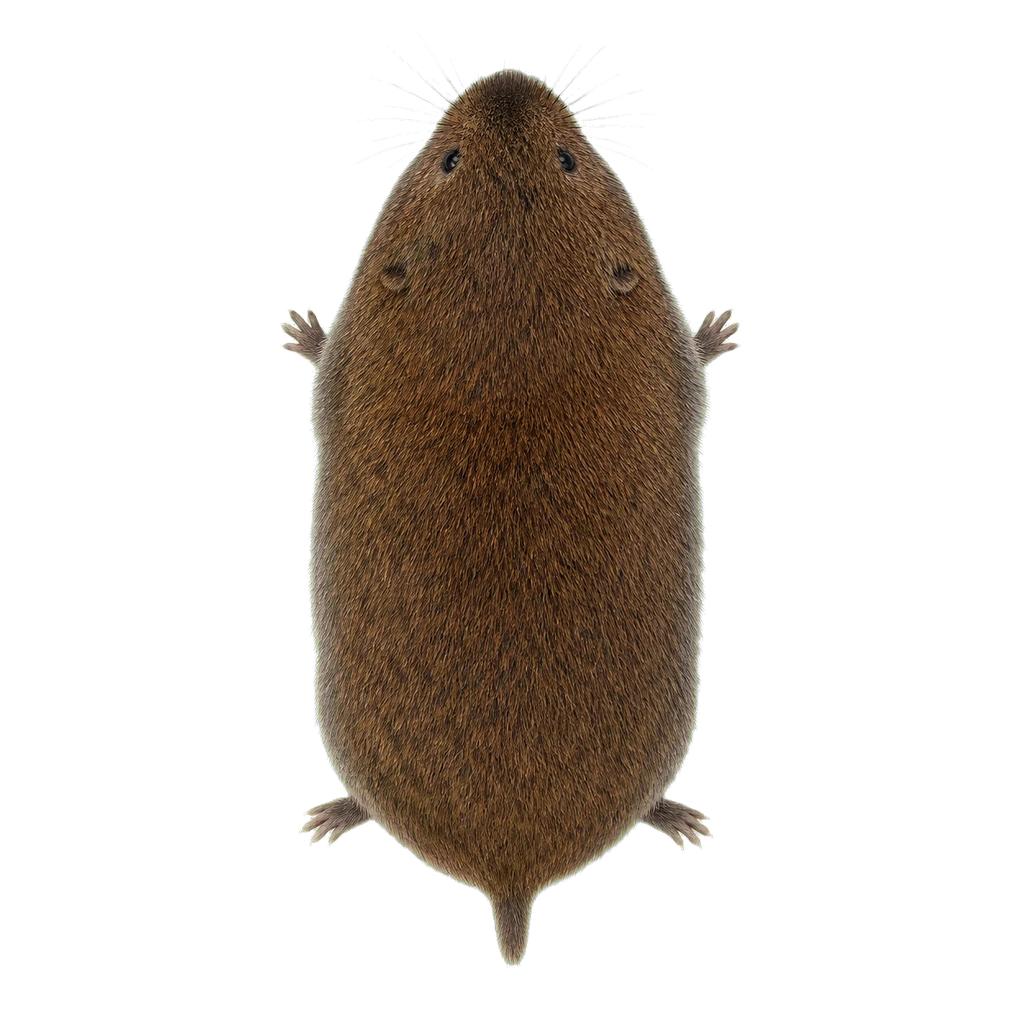
Pine voles live almost entirely underground, chewing through roots, bulbs, and tree bark below the soil surface. Their damage often goes unnoticed until plants wilt or fail to emerge in spring, making them harder to detect and control than surface-dwelling meadow voles.
Learn MoreLocal providers experienced with surface-runway vole species are ready to inspect, treat, and protect your trees and lawn, no obligation.