Local pest control help is one call away.

House Mouse: Identification, Treatment & Prevention

House mice are the most common indoor rodent in North America. An adult body runs 60 to 90mm (about 2.5 to 3.5 inches) with a tail of similar length, total weight 12 to 30 grams. They squeeze through any gap as small as 6mm (about a quarter inch, the diameter of a standard pencil), which is the single most-underestimated number in pest control. Homeowners walk past entry points every day without seeing them.

If you're hearing faint scratching inside walls or attic insulation at night, finding dark rod-shaped droppings with pointed ends (3 to 6mm long) along baseboards or inside cabinets, or catching a small grayish-brown blur scurrying along a wall edge, you almost certainly have house mice. This guide covers how to confirm the species, why a single breeding pair can produce 200 or more offspring in a year, why chewed wire insulation is the unrecognized fire risk to flag immediately, and what real treatment looks like.

Close-up illustration of a house mouse showing small grayish-brown body, large ears, pointed snout, and long tail

ID Card: House Mouse

Scientific name
Mus musculus
Color
Gray, light gray
Size
2.5 to 3.75 inches
Body shape
Small, slender, pointed snout, large ears
Key evidence
Rice-grain-sized droppings, gnaw marks on food packaging
Also known as
Field mice, Common mice

Related Species

Call to get matched with a local pest control pro.

Available 24/7
(888) 495-1510
  • Specialists who combine multi-trap deployment, structural exclusion, and sanitation
  • Comprehensive 6mm gap inspection and rodent-proof sealing
  • Cleanup guidance for droppings, contaminated insulation, and chewed-wire fire hazards

Where to Inspect for House Mouse Activity

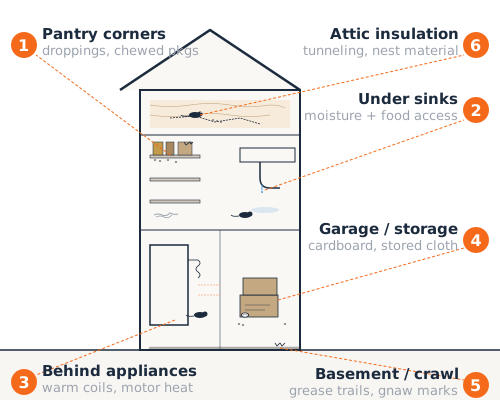
Cross-section illustration showing house mouse activity in kitchen behind appliances, in wall voids, attic insulation tunneling, gnaw marks on wire insulation, and droppings along baseboards

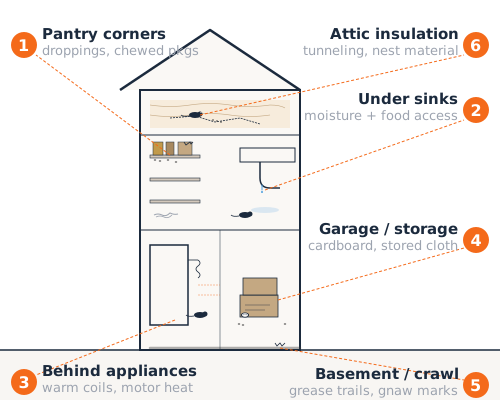
House mice leave the same evidence in the same places nearly every time. They run along walls (almost never across open floor), nest in warm concealed voids, and stay within 10 to 30 feet of the nest for most of their feeding. Walk these zones with a flashlight at night when the house is quiet, listening for movement and looking up at corners as well as down at the floor:

  • Kitchen: behind the stove and under the refrigerator, Warmth from compressor coils and dropped food crumbs makes this the #1 indoor nesting site. Pull the appliance forward and check the floor and back wall for droppings, grease rubs, and chewed packaging.
  • Lower cabinets near plumbing penetrations, Where copper or PEX lines pass through the cabinet floor or back, there's almost always a gap larger than 6mm. Crouch with a flashlight and look up at where the pipe meets the framing.
  • Pantry shelves and stored grain or pet food, Open every bag of cereal, flour, rice, and pet kibble. Pointed-end droppings inside the bag confirm contamination, not casual passage. The bag and anything it touched must be discarded.
  • Attic insulation around pipe and vent penetrations, Pull back batt insulation near plumbing vents and bath fan ducts. Tunneling channels, scattered droppings, and gnaw marks on rafters above the insulation are diagnostic.
  • Wall voids behind electrical outlets and switch plates, Remove a faceplate or two in suspect rooms. Droppings inside the box or chewed wire insulation on a circuit are evidence of nesting plus an active fire hazard the technician needs to know about.
  • Garage corners and around the water heater, Heat plus concealment draws nesting activity. Look behind stored boxes, along the foundation seam, and at the base of the hot-water lines. Garages are also the most common entry from outdoor populations.

If you find fresh droppings in two or more zones, or if you've heard scratching in walls for more than a week, the population is already established and reproducing. House mice reach sexual maturity at 6 weeks, and a single breeding pair plus their compounding litters can produce more than 200 offspring in a year inside a heated structure. Trap-only treatment usually misses the unseen population, surviving breeders rebuild within weeks. Sealing entry points alongside trapping is what closes the problem.

Cross-section illustration showing house mouse activity in kitchen behind appliances, in wall voids, attic insulation tunneling, gnaw marks on wire insulation, and droppings along baseboards
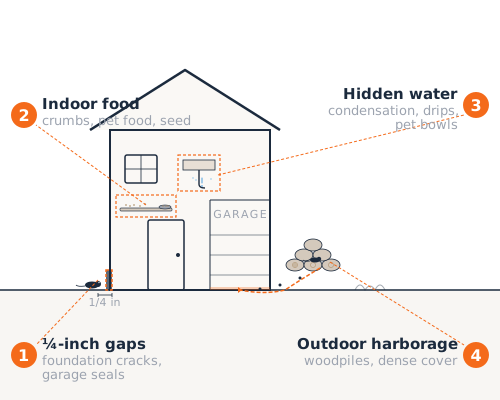
Illustration showing house mouse entry routes via foundation cracks, soffit gaps, dryer-vent flaps, garage-door seals, utility penetrations, and outdoor harborage in woodpiles and brush

Why Do I Have House Mice?

Spotting droppings is step one. Understanding why the mice picked your home, and what's letting them stay, is what stops the next wave from moving in. House mice need almost nothing to set up: a 6mm hole anywhere on the exterior, a few dropped crumbs or an open bag of pet food, and a warm void inside a wall. Almost every home has all three within reach of any exterior wall, which is why one cold night in fall flips a problem-free house into a mouse house.

What anchors house mice to your property:

  • Exterior gaps 6mm or larger anywhere on the structure, foundation cracks, soffit corners, weep holes, dryer-vent flaps, gaps around AC line sets, garage-door weather seals, and utility penetrations where conduit meets siding
  • Accessible food indoors, an open bag of dog kibble in the garage, exposed grain or rice in the pantry, bird-seed storage near the house, dropped crumbs along the toe-kick under cabinets, sugar residue inside drawers
  • Outdoor harborage within 50 feet of the foundation, weed lots, brush piles, wood stacks against the wall, dense ground cover, and unkempt landscaping all host outdoor populations that pressure-test the structure during the first cold snap
  • Older or rural homes with more void spaces, more utility penetrations, and historic wear at the foundation give mice more ways in than newer construction, and recent neighborhood construction or demolition displaces local rodent populations toward whatever shelter is closest

House mice cannot survive freezing temperatures outdoors. Once nighttime lows drop into the 30s, every outdoor population within several blocks starts looking for a heated structure, and the homes with accessible 6mm gaps are the ones that fill first. A small fall infestation almost always becomes a major spring infestation because mice reproduce year-round inside a heated home (5 to 10 litters per year, 5 to 6 pups each, sexually mature at 6 weeks) while their outdoor cousins go dormant. By March, the indoor population is several times what entered in October.

How Serious Is Your House Mouse Problem?

Find your scenario below. Each row reflects the actual population curve of a house mouse infestation, exponential growth driven by 6-week sexual maturity, not a generic rodent timeline.

What You're Seeing Severity If Untreated Next Step
A few droppings in one location, no live sightings, no scratching at night Early Confirm species first (3 to 6mm rod-shaped droppings with pointed ends), then expect a breeding pair to produce a first litter within 3 weeks. Set monitoring snap traps against walls every 6 to 8 feet in the affected room. Walk the exterior for visible 6mm gaps. Re-check in 14 days.
Fresh droppings in two or more rooms, chewed packaging in the pantry Moderate Established population with active reproduction. Spread to all heated rooms within 4 to 6 weeks as juveniles disperse from the original nest. Schedule a professional service this week. The job needs multi-trap deployment plus entry-point sealing plus bait stations together, not one without the others.
Live mouse sightings during daytime, droppings throughout the home, gnaw marks on wires High Mature population in the dozens with food contamination, soiled insulation, and an active electrical-fire hazard from chewed wire insulation. Call a professional this same week and request an attic inspection alongside the kitchen work. Treatment must include any chewed wiring as a fire-risk callout.
Heavy infestation plus a family member with asthma, or chewed wiring that's tripping breakers Urgent Active health risk (mouse dander, droppings, and urine are asthma triggers) and active fire risk from compromised wire insulation. Both compound until addressed. Call today and request a same-week intensive program. An electrician should inspect any breaker-tripping circuit before walls are closed back up.
A few droppings in one location, no live sightings, no scratching at night
Severity Early
If Untreated Confirm species first (3 to 6mm rod-shaped droppings with pointed ends), then expect a breeding pair to produce a first litter within 3 weeks.
Next Step Set monitoring snap traps against walls every 6 to 8 feet in the affected room. Walk the exterior for visible 6mm gaps. Re-check in 14 days.
Fresh droppings in two or more rooms, chewed packaging in the pantry
Severity Moderate
If Untreated Established population with active reproduction. Spread to all heated rooms within 4 to 6 weeks as juveniles disperse from the original nest.
Next Step Schedule a professional service this week. The job needs multi-trap deployment plus entry-point sealing plus bait stations together, not one without the others.
Live mouse sightings during daytime, droppings throughout the home, gnaw marks on wires
Severity High
If Untreated Mature population in the dozens with food contamination, soiled insulation, and an active electrical-fire hazard from chewed wire insulation.
Next Step Call a professional this same week and request an attic inspection alongside the kitchen work. Treatment must include any chewed wiring as a fire-risk callout.
Heavy infestation plus a family member with asthma, or chewed wiring that's tripping breakers
Severity Urgent
If Untreated Active health risk (mouse dander, droppings, and urine are asthma triggers) and active fire risk from compromised wire insulation. Both compound until addressed.
Next Step Call today and request a same-week intensive program. An electrician should inspect any breaker-tripping circuit before walls are closed back up.

House mouse populations double every few weeks under good indoor conditions. If you're between two rows, treat the higher one as your situation.

How a House Mouse Population Grows

House mice reproduce faster than almost any household pest in North America. The math compounds quickly enough that two mice entering through a soffit gap in October typically become 30 or more mice by January, and several hundred descendants by the following autumn if no one intervenes. Understanding the cycle is what makes early action so much cheaper than waiting.

  1. Pup

    Born blind and hairless; weaned at about 3 weeks

    Females produce 5 to 6 pups per litter, born inside a nest of shredded paper, insulation fibers, fabric, or whatever soft material the female has gathered from the structure. Litters arrive every 3 to 4 weeks year-round inside a heated home.

  2. Juvenile

    About 3 to 6 weeks until sexual maturity

    Juveniles disperse from the natal nest within days of weaning and begin foraging independently. They reach reproductive age extremely fast compared to other household mammals, this is the single number that drives exponential population growth.

  3. Adult worker (female reproductive)

    Adults live 12 to 24 months in a protected indoor environment; females produce 5 to 10 litters per year

    Adult females begin breeding at 6 weeks and produce continuous litters throughout adult life. A single pair plus their compounding offspring can produce 200 or more descendants in a year under good indoor conditions. Population doubles every few weeks when food, water, and shelter are abundant.

An infestation that starts with two mice entering during a cold snap in October typically reaches 30 by January and overwhelms a typical home by the following autumn without intervention. This compounding math is exactly why trap-only treatment usually fails, surviving breeders rebuild faster than traps remove them, and why successful treatment requires sealing entry points and treating the population at the same time.

When House Mice Are Most Active

House mouse activity follows a clear seasonal pattern driven by outdoor temperature, food availability, and the indoor population's own continuous reproduction. Knowing the rhythm tells you when indoor invasion pressure peaks and when prevention work has the most leverage.

  • Spring

    Outdoor populations enter their breeding peak as soil warms and food becomes abundant. Indoor populations that established over winter continue producing litters. Some indoor mice migrate outward as the weather softens, but spring sightings inside almost always mean an established interior colony that grew through the cold months.

  • Summer

    Outdoor populations peak across fields, brush, and unmaintained landscaping. Indoor populations remain stable in heated upper floors and attic spaces. Garage and crawl-space activity is highest now, mice transit through those zones from outdoor harborage to interior nesting sites.

  • Fall

    The highest-leverage indoor invasion window of the year. From roughly mid-September through November, outdoor populations sense the temperature shift and begin testing every gap on every nearby structure. Sightings spike dramatically. This is when sealing work pays for itself within the first week.

  • Winter

    House mice cannot survive freezing temperatures outdoors. Outdoor populations crash; indoor populations grow continuously inside heated structures. Any new pressure during winter comes from outdoor populations that have already worked their way into garages, sheds, and crawl spaces seeking warmth. Sightings during winter always indicate an established interior population.

Why House Mice Aren't a DIY Job

House mouse work has four required pieces: trapping for the current population, structural exclusion for permanent prevention, bait stations for the mice you'll never trap, and sanitation for the contamination already present. DIY usually addresses only the first one, often with poor placement, and skips the other three. Without exclusion, every mouse trapped is replaced by a new one entering through the same 6mm gap within days. Without bait stations, the mice nesting deep inside wall voids never encounter the traps at all.

House mice fit through a hole the size of a dime. Most homeowners drastically underestimate how small that is and inspect for gaps several times too large. Sealing what you can see while missing the actual entry points produces the most frustrating version of this problem: traps clear the visible population, the homeowner declares victory, and three weeks later the droppings are back because the gap nobody found was still wide open.

Chewed wire insulation is the unrecognized risk most homeowners never hear about. The National Fire Protection Association has documented rodent-chewed wiring as a leading cause of unexplained house fires of rodent origin. Mice gnaw constantly because their incisors never stop growing, and electrical insulation is one of their preferred chewing substrates. A mature infestation almost always involves some level of wire damage, and that damage is invisible behind drywall until a circuit shorts or a breaker keeps tripping.

Health concerns make this more than a nuisance. House mice carry salmonella, leptospirosis, hantavirus (rare in this species but documented), and lymphocytic choriomeningitis virus. Mouse droppings, urine, and dander are documented asthma triggers, especially in children. Households with infants, elderly residents, or anyone immunocompromised should treat this as a health intervention, not a weekend project. Initial professional residential programs run $300 to $800, with $50 to $120 per month recurring on chronic-pressure properties, dramatically less expensive than a single emergency electrical repair from chewed wiring or a respiratory hospitalization.

What Changes When a Pro Shows Up

House mouse work is integrated rodent management: trapping for the existing population, structural exclusion for permanent prevention, bait stations for the population in voids you'll never trap, and sanitation for long-term safety. A specialist runs all four in the correct sequence. Here's what changes:

Pest control technicians after completing a house mouse treatment service
  • Local Pest Control
  • 24/7 Availability
  • Quality Workmanship
  • Eco‑Friendly Options
  • Trusted by Homeowners
  • They Find Entry Points You Walk Past Every Day

    Inspection covers the full perimeter, attic, basement, crawl space, and every utility penetration. Mice fit through 6mm gaps, that's a hole the size of a dime, and homeowners almost never spot them. A specialist inventories every gap before any sealing begins.

  • Multi-Trap Deployment in the Right Places

    Snap traps placed against walls every 6 to 8 feet, electronic traps along established travel paths, and bait stations near nest entry points. Mice run along walls, not across open floor; random center-of-room placement misses everything. Pro placement gets results DIY placement rarely matches.

  • Rodent-Proof Sealing With the Right Materials

    Identified gaps are sealed with copper mesh or steel wool packed into the gap and capped with caulk, hardware cloth for larger openings, and sheet metal where the structure allows. Spray foam alone fails, mice chew straight through it within days.

  • Sanitation and Fire-Risk Callouts

    Mouse droppings, urine, and dander are documented asthma triggers, and chewed wire insulation is recognized by the National Fire Protection Association as a leading cause of unexplained house fires of rodent origin. A specialist provides HEPA cleanup guidance and flags any compromised wiring for electrician follow-up.

  • Local Pest Control
  • 24/7 Availability
  • Quality Workmanship
  • Eco‑Friendly Options
  • Trusted by Homeowners
NoToPests home

One call connects you with a local specialist who knows house mice and your area.

Be Ready When You Call

Pest control technician arriving for house mouse service
Junho L.
Daisuke P.
Kirk Q.
Marion K.

Trusted by homeowners nationwide

Call for Pest Control Help (888) 495-1510

Can You Handle This or Do You Need Help?

House mouse work succeeds or fails on entry-point sealing. Trapping alone always loses the long game, and the small population you can see is almost never the full population in the structure.

What DIY Can Do

DIY work is best aimed at confirming the species, slowing population growth, and removing the obvious anchors. Useful steps with honest limits:

  • Confirm species by examining droppings (3 to 6mm long, dark, rod-shaped with pointed ends is house mouse, blunt-end larger droppings point to rats)
  • Set snap traps along walls every 6 to 8 feet in affected rooms, mice run along walls and the trap should be perpendicular with the trigger toward the wall
  • Seal visible exterior gaps larger than 6mm using steel wool packed into the gap and capped with silicone caulk, the steel wool is what stops the chewing, the caulk just holds it in place
  • Move all dry goods into sealed metal or glass containers and eliminate accessible pet food overnight
  • What DIY cannot do: find every 6mm gap on the structure (most are in places homeowners never check), treat the population nesting inside wall voids, safely clean contaminated insulation, or inspect for chewed wiring inside walls.

What a Pro Does Differently

Professional house mouse work is integrated rodent management built around the 6mm rule and the compounding reproductive curve. Here's what changes when you call:

  • Comprehensive entry-point inspection that finds every 6mm gap on the structure, including attic ridge vents, soffit corners, AC line-set penetrations, and crawl-space access points homeowners never see
  • Rodent-proof sealing with copper mesh, hardware cloth, sheet metal, and proper sealants applied in the correct order with traps deployed first
  • Strategic multi-trap placement against walls with bait stations covering the deep-void population that traps alone won't reach
  • Sanitation and HEPA-grade cleanup guidance for droppings and contaminated insulation, plus a fire-risk callout for any chewed wiring
  • Multi-visit follow-up to confirm the population has collapsed, plus seal any new gaps that appear as the structure shifts through seasons.

Suspect House Mice? Don't Wait.

House mouse populations double every few weeks indoors, and chewed wire insulation is a documented fire risk most homeowners never recognize. Connect with a local specialist who handles trapping, exclusion sealing, bait stations, and sanitation together.

Available 24/7
(888) 495-1510

What Homeowners Say After Getting Help

Real results from people who had the same problem and solved it.

Rashad E.
Rashad E.
Portland, OR

"No pressure, just options."

I appreciated being given eco-friendly options without being pushed. The technician explained tradeoffs honestly and let me decide based on my priorities. They were transparent about what each approach involves. The no-pressure approach and honest information helped me make a confident decision.

Rashad E.
Rashad E.
Portland, OR

"No pressure, just options."

I appreciated being given eco-friendly options without being pushed. The technician explained tradeoffs honestly and let me decide based on my priorities. They were transparent about what each approach involves. The no-pressure approach and honest information helped me make a confident decision.

Yu E.
Yu E.
Durham, NC

"The inspection caught what we missed."

I didn't realize how much damage raccoons can cause once they get inside. The wildlife specialist explained what areas they inspect first and why raccoon issues are handled more carefully than regular pests. They showed me the damage and explained removal and exclusion strategies. Understanding the potential for damage made me glad I called professionals.

Ren P.
Ren P.
Dayton, OH

"The problem finally stayed gone."

Ants kept returning no matter what we did. The tech treated the trail areas and explained how to handle food storage and moisture so the ants don't keep coming back. It's been months and we haven't seen them again. I appreciated that it wasn't just a one-and-done spray.

Kayla Q.
Kayla Q.
Pittsburgh, PA

"Clear expectations and a real plan."

I was overwhelmed and didn't know what was realistic to fix quickly. The inspector explained what results to expect and how long it typically takes depending on the ant species. They treated the right places and gave simple prevention tips. Everything felt structured and easy to follow.

Malachi U.
Malachi U.
Knoxville, TN

"They found the entry points fast."

Ants were showing up in the kitchen and we couldn't figure out where they were coming from. The tech tracked the activity and pointed out two entry points we never would've noticed. After treating and sealing those areas, the ants disappeared. It was quick and surprisingly thorough.

Arturo B.
Arturo B.
Yonkers, NY

"No pressure, just helpful info."

I mainly wanted to understand what was happening before committing to anything. The inspector walked me through the likely cause and the differences between treatment approaches. They answered questions without rushing me. The plan we chose worked and the ants were gone within days.

Octavio Z.
Octavio Z.
Duluth, MN

"The tech helped me stop wasting time."

I kept trying different products and nothing was sticking. The tech explained why some solutions don't work for certain ant problems and focused the treatment where it would actually matter. They also gave prevention tips that were easy to implement. The difference was obvious within the first week.

Chauncey A.
Chauncey A.
Duluth, MN

"We finally understood what to do next."

We felt stuck because nothing we tried lasted. The tech explained how to find the source of the problem, treated both indoor and outdoor areas, and helped us build a prevention routine. It wasn't complicated. Just the right steps in the right order. We've had a huge improvement since.

Vihaan V.
Vihaan V.
Madison, WI

"They fixed what was actually causing it."

Ants kept showing up in the same spot. The pro explained that the visible ants weren't the real issue and focused the treatment on where they were coming from. They identified the entry path and treated it properly. The problem stopped and hasn't returned.

Allison A.
Allison A.
Des Moines, IA

"It felt like a real inspection, not a quick spray."

The tech spent time figuring out where the ants were entering instead of just spraying around. They walked me through the likely reasons and what to watch for over time. After treatment, ant activity dropped fast and stayed low. The detailed approach gave me confidence.

Stephen N.
Stephen N.
Sacramento, CA

"Small changes made a big difference."

We didn't realize how much our routine was attracting ants. The inspector explained simple prevention steps and treated the areas where activity was highest. Once those changes were in place, we stopped seeing ants inside. It was a practical approach that actually worked.

Daquan V.
Daquan V.
Tampa, FL

"The explanation alone was worth it."

I'd been doing random treatments without understanding what I was dealing with. The tech explained how ants behave and why certain approaches work better. They treated strategically instead of just spraying. It made the whole thing feel manageable.

Deepak V.
Deepak V.
San Antonio, TX

"We stopped chasing the problem and solved it."

We kept wiping down counters and the ants would be back the next day. The pro identified the entry areas and explained the treatment plan clearly. Once they treated and targeted the colony, the ants disappeared quickly. It felt like we finally got ahead of it.

Mireya Z.
Mireya Z.
Riverside, CA

"They didn't oversell. Just solved it."

The tech explained what treatment was necessary and what wasn't. They focused on the entry points and corrected the conditions that were attracting ants. The work felt honest and effective. I liked having clear expectations and seeing results quickly.

Wei D.
Wei D.
Lexington, KY

"It wasn't just 'spray and go.'"

I appreciated the step-by-step explanation and the focus on prevention. The inspector treated the areas where ants were getting in and helped me understand what to change at home. The ants stopped showing up and it's been consistent. The approach felt thoughtful and sustainable.

Shu W.
Shu W.
Orlando, FL

"It finally made sense why they kept coming back."

I had ants showing up every few months and never understood why. The tech explained how outdoor nests and weather changes affect indoor activity. They treated the perimeter and entry points instead of just the inside. Since then, we haven't had recurring issues.

Teresa I.
Teresa I.
Mesa, AZ

"Targeted instead of overdone."

I was worried about over-treating the house. The pro focused on specific problem areas and explained why blanket spraying wasn't necessary. The ants stopped appearing, and we didn't feel like chemicals were used unnecessarily. That balance mattered to us.

Latonya X.
Latonya X.
Mesa, AZ

"Clear answers without jargon."

The tech explained everything in plain language and answered questions without rushing. They identified the type of ant we had and adjusted the treatment accordingly. Knowing why the approach worked gave me confidence it would last.

Humberto T.
Humberto T.
Eugene, OR

"They focused on prevention, not just treatment."

I liked that the tech talked through how to keep ants from returning after the treatment. They addressed moisture issues and entry points around the home. The treatment worked, and the prevention tips helped us stay ahead of future problems.

Jerrell N.
Jerrell N.
Arlington, VA

"No guessing, just a plan."

I was tired of guessing what would work. The inspector explained the cause of the issue and outlined a clear plan of action. After treatment, the ants disappeared and we haven't had to revisit the problem. It felt efficient and well thought out.

Marion K.
Marion K.
Boulder, CO

"They explained what to expect upfront."

The tech set expectations about timing and results before starting. They explained that some activity might happen initially and why. Everything played out exactly as described, and the ants were gone shortly after. That transparency made a big difference.

Bridget E.
Bridget E.
Sacramento, CA

"Helpful without being overwhelming."

I didn't realize there were different types of ants or that it mattered. The inspector walked me through what they were seeing and explained how ant behavior affects treatment. It made it easier to ask the right questions and understand the solution.

Junho L.
Junho L.
Naperville, IL

"Saved me a lot of guessing."

I was close to trying random sprays for the ants. Talking with the tech helped me understand what was realistic to address and what usually doesn't work. The targeted treatment solved the issue quickly and saved time and frustration.

Willis Y.
Willis Y.
Baton Rouge, LA

"It felt tailored to our home."

The tech didn't just apply a standard treatment. He looked at where we were seeing activity and adjusted the approach to our layout and yard. The ants stopped showing up and we understood how to keep it that way.

Thelma S.
Thelma S.
Madison, WI

"Straightforward and effective."

I appreciated how straightforward everything was. The pro explained the issue, treated the problem areas, and gave us a few simple steps to prevent future issues. The ants were gone and it didn't feel complicated.

Angelina B.
Angelina B.
Austin, TX

"They explained how the weather played a role."

I didn't realize seasonal changes could affect ant activity so much. The tech explained how heat and rain push ants indoors and what to do about it. They treated the problem areas and gave tips to prevent future issues. The explanation helped everything click.

Kirk Q.
Kirk Q.
Denver, CO

"It wasn't as complicated as I expected."

I assumed pest control would be disruptive or complicated. The technician explained the steps clearly and focused on targeted treatment. The ants stopped appearing quickly and the process was smoother than expected.

Cody L.
Cody L.
Denver, CO

"They helped me understand the bigger picture."

Instead of just treating the ants I saw, the tech explained what was happening around the house that made it attractive to pests. Once those factors were addressed, the problem resolved quickly. It felt educational as well as effective.

Marquis K.
Marquis K.
San Mateo, CA

"Clear communication from start to finish."

I appreciated how clearly everything was explained before treatment began. The inspector walked through the process and answered all my questions. The ants were gone shortly after and we felt confident about prevention going forward.

Virginia T.
Virginia T.
San Mateo, CA

"They addressed what we were missing."

We kept focusing on cleaning, but the tech showed us where ants were actually entering. Once those points were treated and sealed, the issue resolved. It was reassuring to finally understand the root cause.

June J.
June J.
Omaha, NE

"A methodical approach that worked."

The pro explained how they identify ant trails and colonies before treating. They took a methodical approach instead of rushing through. The ants stopped appearing and the fix has held up well.

Caitlin K.
Caitlin K.
Phoenix, AZ

"They understood desert pest behavior."

Living in Phoenix, pests behave differently than other places. The tech explained how heat drives ants indoors and what treatments work best here. The solution was effective and tailored to our environment.

Olive S.
Olive S.
Sacramento, CA

"They took the time to do it right."

I appreciated that the tech didn't rush. He inspected the problem areas carefully and explained what they were seeing. The treatment worked quickly and the ants haven't returned.

Arianna D.
Arianna D.
Baton Rouge, LA

"They understood the local pest issues."

The tech explained how the humidity here contributes to ant problems and why certain treatments work better in this climate. They focused on outdoor entry points and moisture-prone areas. The ants cleared up quickly and haven't come back.

Kiyana N.
Kiyana N.
New Orleans, LA

"Finally something that lasted."

We'd dealt with recurring ants for years. The pro explained why flooding and moisture play such a big role here and adjusted the treatment accordingly. It's been months without seeing ants, which is a big win for us.

Brett R.
Brett R.
Phoenix, AZ

"They knew exactly what works in Arizona."

The tech explained how desert conditions affect ant behavior and which treatments are most effective here. They targeted the right areas and avoided unnecessary spraying. The ants disappeared quickly.

Albert O.
Albert O.
Baltimore, MD

"Clear, calm, and professional."

I appreciated how calmly everything was explained. The inspector identified the ant problem, explained the treatment, and answered my questions without rushing. The solution worked and gave me peace of mind.

Rohit Y.
Rohit Y.
Orlando, FL

"They handled it efficiently."

The tech inspected the problem areas, explained the plan, and got to work quickly. The ants were gone within days and the process felt efficient without being rushed.

Carolyn H.
Carolyn H.
Omaha, NE

"Simple explanations, solid results."

I liked how simply everything was explained. The pro didn't overcomplicate things and focused on what mattered. The ants stopped appearing and we haven't needed follow-up treatments.

Edith Z.
Edith Z.
Newark, NJ

"They showed me what to watch for."

Beyond treating the ants, the tech explained what signs to watch for if activity starts again. That knowledge made me feel more in control. So far, everything has stayed clear.


Common Questions About House Mice

Direct answers to what homeowners ask most about identification, the 6mm entry rule, wire-chewing fire risk, and what real treatment looks like.

  • What behavioral traits make house mice uniquely adapted to living in buildings? Toggle answer for: What behavioral traits make house mice uniquely adapted to living in buildings?

    House mice are the most human-adapted rodent species, having evolved alongside human settlements for thousands of years. They are commensal, meaningthey depend on human habitation for survival in most climates, andhave developed several traits that make indoor control challenging: they can survive on as little as three grams of food per day, obtain all their water from food moisture (allowing them to thrive without standing water), explore and memorize their environment extensively, and establish territories as small as a ten-foot radius, meaning they may spend their entire lives within a single room or cabinet area. Their small home range also means traps and bait need to be placed within feet of active runways to be effective.

  • How much contamination can a small number of house mice cause? Toggle answer for: How much contamination can a small number of house mice cause?

    A single house mouse produces approximately 50 to 75 droppings per day, roughly twice the number that rats produce, andurinates almost continuously as it travels, leaving micro-droplets along every surface it contacts. With their tendency to run along edges, through drawers, across countertops, and inside pantries, even two or three mice can contaminate an extensive area of a home within days. House mouse urine contains proteins that become airborne allergens when dry, contributing to indoor allergen loads that affect asthma sufferers. The sheer volume of daily droppings from even a modest mouse population means that food storage areas, utensil drawers, and countertops in affected homes are repeatedly contaminated.

  • Why do mice keep getting into my house? Toggle answer for: Why do mice keep getting into my house?

    Mice can squeeze through gaps as small as a dime (about 1/4 inch) and are constantly seeking warm shelter, food, and water, all of which homes provide in abundance. Common entry points include gaps around utility pipes, dryer vents, garage door seals, foundation cracks, and where siding meets the foundation. Mice breed prolifically, with a single female producing five to ten litters per year of five to six pups each, so even a couple of mice that find entry can grow into a substantial indoor population within a few months.

  • What health risks and damage do mice cause? Toggle answer for: What health risks and damage do mice cause?

    Mice contaminate far more food than they consume, leaving droppings, urine, and hair on surfaces and inside pantries. They are known carriers of hantavirus (via deer mice), salmonella, and lymphocytic choriomeningitis virus. Their constant gnawing, necessary to keep their ever-growing incisors worn down, damages electrical wiring, plumbing, insulation, and structural materials, with wire gnawing being a documented cause of house fires. Mice also bring in fleas, ticks, and mites that can create secondary pest problems.

  • How quickly can a provider get to my home? Toggle answer for: How quickly can a provider get to my home?

    Most providers in our network can schedule an inspection within 24-48 hours. For urgent situations, likeactive structural damage or large colonies, same-week emergency service is often available. Response times depend on your location and the provider's current schedule.

  • What happens during the first visit? Toggle answer for: What happens during the first visit?

    Your provider inspects the property to identify the pest, locate nesting or entry points, and assess the scope of the problem. You get a clear explanation of what they found, what they recommend, and a written scope before any work begins.

  • Is treatment safe for kids and pets? Toggle answer for: Is treatment safe for kids and pets?

    Modern pest control products are designed to break down quickly after application and pose minimal risk to people and pets when applied correctly. Most providers ask you to keep kids and pets out of treated areas for 1 to 2 hours while the product dries, after which the area is generally safe again. Always confirm specific re-entry times with your provider, and let them know about pet birds, fish, or reptiles, since some treatments require extra precautions for those species.

Pest Control Pros serving the city of the state of your city and nearby areas

Local providers experienced with integrated rodent management are ready to inspect for 6mm gaps, deploy traps and bait stations, seal entry points, and follow up, no obligation.

Available 24/7
(888) 495-1510