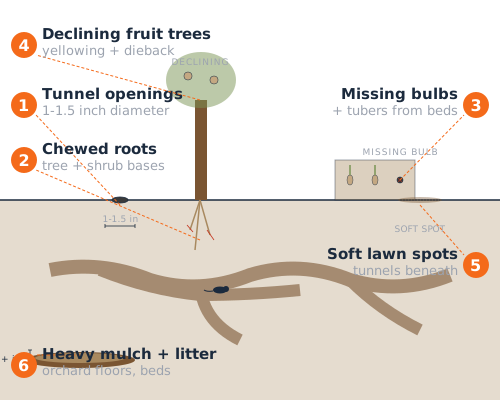
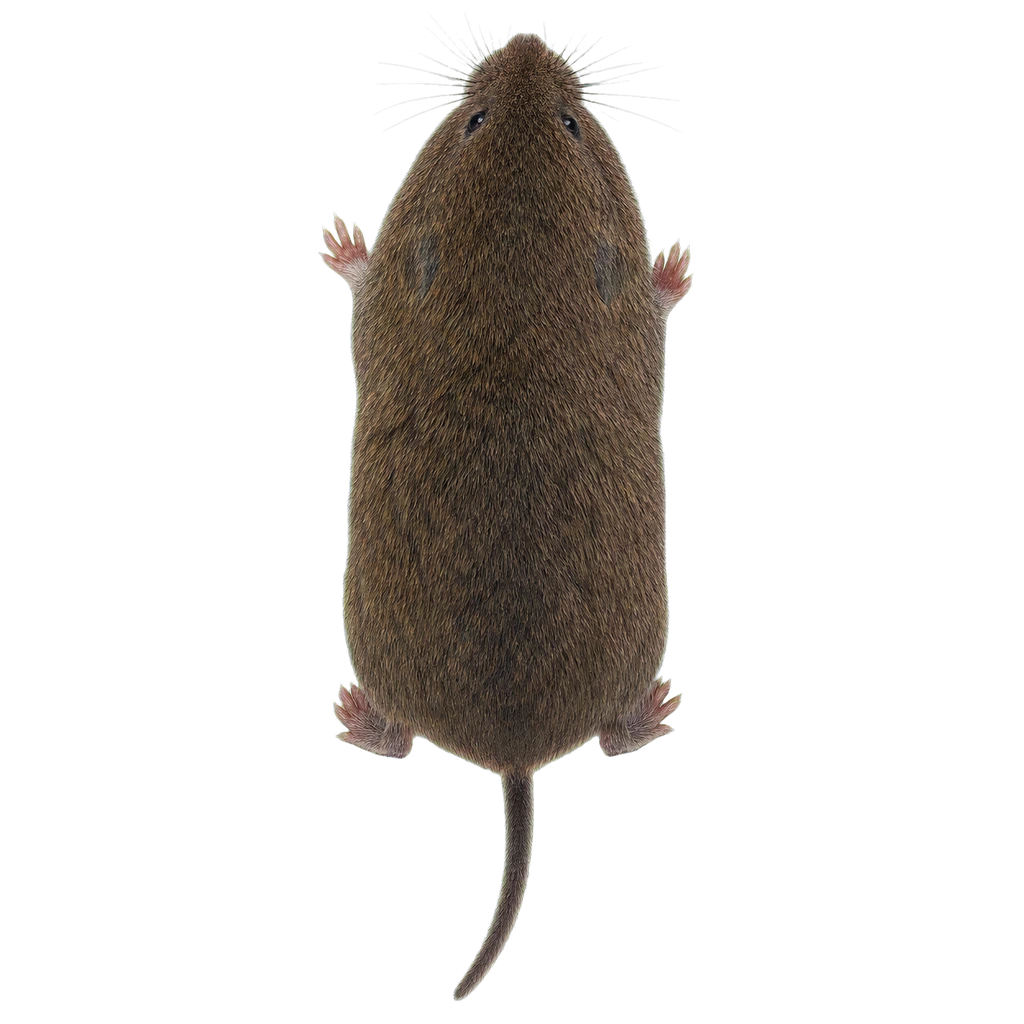
Pine voles are primarily an outdoor landscape pest that causes its most expensive damage to fruit trees, ornamental shrubs, and bulb plantings through underground root girdling. Unlike most rodent problems, you almost never see the animal itself. The colony lives 2 to 6 inches under the soil surface, moves through tunnels you'll never enter, and does its serious work during winter when nothing is visible from above. That's exactly why DIY pine vole control fails so consistently.
Surface-level repellents, ultrasonic devices, and broadcast bait blocks are essentially useless against an animal that doesn't surface. Pine voles never encounter the treatment because they never come up. The bait blocks weather away, the repellents wash off, and the colony keeps working the same roots. By the time girdled trees fail to leaf out in spring, the homeowner has often spent two seasons on DIY products that never reached the population at all.
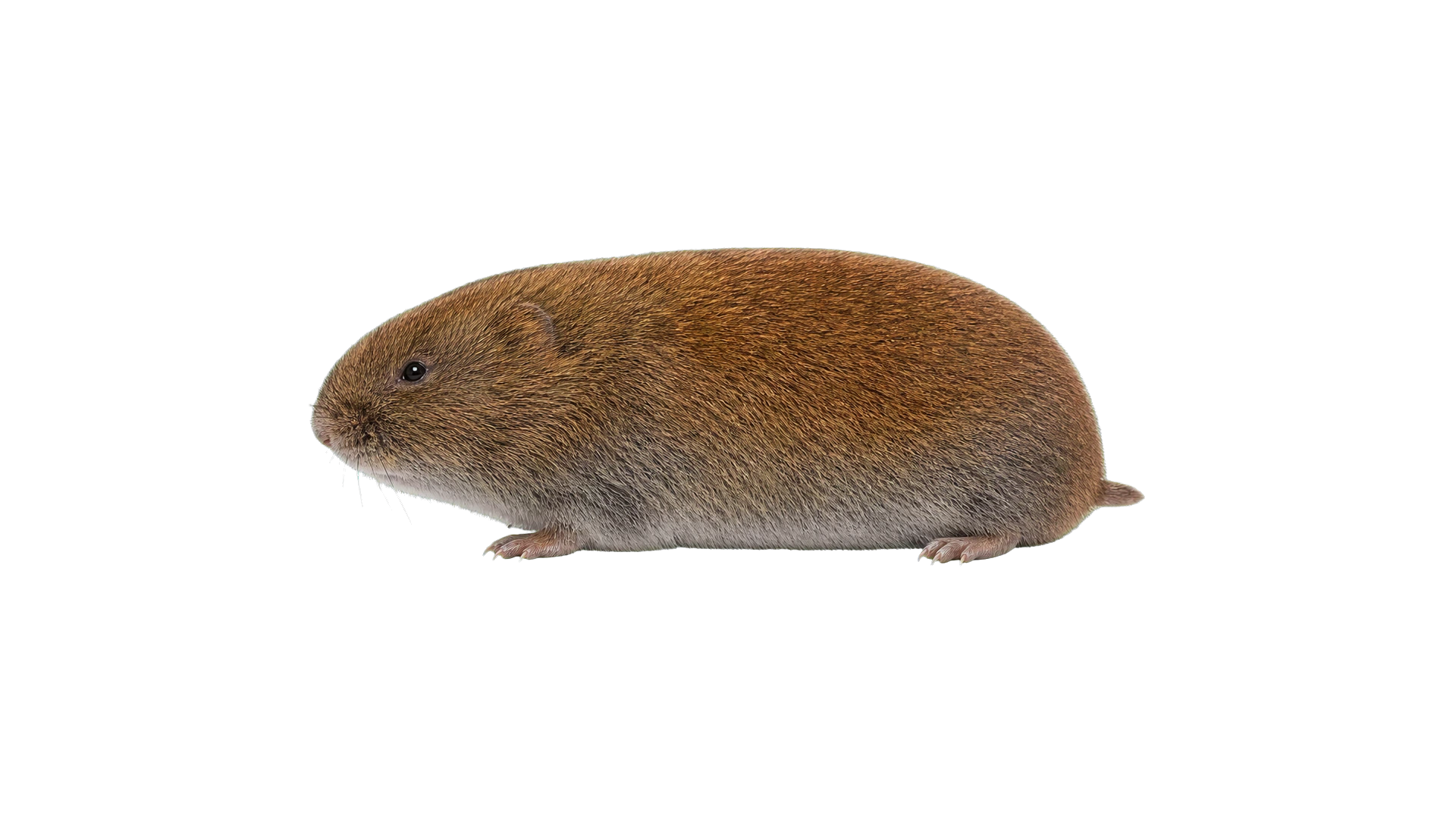
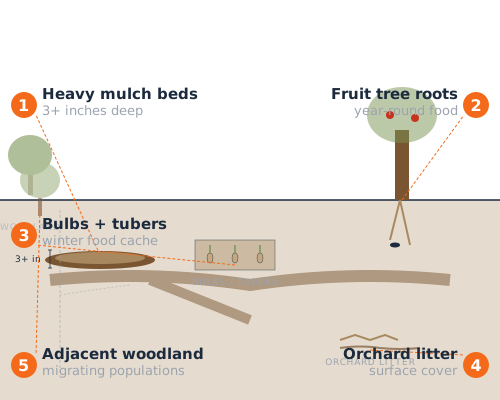
A professional confirms the species (short tail, reddish fur, no surface mound, eastern US range), maps active tunnels using the apple-sign test, sets snap traps inside the tunnel system covered to protect non-targets, and places vole-specific bait in protected tunnel stations where pine voles actually travel. The landscape modification plan addresses the underlying habitat, mulch depth, ground cover proximity to trunks, and physical barriers around high-value plantings, so the next colony doesn't simply reoccupy the same beds.
Costs typically run $250 to $600 for an initial residential program with $40 to $100 per month for recurring monitoring, and replacement costs for a single mature girdled tree or hedge row often exceed the entire annual program. The wait-and-see option is the most expensive one available, the damage is already happening below ground; the only question is how many plants you lose before the colony is interrupted.