Local pest control help is one call away.

Norway Rat: Identification, Treatment & Prevention

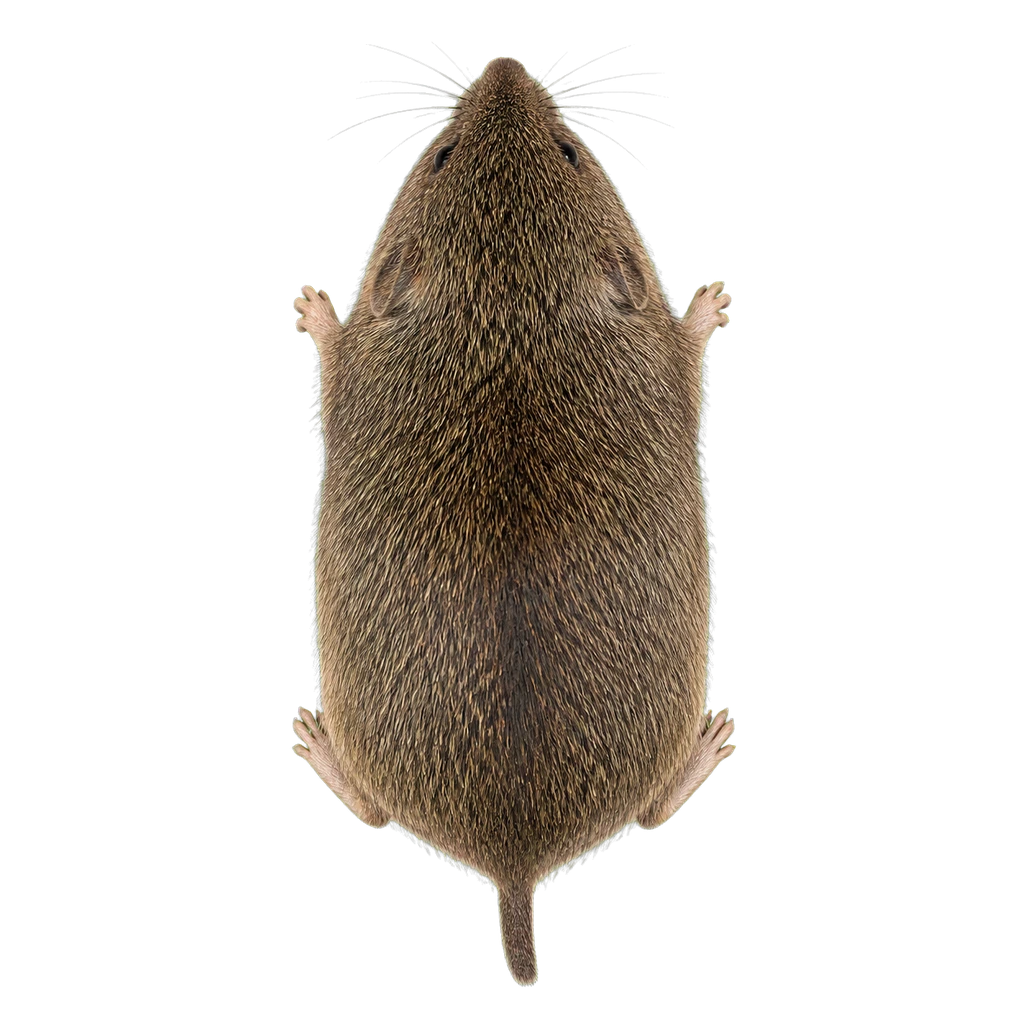
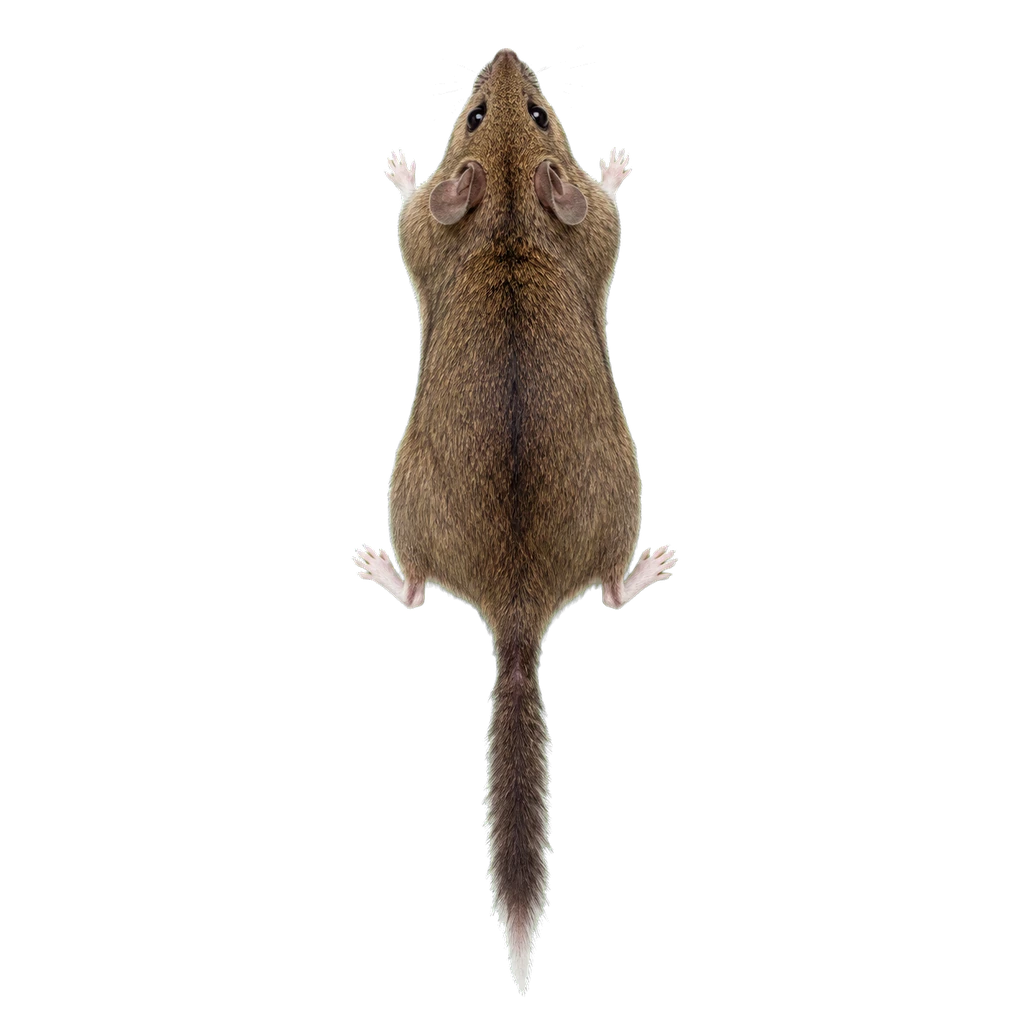
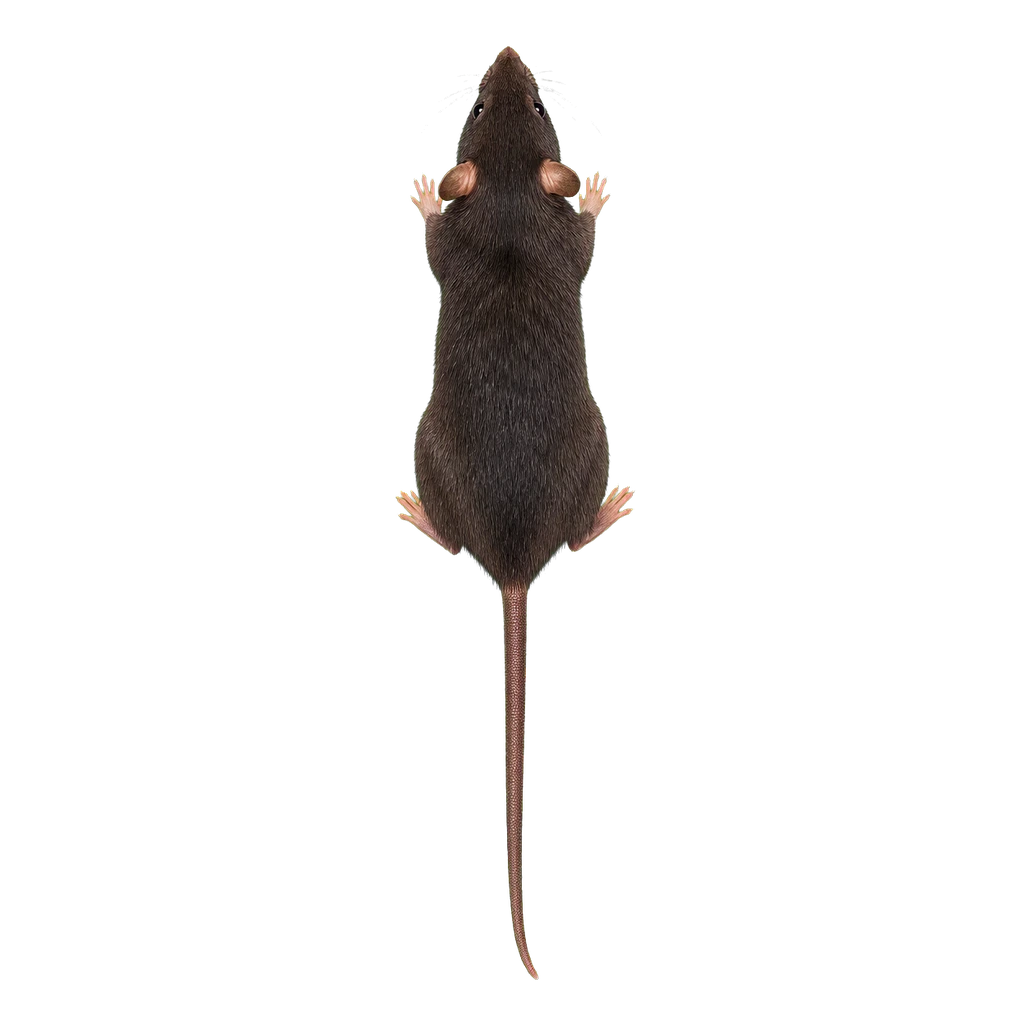
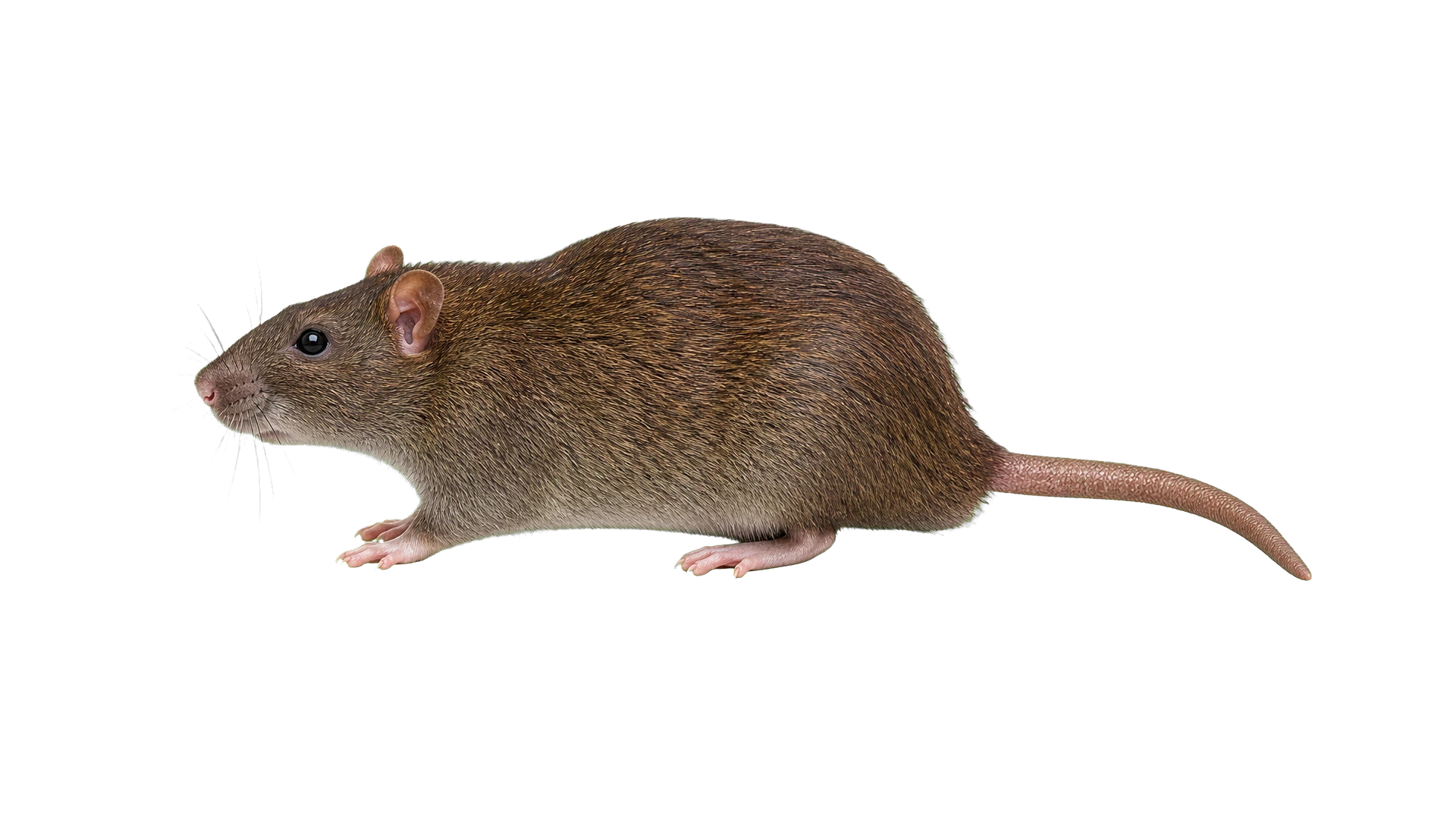
Norway rats are the heavy, ground-dwelling brown rat behind most basement, sewer, and foundation rat work in North America. Adults run 7 to 10 inches in body length plus a 6 to 9 inch tail (the tail is always shorter than the body, the single defining ID against roof rats), weigh 7 to 18 ounces, and carry a stocky build with coarse brown fur, a blunt snout, and small ears tucked close to the head. They live in burrow systems dug into soil along foundations, under decks, and through sewer infrastructure, not in rafters and attics.

If you're finding capsule-shaped droppings with blunt ends near a floor drain, three-inch-wide burrow openings in the soil along your foundation, gnawing damage on basement wood or PVC pipe, or large rats moving at dusk near garbage storage, you most likely have Norway rats. This guide covers how to confirm them against roof rats and other rodents, why their burrow-and-sewer biology makes DIY snap trapping fall short, what professional treatment actually looks like, and what you can do today to make the inspection faster.

Close-up illustration of a Norway rat showing heavy brown body, blunt snout, small ears, and tail shorter than body length

ID Card: Norway Rat

Scientific name
Rattus norvegicus
Color
Brown, gray
Size
7 to 10 inches
Body shape
Large, heavy body with blunt snout and thick tail shorter than body
Key evidence
Capsule-shaped droppings, greasy rub marks along walls, ground-level burrows
Also known as
Brown rats, Sewer rats, Wharf rats

Related Species

Call to get matched with a local pest control pro.

Available 24/7
(888) 495-1510
  • Specialists trained on Norway rat burrow systems and sewer-line entry
  • Multi-week trap and bait conditioning that accounts for neophobic behavior
  • Structural exclusion plus burrow elimination so new rats can't backfill the colony

Where to Inspect for Norway Rat Evidence

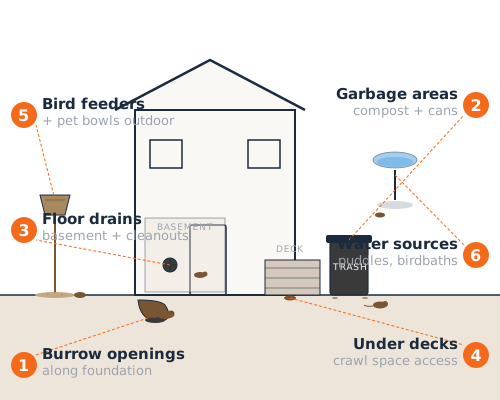
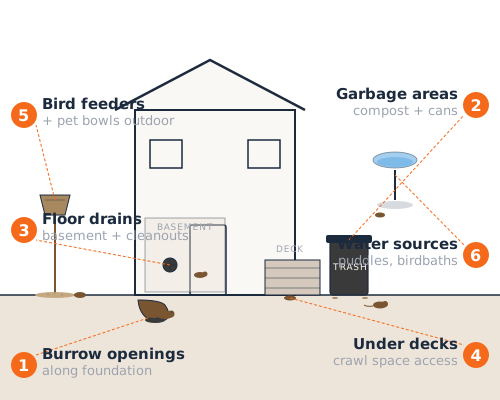
Cross-section illustration showing Norway rat evidence, capsule-shaped droppings, foundation burrow openings, grease rub trails along baseboards, and sewer line entry pathways

Norway rats stay close to the ground and close to water, so the inspection happens at floor level and along the soil line, not up in the rafters. Their droppings (capsule-shaped, blunt-ended, 18 to 20 millimeters long, about three-quarters of an inch) are the single most reliable ID against roof rats, whose droppings are smaller and pointed. Walk these zones with a flashlight pointed at floor edges and the foundation, looking for grease rub trails, capsule droppings, and burrow openings:

  • Basement floor edges and around floor drains, Capsule droppings along baseboards and dark grease smears on white walls point to active runs. Floor drains and sump pumps are the #1 indoor harborage zone, check the rim and the connecting pipe access.
  • Crawl space soil and dirt floors, Burrow openings 2 to 4 inches across, well-traveled and smooth at the entrance, confirm an active colony underground. Bring proper PPE, droppings and urine in a crawl space carry leptospirosis and hantavirus.
  • Foundation perimeter outside the structure, Walk the exterior in daylight and look at the soil line. Burrow openings the diameter of a tennis ball or larger, often tucked behind a shrub, against a foundation wall, or under deck stairs, are the most reliable outdoor indicator.
  • Around dumpsters, compost bins, and garbage storage, Reliable food draws Norway rats from 100 yards or more. Capsule droppings inside bin enclosures or chewed bin lids confirm regular feeding traffic.
  • Chicken coops, livestock feed bins, and bird feeders, Stored grain is the most attractive food on most properties. Inspect feed storage, scratch areas, and the soil under feeders for burrow openings and gnaw marks.
  • Sewer line cleanouts and around toilet bases, Norway rats swim up sewer lines and emerge through toilets in older homes with broken seals, this is real, not a myth. Inspect cleanout caps for displacement, listen for splash sounds in basement traps, and check toilet bowl seals for chew or scratch damage.

If you find capsule droppings, grease rubs, or burrow openings in two or more of these zones, you're looking at an established Norway rat colony rather than a single transient rat. A mature colony on a residential property can hold 20 to 100 individuals across the burrow system, and a single rat contaminates roughly ten times what it eats, soiling food storage, insulation, and floor cavities. Damage costs climb quickly once gnawing reaches wire insulation (Norway rat gnawing is a leading source of unexplained electrical fires), PVC pipe, or structural framing. Confirming the species early, by dropping shape and tail length, is what determines whether the treatment plan targets burrows and sewer lines (Norway) or upper-level harborage and tree pathways (roof rat).

Cross-section illustration showing Norway rat evidence, capsule-shaped droppings, foundation burrow openings, grease rub trails along baseboards, and sewer line entry pathways
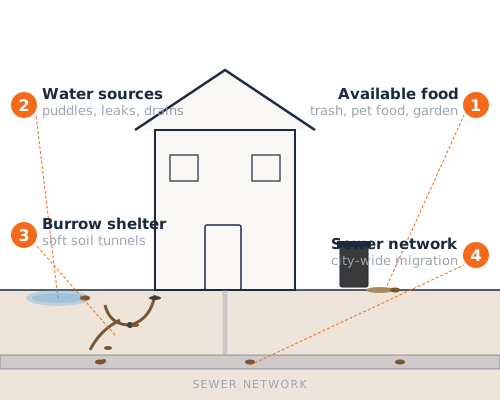
Illustration showing how Norway rats enter homes via foundation gaps, sewer line cleanouts, basement floor drains, broken toilet seals, and burrows under decks and slabs

Why Do I Have Norway Rats?

Finding a capsule dropping or a burrow opening is step one. Understanding why your property became the chosen colony site is what keeps the next wave from rebuilding. Norway rats are opportunists, not invaders, they don't pick a house at random. They expand from a nearby sewer population, a neighboring colony, or an outdoor harborage site once your property starts offering the three things they need within a small radius: food, water, and undisturbed soft soil to dig into.

What anchors them to your property:

  • Mature sewer infrastructure with cracked clay tile, root-damaged seals, or broken connections under the structure, this is the #1 entry vector and the reason urban and older industrial properties carry the heaviest pressure
  • Outdoor food sources, garbage cans with loose lids, open compost, accessible pet food, chicken feed, dropped bird seed, and fallen fruit all sustain a colony year-round and outweigh any indoor treatment effort
  • Soft, undisturbed ground to burrow into, dense shrubs against the foundation, under-deck soil, woodpiles flat on the dirt, and tall grass against the structure all give them the protected ground-level shelter their biology requires
  • Adjacent infested properties, Norway rats travel through the sewer system that connects you to your neighbors, so an untreated colony two doors down resupplies your yard through the same lateral lines that serve the block

A new infestation usually starts one of two ways. Either a pregnant female migrates in from a neighboring burrow system along a fence line or sewer easement and digs a new chamber under an outdoor harborage point, or established sewer rats push up through a broken lateral line into a basement floor drain or unsealed cleanout. Either way, the colony grows from there: 4 to 7 litters per year, 7 to 14 pups per litter, with juveniles sexually mature at 8 to 12 weeks. Within one year a single mated female can be the great-grandmother of 80 or more living descendants, and the burrow system will have expanded into multiple chambers connecting indoor and outdoor harborage.

How Serious Is Your Norway Rat Problem?

Find your scenario below. Each row reflects the actual progression of a Norway rat colony, outdoor burrows feeding indoor harborage through sewer and foundation entry, not a generic rodent timeline.

What You're Seeing Severity If Untreated Next Step
A single capsule-shaped dropping in the basement, no other evidence yet Early If it's a Norway rat (and not a roof rat or large mouse), the colony is already established within 100 yards. A second dropping or sighting usually follows within 2 to 3 weeks. Confirm species by dropping shape (18 to 20 millimeters, blunt ends). Schedule a professional inspection within 14 days. Check basement floor drains and sewer cleanouts for displacement or rub marks.
Multiple droppings along baseboards plus visible gnawing on wood, pipe, or stored materials Moderate A colony is feeding indoors and likely nesting in a basement, crawl space, or under-deck burrow within 3 to 6 weeks of first evidence. Schedule pro service this week. The program needs burrow inspection, multi-week trap and bait conditioning to overcome neophobia, and a structural exclusion pass.
Live rats sighted at dusk or after dark, significant damage to insulation or wiring, visible burrow openings outdoors High Mature colony is operating across indoor and outdoor harborage. Electrical fire risk is real (gnawed wire insulation is the leading rodent-caused fire source) and contamination is widespread. Call a professional this week and request an intensive same-week program. Plan on a sewer-line camera consultation and a structural exclusion scope before the work closes out.
Heavy infestation, daytime sightings, household illness with leptospirosis or hantavirus symptoms, or rats coming out of toilets and drains Urgent Population exceeds the property's carrying capacity. Sewer-line entry is established. Health risk to household members is significant and active. Call today. Pair pro service with a medical evaluation for any flu-like illness, a plumber for the sewer line, and an electrician to assess wiring damage before drywall closes.
A single capsule-shaped dropping in the basement, no other evidence yet
Severity Early
If Untreated If it's a Norway rat (and not a roof rat or large mouse), the colony is already established within 100 yards. A second dropping or sighting usually follows within 2 to 3 weeks.
Next Step Confirm species by dropping shape (18 to 20 millimeters, blunt ends). Schedule a professional inspection within 14 days. Check basement floor drains and sewer cleanouts for displacement or rub marks.
Multiple droppings along baseboards plus visible gnawing on wood, pipe, or stored materials
Severity Moderate
If Untreated A colony is feeding indoors and likely nesting in a basement, crawl space, or under-deck burrow within 3 to 6 weeks of first evidence.
Next Step Schedule pro service this week. The program needs burrow inspection, multi-week trap and bait conditioning to overcome neophobia, and a structural exclusion pass.
Live rats sighted at dusk or after dark, significant damage to insulation or wiring, visible burrow openings outdoors
Severity High
If Untreated Mature colony is operating across indoor and outdoor harborage. Electrical fire risk is real (gnawed wire insulation is the leading rodent-caused fire source) and contamination is widespread.
Next Step Call a professional this week and request an intensive same-week program. Plan on a sewer-line camera consultation and a structural exclusion scope before the work closes out.
Heavy infestation, daytime sightings, household illness with leptospirosis or hantavirus symptoms, or rats coming out of toilets and drains
Severity Urgent
If Untreated Population exceeds the property's carrying capacity. Sewer-line entry is established. Health risk to household members is significant and active.
Next Step Call today. Pair pro service with a medical evaluation for any flu-like illness, a plumber for the sewer line, and an electrician to assess wiring damage before drywall closes.

Norway rat colonies grow fast once feeding traffic is established. If you're between two rows, treat the higher one as your situation.

How a Norway Rat Colony Grows

Norway rats reproduce fast, live in tight social burrow groups, and learn from each other. Three biological facts drive every treatment decision: pups mature in 8 to 12 weeks, a single female can produce 80 or more living descendants in a year, and adult rats are neophobic (they avoid new objects in their territory until other rats demonstrate the object is safe). The lifecycle below is exactly why successful treatment uses patient conditioning instead of fast trapping.

  1. Pup

    Born blind and helpless; weaned at 3 to 4 weeks

    Females produce 7 to 14 pups per litter, nursing them inside burrow chambers lined with shredded paper, insulation, and grass. Pups are heavily dependent on the colony for warmth and feeding, which is why disturbing a known burrow during cleanup sometimes scatters surviving pups into wall voids where they later die and create odor.

  2. Juvenile

    About 3 to 8 weeks

    Juveniles emerge from the natal burrow and start foraging on short trips with adult colony members. This is when neophobic behavior gets learned, juveniles watch which objects adult rats approach and which they avoid, and the colony's collective response to new traps and bait stations is shaped during this stage.

  3. Adult

    Sexually mature at 8 to 12 weeks; lifespan 12 to 24 months in the wild

    Adults defend territory, breed continuously, and reinforce neophobic patterns inside the colony. Adults can swim half a mile, tread water for three days, and hold their breath underwater for three minutes, which is what makes sewer-line travel and toilet emergence biologically possible (not a myth). Adults can also wear through two inches of concrete over months by sustained gnawing.

  4. Female reproductive

    4 to 7 litters per year, 7 to 14 pups per litter

    A single sexually mature female contributes 80 or more living descendants per year on a property with adequate food and burrow shelter. The reproductive math is the entire reason established colonies recover from partial trap-out within weeks: catching half the rats leaves the breeding pairs intact, and the colony rebuilds across the next 30 to 60 days.

Established Norway rat colonies are intelligent social structures, not independent animals sharing space. Treatment that ignores neophobic behavior and the reproductive math (catch a few, declare victory, move on) almost always sees the population rebuild from juveniles and breeding females the program never reached. That's why a real professional protocol runs multiple weeks, conditions the colony to accept traps and bait before going live, treats the burrows, and seals the entry pathways together rather than in isolation.

When Norway Rats Are Most Active

Norway rat activity follows weather and food availability on a predictable annual cycle. Knowing what the colony is doing each season tells you what to look for and which treatment windows land the most impact.

  • Spring

    Outdoor populations push out from overwintering burrows as soil warms and food sources resume. Mating peaks and new burrow construction becomes visible along foundations, under decks, and in compost heaps. Fresh burrow openings 2 to 4 inches wide with loose soil at the entrance are the clearest spring evidence. This is the highest-leverage window for outdoor burrow treatment of the year.

  • Summer

    Outdoor activity peaks. Burrows expand into multi-chamber systems, food consumption rises with the growing colony, and indoor populations stay stable in basements and crawl spaces. Outdoor sightings near garbage areas, chicken coops, and bird feeders are common at dusk. Capsule droppings appear in feed storage areas almost overnight once a colony locks onto a reliable food source.

  • Fall

    Indoor pressure spikes from October through December. Outdoor rats begin probing structures for warm overwintering harborage, and sewer-line entries through floor drains and toilet seals get noticeably more common. This is when most homeowners discover the indoor portion of an established colony, the rats have been outside all summer and are now moving in.

  • Winter

    Outdoor burrow activity slows in cold climates as the soil hardens, but indoor populations in heated basements, crawl spaces, and sewer systems stay fully active year-round. Sewer-line populations are particularly productive in winter because municipal sewer lines stay warm, fed, and undisturbed. Indoor sightings or new gnawing damage during winter almost always confirms an active indoor harborage, not transient activity.

Why Norway Rats Aren't a DIY Job

Norway rat work involves outdoor burrow systems, sewer-line entry, neophobic colony behavior, and serious pathogen exposure, four areas where DIY consistently misses. A handful of snap traps in the basement does not address a 30-rat burrow system under the deck, and unsealed foundation gaps or a broken sewer lateral allow continuous migration regardless of how many individual rats end up in traps indoors. The visible catches feel like progress, but the breeding population underground rebuilds across the next 30 to 60 days.

The neophobia problem is the one most homeowners don't anticipate. Norway rats avoid new objects in their territory for days, sometimes more than a week, until other colony members demonstrate the object is safe. Set a fresh snap trap tonight, and the colony likely walks around it for three to seven days before the first rat approaches. DIY programs almost always declare the trap broken or the rats absent during this window and stop the program, just before it would have started working. A pro pre-baits unset traps for the conditioning period, then sets them once the colony accepts the placement.

Hardware-store rodenticide bait introduces a different category of risk. Improper placement leaves dead rats decomposing inside wall voids, attics, and crawl spaces, sometimes for weeks, generating odor and secondary pest problems (fly hatches, dermestid beetle infestations) that cost more to remediate than the original rat work would have. Bait without bait stations also creates exposure risk for pets, wildlife, and children. Norway rats are also known to swim up sewer pipes and emerge through toilet bowls in older homes with broken seals, no amount of indoor trapping addresses that entry vector.

A pro inspects the full property, identifies burrow systems, treats them at the colony level, conditions the trapping over a multi-week window, seals foundation gaps with rodent-proof hardware cloth (not steel wool, which Norway rats chew through in a single night), and addresses sewer-line entry where applicable. Initial residential programs run $500 to $1,500 with $80 to $200 monthly recurring; commercial and restaurant work runs higher. The wait-and-see option, with continuing damage to wiring, food contamination, and pathogen exposure, is almost always the most expensive choice available.

What Changes When a Pro Shows Up

Norway rat work is patient work. Established colonies are neophobic (they avoid new objects in their territory for days before approaching), so a single visit with a few snap traps rarely catches anything meaningful. A specialist's job is to map the colony, condition the rats to accept the trap and bait stations, treat the burrows, and seal the entries so the next colony can't backfill. Here's what changes:

Pest control technicians after completing a Norway rat treatment service
  • Local Pest Control
  • 24/7 Availability
  • Quality Workmanship
  • Eco‑Friendly Options
  • Trusted by Homeowners
  • They Map Every Burrow and Entry Point

    Inspection covers the foundation perimeter, under decks and sheds, crawl space soil, basement floor drains, and sewer cleanouts. Burrow openings get marked, capsule droppings get photographed, and the program is built around the actual layout, not a generic rodent template.

  • Multi-Week Trap and Bait Conditioning

    Norway rats are neophobic, new traps and bait stations may go untouched for 3 to 7 days while the colony evaluates the object. A pro pre-baits unset traps and rotates bait formulations so the colony accepts the placement before the trap goes live. Skipping this step is why DIY snap-trap-only programs catch one or two rats and then go quiet.

  • Sewer-Line and Foundation Exclusion

    Floor drains get rodent-rated covers, sewer cleanouts get checked for displaced caps and damaged seals, and foundation gaps get sealed with hardware cloth and mortar (not steel wool, which Norway rats chew through in a single night). Closing the migration pathway is what prevents a fresh colony from arriving through the same lateral line in three months.

  • Burrow Elimination Outdoors

    Outdoor burrow openings get treated and then physically collapsed and monitored. Reopened burrows confirm active rats and a need for another pass; sealed and untouched burrows confirm the colony is down. This step is the only reliable way to verify the outdoor portion of the population is actually gone.

  • Local Pest Control
  • 24/7 Availability
  • Quality Workmanship
  • Eco‑Friendly Options
  • Trusted by Homeowners
NoToPests home

One call connects you with a local specialist who knows norway rats and your area.

Be Ready When You Call

Pest control technician arriving for Norway rat service
Junho L.
Daisuke P.
Kirk Q.
Marion K.

Trusted by homeowners nationwide

Call for Pest Control Help (888) 495-1510

Can You Handle This or Do You Need Help?

Norway rats are one of the harder household pests to finish without help. The combination of neophobic behavior, sewer-line entry, outdoor burrow systems, and serious health risks pushes the DIY ceiling lower than for most other rodents.

What DIY Can Do

DIY work is best aimed at conditions, prevention, and supporting the professional program, not finishing the colony alone. Honest limits:

  • Confirming the species by dropping shape (capsule with blunt ends, 18 to 20 millimeters) vs. roof rat (spindle with pointed ends, 12 to 15 millimeters) before you spend on a pro visit
  • Securing garbage, lifting compost, removing pet food overnight, and clearing fallen fruit drops the food anchor and slows colony growth
  • Trimming dense ground cover, pulling woodpiles back, and clearing shrubs against the foundation removes outdoor harborage and makes burrow openings visible during inspection
  • Sealing visible half-inch gaps in the foundation with hardware cloth and mortar slows new entry (skip steel wool, Norway rats chew through it in a night)
  • What DIY cannot safely or effectively do: treat outdoor burrow systems, address sewer-line entry, deploy rodenticide bait without decomposition risk, condition traps through the neophobia window, or manage contamination cleanup with proper PPE for leptospirosis and hantavirus exposure.

What a Pro Does Differently

Professional Norway rat work is built around the colony structure, the neophobia window, and the entry pathways together. Here's what changes when you call:

  • Comprehensive burrow inspection covering foundation perimeter, under decks and sheds, crawl space soil, and basement floor drains
  • Multi-week trap and bait conditioning that pre-baits unset stations until the colony accepts the placement, the step that turns a snap-trap program from frustrating to effective
  • Sewer-line camera consultation where the evidence points to lateral-line entry, plus rodent-proof covers on floor drains and cleanouts
  • Foundation exclusion sealing with hardware cloth and mortar (not steel wool) at every gap larger than a half-dollar
  • Outdoor burrow treatment plus physical collapse and monitoring to verify the underground population is actually down
  • Multi-visit follow-up confirming collapse and catching pressure from neighboring untreated properties through shared sewer infrastructure.

Suspect Norway Rats? Don't Wait.

Norway rat colonies grow underground, travel through sewer lines, and damage wiring, framing, and food storage week by week. Connect with a local specialist who handles burrow treatment, conditioning-aware trapping, sewer-line exclusion, and contamination cleanup together.

Available 24/7
(888) 495-1510

What Homeowners Say After Getting Help

Real results from people who had the same problem and solved it.

Rashad E.
Rashad E.
Portland, OR

"No pressure, just options."

I appreciated being given eco-friendly options without being pushed. The technician explained tradeoffs honestly and let me decide based on my priorities. They were transparent about what each approach involves. The no-pressure approach and honest information helped me make a confident decision.

Rashad E.
Rashad E.
Portland, OR

"No pressure, just options."

I appreciated being given eco-friendly options without being pushed. The technician explained tradeoffs honestly and let me decide based on my priorities. They were transparent about what each approach involves. The no-pressure approach and honest information helped me make a confident decision.

Yu E.
Yu E.
Durham, NC

"The inspection caught what we missed."

I didn't realize how much damage raccoons can cause once they get inside. The wildlife specialist explained what areas they inspect first and why raccoon issues are handled more carefully than regular pests. They showed me the damage and explained removal and exclusion strategies. Understanding the potential for damage made me glad I called professionals.

Ren P.
Ren P.
Dayton, OH

"The problem finally stayed gone."

Ants kept returning no matter what we did. The tech treated the trail areas and explained how to handle food storage and moisture so the ants don't keep coming back. It's been months and we haven't seen them again. I appreciated that it wasn't just a one-and-done spray.

Kayla Q.
Kayla Q.
Pittsburgh, PA

"Clear expectations and a real plan."

I was overwhelmed and didn't know what was realistic to fix quickly. The inspector explained what results to expect and how long it typically takes depending on the ant species. They treated the right places and gave simple prevention tips. Everything felt structured and easy to follow.

Malachi U.
Malachi U.
Knoxville, TN

"They found the entry points fast."

Ants were showing up in the kitchen and we couldn't figure out where they were coming from. The tech tracked the activity and pointed out two entry points we never would've noticed. After treating and sealing those areas, the ants disappeared. It was quick and surprisingly thorough.

Arturo B.
Arturo B.
Yonkers, NY

"No pressure, just helpful info."

I mainly wanted to understand what was happening before committing to anything. The inspector walked me through the likely cause and the differences between treatment approaches. They answered questions without rushing me. The plan we chose worked and the ants were gone within days.

Octavio Z.
Octavio Z.
Duluth, MN

"The tech helped me stop wasting time."

I kept trying different products and nothing was sticking. The tech explained why some solutions don't work for certain ant problems and focused the treatment where it would actually matter. They also gave prevention tips that were easy to implement. The difference was obvious within the first week.

Chauncey A.
Chauncey A.
Duluth, MN

"We finally understood what to do next."

We felt stuck because nothing we tried lasted. The tech explained how to find the source of the problem, treated both indoor and outdoor areas, and helped us build a prevention routine. It wasn't complicated. Just the right steps in the right order. We've had a huge improvement since.

Vihaan V.
Vihaan V.
Madison, WI

"They fixed what was actually causing it."

Ants kept showing up in the same spot. The pro explained that the visible ants weren't the real issue and focused the treatment on where they were coming from. They identified the entry path and treated it properly. The problem stopped and hasn't returned.

Allison A.
Allison A.
Des Moines, IA

"It felt like a real inspection, not a quick spray."

The tech spent time figuring out where the ants were entering instead of just spraying around. They walked me through the likely reasons and what to watch for over time. After treatment, ant activity dropped fast and stayed low. The detailed approach gave me confidence.

Stephen N.
Stephen N.
Sacramento, CA

"Small changes made a big difference."

We didn't realize how much our routine was attracting ants. The inspector explained simple prevention steps and treated the areas where activity was highest. Once those changes were in place, we stopped seeing ants inside. It was a practical approach that actually worked.

Daquan V.
Daquan V.
Tampa, FL

"The explanation alone was worth it."

I'd been doing random treatments without understanding what I was dealing with. The tech explained how ants behave and why certain approaches work better. They treated strategically instead of just spraying. It made the whole thing feel manageable.

Deepak V.
Deepak V.
San Antonio, TX

"We stopped chasing the problem and solved it."

We kept wiping down counters and the ants would be back the next day. The pro identified the entry areas and explained the treatment plan clearly. Once they treated and targeted the colony, the ants disappeared quickly. It felt like we finally got ahead of it.

Mireya Z.
Mireya Z.
Riverside, CA

"They didn't oversell. Just solved it."

The tech explained what treatment was necessary and what wasn't. They focused on the entry points and corrected the conditions that were attracting ants. The work felt honest and effective. I liked having clear expectations and seeing results quickly.

Wei D.
Wei D.
Lexington, KY

"It wasn't just 'spray and go.'"

I appreciated the step-by-step explanation and the focus on prevention. The inspector treated the areas where ants were getting in and helped me understand what to change at home. The ants stopped showing up and it's been consistent. The approach felt thoughtful and sustainable.

Shu W.
Shu W.
Orlando, FL

"It finally made sense why they kept coming back."

I had ants showing up every few months and never understood why. The tech explained how outdoor nests and weather changes affect indoor activity. They treated the perimeter and entry points instead of just the inside. Since then, we haven't had recurring issues.

Teresa I.
Teresa I.
Mesa, AZ

"Targeted instead of overdone."

I was worried about over-treating the house. The pro focused on specific problem areas and explained why blanket spraying wasn't necessary. The ants stopped appearing, and we didn't feel like chemicals were used unnecessarily. That balance mattered to us.

Latonya X.
Latonya X.
Mesa, AZ

"Clear answers without jargon."

The tech explained everything in plain language and answered questions without rushing. They identified the type of ant we had and adjusted the treatment accordingly. Knowing why the approach worked gave me confidence it would last.

Humberto T.
Humberto T.
Eugene, OR

"They focused on prevention, not just treatment."

I liked that the tech talked through how to keep ants from returning after the treatment. They addressed moisture issues and entry points around the home. The treatment worked, and the prevention tips helped us stay ahead of future problems.

Jerrell N.
Jerrell N.
Arlington, VA

"No guessing, just a plan."

I was tired of guessing what would work. The inspector explained the cause of the issue and outlined a clear plan of action. After treatment, the ants disappeared and we haven't had to revisit the problem. It felt efficient and well thought out.

Marion K.
Marion K.
Boulder, CO

"They explained what to expect upfront."

The tech set expectations about timing and results before starting. They explained that some activity might happen initially and why. Everything played out exactly as described, and the ants were gone shortly after. That transparency made a big difference.

Bridget E.
Bridget E.
Sacramento, CA

"Helpful without being overwhelming."

I didn't realize there were different types of ants or that it mattered. The inspector walked me through what they were seeing and explained how ant behavior affects treatment. It made it easier to ask the right questions and understand the solution.

Junho L.
Junho L.
Naperville, IL

"Saved me a lot of guessing."

I was close to trying random sprays for the ants. Talking with the tech helped me understand what was realistic to address and what usually doesn't work. The targeted treatment solved the issue quickly and saved time and frustration.

Willis Y.
Willis Y.
Baton Rouge, LA

"It felt tailored to our home."

The tech didn't just apply a standard treatment. He looked at where we were seeing activity and adjusted the approach to our layout and yard. The ants stopped showing up and we understood how to keep it that way.

Thelma S.
Thelma S.
Madison, WI

"Straightforward and effective."

I appreciated how straightforward everything was. The pro explained the issue, treated the problem areas, and gave us a few simple steps to prevent future issues. The ants were gone and it didn't feel complicated.

Angelina B.
Angelina B.
Austin, TX

"They explained how the weather played a role."

I didn't realize seasonal changes could affect ant activity so much. The tech explained how heat and rain push ants indoors and what to do about it. They treated the problem areas and gave tips to prevent future issues. The explanation helped everything click.

Kirk Q.
Kirk Q.
Denver, CO

"It wasn't as complicated as I expected."

I assumed pest control would be disruptive or complicated. The technician explained the steps clearly and focused on targeted treatment. The ants stopped appearing quickly and the process was smoother than expected.

Cody L.
Cody L.
Denver, CO

"They helped me understand the bigger picture."

Instead of just treating the ants I saw, the tech explained what was happening around the house that made it attractive to pests. Once those factors were addressed, the problem resolved quickly. It felt educational as well as effective.

Marquis K.
Marquis K.
San Mateo, CA

"Clear communication from start to finish."

I appreciated how clearly everything was explained before treatment began. The inspector walked through the process and answered all my questions. The ants were gone shortly after and we felt confident about prevention going forward.

Virginia T.
Virginia T.
San Mateo, CA

"They addressed what we were missing."

We kept focusing on cleaning, but the tech showed us where ants were actually entering. Once those points were treated and sealed, the issue resolved. It was reassuring to finally understand the root cause.

June J.
June J.
Omaha, NE

"A methodical approach that worked."

The pro explained how they identify ant trails and colonies before treating. They took a methodical approach instead of rushing through. The ants stopped appearing and the fix has held up well.

Caitlin K.
Caitlin K.
Phoenix, AZ

"They understood desert pest behavior."

Living in Phoenix, pests behave differently than other places. The tech explained how heat drives ants indoors and what treatments work best here. The solution was effective and tailored to our environment.

Olive S.
Olive S.
Sacramento, CA

"They took the time to do it right."

I appreciated that the tech didn't rush. He inspected the problem areas carefully and explained what they were seeing. The treatment worked quickly and the ants haven't returned.

Arianna D.
Arianna D.
Baton Rouge, LA

"They understood the local pest issues."

The tech explained how the humidity here contributes to ant problems and why certain treatments work better in this climate. They focused on outdoor entry points and moisture-prone areas. The ants cleared up quickly and haven't come back.

Kiyana N.
Kiyana N.
New Orleans, LA

"Finally something that lasted."

We'd dealt with recurring ants for years. The pro explained why flooding and moisture play such a big role here and adjusted the treatment accordingly. It's been months without seeing ants, which is a big win for us.

Brett R.
Brett R.
Phoenix, AZ

"They knew exactly what works in Arizona."

The tech explained how desert conditions affect ant behavior and which treatments are most effective here. They targeted the right areas and avoided unnecessary spraying. The ants disappeared quickly.

Albert O.
Albert O.
Baltimore, MD

"Clear, calm, and professional."

I appreciated how calmly everything was explained. The inspector identified the ant problem, explained the treatment, and answered my questions without rushing. The solution worked and gave me peace of mind.

Rohit Y.
Rohit Y.
Orlando, FL

"They handled it efficiently."

The tech inspected the problem areas, explained the plan, and got to work quickly. The ants were gone within days and the process felt efficient without being rushed.

Carolyn H.
Carolyn H.
Omaha, NE

"Simple explanations, solid results."

I liked how simply everything was explained. The pro didn't overcomplicate things and focused on what mattered. The ants stopped appearing and we haven't needed follow-up treatments.

Edith Z.
Edith Z.
Newark, NJ

"They showed me what to watch for."

Beyond treating the ants, the tech explained what signs to watch for if activity starts again. That knowledge made me feel more in control. So far, everything has stayed clear.

Common Questions About Norway Rats

Direct answers to what homeowners ask most about identification, burrow systems, sewer-line entry, and what real treatment looks like.

  • How do I distinguish Norway rat signs from roof rat signs? Toggle answer for: How do I distinguish Norway rat signs from roof rat signs?

    Norway rats are larger (up to 16 inches including tail), heavier-bodied, with blunt noses, small ears relative to their head, and a tail that is shorter than the combined length of head and body. Their droppings are capsule-shaped with blunt ends, about 3/4 inch long. They are burrowers that stay at ground level, infesting basements, crawl spaces, and ground floors, andproduce visible burrow entrances in soil along foundation walls. Roof rats, by contrast, are slimmer, have pointed noses, large ears, and tails longer than their body, and their droppings are spindle-shaped with pointed ends. Roof rats inhabit upper levels, attics, and trees. Identifying the species determines where to focus trapping and exclusion efforts.

  • Why do Norway rats burrow under my foundation? Toggle answer for: Why do Norway rats burrow under my foundation?

    Norway rats are powerful burrowers that dig extensive tunnel systems along foundations because the structure provides a stable wall for their burrow entrance and the soil next to a heated foundation stays warmer and drier than open ground. Foundation burrows give them sheltered access to the building interior through gaps in weep holes, utility penetrations, floor drains, and deteriorated mortar joints. A single Norway rat burrow can extend three feet deep and six feet long, with multiple entrances and a nest chamber. Burrows along foundations can undermine sidewalks and patios and create pathways for water intrusion. Fresh dirt fans outside a foundation hole and greasy rub marks along the base of the wall indicate active Norway rat burrowing.


  • Why are rats so hard to get rid of once they move in? Toggle answer for: Why are rats so hard to get rid of once they move in?

    Rats are intelligent, cautious animals that learn quickly and adapt their behavior to avoid threats. They are neophobic, naturally suspicious of new objects in their environment, whichmeans traps and bait stations may be ignored for days until rats acclimate to their presence. Rats also breed rapidly, with females producing up to seven litters of six to twelve pups annually, and they reach sexual maturity in just five weeks. A colony can sustain significant losses and still recover its numbers within a few months if food, water, and harborage remain available.

  • What risks do rats pose to my health and property? Toggle answer for: What risks do rats pose to my health and property?

    Rats are one of the most consequential urban pests from a public health perspective. They transmit diseases including leptospirosis, rat-bite fever, hantavirus, and salmonellosis through their droppings, urine, saliva, and the fleas they carry. Their gnawing damages electrical wiring (a leading cause of unexplained structure fires), plumbing, insulation, and stored goods. A single rat produces approximately 25,000 droppings per year and urinates continuously as it travels, contaminating every surface it contacts.

  • How quickly can a provider get to my home? Toggle answer for: How quickly can a provider get to my home?

    Most providers in our network can schedule an inspection within 24-48 hours. For urgent situations, likeactive structural damage or large colonies, same-week emergency service is often available. Response times depend on your location and the provider's current schedule.

  • What happens during the first visit? Toggle answer for: What happens during the first visit?

    Your provider inspects the property to identify the pest, locate nesting or entry points, and assess the scope of the problem. You get a clear explanation of what they found, what they recommend, and a written scope before any work begins.

  • Is treatment safe for kids and pets? Toggle answer for: Is treatment safe for kids and pets?

    Modern pest control products are designed to break down quickly after application and pose minimal risk to people and pets when applied correctly. Most providers ask you to keep kids and pets out of treated areas for 1 to 2 hours while the product dries, after which the area is generally safe again. Always confirm specific re-entry times with your provider, and let them know about pet birds, fish, or reptiles, since some treatments require extra precautions for those species.

Pest Control Pros serving the city of the state of your city and nearby areas

Local providers experienced with Norway rat burrow systems, sewer-line entry, and structural exclusion are ready to inspect, treat, and follow up, no obligation.

Available 24/7
(888) 495-1510