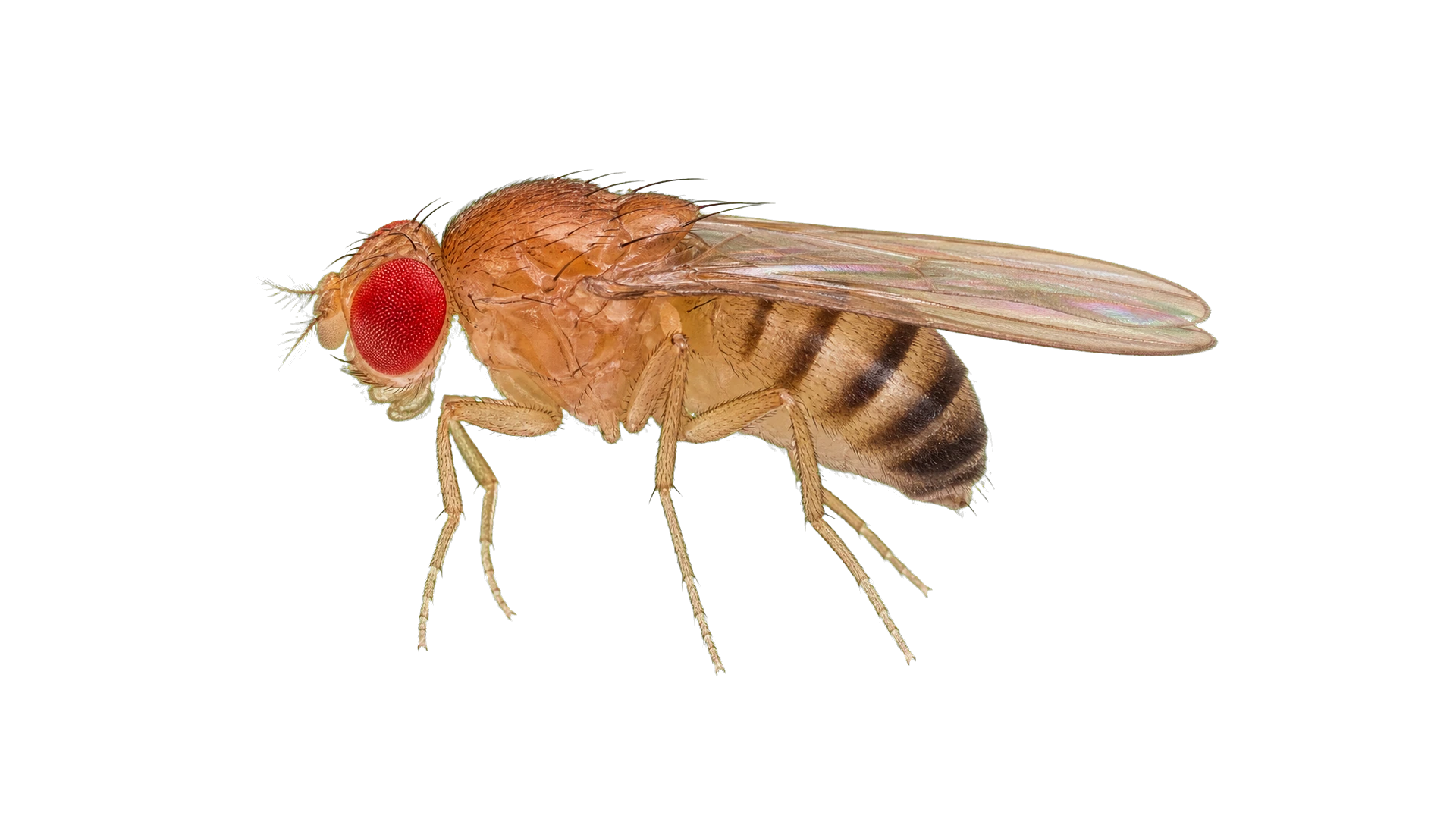
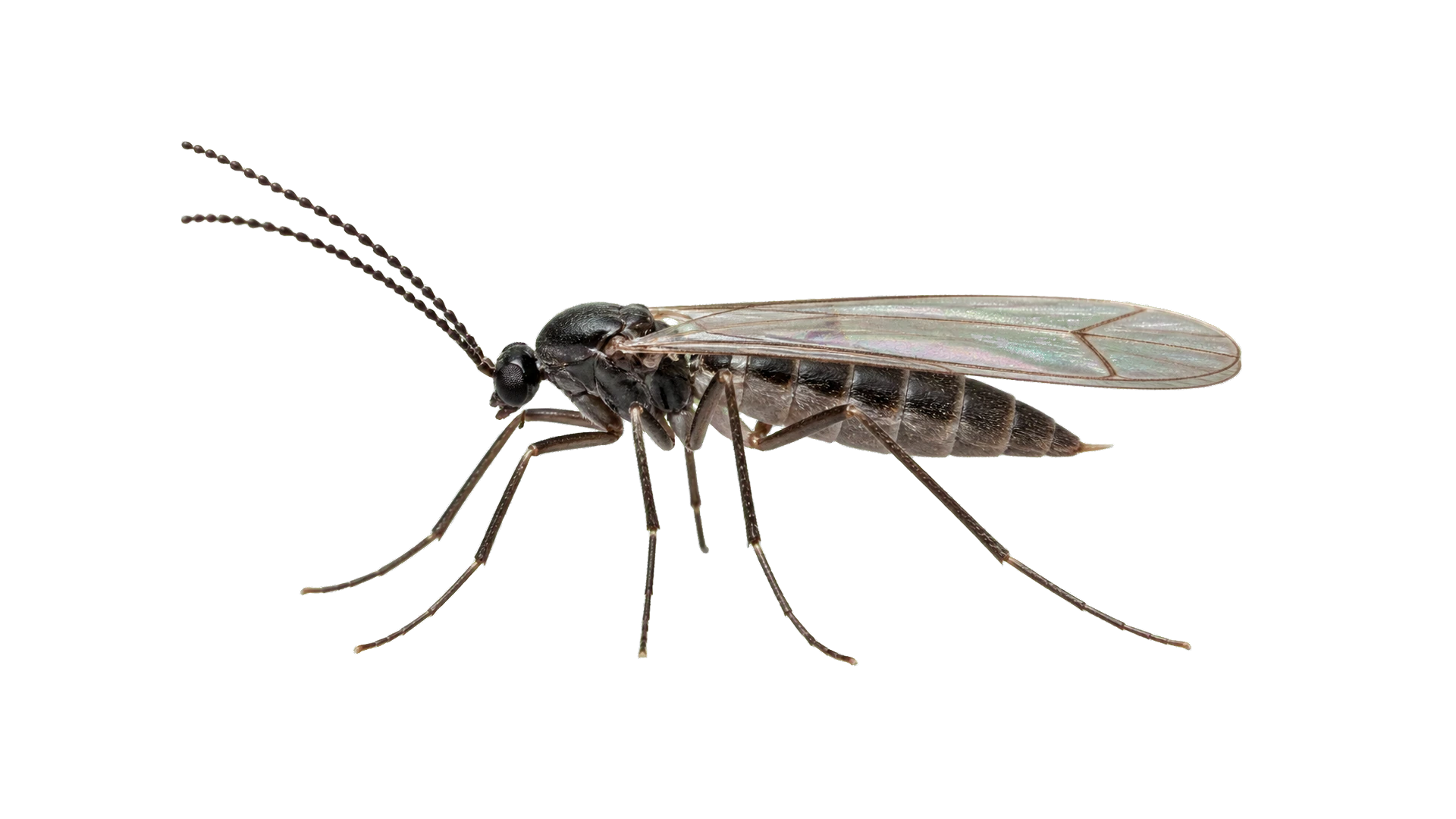
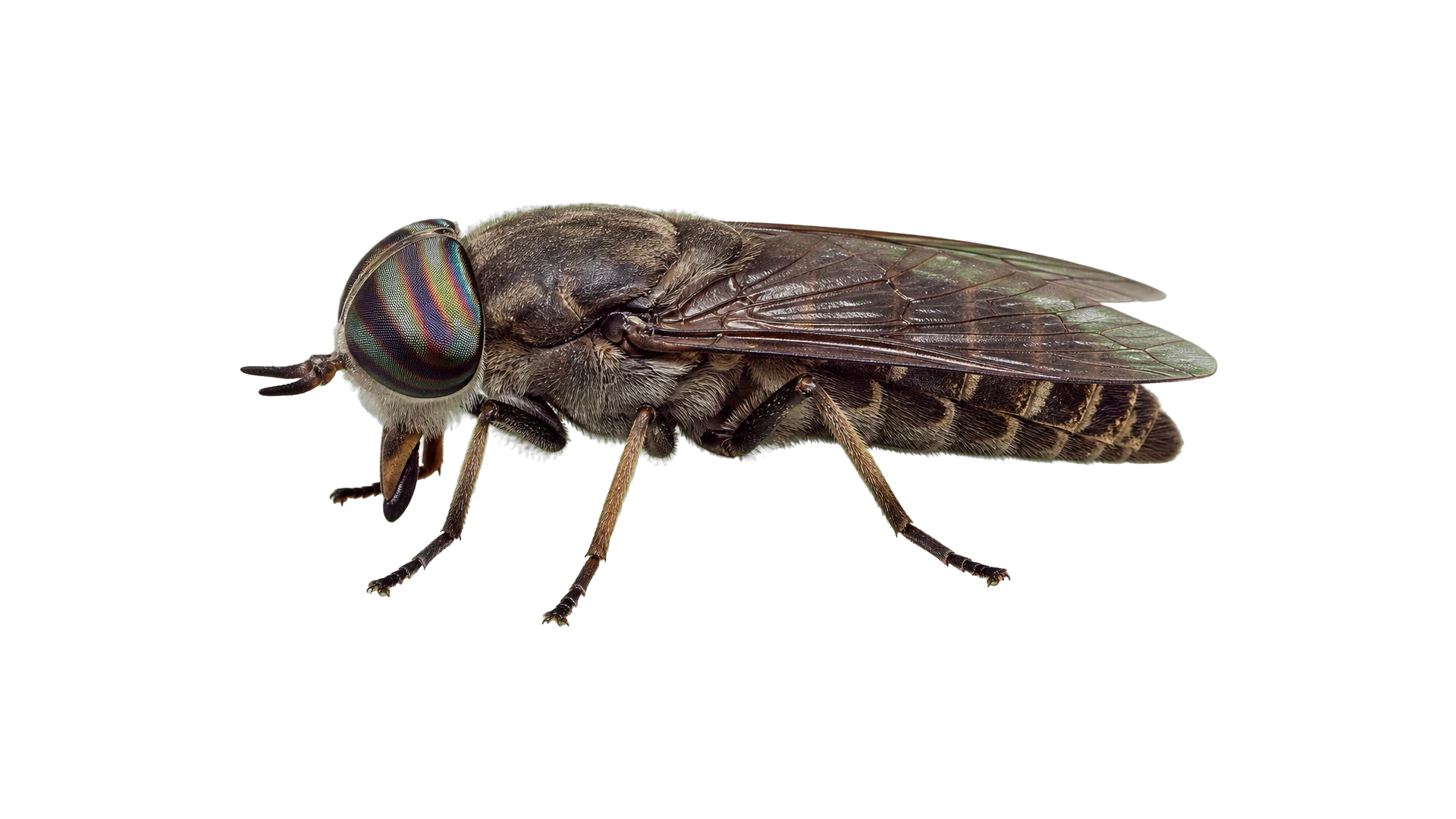
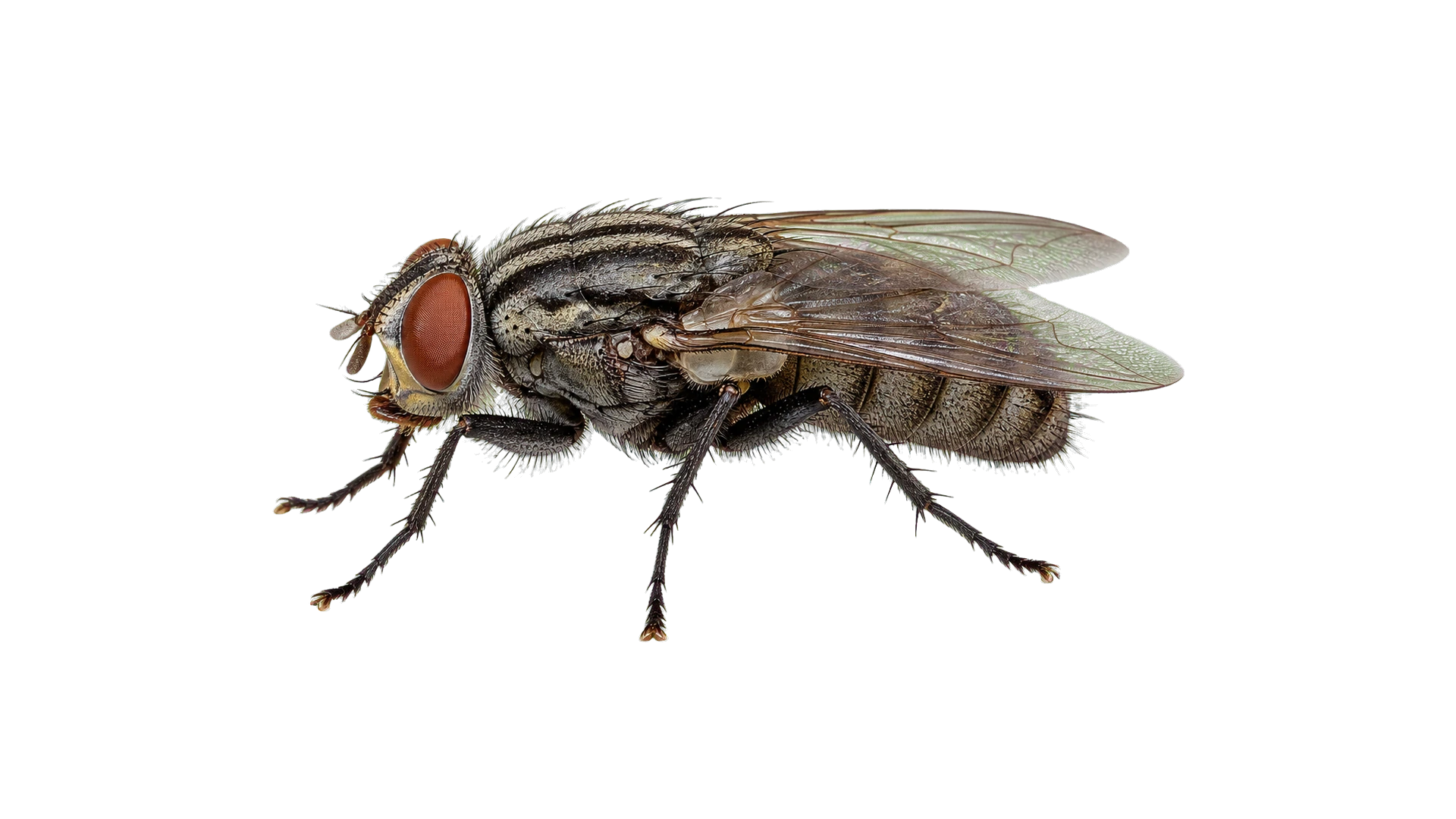
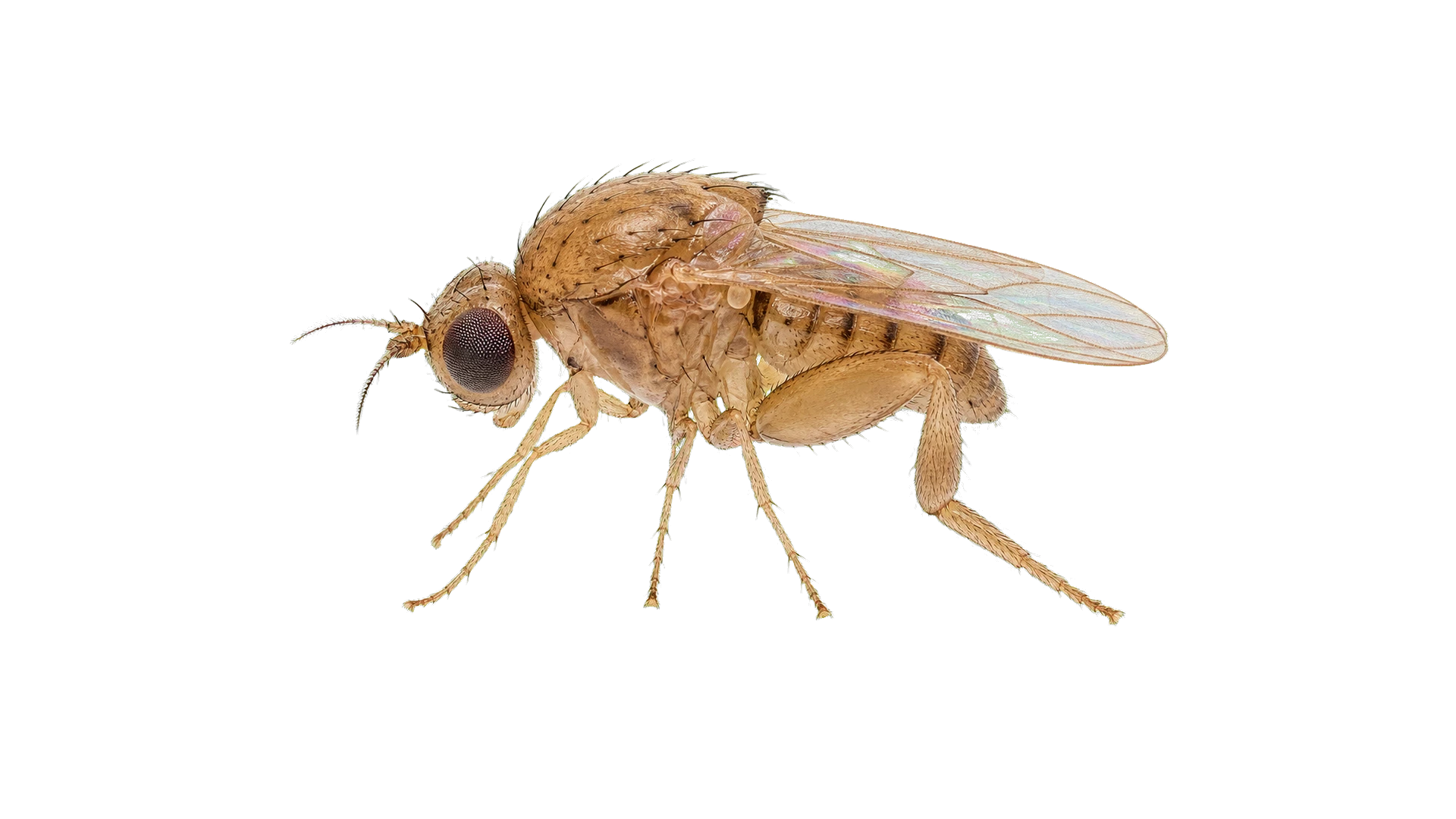
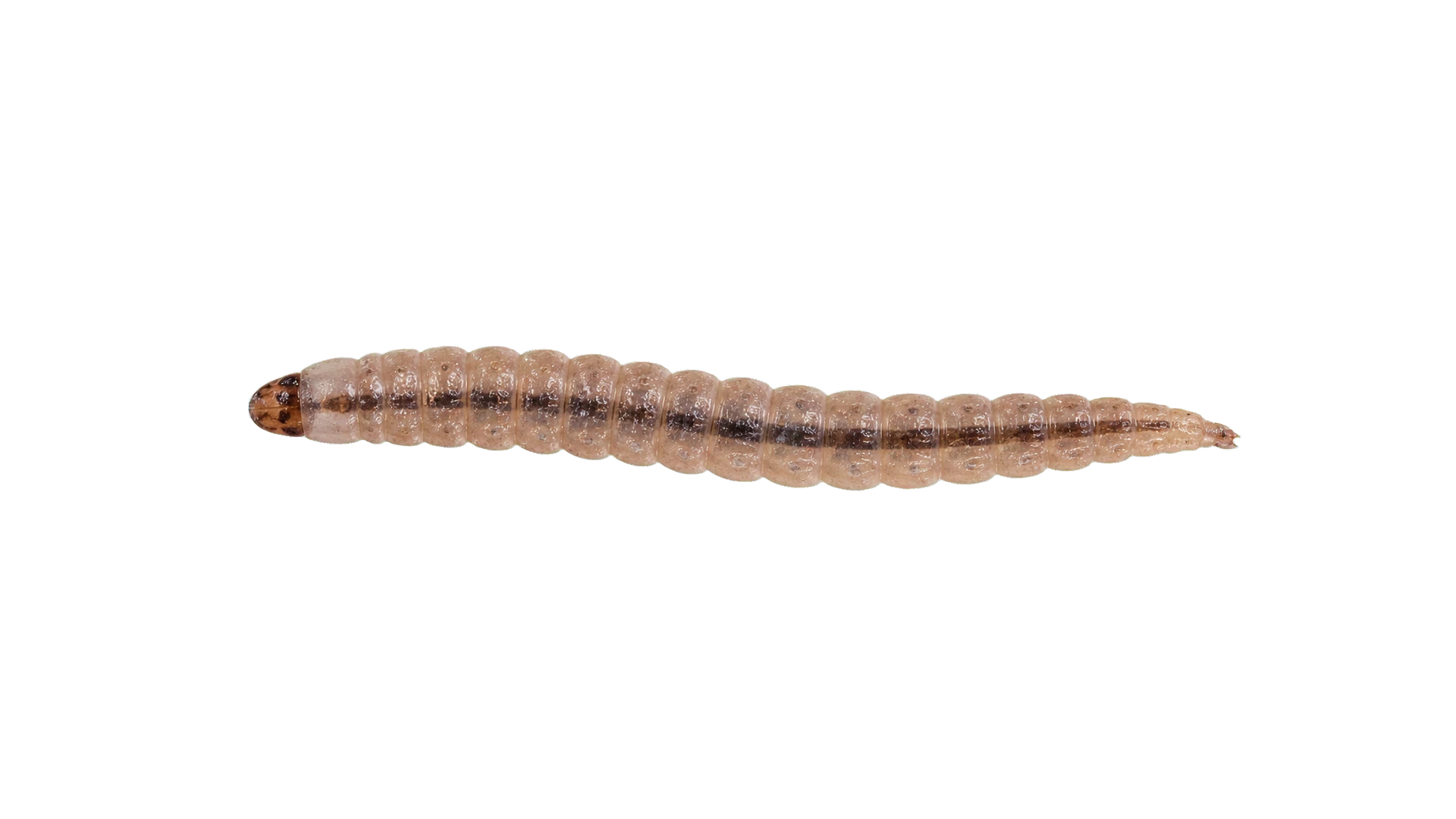
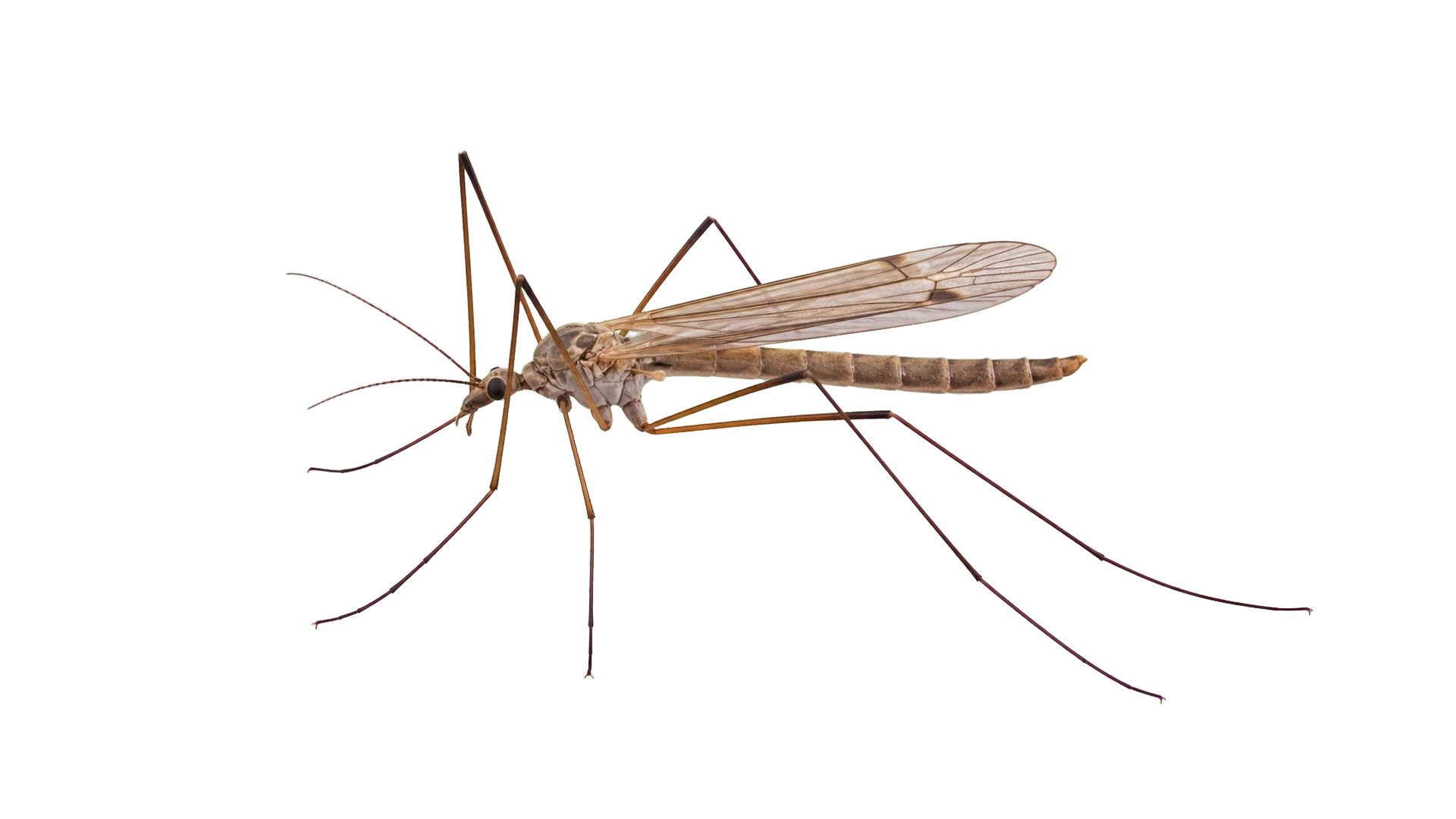
1 to 8 mm body
House flies are 6 to 8 mm; fruit flies are 3 mm; drain flies are 4 to 5 mm with fuzzy wings; phorid flies are 1 to 4 mm. Body size combined with where you found them narrows the species fast.
Local pest control help is one call away.
 Pest Control Services Nationwide Pest Control Services Nationwide
 House flies, drain flies, fruit flies, and phorid flies all look similar at first glance but breed in completely different sources. Killing the adults you can see does almost nothing if the breeding source is still operating; new adults emerge every 7 to 14 days. Identifying the species and finding the source are 90 percent of the work.
Adult flies are scavengers that come indoors looking for food, moisture, or breeding material. The species that establish breeding populations indoors are the ones with access to the right substrate: rotting produce (fruit flies), drain biofilm (drain flies), trash cans or pet waste (house flies), or decaying organic matter in wall voids (phorid flies).
Eliminate the breeding source and the population collapses within a generation. Trap the adults without source elimination and new adults emerge every two weeks indefinitely.
Three breeding source categories most homes have:
House fly egg-to-adult takes 7 to 10 days at typical room temperature. A single female lays 500 to 1,000 eggs across her short adult life. Multiple species can breed simultaneously in different sources within the same home, which is why correctly identifying the dominant species changes what you have to find.
Three checks that distinguish flies from gnats, midges, or other small flying insects.
House flies are 6 to 8 mm; fruit flies are 3 mm; drain flies are 4 to 5 mm with fuzzy wings; phorid flies are 1 to 4 mm. Body size combined with where you found them narrows the species fast.

All true flies (order Diptera) have one pair of wings, where most other flying insects have two pairs. Behind each wing is a small knob (haltere) that helped balance flight. The single-pair-plus-haltere combination is diagnostic.
Flies have unusually large compound eyes that often cover most of the head. The eye-to-head ratio is much larger than mosquitoes, gnats, or other small flies.
An occasional fly that wandered through an open door is different from a daily indoor population. Persistent fly presence almost always means a breeding source is operating somewhere on the property. The source is what to find; the adults are downstream.
How a Fly Population Compounds
Each fly species needs a specific kind of breeding source. House flies use moist organic matter (trash, pet waste, decomposing food). Fruit flies use fermenting fruit and vegetable matter. Drain flies (also called moth flies) breed in the gelatinous biofilm that accumulates inside drains. Phorid flies breed in decaying organic matter that's often hidden in wall voids, sewer breaks, or under floors. The source dictates the response.
All four species share a similar lifecycle: females lay eggs in or near the source; larvae feed on the source for 4 to 14 days; pupae develop for 4 to 7 days; adults emerge and start laying their own eggs within 24 to 48 hours. The compressed lifecycle is why fly populations rebound so fast after partial treatment. Cut the source and the cycle breaks; leave the source intact and the cycle restarts every two weeks.
Effective fly control is always source-first. Adult-targeting tactics (sprays, electric traps, sticky strips) are useful for clearing the visible population once the source is eliminated, but they do not solve the problem on their own. Identifying the species correctly is the first step because each species' source profile is different; mistreating fruit fly drain breeding sites or vice versa wastes weeks of effort.
Six features that define a true fly (Diptera), with the house fly pictured. Other species share these basic structures with proportional differences.
All true flies have one wing pair (Diptera means 'two wings'). Most other flying insects have two pairs. The single-pair structure makes flies unusually agile in flight.
Behind each wing is a small knob-shaped haltere, evolved from the second wing pair. Halteres act as gyroscopes during flight, providing the stability that lets flies hover and reverse direction quickly.
Compound eyes wrap most of the head, providing nearly 360-degree vision. Each eye contains thousands of individual ommatidia that detect motion at frame rates much higher than human vision can track.
A sponge-like labellum at the proboscis tip absorbs liquid food. House flies cannot bite; they soften solids with regurgitated saliva, then sponge up the mixture.
Paired foot pads (pulvilli) secrete adhesive, letting flies walk on glass and ceilings. The same pads pick up bacteria from one surface and transfer it to the next.
Short and stubby, with a distinctive bristle (arista) projecting from one segment. The arista is highly sensitive to air movement, helping the fly detect approaching threats.
Different species mean different sources. Pick what matches and you'll know where to look.
Flies aren't a swatting problem, they're a source problem. House flies complete a generation in 7 to 10 days, fruit flies in just 8 to 12 days, and the urgency depends entirely on finding the breeding source. The timeline below tracks the source-hunting clock.
First flies indoors near windows, kitchen, or trash. Species identification matters because the source differs: house flies follow garbage and pet waste, fruit flies follow ripe produce, drain flies live in plumbing biofilm exclusively.
Multiple flies per day in the kitchen or near windows, or larvae visible in trash, drains, or pet areas. The source is producing new generations weekly. DIY closeout works if the source is found and addressed.
Flies in multiple rooms, persistent activity after cleanup, or evidence of breeding in unusual spots (under appliances, in HVAC, in stored items). A hidden source is feeding the population: a leak, a dead rodent, or hidden waste.
Persistent population in living spaces, or signs of a structural issue (sewer line break, dead animal in wall, chronic plumbing leak). The fly source is now hidden inside the building. Multi-visit pro treatment plus structural remediation required.
Fly problems trace back to one neglected source about 90 percent of the time. Find it, and the population dies in days. Miss it, and no amount of swatting or spraying will keep up.
Local fly specialists identify the species, locate the source (even when it's hidden), and treat both the source and the adult population. Without finding the source, sprays don't last.
Fly source hunting is detective work. The species tells you the type of substrate, the location of greatest adult concentration tells you the rough zone, and the inspection that follows finds the actual material.
Each species hides its source in different places, which is why species ID changes the entire search. House flies breed in moist organic matter (trash, pet waste, compost), so trash containment and waste timing matter most. Fruit flies breed in fermenting produce and beverage residue, so the kitchen counter and recycling bin are first stops. Drain flies breed exclusively in drain biofilm, so every floor drain, sink drain, and disposal trap needs inspection. Phorid flies (humpbacked flies) often signal hidden decay: dead rodents in wall voids, sewer line breaks under slabs, or food residue inside drain pipes that other species do not target.
Most fly problems trace back to one or two overlapping conditions. The single highest-leverage move is auditing trash and recycling discipline. Drain maintenance with enzymatic cleaner once a month comes next. Hidden sources require pro inspection with UV light. Even partial wins help: replacing a damaged trash can lid alone often drops house fly populations 80 percent within 2 weeks without any product applied.
Ground zero for fruit fly populations. A single ripe banana, an aging tomato, or a recycling bin with beverage residue can sustain a colony of dozens to hundreds.
Drain flies and some fruit flies breed in the biofilm inside drains. Tape clear plastic over the drain overnight to confirm; clean with a stiff brush plus enzymatic drain cleaner.
Trash cans without sealed lids, recycling bins not rinsed, compost containers indoors. Single highest-impact source elimination for house fly populations.
Phorid fly populations often originate in dead rodents inside walls or attics, or in sewer line breaks under slabs. Persistent unexplained phorid activity warrants pro inspection.
Floor drains, shower drains, and tub drains accumulate biofilm that supports drain fly populations. Rarely-used drains (basement floor, guest bathroom) are common breeding sources.
Pet food bins, litter boxes, dog waste in yard, and stored garbage cans in garages all sustain fly populations. Pet areas in particular often go unaudited as fly sources.
Why a single overripe banana becomes a fruit fly cloud in 10 days.
1 day
Females lay eggs in or near the breeding source. House flies lay 75 to 150 eggs per batch in clusters; fruit flies lay singly, hundreds per female across her lifespan. Eggs hatch in 8 to 24 hours under typical room temperature.
4 to 7 days
Larvae feed on the source. House fly larvae are the classic creamy-white maggots; fruit fly larvae are smaller and harder to see. Larvae molt 2 to 3 times before pupating.
4 to 7 days
Larvae crawl away from the source to pupate, often into nearby cracks or dry zones. Pupae are dark brown capsules. The pupal stage is resistant to most insecticides; control during this window has limited effect.
Lives 2 to 4 weeks
Adults emerge and begin reproducing within 24 to 48 hours. House flies live about 2 weeks; fruit flies live 1 to 2 weeks. Females produce hundreds of eggs across the short adult life, which is how populations compound so quickly.
A complete generation runs 7 to 14 days, which is why fly populations rebound within two weeks of partial treatment if the source remains. Source elimination interrupts the entire cycle; adult-only treatment doesn't.
Each fly species breeds in a different source. Match what you're seeing to find the one that fits your situation.
| Species | Severity | Key Sign | Where You'll Find Them |
|---|---|---|---|
| Blow Flies | Medical | Metallic flies near garbage or dead animals, maggots on decaying matter | near carrion, garbage, pet waste |
| Cluster Flies | Nuisance | Large clusters in attics and window frames in fall and winter | attics, wall voids, sunny exterior walls |
| Crane Flies | Nuisance | Large, clumsy flies near porch lights, not harmful but alarming in appearance | lawns, near lights, porches |
| Drain Flies | Persistent | Small fuzzy flies hovering near drains, slimy buildup inside drain pipes | drains, sewers, septic tanks |
| Drain Worms | Persistent | Thin worms in shower drains and sink pipes, slimy drain buildup | bathroom drains, kitchen drains, shower drains |
| Flesh Flies | Medical | Large gray flies near garbage and pet waste, larvae deposited on decaying matter | near carrion, garbage, animal waste |
| Fruit Flies | Persistent | Swarms around overripe fruit, vinegar, and fermenting organic matter | kitchens, near fruit, garbage |
| Fungus Gnats | Nuisance | Tiny flies hovering around houseplants, larvae in damp potting soil | potted plants, greenhouses, damp soil |
| Horse Flies | Medical | Painful bites near pools and livestock areas, persistent buzzing | near water, pastures, woodlands |
| House Flies | Medical | Buzzing near food, dark specks (fly spots) on walls and ceilings | garbage, animal waste, kitchens |
| Phorid Flies | Persistent | Flies running on surfaces rather than flying, near drains and decaying matter | drains, decaying matter, mausoleums |
Severity reflects typical impact, not your specific case. If unsure, treat at the higher tier.
Straight read on common DIY methods. Effective fly control is always source-first because adults represent 5 to 10 percent of the population. Adult-only tactics fail predictably within 7 to 14 days as the next generation emerges.

 Identify the dominant species first; each requires a different source search Inspect kitchens, drains, trash zones, hidden voids systematically Eliminate or contain the source: sealed lids, frequent waste removal, drain cleaning, structural repair for hidden sources Stiff drain brush physically removes biofilm; reach as deep as the brush allows Follow with enzymatic drain cleaner (Bio-Clean, InVade Bio Cleaner, or similar) overnight Repeat weekly for 3 to 4 weeks to fully dismantle the biofilm habitat Apple cider vinegar plus a drop of dish soap in a bowl covered with plastic wrap punched with small holes Catches adult fruit flies effectively; useful while you locate and remove the source Replace every 3 to 5 days; useful as monitoring tool to confirm source elimination
  Kill contacted adults but provide no impact on the breeding source New adults emerge every 7 to 14 days from larvae and pupae Useful for immediate visible reduction, not for population control Catch some adults but breeding rate of active source outpaces capture rate Useful for monitoring (confirming species, tracking population trends) and supplemental adult control after source elimination Fail as the primary control method while source remains active Bleach kills surface contact organisms but doesn't dissolve the gelatinous biofilm where larvae develop Drain flies emerge from the same drain within days of bleach treatment Mechanical brushing plus enzymatic cleaner is the correct drain treatment
 Six prevention actions, sorted by effort. Fly control is mostly upstream: managing the breeding sources before they form.

Trash cans with tight-sealing lids; rinse recycling before storing; take out trash every 1 to 2 days during warm months. Single highest-impact prevention for house fly populations.

Move bananas, tomatoes, peaches, and other ripe produce to the fridge once they're past peak. A single overripe item on the counter sustains a fruit fly population.

Pour enzymatic drain cleaner into kitchen and bathroom drains overnight once a month. Prevents biofilm accumulation that sustains drain fly populations.

Dog waste in yards, cat litter boxes, and pet food bowls all sustain fly populations. Daily removal during warm months; weekly minimum during cooler months.

Damaged screens and gaps under doors are major entry points. Tighten weatherstripping on exterior doors, replace torn screens, install door sweeps where missing.
Once-yearly professional drain cleaning prevents the biofilm accumulation that sustains drain fly populations. Worth scheduling alongside other annual home maintenance.
Outdoor populations cycle with weather; indoor breeders run year-round if the source persists.
Outdoor populations emerge as temperatures rise. House fly breeding accelerates outdoors (compost, garbage, pet waste). Spring is the right window to verify trash containment and screen integrity before pressure escalates.
Peak outdoor and indoor fly pressure. House flies, fruit flies, and drain flies all reach maximum activity. Most homeowner fly calls cluster in July and August.
Outdoor populations decline but cluster flies (overwintering species) move indoors looking for warm shelter, often establishing in attics and wall voids. Fall is also peak fruit fly season as harvest produce ripens.
Outdoor populations crash; indoor breeders (drain flies, fruit flies, phorid flies) continue at full pace in heated structures. Cluster flies in walls become noticeable on warm winter days when they emerge inside.
Four steps from arrival to a household no longer hosting fly populations. Initial visit runs 60 to 90 minutes; full clearance follows in 2 to 4 weeks.
Identify, locate, eliminate, knockdown. Real fly control is source-first. Plans that start with adult sprays without finding the source usually drag on for weeks while the breeding cycle continues.
Inspect adult flies and confirm species (house, fruit, drain, phorid). Each species needs a different source search and treatment approach.
Inspect the property zones the species uses. Drain flies: drains. Fruit flies: kitchen and recycling. House flies: trash and pet waste. Phorid flies: hidden voids and sewer access.
Remove or seal the source. Drain biofilm: mechanical brush plus enzymatic cleaner. Trash issues: sealed bins plus removal frequency. Hidden sources: structural repair coordinated with appropriate tradespeople.
Sticky traps, fly lights, or targeted residual spray to clear the visible adult population once the source is addressed. Follow-up at 7 to 14 days to verify source remains controlled.
Real stories from households who connected with fly specialists to find the breeding source and clear the indoor population.

"Finally got the fall cluster fly problem under control."
Every autumn, cluster flies would swarm into our upstairs rooms. The provider explained their life cycle and treated the exterior before they could enter. The following fall was dramatically better.
"Finally got the fall cluster fly problem under control."
Every autumn, cluster flies would swarm into our upstairs rooms. The provider explained their life cycle and treated the exterior before they could enter. The following fall was dramatically better.

"Upstairs cluster fly migration stopped."
We had hundreds of cluster flies appearing in our upstairs rooms every fall. The provider treated the exterior before the migration season and sealed gaps around the windows. The improvement was dramatic.

"Autumn cluster fly swarms knocked back."
Cluster flies would swarm our upstairs windows each fall. The pro treated the exterior before migration season and sealed the gaps they were using to enter. The following fall was dramatically better.

"Summer fly breeding sites treated."
Summer brought massive fly problems around the house. The tech identified breeding areas near standing water and treated the perimeter. They also suggested screen repairs that made a significant difference in keeping flies out of the kitchen.

"Cluster fly numbers down dramatically."
Each fall, cluster flies would gather on the sunny side of the house and find their way indoors. The inspector treated the exterior walls and sealed cracks around window frames. The numbers dropped dramatically the following season.

"Attic soffits sealed against cluster flies."
Thousands of cluster flies appeared in the attic each autumn. The provider treated the attic and sealed soffit vents with fine mesh. They explained the overwintering behavior and recommended late-summer treatment for best results.

"Cluster fly attic invasion knocked back."
Cluster flies would invade the attic every autumn and emerge on warm winter days. The provider treated the exterior in late summer and sealed soffit gaps. The preventive timing made a dramatic difference in the number getting inside.

"Cabin attic sealed against cluster flies."
Our lake cabin attic filled with cluster flies every fall. The provider treated the exterior in late August and sealed soffit vents. The preventive timing was key to reducing the fly population dramatically.

"Attic cluster fly numbers dramatically reduced."
Thousands of cluster flies appeared in the attic each autumn. The provider treated the exterior in late summer and sealed the soffit vents. Early timing dramatically reduced the invasion.

"Cabin cluster fly cycle finally broken."
Cluster flies filled the cabin every autumn and emerged on warm winter days. The provider treated the exterior in late summer and sealed soffit openings. The timing was critical for prevention.

"Attic cluster fly entries closed off."
Cluster flies appeared in the attic every autumn. The provider treated the exterior in late summer and sealed soffit gaps. Timing the treatment before flies seek shelter was critical.

"Attic soffits sealed against cluster flies."
First warm day in February the attic ceiling would have dozens of flies waking up and crawling toward the window. Disgusting honestly. The tech explained you have to treat in late August before they move in for the winter, so we timed it that way. Sealed the soffit gaps too. This past winter the count was way down. Timing the treatment was the key piece I had been missing.

"Attic soffits sealed against cluster flies."
Every February when the sun hit the south side of the roof, the bedrooms would fill with sluggish flies. Vacuumed up a small graveyard worth one weekend. The tech treated the exterior in the last week of August, which is when they look for shelter, and sealed the soffit gaps. The next winter was probably ninety percent better. The timing made all the difference.

"Attic soffits sealed against cluster flies."
First warm day of February, sluggish flies would crawl across the upstairs ceiling and end up on the bathroom counter. Vacuumed up dozens every winter. The tech explained the cluster flies look for shelter in late August, so that is when we need to treat. Sealed the soffit gaps too. This past winter the count was way down. Catching them before they move in was the key.
Direct answers to what homeowners ask when fly populations show up indoors.
Fruit flies need fermenting organic matter to breed; if you have a population, there's a source within roughly 10 feet of where the adults are concentrating. The most common sources are: a piece of overripe fruit on the counter (single ripe banana can sustain a colony), recycling bin with beverage residue not rinsed, fermenting onions or potatoes in storage, kitchen sink drain biofilm (yes, fruit flies can breed in drains), garbage disposal interior, mop bucket or floor drain. Find and remove or treat the source; deploy an apple cider vinegar trap (vinegar plus a drop of dish soap in a bowl, covered with plastic wrap punched with small holes) to catch the existing adults; activity should drop dramatically within 5 to 7 days of source elimination.
Drain flies breed exclusively in the gelatinous biofilm inside drain pipes. Bleach does NOT solve the problem; bleach kills surface organisms but doesn't dissolve the biofilm where larvae develop. The correct approach: identify the active drain by taping clear plastic over each drain overnight (the drain with adults stuck to the plastic is the breeding source), then mechanically scrub the drain with a stiff brush as deep as it reaches, and treat with an enzymatic drain cleaner (Bio-Clean, InVade Bio Cleaner, or similar) overnight. Repeat the enzyme treatment weekly for 3 to 4 weeks to fully dismantle the biofilm habitat. Adults stop emerging as the biofilm is consumed by the enzymes; if activity persists past 4 weeks, a different drain or pipe is the source and the search has to expand.
Yes. House flies in particular are mechanical vectors for over 100 pathogens including salmonella, E. coli, campylobacter, shigella, and various viruses. They acquire these by walking through unsanitary substrates (garbage, pet waste, sewage) and transfer them to clean surfaces by walking, regurgitating saliva to dissolve solid food, and defecating roughly every 4 to 5 minutes. Flies on food prep surfaces, ready-to-eat food, or medical equipment are a real sanitary concern, especially in households with immunocompromised members, infants, or elderly residents. Fruit flies and drain flies are less significant disease vectors but still transfer surface bacteria. Phorid flies can be a concern in healthcare settings because of their association with decaying organic matter. The case for prompt fly control is mostly health-driven, not just nuisance.
Different traps for different species. For house flies: ultraviolet fly lights (proper indoor fly lights, not outdoor zappers) with adhesive boards work well in commercial kitchens and food prep areas. For fruit flies: apple cider vinegar plus dish soap in a covered bowl with small holes punched in plastic wrap. For drain flies: traps don't help meaningfully; drain cleaning is the actual fix. For phorid flies: structural inspection to find the hidden source is the actual fix; traps just confirm species. The general rule: traps are useful for monitoring (tracking population over time) and for clearing residual adults after the source is addressed. They are not effective as the primary control method while a breeding source is still active; the breeding rate outpaces the capture rate every time.
No. Cluster flies (Pollenia rudis) look similar to house flies but behave very differently. They breed outdoors in lawns where their larvae parasitize earthworms, and they overwinter as adults inside structures: attics, wall voids, soffits, behind siding. On warm winter days the adults emerge from harborage and gather at sun-warmed windows, where homeowners often find them dead in clusters (hence the name). Cluster flies do not breed indoors; the population you're seeing is overwintering adults, not a reproducing colony. Treatment focus is exclusion (sealing entry points before fall) and aerosol treatment in attics during peak entry season. Standard house fly control approaches don't apply because the breeding source is the lawn, not anything indoors.
If you've discovered maggots in a trash can, the immediate fix is to remove and dispose of the trash bag in an outdoor bin, scrub the trash can interior with hot soapy water plus a splash of bleach or enzymatic cleaner, dry thoroughly before lining with a fresh bag. Prevent recurrence with: tight-sealing lid, regular bag changes (every 2 to 3 days during warm months, less often during cold months), drain holes wiped down (food liquid that pools in the bottom is what attracts females to lay eggs there), and outdoor bin location away from doors and windows. Some homeowners line bins with food-grade diatomaceous earth between bag changes; this is supplemental rather than primary control.
Phorid flies are similar in size to fruit flies (1 to 4 mm vs 3 mm) but have a distinctive behavior: they tend to run quickly across surfaces rather than fly, often described as scuttling or jerky movement. Their thorax also has a noticeable hump (hence the nickname humpbacked flies). Fruit flies hover near produce and flying around food bowls; phorid flies are more likely to appear in basements, near sewer cleanouts, in bathrooms, or in food prep areas without an obvious fruit source. The distinction matters because the breeding sources are completely different: fruit flies need fermenting food; phorid flies need decaying organic matter that's often hidden in walls, sewer line breaks, or under slabs. Persistent phorid activity warrants pro inspection because the source is rarely something a homeowner can find without specialized tools.
Find the source, eliminate it, knock down adults. Local fly specialists handle the integrated plan rather than a single fogger event.
Click through to species pages for source location and treatment specific to that fly type.
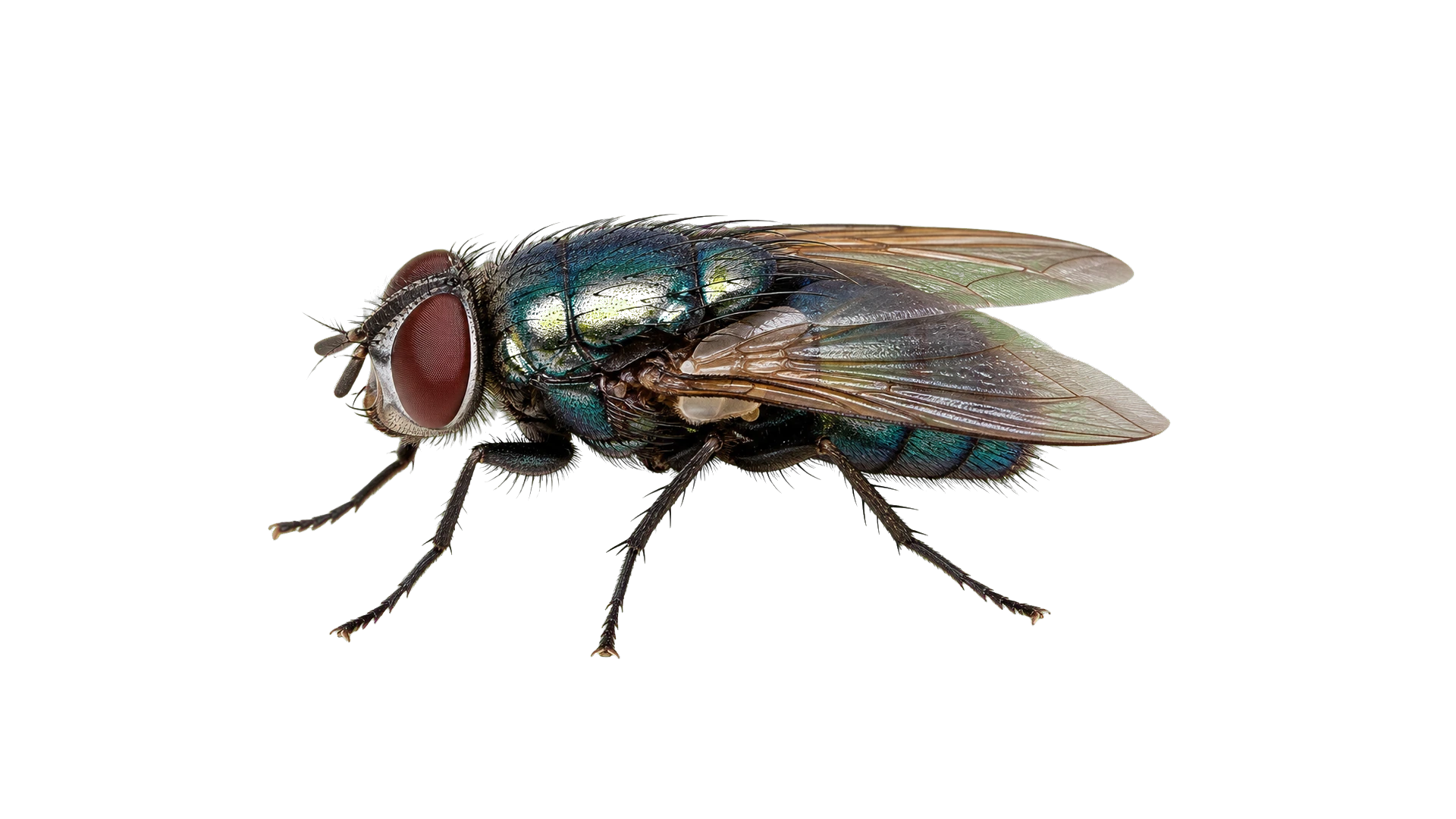
Metallic-colored flies that breed in decaying animal matter and garbage.
Blow flies are typically the first insects to arrive at decaying animal matter, making them a strong indicator of a dead animal in a wall void, attic, or crawlspace. Their large, metallic blue or green bodies are easy to spot. If blow flies appear suddenly indoors, locating and removing the source should be the immediate priority.
Quick ID:
Why it matters:
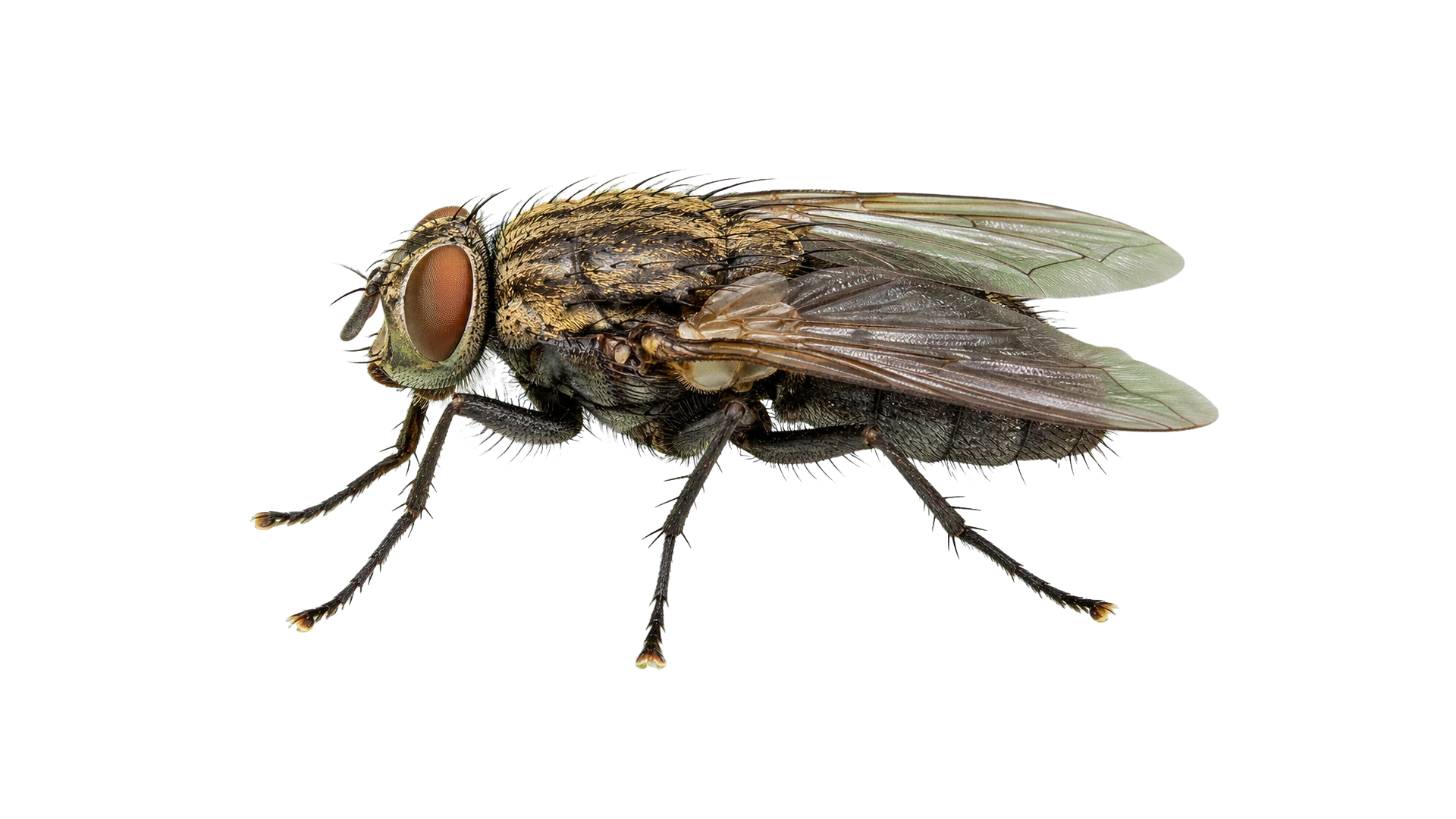
Slow-moving flies that invade attics and walls in large groups each fall.
Cluster flies enter homes in autumn to overwinter in wall voids, attics, and window frames, emerging in sluggish groups on warm winter days. They don't breed indoors or contaminate food, but their sheer numbers can be overwhelming. Sealing exterior gaps before fall and treating attic spaces are the most effective prevention strategies.
Quick ID:
Why it matters:
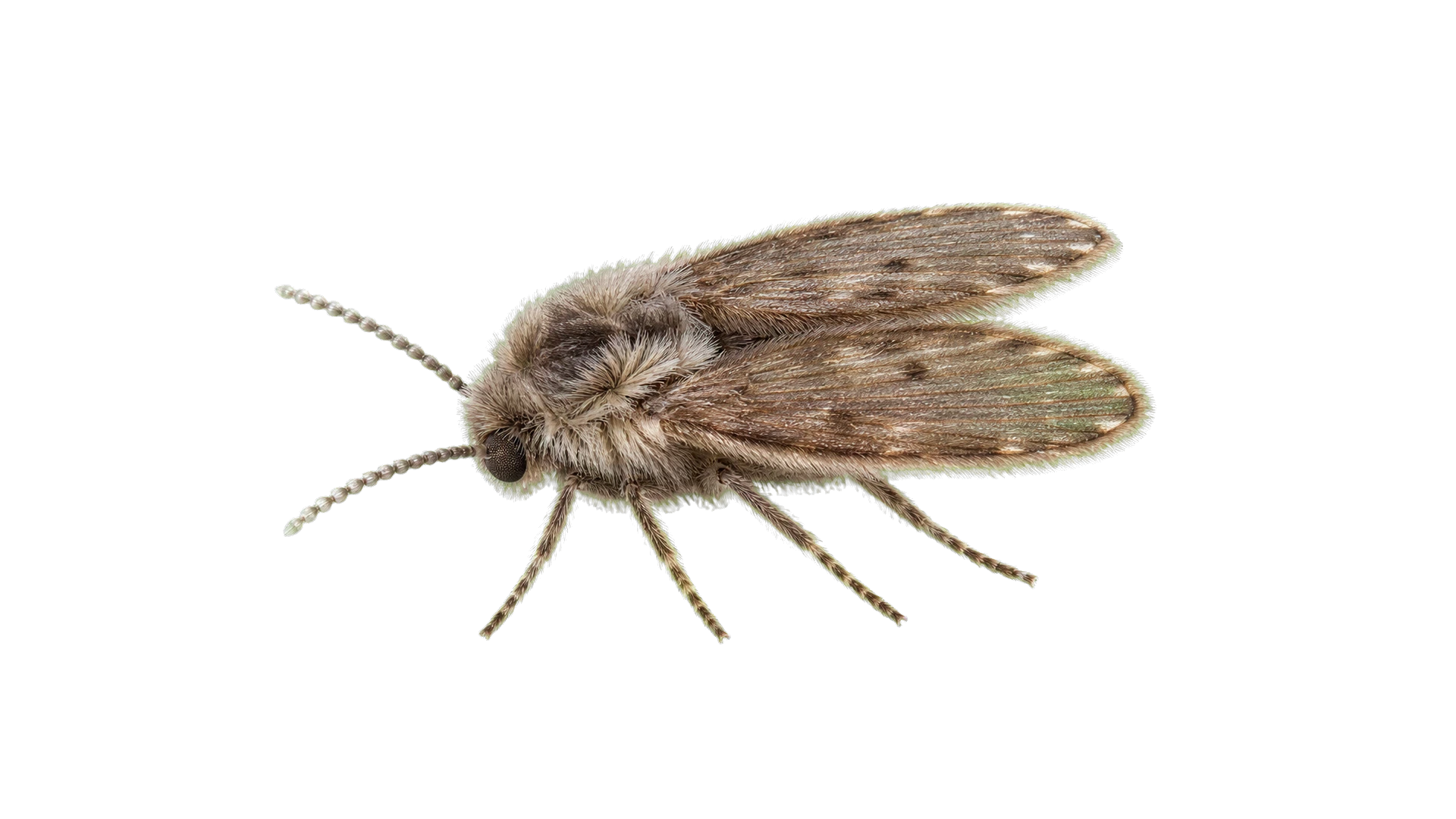
Fuzzy, moth-like flies that breed inside drain slime and sewage buildup.
Drain flies emerge from the organic film that coats the inside of shower drains, sink drains, and floor drains where stagnant water collects. They are a reliable indicator of drain maintenance issues or sewer line leaks. Mechanically cleaning the drain biofilm eliminates the breeding source more effectively than chemical treatments alone.
Quick ID:
Why it matters:
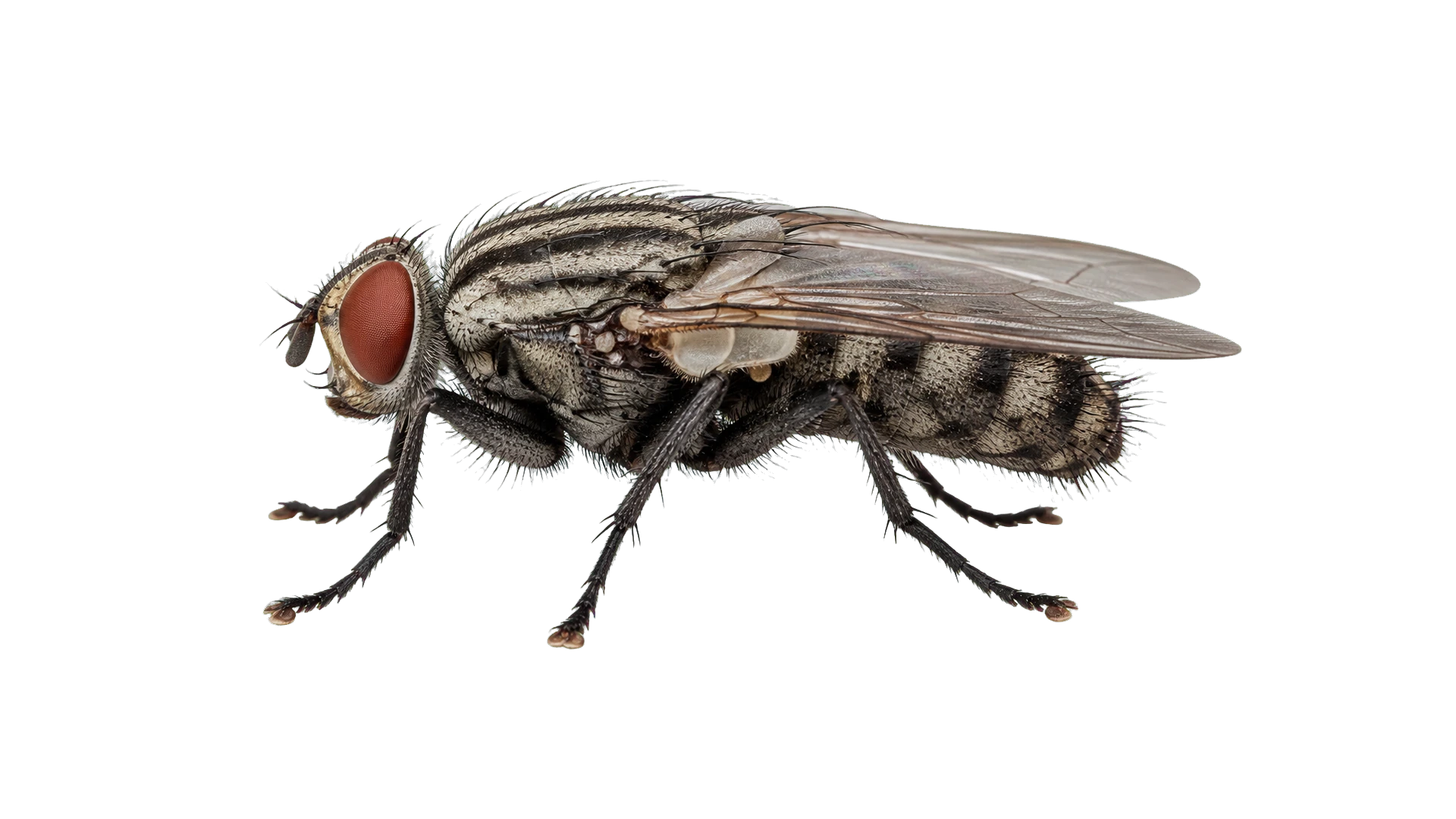
Gray-striped flies that breed in animal waste and decaying meat.
Flesh flies deposit live larvae rather than eggs directly onto decaying meat, animal waste, and open wounds on pets or livestock. They are commonly found near garbage cans, pet areas, and compost bins. Proper sanitation, sealed waste containers, and prompt removal of animal waste are the key control measures.
Quick ID:
Why it matters:
Tiny flies that swarm overripe fruit, drains, and fermented liquids.
Fruit flies breed in moist organic material including overripe fruit, vegetable scraps, mop water, and the residue inside recycling bins and garbage disposals. A single piece of rotting fruit can produce hundreds of flies within a week. Eliminating all breeding sources, not just visible fruit, is essential because eggs and larvae are often hidden in drains and trash areas.
Quick ID:
Why it matters:
Tiny dark flies that hover around houseplants and damp potting soil.
Fungus gnat larvae feed on organic matter, fungi, and root hairs in overwatered potting soil, which can weaken houseplants and seedlings. Adults are harmless but annoying, hovering in clouds near plant pots and windows. Allowing soil to dry between waterings and using sticky traps near plants are the simplest and most effective controls.
Quick ID:
Why it matters:
Large, aggressive biting flies common near livestock and standing water.
Horse flies deliver painful, blood-drawing bites using scissor-like mouthparts, targeting livestock, horses, pets, and people near ponds, marshes, and irrigated pastures. They breed in wet soil and aquatic vegetation, making properties near water especially vulnerable. Trapping, habitat modification, and targeted repellent applications are the primary management tools.
Quick ID:
Why it matters:
The most common indoor fly, spreading bacteria across surfaces and food.
House flies land on food after visiting garbage, animal waste, and decaying matter, transferring pathogens that can cause food poisoning, dysentery, and other illnesses. They breed rapidly in warm conditions, with each female laying hundreds of eggs in her short lifespan. Sanitation, keeping trash sealed, cleaning spills promptly, and screening windows, is the foundation of effective control.
Quick ID:
Why it matters:
Tiny, erratically running flies that breed in broken drain lines and organic buildup.
Phorid flies, also called humpbacked flies, are a strong indicator of a broken sewer line, decaying organic matter under a slab, or contaminated soil beneath a building. They run in quick, jerky movements rather than flying immediately when disturbed. Locating and repairing the moisture or waste source is the only way to permanently resolve a phorid fly problem.
Quick ID:
Why it matters:
Tiny worm-like larvae that breed inside clogged and neglected drains.
Drain worms are the larval stage of drain flies (moth flies), living in the gelatinous biofilm that coats the inside of sink, shower, and floor drains. They are small, translucent, and wriggle through the organic sludge that accumulates in pipes with poor water flow. Their presence indicates drain maintenance issues, mechanically cleaning the biofilm is the only way to permanently eliminate them.
Quick ID:
Why it matters:
Large, mosquito-like flies whose larvae damage lawns from below.
Crane flies resemble giant mosquitoes but do not bite or feed as adults. Their leathery-skinned larvae, called leatherjackets, live in soil and feed on grass roots and crowns, creating brown patches in lawns during spring. Heavy infestations can thin turf enough to require reseeding, and the larvae also attract digging birds and skunks that compound lawn damage.
Quick ID:
Why it matters: