Egg
24 to 48 hours
Females lay 30 to 100 eggs directly on or just inside the breeding substrate, drain film, decomposing tissue, saturated soil. Eggs hatch fast in warm wet conditions.
Local pest control help is one call away.
 Pest Control Services Nationwide Pest Control Services Nationwide
 Phorid flies (also called scuttle flies, humpback flies, or coffin flies) are tiny dark flies, 2 to 4 millimeters long, that look almost identical to fruit flies from across the room. The two giveaways are physical and behavioral: a humped thorax that makes the fly look hunched over, and a strong preference for running erratically across countertops, walls, and sinks before they fly. That scuttling behavior is where the name comes from. If a small dark fly takes off the second you wave at it, that's a fruit fly. If it darts across the surface first, that's a phorid.
Phorid flies are not just an annoyance. Persistent phorid activity in a home almost always points to a hidden structural problem, a broken sewer line under the slab, a dead animal in a wall void, a leaking septic field, or a failed condensate drain. This guide walks through how to confirm phorid identification, why their breeding source matters more than the flies themselves, and what professional inspection (often including a drain camera) actually finds.
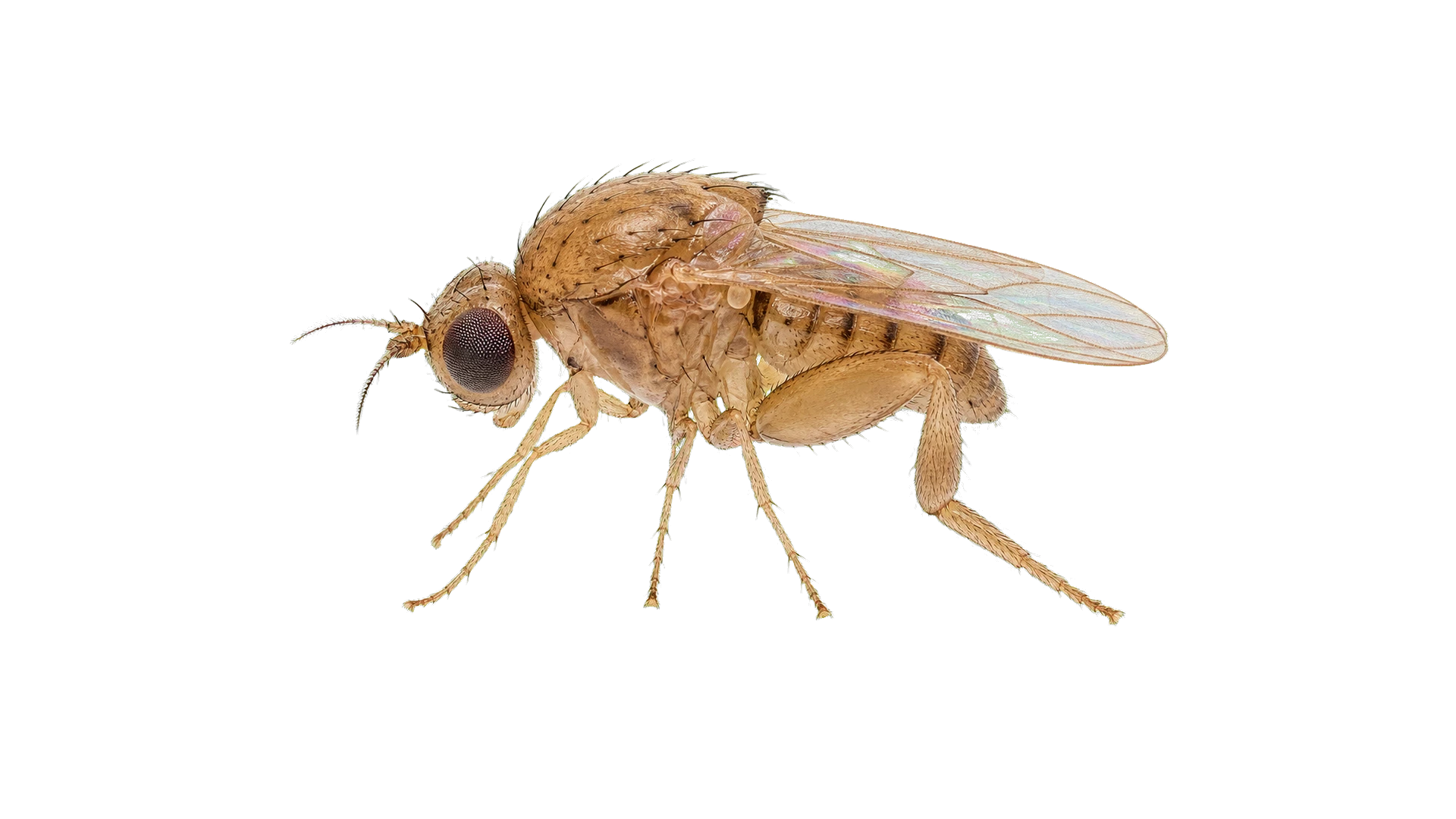
ID Card: Phorid Fly
Related Species
Call to get matched with a local pest control pro.
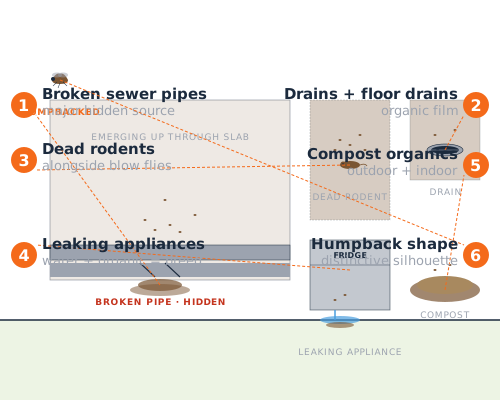
Phorid flies breed in wet decaying organic matter, but unlike fruit flies, they tolerate much darker and more disgusting substrates: rotting drain film, sewer sludge, decomposing animal tissue, and saturated soil under a leaking pipe. That means the inspection has to cover places most homeowners never think to check. Walk these zones in order:
Here is the diagnostic that matters: with fruit flies, you can almost always find the source on the kitchen counter, an overripe banana, a forgotten potato, a sticky bottle. With phorid flies, the source is usually invisible from the room they're in. If you've cleaned every surface and the flies persist, the breeding site is almost certainly a hidden structural problem: a broken sewer line under the slab, a dead animal sealed behind drywall, or a saturated patch of subfloor below a leaking fixture. That single difference is why professional phorid inspections often involve a drain camera or a sewer line scope, not just a spray treatment.
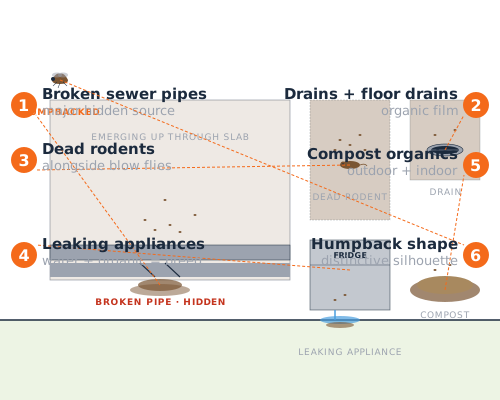
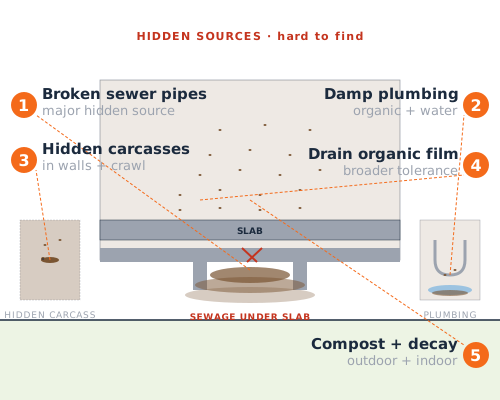
Confirming phorid identification is step one. The harder question is what they're breeding in, because phorids are the household fly most likely to point to a real structural issue. They will breed in fruit fly food sources, an old garbage bin, a dirty drain, but they don't need the food to be fresh or recognizable. They actively prefer substrates that have moved past the rotting-fruit stage into wet sludge, dead tissue, or sewage.
What sustains phorid flies on your property:
The reason persistent phorid flies are taken seriously by pros is that the breeding substrate is also a structural problem. A broken sewer line under a slab is leaking raw sewage into the soil beneath your home. A dead animal in a wall void is rotting through insulation and drywall. A failing condensate line is dripping water onto framing day after day. Treating the visible flies without fixing the underlying source means the flies come back within days, and the structural damage keeps compounding the whole time.
Find your scenario below. Phorid severity is about what the flies indicate, not just how many you see.
| What You're Seeing | Severity | If Untreated | Next Step |
|---|---|---|---|
| A few small flies near recent garbage or food prep, gone after cleanup | Early | If they were truly source-tracked, cleanup ends the issue within a week | Deep-clean drains and disposal, run bio-enzymatic drain treatment for 7 to 10 days, tape-test to confirm. |
| Persistent small flies in one room, no obvious food source on counters | Moderate | Source is hidden, population continues regenerating until the substrate is found | Schedule professional inspection this week, the technician should plan to drain-camera the line and probe surrounding fixtures. |
| Heavy fly activity plus sewer odor, dampness, or a recent plumbing issue | High | Broken sewer line, slab leak, or dead animal likely, structural damage is compounding | Call a professional this week and request a drain camera or sewer scope, plumber coordination is almost always next. |
| Fly activity inside a healthcare facility, food service operation, or near vulnerable family members | Urgent | Phorid flies are documented contamination risks in food prep and clinical settings | Call today and request a comprehensive program, source investigation plus structural assessment, no surface-only treatment. |
Phorid persistence almost always indicates a hidden source rather than a sanitation gap. If you're between two rows, treat the higher one as your situation.
Phorid flies complete a full lifecycle in roughly three to seven weeks, and a single breeding site can cycle through generation after generation as long as the substrate stays wet. That continuous output is why a problem can look small one week and overwhelming the next, the breeding site has been active the whole time and the visible adults are just the latest wave.
24 to 48 hours
Females lay 30 to 100 eggs directly on or just inside the breeding substrate, drain film, decomposing tissue, saturated soil. Eggs hatch fast in warm wet conditions.
About 8 to 16 days
Larvae feed on the substrate itself, which is part of why phorid breeding sites are so persistent, the larvae break down the material as they grow. Drain treatment that doesn't remove the organic film leaves the food source intact.
About 14 to 37 days
Pupae develop near (but typically just outside) the wet substrate. This is why pupae often appear on grout lines, tile edges, and dry spots adjacent to the source. Finding pupae nearby is a strong clue the breeding site is within a few feet.
Adults live about 25 to 37 days
Adults mate within hours of emergence and the females start laying within a day or two. With multiple overlapping generations per year indoors, a single uncorrected source produces flies continuously.
After a breeding source is fully removed, expect two to three more weeks of adult emergence as the existing pupae complete development. That's normal and not a sign the treatment failed. Persistence beyond three weeks means a source is still active somewhere, and that's when the inspection has to widen.
Indoor phorid populations don't follow a meaningful seasonal pattern, the substrate inside your home is wet and warm year-round regardless of weather. Outdoor pressure follows temperature, but the indoor problem is driven entirely by whatever the hidden source is.
Indoor populations stay steady. This is also when many spring rodent control jobs leave dead animals in walls or attics, and phorid flies can emerge two to six weeks later as the carcasses decompose. A sudden fly spike after rodent work is a strong clue.
Peak indoor pressure. Warm temperatures speed up the lifecycle, condensate lines run constantly, and outdoor sources (compost, mulched beds, septic fields) start contributing to indoor entries. AC condensate drain issues spike in this window.
Continued indoor activity. Refrigerator drip pan issues become more noticeable as outdoor pressure drops and indoor sources stand out more. Septic field problems also become more apparent as soil saturation patterns shift.
Indoor populations stay fully active. Outdoor pressure disappears, which actually makes hidden indoor sources easier to diagnose, if you see phorid flies indoors in January, the source is almost certainly inside the structure.
Phorid flies look like fruit flies but they almost never behave like fruit flies. Fruit fly problems are sanitation problems, find the rotting fruit, throw it out, the flies leave. Phorid problems are usually structural, and that's the difference that makes them a professional job. Persistent phorid activity in a clean kitchen is the household pest world's most consistent indicator of a hidden plumbing, structural, or wildlife issue.
Over-the-counter drain treatments and surface sprays are not pointless, they handle the small percentage of phorid cases where the source really is a dirty drain or a forgotten disposal. But when the source is a broken sewer line under the slab, a dead animal sealed behind drywall, or a saturated subfloor below a slow leak, surface treatment does nothing and the population keeps cycling. Weeks of DIY work in those cases is weeks of structural damage continuing unchecked.
A specialist starts with the source diagnostic. Tape tests confirm or rule out drain breeding. Drain cameras find pipe defects under slabs and inside walls. Moisture meters and odor mapping narrow down dead-animal locations. Coordination with plumbers, contractors, and wildlife technicians follows once the source is identified. The cost of investigation is typically a small fraction of the structural damage that compounds while the problem is misdiagnosed.
In healthcare facilities, restaurants, and food production environments, phorid flies are a documented contamination risk because of how small they are and how readily they access sterile or food-prep areas through screens, vents, and door gaps. Phorid identification in any of those settings should trigger an immediate professional response, not a DIY attempt.
A real phorid fly call is more of an investigation than a spray job. A specialist's first goal is to confirm the source category (drain, hidden plumbing, dead animal, condensate), then choose tools and partners accordingly. Here's what changes:

 They Confirm the Source Category First
 Tape tests, drain probes, and structured questioning narrow whether the source is a drain, a hidden leak, a dead animal, or a refrigerator/HVAC issue. Treatment without confirmation is wasted product.
They Run a Drain Camera When Needed When the source isn't obvious, a fiber camera goes down the line. It finds cracked PVC, separated joints, root intrusion, and slab leaks that no surface inspection can see. This is the single tool that resolves most stubborn residential cases.
They Coordinate Plumbing and Carcass Removal Once the source is confirmed, structural work begins, a plumber repairs the broken line, a wildlife technician extracts the dead animal, or a contractor opens the wall. Pest control alone cannot fix the underlying problem.
They Treat the Substrate Plus the Visible Adults Bio-enzymatic drain treatment breaks down residual organic film. Residual product is applied in breeding zones to catch emerging adults during the two- to three-week lifecycle that follows source removal. Follow-up confirms the population has collapsed.

Phorid flies are the household pest where misidentification (as fruit flies) leads to the longest, most expensive delays. DIY can handle the simple cases, but the diagnostic decision is the one that matters.
DIY is most useful in the first two weeks, confirming whether the source is simple or hidden. Honest scope:
Professional phorid work centers on source diagnostics, the visible flies are the easy part. Here's what changes when you call:
Persistent phorid flies almost always signal a hidden structural source. Connect with a local specialist who runs drain cameras and coordinates the repairs that end the problem.
Real results from people who had the same problem and solved it.

"Finally got the fall cluster fly problem under control."
Every autumn, cluster flies would swarm into our upstairs rooms. The provider explained their life cycle and treated the exterior before they could enter. The following fall was dramatically better.
"Finally got the fall cluster fly problem under control."
Every autumn, cluster flies would swarm into our upstairs rooms. The provider explained their life cycle and treated the exterior before they could enter. The following fall was dramatically better.

"Upstairs cluster fly migration stopped."
We had hundreds of cluster flies appearing in our upstairs rooms every fall. The provider treated the exterior before the migration season and sealed gaps around the windows. The improvement was dramatic.

"Autumn cluster fly swarms knocked back."
Cluster flies would swarm our upstairs windows each fall. The pro treated the exterior before migration season and sealed the gaps they were using to enter. The following fall was dramatically better.

"Summer fly breeding sites treated."
Summer brought massive fly problems around the house. The tech identified breeding areas near standing water and treated the perimeter. They also suggested screen repairs that made a significant difference in keeping flies out of the kitchen.

"Cluster fly numbers down dramatically."
Each fall, cluster flies would gather on the sunny side of the house and find their way indoors. The inspector treated the exterior walls and sealed cracks around window frames. The numbers dropped dramatically the following season.

"Attic soffits sealed against cluster flies."
Thousands of cluster flies appeared in the attic each autumn. The provider treated the attic and sealed soffit vents with fine mesh. They explained the overwintering behavior and recommended late-summer treatment for best results.

"Cluster fly attic invasion knocked back."
Cluster flies would invade the attic every autumn and emerge on warm winter days. The provider treated the exterior in late summer and sealed soffit gaps. The preventive timing made a dramatic difference in the number getting inside.

"Cabin attic sealed against cluster flies."
Our lake cabin attic filled with cluster flies every fall. The provider treated the exterior in late August and sealed soffit vents. The preventive timing was key to reducing the fly population dramatically.

"Attic cluster fly numbers dramatically reduced."
Thousands of cluster flies appeared in the attic each autumn. The provider treated the exterior in late summer and sealed the soffit vents. Early timing dramatically reduced the invasion.

"Cabin cluster fly cycle finally broken."
Cluster flies filled the cabin every autumn and emerged on warm winter days. The provider treated the exterior in late summer and sealed soffit openings. The timing was critical for prevention.

"Attic cluster fly entries closed off."
Cluster flies appeared in the attic every autumn. The provider treated the exterior in late summer and sealed soffit gaps. Timing the treatment before flies seek shelter was critical.

"Attic soffits sealed against cluster flies."
First warm day in February the attic ceiling would have dozens of flies waking up and crawling toward the window. Disgusting honestly. The tech explained you have to treat in late August before they move in for the winter, so we timed it that way. Sealed the soffit gaps too. This past winter the count was way down. Timing the treatment was the key piece I had been missing.

"Attic soffits sealed against cluster flies."
Every February when the sun hit the south side of the roof, the bedrooms would fill with sluggish flies. Vacuumed up a small graveyard worth one weekend. The tech treated the exterior in the last week of August, which is when they look for shelter, and sealed the soffit gaps. The next winter was probably ninety percent better. The timing made all the difference.

"Attic soffits sealed against cluster flies."
First warm day of February, sluggish flies would crawl across the upstairs ceiling and end up on the bathroom counter. Vacuumed up dozens every winter. The tech explained the cluster flies look for shelter in late August, so that is when we need to treat. Sealed the soffit gaps too. This past winter the count was way down. Catching them before they move in was the key.
Direct answers to what homeowners ask most about identification, hidden sources, and what real treatment involves.
Phorid flies (humpbacked flies) are tiny (about 1/16 to 1/8 inch), tan to dark brown flies with a distinctively humped thorax that gives them an arched profile, this humpbacked appearance is their most reliable visual identifier. Unlike fruit flies, phorid flies have no red eyes and exhibit a characteristic behavior: when disturbed, they run rapidly across surfaces in short, jerky bursts rather than immediately taking flight. Phorid flies are associated with decaying organic matter in drains, broken sewer lines, decomposing animals, and moist organic buildup under floor slabs, notfermenting fruit. Their presence can indicate a more serious plumbing or structural moisture problem than fruit flies typically signal.
Phorid flies commonly breed in sewage-contaminated soil beneath cracked slab foundations, in broken or leaking sewer lines under buildings, and in decomposing organic matter in areas that are difficult to access. When they appear persistently inside a building, particularlyemerging from floor cracks, around toilets, or near slab expansion joints, it frequently indicates a broken subslab drain line that is allowing sewage to saturate the underlying soil. This makes phorid flies an important diagnostic indicator: their persistent presence should prompt a plumbing inspection, as the underlying pipe break causing the breeding site may also be undermining the foundation or creating unsanitary conditions beneath the structure.
Flies reproduce incredibly fast, asingle house fly can lay 500 eggs in her lifetime, and the cycle from egg to adult takes as little as 7 days. They're drawn to decaying organic matter, garbage, pet waste, and moist drains. If flies are persistent indoors, there's almost always a breeding source nearby: an overlooked trash bag, a dirty garbage disposal, a floor drain with organic buildup, or a dead animal in a wall void.
House flies are significant disease vectors. They land on garbage, animal waste, and decaying matter, then transfer pathogens to your food and surfaces. They carry E. Coli, salmonella, cholera, and over 100 other pathogens. Fruit flies and drain flies are less of a direct health risk but indicate sanitation issues that should be addressed. Any persistent fly presence warrants finding and eliminating the breeding source.
Most providers in our network can schedule an inspection within 24-48 hours. For urgent situations, likeactive structural damage or large colonies, same-week emergency service is often available. Response times depend on your location and the provider's current schedule.
Your provider inspects the property to identify the pest, locate nesting or entry points, and assess the scope of the problem. You get a clear explanation of what they found, what they recommend, and a written scope before any work begins.
Modern pest control products are designed to break down quickly after application and pose minimal risk to people and pets when applied correctly. Most providers ask you to keep kids and pets out of treated areas for 1 to 2 hours while the product dries, after which the area is generally safe again. Always confirm specific re-entry times with your provider, and let them know about pet birds, fish, or reptiles, since some treatments require extra precautions for those species.
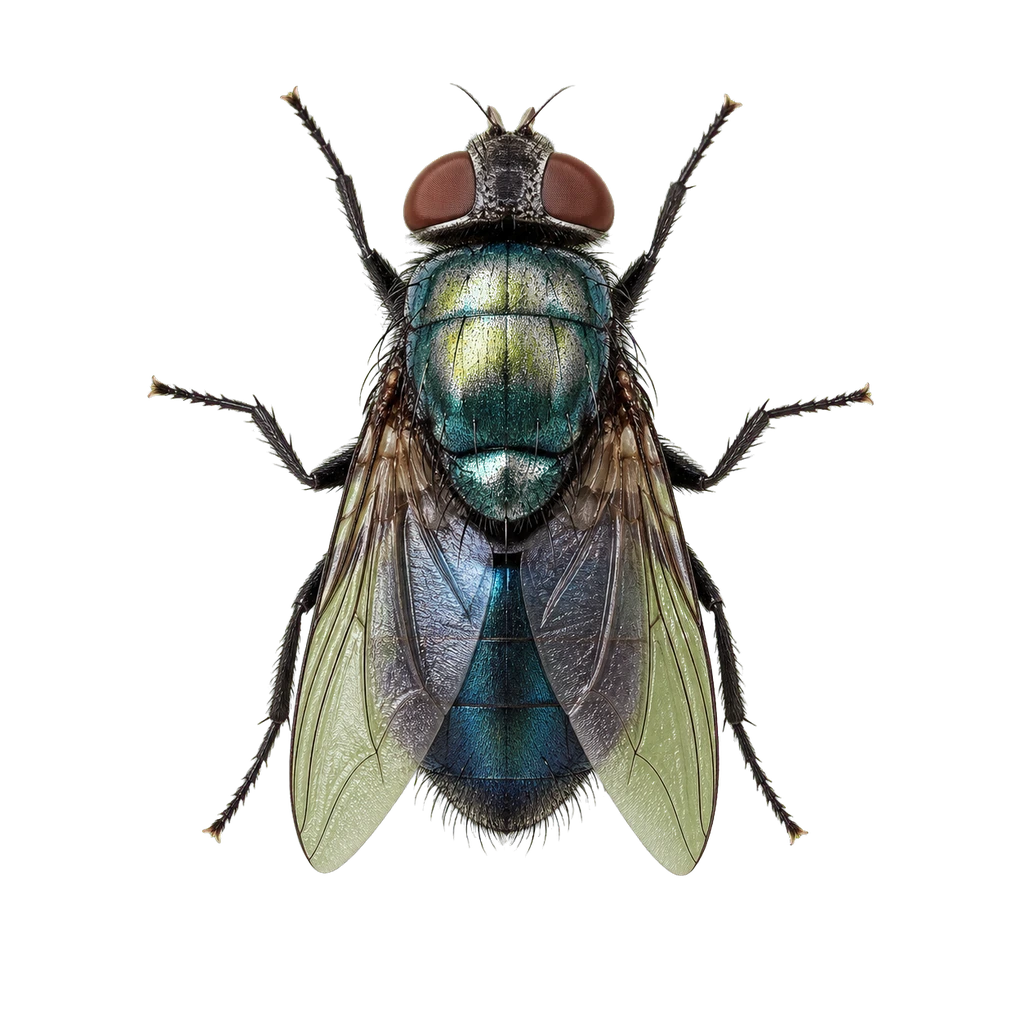
Blow flies are metallic blue or green flies that breed in dead animals, garbage, and decaying meat. Their sudden indoor appearance often signals a dead animal in a wall void, attic, or crawl space that needs to be located and removed.
Learn More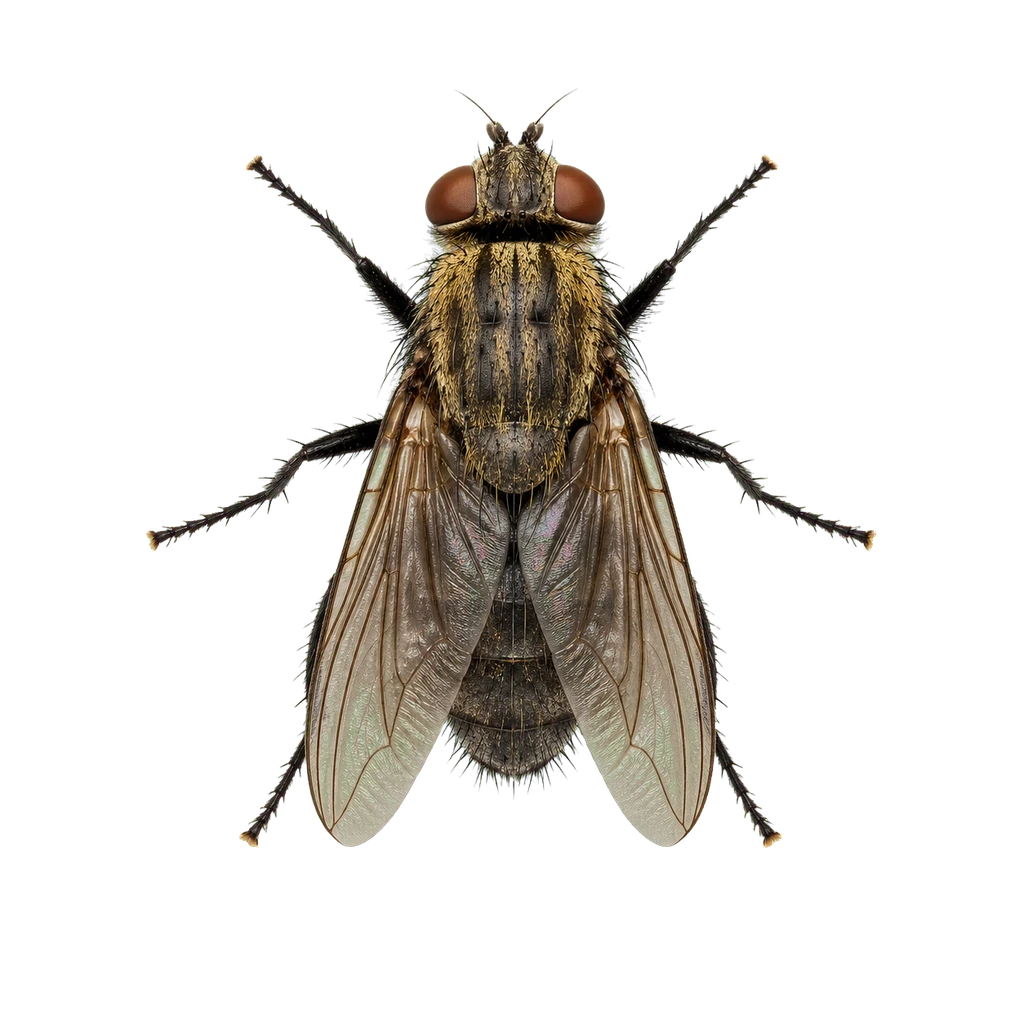
Cluster flies enter homes in fall to hibernate in attics and wall voids, then emerge on warm winter days in sluggish clusters around windows. They don't breed indoors or contaminate food, but their sheer numbers make them a persistent seasonal nuisance.
Learn More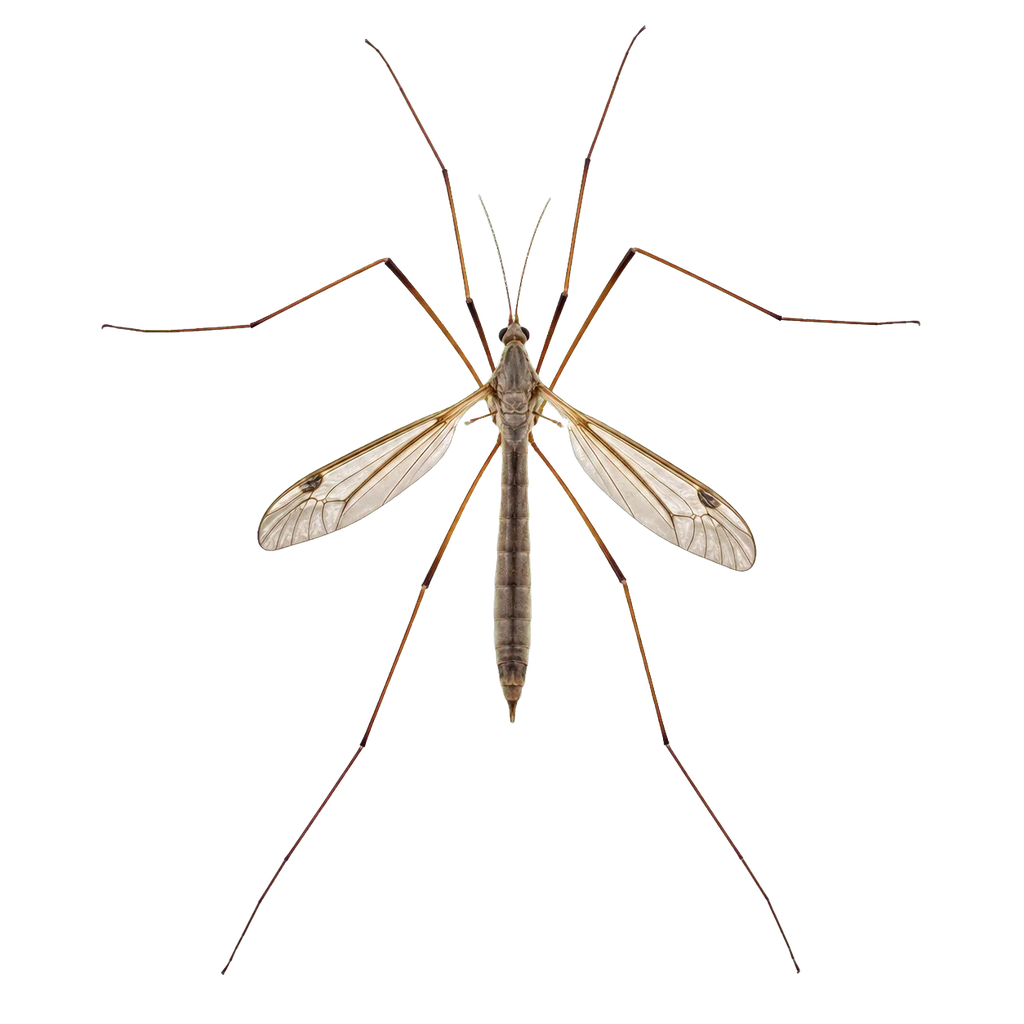
Crane flies look like giant mosquitoes but are completely harmless and cannot bite. Their larvae (leatherjackets) can damage lawns by feeding on grass roots, and adults are commonly found bumbling around porch lights.
Learn More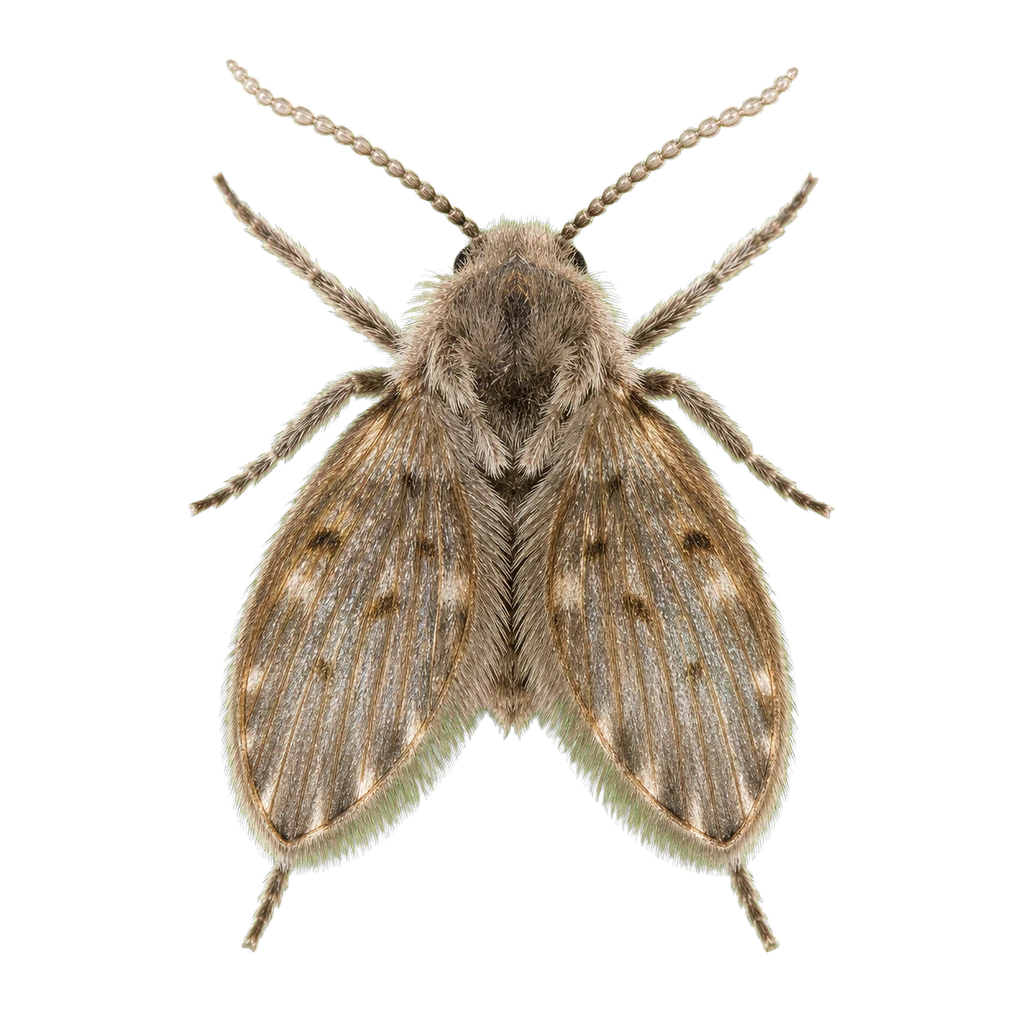
Drain flies breed in the organic film that builds up inside shower drains, sink pipes, and sewer lines. These fuzzy, moth-like flies appear near drains in bathrooms and kitchens, and eliminating them requires cleaning the breeding material from pipes.
Learn More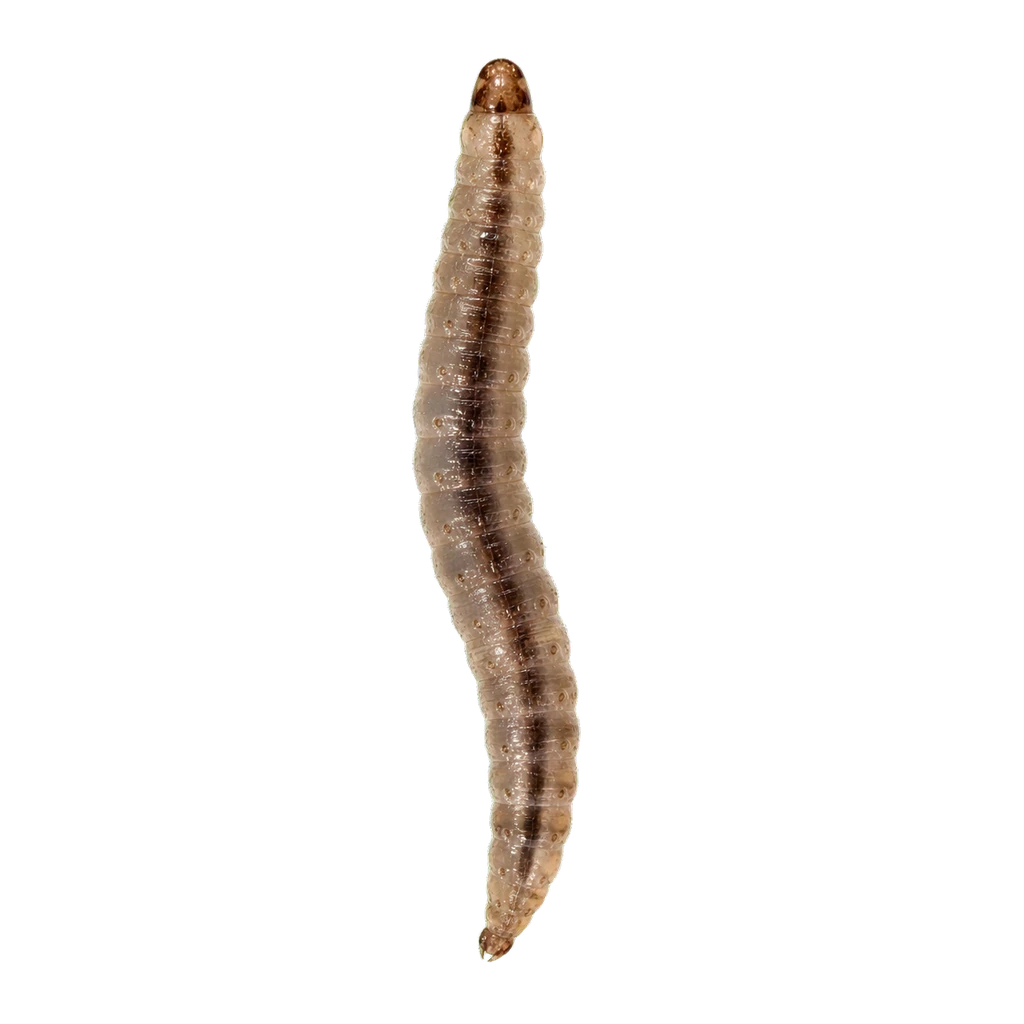
Drain worms are the larval stage of drain flies (moth flies) that breed in the organic slime lining bathroom and kitchen drains. Cleaning the drain buildup is the most effective way to eliminate them.
Learn More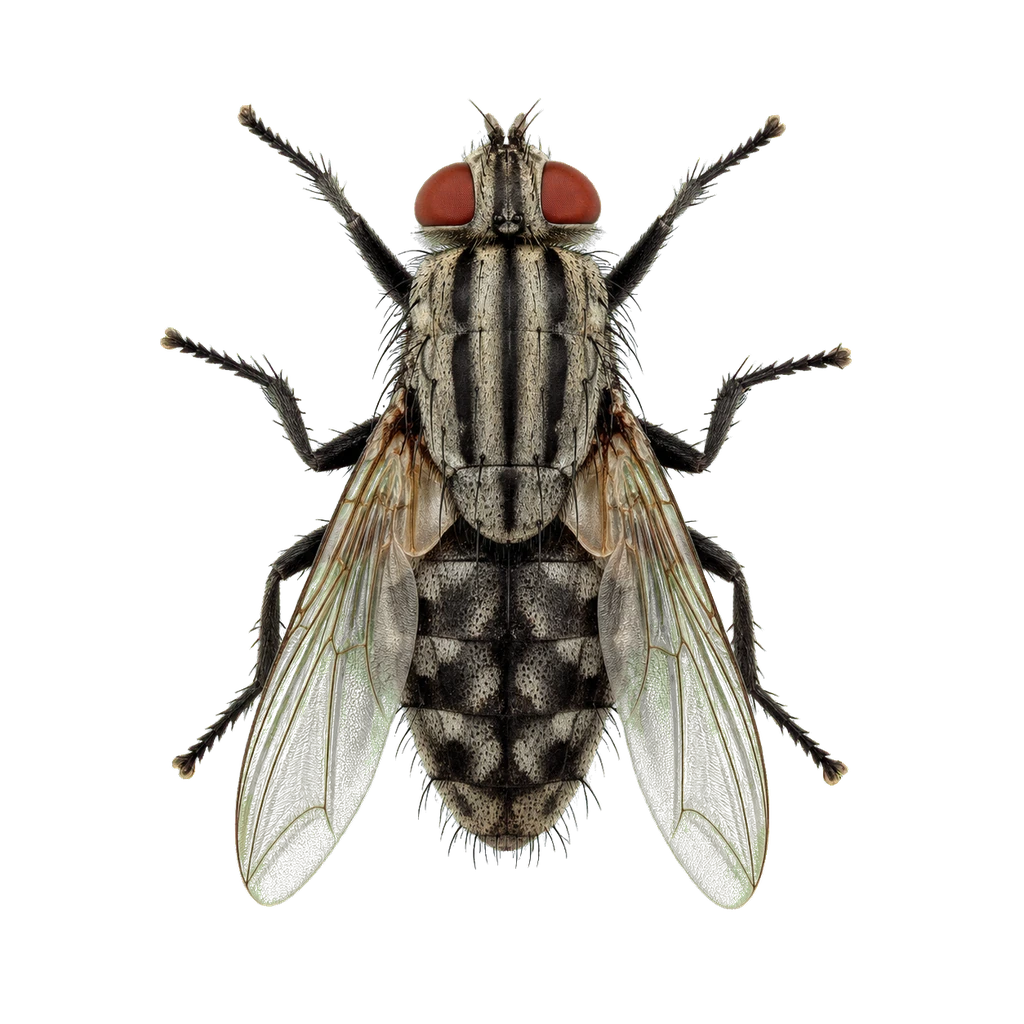
Flesh flies are gray-striped flies that deposit live larvae on decaying meat, garbage, and animal carcasses. They typically enter homes through open doors and windows, and their presence often indicates a sanitation issue or dead animal nearby.
Learn More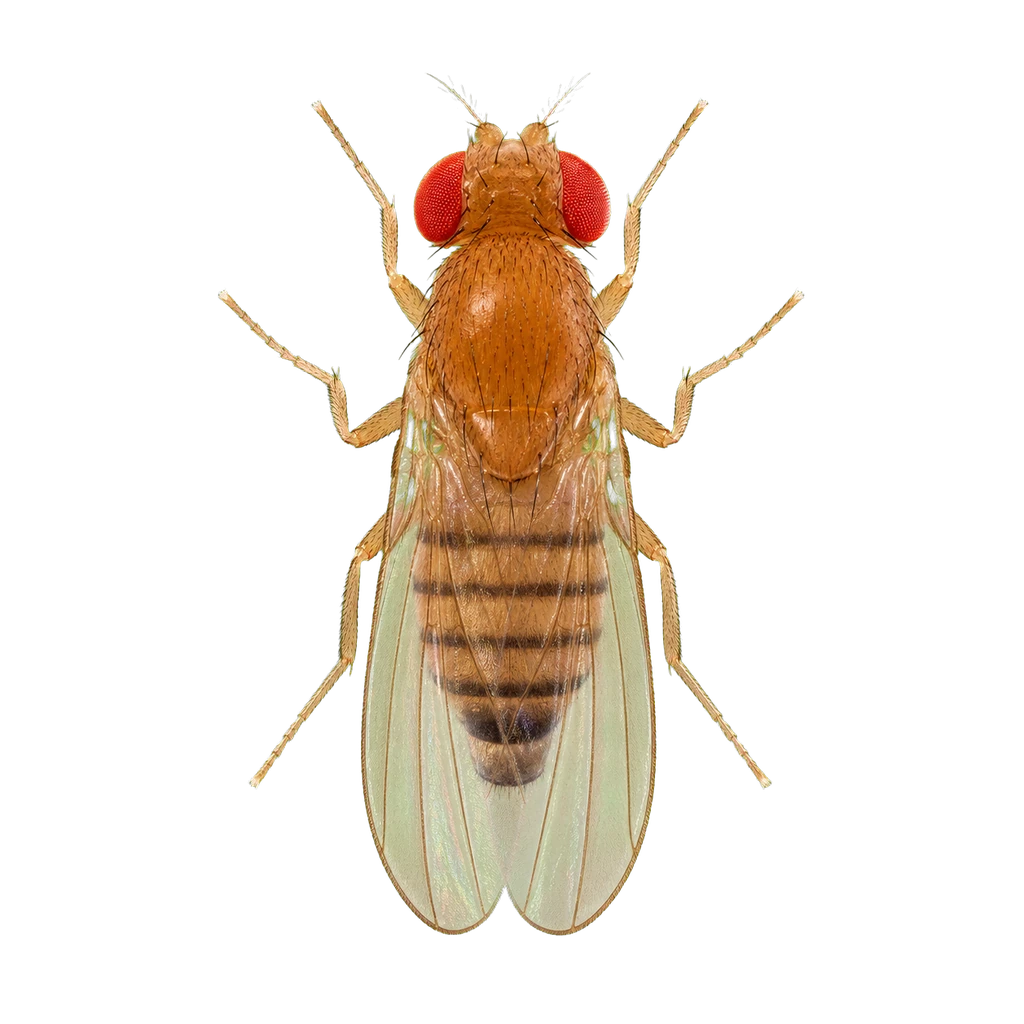
Fruit flies swarm around overripe produce, fermenting liquids, and wet mops, breeding so quickly that a few flies can become hundreds within a week. They contaminate food with bacteria picked up from decaying organic matter.
Learn More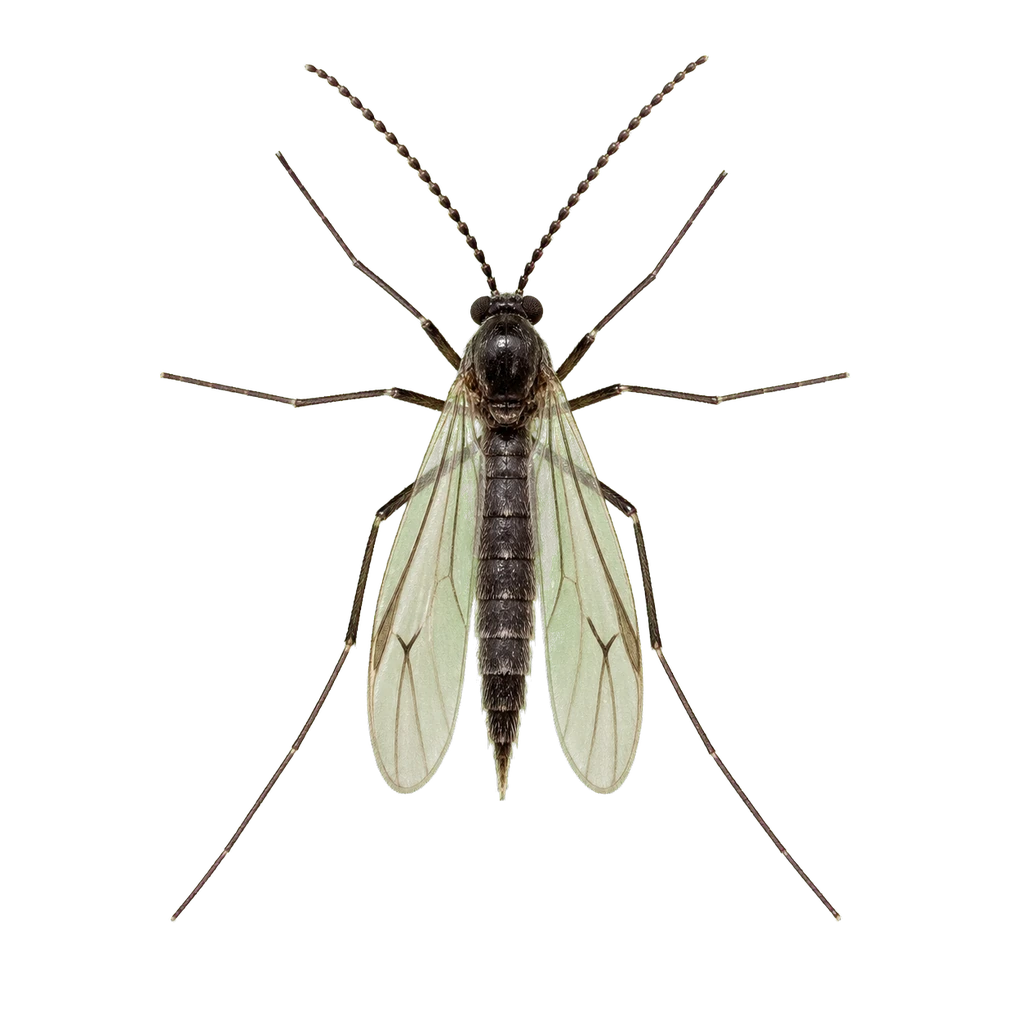
Fungus gnats are tiny dark flies that breed in the moist soil of overwatered houseplants. Their larvae feed on root hairs and organic matter in potting mix, and large populations can weaken or kill young plants.
Learn More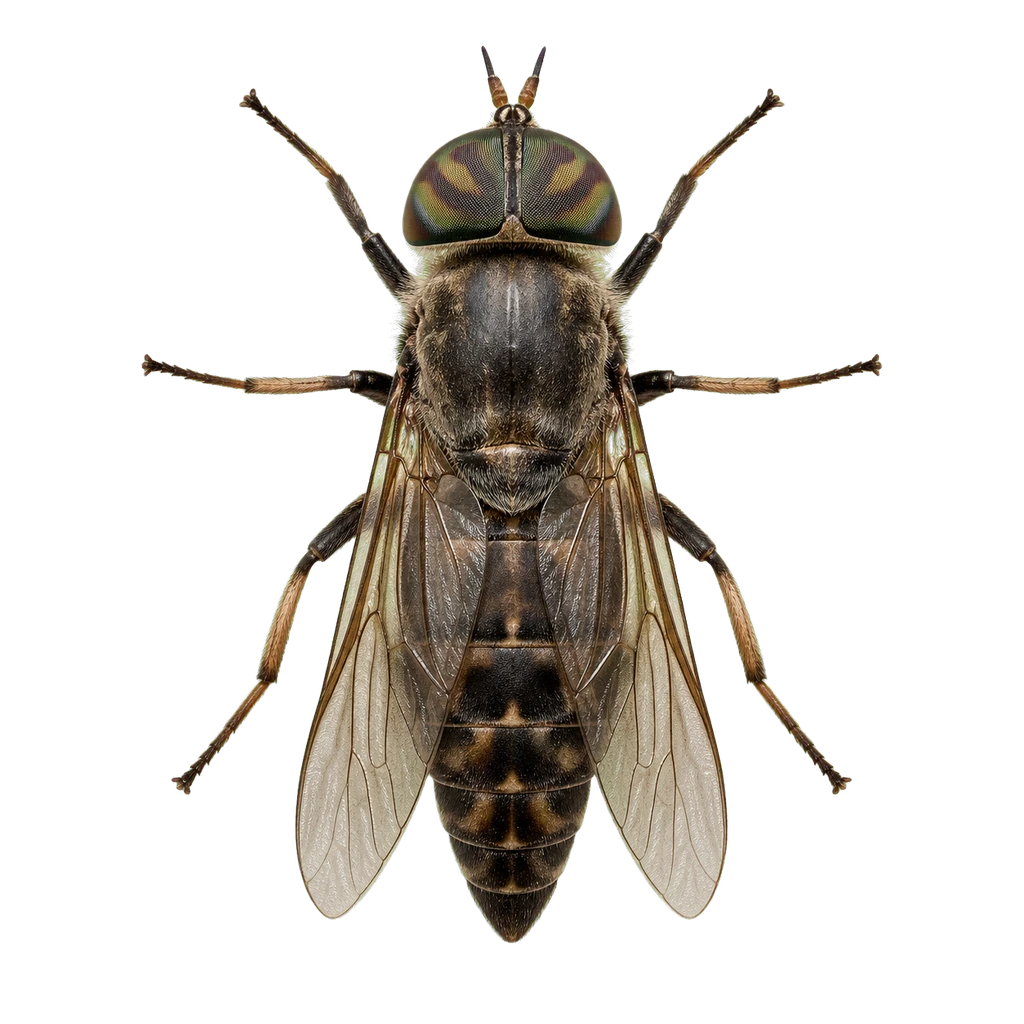
Horse flies are large, aggressive biting flies that slash skin to feed on blood, leaving painful welts that can become infected. They are most active near water and livestock areas during hot summer months.
Learn More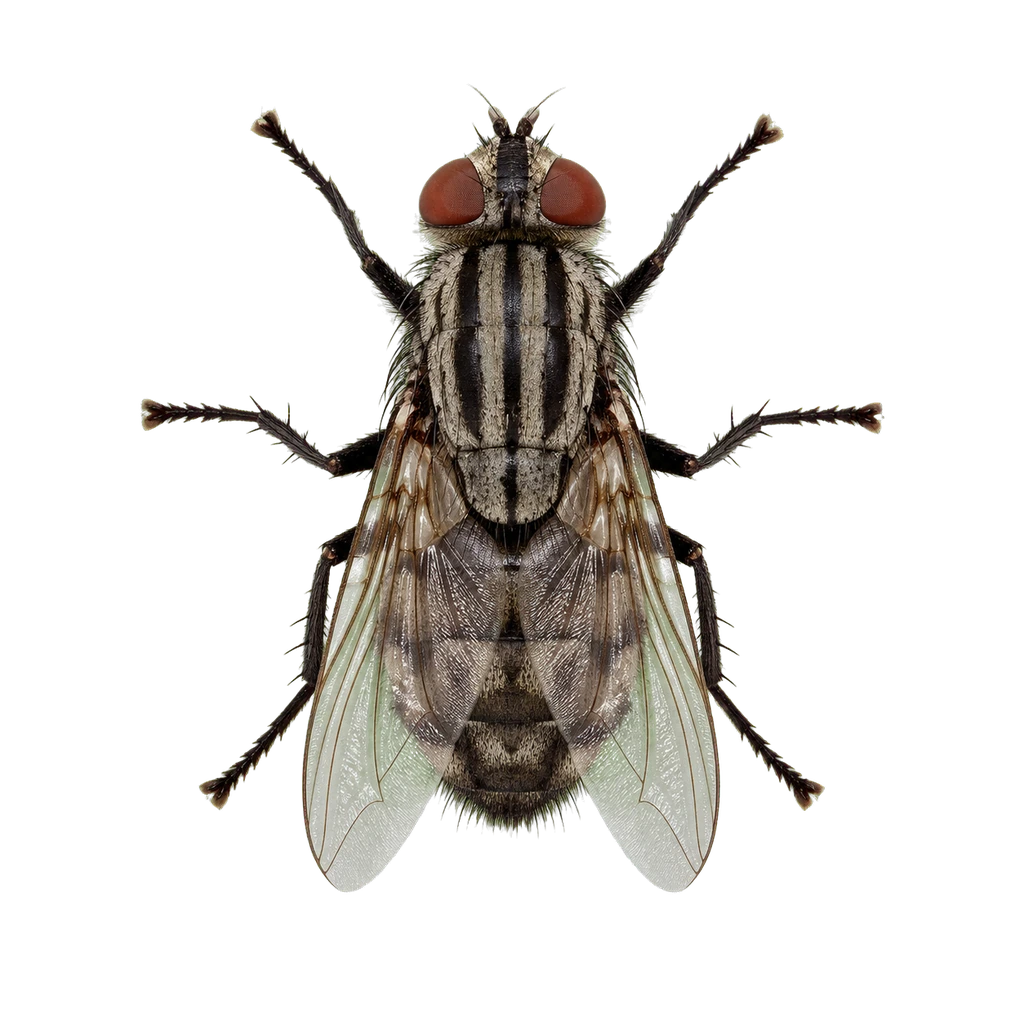
House flies are the most common indoor fly species and major disease carriers, spreading over 100 pathogens by landing on food after visiting garbage, manure, and decaying matter. They breed quickly in warm conditions and are attracted to any exposed food.
Learn MoreLocal providers experienced in phorid fly source investigation, including drain camera work and structural diagnostics, are ready to inspect, treat, and follow up, no obligation.