Local pest control help is one call away.

Beetles in Your Home and Yard

Need help with a beetle issue? (888) 495-1510

Beetles make up the largest order of insects on the planet, and the household categories barely overlap. A drugstore beetle in a pantry has nothing in common with a Japanese beetle on a rose bush, a powderpost beetle in a hardwood joist, or a carpet beetle larva in a wool sweater. Choosing the right response starts with identifying which type of beetle you actually have.

Why Beetles Are an Issue Now

Each beetle category has its own season, its own attractant, and its own damage profile. Pantry beetles arrive year-round in stored grocery items. Fabric beetles surge when natural-fiber clothing sits unworn for months. Lawn beetles peak in late spring through midsummer as adults emerge to feed and lay eggs. Wood-boring beetles operate on multi-year cycles that may not show damage until the third or fourth year of an infestation.

Treating one category with the methods for another wastes effort and money. The first step is matching the beetle to its category, and the visual differences between adults are the diagnostic shortcut.

Four practical beetle categories most homes encounter:

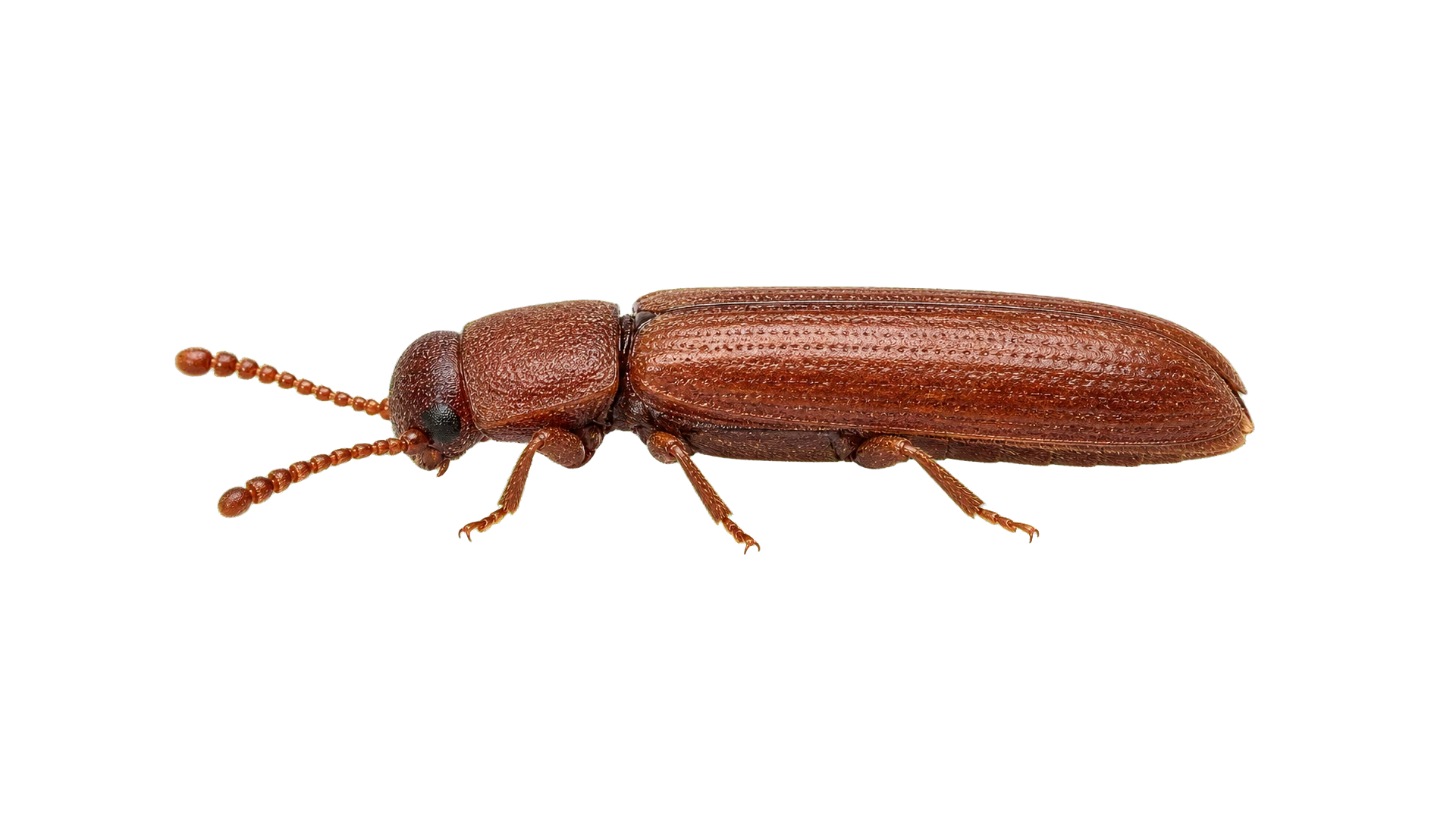
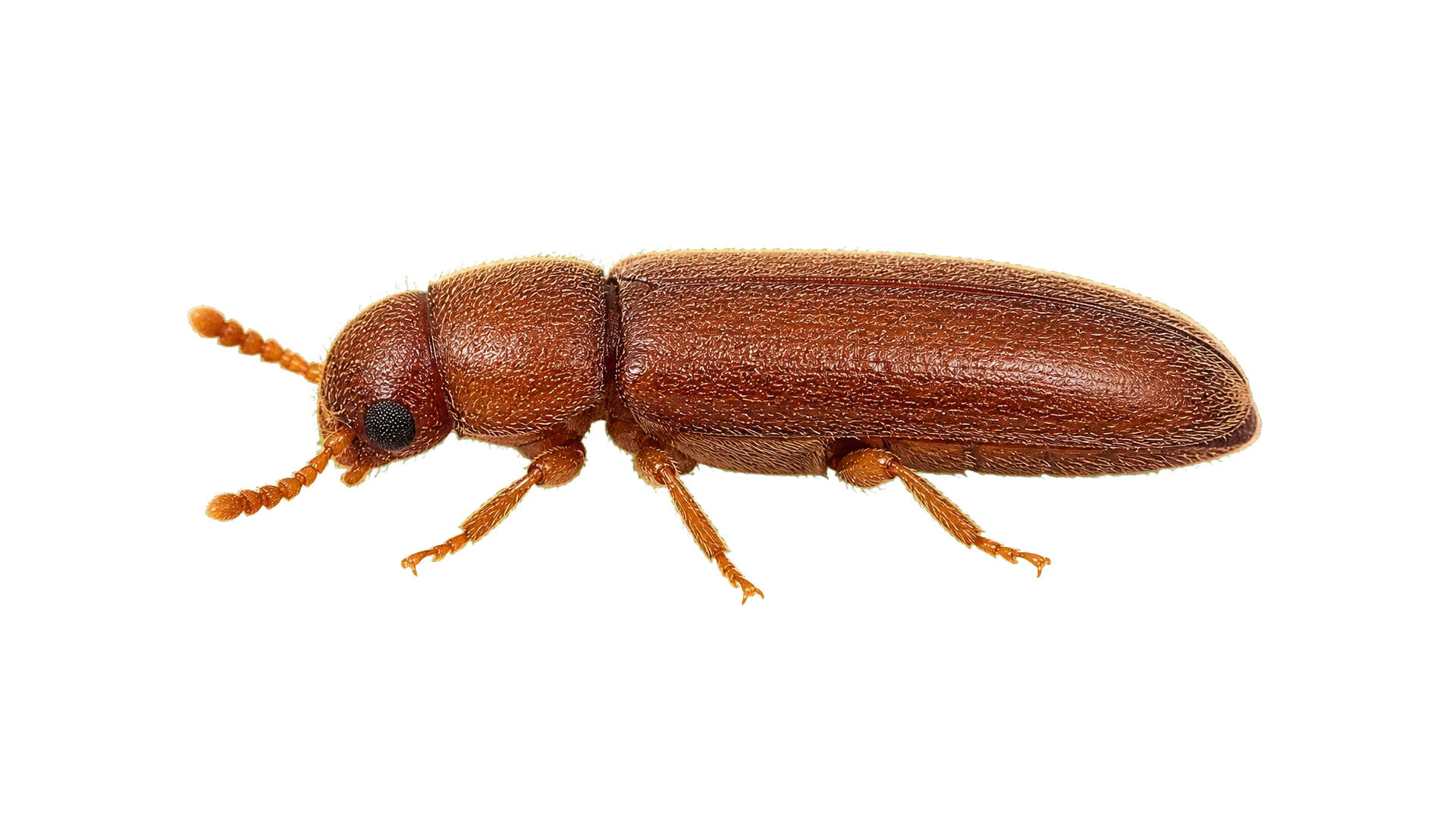
  • Pantry beetles: drugstore, sawtoothed grain, cigarette, and merchant grain beetles infesting flour, grain, spices, and dry pet food.
  • Fabric beetles: carpet beetle and dermestid larvae chewing irregular holes in wool, cashmere, silk, and natural-fiber rugs.
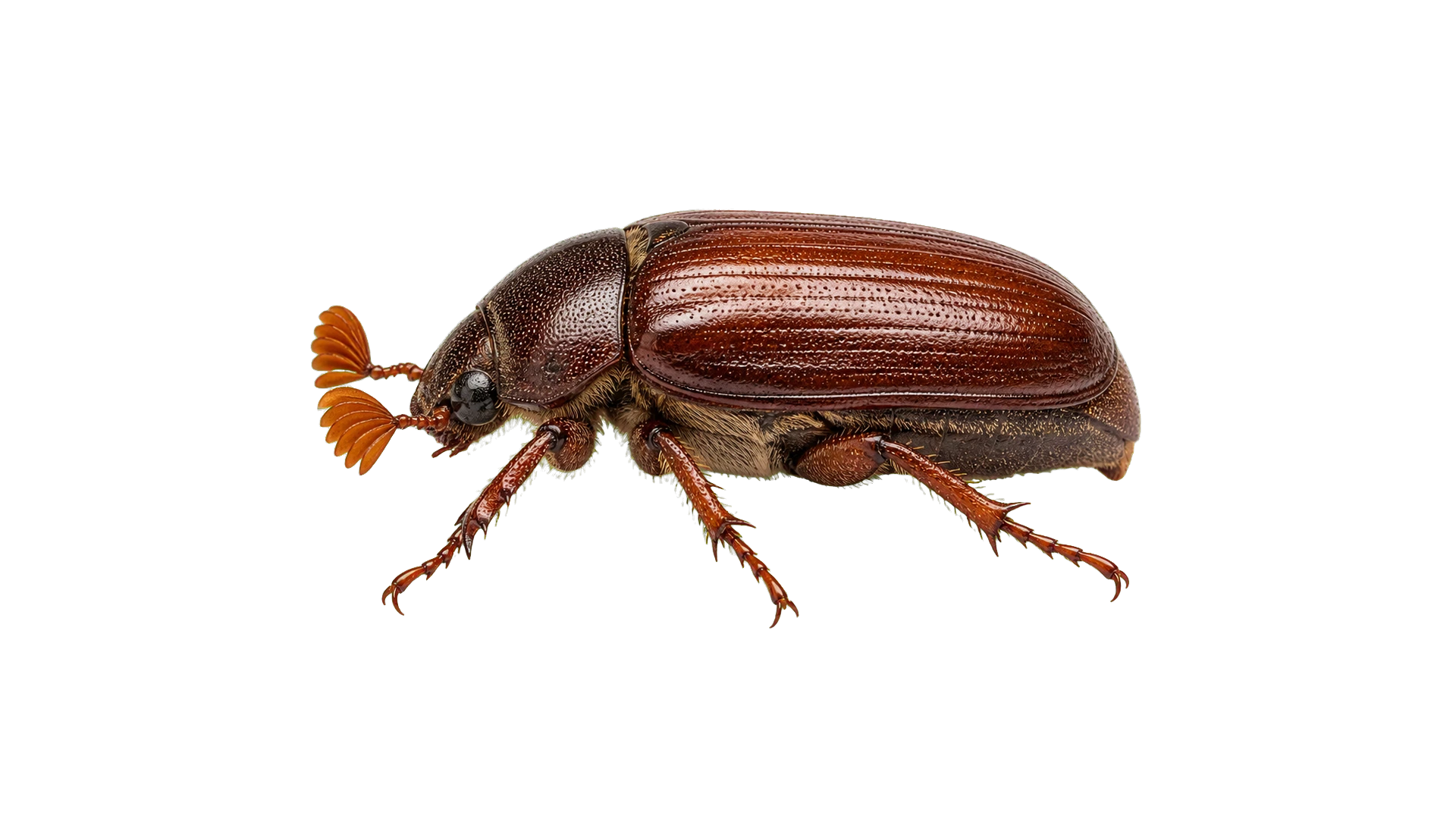
  • Lawn and ornamental beetles: Japanese beetles, June bugs, and elm leaf beetles damaging foliage; grubs damaging turf roots.
  • Wood-destroying beetles: powderpost and old-house borer larvae tunneling through structural softwood and hardwood, leaving fine sawdust frass.

Beetles by the Numbers

Beetles make up roughly 25 percent of all known animal species, with nearly 400,000 described species worldwide and roughly 30,000 in North America. Around 12 to 15 species account for the vast majority of household and structural pest issues. Pantry and stored-product beetles cause an estimated billion dollars in annual food losses in the United States alone.

  • 0.04-2.5 in Adult body length
  • 6 (insect) Legs
  • 12-15 common Pest species

Three Tells It Is a Beetle

Three checks distinguish beetles from other crawling insects. Once you confirm a beetle, the category follows from where you found it.

Body shape icon

Hard wing covers (elytra)

Beetles have hardened front wings called elytra that meet in a straight line down the back, covering the membranous flying wings underneath. The straight center seam is the single best beetle ID feature. True bugs have crossed wings and roaches have leathery wings without the seam.

Size icon

Compact, oval-to-elongate body

Most household beetles are between 1/16 and 1/2 inch long with an oval or elongated body. The body is usually compact and the head is much smaller than the wing covers. Larvae are worm-like or grub-like and vary widely between species.

Color icon

Color reveals the category

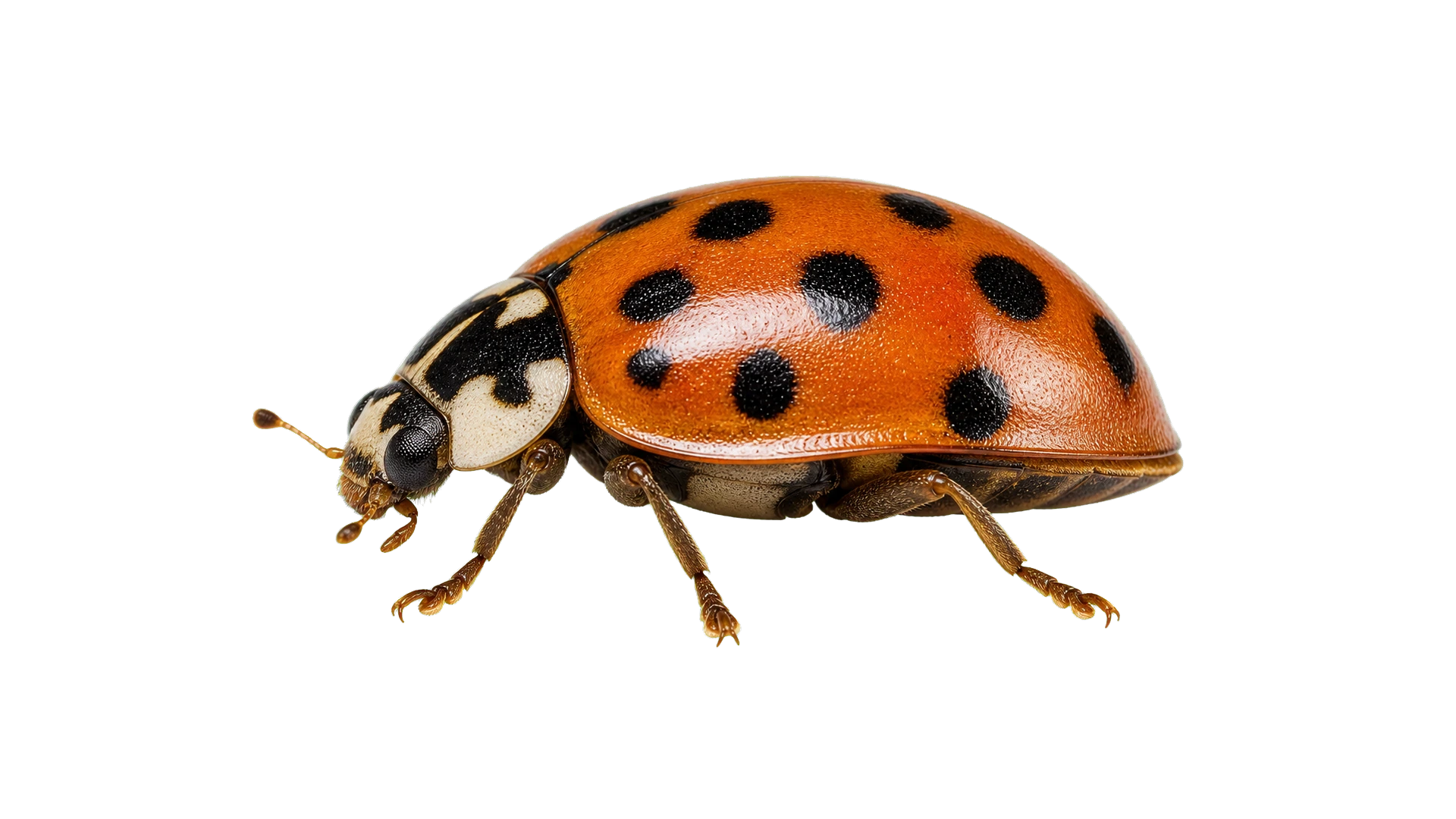
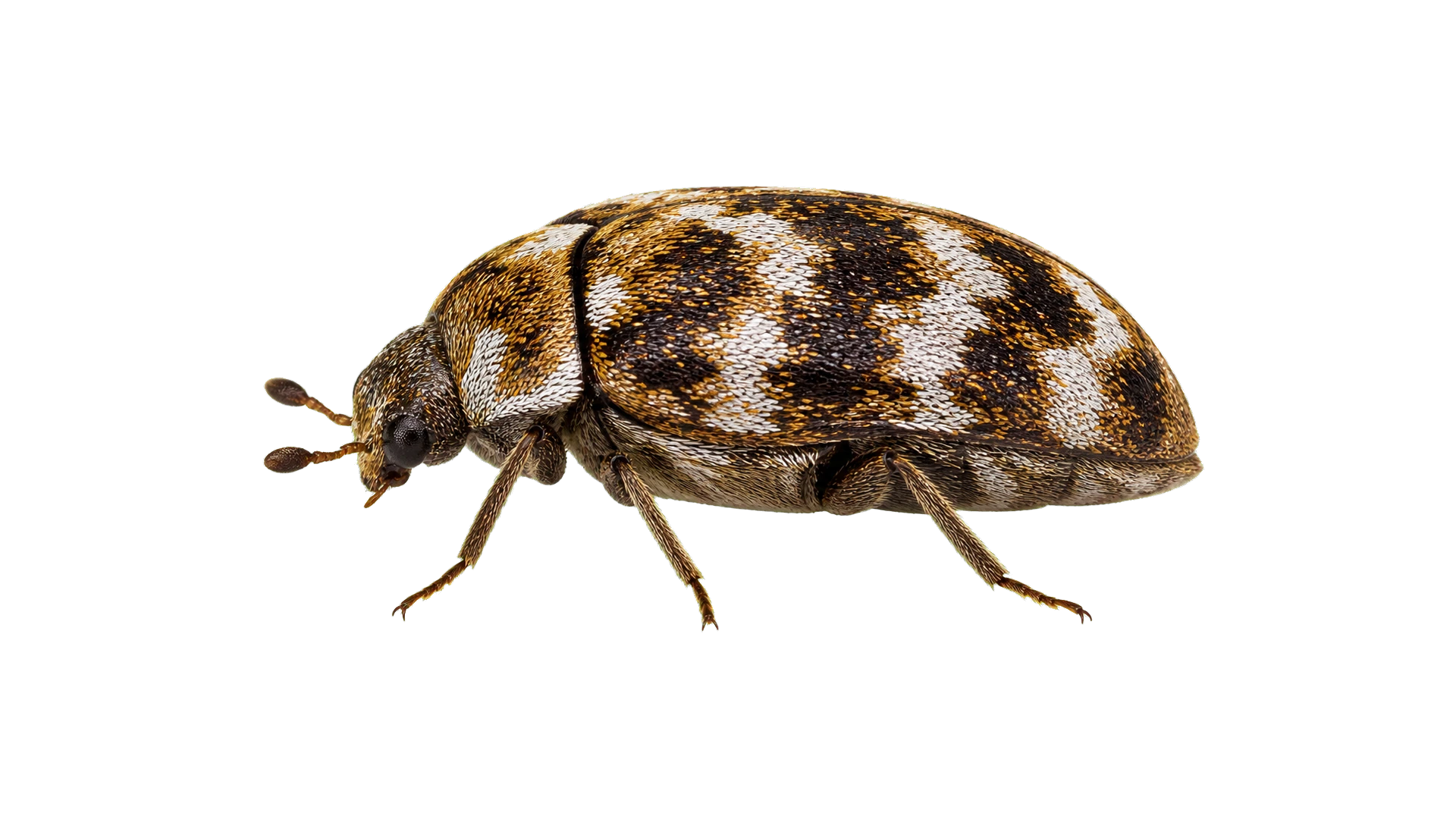
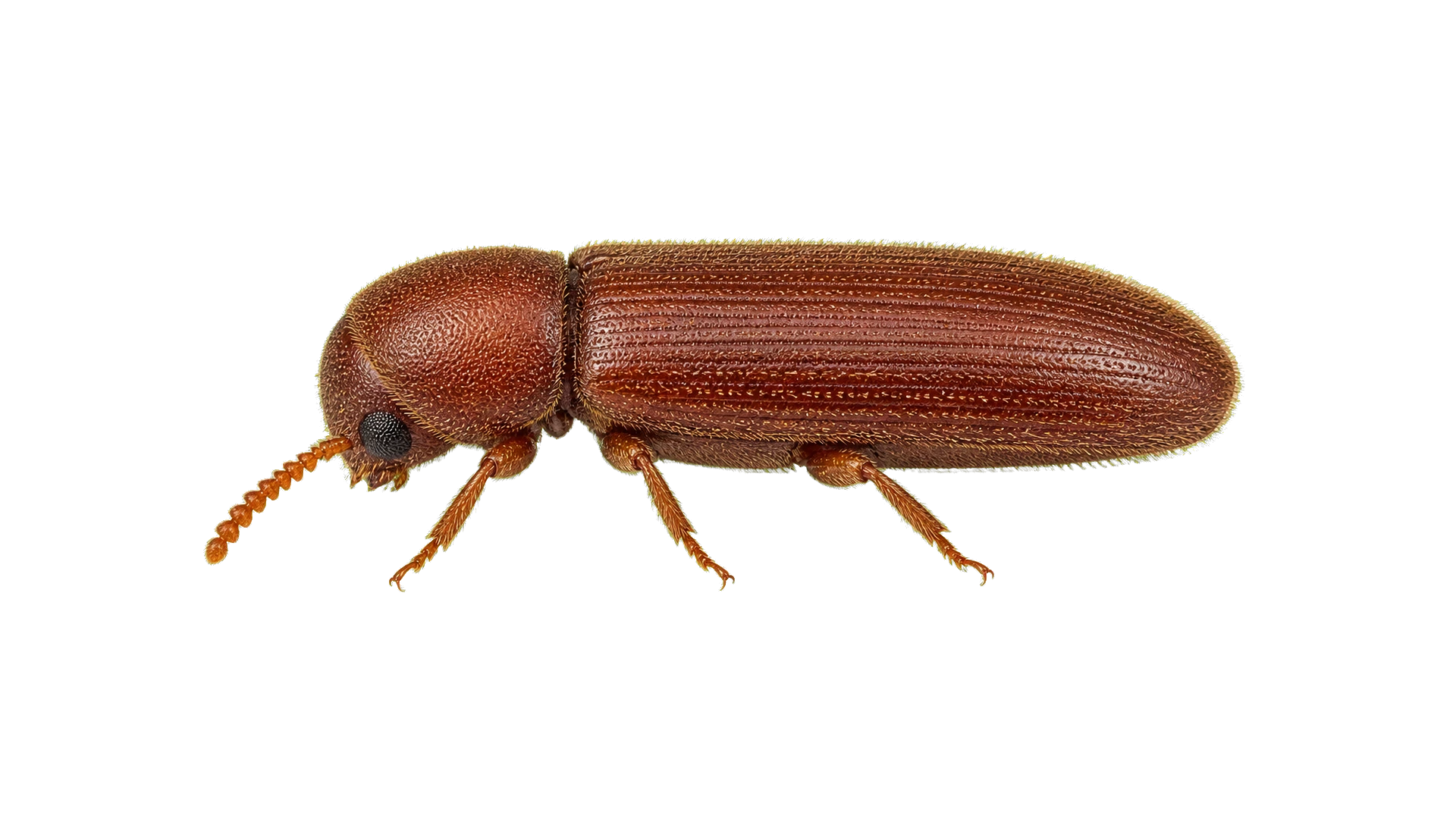
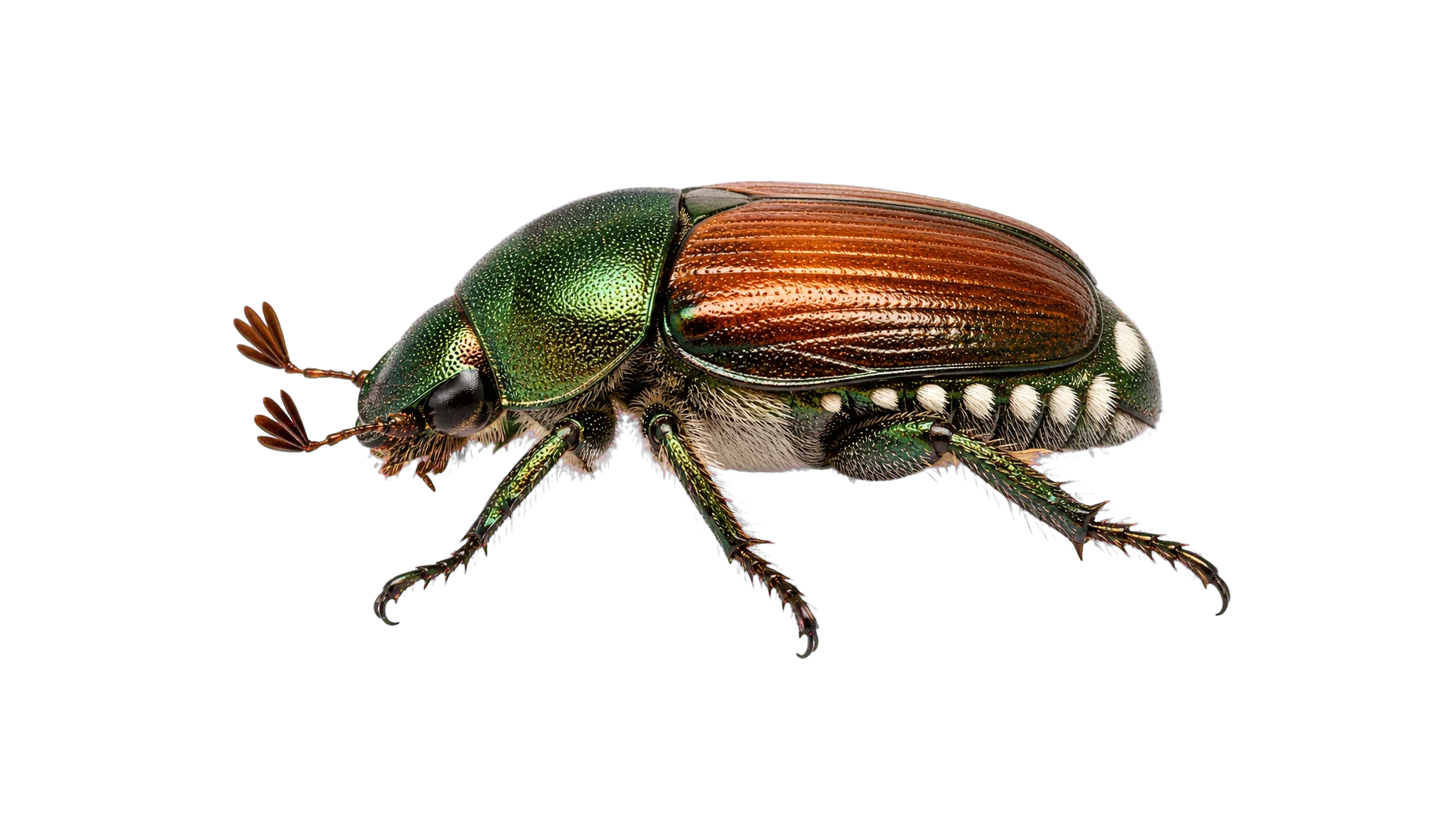
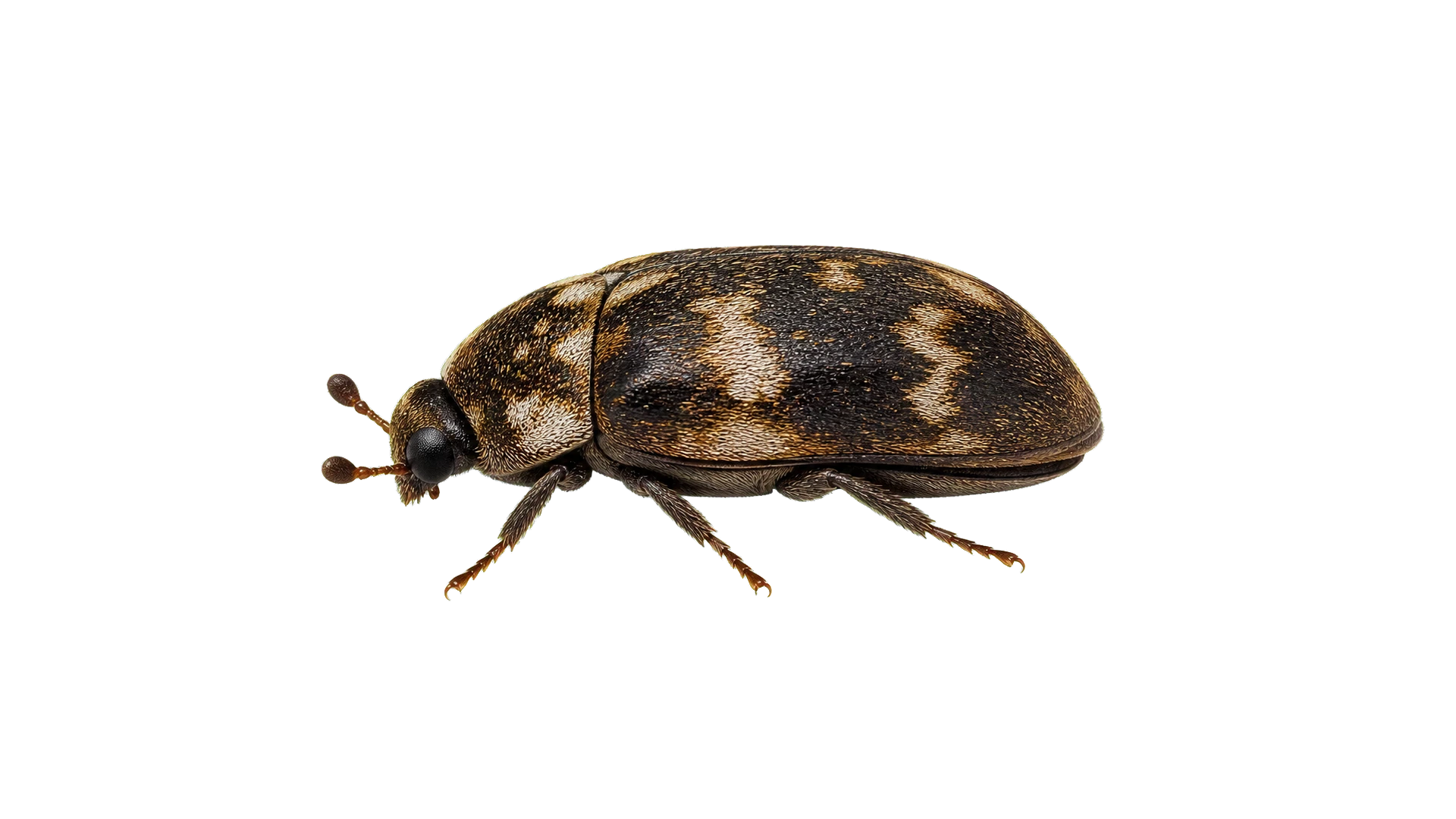
Iridescent green Japanese beetles, mottled brown carpet beetles, reddish-brown drugstore beetles, dark red lady beetles. Color combined with the location where you found the beetle narrows the species fast and points to the correct treatment.

Signs You Have a Beetle Issue

Adult beetles often appear long after the larvae have done their damage. The signs you spot first depend on which category of beetle is active in your home or yard.

How Beetle Issues Develop

Entry or import An adult flies in through a window, larvae arrive hidden in a 5 pound flour bag, or grubs hatch from eggs already laid in the lawn.
Hidden feeding Larvae feed inside their substrate (food, fabric, wood, or roots) for weeks to years before any adults emerge and visible damage starts.
Damage and emergence Holes appear in fabric, frass falls under wood, or 30 to 50 adults emerge in a single week. The category is finally identifiable.

How Different Beetles Actually Affect Homes

Pantry and fabric beetles are the indoor categories most homeowners encounter. Pantry beetles ride in on grocery purchases of flour, grain, dried fruit, spices, and dry pet food. Once inside, populations build inside the original packaging and spill over into adjacent items, creating the impression that the beetles came from the home itself. Fabric beetles enter on cut flowers, used furniture, or simply through windows; the larvae feed on natural fibers in closets, drawers, and stored fabrics for months before adults emerge near windows.

Lawn and structural beetles operate outside the kitchen-and-closet picture. Japanese beetles, June bugs, elm leaf beetles, and similar species damage ornamental plants and turf during their adult flight season. Their grubs feed on lawn roots underground and produce dead-patch damage that often gets blamed on watering issues. Powderpost beetles and old-house borers tunnel through wood for years before exit holes give them away, and they are the only beetles in the household lineup that constitute a structural concern.

Effective beetle control is category-specific. Pantry beetles need source removal and cleanout of dry-goods storage. Fabric beetles need affected items laundered or dry-cleaned plus targeted closet treatment. Lawn beetles need a soil-applied preventive in spring and grub control in midsummer. Wood-boring beetles need a structural inspection to determine whether the activity is current or long-finished, since both old-house borers and powderpost beetles often leave evidence of past activity that no longer requires treatment.

Beetle Anatomy at a Glance

Six features that define a beetle, with a generic representative pictured. The same body plan covers carpet beetles, June bugs, lady beetles, and powderpost beetles.

1 2 3 4 5 6
  1. Hardened elytra (wing covers)

    Hardened front wings meet in a straight seam down the back, covering soft flying wings. The seam separates beetles from cockroaches at a glance.

  2. Three body regions

    Head, thorax, and abdomen are visually distinct, with the elytra covering the abdomen completely. Lady beetles are hemispherical; click beetles are elongated.

  3. Six legs

    All beetles have six jointed legs on the thorax. Lawn beetles have stout digging legs, predatory beetles have long fast legs, aquatic species use paddle shapes.

  4. Antennae

    Antennae range from thread-like to clubbed, sawtoothed, branched, or feathery. Most household beetles have clubbed (carpet, drugstore) or simple (lady, ground) antennae.

  5. Chewing mandibles

    Mandibles are built for chewing, regardless of diet. Plant feeders chew leaves; predators chew prey; wood-borer larvae chew tunnels through lumber.

  6. Pronotum (thoracic shield)

    The hardened plate between the head and elytra. Often diagnostic: Asian lady beetles show a dark M, Japanese beetles a metallic green, old-house borers white tufts.

What Are You Actually Seeing?

Match the symptom pattern below to identify which beetle category you have and what response is appropriate.

What Are You Actually Seeing?

What You're Seeing

  • Small dark beetles inside flour, rice, cereal, spices, or dry pet food packaging
  • Tiny worm-like larvae or webbing inside packaging
  • Beetles crawling on pantry shelves or in cabinets near food storage

What's Likely Happening

Pantry beetles arrive in grocery purchases that were already infested at the store, distribution warehouse, or processing facility. Larvae develop inside the packaging, and adults emerge weeks or months later. Once one package goes, populations spread to other dry goods sharing the cabinet.

What To Do Now

  • Empty the pantry, inspect every dry-goods package, and discard any with visible beetles, larvae, or webbing.
  • Vacuum cabinet shelves, corners, and seams thoroughly; pay attention to crumbs in cracks where larvae develop.
  • Store remaining pantry items in tight-sealing glass or plastic containers; cardboard and plastic film packaging are not beetle-tight.
  • If beetles persist after cleanout, professional crack-and-crevice treatment of pantry edges addresses populations that escaped cleanout.

What You're Seeing

  • Irregular holes in wool sweaters, silk garments, or cashmere stored in closets and drawers
  • Bristly tan-and-brown larvae or shed larval skins in carpet pile, drawers, or closet corners
  • Small mottled adult beetles near windows in spring as larvae mature

What's Likely Happening

Carpet beetle and dermestid larvae feed on natural-fiber materials including wool, silk, cashmere, leather, fur, and feathers. They avoid synthetic fibers entirely. Larvae feed for several months in dark undisturbed areas; adults disperse to find new substrate or escape outdoors.

What To Do Now

  • Launder or dry-clean affected garments to kill remaining larvae and eggs in fabric.
  • Vacuum closet and drawer interiors, paying particular attention to corners, seams, and beneath stored items.
  • Store winter wool and cashmere in tight-sealing containers or garment bags during spring and summer storage.
  • For persistent or repeated infestations, professional treatment of closet interiors and adjacent harborage handles populations that have established beyond visible affected items.

What You're Seeing

  • Skeletonized leaves on roses, linden, grape, or other ornamentals during summer
  • Iridescent green Japanese beetles or large brown June bugs on plants and porch lights
  • Brown or dying lawn patches that lift up to reveal C-shaped white grubs underneath

What's Likely Happening

Adult Japanese beetles, June bugs, and similar species feed on plant foliage during their summer flight season. Females lay eggs in lawn soil; the resulting grubs feed on grass roots underground for months, producing the dead-patch damage that becomes visible in late summer and fall.

What To Do Now

  • Hand-pick adult Japanese beetles into soapy water early in the morning when they are sluggish; pheromone traps generally attract more beetles than they catch.
  • For grub damage, professional grub-targeted soil treatment in midsummer when young grubs are feeding near the surface produces reliable control.
  • Avoid overwatering lawn during egg-laying season; stressed thin lawns are more vulnerable to grub damage than healthy dense lawns.

What You're Seeing

  • Pinhole-sized round holes in hardwood floors, antique furniture, or finished trim, with fine flour-like sawdust nearby (powderpost)
  • Larger oval exit holes in softwood structural lumber, sometimes with a clicking or rasping sound from the wood (old-house borer)
  • Frass (sawdust mixed with insect waste) accumulating below holes or in cracks

What's Likely Happening

Powderpost beetle larvae develop inside hardwood for one to several years, exiting as adults through the small round holes. Old-house borer larvae develop in softwood structural lumber for 3 to 12 years, exiting through larger oval holes. Both produce damage that accumulates over years rather than weeks.

What To Do Now

  • A structural inspection determines whether activity is current (fresh frass, new holes) or finished (weathered holes with no fresh frass), which dictates whether treatment is needed.
  • Localized borate treatment on bare wood is appropriate for small powderpost issues in furniture or unfinished wood.
  • Large or structural infestations may require fumigation or replacement of affected lumber; a structural-pest inspection is the starting point.

How Urgent Is This Really?

Beetles cover an enormous range of household problems, from garden visitors to wood-destroying borers. Urgency depends almost entirely on which category you have. The timeline below tracks the most common indoor groups: pantry, carpet, and wood-boring beetles.

  1. 0-2 weeks
    Monitor

    A single beetle spotted indoors, often near a window, light, or food source. Many beetles (June bugs, lady beetles, weevils) are seasonal hitchhikers. Category identification matters more than treatment at this stage.

    • Photograph the beetle and confirm category. Treatment varies dramatically per group.
    • Note location: pantry beetle near food, carpet beetle near wool, borer near framing.
    • Vacuum the area and check nearby for larvae, frass, or shed exoskeletons.
  2. 2 weeks - 1 month
    Act soon

    Multiple beetles in the same area, larvae or shed skins visible, or feeding evidence: holes in wool, contaminated grain, fresh sawdust. The category is established and breeding. DIY can work if matched to species.

    • Pantry beetles: empty and clean affected cabinets, freeze suspect grains 7 days.
    • Carpet beetles: vacuum carpets, rugs, closets thoroughly; clean all wool items.
    • Wood-borers: mark exit holes with paint, monitor for new emergence.
  3. 1-3 months
    Urgent

    Population spread across multiple rooms, visible damage to fabrics, food packaging, or structural wood. Eggs and larvae are in places you haven't inspected yet. DIY rarely closes this out without category-specific pro treatment.

    • Bag and remove infested items: contaminated food, damaged clothing, suspect linens.
    • Inspect adjacent rooms for the same species. Beetles spread through HVAC fast.
    • Schedule pro treatment matched to the category, not a generic insecticide visit.
  4. 3+ months
    Heavy / damage

    Established colony with multi-generational damage: wool wardrobe destroyed, pantry-wide contamination, or active wood damage. For wood-borers specifically, this can mean structural compromise. Multi-visit treatment plus item replacement is required.

    • Document item losses with photos for any insurance claim that applies.
    • Replace heavily damaged storage furniture. Beetles harbor in old wood drawers.
    • Plan 3 to 6 month follow-up monitoring. Life cycles continue past treatment.

Beetle problems almost always trace back to a single source: one bag of contaminated grain, one wool sweater, one piece of untreated firewood. Find and remove the source first, treatment without source elimination rarely holds.

Pest Control Pros serving the city of the state of your city and nearby areas

Local pros identify the beetle category, source the activity, and apply the matching treatment whether the issue is in the pantry, the closet, the lawn, or the structural lumber.

Available 24/7
(888) 495-1510

What Sustains Each Beetle Type

Each beetle category responds to its own set of conditions. Address the conditions for the type you have and the population pressure drops sharply, often within a single life cycle. Generic perimeter treatment is rarely the right tool for any indoor beetle category.

Different beetles target very different attractants. Drugstore, sawtoothed grain, and cigarette beetles target flour, grain, spices, and dry pet food. Carpet beetles and dermestids target wool, silk, fur, and natural-fiber rugs. Japanese beetles and June bugs target lush turf and ornamental foliage in summer. Powderpost and old-house borers target unfinished hardwood and untreated structural softwood. Knowing the category tells you which condition to fix first.

Most affected homes have two or three of these conditions running at once, and many homeowners discover the second category only after fixing the first. Start with the category that matches your visible damage, then run a quick audit of the others (closet inspection, pantry storage upgrade, crawlspace check). A 30 minute audit per category often prevents the next year's beetle problem entirely.

Where Beetles Concentrate

Pantry and dry-goods storage

Ground zero for pantry beetles. Flour, grain, cereal, spices, and dry pet food are all vulnerable. Glass or sealed plastic storage prevents migration between packages.

Closets, drawers, and stored fabrics

Carpet beetle and dermestid larva habitat. Wool sweaters, cashmere, silk, fur, and natural-fiber rugs are vulnerable. Quarterly inspection during off-season storage catches issues early.

Lawn and ornamental plantings

Japanese beetle, June bug, and grub habitat. Adult flight from late spring through summer; grub feeding underground in late summer and fall.

Attics and wall voids

Asian lady beetle and dermestid harborage. Fall lady beetle aggregations enter through siding gaps and overwinter in cool wall voids. Dermestid larvae develop on dead insects, rodents, or accumulated organic matter.

Hardwood floors and finished trim

Powderpost beetle territory. Inspect for tiny round holes with fine sawdust below; old holes without fresh frass suggest finished activity, fresh frass means current infestation.

Crawlspaces and basements

Old-house borer and other softwood-borer habitat. Moisture and untreated structural lumber are the prerequisites. Inspect for oval exit holes and frass on floor below joists.

How Beetle Generations Develop

Beetles undergo complete metamorphosis. Generation length varies enormously between categories: weeks for pantry beetles, years for wood borers.

  1. Egg

    5 to 30 days

    Females lay eggs in or near the larval food source: flour packaging for pantry beetles, fabric for carpet beetles, lawn soil for Japanese beetles, wood pores for borers. Egg stage is short relative to total cycle length.

  2. Larva

    Weeks to years

    The destructive stage for most pest beetles. Pantry beetle larvae feed for 3 to 8 weeks; carpet beetle larvae for 3 to 9 months; lawn grubs for 6 to 10 months; powderpost beetle larvae for 1 to 5 years; old-house borer larvae for 3 to 12 years.

  3. Pupa

    1 to 4 weeks

    Inactive transformation stage between larva and adult. Most pupation happens within or adjacent to the larval food source. Pupae are vulnerable but well-hidden, so direct treatment of pupae is rarely practical.

  4. Adult

    1 week to 2 years

    Adults disperse to mate and find new substrate. Adult lifespan varies by category: pantry beetle adults live a few weeks; lady beetles overwinter as adults and live nearly a year; old-house borers fly for only a few weeks but the species reproduces inside the lumber for many years.

The category and life stage determine the right intervention. Adult-targeted treatments are appropriate for some categories (Asian lady beetles in fall); larva-targeted treatments are appropriate for others (lawn grubs, fabric beetles); source removal is the only reliable response for pantry beetles regardless of life stage.

IMPORTANT

Why Generic Beetle Sprays Almost Always Miss

The biggest mistake in beetle control is choosing a treatment before identifying the category. Beetles are an order of insects spanning roughly 400,000 species, not one pest. Spraying the pantry edges does not solve a closet carpet beetle problem. Treating the lawn does not help with powderpost holes in your hardwood floor. Bug bombs do not penetrate the flour packaging where pantry beetles develop or the wood where borer larvae tunnel for years before emerging. Every category needs its own response: pantry beetles need source removal and sealed storage (not sprays), fabric beetles need garment care plus closet cleanout, lawn beetles need targeted soil treatment in the right midsummer window, and wood-boring beetles need a structural inspection to determine current versus finished activity before any treatment is even justified. Diagnose the category first; choose the response that matches.

Which Beetle Species Do You Have?

Beetles span pantry pests, fabric destroyers, and wood borers. Match what you're seeing to identify which one.

Species Severity Key Sign Where You'll Find Them
Asian Lady Beetles Nuisance Clusters on sunny sides of buildings in fall, orange staining fluid when disturbed exterior walls, attics, wall voids
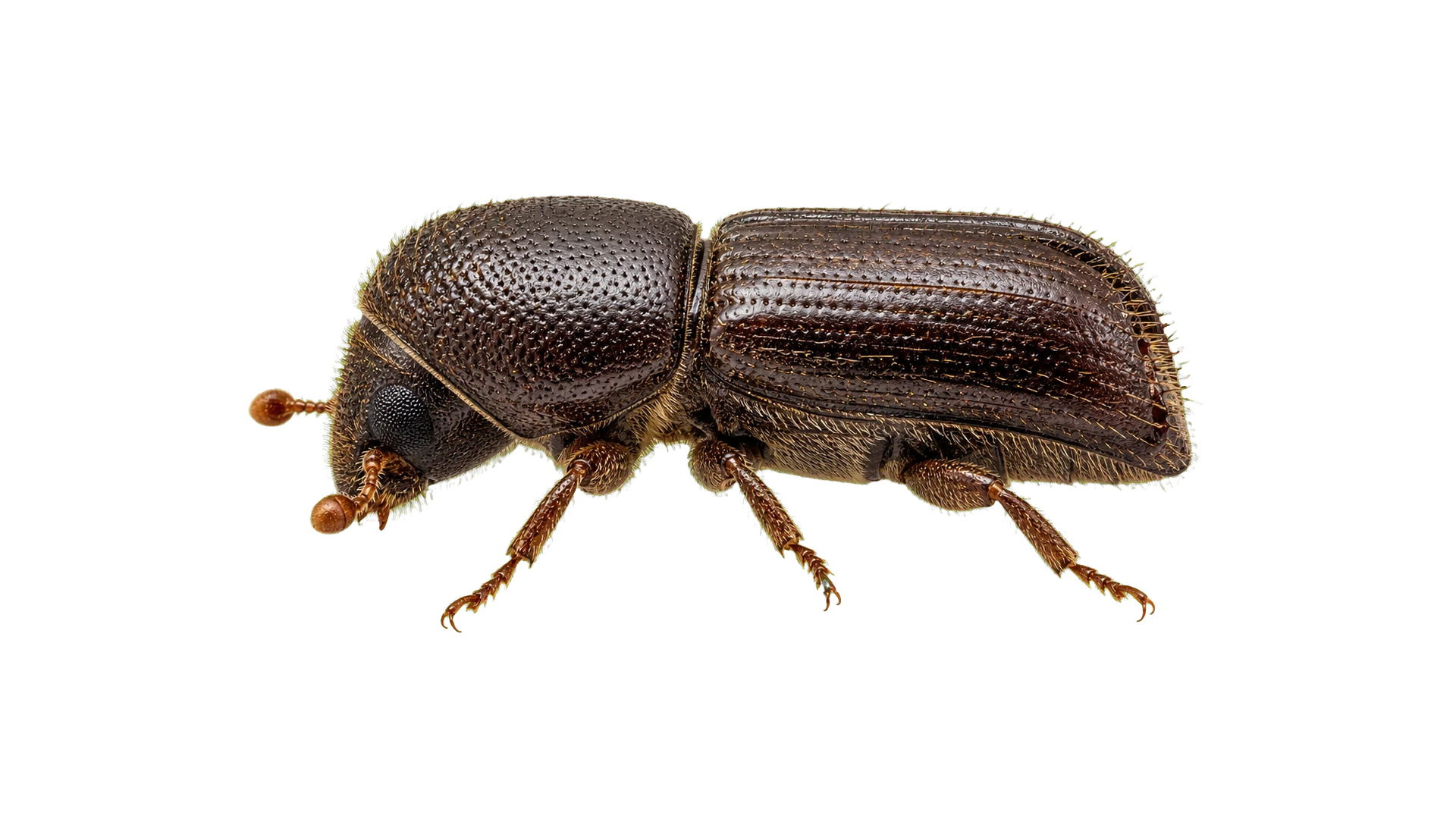
Bark Beetles Structural Sawdust tubes on tree bark, S-shaped galleries under bark pine trees, spruce trees, fir trees
Carpet Beetles Persistent Irregular holes in wool, silk, or fur items; shed larval skins near baseboards closets, carpets, upholstery
Dermestid Beetles Persistent Damaged animal products (leather, wool, taxidermy), shed larval skins closets, storage areas, museums
Drugstore Beetles Persistent Round exit holes in spice containers and dry goods, fine powder in pantry pantries, pharmacies, museums
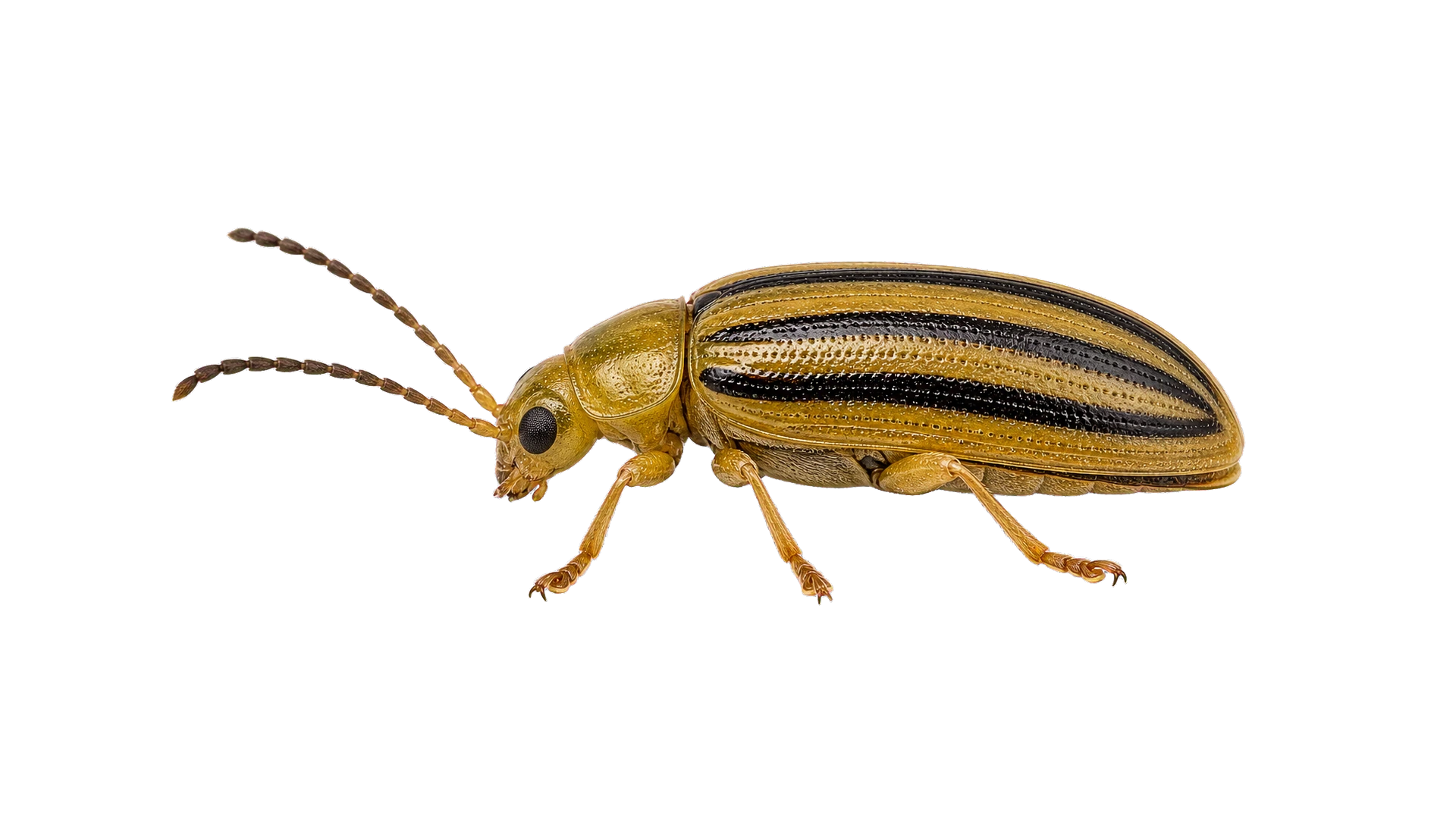
Elm Leaf Beetles Nuisance Skeletonized elm leaves, beetles clustering on sunny walls in fall elm trees, attics, wall voids
Japanese Beetles Nuisance Skeletonized leaves in garden, white grubs in lawn soil lawns (grubs), gardens, ornamental plants
June Bugs Nuisance Buzzing around porch lights at night in early summer, white grubs in lawn lawns (grubs), gardens, near lights at night
Pantry Beetles Persistent Beetles and larvae in flour, cereal, and grain products pantries, cabinets, stored food
Powderpost Beetles Structural Fine powdery frass falling from tiny round holes in hardwood furniture or flooring hardwood floors, furniture, structural timber
Asian Lady Beetles
Severity Nuisance
Key Sign Clusters on sunny sides of buildings in fall, orange staining fluid when disturbed
Where You'll Find Them exterior walls, attics, wall voids
Bark Beetles
Severity Structural
Key Sign Sawdust tubes on tree bark, S-shaped galleries under bark
Where You'll Find Them pine trees, spruce trees, fir trees
Carpet Beetles
Severity Persistent
Key Sign Irregular holes in wool, silk, or fur items; shed larval skins near baseboards
Where You'll Find Them closets, carpets, upholstery
Dermestid Beetles
Severity Persistent
Key Sign Damaged animal products (leather, wool, taxidermy), shed larval skins
Where You'll Find Them closets, storage areas, museums
Drugstore Beetles
Severity Persistent
Key Sign Round exit holes in spice containers and dry goods, fine powder in pantry
Where You'll Find Them pantries, pharmacies, museums
Elm Leaf Beetles
Severity Nuisance
Key Sign Skeletonized elm leaves, beetles clustering on sunny walls in fall
Where You'll Find Them elm trees, attics, wall voids
Japanese Beetles
Severity Nuisance
Key Sign Skeletonized leaves in garden, white grubs in lawn soil
Where You'll Find Them lawns (grubs), gardens, ornamental plants
June Bugs
Severity Nuisance
Key Sign Buzzing around porch lights at night in early summer, white grubs in lawn
Where You'll Find Them lawns (grubs), gardens, near lights at night
Pantry Beetles
Severity Persistent
Key Sign Beetles and larvae in flour, cereal, and grain products
Where You'll Find Them pantries, cabinets, stored food
Powderpost Beetles
Severity Structural
Key Sign Fine powdery frass falling from tiny round holes in hardwood furniture or flooring
Where You'll Find Them hardwood floors, furniture, structural timber

Severity reflects typical impact, not your specific case. If unsure, treat at the higher tier.

What Actually Helps With Beetles

Honest read on common DIY moves across the beetle categories. The methods that work for pantry beetles won't touch a powderpost beetle in your hardwood floor, and the lawn-grub treatment is exactly wrong for a carpet beetle in the closet.

Can work icon

What can work

Pantry beetle cleanout

  • Empty pantry, inspect every dry-goods package, discard any with beetles or webbing
  • Vacuum shelves, corners, and crack-and-crevice areas thoroughly
  • Re-store remaining items in glass or sealed plastic containers

Fabric beetle garment care

  • Launder or dry-clean affected and adjacent natural-fiber items
  • Vacuum closets, drawers, and beneath furniture where larvae and shed skins accumulate
  • Store off-season wool and cashmere in tight-sealing garment bags or bins

Lawn grub midsummer treatment

  • Professional grub-targeted soil treatment when young grubs feed near the surface (typically July)
  • Maintain healthy dense turf to reduce egg-laying attractiveness
  • Avoid overwatering during adult flight season
Falls short icon

What reliably falls short

Pheromone traps for Japanese beetles

  • Attract more beetles to the yard than they remove
  • Useful for monitoring presence; counterproductive for control
  • Hand-picking adults into soapy water outperforms traps for small infestations

Bug bombs for indoor beetle issues

  • Foggers do not penetrate packaging, fabric, or wood where larvae develop
  • Pesticide residue without addressing the actual source
  • Almost never the right tool for any indoor beetle category

Generic perimeter spray for fabric or pantry beetles

  • Indoor categories live inside the affected substrate, not on perimeters
  • Treatment misses the larvae that produce next-generation beetles
  • Effort spent on perimeter treatment is better directed at source removal

How to Prevent Beetle Issues

Six prevention actions, sorted by effort. Match the action to the beetle category likely in your home or yard.

  • Storage icon
    Easy Ongoing

    Glass or sealed dry-goods storage

    Decant flour, grain, cereal, and dry pet food into glass or sealed plastic containers when you bring them home. Cardboard and plastic film packaging are not beetle-tight; sealed containers are.

  • Closet icon
    Easy Quarterly

    Quarterly closet inspection

    Pull out wool, cashmere, and silk items quarterly, especially during spring and fall transitions. Catching carpet beetle larvae early prevents large-scale fabric damage.

  • Garment bag icon
    Moderate 30 minutes

    Off-season garment storage

    Store wool sweaters and natural-fiber off-season clothing in tight-sealing garment bags or bins with sachets. Reduces fabric beetle access and makes inspection easier.

  • Foundation icon
    Moderate Annual

    Foundation gap sealing for fall lady beetles

    Seal cracks around windows, siding gaps, and trim joints in late summer before fall lady beetle aggregation. Reduces overwintering populations inside walls and attics.

  • Lawn icon
    Advanced Mid-summer

    Preventive grub treatment

    Professional grub-preventive soil application in late spring or early summer prevents grubs from causing visible lawn damage in fall. Most cost-effective for lawns with prior grub history.

  • Inspection icon
    Advanced One-time

    Wood-borer structural inspection

    If you spot small holes in hardwood floors or oval holes in framing lumber, a structural inspection determines whether activity is current or finished and whether treatment is justified.

When Beetle Issues Peak

Different beetle categories peak at different times. Match the season to the species you are dealing with.

  • Spring

    Carpet beetle adults emerge near windows. Asian lady beetles leave overwintering sites and head outdoors. Lawn beetle eggs begin developing as soil warms. Powderpost beetle adults emerge from infested wood.

  • Summer

    Peak Japanese beetle and June bug flight season. Adults feed on ornamentals; females lay eggs in lawn soil. Pantry beetle activity peaks indoors as warm temperatures accelerate development inside packages.

  • Fall

    Asian lady beetle aggregations on south-facing exterior walls; large numbers attempt entry into wall voids and attics. Lawn grub damage becomes visible as feeding intensifies underground. Adult beetle flight tapers off.

  • Winter

    Pantry beetles continue indoors year-round; warm kitchens are functionally seasonless. Asian lady beetles inside walls become active during warm spells and end up in living spaces. Outdoor beetle activity stops.

What a Pro Beetle Visit Looks Like

Four steps from arrival to a category-matched plan. Initial visit runs 45 to 90 minutes depending on suspected category. Wood-boring beetle assessments take longer because they often require crawlspace and attic inspection on top of the indoor work.

Diagnose, source, and treat by category. The right response depends on which beetle is active. Plans that skip diagnosis and apply a generic perimeter spray miss the actual issue every time.

Want a real diagnosis? (888) 495-1510
  1. Category identification

    Confirm which beetle category is active based on adult specimens, larva location, and damage pattern. Pantry, fabric, lawn, and wood-boring beetles each have different signatures.

  2. Source location

    Locate the actual source: which package the pantry beetles emerged from, which garment the fabric beetles fed in, which lumber section shows fresh borer frass. Treatment without finding the source rarely produces lasting results.

  3. Category-matched treatment

    Source removal for pantry, garment care plus closet treatment for fabric, soil-applied control for lawn, structural treatment or replacement for wood-boring. The plan matches the category.

  4. Follow-up and prevention

    Schedule a follow-up to confirm the population is gone and recommend prevention specific to the category: storage upgrades, quarterly inspection, perimeter sealing, or preventive lawn treatment.

What Homeowners Say After Beetle Treatment

Real stories from households who connected with pros to identify and address the specific beetle category affecting their home or yard.

Kimberly I.
Kimberly I.
Kodiak, AK

"Stored clothing saved from carpet beetles."

We found holes in stored wool sweaters and discovered carpet beetles in the closet. The tech treated the closets and storage areas and explained how to store clothes to prevent reinfestation. The targeted approach worked perfectly.

Kimberly I.
Kimberly I.
Kodiak, AK

"Stored clothing saved from carpet beetles."

We found holes in stored wool sweaters and discovered carpet beetles in the closet. The tech treated the closets and storage areas and explained how to store clothes to prevent reinfestation. The targeted approach worked perfectly.

Veda J.
Veda J.
Indianapolis, IN

"Fumigation cleared stored product pests from our pantry and walls."

Indian meal moths and beetles had infested our pantry and spread into the wall cavities behind the kitchen. Standard treatments were not reaching the source. The provider recommended fumigation to eliminate larvae and adults in every hidden space. We cleared the home, the crew tented and treated, and clearance testing confirmed a complete knockdown.

Natalie Y.
Natalie Y.
Wichita, KS

"Fumigation eliminated carpet beetles throughout."

Carpet beetles had infested our wool rugs, closets, and even the HVAC ducts. Multiple targeted treatments only knocked them back temporarily. The provider recommended structural fumigation to reach larvae hiding in wall voids and ductwork. We followed the preparation checklist, cleared the home, and the crew handled the tenting and gas treatment. Clearance testing confirmed success and our belongings have been damage-free since.

Common Questions About Beetles

Direct answers to what homeowners ask most about beetle issues across the different categories.

  • How do I tell which type of beetle I have? Toggle answer for: How do I tell which type of beetle I have?

    Match the beetle to where you found it. Pantry beetles are tiny (1/16 to 1/8 inch), dark reddish-brown, in flour, cereal, rice, spices, or dry pet food. Fabric damage usually comes from carpet beetle larvae: bristly tan-brown worm-like larvae 1/8 to 1/4 inch long in wool, silk, or natural-fiber rugs. Lawn beetles are larger (3/8 to 5/8 inch): iridescent green Japanese beetles on roses, brown June bugs around porch lights. Their grubs are C-shaped white larvae under dying patches. Wood-borers leave round pinholes (powderpost) or oval holes (old-house borer). Asian lady beetles aggregate on south-facing walls in fall. Treatment follows the category: storage upgrades for pantry, garment care for fabric, soil treatment for lawn, structural inspection for wood-borers.

  • Do pheromone traps work for Japanese beetles? Toggle answer for: Do pheromone traps work for Japanese beetles?

    No, skip them. Pheromone lures attract beetles from 100 to 300 feet away, but only a fraction are captured. The rest disperse onto nearby plants, feed, and lay eggs in your lawn. University extension research has documented that yards with traps suffer more beetle damage and more lawn grub pressure than yards without. What actually works: hand-pick adults into soapy water early in the morning when they are sluggish; apply professional grub-targeted soil treatment in midsummer when young grubs are near the surface; maintain healthy dense turf that resists egg-laying. Traps make sense only for commercial monitoring or coordinated community trapping. For a single yard, they make the problem worse.

  • Are pantry beetles dangerous if I ate some? Toggle answer for: Are pantry beetles dangerous if I ate some?

    No acute risk. Drugstore beetles, sawtoothed grain beetles, cigarette beetles, merchant grain beetles, rice weevils, and confused flour beetles are not toxic, do not transmit pathogens, and trace amounts are routinely consumed in processed foods within FDA defect action levels. The more relevant home risk is mold and mycotoxin contamination. Beetle activity often coincides with elevated moisture and mold growth in the affected package, and mycotoxins (aflatoxin, ochratoxin) are real toxicology concerns. Allergic sensitization is documented for commercial bakers and grain workers with chronic exposure, not for single household ingestion. Discard any package with visible beetles, larvae, webbing, or frass. Inspect adjacent packages and store remaining dry goods in tight-sealing glass or plastic containers.

  • How do I know if powderpost beetle activity is current or finished? Toggle answer for: How do I know if powderpost beetle activity is current or finished?

    Fresh frass is the strongest signal of current activity. Larvae produce flour-like sawdust that accumulates below exit holes as adults emerge. Fresh frass is clean, light, and powdery. Place white paper under suspect holes for several weeks in summer (peak emergence). New frass means current activity. Fresh exit holes have clean sharp edges with light wood color inside. Old holes show darkened edges, debris, and no frass below. Mark existing holes with a felt-tip pen and look for new unmarked holes after a year. Moisture matters: larvae need wood above 13 percent moisture content. Use a moisture meter on suspect lumber. Finished activity in dried wood needs no treatment. Current activity may require borate treatment, lumber replacement, or fumigation depending on extent.

  • Why do Asian lady beetles come inside in fall? Toggle answer for: Why do Asian lady beetles come inside in fall?

    Asian lady beetles (Harmonia axyridis) seek overwintering shelter and target light-colored south-facing walls that warm in autumn sun. In their native East Asian range, the species overwinters on pale rocky outcrops. North American house walls mimic that environment closely enough to attract large aggregations from late September through early November. Aggregation pheromones draw additional beetles. They squeeze through gaps as small as 1/8 inch at siding seams, soffit gaps, window frames, and attic vents. Once inside wall voids, they cluster through winter and emerge into living spaces on warm days. Disturbed beetles reflex-bleed yellow-orange fluid that stains fabrics. Prevention is exterior gap sealing plus perimeter treatment in late summer (August through early September), before aggregation begins. Once inside walls, removal is impractical.

  • Will carpet beetles eat synthetic fabrics? Toggle answer for: Will carpet beetles eat synthetic fabrics?

    Not pure synthetics. Carpet beetle larvae digest keratin, the protein in wool, cashmere, mohair, silk, fur, leather, feathers, and hair. They also feed on dried animal products: dead insects, pet food residue, taxidermy. They cannot digest cotton, linen, or pure synthetics like polyester, nylon, acrylic, or rayon. Blends are the catch. Wool-synthetic blends, cotton-wool blends, and silk-polyester combinations contain enough natural fiber to host development. The larva eats the wool and leaves synthetic strands, producing irregular holes that look identical to damage in pure wool. Synthetic items contaminated with food, sweat, or body oils may attract larvae feeding on the residue. Clean items thoroughly before storage. Store natural-fiber and blend items in tight-sealing garment bags or bins.

  • When is the right time to treat lawn grubs? Toggle answer for: When is the right time to treat lawn grubs?

    Late spring through early summer for prevention. Soil-applied preventive grub control (chlorantraniliprole or imidacloprid) applied in late May through early July establishes residual activity in upper soil layers before grubs hatch and feed near the surface. Young shallow grubs are far more vulnerable than mature deep grubs. Curative treatment (trichlorfon, carbaryl) applied late July through early September works when damage first appears but full damage has not developed. Curative timing needs irrigation or rainfall to move active ingredients into the soil. Late-season treatment after large dead patches appear is rarely useful because grubs have moved deeper. Reseed in fall and apply preventive the following spring. Spring treatment of overwintered grubs is ineffective because they pupate before treatment can matter.

Pest Control Pros serving the city of the state of your city and nearby areas

Identify the beetle category, find the source, and apply the right response. Local pros sort it out across pantry, closet, lawn, and structural categories.

Available 24/7
(888) 495-1510

Beetle Species Most Likely on Your Property

Click through to species pages for specific identification, behavior, and treatment for each beetle type.

Asian Lady Beetles

Ladybug lookalikes that swarm into homes by the hundreds each fall.

Asian lady beetles congregate on sun-warmed exterior walls in autumn before pushing through gaps to overwinter inside attics, wall voids, and window frames. Once indoors they release a foul-smelling yellow secretion that stains surfaces and triggers allergic reactions in some people. Sealing exterior gaps before fall is the most effective prevention strategy.

Quick ID:

  • Large clusters on sunny exterior walls
  • Beetles inside on warm winter days
  • Yellow staining on walls

Why it matters:

  • Yellow secretions permanently stain curtains, walls, and upholstery
  • They trigger allergic reactions and asthma symptoms in sensitive individuals
  • Hundreds emerge from wall voids on warm winter days inside the home
Learn more about Asian Lady Beetles

Carpet Beetles

Small, round beetles whose larvae destroy carpets, clothing, and upholstery.

Carpet beetle larvae feed on animal-based fibers including wool, silk, leather, and feathers, leaving irregular holes and shedding tiny bristly skins as they grow. Adults are often found near windows and light sources. Thorough vacuuming, proper clothing storage, and targeted treatment of larvae are key to breaking the infestation cycle.

Quick ID:

  • Irregular holes in fabric
  • Shed larval skins
  • Fuzzy larvae in dark areas

Why it matters:

  • Larvae destroy wool, silk, and leather, damage is irreversible
  • Shed larval skins trigger allergic reactions and dermatitis in some people
  • Infestations spread to closets, furniture, and stored heirlooms silently
Learn more about Carpet Beetles

Drugstore Beetles

Pantry pests that bore into dried foods, spices, and even medications.

Drugstore beetles infest a wide range of stored products including flour, cereal, pet food, dried herbs, and pharmaceutical tablets. They chew through paper and cardboard packaging to reach food sources. Eliminating infested items and storing goods in airtight containers are essential first steps, followed by professional treatment of cracks and shelving.

Quick ID:

  • Small beetles in pantry
  • Holes in packaging
  • Fine powder in stored products

Why it matters:

  • They chew through sealed packaging, no pantry product is safe
  • Infestations often originate in forgotten items like old spices or pet food
  • Larvae develop inside products before adults become visible
Learn more about Drugstore Beetles

Japanese Beetles

Metallic-green beetles that skeletonize garden plants and damage lawns as grubs.

Japanese beetles feed on over 300 plant species as adults, devouring leaves, flowers, and fruit. Their larvae, white C-shaped grubs, live beneath turf and cause brown patches by eating grass roots. Managing both life stages with a combination of grub treatments and adult trapping provides the most effective long-term control.

Quick ID:

  • Skeletonized leaves
  • Clusters of beetles on plants
  • Brown patches in lawn

Why it matters:

  • Adults skeletonize ornamental plants and gardens in just days
  • Grubs destroy turf roots, brown patches appear by late summer
  • Pheromone traps can actually attract more beetles to your property
Learn more about Japanese Beetles

June Bugs

Clumsy brown beetles attracted to porch lights whose grubs damage lawns.

June bugs are drawn to exterior lighting on warm summer evenings, often clustering around doorways and windows. While the adults are mostly a nuisance, their larvae feed on grass roots underground and can cause significant turf damage. Reducing outdoor lighting at night and treating lawns for grubs helps minimize the impact of both life stages.

Quick ID:

  • Beetles flying around lights
  • Brown patches in lawn
  • Grubs in soil

Why it matters:

  • Grubs feed on grass roots for months before visible lawn damage appears
  • Damaged turf attracts skunks and raccoons that tear up even more lawn
  • Heavy adult swarms around entryways make evening outdoor use unpleasant
Learn more about June Bugs

Powderpost Beetles

Wood-boring beetles that reduce hardwoods to fine powder over time.

Powderpost beetles lay eggs inside the pores of hardwoods like oak, ash, and walnut. Larvae spend months or years tunneling through the wood, leaving behind a fine flour-like powder that sifts from tiny exit holes. Infestations are often discovered only when structural or decorative wood has already sustained significant internal damage.

Quick ID:

  • Fine powdery sawdust (frass)
  • Small round exit holes (1/32-1/8 inch)
  • Weakened or damaged wood

Why it matters:

  • Larvae tunnel for years before exit holes reveal the infestation
  • They destroy hardwood flooring, furniture, and structural framing from within
  • Re-infestation occurs when eggs are already inside lumber at installation
Learn more about Powderpost Beetles

Pantry Beetles

Stored-product beetles that infest flour, grains, and dried goods.

Pantry beetles include several species, saw-toothed grain beetles, confused flour beetles, and merchant grain beetles, that breed inside stored dry goods. Adults are small enough to penetrate packaging seams, and larvae develop entirely inside food products. A single infested package introduced from a grocery store can spread to an entire pantry within weeks.

Quick ID:

  • Small beetles in flour or cereal
  • Larvae or webbing in stored grains
  • Holes in food packaging

Why it matters:

  • Contaminated food must be discarded, infestations waste entire pantries
  • Larvae develop inside sealed packages before adults become visible
  • Multiple species often co-infest, requiring thorough inspection
Learn more about Pantry Beetles

Bark Beetles

Tiny wood-boring beetles that kill stressed and dying trees.

Bark beetles tunnel beneath tree bark to lay eggs, severing the nutrient-carrying cambium layer and killing branches or entire trees within weeks. Infestations often start in drought-stressed or storm-damaged trees and spread rapidly to healthy neighbors. Sawdust tubes on bark and yellowing canopies are the earliest visible warning signs.

Quick ID:

  • Pitch tubes (resin masses) on tree trunk
  • Reddish-brown boring dust at tree base
  • Needles turning from green to red

Why it matters:

  • Dead trees near structures become serious fall hazards
  • Infestations spread to neighboring healthy trees within weeks
  • Dead wood attracts secondary wood-boring pests into nearby structures
Learn more about Bark Beetles

Dermestid Beetles

Scavenging beetles whose larvae destroy hides, taxidermy, and stored protein.

Dermestid beetles feed on dried animal protein including leather, wool, feathers, pet food, and insect collections. They are a major pest in museums, taxidermy shops, and homes with stored animal products. Larvae do the most damage, boring into materials and leaving behind shed skins and frass that signal an active infestation.

Quick ID:

  • Holes in woolens and natural fabrics
  • Hairy larvae in closets or drawers
  • Shed larval skins near damaged items

Why it matters:

  • Larvae destroy irreplaceable items like taxidermy and collections
  • Infestations often go unnoticed in attics and storage areas
  • They feed on a wider range of materials than most stored-product pests
Learn more about Dermestid Beetles

Elm Leaf Beetles

Leaf-skeletonizing beetles that defoliate elm trees and invade homes.

Elm leaf beetle adults and larvae feed on elm tree foliage, chewing holes through leaves and skeletonizing entire canopies by midsummer. Repeated defoliation weakens trees and makes them vulnerable to secondary pests and disease. Adults seek shelter inside homes and buildings in fall, congregating in wall voids and attics over winter.

Quick ID:

  • Beetles congregating on sunny walls in fall
  • Beetles inside windows and attics
  • Skeletonized elm tree leaves in summer

Why it matters:

  • Repeated defoliation can kill mature elm trees within a few seasons
  • Adults invade homes by the hundreds seeking winter shelter
  • Weakened trees become targets for bark beetles and Dutch elm disease
Learn more about Elm Leaf Beetles