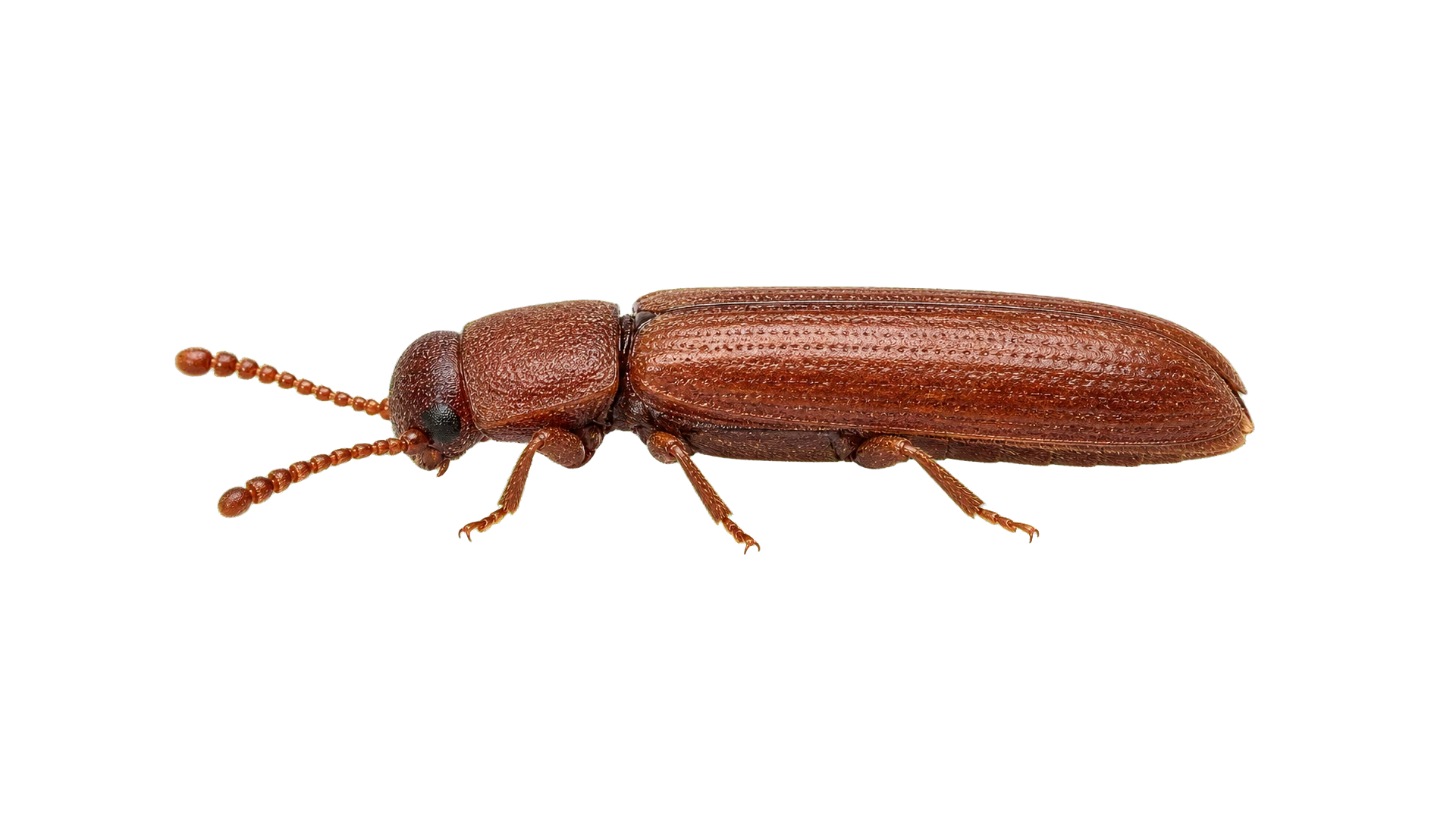
The decision matrix on powderpost beetle treatment is unusually expensive to get wrong. Confirming an active infestation that's actually old wastes thousands of dollars on borate or fumigation that wasn't needed. Treating an active widespread infestation with spot borate when fumigation was the right call leaves hidden colonies untouched and damage compounds for years. The same set of exit holes on the same piece of oak can warrant anything from no action at all to a $4,000 tent fumigation depending on what the inspection actually finds.
Hardware-store products help with two things. Pinhole exit holes and flour-like powder together (and only together) confirm the identification. The diagnostic paper test, a clean sheet under the wood for two to three days, confirms active versus old, and the homeowner can run it for free before any call. Those two steps are real DIY work and a specialist will appreciate the prep. Beyond that, off-the-shelf borate sprays can't penetrate finished or painted wood, can't treat hidden framing without invasive access, and can't perform fumigation. Sulfuryl fluoride and methyl bromide fumigation require licensed applicators, sealed tents, gas monitoring, and clearance protocols, for valid safety reasons.
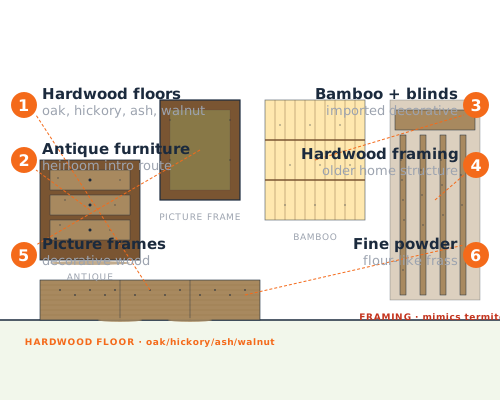
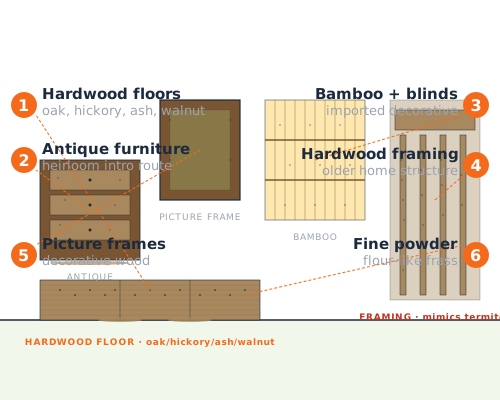
A specialist starts by confirming the infestation is active, then maps every site where exit holes and fresh powder are showing up. The map decides the path. A single piece of antique furniture is often a $100 to $300 spot treatment. A few rooms of hardwood flooring with active emergence is typically $1,500 to $5,000 of borate work. A structural infestation in framing is when fumigation enters the conversation, $1,500 to $4,000 for the fumigation itself before any repairs.
Prevention is where the long-term value lives. The introduction event that brought the first beetles in (an antique, a flooring shipment, an imported wood item) is almost always still part of the home unless the homeowner figures out which piece it was. A specialist asks about recent hardwood acquisitions, walks the rest of the home for additional sites the homeowner didn't find, and recommends borate treatment on raw exposed hardwood during any future flooring or trim work. That's how single-incident treatment turns into multi-year protection.