Local pest control help is one call away.

Elm Leaf Beetle: Identification, Treatment & Prevention

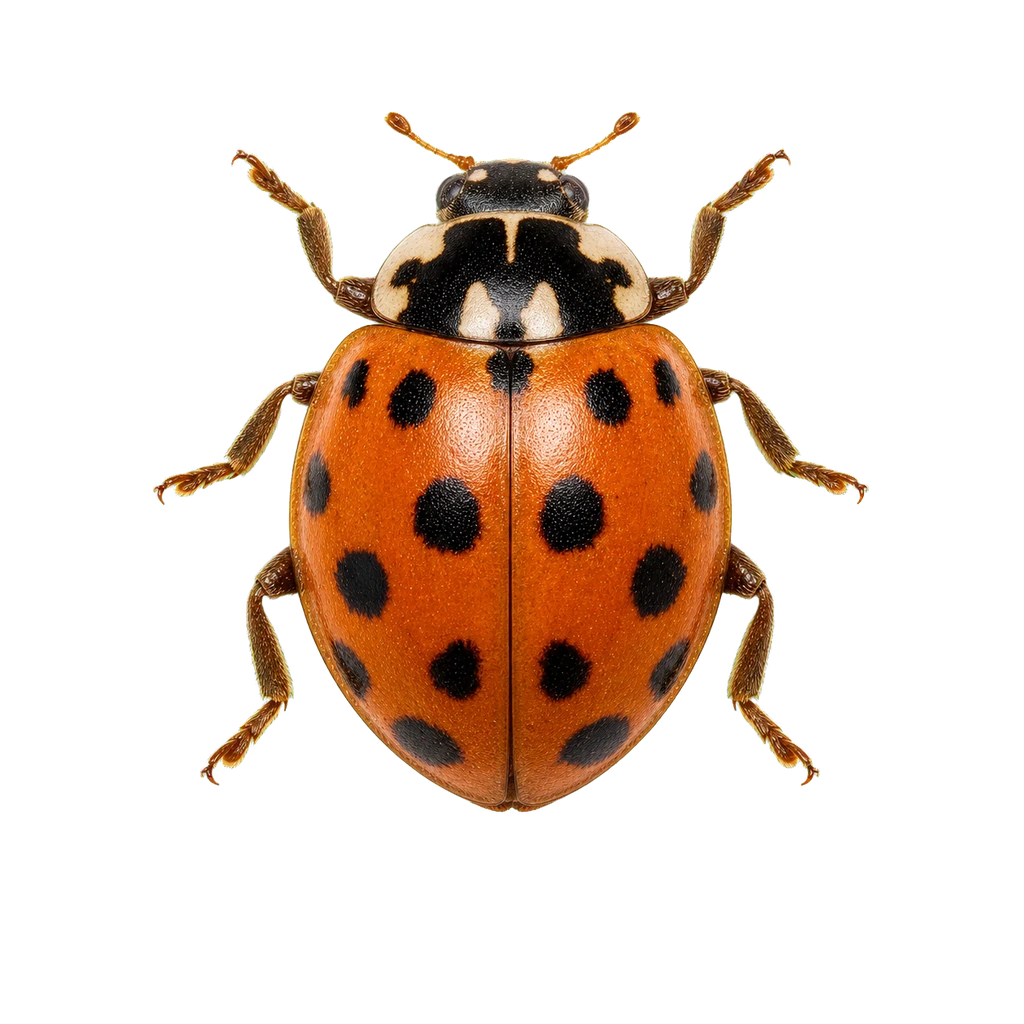
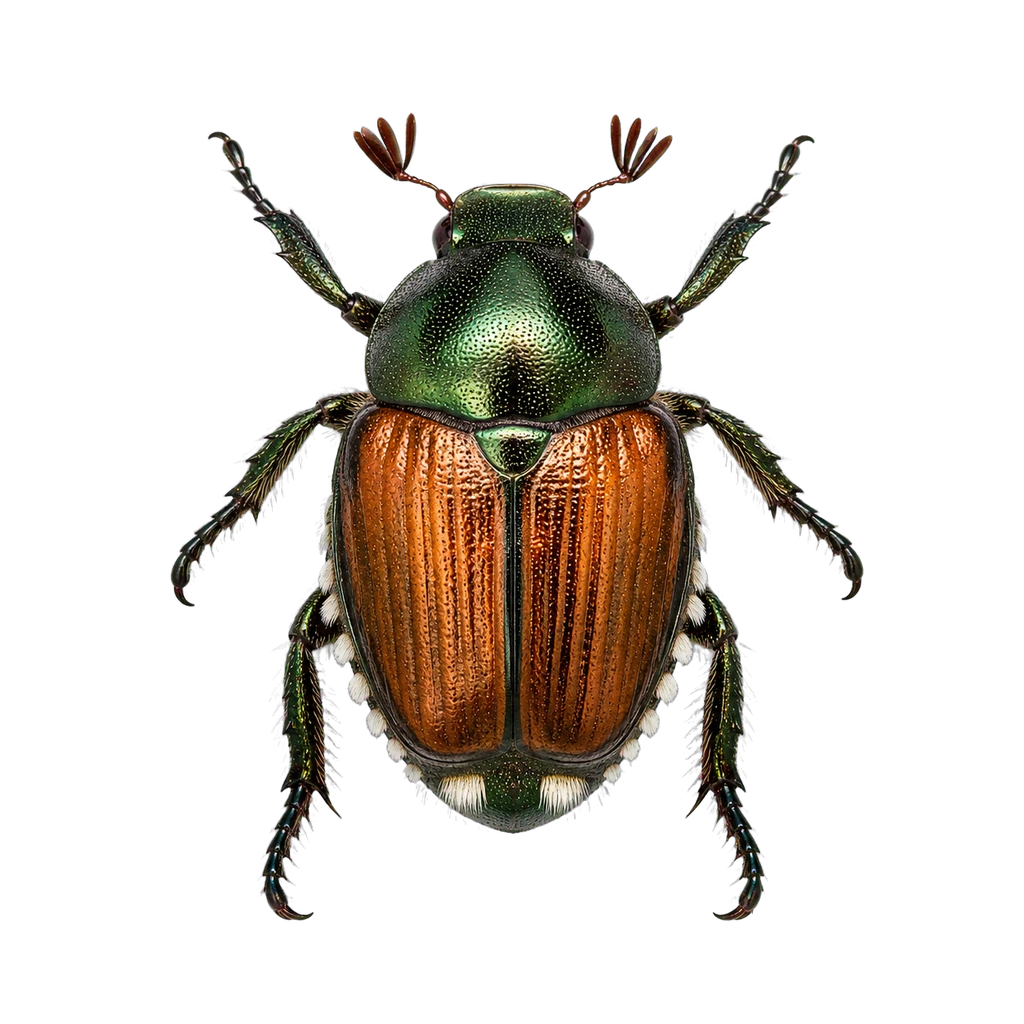
Elm leaf beetles are small oval beetles, 5 to 7 millimeters long, with a yellow-olive to greenish-yellow body, a dark longitudinal stripe down each wing cover, and dark spots on the pronotum just behind the head. They were brought over from Europe in the 1830s and now live throughout the US wherever elm trees grow. Adults chew small irregular holes in elm leaves; larvae are 10 to 13 millimeters long, black with yellow stripes, and skeletonize the leaves by eating the soft tissue between the veins and leaving a lacy network behind.

If you have mature elms on or near your property and you're seeing lacy chewed leaves above plus hundreds of small striped beetles gathering on your south-facing walls in September, you have elm leaf beetles. They're a double problem: the larvae damage the tree all summer, then the adults pile up on warm walls in fall and push into your home through cracks, vents, and gaps to overwinter. They don't bite, don't damage indoor items, and don't reproduce inside, but thousands can show up in a single fall in elm-rich neighborhoods. This guide covers how to confirm them, why the home invasion happens, and what professional treatment looks like for both the tree and the house.

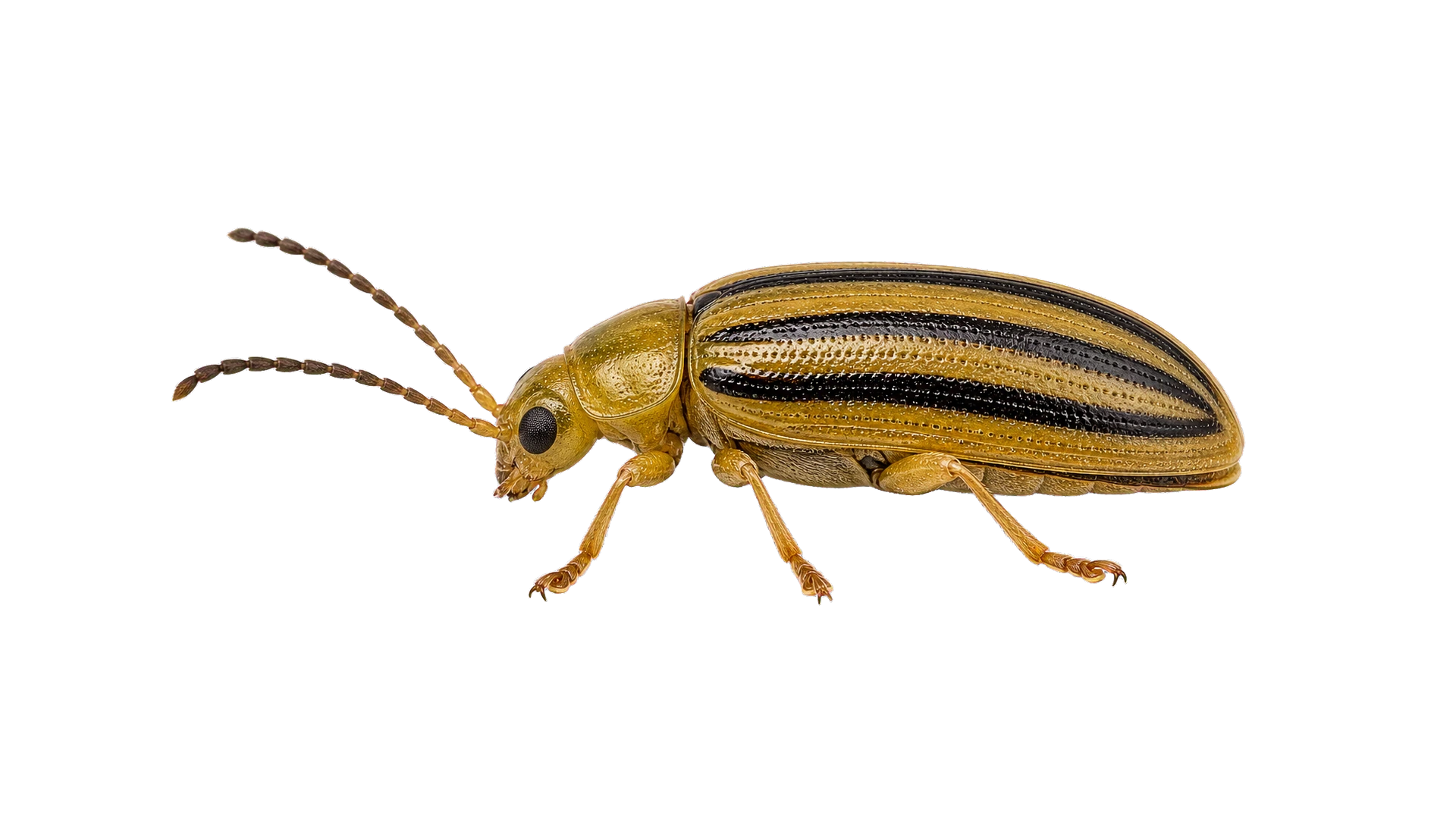
Close-up illustration of an elm leaf beetle showing yellow-olive body with dark stripe along each wing cover

ID Card: Elm Leaf Beetle

Scientific name
Xanthogaleruca luteola
Color
Olive-yellow, black stripes on wing covers
Size
1/4 to 3/8 inch
Body shape
Elongated oval, yellowish-green with dark stripes
Antennae
Thread-like, 11 segments
Key evidence
Skeletonized elm leaves, beetles clustering on sunny walls in fall
Also known as
Elm beetles

Related Species

Call to get matched with a local pest control pro.

Available 24/7
(888) 495-1510
  • Specialists who handle both tree health and fall home invasion
  • Pre-fall perimeter treatments timed for September aggregations
  • Coordination with certified arborists for high-value elm trees

Where to Inspect for Elm Leaf Beetle Activity

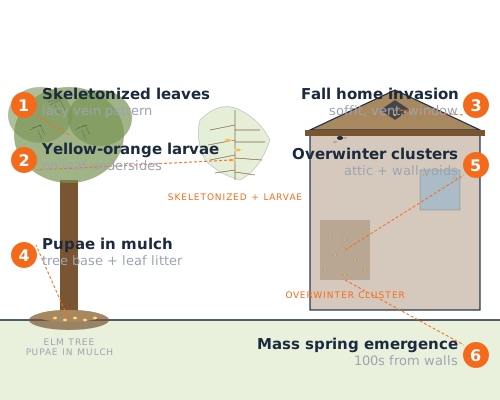
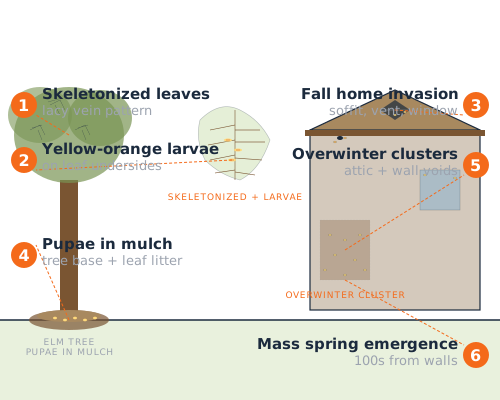
Cross-section illustration showing elm leaf beetle larval skeletonization on elm leaves and adult overwintering sites in attics and walls

Elm leaf beetles are a tree pest in summer and a home invader in fall. The inspection has to cover both the elm canopy and the structure. Walk these zones with a flashlight and pay close attention to south-facing walls between September and November:

  • Mature elm trees on your property and adjacent yards, these are the only food source, the source of every adult that ends up on your walls, walk the canopy and look for irregular holes (adult feeding) and lacy skeletonized leaves (larval feeding).
  • South- and west-facing walls in September through November, these are the warmest surfaces in late afternoon and they pull thousands of adults out of nearby elms onto siding and stucco, the fall aggregation is the loudest sign.
  • Around windows and door frames, the primary entry zone, beetles squeeze through cracks in caulk, gaps in weather seals, and the tiny voids around frame nails on their way to overwinter inside.
  • Attic louvre vents and gable vents, screened vents with torn or missing mesh let aggregating adults move directly into attic insulation, where most of the overwintering pile-up actually ends up.
  • Under siding gaps and behind shutters, lift the bottom edge of siding panels and pull a shutter slightly forward, dead beetle shells and live overwinterers in these voids confirm a multi-year aggregation site.
  • Inside light fixtures and ceiling fixtures, once indoors, adults drift toward warmth and light, opening a ceiling fixture in a room with fall invasion almost always turns up dozens of dead beetles.

If you find skeletonized elm leaves overhead and aggregating adults on south-facing walls in the same season, your property is a confirmed elm leaf beetle host. Treating only the tree leaves the home invasion intact; treating only the home leaves the tree damage to compound next year. Comprehensive plans hit both.

Cross-section illustration showing elm leaf beetle larval skeletonization on elm leaves and adult overwintering sites in attics and walls
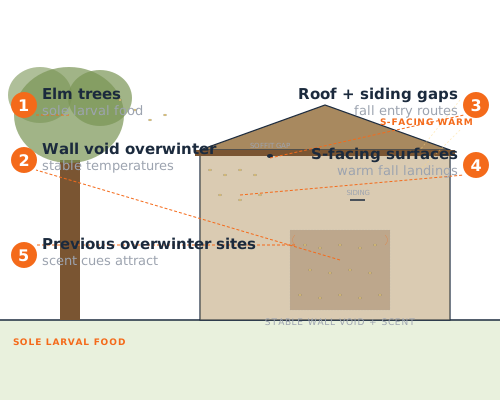
Illustration showing how elm leaf beetles travel from nearby elm trees onto south-facing walls and into attics and wall voids in fall

Why Do I Have Elm Leaf Beetles?

Confirming the beetles is step one. Understanding why they picked your property is what stops the same invasion from repeating each fall. Elm leaf beetles need two things: mature elm trees to feed on through summer, and warm sheltered cavities to overwinter in through fall. Any home with one or both is on the menu, and homes with both check every box.

What anchors them to your property:

  • Mature elm trees on or next to the property, especially Chinese elm and Siberian elm, which are the most preferred hosts, plus American, European, and Slippery elm
  • An older home with abundant entry gaps, weathered caulk, missing weatherstripping, and torn vent screens are exactly the openings adults exploit during fall aggregations
  • Previous-year aggregation sites, beetles return to the same walls and attic cavities year after year using scent cues left by earlier overwintering groups
  • Warm south-facing wall exposure, late-afternoon sun draws aggregating adults in from blocks away once temperatures drop in September
  • Elm-rich neighborhoods, even if your trees are healthy, your neighbors' trees feed beetles that end up on your walls; this is a neighborhood-scale pest, not a single-yard pest

Adults emerge from overwintering in spring, lay eggs on elm leaves, and the larvae skeletonize the foliage through summer. Two to three generations can stack up in southern parts of the US; one to two in northern regions. By September, the year's adults are searching for somewhere warm to spend winter, and that's how thousands end up on your walls and inside your attic in the same fall.

How Serious Is Your Elm Leaf Beetle Problem?

Find your scenario below. Each row reflects how an elm leaf beetle problem actually progresses from light tree feeding to heavy fall invasion, not a generic beetle timeline.

What You're Seeing Severity If Untreated Next Step
A few elm leaf beetles on the exterior in early fall, mild leaf damage on the tree Early Aggregations typically build to dozens or hundreds over the next 2 to 4 weeks once cooler nights set in. Confirm the species, schedule a pre-fall perimeter treatment, and monitor leaf damage on the elm canopy through the season.
Dozens of beetles on exterior walls, some indoors, visible leaf damage on the elm Moderate Indoor counts will climb week by week through October as adults move from siding into attic and wall voids to overwinter. Schedule a pro service that combines exterior home treatment with tree treatment consideration; treating only one side leaves the other to compound.
Hundreds to thousands aggregating on walls, indoor swarms in attic and bedrooms, heavy skeletonized leaves High Wall voids and attic spaces are filling with overwintering adults; warm winter days will trigger indoor emergences through January. Schedule a same-week pro service combining vacuum removal, exterior residual treatment, and coordination with an arborist for the tree.
Severe tree damage threatening the elm, heavy home invasion, family member with asthma or allergies Urgent Tree vigor decline accelerates susceptibility to Dutch elm disease and other secondary problems; respiratory aggravation continues through overwintering. Call today, request a coordinated pro service plus a certified arborist for systemic tree injection; involve a medical provider if respiratory symptoms are active.
A few elm leaf beetles on the exterior in early fall, mild leaf damage on the tree
Severity Early
If Untreated Aggregations typically build to dozens or hundreds over the next 2 to 4 weeks once cooler nights set in.
Next Step Confirm the species, schedule a pre-fall perimeter treatment, and monitor leaf damage on the elm canopy through the season.
Dozens of beetles on exterior walls, some indoors, visible leaf damage on the elm
Severity Moderate
If Untreated Indoor counts will climb week by week through October as adults move from siding into attic and wall voids to overwinter.
Next Step Schedule a pro service that combines exterior home treatment with tree treatment consideration; treating only one side leaves the other to compound.
Hundreds to thousands aggregating on walls, indoor swarms in attic and bedrooms, heavy skeletonized leaves
Severity High
If Untreated Wall voids and attic spaces are filling with overwintering adults; warm winter days will trigger indoor emergences through January.
Next Step Schedule a same-week pro service combining vacuum removal, exterior residual treatment, and coordination with an arborist for the tree.
Severe tree damage threatening the elm, heavy home invasion, family member with asthma or allergies
Severity Urgent
If Untreated Tree vigor decline accelerates susceptibility to Dutch elm disease and other secondary problems; respiratory aggravation continues through overwintering.
Next Step Call today, request a coordinated pro service plus a certified arborist for systemic tree injection; involve a medical provider if respiratory symptoms are active.

Elm leaf beetle problems compound year over year if untreated, last fall's wall void is this fall's bigger wall void. If you're between two rows, treat the higher one as your situation.

How Elm Leaf Beetles Develop

Elm leaf beetles have a fast lifecycle that stacks two to three generations into a single growing season in warmer parts of the US, and one to two generations in cooler regions. The two life stages that cause problems are very different, larvae skeletonize the tree all summer, then adults aggregate on homes all fall. Understanding the timeline tells you when each treatment window opens.

  1. Egg

    6 to 7 days to hatch

    Females lay clusters of yellow-orange eggs on the undersides of elm leaves, usually 5 to 25 eggs per cluster along the leaf veins. A single female can lay several hundred eggs across the spring and summer, which is why even a small overwintering population produces a heavy outbreak the next year.

  2. Larva

    2 to 3 weeks across 3 instars

    Larvae are 10 to 13 millimeters long when full-grown, black with yellow stripes, and have a spiny appearance. They feed on the soft tissue between leaf veins and leave a lacy network behind, this is the skeletonization damage that gives elms a brown, scorched appearance from a distance. This stage causes the most tree damage.

  3. Pupa

    1 to 2 weeks

    Mature larvae crawl down the trunk and pupate at the tree base in bark crevices, under loose bark, or in leaf litter and mulch. This is where most of the next generation of adults emerges from, and why raking and removing leaf litter under the tree reduces next-year pressure.

  4. Adult

    Lives months, overwinters

    Adults are 5 to 7 millimeters long, oval, yellow-olive to greenish-yellow with a dark stripe along each wing cover and dark spots on the pronotum. They feed on elm leaves all summer, chewing small irregular holes (different from the larval skeletonization), then aggregate on warm walls in fall and push into attics, wall voids, and siding to overwinter.

The combination of two to three generations per year plus fall aggregation behavior makes elm leaf beetles a double problem, the tree damage compounds through summer, then the year's adults all go searching for somewhere warm in September. An integrated treatment plan addresses both stages, the tree in spring and summer, the home in late summer and early fall.

When Elm Leaf Beetles Are Most Active

Elm leaf beetle activity follows a sharp seasonal calendar with a very clear peak. The fall aggregation window is the single most important time for home treatment, and it lines up almost exactly with cooler nights in September through November.

  • Spring

    Adults emerge from overwintering sites in wall voids, attics, and protected outdoor harborage as temperatures rise. They feed on the first flush of elm leaves and lay yellow-orange egg clusters on leaf undersides. Indoor sightings on warm spring days are common, surviving overwinterers wake up and crawl toward windows looking for the way back outside.

  • Summer

    Peak larval skeletonization on the elm canopy. Two to three generations may stack up in southern regions; one to two in cooler northern regions. By late summer, the year's adults are emerging in big numbers and feeding on the remaining canopy. This is the window for foliar spray during peak larval development.

  • Fall

    September through November is the loudest period of the year. Hundreds to thousands of adults aggregate on south- and west-facing walls in late afternoon, then push into wall voids, attic vents, behind shutters, and around window frames to overwinter. This is the highest-leverage window for exterior perimeter residual treatment.

  • Winter

    Overwintering adults are inside wall voids, attic spaces, behind insulation, and in light fixtures. Activity is mostly dormant, but warm winter days, especially in heated rooms, trigger small indoor emergences as overwinterers wake up briefly and crawl toward windows. They don't feed or reproduce indoors, but the nuisance continues all winter in heavily infested homes.

Why Elm Leaf Beetles Need Professional Help

Elm leaf beetles damage elm trees through summer with larval skeletonization, then create a fall home invasion that looks a lot like an Asian lady beetle or boxelder bug outbreak, thousands of adults piling up on south-facing walls and pushing into attics and wall voids in September through November. The home invasion is nuisance only, they don't bite, don't damage indoor items, and don't reproduce inside, but the volume is the issue: an elm-rich neighborhood can put thousands of beetles into a single attic in one fall.

Pre-fall sealing combined with exterior perimeter residual treatment, done in late August or early September before aggregations start, is the highest-leverage intervention for the home side of the problem. Once adults are already inside the wall void, treatment options narrow to vacuum removal and waiting out the winter; the prevention window closes fast once weather cools.

The tree side requires arborist coordination. Systemic injection with imidacloprid or emamectin benzoate by a certified arborist protects high-value elms for one to two seasons; foliar spray during peak larval development is the alternative for lower-value trees. Integrated tree health management, watering during drought, pruning dead wood, removing leaf litter under the canopy, reduces tree stress and lowers susceptibility to secondary issues like Dutch elm disease.

Cost ranges run roughly $200 to $500 for a residential home pre-fall preventive treatment, $200 to $800 per tree per year for tree treatment depending on size and product, and $50 to $120 per month for recurring service during invasion seasons. Combined home-and-tree plans tend to land in the middle of those ranges and reduce next-year pressure significantly.

What Changes When a Pro Shows Up

Elm leaf beetle work is a two-front job: the tree and the home. A specialist coordinates both within the same season, which is what makes the difference between a one-fall fix and a problem that keeps coming back. Here's what changes:

Pest control technicians after completing elm leaf beetle treatment on a residential home
  • Local Pest Control
  • 24/7 Availability
  • Quality Workmanship
  • Eco‑Friendly Options
  • Trusted by Homeowners
  • Pre-Fall Perimeter Residual

    A perimeter residual treatment applied in late August or early September puts down a band of product on the south- and west-facing walls before aggregations start. Adults landing on the siding pick up the active ingredient before they ever push into the wall void.

  • Entry-Point Inventory and Sealing

    The technician walks the structure and flags every gap, torn vent screen, weathered caulk line, missing weatherstrip, lifted siding panel, and notes them for sealing. Sealing alone doesn't solve the problem, but sealing plus treatment cuts indoor counts by an order of magnitude.

  • Arborist Coordination for the Tree

    High-value elms get evaluated by a certified arborist for systemic injection with imidacloprid or emamectin benzoate, treatments that protect the canopy for one to two seasons. For lower-value elms, foliar spray during peak larval development is the alternative. Both reduce the next year's beetle pressure on your walls.

  • Indoor Vacuum and Follow-Up

    Active indoor aggregations get vacuumed (not crushed, crushing leaves a yellow stain and an odor that triggers other beetles). Follow-up monitoring through fall confirms the perimeter band is holding and indoor counts are dropping.

  • Local Pest Control
  • 24/7 Availability
  • Quality Workmanship
  • Eco‑Friendly Options
  • Trusted by Homeowners
NoToPests home

One call connects you with a local specialist who knows elm leaf beetles and your area.

Be Ready When You Call

Pest control technician arriving for elm leaf beetle service at a residential home
Junho L.
Daisuke P.
Kirk Q.
Marion K.

Trusted by homeowners nationwide

Call for Pest Control Help (888) 495-1510

Can You Handle This or Do You Need Help?

Elm leaf beetles span a tree pest and a home invader, two different jobs that have to happen in the same season. DIY can handle parts of one side; the other side genuinely needs a pro.

What DIY Can Do

DIY work is best aimed at identification, indoor cleanup, and basic prevention, not tree treatment or full perimeter knockdown. Useful steps with honest limits:

  • Identify the beetle correctly, yellow-olive body, dark longitudinal stripe on each wing cover, dark spots on pronotum, this separates them from cottonwood leaf beetles and Asian lady beetles
  • Vacuum visible indoor beetles rather than crushing them, crushing leaves a yellow stain and an odor that draws more beetles
  • Seal visible cracks and gaps around windows, soffits, and siding before mid-September, plus check attic louvre vents for torn mesh
  • Replace weatherstripping at doors and improve the seal at gable vents and other large openings
  • Reduce elm tree stress where you can, watering during drought and pruning dead wood lowers the next year's beetle pressure
  • What DIY cannot do effectively: full perimeter residual treatment, systemic tree injection, or large-tree foliar spray, all three require licensed application and proper equipment.

What a Pro Does Differently

Professional elm leaf beetle work is timed, coordinated, and covers both the tree and the home in one season. Here's what changes when you call:

  • Pre-fall exterior perimeter residual application timed for late August or early September, before aggregations start, this is the single most effective home-invasion intervention
  • Full entry-point inventory across the structure, every torn vent screen, weathered caulk line, lifted siding panel, and gap around windows and doors gets flagged for sealing
  • Arborist coordination for high-value elms, systemic injection with imidacloprid or emamectin benzoate for canopy protection lasting one to two seasons
  • Foliar spray during peak larval development for lower-value trees, plus integrated tree health management to reduce stress
  • Recurring monitoring for chronic-aggregation properties, last year's affected wall void is this year's bigger wall void if it goes untreated

Suspect Elm Leaf Beetles? Don't Wait.

Elm leaf beetles damage elm trees through summer and invade homes by the thousands every fall. Connect with a local specialist who coordinates pre-fall perimeter treatment, entry-point sealing, and arborist work for the tree.

Available 24/7
(888) 495-1510

What Homeowners Say After Getting Help

Real results from people who had the same problem and solved it.

Kimberly I.
Kimberly I.
Kodiak, AK

"Stored clothing saved from carpet beetles."

We found holes in stored wool sweaters and discovered carpet beetles in the closet. The tech treated the closets and storage areas and explained how to store clothes to prevent reinfestation. The targeted approach worked perfectly.

Kimberly I.
Kimberly I.
Kodiak, AK

"Stored clothing saved from carpet beetles."

We found holes in stored wool sweaters and discovered carpet beetles in the closet. The tech treated the closets and storage areas and explained how to store clothes to prevent reinfestation. The targeted approach worked perfectly.

Veda J.
Veda J.
Indianapolis, IN

"Fumigation cleared stored product pests from our pantry and walls."

Indian meal moths and beetles had infested our pantry and spread into the wall cavities behind the kitchen. Standard treatments were not reaching the source. The provider recommended fumigation to eliminate larvae and adults in every hidden space. We cleared the home, the crew tented and treated, and clearance testing confirmed a complete knockdown.

Natalie Y.
Natalie Y.
Wichita, KS

"Fumigation eliminated carpet beetles throughout."

Carpet beetles had infested our wool rugs, closets, and even the HVAC ducts. Multiple targeted treatments only knocked them back temporarily. The provider recommended structural fumigation to reach larvae hiding in wall voids and ductwork. We followed the preparation checklist, cleared the home, and the crew handled the tenting and gas treatment. Clearance testing confirmed success and our belongings have been damage-free since.

Common Questions About Elm Leaf Beetles

Direct answers to what homeowners ask most about identification, tree damage, and the fall home invasion.

  • How do I identify elm leaf beetle damage? Toggle answer for: How do I identify elm leaf beetle damage?

    Elm leaf beetle adults are small (about 1/4 inch), yellowish-green beetles with a dark stripe along each wing cover edge, and they chew small, irregular holes through elm leaves. Their larvae, small, yellow-green to dark green caterpillar-like grubs, cause more extensive damage by skeletonizing the underside of leaves, consuming all tissue between the veins and leaving a translucent, lace-like remnant that turns brown. Heavily infested elm trees can appear scorched or defoliated by midsummer, with brown, skeletonized leaves remaining attached to branches. The combination of adult feeding holes and larval skeletonization damage is distinctive to elm leaf beetles and affects all elm species, with the Siberian elm being particularly susceptible.

  • Do elm leaf beetles invade homes? Toggle answer for: Do elm leaf beetles invade homes?

    Adult elm leaf beetles are overwintering invaders, likeboxelder bugs and Asian lady beetles, that seek shelter inside structures in fall as temperatures drop. They congregate on warm south-facing walls and enter through cracks around windows, doors, and siding joints, accumulating in wall voids, attics, and behind baseboards. On warm winter and early spring days, they become active and emerge indoors, often appearing in large numbers on windowsills and around light fixtures. They do not bite, sting, or damage household materials, but their presence in numbers can be a nuisance, and crushed beetles leave a yellowish stain. Sealing entry points before the fall migration (September-October) and addressing the elm trees they depend on are the most effective long-term solutions.

  • Why do beetles keep appearing inside my home? Toggle answer for: Why do beetles keep appearing inside my home?

    Beetles are the largest order of insects, and different species enter homes for different reasons. Carpet beetles feed on natural fibers, pet hair, and dead insects indoors. Powderpost beetles infest hardwood floors and furniture. Pantry beetles (drugstore and cigarette beetles) target stored food. Asian lady beetles and boxelder beetles invade in fall to overwinter. Identifying the species is the first step to solving the problem.

  • Are beetles harmful to my home? Toggle answer for: Are beetles harmful to my home?

    It depends on the species. Powderpost beetles can cause serious structural damage by boring into hardwood, leaving behind small round exit holes and fine powdery frass. Carpet beetles destroy wool rugs, clothing, and upholstery. Pantry beetles contaminate stored food. Other species like ladybugs and ground beetles are nuisance invaders that don't cause damage but are unpleasant in large numbers.

  • How quickly can a provider get to my home? Toggle answer for: How quickly can a provider get to my home?

    Most providers in our network can schedule an inspection within 24-48 hours. For urgent situations, likeactive structural damage or large colonies, same-week emergency service is often available. Response times depend on your location and the provider's current schedule.

  • What happens during the first visit? Toggle answer for: What happens during the first visit?

    Your provider inspects the property to identify the pest, locate nesting or entry points, and assess the scope of the problem. You get a clear explanation of what they found, what they recommend, and a written scope before any work begins.

  • Is treatment safe for kids and pets? Toggle answer for: Is treatment safe for kids and pets?

    Modern pest control products are designed to break down quickly after application and pose minimal risk to people and pets when applied correctly. Most providers ask you to keep kids and pets out of treated areas for 1 to 2 hours while the product dries, after which the area is generally safe again. Always confirm specific re-entry times with your provider, and let them know about pet birds, fish, or reptiles, since some treatments require extra precautions for those species.

Pest Control Pros serving the city of the state of your city and nearby areas

Local providers experienced with fall-aggregating pests and elm tree treatment are ready to inspect, treat, and coordinate with an arborist, no obligation.

Available 24/7
(888) 495-1510