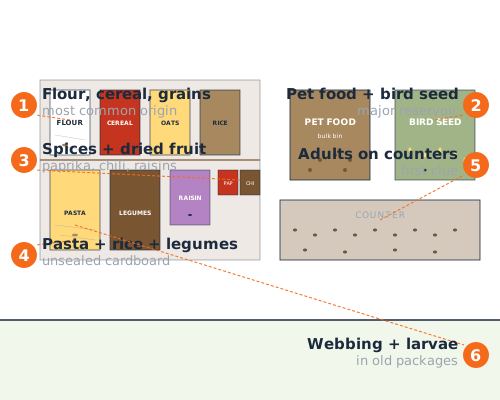
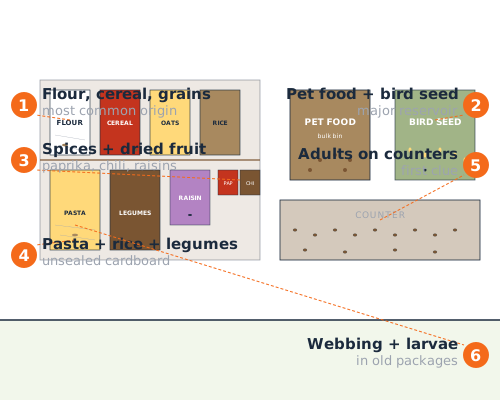
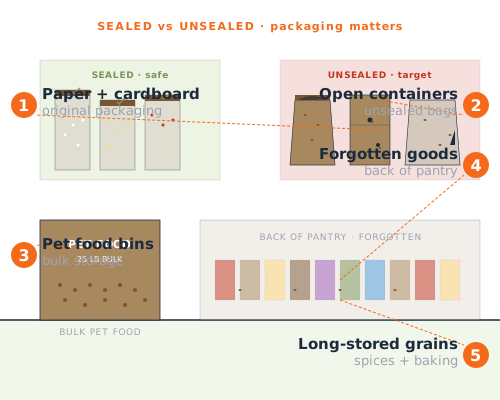
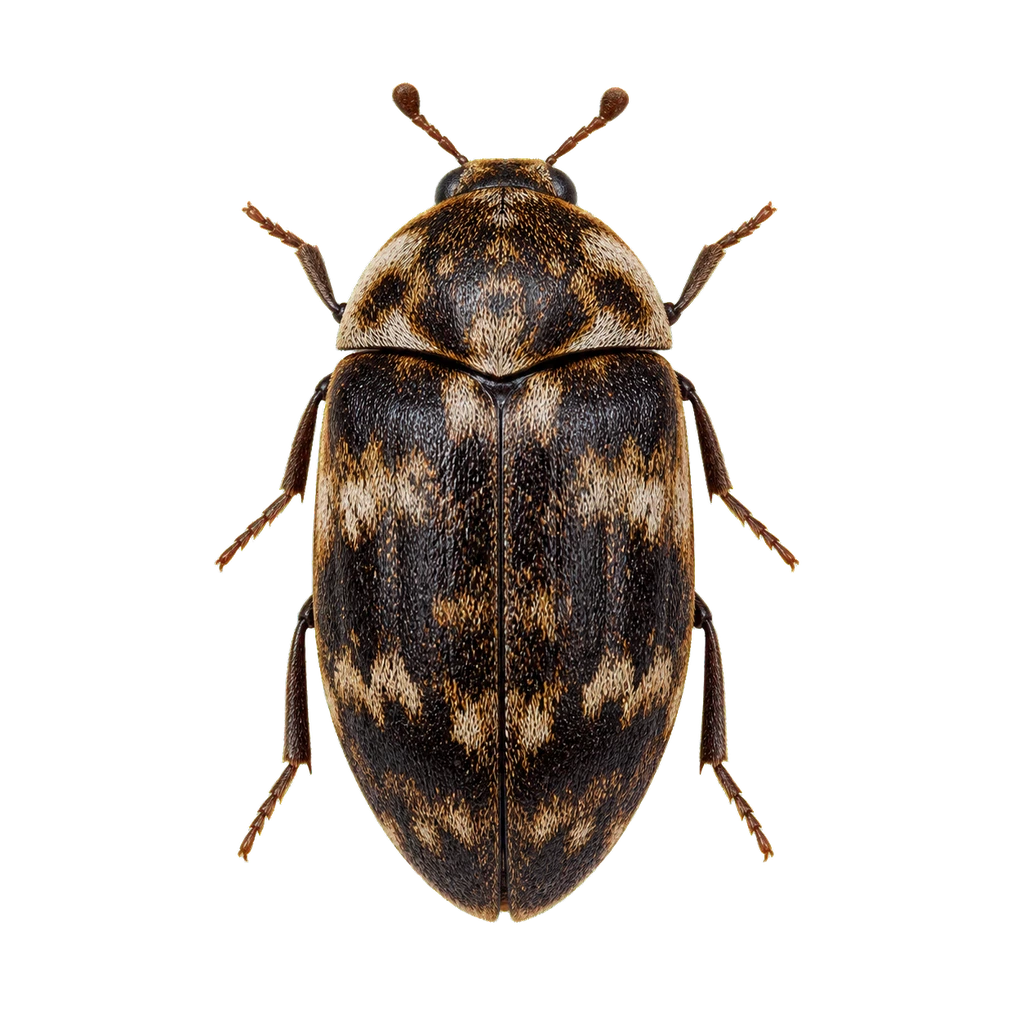
Most pantry beetle infestations are DIY territory as long as the homeowner can identify the species correctly and find every infested item. The trouble starts when the source is hidden across multiple categories, an old spice jar in the back of the cabinet, a bag of bird seed in the garage, a vintage tin of cocoa, an old box of pet treats. Different pantry beetle species prefer different foods, so an inspection focused only on flour and cereal will miss cigarette beetles in the spice rack or weevils in bulk grain.
DIY mistakes follow a predictable pattern. Toss the obvious cereal box, wipe the shelf, declare victory, then watch new adults appear two weeks later because the actual source was the paprika jar nobody opened in eighteen months. Surface treatment of visible adults does nothing about the larvae developing inside that paprika jar, and the lifecycle runs continuously year-round in heated pantries.
A specialist who handles stored-product pests starts with correct species identification, then inspects across the full diet range, pantry shelves, spice rack, dried fruit and baking supplies, pet food, bird seed, and any storage area that holds dry goods. They place pheromone traps to monitor population trends and confirm whether new adults are still emerging from a hidden source. They apply IGRs to disrupt the lifecycle and residual product in cracks and crevices to catch wandering adults. And they surface the storage practice changes (airtight glass and hard plastic, freezing new items 72 hours to kill hidden eggs and larvae, regular pantry rotation) that prevent the next imported item from triggering a fresh cycle.
Initial service typically runs $200 to $500, and recurring monitoring for chronic conditions runs $30 to $80 per month. If your household has asthma sufferers, the allergen reduction alone often justifies professional help, contaminated dry goods are a known asthma trigger in sensitive individuals.