Local pest control help is one call away.

Bark Beetle: Identification, Treatment & Prevention

Bark beetles are tiny cylindrical beetles 2 to 9 millimeters long that bore through tree bark and tunnel underneath, killing pines, spruces, and ash trees by cutting off the tree's vascular system. The adults are almost impossible to see, and by the time the crown turns red, the tree is already dead. Since 1996, mountain pine beetle alone has killed more than 100 million acres of western pine forest, and emerald ash borer has wiped out more than 100 million ash trees across the Midwest and East since 2002. These are the most destructive forest pests in modern US history.

If you're seeing coin-sized sap blobs (pitch tubes) on a pine trunk, D-shaped exit holes on an ash tree, or crown needles fading from green to yellow to red, you're looking at active bark beetle attack. This guide covers how to identify the damage, why mass attacks overwhelm tree defenses, what preventive treatment actually involves, and why this work requires a certified arborist alongside pest control.

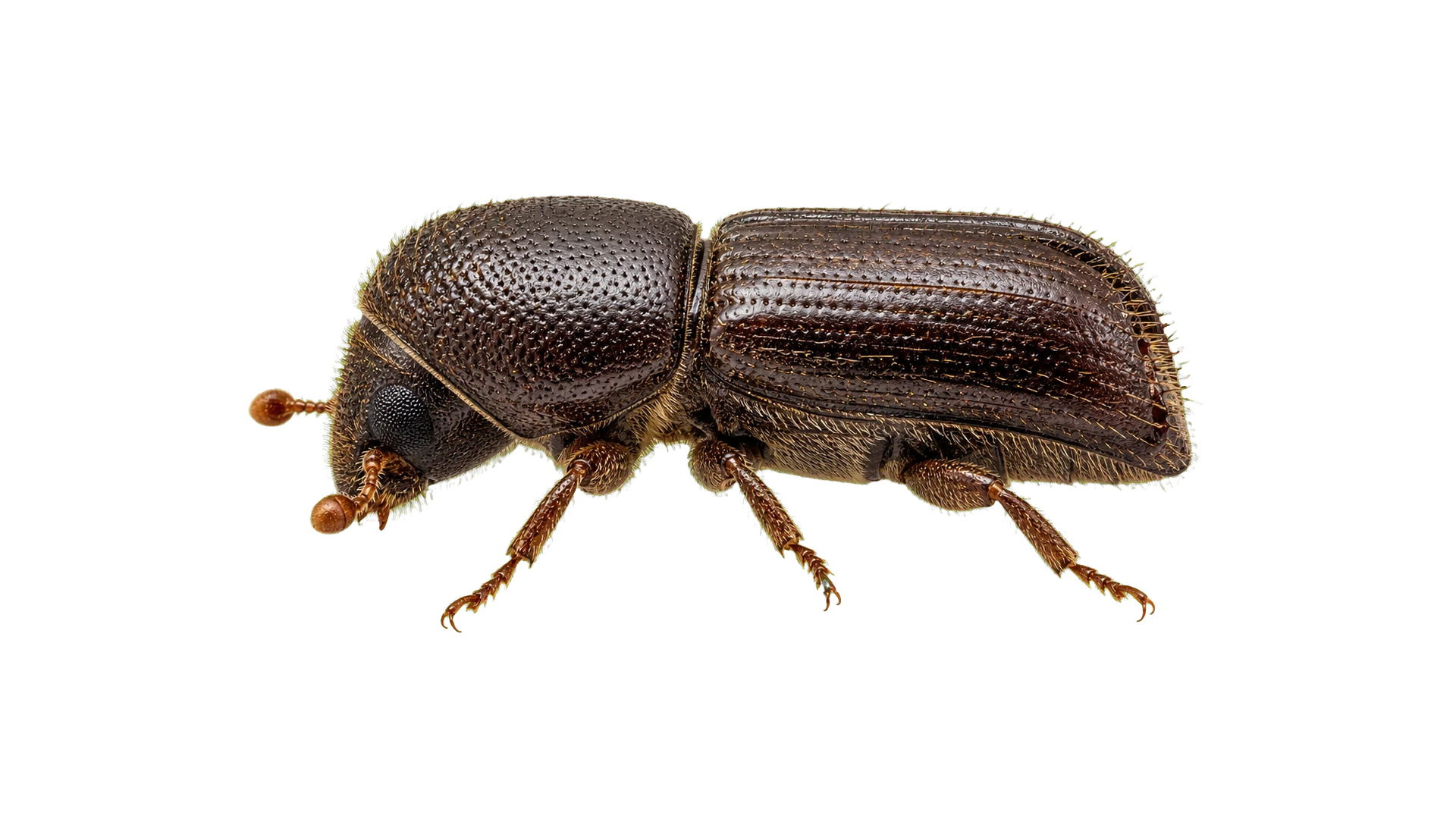
Close-up illustration of a bark beetle showing small cylindrical dark body and the gallery pattern it creates under bark

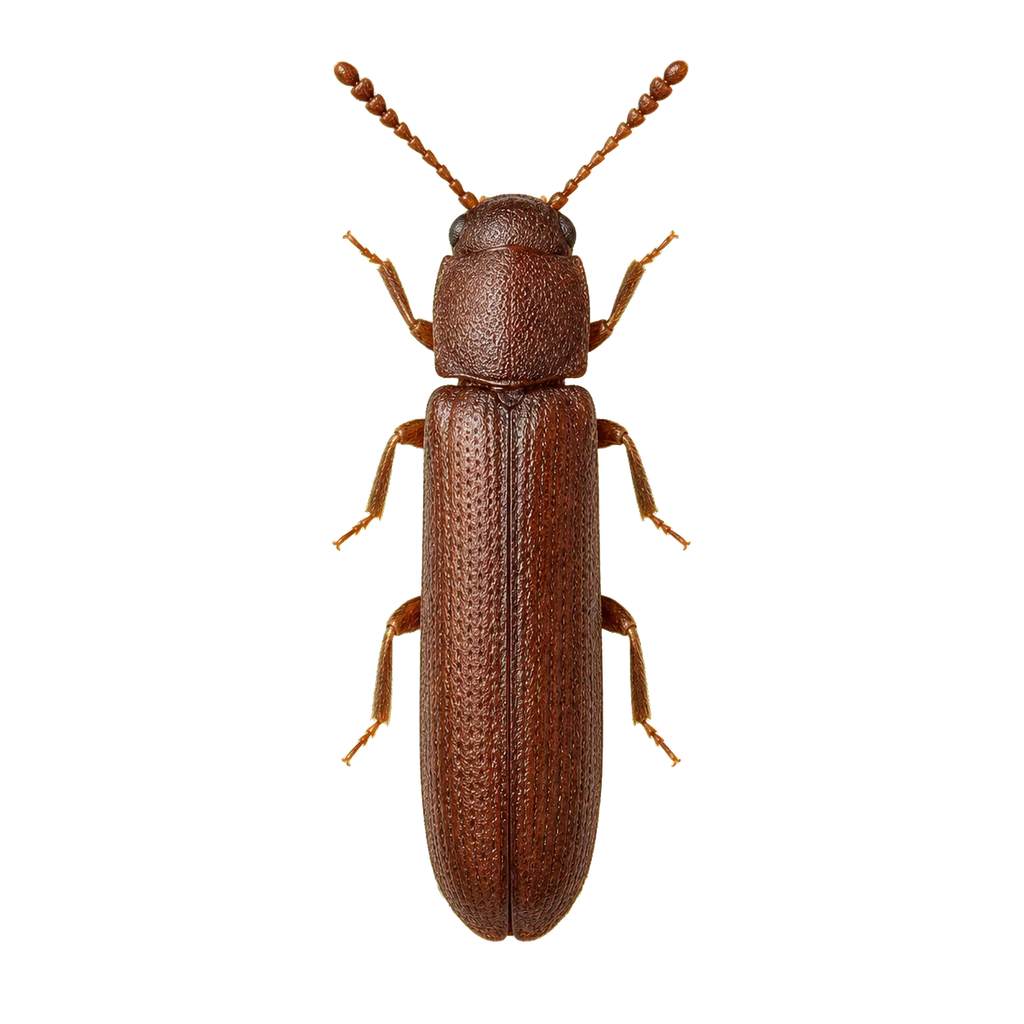
ID Card: Bark Beetle

Scientific name
Scolytinae
Color
Dark brown to black
Size
1/8 to 1/4 inch
Body shape
Small, cylindrical, hard-bodied
Antennae
Elbowed with compact club
Key evidence
Sawdust tubes on tree bark, S-shaped galleries under bark
Also known as
Pine beetles, Engraver beetles, Ips beetles

Call to get matched with a local pest control pro.

Available 24/7
(888) 495-1510
  • Specialists who coordinate with certified arborists on tree-killing pests
  • Preventive treatment programs for high-value pines and ash trees
  • Removal coordination for dead trees that pose falling hazards

Where to Inspect for Bark Beetle Damage

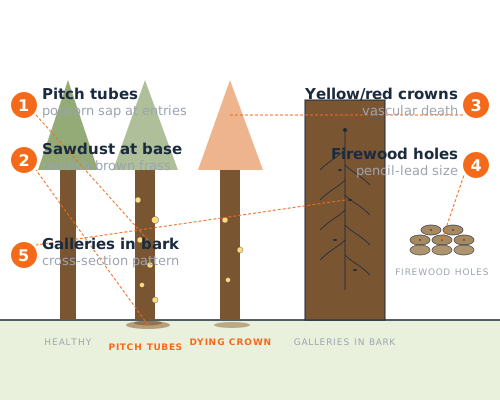
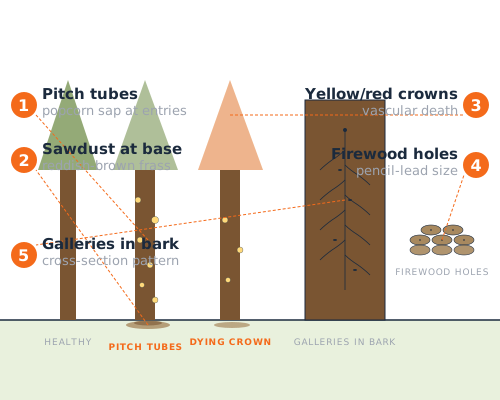
Cross-section illustration showing bark beetle galleries under tree bark, pitch tubes on the trunk surface, and the J-shaped and Y-shaped gallery patterns of different bark beetle species

The adult beetles are too small to spot and they live under the bark, so identification is almost always based on damage signs. Walk the property with a focus on susceptible tree species and look up at the crown, not down at the ground. These are the zones where bark beetle damage shows first:

  • Pine trunks at chest height (ponderosa, lodgepole, white pine), This is the primary attack zone for mountain pine beetle, western pine beetle, and Ips engraver beetles. Look for coin-sized pitch tubes, sticky resin blobs the tree pushes out where adults bored in. Pitch tubes are the single most reliable bark beetle sign in the western US.
  • Ash tree trunks in the Midwest and East, Emerald ash borer leaves distinctive D-shaped exit holes about 1/8 inch wide, plus splitting bark and clusters of small shoots growing directly off the trunk (called epicormic shoots). Once a Midwest ash shows these signs, mortality is nearly 100 percent without treatment.
  • Crown needles and leaves, looking up from below, Color change is the second clearest sign. Needles fade from green to yellow over weeks, then turn red, then brown over one to two years. By the time you see red crowns, the tree is dead inside.
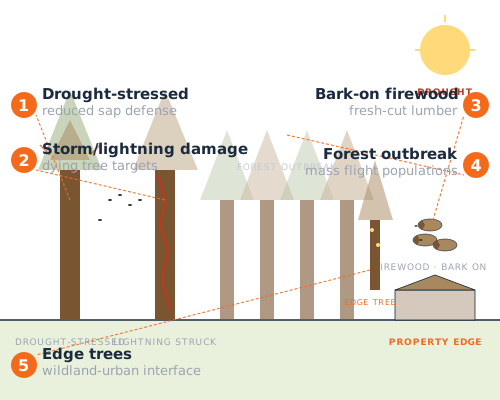
  • Drought-stressed and storm-damaged trees first, Bark beetles target weak trees before healthy ones. Any tree that lost branches in a storm, was struck by lightning, or has been visibly suffering through drought is the most likely first attack site on the property.
  • Bark surface for 1 to 2 millimeter round exit holes, Round exit holes the size of a pencil tip mean adult beetles have already emerged. For ash, the holes are D-shaped, not round.
  • Around firewood piles and recently cut slash, Stored pine firewood and cut limbs can harbor beetles that fly out and attack standing trees within 50 feet. Walk this zone last to confirm whether you're hosting a beetle source on the property.

If you find pitch tubes on a green-crowned pine, you may still have time for preventive treatment. If you find pitch tubes plus yellowing needles, the tree is already compromised and the decision shifts to systemic injection or removal. If multiple trees on the property show red crowns, you're facing a removal scope on dead trees ($1,000 to $5,000 each) plus protection for any remaining green trees. Insurance generally does not cover bark beetle removal, though it may cover damage if a dead tree falls on the house or a vehicle.

Cross-section illustration showing bark beetle galleries under tree bark, pitch tubes on the trunk surface, and the J-shaped and Y-shaped gallery patterns of different bark beetle species
Illustration showing how bark beetles attack stressed pine and ash trees, with pitch tubes on the trunk, gallery patterns under the bark, and the mass attack dynamic driven by pheromone signaling

Why Do I Have Bark Beetles?

Spotting pitch tubes is step one. Understanding why the beetles picked your tree, and your property, is what tells you whether nearby trees are next. A healthy tree pushes back with sap pressure that drowns the first few beetles in resin (those are the pitch tubes you see). But once enough beetles attack at the same time, the tree runs out of resin and the beetles win. That mass-attack dynamic is exactly why bark beetle outbreaks expand the way they do.

What anchors them to your property:

  • Susceptible tree species in the beetle's range, ponderosa, lodgepole, and white pine in the West for mountain pine beetle; ash trees across the Midwest and East for emerald ash borer; multiple pine species for western pine beetle, southern pine beetle, and Ips engravers
  • Drought or heat stress on trees, weak trees can't push out enough sap to flush beetles back out, and stressed trees give off chemical signals that beetles use to find them
  • Nearby forest with an active beetle outbreak, once a regional epidemic is underway, beetle flights can saturate adjacent properties even when individual trees were healthy
  • Storm damage or lightning strikes that wounded trees in the past year, fresh wounds and stressed cambium are exactly what early-season beetles look for
  • Firewood stored on the property, especially fresh-cut pine within 50 feet of standing trees, an unintentional beetle source that infects the rest of the yard
  • Lack of tree vigor management, no supplemental watering during drought, no fertilization, no monitoring, makes a property full of high-stress trees that beetles will target first

A new attack starts when a single beetle bores through the bark and releases a pheromone that signals other beetles to join. Within hours, thousands of beetles can converge on one tree. Healthy trees survive small attacks; stressed trees and epidemic-level attacks both end with a dead tree. Climate-driven warmer winters have made the problem dramatically worse. Mountain pine beetle larvae used to be killed off by cold snaps below minus 30 degrees Fahrenheit, but those cold spells are now rare across most of the beetle's range, so more larvae survive every winter and the population keeps building.

How Serious Is Your Bark Beetle Problem?

Find your scenario below. Each row reflects how bark beetle attack actually progresses on a property, from the first pitch tube on a single tree to a falling-hazard situation across multiple dead trees.

What You're Seeing Severity If Untreated Next Step
Pitch tubes on a single pine, crown still green Early Tree may survive a small attack, but a follow-up flight in the next 4 to 8 weeks can overwhelm a stressed tree. Confirm the beetle species from pitch tube shape and tree species. Schedule a certified arborist consultation within 14 days. Preventive trunk spray is still an option in this window.
Multiple pitch tubes plus early crown color change plus beetle-killed trees nearby Moderate Tree is already losing vascular function. Once the crown reaches red, the tree is dead. The window for systemic injection closes within weeks. Same-month arborist consultation paired with pest service. Decision will be systemic injection (for high-value trees worth saving) or removal coordination before brood emerges and spreads.
Multiple trees affected, crowns turning red on several, beetle outbreak in surrounding forest High Property is now part of an active outbreak. Remaining green trees are at high risk from the next emergence flight. Call this week for a coordinated arborist plus pest service visit. Plan covers removal of advanced cases plus protection treatment for remaining green trees. May warrant a whole-property program.
Multiple dead or dying trees plus a falling tree hazard to the home, vehicle, or family Urgent Dead pines and ash trees lose structural integrity within 1 to 3 years. Branch drop and full tree fall risk to roof, car, or utility lines is now active. Call today for same-week removal scheduling. Request a safety walk on remaining trees and an insurance documentation packet in case of damage before removal can be completed.
Pitch tubes on a single pine, crown still green
Severity Early
If Untreated Tree may survive a small attack, but a follow-up flight in the next 4 to 8 weeks can overwhelm a stressed tree.
Next Step Confirm the beetle species from pitch tube shape and tree species. Schedule a certified arborist consultation within 14 days. Preventive trunk spray is still an option in this window.
Multiple pitch tubes plus early crown color change plus beetle-killed trees nearby
Severity Moderate
If Untreated Tree is already losing vascular function. Once the crown reaches red, the tree is dead. The window for systemic injection closes within weeks.
Next Step Same-month arborist consultation paired with pest service. Decision will be systemic injection (for high-value trees worth saving) or removal coordination before brood emerges and spreads.
Multiple trees affected, crowns turning red on several, beetle outbreak in surrounding forest
Severity High
If Untreated Property is now part of an active outbreak. Remaining green trees are at high risk from the next emergence flight.
Next Step Call this week for a coordinated arborist plus pest service visit. Plan covers removal of advanced cases plus protection treatment for remaining green trees. May warrant a whole-property program.
Multiple dead or dying trees plus a falling tree hazard to the home, vehicle, or family
Severity Urgent
If Untreated Dead pines and ash trees lose structural integrity within 1 to 3 years. Branch drop and full tree fall risk to roof, car, or utility lines is now active.
Next Step Call today for same-week removal scheduling. Request a safety walk on remaining trees and an insurance documentation packet in case of damage before removal can be completed.

Bark beetle progression is one-way. A tree that has reached red-crown stage cannot be saved. If you're between two rows, treat the higher one as your situation and act sooner rather than later.

How a Bark Beetle Attack Develops

Bark beetles complete one to two generations per year, depending on species and climate. Climate-driven warmer summers have pushed some northern populations into a two-generation pattern that doubles the attack pressure. The lifecycle below shows why a single mass attack can kill a tree in weeks, and why the next emergence flight matters so much for any remaining trees on the property.

  1. Egg

    Laid in galleries under bark

    After mass attack, the female adult excavates a parent gallery between the bark and the wood and lays eggs along the sides. Each species uses a distinctive gallery shape, which is how experts identify the attacker even after the adults are gone.

  2. Larva

    About 1 to 2 years depending on species and climate

    Larvae tunnel sideways from the parent gallery, cutting through the tree's vascular tissue (phloem) as they feed. This is what actually kills the tree, the larval tunnels girdle the trunk and shut off the flow of sugars from the needles to the roots. Mountain pine beetle galleries look like a J shape; Ips engraver galleries look like a Y or H.

  3. Pupa

    About 2 to 3 weeks

    Larvae transform into adults inside a chamber under the bark. The new adult chews through the remaining bark to exit, leaving a 1 to 2 millimeter round hole (or a D-shaped hole in the case of emerald ash borer).

  4. Adult

    Adults fly for a few weeks to find a new host tree

    Adults emerge and fly to a new tree, where the first beetle to bore in releases a pheromone that calls in thousands more. This mass-attack signaling is how bark beetles overwhelm a healthy tree's defenses. A single tree's worth of beetles can take down 5 to 20 neighboring trees in the same season.

Mass attack plus climate-driven generational increases plus invasive species pressure (emerald ash borer is non-native and has no natural enemies in North America) make bark beetles the most ecologically destructive forest pest group in modern US history. On a single property, that means a small early attack can become a multi-tree removal scope in one or two seasons if it isn't caught and treated.

When Bark Beetles Are Most Active

Bark beetle activity is driven by the adult emergence flight, which peaks late spring and continues into summer. Knowing the seasonal pattern tells you when preventive treatment has to go on, when to expect new attacks, and why climate change has been so destructive to forest health.

  • Spring

    Adult emergence and first flight peaks May through June, varying by species and climate. This is the window where preventive trunk spray has to be applied; once the adult flight starts, the spray timing window closes fast. Mountain pine beetle flights in Colorado and Wyoming typically run mid-June through mid-July; emerald ash borer emergence in the Midwest runs late May through mid-July.

  • Summer

    Peak attack season. Adults bore into new host trees, release mass-attack pheromones, and the next generation of larvae starts tunneling under the bark. Pitch tubes appearing in July and August are the most common timing for property-level discovery. By late summer, the first round of crown yellowing may begin to show on the most severely attacked trees.

  • Fall

    A second emergence flight is possible in warmer southern climates with two-generation species. Larvae from the summer attack continue developing under the bark. This is the season to plan removal of trees that have already been killed, because frozen winter ground can complicate equipment access and dead trees lose structural integrity over time.

  • Winter

    Larvae overwinter under the bark of attacked trees. Historically, cold snaps below minus 30 degrees Fahrenheit killed off a significant portion of larvae in northern climates, but those cold spells are now rare across most of the bark beetle range. Warmer winters allow more larvae to survive, and that climate shift is the single biggest reason recent outbreaks have been so destructive.

Why Bark Beetles Aren't a DIY Job

Bark beetles kill trees, and they do it on a scale that no other household pest comes close to. Mountain pine beetle has killed more than 100 million acres of western pine forest since 1996. Emerald ash borer has killed more than 100 million ash trees in the Midwest and East since 2002. On a single property, a confirmed bark beetle attack means a tree-removal decision in months, not years.

The hard part is timing. Preventive trunk spray works, but only if applied before adult flight in spring. Systemic injection works, but only on trees that still have a functional vascular system, which means a still-green crown. By the time the crown turns yellow, the window for systemic treatment is closing. By the time the crown turns red, the tree is dead and the only option left is removal before brood beetles emerge and spread to surrounding trees.

Almost all bark beetle work requires a certified arborist working alongside pest control. Trunk injection of emamectin benzoate (Tree-age) for pine beetles or imidacloprid for emerald ash borer is done by trained applicators with specialized equipment. The pest service handles surveillance, pheromone-based deterrents like verbenone (for mountain pine beetle) or MCH (for Douglas-fir beetle), and removal coordination. DIY tree care alone, watering and fertilization, can keep a tree healthier and more resistant, but it cannot stop a confirmed mass attack.

The cost stack is real. Preventive trunk treatment runs $150 to $800 per tree per year. Systemic injection runs $200 to $1,500 per tree on a 2 to 3 year cycle. Removal of a dead pine or ash runs $1,000 to $5,000 per tree depending on size, access, and proximity to structures. Homeowners insurance typically does not cover bark beetle damage or removal, although it may cover damage to the home or a vehicle if a dead tree falls. Acting early on green trees with the first pitch tubes is the only path that doesn't end with a removal bill.

What Changes When a Pro Shows Up

Bark beetle work is not standard pest control. It combines certified arborist tree assessment, systemic injection by trained applicators, and coordinated removal of trees that are too far gone. Here's what changes when a real bark beetle program shows up:

Pest control technicians after completing a bark beetle preventive treatment service
  • Local Pest Control
  • 24/7 Availability
  • Quality Workmanship
  • Eco‑Friendly Options
  • Trusted by Homeowners
  • They Identify the Beetle Species and the Tree's Stage

    Pitch tube shape, gallery pattern, and tree species tell the arborist whether you have mountain pine beetle, western pine beetle, Ips engraver, southern pine beetle, or emerald ash borer. Each species has a different treatment window and product. They also classify each tree: green crown (treatable), yellow crown (decision point), red crown (remove only).

  • They Apply Preventive Trunk Spray Before the Adult Flight

    For high-value trees in the beetle's range, a carbaryl or permethrin trunk spray applied in spring before adult flight kills beetles as they land. Cost runs $150 to $800 per tree per year. Timing is everything: applied late, the spray does nothing.

  • They Inject Systemic Product for Trees Worth Saving

    A certified arborist injects emamectin benzoate (Tree-age) for pine beetles or imidacloprid for emerald ash borer directly into the trunk. The tree pulls the product into its vascular system and kills beetles as they feed. Treatment runs $200 to $1,500 per tree on a 2 to 3 year cycle and is the only effective option for high-value trees during epidemic conditions.

  • They Coordinate Removal of Trees Beyond Saving

    Red-crown trees can't be saved and become a falling hazard within 1 to 3 years. The arborist coordinates removal (typically $1,000 to $5,000 per tree depending on size and access), and the pest service ensures the wood is chipped or burned before emerging beetles can spread to remaining trees.

  • Local Pest Control
  • 24/7 Availability
  • Quality Workmanship
  • Eco‑Friendly Options
  • Trusted by Homeowners
NoToPests home

One call connects you with a local specialist who knows bark beetles and your area.

Be Ready When You Call

Pest control technician arriving for bark beetle service
Junho L.
Daisuke P.
Kirk Q.
Marion K.

Trusted by homeowners nationwide

Call for Pest Control Help (888) 495-1510

Can You Handle This or Do You Need Help?

Bark beetles are the rare household pest where DIY tree care actually helps, but only on the prevention side. Once mass attack starts, the work moves to a certified arborist and licensed applicator. Here's the honest split:

What DIY Can Do

DIY work for bark beetles is all about tree vigor and host management. Useful steps with honest limits:

  • Identify pitch tubes, crown color change, and tree species on the property so you can describe what you're seeing to an arborist
  • Water mature pines and ash trees deeply during drought, a soaker hose at the drip line for several hours weekly keeps sap pressure up
  • Remove and burn or chip dying trees promptly before adult beetles emerge and spread to the rest of the yard
  • Keep firewood at least 50 feet from standing trees and burn it within a year of cutting
  • Don't move firewood across state lines, this is how emerald ash borer has continued to spread
  • What DIY cannot do: apply preventive trunk spray with the correct timing, inject systemic product into the vascular system, or safely remove a tree large enough to threaten a structure.

What a Pro Does Differently

Professional bark beetle work brings certified arborist expertise plus licensed applicator tools. Here's what changes when you call:

  • Species identification from pitch tube shape, gallery pattern, exit hole shape, and host tree, so the right product is used at the right time
  • Outbreak-versus-individual-tree assessment, single-tree problems get single-tree solutions; outbreak conditions trigger whole-property protection plans
  • Preventive trunk spray (carbaryl, permethrin) applied with the correct spring timing for the local beetle species
  • Systemic trunk injection (emamectin benzoate for pine beetles, imidacloprid for emerald ash borer) by a certified arborist, the only effective option for high-value trees during epidemic conditions
  • Pheromone-based deterrents (verbenone for mountain pine beetle, MCH for Douglas-fir beetle) deployed on standing trees to redirect attack flights elsewhere
  • Coordinated removal of dead trees with chipping or burning of wood to prevent emerging beetles from spreading to remaining trees on the property.

Suspect Bark Beetles? Don't Wait.

Bark beetles kill trees in weeks and the window for treatment closes fast. Connect with a local specialist who coordinates certified arborist assessment, preventive treatment, systemic injection, and removal of trees beyond saving.

Available 24/7
(888) 495-1510

What Homeowners Say After Getting Help

Real results from people who had the same problem and solved it.

Kimberly I.
Kimberly I.
Kodiak, AK

"Stored clothing saved from carpet beetles."

We found holes in stored wool sweaters and discovered carpet beetles in the closet. The tech treated the closets and storage areas and explained how to store clothes to prevent reinfestation. The targeted approach worked perfectly.

Kimberly I.
Kimberly I.
Kodiak, AK

"Stored clothing saved from carpet beetles."

We found holes in stored wool sweaters and discovered carpet beetles in the closet. The tech treated the closets and storage areas and explained how to store clothes to prevent reinfestation. The targeted approach worked perfectly.

Veda J.
Veda J.
Indianapolis, IN

"Fumigation cleared stored product pests from our pantry and walls."

Indian meal moths and beetles had infested our pantry and spread into the wall cavities behind the kitchen. Standard treatments were not reaching the source. The provider recommended fumigation to eliminate larvae and adults in every hidden space. We cleared the home, the crew tented and treated, and clearance testing confirmed a complete knockdown.

Natalie Y.
Natalie Y.
Wichita, KS

"Fumigation eliminated carpet beetles throughout."

Carpet beetles had infested our wool rugs, closets, and even the HVAC ducts. Multiple targeted treatments only knocked them back temporarily. The provider recommended structural fumigation to reach larvae hiding in wall voids and ductwork. We followed the preparation checklist, cleared the home, and the crew handled the tenting and gas treatment. Clearance testing confirmed success and our belongings have been damage-free since.

Common Questions About Bark Beetles

Direct answers to what homeowners ask most about pitch tubes, crown color, and what real treatment looks like.

  • How do I identify bark beetle activity on my trees? Toggle answer for: How do I identify bark beetle activity on my trees?

    Bark beetle infestations produce several visible signs: small, round entry holes (about the size of a pencil lead) in the bark surface, often accompanied by tubes or globules of pitch (resin) that the tree produces in defense. Fine, reddish-brown boring dust (frass) accumulates in bark crevices and at the tree base. As infestation progresses, foliage changes from green to yellow to reddish-brown, and bark may loosen and fall off, revealing the distinctive gallery patterns carved by adults and larvae beneath the bark surface. Different bark beetle species create characteristic gallery patterns, some create branching, centipede-like patterns, while others produce radial star shapes. By the time crown discoloration is visible, the tree is usually beyond saving.

  • Can I save a tree that has bark beetles? Toggle answer for: Can I save a tree that has bark beetles?

    Trees with established bark beetle infestations where foliage has begun changing color are generally beyond saving, thebeetle galleries beneath the bark have disrupted the tree's vascular system beyond recovery. The priority shifts to preventing spread to adjacent healthy trees by promptly removing and properly disposing of infested trees (debarking, chipping, or burning infested material rather than storing it on-site where emerging adults can fly to healthy trees). Healthy trees can be preventively protected with professional insecticide applications applied to the trunk before beetle flight season, and maintaining tree vigor through proper watering, mulching, and avoiding root damage reduces susceptibility. Drought-stressed, recently transplanted, or mechanically damaged trees are the most vulnerable to bark beetle attack.

  • Why do beetles keep appearing inside my home? Toggle answer for: Why do beetles keep appearing inside my home?

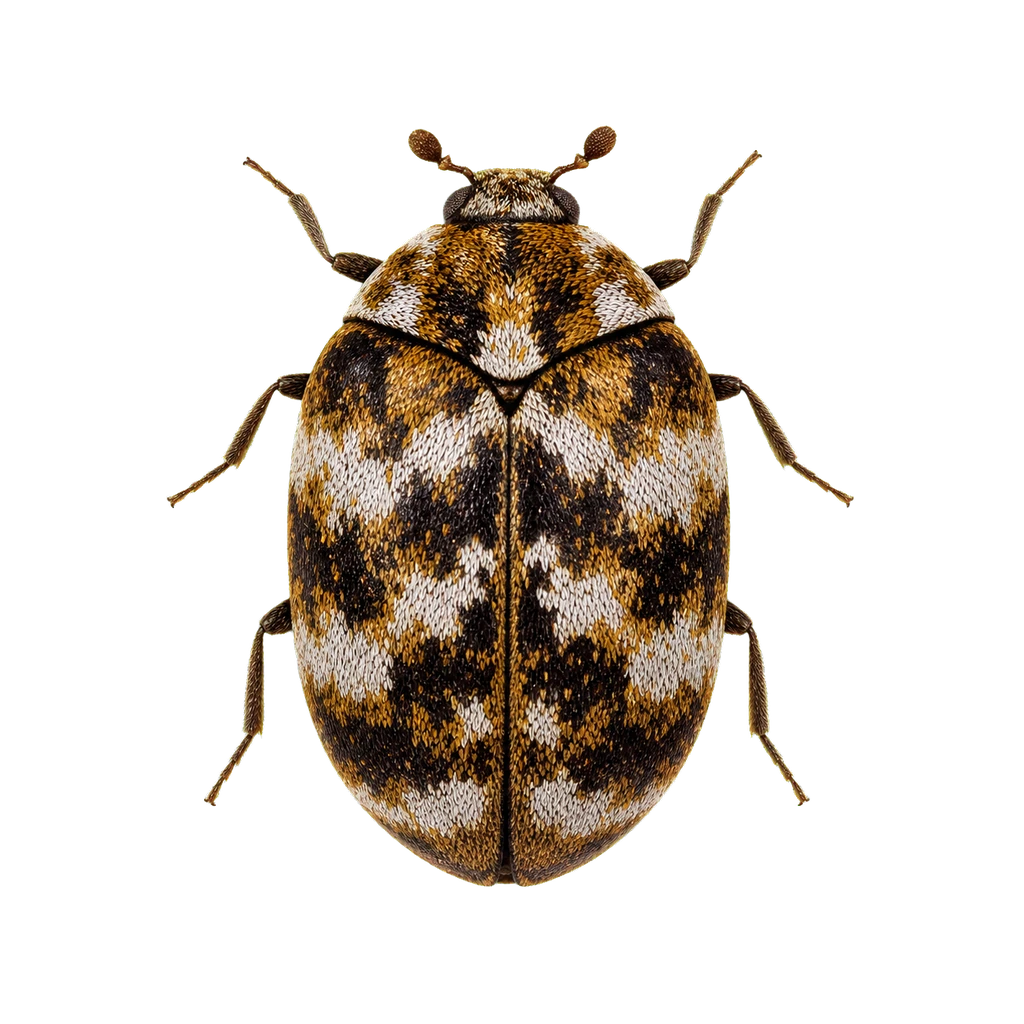
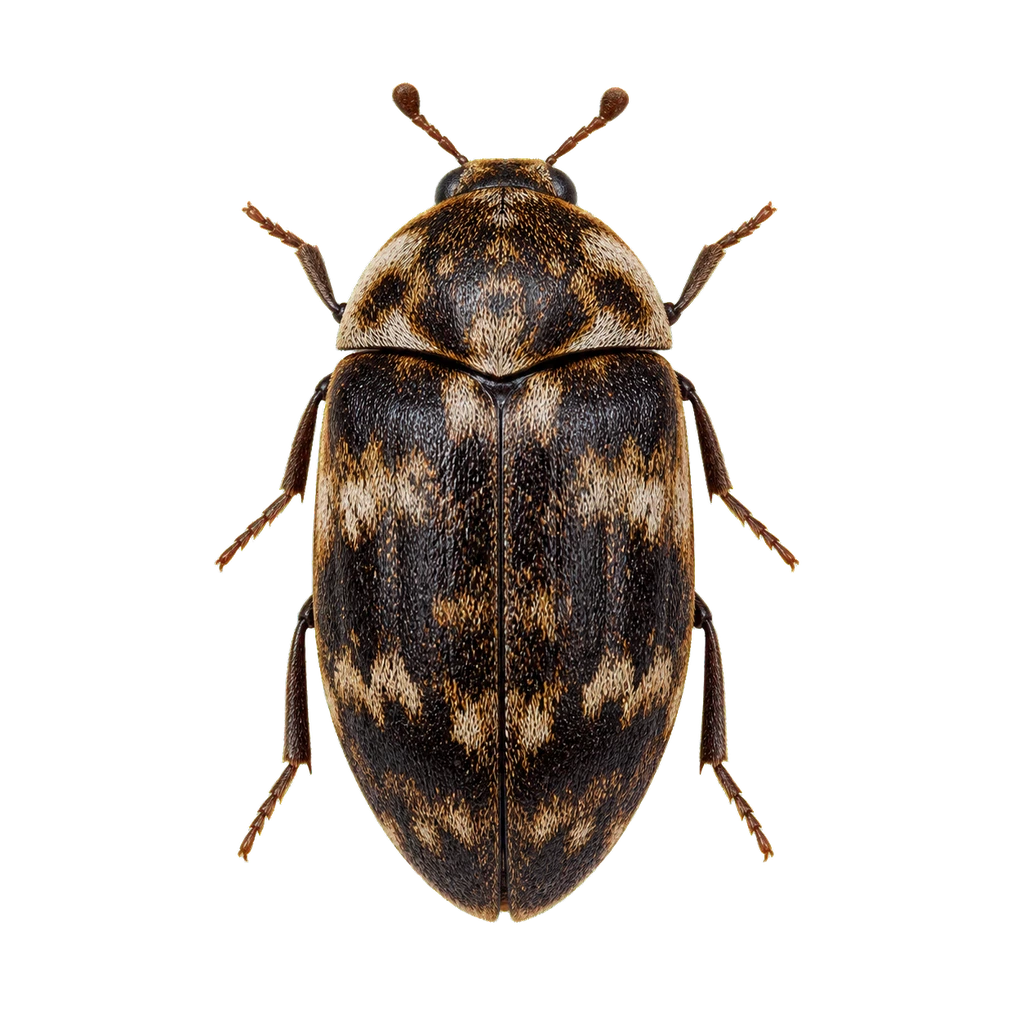
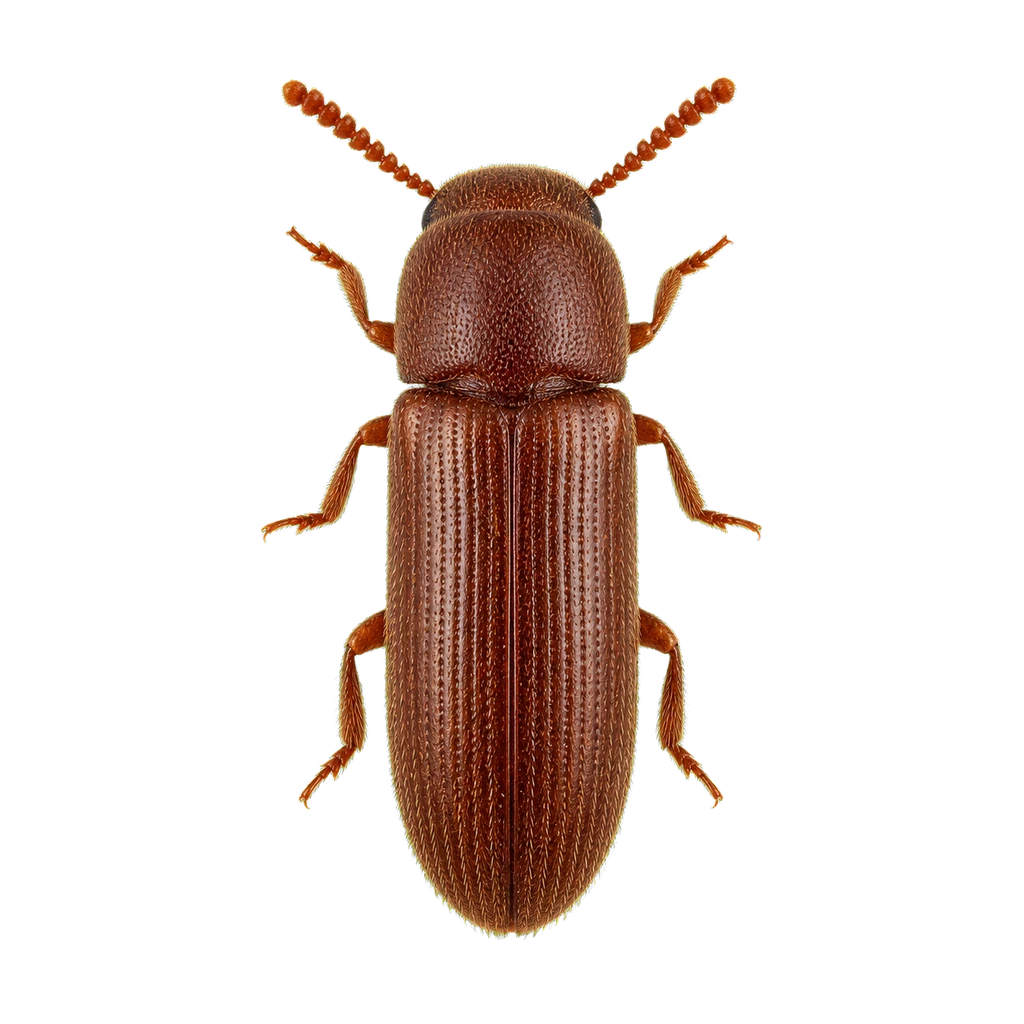
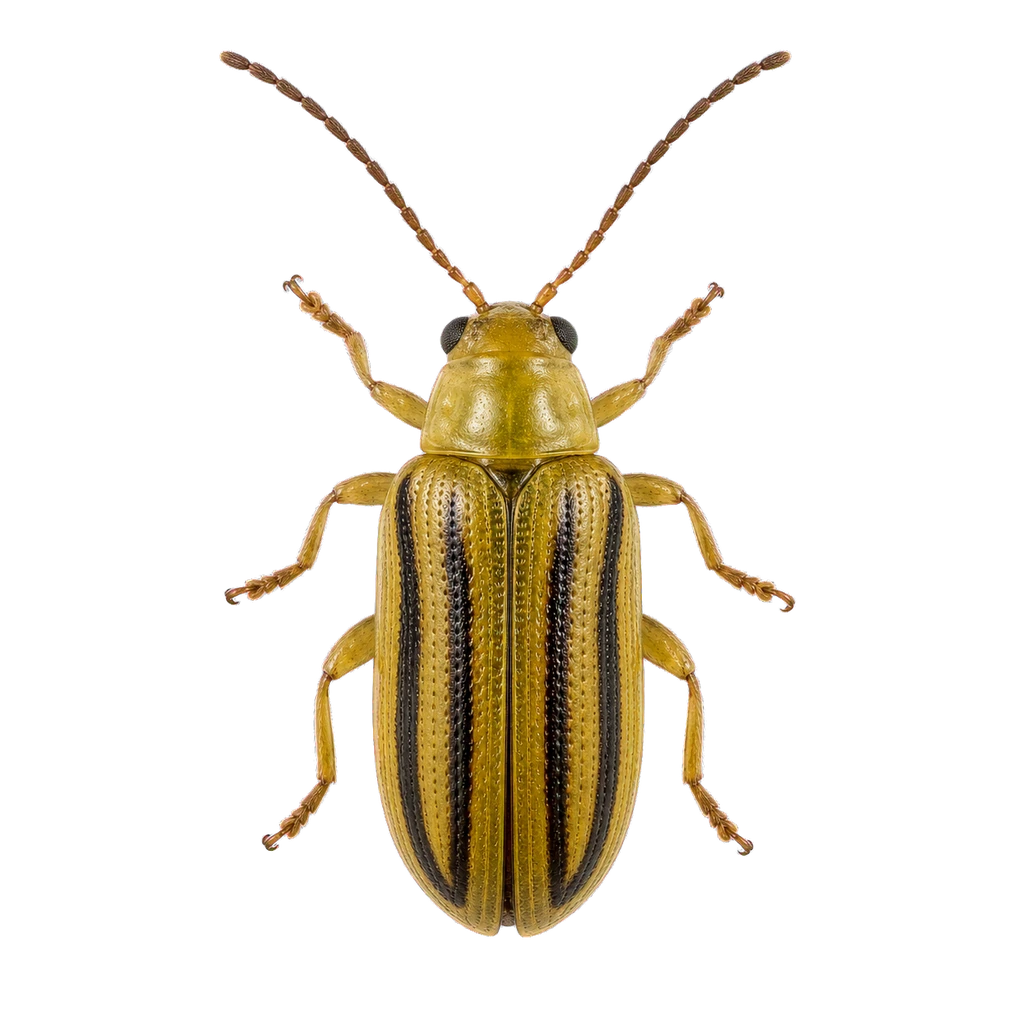
    Beetles are the largest order of insects, and different species enter homes for different reasons. Carpet beetles feed on natural fibers, pet hair, and dead insects indoors. Powderpost beetles infest hardwood floors and furniture. Pantry beetles (drugstore and cigarette beetles) target stored food. Asian lady beetles and boxelder beetles invade in fall to overwinter. Identifying the species is the first step to solving the problem.

  • Are beetles harmful to my home? Toggle answer for: Are beetles harmful to my home?

    It depends on the species. Powderpost beetles can cause serious structural damage by boring into hardwood, leaving behind small round exit holes and fine powdery frass. Carpet beetles destroy wool rugs, clothing, and upholstery. Pantry beetles contaminate stored food. Other species like ladybugs and ground beetles are nuisance invaders that don't cause damage but are unpleasant in large numbers.

  • How quickly can a provider get to my home? Toggle answer for: How quickly can a provider get to my home?

    Most providers in our network can schedule an inspection within 24-48 hours. For urgent situations, likeactive structural damage or large colonies, same-week emergency service is often available. Response times depend on your location and the provider's current schedule.

  • What happens during the first visit? Toggle answer for: What happens during the first visit?

    Your provider inspects the property to identify the pest, locate nesting or entry points, and assess the scope of the problem. You get a clear explanation of what they found, what they recommend, and a written scope before any work begins.

  • Is treatment safe for kids and pets? Toggle answer for: Is treatment safe for kids and pets?

    Modern pest control products are designed to break down quickly after application and pose minimal risk to people and pets when applied correctly. Most providers ask you to keep kids and pets out of treated areas for 1 to 2 hours while the product dries, after which the area is generally safe again. Always confirm specific re-entry times with your provider, and let them know about pet birds, fish, or reptiles, since some treatments require extra precautions for those species.

Pest Control Pros serving the city of the state of your city and nearby areas

Local providers who coordinate with certified arborists on bark beetle and emerald ash borer response are ready to inspect, treat, and follow up, no obligation.

Available 24/7
(888) 495-1510