Egg
About 10 to 14 days
Females drop into the lawn from July through September and lay 40 to 60 eggs each, in soil 2 to 4 inches deep, usually in sunny irrigated turf. Eggs hatch in under two weeks when soil moisture is good.
Local pest control help is one call away.
 Pest Control Services Nationwide Pest Control Services Nationwide
 Japanese beetles (Popillia japonica) are easy to identify once you know the field marks. Adults are oval, 8 to 12 millimeters long, with a metallic green head and thorax, copper-brown wing covers, and five small tufts of white hair along each side of the abdomen plus two more tufts at the rear. That exact color and tuft combination is the diagnostic that separates them from every other shiny green beetle in the yard.
If your roses, grape leaves, linden trees, or Japanese maples are turning to lace this summer, and clusters of metallic green beetles are sitting on top of the damage, you have Japanese beetles. The same insect causes a second, separate problem underground. White C-shaped grubs feed on grass roots and produce brown patches in lawns by August. This guide covers how to confirm the ID, why both stages need to be addressed, and what a real treatment plan looks like.
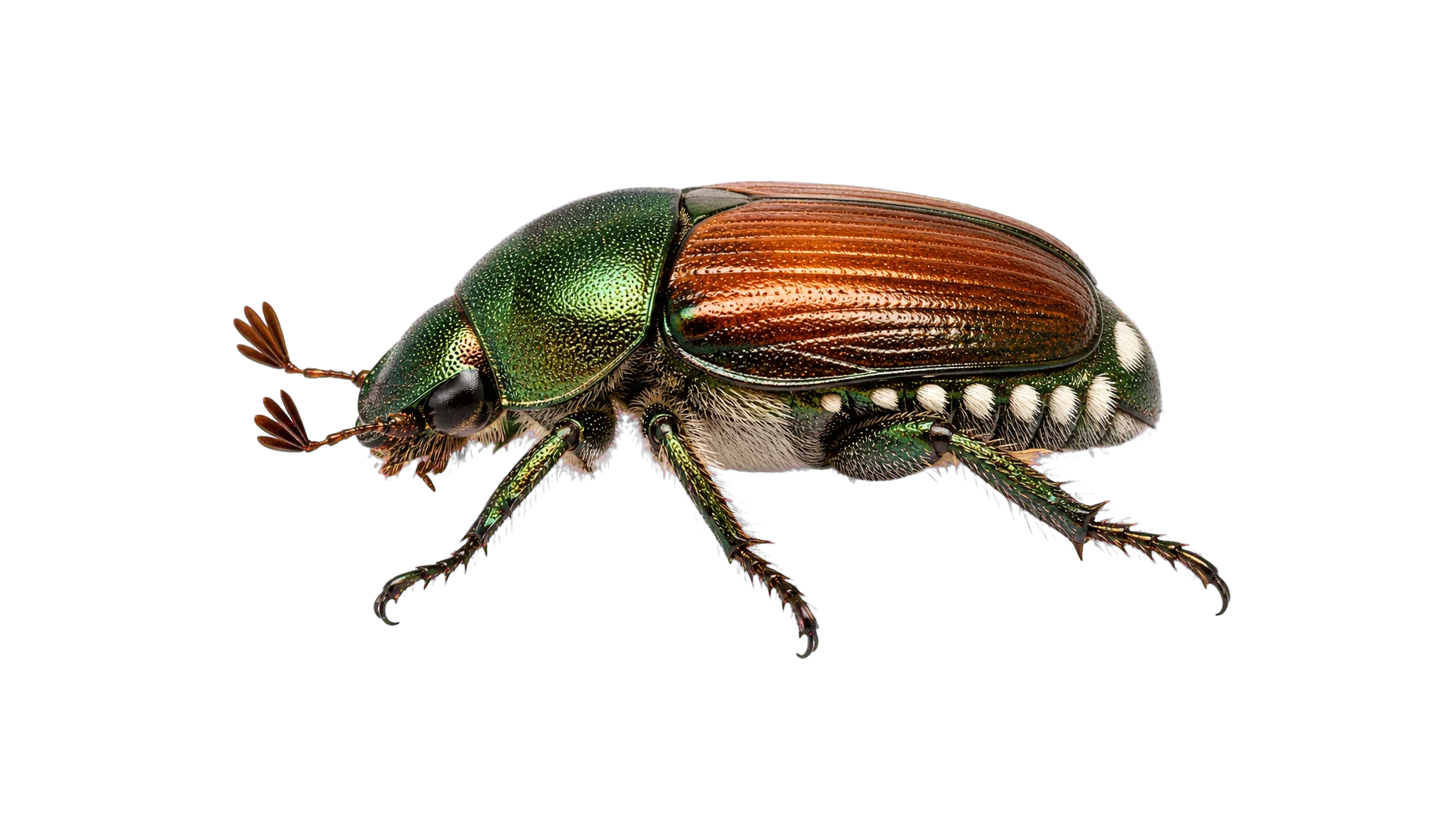
ID Card: Japanese Beetle
Related Species
Call to get matched with a local pest control pro.
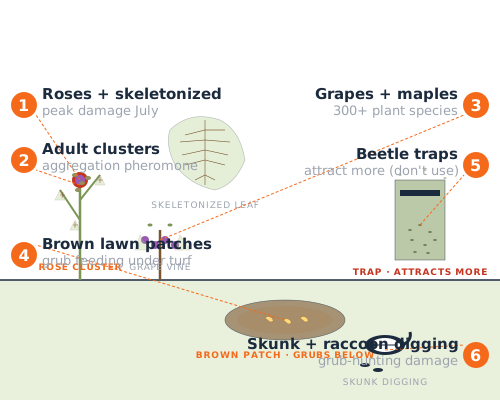
Japanese beetles damage two completely different parts of your yard at two different times. Adults eat the leaves of your favorite plants in midsummer. Grubs eat grass roots and show up as brown lawn patches a few weeks later. Walk these spots in order to see where you stand:
If you find both adults on plants and brown turf patches that lift like loose carpet, you've got both stages running on the same property. The USDA estimates Japanese beetles cause about $460 million in landscape and turf damage in the US each year, and a single yard with both stages active can lose a rose garden in a week and a lawn section in a month. Catching it early enough to treat both is the goal.
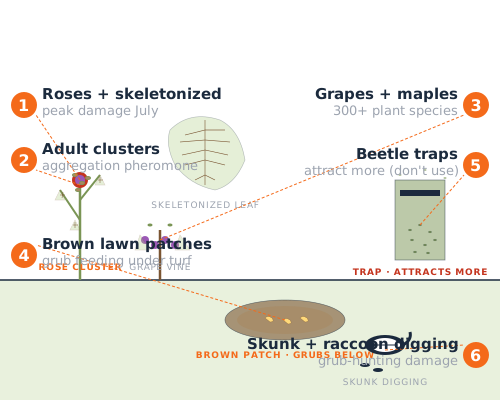

Spotting them is step one. Understanding why your specific yard supports them is what makes treatment hold beyond a single season. Japanese beetles were brought into New Jersey from Japan in 1916 and have spread across the eastern and central US ever since. Most properties in their established range will see some pressure; the question is what's making yours worse than the yard next door.
What keeps Japanese beetles on your property:
Japanese beetles complete one full cycle per year. Adults emerge in late June and feed through July and into August. Females drop down to the lawn and lay 40 to 60 eggs each in soil 2 to 4 inches deep. Eggs hatch in 10 to 14 days and the new grubs start chewing on grass roots. Grubs feed through fall, burrow 8 to 12 inches down for winter, come back up in spring, pupate in late spring, and emerge as next year's adults. Because the cycle is annual and synchronized, every step of treatment has a right time and a wrong time.
Find your scenario below. Severity covers both the plant damage above ground and the grub damage in the lawn.
| What You're Seeing | Severity | If Untreated | Next Step |
|---|---|---|---|
| A few adult beetles spotted on roses or fruit, no lawn damage yet | Early | Population builds through July; grub damage often shows up the following month | Confirm the ID by the green head, copper wings, and white side tufts. Hand-pick adults into soapy water daily and monitor the lawn for seven days. |
| Skeletonized leaves on multiple plants and 20 or more beetles per plant | Moderate | Aggregation pheromone keeps pulling more beetles in; lawn damage is being seeded for August | Schedule a professional foliar treatment for the plants and a grub treatment plan for the lawn before the end of July. |
| Heavy skeletonization across the landscape and brown lawn patches starting to form | High | Plant damage compounds quickly and lawn damage spreads as grubs grow | Same-week service with a combined adult plus grub program. Consider long-term biocontrol like milky spore at this stage. |
| Severe defoliation, large bare lawn areas, animals tearing up turf, multiple years in a row | Urgent | Lawn renovation may be needed and ornamentals may not recover without intervention | Call today for a property-wide management plan with biocontrol installation and a multi-year reduction strategy. |
Japanese beetle severity depends on timing as much as count. If you're between two rows, treat the higher one as your situation.
Japanese beetles run one complete cycle per year and every stage has a fixed time on the calendar. That's why timing matters so much. If you treat grubs in May you treat nothing because they aren't there yet, and if you spray adults in September you spray nothing because they're already gone.
About 10 to 14 days
Females drop into the lawn from July through September and lay 40 to 60 eggs each, in soil 2 to 4 inches deep, usually in sunny irrigated turf. Eggs hatch in under two weeks when soil moisture is good.
About 10 months total
C-shaped white grubs feed on grass roots through late summer and fall. As soil cools they burrow down 8 to 12 inches and overwinter as third-instar larvae. They come back up to feed in spring as the soil warms. Most of the lawn damage homeowners see in August and September is from grubs that hatched a few weeks earlier.
1 to 2 weeks in late spring
Mature grubs move up near the soil surface in May and form pupal cells. The transformation to adult takes about two weeks and the new adults emerge starting in late June.
30 to 45 days, late June through August
Adults emerge over a two- to three-week window, feed on more than 300 plant species, mate, and lay the next generation of eggs into the lawn before they die off. The aggregation pheromone and the smell of chewed leaves draws more beetles to the same spot, which is why damage seems to explode overnight.
The cycle is tight: June-and-July peak adult feeding, July-through-August egg-laying, August-and-September grub damage to the lawn, fall and winter dormancy underground, spring root feeding, then back to pupation and emergence. Treatment timing follows the cycle exactly, which is why one well-timed program does more than several poorly timed ones.
Japanese beetle activity is locked to the season. Each quarter has a different focus and a different right move.
Overwintered grubs rise back toward the surface and feed on grass roots as the soil warms. Lawn damage from this is usually minor compared to fall, but it's the window when grubs are big enough to attract skunks and crows back to the turf. Pupation begins in May.
Adults emerge late June through July and feed for the next four to six weeks. Foliar damage peaks now. Egg-laying happens in lawn soil from mid-July through August. This is the only window where both adult treatment and grub treatment are effective at the same time.
Adult activity ends by early September. New grubs feed heavily on grass roots and irregular brown patches start showing up in the lawn, often turf that rolls back like carpet because the roots are gone. Skunks, raccoons, and crows tear up sections digging for the grubs and that secondary damage usually exceeds the grub damage itself.
Grubs burrow 8 to 12 inches deep and go dormant. No treatment is effective at this depth. Lawn surface damage from the fall is still visible but no further harm is happening underground until soil warms in spring.
Japanese beetles cause damage in two places on two different schedules, and that's the part that trips homeowners up. Adults attack more than 300 plant species, with roses, grape vines, linden trees, and Japanese maples taking the heaviest hits. A rose bush can go from fully bloomed to a skeleton in a few days once a cluster forms, because each beetle's feeding releases scent that calls in more beetles. By the time the homeowner notices, half the leaf surface is gone.
The second damage stage happens underground and shows up a month later. Grubs feed on grass roots through August and September, and lawn sections turn brown and lift like carpet because the root system has been chewed away. Skunks, raccoons, and crows then dig up large sections of turf chasing the grubs, and that wildlife damage is often worse than the grub damage itself. Treating only one stage leaves the other to keep going.
A specialist who handles Japanese beetles starts by confirming the ID (green head and thorax, copper wing covers, the diagnostic white side tufts) and then plans both treatments around the calendar. Foliar pyrethroid in late June through July for adults, granular grub control with imidacloprid or chlorantraniliprole applied in mid-summer when grubs are small and shallow, and milky spore for long-term reduction. Pheromone traps come down, deeper less-frequent irrigation is recommended to push grass roots deeper, and beneficial nematodes or Tiphia wasps can be brought in for biological control on properties that want a chemical-light program.
A typical residential combined adult-and-grub program runs roughly $300 to $800 depending on property size; lawn-only grub treatment is usually $200 to $500. The cost rises fast once wildlife damage starts and turf renovation enters the picture. Catching the cycle in year one and following with milky spore is the path to spending less every year that follows.
Japanese beetle work is two jobs on one property. A specialist handles the plant feeding above ground and the grub feeding in the soil on the right schedule for each. Here's what that looks like:

 Foliar Treatment for the Adults
 A pyrethroid spray on roses, grapes, linden, Japanese maple, and fruit trees during peak adult emergence in late June and July knocks the visible population down fast. Systemic options on ornamentals provide several weeks of protection without re-spraying.
Grub Treatment Timed to July or August Products like imidacloprid, halofenozide, and chlorantraniliprole work best when grubs are small and feeding near the surface. That's mid-summer, not fall. Applied to the lawn and watered in so the active ingredient reaches the root zone.
Milky Spore for Long-Term Reduction Milky spore (Bacillus popilliae) is a naturally occurring soil disease that infects Japanese beetle grubs. Once it's established in the soil it provides three to five years of population reduction, and it gets stronger as the grub population in the lawn carries it forward.
Removing Pheromone Traps and Adjusting the Landscape Pheromone traps get taken down because they pull in more beetles than they catch. Heavy rose damage may warrant pruning or netting during peak weeks. Beneficial nematodes and Tiphia wasps can be introduced for long-term biological pressure.

Japanese beetles are one of the few yard pests where DIY can do real work alongside professional treatment. Hand-picking, milky spore, and watering changes all matter. Grub-treatment timing and large-scale foliar spraying are where a pro pays off.
DIY for Japanese beetles is real and useful when the property pressure is low to moderate. Honest limits below:
A pro brings the timing and the scale that DIY can't match. Here's what that looks like:
Japanese beetles damage your roses and your lawn on different schedules, and timing matters for both treatments. Connect with a local specialist who can run the adult and grub program together and add long-term biocontrol.
Real results from people who had the same problem and solved it.

"Stored clothing saved from carpet beetles."
We found holes in stored wool sweaters and discovered carpet beetles in the closet. The tech treated the closets and storage areas and explained how to store clothes to prevent reinfestation. The targeted approach worked perfectly.
"Stored clothing saved from carpet beetles."
We found holes in stored wool sweaters and discovered carpet beetles in the closet. The tech treated the closets and storage areas and explained how to store clothes to prevent reinfestation. The targeted approach worked perfectly.

"Fumigation cleared stored product pests from our pantry and walls."
Indian meal moths and beetles had infested our pantry and spread into the wall cavities behind the kitchen. Standard treatments were not reaching the source. The provider recommended fumigation to eliminate larvae and adults in every hidden space. We cleared the home, the crew tented and treated, and clearance testing confirmed a complete knockdown.

"Fumigation eliminated carpet beetles throughout."
Carpet beetles had infested our wool rugs, closets, and even the HVAC ducts. Multiple targeted treatments only knocked them back temporarily. The provider recommended structural fumigation to reach larvae hiding in wall voids and ductwork. We followed the preparation checklist, cleared the home, and the crew handled the tenting and gas treatment. Clearance testing confirmed success and our belongings have been damage-free since.
Direct answers to what homeowners ask most about identification, the two damage stages, treatment timing, milky spore, and pheromone traps.
Japanese beetles produce a highly distinctive feeding pattern called skeletonization, and theyconsume the soft tissue between leaf veins, leaving behind a lace-like skeleton of veins and midribs. This damage is easy to distinguish from the chewing patterns of caterpillars (which eat entire sections of leaf including veins) or the stippling of sucking insects. Adult Japanese beetles are also easy to identify: metallic green bodies with copper-brown wing covers and five tufts of white hair along each side of the abdomen. They typically feed in groups, starting at the top of a plant and working down, often defoliating preferred host plants like roses, linden trees, grapes, and Japanese maples.
Japanese beetle traps use a combination of floral and pheromone lures that are extremely attractive, soattractive that research consistently shows traps draw in far more beetles from surrounding areas than they capture, resulting in increased beetle damage to plants near the trap. Studies from multiple universities have demonstrated that properties with traps often suffer more plant damage than those without. The most effective approach for residential properties is to treat turf for grubs in mid-summer to reduce the next generation, hand-pick adults from prized plants in the morning when beetles are sluggish, and select beetle-resistant plant varieties for the landscape.
Beetles are the largest order of insects, and different species enter homes for different reasons. Carpet beetles feed on natural fibers, pet hair, and dead insects indoors. Powderpost beetles infest hardwood floors and furniture. Pantry beetles (drugstore and cigarette beetles) target stored food. Asian lady beetles and boxelder beetles invade in fall to overwinter. Identifying the species is the first step to solving the problem.
It depends on the species. Powderpost beetles can cause serious structural damage by boring into hardwood, leaving behind small round exit holes and fine powdery frass. Carpet beetles destroy wool rugs, clothing, and upholstery. Pantry beetles contaminate stored food. Other species like ladybugs and ground beetles are nuisance invaders that don't cause damage but are unpleasant in large numbers.
Most providers in our network can schedule an inspection within 24-48 hours. For urgent situations, likeactive structural damage or large colonies, same-week emergency service is often available. Response times depend on your location and the provider's current schedule.
Your provider inspects the property to identify the pest, locate nesting or entry points, and assess the scope of the problem. You get a clear explanation of what they found, what they recommend, and a written scope before any work begins.
Modern pest control products are designed to break down quickly after application and pose minimal risk to people and pets when applied correctly. Most providers ask you to keep kids and pets out of treated areas for 1 to 2 hours while the product dries, after which the area is generally safe again. Always confirm specific re-entry times with your provider, and let them know about pet birds, fish, or reptiles, since some treatments require extra precautions for those species.
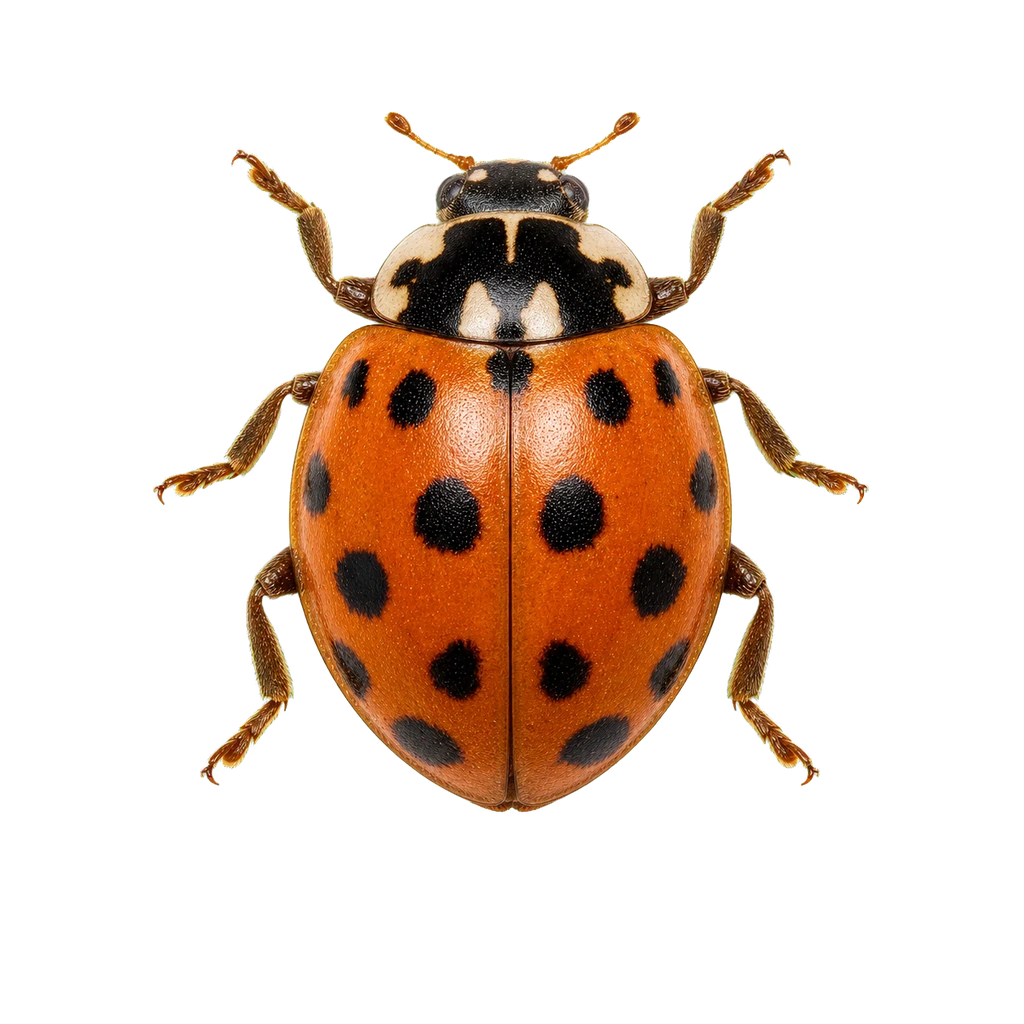
Asian lady beetles swarm homes in fall, clustering by the hundreds on sunny walls and invading attics to overwinter. They secrete a foul-smelling yellow fluid that stains surfaces and can trigger allergic reactions in sensitive individuals.
Learn More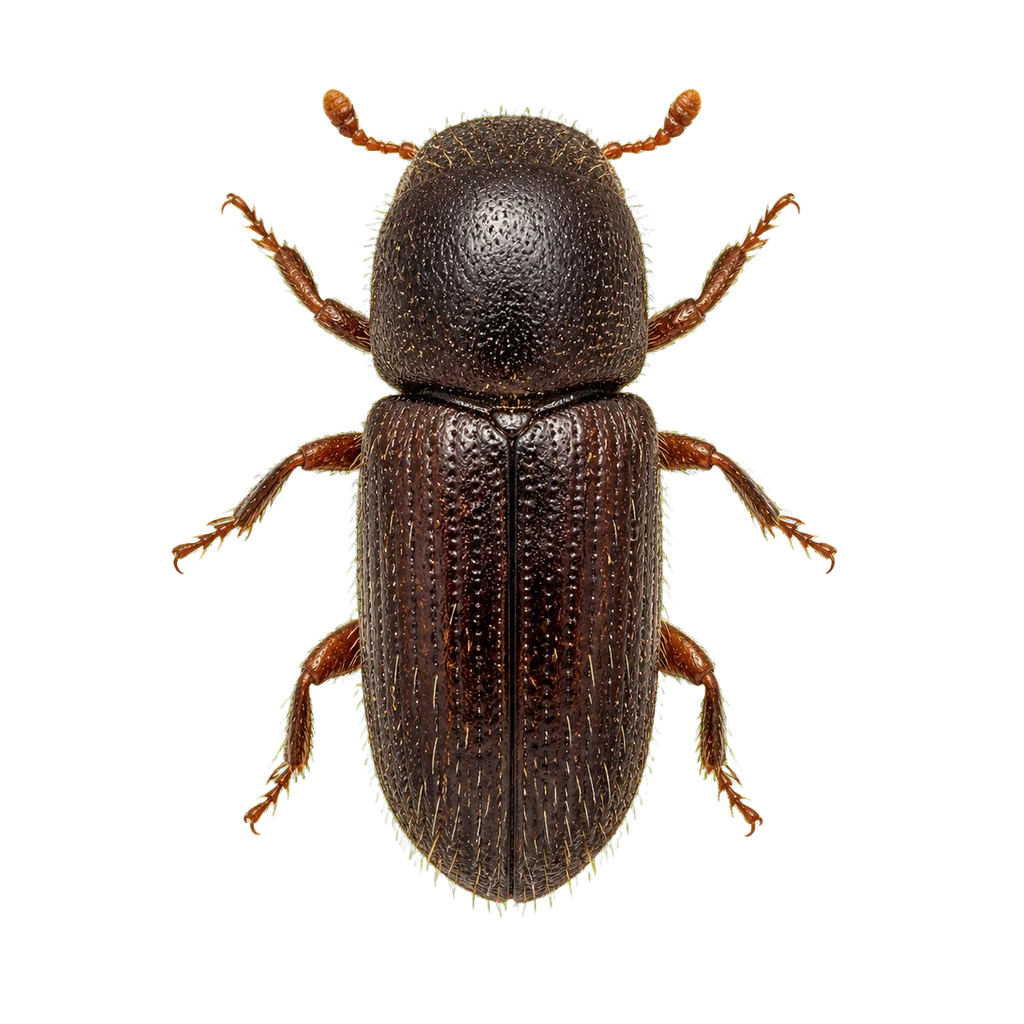
Bark beetles kill millions of trees across the western United States by boring into bark and disrupting nutrient flow. Dead trees on residential properties create falling hazards and increase wildfire risk.
Learn More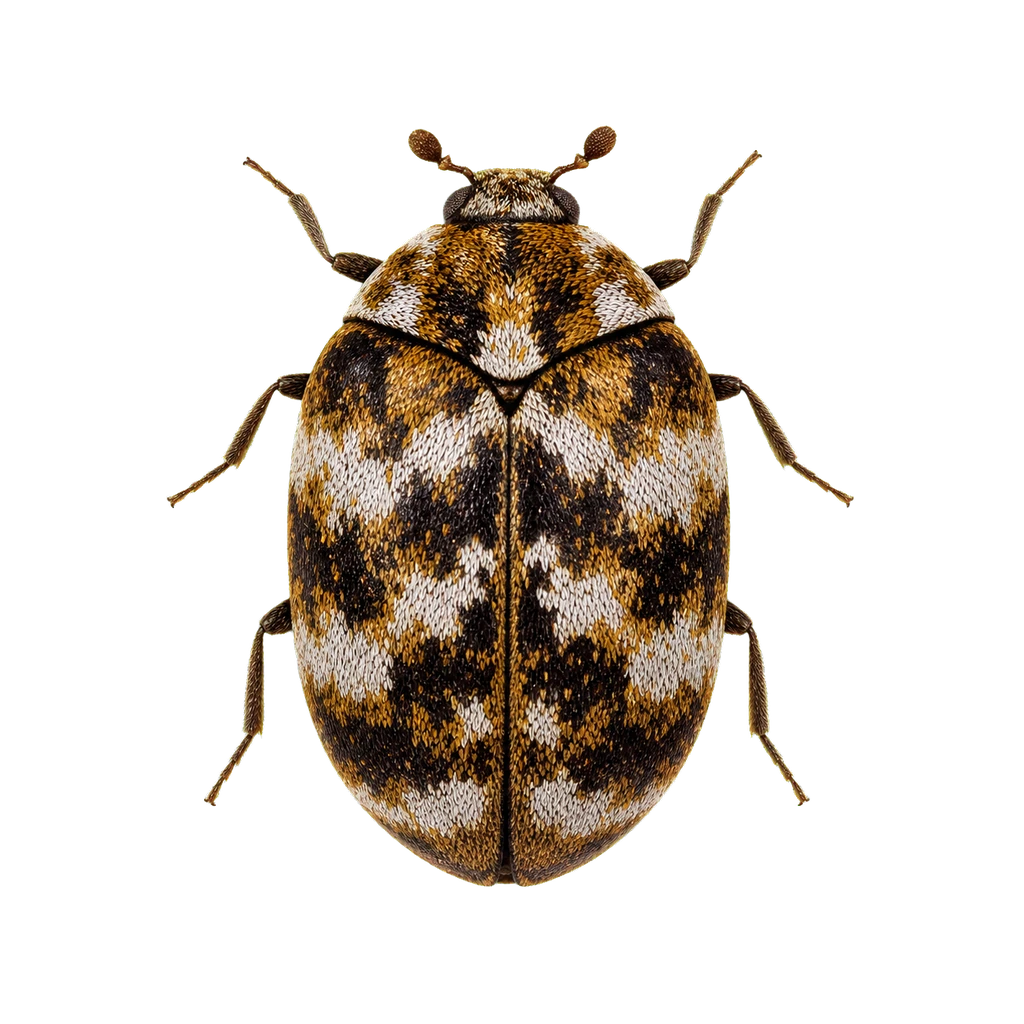
Carpet beetle larvae feed on wool, silk, fur, and other natural fibers, leaving irregular holes in clothing, rugs, and upholstery. The adults are harmless, but their fuzzy larvae can also trigger allergic skin reactions in sensitive people.
Learn More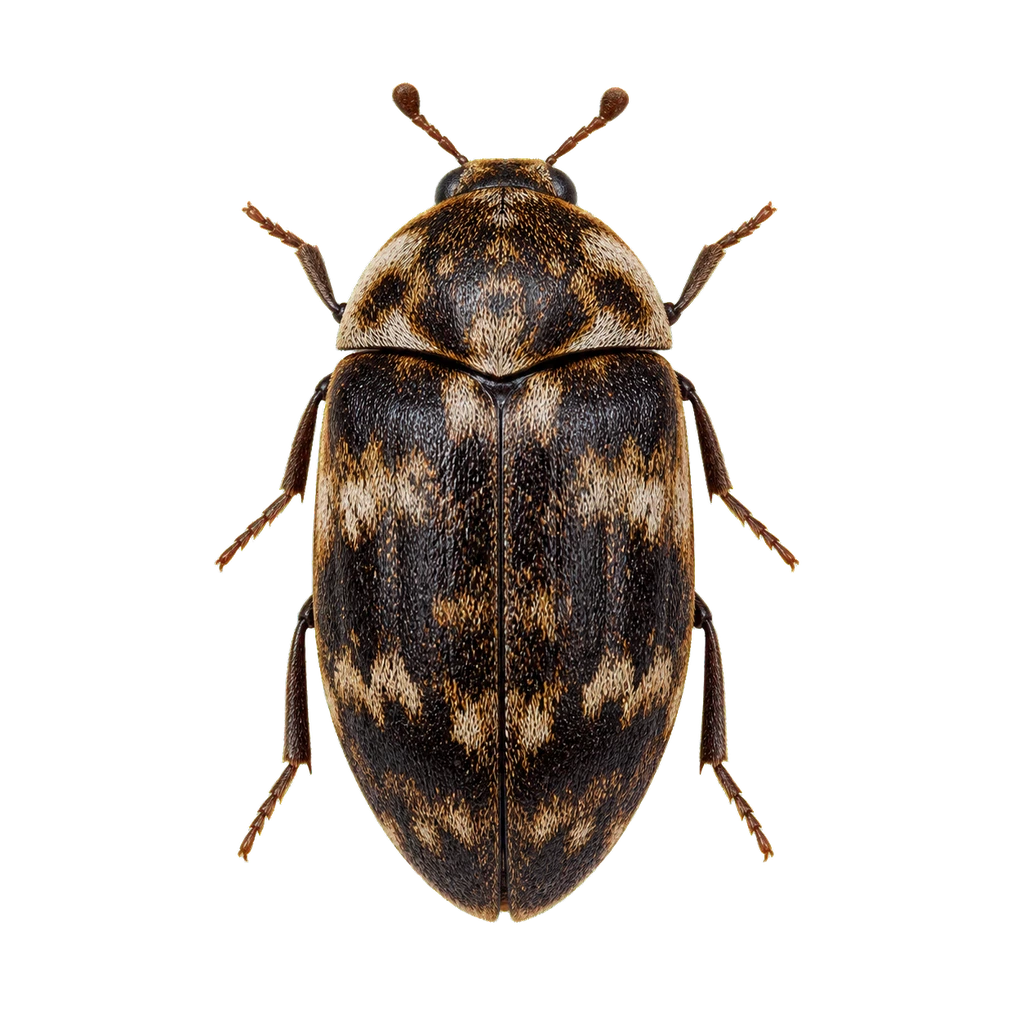
Dermestid beetles damage woolens, silk, furs, and other natural materials in storage. Their hairy larvae are the primary culprits, eating through clothing, carpets, and museum specimens.
Learn More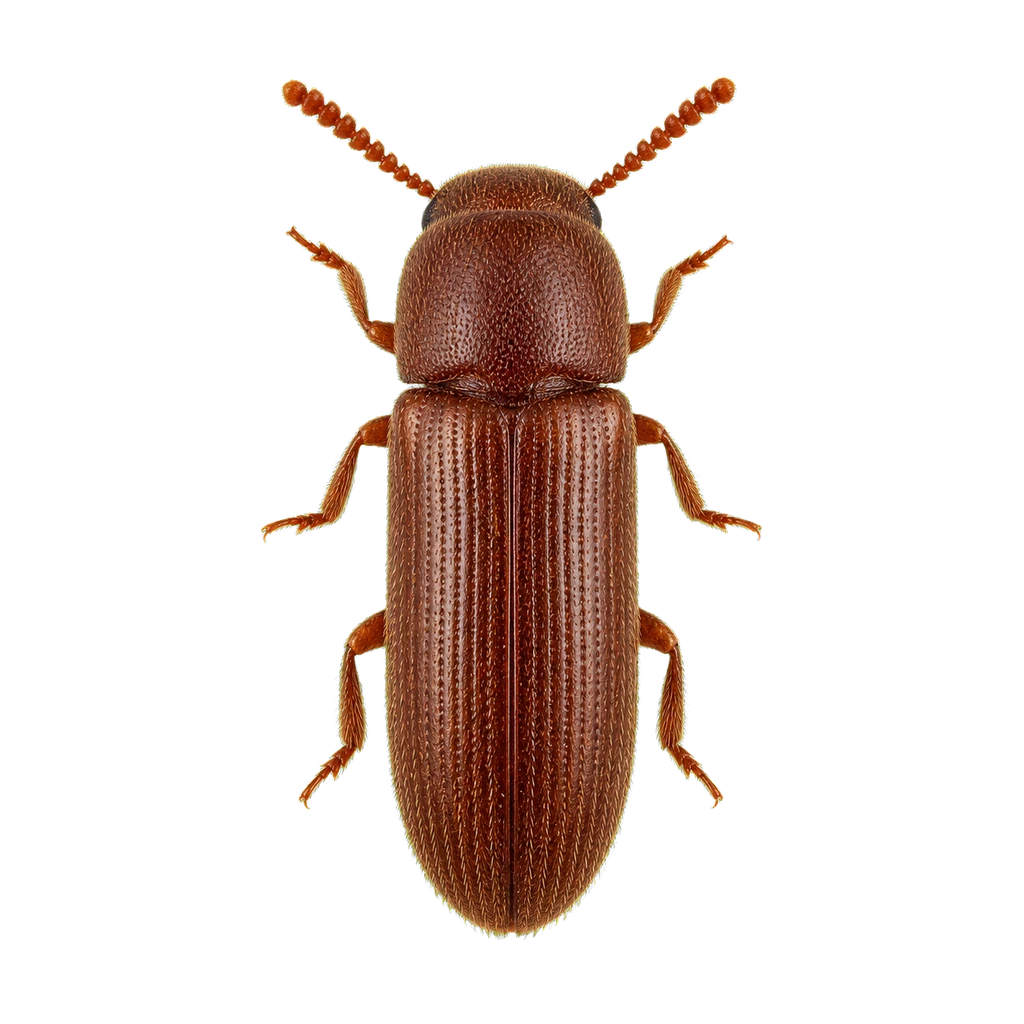
Drugstore beetles infest an unusually wide range of stored products, including spices, flour, pet food, and even medications. They enter homes through contaminated groceries and can spread rapidly through a pantry before being noticed.
Learn More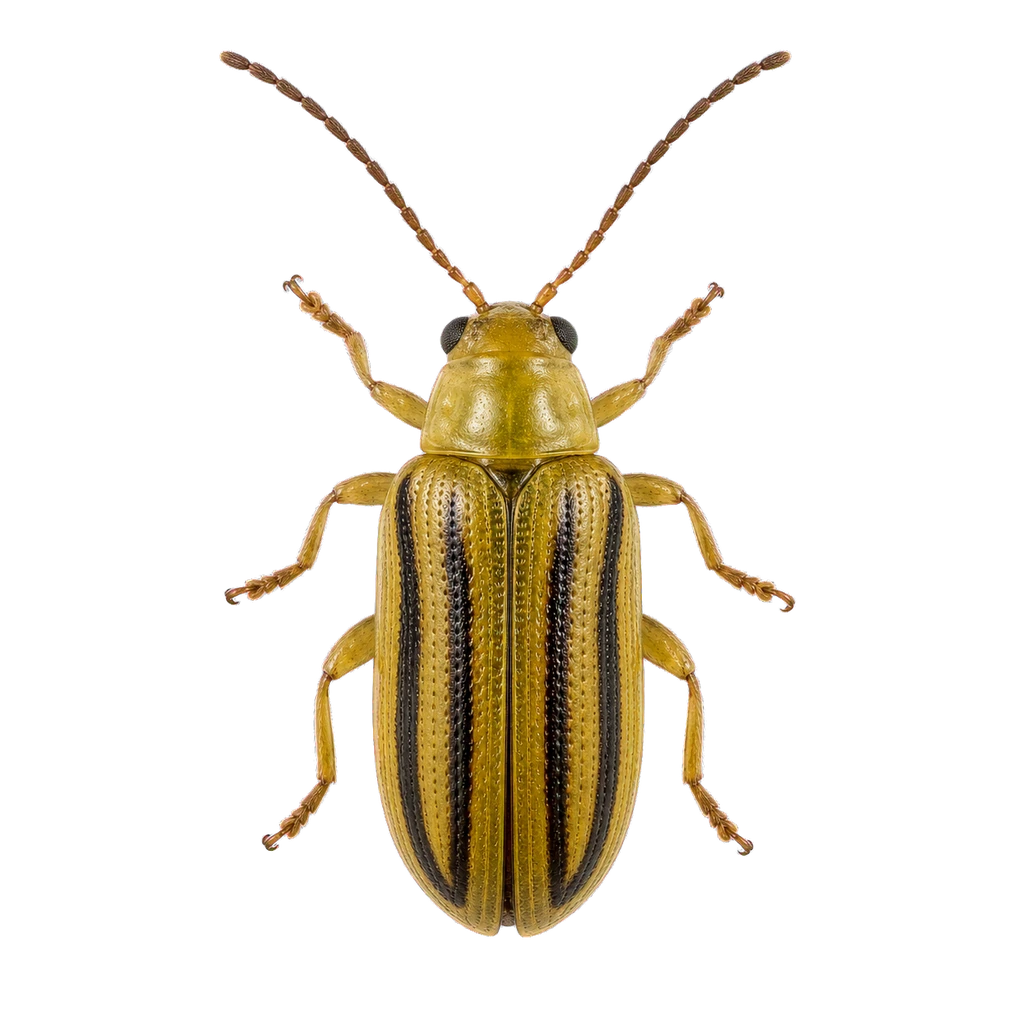
Elm leaf beetles invade homes near elm trees in fall to overwinter in attics and wall voids. They skeletonize elm leaves in summer and can stain surfaces when crushed indoors.
Learn More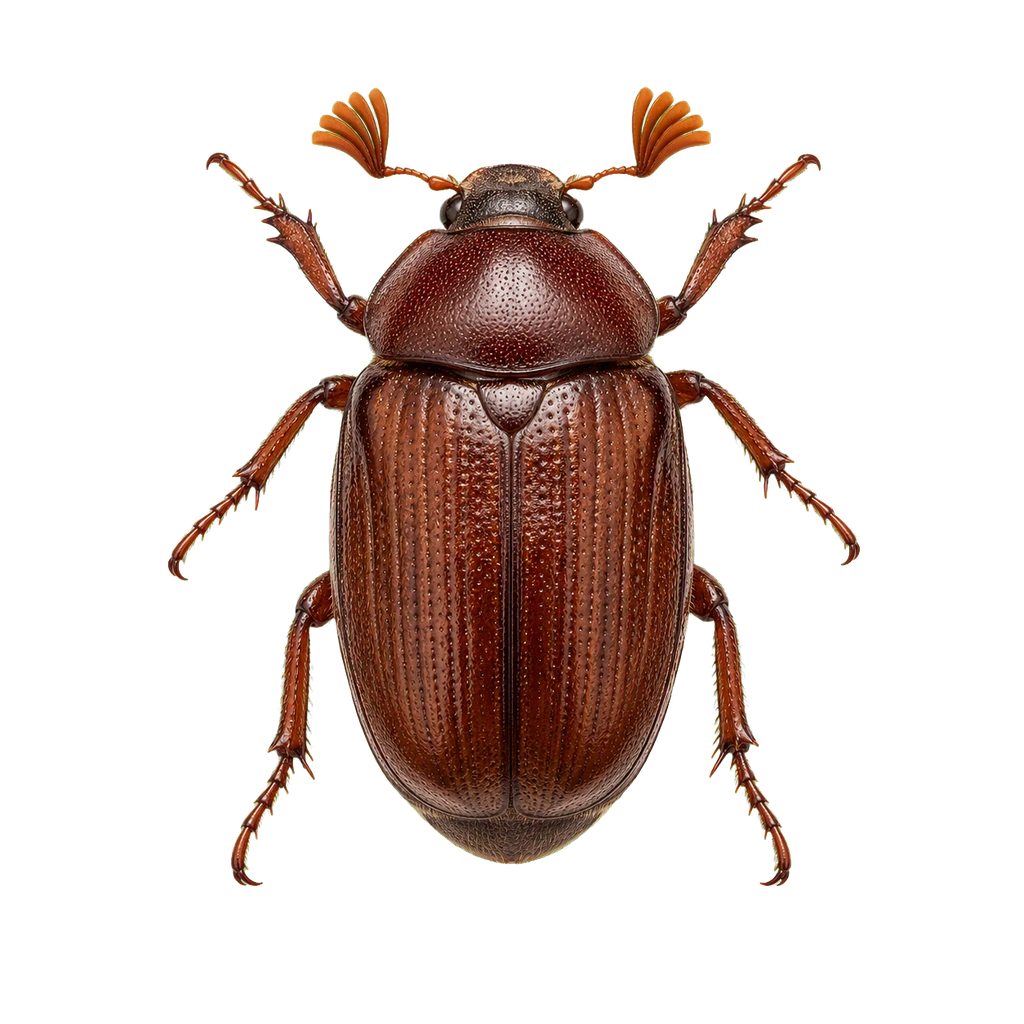
June bugs are clumsy nocturnal fliers that swarm porch lights in early summer, but the real damage comes from their larvae, white grubs that feed on grass roots and create dead brown patches in lawns.
Learn More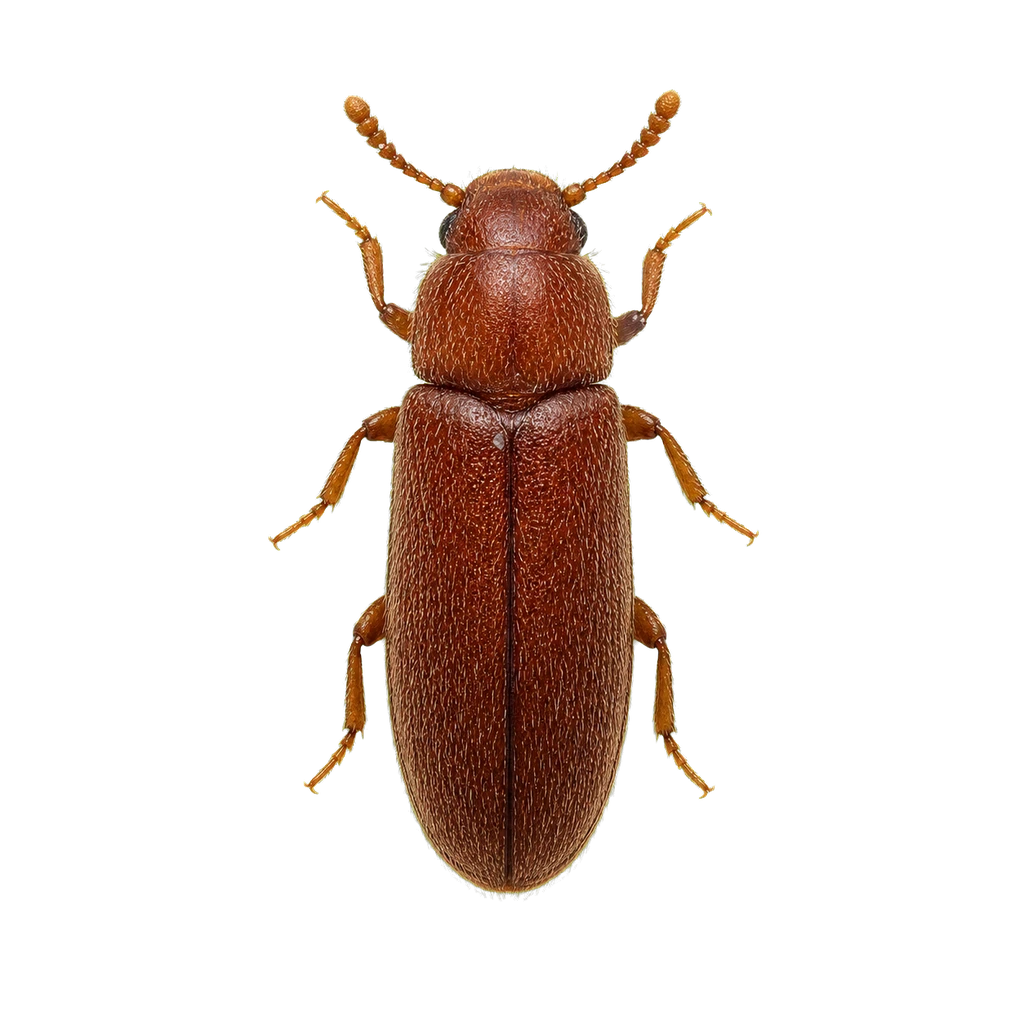
Pantry beetles infest stored food products like flour, cereal, and spices, contaminating them with larvae and waste. They often arrive in already-infested grocery items and spread quickly through kitchen cabinets.
Learn More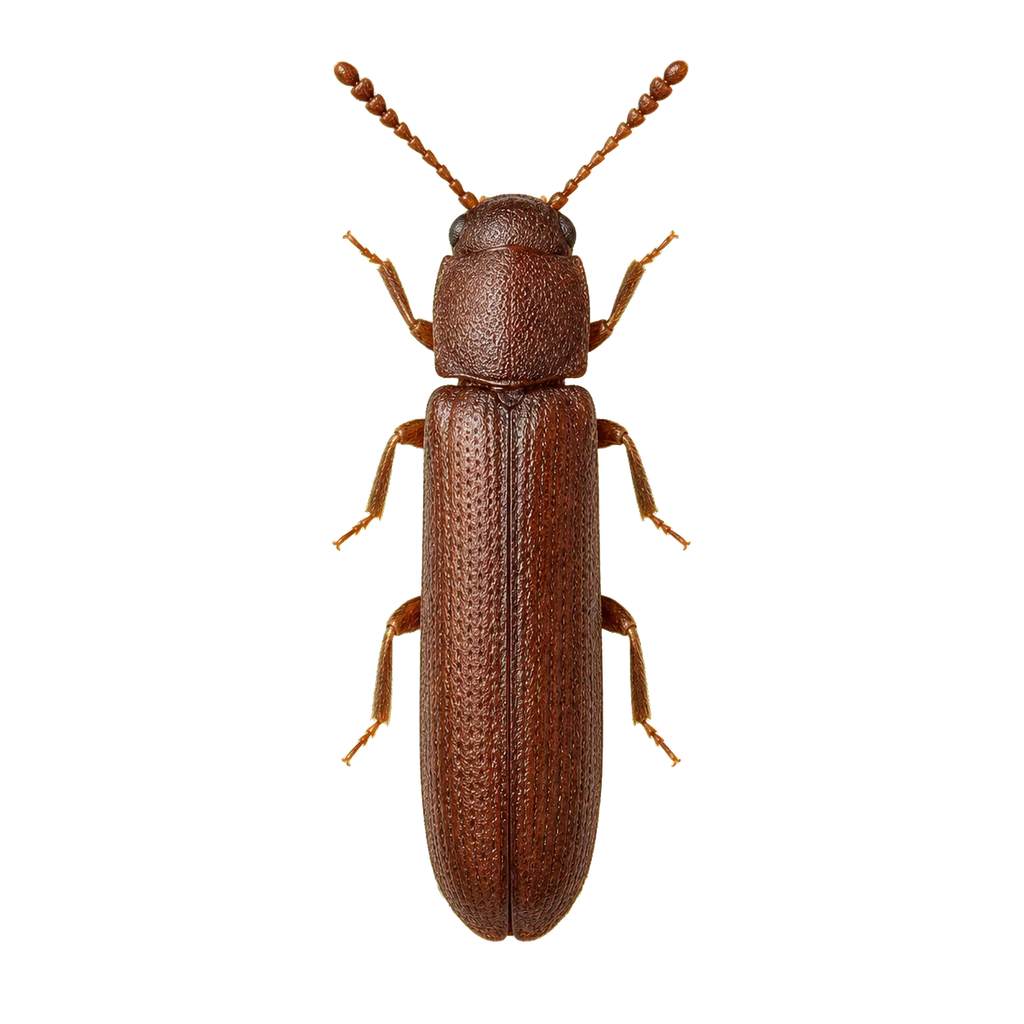
Powderpost beetles bore into hardwood flooring, furniture, and structural timbers, reducing wood to a fine powder over time. Infestations often go unnoticed for years until exit holes and frass piles reveal extensive hidden damage.
Learn MoreLocal providers who handle the combined adult and grub program for Japanese beetles, plus long-term biocontrol like milky spore, are ready to inspect, treat, and follow up, no obligation.