Local pest control help is one call away.

House Centipede: Identification, Treatment & Prevention

House centipedes are the fast, leggy arthropods that startle homeowners in basements and bathrooms across the country. The body is only 1 to 2 inches long, yellow-brown with three dark stripes running head to tail, but 15 pairs of long thin legs make the whole creature appear 3 to 4 inches across. The back legs are sometimes longer than the body itself, which is why people often mistake them for a second set of antennae. Combined with movement that can hit 16 inches per second, the visual reaction is almost always worse than the actual threat.

Here's the part most homeowners don't realize: house centipedes are predators, and the prey they hunt is the pest list you'd otherwise be paying to treat. Cockroaches, silverfish, ants, spiders, bed bugs, termites, fly larvae, and other small arthropods are all on the menu. If a house centipede is established in your basement, it's because there's something else down there worth eating. This guide covers identification, what their presence is telling you about other insects in the structure, and the rare cases when treatment is actually warranted.

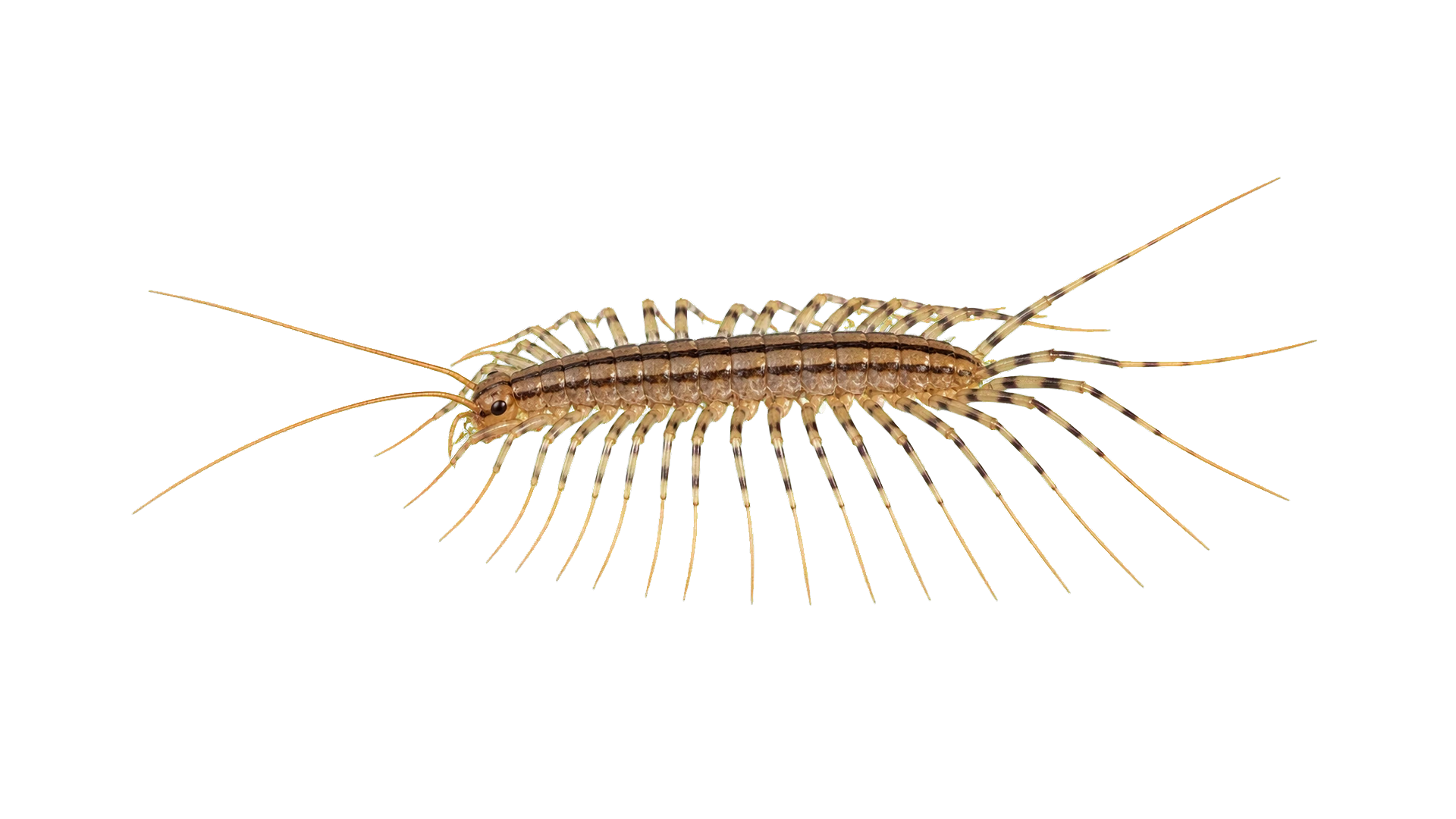
Close-up illustration of a house centipede showing yellow-brown striped body and 15 pairs of long thin legs

ID Card: House Centipede

Scientific name
Scutigera coleoptrata
Color
Yellowish-gray, dark stripes
Size
1 to 1.5 inches
Body shape
Flattened body with 15 pairs of long, banded legs
Antennae
Very long, thread-like, many segments
Key evidence
Fast-moving on walls and ceilings at night, indicates other pest prey present
Also known as
Hundred-leggers, Bathroom bugs

Call to get matched with a local pest control pro.

Available 24/7
(888) 495-1510
  • Specialists who identify the prey insects sustaining centipede activity
  • Honest recommendations on when centipedes don't need direct treatment
  • Treatment plans aimed at the underlying pest population, not the predator

Where House Centipedes Hunt

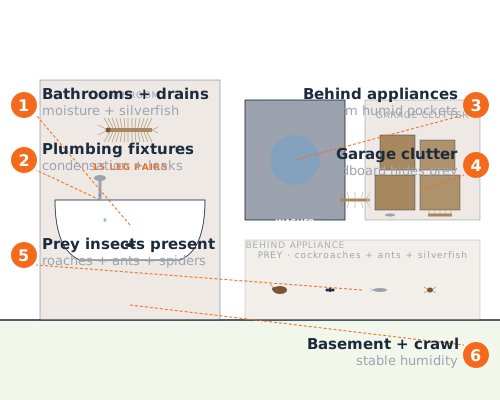
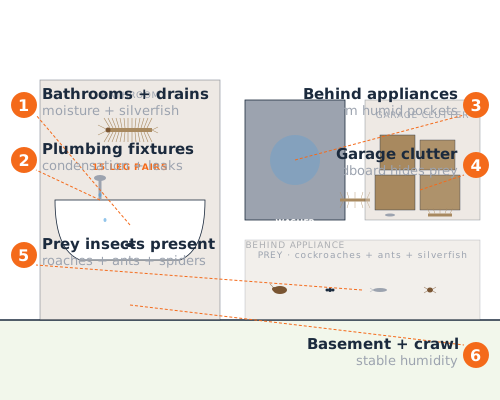
Cross-section illustration showing house centipede habitat in basements, crawl spaces, and behind appliances with prey insects nearby

House centipedes hide during the day and hunt at night. They concentrate wherever moisture is steady and prey insects are present, which makes their hiding spots easy to predict. Walk these zones at night with a flashlight and you'll usually find both the centipedes and a clue about which pest insect is actually living in your structure:

  • Basements and crawl spaces, The number one habitat. Cool, dim, and humid year-round, with cockroaches, silverfish, and spiders sharing the same space. A house centipede here is almost always a sign that pest insects are also established below grade.
  • Under appliances and behind major equipment, Refrigerators, washers, dryers, and water heaters create warm humid pockets where prey insects gather. Pull the kickplate or look behind the unit and you'll often find centipede activity along the wall behind.
  • Bathrooms, utility rooms, and shower stalls, Centipedes get trapped in tubs and shower bases overnight because the smooth sides keep them from climbing back out. A centipede in the bathtub at sunrise is the classic sighting.
  • Closet floors and storage corners, Cardboard boxes, paper piles, and stored holiday decor harbor silverfish, and silverfish are a primary prey item. If you have centipedes in a closet, check the boxes for paper pests.
  • Behind books and along baseboards, Quiet rooms with bookshelves, especially in basements or older homes, support silverfish populations the centipedes are hunting. Look for both species along the wall-floor junction.
  • Wherever you've seen cockroaches, silverfish, or ants, House centipedes follow the prey insects already in the building. The room with the most centipede sightings usually has the heaviest underlying pest population.

If you're finding centipedes in two or more of these zones, the more important question is what they're eating. Heavy centipede activity is almost always a sign of an established cockroach, silverfish, or ant population somewhere in the structure. Treating the centipedes without finding the prey insect just opens up the hunting ground for the next centipede to move into. The signal is more useful than the symptom.

Cross-section illustration showing house centipede habitat in basements, crawl spaces, and behind appliances with prey insects nearby
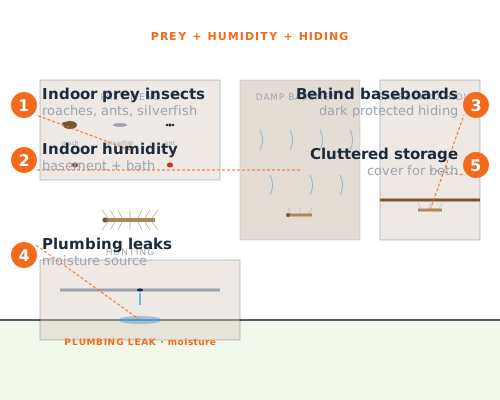
Illustration showing how house centipedes establish indoors near damp areas with cockroach, silverfish, and ant populations

Why Do I Have House Centipedes?

Spotting one is step one. Understanding what's keeping centipedes anchored to your home is what tells you whether you've got a centipede problem or a pest insect problem hiding behind it. House centipedes can't establish indoors without a food supply. They don't eat wood, fabric, paper, food crumbs, or anything in your pantry. They only eat live prey: other arthropods. So if they're staying in your basement, something else is too.

What anchors them to your property:

  • Established prey insects, cockroaches, silverfish, ants, spiders, bed bugs, termites, fly larvae, and small flies all show up on the centipede menu. The prey list is the actual problem list.
  • Damp basements and crawl spaces, stable humidity creates the microclimate centipedes need for survival and hunting. Damp concrete, condensation on cold-water lines, and minor seepage all qualify.
  • Older homes with abundant void spaces, behind baseboards, under floorboards, and inside wall voids give centipedes the dark hiding spots they need during daylight hours.
  • Clutter that hides prey, cardboard storage, paper piles, and stored fabric in basements support silverfish, which support centipedes. Reducing the storage reduces both species at once.

A house centipede population grows by tracking the prey supply. The female lays 15 to 60 eggs in moist soil or wall voids and the young start hunting almost immediately. Once a basement or crawl space supports steady prey, the centipedes stay for years (the adults live 3 to 7 years, which is unusually long for a household arthropod). The reverse is also true: cut the prey insect population and the centipedes leave on their own, because there's nothing left to hunt.

How Serious Is Your House Centipede Situation?

Find your scenario below. Centipede severity is really about what they're eating, not how many you see.

What You're Seeing Severity What It Means Next Step
One centipede in the basement, no other pest insects spotted Early Likely beneficial. The centipede may be hunting low-level silverfish or spiders you haven't noticed yet. Leave it alone. Run a quick check for cockroach droppings, silverfish in storage, and ant trails. If you find none, the centipede is doing free pest control.
Multiple centipede sightings plus visible cockroaches, silverfish, or ants Moderate The centipedes are tracking an established prey insect population. The real problem is the prey, not the predator. Treat the underlying pest insect (cockroach, silverfish, or ant program). The centipede population usually drops on its own within 4 to 8 weeks.
Heavy centipede activity in living spaces, not just the basement High Significant underlying pest insect population is supporting heavy predator numbers. Centipedes don't move upstairs without strong prey pressure below. Schedule a professional inspection this week. The job is finding the prey source (often a roach or silverfish population in a wall void or crawl space), not spraying the centipedes.
Household member with insect-sting allergy and frequent encounters Urgent Centipede stings are rare and mild for most people, but a confirmed venom or arthropod allergy changes the calculation regardless of typical severity. Call this week for a treatment plan that reduces centipede contact zones plus addresses the prey insects supporting the population.
One centipede in the basement, no other pest insects spotted
Severity Early
What It Means Likely beneficial. The centipede may be hunting low-level silverfish or spiders you haven't noticed yet.
Next Step Leave it alone. Run a quick check for cockroach droppings, silverfish in storage, and ant trails. If you find none, the centipede is doing free pest control.
Multiple centipede sightings plus visible cockroaches, silverfish, or ants
Severity Moderate
What It Means The centipedes are tracking an established prey insect population. The real problem is the prey, not the predator.
Next Step Treat the underlying pest insect (cockroach, silverfish, or ant program). The centipede population usually drops on its own within 4 to 8 weeks.
Heavy centipede activity in living spaces, not just the basement
Severity High
What It Means Significant underlying pest insect population is supporting heavy predator numbers. Centipedes don't move upstairs without strong prey pressure below.
Next Step Schedule a professional inspection this week. The job is finding the prey source (often a roach or silverfish population in a wall void or crawl space), not spraying the centipedes.
Household member with insect-sting allergy and frequent encounters
Severity Urgent
What It Means Centipede stings are rare and mild for most people, but a confirmed venom or arthropod allergy changes the calculation regardless of typical severity.
Next Step Call this week for a treatment plan that reduces centipede contact zones plus addresses the prey insects supporting the population.

House centipedes are beneficial in most homes. If you're between two rows, treat the higher one as your situation only if encounters are causing real distress or safety concerns.

How a House Centipede Develops

House centipedes have an unusually long life for an indoor arthropod. Adults can live 3 to 7 years and add legs gradually as they grow, which means the centipede in your basement this year might be the same individual you saw two years ago. The lifecycle below explains why centipede populations stay relatively stable instead of exploding like cockroaches or ants.

  1. Egg

    About 1 to 2 months to hatch

    Females lay 15 to 60 eggs in spring and summer in moist protected spots like soil under basement floors, crawl space substrate, or damp wall voids. The female stays with the eggs and guards them, which is unusual for an arthropod and contributes to higher survival rates.

  2. Young (early instars)

    Several months

    Newly hatched centipedes have only 4 pairs of legs. With each molt they add another pair of legs plus body segments. Watching a young centipede next to an adult is sometimes the only way to confirm species early on because the leg count is so different.

  3. Juvenile (later instars)

    Up to 3 years

    Juveniles continue molting until they reach the adult 15-pair leg count. Each molt takes weeks of hiding while the new exoskeleton hardens, which is one reason house centipedes are reclusive even when populations are present. Hunting happens between molts.

  4. Adult

    Live 3 to 7 years

    Adults reach 1 to 2 inches in body length with 15 pairs of long thin legs (the last pair often longer than the body). They hunt at night using venom claws called forcipules to subdue prey, then drag the meal into a hiding spot. Documented sprint speeds reach 16 inches per second, the fastest of any centipede species.

Because individual centipedes live for years and populations grow slowly, removing one centipede doesn't change the math much. The hunting ground remains productive, and another centipede (or a young one already developing inside the structure) takes over within a few weeks. That's why treating the prey insects is the only approach that actually shifts population pressure over time.

When House Centipedes Are Most Active

House centipedes are active year-round indoors because heated basements and crawl spaces hold the humidity and prey supply they need regardless of outdoor weather. Surface activity tracks prey insect populations more closely than the calendar.

  • Spring

    Egg-laying season. Females deposit clutches in moist soil under basements and in crawl space substrate. Outdoor centipedes that wandered in during fall may also become more visible as indoor temperatures stay comfortable for hunting. Adult sightings increase modestly as activity ramps up.

  • Summer

    Prey populations peak (cockroaches, silverfish, ants, spiders are all most active), and centipede sightings rise to match. Bathroom and basement encounters are most common now. Outdoor centipedes occasionally enter homes during hot dry stretches looking for humidity, adding to indoor counts temporarily.

  • Fall

    Outdoor insects move indoors for shelter, providing a fresh wave of prey. Centipedes that have been hunting all summer are at peak adult population. Bathtub and shower-stall sightings climb as centipedes get trapped in slick-sided fixtures overnight.

  • Winter

    Outdoor activity stops, but indoor populations stay fully active in heated basements and crawl spaces. This is often when homeowners notice them most because the basement is the only place still warm enough for any arthropod, so the centipedes are concentrated where they're easy to find.

When House Centipedes Aren't a Treatment Problem

House centipedes are one of the few household arthropods where the honest answer is usually "leave them alone." They hunt cockroaches, silverfish, ants, spiders, bed bugs, termites, and fly larvae, which is the same target list you'd otherwise be paying a pest control company to address. A centipede in the basement is, functionally, free pest control.

The unsettling appearance is what drives most service calls. Long thin legs, fast movement, and the look of multiple antennae (the back legs are sometimes longer than the body) trigger a stronger reaction than the actual threat warrants. Bites are extremely rare and roughly equivalent to a bee sting when they do occur. The venom claws (called forcipules) often can't penetrate human skin in the first place. Pets are essentially never affected.

Direct centipede treatment is usually counterproductive. Killing the centipedes without addressing the prey insects masks the real problem (cockroaches, silverfish, or ants are still present and reproducing) and the hunting ground remains productive, so another centipede moves in within weeks. The treatment cycle repeats and the underlying pest insect population continues unchecked.

If treatment is genuinely needed (severe phobia, allergy concerns, or heavy populations indicating significant underlying issues), a residual application of $150 to $350 in the dark moist hiding zones is the standard approach. Even then, the more useful work is fixing the moisture and treating the prey. Single-visit centipede treatment without those steps is a refund waiting to happen.

What Changes When a Pro Shows Up

House centipede work is unusual. A specialist's first job is to figure out whether you actually need centipede treatment at all, or whether the right answer is hunting down the prey insects keeping them around. Here's what changes:

Pest control technicians after completing a house centipede assessment
  • Local Pest Control
  • 24/7 Availability
  • Quality Workmanship
  • Eco‑Friendly Options
  • Trusted by Homeowners
  • They Confirm Species First

    House centipedes are easy to identify (long thin legs, yellow body with three dark stripes, very fast movement) and are minimal threat to humans. A pro confirms species so you know whether you're dealing with the harmless indoor predator or a different arthropod that may need a different response.

  • They Look for the Prey Insect

    Inspection covers cockroach droppings, silverfish trails, ant activity, and spider webs in basements, crawl spaces, and storage rooms. Finding what the centipedes are eating is what makes the rest of the visit useful.

  • They Diagnose Moisture

    Damp basements and crawl spaces support both the centipedes and their prey. A specialist flags chronic moisture sources and may recommend dehumidification, drainage, or grading work as part of long-term reduction.

  • They'll Tell You When Treatment Isn't Needed

    A pro who doesn't believe in upselling will tell you to leave the centipedes alone if the prey count is low and encounters are infrequent. The treatment that actually works is addressing the prey insects, and that often costs less than a centipede spray cycle.

  • Local Pest Control
  • 24/7 Availability
  • Quality Workmanship
  • Eco‑Friendly Options
  • Trusted by Homeowners
NoToPests home

One call connects you with a local specialist who knows house centipedes and your area.

Be Ready When You Call

Pest control technician arriving for house centipede service
Junho L.
Daisuke P.
Kirk Q.
Marion K.

Trusted by homeowners nationwide

Call for Pest Control Help (888) 495-1510

Can You Handle This or Do You Need Help?

House centipedes are the rare household arthropod where the right answer is often no treatment at all. The biology of the predator-prey relationship changes the whole approach.

What DIY Can Do

DIY for house centipedes is mostly about tolerance, prey reduction, and moisture control. Useful steps with honest limits:

  • Identify with confidence, very long thin legs, yellow-brown body with three dark stripes, extremely fast movement, distinct from millipedes (round body, slow) and outdoor centipedes (larger, more medically significant)
  • Tolerate centipedes in basements and crawl spaces, they're hunting the cockroaches, silverfish, ants, and spiders you don't want anyway
  • Treat the prey insects through standard cockroach, silverfish, or ant DIY methods, centipede counts drop as prey counts drop
  • Run a dehumidifier in chronically damp basements, drier air slows both centipedes and their prey at once
  • Capture and release outdoors if individual encounters are distressing, a cup and paper handles it cleanly
  • What DIY cannot do: distinguish a beneficial centipede population from a real underlying pest issue without an inspection.

What a Pro Does Differently

Professional house centipede work usually focuses on the prey insects rather than the predator. Here's what changes when you call:

  • Inspection identifies the underlying prey species (cockroach, silverfish, ant, spider, or bed bug) feeding the centipede population
  • Moisture diagnosis flags chronic humidity sources that support both centipedes and prey, dehumidification often does more than insecticide
  • Treatment program targets the actual pest insect, centipede counts drop on their own as the food supply shrinks
  • Honest recommendation against unnecessary chemical centipede treatment, a good provider will tell you when no centipede-specific work is warranted
  • Optional residual treatment of dark moist hiding zones at $150 to $350 if reduction is genuinely needed for phobia or allergy concerns.

Suspect House Centipedes? Don't Wait.

House centipedes hunt cockroaches, silverfish, ants, and spiders. Their presence usually signals an underlying insect population worth identifying. Connect with a local specialist for honest assessment.

Available 24/7
(888) 495-1510

What Homeowners Say After Getting Help

Real results from people who had the same problem and solved it.

Gabriela E.
Gabriela E.
Kahului, HI

"Indoor centipede sightings dropped sharply."

Finding centipedes in the house was alarming, especially with kids around. The tech treated the perimeter and interior and explained how moisture management reduces their presence. We see them far less often now.

Gabriela E.
Gabriela E.
Kahului, HI

"Indoor centipede sightings dropped sharply."

Finding centipedes in the house was alarming, especially with kids around. The tech treated the perimeter and interior and explained how moisture management reduces their presence. We see them far less often now.

Carol L.
Carol L.
Kaneohe, HI

"Shower centipedes sealed out for good."

Large centipedes kept showing up in the bathroom, especially during rainy weather. The provider treated the perimeter and sealed gaps around plumbing penetrations. Reducing moisture and leaf debris near the foundation made a lasting difference.

Common Questions About House Centipedes

Direct answers to what homeowners ask most about identification, the beneficial predator role, and when treatment is actually warranted.
  • What do house centipedes look like and are they harmful? Toggle answer for: What do house centipedes look like and are they harmful?

    House centipedes (Scutigera coleoptrata) are unmistakable: they have long, flattened, yellowish-gray bodies (about 1 to 1.5 inches long) with 15 pairs of extremely long, banded legs that give them a feathery, almost alien appearance, their leg span can reach 3 inches or more. They are startlingly fast runners and can dart across walls and ceilings with alarming speed. Despite their unsettling appearance, house centipedes are beneficial predators that feed on spiders, cockroaches, silverfish, carpet beetles, bed bugs, and other household pests. They can deliver a mild bite if handled, comparable to a mild bee sting, but they do not seek out humans and pose no meaningful health risk.

  • Why are house centipedes in my home and what do they indicate? Toggle answer for: Why are house centipedes in my home and what do they indicate?

    House centipedes are predators that require a food source to sustain themselves indoors, their presence indicates an active population of prey insects somewhere in your home, such as spiders, silverfish, cockroaches, carpet beetles, or other small arthropods. They also require moisture, so they are most common in damp basements, bathrooms, crawl spaces, and utility rooms. Finding house centipedes regularly is a signal to investigate for underlying pest populations and moisture issues. Reducing indoor humidity with a dehumidifier, sealing entry points from crawl spaces and basements, and addressing the underlying prey insect population will reduce house centipede encounters more effectively than targeting the centipedes themselves.

  • Why do centipedes keep showing up in my house? Toggle answer for: Why do centipedes keep showing up in my house?

    House centipedes enter homes following their prey, spiders, silverfish, cockroaches, and other insects. They prefer dark, damp environments like basements, bathrooms, and crawl spaces. If you're seeing centipedes regularly, it's a reliable indicator that you also have an underlying pest population providing their food source. Addressing the prey insects and reducing moisture will naturally reduce centipede numbers.

  • Are centipedes dangerous? Toggle answer for: Are centipedes dangerous?

    House centipedes can bite if handled, but their jaws rarely break human skin, and bites are comparable to a mild bee sting. They're actually beneficial predators that eat cockroaches, silverfish, and spiders. They don't damage structures or contaminate food. The primary concern is the startle factor, their speed and appearance are unsettling, but they pose minimal risk.

  • How quickly can a provider get to my home? Toggle answer for: How quickly can a provider get to my home?

    Most providers in our network can schedule an inspection within 24-48 hours. For urgent situations, likeactive structural damage or large colonies, same-week emergency service is often available. Response times depend on your location and the provider's current schedule.

  • What happens during the first visit? Toggle answer for: What happens during the first visit?

    Your provider inspects the property to identify the pest, locate nesting or entry points, and assess the scope of the problem. You get a clear explanation of what they found, what they recommend, and a written scope before any work begins.

  • Is treatment safe for kids and pets? Toggle answer for: Is treatment safe for kids and pets?

    Modern pest control products are designed to break down quickly after application and pose minimal risk to people and pets when applied correctly. Most providers ask you to keep kids and pets out of treated areas for 1 to 2 hours while the product dries, after which the area is generally safe again. Always confirm specific re-entry times with your provider, and let them know about pet birds, fish, or reptiles, since some treatments require extra precautions for those species.

Pest Control Pros serving the city of the state of your city and nearby areas

Local providers experienced with house centipede identification and underlying prey insect treatment are ready to inspect, no obligation.

Available 24/7
(888) 495-1510