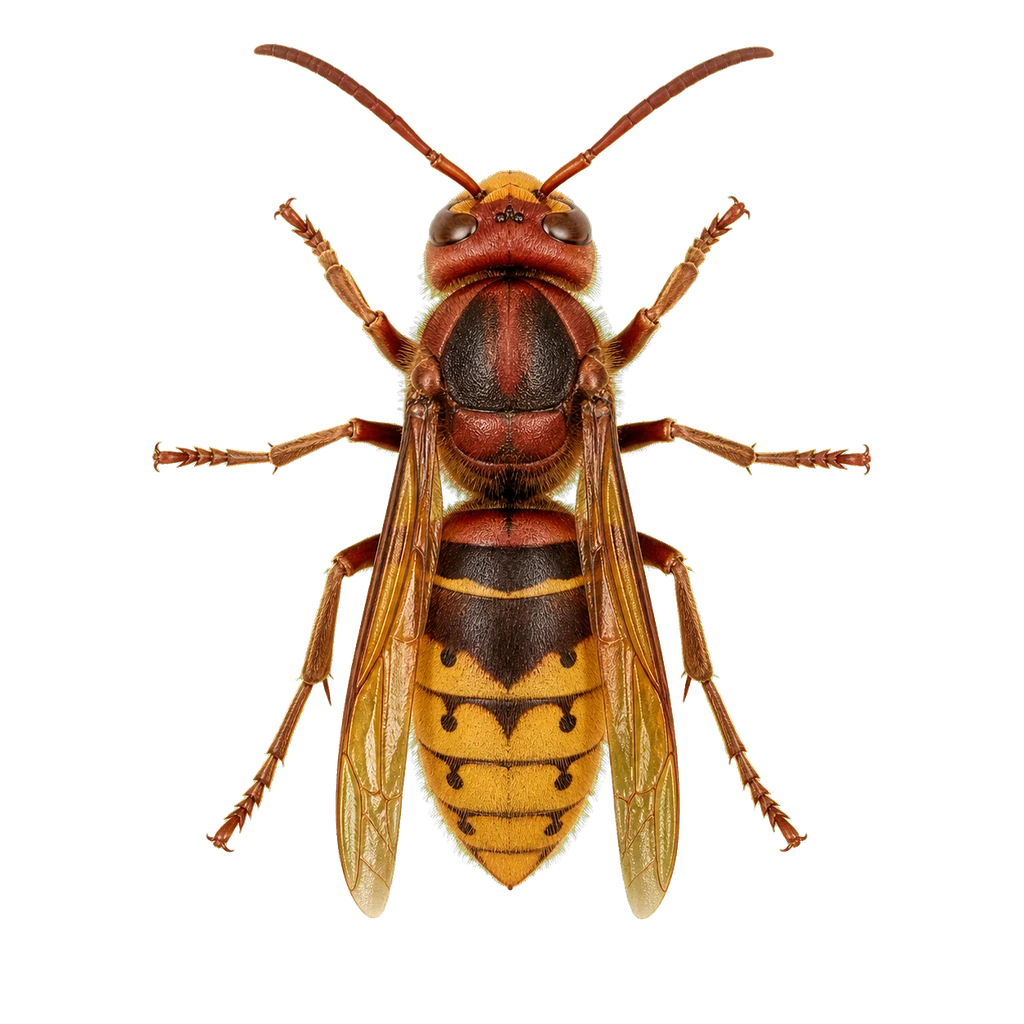
Local pest control help is one call away.

Mud Dauber: Identification, Treatment & Prevention

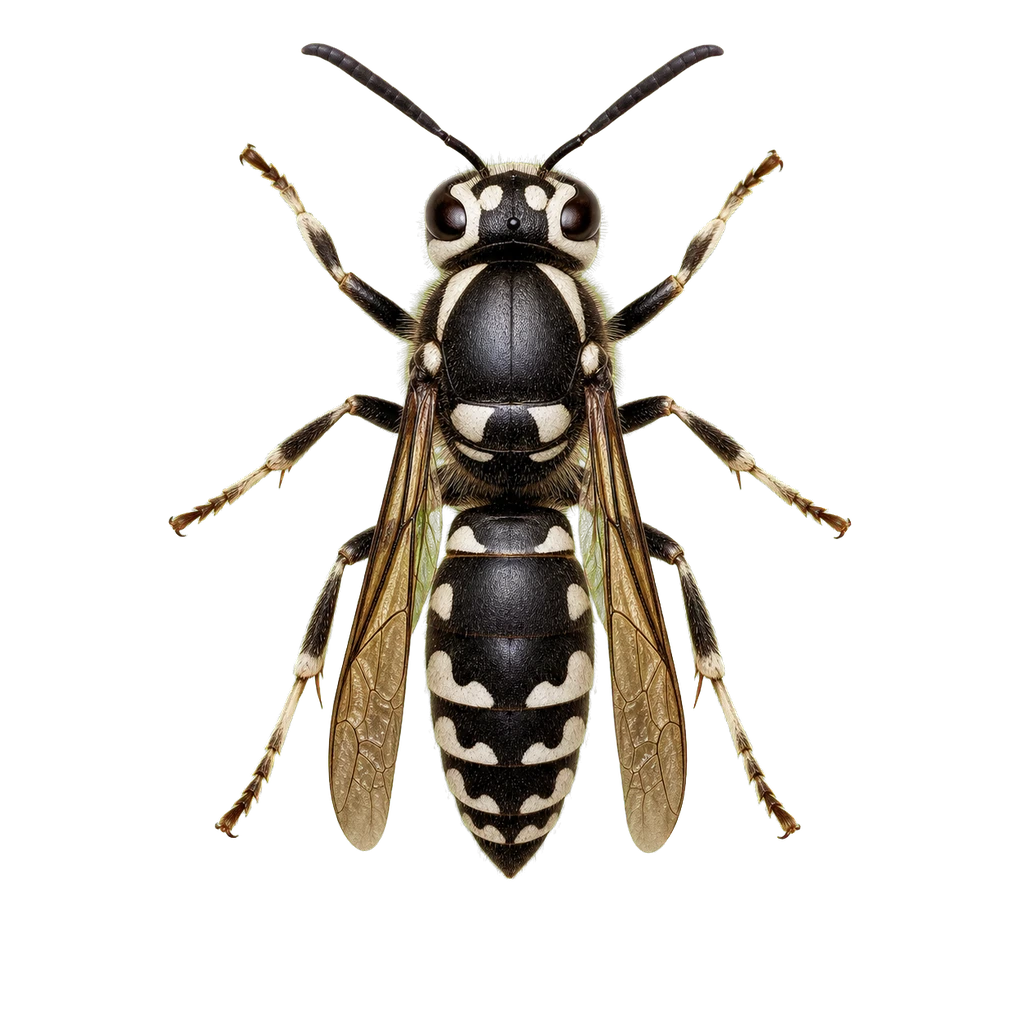
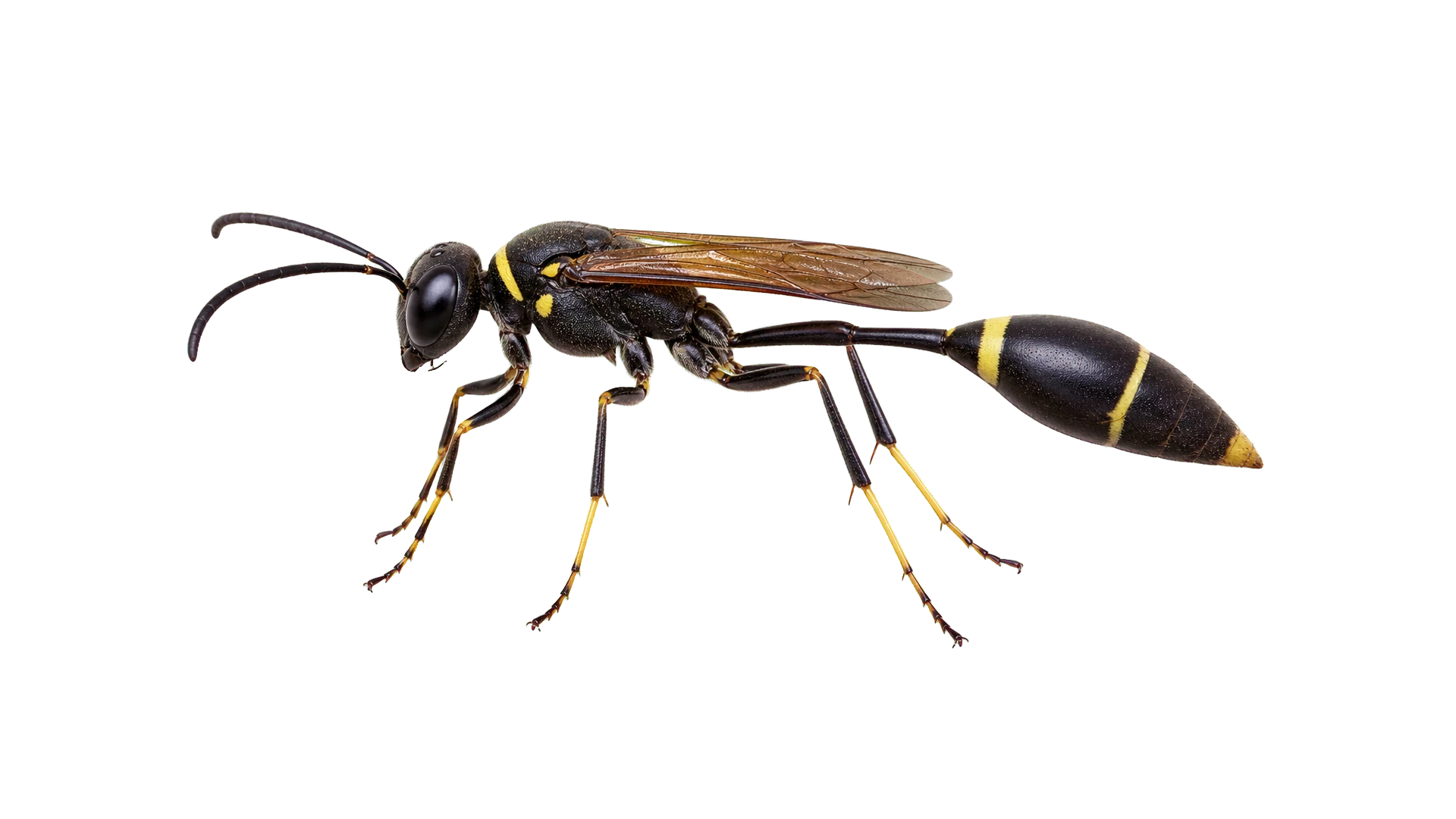
Mud daubers are slim wasps about 18 to 25 millimeters long with a long thread-thin waist between the chest and the back end. The thread-waist is the easiest ID, no other wasp at the house has a connection that narrow. Colors vary by species: the black-and-yellow mud dauber has yellow markings on a black body, the organ-pipe mud dauber is all black, and the blue mud dauber is a shiny metallic blue. All three build nests out of mud and hunt spiders to feed their young.

If you are seeing mud tubes or clusters of mud cells stuck to a wall, ceiling, eave, or shed rafter, with a thread-waisted wasp landing at them now and then, you have mud daubers. This guide covers how to confirm the ID, why these wasps almost never sting, when treatment is worth scheduling, and one important warning about old nests reused by more aggressive wasps.

Close-up illustration of a mud dauber showing the long thread-thin waist between thorax and abdomen, the defining identification feature

ID Card: Mud Dauber

Scientific name
Sceliphron spp.
Color
Black, yellow
Size
1/2 to 1 inch
Body shape
Very narrow thread-like waist, elongated body
Antennae
Long, slightly curved, 12-13 segments
Key evidence
Tube-shaped mud nests on walls, eaves, and ceilings; solitary and non-aggressive
Also known as
Dirt daubers, Mud wasps

Related Species

Call to get matched with a local pest control pro.

Available 24/7
(888) 495-1510
  • Specialists who confirm mud dauber versus more dangerous wasps before any treatment
  • Honest assessment, mud daubers rarely warrant removal outside specific scenarios
  • Identification of old nests reused by yellow jackets or paper wasps before approach

Where to Find Mud Dauber Nests

Cross-section illustration showing mud dauber nests attached to porch ceilings, attic rafters, and shed walls, with paralyzed spiders sealed inside individual mud cells

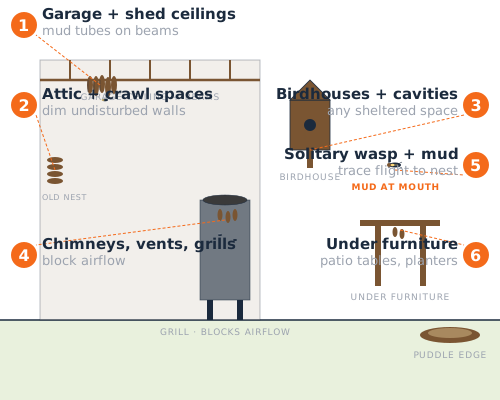
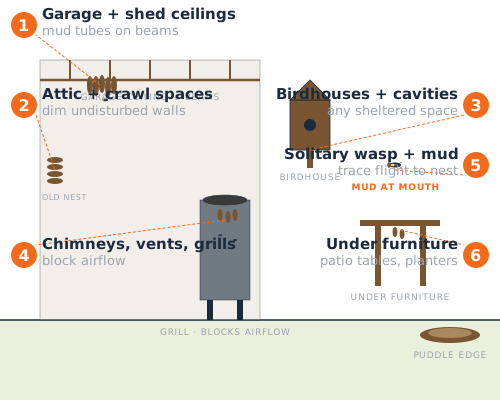
Mud daubers build their nests under cover, on ceilings and walls that stay dry. Each cell is sealed around a paralyzed spider and one egg. Walking the protected zones of your property finds the nests quickly, and the shape of the mud tells you which species you have:

  • Protected ceilings, eaves, and soffits, The most common nest sites. Look up at the underside of porch ceilings, garage eaves, and roof overhangs in sheltered corners. Organ-pipe mud daubers build parallel tubes 4 to 6 inches long; black-and-yellow daubers build clustered cells.
  • Attics, sheds, and garages, Dim and undisturbed, exactly the conditions a female mud dauber wants. Inspect attic rafters, shed ceilings, and garage corners. Old nests stay attached for years even after the wasps are long gone.
  • Outdoor light fixtures and ceiling fans, Sheltered electrical fixtures and ceiling fan housings are favorite spots. Check covered porch lights and outdoor ceiling fans for mud tubes stuck to the upper surfaces.
  • Barn rafters and shed interiors, Open-roofed structures with steady shade are heavily used. Look up at rafters, beams, and the underside of metal roofing.
  • Under decks, porches, and pergolas, The underside of any roofed outdoor structure is fair game. Check joist undersides, beam tops, and corner pockets where two surfaces meet.
  • Basement walls in damp areas, Less common but worth checking. Cellar walls, crawl spaces, and any indoor area with sheltered ceiling space can host mud dauber nests.

Mud dauber nests look more alarming than they are. The wasp is solitary, the female is focused on hunting spiders and building cells rather than defending a colony, and stings on humans are virtually non-existent. The cases that genuinely warrant removal are nests blocking vents or grill burners, nests in spots that frighten residents, and old empty nests that may invite more aggressive wasps to move in next year.

Cross-section illustration showing mud dauber nests attached to porch ceilings, attic rafters, and shed walls, with paralyzed spiders sealed inside individual mud cells
Illustration showing solitary mud dauber females scouting sheltered ceilings, gathering mud from puddle edges, and building single tube nests one cell at a time

Why Do I Have Mud Daubers?

Spotting the nests is step one. Understanding what drew the female to your structure explains both the situation and what (if anything) needs to change. Mud daubers have a short list of needs, and properties that match that list will keep attracting new females year after year, even if last year's nests are knocked down.

What draws mud daubers to your home specifically:

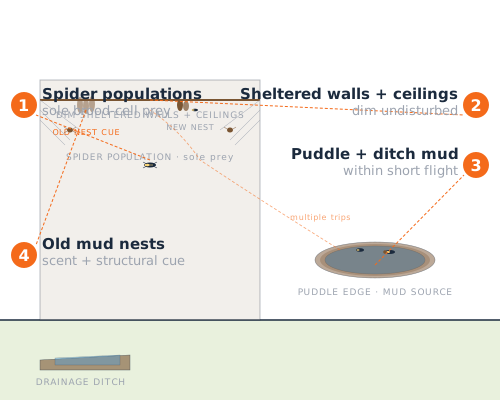
  • Protected ceilings and walls that stay dry, porch ceilings, eaves, attic rafters, and shed interiors all check the box for a nest site shielded from rain
  • Healthy outdoor spider populations, mud daubers hunt spiders exclusively to feed their young, and a yard with abundant spiders is exactly what they need
  • Mud or clay soil within flight range, females need to make many trips for each cell, so puddle edges, drainage ditches, and damp garden soil are essential
  • Older structures with abundant sheltered ceiling space, large eaves, deep porches, detached garages, and barns offer dozens of nest sites in one trip

Each spring a female emerges from a sealed mud cell, mates, and starts building. She gathers mud from a nearby puddle edge, shapes it into a tube or cell on a sheltered ceiling, flies off to hunt a spider, stings it to paralyze (not kill) it, packs the spider into the cell, lays a single egg on top, and seals the cell with more mud. Then she starts the next one. A productive female completes 10 to 20 cells across the summer. Her young eat the paralyzed spiders, develop inside the sealed cells, and emerge as adults the following year. No colony, no growing population on the property within a season.

How Serious Is Your Mud Dauber Situation?

Find your scenario below. For mud daubers, most situations don't require treatment, just correct identification and a check for nests reused by other species.

What You're Seeing Severity If Untreated Next Step
A single mud dauber nest on a shed or garage ceiling, no human conflict Low Beneficial spider predators including black widow control; the nest will be abandoned by fall and rarely causes any issue Leave the nest in place if possible. Monitor for new construction. No treatment needed.
Multiple nests on porch ceilings or in commonly used areas, aesthetic concern Moderate Visual concern only; sting risk remains very low because mud daubers are non-aggressive solitary wasps Scrape off old nests with a putty knife during the day; wear gloves. No spray needed.
Old mud nests now appearing to host yellow jackets or paper wasps moving in and out High Aggressive species have reused the structure; sting risk is now real and the original mud daubers are no longer involved Identify the current occupant from a safe distance. Schedule professional removal if yellow jackets or paper wasps are confirmed.
Family member with confirmed wasp-sting allergy and multiple active mud cells in family areas Urgent Sting risk from mud daubers is still very low, but allergy households can't take that chance and reused-nest risk is also higher Call today and request professional removal plus nest-site denial across the affected areas.
A single mud dauber nest on a shed or garage ceiling, no human conflict
Severity Low
If Untreated Beneficial spider predators including black widow control; the nest will be abandoned by fall and rarely causes any issue
Next Step Leave the nest in place if possible. Monitor for new construction. No treatment needed.
Multiple nests on porch ceilings or in commonly used areas, aesthetic concern
Severity Moderate
If Untreated Visual concern only; sting risk remains very low because mud daubers are non-aggressive solitary wasps
Next Step Scrape off old nests with a putty knife during the day; wear gloves. No spray needed.
Old mud nests now appearing to host yellow jackets or paper wasps moving in and out
Severity High
If Untreated Aggressive species have reused the structure; sting risk is now real and the original mud daubers are no longer involved
Next Step Identify the current occupant from a safe distance. Schedule professional removal if yellow jackets or paper wasps are confirmed.
Family member with confirmed wasp-sting allergy and multiple active mud cells in family areas
Severity Urgent
If Untreated Sting risk from mud daubers is still very low, but allergy households can't take that chance and reused-nest risk is also higher
Next Step Call today and request professional removal plus nest-site denial across the affected areas.

Mud daubers are among the most beneficial wasps a property can host. If you're between two rows, treat the higher one as your situation and verify the current nest occupant before approaching.

How Mud Daubers Develop

Mud dauber lifecycles are fully solitary, one female per nest, one egg per cell, one paralyzed spider per egg. There is no colony at any stage. That biology is exactly why this species is so different from paper wasps and yellow jackets, and why the treatment thinking is different too.

  1. Egg

    About 2 to 3 days

    The female lays a single egg on top of the paralyzed spider she has packed into the mud cell. Then she seals the cell with mud and starts building the next one. A productive season produces 10 to 20 cells, each with one egg and one spider.

  2. Larva

    About 3 to 4 weeks

    The larva hatches and eats the paralyzed spider the mother packed into the cell. The spider is alive but cannot move, which keeps it fresh as food. The larva grows quickly and pupates inside the same sealed cell.

  3. Pupa

    Overwinters in the sealed cell through fall and winter

    The pupa develops slowly through cold months inside the mud cell. This is the easiest time to scrape old nests off because the developing wasp is sealed inside and no adults are flying. The next adult will not emerge until the following spring or summer.

  4. Adult

    Adults emerge in late spring; live 4 to 8 weeks

    New adults chew through the mud cap and emerge. Females mate, then begin building their own nests in new locations. Males die after mating. The full cycle from egg to emerging adult is one year, and adults focus almost entirely on hunting spiders and building cells.

The fully solitary lifecycle means mud daubers do not build colony populations within a season. One female builds one cluster of cells; her young emerge the following year and disperse to new sites. There is no colony defense to trigger and no expanding population to manage. Just one wasp, one season, one set of cells.

When Mud Daubers Are Most Active

Mud dauber activity follows a quiet calendar. No swarmer flights, no colony peaks, just steady nest-building from spring through summer and a quiet overwintering period inside the sealed cells.

  • Spring

    New adults emerge from overwintered cells in late spring. Females begin scouting for nest sites and gathering mud from puddle edges and damp soil. Most homeowners notice the activity here, slow-flying solitary wasps with mud at the mouth, building small tubes or cells on garage ceilings and porch eaves.

  • Summer

    Peak nest construction. Females hunt spiders hard, packing cells, sealing them, and starting the next. A productive female completes 10 to 20 cells across the summer. Sheds, garages, and detached structures with open doors are heavily used during this window.

  • Fall

    Adult activity ends as cells are completed and sealed. Adults die off; the next generation overwinters inside the mud cells as developing pupae. This is the start of the easiest window for scraping old nests because no live wasps are flying.

  • Winter

    Developing wasps remain inside sealed cells. No external activity. Best window for nest removal in unwanted locations because cells can be scraped off without sting risk and without leaving structure that may attract yellow jackets or paper wasps next spring.

Why Mud Daubers Often Don't Need Treatment

Mud daubers are one of the few wasps where the right answer is often 'leave them alone.' They are solitary, not colonial. The female has no colony to defend and no biological reason to sting a passing person. Documented sting cases on humans are virtually non-existent, and the ones that do happen almost always involve someone grabbing or stepping on a wasp directly. Both organ-pipe and black-and-yellow species are equally calm; the blue mud dauber is the most docile of the three.

The bigger picture is that mud daubers are spider predators, and the spiders they hunt include black widows. A property hosting a healthy mud dauber population usually has dramatically fewer black widows and other house spiders than a comparable property without them. Removing mud daubers because the nests look concerning often makes the spider problem worse over the following year.

Where removal legitimately helps is functional conflict and old-nest reuse. Nests blocking grill burners, attic vents, dryer vents, and HVAC components create real fire and equipment risks. Mud nests near doorways and play areas don't pose sting risk but cause unnecessary worry. And many properties that look like they have a mud dauber problem actually have an old mud nest now hosting yellow jackets or paper wasps, that is where a specialist visit pays for itself, because the response to those aggressive species is completely different.

Old empty nests are worth scraping off in winter because the empty cavities attract more aggressive social wasps the following spring. The work is straightforward: gloves, a putty knife, and a ladder if needed. The right window is between November and March when no wasps of any species are active. A specialist can handle it during a routine fall pest visit at minimal extra cost, typically $100 to $250 for the full job if requested.

What Changes When a Pro Shows Up

Mud dauber work is mostly identification work. A specialist confirms the species, checks for nests reused by more aggressive wasps, and removes only the nests that actually warrant removal. Here is what that looks like:

Pest control technicians after completing a mud dauber assessment and selective nest removal
  • Local Pest Control
  • 24/7 Availability
  • Quality Workmanship
  • Eco‑Friendly Options
  • Trusted by Homeowners
  • Confirms Species Before Recommending Action

    Mud daubers look very different from paper wasps and yellow jackets once you know the thread-waist tell. A specialist confirms the species in seconds and changes the response from 'spray everything' to 'remove only what matters.' Typical cost runs $100 to $250 if any removal is requested.

  • Identifies Nests Reused by Aggressive Species

    Old mud nests are commonly reused by yellow jackets and paper wasps. The specialist checks each nest for the current occupant before approach. A mud nest with active aggressive wasps is treated very differently from one still housing solitary mud daubers.

  • Removes Only Conflict-Location Nests

    Nests blocking grill burners, attic vents, dryer vents, or HVAC components come down. Nests in unused shed corners stay because mud daubers are valuable spider predators that help control black widow populations on the property.

  • Recommends Old-Nest Scraping in Winter

    Empty mud nests should be scraped off in winter to prevent yellow jackets and paper wasps from moving into the empty cells next spring. The work is quick and a specialist can include it during any routine fall pest visit.

  • Local Pest Control
  • 24/7 Availability
  • Quality Workmanship
  • Eco‑Friendly Options
  • Trusted by Homeowners
NoToPests home

One call connects you with a local specialist who knows mud daubers and your area.

Be Ready When You Call

Pest control technician arriving for mud dauber assessment
Junho L.
Daisuke P.
Kirk Q.
Marion K.

Trusted by homeowners nationwide

Call for Pest Control Help (888) 495-1510

Can You Handle This or Do You Need Help?

Mud daubers are one of the few wasp situations where DIY usually wins. The work is mostly identification and patient timing rather than active treatment, with one important catch around old nests that may now host more aggressive species.

What DIY Can Do

If you can correctly identify mud daubers and you are willing to verify the current occupant of any old nest before approach, DIY handles almost every scenario:

  • Identify mud daubers by the long thread-thin waist and solitary, non-defensive behavior at the nest
  • Leave benign nests in place during summer to preserve the spider predator function, including black widow control
  • Scrape off old empty nests with a putty knife during the day, gloves are enough protection for confirmed mud dauber nests
  • Always verify the current occupant of any old nest before approach, yellow jackets and paper wasps commonly reuse abandoned mud structures
  • What DIY cannot reliably do: distinguish mud daubers from look-alike wasps in poor light, or safely approach a nest now hosting an aggressive reused-species colony

What a Pro Does Differently

A pro is most valuable for species verification and identifying the cases where the nest you think is mud daubers is actually something more aggressive. The treatment itself is usually simple:

  • Species confirmation in seconds, separates mud daubers from paper wasps, yellow jackets, and look-alike solitary wasps
  • Reused-nest inspection finds yellow jackets or paper wasps now living inside old mud structures
  • Safe selective removal of nests blocking equipment or near family areas, leaves the beneficial population in place
  • Old-nest scraping in winter prevents next-year reuse by more aggressive social wasp species moving into empty cells
  • Honest recommendations that often save the homeowner from unnecessary treatment cost, typical $100 to $250 if any work is requested

Suspect Mud Daubers? Don't Wait.

Mud daubers themselves are mostly beneficial, but identification matters because old mud nests are often reused by yellow jackets and paper wasps. Connect with a local specialist who can confirm species, check for reused nests, and remove only what actually warrants removal.

Available 24/7
(888) 495-1510

What Homeowners Say After Getting Help

Real results from people who had the same problem and solved it.

Rashad E.
Rashad E.
Portland, OR

"No pressure, just options."

I appreciated being given eco-friendly options without being pushed. The technician explained tradeoffs honestly and let me decide based on my priorities. They were transparent about what each approach involves. The no-pressure approach and honest information helped me make a confident decision.

Rashad E.
Rashad E.
Portland, OR

"No pressure, just options."

I appreciated being given eco-friendly options without being pushed. The technician explained tradeoffs honestly and let me decide based on my priorities. They were transparent about what each approach involves. The no-pressure approach and honest information helped me make a confident decision.

Yu E.
Yu E.
Durham, NC

"The inspection caught what we missed."

I didn't realize how much damage raccoons can cause once they get inside. The wildlife specialist explained what areas they inspect first and why raccoon issues are handled more carefully than regular pests. They showed me the damage and explained removal and exclusion strategies. Understanding the potential for damage made me glad I called professionals.

Ren P.
Ren P.
Dayton, OH

"The problem finally stayed gone."

Ants kept returning no matter what we did. The tech treated the trail areas and explained how to handle food storage and moisture so the ants don't keep coming back. It's been months and we haven't seen them again. I appreciated that it wasn't just a one-and-done spray.

Kayla Q.
Kayla Q.
Pittsburgh, PA

"Clear expectations and a real plan."

I was overwhelmed and didn't know what was realistic to fix quickly. The inspector explained what results to expect and how long it typically takes depending on the ant species. They treated the right places and gave simple prevention tips. Everything felt structured and easy to follow.

Malachi U.
Malachi U.
Knoxville, TN

"They found the entry points fast."

Ants were showing up in the kitchen and we couldn't figure out where they were coming from. The tech tracked the activity and pointed out two entry points we never would've noticed. After treating and sealing those areas, the ants disappeared. It was quick and surprisingly thorough.

Arturo B.
Arturo B.
Yonkers, NY

"No pressure, just helpful info."

I mainly wanted to understand what was happening before committing to anything. The inspector walked me through the likely cause and the differences between treatment approaches. They answered questions without rushing me. The plan we chose worked and the ants were gone within days.

Octavio Z.
Octavio Z.
Duluth, MN

"The tech helped me stop wasting time."

I kept trying different products and nothing was sticking. The tech explained why some solutions don't work for certain ant problems and focused the treatment where it would actually matter. They also gave prevention tips that were easy to implement. The difference was obvious within the first week.

Chauncey A.
Chauncey A.
Duluth, MN

"We finally understood what to do next."

We felt stuck because nothing we tried lasted. The tech explained how to find the source of the problem, treated both indoor and outdoor areas, and helped us build a prevention routine. It wasn't complicated. Just the right steps in the right order. We've had a huge improvement since.

Vihaan V.
Vihaan V.
Madison, WI

"They fixed what was actually causing it."

Ants kept showing up in the same spot. The pro explained that the visible ants weren't the real issue and focused the treatment on where they were coming from. They identified the entry path and treated it properly. The problem stopped and hasn't returned.

Allison A.
Allison A.
Des Moines, IA

"It felt like a real inspection, not a quick spray."

The tech spent time figuring out where the ants were entering instead of just spraying around. They walked me through the likely reasons and what to watch for over time. After treatment, ant activity dropped fast and stayed low. The detailed approach gave me confidence.

Stephen N.
Stephen N.
Sacramento, CA

"Small changes made a big difference."

We didn't realize how much our routine was attracting ants. The inspector explained simple prevention steps and treated the areas where activity was highest. Once those changes were in place, we stopped seeing ants inside. It was a practical approach that actually worked.

Daquan V.
Daquan V.
Tampa, FL

"The explanation alone was worth it."

I'd been doing random treatments without understanding what I was dealing with. The tech explained how ants behave and why certain approaches work better. They treated strategically instead of just spraying. It made the whole thing feel manageable.

Deepak V.
Deepak V.
San Antonio, TX

"We stopped chasing the problem and solved it."

We kept wiping down counters and the ants would be back the next day. The pro identified the entry areas and explained the treatment plan clearly. Once they treated and targeted the colony, the ants disappeared quickly. It felt like we finally got ahead of it.

Mireya Z.
Mireya Z.
Riverside, CA

"They didn't oversell. Just solved it."

The tech explained what treatment was necessary and what wasn't. They focused on the entry points and corrected the conditions that were attracting ants. The work felt honest and effective. I liked having clear expectations and seeing results quickly.

Wei D.
Wei D.
Lexington, KY

"It wasn't just 'spray and go.'"

I appreciated the step-by-step explanation and the focus on prevention. The inspector treated the areas where ants were getting in and helped me understand what to change at home. The ants stopped showing up and it's been consistent. The approach felt thoughtful and sustainable.

Shu W.
Shu W.
Orlando, FL

"It finally made sense why they kept coming back."

I had ants showing up every few months and never understood why. The tech explained how outdoor nests and weather changes affect indoor activity. They treated the perimeter and entry points instead of just the inside. Since then, we haven't had recurring issues.

Teresa I.
Teresa I.
Mesa, AZ

"Targeted instead of overdone."

I was worried about over-treating the house. The pro focused on specific problem areas and explained why blanket spraying wasn't necessary. The ants stopped appearing, and we didn't feel like chemicals were used unnecessarily. That balance mattered to us.

Latonya X.
Latonya X.
Mesa, AZ

"Clear answers without jargon."

The tech explained everything in plain language and answered questions without rushing. They identified the type of ant we had and adjusted the treatment accordingly. Knowing why the approach worked gave me confidence it would last.

Humberto T.
Humberto T.
Eugene, OR

"They focused on prevention, not just treatment."

I liked that the tech talked through how to keep ants from returning after the treatment. They addressed moisture issues and entry points around the home. The treatment worked, and the prevention tips helped us stay ahead of future problems.

Jerrell N.
Jerrell N.
Arlington, VA

"No guessing, just a plan."

I was tired of guessing what would work. The inspector explained the cause of the issue and outlined a clear plan of action. After treatment, the ants disappeared and we haven't had to revisit the problem. It felt efficient and well thought out.

Marion K.
Marion K.
Boulder, CO

"They explained what to expect upfront."

The tech set expectations about timing and results before starting. They explained that some activity might happen initially and why. Everything played out exactly as described, and the ants were gone shortly after. That transparency made a big difference.

Bridget E.
Bridget E.
Sacramento, CA

"Helpful without being overwhelming."

I didn't realize there were different types of ants or that it mattered. The inspector walked me through what they were seeing and explained how ant behavior affects treatment. It made it easier to ask the right questions and understand the solution.

Junho L.
Junho L.
Naperville, IL

"Saved me a lot of guessing."

I was close to trying random sprays for the ants. Talking with the tech helped me understand what was realistic to address and what usually doesn't work. The targeted treatment solved the issue quickly and saved time and frustration.

Willis Y.
Willis Y.
Baton Rouge, LA

"It felt tailored to our home."

The tech didn't just apply a standard treatment. He looked at where we were seeing activity and adjusted the approach to our layout and yard. The ants stopped showing up and we understood how to keep it that way.

Thelma S.
Thelma S.
Madison, WI

"Straightforward and effective."

I appreciated how straightforward everything was. The pro explained the issue, treated the problem areas, and gave us a few simple steps to prevent future issues. The ants were gone and it didn't feel complicated.

Angelina B.
Angelina B.
Austin, TX

"They explained how the weather played a role."

I didn't realize seasonal changes could affect ant activity so much. The tech explained how heat and rain push ants indoors and what to do about it. They treated the problem areas and gave tips to prevent future issues. The explanation helped everything click.

Kirk Q.
Kirk Q.
Denver, CO

"It wasn't as complicated as I expected."

I assumed pest control would be disruptive or complicated. The technician explained the steps clearly and focused on targeted treatment. The ants stopped appearing quickly and the process was smoother than expected.

Cody L.
Cody L.
Denver, CO

"They helped me understand the bigger picture."

Instead of just treating the ants I saw, the tech explained what was happening around the house that made it attractive to pests. Once those factors were addressed, the problem resolved quickly. It felt educational as well as effective.

Marquis K.
Marquis K.
San Mateo, CA

"Clear communication from start to finish."

I appreciated how clearly everything was explained before treatment began. The inspector walked through the process and answered all my questions. The ants were gone shortly after and we felt confident about prevention going forward.

Virginia T.
Virginia T.
San Mateo, CA

"They addressed what we were missing."

We kept focusing on cleaning, but the tech showed us where ants were actually entering. Once those points were treated and sealed, the issue resolved. It was reassuring to finally understand the root cause.

June J.
June J.
Omaha, NE

"A methodical approach that worked."

The pro explained how they identify ant trails and colonies before treating. They took a methodical approach instead of rushing through. The ants stopped appearing and the fix has held up well.

Caitlin K.
Caitlin K.
Phoenix, AZ

"They understood desert pest behavior."

Living in Phoenix, pests behave differently than other places. The tech explained how heat drives ants indoors and what treatments work best here. The solution was effective and tailored to our environment.

Olive S.
Olive S.
Sacramento, CA

"They took the time to do it right."

I appreciated that the tech didn't rush. He inspected the problem areas carefully and explained what they were seeing. The treatment worked quickly and the ants haven't returned.

Arianna D.
Arianna D.
Baton Rouge, LA

"They understood the local pest issues."

The tech explained how the humidity here contributes to ant problems and why certain treatments work better in this climate. They focused on outdoor entry points and moisture-prone areas. The ants cleared up quickly and haven't come back.

Kiyana N.
Kiyana N.
New Orleans, LA

"Finally something that lasted."

We'd dealt with recurring ants for years. The pro explained why flooding and moisture play such a big role here and adjusted the treatment accordingly. It's been months without seeing ants, which is a big win for us.

Brett R.
Brett R.
Phoenix, AZ

"They knew exactly what works in Arizona."

The tech explained how desert conditions affect ant behavior and which treatments are most effective here. They targeted the right areas and avoided unnecessary spraying. The ants disappeared quickly.

Albert O.
Albert O.
Baltimore, MD

"Clear, calm, and professional."

I appreciated how calmly everything was explained. The inspector identified the ant problem, explained the treatment, and answered my questions without rushing. The solution worked and gave me peace of mind.

Rohit Y.
Rohit Y.
Orlando, FL

"They handled it efficiently."

The tech inspected the problem areas, explained the plan, and got to work quickly. The ants were gone within days and the process felt efficient without being rushed.

Carolyn H.
Carolyn H.
Omaha, NE

"Simple explanations, solid results."

I liked how simply everything was explained. The pro didn't overcomplicate things and focused on what mattered. The ants stopped appearing and we haven't needed follow-up treatments.

Edith Z.
Edith Z.
Newark, NJ

"They showed me what to watch for."

Beyond treating the ants, the tech explained what signs to watch for if activity starts again. That knowledge made me feel more in control. So far, everything has stayed clear.

Common Questions About Mud Daubers

Direct answers to what homeowners ask most about identification, sting risk, and when removal actually helps.

  • How do I identify mud dauber nests? Toggle answer for: How do I identify mud dauber nests?

    Mud daubers build distinctive nests from mud that are easy to recognize: organ pipe mud daubers construct parallel tubes of mud (resembling organ pipes) on walls, under eaves, and in sheltered overhangs; black-and-yellow mud daubers build rounded, lumpy mud nests about the size of a fist; and blue mud daubers do not build their own nests but repurpose abandoned nests of other mud dauber species. All mud dauber nests are made of dried mud, are roughly the color of the local soil, and are found in protected locations, under porch roofs, in garages, inside attics, and behind shutters. Each cell inside the nest contains a paralyzed spider and a single mud dauber egg.

  • Are mud daubers dangerous? Toggle answer for: Are mud daubers dangerous?

    Mud daubers are among the least aggressive stinging insects and almost never sting humans, and theyare solitary wasps without a large colony to defend, which eliminates the swarming defensive behavior seen in social wasps and hornets. They are docile even when their nests are disturbed and will typically fly away rather than attack. Their stings, while possible if the wasp is physically grabbed or trapped against skin, are significantly less painful than those of yellow jackets or hornets. Mud daubers are actually beneficial because they are voracious predators of spiders, including black widows. The primary concern with mud dauber nests is aesthetic and the potential for nest material to stain surfaces or block openings in structures and equipment.

  • Why do hornets keep building nests near my home? Toggle answer for: Why do hornets keep building nests near my home?

    Hornets select nest sites that offer protection from wind, rain, and direct sun, making residential structures ideal locations. Common nesting spots include sheltered eaves, porch ceilings, tree branches near the house, and inside wall voids or attic spaces accessed through gaps in siding or soffits. Queen hornets that successfully overwintered near your home tend to establish new colonies in the same general area the following spring, and the availability of insect prey (which hornet colonies consume in large quantities) near outdoor lights and gardens reinforces site fidelity.

  • How dangerous are hornet stings? Toggle answer for: How dangerous are hornet stings?

    Hornet stings deliver more venom per sting than most wasps or bees and are considerably more painful. Hornets can sting multiple times without dying, and disturbing a nest can provoke a coordinated defensive response from the entire colony, whichcan number several hundred workers by late summer. For most people, stings cause intense localized pain, swelling, and redness. For individuals with venom allergies, hornet stings can trigger anaphylaxis, a potentially life-threatening allergic reaction requiring immediate emergency medical treatment with epinephrine.


  • How quickly can a provider get to my home? Toggle answer for: How quickly can a provider get to my home?

    Most providers in our network can schedule an inspection within 24-48 hours. For urgent situations, likeactive structural damage or large colonies, same-week emergency service is often available. Response times depend on your location and the provider's current schedule.

  • What happens during the first visit? Toggle answer for: What happens during the first visit?

    Your provider inspects the property to identify the pest, locate nesting or entry points, and assess the scope of the problem. You get a clear explanation of what they found, what they recommend, and a written scope before any work begins.

  • Is treatment safe for kids and pets? Toggle answer for: Is treatment safe for kids and pets?

    Modern pest control products are designed to break down quickly after application and pose minimal risk to people and pets when applied correctly. Most providers ask you to keep kids and pets out of treated areas for 1 to 2 hours while the product dries, after which the area is generally safe again. Always confirm specific re-entry times with your provider, and let them know about pet birds, fish, or reptiles, since some treatments require extra precautions for those species.

Pest Control Pros serving the city of the state of your city and nearby areas

Local providers who confirm wasp species accurately and recommend the right action (including 'leave it alone' for beneficial nests) are ready to inspect, no obligation.

Available 24/7
(888) 495-1510