Local pest control help is one call away.

Firebrat: Identification, Treatment & Prevention

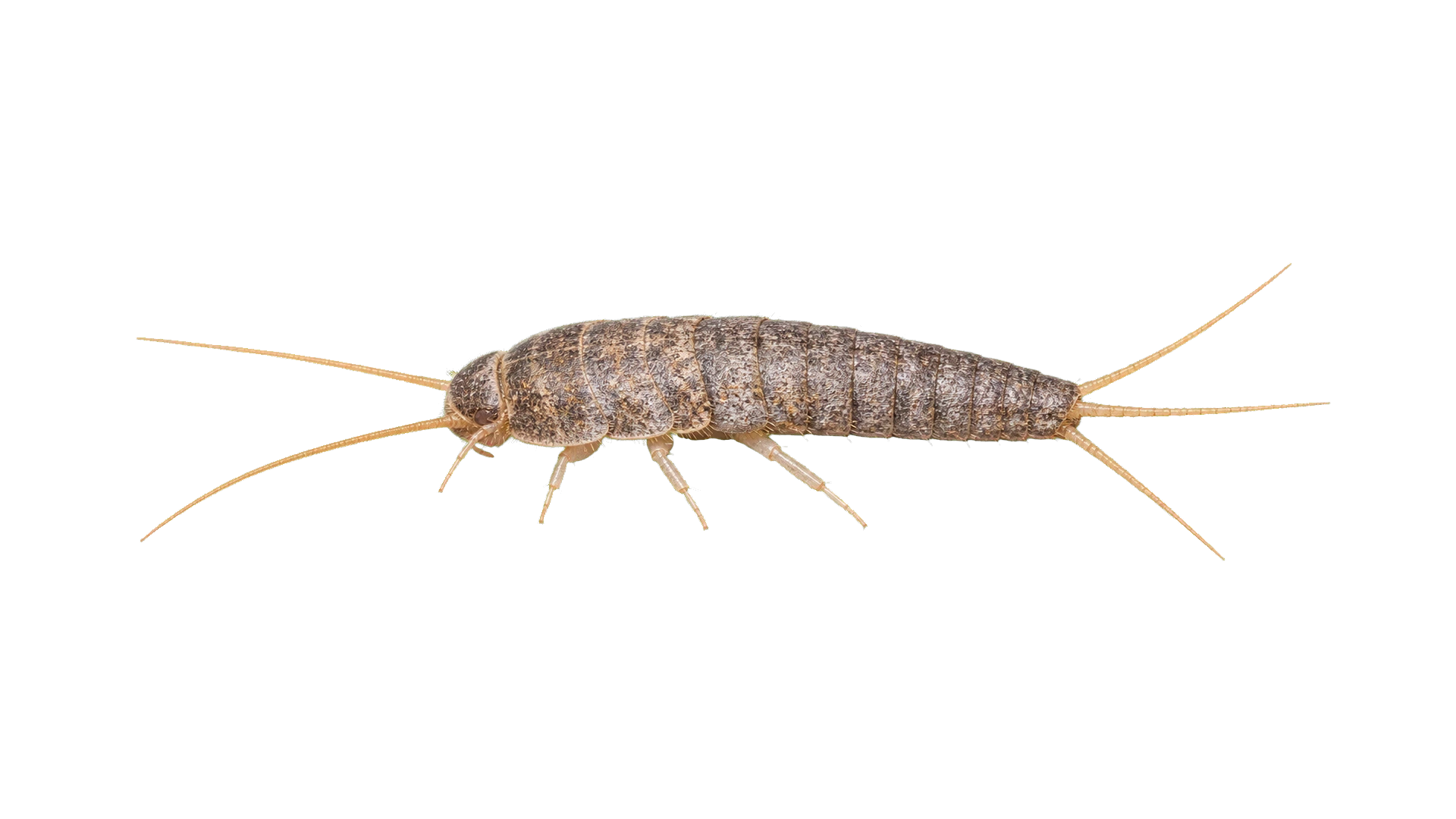
Firebrats are silver-gray mottled insects with darker brown-gold flecks, three long thin tail filaments at the rear, and two long antennae at the front. They are 10 to 15 millimeters long with a teardrop-shaped flattened body. The single behavior that confirms a firebrat in the field is the fast, wiggling, fish-like running motion when light hits them. That movement plus the silvery body is where the related insect, the silverfish, gets its common name, though firebrats are a separate species (Thermobia domestica) that prefers very different conditions.

Firebrats need warmth and dryness. They thrive at 90 to 105 degrees Fahrenheit with 75 to 90 percent relative humidity, which is why they show up near furnaces, water heaters, hot water pipes, attics, and the spaces behind ovens. Silverfish, by contrast, prefer cool and damp areas. If you are seeing silvery, wiggling insects with three tails near a heat source rather than in a basement or bathroom, you are almost certainly looking at firebrats. This guide covers how to confirm the identification, what they damage, and what real treatment looks like.

Close-up illustration of a firebrat showing silver-gray mottled body with brown-gold flecks, two long antennae, and three tail filaments

ID Card: Firebrat

Scientific name
Thermobia domestica
Color
Gray, brown
Size
1/2 inch
Body shape
Teardrop-shaped, similar to silverfish but mottled
Antennae
Long, thread-like, many segments
Key evidence
Found near furnaces, ovens, and hot water heaters; damaged paper and starch items
Also known as
Bristletails, Heat bugs

Call to get matched with a local pest control pro.

Available 24/7
(888) 495-1510
  • Specialists trained to separate firebrats from silverfish in the field
  • Warm-zone and attic inspections with desiccant-targeted treatment plans
  • Storage and humidity guidance for books, archives, and pantry goods

Where to Inspect for Firebrats

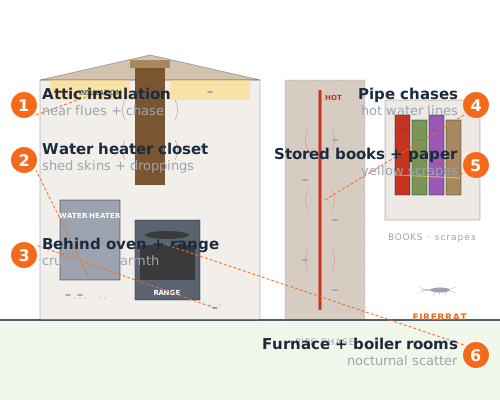
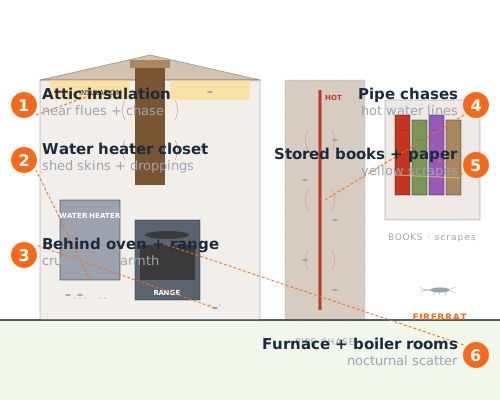
Cross-section illustration showing firebrat hot-zone harborage, furnace closets, hot water pipes, attic insulation around heating ducts, and behind kitchen appliances

Firebrats stay close to the hottest, driest pockets of the home. Skip the cool basement and damp bathroom (those are silverfish zones), and bring a flashlight to the warm spots instead. Look for the silvery body and wiggling movement when light hits them, plus shed skins, pepper-like droppings, and chewed paper goods nearby:

  • Furnace, boiler, and water heater closets, Walk the perimeter at night with a flashlight. Firebrats run fast and wiggle when light hits them. Check the floor behind the tank, on top of the unit, and along the wall studs that warm up from the appliance.
  • Attic insulation near heating ducts, Lift the batts where ducts pass through the attic. The wrapped insulation traps exactly the 90 to 105 degree heat range firebrats need, and the cellulose insulation feeds them at the same time.
  • Hot water pipes inside wall and floor chases, Pipe runs create year-round warm corridors that connect rooms. Look under sinks where hot water lines enter the cabinet and along the basement ceiling where pipes pass through joists.
  • Behind and under ovens, ranges, and refrigerators, The motor compartment under a fridge and the wall cavity behind a stove are constant heat sources. Crumbs plus warmth equals firebrat habitat. Bakeries and commercial kitchens are the highest-risk version of this same zone.
  • Electrical conduits, recessed lighting, and fixture boxes, The void around recessed lighting and electrical boxes runs warm year-round, and many fixtures sit directly against cellulose insulation. Check inside attic-mounted fixture cavities and the wall above kitchen lighting.
  • Books, papers, and cardboard in warm rooms, Pull a few books from a shelf in a warm storage area and inspect the bindings. Surface scrapes, missing glue along the spine, and small yellow stains on paper edges all mean firebrats have been feeding there.

If you find shed skins, peppery droppings, or chewed paper goods in two or more of those zones, the population is established and connected through the warm pathways of your home. Firebrats do not bite, sting, or transmit disease, and they will not damage the structure itself. What they will destroy, given enough time, is books, archives, photographs, wallpaper paste, starched fabric, and dry pantry goods. Because their populations grow slowly, an established infestation has often been quietly building for one to two years before the first homeowner sighting.

Cross-section illustration showing firebrat hot-zone harborage, furnace closets, hot water pipes, attic insulation around heating ducts, and behind kitchen appliances
Illustration showing how firebrats enter homes through utility penetrations, attic vents, and cardboard storage, then settle into warm wall voids and insulation around heating ducts

Why Do I Have Firebrats?

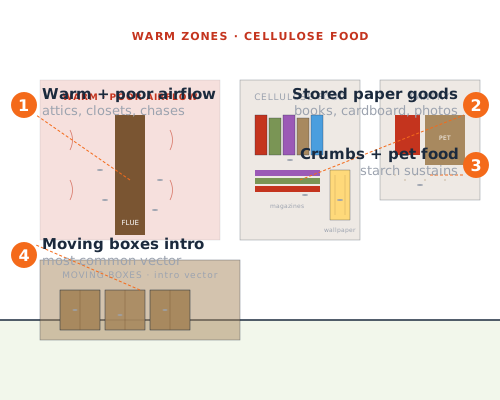
Spotting them is step one. Understanding why your home suits firebrats specifically (not silverfish, not other paper pests) is what keeps the population from rebuilding once it is treated. Firebrats need a precise combination of warmth above 90 degrees Fahrenheit, moderate-to-high humidity, and a starchy or cellulose food source within crawling distance. Most homes have all three in the same hidden pocket, and the homeowner never sees any of it.

What anchors them to your property:

  • Sustained warm zones above 90 degrees Fahrenheit, furnaces, boilers, water heaters, attics with poor venting, and the wall voids behind ovens all hold the temperature range firebrats need year-round
  • Cellulose and starch within reach of the heat source, paper, cardboard, book bindings, wallpaper paste, starched fabric, cereal grains, flour, and dried meats all feed established populations
  • Older homes with limited pest exclusion, gaps around utility penetrations, uncovered attic vents, and unsealed pipe chases all give firebrats migration paths between warm rooms
  • Recent plumbing leaks in warm areas, a slow drip on a hot pipe creates exactly the humid-plus-warm microclimate firebrats prefer, and the moisture lingers long after the leak is fixed
  • Stored books, archives, and cardboard moved into the home, the single most common reintroduction path, especially when boxes have been kept in a warm garage or storage unit

Firebrats reproduce slowly compared to most household pests. A single female lays only about 50 eggs across her entire lifetime, and nymphs take nearly a year to reach full size. That sounds reassuring until you factor in the lifespan, adult firebrats live three to five years and continue to molt and reproduce throughout their lives. One warm harborage with a steady food source can sustain a population for half a decade, quietly damaging books and papers the entire time.

How Serious Is Your Firebrat Problem?

Find your scenario below. Each row reflects how firebrat populations actually progress, slowly, but persistently, over months and years rather than weeks.

What You're Seeing Severity If Untreated Next Step
A single firebrat spotted near a heater or in the attic, no damage observed Early Population can build quietly over 4 to 8 months as the warm harborage matures Confirm the silver-gray body, three tails, and wiggling movement. Place sticky traps near the heat source and inspect cardboard storage.
Multiple firebrats in one warm room, mild paper or book damage starting Moderate Spreads to connected warm zones within 6 to 12 months as workers explore pipe chases Schedule a professional inspection this month. Move books and archives out of warm storage, and start desiccant or storage management plans.
Heavy population in multiple rooms, heirloom books or archived papers damaged High Damage compounds steadily, valuable books and papers continue to lose material every week Call a professional this week and request a desiccant program plus storage consultation. Damaged items may need restoration assessment.
Commercial bakery, library, or archive with active infestation Urgent Inventory damage compounds daily, and treatment options narrow if applied near sensitive collections without expert care Call today and ask specifically for a specialized program with archive-aware treatment, sanitation review, and ongoing monitoring.
A single firebrat spotted near a heater or in the attic, no damage observed
Severity Early
If Untreated Population can build quietly over 4 to 8 months as the warm harborage matures
Next Step Confirm the silver-gray body, three tails, and wiggling movement. Place sticky traps near the heat source and inspect cardboard storage.
Multiple firebrats in one warm room, mild paper or book damage starting
Severity Moderate
If Untreated Spreads to connected warm zones within 6 to 12 months as workers explore pipe chases
Next Step Schedule a professional inspection this month. Move books and archives out of warm storage, and start desiccant or storage management plans.
Heavy population in multiple rooms, heirloom books or archived papers damaged
Severity High
If Untreated Damage compounds steadily, valuable books and papers continue to lose material every week
Next Step Call a professional this week and request a desiccant program plus storage consultation. Damaged items may need restoration assessment.
Commercial bakery, library, or archive with active infestation
Severity Urgent
If Untreated Inventory damage compounds daily, and treatment options narrow if applied near sensitive collections without expert care
Next Step Call today and ask specifically for a specialized program with archive-aware treatment, sanitation review, and ongoing monitoring.

Firebrats hide well, and slow population growth means established infestations have usually been building for one to two years before the first sighting. If you are between two rows, treat the higher one as your situation.

How a Firebrat Population Builds

Firebrats are unusual among household insects in two specific ways. First, they grow extremely slowly, a single firebrat can take a year to reach breeding size and live three to five years total. Second, they keep molting throughout adulthood, which is a trait shared only with their close cousin the silverfish. That biology is exactly why established firebrat infestations are quiet for so long, and why successful treatment programs are measured in months rather than weeks.

  1. Egg

    About 12 to 14 days in warm conditions, longer when cooler

    Females lay clusters of small white eggs in cracks and crevices near heat sources, usually in seams of insulation, behind appliances, or under cardboard. A single female lays only about 50 eggs across her entire lifetime, far fewer than ants or cockroaches, which is why populations build slowly and quietly.

  2. Nymph (early instars)

    About 2 to 4 months through the first several molts

    Nymphs look like miniature adults from the moment they hatch, with the same silver-gray body and three tail filaments. They immediately seek warmth and starchy food, and they move with the same fast, wiggling motion that defines the adult.

  3. Subadult molts

    About a year of additional molts before reaching full size

    Firebrats molt many times on their way to full size, and the translucent shed skins they leave behind are one of the strongest field indicators of an established population. Look for the skins in attic insulation, behind appliances, and inside utility closets.

  4. Adult

    Adults live 3 to 5 years and continue molting throughout life

    Full-grown firebrats reach 10 to 15 millimeters long, just over half an inch, and stay close to their preferred warm zones. Unlike most insects, they do not stop molting after reaching breeding size, a single mature female can keep producing eggs and shedding skins for years.

Firebrats do not swarm and they do not migrate quickly. A mature population expands slowly along the warm pathways of the home, pipe chases, ductwork, shared walls, and connected attic spaces. That slow expansion is why established infestations are typically one to two years old by the time anyone notices, and why treatment also has to follow those same warm pathways rather than just hitting the spot where the first firebrat was seen.

When Firebrats Are Most Active

Firebrats are active year-round in any heated structure. Because their populations live in warm zones rather than respond to outdoor weather, they show much less seasonal variation than most household pests. The main difference across the year is what brings them into view, not whether they are present.

  • Spring

    Egg-laying picks up gradually as ambient temperatures rise. Newly hatched nymphs concentrate near water heaters, hot pipe chases, and behind warm appliances. Spring is one of the better windows for inspection because adults are visible during nighttime walks but population pressure has not yet peaked.

  • Summer

    Activity peaks in attics, which routinely exceed 120 degrees Fahrenheit in summer, well above the 90 to 105 degree range firebrats prefer. Even at the upper end they remain active in shaded corners and around heating ducts. This is when most homeowners first notice damage to stored books, papers, and pantry items.

  • Fall

    As outdoor temperatures cool, firebrats retreat deeper into wall voids, insulation, and the spaces around heating equipment as the furnace starts cycling on. Sightings often drop, but the population does not. Cardboard moved into warm storage for the fall and winter is a common reintroduction path.

  • Winter

    Furnace, boiler, and water-heater zones stay active even in the coldest climates. Firebrats survive winter inside heated voids and then emerge in spring as a slightly larger population than the year before. Year-round sightings in heated parts of the home almost always confirm an established interior harborage.

Why Firebrats Aren't a DIY Job

Firebrats live behind insulation, inside utility chases, and in the wall voids around heating equipment. The ones you see crossing the floor near the water heater are a small fraction of the population. The eggs, the early nymphs, and most of the breeding adults are in places you cannot reach without pulling drywall, removing insulation, or opening the cabinets behind major appliances.

Over-the-counter sprays kill the firebrats they touch and almost nothing else. Surface treatments do not reach the warm harborage where the population actually lives, and a few weeks later sightings come back from the same spot. Worse, firebrats respond poorly to contact insecticides in general, the most effective products are desiccant dusts (diatomaceous earth and boric acid) placed inside cracks and voids, which most homeowners do not have or know how to apply safely.

A specialist with thermal and moisture tools maps the warm pathways of the home, then dusts the cracks and voids those pathways follow. They also identify the moisture and ventilation issues feeding the population, fix the plumbing leak on the hot pipe, vent the attic better, address the humidity behind the water heater. Treatment without those repairs almost always sees the population rebuild within a year.

Firebrats cannot bite, sting, or transmit disease. They are not a health emergency. What they are is a slow, persistent threat to books, archives, photographs, wallpaper, starched fabric, and dry pantry items. Initial residential treatment typically costs $200 to $500, with $40 to $100 per month recurring for homes with chronic warm-zone conditions. That investment is usually a fraction of the cost of restoring damaged books or archives.

What Changes When a Pro Shows Up

Firebrat treatment is desiccant work, not surface spraying. The job is to dust the cracks and voids where the population actually lives, reduce the warm harborage, and confirm the population has collapsed across the connected hot zones of the home. Here's what changes when a specialist takes that on:

Pest control technicians after completing a firebrat treatment service
  • Local Pest Control
  • 24/7 Availability
  • Quality Workmanship
  • Eco‑Friendly Options
  • Trusted by Homeowners
  • They Walk the Hot Zones, Not Just the Floor

    A comprehensive warm-zone inspection covers furnaces, water heaters, attic ducts, hot water pipe chases, behind ovens, and electrical fixture cavities. Most firebrat work starts with finding three or four connected harborages, not one.

  • Desiccant Dusts Go Into the Cracks

    Diatomaceous earth in cracks near heaters and pipes, and boric acid in voids, are the most effective firebrat treatments available. These desiccants dry the insect out as it walks through dusted areas, working steadily on a population that does not respond well to contact sprays.

  • Storage and Plumbing Get Addressed

    Repairing plumbing leaks removes the humid-plus-warm pockets firebrats need. Storage management, airtight containers for paper, books moved out of warm rooms, sealed pantry goods, removes the food source. Treatment alone never finishes the job if the conditions stay friendly.

  • Follow-Up Visits Confirm Collapse

    Firebrats reproduce slowly, which means treatment also works slowly. Follow-up visits over a few months confirm the population has actually collapsed, not just temporarily quieted, and catch any re-entry from connected attics, shared walls, or new cardboard storage.

  • Local Pest Control
  • 24/7 Availability
  • Quality Workmanship
  • Eco‑Friendly Options
  • Trusted by Homeowners
NoToPests home

One call connects you with a local specialist who knows firebrats and your area.

Be Ready When You Call

Pest control technician arriving for firebrat service
Junho L.
Daisuke P.
Kirk Q.
Marion K.

Trusted by homeowners nationwide

Call for Pest Control Help (888) 495-1510

Can You Handle This or Do You Need Help?

Firebrats do not live on surfaces. They live inside warm wall voids, attic insulation around heating ducts, and the cracks behind major appliances. That single fact changes what works and what doesn't.

What DIY Can Do

DIY is most useful for identification, prevention, and slowing the population, not eliminating a mature harborage. Useful steps with honest limits:

  • Identifying firebrats correctly (silver-gray body, three tail filaments, fast wiggling movement, found in warm zones) keeps you from treating for the wrong insect
  • Applying diatomaceous earth in cracks near heaters and hot pipes works steadily on firebrats that walk through dusted areas
  • Boric acid in wall voids (where you can reach safely) reaches more of the population than surface spray ever will
  • Reducing paper storage and cardboard in warm zones removes the primary food source
  • Repairing plumbing leaks creating warm humid microclimates removes the conditions that anchor the population
  • Airtight containers for books, archives, and starchy pantry items cut off both food and harborage
  • Sticky traps near heat sources confirm activity over weeks and tell you whether the population is shrinking
  • What DIY cannot do: reach insulation behind drywall, address all connected warm zones at once, or confirm a slow-reproducing population has actually collapsed.

What a Pro Does Differently

Professional firebrat work is built around comprehensive warm-zone inspection plus desiccant placement in voids you cannot safely reach. Here's what changes when you call:

  • Comprehensive inspection of every warm zone, furnaces, water heaters, attic ducts, pipe chases, behind ovens, electrical cavities
  • Desiccant dusts (diatomaceous earth, boric acid) placed inside the cracks and voids where firebrats actually live
  • Residual perimeter treatment of warm zones, layered with desiccants rather than relying on surface spray
  • Storage management consultation covering books, archives, photos, and starchy pantry items, the conditions that feed the population
  • Book and paper damage assessment, with referrals to restoration specialists when heirloom items are affected
  • Recurring service for chronic warm-zone harborage, slow-reproducing populations need months of confirmation, not a single visit.

Suspect Firebrats? Don't Wait.

Firebrat populations grow slowly but live for years inside warm wall voids and attic insulation. Connect with a local specialist who can identify the warm pathways, place desiccant dusts where they actually work, and stop the steady damage to your books, archives, and stored paper.

Available 24/7
(888) 495-1510

What Homeowners Say After Getting Help

Real results from people who had the same problem and solved it.

Latifah U.
Latifah U.
Phenix City, AL

"Bathroom silverfish handled with moisture control."

Silverfish kept appearing in the bathroom and closets. The pro explained how humidity drives silverfish indoors and treated the moisture-prone areas. They also suggested a dehumidifier for the basement which helped reduce the overall activity.

Latifah U.
Latifah U.
Phenix City, AL

"Bathroom silverfish handled with moisture control."

Silverfish kept appearing in the bathroom and closets. The pro explained how humidity drives silverfish indoors and treated the moisture-prone areas. They also suggested a dehumidifier for the basement which helped reduce the overall activity.

Rick S.
Rick S.
Opelousas, LA

"Stored papers safe from silverfish."

Important documents stored in the closet were being damaged by silverfish. The provider treated the closets and storage areas and explained how humidity control prevents silverfish. A dehumidifier made a significant difference.

Common Questions About Firebrats

Direct answers to what homeowners ask most about identifying firebrats versus silverfish, what they damage, and what real treatment looks like.

  • How are firebrats different from silverfish? Toggle answer for: How are firebrats different from silverfish?

    Firebrats (Thermobia domestica) prefer hot environments, near ovens, boilers, and furnaces, while silverfish prefer cool, damp areas like basements and bathrooms. Both damage paper and starchy materials, but firebrats are tan with mottled markings, while silverfish are solid silver-grey. Finding firebrats usually means a heat source nearby is creating ideal habitat.

  • What attracts firebrats to homes? Toggle answer for: What attracts firebrats to homes?

    Firebrats thrive in temperatures above 90°F and are drawn to areas near water heaters, ovens, furnaces, and steam pipes. They feed on starch, paper, glue, and cereal products. Reducing heat sources, sealing cracks near warm appliances, and storing paper goods in sealed containers limits their habitat.

  • Why do silverfish keep appearing in my home? Toggle answer for: Why do silverfish keep appearing in my home?

    Silverfish need humidity above 75% to thrive, so they gravitate toward bathrooms, basements, laundry rooms, and kitchens. They feed on starch, book bindings, wallpaper paste, cardboard, cereal, and even clothing starch. Homes with moisture issues, poor ventilation, or stored paper goods in damp areas provide ideal silverfish habitat. Reducing indoor humidity with dehumidifiers and exhaust fans is the most effective long-term solution.

  • Are silverfish harmful? Toggle answer for: Are silverfish harmful?

    Silverfish don't bite or spread disease, but they cause real damage to belongings over time. They eat holes in books, photographs, wallpaper, stored clothing, and important documents. They can also damage insulation and contaminate dry food in pantries. A small silverfish problem can persist for years if moisture conditions aren't corrected, because they reproduce slowly but live up to 8 years.

  • How quickly can a provider get to my home? Toggle answer for: How quickly can a provider get to my home?

    Most providers in our network can schedule an inspection within 24-48 hours. For urgent situations, likeactive structural damage or large colonies, same-week emergency service is often available. Response times depend on your location and the provider's current schedule.

  • What happens during the first visit? Toggle answer for: What happens during the first visit?

    Your provider inspects the property to identify the pest, locate nesting or entry points, and assess the scope of the problem. You get a clear explanation of what they found, what they recommend, and a written scope before any work begins.

  • Is treatment safe for kids and pets? Toggle answer for: Is treatment safe for kids and pets?

    Modern pest control products are designed to break down quickly after application and pose minimal risk to people and pets when applied correctly. Most providers ask you to keep kids and pets out of treated areas for 1 to 2 hours while the product dries, after which the area is generally safe again. Always confirm specific re-entry times with your provider, and let them know about pet birds, fish, or reptiles, since some treatments require extra precautions for those species.

Pest Control Pros serving the city of the state of your city and nearby areas

Local providers who handle firebrats and warm-zone pests are ready to inspect, place desiccant dusts where they reach the harborage, and follow up until the population has collapsed, no obligation.

Available 24/7
(888) 495-1510