Local pest control help is one call away.

Brown Marmorated Stink Bug: Identification, Treatment & Prevention

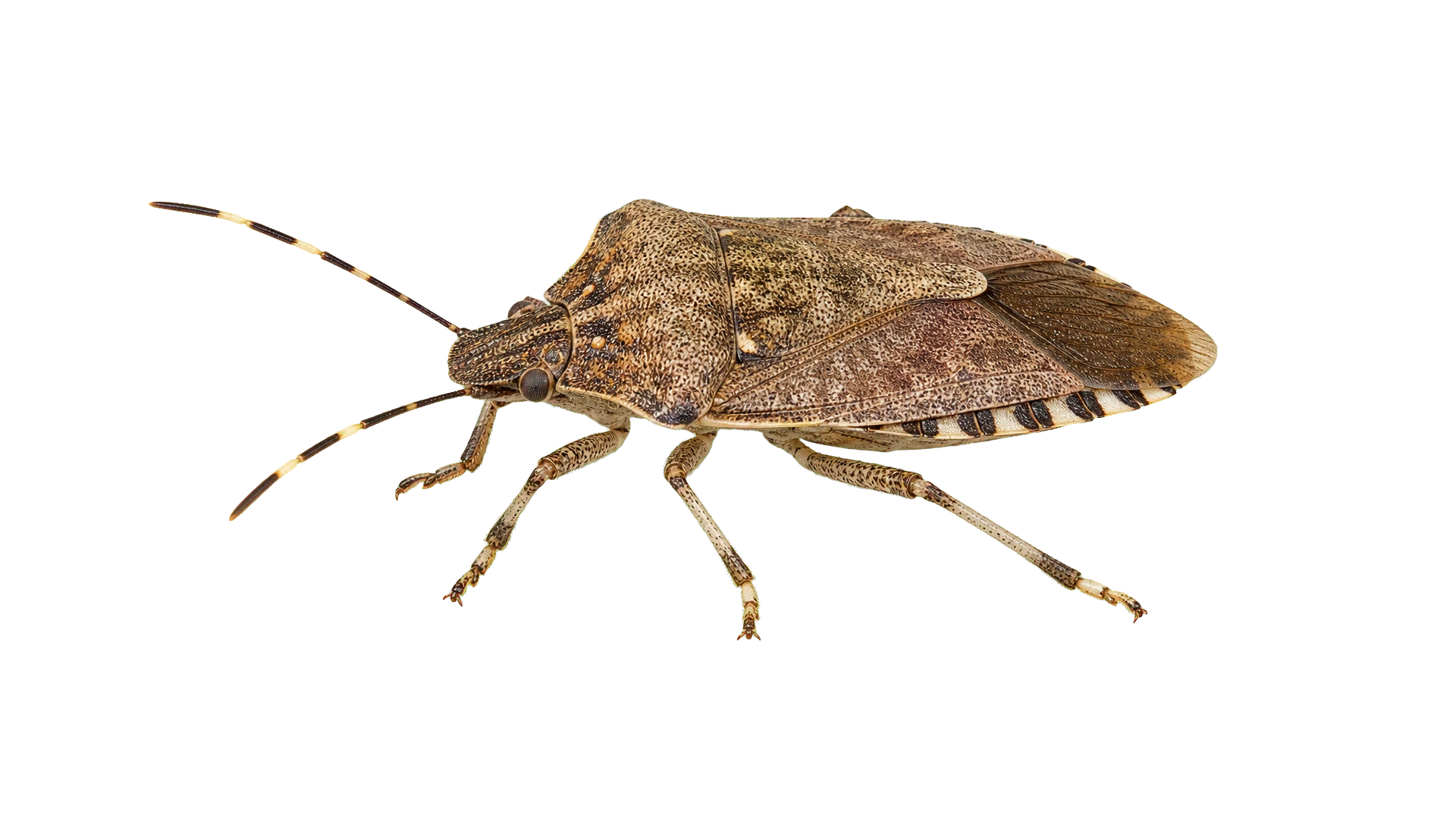
Brown marmorated stink bugs (Halyomorpha halys) are flat shield-shaped insects about 12 to 17 millimeters long, with a mottled brown-gray body. The word 'marmorated' means marbled, which is exactly what the body looks like up close. Three features taken together give you a confirmed ID, no other bug in your yard has all of them: white bands on the antennae (specifically segments 3 and 4), white bands on the dark legs, and alternating dark and light banding visible along the edges of the abdomen between the wings. They were brought to Pennsylvania from Asia in 1996, probably as stowaways in shipping material, and they're now established in 47 or more US states and still spreading. They've been ranked among the worst invasive species in US history.

If you're finding shield-shaped brown bugs piling up on your sunny exterior walls in October, then showing up sluggishly on your indoor window sills on warm winter days, that's almost certainly BMSB. This guide covers how to confirm the ID, why fall is the only season treatment really matters, and how to stop the cycle before next year's invasion.

Close-up illustration of a brown marmorated stink bug showing the shield-shaped body, mottled brown-gray coloring, white-banded antennae, and the alternating dark and light banding along the abdomen edges

ID Card: Brown Marmorated Stink Bug

Scientific name
Halyomorpha halys
Color
Brown, gray
Size
1/2 to 5/8 inch
Body shape
Shield-shaped, mottled brown with banded antennae
Antennae
Straight, 5 segments with alternating light and dark bands
Key evidence
Mass invasions in fall, pungent cilantro-like smell, damage to fruit crops
Also known as
BMSB, Marmorated stink bugs, Shield bugs

Call to get matched with a local pest control pro.

Available 24/7
(888) 495-1510
  • Specialists who know BMSB invade in September through November and treat before the swarm arrives
  • Exterior perimeter and entry-point sealing built around south- and west-facing walls
  • Indoor vacuum removal techniques that don't release the defensive odor crushing causes

Where to Inspect for Brown Marmorated Stink Bug Activity

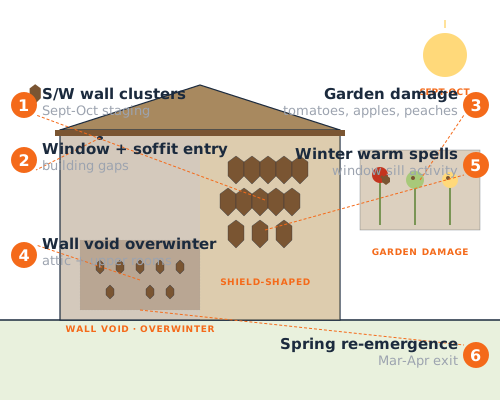
Cross-section illustration showing the brown marmorated stink bug yearly cycle, summer feeding on garden crops, fall mass aggregation on south-facing walls, winter overwintering inside attics and wall voids, and spring re-emergence at windows

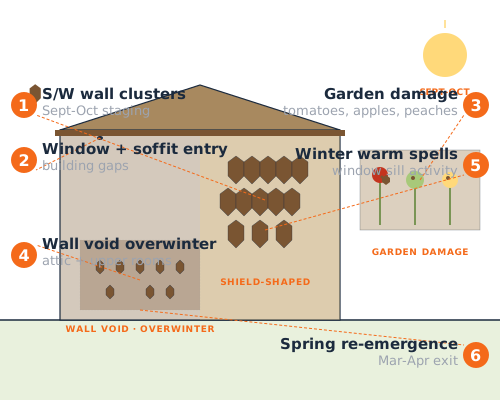
BMSB activity moves through your property on a strict seasonal track: summer feeding on plants outdoors, fall pile-up on warm walls, winter overwintering in hidden voids, and spring re-emergence. Each phase has its own hot zones, and the only way to time treatment correctly is to know what to check for and when:

  • South- and west-facing exterior walls in late September through November, This is the pre-invasion staging area. Dozens to thousands of bugs cluster on the sunniest sides of the home soaking up heat before they push inside for the winter.
  • Around windows, door frames, and the gaps behind shutters, The actual doorways during fall invasion. BMSB squeeze through openings smaller than a pencil eraser, so look at every seam, weatherstrip edge, and trim joint.
  • Attic louvre vents, gable vents, and gaps under siding, Major upper-level entry routes. Once inside, BMSB head straight for attics, wall voids, and behind insulation to overwinter, which is why thousands per home have been documented in the mid-Atlantic.
  • Inside light fixtures, ceiling fixtures, and along window sills in winter, On warm winter days the overwintering bugs wake up sluggishly and fly toward light. Slow-moving stink bugs on a January window sill confuse homeowners who thought the fall invasion was over.
  • Orchard and garden crops in summer, Active feeding on apples, peaches, pears, tomatoes, peppers, soybeans, corn, and grapes. BMSB pierce fruit and stems with sucking mouthparts, leaving scars and dimples that make the produce unsellable.
  • Old fall aggregation spots, year after year, BMSB leave scent marks at last year's overwintering sites that draw returning bugs to the same home. A house that had a bad invasion last fall is the favorite home address for this fall's bugs.

The most important rule with BMSB: once they're inside the wall voids and attic insulation, treatment can't reach them. Spraying the kitchen window where a sluggish bug landed in February does almost nothing. The only treatment window that actually moves the needle is exterior perimeter application in late August or early September, before the staging swarm builds on the walls. Homes that get the timing right cut their fall invasion by 80 to 95 percent. Homes that wait until they see hundreds of bugs indoors in October are stuck with whatever already made it in.

Cross-section illustration showing the brown marmorated stink bug yearly cycle, summer feeding on garden crops, fall mass aggregation on south-facing walls, winter overwintering inside attics and wall voids, and spring re-emergence at windows
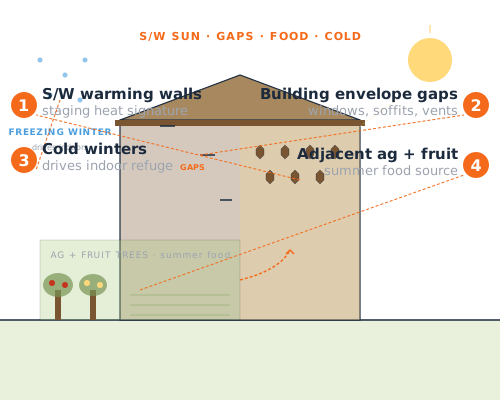
Illustration showing how brown marmorated stink bugs enter homes during fall mass aggregation, through window seams, soffit joints, attic vents, and gaps behind shutters on south- and west-facing walls

Why Do I Have Brown Marmorated Stink Bugs?

Finding them is step one. Understanding why your property got picked is what stops next fall's invasion from being just as bad. BMSB don't choose homes at random. They follow heat signatures and chemical scent marks from previous years, then enter through the smallest gaps they can find. Most older suburban homes happen to check every box on their list.

What anchors them to your property:

  • Established invasive range, BMSB are now in most US states east of the Rockies, with mid-Atlantic, Northeast, and Pacific Northwest homes hit hardest
  • South- or west-facing walls that bake in the late September sun, the heat signature BMSB use to pick their staging spot
  • Many small gaps in the building envelope, especially window seams, attic vents, soffit joints, and the spaces behind shutters, BMSB are remarkable at finding gaps a quarter-inch or smaller
  • Mature trees, orchards, or large garden plots within flying distance, the summer feeding grounds that fuel the local population now headed to your house in fall
  • A previous-year invasion at the same property, scent marks left by last year's aggregating bugs draw this year's swarm back to the exact same walls

BMSB don't lay eggs in your walls. They're using your home strictly as a winter hideout. The bugs you see crawling up to your window in March are the same ones that came in last October, the colony doesn't grow indoors. But each spring's overwintered adults fly out to feed and reproduce on outdoor plants, and the offspring become the next fall's invasion. The fastest way to break the cycle is to stop the bugs from getting in this year, not to chase the ones already hiding behind the drywall.

How Serious Is Your Brown Marmorated Stink Bug Problem?

Find your scenario below. BMSB severity is mostly about how many bugs you saw last fall and how disruptive the indoor population gets through winter and spring.

What You're Seeing Severity If Untreated Next Step
A handful of stink bugs on the exterior wall in early fall, maybe one or two indoor sightings Early Numbers grow each year as scent marks accumulate on the same walls Confirm the ID with the white antennae bands. Schedule a pre-fall exterior treatment for late August. Seal the visible gaps now.
Dozens of bugs clustering on south or west walls in October, some making it indoors Moderate Indoor population will be obvious through winter; spring re-emergence will be a daily annoyance for weeks Call a professional this week for exterior treatment plus a sealing pass before invasion intensifies.
Hundreds to thousands aggregating on the exterior, indoor swarms, family complaints about odor High Same-pattern invasion repeats every fall; scent marks make the property a permanent target Same-week professional treatment plus intensive vacuum-based indoor removal. Plan exterior application for next August.
Year-over-year mass invasion, winter indoor emergence in multiple rooms, agricultural damage to nearby fruit trees or garden Urgent Quality of life drops during fall and spring; crop losses on apples, peaches, and tomatoes are likely measurable Call today for a multi-year comprehensive program with outdoor habitat consultation and recurring exterior treatment.
A handful of stink bugs on the exterior wall in early fall, maybe one or two indoor sightings
Severity Early
If Untreated Numbers grow each year as scent marks accumulate on the same walls
Next Step Confirm the ID with the white antennae bands. Schedule a pre-fall exterior treatment for late August. Seal the visible gaps now.
Dozens of bugs clustering on south or west walls in October, some making it indoors
Severity Moderate
If Untreated Indoor population will be obvious through winter; spring re-emergence will be a daily annoyance for weeks
Next Step Call a professional this week for exterior treatment plus a sealing pass before invasion intensifies.
Hundreds to thousands aggregating on the exterior, indoor swarms, family complaints about odor
Severity High
If Untreated Same-pattern invasion repeats every fall; scent marks make the property a permanent target
Next Step Same-week professional treatment plus intensive vacuum-based indoor removal. Plan exterior application for next August.
Year-over-year mass invasion, winter indoor emergence in multiple rooms, agricultural damage to nearby fruit trees or garden
Severity Urgent
If Untreated Quality of life drops during fall and spring; crop losses on apples, peaches, and tomatoes are likely measurable
Next Step Call today for a multi-year comprehensive program with outdoor habitat consultation and recurring exterior treatment.

BMSB invasion timing is narrow, late August through September is the only effective treatment window. If you're between two rows, treat the higher one as your situation.

How Brown Marmorated Stink Bugs Develop

BMSB run a single generation per year in most US states (two in the warmest southern states). Adults overwinter, mate outdoors in spring, and the cycle resets. Understanding the calendar is everything because the treatment window is narrow and the rest of the year offers almost nothing useful.

  1. Egg

    About 4 to 5 days

    Females lay clusters of roughly 20 to 30 barrel-shaped light-green eggs on the undersides of host plant leaves through spring and summer. A single female produces 200 to 400 eggs across her active season. If you flip the leaves on an apple tree or tomato plant in June, the egg clusters are easy to spot.

  2. Nymph

    About 4 to 5 weeks across 5 instar stages

    Nymphs hatch and start feeding on plants immediately. Young nymphs are bright orange and red with black markings, completely different from the adult coloring. Each instar molt brings them closer to the brown-gray adult look. Significant agricultural damage to apples, peaches, soybeans, peppers, and tomatoes happens during this stage.

  3. Adult (summer feeding)

    Active outdoors through summer

    New adults emerge in mid to late summer with the shield body, mottled brown coloring, and the white antenna and leg bands fully developed. They feed heavily on crops and ornamentals. By late August, they start staging on warm walls in preparation for the fall move indoors.

  4. Adult (overwintering)

    October through April inside heated structures

    Adults invade homes through October and November, settle into attics, wall voids, behind insulation, and inside seldom-used upper rooms. They enter near-dormancy through the coldest months. Warm winter days trigger short bursts of activity, the sluggish bugs that show up on window sills in January. Spring re-emergence in March and April restarts the outdoor cycle.

The one-generation-per-year pattern in most of the BMSB range means each fall's invasion is largely the same bugs that hatched and grew up outdoors that same summer. Treating now reduces this year's invasion. Treating every August across multiple years reduces the local population that keeps pressuring the house. Plus, the scent marks left at every overwintering site call returning swarms back, so breaking the cycle has compounding value.

When Brown Marmorated Stink Bugs Are Most Active

BMSB run a sharp seasonal calendar that drives every part of treatment timing. Each season has a different right move, and the consequences of getting the timing wrong land hard.

  • Spring

    Overwintered adults emerge from attics and wall voids in March and April, fly to windows trying to get out, then disperse to outdoor plants for feeding and egg-laying. Indoor sightings often spike here, the bugs aren't new arrivals; they're winter residents trying to leave. Outdoor populations build through May and June as eggs hatch on host plants.

  • Summer

    Outdoor feeding on garden crops, fruit trees, and ornamentals. Nymphs go through five instar stages, getting bigger and darker each molt. Agricultural damage becomes obvious on apples, peaches, pears, soybeans, peppers, tomatoes, and grapes. Summer is the planning window for fall treatment, not yet the action window. Mid-Atlantic apple growers alone lose more than $37 million a year to BMSB damage.

  • Fall

    Late August through November is the entire ball game. Bugs stage on warm south- and west-facing walls in September and October, then push inside through October and November. Exterior treatment in late August catches them at staging, before invasion. By the time bugs are showing up indoors in late October, the prevention window has closed for the year.

  • Winter

    Adults overwinter in attics, wall voids, behind insulation, and inside seldom-used upper rooms. On unseasonably warm winter days, the bugs wake up sluggishly and fly toward light, the slow-moving stink bugs on a January window sill that confuse homeowners who thought the fall invasion was over. Vacuum is the right tool, never crushing.

Why Brown Marmorated Stink Bugs Need Professional Help

BMSB control runs on one of the strictest calendars in residential pest work, and most homeowners miss the window because the visible problem (bugs indoors) shows up after the entry already happened. By the time you're seeing bugs in the kitchen in mid-October, exterior treatment is too late to stop the invasion already underway. By November when the indoor population is undeniable, the bugs are tucked into wall voids and attic insulation where no spray can reach them. The next real chance at prevention is the following August, almost a full year away.

DIY mistakes follow the same pattern every fall. Homeowners notice bugs indoors in October, grab a household spray from the hardware store, knock down what's visible, and watch fresh bugs keep appearing all through November. Indoor sprays don't reach the wall voids the bugs are settling into, and worse, crushing the bugs releases the defensive odor that gives them their name, described as cilantro mixed with skunk and rotten coconut. The smell sticks to hands and clothing for hours. The right move was treatment in late August, but the homeowner discovers this in November, far too late.

A specialist who handles BMSB always starts with a calendar check. If it's late August or early September, exterior perimeter treatment and entry-point sealing happen immediately. If it's October or later, the conversation shifts to vacuum-based indoor removal for the current invasion plus a scheduled exterior treatment for next August. Honest specialists explain the timing rather than overpromising mid-fall results that aren't physically possible to deliver.

Long-term success requires annual exterior treatment plus complete sealing of the building envelope. BMSB pressure is permanent in most of their established US range, the local population isn't going away. Scent marks left at last year's overwintering sites attract new bugs back to the same walls every fall. The choice is between living with annual mass invasion (and the odor that comes with it) or committing to a recurring late-summer treatment that holds indoor numbers at near zero. Homes that commit to the recurring program report a dramatic quality-of-life improvement within one cycle.

What Changes When a Pro Shows Up

BMSB treatment is timing work. A specialist treats the exterior in late August or early September, before the staging swarm forms, and seals the small entry points stink bugs are known for finding. Anything done after October is cleanup, not prevention. Here's what changes:

Pest control technicians after completing a brown marmorated stink bug exterior perimeter treatment and entry-point sealing
  • Local Pest Control
  • 24/7 Availability
  • Quality Workmanship
  • Eco‑Friendly Options
  • Trusted by Homeowners
  • Pre-Fall Exterior Perimeter Application

    Long-residual product applied to exterior walls in late August, with extra coverage on the south and west exposures. Bugs landing on treated walls during the staging window pick up the active ingredient and die before they find their way inside.

  • Full Entry-Point Inventory and Seal

    Caulk for window seams, weatherstripping for door thresholds, fine mesh for attic louvre and gable vents, and a careful pass behind shutters and along siding seams. BMSB use gaps narrower than a quarter inch, so the seal has to be complete to hold.

  • Indoor Vacuum Removal (Don't Crush)

    When bugs are already inside, vacuum service handles visible insects without releasing the defensive odor. Crushing BMSB releases a smell described as cilantro mixed with skunk and rotten coconut, persistent on hands and clothing, so vacuum is always the right tool.

  • Annual Recurring Program

    BMSB pressure doesn't go away. Scent marks at previous overwintering sites draw new bugs back to the same walls every fall. Annual late-summer treatment is what turns a recurring nightmare into background noise the household barely notices.

  • Local Pest Control
  • 24/7 Availability
  • Quality Workmanship
  • Eco‑Friendly Options
  • Trusted by Homeowners
NoToPests home

One call connects you with a local specialist who knows brown marmorated stink bugs and your area.

Be Ready When You Call

Pest control technician arriving for a brown marmorated stink bug exterior treatment and entry-point sealing visit
Junho L.
Daisuke P.
Kirk Q.
Marion K.

Trusted by homeowners nationwide

Call for Pest Control Help (888) 495-1510

Can You Handle This or Do You Need Help?

DIY work matters for BMSB, especially sealing and indoor vacuum removal. The piece DIY can't replicate is the long-residual exterior product applied in the late-August window. The honest question is whether you can commit to that timing year after year.

What DIY Can Do

Sealing the building envelope and removing visible indoor bugs are real DIY wins. Hardware-store exterior sprays usually fall short because their residual doesn't last the full fall staging window:

  • Confirm the ID using the white antenna bands on segments 3 and 4, white leg bands, and alternating banding along the abdomen edges
  • Caulk window seams, soffit joints, fascia gaps, and the gaps behind shutters; replace damaged window screens with tight-fitting mesh
  • Vacuum visible indoor bugs (never crush, the defensive odor releases and sticks to hands and clothing for hours); empty the vacuum bag into outdoor trash the same day
  • Install door sweeps and fresh weatherstripping at every exterior door before the late-September staging swarm builds
  • Cover attic louvre vents and gable vents with fine mesh that still allows airflow but blocks adult stink bugs
  • Switch outdoor lights to yellow bulbs during the fall window, BMSB are less attracted to yellow than to white light
  • What DIY cannot reliably do: deliver a long-residual exterior treatment that holds through the entire August-through-October staging window.

What a Pro Does Differently

A professional brings the long-residual product, the calendar discipline, and the entry-point inventory that hold through the entire fall pressure window:

  • Late-August exterior perimeter treatment with extended-residual product that covers the staging weeks
  • Full entry-point inventory plus seal, attic vents, soffit joints, fascia gaps, behind shutters, window seams, every weakness
  • Indoor vacuum service when invasion is already underway, no crushing, no defensive odor release
  • Annual recurring program that prevents scent marks from anchoring next year's swarm at the same property
  • Agricultural and outdoor habitat consultation if you have an orchard, vineyard, or large vegetable garden nearby
  • Honest calendar conversations that draw a clear line between 'treat right now' and 'plan for next August.'

Suspect Brown Marmorated Stink Bugs? Don't Wait.

BMSB invasion timing is narrow and unforgiving. Missing the late-August window costs an entire year of indoor bugs, defensive odor, and warm-day window sill emergence. Connect with a local specialist who can plan the exterior treatment, full envelope sealing, and recurring annual program that actually holds invasion numbers at near zero.

Available 24/7
(888) 495-1510

What Homeowners Say After Getting Help

Real results from people who had the same problem and solved it.

Doris D.
Doris D.
Frederick, MD

"Fall stink bug invasions dropped sharply."

Stink bugs would cover our south-facing walls and find their way inside. The provider treated the exterior and sealed entry points around windows. The number that got inside dropped dramatically.

Doris D.
Doris D.
Frederick, MD

"Fall stink bug invasions dropped sharply."

Stink bugs would cover our south-facing walls and find their way inside. The provider treated the exterior and sealed entry points around windows. The number that got inside dropped dramatically.

Khalil J.
Khalil J.
Ann Arbor, MI

"Stink bug migration cut off at the exterior."

In the fall, stink bugs would cluster on the sunny side of the house and work their way inside. The provider treated the exterior before the migration and sealed the most common entry points. The difference was significant.

Silvana B.
Silvana B.
Allentown, PA

"Sunny-side stink bug entries sealed."

Stink bugs would cover our sunny-side walls and get inside through tiny gaps. The provider treated the exterior in late summer and sealed around windows and doors. The number that got inside dropped to almost zero.

Latoya B.
Latoya B.
Wheeling, WV

"South wall sealed against stink bugs."

Stink bugs would swarm our south-facing walls and find their way inside through every crack. The pro treated the exterior and sealed around windows. The number getting inside dropped to almost none.

Simon Q.
Simon Q.
Cabot, AR

"October stink bug entries sealed up."

Every October, stink bugs would cluster on the sunny side of the house and squeeze inside. The tech sealed window and door frames and treated the exterior. The number of bugs getting inside dropped to nearly zero.

Lamar T.
Lamar T.
Meriden, CT

"Indoor stink bug numbers fell to nearly none."

Dozens of stink bugs would gather on the windows every fall and find their way inside. The inspector sealed gaps around window frames and treated the exterior. The following fall, the number getting inside was negligible.

Tatiana S.
Tatiana S.
Seaford, DE

"Window screen stink bugs cleared yearly."

Brown marmorated stink bugs covered our screens each fall. The provider treated the exterior walls and sealed gaps around utility penetrations. They explained the annual cycle so we could start prevention earlier each year.

Yusuke K.
Yusuke K.
Moscow, ID

"Fall stink bug entries cut down to nearly zero."

Stink bugs gathered on the south-facing walls every autumn and made their way inside. The provider sealed window and door frames and treated the exterior. The following fall, the number getting inside dropped to almost zero.

Leah I.
Leah I.
Normal, IL

"Stink bug invasion cut from dozens to a few."

Each autumn, stink bugs would congregate on the south wall and enter through gaps around the windows. The provider sealed the entry points and treated the exterior. The annual invasion dropped from dozens to just a handful.

Laurie P.
Laurie P.
Carmel, IN

"Window tracks sealed against stink bugs."

Stink bugs collected in the window tracks and behind curtains every fall. The provider sealed the windows and treated the exterior with a barrier. The improvement was noticeable the very next season.

Trevon O.
Trevon O.
Muscatine, IA

"Stink bug entries cut by over ninety percent."

Every autumn, stink bugs found their way inside despite our efforts. The provider sealed dozens of tiny gaps around windows, doors, and utility lines. The comprehensive sealing job cut the number getting inside by over ninety percent.

Cathy M.
Cathy M.
Ashland, KY

"South-side stink bug entries sealed up."

Every fall, stink bugs would cover the south-facing wall and find their way inside through window gaps. The provider sealed the exterior and treated the wall. The number getting inside dropped dramatically.

Marsha E.
Marsha E.
Salisbury, MD

"South wall sealed and stink bugs cut dramatically."

Stink bugs gathered on the south wall and squeezed through window gaps each fall. The provider sealed the exterior and treated the siding. The following autumn saw a dramatic drop in the number getting inside.

Hannah C.
Hannah C.
Haverhill, MA

"October stink bug invasion sharply reduced."

Stink bugs covered the south side of the house each fall. The provider treated the exterior and sealed around window frames and vents. The following fall, the number getting inside was reduced dramatically.

Marisol K.
Marisol K.
Port Huron, MI

"Indoor stink bugs cut to just a few."

Brown marmorated stink bugs covered the windows every October. The provider sealed exterior gaps and treated the siding. The number finding their way indoors dropped to just a few.

Arnav N.
Arnav N.
Sedalia, MO

"South wall stink bug entries closed up."

Stink bugs gathered on the south wall and found their way inside through window gaps. The provider sealed the windows and treated the exterior. The number getting inside dropped to almost zero the following year.

Lola Z.
Lola Z.
La Vista, NE

"Window frames sealed and stink bugs cut."

Every October the south-facing windows looked like they had a polka dot pattern from the outside, and inside I was vacuuming up dozens daily. The crew caulked the trim, treated the siding, and replaced the worst weatherstripping. This past fall I counted maybe four indoors total. My husband, who hated these the most, is finally happy.

Leonard E.
Leonard E.
Derry, NH

"Exterior sealed and stink bugs cut dramatically."

Stink bugs covered the south wall and entered through window gaps each autumn. The provider sealed the exterior and treated the siding. The improvement was dramatic the following season.

Julia W.
Julia W.
Vineland, NJ

"Window gaps sealed and stink bugs out."

Late September the south wall would look like a polka dot pattern and the kids found one in the cereal one morning. That was the last straw. The crew caulked around every window on the warm side, treated the siding, and walked me through what to watch for. This past fall I think I saw three indoors total instead of dozens.

Makoto T.
Makoto T.
Poughkeepsie, NY

"Indoor stink bug numbers cut dramatically."

Vacuumed up about fifteen of them off the bedroom curtains one Sunday morning in October. My wife was beyond done with the cilantro smell. The crew caulked around every window on the south side, treated the exterior, and replaced two pieces of weatherstripping. This year I counted about five total indoors.

Federico F.
Federico F.
Mooresville, NC

"Indoor stink bugs cut down to nearly zero."

Brown marmorated stink bugs gathered on the windows each autumn. The provider sealed exterior gaps and treated the siding. The number getting inside dropped to nearly zero.

Matias A.
Matias A.
Lorain, OH

"Exterior sealed and stink bug invasion minimal."

Every year around the second week of October the lampshade in the living room would have stink bugs clinging to it. My daughter is terrified of them. The crew caulked around every window and trim piece on the south side, treated the siding, and replaced two failing pieces of weatherstripping. This past October my count was three indoors total.

Joaquin F.
Joaquin F.
Ashland, OR

"Indoor stink bugs cut significantly."

We have a sunny south wall and every October it became a stink bug magnet. Found one in the dog's water bowl one morning and that was it. The tech caulked every gap around the windows, treated the siding, and showed me where they were squeezing in behind the vinyl trim. This past fall the indoor count was maybe four total. The dog approves.

Shannon W.
Shannon W.
State College, PA

"Stink bug entries cut from dozens to a few."

Brown marmorated stink bugs invaded every fall. The provider sealed around windows and treated the exterior. The number entering dropped from dozens daily to just a few.

Carlos W.
Carlos W.
Barrington, RI

"Sunny window stink bug entries sealed."

Every October the sunny windows would have a polka dot pattern of stink bugs from the outside in. The tech sealed gaps around the trim and treated the exterior in early September. The following fall the indoor count was a fraction of what we used to see. The cilantro smell is gone too.

Adriana N.
Adriana N.
Aiken, SC

"Exterior sealed and stink bug entries dropped."

Stink bugs gathered on the south wall and entered through window gaps. The provider sealed the exterior and treated. The following fall saw a significant drop in indoor activity.

Howard X.
Howard X.
Cookeville, TN

"South wall stink bug entries sealed up."

Late September would roll around and the south wall would be polka-dotted with stink bugs from the outside. Inside, I was vacuuming up dozens daily off the windowsills. The tech caulked every gap around the trim and treated the siding. This past fall I think I saw four inside the whole month. Big improvement.

India K.
India K.
Essex Junction, VT

"Indoor stink bug numbers dropped sharply."

October would roll around and I would find stink bugs everywhere: lampshades, the bathroom mirror, the cat's food bowl. The tech caulked every gap around the south-facing windows and treated the siding in early September. Made a huge difference this past fall. The cat is happier and so am I.

Felipe L.
Felipe L.
Danville, VA

"Windows sealed and stink bugs cut sharply."

First frost is when we noticed them every year, dozens on the south-facing windows and a handful indoors. Vacuumed them up and felt the smell on my hands for hours. The tech caulked the trim around every window on that side, treated the siding, and replaced the worst weatherstripping. Last fall I think I saw four inside the whole month of October.

Catherine E.
Catherine E.
Lacey, WA

"Exterior sealed and stink bugs reduced."

Stink bugs gathered on the warm side of the house each fall. The provider sealed gaps and treated the exterior. The following autumn showed dramatic improvement.

Rodney M.
Rodney M.
Bluefield, WV

"Sunny window gaps sealed against stink bugs."

Vacuumed up a small army of stink bugs off the dining room curtains the second week of October every year. The smell when you crush one is something else. The tech caulked every window on the warm south side, treated the siding in late summer, and swapped two failing strips of weatherstripping. The number indoors this past fall was a fraction of what we used to see.

Nyla I.
Nyla I.
Waukesha, WI

"South wall sealed and stink bugs cut."

Late September the warm side of the house turned into a stink bug billboard. I would vacuum dozens off the screen door every morning before the kids went to school. The tech caulked the trim around every window on that side, treated the siding in early September, and made me a believer in late-summer timing. This past fall, indoor count was way down.

Common Questions About Brown Marmorated Stink Bugs

Direct answers to what homeowners ask most about identification, fall invasion timing, the defensive odor, and the recurring program that actually works.

  • How do I identify brown marmorated stink bugs versus native stink bugs? Toggle answer for: How do I identify brown marmorated stink bugs versus native stink bugs?

    Brown marmorated stink bugs (BMSB) are shield-shaped, about 5/8 inch long, and are distinguished from native stink bug species by several key features: alternating light and dark bands on their antennae (the last two segments show distinct light-dark-light banding), smooth shoulders (the pronotum edges lack the pointed spines that many native species have), and alternating dark and light bands along the exposed edge of the abdomen. Their marbled brown coloring gives them their name. Native green stink bugs and brown stink bugs are present year-round in gardens but do not form the massive fall home-invading aggregations that BMSB are notorious for, if stink bugs are swarming your exterior walls in October, they are almost certainly BMSB.


  • What is the most effective way to remove stink bugs that are already inside? Toggle answer for: What is the most effective way to remove stink bugs that are already inside?

    The most effective way to remove live stink bugs indoors without triggering their defensive odor is to gently sweep or flick them into a container of soapy water, which quickly drowns them. Vacuuming works for large numbers but can cause the bugs to release their odor inside the vacuum, using a dedicated shop vacuum or placing a knee-high stocking inside the vacuum hose (secured with a rubber band) to create a removable bag helps contain the smell. Never crush stink bugs indoors, as their defensive secretion stains surfaces and produces a pungent, cilantro-like odor that lingers. Long-term prevention requires sealing exterior entry points before the fall migration, as no indoor treatment effectively prevents bugs already in wall voids from emerging on warm days.

  • Why do stink bugs keep getting into my house? Toggle answer for: Why do stink bugs keep getting into my house?

    Stink bugs are overwintering pests, and theyenter homes in fall seeking a warm, sheltered place to survive winter. They squeeze through cracks around windows, door frames, siding gaps, utility penetrations, and attic vents. Once inside, they become dormant in wall voids and attics. On warm winter days, they sometimes emerge indoors, which is why you see them on walls and windows mid-season.

  • Are stink bugs harmful? Toggle answer for: Are stink bugs harmful?

    Stink bugs don't bite, sting, or cause structural damage. Their primary nuisance is the pungent odor they release when crushed or disturbed, adefensive chemical that can stain fabrics and surfaces. In large numbers, they're a significant annoyance indoors. They're also a major agricultural pest, causing substantial crop damage to fruit trees, vegetables, and ornamental plants.

  • How quickly can a provider get to my home? Toggle answer for: How quickly can a provider get to my home?

    Most providers in our network can schedule an inspection within 24-48 hours. For urgent situations, likeactive structural damage or large colonies, same-week emergency service is often available. Response times depend on your location and the provider's current schedule.

  • What happens during the first visit? Toggle answer for: What happens during the first visit?

    Your provider inspects the property to identify the pest, locate nesting or entry points, and assess the scope of the problem. You get a clear explanation of what they found, what they recommend, and a written scope before any work begins.

  • Is treatment safe for kids and pets? Toggle answer for: Is treatment safe for kids and pets?

    Modern pest control products are designed to break down quickly after application and pose minimal risk to people and pets when applied correctly. Most providers ask you to keep kids and pets out of treated areas for 1 to 2 hours while the product dries, after which the area is generally safe again. Always confirm specific re-entry times with your provider, and let them know about pet birds, fish, or reptiles, since some treatments require extra precautions for those species.

Pest Control Pros serving the city of the state of your city and nearby areas

Local providers experienced with BMSB-specific late-August treatment timing, complete entry-point sealing, indoor vacuum service, and recurring annual prevention are ready to inspect, plan, and follow up, no obligation.

Available 24/7
(888) 495-1510