Local pest control help is one call away.

Carpet Moth: Identification, Treatment & Prevention

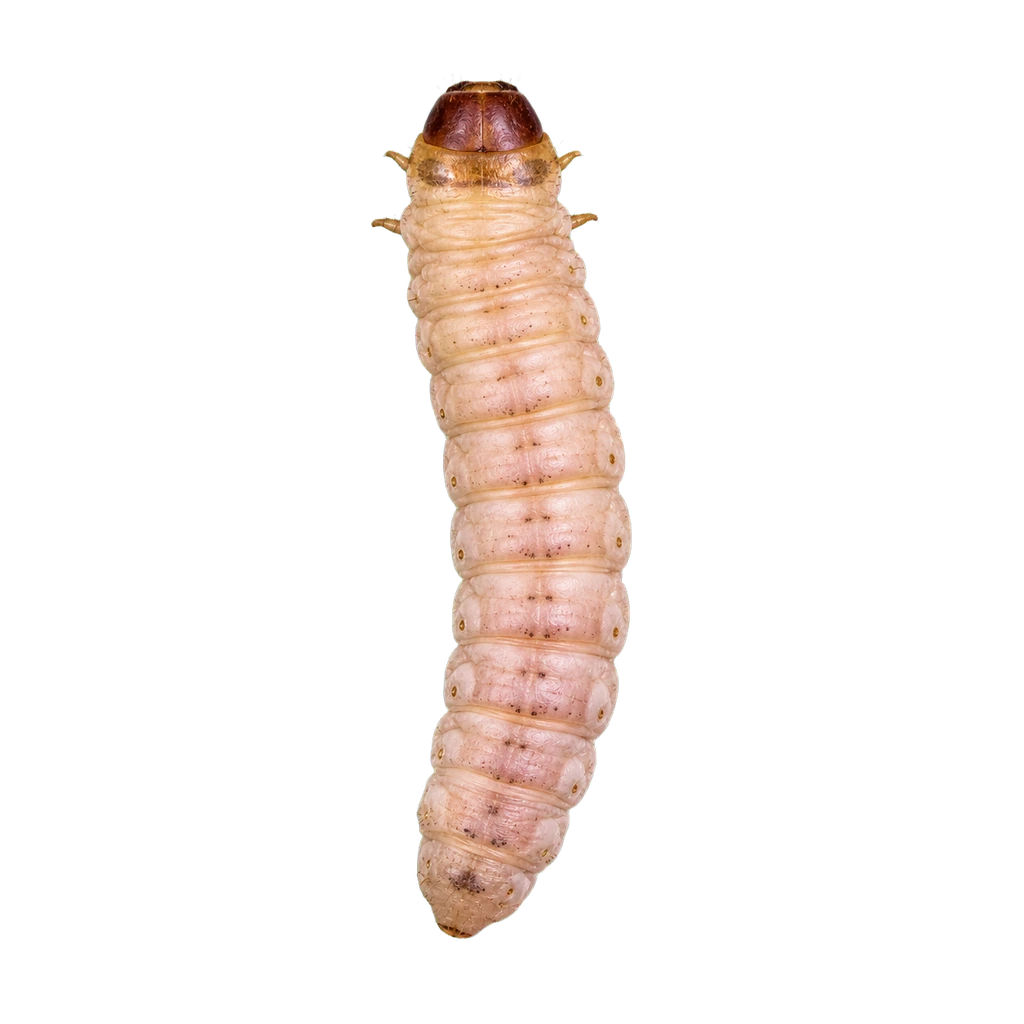
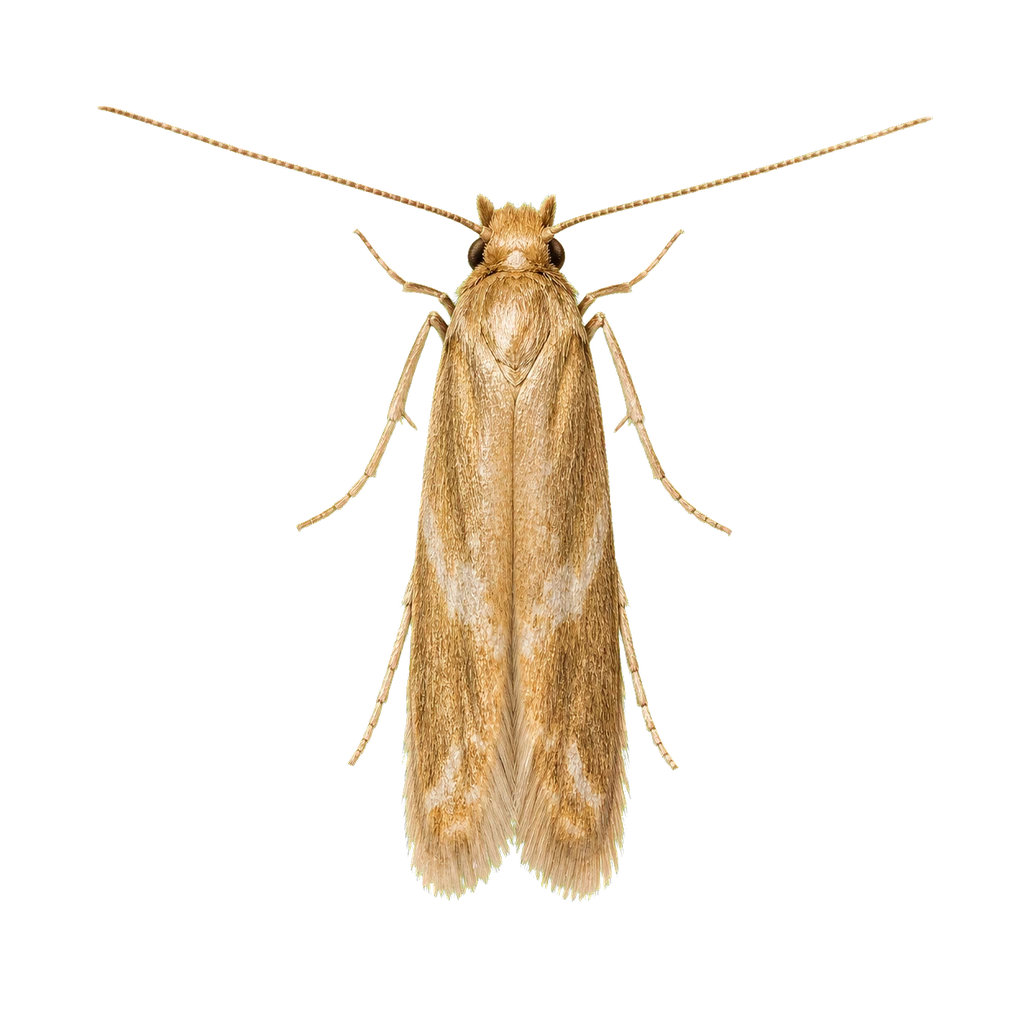
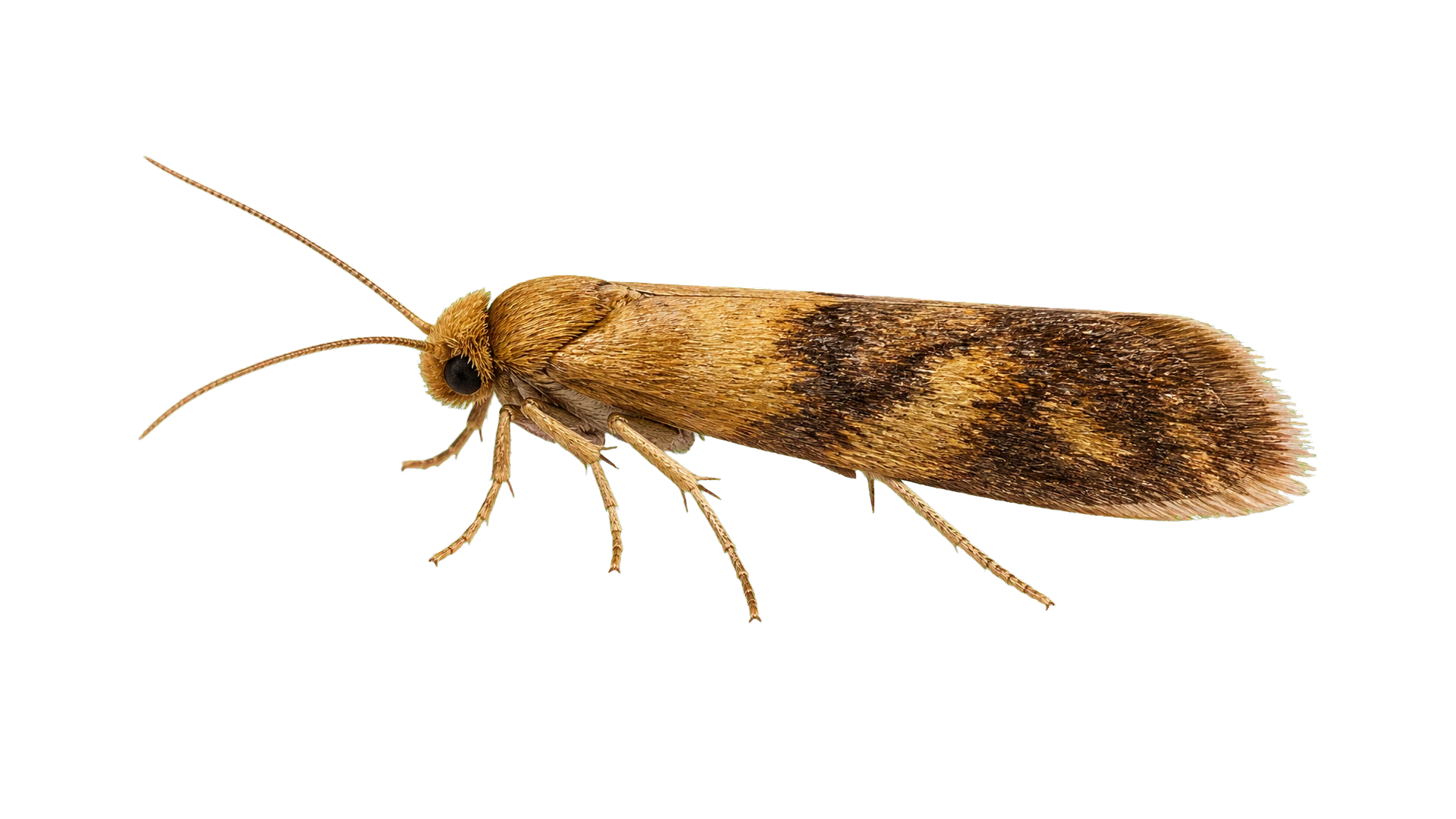
Carpet moths (also called tapestry moths) are larger relatives of clothes moths, with a wingspan of 14 to 18 millimeters. Adults have white forewings with dark bands and a dark head, the most reliable field marking that separates a tapestry moth from a regular clothes moth. The larvae are cream-colored with a darker head, 8 to 12 millimeters long, and they spin silk webbing or build small cases as they feed on wool. Unlike clothes moths, which target stored garments in dark closets, carpet moths feed on wool carpets, area rugs, wool tapestries, and natural-fiber upholstery, almost always in the parts you never look at.

If you are seeing white-banded moths fluttering in formal rooms or near antique rugs, plus bare patches at the base of a wool carpet or fine silk webbing along a rug edge, you likely have carpet moths. This guide covers how to confirm them, why under-furniture zones are the active feeding sites, how to handle valuable Persian and Oriental rugs, and what professional treatment looks like when wool tapestries or heirloom textiles are at risk.

Close-up illustration of a carpet moth showing white forewings with dark bands, a dark head, and a cream larva feeding on wool fibers

ID Card: Carpet Moth

Scientific name
Trichophaga tapetzella
Color
Brownish-gold, dark wing patches
Size
1/4 to 1/2 inch
Body shape
Small, narrow wings held flat against body
Antennae
Thread-like, moderate length
Key evidence
Bare patches in carpets and rugs, silken tubes at carpet edges
Also known as
Tapestry moths, Rug moths

Related Species

Call to get matched with a local pest control pro.

Available 24/7
(888) 495-1510
  • Specialists who inspect wool rugs, carpets, and tapestries comprehensively
  • Treatment programs covering under-furniture zones and carpet baseboard edges
  • Conservator coordination for antique Persian, Oriental, and museum-grade textiles

Where to Inspect for Carpet Moth Activity

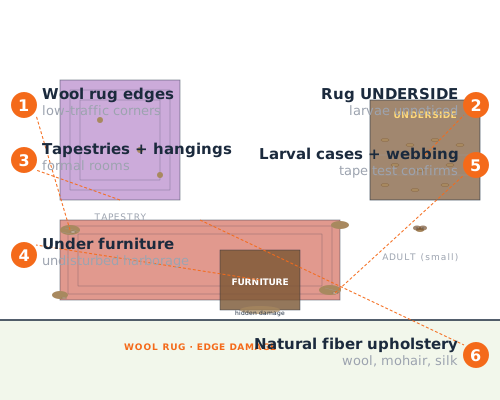
Cross-section illustration showing carpet moth damage to a wool rug, bare patches at the base of the pile, silk webbing under furniture, and cream-colored larvae feeding on the underside of the rug

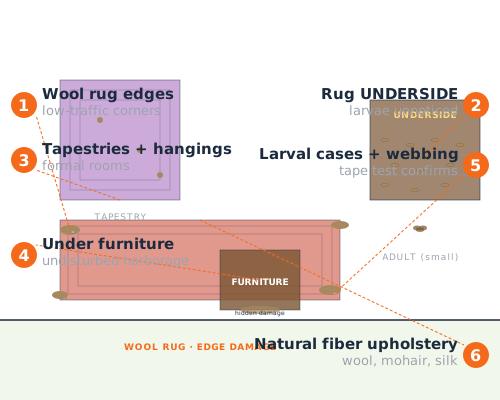
Carpet moth larvae feed on wool in the darkest, most undisturbed corners of a room. Damage almost never appears in the middle of a floor where vacuums and foot traffic disturb the fibers. It hides under furniture, along baseboards, and at rug edges. Walk these zones with a flashlight and move furniture to expose the wool underneath:

  • Underneath area rugs and runners, Roll back every wool rug and inspect the underside. Larvae feed on the bottom face of the rug where it sits flush against the floor, damage often shows as bare patches in the pile before any top-surface symptoms appear.
  • Wall-to-wall wool carpet along baseboards, Run your hand along the carpet edge where it tucks against the baseboard. Bare patches at the carpet base, fine silk webbing, or cream-colored larvae confirm an active population in the room.
  • Under heavy furniture corners, Sofas, armoires, and bookcases that haven't moved in months trap dark undisturbed wool underneath. Slide each piece and inspect the rug or carpet directly below, this is the #1 hot zone in most homes.
  • Wool tapestries and wall hangings, Lift each tapestry away from the wall and inspect the back face. Larvae feed on the rear of the tapestry where it touches the plaster, damage progresses for years before showing through to the visible side.
  • Wool upholstered furniture, especially under cushions, Pull out every cushion and inspect the deck wool, seam tape, and underside of the cushion itself. Antique chairs and sofas with wool batting are some of the highest-risk items in any home.
  • Antique wool items in long-term storage, Estate textiles, rolled Persian or Oriental rugs, vintage wool blankets, and inherited wool items often arrive with eggs already on the fibers. Inspect every fold, edge, and pile face before storage.

If you find bare patches plus silk webbing or larval cases in two or more of these zones, you have an active carpet moth population that has been running for at least one full generation. The damage compounds slowly because nobody looks under the sofa, by the time you notice the bare patch on the rug edge, larvae have been feeding for months. Antique Persian, Oriental, and heirloom rugs lose significant value once damage spreads, so catching the population while it is still confined to one rug or one corner is what protects the rest of the textile collection.

Cross-section illustration showing carpet moth damage to a wool rug, bare patches at the base of the pile, silk webbing under furniture, and cream-colored larvae feeding on the underside of the rug
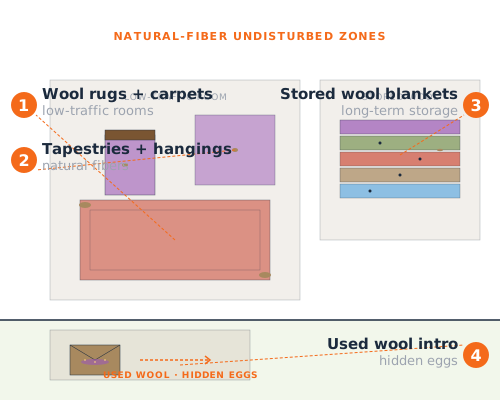
Illustration showing how carpet moths enter homes via antique rug purchases, estate textiles, and museum acquisitions, with feeding sites in dark undisturbed wool

Why Do I Have Carpet Moths?

Finding the bare patch is step one. Understanding what keeps the larvae fed is what protects the rest of your wool. Carpet moths are picky about location: they want dark, undisturbed wool that sits flush against a floor or wall for months at a time. Homes with wool wall-to-wall carpet, wool area rugs over hardwood, antique tapestries on plaster, or estate-inherited wool textiles are the ones where populations build up. The species is less common in U.S. homes than regular clothes moths, but more common in older urban houses, historic buildings, and properties with original wool floor coverings.

What anchors them to your home:

  • Wool carpets, wool area rugs, and antique Persian or Oriental rugs, these are the primary food source, larvae digest the keratin in animal-protein fibers and need nothing else
  • Wool tapestries, wall hangings, and historic textiles, the back face of a tapestry pressed against a wall is exactly the dark undisturbed feeding zone carpet moths require
  • Heavy furniture that hasn't moved in months, sofas, sideboards, armoires, and bookcases create permanent dark pockets where wool underneath stays undisturbed indefinitely
  • Recent acquisition of vintage wool items, antique rug purchases, estate inheritance, and museum acquisitions all introduce eggs or larvae already on the fibers

A new population usually starts when a single mated female finds a wool rug or tapestry that sits undisturbed for months. She lays 30 to 50 eggs directly on the fibers, eggs hatch in one to two weeks, and the larvae feed for five to eight weeks before pupating. In a heated home, multiple overlapping generations run every year. Because the feeding sites are hidden under furniture or behind tapestries, the colony often runs for a full year before the first bare patch is visible from a normal standing angle. Carpet moths concentrate damage in specific rooms rather than spreading throughout the home, that focus is both their weakness and the reason they go undetected for so long.

How Serious Is Your Carpet Moth Problem?

Find your scenario below. Each row reflects how a carpet moth population spreads through wool rugs, tapestries, and under-furniture zones, not a generic moth timeline.

What You're Seeing Severity If Untreated Next Step
Small bare patch on one wool rug plus visible silk webbing in that corner Early Larvae continue feeding under the rug; new generations every 2 to 3 months in a heated home Confirm the species. Vacuum the area thoroughly, roll the rug up, and freeze it 72 hours at 0°F if portable. Place pheromone traps to monitor adults.
Damage across multiple rugs or a wool tapestry plus visible larvae Moderate Population is established across multiple textiles; damage spreads to additional wool items within 2 to 3 months Schedule a professional inspection this week, plus a specialized rug-cleaning consultation for affected items.
Heirloom Persian or Oriental rug damage plus extensive larval activity High Irreplaceable textile is losing value weekly; damage compounds across pile and foundation Call a professional this week. Coordinate with a specialized antique rug cleaner before any chemical treatment touches the fibers.
Museum-grade or estate textile collection plus active infestation Urgent Irreplaceable items face active permanent loss; chemical treatment alone can damage historic fibers Call today. Request textile conservator coordination alongside pest management before any treatment is applied.
Small bare patch on one wool rug plus visible silk webbing in that corner
Severity Early
If Untreated Larvae continue feeding under the rug; new generations every 2 to 3 months in a heated home
Next Step Confirm the species. Vacuum the area thoroughly, roll the rug up, and freeze it 72 hours at 0°F if portable. Place pheromone traps to monitor adults.
Damage across multiple rugs or a wool tapestry plus visible larvae
Severity Moderate
If Untreated Population is established across multiple textiles; damage spreads to additional wool items within 2 to 3 months
Next Step Schedule a professional inspection this week, plus a specialized rug-cleaning consultation for affected items.
Heirloom Persian or Oriental rug damage plus extensive larval activity
Severity High
If Untreated Irreplaceable textile is losing value weekly; damage compounds across pile and foundation
Next Step Call a professional this week. Coordinate with a specialized antique rug cleaner before any chemical treatment touches the fibers.
Museum-grade or estate textile collection plus active infestation
Severity Urgent
If Untreated Irreplaceable items face active permanent loss; chemical treatment alone can damage historic fibers
Next Step Call today. Request textile conservator coordination alongside pest management before any treatment is applied.

Wool damage is permanent and antique-rug value drops sharply once pile loss is visible. If you are between two rows, treat the higher one as your situation.

How a Carpet Moth Population Develops

Carpet moths complete a full lifecycle in two to three months under typical home temperatures, similar to clothes moths but on a different food source. The larva is the only stage that damages wool, and multiple overlapping generations stack inside heated homes, which is why a single room with antique rugs can produce continuous activity year-round once the population establishes. Understanding the four stages tells you exactly why surface vacuuming isn't enough.

  1. Egg

    Hatch in 7 to 14 days

    Females glue 30 to 50 eggs directly onto wool pile, the underside of rugs, the back of tapestries, or wool batting inside upholstery. Eggs are about half a millimeter long and pale cream, they look like dust embedded in the fibers and almost never get spotted during a casual inspection. This is the stage that survives most DIY vacuuming.

  2. Larva

    About 5 to 8 weeks in heated homes

    Larvae are the damaging stage. They spin fine silk webbing across the wool as they feed and tunnel through the pile, leaving bare patches at the base of the carpet. Each larva is a cream-colored caterpillar 8 to 12 millimeters long with a darker head. They head to the undisturbed underside of rugs and the back of tapestries first, where light and movement never reach.

  3. Pupa

    About 8 to 10 days

    The larva spins a tougher silk cocoon and transforms into an adult inside a fold of carpet pile, under a piece of furniture, or behind a tapestry. This is the stage that finishes the development cycle inside the same wool item where the larva fed.

  4. Adult

    Adults live 2 to 3 weeks and do not feed

    Adults emerge with the diagnostic white-and-dark-banded forewings and a dark head, 14 to 18 millimeters across the wings, larger than a clothes moth. They mate quickly, and females start laying eggs within a day. The adults do not damage wool, but every adult flight signals another egg cycle has started on a nearby rug or tapestry.

An established carpet moth population can run three to four overlapping generations every year inside a heated home. The damage compounds quietly under furniture and behind tapestries, and pile loss on wool is permanent. Effective treatment has to kill all four stages together, surface vacuuming the visible damage does nothing about the eggs and larvae hidden under the rug or in the wool batting of a sofa.

When Carpet Moths Are Most Active

Carpet moths live entirely indoors and stay active year-round in any heated structure. The seasonal pattern is less about outdoor weather and more about when homeowners rearrange furniture or roll up wool rugs for cleaning, that is when most damage gets discovered.

  • Spring

    Spring cleaning that involves moving furniture or rolling up area rugs often reveals the first damage. Bare patches that have been forming under the sofa for months become visible the day the piece slides out. Adult flights also pick up as overwintering pupae emerge inside the home.

  • Summer

    Population growth peaks. Warm temperatures speed up the lifecycle, so a generation that takes 3 months in winter can finish in 6 to 8 weeks during summer. Wool rugs in low-traffic formal rooms keep the larvae fed continuously, and adult flights stay heavy through the warm months.

  • Fall

    Damage continues quietly as homes seal up for heating season. Homeowners pulling out wool throws and rotating textiles for cooler weather sometimes notice silk webbing or bare patches for the first time. Estate or inherited wool items brought into the home this season often introduce new eggs onto the fibers.

  • Winter

    Indoor heating keeps populations fully active year-round, even in cold climates. Adults emerge from pupae inside heated rooms, mate, and lay eggs on stored wool tapestries and antique rugs. Outdoor weather has no effect on indoor populations, the lifecycle just keeps running on the wool textiles in the home.

Why Carpet Moths Need Professional Help

Carpet moth work sits in an unusual middle ground. Light infestations confined to a single portable wool rug are absolutely a DIY job: roll the rug up, freeze it 72 hours at 0°F if it fits in a chest freezer, vacuum the floor underneath including baseboard edges, and place pheromone traps to monitor adult activity. That sequence kills every life stage on the rug and confirms whether the population is contained to one item.

Professional help becomes worth the $300 to $800 cost when wall-to-wall wool carpet is affected, when multiple area rugs show damage, when wool tapestries are involved, or when valuable Persian, Oriental, or heirloom rugs need treatment. The most common DIY failure is missing the larvae feeding on the underside of a large rug, the homeowner cleans the top surface, the larvae underneath survive, and a new visible adult flight appears six to eight weeks later.

A pro inspects every wool textile in the home, lifts rugs to examine the underside, slides heavy furniture to expose hidden feeding zones, treats baseboards and under-furniture areas with appropriate residuals, and recommends specialized cleaning by item type. For antique Persian and Oriental rugs, the specialist coordinates with an antique rug cleaner who knows how to process valuable wool without damaging the foundation or dyes. For museum-grade tapestries and historic wool textiles, a textile conservator gets involved before any chemical treatment touches the fibers.

The hard truth is that pile loss on wool cannot be repaired invisibly, and an antique rug's value drops sharply once damage is visible. The wait-and-see option costs nothing today and a significant portion of an irreplaceable rug's value tomorrow. Catching the population while it is still confined to one rug or one corner is what protects the rest of the textile collection.

What Changes When a Pro Shows Up

Carpet moth treatment is not a single can of spray over a rug. A specialist who handles wool textiles walks every room with wool floor coverings, lifts furniture to expose hidden feeding sites, and recommends specialized cleaning before any product touches the fibers. Here's what changes:

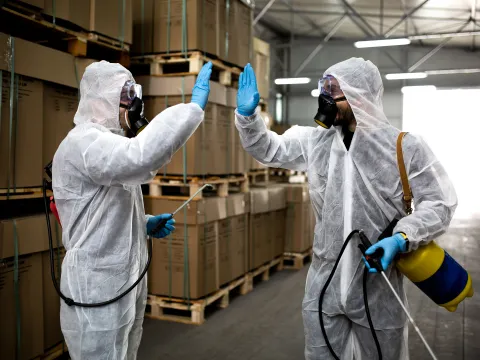
Pest control technicians after completing a carpet moth treatment service in a home with wool rugs
  • Local Pest Control
  • 24/7 Availability
  • Quality Workmanship
  • Eco‑Friendly Options
  • Trusted by Homeowners
  • They Lift Every Rug and Inspect Underneath

    Each wool rug gets rolled back so the underside, the feeding face for carpet moths, is fully exposed. Heavy furniture gets slid out of position so the wool below it can be inspected. The goal is to identify every active feeding zone before treatment begins, because skipping one rug edge means the population rebuilds from there.

  • They Recommend Cleaning by Item Type and Value

    Wool wall-to-wall carpet, modern wool area rugs, and antique Persian or Oriental rugs each require different processing. Specialists coordinate hot-water extraction, professional dry-cleaning, or freezer treatment based on the rug's construction, age, and value, the wrong process can damage the fibers worse than the moths.

  • They Treat Baseboards and Under-Furniture Zones

    Crack-and-crevice treatment goes along baseboards where wool wall-to-wall carpet meets the wall, plus under-furniture floor zones where heavy pieces normally sit. These are the residual feeding sites that a vacuum alone never reaches.

  • They Coordinate with Conservators for Heirloom Items

    Antique Persian and Oriental rugs, historic wool tapestries, and museum-grade textiles often warrant a textile conservator's review before any chemical treatment is applied. A real program coordinates with the conservator so pest management and preservation work together, not against each other.

  • Local Pest Control
  • 24/7 Availability
  • Quality Workmanship
  • Eco‑Friendly Options
  • Trusted by Homeowners
NoToPests home

One call connects you with a local specialist who knows carpet moths and your area.

Be Ready When You Call

Pest control technician arriving for carpet moth service
Junho L.
Daisuke P.
Kirk Q.
Marion K.

Trusted by homeowners nationwide

Call for Pest Control Help (888) 495-1510

Can You Handle This or Do You Need Help?

Carpet moth work depends on the value of the wool items at risk and how widespread the damage is. The split between DIY and pro is mostly about whether antique rugs, tapestries, or wall-to-wall wool carpet are involved.

What DIY Can Do

DIY handles small carpet moth situations confined to one portable rug. Useful steps with honest limits:

  • Identify the species, white-banded forewings and a dark head with cream larvae on wool confirms carpet moths versus regular clothes moths
  • Freeze small portable wool rugs for 72 hours at 0°F in a chest freezer, this kills every life stage on the rug
  • Move heavy furniture monthly so wool underneath is disturbed regularly, undisturbed wool is the feeding requirement
  • Vacuum baseboards, under-furniture floors, and rug edges thoroughly, dispose of the vacuum bag outside immediately
  • Place pheromone traps in rooms with wool textiles to monitor adult activity
  • What DIY cannot do: properly clean valuable Persian, Oriental, or heirloom rugs, treat wall-to-wall wool carpet, or coordinate with textile conservators for museum-grade tapestries.

What a Pro Does Differently

Professional carpet moth work is built around comprehensive wool textile inspection and specialized cleaning coordination. Here's what changes when you call:

  • Comprehensive wool textile inspection including rug undersides, tapestry backs, and under-furniture floor zones
  • Specialized cleaning recommendations by item type, modern wool rugs, antique Persian or Oriental rugs, and historic tapestries each need different processing
  • Crack-and-crevice residual treatment along baseboards and under-furniture floor zones
  • Pheromone trap deployment for monitoring and confirmation of population reduction over weeks
  • Conservator coordination for antique Persian, Oriental, and museum-grade textile collections
  • Multi-visit cadence over 2 to 3 months with a confirmation visit to verify no new adult flight has started.

Suspect Carpet Moths? Don't Wait.

Carpet moth damage compounds quietly under furniture and on rug undersides, and pile loss on wool is permanent. Connect with a local specialist who inspects every wool textile, coordinates specialized cleaning, and works with conservators on heirloom items.

Available 24/7
(888) 495-1510

What Homeowners Say After Getting Help

Real results from people who had the same problem and solved it.

Veda J.
Veda J.
Indianapolis, IN

"Fumigation cleared stored product pests from our pantry and walls."

Indian meal moths and beetles had infested our pantry and spread into the wall cavities behind the kitchen. Standard treatments were not reaching the source. The provider recommended fumigation to eliminate larvae and adults in every hidden space. We cleared the home, the crew tented and treated, and clearance testing confirmed a complete knockdown.

Veda J.
Veda J.
Indianapolis, IN

"Fumigation cleared stored product pests from our pantry and walls."

Indian meal moths and beetles had infested our pantry and spread into the wall cavities behind the kitchen. Standard treatments were not reaching the source. The provider recommended fumigation to eliminate larvae and adults in every hidden space. We cleared the home, the crew tented and treated, and clearance testing confirmed a complete knockdown.

Common Questions About Carpet Moths

Direct answers to what homeowners ask most about identification, wool rug damage, and how to protect antique tapestries and Persian or Oriental rugs.

  • How do I identify carpet moths versus clothes moths? Toggle answer for: How do I identify carpet moths versus clothes moths?

    Carpet moths (case-bearing carpet moths) and clothes moths are closely related and share similar biology, but carpet moths tend to be slightly larger and are more commonly found at floor level, feeding on wool carpets, rugs, and fur items rather than hanging garments. The casemaking clothes moth larva builds a distinctive portable case from silk and fibers that it carries while feeding, leaving a trail of damage along carpet surfaces. Webbing clothes moths produce silken tubes and webbing on the surface of infested materials. If you are finding damage to wall-to-wall carpeting, area rugs, or items stored at floor level rather than in closets, carpet moths are the more likely species. Both species avoid light and are found in dark, undisturbed areas.

  • Where do carpet moths typically cause the most damage? Toggle answer for: Where do carpet moths typically cause the most damage?

    Carpet moths concentrate their damage in areas of wool or natural-fiber carpeting that are dark, undisturbed, and slightly humid, under heavy furniture that is rarely moved, along baseboards behind large pieces, under beds, in closets with wool rugs, and in rooms that receive little foot traffic or light. The larvae avoid exposed, well-lit, frequently vacuumed areas. Damage often goes unnoticed until furniture is moved, revealing bare patches where larvae have consumed the carpet pile down to the backing. Dark spots on carpets from spilled food, pet stains, or body oils attract larvae and accelerate feeding. Regular, thorough vacuuming, especially along edges, under furniture, and in dark corners, isthe most effective ongoing prevention strategy for carpet moth damage.

  • Why do moths keep getting into my closets and pantry? Toggle answer for: Why do moths keep getting into my closets and pantry?

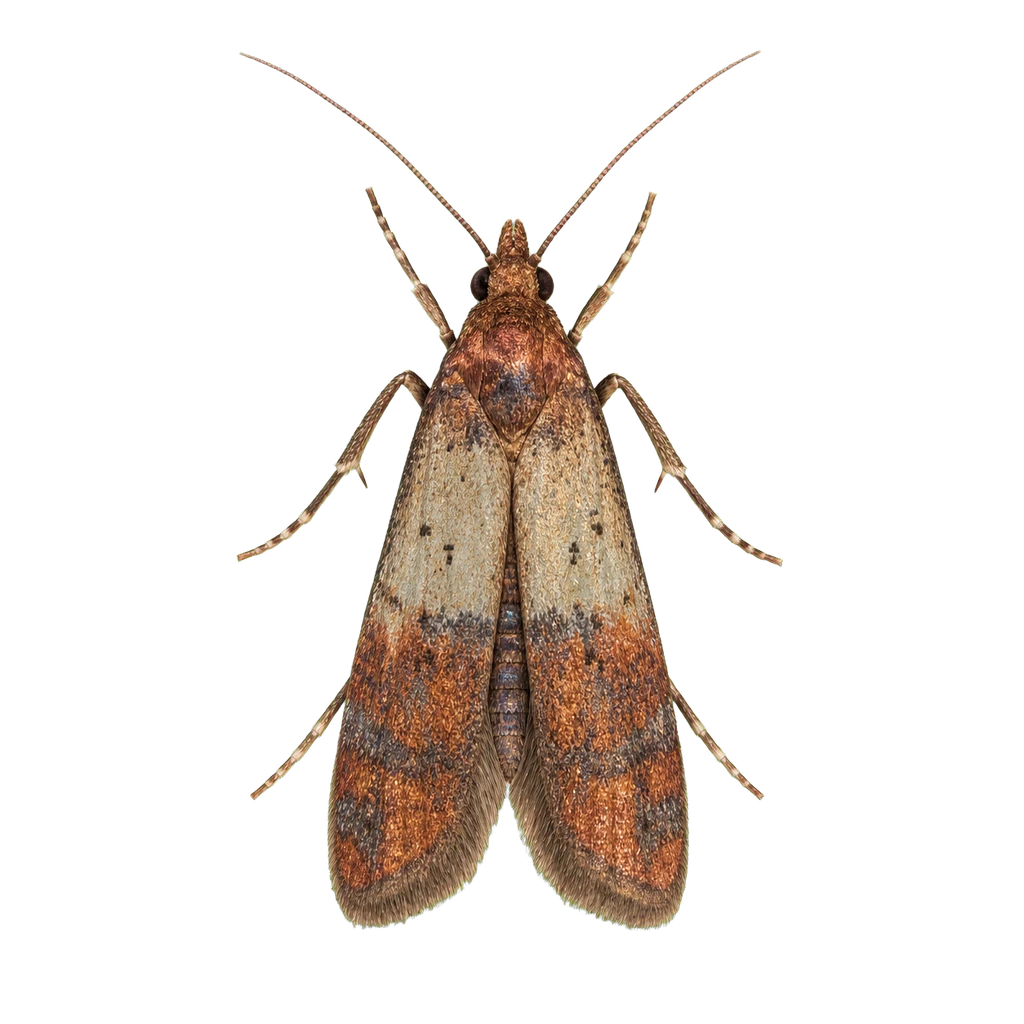
    There are two common indoor moth types with different targets. Clothes moths (webbing and casemaking) feed on wool, silk, fur, and feathers in closets. Pantry moths (Indian meal moths) infest stored grains, flour, cereal, nuts, and pet food. Both species are often introduced on infested items, secondhand clothing, bulk food purchases, or birdseed bags. Inspecting new items before storing them is key prevention.

  • Are moths harmful? Toggle answer for: Are moths harmful?

    Adult moths don't eat anything, it's their larvae that cause damage. Clothes moth larvae chew irregular holes in wool garments, cashmere, silk, and upholstered furniture. Pantry moth larvae contaminate food with webbing, frass, and shed skins. While neither species poses a health risk, the damage to clothing and food supplies is real and can be extensive if populations go unnoticed.

  • How quickly can a provider get to my home? Toggle answer for: How quickly can a provider get to my home?

    Most providers in our network can schedule an inspection within 24-48 hours. For urgent situations, likeactive structural damage or large colonies, same-week emergency service is often available. Response times depend on your location and the provider's current schedule.

  • What happens during the first visit? Toggle answer for: What happens during the first visit?

    Your provider inspects the property to identify the pest, locate nesting or entry points, and assess the scope of the problem. You get a clear explanation of what they found, what they recommend, and a written scope before any work begins.

  • Is treatment safe for kids and pets? Toggle answer for: Is treatment safe for kids and pets?

    Modern pest control products are designed to break down quickly after application and pose minimal risk to people and pets when applied correctly. Most providers ask you to keep kids and pets out of treated areas for 1 to 2 hours while the product dries, after which the area is generally safe again. Always confirm specific re-entry times with your provider, and let them know about pet birds, fish, or reptiles, since some treatments require extra precautions for those species.

Pest Control Pros serving the city of the state of your city and nearby areas

Local providers experienced with wool rug and tapestry pest treatment are ready to inspect, treat, and coordinate with conservators on heirloom items, no obligation.

Available 24/7
(888) 495-1510