Local pest control help is one call away.

Indian Meal Moth: Identification, Treatment & Prevention

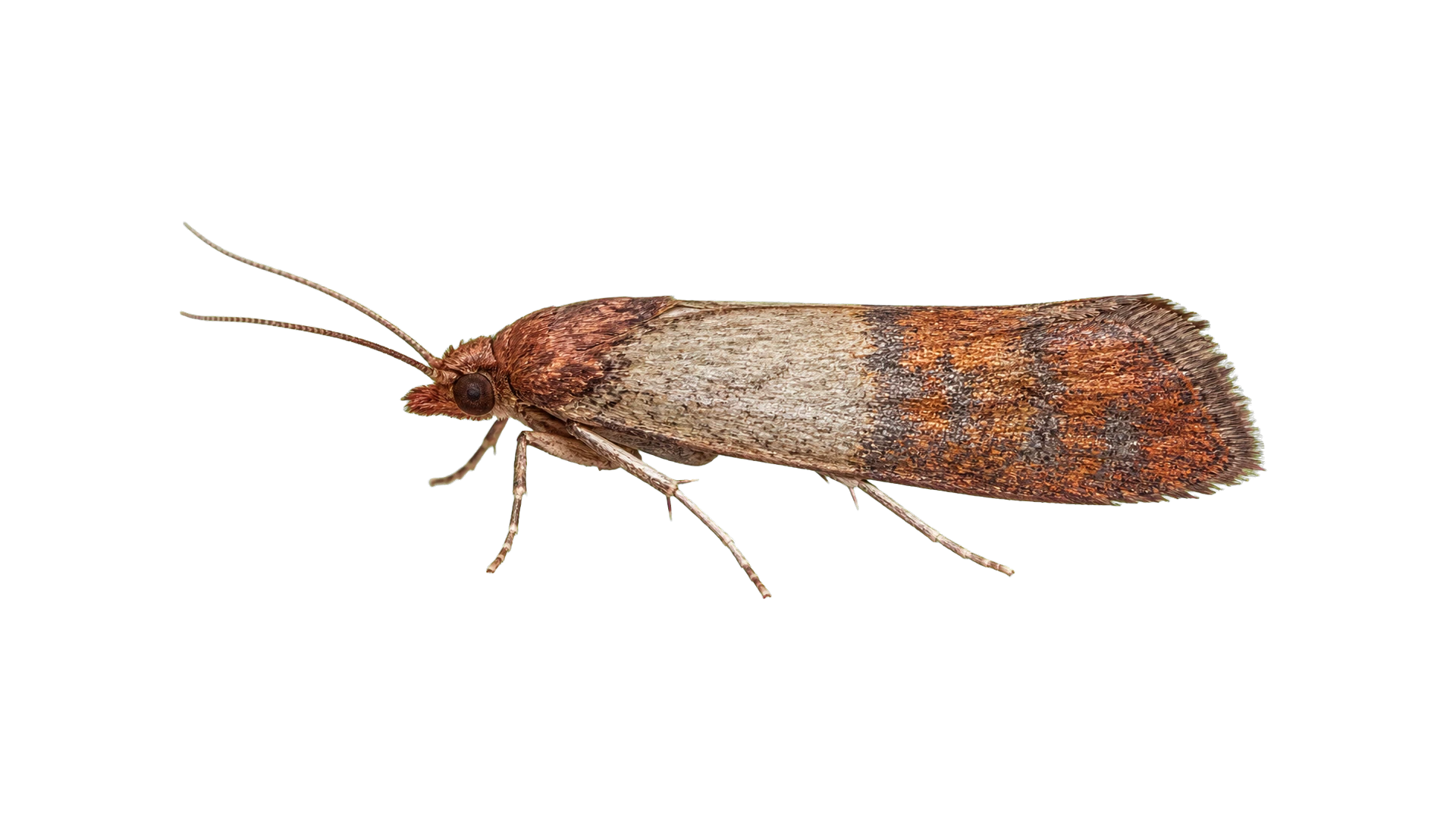
Indian meal moths are the most common pantry moth in American homes. The adult has a body about 8 to 10 millimeters long with a 16 to 20 millimeter wingspan, and the wings give the bug away every time. The half closest to the body is pale gray. The outer half is a coppery bronze. No other moth in your kitchen has that two-tone field mark. If a small moth lands on the wall above your pantry and the wingtips look like polished metal, it's a meal moth.

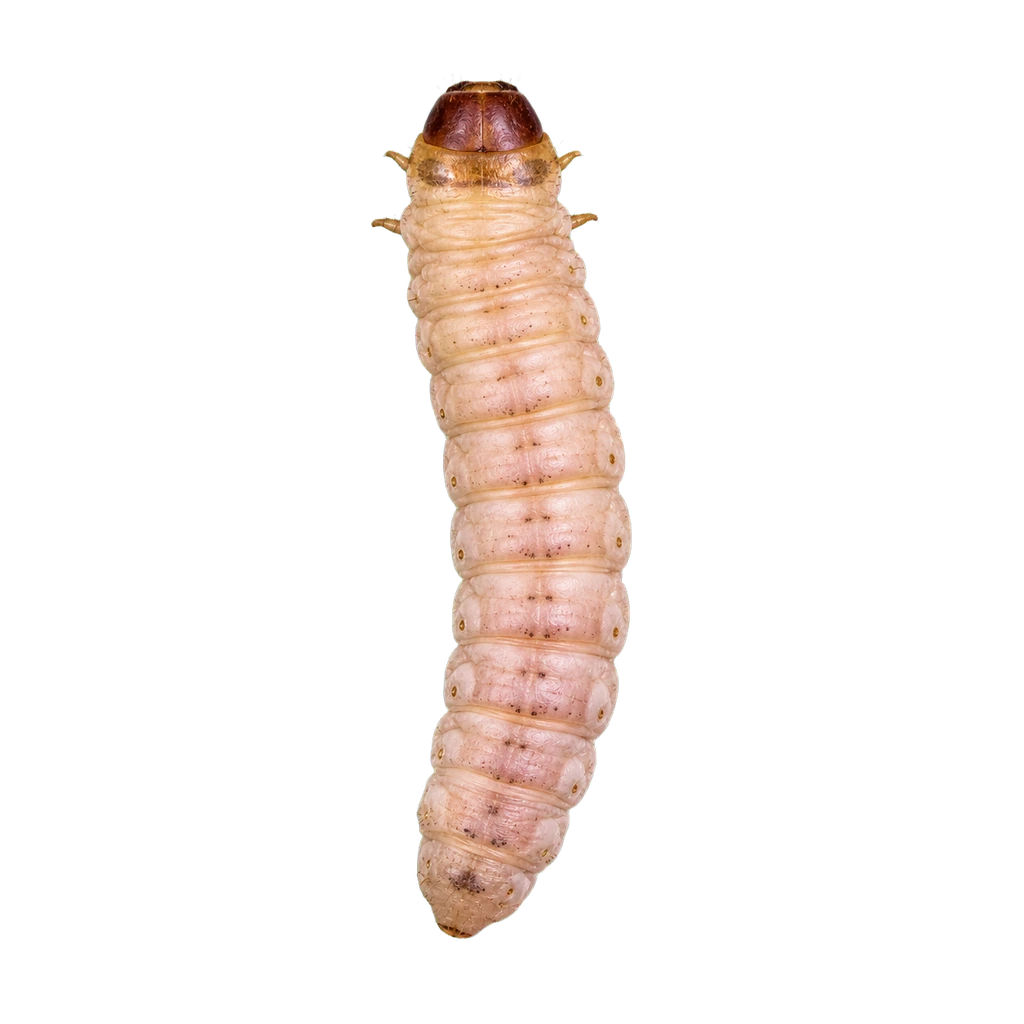
The damage doesn't come from the moths flying around. It comes from the cream-pink larvae inside your stored food. Mature larvae spin silk webbing through flour, cereal, grain, dried fruit, nuts, chocolate, dry pet food, and bird seed. When you open a package and the contents come out in a clumped, webbed mass, that's the diagnostic find. This guide covers how to confirm Indian meal moths, where the infestation came from, why larvae crawl up your walls, and how to clear them with freezing, airtight storage, and pheromone traps.

Close-up illustration of an Indian meal moth showing the diagnostic two-tone wing pattern with pale gray base and coppery bronze tip

ID Card: Indian Meal Moth

Scientific name
Plodia interpunctella
Color
Copper, gray
Size
3/8 to 1/2 inch
Body shape
Small moth with bicolored wings (copper and gray)
Antennae
Thread-like, slender
Key evidence
Silken webbing in cereal, flour, and grain products; small moths flying near pantry
Also known as
Pantry moths, Grain moths, Flour moths

Related Species

Call to get matched with a local pest control pro.

Available 24/7
(888) 495-1510
  • Specialists who handle stored-product pest investigations
  • Comprehensive pantry inspection plus ceiling-crack pupation site checks
  • Pheromone trapping and mating disruption for chronic or severe contamination

Where to Inspect for Indian Meal Moth Evidence

Cross-section illustration showing Indian meal moth webbing in stored grain and pantry shelves, plus mature larvae crawling up walls to pupate in ceiling corners

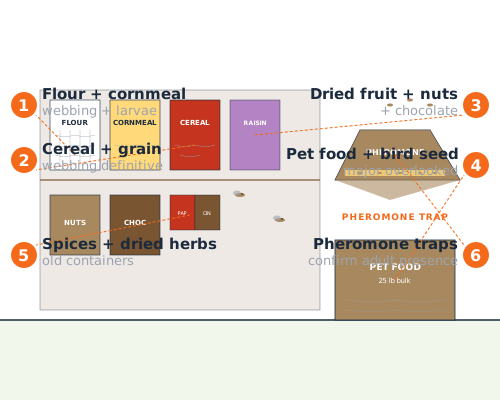
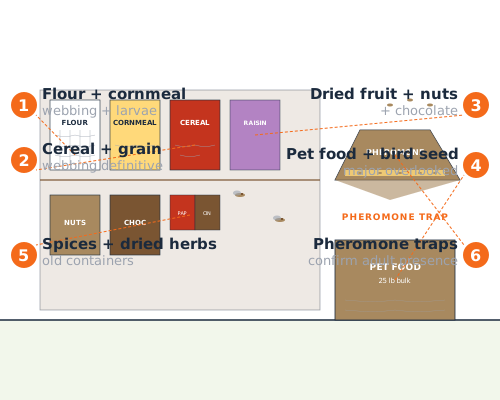
Indian meal moths leave very specific evidence. Webbing inside food packages, fecal pellets that look like fine grit, shed larval skins, and adult moths flying at night near pantry shelves. Mature larvae also crawl up walls to pupate in ceiling corners, which is the field clue most homeowners miss. Walk these zones with good light:

  • Open packages of grain, flour, and cereal, Pull every box and bag forward and open it. Webbing that clumps the contents into a sticky mass is the single most reliable sign of an active meal moth infestation.
  • Dried fruit, nuts, and chocolate storage, Often-overlooked food sources. Open trail mix bags, baking chocolate, and dried fruit containers and check for webbing, larvae, or fine pellet debris in the bottom.
  • Dry pet food and bird seed in the garage or utility room, Bulk pet food and bird seed are the most common entry points homeowners miss. Open the bag fully and check the bottom corners where larvae and webbing concentrate.
  • Dried herbs and spices kept long-term, Older spice containers and dried herb jars can sustain breeding for months. Pour them out on a white plate to check for tiny larvae or fine debris.
  • Behind pantry shelves and in shelf cracks, Eggs and small larvae hide in shelf edges, screw holes, and the seams where the shelf meets the wall. Pull contents out and run a flashlight along the seams.
  • Ceiling corners and the wall above the pantry, Mature larvae crawl up walls to pupate in cracks and corners. Small silk cocoons clustered in a ceiling corner above the pantry confirm an established infestation.

Most homeowners find webbing in one package, throw it out, and assume they're done. Two weeks later, more moths appear. That's because eggs and pupae are already spread across the pantry, hidden in adjacent packages and pupation sites on the ceiling. A complete inspection means opening every dry-storage item, vacuuming the shelves and cracks, and checking the ceiling and wall edges above the pantry. Anything less and the next generation hatches into the same space within weeks.

Cross-section illustration showing Indian meal moth webbing in stored grain and pantry shelves, plus mature larvae crawling up walls to pupate in ceiling corners
Illustration showing Indian meal moth entry routes via infested store-bought food, pet food, and bird seed brought into a pantry

Why Do I Have Indian Meal Moths?

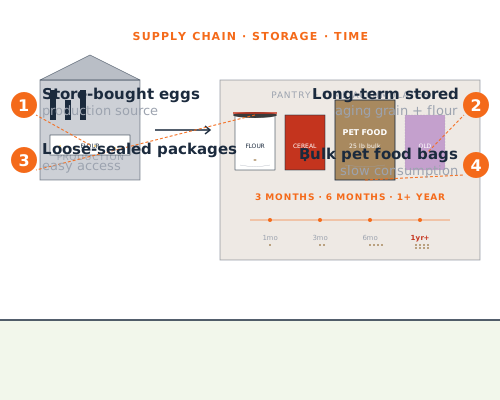
Spotting them is step one. Understanding where they came from is what stops the next round. Indian meal moths almost never enter through an open door or a window screen. The vast majority of home infestations start with a package of food that was already contaminated when you brought it home from the grocery store. Eggs and tiny larvae get into grain, cereal, flour, and dried goods during processing, packaging, and warehouse storage. When the conditions in your pantry are right, that food becomes the founding population for everything that follows.

What anchors them to your pantry:

  • Already-infested grocery store products, the single most common origin point, especially with bulk grain, flour, cornmeal, and bird seed from store warehouses
  • Opened packages kept longer than six months, the longer dry goods sit, the more chances eggs already inside have to hatch and the more chances new moths have to lay eggs in them
  • Pet food and bird seed in original bags, paper and plastic packaging is easy for larvae to chew through, and bulk garage storage gives the population a quiet place to expand
  • Mild kitchen sanitation, flour spills, dropped cereal, and crumbs in pantry crack spaces feed small populations between infested packages, so the infestation persists even after the obvious item is thrown out

Once you bring infested food into a heated pantry, the lifecycle keeps cycling. Adult moths don't feed. They live one to two weeks and spend the entire time mating and laying eggs in nearby food. A single female can lay several hundred eggs, and in a typical American home with central heat, the lifecycle from egg to adult takes about 40 days. Without intervention, you get multiple overlapping generations every year, with the population shifting from package to package as larvae find new food sources to feed in.

How Serious Is Your Indian Meal Moth Problem?

Find your scenario below. Each row reflects how a pantry moth population actually progresses across packages and pupation sites, not a generic timeline.

What You're Seeing Severity If Untreated Next Step
A couple of moths flying near the pantry, webbing in one package Early Single source item; eggs typically spread to two or three adjacent packages within 4 to 6 weeks Confirm species by the gray-and-copper wings, double-bag the infested item to outside trash, and place a pheromone trap on the shelf.
Multiple infested packages plus larvae crawling on pantry walls Moderate Population is cycling generations; expect spread to most dry storage and pupation sites in ceiling corners within 4 to 8 weeks Schedule a professional pantry inspection this week, a full cleanout plus crack treatment and pheromone monitoring is the right scope.
Moths flying throughout the home, silk cocoons in ceiling corners, multiple infested items High Mature population with overlapping generations cycling in heated areas year-round; trap counts climb week over week without intervention Call this week for same-week service. A full pantry purge, ceiling-crack pupation inspection, and residual crack treatment is the standard.
Heavy contamination plus a family member with asthma or allergic reaction Urgent Larval debris, cast skins, and fecal pellets in pantry air can trigger asthma flare-ups; contamination spreads to adjacent storage rooms Call today and request an intensive program. A medical consultation is worth scheduling alongside the pest treatment.
A couple of moths flying near the pantry, webbing in one package
Severity Early
If Untreated Single source item; eggs typically spread to two or three adjacent packages within 4 to 6 weeks
Next Step Confirm species by the gray-and-copper wings, double-bag the infested item to outside trash, and place a pheromone trap on the shelf.
Multiple infested packages plus larvae crawling on pantry walls
Severity Moderate
If Untreated Population is cycling generations; expect spread to most dry storage and pupation sites in ceiling corners within 4 to 8 weeks
Next Step Schedule a professional pantry inspection this week, a full cleanout plus crack treatment and pheromone monitoring is the right scope.
Moths flying throughout the home, silk cocoons in ceiling corners, multiple infested items
Severity High
If Untreated Mature population with overlapping generations cycling in heated areas year-round; trap counts climb week over week without intervention
Next Step Call this week for same-week service. A full pantry purge, ceiling-crack pupation inspection, and residual crack treatment is the standard.
Heavy contamination plus a family member with asthma or allergic reaction
Severity Urgent
If Untreated Larval debris, cast skins, and fecal pellets in pantry air can trigger asthma flare-ups; contamination spreads to adjacent storage rooms
Next Step Call today and request an intensive program. A medical consultation is worth scheduling alongside the pest treatment.

Indian meal moths cycle multiple generations per year indoors. If you're between two rows, treat the higher one as your situation.

How an Indian Meal Moth Population Grows

Indian meal moths have a fast indoor lifecycle and a very specific behavior that almost no other pantry pest shares: the mature larvae leave the food source and crawl up walls to pupate in ceiling cracks. Understanding the stages below is why complete cleanout has to include the ceiling and wall edges, not just the pantry shelves.

  1. Egg

    Hatch in 7 to 10 days

    Females lay 100 to 400 eggs directly on or near a food source. Eggs are tiny (less than half a millimeter) and almost never visible to the naked eye. A single fertile female can seed an entire pantry within a week of arrival.

  2. Larva

    About 2 to 6 weeks (longer in cool conditions, up to several months)

    Larvae are cream to pinkish with a dark brown head, growing to 12 to 15 millimeters. They feed inside the food source and spin silk webbing through it, which is the most reliable diagnostic sign. They also leave fecal pellets and cast skins that show up as fine debris when you open a contaminated package.

  3. Pupa (the diagnostic behavior)

    About 1 to 2 weeks

    Mature larvae leave the food source and crawl up walls, into ceiling corners, behind cabinet trim, or into door frame cracks to spin a silk cocoon. Clusters of small silk cocoons in a ceiling corner above the pantry are diagnostic for Indian meal moth. No other common pantry pest does this.

  4. Adult

    Adults live 1 to 2 weeks and never feed

    The adult moth has the gray-and-copper bicolored wings that confirm the species. Adults don't damage food directly. They live just long enough to mate and lay eggs, then die. Females lay eggs within 24 hours of mating, which is why visible adult activity always means active egg-laying in nearby food.

In a heated American home, the complete lifecycle averages about 40 days. That means multiple overlapping generations every year, with eggs, larvae, pupae, and adults all present in the pantry at the same time. Complete elimination requires interrupting all four stages at once, which is why a thorough cleanout has to cover food packages (larvae), shelves and cracks (eggs), and ceiling and wall edges (pupae), with pheromone traps monitoring adult catches over 6 to 12 weeks to confirm the population is actually gone.

When Indian Meal Moths Are Most Active

Indian meal moths live entirely indoors and stay active year-round in heated American homes. Outdoor temperatures don't shut them down the way they do most insects, because the climate in your pantry doesn't change much between seasons.

  • Spring

    Spring cleaning and pantry reorganization frequently expose long-standing infestations. Homeowners pull contents forward, open older packages, and discover webbing in items that have sat untouched since the previous fall. This is the most common season for first-time identification.

  • Summer

    Warmer indoor temperatures accelerate the lifecycle, dropping the egg-to-adult cycle from about 40 days toward the lower end. Trap counts climb, and homeowners notice more moths flying at night near the pantry and around interior lights.

  • Fall

    Holiday baking brings flour, cornmeal, dried fruit, baking chocolate, and nuts into the pantry. Each new package is a potential entry point. Most fresh infestations identified in November and December originate from holiday-baking ingredient purchases stored alongside older items.

  • Winter

    Central heating keeps the lifecycle running year-round. Populations established in fall continue cycling generations through winter, with mature larvae crawling up walls to pupate in ceiling corners during the same months homeowners assume insect activity has stopped.

When Indian Meal Moths Need Professional Help

Most Indian meal moth situations can be handled with thorough DIY work, and that's worth saying out loud before you spend a dollar on professional service. The honest sequence is: identify the species by the gray-and-copper wing pattern, open every dry-storage container and look for webbing, freeze suspicious items in their packaging for 72 hours to kill eggs and larvae, vacuum the shelves and cracks, transfer remaining food to airtight glass or hard-plastic containers, and place pheromone traps on the pantry shelves. Most infestations clear in 4 to 8 weeks with that protocol.

Professional help becomes worthwhile when the DIY approach hasn't moved the needle. That looks like persistent adult moths flying after a complete cleanout, larvae continuing to appear on walls and ceilings, or a population that keeps coming back across multiple months. At that point, eggs or pupae are hiding somewhere a homeowner inspection has missed, usually in shelf cracks, behind cabinet trim, or in ceiling corners above the pantry.

Professional treatment costs $250 to $700 for an initial service in most American markets. The visit includes a comprehensive pantry inspection, a check of ceiling cracks and wall edges for pupation sites, residual crack-and-crevice treatment, and pheromone trap deployment for ongoing monitoring. For severe or chronic contamination, the program may also include mating disruption products that flood the pantry with synthetic pheromone, scrambling the males' ability to locate females.

If anyone in the home has asthma or food allergies, the bar for calling drops. Larval debris, cast skins, and fecal pellets accumulated in pantry air can aggravate respiratory symptoms, and contaminated food poses an obvious risk for allergic reactions. In those households, a professional inspection alongside a medical consultation is worth scheduling sooner rather than later.

What Changes When a Pro Shows Up

Indian meal moth work is part inspection, part cleanout, and part monitoring. A specialist knows what's commonly infested, where the pupae hide, and how to confirm the population is actually gone instead of just paused. Here's what changes:

Pest control technicians after completing an Indian meal moth treatment service
  • Local Pest Control
  • 24/7 Availability
  • Quality Workmanship
  • Eco‑Friendly Options
  • Trusted by Homeowners
  • They Inspect Every Stored Item

    A full inspection covers every dry food container in the kitchen pantry, plus pet food in the garage, bird seed, dried herbs, and bulk storage in utility areas. Specialists prioritize the items most likely to harbor eggs and webbing, which homeowners often skip.

  • They Check the Ceiling and Wall Edges

    Mature larvae leave food and crawl up walls to pupate in cracks and corners. A pro inspects the ceiling above the pantry, the seam where wall meets ceiling, and any crack space within a few feet. Cleaning out pupae in those locations is what breaks the cycle.

  • They Treat Cracks and Crevices

    After the cleanout, residual product gets applied into pantry shelf cracks, behind shelves, and around the door gaskets. Eggs and tiny larvae hide in those spaces and a thorough vacuum-and-wipe alone often misses them.

  • They Monitor with Pheromone Traps

    Species-specific pheromone traps for Plodia interpunctella catch adult males flying through the pantry. Trap counts over 6 to 12 weeks tell the technician whether the cleanout was complete. Sustained zero catches confirm elimination.

  • Local Pest Control
  • 24/7 Availability
  • Quality Workmanship
  • Eco‑Friendly Options
  • Trusted by Homeowners
NoToPests home

One call connects you with a local specialist who knows indian meal moths and your area.

Be Ready When You Call

Pest control technician arriving for Indian meal moth pantry service
Junho L.
Daisuke P.
Kirk Q.
Marion K.

Trusted by homeowners nationwide

Call for Pest Control Help (888) 495-1510

Can You Handle This or Do You Need Help?

Indian meal moth work is one of the few pest situations where thorough DIY actually resolves most infestations. Professional help adds the most value for persistent, heavy, or health-sensitive cases.

What DIY Can Do

Most Indian meal moth infestations clear with a thorough homeowner protocol. Useful steps with honest limits:

  • Identify the species by the diagnostic gray-and-copper bicolored wings, plus webbing inside food packages and larvae crawling up walls
  • Open every dry-storage container, freeze suspicious items in their packaging for 72 hours to kill eggs and larvae
  • Transfer remaining food to airtight glass or hard-plastic containers, the single most effective long-term prevention step
  • Vacuum pantry shelves, shelf cracks, ceiling corners, and wall edges; place pheromone traps to monitor adult catches
  • What DIY cannot do: efficiently treat heavy infestations spanning multiple rooms, or address eggs hidden deep in pantry crack space

What a Pro Does Differently

Professional treatment shines for persistent or severe Indian meal moth situations. Here's what changes when you call:

  • Comprehensive inspection of all stored items plus ceiling pupation sites homeowners often skip
  • Residual crack-and-crevice treatment in pantry shelving, behind cabinet trim, and around door gaskets
  • Species-specific pheromone trap deployment with multi-visit monitoring over 6 to 12 weeks
  • Mating disruption product for severe contamination, floods the pantry with pheromone so males can't locate females
  • Honest assessment of whether full professional treatment is warranted versus a thorough DIY cleanout

Suspect Indian Meal Moths? Don't Wait.

Indian meal moth populations cycle multiple generations a year in heated homes. Connect with a local specialist for a comprehensive pantry inspection, crack treatment, and pheromone trap monitoring.

Available 24/7
(888) 495-1510

What Homeowners Say After Getting Help

Real results from people who had the same problem and solved it.

Veda J.
Veda J.
Indianapolis, IN

"Fumigation cleared stored product pests from our pantry and walls."

Indian meal moths and beetles had infested our pantry and spread into the wall cavities behind the kitchen. Standard treatments were not reaching the source. The provider recommended fumigation to eliminate larvae and adults in every hidden space. We cleared the home, the crew tented and treated, and clearance testing confirmed a complete knockdown.

Veda J.
Veda J.
Indianapolis, IN

"Fumigation cleared stored product pests from our pantry and walls."

Indian meal moths and beetles had infested our pantry and spread into the wall cavities behind the kitchen. Standard treatments were not reaching the source. The provider recommended fumigation to eliminate larvae and adults in every hidden space. We cleared the home, the crew tented and treated, and clearance testing confirmed a complete knockdown.

Common Questions About Indian Meal Moths

Direct answers to what homeowners ask most about wing identification, webbing in food, larvae crawling up walls, and what real cleanout looks like.

  • How do I identify Indian meal moths versus clothes moths? Toggle answer for: How do I identify Indian meal moths versus clothes moths?

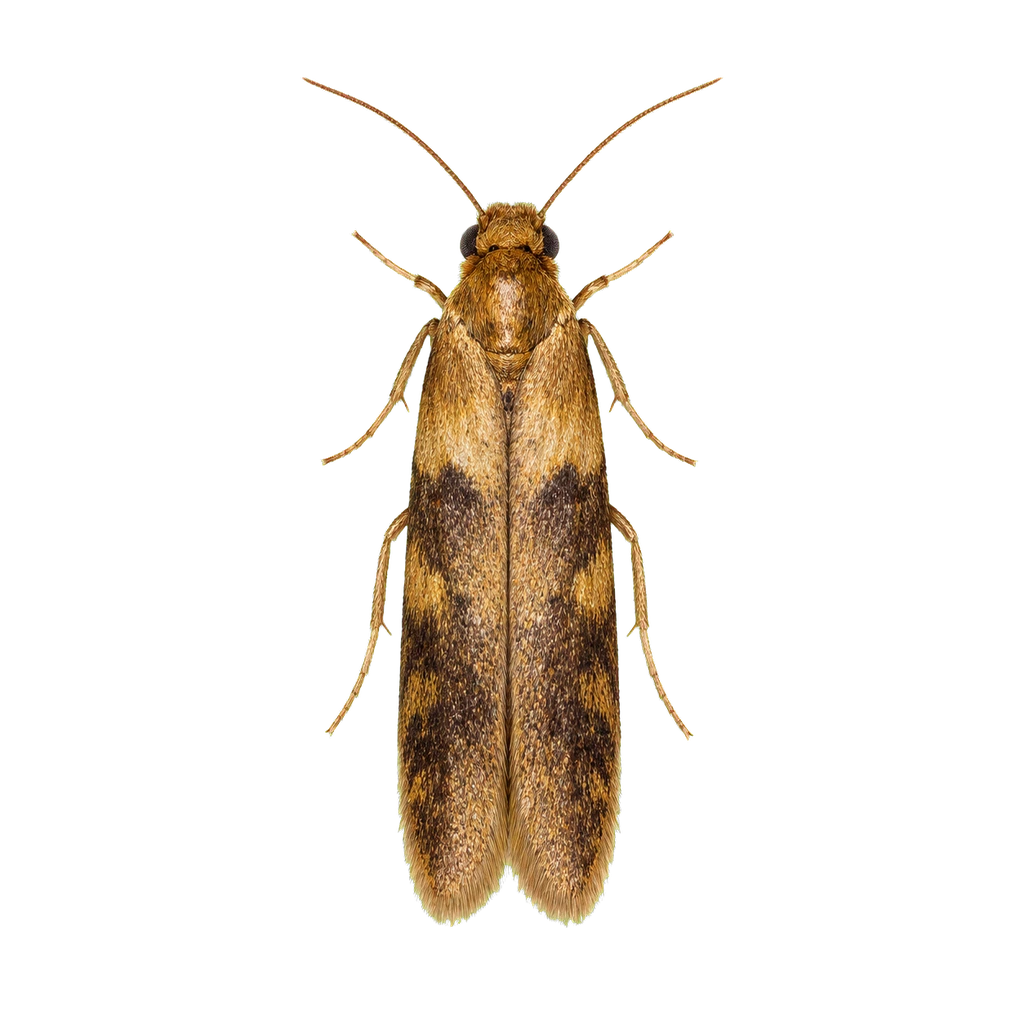
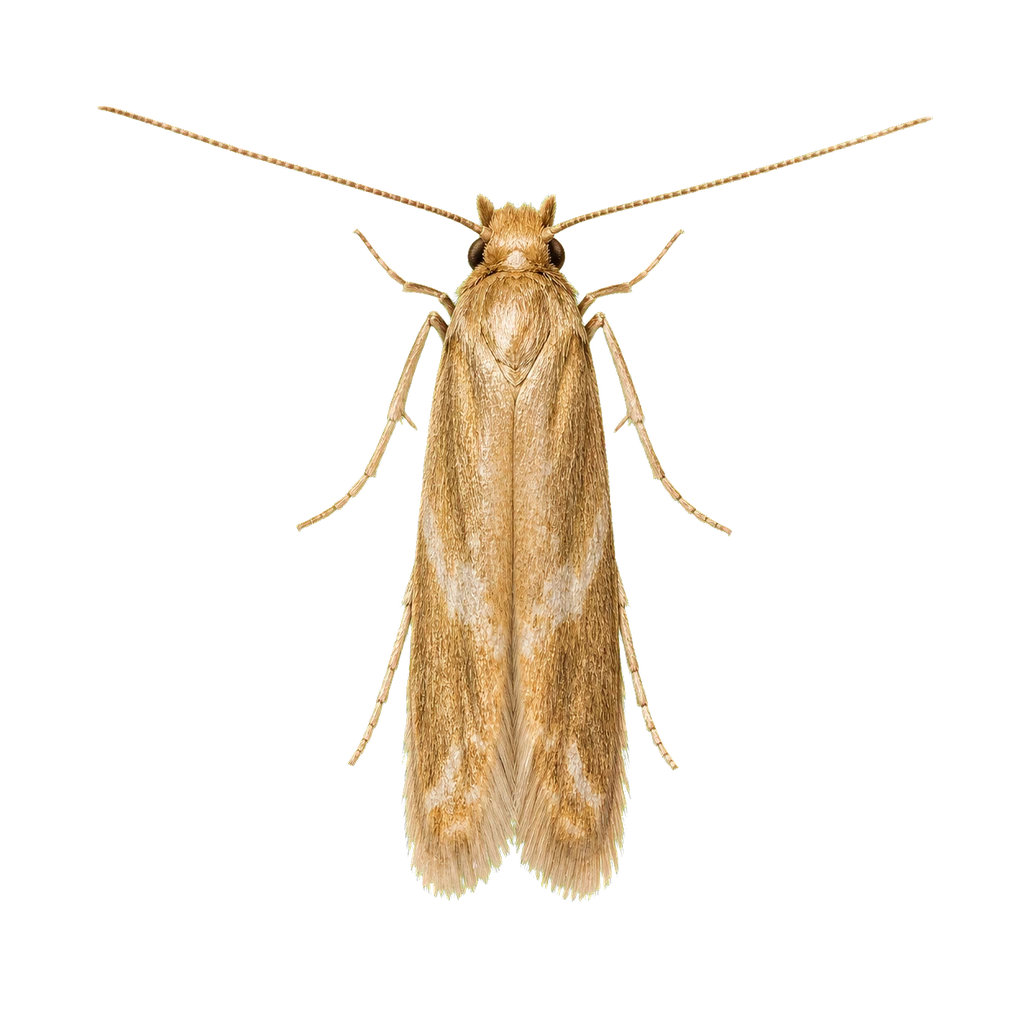
    Indian meal moths have a distinctive two-toned wing pattern, theouter two-thirds of their forewings are coppery-bronze to reddish-brown, while the inner third near the body is pale gray or cream, creatinga sharply contrasting appearance that no clothes moth shares. Clothes moths are uniformly golden or buff-colored without any banding. Indian meal moths are also stronger fliers and are attracted to lights, while clothes moths avoid light and flutter weakly in dark spaces. The key difference is habitat: Indian meal moths infest stored food products (grains, nuts, dried fruit, pet food, bird seed), while clothes moths infest natural-fiber fabrics and textiles. If you see a small moth flying toward a kitchen light, it is likely an Indian meal moth.

  • How do I find the source of an Indian meal moth infestation? Toggle answer for: How do I find the source of an Indian meal moth infestation?

    Indian meal moth larvae produce visible silken webbing on the surface of infested food products, look for clumped grains, webbed-over surfaces, and small cream-colored caterpillars (about 1/2 inch long) in stored dry goods. Inspect every package of grain, cereal, flour, rice, pasta, dried fruit, nuts, chocolate, spices, pet food, and birdseed in your pantry. Often the source is an overlooked item, abag of forgotten birdseed in the garage, decorative dried corn, a seldom-used bag of whole wheat flour, or a box of dog treats. Larvae can chew through thin packaging, so even sealed boxes may be compromised. Discard all infested items and thoroughly clean shelves, paying attention to crevices where larvae may have pupated.

  • Why do moths keep getting into my closets and pantry? Toggle answer for: Why do moths keep getting into my closets and pantry?

    There are two common indoor moth types with different targets. Clothes moths (webbing and casemaking) feed on wool, silk, fur, and feathers in closets. Pantry moths (Indian meal moths) infest stored grains, flour, cereal, nuts, and pet food. Both species are often introduced on infested items, secondhand clothing, bulk food purchases, or birdseed bags. Inspecting new items before storing them is key prevention.

  • Are moths harmful? Toggle answer for: Are moths harmful?

    Adult moths don't eat anything, it's their larvae that cause damage. Clothes moth larvae chew irregular holes in wool garments, cashmere, silk, and upholstered furniture. Pantry moth larvae contaminate food with webbing, frass, and shed skins. While neither species poses a health risk, the damage to clothing and food supplies is real and can be extensive if populations go unnoticed.

  • How quickly can a provider get to my home? Toggle answer for: How quickly can a provider get to my home?

    Most providers in our network can schedule an inspection within 24-48 hours. For urgent situations, likeactive structural damage or large colonies, same-week emergency service is often available. Response times depend on your location and the provider's current schedule.

  • What happens during the first visit? Toggle answer for: What happens during the first visit?

    Your provider inspects the property to identify the pest, locate nesting or entry points, and assess the scope of the problem. You get a clear explanation of what they found, what they recommend, and a written scope before any work begins.

  • Is treatment safe for kids and pets? Toggle answer for: Is treatment safe for kids and pets?

    Modern pest control products are designed to break down quickly after application and pose minimal risk to people and pets when applied correctly. Most providers ask you to keep kids and pets out of treated areas for 1 to 2 hours while the product dries, after which the area is generally safe again. Always confirm specific re-entry times with your provider, and let them know about pet birds, fish, or reptiles, since some treatments require extra precautions for those species.

Pest Control Pros serving the city of the state of your city and nearby areas

Local providers experienced with stored-product pantry pests are ready to inspect, treat cracks, and deploy pheromone monitoring, no obligation.

Available 24/7
(888) 495-1510