Local pest control help is one call away.

House Sparrow: Identification, Treatment & Prevention

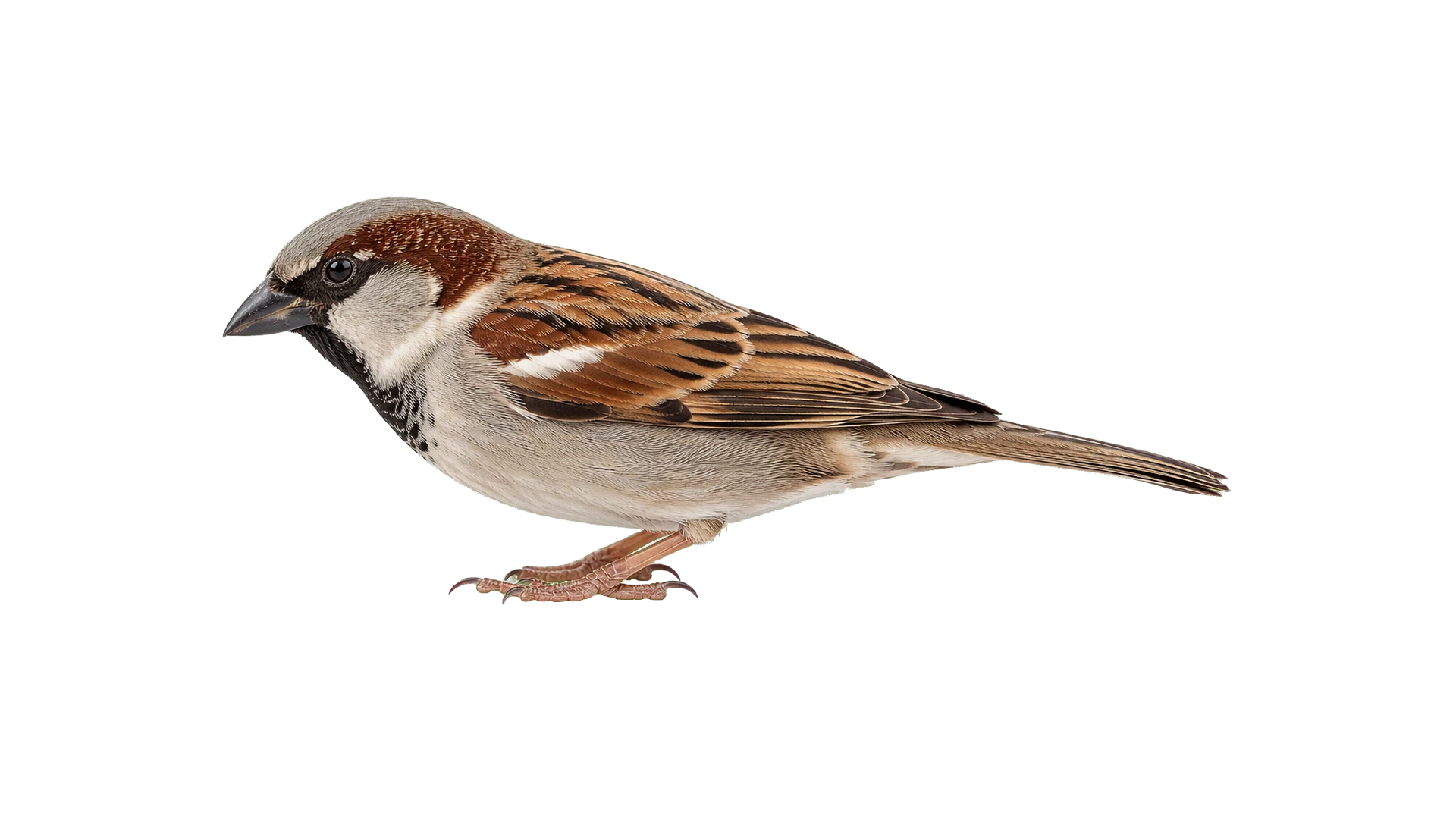
House sparrows are the small chunky brown birds you see hopping around parking lots, restaurant patios, and feed stores from coast to coast. They run 14 to 18 centimeters long with a thick, stubby cone-shaped beak built for cracking seeds. Males wear a gray cap, a black bib at the throat, and a chestnut patch behind the neck. Females and young birds are plain streaky brown all over. They were brought to the US from Europe in the 1850s, and they've since spread into nearly every town, city, and farm in the continental forty-eight.

If you're hearing constant chirping inside a dryer vent, watching small brown birds carry grass into a gable vent, or finding nest material packed into the burner tubes of your gas grill, you almost certainly have house sparrows. This guide covers how to tell them apart from the native birds they often displace, why their nesting habits create real fire and appliance risks, and what a wildlife professional actually does to clear the cavity and keep them out for good.

Close-up illustration of a male house sparrow showing the gray crown, black throat bib, chestnut nape, and short stout conical beak that identify this invasive cavity nester

ID Card: House Sparrow

Scientific name
Passer domesticus
Color
Brown, gray
Size
5 to 7 inches
Body shape
Small, compact body with conical beak
Key evidence
Nests in building crevices, droppings near food service areas
Also known as
House sparrows, English sparrows

Related Species

Call to get matched with a local pest control pro.

Available 24/7
(888) 495-1510
  • Wildlife specialists trained to confirm house sparrow vs. federally protected native cavity nesters
  • Vent cap and exclusion work that clears the nest and blocks reentry on the same visit
  • Native bird box management so bluebirds, swallows, and chickadees can recover the cavities

Where to Inspect for House Sparrow Nests

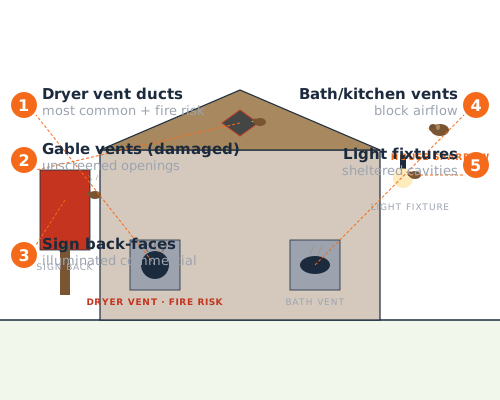
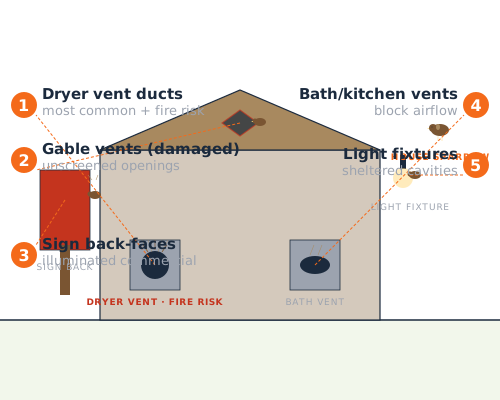
Cross-section illustration showing house sparrow nest material packed inside a dryer vent duct, a chimney flue, gable vents, and a gas grill burner tube

House sparrows are cavity nesters, which means they cram nest material into any small enclosed pocket they can find on the outside of your building. The damage isn't to the cavity itself, it's to the appliance, vent, or chimney that cavity was supposed to serve. Walk these zones with a flashlight and look for grass, twigs, feathers, and droppings stuck in or near the opening:

  • Dryer vent on the exterior wall, The single most common and most dangerous nest site. A blocked dryer vent traps lint behind the nest material, and the combination of lint, twigs, and dryer heat is a documented house fire cause.
  • Bathroom and kitchen exhaust vents, Same cavity profile as the dryer vent. Blocked exhausts back moisture into walls, knock out range hoods, and create the same lint and grease buildup that fuels fires.
  • Gable vents, soffit vents, and roof return vents, Damaged screens or missing louvers turn these into open doorways. Nest material packs into the attic side, and droppings drift down onto insulation underneath.
  • Chimney flues without a working cap, Nest material falls down the flue and clogs the path that should be venting smoke and carbon monoxide. Fall and winter fires are the most dangerous moment.
  • Gas grill burner tubes on a parked grill, Sparrows squeeze nest material into the burner cavity during the off-season. The first time the grill lights, the nest ignites, and the fire can spread to the deck or siding behind it.
  • Bird boxes intended for bluebirds, swallows, chickadees, or purple martins, House sparrows attack native cavity nesters, peck eggs, kill nestlings, and seize the box. A bird box on your property that's gone quiet after years of native use almost always has a sparrow pair inside.

House sparrows are one of only three bird species in the United States that the Migratory Bird Treaty Act does not protect (the other two are rock pigeon and European starling, both also introduced). Lethal control and nest removal are legal in most states without a permit. That said, species identification has to come first, a misidentified chickadee, bluebird, or swallow nest is a federal violation. A wildlife specialist confirms the bird before any nest is touched, which is exactly why this work is professional even when the legal floor is lower than for native species.

Cross-section illustration showing house sparrow nest material packed inside a dryer vent duct, a chimney flue, gable vents, and a gas grill burner tube
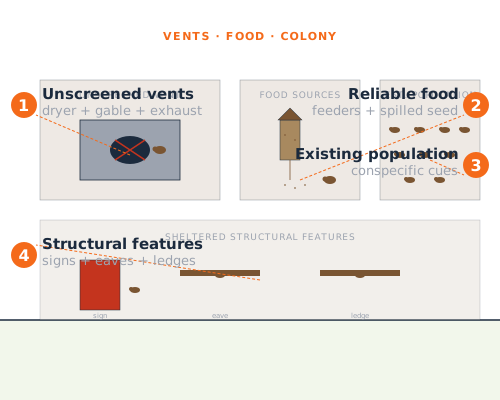
Illustration showing house sparrow entry points at uncapped dryer vents, damaged gable vents, open chimney flues, and unmodified native bird boxes

Why Do I Have House Sparrows?

Spotting a sparrow pair is step one. Figuring out what about your specific building drew them in is what stops the next pair from picking the same spot next spring. House sparrows aren't choosing your house at random. They're scanning the neighborhood for small protected cavities, reliable food, and a low-risk nesting platform, and your structure is checking those boxes.

What anchors house sparrows to your property:

  • Uncapped exterior vents and chimneys, dryer vents, bathroom fans, gable louvers, and open flues all match the small dark cavity sparrows look for
  • Outdoor feeding sources, bird feeders, dropped chicken or livestock feed, restaurant dumpsters, and outdoor pet bowls sustain local flocks that then disperse to nest sites nearby
  • Native bird boxes without sparrow-exclusion hole sizing, bluebird and swallow boxes with too-large entry holes get taken over and become sparrow incubators instead of recovery sites
  • Older buildings with gaps in siding, fascia, soffits, and roof returns, every gap wider than about an inch and a quarter is a potential nest entry

A house sparrow pair produces 2 to 4 broods of 3 to 7 chicks each per year, and young sparrows are sexually mature within six months. A single pair occupying a dryer vent in March can fledge 12 to 20 offspring by August, and several of those will scout cavities on the same property the next spring. By the time a homeowner first notices droppings on the siding below the vent, the colony footprint is usually already two or three pairs, with at least one of them in a place that's putting the structure or an appliance at risk.

How Serious Is Your House Sparrow Problem?

Find your scenario below. With house sparrows, severity is mostly about which cavity is being used and whether it's connected to an appliance, an exhaust, or a native bird box.

What You're Seeing Severity If Untreated Next Step
House sparrows nesting in a single gable vent or one bird box, no appliance impact Early The same pair returns next spring and adds 1 to 2 more nest sites on the property within a year Identify the nest site, plan removal during the off-breeding season, and install vent caps before the next nesting cycle.
Multiple nests across vents, chimney, or bird boxes, with native bluebird or swallow activity dropping off Moderate Native cavity nesters get displaced or killed; sparrow pair count doubles within 12 to 18 months Schedule a professional exclusion visit this month and add sparrow-exclusion entry holes to any native bird boxes.
Active dryer vent nest with visible lint or twigs at the exterior cap, or a chimney flue with material packed inside High Dryer lint behind nest material is a fire hazard; a blocked flue can back carbon monoxide into the home Call this week for nest removal, vent cap install, and either a dryer duct cleaning or a chimney sweep depending on the cavity.
Heavy flock on the property, droppings on siding and walkways, multiple native bird species gone, or anyone in the home with respiratory issues Urgent Full structural exclusion needed; dropping accumulation in attic spaces requires PPE cleanup Call today and request a full property exclusion plan, a native bird box reset, and proper cleanup of any heavy dropping zones.
House sparrows nesting in a single gable vent or one bird box, no appliance impact
Severity Early
If Untreated The same pair returns next spring and adds 1 to 2 more nest sites on the property within a year
Next Step Identify the nest site, plan removal during the off-breeding season, and install vent caps before the next nesting cycle.
Multiple nests across vents, chimney, or bird boxes, with native bluebird or swallow activity dropping off
Severity Moderate
If Untreated Native cavity nesters get displaced or killed; sparrow pair count doubles within 12 to 18 months
Next Step Schedule a professional exclusion visit this month and add sparrow-exclusion entry holes to any native bird boxes.
Active dryer vent nest with visible lint or twigs at the exterior cap, or a chimney flue with material packed inside
Severity High
If Untreated Dryer lint behind nest material is a fire hazard; a blocked flue can back carbon monoxide into the home
Next Step Call this week for nest removal, vent cap install, and either a dryer duct cleaning or a chimney sweep depending on the cavity.
Heavy flock on the property, droppings on siding and walkways, multiple native bird species gone, or anyone in the home with respiratory issues
Severity Urgent
If Untreated Full structural exclusion needed; dropping accumulation in attic spaces requires PPE cleanup
Next Step Call today and request a full property exclusion plan, a native bird box reset, and proper cleanup of any heavy dropping zones.

Dryer vent and gas grill burner nests are documented fire risks. If you're between two rows, treat the higher one as your situation.

How House Sparrows Develop and Multiply

House sparrows reproduce fast, fledge fast, and stay close to where they were born. The lifecycle below explains why one pair in your dryer vent in March turns into a small colony on the property by autumn, and why exclusion of every viable cavity is the only thing that actually breaks the pattern.

  1. Egg

    About 11 to 14 days of incubation

    Females lay 3 to 7 eggs per clutch in a loose bundle of grass, twigs, feathers, and whatever scraps the pair could carry into the cavity. Both parents take turns warming the eggs. The cavity stays in continuous use during incubation, which is why nest material packs in fast once a pair has settled.

  2. Nestling

    About 15 to 17 days in the nest

    Chicks hatch naked and helpless. Both parents feed them insects and seeds, with dropping accumulation building up inside the cavity. This is the window where lint, food scraps, and droppings combine inside a dryer vent into the mix that creates the fire risk.

  3. Juvenile

    Independent within 1 to 2 weeks of leaving the nest

    Fledglings join the local flock and develop full adult plumage over 2 to 3 months. They typically stay within a few hundred feet of where they hatched, which is why house sparrow colonies build up around the same structure year after year.

  4. Adult

    Sexually mature at about 6 months; lifespan 3 to 5 years in the wild

    A pair produces 2 to 4 broods per year, and in mild-winter regions broods can stretch from late February through September. Adults are aggressive about defending cavities, which is the behavior that gets bluebird, swallow, and chickadee nestlings killed when sparrows want their nest box.

House sparrow populations expand quickly anywhere cavities are available, and the displacement of native cavity nesters tracks closely with how dense the sparrow colony has become on a given property. Vent exclusion, chimney capping, and native bird box modification are the foundation, and in many cases native birds return on their own within a year or two after the sparrow pressure is reduced.

When House Sparrows Are Most Active

House sparrows are year-round residents across most of the US, with reproduction concentrated in spring and summer and roosting activity continuing through fall and winter. Knowing the calendar tells you when to inspect, when to exclude, and when nest removal is cleanest.

  • Spring

    Peak nesting wave. Pairs scout cavities, carry material into vents, and lay first clutches starting in late February or early March. This is also when dryer vent obstruction calls spike, the new nest is going in right behind the exterior cap and homeowners notice the chirping or the slower drying.

  • Summer

    Broods stack through the warm months, with most pairs raising 2 to 3 clutches by mid-August. Competition with native bluebirds, swallows, and chickadees peaks in this window, sparrows actively kill chicks of other species to take over the box. Nest removal in summer requires extra care because chicks are usually present.

  • Fall

    Reproduction tapers off but a final brood is common in warmer regions. Juveniles disperse a short distance and start scouting cavities of their own for the following spring. Fall is the cleanest season for major exclusion work, no eggs, no chicks, and the birds are easier to push toward alternative outdoor roosts.

  • Winter

    Flocks consolidate at sheltered roosts. House sparrows take shelter in heated vents, attic cavities, and structural pockets, which is why winter sightings inside walls almost always confirm a nest cavity rather than passing birds. In mild-winter regions, year-round nesting continues at lower intensity.

Why House Sparrows Often Need Professional Help

House sparrows sit in an unusual spot in US wildlife law. Because they were introduced from Europe in the 1850s, they're one of only three bird species (along with rock pigeon and European starling) that the Migratory Bird Treaty Act does not protect. Nest removal, exclusion, and lethal control are legal in most states without a permit. That sounds simple, until you remember that almost every other small bird on the property (chickadee, bluebird, swallow, wren, house finch) is federally protected, and pulling the wrong nest carries real penalties.

DIY mistakes follow a predictable pattern. A homeowner pulls a nest from a dryer vent, considers the job done, and finds new grass packed behind the cap inside a week because the entry was never sealed. Or screening goes up over an active nest with chicks inside, the chicks die in the cavity, and the resulting decomposition smell pulls flies, beetles, and rodents into the wall void. Or every brown bird at the property gets treated as a sparrow, and a chickadee or swallow nest gets removed by accident, which is the federal violation.

A wildlife specialist starts with species ID. Once the bird is confirmed as a house sparrow, the technician plans removal between broods when possible, installs vent caps and screening that exclude reentry while keeping airflow correct, and audits the rest of the structure for the cavities the displaced birds will try next. For dryer vent cases, the work usually includes clearing the lint that built up behind the nest, which is the actual fire risk component.

Long-term success is about property-wide exclusion plus a native bird box reset. Sparrows displaced from one cavity look for the next one within a few days. A real program walks the structure, addresses every accessible vent, chimney, and gap, and modifies native bird boxes so bluebirds, swallows, chickadees, and purple martins can reclaim them. Costs run roughly $200 to $800 for a residential exclusion, with commercial properties higher depending on building size.

What Changes When a Pro Shows Up

House sparrow work is exclusion work, not pesticide work. A wildlife specialist confirms the bird, clears the cavity, installs the hardware that prevents reentry, then walks the rest of the structure for the cavities the next pair will try. Here's what that looks like step by step:

Wildlife specialists after completing a house sparrow vent exclusion and bird box modification
  • Local Pest Control
  • 24/7 Availability
  • Quality Workmanship
  • Eco‑Friendly Options
  • Trusted by Homeowners
  • Confirms House Sparrow vs. Protected Native Birds

    First and most important step. House sparrows aren't federally protected, but native cavity nesters like chickadees, bluebirds, tree swallows, and purple martins are. A wrong call can turn legal nest removal into a federal Migratory Bird Treaty Act violation, so species ID happens before any nest is touched.

  • Removes the Nest and Decontaminates the Cavity

    Old nest material, eggs, droppings, and dead chicks come out of the cavity, vent duct, or flue. Dryer ducts get cleared of the lint that built up behind the nest. Attic dropping zones get cleaned with proper respiratory PPE so airborne dust doesn't spread into the living space.

  • Installs Vent Caps and Cavity Screening

    Spring-loaded flap caps on every dryer and exhaust vent. Hardware cloth or commercial guards over gable vents, soffit vents, and chimney openings. Gas grill burner covers if the property has an outdoor kitchen. This hardware is what makes the removal hold past the next nesting cycle.

  • Resets Native Bird Boxes and Audits the Rest of the Structure

    Bluebird, swallow, and chickadee boxes get entry-hole restrictors sized to admit the target species and exclude house sparrows. Then the technician walks the full structure for any remaining cavities, gable corners, eave gaps, soffit returns, the next pair will try. Property-wide exclusion is what actually stops the cycle.

  • Local Pest Control
  • 24/7 Availability
  • Quality Workmanship
  • Eco‑Friendly Options
  • Trusted by Homeowners
NoToPests home

One call connects you with a local specialist who knows sparrows and your area.

Be Ready When You Call

Wildlife specialist arriving for a house sparrow vent exclusion service
Junho L.
Daisuke P.
Kirk Q.
Marion K.

Trusted by homeowners nationwide

Call for Pest Control Help (888) 495-1510

Can You Handle This or Do You Need Help?

House sparrow DIY is real for prevention, vent caps and bird box modifications you install before nesting begins. Active removal is harder because species ID and timing both matter, and the wrong call on either one creates new problems.

What DIY Can Do

Prevention work and basic identification are real DIY territory. Useful steps with honest limits:

  • Confirm house sparrow identification on sight, look for the chunky build, the short stout conical beak, and on males the black throat bib with gray crown
  • Install spring-loaded flap dryer vent caps on every dryer, bathroom, and kitchen exhaust before sparrows start scouting in late winter
  • Cap any chimney that doesn't already have a working spark arrestor or animal exclusion cap installed
  • Check gas grill burner tubes before each use and pull out any nest material before lighting the grill
  • Modify native bird boxes (bluebird, swallow, chickadee) with entry-hole restrictors sized for the target species so sparrows can't fit through
  • What DIY cannot reliably do: confirm species ID on a stressed bird at a distance, remove a nest with chicks inside without harming them, or audit the full structure for every cavity a displaced pair will try next.

What a Pro Does Differently

A wildlife specialist brings the species ID, the timing judgment, the hardware, and the full structural audit that turn this from recurring nest removal into permanent exclusion:

  • Species ID first, confirming house sparrow vs. federally protected native cavity nester before any nest is touched
  • Removal timing planned around the brood cycle when possible, with humane handling if chicks are already present
  • Vent caps and screening installed across every accessible cavity on the structure, not just the one you're seeing activity at
  • Dryer duct cleaning or chimney sweep coordination when the cavity is connected to an appliance or flue, the real fire-risk fix
  • Native bird box reset and entry-hole restriction so bluebirds, swallows, chickadees, and purple martins can reclaim the cavities
  • Property-wide cavity audit so displaced sparrows don't just shift to the next open vent or eave gap a week later.

Suspect Sparrows? Don't Wait.

House sparrow nests in dryer vents and gas grills are documented fire risks, and the species reproduces continuously through the warm months. Connect with a local specialist who can confirm species, remove the nest safely, install the exclusion that prevents recurrence, and reset native bird boxes so bluebirds and swallows can recover.

Available 24/7
(888) 495-1510

What Homeowners Say After Getting Help

Real results from people who had the same problem and solved it.

Rashad E.
Rashad E.
Portland, OR

"No pressure, just options."

I appreciated being given eco-friendly options without being pushed. The technician explained tradeoffs honestly and let me decide based on my priorities. They were transparent about what each approach involves. The no-pressure approach and honest information helped me make a confident decision.

Rashad E.
Rashad E.
Portland, OR

"No pressure, just options."

I appreciated being given eco-friendly options without being pushed. The technician explained tradeoffs honestly and let me decide based on my priorities. They were transparent about what each approach involves. The no-pressure approach and honest information helped me make a confident decision.

Yu E.
Yu E.
Durham, NC

"The inspection caught what we missed."

I didn't realize how much damage raccoons can cause once they get inside. The wildlife specialist explained what areas they inspect first and why raccoon issues are handled more carefully than regular pests. They showed me the damage and explained removal and exclusion strategies. Understanding the potential for damage made me glad I called professionals.

Ren P.
Ren P.
Dayton, OH

"The problem finally stayed gone."

Ants kept returning no matter what we did. The tech treated the trail areas and explained how to handle food storage and moisture so the ants don't keep coming back. It's been months and we haven't seen them again. I appreciated that it wasn't just a one-and-done spray.

Kayla Q.
Kayla Q.
Pittsburgh, PA

"Clear expectations and a real plan."

I was overwhelmed and didn't know what was realistic to fix quickly. The inspector explained what results to expect and how long it typically takes depending on the ant species. They treated the right places and gave simple prevention tips. Everything felt structured and easy to follow.

Malachi U.
Malachi U.
Knoxville, TN

"They found the entry points fast."

Ants were showing up in the kitchen and we couldn't figure out where they were coming from. The tech tracked the activity and pointed out two entry points we never would've noticed. After treating and sealing those areas, the ants disappeared. It was quick and surprisingly thorough.

Arturo B.
Arturo B.
Yonkers, NY

"No pressure, just helpful info."

I mainly wanted to understand what was happening before committing to anything. The inspector walked me through the likely cause and the differences between treatment approaches. They answered questions without rushing me. The plan we chose worked and the ants were gone within days.

Octavio Z.
Octavio Z.
Duluth, MN

"The tech helped me stop wasting time."

I kept trying different products and nothing was sticking. The tech explained why some solutions don't work for certain ant problems and focused the treatment where it would actually matter. They also gave prevention tips that were easy to implement. The difference was obvious within the first week.

Chauncey A.
Chauncey A.
Duluth, MN

"We finally understood what to do next."

We felt stuck because nothing we tried lasted. The tech explained how to find the source of the problem, treated both indoor and outdoor areas, and helped us build a prevention routine. It wasn't complicated. Just the right steps in the right order. We've had a huge improvement since.

Vihaan V.
Vihaan V.
Madison, WI

"They fixed what was actually causing it."

Ants kept showing up in the same spot. The pro explained that the visible ants weren't the real issue and focused the treatment on where they were coming from. They identified the entry path and treated it properly. The problem stopped and hasn't returned.

Allison A.
Allison A.
Des Moines, IA

"It felt like a real inspection, not a quick spray."

The tech spent time figuring out where the ants were entering instead of just spraying around. They walked me through the likely reasons and what to watch for over time. After treatment, ant activity dropped fast and stayed low. The detailed approach gave me confidence.

Stephen N.
Stephen N.
Sacramento, CA

"Small changes made a big difference."

We didn't realize how much our routine was attracting ants. The inspector explained simple prevention steps and treated the areas where activity was highest. Once those changes were in place, we stopped seeing ants inside. It was a practical approach that actually worked.

Daquan V.
Daquan V.
Tampa, FL

"The explanation alone was worth it."

I'd been doing random treatments without understanding what I was dealing with. The tech explained how ants behave and why certain approaches work better. They treated strategically instead of just spraying. It made the whole thing feel manageable.

Deepak V.
Deepak V.
San Antonio, TX

"We stopped chasing the problem and solved it."

We kept wiping down counters and the ants would be back the next day. The pro identified the entry areas and explained the treatment plan clearly. Once they treated and targeted the colony, the ants disappeared quickly. It felt like we finally got ahead of it.

Mireya Z.
Mireya Z.
Riverside, CA

"They didn't oversell. Just solved it."

The tech explained what treatment was necessary and what wasn't. They focused on the entry points and corrected the conditions that were attracting ants. The work felt honest and effective. I liked having clear expectations and seeing results quickly.

Wei D.
Wei D.
Lexington, KY

"It wasn't just 'spray and go.'"

I appreciated the step-by-step explanation and the focus on prevention. The inspector treated the areas where ants were getting in and helped me understand what to change at home. The ants stopped showing up and it's been consistent. The approach felt thoughtful and sustainable.

Shu W.
Shu W.
Orlando, FL

"It finally made sense why they kept coming back."

I had ants showing up every few months and never understood why. The tech explained how outdoor nests and weather changes affect indoor activity. They treated the perimeter and entry points instead of just the inside. Since then, we haven't had recurring issues.

Teresa I.
Teresa I.
Mesa, AZ

"Targeted instead of overdone."

I was worried about over-treating the house. The pro focused on specific problem areas and explained why blanket spraying wasn't necessary. The ants stopped appearing, and we didn't feel like chemicals were used unnecessarily. That balance mattered to us.

Latonya X.
Latonya X.
Mesa, AZ

"Clear answers without jargon."

The tech explained everything in plain language and answered questions without rushing. They identified the type of ant we had and adjusted the treatment accordingly. Knowing why the approach worked gave me confidence it would last.

Humberto T.
Humberto T.
Eugene, OR

"They focused on prevention, not just treatment."

I liked that the tech talked through how to keep ants from returning after the treatment. They addressed moisture issues and entry points around the home. The treatment worked, and the prevention tips helped us stay ahead of future problems.

Jerrell N.
Jerrell N.
Arlington, VA

"No guessing, just a plan."

I was tired of guessing what would work. The inspector explained the cause of the issue and outlined a clear plan of action. After treatment, the ants disappeared and we haven't had to revisit the problem. It felt efficient and well thought out.

Marion K.
Marion K.
Boulder, CO

"They explained what to expect upfront."

The tech set expectations about timing and results before starting. They explained that some activity might happen initially and why. Everything played out exactly as described, and the ants were gone shortly after. That transparency made a big difference.

Bridget E.
Bridget E.
Sacramento, CA

"Helpful without being overwhelming."

I didn't realize there were different types of ants or that it mattered. The inspector walked me through what they were seeing and explained how ant behavior affects treatment. It made it easier to ask the right questions and understand the solution.

Junho L.
Junho L.
Naperville, IL

"Saved me a lot of guessing."

I was close to trying random sprays for the ants. Talking with the tech helped me understand what was realistic to address and what usually doesn't work. The targeted treatment solved the issue quickly and saved time and frustration.

Willis Y.
Willis Y.
Baton Rouge, LA

"It felt tailored to our home."

The tech didn't just apply a standard treatment. He looked at where we were seeing activity and adjusted the approach to our layout and yard. The ants stopped showing up and we understood how to keep it that way.

Thelma S.
Thelma S.
Madison, WI

"Straightforward and effective."

I appreciated how straightforward everything was. The pro explained the issue, treated the problem areas, and gave us a few simple steps to prevent future issues. The ants were gone and it didn't feel complicated.

Angelina B.
Angelina B.
Austin, TX

"They explained how the weather played a role."

I didn't realize seasonal changes could affect ant activity so much. The tech explained how heat and rain push ants indoors and what to do about it. They treated the problem areas and gave tips to prevent future issues. The explanation helped everything click.

Kirk Q.
Kirk Q.
Denver, CO

"It wasn't as complicated as I expected."

I assumed pest control would be disruptive or complicated. The technician explained the steps clearly and focused on targeted treatment. The ants stopped appearing quickly and the process was smoother than expected.

Cody L.
Cody L.
Denver, CO

"They helped me understand the bigger picture."

Instead of just treating the ants I saw, the tech explained what was happening around the house that made it attractive to pests. Once those factors were addressed, the problem resolved quickly. It felt educational as well as effective.

Marquis K.
Marquis K.
San Mateo, CA

"Clear communication from start to finish."

I appreciated how clearly everything was explained before treatment began. The inspector walked through the process and answered all my questions. The ants were gone shortly after and we felt confident about prevention going forward.

Virginia T.
Virginia T.
San Mateo, CA

"They addressed what we were missing."

We kept focusing on cleaning, but the tech showed us where ants were actually entering. Once those points were treated and sealed, the issue resolved. It was reassuring to finally understand the root cause.

June J.
June J.
Omaha, NE

"A methodical approach that worked."

The pro explained how they identify ant trails and colonies before treating. They took a methodical approach instead of rushing through. The ants stopped appearing and the fix has held up well.

Caitlin K.
Caitlin K.
Phoenix, AZ

"They understood desert pest behavior."

Living in Phoenix, pests behave differently than other places. The tech explained how heat drives ants indoors and what treatments work best here. The solution was effective and tailored to our environment.

Olive S.
Olive S.
Sacramento, CA

"They took the time to do it right."

I appreciated that the tech didn't rush. He inspected the problem areas carefully and explained what they were seeing. The treatment worked quickly and the ants haven't returned.

Arianna D.
Arianna D.
Baton Rouge, LA

"They understood the local pest issues."

The tech explained how the humidity here contributes to ant problems and why certain treatments work better in this climate. They focused on outdoor entry points and moisture-prone areas. The ants cleared up quickly and haven't come back.

Kiyana N.
Kiyana N.
New Orleans, LA

"Finally something that lasted."

We'd dealt with recurring ants for years. The pro explained why flooding and moisture play such a big role here and adjusted the treatment accordingly. It's been months without seeing ants, which is a big win for us.

Brett R.
Brett R.
Phoenix, AZ

"They knew exactly what works in Arizona."

The tech explained how desert conditions affect ant behavior and which treatments are most effective here. They targeted the right areas and avoided unnecessary spraying. The ants disappeared quickly.

Albert O.
Albert O.
Baltimore, MD

"Clear, calm, and professional."

I appreciated how calmly everything was explained. The inspector identified the ant problem, explained the treatment, and answered my questions without rushing. The solution worked and gave me peace of mind.

Rohit Y.
Rohit Y.
Orlando, FL

"They handled it efficiently."

The tech inspected the problem areas, explained the plan, and got to work quickly. The ants were gone within days and the process felt efficient without being rushed.

Carolyn H.
Carolyn H.
Omaha, NE

"Simple explanations, solid results."

I liked how simply everything was explained. The pro didn't overcomplicate things and focused on what mattered. The ants stopped appearing and we haven't needed follow-up treatments.

Edith Z.
Edith Z.
Newark, NJ

"They showed me what to watch for."

Beyond treating the ants, the tech explained what signs to watch for if activity starts again. That knowledge made me feel more in control. So far, everything has stayed clear.

Common Questions About House Sparrows

Direct answers to what homeowners ask most about identification, dryer vent fire risk, federal protection status, and native bird recovery.

  • How do I identify house sparrow damage versus other cavity-nesting birds? Toggle answer for: How do I identify house sparrow damage versus other cavity-nesting birds?

    House sparrows are aggressive cavity nesters that stuff large, messy nests of grass, feathers, paper, and debris into any available opening, dryer vents, bathroom exhaust vents, gaps in soffits, electrical boxes, signage cavities, and rain gutter downspouts. Unlike native cavity-nesting birds that keep neat nests, house sparrow nests often overflow from the cavity opening with trailing nesting material. House sparrows also displace native birds like bluebirds and swallows from nest boxes, destroying their eggs and killing adults. Their year-round presence, aggressive behavior, and preference for man-made structures distinguish them from seasonal native cavity nesters.

  • Why are house sparrows so persistent around buildings? Toggle answer for: Why are house sparrows so persistent around buildings?

    House sparrows are one of the few bird species that have evolved in close association with human structures over thousands of years, and they are adapted to exploit every available niche that buildings provide. They are non-migratory, maintaining their territories year-round, and can raise three to four broods per season in the same nesting cavity. Their diet is extremely flexible, spanning seeds, grains, insects, food scraps, and garbage. They are an introduced, non-native species in North America, so house sparrows are not protected under the Migratory Bird Treaty Act, which provides more management options compared to native bird species.

  • Why do pest birds keep nesting on my building? Toggle answer for: Why do pest birds keep nesting on my building?

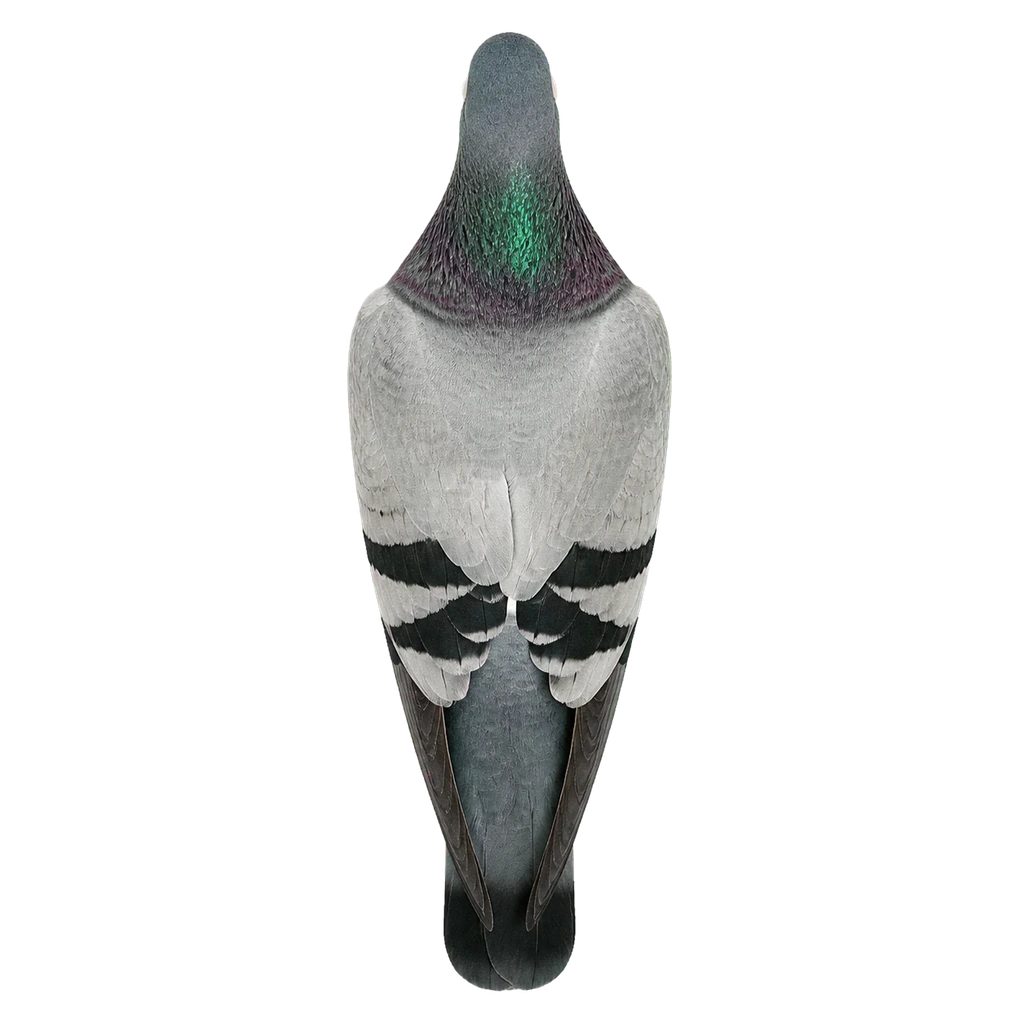
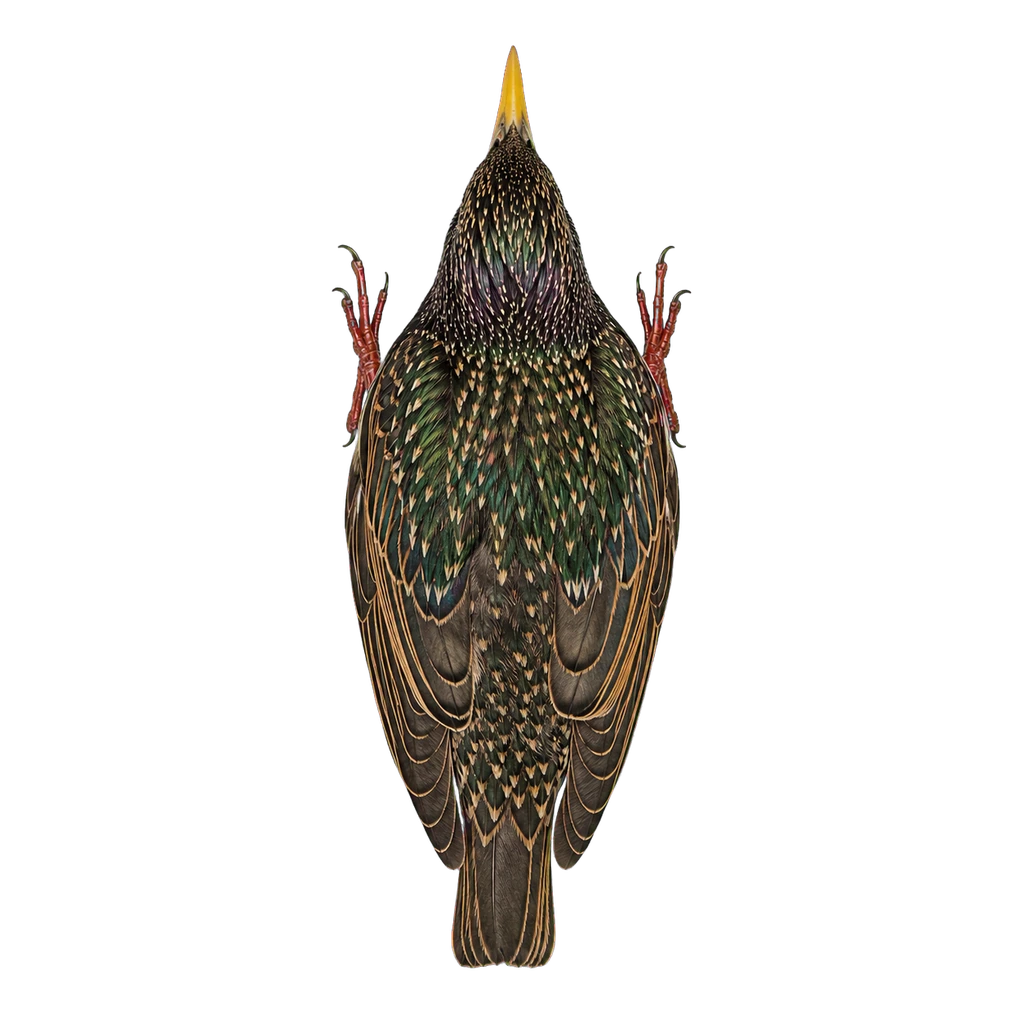
    Pest birds such as pigeons, sparrows, and starlings are attracted to buildings that provide sheltered ledges, eaves, signage gaps, and HVAC equipment platforms that mimic natural cliff or cavity nesting sites. Once birds successfully nest and fledge young in a location, strong homing instincts bring them back to the same spot each breeding season. Nearby food sources like open dumpsters, outdoor dining areas, or loading docks reinforce the habit and can quickly grow a small bird presence into a large, established flock.

  • What damage and health risks do pest birds cause? Toggle answer for: What damage and health risks do pest birds cause?

    Bird droppings are highly acidic and can corrode metal, stain painted surfaces, and degrade roofing materials over time. Accumulated droppings in enclosed or semi-enclosed spaces pose a histoplasmosis risk, and nesting materials can clog gutters, drains, and ventilation systems, creatingfire hazards and water damage. Pest birds also carry ectoparasites like bird mites, ticks, and fleas that can migrate indoors when birds vacate nests, causing secondary infestations inside the building.

  • How quickly can a provider get to my home? Toggle answer for: How quickly can a provider get to my home?

    Most providers in our network can schedule an inspection within 24-48 hours. For urgent situations, likeactive structural damage or large colonies, same-week emergency service is often available. Response times depend on your location and the provider's current schedule.

  • What happens during the first visit? Toggle answer for: What happens during the first visit?

    Your provider inspects the property to identify the pest, locate nesting or entry points, and assess the scope of the problem. You get a clear explanation of what they found, what they recommend, and a written scope before any work begins.

  • Is treatment safe for kids and pets? Toggle answer for: Is treatment safe for kids and pets?

    Modern pest control products are designed to break down quickly after application and pose minimal risk to people and pets when applied correctly. Most providers ask you to keep kids and pets out of treated areas for 1 to 2 hours while the product dries, after which the area is generally safe again. Always confirm specific re-entry times with your provider, and let them know about pet birds, fish, or reptiles, since some treatments require extra precautions for those species.

Pest Control Pros serving the city of the state of your city and nearby areas

Local providers experienced with house sparrow species ID, vent exclusion, dryer duct cleaning, and native bird box recovery are ready to inspect, remove, and prevent recurrence, no obligation.

Available 24/7
(888) 495-1510