Local pest control help is one call away.

Wild Turkey: Identification, Treatment & Prevention

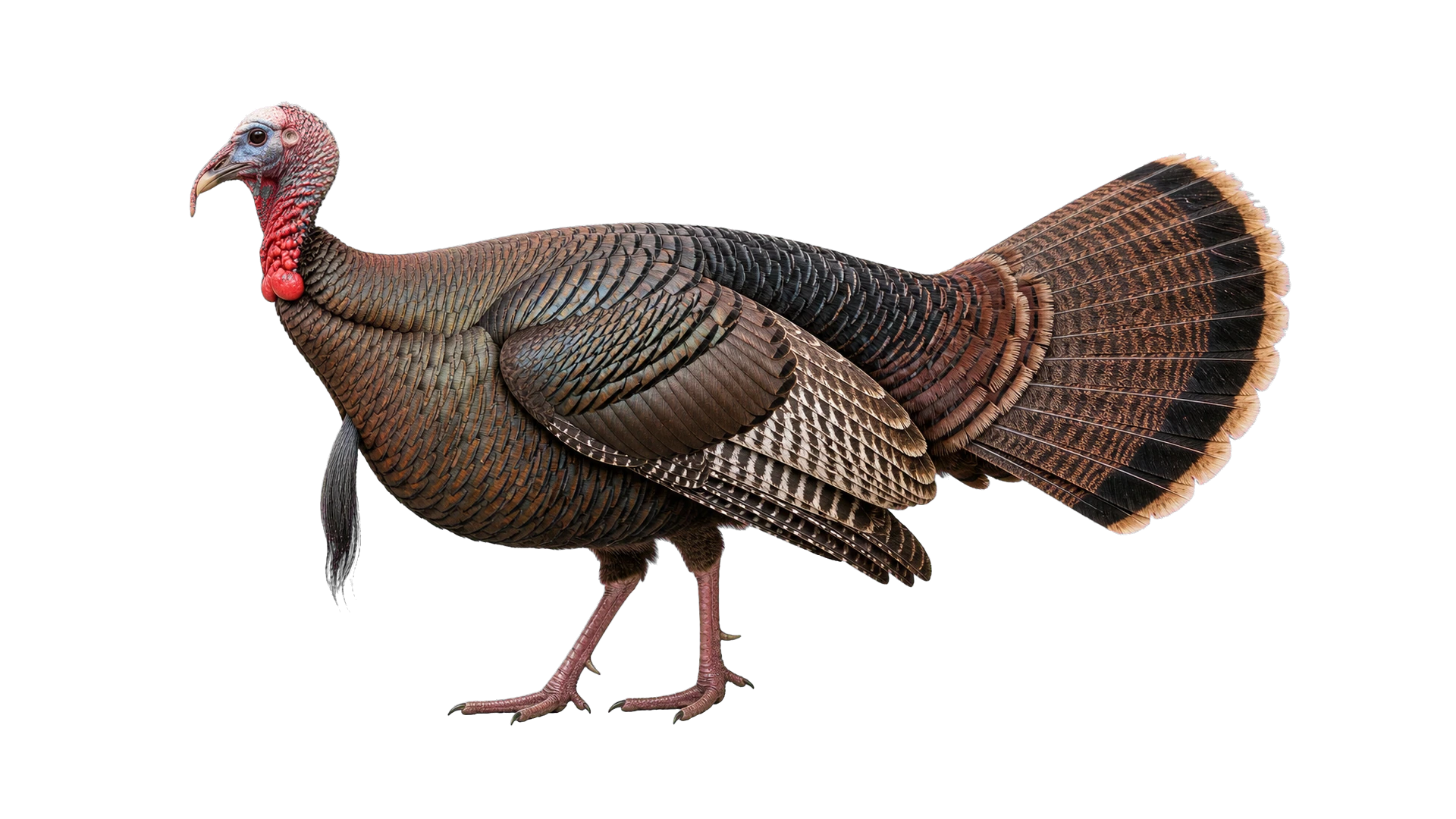
Wild turkeys are the largest ground bird in most American backyards. Adult males (toms) weigh 11 to 24 pounds and stand close to four feet tall. Hens are smaller. Both have the same easy field marks: bronze and copper feathers that shine in the sun, a bare blue and red head, and a heavy stocky body. Males show off a chest beard, a tail fan during display, and small spurs on the back of the leg. They were almost extinct in 1920. State agencies released birds across the country from the 1950s through the 1980s, and today the wild population has grown past 6 million. Suburban flocks are now common across nearly every state but Alaska.

If you're seeing large bronze birds with bare red heads scratching through your mulch, eating from your bird feeder spillage, or roosting in your tall oaks at dusk, you have wild turkeys. Most encounters are nuisance-level, garden damage, mess, noise, but a smaller number of habituated toms get aggressive during the spring breeding season, especially toward children, mail carriers, and joggers. This guide covers what to look for, why suburban flocks have become a chronic problem instead of a one-time visit, and what real response looks like when hazing alone isn't enough.

Close-up illustration of a wild turkey showing iridescent feathers

ID Card: Wild Turkey

Scientific name
Meleagris gallopavo
Color
Dark brown-bronze, iridescent feathers
Size
36 to 48 inches
Body shape
Large, heavy ground bird with fan-shaped tail
Key evidence
Droppings and scratched-up mulch in yard, aggressive behavior near vehicles
Also known as
Gobblers, Toms

Related Species

Call to get matched with a local pest control pro.

Available 24/7
(888) 495-1510
  • Specialists trained on wild bird deterrent programs
  • Property assessment and attractant identification
  • Coordination with state wildlife agencies for removal

Where to Inspect for Wild Turkey Activity

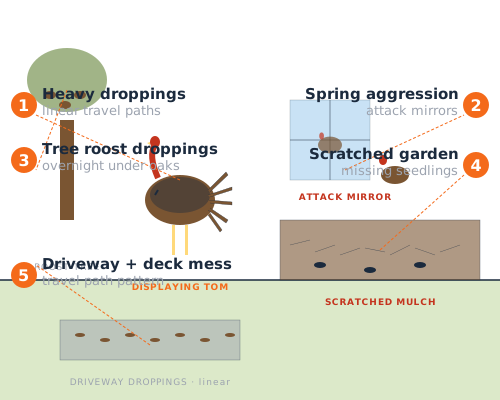
Cross-section illustration showing wild turkey damage to gardens, mulch, and patios

Wild turkeys leave plain evidence in a suburban yard. They are large, they travel in groups, and they revisit the same spots day after day. Walk the property at dawn or dusk, when the flock is moving between roost trees and feeding areas, and check for these specific markers:

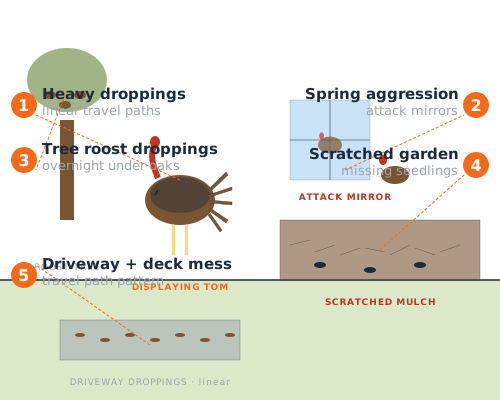
  • Mulched landscape and flower beds along the front of the home, Scratched-up mulch, exposed soil, and overturned bark are the most common first sign. Turkeys rake the surface with their feet looking for grubs, acorns, and grit.
  • Vegetable gardens and ornamental beds, Look for missing seedlings, stripped tomato and squash plants, pecked fruit, and tracks pressed into soft soil. A small flock can clear a row of new plantings in a single morning.
  • Under bird feeders and around spilled seed, Ground-level seed is the single largest draw onto a suburban property. Look for trampled soil, droppings, and feathers within 10 feet of any pole-mounted feeder.
  • Around large reflective windows and parked cars, During spring breeding, a tom sees his reflection and attacks it as a rival male. Scratches on the paint, feather smudges on the glass, and droppings below the window mean reflection-attack behavior is active.
  • Patios, decks, and driveways, Look for heavy droppings the size of a quarter, often in linear patterns along regular travel paths. Fecal fouling is one of the most cited homeowner complaints once a flock settles in.
  • Wooded edges where lawn meets natural habitat, Walk the property line where the mowed yard ends. Worn travel paths through grass, feathers caught on low branches, and droppings under large oaks confirm a roost tree within 100 yards.

If you find scratched mulch, droppings, and feather evidence in two or more of these zones, your property is part of the flock's daily route. Suburban turkeys have lost much of their natural fear of people through repeated calm encounters and direct or accidental feeding. That lost caution is the root of every aggressive turkey story, and restoring it is the foundation of any long-term plan.

Cross-section illustration showing wild turkey damage to gardens, mulch, and patios
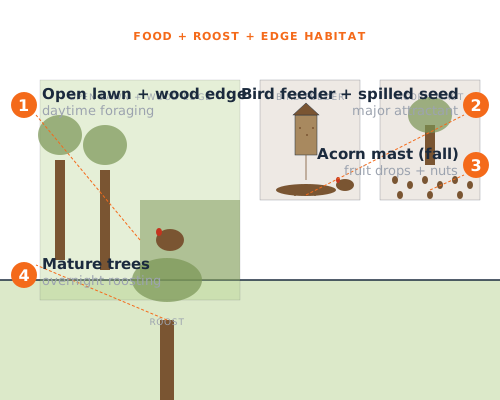
Illustration showing wild turkey activity zones in suburban yards

Why Do I Have Wild Turkeys?

Spotting a flock in the yard is step one. Understanding what's keeping the birds on your property is what changes their behavior. Wild turkeys are smart, social, and creatures of routine. Once a flock adds your yard to a daily foraging loop, getting them off that loop takes consistent effort across the whole household and often the whole street.

What anchors wild turkeys to your property:

  • Bird feeders and spilled seed, the #1 draw onto a suburban property; ground-feeding turkeys treat every fallen sunflower seed as an easy meal and learn the location within a week
  • Open mulched landscape, soft bark and damp mulch hide the grubs and insects turkeys scratch for; a fresh layer of bark is a fresh buffet
  • Accessible vegetable gardens and fruit drops, tomatoes, lettuce, pumpkins, and fallen apples are all on the menu, and even a single visit teaches the flock to come back
  • Mature trees suitable for overnight roosts, large oaks, pines, and cottonwoods on or next to the property put the flock in your yard at first light and again at dusk
  • Direct or accidental feeding by a neighbor, occasional thrown bread, kitchen scraps in an open compost, or seed in an unprotected feeder habituates the whole flock to people; one feeding household affects every yard on the block

A new flock pattern starts when one bird tests a yard and finds reliable food without any scary human response. Within a few visits, the rest of the flock follows. Within a few weeks, the property is on the route. Turkeys live 3 to 5 years in the wild and hens teach their poults every step of that route, so once a flock adopts your yard, the next generation arrives already knowing the way. That's why removing the food draw and consistent hazing matter so much, the goal is to retrain the flock before the pattern is locked in.

How Serious Is Your Wild Turkey Problem?

Find your scenario below. Each row reflects the real progression of a suburban turkey flock, occasional visitor to habituated breeder, not a generic bird timeline.

What You're Seeing Severity If Untreated Next Step
A single turkey or small group passing through occasionally Early Flock will return within days if any food source is present; visits become routine inside 2 to 4 weeks. Identify the food draw, eliminate ground bird seed and open compost, monitor for 14 days. Haze with loud noise the moment they return.
Established small flock of 5 to 10 birds using the yard daily with scratching damage Moderate Habituation is forming. Damage will spread to vegetable beds and flower beds; aggression risk rises sharply once breeding season starts. Schedule a professional consultation and a hazing program this month. Pair habitat changes with consistent household response.
Aggressive male during spring breeding, family member intimidated, reflection-attack damage on windows or vehicles High Reflection attacks continue daily until the breeding instinct fades in May or June; injury risk to children and elderly residents climbs each week. Same-week professional service. Install temporary window film, escalate hazing, and contact state wildlife agency about depredation options.
Heavy aggression with a child afraid to play outside, repeated vehicle damage, daily intimidation of pets Urgent Safety incident risk is significant. Bird is unlikely to leave on its own and behavior locks in further with every successful display. Call a pro today and request state wildlife agency coordination for a depredation permit. Document every incident with photo or video.
A single turkey or small group passing through occasionally
Severity Early
If Untreated Flock will return within days if any food source is present; visits become routine inside 2 to 4 weeks.
Next Step Identify the food draw, eliminate ground bird seed and open compost, monitor for 14 days. Haze with loud noise the moment they return.
Established small flock of 5 to 10 birds using the yard daily with scratching damage
Severity Moderate
If Untreated Habituation is forming. Damage will spread to vegetable beds and flower beds; aggression risk rises sharply once breeding season starts.
Next Step Schedule a professional consultation and a hazing program this month. Pair habitat changes with consistent household response.
Aggressive male during spring breeding, family member intimidated, reflection-attack damage on windows or vehicles
Severity High
If Untreated Reflection attacks continue daily until the breeding instinct fades in May or June; injury risk to children and elderly residents climbs each week.
Next Step Same-week professional service. Install temporary window film, escalate hazing, and contact state wildlife agency about depredation options.
Heavy aggression with a child afraid to play outside, repeated vehicle damage, daily intimidation of pets
Severity Urgent
If Untreated Safety incident risk is significant. Bird is unlikely to leave on its own and behavior locks in further with every successful display.
Next Step Call a pro today and request state wildlife agency coordination for a depredation permit. Document every incident with photo or video.

Suburban turkey behavior can shift fast once breeding season begins. If you're between two rows, treat the higher one as your situation.

How Wild Turkeys Develop

Wild turkeys differ from most pest birds in three ways: they're huge (a tom can outweigh a small dog), they're highly social and stay together in flocks of 5 to 50 birds, and they teach a complete foraging route from hen to poult inside the first year of life. That's why a suburban flock learned to use your yard 10 years ago is still here today, and why the response has to retrain the next generation, not just chase off the current one.

  1. Egg

    About 28 days

    Hens lay 8 to 15 eggs in a single shallow ground nest hidden in tall grass, brush, or under a low evergreen branch. The hen broods alone, the tom doesn't help. Most nests are within 100 yards of a known water source and a known roost tree, both of which often sit on or next to suburban property.

  2. Poult

    Walks within hours, flies short distances at 1 to 2 weeks

    Poults are precocial, they walk and run shortly after hatching and follow the hen immediately. They learn every food source, travel route, and roost tree from her over the next 4 to 5 months. A poult that learns to forage in your yard at three weeks old will return as an adult bringing its own poults two years later.

  3. Juvenile

    1 year to full adult plumage

    Sex-distinct features (beard, leg spurs, head color, body size) appear around 6 months. Juveniles travel with the brood through their first fall and winter, then disperse into small flocks the following spring. This is the stage where many young toms start practicing display behavior on shiny surfaces.

  4. Adult

    Sexually mature at 2 years; live 3 to 5 years in the wild

    Adults form winter flocks of 20 to 50 birds and break into smaller breeding groups in spring. Toms display, gobble, and defend territory from March through May, and that's when most aggressive incidents happen. Hens lead 1 brood per year and pass the suburban foraging route to the next set of poults.

Wild turkey populations have grown from near-extinction in 1920 to more than 6 million today, a recovery considered one of the great conservation success stories of North America. Suburban populations didn't exist a generation ago and are now common in nearly every state. Treatment in this context is long-term management, not one-time removal, the goal is to keep your property off the route while the flock adapts to other yards over years.

When Wild Turkeys Are Most Active

Wild turkeys stay in the same general area year-round, but what they're doing each quarter changes the risk to your property dramatically. Knowing the seasonal pattern tells you when to expect aggression, when damage peaks, and when hazing will land with the most impact.

  • Spring

    Breeding season runs from March through May. Toms gobble at sunrise, display tail fans for hens, and defend territory aggressively from any perceived rival. This is the season for reflection attacks on windows and vehicle mirrors, mail-carrier and jogger incidents, and the rare but real cases of a tom following a child across a yard. Hazing during spring requires consistency from the whole household.

  • Summer

    Hens raise poults in small family groups. Aggression drops sharply once breeding ends, but daily yard visits continue as hens teach the brood every food source on the route. This is the highest-impact window for habitat modification because the flock is on a predictable schedule and a new generation is learning your yard right now.

  • Fall

    Small flocks consolidate into larger groups for winter. Foraging shifts to acorns, nuts, and seed heads, which makes oak-heavy and mature-tree neighborhoods primary draws. Property damage peaks in late fall as the flock scratches through mulch and lawn for fallen mast.

  • Winter

    Large flocks of 20 to 50 birds gather around reliable food. Bird feeders, roadside corn, and any open compost become primary draws. Aggression is at its lowest, but vehicle-collision risk and droppings on patios and driveways peak now. A mild winter with bare ground can keep flocks in suburban yards for the entire season.

Why Wild Turkeys Need Professional Help

Wild turkeys are protected as a state game animal under wildlife agency authority, not federal law. You cannot legally trap, relocate, or kill a wild turkey outside of an open hunting season or without a depredation permit issued by the state. Most homeowners discover this rule the hard way after a confrontation with a tom in May, and the rule is enforced. A professional knows which agency to call, what evidence they'll ask for, and how to move a permit request through the system in days instead of months.

Habituated toms become genuinely aggressive during spring breeding when they see reflective surfaces and unfamiliar people as challengers. Mail carriers, joggers, and children are the most cited targets because their movement patterns trigger the territorial response. The bird isn't broken, it's behaving exactly the way breeding-season biology tells it to, and the only way to change the situation is to break the conditions that taught it your yard is its turf.

Over-the-counter scarecrows, owl decoys, and noisemakers fail because suburban turkeys see them constantly and learn to ignore them within a day or two. A professional response uses rotating deterrents (moving the visual, changing the noise, varying the schedule) plus household behavior change (no feeding, no eye-avoidance, consistent advance toward birds in the yard) so the flock can never settle into a routine of ignoring the response.

Long-term management is the honest expectation. Wild turkeys in your area aren't going away, the population is growing every year, and your yard is one of many in a regional pattern. Successful work keeps your property off the daily route while neighbors continue to host the flock. A real program plans for that reality and prices accordingly, $250 to $800 for the initial consultation and deterrent installation, then $50 to $150 per month for ongoing monitoring when chronic presence justifies it.

What Changes When a Pro Shows Up

Wild turkey work is built around habitat change, hazing, and legal coordination. A specialist's job is to identify why the flock has adopted your yard, design a response the whole household can keep up, and bring in state wildlife agency authority when removal becomes necessary. Here's what changes:

Pest control technicians after completing wild turkey assessment
  • Local Pest Control
  • 24/7 Availability
  • Quality Workmanship
  • Eco‑Friendly Options
  • Trusted by Homeowners
  • They Map the Flock's Daily Route

    Inspection covers the roost trees, the feeding stops, and the travel paths between them. The goal is to identify every food draw and shelter feature on your property before any deterrent goes in. Most yards turn out to have two or three anchors the homeowner didn't realize were feeding the routine.

  • They Build a Hazing Plan You Can Sustain

    Hazing only works when it's consistent across the whole household, all day, every day, until the flock changes its route. A pro lays out which tools (loud noise, motion-activated sprinklers, large unleashed dogs, opened umbrellas, eye contact with advance) to use, who in the home is responsible, and how to log each encounter so progress is measurable.

  • They Solve Reflection Attacks During Breeding

    Male turkeys attack windows and vehicle mirrors because they see a rival. Temporary window film, fabric covers on side mirrors, and shrub plantings that block the view all break the trigger. A specialist knows which surfaces on your home are likely to start the cycle and treats them before damage occurs.

  • They Coordinate With the State Wildlife Agency

    Wild turkeys are protected as a game animal. Lethal removal outside hunting season requires a depredation permit issued only when documented criteria are met. A pro knows the regional contact, the paperwork, and the evidence the agency will ask for, which saves weeks compared to a homeowner trying to navigate it alone.

  • Local Pest Control
  • 24/7 Availability
  • Quality Workmanship
  • Eco‑Friendly Options
  • Trusted by Homeowners
NoToPests home

One call connects you with a local specialist who knows wild turkeys and your area.

Be Ready When You Call

Pest control technician arriving for wild turkey service
Junho L.
Daisuke P.
Kirk Q.
Marion K.

Trusted by homeowners nationwide

Call for Pest Control Help (888) 495-1510

Can You Handle This or Do You Need Help?

Wild turkeys are unique among pest situations: most of the work is behavior change, both yours and the flock's, and the legal protections mean lethal removal is never a DIY option. That changes what DIY can and can't accomplish.

What DIY Can Do

DIY work is highly effective at the early and moderate stages when applied consistently across the household. Useful steps with honest limits:

  • Eliminate ground bird seed, secure compost, and remove fruit drops to cut the biggest food draws onto your property
  • Install temporary window film and cover vehicle mirrors during spring breeding to stop reflection attacks before they start
  • Haze every bird every time, loud noise, motion-activated sprinklers, large unleashed dogs, opened umbrellas, eye contact with advance
  • Report aggressive birds to your state wildlife agency for the documentation file, even if no permit is requested yet
  • What DIY cannot do: design a sustained multi-week deterrent program, secure a depredation permit, or legally capture or remove a protected bird.

What a Pro Does Differently

Professional wild turkey work is built around assessment, sustained deterrence, and state agency coordination. Here's what changes when you call:

  • Property survey identifies every food draw, roost tree, and travel path before any deterrent goes in
  • Hazing plan is designed for the whole household with assigned roles, rotating tools, and a measurable check-in schedule
  • Reflection-attack solutions go in before the breeding season starts, not after the damage shows up
  • State wildlife agency coordination, the pro knows the regional contact, the paperwork, and the evidence needed for a depredation permit
  • Long-term monitoring keeps your property off the route over years as the regional flock keeps growing.

Suspect Wild Turkeys? Don't Wait.

Habituated turkey flocks are a real safety concern during spring breeding and a chronic damage source year-round. Connect with a local specialist for assessment, hazing plan, and state agency coordination.

Available 24/7
(888) 495-1510

What Homeowners Say After Getting Help

Real results from people who had the same problem and solved it.

Rashad E.
Rashad E.
Portland, OR

"No pressure, just options."

I appreciated being given eco-friendly options without being pushed. The technician explained tradeoffs honestly and let me decide based on my priorities. They were transparent about what each approach involves. The no-pressure approach and honest information helped me make a confident decision.

Rashad E.
Rashad E.
Portland, OR

"No pressure, just options."

I appreciated being given eco-friendly options without being pushed. The technician explained tradeoffs honestly and let me decide based on my priorities. They were transparent about what each approach involves. The no-pressure approach and honest information helped me make a confident decision.

Yu E.
Yu E.
Durham, NC

"The inspection caught what we missed."

I didn't realize how much damage raccoons can cause once they get inside. The wildlife specialist explained what areas they inspect first and why raccoon issues are handled more carefully than regular pests. They showed me the damage and explained removal and exclusion strategies. Understanding the potential for damage made me glad I called professionals.

Ren P.
Ren P.
Dayton, OH

"The problem finally stayed gone."

Ants kept returning no matter what we did. The tech treated the trail areas and explained how to handle food storage and moisture so the ants don't keep coming back. It's been months and we haven't seen them again. I appreciated that it wasn't just a one-and-done spray.

Kayla Q.
Kayla Q.
Pittsburgh, PA

"Clear expectations and a real plan."

I was overwhelmed and didn't know what was realistic to fix quickly. The inspector explained what results to expect and how long it typically takes depending on the ant species. They treated the right places and gave simple prevention tips. Everything felt structured and easy to follow.

Malachi U.
Malachi U.
Knoxville, TN

"They found the entry points fast."

Ants were showing up in the kitchen and we couldn't figure out where they were coming from. The tech tracked the activity and pointed out two entry points we never would've noticed. After treating and sealing those areas, the ants disappeared. It was quick and surprisingly thorough.

Arturo B.
Arturo B.
Yonkers, NY

"No pressure, just helpful info."

I mainly wanted to understand what was happening before committing to anything. The inspector walked me through the likely cause and the differences between treatment approaches. They answered questions without rushing me. The plan we chose worked and the ants were gone within days.

Octavio Z.
Octavio Z.
Duluth, MN

"The tech helped me stop wasting time."

I kept trying different products and nothing was sticking. The tech explained why some solutions don't work for certain ant problems and focused the treatment where it would actually matter. They also gave prevention tips that were easy to implement. The difference was obvious within the first week.

Chauncey A.
Chauncey A.
Duluth, MN

"We finally understood what to do next."

We felt stuck because nothing we tried lasted. The tech explained how to find the source of the problem, treated both indoor and outdoor areas, and helped us build a prevention routine. It wasn't complicated. Just the right steps in the right order. We've had a huge improvement since.

Vihaan V.
Vihaan V.
Madison, WI

"They fixed what was actually causing it."

Ants kept showing up in the same spot. The pro explained that the visible ants weren't the real issue and focused the treatment on where they were coming from. They identified the entry path and treated it properly. The problem stopped and hasn't returned.

Allison A.
Allison A.
Des Moines, IA

"It felt like a real inspection, not a quick spray."

The tech spent time figuring out where the ants were entering instead of just spraying around. They walked me through the likely reasons and what to watch for over time. After treatment, ant activity dropped fast and stayed low. The detailed approach gave me confidence.

Stephen N.
Stephen N.
Sacramento, CA

"Small changes made a big difference."

We didn't realize how much our routine was attracting ants. The inspector explained simple prevention steps and treated the areas where activity was highest. Once those changes were in place, we stopped seeing ants inside. It was a practical approach that actually worked.

Daquan V.
Daquan V.
Tampa, FL

"The explanation alone was worth it."

I'd been doing random treatments without understanding what I was dealing with. The tech explained how ants behave and why certain approaches work better. They treated strategically instead of just spraying. It made the whole thing feel manageable.

Deepak V.
Deepak V.
San Antonio, TX

"We stopped chasing the problem and solved it."

We kept wiping down counters and the ants would be back the next day. The pro identified the entry areas and explained the treatment plan clearly. Once they treated and targeted the colony, the ants disappeared quickly. It felt like we finally got ahead of it.

Mireya Z.
Mireya Z.
Riverside, CA

"They didn't oversell. Just solved it."

The tech explained what treatment was necessary and what wasn't. They focused on the entry points and corrected the conditions that were attracting ants. The work felt honest and effective. I liked having clear expectations and seeing results quickly.

Wei D.
Wei D.
Lexington, KY

"It wasn't just 'spray and go.'"

I appreciated the step-by-step explanation and the focus on prevention. The inspector treated the areas where ants were getting in and helped me understand what to change at home. The ants stopped showing up and it's been consistent. The approach felt thoughtful and sustainable.

Shu W.
Shu W.
Orlando, FL

"It finally made sense why they kept coming back."

I had ants showing up every few months and never understood why. The tech explained how outdoor nests and weather changes affect indoor activity. They treated the perimeter and entry points instead of just the inside. Since then, we haven't had recurring issues.

Teresa I.
Teresa I.
Mesa, AZ

"Targeted instead of overdone."

I was worried about over-treating the house. The pro focused on specific problem areas and explained why blanket spraying wasn't necessary. The ants stopped appearing, and we didn't feel like chemicals were used unnecessarily. That balance mattered to us.

Latonya X.
Latonya X.
Mesa, AZ

"Clear answers without jargon."

The tech explained everything in plain language and answered questions without rushing. They identified the type of ant we had and adjusted the treatment accordingly. Knowing why the approach worked gave me confidence it would last.

Humberto T.
Humberto T.
Eugene, OR

"They focused on prevention, not just treatment."

I liked that the tech talked through how to keep ants from returning after the treatment. They addressed moisture issues and entry points around the home. The treatment worked, and the prevention tips helped us stay ahead of future problems.

Jerrell N.
Jerrell N.
Arlington, VA

"No guessing, just a plan."

I was tired of guessing what would work. The inspector explained the cause of the issue and outlined a clear plan of action. After treatment, the ants disappeared and we haven't had to revisit the problem. It felt efficient and well thought out.

Marion K.
Marion K.
Boulder, CO

"They explained what to expect upfront."

The tech set expectations about timing and results before starting. They explained that some activity might happen initially and why. Everything played out exactly as described, and the ants were gone shortly after. That transparency made a big difference.

Bridget E.
Bridget E.
Sacramento, CA

"Helpful without being overwhelming."

I didn't realize there were different types of ants or that it mattered. The inspector walked me through what they were seeing and explained how ant behavior affects treatment. It made it easier to ask the right questions and understand the solution.

Junho L.
Junho L.
Naperville, IL

"Saved me a lot of guessing."

I was close to trying random sprays for the ants. Talking with the tech helped me understand what was realistic to address and what usually doesn't work. The targeted treatment solved the issue quickly and saved time and frustration.

Willis Y.
Willis Y.
Baton Rouge, LA

"It felt tailored to our home."

The tech didn't just apply a standard treatment. He looked at where we were seeing activity and adjusted the approach to our layout and yard. The ants stopped showing up and we understood how to keep it that way.

Thelma S.
Thelma S.
Madison, WI

"Straightforward and effective."

I appreciated how straightforward everything was. The pro explained the issue, treated the problem areas, and gave us a few simple steps to prevent future issues. The ants were gone and it didn't feel complicated.

Angelina B.
Angelina B.
Austin, TX

"They explained how the weather played a role."

I didn't realize seasonal changes could affect ant activity so much. The tech explained how heat and rain push ants indoors and what to do about it. They treated the problem areas and gave tips to prevent future issues. The explanation helped everything click.

Kirk Q.
Kirk Q.
Denver, CO

"It wasn't as complicated as I expected."

I assumed pest control would be disruptive or complicated. The technician explained the steps clearly and focused on targeted treatment. The ants stopped appearing quickly and the process was smoother than expected.

Cody L.
Cody L.
Denver, CO

"They helped me understand the bigger picture."

Instead of just treating the ants I saw, the tech explained what was happening around the house that made it attractive to pests. Once those factors were addressed, the problem resolved quickly. It felt educational as well as effective.

Marquis K.
Marquis K.
San Mateo, CA

"Clear communication from start to finish."

I appreciated how clearly everything was explained before treatment began. The inspector walked through the process and answered all my questions. The ants were gone shortly after and we felt confident about prevention going forward.

Virginia T.
Virginia T.
San Mateo, CA

"They addressed what we were missing."

We kept focusing on cleaning, but the tech showed us where ants were actually entering. Once those points were treated and sealed, the issue resolved. It was reassuring to finally understand the root cause.

June J.
June J.
Omaha, NE

"A methodical approach that worked."

The pro explained how they identify ant trails and colonies before treating. They took a methodical approach instead of rushing through. The ants stopped appearing and the fix has held up well.

Caitlin K.
Caitlin K.
Phoenix, AZ

"They understood desert pest behavior."

Living in Phoenix, pests behave differently than other places. The tech explained how heat drives ants indoors and what treatments work best here. The solution was effective and tailored to our environment.

Olive S.
Olive S.
Sacramento, CA

"They took the time to do it right."

I appreciated that the tech didn't rush. He inspected the problem areas carefully and explained what they were seeing. The treatment worked quickly and the ants haven't returned.

Arianna D.
Arianna D.
Baton Rouge, LA

"They understood the local pest issues."

The tech explained how the humidity here contributes to ant problems and why certain treatments work better in this climate. They focused on outdoor entry points and moisture-prone areas. The ants cleared up quickly and haven't come back.

Kiyana N.
Kiyana N.
New Orleans, LA

"Finally something that lasted."

We'd dealt with recurring ants for years. The pro explained why flooding and moisture play such a big role here and adjusted the treatment accordingly. It's been months without seeing ants, which is a big win for us.

Brett R.
Brett R.
Phoenix, AZ

"They knew exactly what works in Arizona."

The tech explained how desert conditions affect ant behavior and which treatments are most effective here. They targeted the right areas and avoided unnecessary spraying. The ants disappeared quickly.

Albert O.
Albert O.
Baltimore, MD

"Clear, calm, and professional."

I appreciated how calmly everything was explained. The inspector identified the ant problem, explained the treatment, and answered my questions without rushing. The solution worked and gave me peace of mind.

Rohit Y.
Rohit Y.
Orlando, FL

"They handled it efficiently."

The tech inspected the problem areas, explained the plan, and got to work quickly. The ants were gone within days and the process felt efficient without being rushed.

Carolyn H.
Carolyn H.
Omaha, NE

"Simple explanations, solid results."

I liked how simply everything was explained. The pro didn't overcomplicate things and focused on what mattered. The ants stopped appearing and we haven't needed follow-up treatments.

Edith Z.
Edith Z.
Newark, NJ

"They showed me what to watch for."

Beyond treating the ants, the tech explained what signs to watch for if activity starts again. That knowledge made me feel more in control. So far, everything has stayed clear.

Common Questions About Wild Turkeys

Direct answers to what homeowners ask most about identification, breeding-season aggression, and what real response looks like.

  • Why are wild turkeys becoming a nuisance in my neighborhood? Toggle answer for: Why are wild turkeys becoming a nuisance in my neighborhood?

    Wild turkey populations have expanded dramatically into suburban areas across the eastern and central United States due to successful conservation efforts, and they have adapted well to residential landscapes that provide open lawns for feeding, ornamental plantings for foraging, and wooded areas for roosting. In suburban settings, turkeys become habituated to human presence and lose their natural wariness, sometimes blocking driveways, damaging vehicles by pecking at their reflections, scratching up gardens and mulch beds, and leaving large volumes of droppings on lawns, decks, and walkways. During breeding season (March-May), male toms can become aggressive toward people, especially if they have been fed and no longer associate humans with any threat.

  • When are wild turkeys most aggressive? Toggle answer for: When are wild turkeys most aggressive?

    Male wild turkeys (toms) are most aggressive during the spring breeding season (March-June) when testosterone levels peak and they establish dominance hierarchies. Toms may display aggressively toward people by fanning tail feathers, strutting, and occasionally charging or pecking, particularly at individuals they perceive as subordinate, such as children or people who back away. They may also attack their own reflection in car bumpers, glass doors, and windows, causing vehicle and property damage. The most effective response to an aggressive tom is to assert dominance by not retreating, makingloud noises, opening an umbrella, or using a broom to discourage the behavior. Never feed wild turkeys, as feeding is the primary cause of turkeys losing their fear of humans and becoming aggressive.


  • Why do pest birds keep nesting on my building? Toggle answer for: Why do pest birds keep nesting on my building?

    Pest birds such as pigeons, sparrows, and starlings are attracted to buildings that provide sheltered ledges, eaves, signage gaps, and HVAC equipment platforms that mimic natural cliff or cavity nesting sites. Once birds successfully nest and fledge young in a location, strong homing instincts bring them back to the same spot each breeding season. Nearby food sources like open dumpsters, outdoor dining areas, or loading docks reinforce the habit and can quickly grow a small bird presence into a large, established flock.

  • What damage and health risks do pest birds cause? Toggle answer for: What damage and health risks do pest birds cause?

    Bird droppings are highly acidic and can corrode metal, stain painted surfaces, and degrade roofing materials over time. Accumulated droppings in enclosed or semi-enclosed spaces pose a histoplasmosis risk, and nesting materials can clog gutters, drains, and ventilation systems, creatingfire hazards and water damage. Pest birds also carry ectoparasites like bird mites, ticks, and fleas that can migrate indoors when birds vacate nests, causing secondary infestations inside the building.

  • How quickly can a provider get to my home? Toggle answer for: How quickly can a provider get to my home?

    Most providers in our network can schedule an inspection within 24-48 hours. For urgent situations, likeactive structural damage or large colonies, same-week emergency service is often available. Response times depend on your location and the provider's current schedule.

  • What happens during the first visit? Toggle answer for: What happens during the first visit?

    Your provider inspects the property to identify the pest, locate nesting or entry points, and assess the scope of the problem. You get a clear explanation of what they found, what they recommend, and a written scope before any work begins.

  • Is treatment safe for kids and pets? Toggle answer for: Is treatment safe for kids and pets?

    Modern pest control products are designed to break down quickly after application and pose minimal risk to people and pets when applied correctly. Most providers ask you to keep kids and pets out of treated areas for 1 to 2 hours while the product dries, after which the area is generally safe again. Always confirm specific re-entry times with your provider, and let them know about pet birds, fish, or reptiles, since some treatments require extra precautions for those species.

Pest Control Pros serving the city of the state of your city and nearby areas

Local providers experienced with wild bird management and state agency coordination are ready to assess, design a hazing plan, and follow up, no obligation.

Available 24/7
(888) 495-1510