Local pest control help is one call away.

European Starling: Identification, Treatment & Prevention

European starlings (Sturnus vulgaris) are stocky, medium-sized songbirds 19 to 22 centimeters long, with a triangular wing silhouette in flight that's distinctive once you've seen it. Breeding-season adults are glossy black with iridescent green and purple sheens and an unmistakable bright yellow bill. Non-breeding birds switch to a dark bill and a dense field of white-tipped feathers that earned the species its name, the spotted look reads as 'starry' at a distance. Roughly 100 birds were released in New York's Central Park in the 1890s; today the continental US population sits north of 150 million, making this one of the most successful invasive bird introductions in recorded history.

If you're seeing iridescent black birds with yellow bills probing your lawn, large flocks roosting in mature trees at dusk, or steady traffic in and out of a gable vent or palm-tree crown, you have European starlings. This guide covers identification through the seasonal plumage change, why the invasive label drives a different legal and treatment framework than native birds, and what professional exclusion plus roost work actually involves.

Close-up illustration of a European starling showing iridescent black plumage with purple and green sheens, yellow breeding bill, and chunky body characteristic of the species

ID Card: European Starling

Scientific name
Sturnus vulgaris
Color
Black, iridescent purple-green
Size
7 to 9 inches
Body shape
Stocky body with short tail and pointed bill
Key evidence
Massive flocks at dusk, droppings accumulating on structures, nests in vents
Also known as
European starlings, Common starlings

Related Species

Call to get matched with a local pest control pro.

Available 24/7
(888) 495-1510
  • Specialists trained on bird species ID, starlings aren't federally protected (most native birds are)
  • Vent and cavity exclusion installation that addresses the larger entry holes starlings need
  • Roost dispersal coordination plus large-scale guano cleanup with proper PPE

Where to Inspect for European Starling Activity

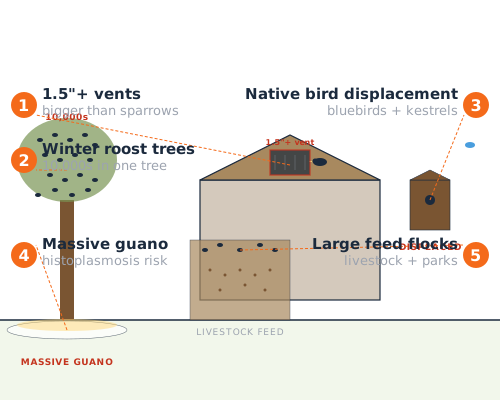
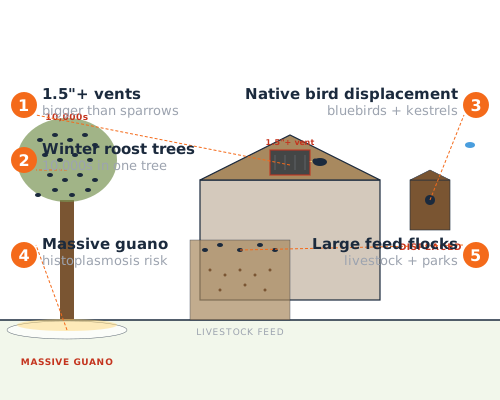
Cross-section illustration showing European starling activity, large attic gable vent nesting, soffit cavity occupation, massive winter roost flocks, and guano accumulation patterns

Starling activity splits into two distinct patterns on a calendar. Spring and summer are cavity-nesting season, where pairs claim a single opening and run a tight food-and-material shuttle from dawn to dusk. Fall and winter are roost-and-flock season, where thousands of birds converge on a small set of trees or structures and the evidence is volume, not movement. Walk these zones with that split in mind:

  • Gable vents, soffit vents, and attic returns with openings 4 inches or larger, Starlings push into bigger holes than house sparrows can use. Damaged louvers, missing screens, and oversized commercial vents are textbook nest sites. Look for material poking out of the slats and worn patches on the trim where adults grip during entry.
  • Open warehouse and barn rafters, hayloft beams, and equipment sheds, Agricultural buildings and commercial open-volume structures host the largest roost groups outside of urban sites. Heavy whitewash staining on rafters and floor zones directly below confirms repeated overnight use.
  • Mature trees with woodpecker holes, especially near native bird boxes, This is the competition zone. Starlings evict bluebirds, tree swallows, purple martins, and even small owls and American kestrels from cavities the native birds excavated or were given. Inspect the rim of any tree hole for fresh scratches and torn nest material.
  • Bridge undersides, parking structures, and large building overhangs in urban areas, Fall and winter murmuration flocks pick a small number of staging and roosting structures and use them for weeks. Massive guano accumulation directly below these zones is the loudest sign.
  • Around livestock feed bunks, grain bins, and orchard rows, Adult flocks descend on accessible feed and fruit, contaminating remaining stock with droppings. A morning visit during fall or winter typically catches the flock on the deck before they shift to roost sites.
  • Palm-tree crowns, ornamental grass clumps, and dense conifers within 50 feet of the house, Cavity-equivalent vegetation gets used as both nest substrate and pre-roost staging. Inspect from below at first light; birds leaving the roost expose the location.

European starlings are an introduced species and are NOT protected under the federal Migratory Bird Treaty Act. That's unusual; almost every wild bird in North America is federally protected, with starlings, house sparrows, and feral pigeons standing as the three named exceptions. Removal, exclusion, and lethal control are legal in most states for starlings, which makes the response options far broader than for native birds. Humane exclusion plus structural prevention is still the right starting point, but the legal floor is much lower than for protected species.

Cross-section illustration showing European starling activity, large attic gable vent nesting, soffit cavity occupation, massive winter roost flocks, and guano accumulation patterns
Illustration showing European starling cavity preferences and roost site selection, including attic vents, structural openings, and mature trees suitable for winter flocking

Why Do I Have European Starlings?

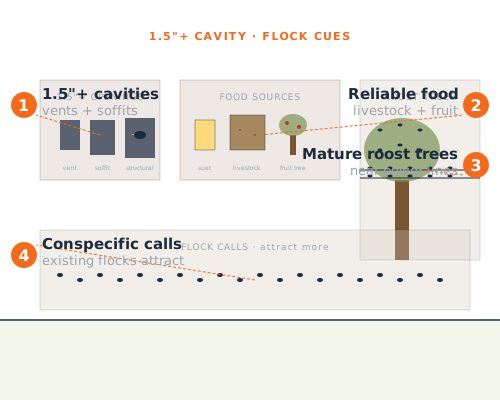
Spotting them is step one. Understanding why your property got selected is what stops the next wave from moving in once the first is gone. Starlings expand from established populations toward whichever properties combine an accessible cavity, a nearby food source, and a mature tree or structure for roosting. Once those three things line up, the same nest cavity is reused year after year and the same roost trees are revisited each fall.

What draws European starlings to your property:

  • Cavity openings 4 inches or wider, large gable vents, damaged soffit returns, palm-tree crowns, and woodpecker holes in mature trees all read as ideal nest substrate
  • Reliable food year-round, livestock feed bunks, exposed dumpster contents, fruit drops under unmanaged trees, and suet feeders sustain local flocks across seasons
  • Mature trees or large structures within a few hundred yards, deciduous stands, dense conifers, and bridge or parking-deck overhangs concentrate fall and winter flocks at predictable sites
  • Insufficient native-bird-box modification, standard cavity dimensions designed for kestrels, owls, woodpeckers, and martins are exactly what starlings target unless entrance holes are sized to exclude them

A nesting pair raises 1 to 2 broods of 4 to 6 eggs per year, with eggs hatching after about 12 days and chicks fledging at 21 days. That's modest per-pair output by bird standards. The reason starling populations explode anyway is scale: 100 birds released in 1890 became 150 million birds by today, because cavity competition lets each pair displace native species from prime nest sites and the offspring expand into adjacent territory the following year. Winter flocks aren't seasonal migrants pouring in from elsewhere, they're the local breeding population plus regional birds consolidating at preferred roost sites once the air cools.

How Serious Is Your European Starling Problem?

Find your scenario below. Severity tracks scale (a single nest vs a 10,000-bird roost) and what damage or health exposure is occurring.

What You're Seeing Severity If Untreated Next Step
A few starlings on the roof or in a yard tree, no nest or roost yet Early A pair claims a vent or cavity within weeks once they confirm a usable opening Identify cavity access points (vents 4 inches or wider, tree hollows), install vent caps, and monitor for 14 days before spring nesting begins.
Active nest inside a gable vent or building cavity plus a small flock visiting daily Moderate Insulation contamination from droppings, structural staining from acidic urine, and a second brood in the same cavity if early enough in the season Schedule professional exclusion plus nest removal during the off-breeding window, then cap every 4-inch opening on the structure.
Flock of 100 or more birds settling on the property, roost establishing, guano accumulating High Roost expands week over week as more flocks find the site; guano accumulation reaches histoplasmosis-exposure levels within a season Same-week professional roost disruption plus comprehensive cavity exclusion plus histo-aware cleanup of accumulated droppings.
Massive roost (1,000 or more birds), heavy guano accumulation, agricultural damage or aviation hazard nearby Urgent Active disease exposure risk from histoplasmosis, ongoing agricultural or aviation loss, and a roost size that resists single-property mitigation Call today for coordinated bird-control work plus PPE-grade cleanup, and request USDA Wildlife Services consultation for roosts on this scale.
A few starlings on the roof or in a yard tree, no nest or roost yet
Severity Early
If Untreated A pair claims a vent or cavity within weeks once they confirm a usable opening
Next Step Identify cavity access points (vents 4 inches or wider, tree hollows), install vent caps, and monitor for 14 days before spring nesting begins.
Active nest inside a gable vent or building cavity plus a small flock visiting daily
Severity Moderate
If Untreated Insulation contamination from droppings, structural staining from acidic urine, and a second brood in the same cavity if early enough in the season
Next Step Schedule professional exclusion plus nest removal during the off-breeding window, then cap every 4-inch opening on the structure.
Flock of 100 or more birds settling on the property, roost establishing, guano accumulating
Severity High
If Untreated Roost expands week over week as more flocks find the site; guano accumulation reaches histoplasmosis-exposure levels within a season
Next Step Same-week professional roost disruption plus comprehensive cavity exclusion plus histo-aware cleanup of accumulated droppings.
Massive roost (1,000 or more birds), heavy guano accumulation, agricultural damage or aviation hazard nearby
Severity Urgent
If Untreated Active disease exposure risk from histoplasmosis, ongoing agricultural or aviation loss, and a roost size that resists single-property mitigation
Next Step Call today for coordinated bird-control work plus PPE-grade cleanup, and request USDA Wildlife Services consultation for roosts on this scale.

Starling guano carries documented histoplasmosis exposure risk and the species reproduces faster than most native cavity nesters. If you're between two rows, treat the higher one as your situation.

How European Starlings Develop and Establish

Starling biology is straightforward at the per-bird level. The story of why a few birds in 1890 became 150 million is at the population level: aggressive cavity competition with native species, broad diet, multiple broods, and roost cohesion that protects the flock through winter. The per-bird lifecycle below explains the speed at which a single occupied vent becomes a recurring annual nest site.

  1. Egg

    About 12 days

    Females lay 4 to 6 pale blue eggs per clutch in cavity nests built from grass, leaves, and trash material. Both parents incubate. Starlings produce 1 to 2 broods per pair per year, with most US regions seeing first broods April through May and a second brood through July.

  2. Nestling

    About 21 days in nest

    Hatchlings are naked and helpless. Both parents shuttle food, mostly insects and other invertebrates during the chick stage, into the cavity from dawn to dusk. Guano accumulates inside the cavity through the nestling period; this is where insulation contamination and acidic urine damage to wood start.

  3. Juvenile

    Fledges around 3 weeks; immature plumage for several months

    Young starlings leave the nest in a uniform gray-brown coat that looks nothing like the iridescent adult. Through late summer and fall they molt into adult plumage piece by piece, often producing oddly half-spotted birds that confuse field ID. Juveniles join family groups, which then merge into the larger flocks that become the fall murmurations.

  4. Adult

    Sexually mature at 1 year; wild average 2 to 3 years (max 15+)

    Adults show strong site fidelity. A nest cavity used this year will be reused next year, often by the same pair or by their offspring claiming the same vent. Roost sites also see decade-scale fidelity in urban and agricultural settings, which is why dispersal work has to relocate the flock rather than just clear one night.

Roughly 100 starlings released in New York's Central Park in the 1890s have become more than 150 million birds across the continental US today. Population scale is the defining challenge of starling work; individual control is futile, and exclusion plus roost disruption is what actually moves the needle. Cap every 4-inch-and-wider cavity on the property, disrupt roost sites with sustained multi-evening pressure, and pair the structural work with food-source reduction. Done together, those three steps end the recurring cycle on a single property even though the regional population isn't going anywhere.

When European Starlings Are Most Active

Starling pressure is year-round across most of the US but the shape of the problem changes with the season. Spring and summer are cavity-nesting; fall is flock formation and the start of murmuration roosts; winter is peak roost size, peak histoplasmosis exposure risk, and peak aviation hazard. Each season has a different right response.

  • Spring

    Cavity-nesting peaks. Pairs scout, claim vents and tree holes, build, and lay first broods from March through May depending on region. This is also when starling competition with native cavity-nesters does most of its damage, woodpecker holes, bluebird boxes, and martin houses get taken over while the native birds are still establishing their own broods. Cap openings now to prevent the year's nesting before it begins.

  • Summer

    Second broods hatch and fledge through July in most regions. Family groups begin combining into larger flocks by August, the first sign that fall roost-and-flock season is coming. Removal during active nestling stages is more complicated and requires humane handling even for a non-protected species, which is why the spring exclusion window matters.

  • Fall

    Murmurations begin. Family groups merge into flocks of 10,000 to 1,000,000 birds that perform synchronized aerial displays at dusk before settling onto roost sites. This is the start of the flock-management season, separate from cavity exclusion. Deterrent programs are most effective when started early, before the flock has chosen and committed to a specific roost tree or structure.

  • Winter

    Massive roosts consolidate at urban and agricultural sites. Guano accumulation under roost trees reaches the levels documented to drive histoplasmosis exposure at cleanup sites. Aviation hazard peaks at airports near roost zones, starlings rank second only to gulls in bird-strike incidents. Best season for major exclusion work on structures because no nestlings are present and cold air shortens any confrontation.

Why European Starlings Often Need Professional Help

European starlings are one of the most aggressively invasive bird species in North America. The story starts with roughly 100 birds released into Central Park in the 1890s; the current US population sits north of 150 million. Documented native-bird population declines in bluebirds, purple martins, and red-headed woodpeckers trace directly to cavity competition from starlings. That scale is what separates starling work from generic 'bird problem' work, individual control is futile, and the response has to address cavities, roost sites, and food sources at the same time.

Histoplasmosis is the headline health risk. The fungus Histoplasma capsulatum thrives in accumulated droppings under long-established roosts, and major outbreaks have been documented at roost-cleanup sites where workers entered without proper respiratory PPE. Cryptococcosis and salmonella transmission from starling guano have also been documented to humans, livestock, and dogs. None of this becomes a residential emergency on a single starling pair, the exposure risk is tied to roost-scale guano accumulation, which is why severity tracks flock size.

Agricultural damage estimates run around $800 million per year in the US, mostly through feedlot losses and orchard raids by large flocks. Aviation hazard is the other documented national-scale cost, starlings rank second only to gulls in bird-strike incidents at airports. The 1960 Lockheed Electra crash at Boston Logan was traced to a starling flock ingestion. None of this matters for the homeowner with a single nest in a gable vent, but it's the reason starlings are exempt from federal protection and the reason commercial and agricultural sites get USDA Wildlife Services involvement on major roosts.

A specialist who handles bird exclusion starts with species ID (especially important because many dark-bodied native birds look superficially similar and are federally protected), plans removal for the right time relative to active broods, installs vent screening sized for the 4-inch entry openings starlings use, and audits the rest of the property for additional cavities. For roost cases, sustained multi-evening hazing combined with habitat modification, selective tree pruning and removal of perch-attractive branches, actually moves the flock; one-night attempts fail because starlings habituate to single-source deterrents within days. Lethal control is legal for this species but exclusion plus roost disruption is what produces durable results.

What Changes When a Pro Shows Up

Starling work is exclusion plus roost disruption, with species ID as the gate before any tool comes out. A specialist confirms the species, plans removal around the breeding calendar, installs vent screening sized for starling entry openings, and (for flock cases) coordinates multi-evening dispersal. Here's what that actually looks like:

Wildlife specialists after completing a European starling exclusion and structural cavity sealing
  • Local Pest Control
  • 24/7 Availability
  • Quality Workmanship
  • Eco‑Friendly Options
  • Trusted by Homeowners
  • Confirms Starling vs Protected Native Birds

    This is the gate. Starlings aren't federally protected; many dark-bodied native birds that show up at the same feeders are. Misidentifying a common grackle, red-winged blackbird, or fledgling brown-headed cowbird can turn a legal removal into a federal Migratory Bird Treaty Act violation. Photographs of bill color, plumage spotting, and flight silhouette are what the specialist uses to confirm before any tool comes out.

  • Removes Nests and Cleans the Cavity

    Old nest material, eggshell debris, ectoparasites, and any unhatched eggs are bagged out under PPE. Attic insulation under long-occupied vents often needs replacement because of guano contamination and acidic urine damage to wood and drywall.

  • Installs Properly Sized Exclusion

    Hardware cloth at 1/2 inch mesh or commercial-grade vent guards go onto every opening 4 inches or wider on the structure. The mesh blocks starlings while letting attic ventilation continue. For native bird boxes near the property, entrance-hole reducers can keep the box usable for bluebirds and martins without admitting starlings.

  • Roost Disruption for Large Flock Cases

    When the property hosts a winter roost of hundreds or thousands of birds, specialists deploy a layered program: visual deterrents (reflective tape, lasers, raptor effigies), audio (distress calls and predator calls), and, in agricultural or commercial settings, pyrotechnics. Sustained multi-evening pressure relocates the flock; one-night attempts fail because the birds habituate within days.

  • Local Pest Control
  • 24/7 Availability
  • Quality Workmanship
  • Eco‑Friendly Options
  • Trusted by Homeowners
NoToPests home

One call connects you with a local specialist who knows starlings and your area.

Be Ready When You Call

Wildlife specialist arriving for a European starling exclusion and roost assessment
Junho L.
Daisuke P.
Kirk Q.
Marion K.

Trusted by homeowners nationwide

Call for Pest Control Help (888) 495-1510

Can You Handle This or Do You Need Help?

DIY work is real for starlings on the prevention side, vent screening, food source reduction, native bird box entrance modification. Active roost management and large-scale cavity exclusion almost always need a specialist.

What DIY Can Do

Prevention through structural screening and food-source elimination is genuinely DIY work. Active management of established flocks or multi-cavity infestations is harder:

  • Identify starlings vs lookalikes, breeding-season yellow bill, white-spotted winter plumage, glossy iridescent black body, triangular wing silhouette in flight
  • Install hardware-cloth screening on gable vents, soffit returns, and any structural opening 4 inches or wider before the spring nesting window
  • Modify native bird boxes (bluebird, woodpecker, kestrel) with entrance-hole reducers sized to exclude starlings if invasion is documented in the area
  • Reduce outdoor food sources, secure livestock feed and pet food bowls, remove fallen fruit, lock dumpsters, pull suet feeders during peak starling pressure
  • What DIY cannot reliably do: disperse established winter roosts of hundreds or thousands of birds, safely remove active nests during the chick period, audit the full property for every accessible cavity, or perform histoplasmosis-aware guano cleanup.

What a Pro Does Differently

A wildlife specialist brings the species ID, the timing judgment, and the multi-evening dispersal capability that turn recurring problems into durable control:

  • Species confirmation that distinguishes starling from federally protected lookalikes before any tool comes out
  • Removal timing planned around active broods; humane handling when chicks are present even on a non-protected species
  • Cavity exclusion across every accessible 4-inch-or-wider opening on the structure, not just the one currently in use
  • Sustained multi-evening roost dispersal layering visual, audio, and (in commercial or agricultural settings) pyrotechnic deterrents the flock can't habituate to
  • Histo-aware guano cleanup with N95-or-better respiratory PPE, wet-down protocols, and proper containment, plus USDA Wildlife Services coordination on roosts at the agricultural or aviation-hazard scale.

Suspect Starlings? Don't Wait.

European starling populations expand fast at suitable sites, and the combination of cavity damage, native-bird displacement, guano-driven health exposure, and winter-roost fouling escalates with every season untreated. Connect with a local specialist who can handle exclusion, dispersal, and histo-aware cleanup at scale.

Available 24/7
(888) 495-1510

What Homeowners Say After Getting Help

Real results from people who had the same problem and solved it.

Rashad E.
Rashad E.
Portland, OR

"No pressure, just options."

I appreciated being given eco-friendly options without being pushed. The technician explained tradeoffs honestly and let me decide based on my priorities. They were transparent about what each approach involves. The no-pressure approach and honest information helped me make a confident decision.

Rashad E.
Rashad E.
Portland, OR

"No pressure, just options."

I appreciated being given eco-friendly options without being pushed. The technician explained tradeoffs honestly and let me decide based on my priorities. They were transparent about what each approach involves. The no-pressure approach and honest information helped me make a confident decision.

Yu E.
Yu E.
Durham, NC

"The inspection caught what we missed."

I didn't realize how much damage raccoons can cause once they get inside. The wildlife specialist explained what areas they inspect first and why raccoon issues are handled more carefully than regular pests. They showed me the damage and explained removal and exclusion strategies. Understanding the potential for damage made me glad I called professionals.

Ren P.
Ren P.
Dayton, OH

"The problem finally stayed gone."

Ants kept returning no matter what we did. The tech treated the trail areas and explained how to handle food storage and moisture so the ants don't keep coming back. It's been months and we haven't seen them again. I appreciated that it wasn't just a one-and-done spray.

Kayla Q.
Kayla Q.
Pittsburgh, PA

"Clear expectations and a real plan."

I was overwhelmed and didn't know what was realistic to fix quickly. The inspector explained what results to expect and how long it typically takes depending on the ant species. They treated the right places and gave simple prevention tips. Everything felt structured and easy to follow.

Malachi U.
Malachi U.
Knoxville, TN

"They found the entry points fast."

Ants were showing up in the kitchen and we couldn't figure out where they were coming from. The tech tracked the activity and pointed out two entry points we never would've noticed. After treating and sealing those areas, the ants disappeared. It was quick and surprisingly thorough.

Arturo B.
Arturo B.
Yonkers, NY

"No pressure, just helpful info."

I mainly wanted to understand what was happening before committing to anything. The inspector walked me through the likely cause and the differences between treatment approaches. They answered questions without rushing me. The plan we chose worked and the ants were gone within days.

Octavio Z.
Octavio Z.
Duluth, MN

"The tech helped me stop wasting time."

I kept trying different products and nothing was sticking. The tech explained why some solutions don't work for certain ant problems and focused the treatment where it would actually matter. They also gave prevention tips that were easy to implement. The difference was obvious within the first week.

Chauncey A.
Chauncey A.
Duluth, MN

"We finally understood what to do next."

We felt stuck because nothing we tried lasted. The tech explained how to find the source of the problem, treated both indoor and outdoor areas, and helped us build a prevention routine. It wasn't complicated. Just the right steps in the right order. We've had a huge improvement since.

Vihaan V.
Vihaan V.
Madison, WI

"They fixed what was actually causing it."

Ants kept showing up in the same spot. The pro explained that the visible ants weren't the real issue and focused the treatment on where they were coming from. They identified the entry path and treated it properly. The problem stopped and hasn't returned.

Allison A.
Allison A.
Des Moines, IA

"It felt like a real inspection, not a quick spray."

The tech spent time figuring out where the ants were entering instead of just spraying around. They walked me through the likely reasons and what to watch for over time. After treatment, ant activity dropped fast and stayed low. The detailed approach gave me confidence.

Stephen N.
Stephen N.
Sacramento, CA

"Small changes made a big difference."

We didn't realize how much our routine was attracting ants. The inspector explained simple prevention steps and treated the areas where activity was highest. Once those changes were in place, we stopped seeing ants inside. It was a practical approach that actually worked.

Daquan V.
Daquan V.
Tampa, FL

"The explanation alone was worth it."

I'd been doing random treatments without understanding what I was dealing with. The tech explained how ants behave and why certain approaches work better. They treated strategically instead of just spraying. It made the whole thing feel manageable.

Deepak V.
Deepak V.
San Antonio, TX

"We stopped chasing the problem and solved it."

We kept wiping down counters and the ants would be back the next day. The pro identified the entry areas and explained the treatment plan clearly. Once they treated and targeted the colony, the ants disappeared quickly. It felt like we finally got ahead of it.

Mireya Z.
Mireya Z.
Riverside, CA

"They didn't oversell. Just solved it."

The tech explained what treatment was necessary and what wasn't. They focused on the entry points and corrected the conditions that were attracting ants. The work felt honest and effective. I liked having clear expectations and seeing results quickly.

Wei D.
Wei D.
Lexington, KY

"It wasn't just 'spray and go.'"

I appreciated the step-by-step explanation and the focus on prevention. The inspector treated the areas where ants were getting in and helped me understand what to change at home. The ants stopped showing up and it's been consistent. The approach felt thoughtful and sustainable.

Shu W.
Shu W.
Orlando, FL

"It finally made sense why they kept coming back."

I had ants showing up every few months and never understood why. The tech explained how outdoor nests and weather changes affect indoor activity. They treated the perimeter and entry points instead of just the inside. Since then, we haven't had recurring issues.

Teresa I.
Teresa I.
Mesa, AZ

"Targeted instead of overdone."

I was worried about over-treating the house. The pro focused on specific problem areas and explained why blanket spraying wasn't necessary. The ants stopped appearing, and we didn't feel like chemicals were used unnecessarily. That balance mattered to us.

Latonya X.
Latonya X.
Mesa, AZ

"Clear answers without jargon."

The tech explained everything in plain language and answered questions without rushing. They identified the type of ant we had and adjusted the treatment accordingly. Knowing why the approach worked gave me confidence it would last.

Humberto T.
Humberto T.
Eugene, OR

"They focused on prevention, not just treatment."

I liked that the tech talked through how to keep ants from returning after the treatment. They addressed moisture issues and entry points around the home. The treatment worked, and the prevention tips helped us stay ahead of future problems.

Jerrell N.
Jerrell N.
Arlington, VA

"No guessing, just a plan."

I was tired of guessing what would work. The inspector explained the cause of the issue and outlined a clear plan of action. After treatment, the ants disappeared and we haven't had to revisit the problem. It felt efficient and well thought out.

Marion K.
Marion K.
Boulder, CO

"They explained what to expect upfront."

The tech set expectations about timing and results before starting. They explained that some activity might happen initially and why. Everything played out exactly as described, and the ants were gone shortly after. That transparency made a big difference.

Bridget E.
Bridget E.
Sacramento, CA

"Helpful without being overwhelming."

I didn't realize there were different types of ants or that it mattered. The inspector walked me through what they were seeing and explained how ant behavior affects treatment. It made it easier to ask the right questions and understand the solution.

Junho L.
Junho L.
Naperville, IL

"Saved me a lot of guessing."

I was close to trying random sprays for the ants. Talking with the tech helped me understand what was realistic to address and what usually doesn't work. The targeted treatment solved the issue quickly and saved time and frustration.

Willis Y.
Willis Y.
Baton Rouge, LA

"It felt tailored to our home."

The tech didn't just apply a standard treatment. He looked at where we were seeing activity and adjusted the approach to our layout and yard. The ants stopped showing up and we understood how to keep it that way.

Thelma S.
Thelma S.
Madison, WI

"Straightforward and effective."

I appreciated how straightforward everything was. The pro explained the issue, treated the problem areas, and gave us a few simple steps to prevent future issues. The ants were gone and it didn't feel complicated.

Angelina B.
Angelina B.
Austin, TX

"They explained how the weather played a role."

I didn't realize seasonal changes could affect ant activity so much. The tech explained how heat and rain push ants indoors and what to do about it. They treated the problem areas and gave tips to prevent future issues. The explanation helped everything click.

Kirk Q.
Kirk Q.
Denver, CO

"It wasn't as complicated as I expected."

I assumed pest control would be disruptive or complicated. The technician explained the steps clearly and focused on targeted treatment. The ants stopped appearing quickly and the process was smoother than expected.

Cody L.
Cody L.
Denver, CO

"They helped me understand the bigger picture."

Instead of just treating the ants I saw, the tech explained what was happening around the house that made it attractive to pests. Once those factors were addressed, the problem resolved quickly. It felt educational as well as effective.

Marquis K.
Marquis K.
San Mateo, CA

"Clear communication from start to finish."

I appreciated how clearly everything was explained before treatment began. The inspector walked through the process and answered all my questions. The ants were gone shortly after and we felt confident about prevention going forward.

Virginia T.
Virginia T.
San Mateo, CA

"They addressed what we were missing."

We kept focusing on cleaning, but the tech showed us where ants were actually entering. Once those points were treated and sealed, the issue resolved. It was reassuring to finally understand the root cause.

June J.
June J.
Omaha, NE

"A methodical approach that worked."

The pro explained how they identify ant trails and colonies before treating. They took a methodical approach instead of rushing through. The ants stopped appearing and the fix has held up well.

Caitlin K.
Caitlin K.
Phoenix, AZ

"They understood desert pest behavior."

Living in Phoenix, pests behave differently than other places. The tech explained how heat drives ants indoors and what treatments work best here. The solution was effective and tailored to our environment.

Olive S.
Olive S.
Sacramento, CA

"They took the time to do it right."

I appreciated that the tech didn't rush. He inspected the problem areas carefully and explained what they were seeing. The treatment worked quickly and the ants haven't returned.

Arianna D.
Arianna D.
Baton Rouge, LA

"They understood the local pest issues."

The tech explained how the humidity here contributes to ant problems and why certain treatments work better in this climate. They focused on outdoor entry points and moisture-prone areas. The ants cleared up quickly and haven't come back.

Kiyana N.
Kiyana N.
New Orleans, LA

"Finally something that lasted."

We'd dealt with recurring ants for years. The pro explained why flooding and moisture play such a big role here and adjusted the treatment accordingly. It's been months without seeing ants, which is a big win for us.

Brett R.
Brett R.
Phoenix, AZ

"They knew exactly what works in Arizona."

The tech explained how desert conditions affect ant behavior and which treatments are most effective here. They targeted the right areas and avoided unnecessary spraying. The ants disappeared quickly.

Albert O.
Albert O.
Baltimore, MD

"Clear, calm, and professional."

I appreciated how calmly everything was explained. The inspector identified the ant problem, explained the treatment, and answered my questions without rushing. The solution worked and gave me peace of mind.

Rohit Y.
Rohit Y.
Orlando, FL

"They handled it efficiently."

The tech inspected the problem areas, explained the plan, and got to work quickly. The ants were gone within days and the process felt efficient without being rushed.

Carolyn H.
Carolyn H.
Omaha, NE

"Simple explanations, solid results."

I liked how simply everything was explained. The pro didn't overcomplicate things and focused on what mattered. The ants stopped appearing and we haven't needed follow-up treatments.

Edith Z.
Edith Z.
Newark, NJ

"They showed me what to watch for."

Beyond treating the ants, the tech explained what signs to watch for if activity starts again. That knowledge made me feel more in control. So far, everything has stayed clear.


Common Questions About European Starlings

Direct answers to what homeowners ask most about identification, vent screening, roost dispersal, and species ID.

  • How can I identify a starling infestation in my building? Toggle answer for: How can I identify a starling infestation in my building?

    European starlings are stocky, dark birds with iridescent purple-green plumage (in breeding season) or heavily speckled brown feathers (winter), about 8 inches long with short tails and pointed, yellow bills. They nest in cavities and commonly enter buildings through gaps in soffits, broken vent covers, and openings around eaves, often in noisy flocks. Signs of a starling infestation include loud, chattering vocalizations from wall or ceiling voids (especially at dawn and dusk), accumulations of droppings and nesting debris below entry points, and a distinct musty odor from nesting areas. Their nests are bulky masses of grass, leaves, and feathers that can block vents and create fire hazards.

  • Why do starlings form such massive flocks in my area? Toggle answer for: Why do starlings form such massive flocks in my area?

    Starlings are highly social and form enormous winter roosting flocks, called murmurations, that can number in the tens of thousands to millions of birds. These massive flocks gather at dusk in trees, on buildings, and under bridges for communal roosting, creating extraordinary noise and depositing vast quantities of droppings that can damage vegetation, corrode vehicles and structures, and create slippery, hazardous walkways. Like house sparrows, starlings are an introduced species not protected under the Migratory Bird Treaty Act. Roosting flocks are most problematic from October through March and tend to return to the same roosting sites year after year.

  • Why do pest birds keep nesting on my building? Toggle answer for: Why do pest birds keep nesting on my building?

    Pest birds such as pigeons, sparrows, and starlings are attracted to buildings that provide sheltered ledges, eaves, signage gaps, and HVAC equipment platforms that mimic natural cliff or cavity nesting sites. Once birds successfully nest and fledge young in a location, strong homing instincts bring them back to the same spot each breeding season. Nearby food sources like open dumpsters, outdoor dining areas, or loading docks reinforce the habit and can quickly grow a small bird presence into a large, established flock.

  • What damage and health risks do pest birds cause? Toggle answer for: What damage and health risks do pest birds cause?

    Bird droppings are highly acidic and can corrode metal, stain painted surfaces, and degrade roofing materials over time. Accumulated droppings in enclosed or semi-enclosed spaces pose a histoplasmosis risk, and nesting materials can clog gutters, drains, and ventilation systems, creatingfire hazards and water damage. Pest birds also carry ectoparasites like bird mites, ticks, and fleas that can migrate indoors when birds vacate nests, causing secondary infestations inside the building.

  • How quickly can a provider get to my home? Toggle answer for: How quickly can a provider get to my home?

    Most providers in our network can schedule an inspection within 24-48 hours. For urgent situations, likeactive structural damage or large colonies, same-week emergency service is often available. Response times depend on your location and the provider's current schedule.

  • What happens during the first visit? Toggle answer for: What happens during the first visit?

    Your provider inspects the property to identify the pest, locate nesting or entry points, and assess the scope of the problem. You get a clear explanation of what they found, what they recommend, and a written scope before any work begins.

  • Is treatment safe for kids and pets? Toggle answer for: Is treatment safe for kids and pets?

    Modern pest control products are designed to break down quickly after application and pose minimal risk to people and pets when applied correctly. Most providers ask you to keep kids and pets out of treated areas for 1 to 2 hours while the product dries, after which the area is generally safe again. Always confirm specific re-entry times with your provider, and let them know about pet birds, fish, or reptiles, since some treatments require extra precautions for those species.

Pest Control Pros serving the city of the state of your city and nearby areas

Local providers experienced with European starling species ID, vent and cavity exclusion, and large-flock dispersal are ready to inspect, remove, and prevent recurrence, no obligation.

Available 24/7
(888) 495-1510